Bold blackwork is winning for people who want knotwork that reads clearly after a few years, not just in studio photos. Fine-line loops look gorgeous fresh, but they can blur on stretchy skin unless the line weight and spacing are dialed up. Below I start with a hardy armband that holds up and then move through 26 more Celtic band takes, placement notes, and wardrobe tips that help the design read in real life.
1. Solid Black Celtic Armband, Inner Upper Arm
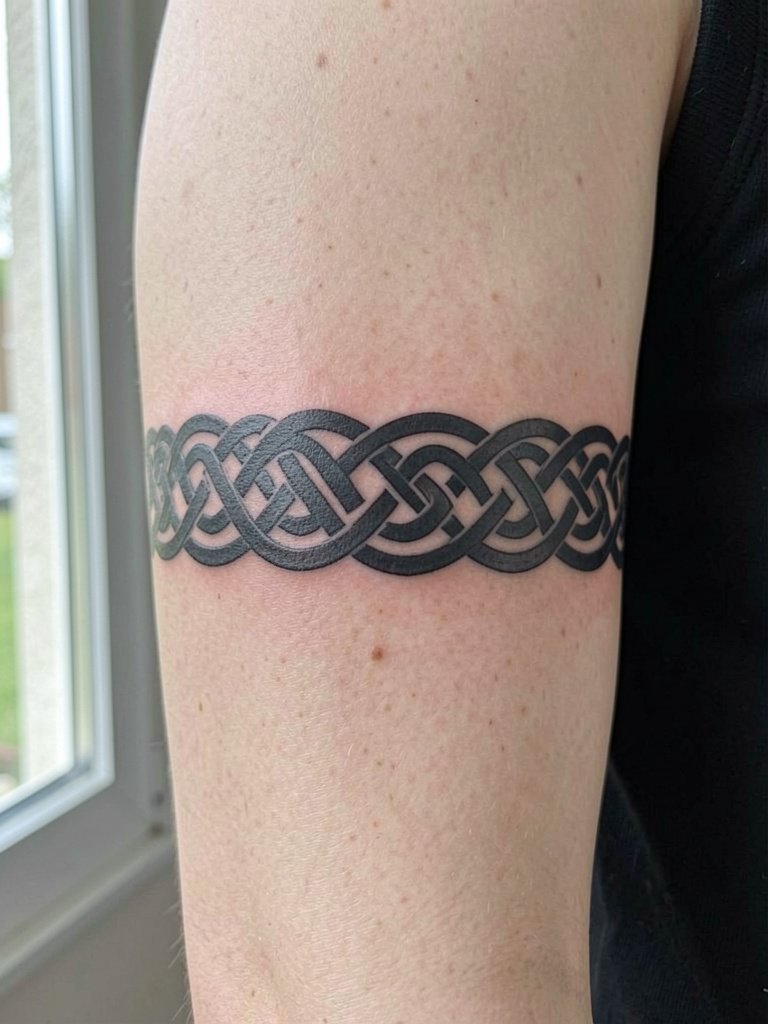
A solid black armband gives you armor-like presence and resists the early blurring fine lines suffer on the inner upper arm. Recommend this when you want strong contrast on medium-to-dark skin, the saturation keeps the knotwork crisp in photos. During the consult bring a photo showing the exact band width you want so the artist can map knot repeats to your arm circumference. Common mistake is squeezing too many knot details into a one-inch band. Expect a one-session piece with moderate pain and a likely touch-up window around 12–18 months for saturation top-ups. For showing it off try a sleeveless tank or a loose short-sleeve shirt, and wear a sleeveless tank top to your session so sleeves do not rub the fresh ink.
2. Double-Interlock Celtic Band, Outer Forearm
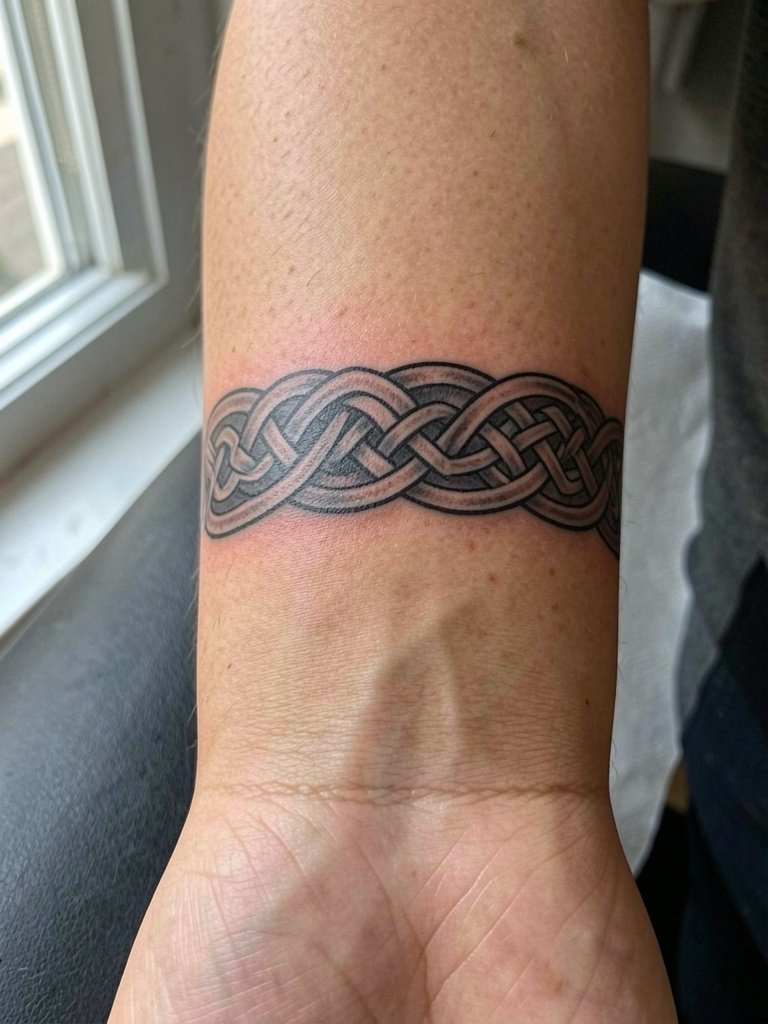
Two interlocking rows add depth without losing the graphic clarity of blackwork. Choose this when you want layered complexity that reads from a few feet away. Ask for slightly wider spacing between the two rows so the knot paths do not collapse over time. A common aging problem is gray shading that looks muddy on darker tones, so ask for black-first shading and minimal mid-gray. The session feels like steady linework with brief fill passes, and the forearm is low-to-moderate on pain. Show it off with rolled-cuff denim jackets or a casual linen shirt and consider bringing a rolled-cuff linen shirt to the appointment so cuffs do not press on the fresh band.
3. Minimalist Single-Line Celtic Band, Inner Forearm
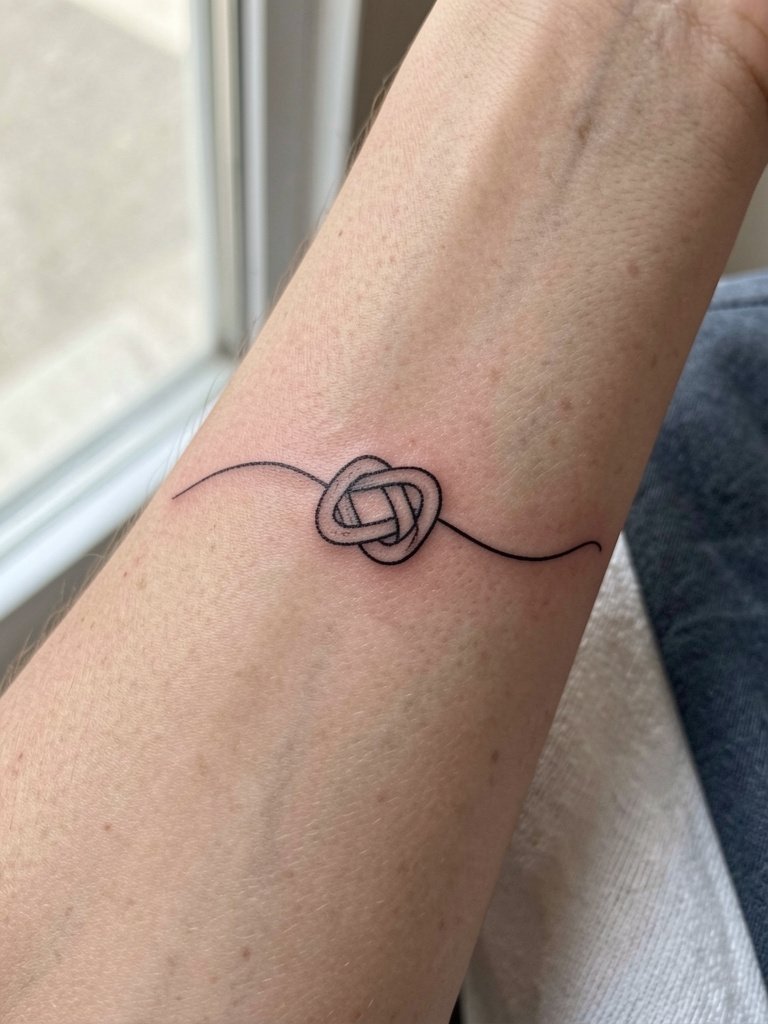
Fine single-needle bands are elegant for wrists and inner forearms, but there is a split in the community about longevity. One camp says fine-line bands blur within one to two years on inner arms because the skin stretches and thin lines merge. The other camp says it can hold if the artist uses correct needle depth and leaves slightly wider spacing between loops. If you favor this look, ask for a 0.5–0.8mm effective line weight rather than the thinnest single-needle option to reduce early softening. Expect low pain and a likely need for a touch-up in 18–24 months. Pair with white short-sleeve tees and a dainty gold stacked bracelet when you want it to read like jewelry.
4. Tri-Quint Spiral Band, Lateral Hip Bone
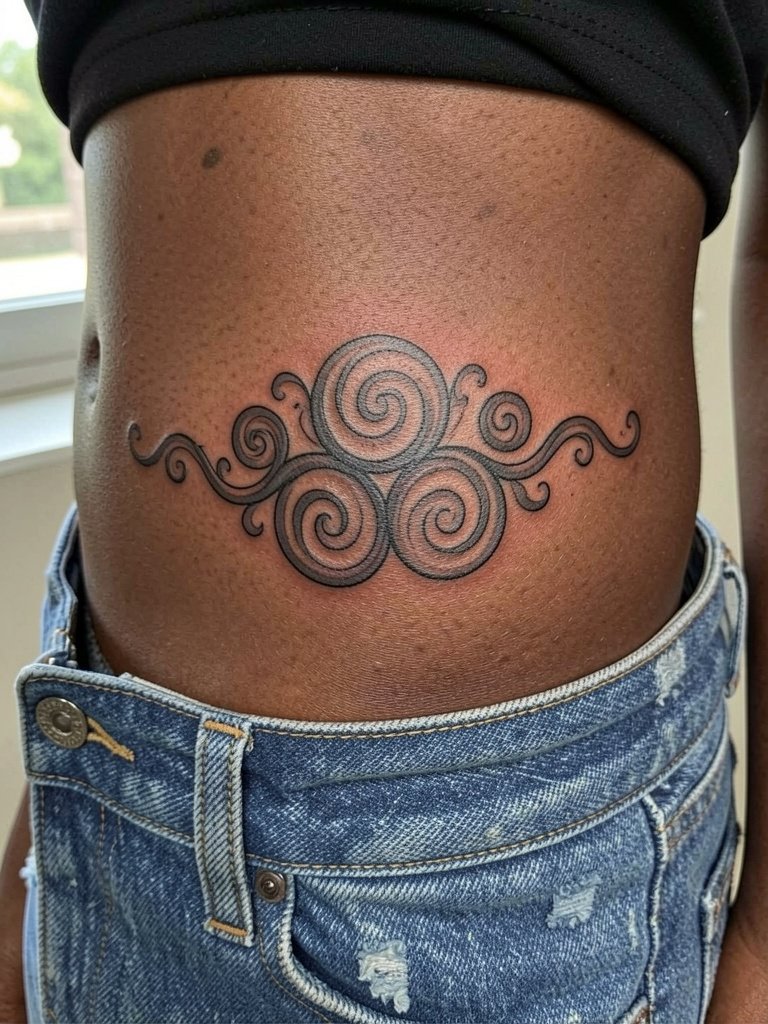
The tri-quint spiral reads as jewelry on the hip and works well for someone who wants symbolic unity of mind, body, and spirit. Because the hip moves with clothing, avoid ultra-fine filigree that may blur when fabric rubs. Bring references that show the exact spiral spacing so the artist can scale it to sit above your waistband. Session wear should be loose drawstring pants or low-rise jeans to avoid pressure on the fresh piece. For evenings out, low-rise shorts or cropped tanks highlight it, and wearing a low rise summer shorts style makes the band visible.
5. Shield Celtic Band, Inner Upper Arm (Armor)
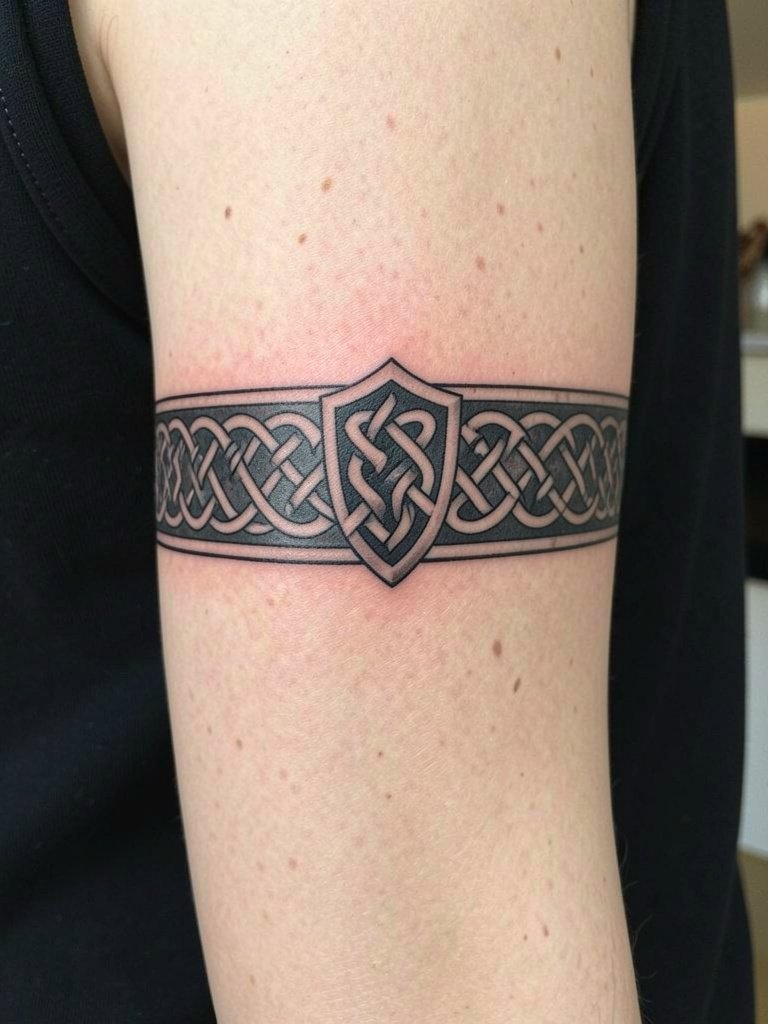
Shaped shield bands are built to read like armor for specific life challenges. Recommend this for someone who wants a bold protective motif as the "head" of a future sleeve. Tell the artist exactly how curved you want the shield edges and bring one photo of your arm circumference so the shield panels align symmetrically. People often regret trying to cram a shield shape into too narrow a band. The session is quick for a one-pass fill but expect some soreness under the bicep where skin is mobile. Show it off with sleeveless tanks and roll sleeves to mid-bicep, and wear a loose short sleeve shirt to the appointment to avoid rubbing.
6. Celtic Cross Band Fusion, Upper Chest
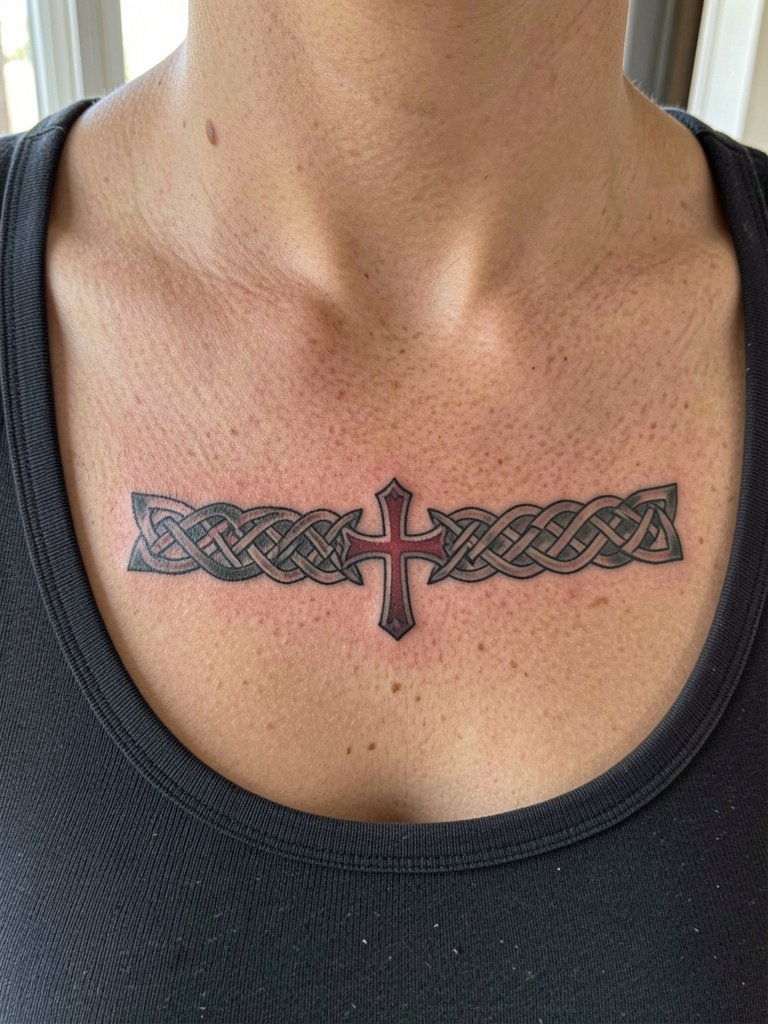
This fusion combines faith symbolism with classic knot loops so the design remains readable near the collarbone. The chest can be sensitive, so plan for a 1–2 session booking depending on the cross detail. There is a debate about protective coverings for chest blackwork that mirrors the dry healing versus second-skin argument. One camp says dry healing preserves crisp black lines and avoids ink trapping under a film. The other camp argues that second-skin products reduce scabbing and protect high-friction areas, leading to cleaner results. If you prefer the second approach, make sure the product choice and removal timing are planned with the studio so the cross accents keep their saturation.
Session Day Picks
The pieces above include inner-arm and chest placements that need different session prep and first-week care.
- Mad Rabbit Tattoo Serum. Lighter than greasy ointments, this serum is a go-to for people who liked a thin finish during the first week without clogging fine knotwork channels.
- Tattoo Goo Original. A thinner helping balm that many choose for intricate knot details, especially when gray shading is minimal.
- H2Ocean Blue Tattoo Spray. An antibacterial spray some people use to reduce scabbing on blackwork while avoiding heavy moisturizers.
- Hustle Butter Deluxe. Preferred by clients who found heavier ointments clogged pores on dense black bands during early healing.
- Saniderm Tattoo Bandage. Useful for high-friction areas like the inner forearm when you want a protective second-skin option for the first few days.
7. Script-Integrated Celtic Band, Inner Forearm
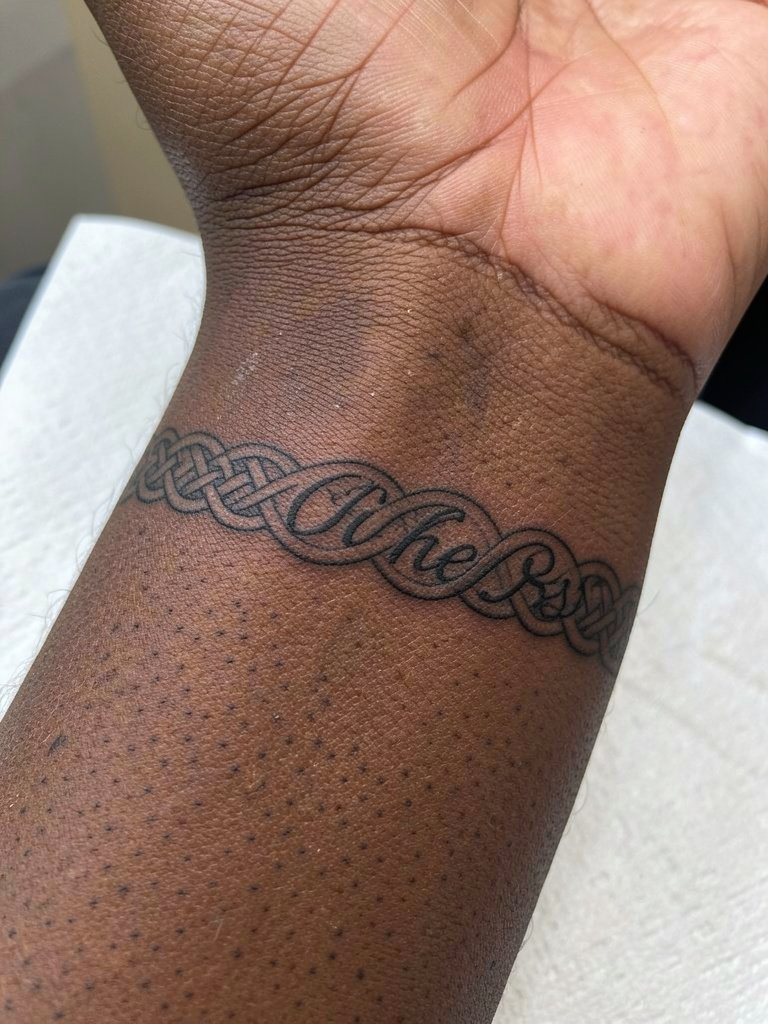
Weave a short name or date into a knot loop to personalize without obvious portraiture. Bring exactly the script sample and request the artist sketch the weave so the letters follow the knot path rather than sitting on top. A common mistake is shrinking script too small for single-needle work. Expect a one-session piece and plan for a touch-up at one year if the edges soften. Wear a loose button-down or short-sleeve shirt on session day, and consider a white short sleeve tee afterward so the fine line reads like jewelry.
8. Celtic Spiral Band, Medial Inner Thigh
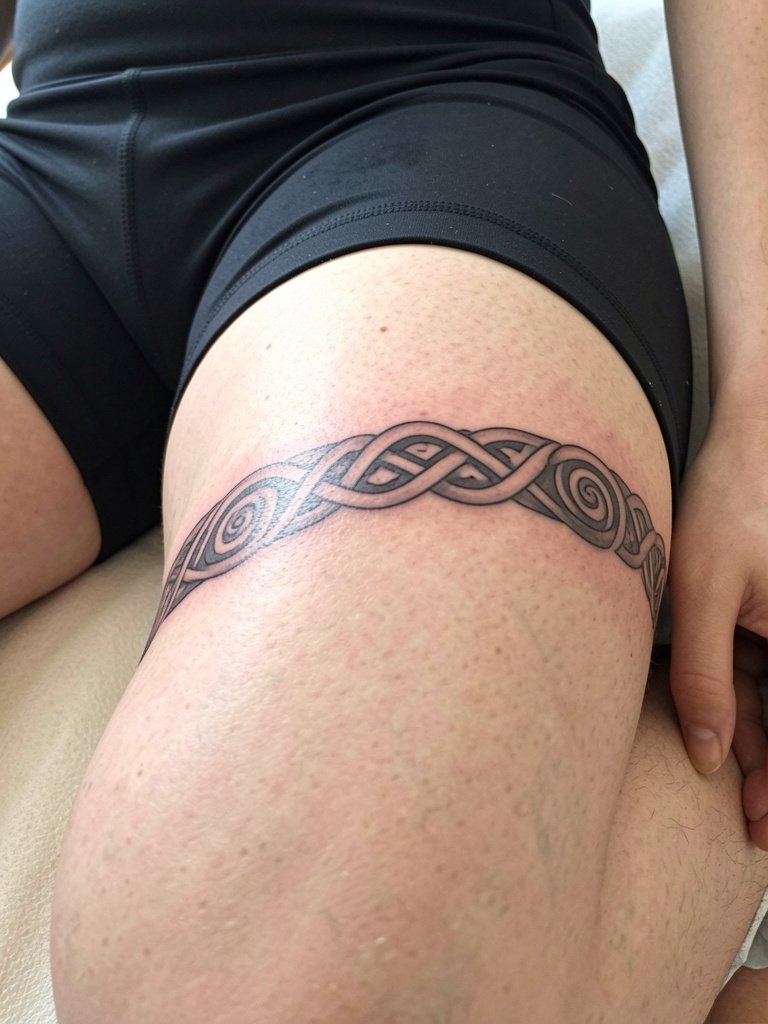
Inner-thigh spiral bands reward privacy and scale but need careful session wear choices. For placement comfort bring loose drawstring shorts so fabric does not press on fresh lines. Spiral knots may resist stretching better than square knots because the curves distribute movement across the thigh. The skin here is more elastic, so consider slightly thicker lines than you would use on flat skin. Pain is moderate and sessions are usually single-pass. Show it off with high-waisted shorts or flowy skirts and pack a high waist summer shorts option for post-session comfort.
9. Tiny Heart-Embedded Celtic Band, Lateral Hip Bone
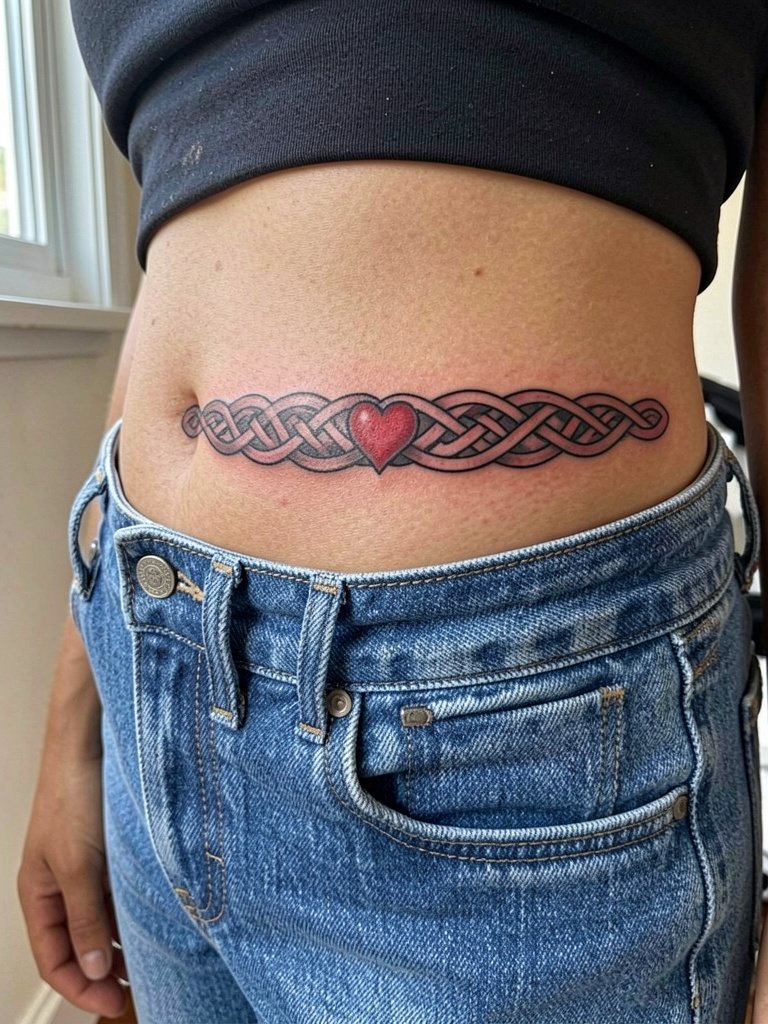
A tiny red heart threaded into knotwork gives a single symbolic accent without overpowering the band. For darker skin tones, request a tiny but saturated red dot rather than soft gray shading, which can photograph muddy. Tell the artist where on the loop you want the heart so the repeat pattern looks intentional. The hip tolerates ornamentation well and tends to age steadily if the lines are bold enough. Style with cropped tanks or side-slit dresses for visibility and bring a cropped tank top neutral for the session so tops do not ride down.
10. Wrist Bracelet Band, Fine Line
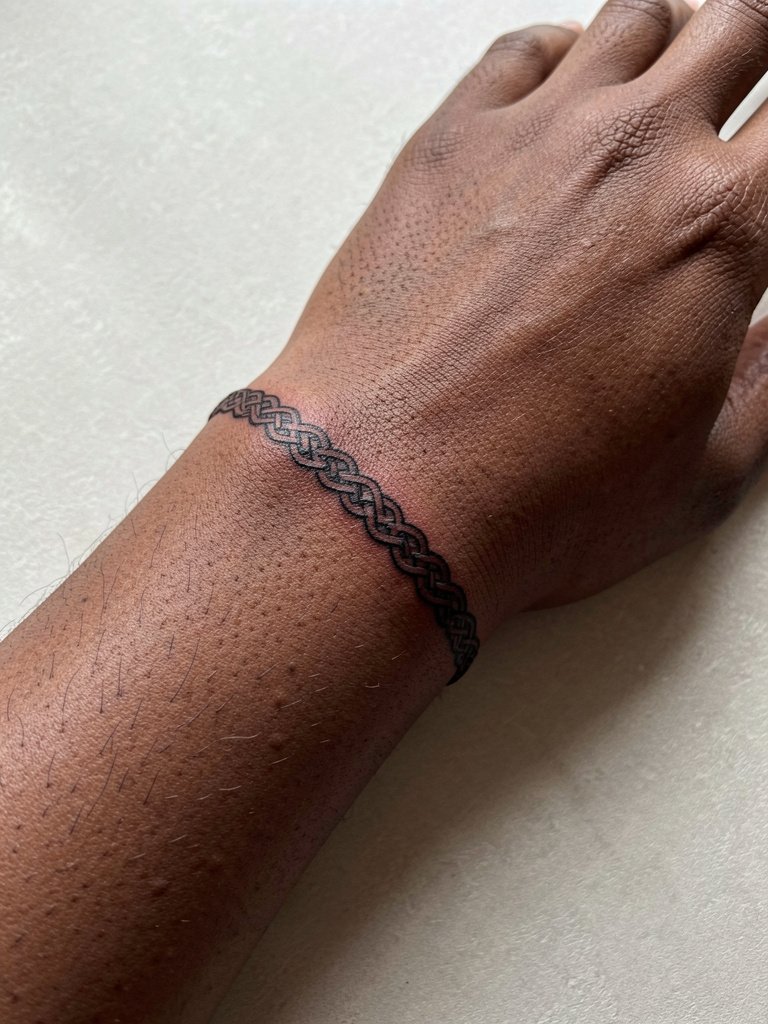
Wrist bands are jewelry-like but sit in a high-friction zone. Fine line bracelets look delicate at first, but hands and watches speed fading. For better longevity ask for slightly heavier single-needle spacing and avoid gray shading. The worst mistake is expecting micro detail to survive heavy washing and jewelry. Pain is mild to moderate and you should avoid watches during the first week. Pair this with a minimalist watch on the opposite wrist and add a thin chain bracelet set when you want a stacked look.
11. Collarbone Curve Band, Minimalist
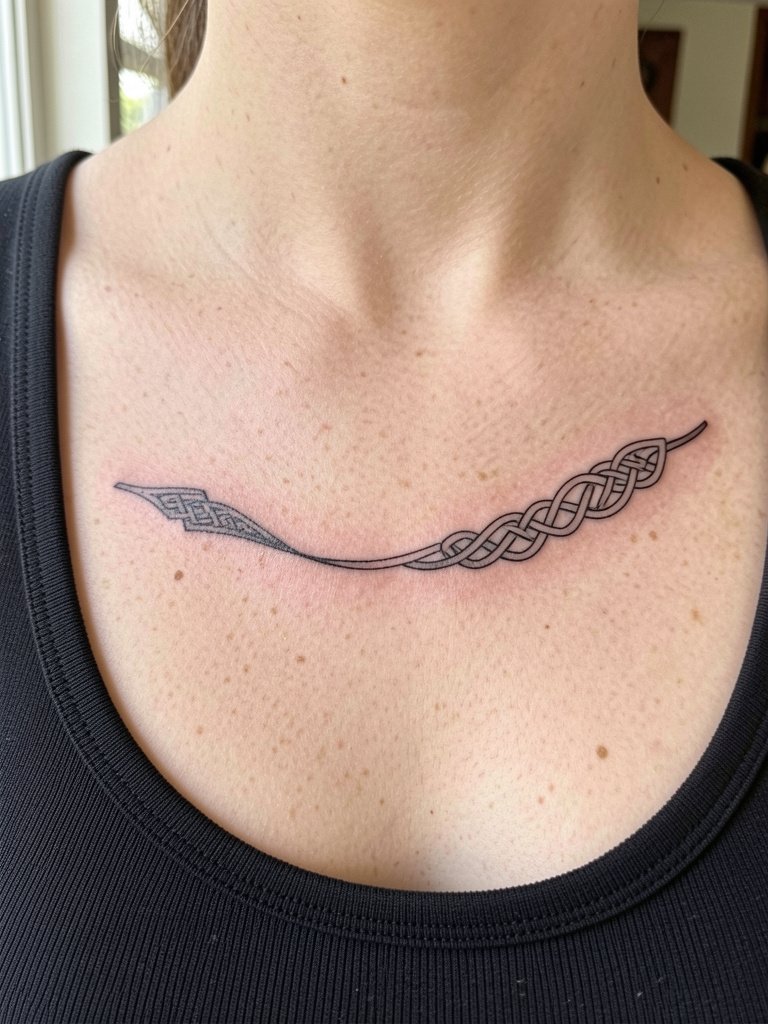
A clavicle band reads elegantly when the line follows the natural bone curve. Because the area moves with breathing and clothing, avoid ultra-micromotifs and prefer a steady 0.5mm effective line weight. During consultation show the artist the neckline you wear most so they can position the arc to peek out of V-necks. Pain is low to moderate and sessions are short. For styling, choose V-neck or scoop-neck tops and layer thin chains on the opposite side, and bring a thin layered chain necklace if you want balanced framing.
12. Ankle Chain Band, Fine Line
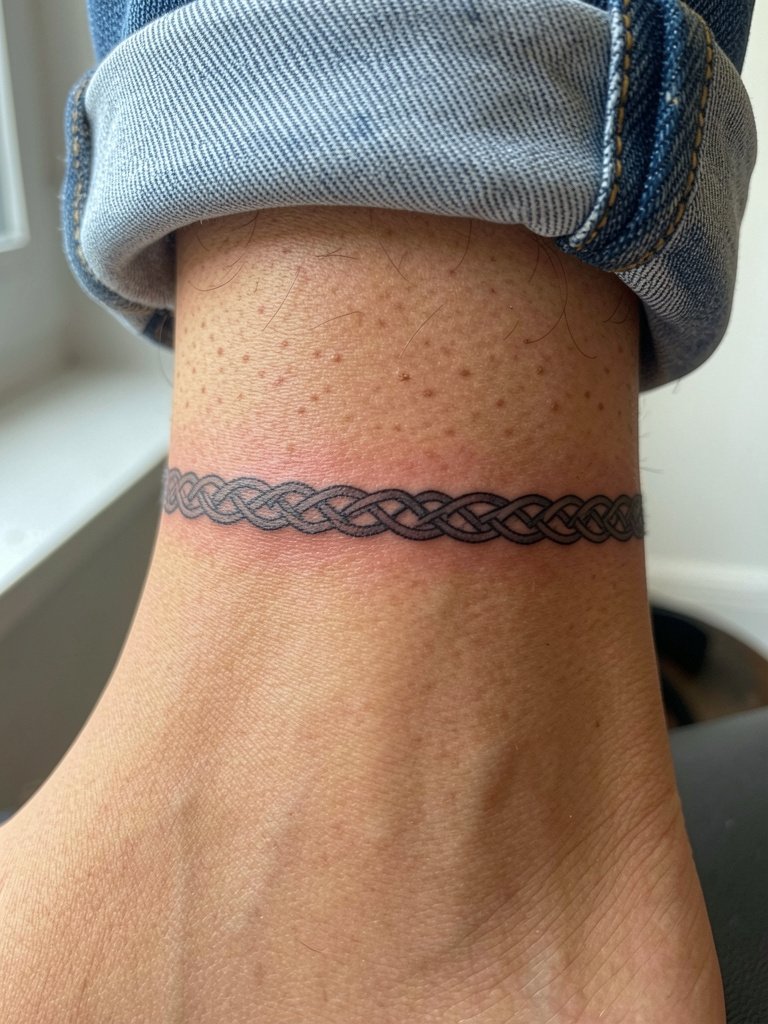
An ankle band is great for summer visibility but faces constant friction from socks and shoes. A common aging issue is soft edges where scabbing met rubbing during walking. Opt for clean silhouettes rather than tiny filigree here. Session wear should be sandals or rolled pants so the area is easy to access and stays dry during initial healing. Pair with minimalist summer sandals or cropped linen pants and bring minimalist summer sandals for the first week.
13. Calf Ornament Band, Wide Blackwork
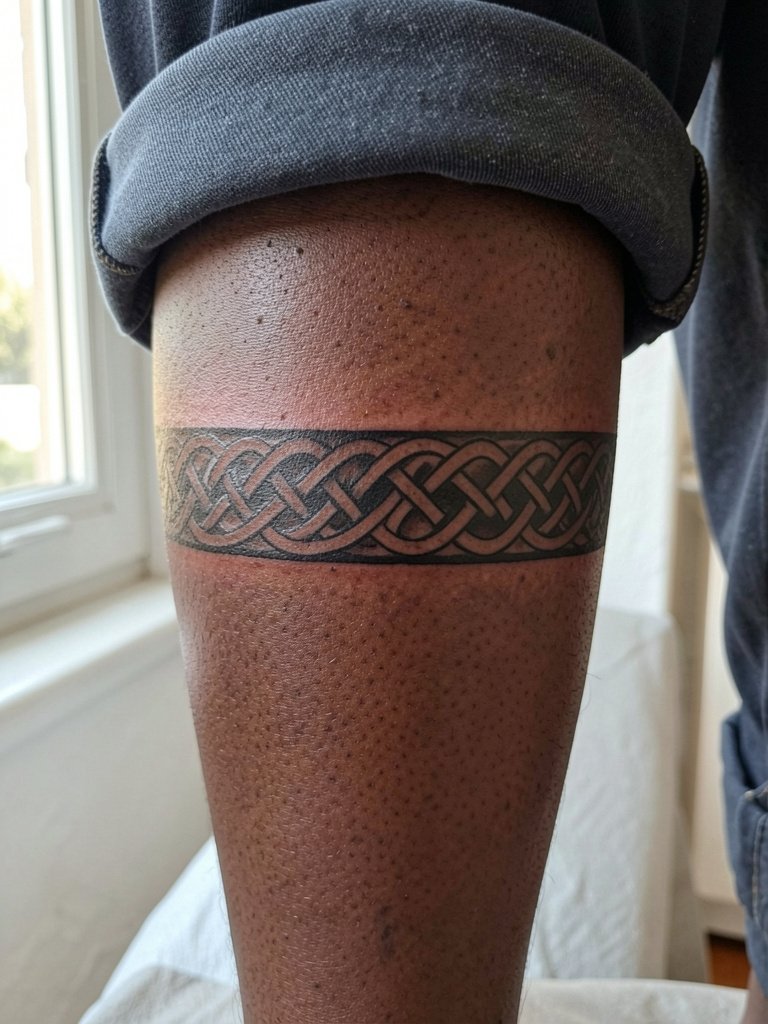
The calf is stable and shows off larger, more detailed knotwork with less risk of early blur. This is where ornamentals perform best and where bold blackwork ages gracefully. Ask the artist to preview the full wrap on standing and sitting positions so the knot repeats do not distort when you sit. Expect one session for medium-scale work and low-to-moderate pain. For wardrobe, cuffed jeans or cropped pants keep the band visible, and a cuffed jeans women style helps it read from a distance.
14. Shoulder Cap Band, Traditional Bold
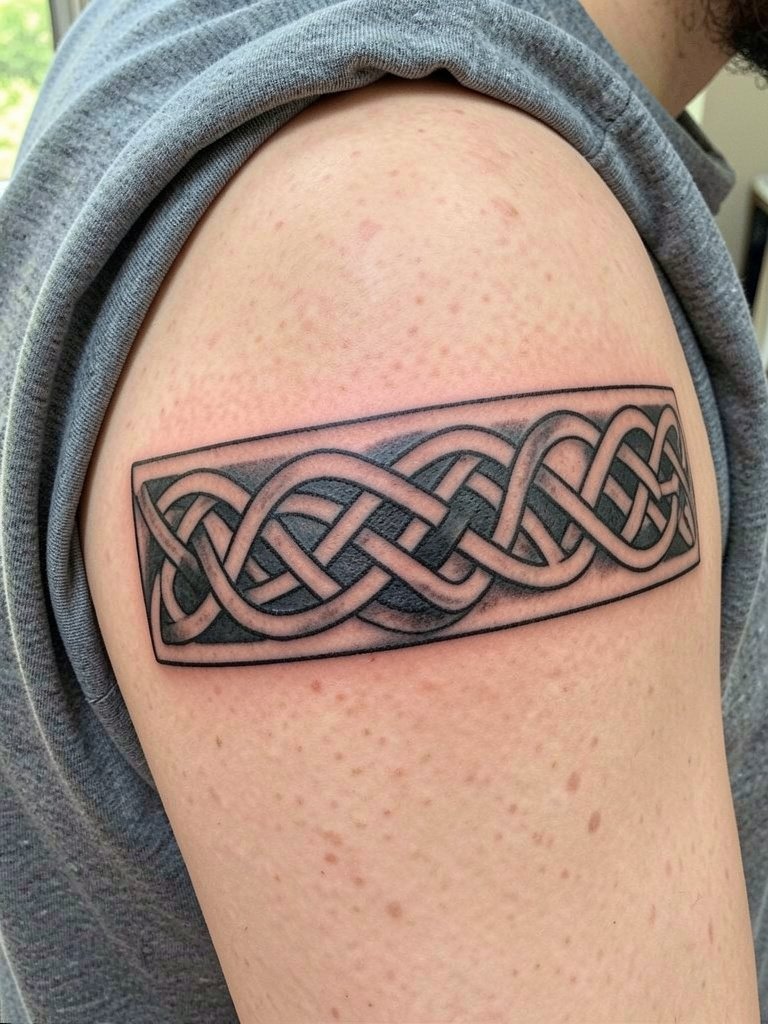
Shoulder bands make excellent starter sleeve anchors because they provide a bold headpiece to fan other elements from. Choose this if you plan a connected sleeve later. The shoulder is forgiving during healing, and bold black outlines keep knot edges clear for years. During the consult, request mockups that show how the band meets prospective sleeve elements. Session wear: loose button-downs or tank tops to avoid strap pressure. Show it off with sleeveless tops and an off shoulder tee solid when you want visible shoulder framing.
15. Nape Mini Band, Hidden Knot
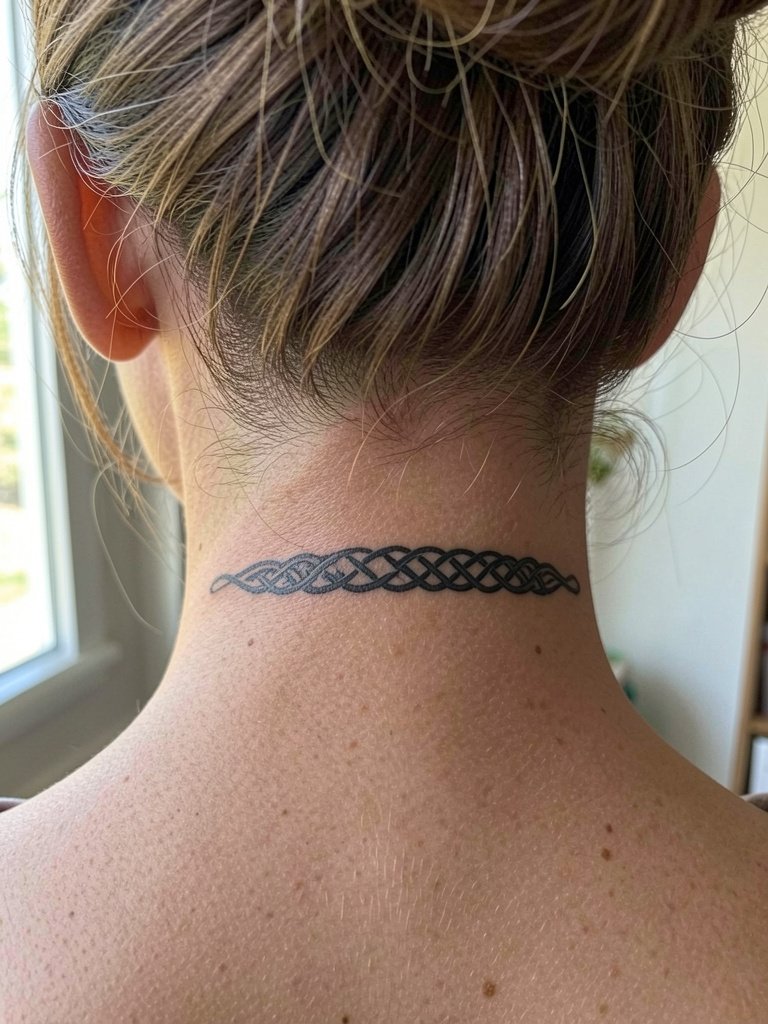
A nape band is discreet and personal, ideal for people who want a piece hidden under hair. If your hair covers it most of the time, prioritize single bold loops that still read when the hair shifts. Ask the artist to position the knot so it sits below the hairline when your hair is down. Expect low pain and quick sessions. For wardrobe, high-neck tops with hair up accentuate it, and bringing a high neck tee neutral for the flight home keeps fabric from rubbing.
16. Spiral Knot Wrist Wrap, Sturdy Lines
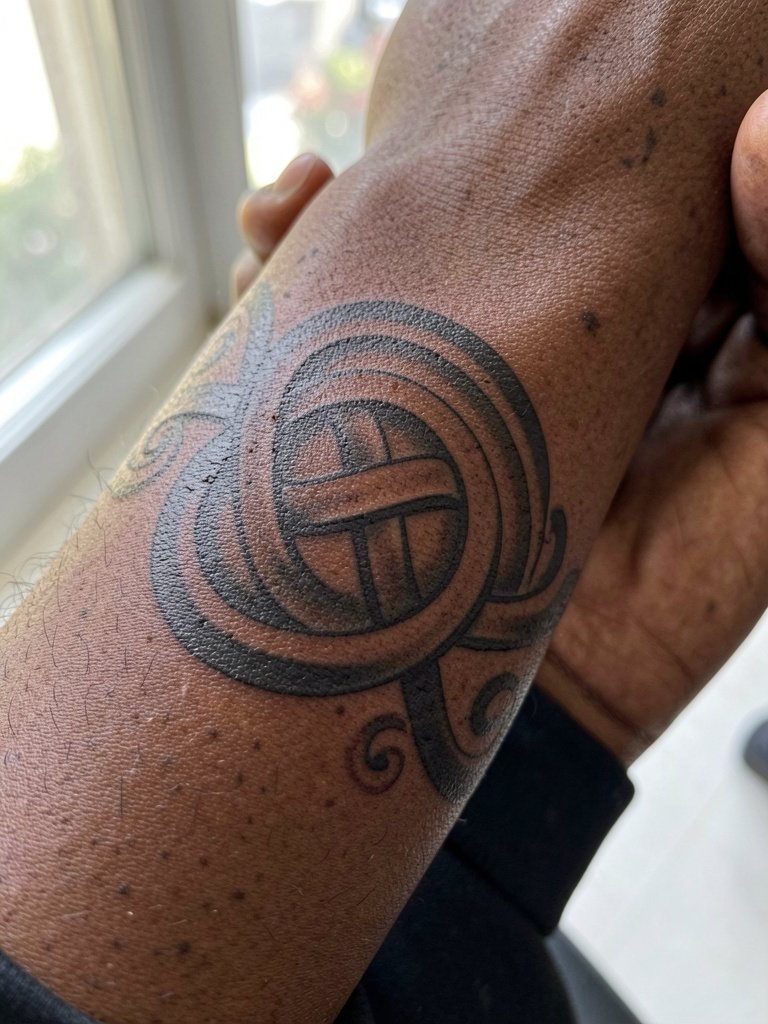
Spiral knots on wrists deserve heavier linework than many clients ask for because of washing and daily friction. Request the artist map out how the spiral opens and closes across the wrist bones so the pattern does not pinch at joints. A common mistake is keeping the design too narrow. Expect moderate pain and plan a 12–18 month check for edge sharpening. Pair with a minimalist watch on the opposite wrist and consider a minimalist watch women if you favor symmetry.
17. Interlocking Bands for Sleeve Anchors, Outer Bicep
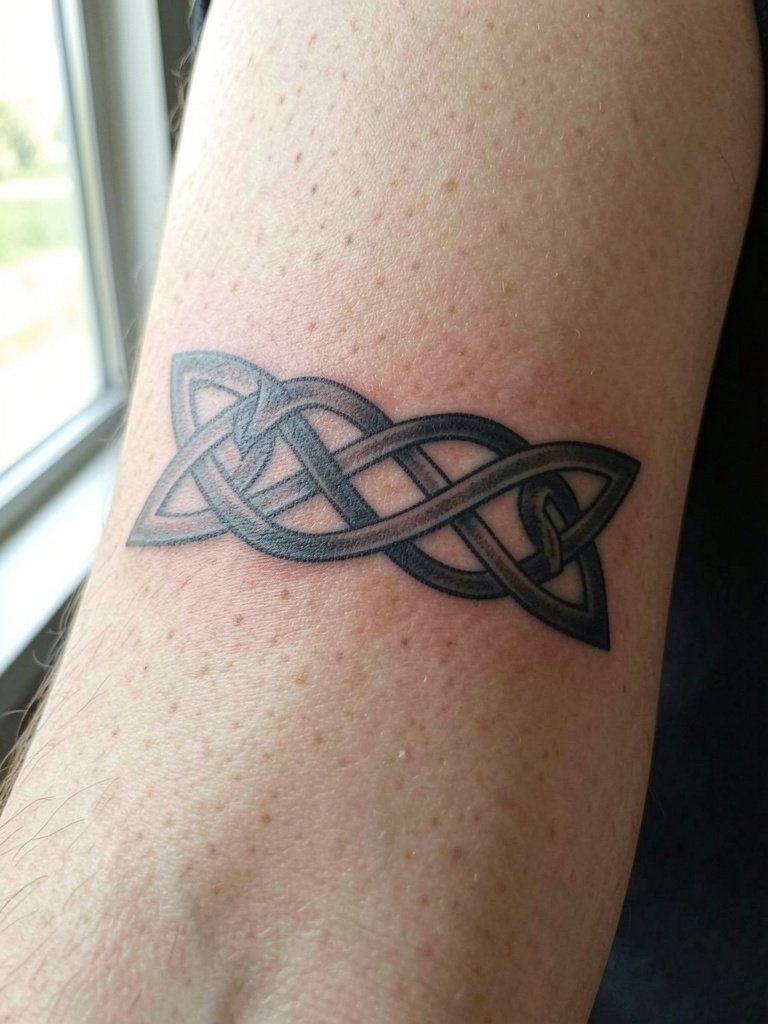
Use interlocking bands as anchors if you plan to build a sleeve later. The outer bicep is a stable spot and handles repeated expansion of surrounding art. When planning, ask the artist how future motifs will align to avoid awkward overlaps. Many people underestimate how much negative space knotwork needs to breathe next to portraits. Sessions are low-pain and quick for narrow bands. For showing off, rolled-cuff denim jackets and linen shirts frame the outer bicep nicely, and bringing a denim jacket rolled cuff can keep the area accessible during touch-ups.
18. Spiral vs Square Knot Comparison, Wrist vs Ankle
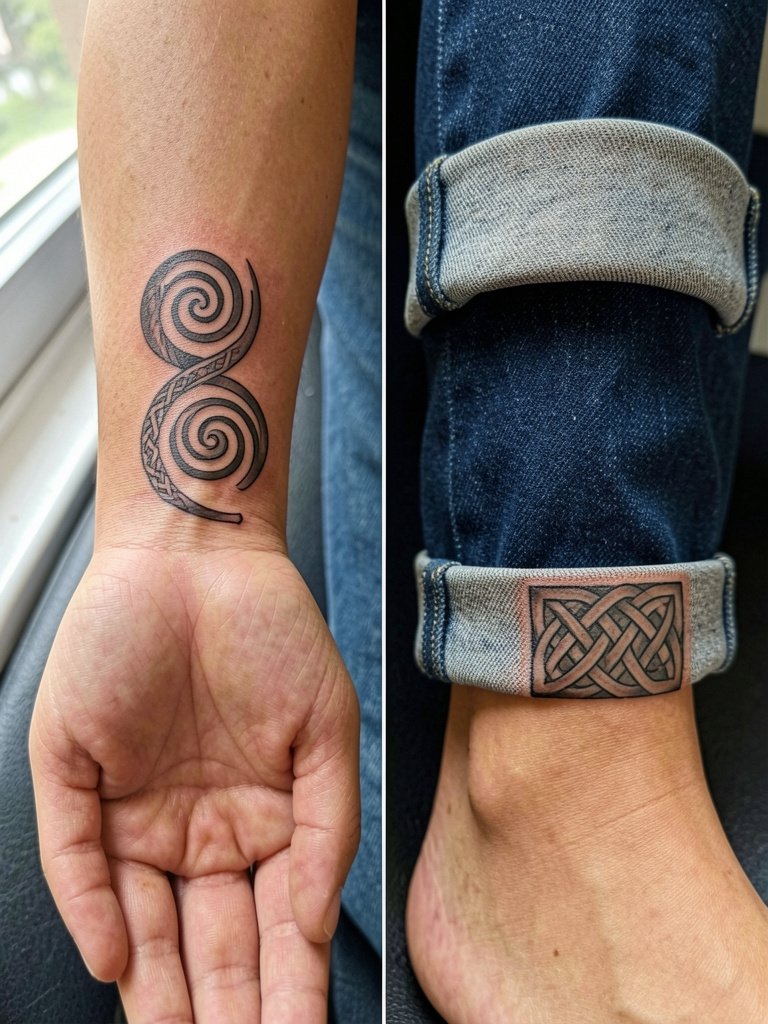
Spiral knots often resist joint-related stretching better than square knots, which makes them a smart choice for wrists and ankles. The wrist version should have slightly heavier lines; the ankle can tolerate thinner detail but still suffers from footwear friction. A practical consult point is to show the artist both placements so they can adapt spacing and make the knot read when you move. Expect touch-ups around a year for both. For session wear, avoid tight socks and bring sandals or cuffed pants, and consider rolled cuff linen pants for easy access.
19. Embedded Initials Inside Knot Loop, Inner Forearm
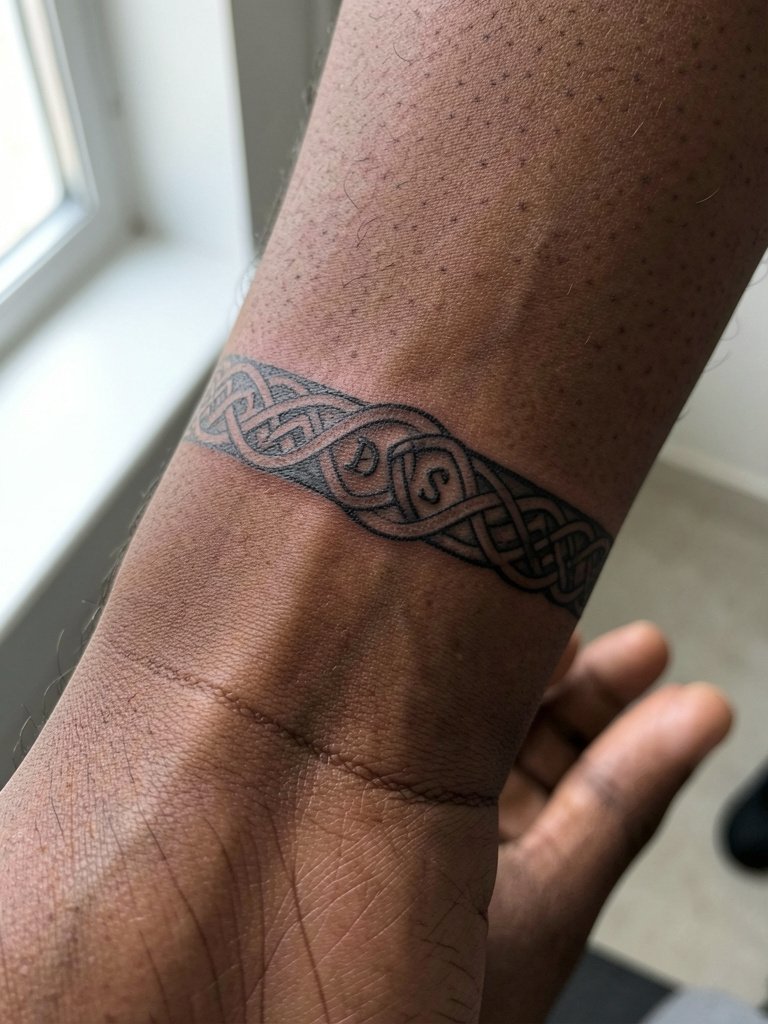
Embedding initials or dates in a loop is subtle personalization that keeps the knot geometry intact. Be precise about the font size and request a stencil showing how the initials sit within the loop. The frequent mistake is choosing script too tiny for the knot path. This placement is visible and ages like other inner-forearm pieces with a likely touch-up after 12–18 months. For showing it off, dainty gold bracelets on the opposite wrist help the piece read as intentional jewelry. Bring a dainty gold stacked bracelet for the shoot.
20. Shield Panel for Grief or Recovery, Outer Thigh
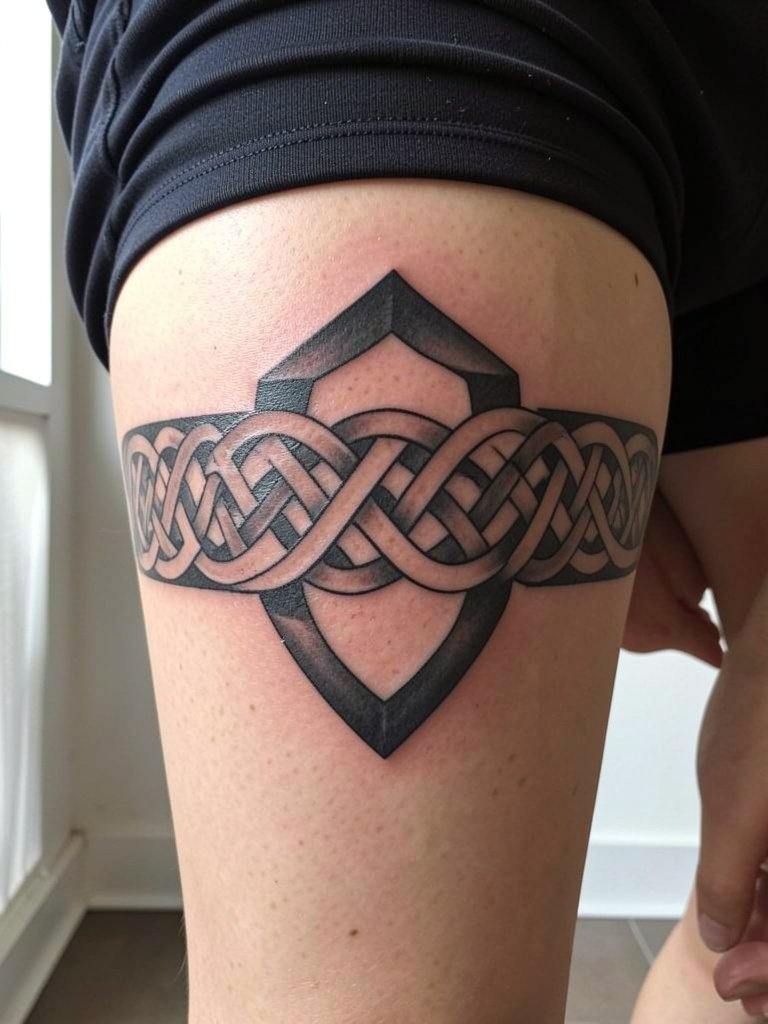
Using a shield motif as a marker for recovery channels meaning while staying visually strong. The outer thigh gives room for larger panels that do not blur quickly. Discuss with the artist which panels should stay pure black for long-term contrast. A real mistake is compressing too many tiny motifs into each panel. Sessions may be longer and the area is moderate on pain. For visibility, cuffed jeans or summer skirts let it show, and packing a flowy side slit skirt makes post-session movement comfortable.
21. Neo-Traditional Band with Green Leaf Accent, Upper Chest
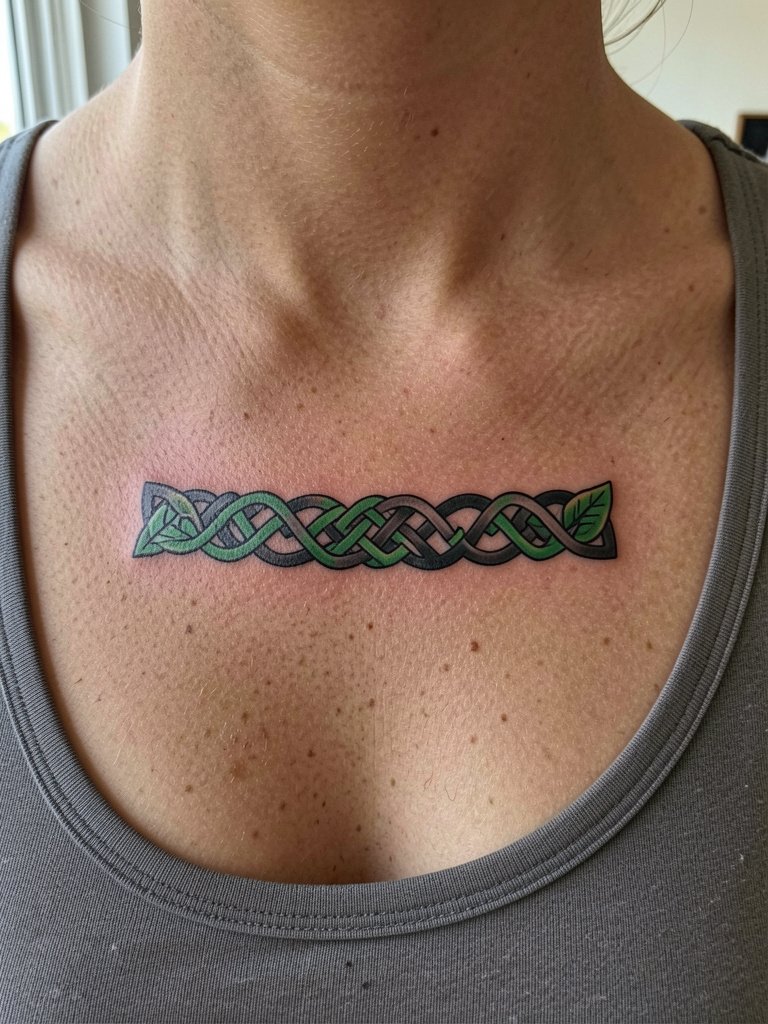
Small color pops work if used sparingly, especially green leaves that reference growth or renewal. For darker skin tones, restrict color to saturated spots so it photographs cleanly. Ask the artist to place color only in recessed negative spaces to protect contrast. The chest can take two sessions if color glazing is required. V-neck tops in cream or olive frame the piece, and a v neck tee cream layers well for session access.
22. Wide Celtic Band for Dark Skin, Calf
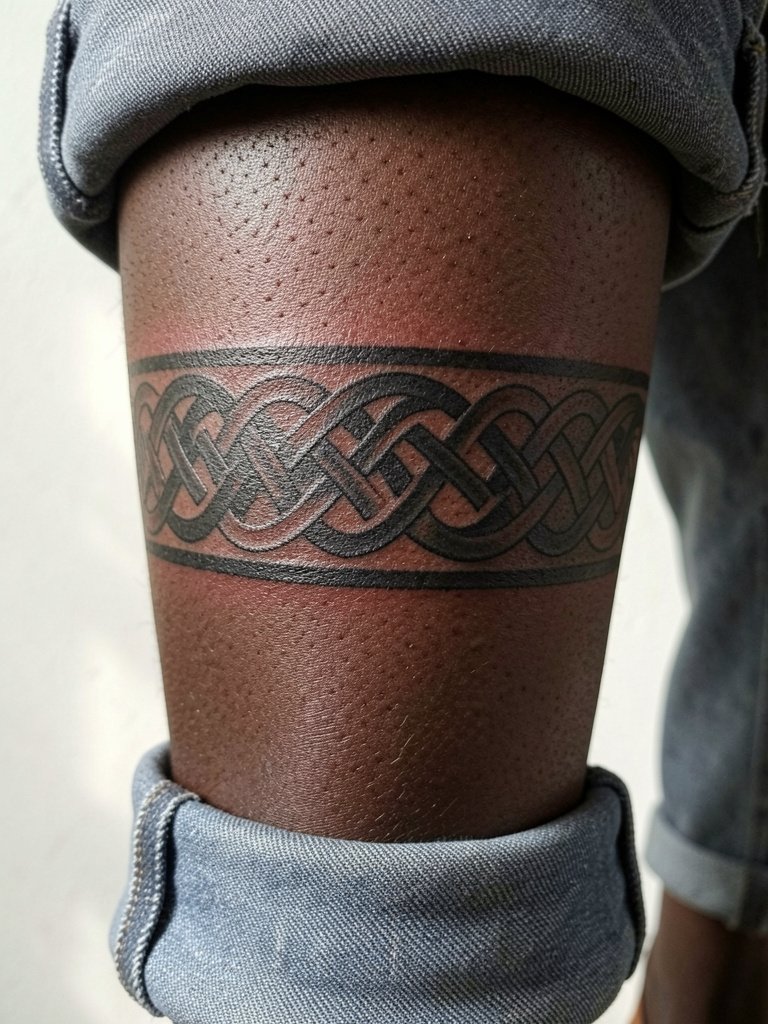
On darker skin, clarity comes from contrast and pure black saturation rather than subtle gray fills. This wide calf band uses heavy linework and negative spacing to stay readable. Tell the artist you prefer black-only fills and ask for healed examples on similar skin. The calf holds saturation well and touch-ups are typically minor. For outfits, cropped pants and summer skirts are ideal, and a cropped straight leg pant style keeps the band visible.
23. Micro-Loop Detail for Small Wrists, Bracelet
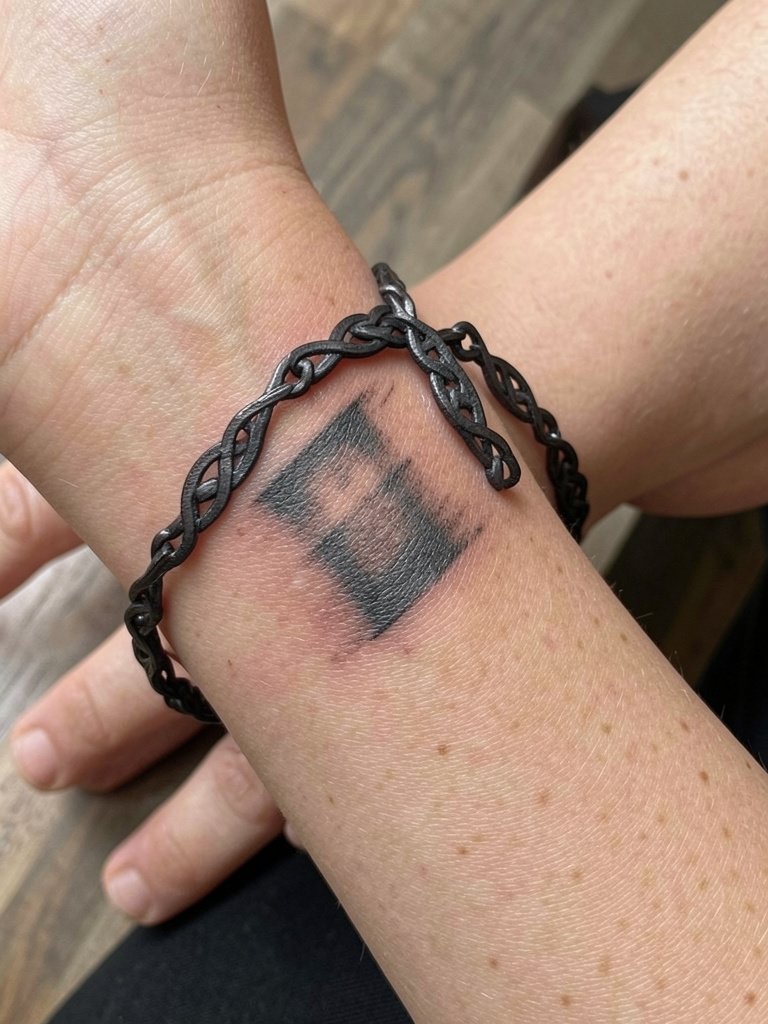
Smaller wrists need careful proportioning. Ask the artist to print a paper stencil and wrap it snugly so knot repeats do not look stretched when your hand moves. The mistake is scaling a full-size knot into a tiny loop without adjusting spacing. Expect a short session and plan for a touch-up at a year if washing has softened edges. Pair this with thin chain stacks and consider a thin chain bracelet set for visual balance.
24. Calf-to-Ankle Gradient Band, Ornamental
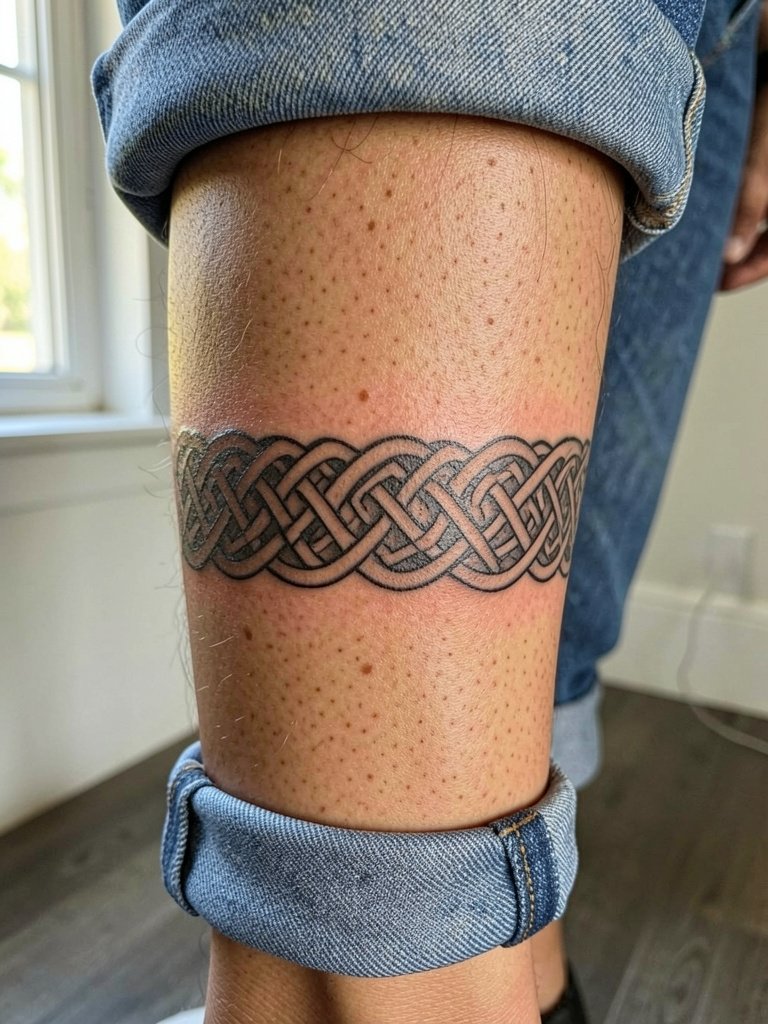
A tapered band uses scale to guide the eye and works great on prolonged muscle like the calf. Tell the artist how gradual you want the taper to be and bring standing and seated reference poses so the taper reads in both. Tapered knots must be given extra negative space near the ankle to avoid crowded repeats. Sessions may be one longer block. For clothing, cropped pants or midi skirts show it off and a summer midi skirt solid complements the taper.
25. Pocket Knot on Lateral Hip, Discreet Accent
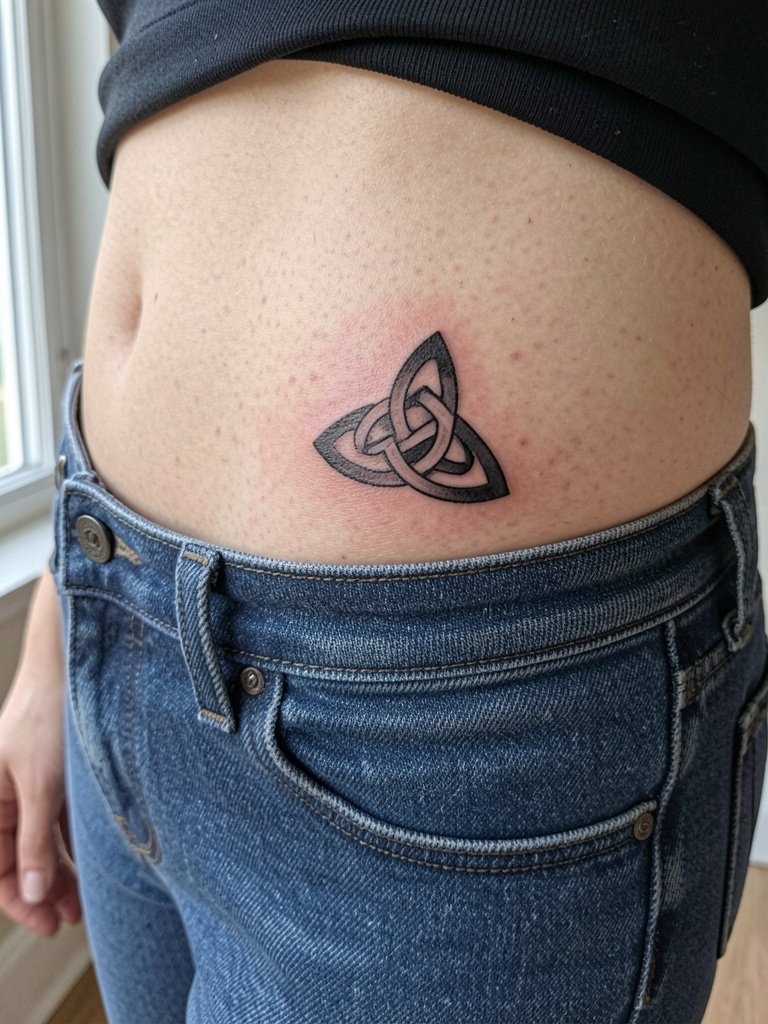
Tiny hip motifs feel private yet deliberate. For placement security, have the artist mark the knot with you standing so the piece sits where your clothes will not rub it. Avoid tiny filigree that the waistband will wear. The hip is lower on the pain chart and shows steady aging when given enough black contrast. Low-rise shorts and cropped tanks keep it visible, and packing a low rise summer shorts option makes the session easier.
26. Patchwork Anchor Armband, Upper Arm
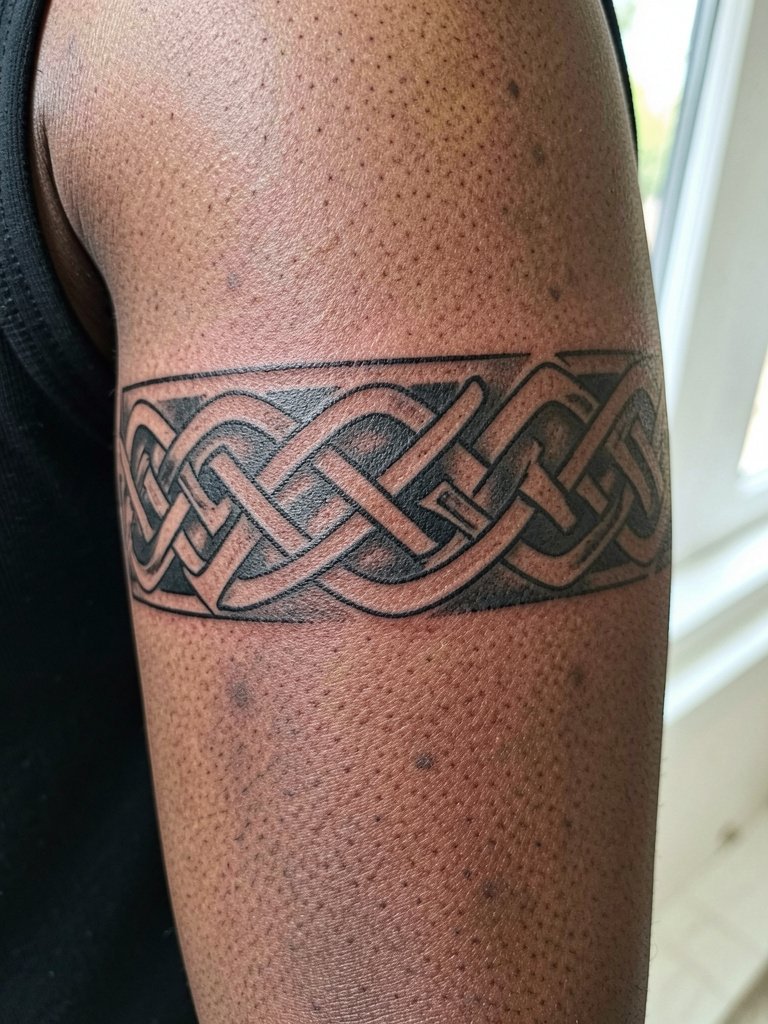
Use a bold armband as a structural anchor if you plan a patchwork sleeve. Ask for full-scale mockups showing how incoming pieces will connect and where negative space will remain. The common oversight is not leaving enough breathing room for future fills. Expect low-to-moderate pain and one solid session. Wear sleeveless tops for sessions and show off with tank tops or off-shoulder shirts, and bring a sleeveless tank top black for comfort.
27. Calibrated Line-Weight Band for Stretchy Skin, Rib-Adjacency
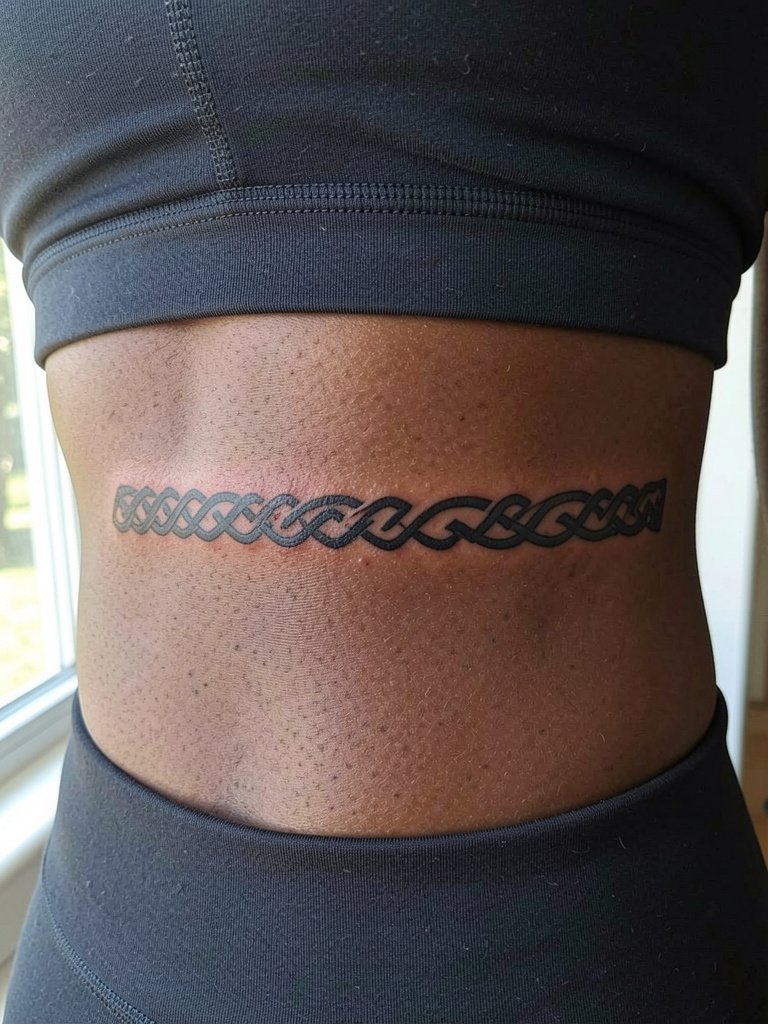
For high-stretch zones like ribs and the adjacent torso, calibrated line weight is the deciding factor for longevity. Artists split into two camps on fine line here. One group says ultra-thin lines blur within two years because breathing and movement cause merging. The other group points out that with slightly wider spacing and careful needle depth, the same knotwork can hold for three years or more. If you want a band near the ribs, specify the minimum effective line weight and ask for a healed-shot reference on similar placement.
Frequently Asked Questions
Q: Which Celtic knot types actually map to specific meanings I can name?
A: Triquetra-style loops commonly get used for continuity and connectedness, spiral knots lean toward cyclical life and growth, and shield-like panels get read as protection. If a specific cultural origin matters to you, mention the exact knot you like and ask for a sketch showing the historical motif so the geometry is accurate.
Q: How should I prepare clothing for a session on the inner upper arm or hip?
A: For inner upper arm pieces wear a loose short-sleeve or sleeveless top so sleeves do not press on fresh ink. For hip work wear low-rise or drawstring bottoms that can sit below the tattoo without rubbing, and bring an extra loose layer to sit in during the first 24 hours. If you want a session-friendly outfit suggestion, try a loose short sleeve shirt for arm sessions.
Q: Where can I find healed Celtic band portfolios and local artists without naming individual shops?
A: Search hashtags like #celticknottattoo, #celticarmband, and #celtictattoo on Instagram and TikTok, then filter by your city to find local portfolios. Tattoodo and Inked App let you search keyword combos like "bold Celtic armband blackwork" and show healed examples. Reddit communities such as r/tattoos and r/CelticCulture also surface peer recommendations and healed shots across skin tones.
Q: Do fine-line Celtic bands need touch-ups sooner than bold blackwork?
A: In practice, fine-line knotwork often needs a touch-up earlier because thin lines erase against skin movement and daily abrasion. Bold blackwork slows that process because saturation and negative-space planning keep the knot readable. Plan for a realistic touch-up timeline of 12–24 months for fine line, and 18–36 months for well-saturated blackwork depending on placement.
Q: Can someone who is not of Celtic descent wear Celtic knotwork respectfully?
A: There are two ways people talk about this. One view treats knotwork as ancient public-domain symbolism that anyone may wear if they respect the design. Another view notes that some knots carry specific Irish or Scottish associations and wearing them without personal connection can feel like borrowing cultural armor. If it matters to you, learn the specific knot meaning and be clear about why you chose it when you book.