
A lot of people pick a compass because it feels obvious. In my experience the compasses that still read crisp after three years are the ones planned around placement and line weight from the start. Expect a short checklist up front about friction zones, visible text choices, and where a single-needle fine-line really works. Then the gallery begins with small wrist pieces that actually hold their shape.
1. Minimalist Single-Line Compass on Inner Wrist
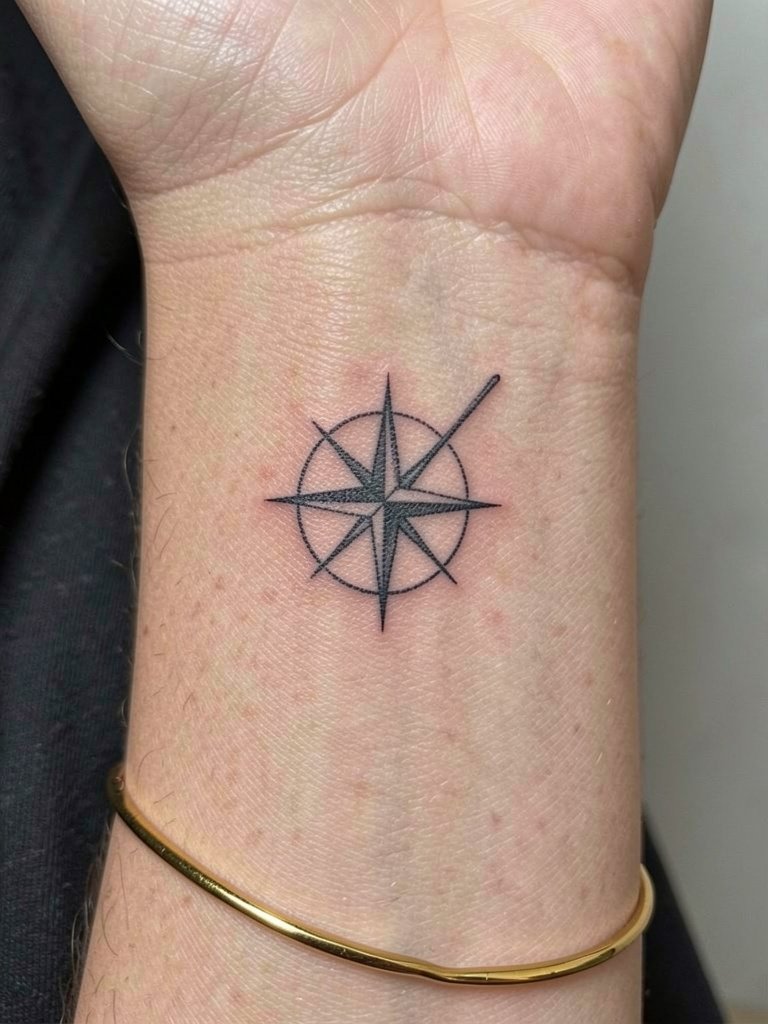
The single-line wrist compass is the dainty option people reach for first. I recommend this when you want a subtle marker under one and a half inches that reads as a precise symbol rather than decorative flash. Fine-line advocates split into two camps on wrist longevity. One camp warns that single-needle wrist work blurs within a year because the area sees constant friction and thin channels spread. The other camp says slightly heavier spacing and careful needle depth let fine-line settle beautifully, and they point to healed three-year examples. For the wrist, ask for 0.25mm line weight and a simple, single-needle center with a slightly thicker outer ring so the piece keeps its silhouette as it ages. For showing it off, pair with a thin gold chain bracelet on the opposite wrist. Expect light discomfort for 20 to 40 minutes and a touch-up window at 12 to 18 months for very thin details.
2. Vintage Nautical Compass with Compass Rose on Outer Forearm
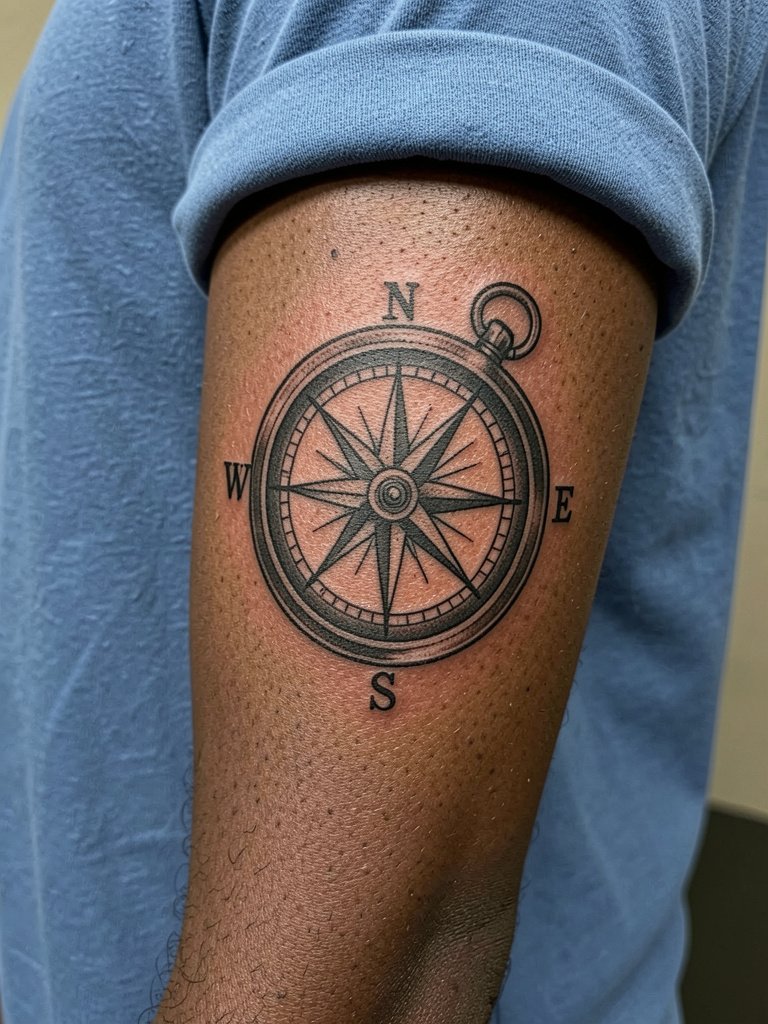
This is the compass that leans into sailor history and reads from across a room. Choose this when you want bold outlines and high contrast that survive sleeves and sun exposure. For consultation bring photos that show the serif N S E W letterforms you like and specify center ornamentation such as rope or star filigree. A common mistake is shrinking a detailed rose to fit a small forearm patch, which clogs the petals and flattens in two years. Pick a two-to-three-inch layout so stipple shading has room. The outer forearm tolerates bold blackwork. During the appointment wear a loose short-sleeve or rolled-sleeve tee so the artist can work the entire span. For an outfit that frames the piece try a solid color navy t-shirt.
3. Compass with Coordinates Overlay on Inner Forearm
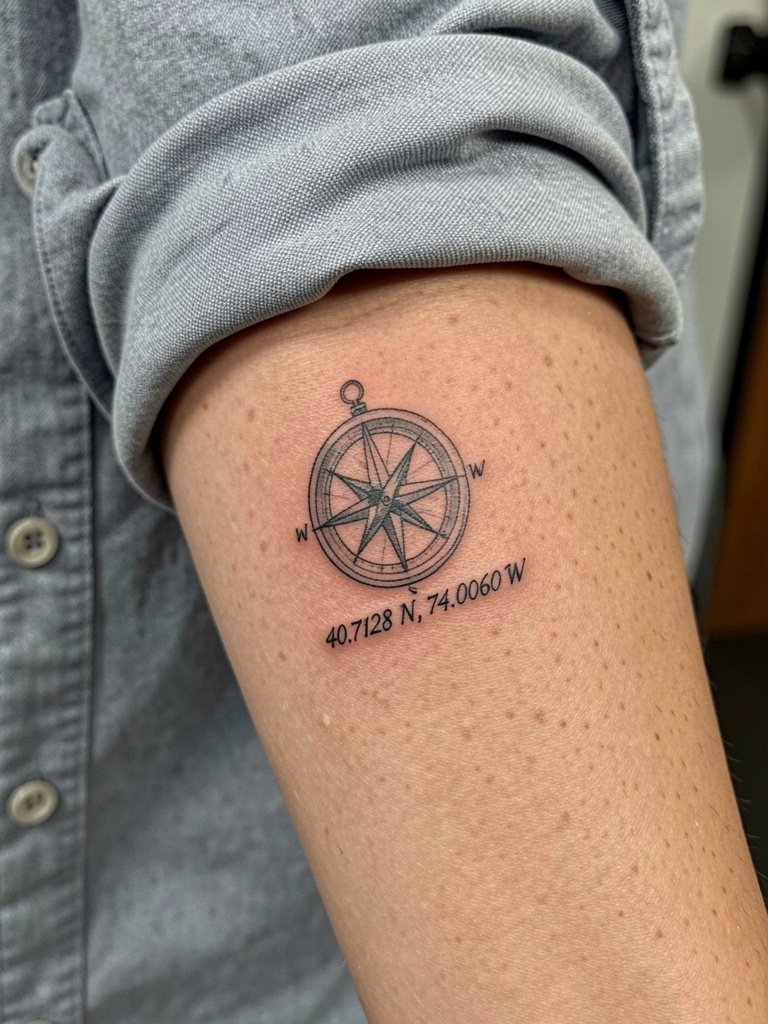
Coordinates give a compass literal specificity. Choose a single set of GPS numbers that represent a place you still connect with, or use a symbolic coordinate like your current home; that reduces future regret. When planning the script, specify exact typeface and spacing. Tell the artist you want the coordinates in a fine monospace style and that each number be spaced wider than typical script so the digits do not bleed together. A frequent error is using tiny script on a joint area. On the inner forearm a one-session, one- to two-inch layout ages predictably well. Expect minimal pain and a likely touch-up at the two-year mark for the tiniest digits.
4. Compass Surrounded by Botanical Elements on Inner Shoulder
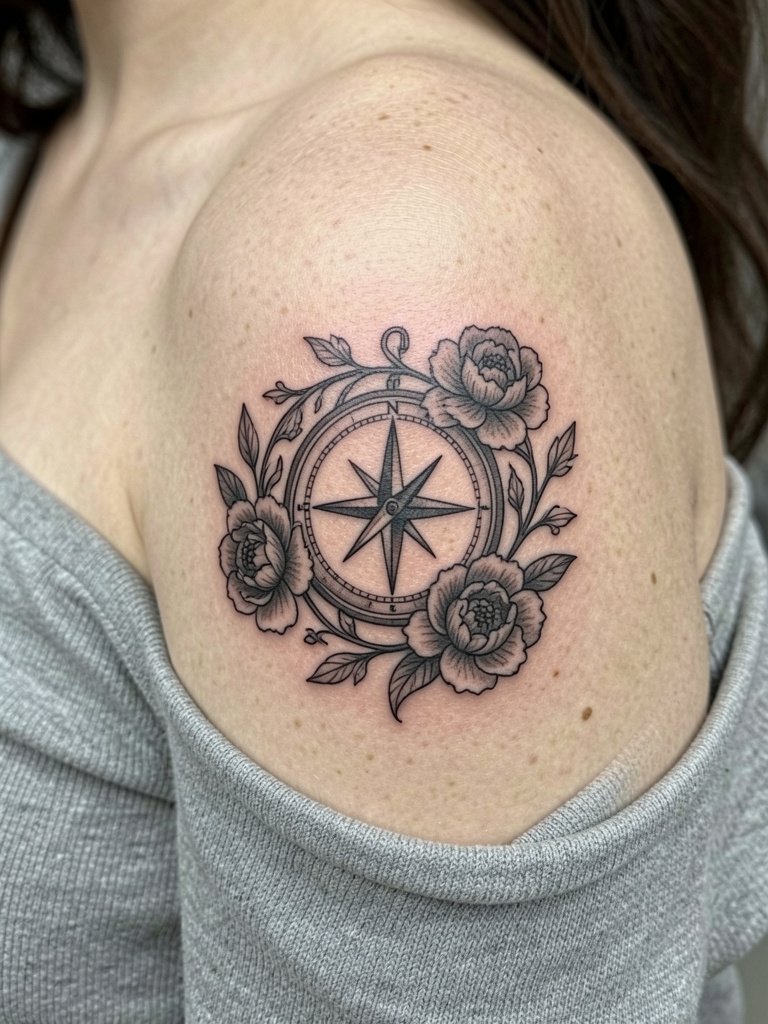
Surrounding a compass with flora softens the nautical edge. I recommend this when you want an organic frame that adds size without adding heavy black. In consultation say which flowers matter and whether you want overlapping stems or clear negative space. A common version that ages poorly packs tiny petal veins into a small circle, which blurs into texture. The inner shoulder is forgiving for detail and often needs one to two sessions for a three-inch piece. For photos and daywear, this placement looks great with an off-the-shoulder top in cream. Plan for rubbing from bag straps while healing and expect a possible touch-up at 18 to 24 months.
5. Geometric Ornamental Compass Mandala on Upper Chest
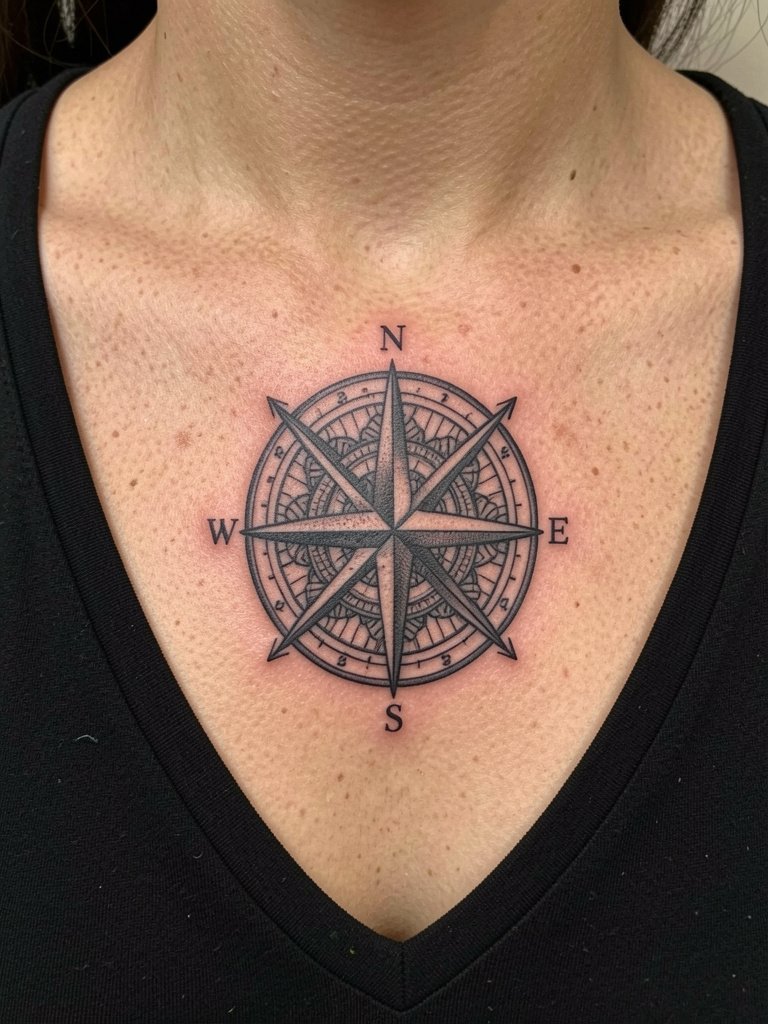
This is a spiritual-leaning option where the compass becomes a center point for radial geometry. Go with this if you want symmetry and precision. During the consult request mirrored reference photos so the artist can translate exact geometry to the sternum line. Small, overcrowded mandalas are the version that ages into muddled grey. For the upper chest pick a three- to four-inch span with thicker outer rings so the design retains contrast. Pain runs moderate as the needle crosses the sternum. Expect one to two sessions and a likely touch-up after two years for the finest inner lines.
6. Broken or "Lost" Compass at the Nape
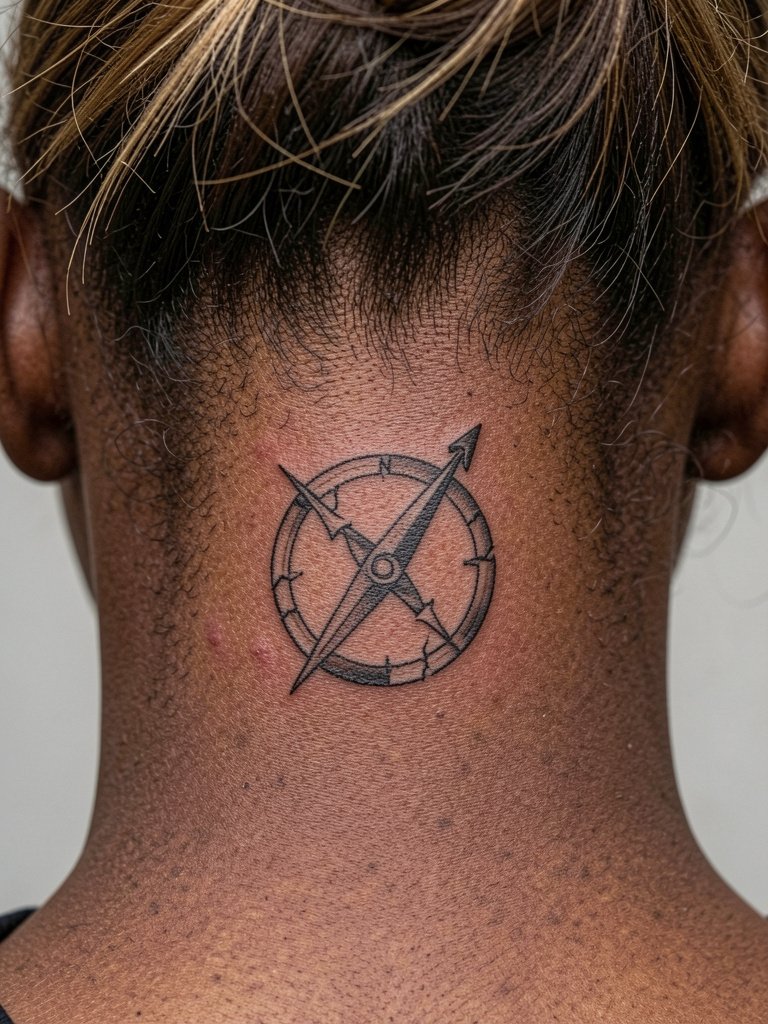
A bent needle works well as a mental-health or acceptance symbol. When you take this route, be specific about how "broken" reads. Tell the artist whether you want a hairline crack or a full gap in the circle and whether you want jagged edges or soft breaks. This placement is sensitive. The two camps on fine-line longevity apply here as well. One side warns the nape moves and stretches with movement, so ultra-thin channels can blur. The other side says with proper depth control and slightly heavier spacing it settles clean. If you pick the nape, plan for hair to be tied up during the session and bring a thin gold choker to frame the area after healing. For session day wear have hair up in a bun and bring a small clip like a hair bun clip in gold. Expect a short but intense 20 to 30 minute sensation and a touch-up possible at 12 months.
Heal Smart
The small wrist and nape pieces above have different healing demands than larger forearm work, so a few targeted products smooth the first week.
- Hustle Butter Deluxe. A non-greasy tattoo-specific healing balm many artists prefer for intricate compass roses because it keeps the skin supple without clogging narrow channels.
- Japanese tattoo wash, pH-balanced. Gentle cleansing that removes debris without stripping pigment from fine blackwork on wrists and inner arms.
- Silicone gel sheets. Useful before a touch-up to soften scar tissue on older compass lines so re-inking reads smoother.
- Thin protective film roll. Helps keep finger and wrist tattoos clean during heavy washing and typing in the first week.
- Sunscreen SPF 50+. Critical for color compasses and any exposed forearm work to slow fading after the healed window.
7. Watercolor Compass Splash on the Calf
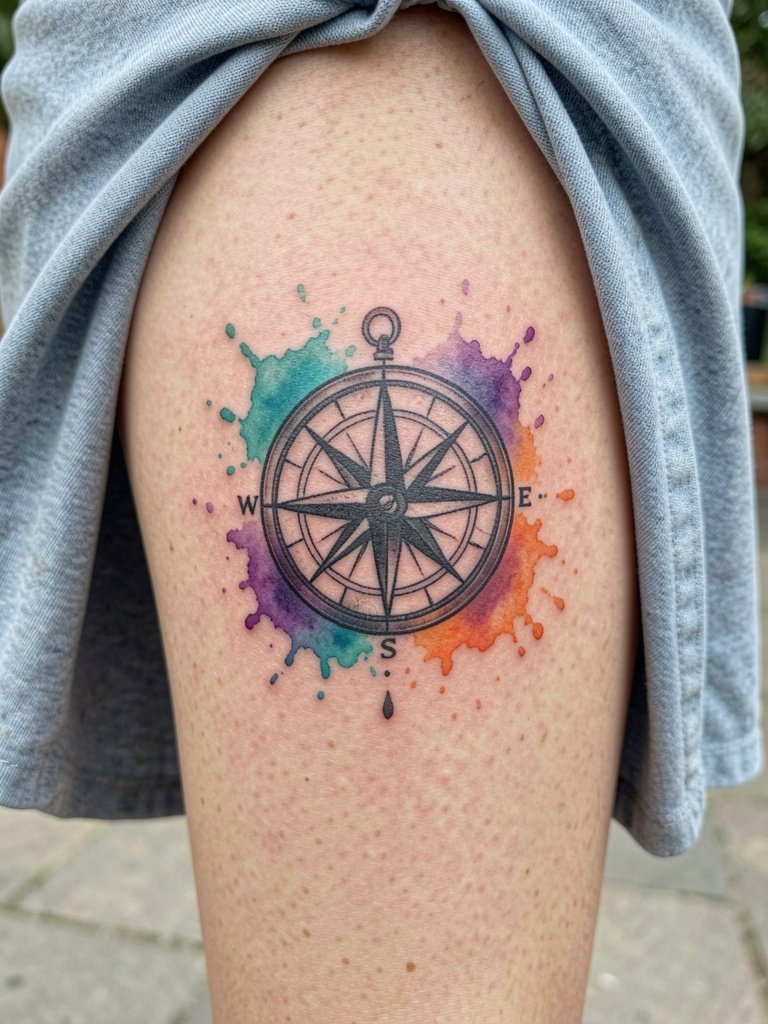
Watercolor compasses are expressive but polarizing. One camp argues that color fades faster than black-and-grey and loses its initial brightness in three to five years. The opposing camp maintains modern pigments and careful sun avoidance let color hold for a decade and that color adds emotional range. If you like watercolor, pick a darker halo around the black needle and ask for layered color saturation rather than a single thin wash. The calf tolerates heavy saturation and reads well in warm weather outfits. For showing the splash, pair it with a summer skirt in teal. Healing is moderate and sun protection is essential to keep the pigments lively.
8. Micro-Realism Compass with Depth on a Finger
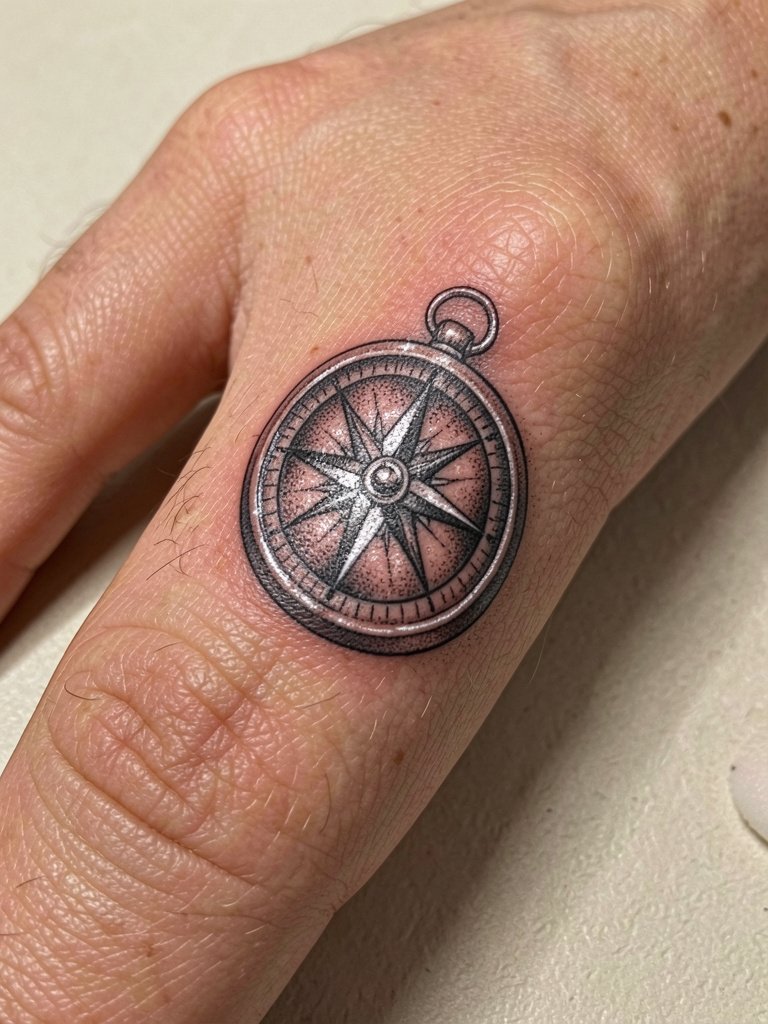
Finger compasses can be stunning but they carry risk. The skin on fingers renews and takes ink differently, so expect softer edges over time and frequent touch-ups. Ask the artist to design the compass with thicker contour lines and stipple shading rather than ultra-thin single-needle fills. The session is quick but can sting more due to thin skin and proximity to bone. A common mistake is requesting text or tiny coordinates on the same finger piece. If you want text, scale it to at least twice what feels comfortable in the sketch. Plan for a touch-up window at six to twelve months and decide if you will accept incremental softening as part of the aesthetic.
9. Compass with Quote Integration on Inner Forearm
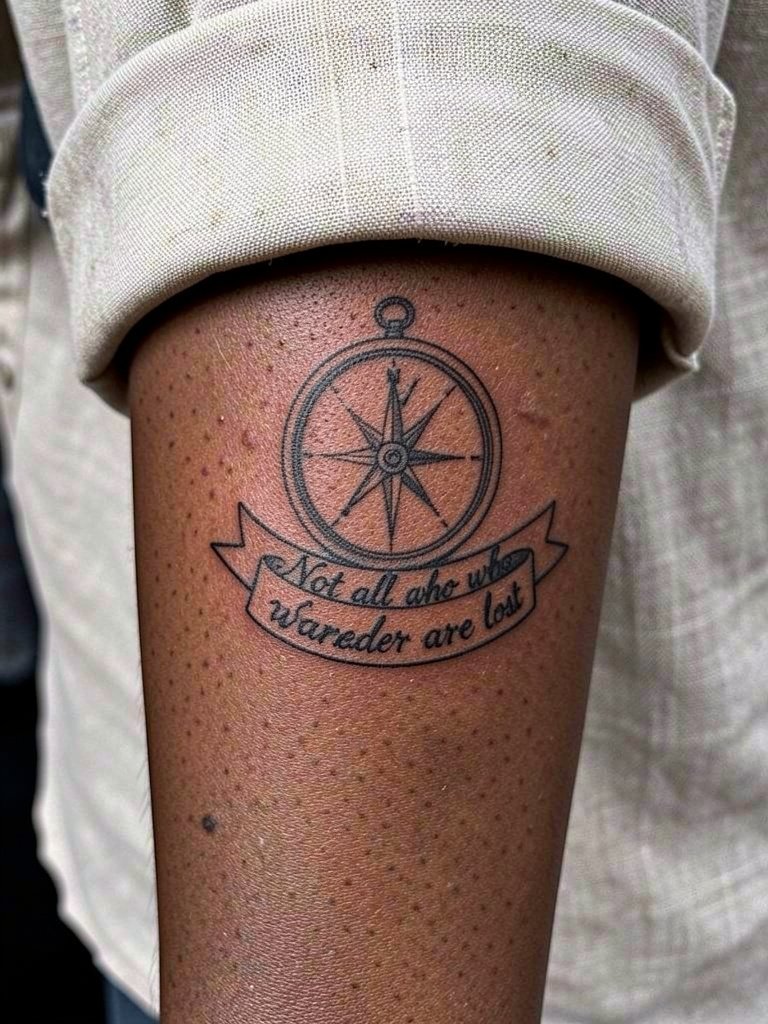
Embedding a short phrase into the compass banner can make the concept unmistakably yours. When choosing words, pick exact lettering and ask the artist to mock it at full scale on skin so you can check readability. A real design error is using script that is too narrow, which blurs into a grey stroke after healing. The inner forearm is forgiving for banners of two to three inches. For session wear try a rolled cuff linen shirt in cream or olive so the artist has full palm-up access. Expect mild tenderness and a likely need to relift contrast during a touch-up at two years if the script softens.
10. Double Compass (Past & Future) on Outer Forearm
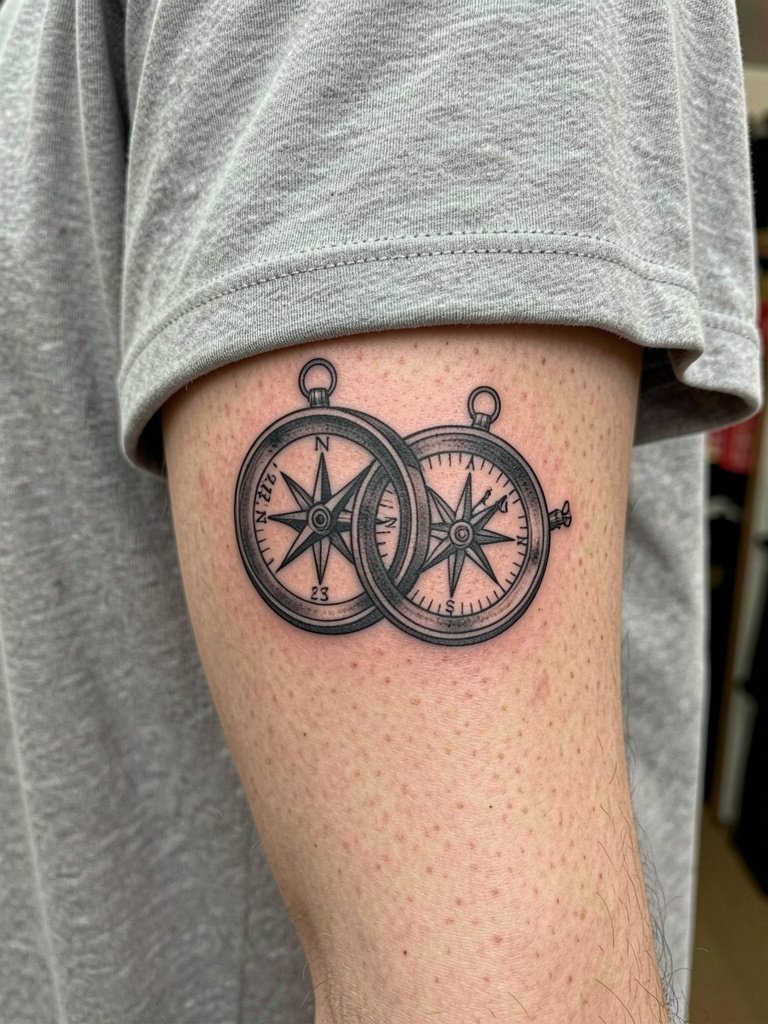
Two compasses let you map where you were and where you hope to go. Plan the labels ahead. Ask the artist to show both compasses at two scales so you can judge overlap legibility. The main mistake is cramming dates and icons into small rings, which produces clogged centers that need touch-up. For the outer forearm, a three- to four-inch connected layout keeps each compass readable. Sessions usually run one to two hours and the work tolerates bold black shading well. Expect a two-year check-in for contrast, especially where lines overlap.
11. Compass with a Nautical Star on the Shoulder
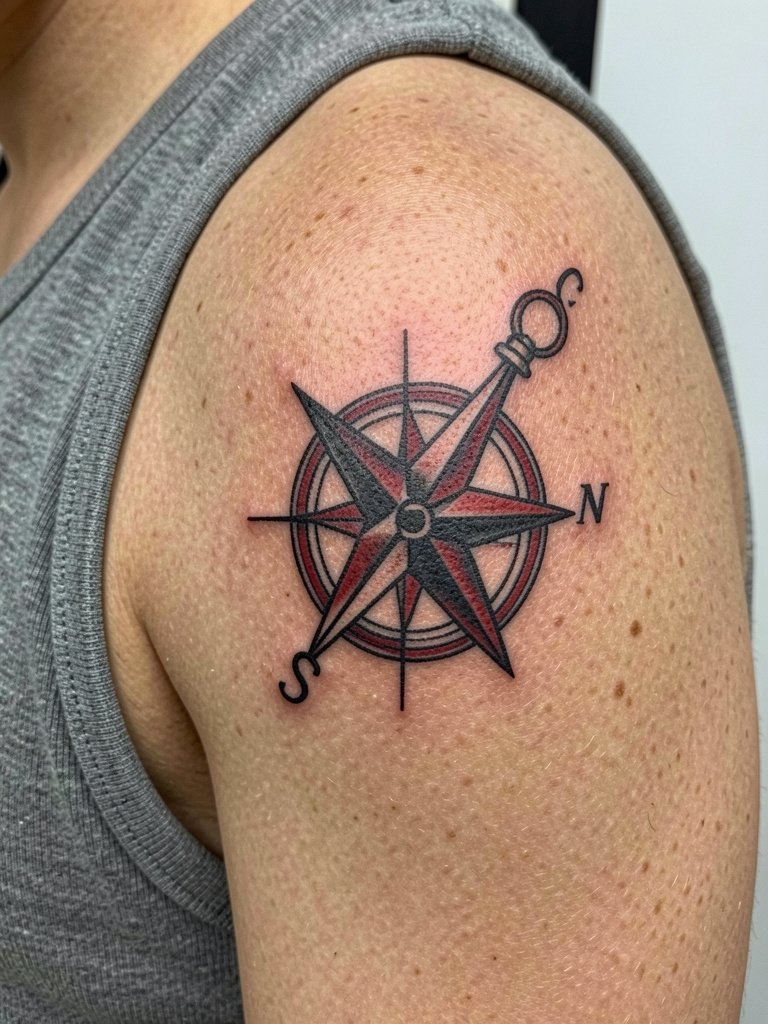
The nautical star tie-in reinforces protection and return-home symbolism. Choose American Traditional fills and ask for flat color patches rather than thin gradients so the reds and blacks stay solid after healing. The shoulder is a steady surface that tolerates saturation and tends to keep edges well. A common error is over-detailing a small star, which loses that crisp geometry over time. For display try a sleeveless or tank top. A v-neck top in black layers well when you want just a hint of collarbone and shoulder framing.
12. Silhouette Compass with Tiny Landscape on Inner Wrist
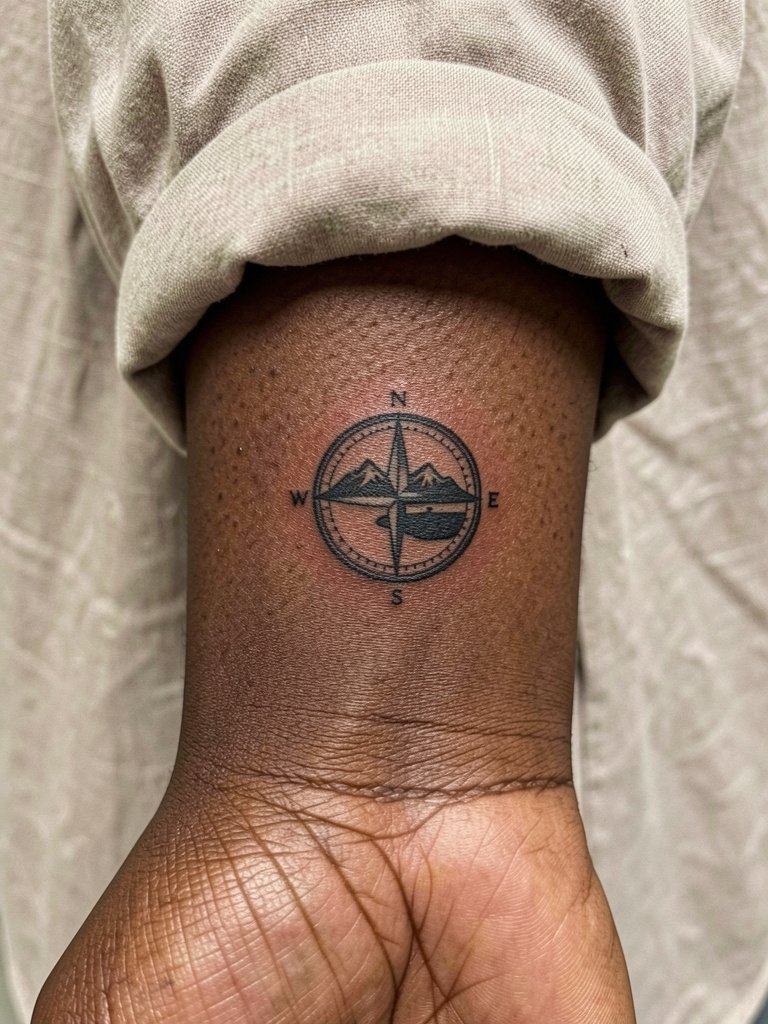
Putting a landscape inside the compass center is a literal way to anchor your travels. For small landscape silhouettes be precise about horizon line thickness and the negative-space lake so the shapes do not merge. A frequent mistake is overcrowding the tiny center with too much geography. The inner wrist handles six- to eight-week healed contrast well, but tiny silhouettes on the wrist will usually need a touch-up at one year if you want crisp horizon edges. The session is short and sensitivity is modest.
13. Compass Rose with Ornate Filigree on Side Torso Ribcage
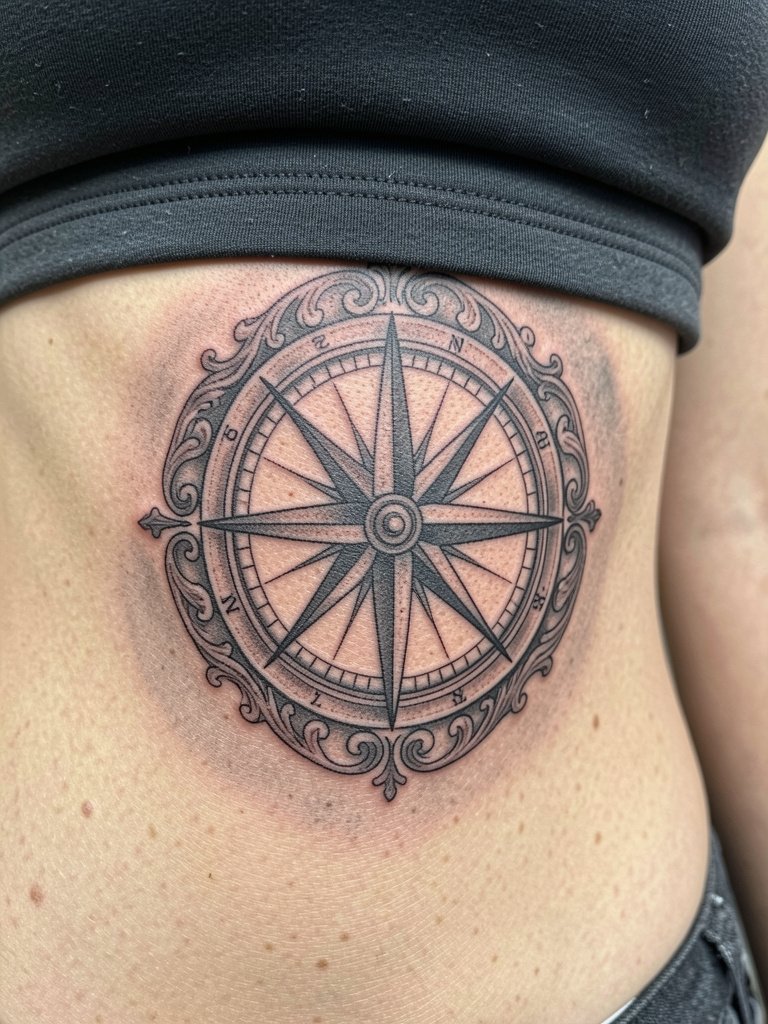
Filigree lets a compass move toward ornate, nearly jewelry-like work. The ribcage demands planning for curvature and breathing movement. If you want high detail, size the panel so the filigree has negative space to read. Many people try to shrink Victorian detail onto ribs and find it blurs. Pain is higher on the ribs. Artists split on whether fine-line holds here. One position says ribs stretch with breathing and thin lines blur within two years. The counter position notes that with precise depth and slightly wider spacing the piece settles fine. If you choose this spot, budget for two sessions and a likely touch-up at 18 months.
14. Compass on a Map Fragment across the Dorsal Forearm
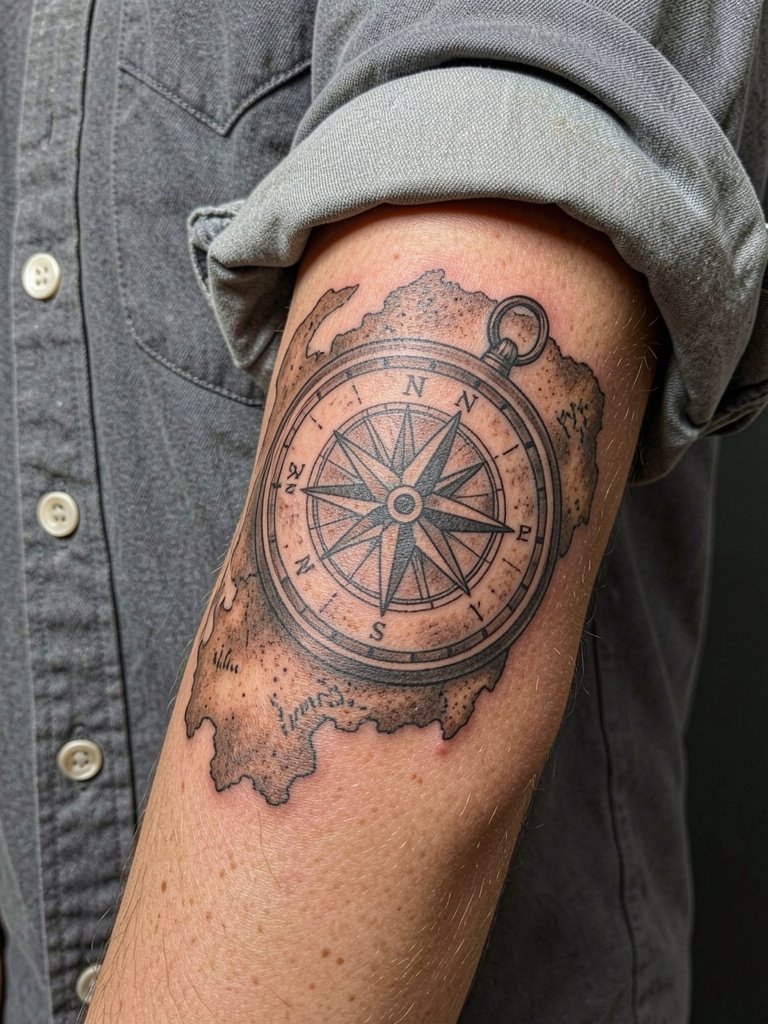
A map-fragment backdrop makes the compass part of a story fragment. Tell the artist which map styling you want: tea-stained texture, cartographic lines, or lat-long grids. The mistake is requesting overly fine map texture in a three-inch block, which becomes visual noise. The dorsal forearm reads the texture well at three to four inches and tolerates subtle sepia washes. For wardrobe, a rolled-sleeve button-down in earth tones pairs naturally and frames the piece. During the session wear a long-sleeve shirt you can roll up to avoid tight cuffs.
15. Compass Rose with Ornate Filigree on the Lumbar Lower Back
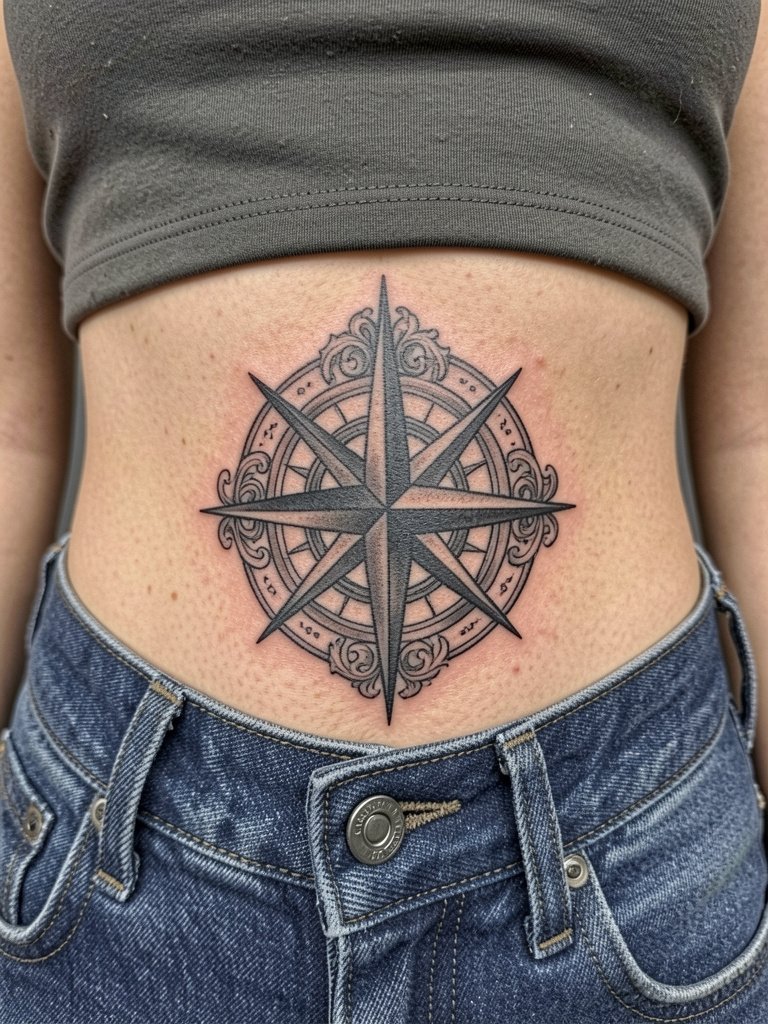
The lower-back compass is a classic placement for larger ornamental pieces. Size and central symmetry matter. Ask for a mockup against the waistline so the filigree sits above the waistband and does not get hidden. A common mistake is centering the design too low where high-waist clothing will cover it entirely. For showing it off plan low-rise bottoms and consider a delicate chain belt to frame the area. Sessions can be longer for the shading, and touch-ups at two years are common to keep the filigree crisp. A staple pair for this look is low-rise jeans.
16. Micro-Realism Finger or Inner Wrist Revisited for Collectors
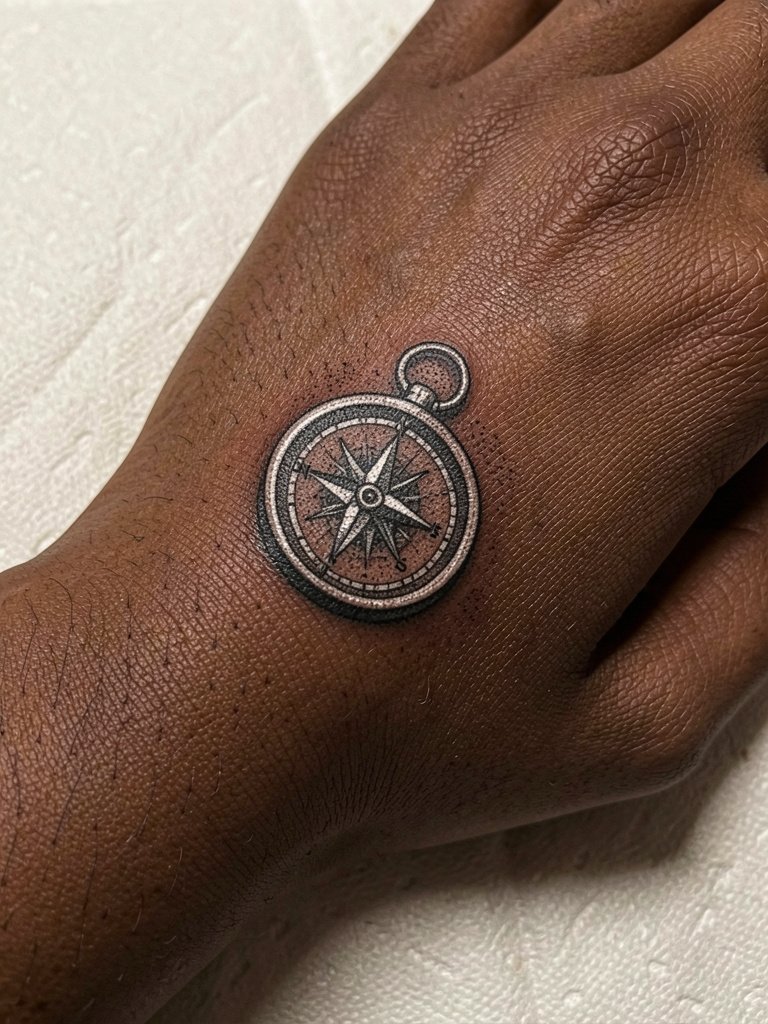
Collectors who favor micro-realism know the upkeep. On fingers plan for periodic refreshes and accept softer edges as part of the lifecycle. If you want to minimize repeated sessions, move this tiny detail to the inner wrist where skin renewal is less aggressive. For consultation bring a healed three-year micro-realism reference so the artist can match stipple density for longevity. Pain is brief but sharp on fingers. Expect a definite touch-up window at six to twelve months for most micro pieces.
17. Compass as a Map-Sleeve Patchwork
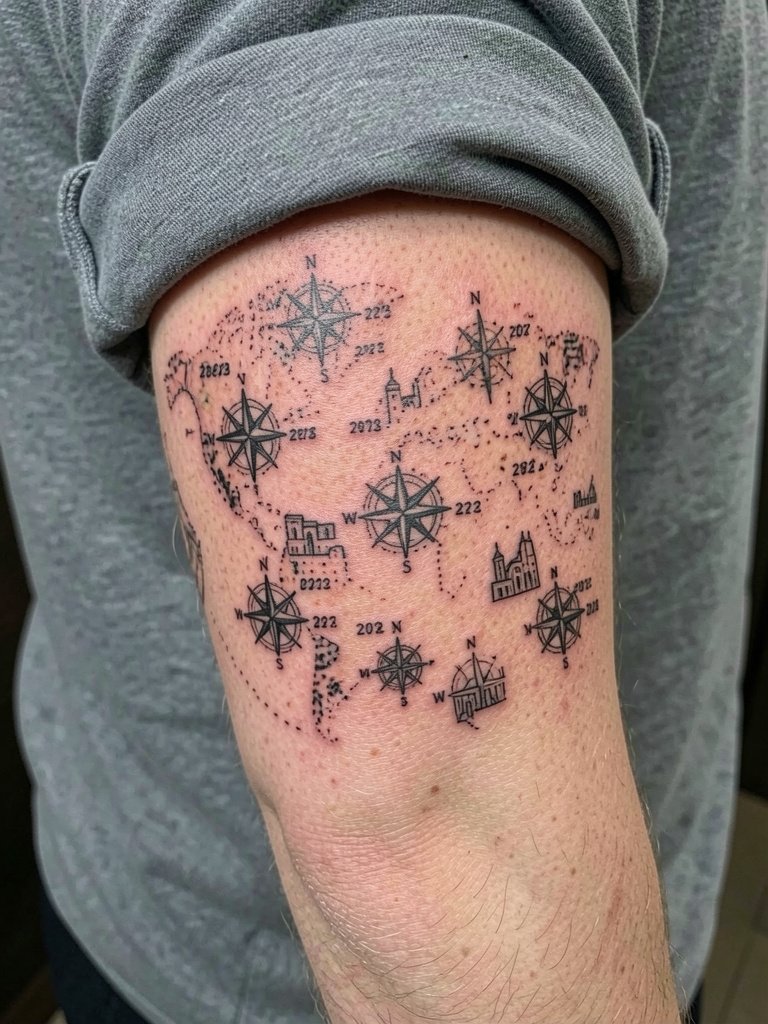
A travel-log sleeve where each small compass marks a city is an under-covered but powerful idea. Plan each compass at a consistent scale and tell the artist exactly which coordinates or short dates should be used. The design avoids a single focal point and lets you add compasses over time. Session planning matters. For the sleeve begin with anchor pieces that establish spacing. When revealing the collection wear layered shirts with rolled sleeves and a leather watch on the opposite arm for balance. For the appointment bring clear reference photos and a list of exact dates or coordinates so the artist can design a cohesive grid. Expect multiple sessions spread across months and touch-ups focused on high-friction compasses like those placed near the wrist.
Frequently Asked Questions
Q: How do I choose between fine-line and neo-traditional compass work for the wrist or ribs?
A: It depends on your tolerance for maintenance and how often the area sees friction. Fine-line looks refined but can require touch-ups sooner in high-movement zones. Neo-traditional with slightly heavier outlines trades a little delicacy for longer-lasting clarity, and many people pick that for wrists or ribs to reduce early softening.
Q: Will a watercolor compass hold its color on darker skin tones?
A: Watercolor pigments can lose their vibrancy faster on darker tones without careful saturation and contrast. If you want color, ask for richer layering and a strong black anchor so the composition reads as color fades. Many artists add white highlights or stronger black outlines around the wash to preserve legibility.
Q: What size should a compass with coordinates be so the numbers stay readable?
A: Make the coordinates at least one and a half inches in length and use a monospace or thin serif type that the artist can scale. Ask the artist to stencil the exact digits on your skin at full scale and check readability from arm’s length before any needle touches the skin.
Q: Where can I find healed portfolio examples and local artists without naming specific studios?
A: Search hashtags like #compass tattoo, #finelinetattoo, and #nauticaltattoo on Instagram and TikTok then filter by location for nearby portfolios. Use Tattoodo or the Inked App to search keywords like "compass rose blackwork" and look for healed photos. Reddit communities such as r/tattoos and r/TattooDesigns also surface peer recommendations and healed examples across skin tones.
Q: How soon should I expect a touch-up for a tiny compass on a finger or wrist?
A: Plan for a touch-up within six to twelve months for micro pieces on fingers. Wrist pieces often need a refresh around 12 to 18 months if the linework is very thin. Budget your timeline and evenings off for quick follow-up sessions so the design maintains its clarity.
Q: What should I wear to a session for an inner-shoulder or ribcage compass?
A: Choose clothing that gives the artist unobstructed access. For inner-shoulder pieces a strapless or off-the-shoulder top works. For ribcage work a crop top or loose tank is best so the artist can move freely. Keep garments in their normal worn state and avoid tight cuffs that press on the skin while healing.