
Tiny butterfly tattoos are everywhere on feeds, but the ones that still read crisp after two or three years were planned differently from the start. Scale, line weight, and placement matter more than the prettiest reference photo. Read these 21 small butterfly ideas with specific notes on how they age, what to specify in consultation, and which clothing choices make the finished piece sing.
1. Micro-realistic Butterfly on Inner Forearm
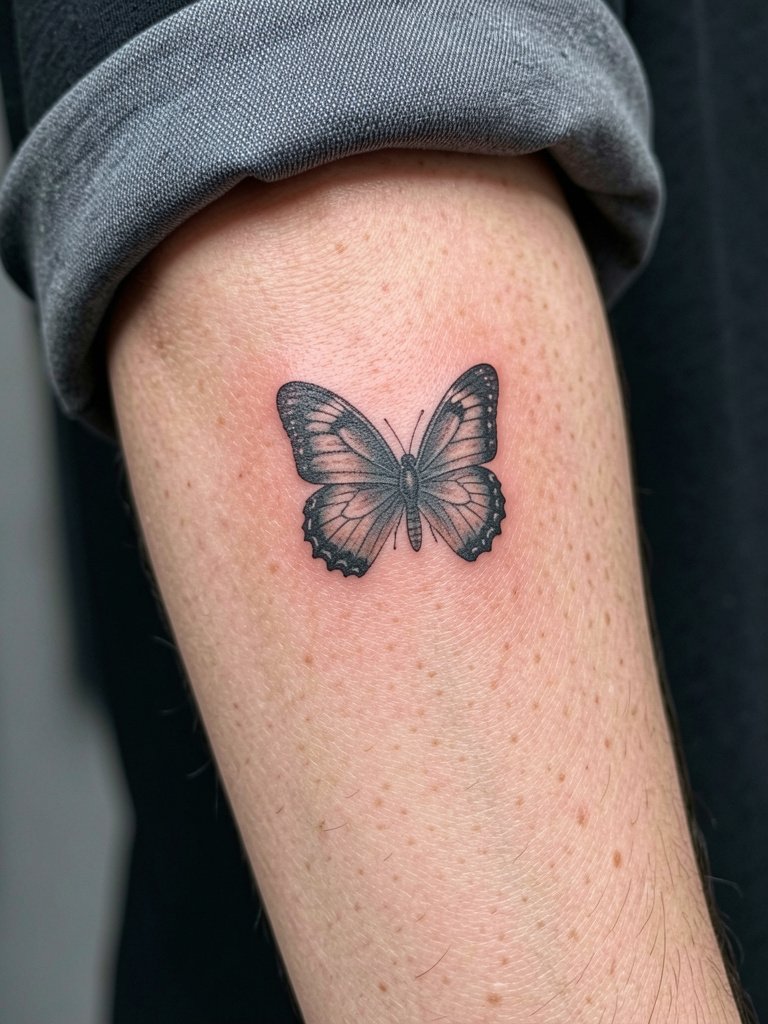
Micro-realism shows incredible detail in a small area, and I recommend this when you want species accuracy rather than a sketchy outline. For an inner forearm 4–6 cm piece, tell the artist you want printed wing veins and a slightly higher contrast between wing edges and body so the pattern reads on camera. A common mistake is shrinking a detailed reference down too small. At six months the shading still reads, at two years the tiny stipple may need a touch-up to restore contrast. Session time usually falls in the 1.5 to 2 hour range. For the appointment wear a rolled cuff linen shirt so the artist can access the full forearm without tugging.
2. Fine Line Butterfly on the Collarbone
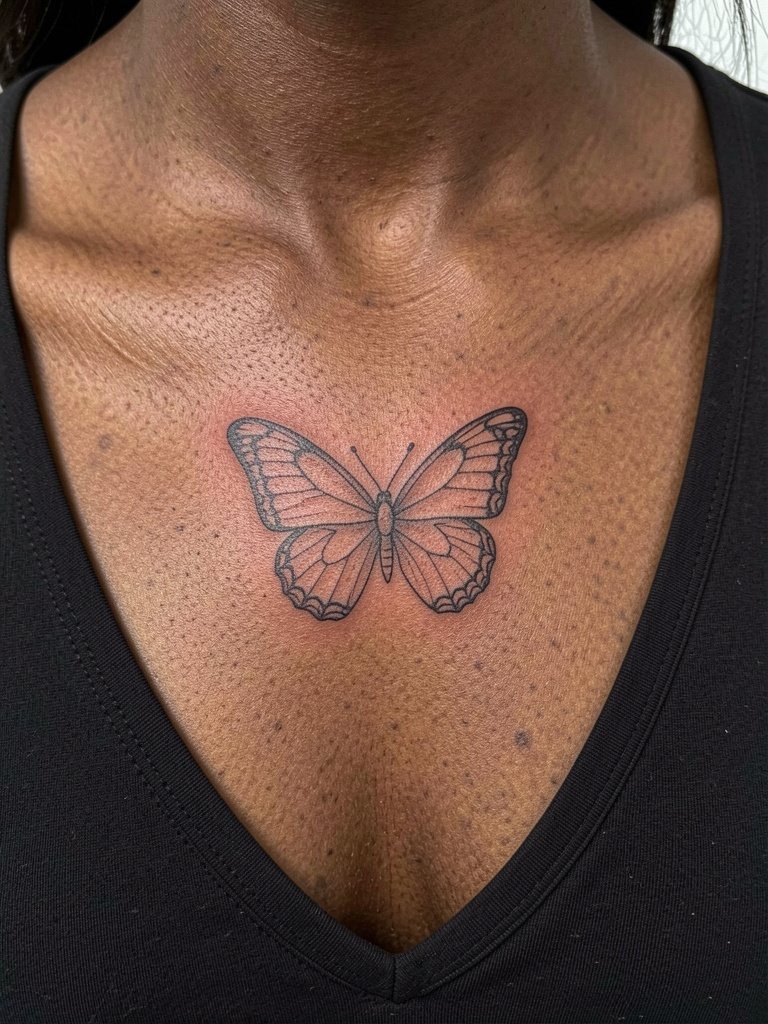
The collarbone reads beautifully with fine line because the bone and flat skin make crisp edges. Ask the artist to show a stencil at full scale on your skin so you can see how the veins interact with your clavicle contour. A design that ages poorly here is one with ultra-thin, hairline strokes that the body blurs into indistinct gray after a year. Expect low-to-moderate pain and a 45–75 minute session for a 2–4 cm piece. Showing it off pairs well with cropped tops in cream or pastels that reveal the collarbone without covering the ink.
3. Minimalist Outline Butterfly on the Wrist
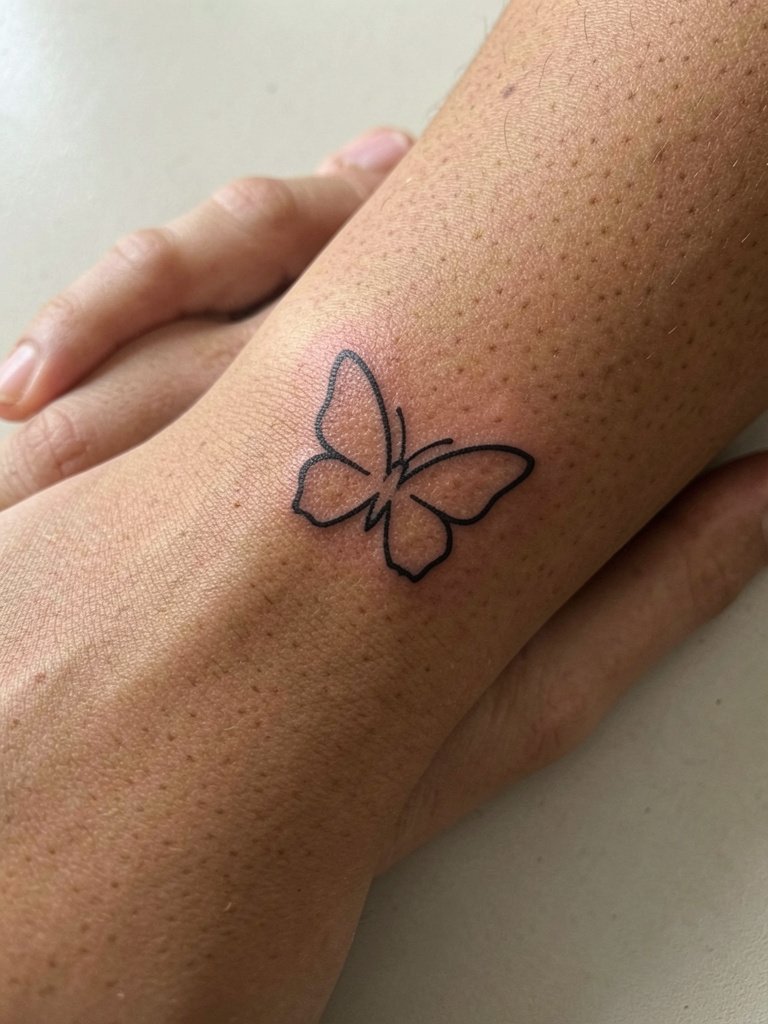
A minimalist wrist outline is a low-commitment option for a first small tattoo. The key is line weight. Request a slightly stronger outline than the thinnest needle in the reference. The typical mistake is mimicking ultra-thin Instagram outlines, then watching them soften into a blurry gray within a year. Expect a quick 20–45 minute session and low pain. For a simple finishing look wear a minimalist watch or thin chain bracelet on the opposite wrist so the tattoo has space to breathe and still looks intentional.
4. Tiny Discrete Butterfly Under 1 cm
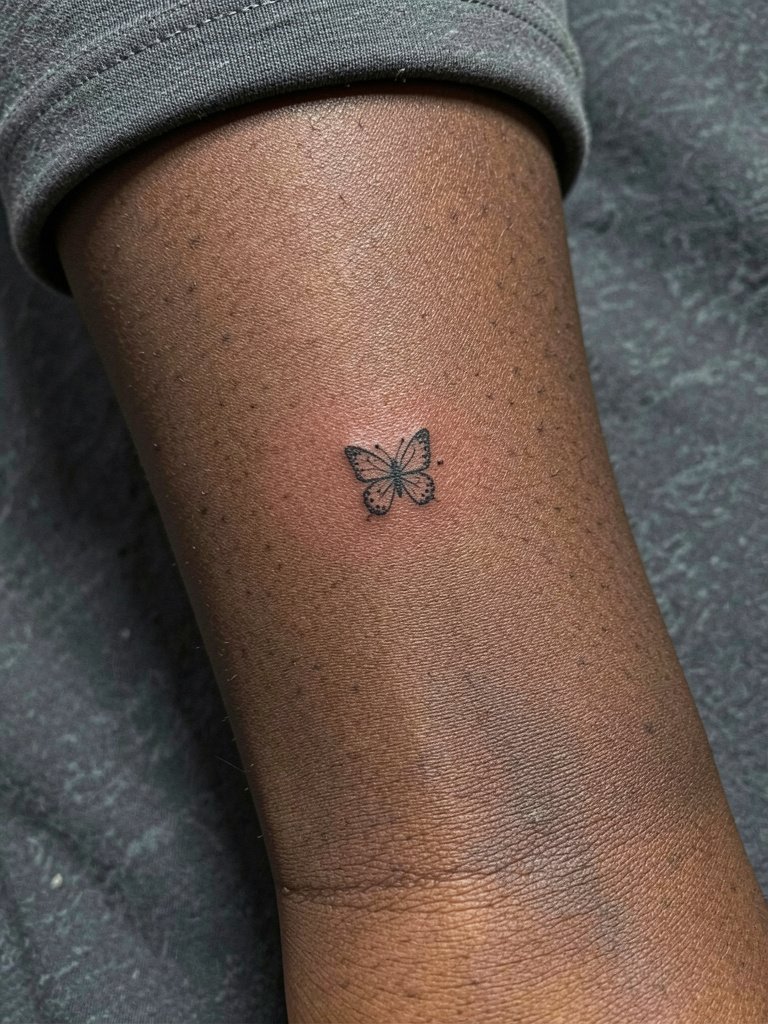
Tiny butterflies under 1 cm are discreet, but they are also the fastest to vanish. I've noticed that pieces this small often need a touch-up inside a year unless the artist uses a slightly heavier anchor line. Expect a short 15–30 minute session and low pain. The common mistake is assuming shop minimums match the design price. Bring realistic expectations on touch-ups and plan for a minimum fee at the studio. For session day wear comfortable short sleeves so the wrist or small patch of arm is fully accessible.
5. Group Flight Composition Along the Upper Arm
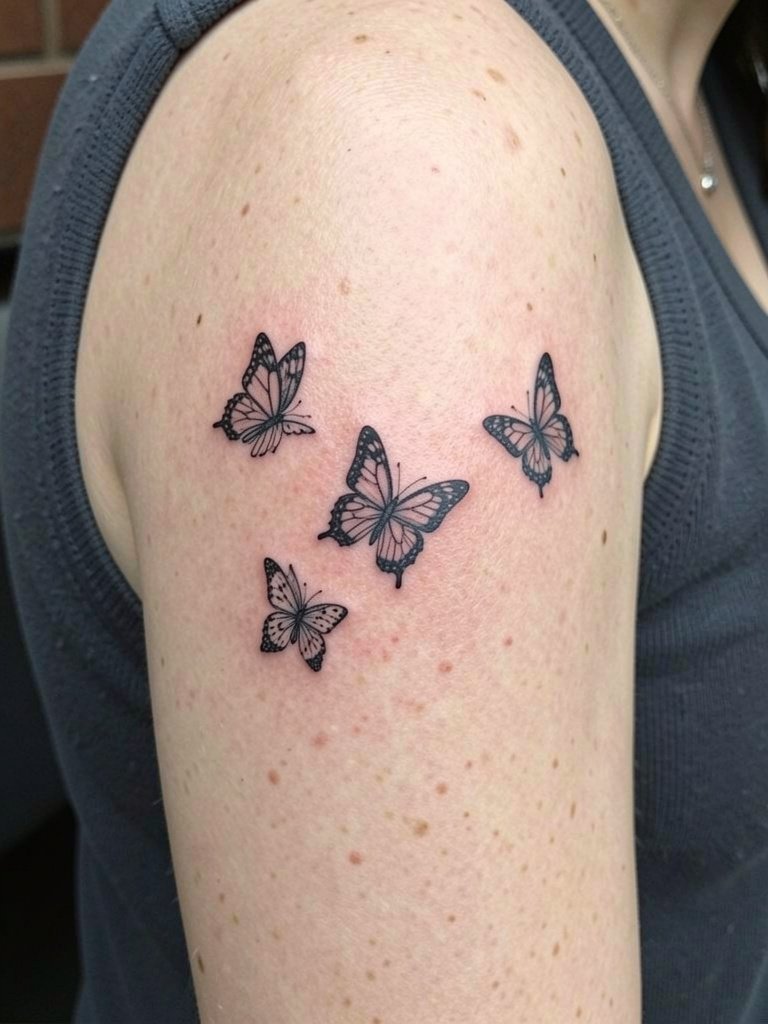
A multi-butterfly composition sells motion better than a single figure. I recommend this if you want a narrative effect across the arm without a sleeve. During consultation bring a photo that shows spacing at real scale so the artist can plan breathing room between each wing. The common aging issue is crowding the figures too tightly. Session time ranges from 1 to 3 hours depending on detail. Show it off by wearing sleeveless neutral tanks that reveal the flight line.
6. Semicolon Butterfly Behind the Ear or on the Wrist
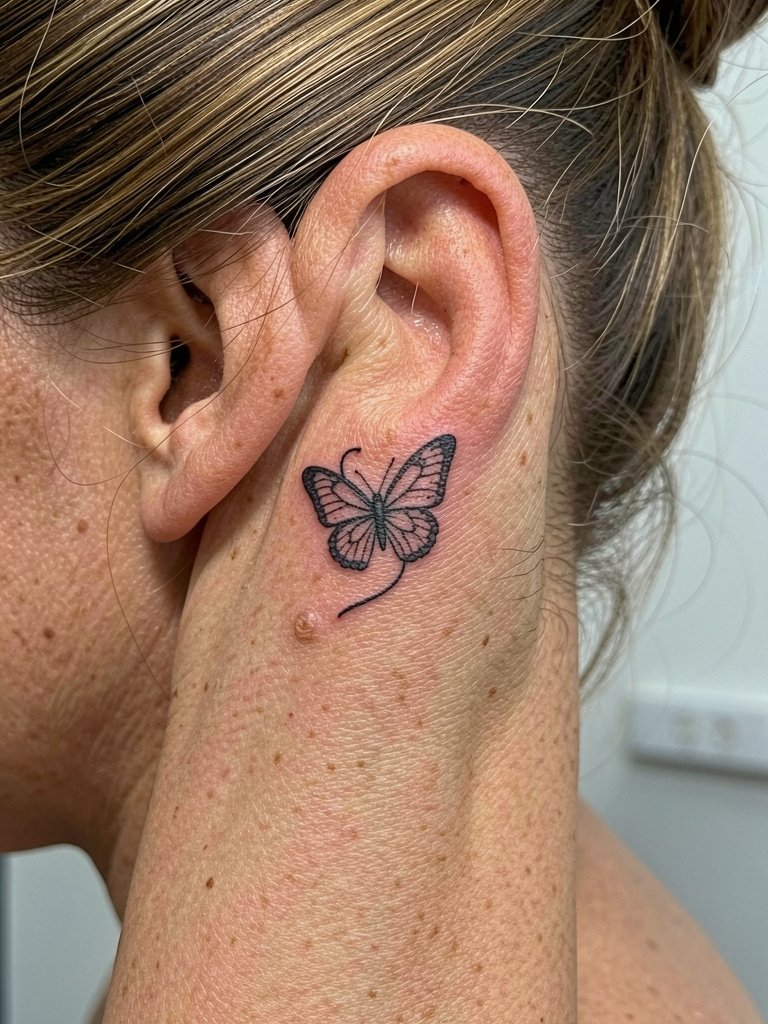
This combo has strong symbolism and a small visual footprint. If you choose behind the ear, note that the mastoid area needs an artist experienced with hairline needlework and quick sessions. For the wrist, specify the semicolon's exact placement relative to the wrist crease so it does not warp with movement. The piece is quick, often under an hour. Many people pair this design with an understated necklace or minimal stud earrings, and for a wrist piece a thin chain bracelet keeps the aesthetic balanced without covering the ink.
Session Day Picks
The wrist, collarbone, and forearm pieces above need light wardrobe planning so the artist can work and you heal cleanly.
-
Hustle Butter Deluxe. A thinner balm many fine-line specialists prefer for micro work, especially where heavy ointment can clog tiny channels.
-
TattooGlo Aftercare. Gentle lavender formulation that users with wrist and forearm tattoos report reduces redness during the first week.
-
Epic Volumizing Balm. Chamomile and calendula ingredients soothe itching while you heal small, high-motion pieces.
-
Bepanthen Tattoo Ointment. Thicker option that helps prevent winter dryness on ribcage or chest placements.
-
Aquaphor Healing Ointment. A thin, widely available choice for the first few days that many people use for small linework without heavy pore clogging.
7. American Traditional Bold Butterfly on the Thigh
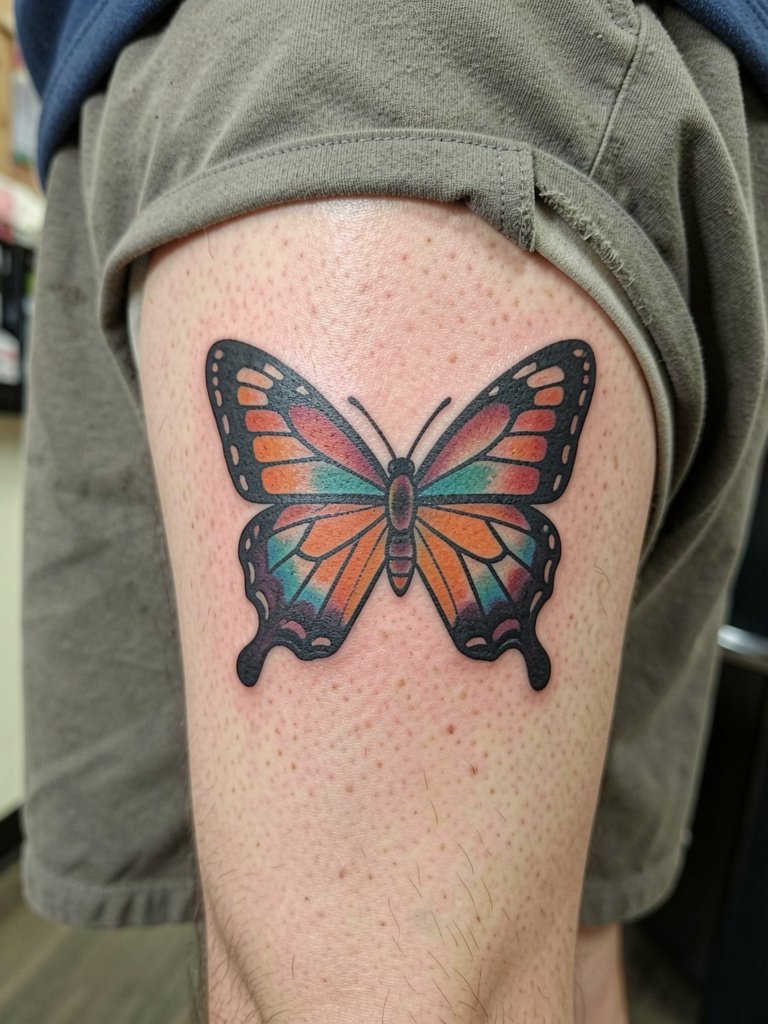
American Traditional scales up nicely, which is why I suggest the thigh for bolder small butterflies that still read from a distance. Tell the artist you want strong contrast and flat saturation so color holds over time. Avoid compressing lots of micro detail into a traditional palette; that mismash ages poorly. Expect moderate pain and a 1.5 to 3 hour session depending on size. For evenings out a pair of high-waisted shorts frames the thigh piece without covering it.
8. Geometric Butterfly at the Wrist or Collarbone
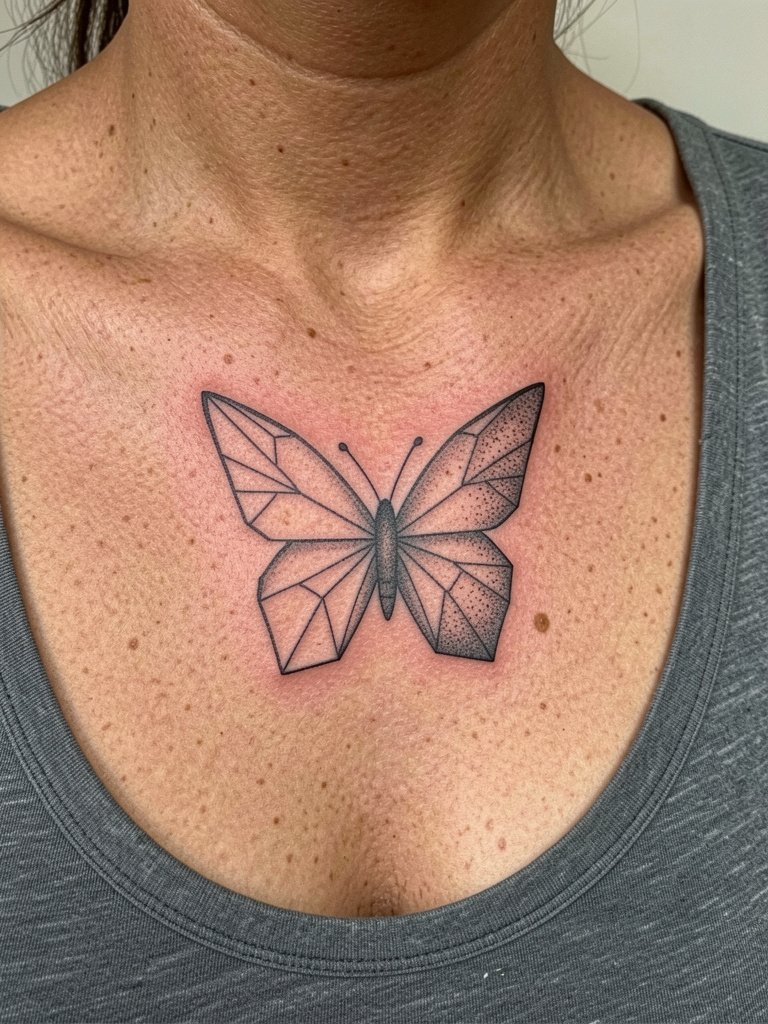
Geometric hybrids read modern and can avoid muddiness if lines are left open. Specify to the artist that symmetry must be preserved at the scale you want, because tiny geometric shapes can close up as they heal. The common error is over-detailing the geometry in a 2 cm space. Expect 45–90 minutes. For a collarbone placement, wear a strapless or open-neck top to showcase the precise geometry.
9. Watercolor Butterfly on the Shoulder
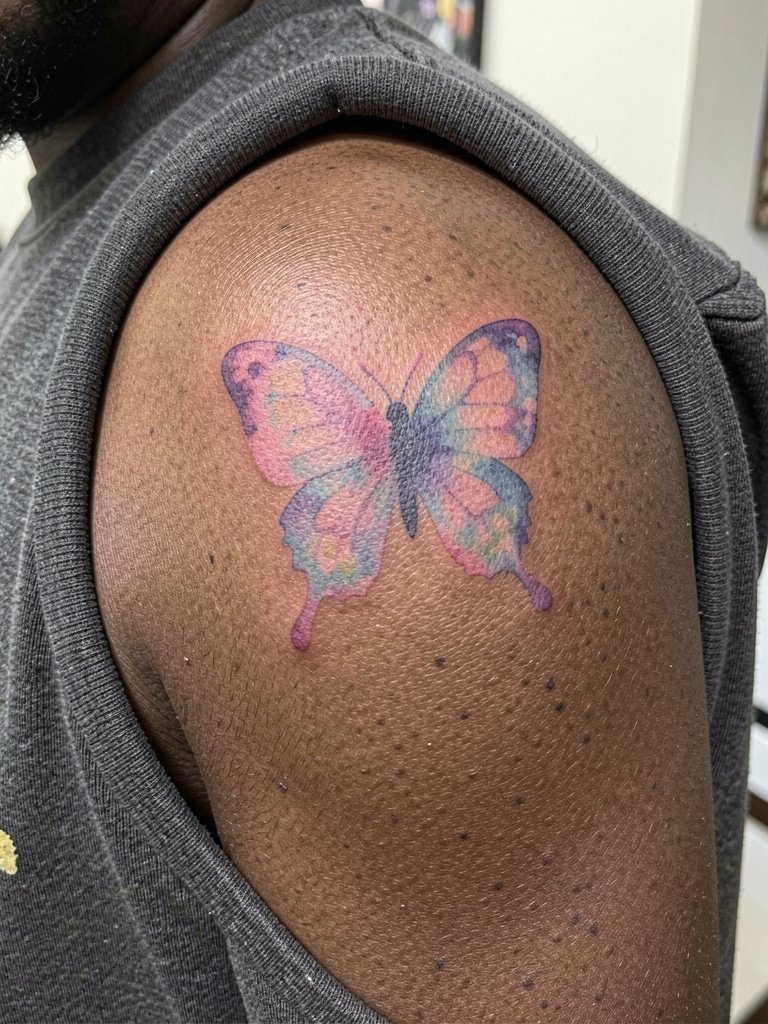
Watercolor looks ethereal at first but tends to fade faster than saturated black-and-gray in a small treatment area. One camp argues that pastel watercolor in small butterflies loses definition within a year. The other camp counters that top-quality pigments and careful layering preserve color longer. If you want color that lasts, ask the artist for subtle outline anchors or slightly denser saturation in the wing tips. Expect a 1.5 to 3 hour session and plan a color touch-up within 12–24 months. For daytime wear, sleeveless earth tones like olive let the colors pop without competing.
10. Realistic Monarch on the Shoulder Blade
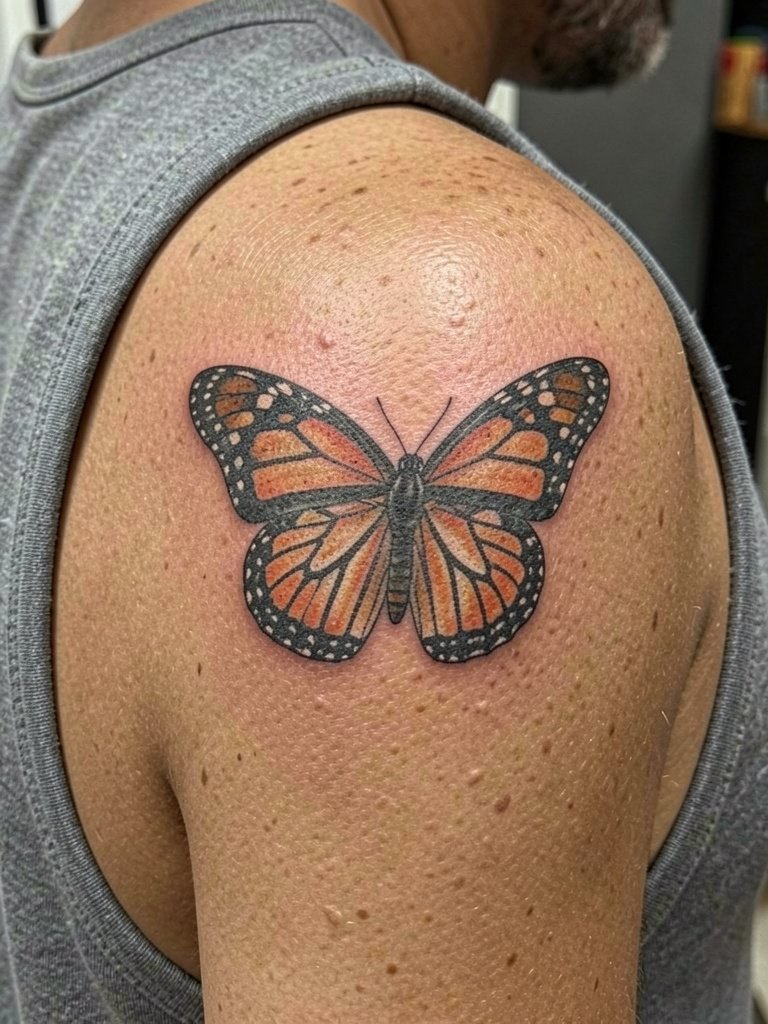
A Monarch is a great choice if you want recognizable species detail in a small format. Make sure the artist shows how wing veins will be scaled down, because the wing's trademark veins can thicken or smudge if drawn too fine. Healed look at two years depends on contrast retention, so ask about a one-year touch-up in the consultation. Sessions often run 1.5 to 2.5 hours. For outfits, sleeveless tops or loose tanks display the shoulder blade gracefully.
11. Butterfly with Small Flowers on the Ribs or Inner Forearm
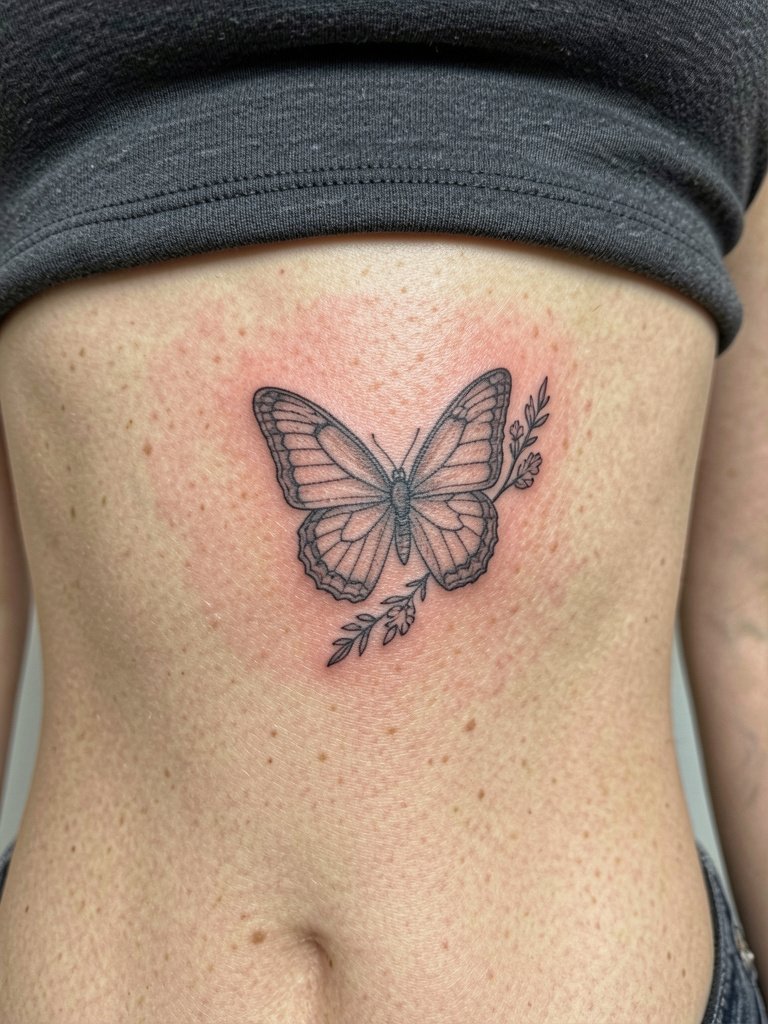
Rib placements bring two major debates. One camp argues fine line on ribs blurs within two years because the skin stretches and shifts constantly in that area, especially under compression from clothing. The other camp maintains fine line settles fine on ribs when the artist uses slightly wider spacing and correct depth, and they point to healed examples as evidence. If you choose ribs, request a slightly bolder anchor line on the butterfly and clear photos of the artist's healed ribwork. The ribs are higher on the pain chart and sessions are often 1.5 to 3 hours. For session wear pick a loose crop top or tie-front shirt so the artist can access the side torso without tugging.
12. Butterfly with Celestial Accents at the Collarbone or Behind the Ear
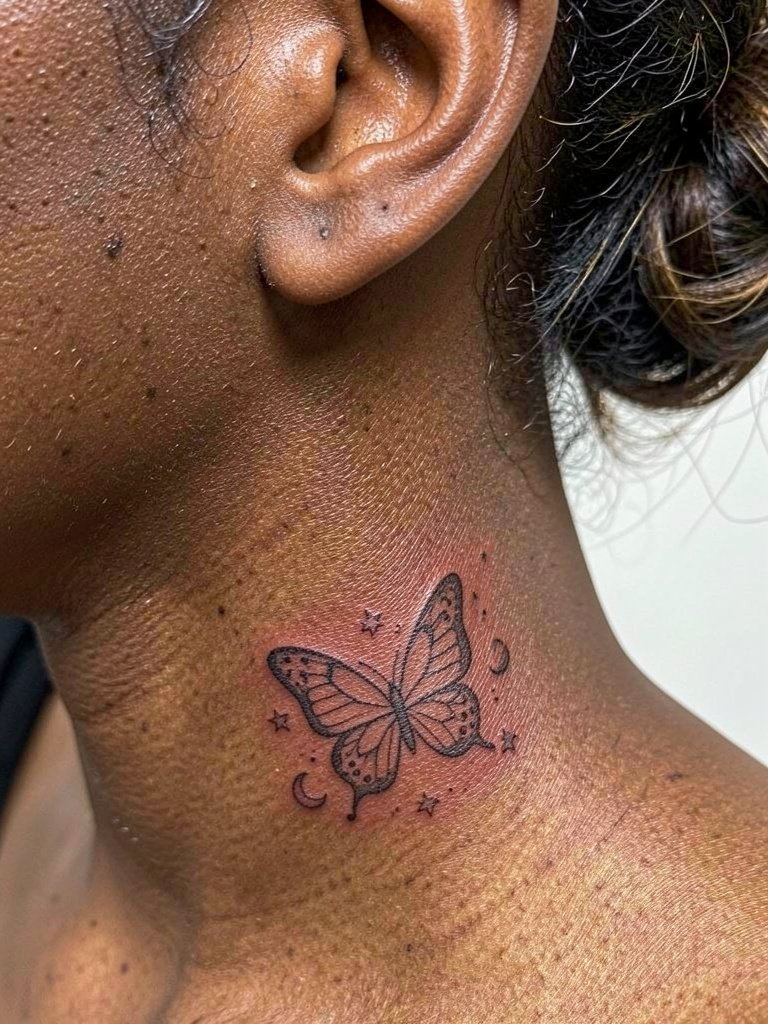
Pairing cosmic motifs with a small butterfly gives the design a clear visual anchor. Specify whether you want white-ink accents for the stars or simple negative-space dots, because white ink can fade faster on some skin tones. Behind-the-ear placements require an artist comfortable with tiny, precise passes. These are short sessions under an hour for each side. For showing it off pin your hair in a casual updo and add delicate hair pins that sit above the ear.
13. Cheekbone Butterfly (Tiny Facial Placement)
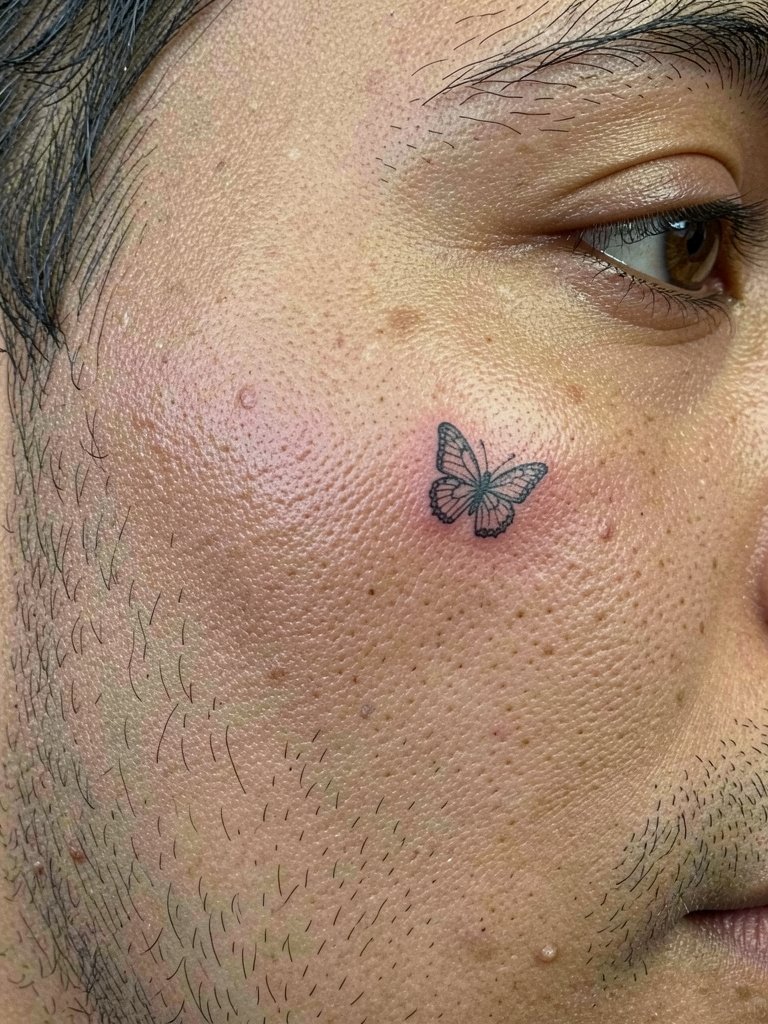
Facial tattoos are a separate commitment and not common for first-timers. If you are considering a cheekbone butterfly, seek a specialist who publishes healed facial work and understands touch-up expectations. Note that numbing and steady hands matter because any movement changes a millimeter on the face. The placement is sensitive and sessions are short but intense. For professional settings plan subtle makeup or hairstyles that reveal the piece selectively, and use lightweight concealers sparingly when needed for interviews.
14. Ankle Butterfly with Companion Flowers
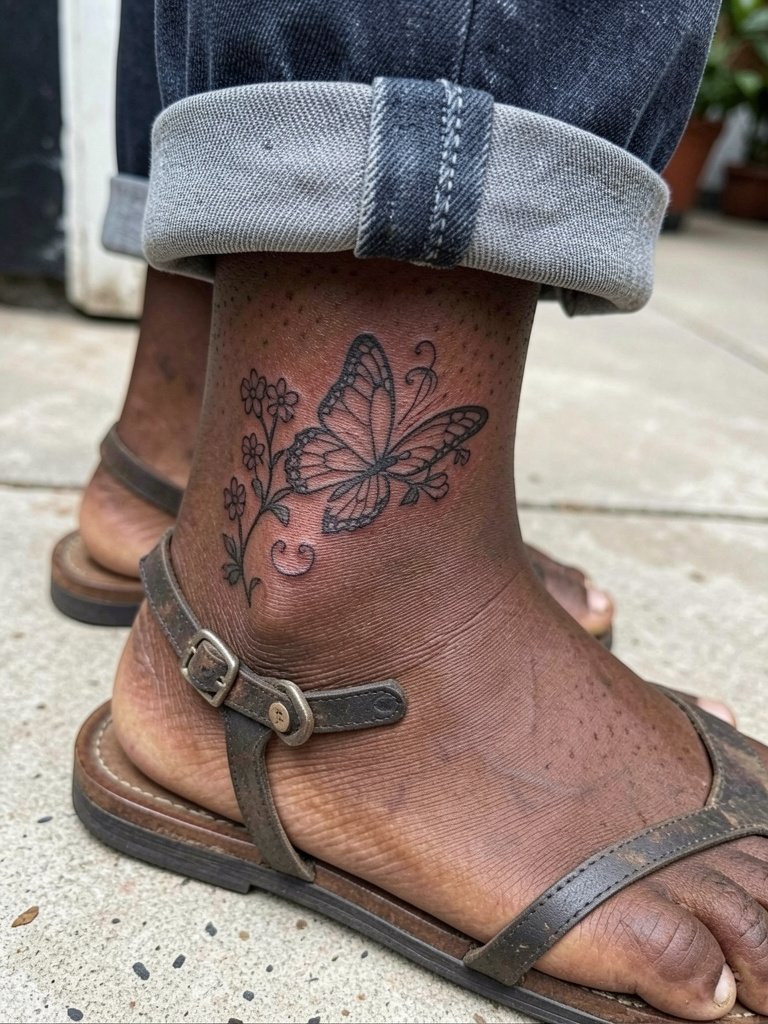
The ankle's constant friction from socks and shoes is the main longevity factor. I suggest slightly bolder outlines for the ankle to resist early softening. A common mistake is placing the design too close to the ankle bone crease where movement blurs detail. Session time is 30–90 minutes and pain is low-to-moderate. For a beach-ready look pair the tattoo with slim-strap sandals that frame the ankle without rubbing the ink during the first week.
15. Lower Back Butterfly with Lace Swirls
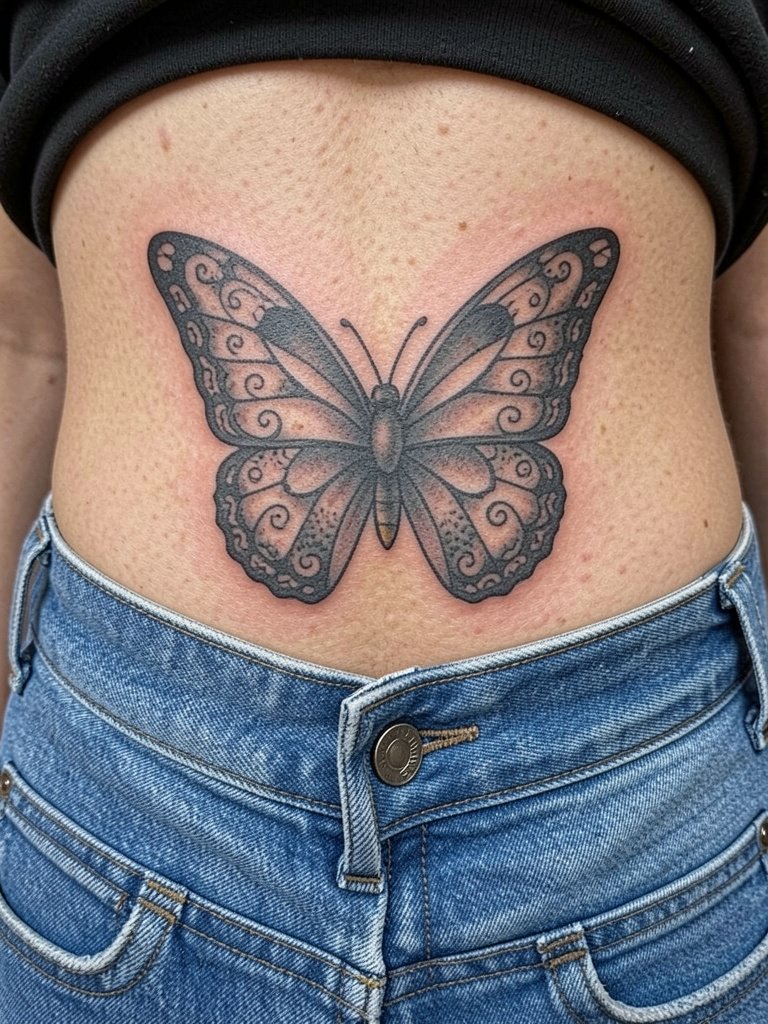
Lower back pieces allow a larger canvas and bold shapes, which age better than tiny filigree in high-motion spots. If you plan future weight fluctuation, place key wing lines away from the direct waist crease to reduce distortion later. Sessions are longer, often 2–4 hours, and healing can be influenced by tight waistbands. For outfit pairing low-rise jeans and cropped tops highlight the lumbar piece while avoiding pressure on the fresh ink.
16. Tiny Butterfly on the Lateral Neck
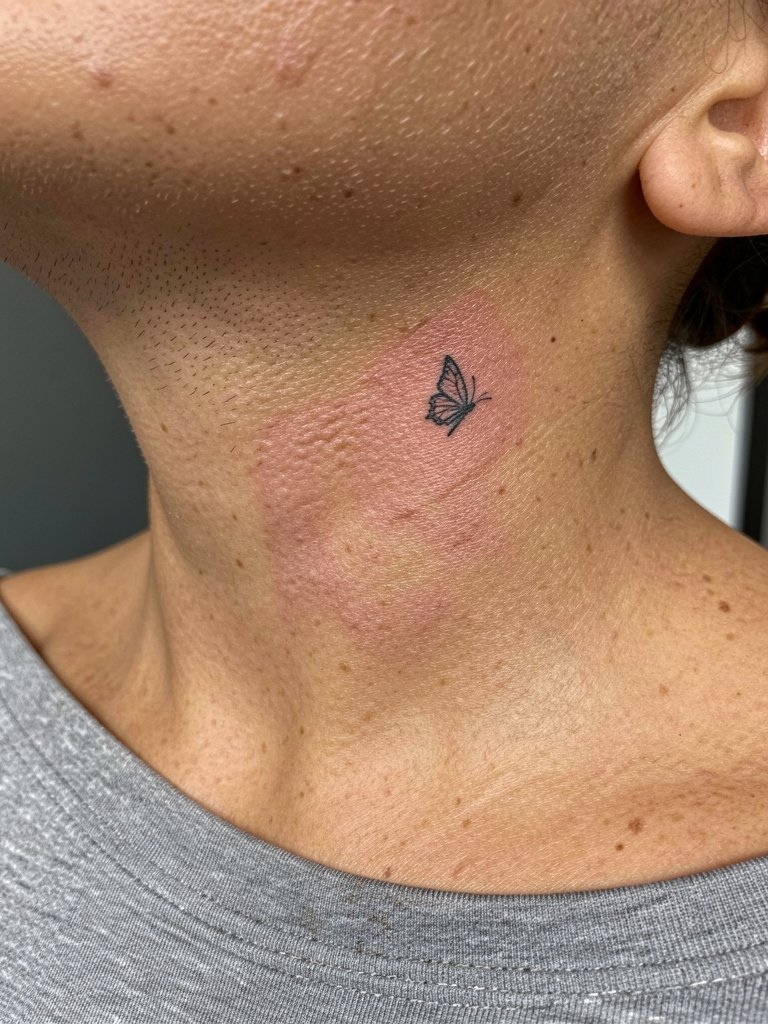
Neck placements are visible and sensitive. I recommend asking the artist to map the piece against your natural neck lines so movement does not distort the wings. A common regret people report is underestimating visibility for work settings. Expect moderate pain and a short session. For front-facing outfits try off-shoulder tops that reveal the lateral neck in a controlled way and add a thin choker above the tattoo so the area looks styled not accidental. Link a off shoulder top if you plan show-off outfits.
17. Geometric Calf Butterfly
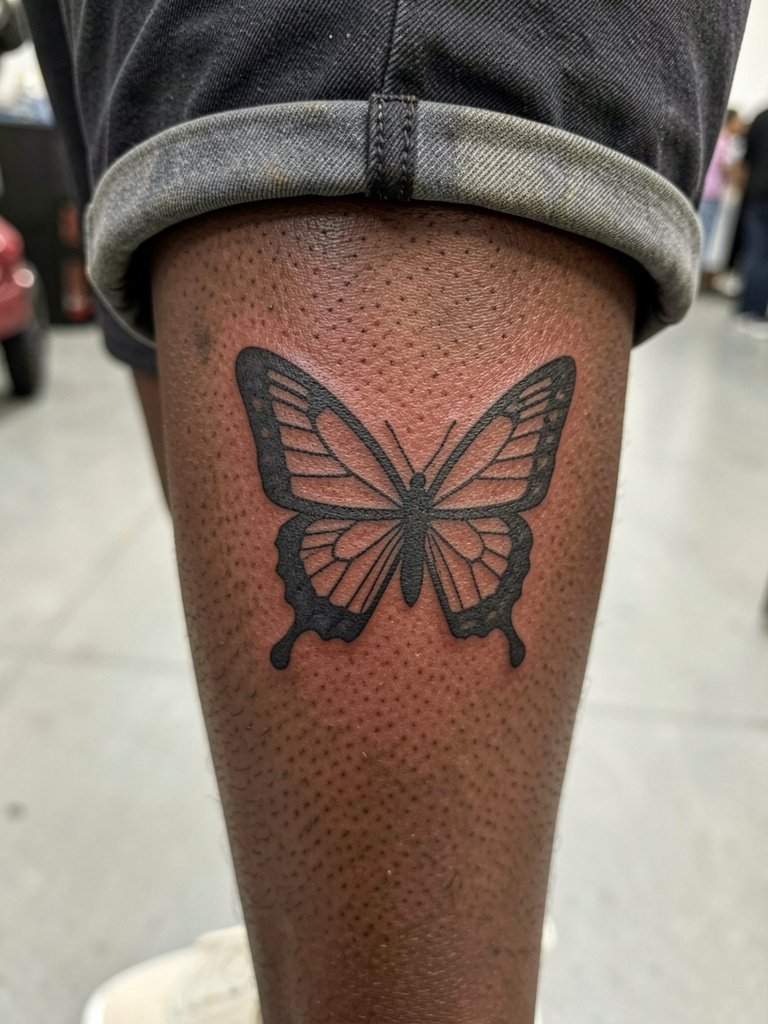
The calf offers a flat vertical plane for clean geometry. Ask to see how the design reads from three feet away, because geometry can feel too busy at small scales. Blowout risk is low on the calf compared with hands and fingers. Sessions are typically under two hours. For summer wear simple cropped pants or slim sandals to make the geometry visible without covering it.
18. Tiny Butterflies Along the Collar of a Bra or Top (Hidden Accents)
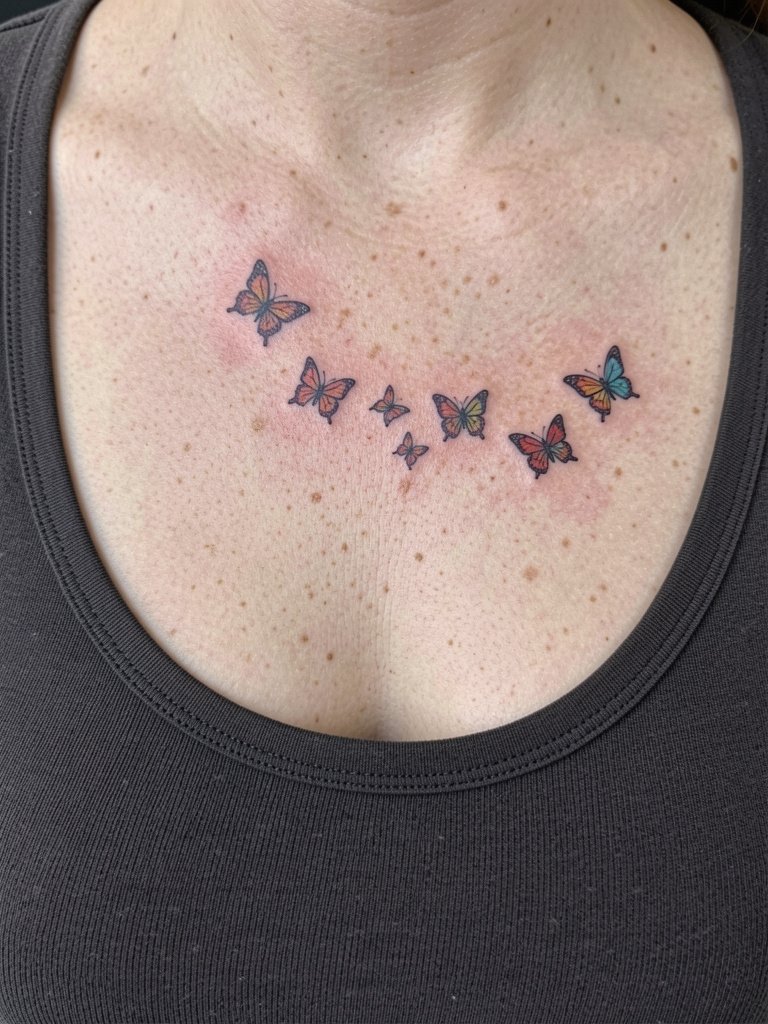
Hidden accents are a discreet way to reveal a motif selectively. For this placement, insist the artist frame the butterflies so they will not sit directly in the fabric line where friction can accelerate fading. Plan short sessions and keep in mind touch-ups might be needed sooner than on the forearm. For a reveal-ready look choose tops with a scoop or cropped hem and layer delicate chains above the tattoo area.
19. Micro Dot-work Butterfly Behind the Ear Lobe
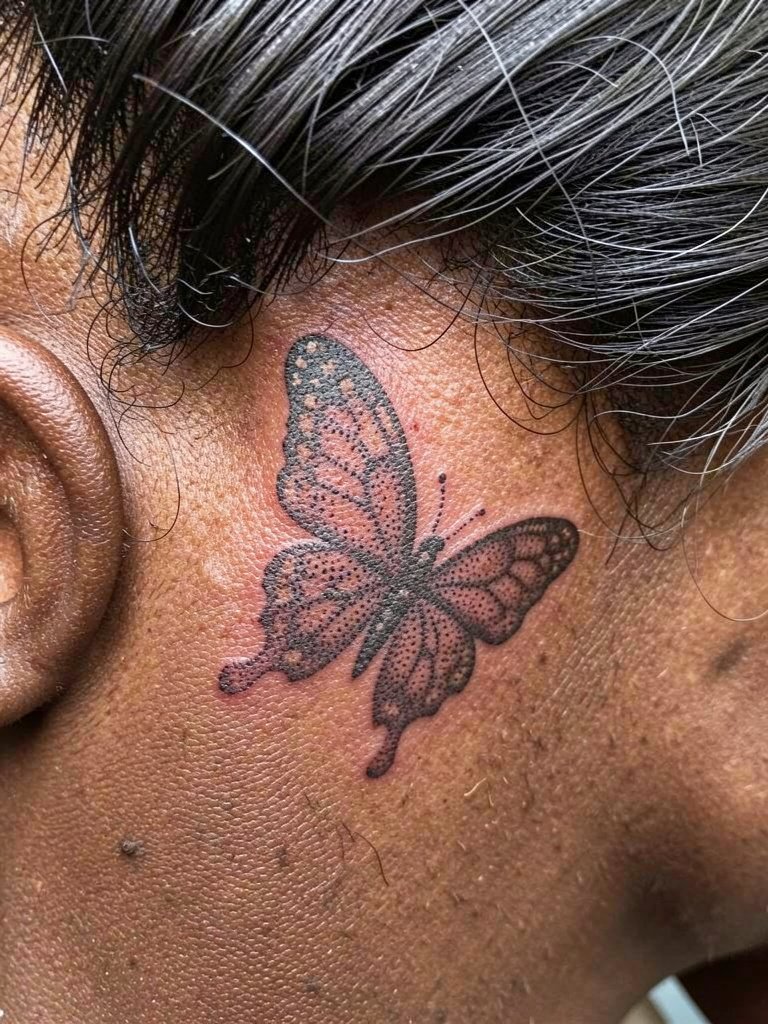
Dot-work behind the ear makes a tiny textured mark that reads as deliberate rather than incidental. The main consultation point is the density of stippling, because tiny dots can coalesce if placed too tightly. The session is brief and healing is straightforward, but make sure the artist has healed behind-ear examples. For styling, an updo or half-up hairdo that reveals the mastoid area shows the dot-work when you want it visible.
20. Linear Chain of Tiny Butterflies Along the Spine
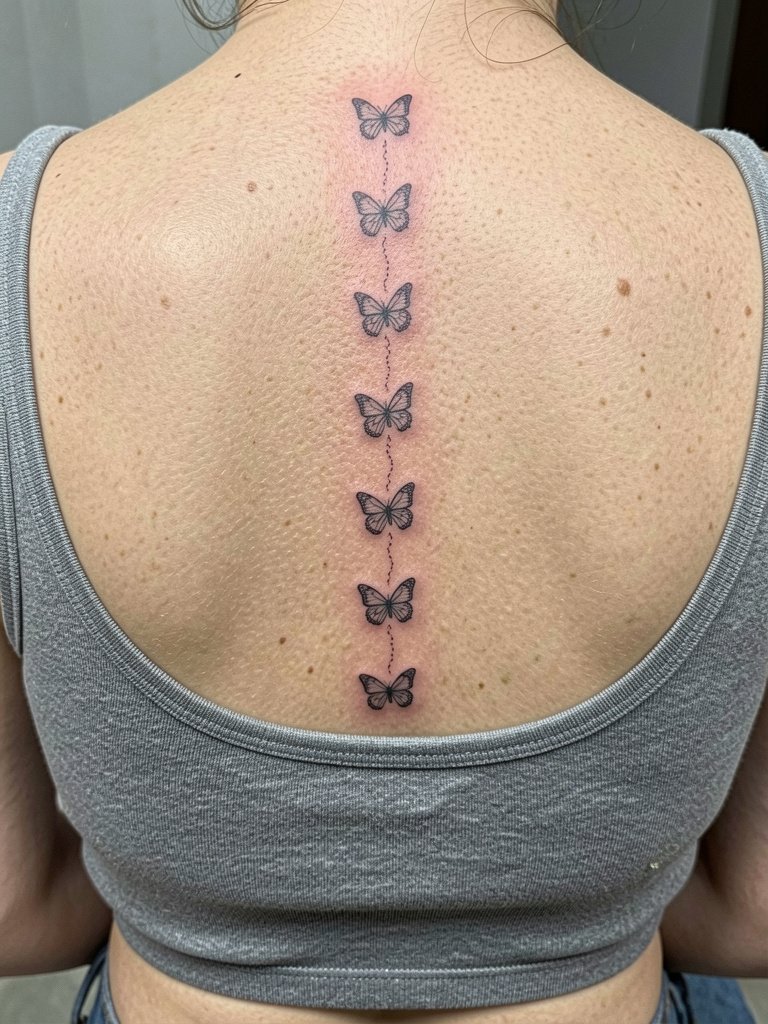
A spine-aligned chain reads elegantly when proportions are planned to the body. Ask for a preview stencil that shows spacing between each butterfly to ensure it remains legible as the spine moves. The upper spine is usually low-to-moderate pain and sessions vary with total length. For nights out wear open-back or low-back dresses that reveal parts of the chain and create a composed frame for the line.
21. Small Memorial Butterfly with a Tiny Script Tag
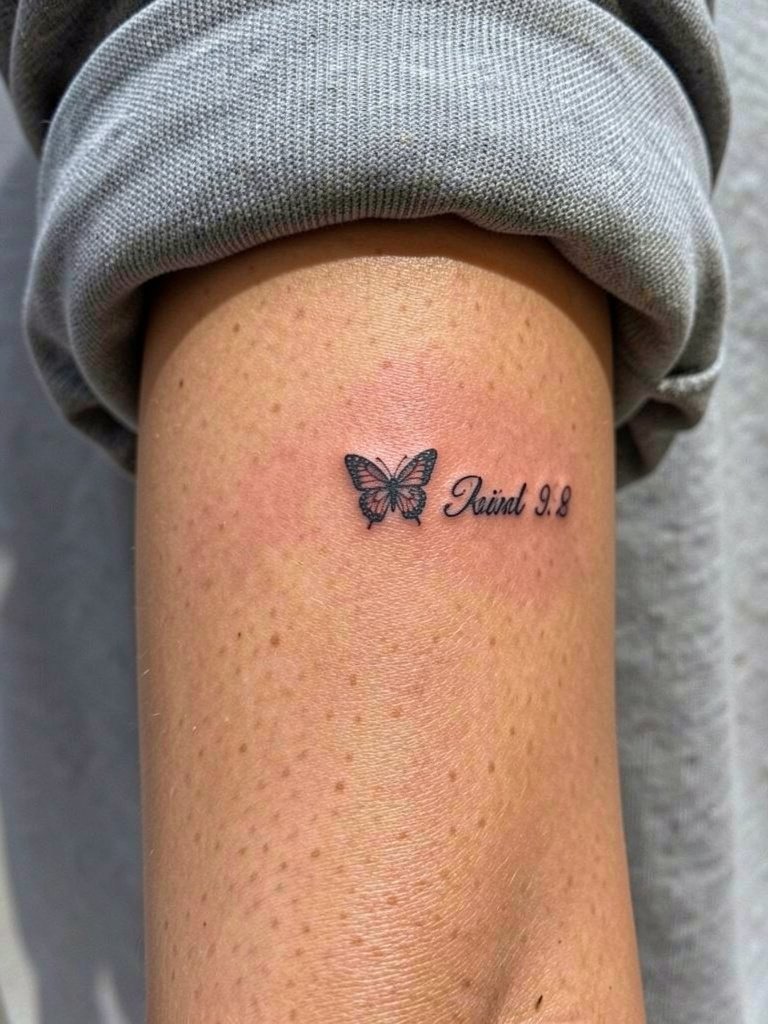
Memorial lettering with a butterfly needs legibility planning. Specify the exact script and the minimum readable size to avoid squashed letters. A typical mistake is expecting scrolling cursive to remain sharp at 2 cm; choose a bolder script if you want longevity. For inner forearm placement a one-hour session is common for small script and a single butterfly. Consider how the name sits visually with bracelets and choose a thin bracelet or watch on the opposite wrist so the memorial reads clearly.
Frequently Asked Questions
Q: How much should I budget for a small butterfly tattoo given shop minimums and true costs?
A: Small tattoos often live near studio minimums, so a design that looks like a $100 flash can easily run $200–$300 once minimums are applied. My practical approach is to budget for the shop minimum first, then add a cushion for a touch-up in the first year. If you want micro-realistic work expect to pay toward the higher end of small tattoo pricing because of time and healed detail.
Q: Which small butterfly placements hurt the most and which are best for a first tattoo?
A: The ribs and the sternum are commonly the most painful places for small work. The outer forearm, collarbone area just below the clavicle, and the lateral ankle are lower on most pain charts. For a first tattoo pick a low-motion, low-pain area like the outer forearm or collarbone so you can build confidence without a painful session.
Q: Color or black-and-gray for a tiny butterfly: which ages better?
A: Color, especially pastel watercolor, tends to fade faster in small pieces than saturated black-and-gray. One camp argues small color runs become muddy within a year. The opposing view is that quality inks and careful layering keep color vibrant for years. If longevity is the priority choose higher-contrast color or pick black-and-gray with a colored accent that can be refreshed more easily.
Q: Where can I find healed examples and good artist portfolios without naming specific artists?
A: Search hashtags like #smallbutterflytattoo, #finelinetattoo, and #microrealism on Instagram and TikTok and then filter by location. Tattoodo has keyword filters and a healed-work option. Reddit communities such as r/tattoos and r/tattooadvice surface peer recommendations and healed photos across skin tones. Booksy and the Inked App also let you filter studios by specialty when you search for "butterfly" or "fine line."
Q: What should I wear to the appointment for different butterfly placements?
A: For forearm or wrist pieces wear a rolled cuff linen shirt or short sleeves so the artist can work without fabric pressure. For collarbone or chest pieces pick a scoop-neck or strapless top that naturally exposes the area. For ribs choose a loose crop top that can be lifted without tugging the skin, and for thigh or lower back pick loose shorts or low-rise jeans that the artist can adjust in place.
Q: How do small butterflies show on darker skin tones and what adjustments help photo visibility?
A: For darker skin tones, slightly thicker lines and higher contrast fills help the design read in photos and in real life. I recommend discussing line weight and contrast with your artist and, if you want to photograph the tattoo, try matte lighting or a ring light for truer color capture rather than default camera phone filters.
