Bold trends push tiny single-needle koi and geometric panels into saved folders, but sleeves that still read crisp at year five are usually the ones that start with scale, spacing, and flow in mind. Expect long sessions, strategic linework, and planning for how motifs meet the chest or stop at the wrist. Below is a careful run of sleeve concepts centered on traditional Irezumi structure, modern fusion options, and the wardrobe choices that actually make the ink pop.
1. Full Sleeve Nagasode with Hikae Chest Panel
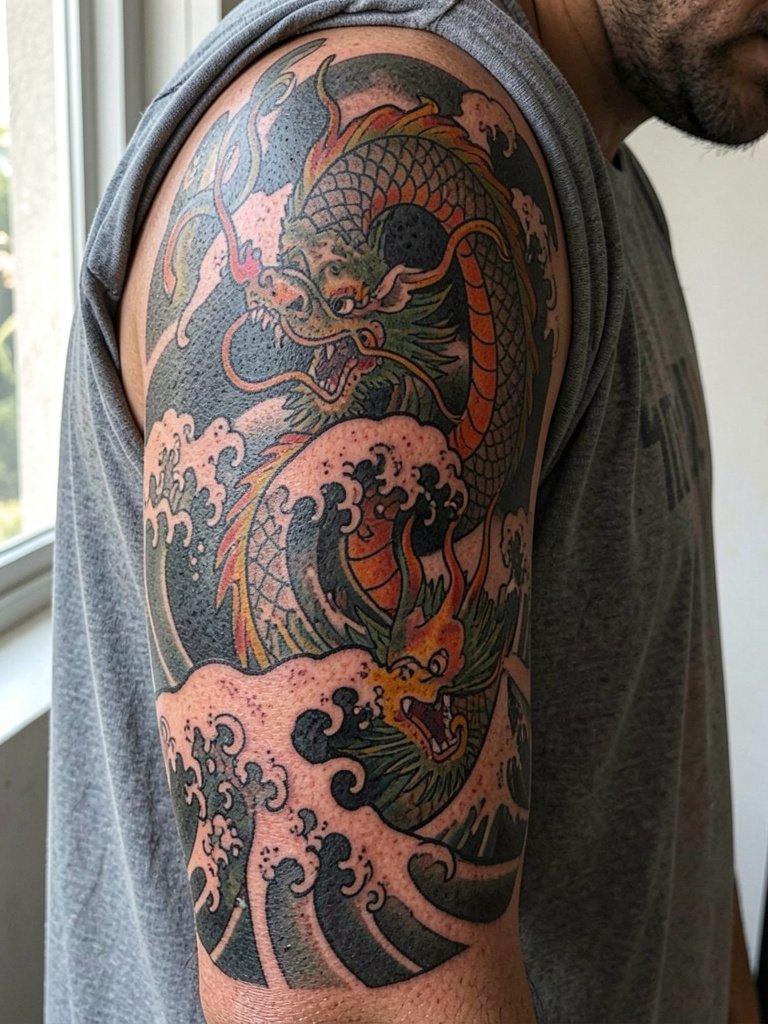
A true Nagasode is planned so the motifs flow onto the chest. One camp insists a Hikae chest panel is required for authentic continuity. They point out how motifs read better when the pectoral and arm are composed together. Another camp accepts arm-only sleeves and says careful composition and Gaku-Bori framing can achieve the same continuity without chest work. If you want the classical body-suit look, budget for multiple long sessions and expect heavy saturation and bold linework. Bring reference photos that show both the shoulder-to-chest junction and how backgrounds wrap around the arm. For session wear, a black short sleeve henley is easy to remove and shows how the finished Hikae will sit under a shirt.
2. Half Sleeve Gobu (Shoulder to Elbow)
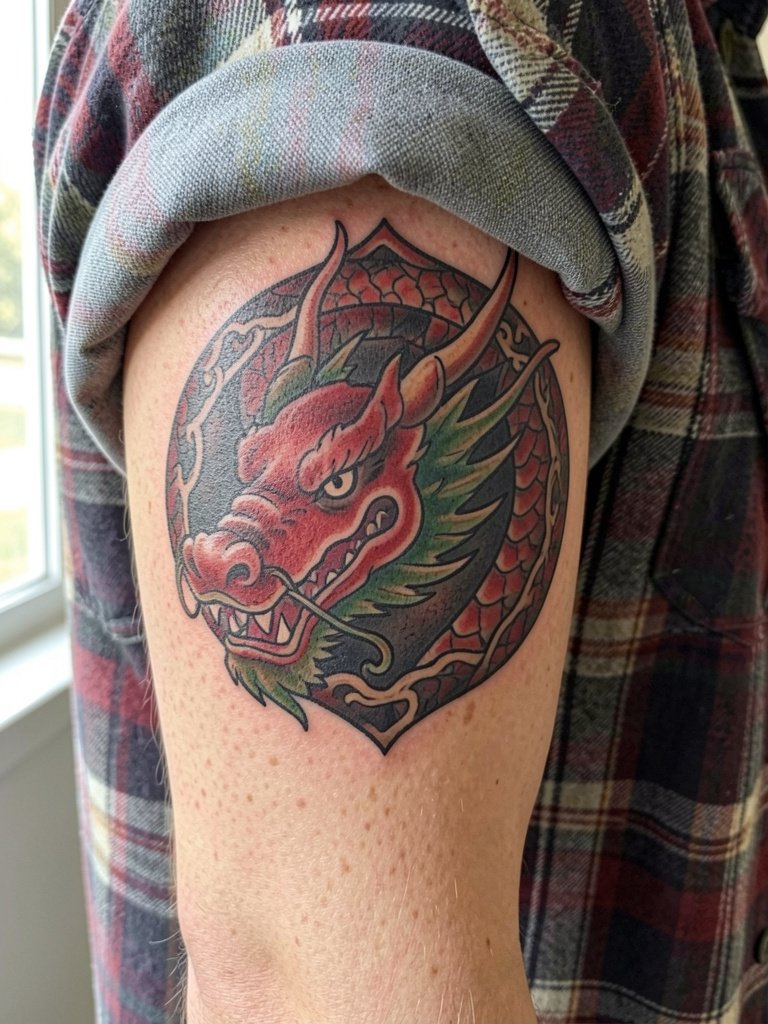
A Gobu is a compact way to get traditional motifs while keeping coverage options. It reads best when the central motif gets room within Mikiri borders rather than being squeezed. Common mistake: putting an overly detailed portrait too small and losing facial texture after healing. Expect sessions of 3 to 4 hours each. For the appointment, wear a red black plaid flannel shirt you can roll up, so the artist can access the deltoid without tight fabric compressing the area. Ask for slightly heavier linework than your reference to preserve contour after one year.
3. Three-Quarter Sleeve Shichibu (Shoulder to Mid-Forearm)
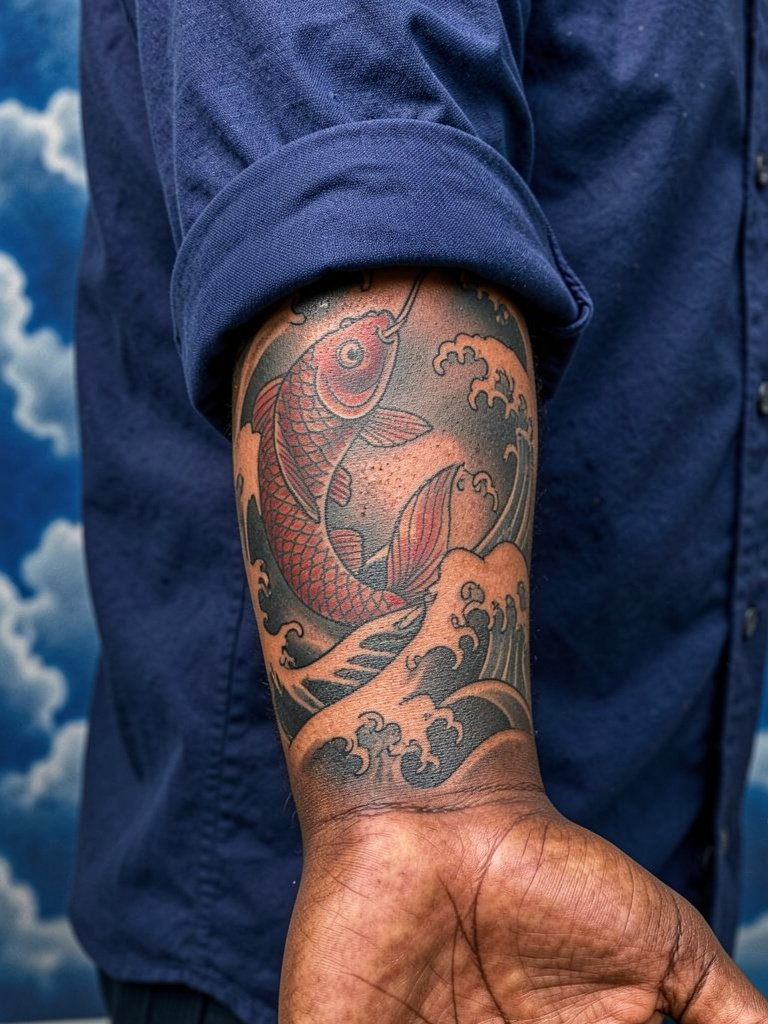
Shichibu gives narrative flow with less wrist commitment. It avoids the wrist crease where blowout risk increases. Visual impact is highest when the wave background is allowed negative space to breathe. A real mistake is layering too many small motifs into the forearm band. Plan for 4 to 6 sessions and bring both palm-up and palm-down reference shots so the artist can show how the story reads at different arm rotations. For showing off the mid-forearm, a light denim short look pairs well with rolled sleeves.
4. Koi Fish Transformation Sleeve (Upward Flow)
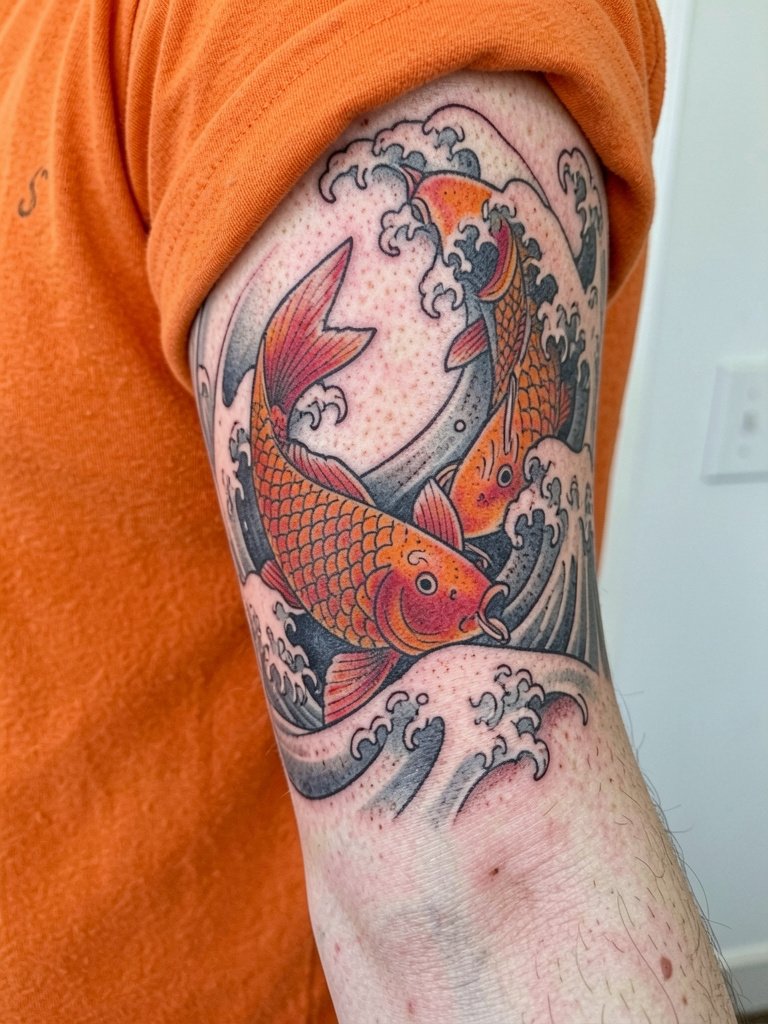
Koi moving upward is a classic metaphor for perseverance, and the direction matters. The common aging issue is too-fine scale detail on the forearm that softens into a mottled texture by year three. To avoid that, design the scales with heavier linework and selective saturation. For the session, wear a burnt-sand short sleeve tee to preview how the orange scales will sit against your wardrobe. Expect 6 to 8 sessions for a full-arm transformation with layered color saturation.
5. Dragon Guarding the Chest (Hikae + Sleeve)
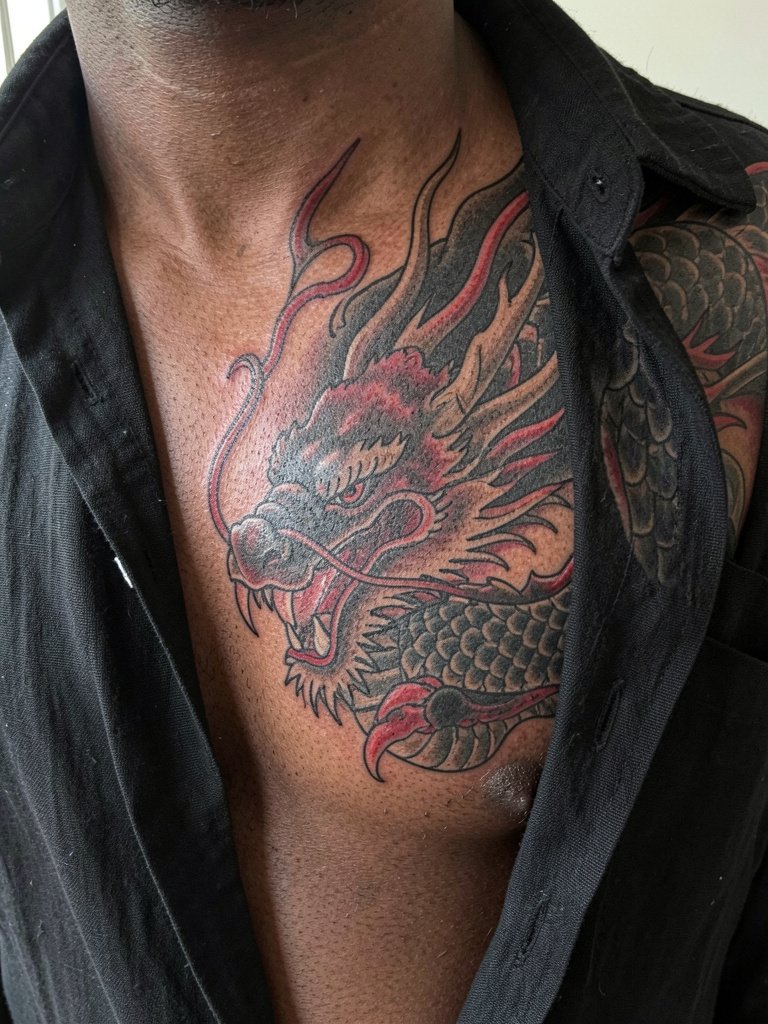
Dragons over the chest read as guardians when the head sits on the sternum and the body coils down the arm. One practical note is the extra session time required to blend chest shading into the arm background. A common mistake is under-planning the chest-to-arm junction and ending with a visual break at the shoulder. For the appointment, unbutton an open-collar shirt so the artist gets full chest access without you being uncomfortable. Expect intense shading sessions that feel deeper than forearm work.
6. Cherry Blossom (Sakura) Spring Sleeve
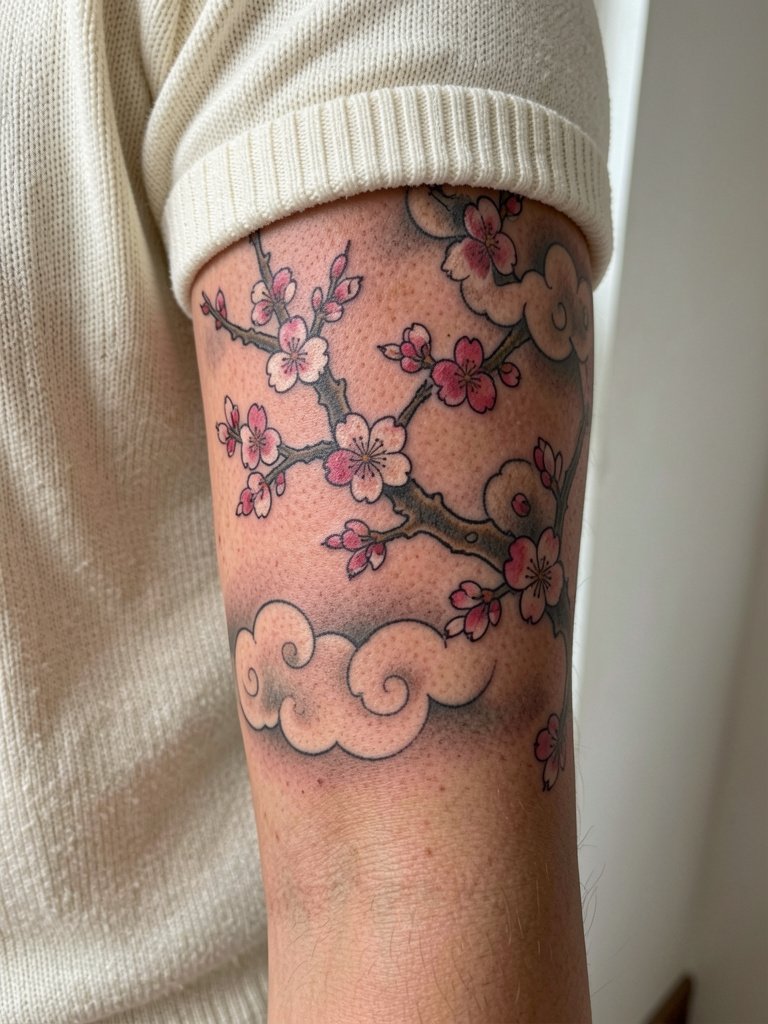
Sakura sleeves read seasonal. If you want consistent bloom language across the arm, keep the blossoms in a single color temperature and simplify the branchwork so it does not fight with the background. People sometimes ask for tiny petals with thin linework that vanish after one year. For session comfort, wear a cream short sleeve knit shirt that exposes the inner forearm cleanly. Touch-up rhythm for delicate petal shading is often earlier than for bold fills, so plan for a two-year review.
Before You Book
These first six sleeves include inner forearm work and heavy chest shading, so a few products smooth the chair-day and the first week of healing.
- Honokuchi Traditional Balm. A traditional balm favored in specialist threads for mid-healing color retention, helpful on saturated reds that risk dulling during the second week.
- Aquafor-style thin ointment. The thinner consistency avoids pore clogging and lets bold linework settle without excess swelling.
- Mad Rabbit Tattoo Balm. A clear, low-ingredient balm some traditionalists prefer during mid-healing to maintain saturation without adding fragrance.
- Saniderm Second Skin. Some clients like the comfort and hygiene it provides on high-friction areas, though opinions differ on use with heavy saturation.
- Hustle Butter Deluxe. Widely used by artists for initial hydration and to help bold traditional colors sit smoothly during the first week.
7. Modern Fusion Geometric Japanese Sleeve
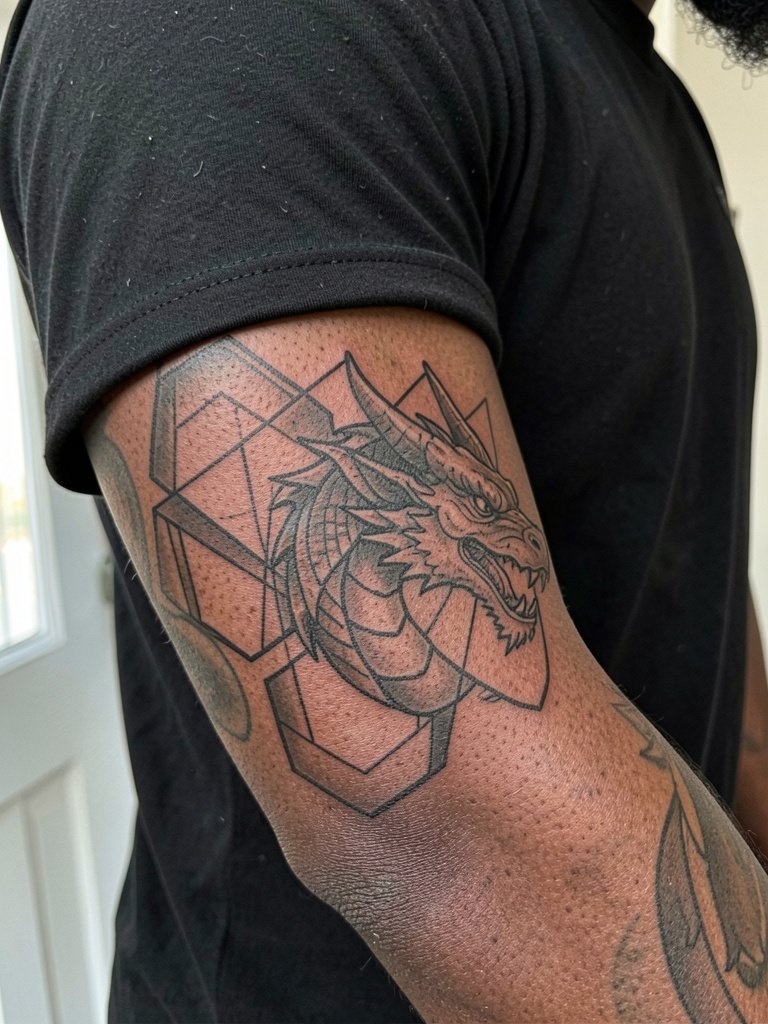
Geometric fusion reads contemporary when the structural shapes have breathing room. I see people request tight tessellations that look crisp for a month and blur into a mess later. The fix is spacing the geometry slightly wider and anchoring it with traditional flat fills. For showing the work in daily outfits, pair the placement with a black short sleeve tee so the line contrast reads from a distance. Expect 4 to 6 sessions and ask for healed examples of similar spacing.
8. Samurai Warrior Portrait Sleeve
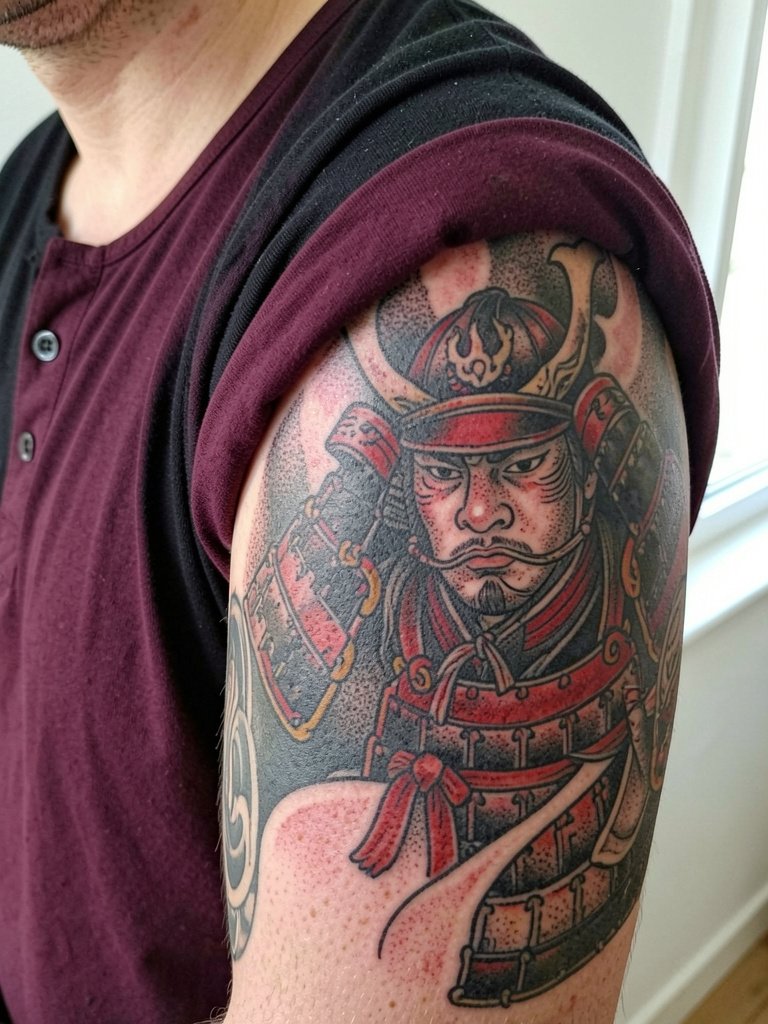
Portrait sleeves need a master-level touch to hold facial detail. A common mistake is scaling the face too small relative to the arm. If a highly detailed face is compressed, armor texture can overpower the expression after healing. For session-day wear, try a black short sleeve henley you can remove or roll so the shoulder sits free. Expect multi-hour shading passes that feel deeper than flat color sessions.
9. Tiger and Wave Sleeve
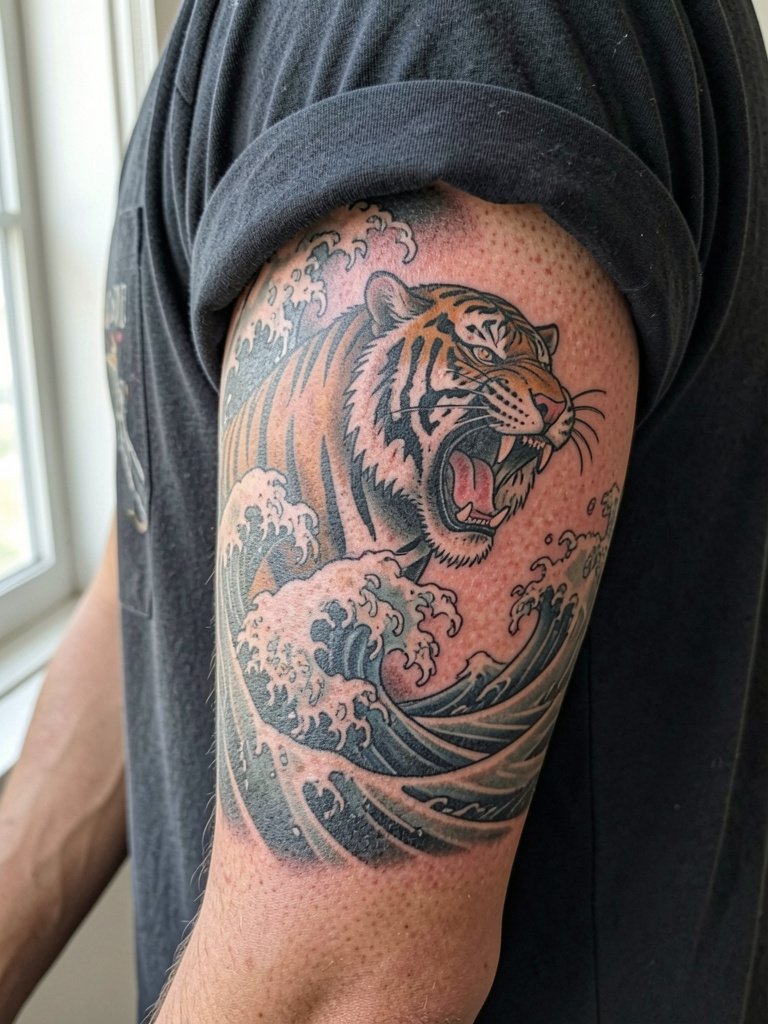
Tigers demand heavy black contrast and confident stripe placement. The visual mistake is trying to micro-detail the stripes on textured skin. Instead, let the stripes be graphic with white wave highlights for depth. For outfit pairing, a dark grey jean keeps the focus on the upper arm. The first touch-up often falls within two years to sharpen white highlights.
10. Oni (Demon) Mask Sleeve
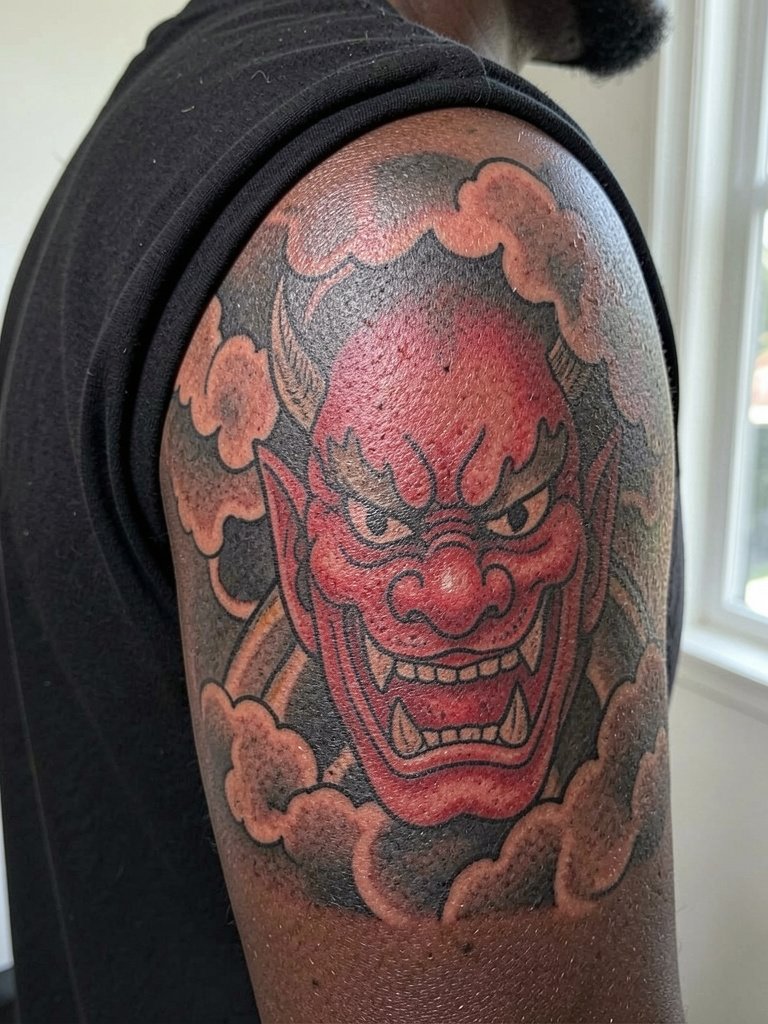
Oni masks sit well on the posterior deltoid where the round shape complements the cheek and jaw of the mask. A frequent error is scaling the horns into the shoulder blade crease, which can blur with movement. For session comfort, wear a black cargo tee you can remove easily. Expect medium pain and 4 to 6 sessions depending on shading depth.
11. Minimalist Single-Needle Koi
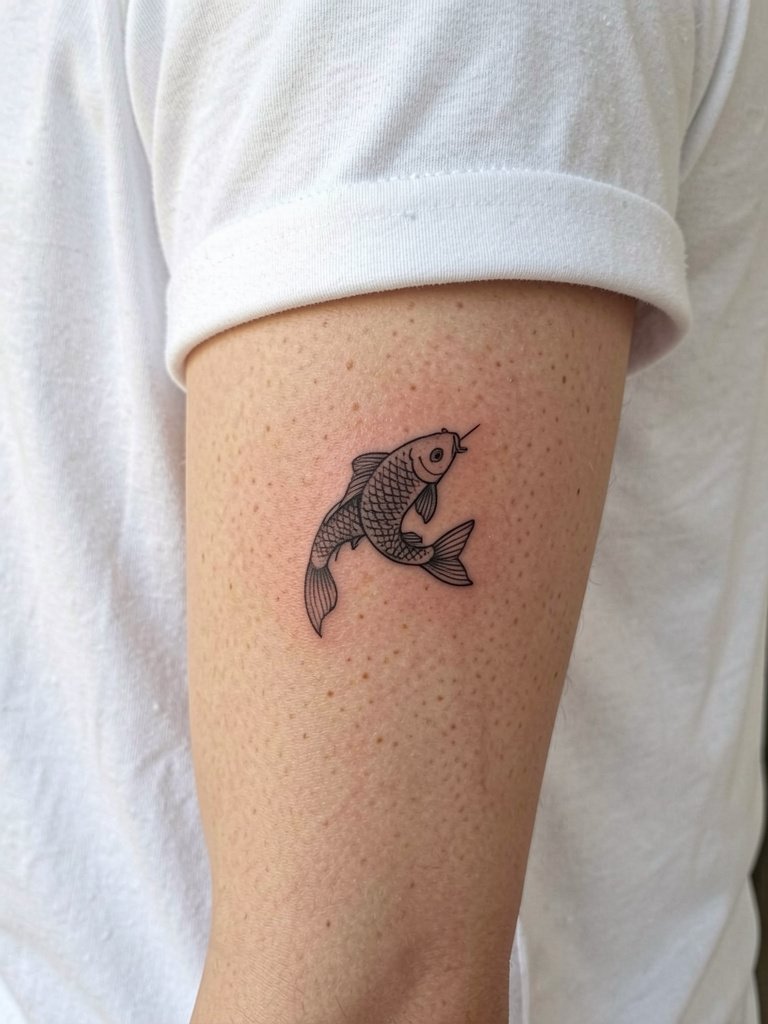
Single-needle koi splits artists into two camps. One camp argues the inner forearm's skin and everyday friction cause thin lines to blur within two to three years. The other camp says when the artist spaces the lines and sits the needle at the correct depth, single-needle heals clean for three years or more. If you want the delicate look, request slightly wider spacing between contour lines and plan for a touch-up at year two. For appointments, wear a white short sleeve tee with a loose cuff so the inner forearm is accessible.
12. Four Seasons Narrative Sleeve
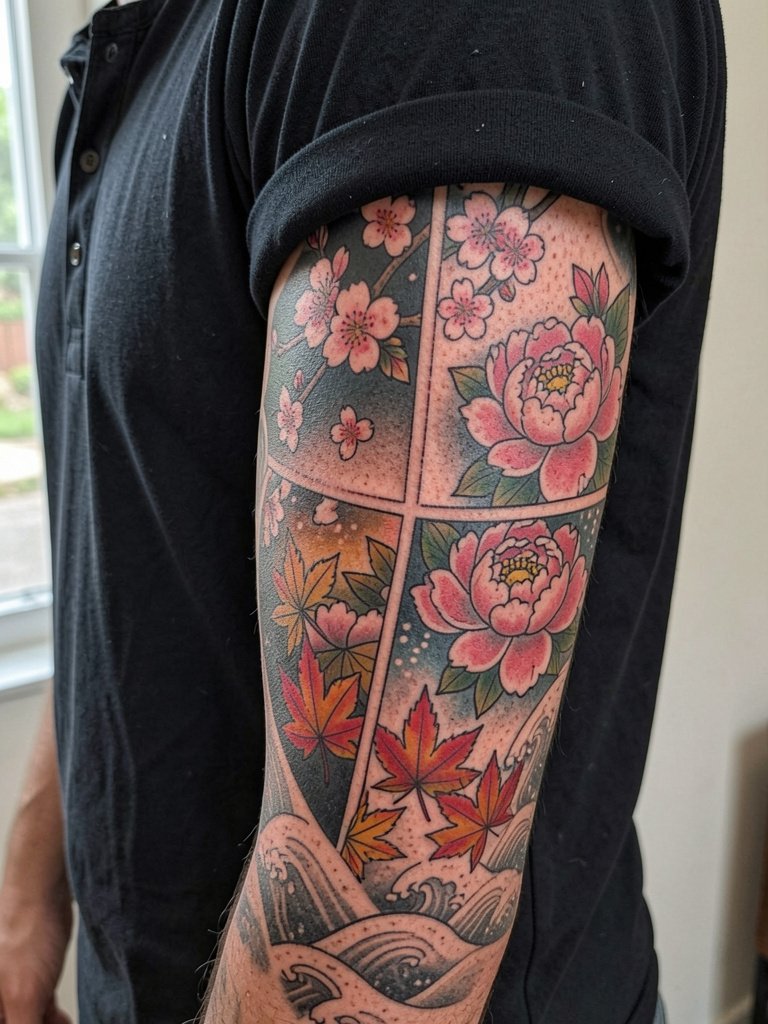
Seasonal cohesion divides opinion clearly. One side insists on keeping all motifs within a single season to preserve traditional symbolism and visual harmony. The other side supports mixing seasons for personal storytelling and argues that modern fusion trumps strict rules. If you care about traditional flow, choose one season and stick with its palette and motifs. For showing off a multi-season sleeve, a navy short sleeve henley creates a neutral frame for all the colors.
13. Kirin (Qilin) Mythical Beast Sleeve
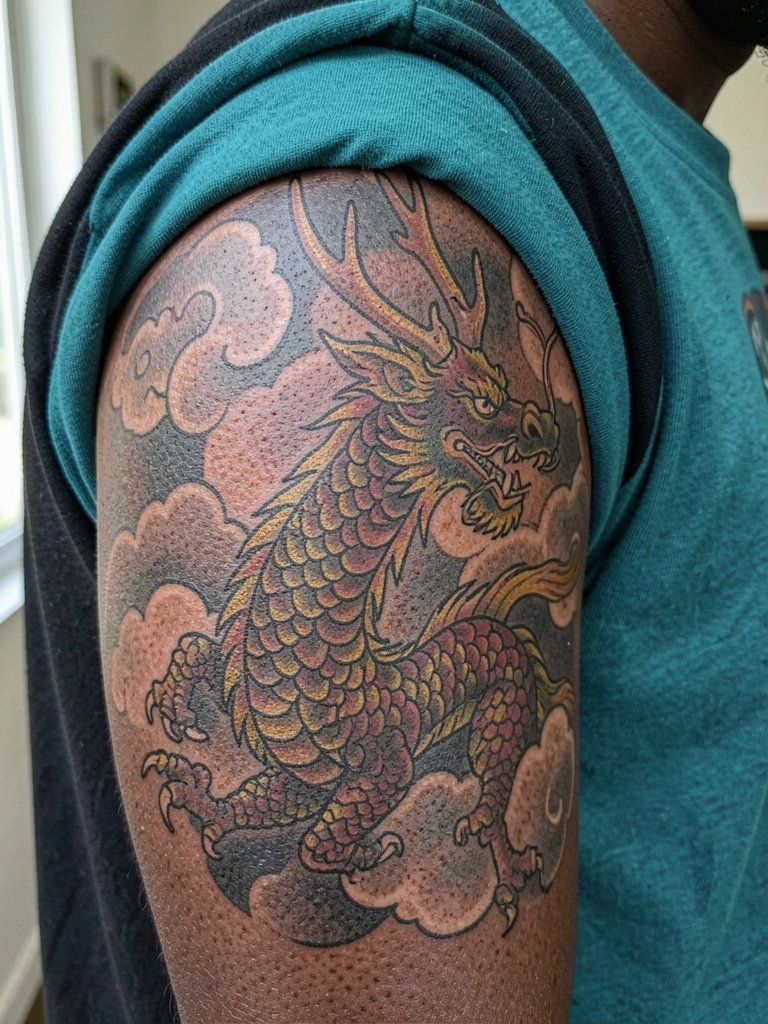
Kirin work benefits from scale contrast and a restrained palette so the antlers stay crisp. A mistake I see is overloading the shoulder with background clouds that flatten the creature. For session wear, try a black short sleeve tee so the shoulder colors pop. Touch-up needs are typical around edges after two years.
14. Phoenix (Hou-Ou) Rebirth Sleeve
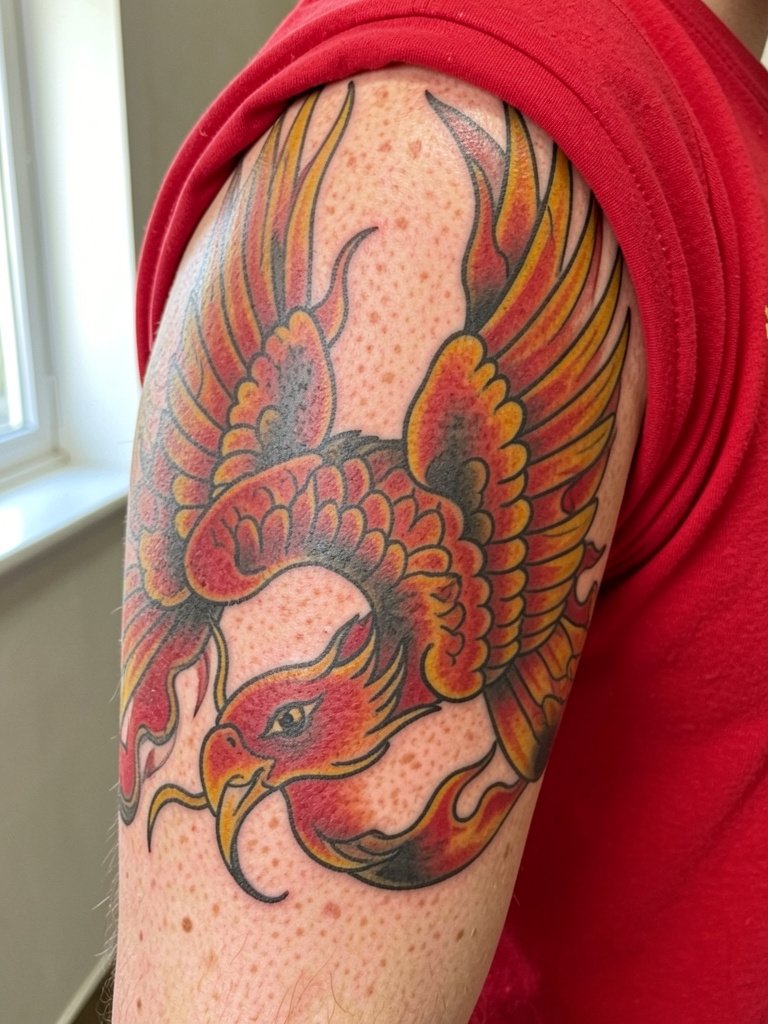
Phoenix pieces look dramatic in warm saturation that requires strong underpainting to avoid early fading. Many clients underestimate how much layering keeps reds from fading into brown. For outfits, a red short sleeve tee amplifies the palette. Expect 5 to 7 sessions for full feathering and plan a two-year touch-up to revive peak saturation.
15. Kanji Script Border Sleeve
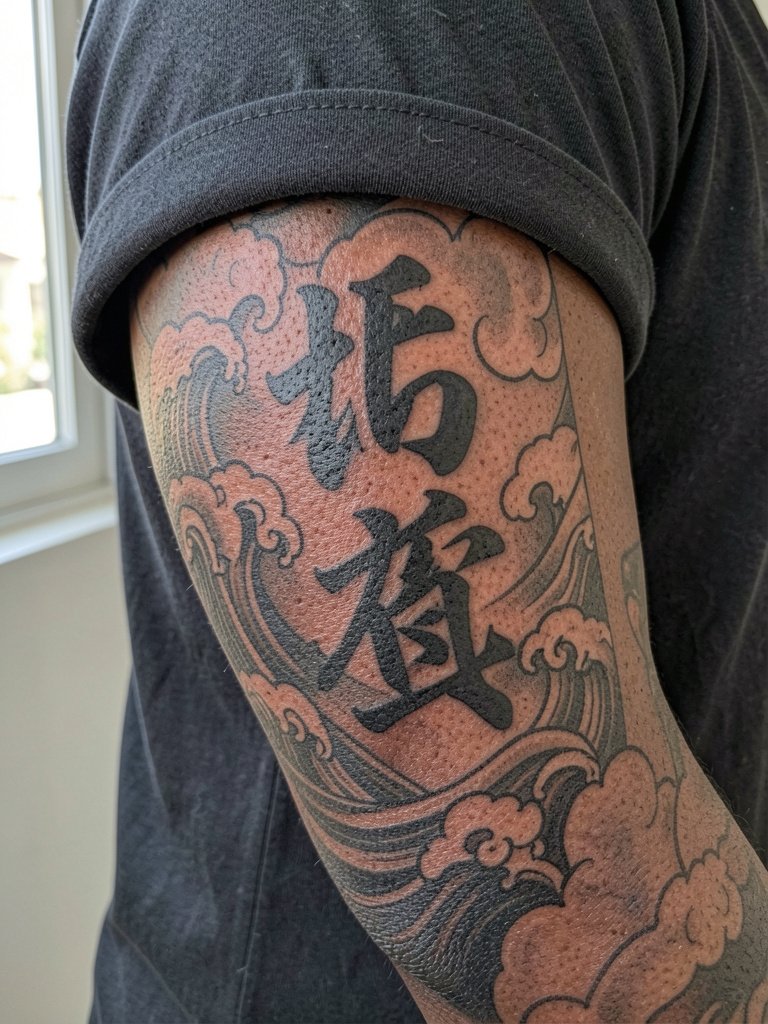
Lettering needs exact spacing and stroke weight to remain legible. The real mistake is choosing kanji from online generators without verifying meaning and stroke balance. Bring the exact characters you want in the reference and ask the artist to show how each stroke scales at the intended width. For daily wear that emphasizes the forearm, a dark jeans pairing keeps the text readable against a neutral backdrop.
16. Munewari Torso Strip Pairing with Sleeve
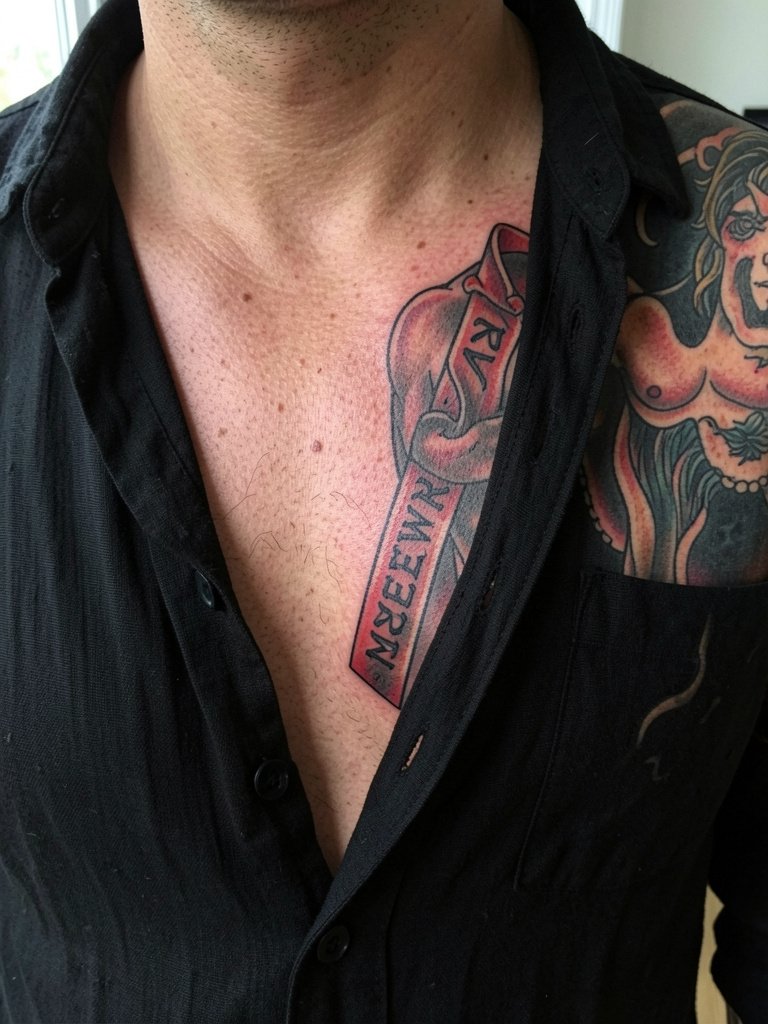
Munewari is an under-covered traditional feature. It gives the sleeve a deliberate negative strip on the torso that respects kimono lines. If you want that subtle bare strip, make sure the artist plans the chest-to-arm junction in the first consult. For session wear, choose a shirt that unbuttons easily so the chest area is exposed without tugging. Expect the sternum area to be a bit more tender and schedule shorter sessions if you are new to longer appointments.
17. Tobu vs Kubu Wrist Finish Options
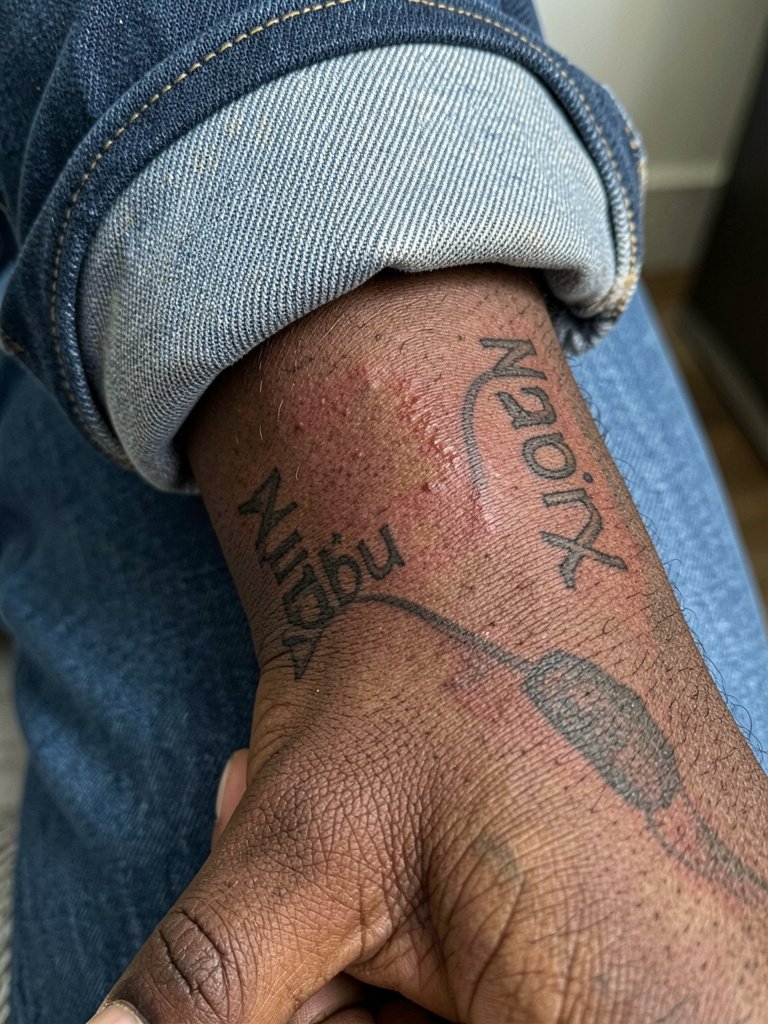
Deciding whether to end at Kubu or continue to Tobu is a functional choice. Ending at Kubu keeps the wrist clean and lowers blowout risk from hand movement. Going Tobu gives the sleeve an uninterrupted flow but requires extra care around the hand and earlier touch-ups. A client with active hand use often prefers Kubu. For the consult, ask the artist to mock the wrist junction at the scale you want so you can see how the negative space reads with movement.
Frequently Asked Questions
Q: How should I split a $3,000 budget if I want a traditional look without a full Nagasode?
A: If your target is a traditional look on a budget, prioritize a strong focal motif on a ¾ or half sleeve with bold outlines and saturated color. Spend the first sessions on clean linework and background blacks, then add color in later sessions as funds allow. That approach gives you the visual weight of Irezumi while leaving room to expand into a Hikae later.
Q: Where can I find artists who actually know Irezumi and healed examples across skin tones?
A: Search location-filtered hashtags like #irezumi and #wabori on Instagram and TikTok. Use directories that let you filter by style keywords such as "full nagasode" or "single needle koi" on Tattoodo and the Inked App. Reddit threads in r/tattoos and r/tattooadvice often surface peer recommendations and healed shots across skin tones. When you review portfolios, look for Gaku-Bori framing and Mikiri borders rather than generic "Japanese-style" labels.
Q: What ages better, single-needle fine line koi or bold traditional koi?
A: Bold traditional koi with thicker linework and saturated underpainting generally holds clarity longer on high-motion surfaces. Single-needle koi can look very refined early on, but expect to plan touch-ups around year two to three unless the artist intentionally spaces lines a bit wider. If longevity is your priority, lean toward heavier contour and denser saturation.
Q: Should I mix spring cherry blossoms with autumn maple leaves on the same sleeve?
A: Traditionalists recommend keeping motifs within a single season for symbolic and visual cohesion. Modern fusion clients do mix seasons for personal narrative, and that can look great if the artist unifies the palette and background. Name both camps to your artist and decide which approach matches your priorities: strict seasonal cohesion or creative mixing.
Q: What should I wear to a chest-to-sleeve session so the artist has unobstructed access?
A: For chest and shoulder work, an open-collar linen shirt or a loose tank top that can be removed without tugging is practical. For full-arm sessions, wear a black short sleeve henley you can roll or remove easily so the artist has clear access from shoulder to wrist.
Q: How often do I need touch-ups for different sleeve types?
A: Heavy-saturation traditional sleeves often need touch-ups at longer intervals, typically three to five years depending on sun exposure. Fine-line pieces and delicate petal shading commonly require earlier touch-ups, around two years. Plan touch-ups as part of the full-sleeve budget rather than an afterthought.
Q: Are there red flags when evaluating portfolios for traditional Japanese work?
A: Watch for portfolios that label work "Asian-style" without Gaku-Bori framing or Mikiri borders. Also beware of healed shots that only show the fresh day photos. Ask to see healed examples around two years old and check how background clouds and borders held up.