
The bold tattoos that still look crisp five years after the needle are rarely the ones that stacked the most likes on day one. I see that play out every booking day. People bring tiny, fragile references and expect them to behave like bold traditional work. This guide focuses on guitar pieces that actually read well over time, where to place them, how they age, and which wardrobe choices make the design sing in photos.
1. Simple Black Silhouette Guitar on Inner Forearm
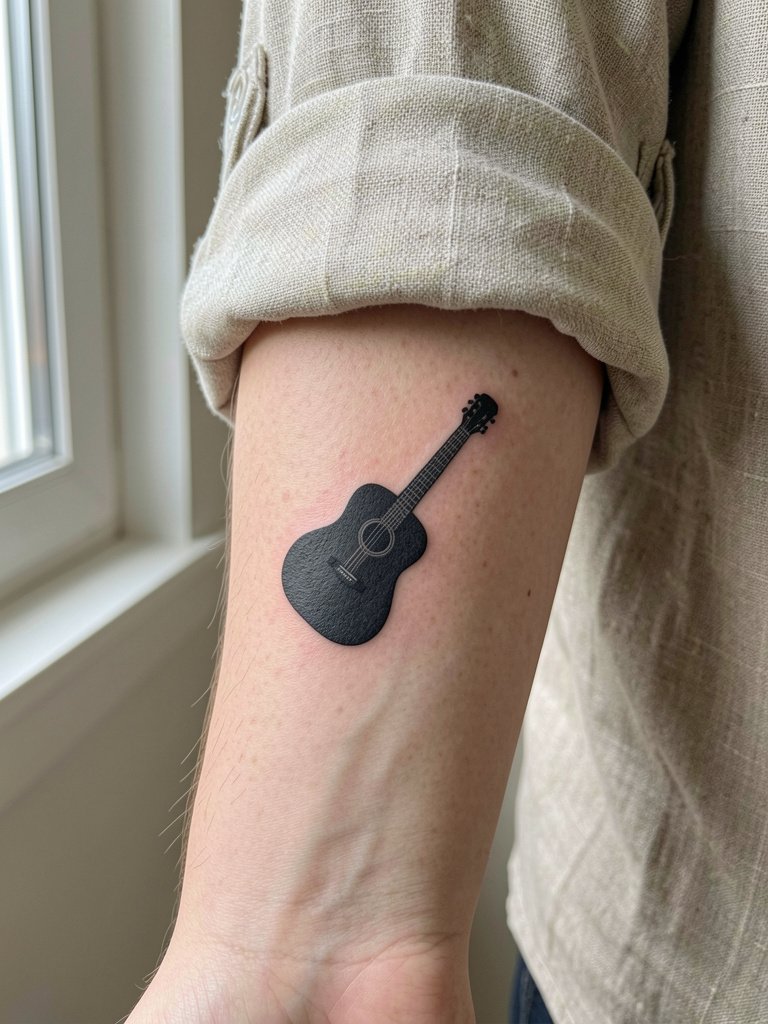
A filled silhouette is one of the most forgiving guitar designs for first-timers because the solid black reads at small sizes. If you want this on the inner forearm, tell your artist you prefer one-session bold fill and slightly thicker outline so the shape stays readable at year two and five. The common mistake is asking for wafer-thin negative detail inside the body. That detail usually blurs. Six months in the bold silhouette still looks sharp and at two years it keeps strong contrast. For showing it off, try a rolled cuff linen shirt in cream or olive so the forearm sits in neutral tones and the silhouette pops.
2. Geometric Guitar Fusion on Outer Upper Arm
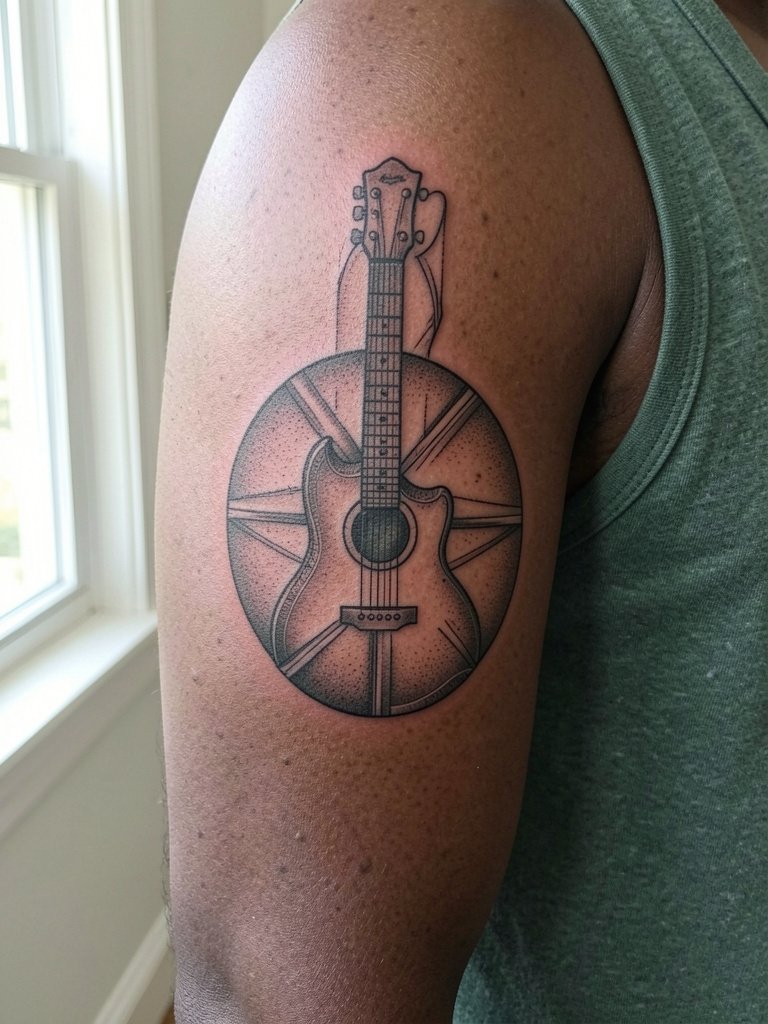
A geometric fusion is about negative space and breathing room. I suggest asking your artist for slightly wider spacing between parallel lines so the geometry survives skin movement. Tiny, tightly packed lines are the usual mistake; they tend to merge after a year. This placement handles bold outlines well and takes medium session time. For wardrobe, pair the piece with a solid color tank top to keep the geometric silhouette readable and let necklaces or a minimalist silver cuff balance the look.
3. 1950s Rockabilly Electric on Upper Chest
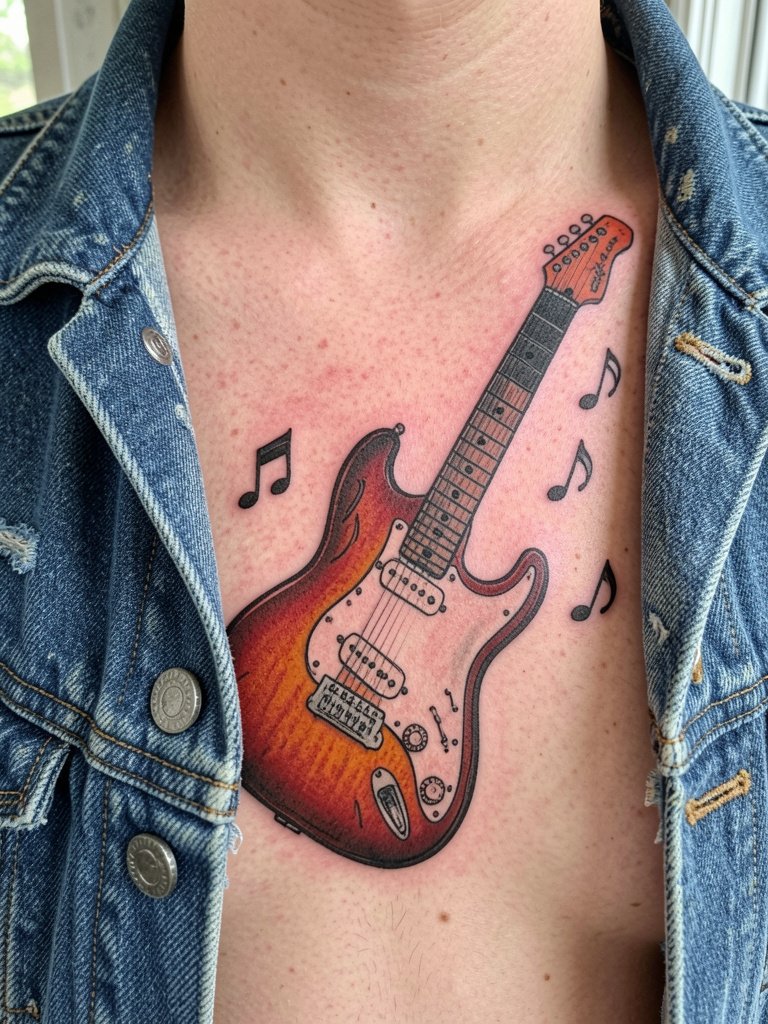
Rockabilly guitars rely on strong outlines and saturated fills to survive. If you want neon or pastel accents, note they fade faster on the chest than bold reds and blacks. A common error is shrinking this style to a badge-sized chest piece; the details need room. In consultation bring reference photos at the size you plan to wear it so the artist can scale pickups and note clusters properly. For evenings out, an open-collar denim jacket or a layered chain makes the chest piece read like a vintage stage prop.
4. 80s Neon Strat or Les Paul on Lower Back
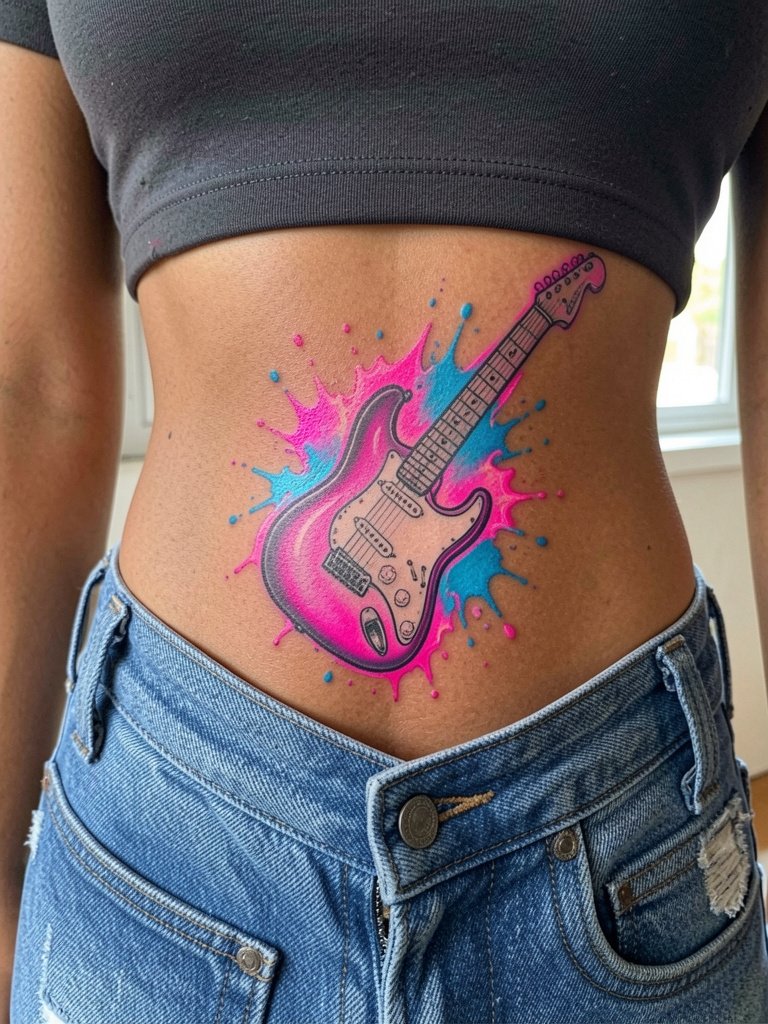
Neon pieces look vivid early on, but on darker tones and in long-term photos neon can lose punch. Artists and collectors split on this. One camp says black and gray age better and keep definition; the opposing camp points to saturated reds and blues that hold when applied deep and topped up. If you want neon, ask the artist what pigments they use and whether they recommend a touch-up window at two years to retain saturation. Wear low-back crop tops to frame the piece and show off the neon splash in summer photos.
5. Blues Musician Rugged Composition on Shoulder
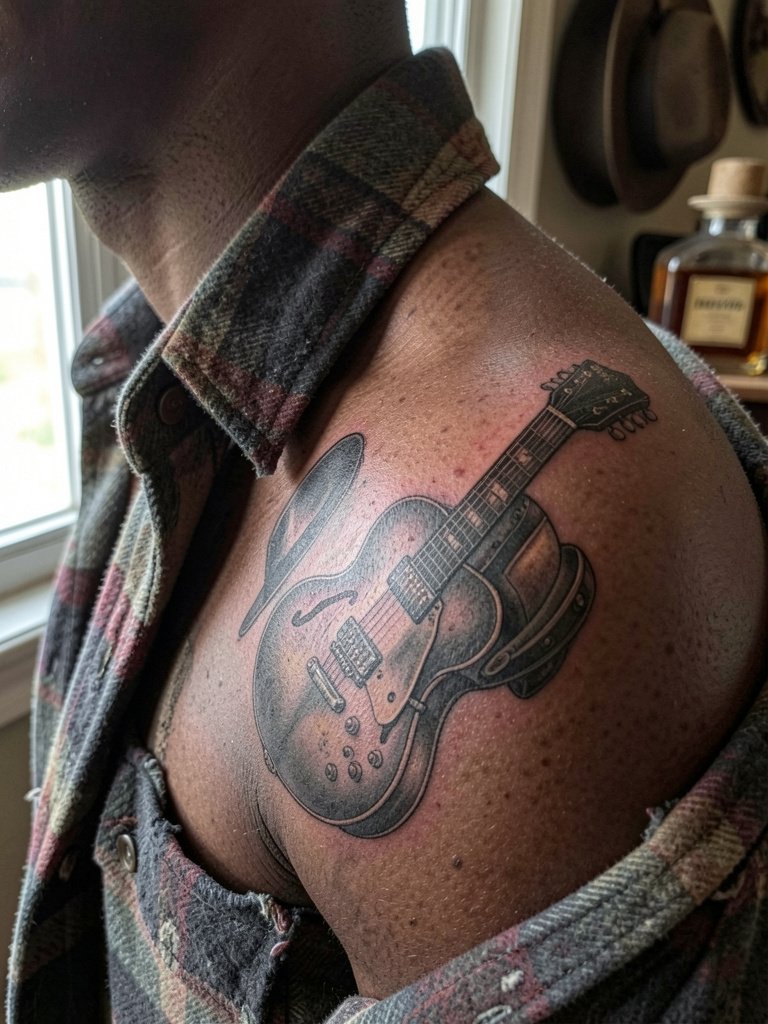
This composition is about mood. For a shoulder piece like this, ask your artist for high-contrast black and gray values so the whiskey bottle reads in low light. The common mistake is tiny accessory detail that goes muddy once healing finishes. Expect a multi-session plan if you want realistic texture and facial-like features on accessories. For the session wear a short-sleeve or sleeveless top so the area is accessible, and for showing off the rugged vibe, an open-collar flannel and a leather bracelet help sell the vintage aesthetic.
6. Abstract Acoustic with Lyrics on Inner Forearm
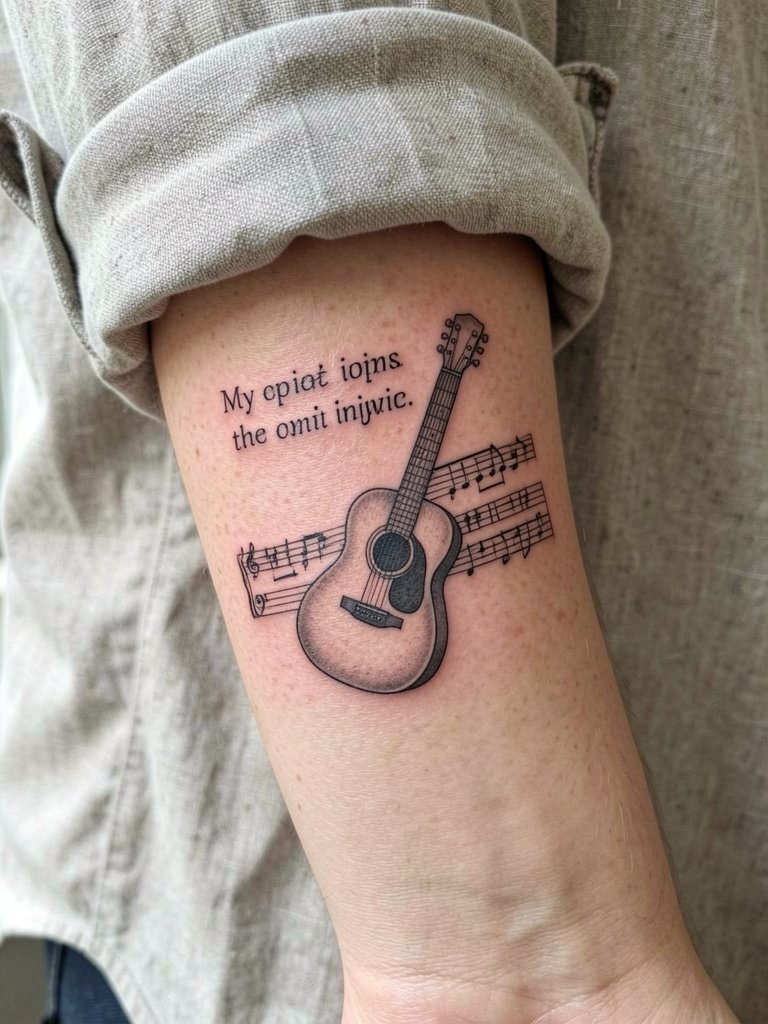
Lyrics add personal specificity and they change the consultation. Bring the exact phrase in your chosen script and discuss line weight sizing for readability at three to five inches. The biggest aging mistake is packing script too close to tiny musical notes; the notes blur faster than the words. Fine line here looks great at six months and can soften by year two. If you want the words to last, request slightly heavier key linework for the script. Style it with a rolled cuff linen shirt and a thin chain on the opposite wrist for clean editorial photos.
Pre-Session Essentials
Those forearm and chest ideas above often need small session hacks to protect fine work during the first week.
- Aurelia Tattoo Cream. A thinner alternative to heavier balms, it keeps fine-line areas moisturized without trapping ink, which helps delicate lyrics and micro detail in the ideas above.
- Kinetic Ink Balm. Designed to lock color in neon and saturated fills, useful when you choose bold pop-art or 80s neon palettes.
- Dr. Tung’s Tattoo Care. Gentle and less irritating for sensitive ribs or sternum work, a low-irritant option during the first few days of healing.
- Sakura Tattoo Oil. Lightweight oil that calms itching on dense ornamental pieces, good for mandala fills and high-density blackwork.
- Saniderm Second Skin. Proven for high-friction zones like ribcage placements to reduce rubbing during early healing and protect linework.
7. Minimalist Line-Art Guitar on Wrist
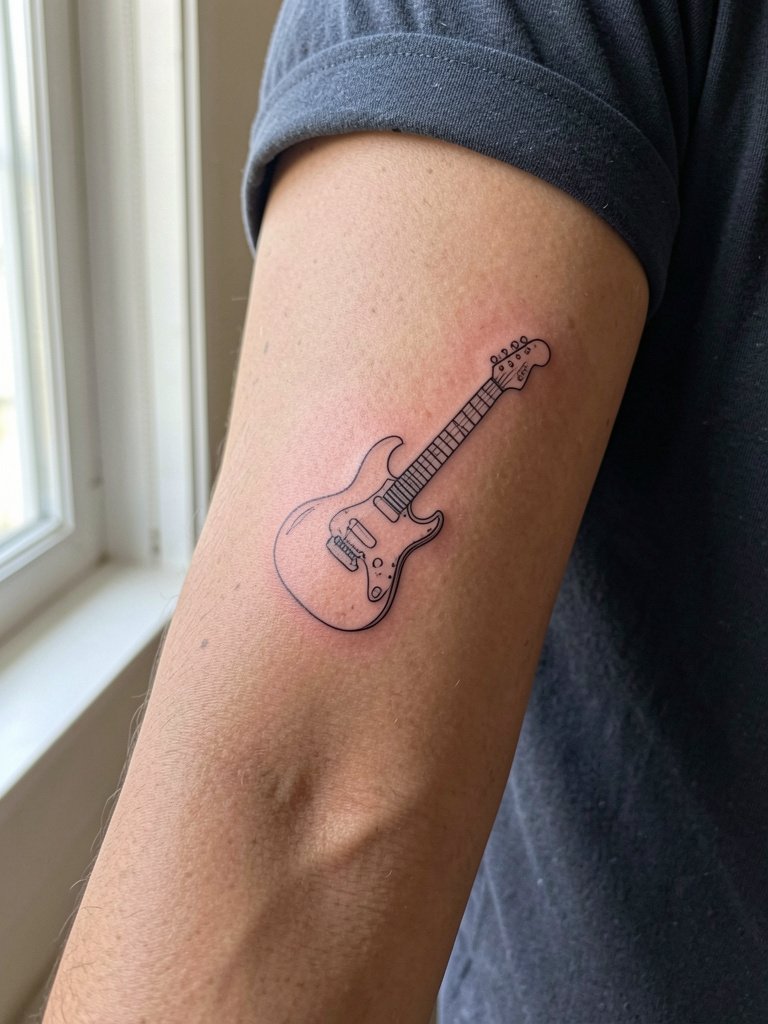
Tiny wrist pieces are fragile. Ask for slightly heavier single-needle weight than a delicate script so the outline does not vanish into a gray blur. People often try to squeeze extra detail into the space; that is a common mistake. Healing on the wrist is straightforward but expect a year check for touch-up if the client washes hands often. For display, avoid chunky bracelets and use a minimalist watch on the opposite wrist so the tattoo keeps negative space and photographs clearly.
8. Acoustic Guitar with Floral Integration on Upper Thigh
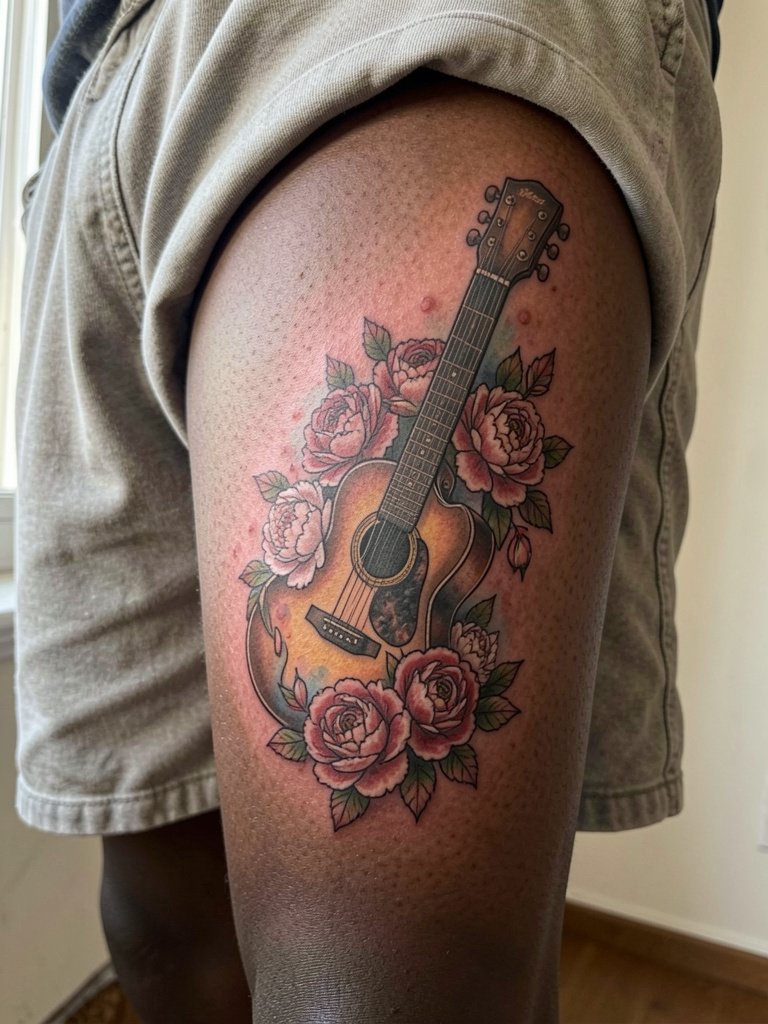
Thighs tolerate medium-large color work and handle shading elegantly. The mistake is putting ultra-fine filigree into a spot that may stretch with weight fluctuation. If you expect body changes, ask the artist how the floral composition can flex with contours. Two-session builds usually get the depth this piece needs. For summer looks, pair it with high-waisted shorts in neutral tones so the floral shapes frame the leg.
9. Electric Guitar with Lightning Bolts on Outer Forearm
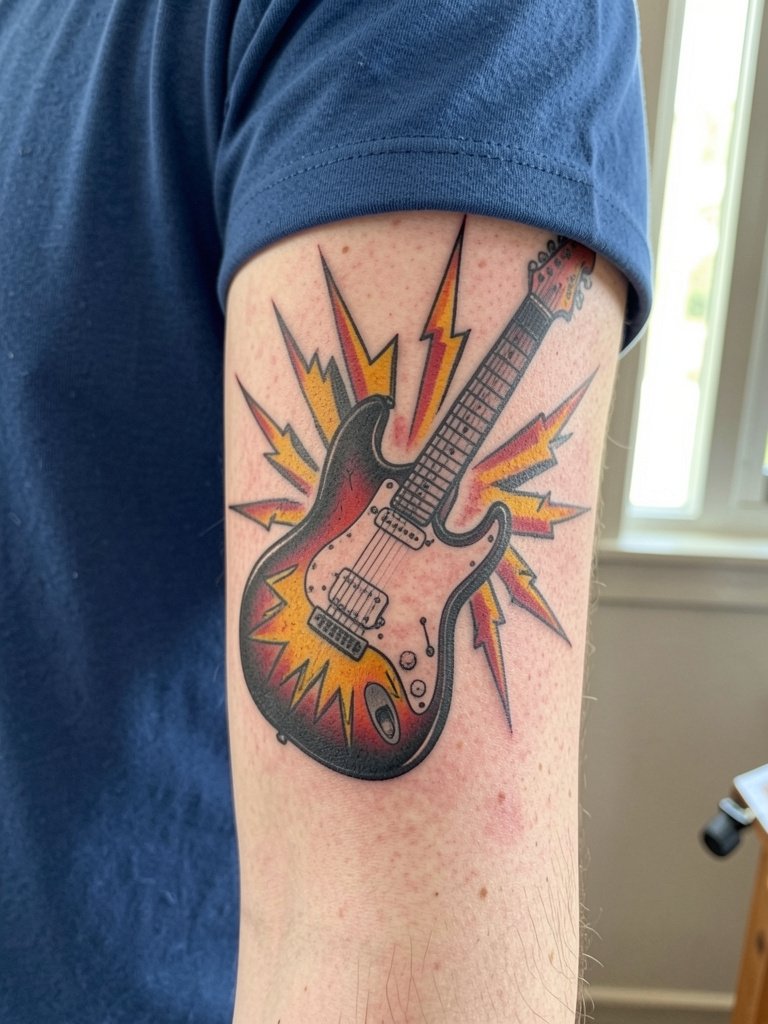
This is a showy forearm choice that reads from across a room if the bolt shapes are spaced and bold. Common mistakes include using tiny, tightly shaded bolts that lose energy when healed. For consultation bring an example of the bolt thickness you like and ask for high-contrast fills so yellow keeps pop. For day-of wear, short sleeves in solid bold colors complement the lightning motif and keep the arm visually tight.
10. Vintage Guitar with Skull Motif on Ribcage
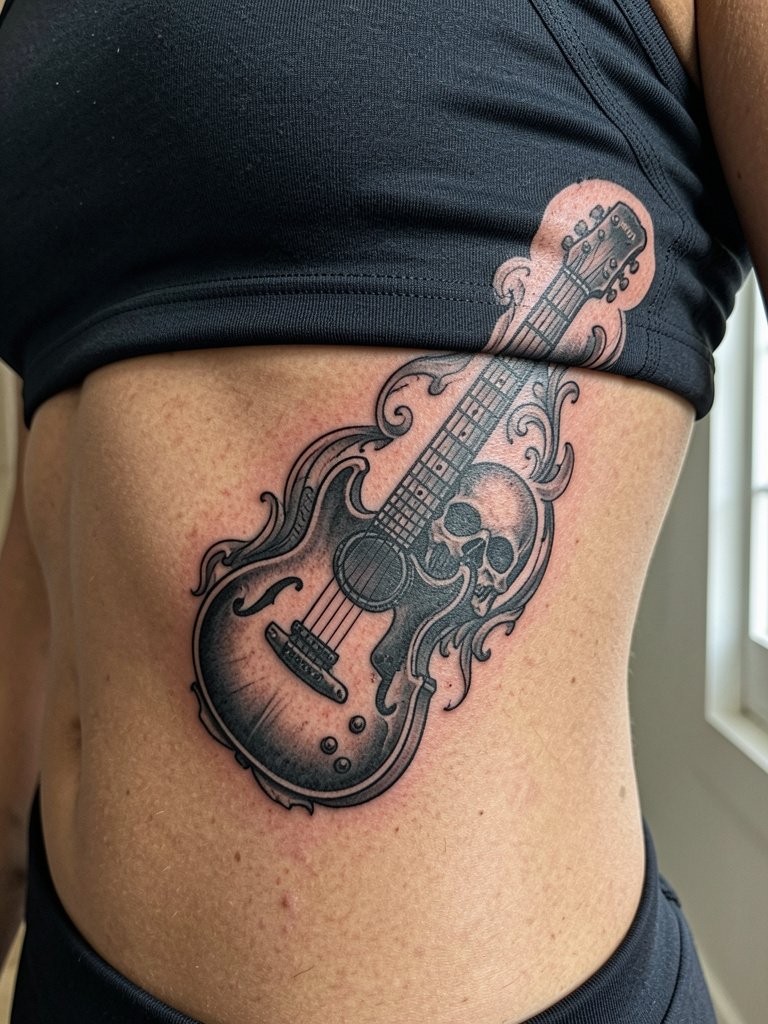
Ribcage placements ignite debate among artists. One camp says fine line ribs blur into gray smudges within two years due to constant stretch and movement. The other camp argues fine line can hold if the artist spaces lines wider and lands the needle at correct depth, and they point to three-year healed examples. If you want skull detail, go heavy on contrast and slightly larger line weight to prevent early softening. The rib is a sensitive zone so plan for two sessions and expect a longer healing window.
11. Micro-Realism Guitar Detail on Inner Bicep
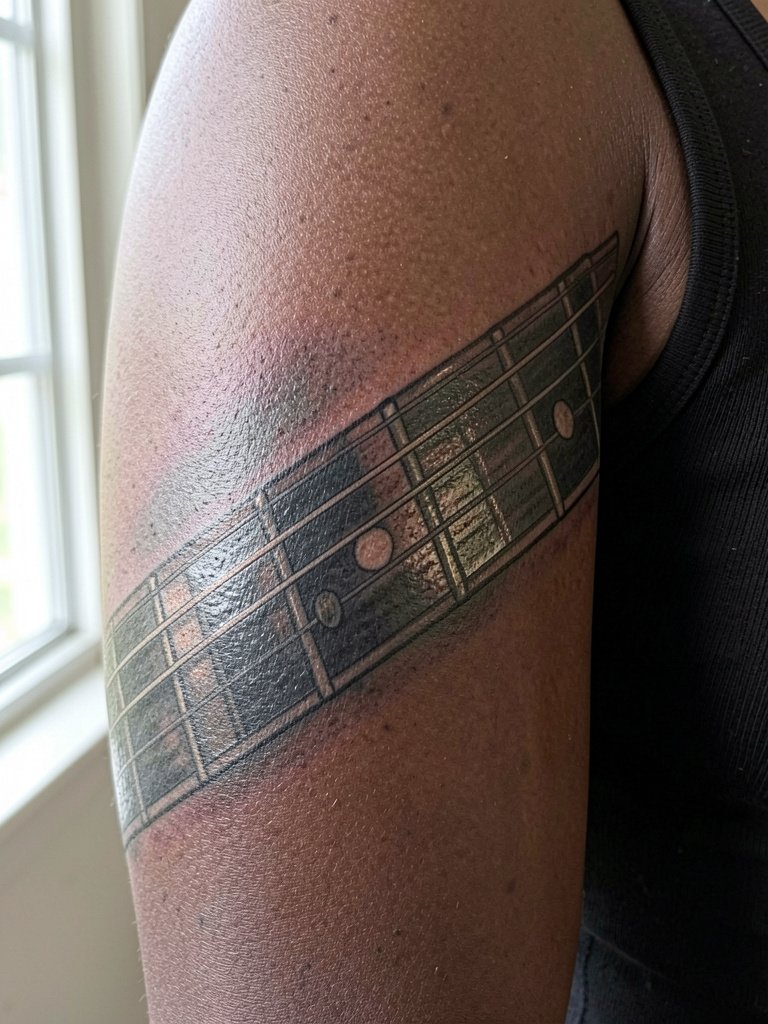
Micro-realism needs stable skin and patience. The inner bicep is ideal because it moves less than the ribcage and accepts tiny texture work. The frequent mistake is compressing too much detail into a small panel. Plan for multi-session work and accept that touch-ups at two to three years are normal for high-fidelity pieces. For showing off this level of craft, a tight-fitting tank top keeps the arm silhouette clean and the micro detail visible in photos.
12. Guitar Headstock Typography on Collarbone
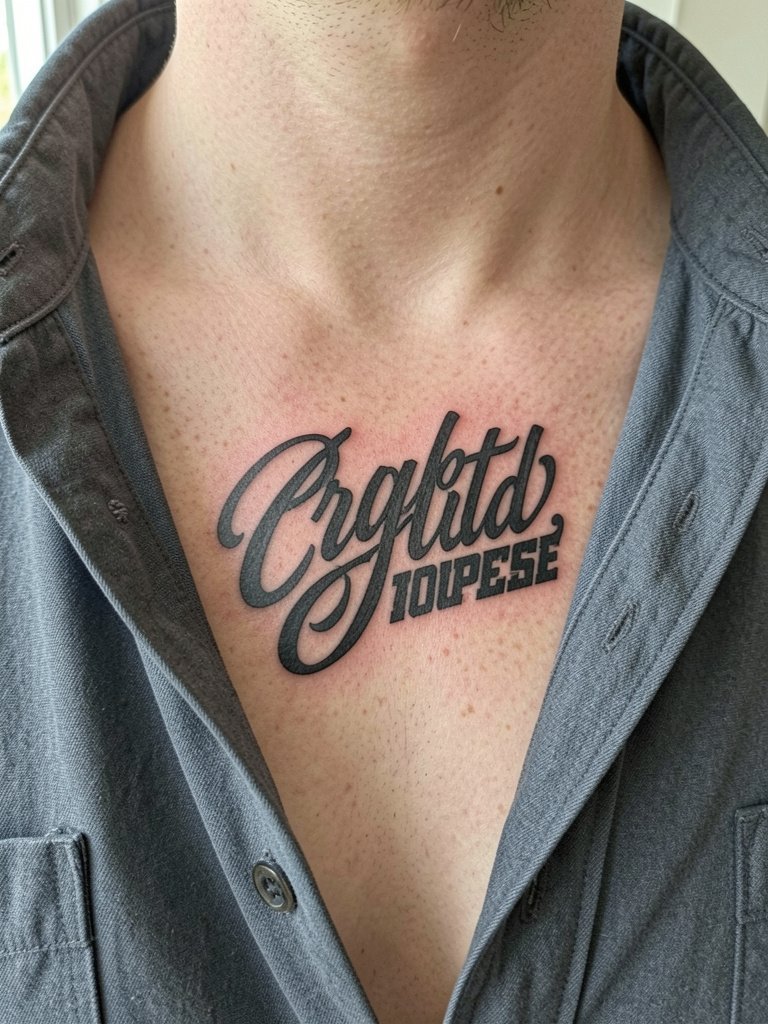
A collarbone headstock tattoo reads like jewelry when the type is sized properly. Bring exact reference lettering and specify the final width in inches so the artist can show how kerning affects readability. Small script that mimics brand logos can smudge over time if reduced too far. For wardrobe, open-collar shirts in white or black and layered thin chains frame the headstock elegantly.
13. Watercolor Splash Guitar on Lower Back
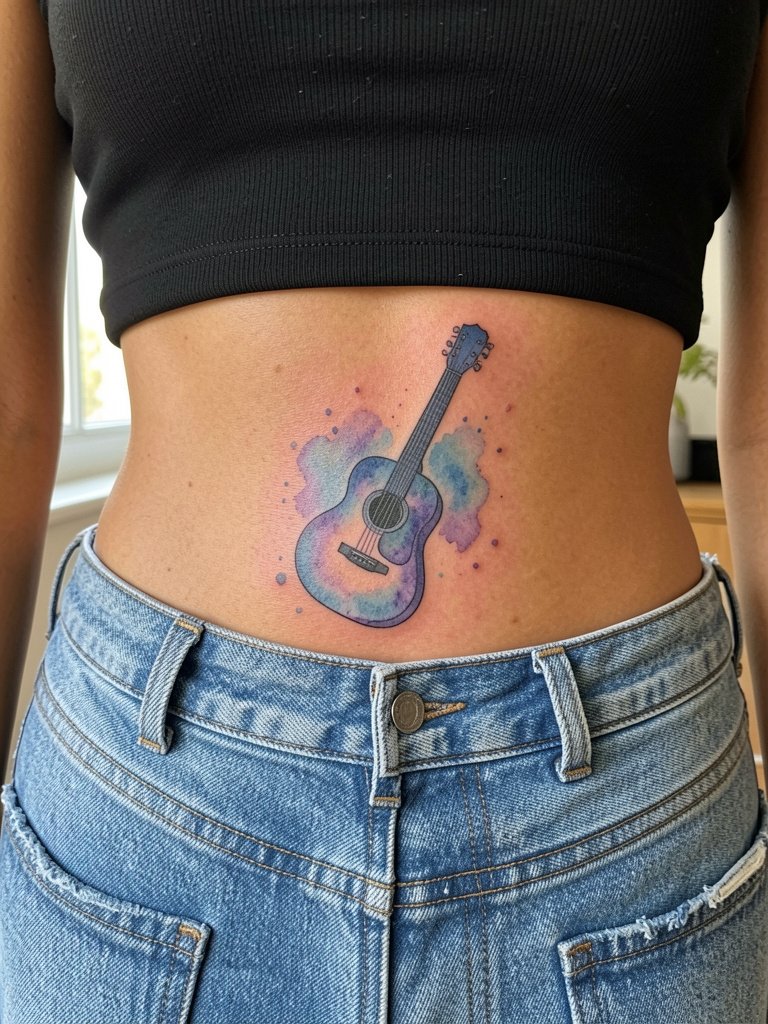
Watercolor effects are beautiful fresh and may need more touch-up to retain vibrancy on lower-back skin. One side argues color washes fade faster and muddle on darker skin; others say saturated pigments and experienced colorists preserve hues longer. If you choose watercolor, ask about follow-up color saturation sessions and consider deeper blues and purples rather than pale pastels. For summer wear pick low-back crop tops to show the soft color curtains.
14. Ignorant Style Rough Guitar on Hand
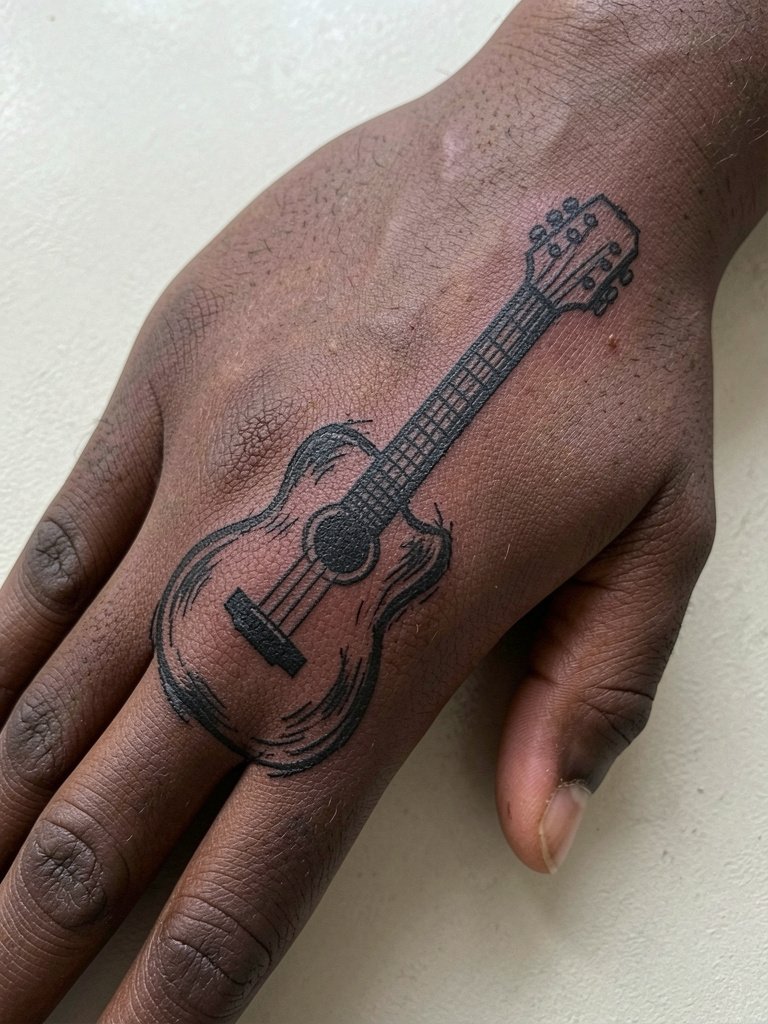
Hand tattoos fade faster due to washing and friction. Ignorant style benefits from bold, unapologetic strokes so visible wear reads like the intended aesthetic. The common mistake is requesting tiny details on the hand that cannot survive daily abrasion. If you accept more frequent touch-ups, the hand is a great place for this raw look. For styling, rugged or open-finger gloves and minimal rings on the opposite hand keep attention on the rough charm.
15. Ornamental Mandala Guitar on Hip
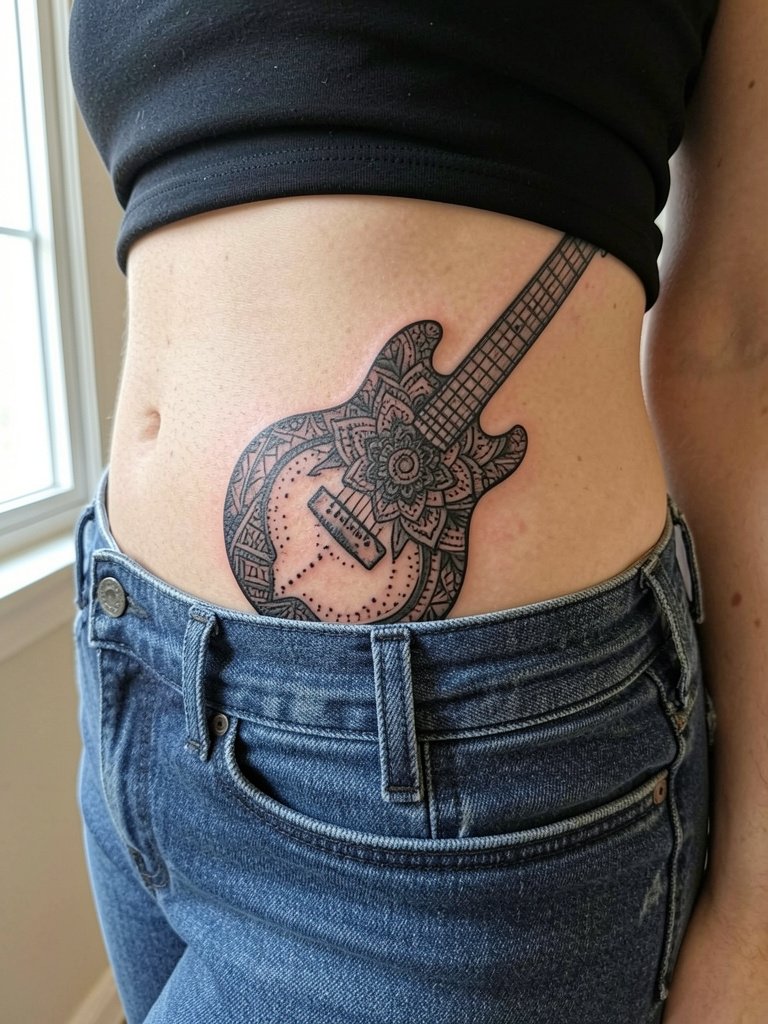
Ornamental fills need density and time. The hip gives room to build mandala layers, but the wrong error is compressing too many concentric rings into a tiny area. If you plan big, expect two sessions and ask the artist about contrast points to keep the center design crisp. For wardrobe, low-rise jeans and layered thin chains complement the ornamental lace look without covering the work.
16. Guitar Pick Micro Tattoo on Finger
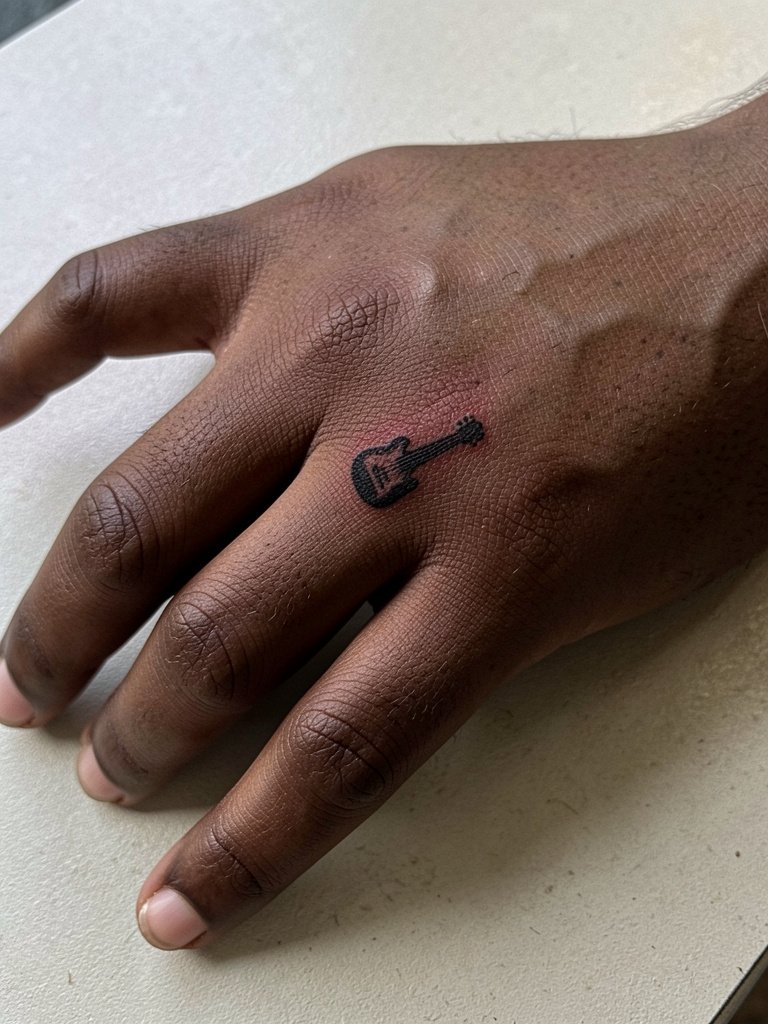
Fingers are high-maintenance. The pick motif is symbolic and small, but tiny single-needle detail will likely need a touch-up within a year. Avoid packing script or tiny fretwork into the same spot. For session wear keep hands clear of jewelry and plan for shorter sessions with more frequent check-ins. This is not a "set it and forget it" placement, but it is striking visible daily.
17. Vintage Blues Guitar with Whiskey on Ribcage (Unique Angle)
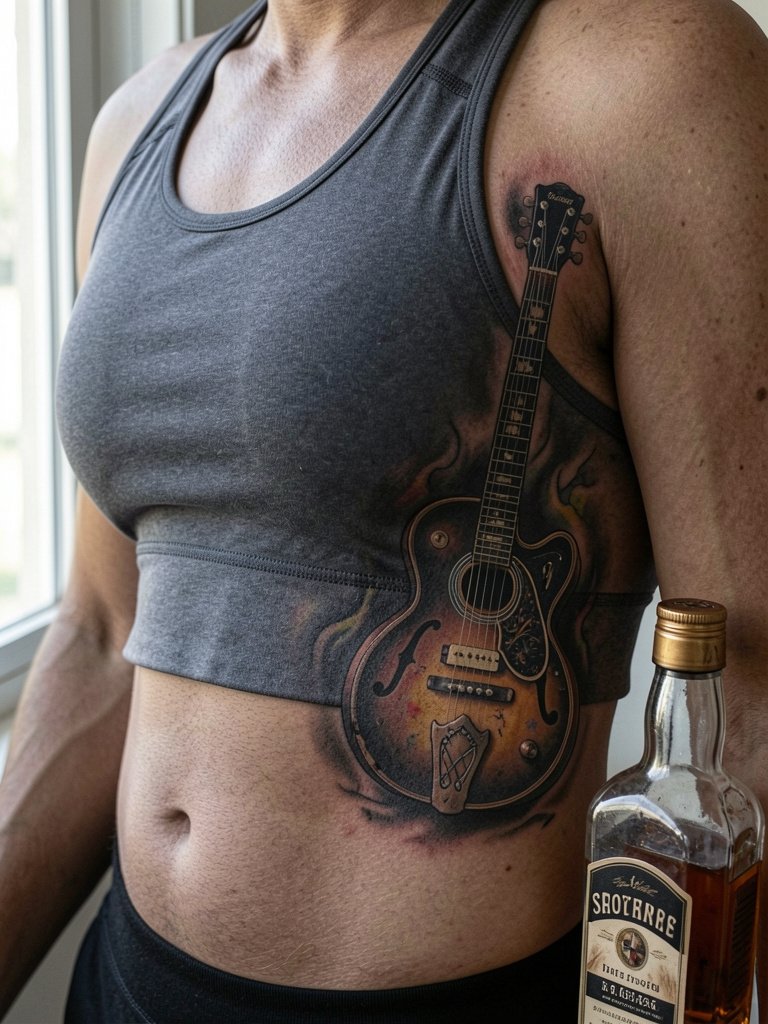
This pairing is an under-covered idea that reads cinematic on the ribs, but rib placement reintroduces the fine line debate. One camp says ribs stretch and thin lines melt into gray smudges within two years. The other camp contends careful spacing and proper depth lets fine work stay crisp for longer. If you want detailed props, opt for slightly bolder contour and plan for a touch-up at the two-year mark. For session comfort wear low-rise pants and an open-button shirt so the artist can access the side torso.
18. Double-Neck Sleeve Concept on Upper Arm to Elbow
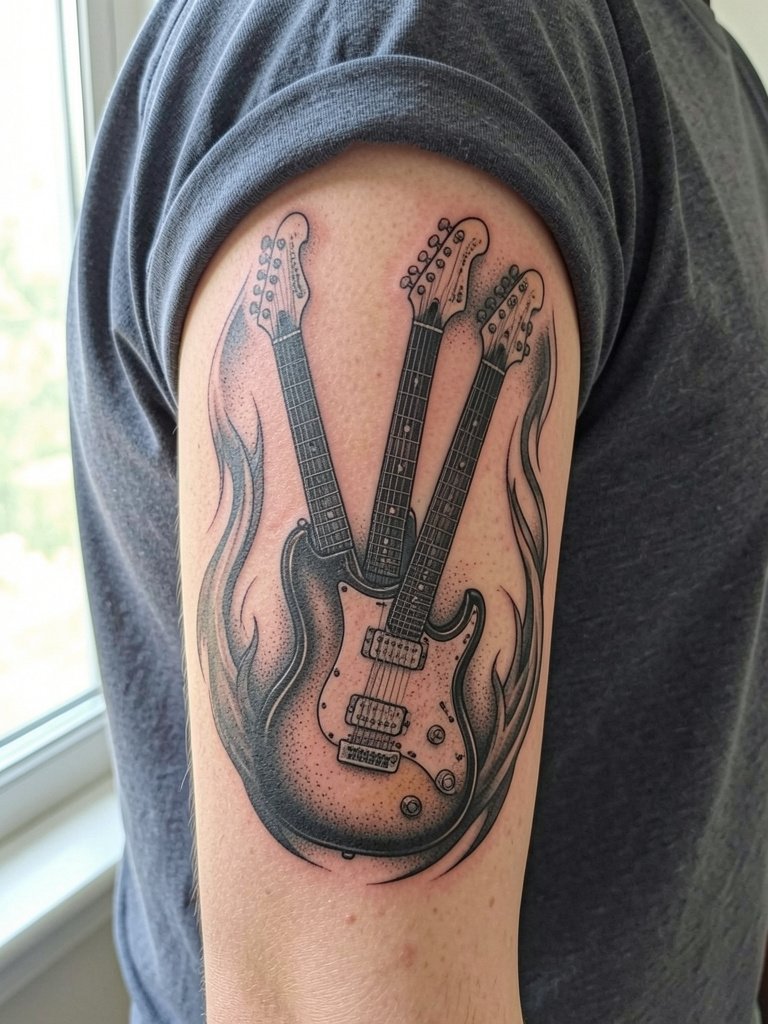
Sleeve concepts need a clear narrative across skin curves. The most common problem is inconsistent lineweight that reads disjointed when the arm moves. Bring multiple references and ask the artist for a compositional map so the double-neck elements flow with muscle lines. This is a longer session plan; expect staged appointments and wear sleeveless or short-sleeve tops that give full arm access on session days.
19. Sheet Music Neckline Guitar on Inner Thigh
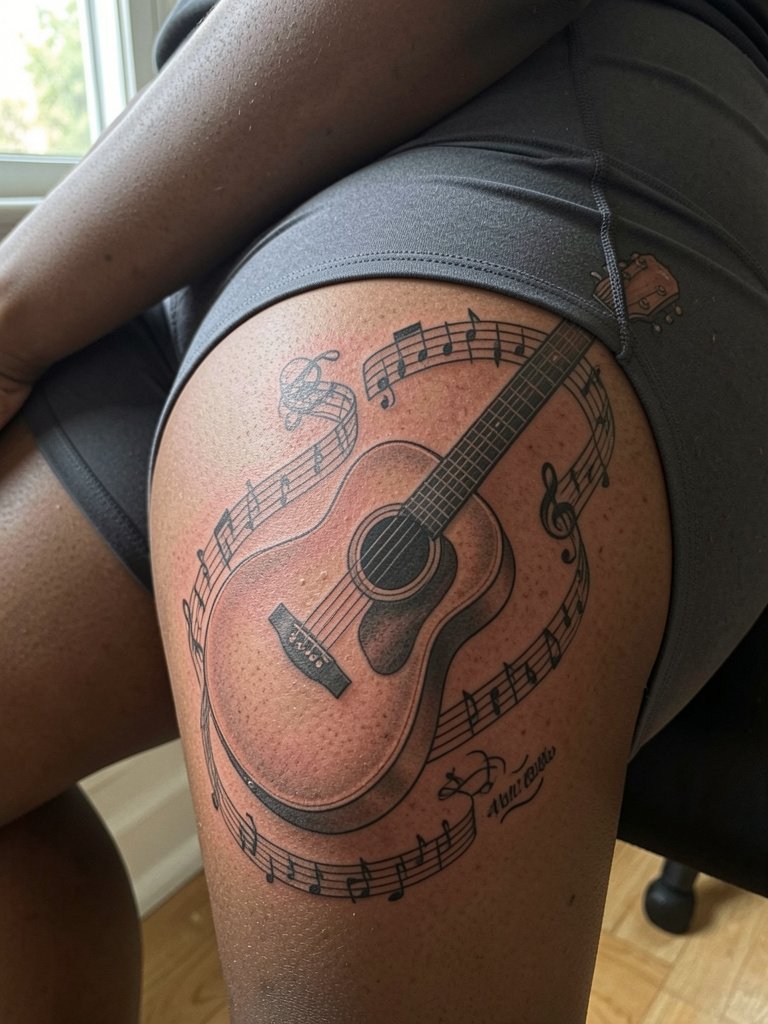
Inner thigh gives privacy and a big canvas for lyric integration. The risk is asking for ultra-thin staff lines near thicker guitar shading; the thin elements can disappear as the heavier shading settles. Discuss spacing and ask the artist to show a mockup at life size so you can approve how lyrics sit along curves. For wardrobe, high-waisted shorts and loose session wear make the appointment easy and keep the art visible when you want to share it.
20. Broken Guitar Shards Blackwork on Calf
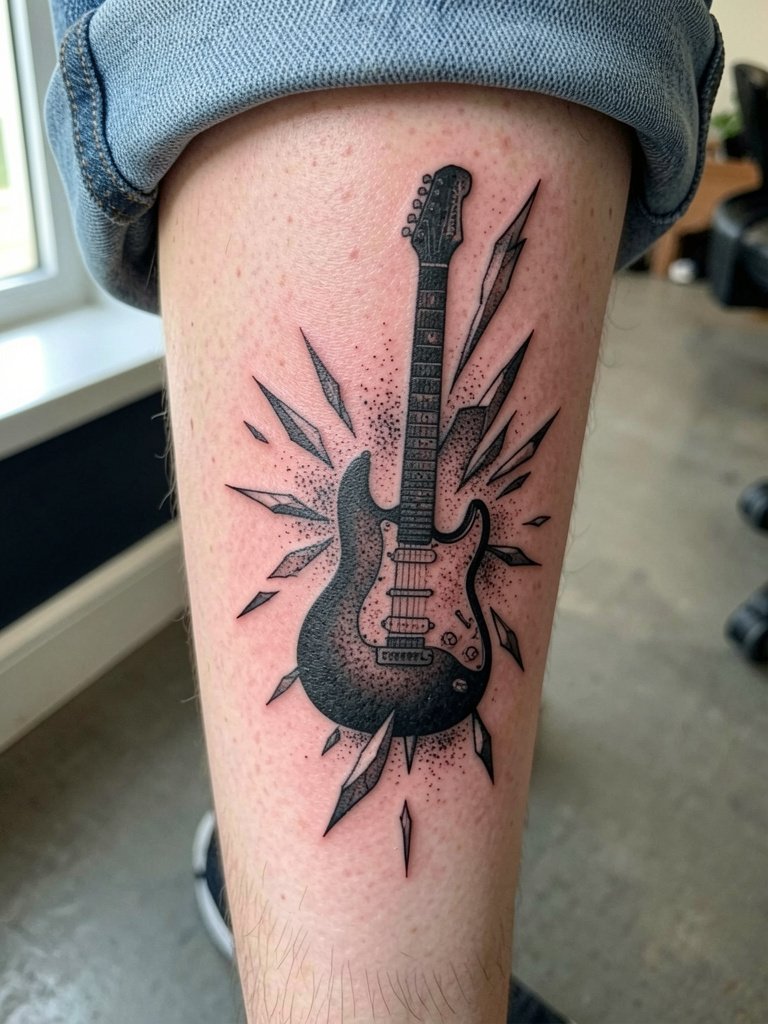
Calf blackwork ages well because it experiences less friction than hands and feet. The mistake is over-texturing small shards which can create a muddy block of black after healing. For long-term readability, ask for deliberate negative gaps between shards and a touch-up plan to refresh heavy black sections. This placement is session-friendly and pairs well with cropped pants to show the art.
21. Tiny Soundwave Wrist Band Tattoo
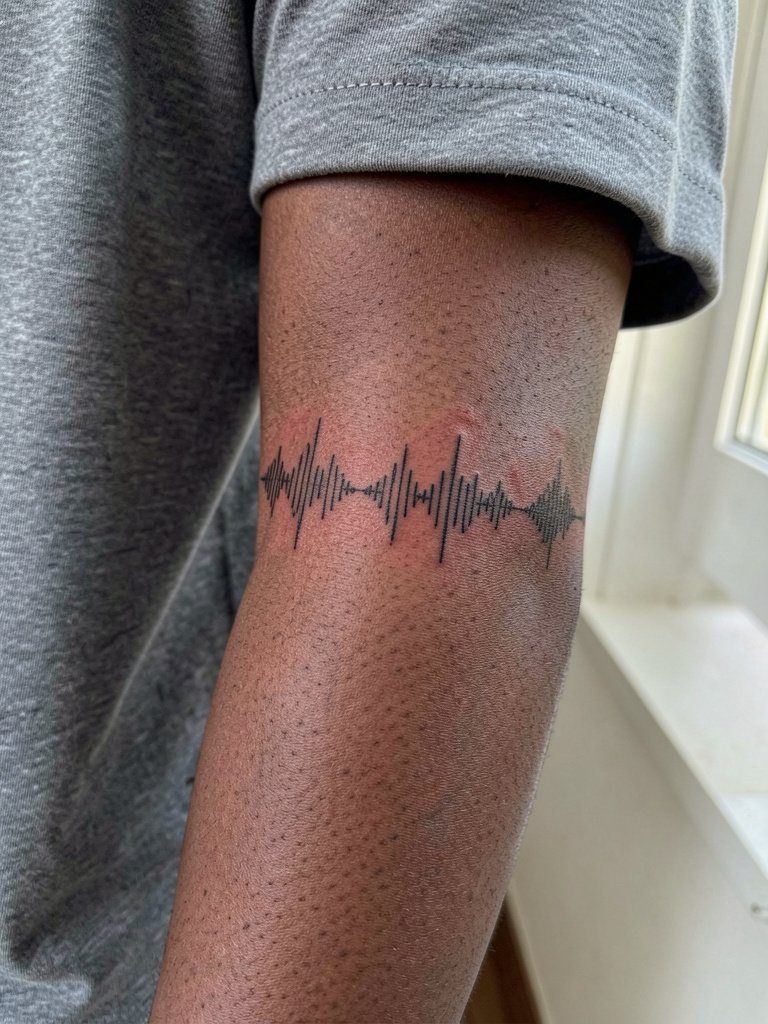
Soundwave bands are personal and modern, but the critical step is testing how the waveform reads at wrist scales. Bring the exact waveform image in high resolution and ask the artist to redraw it at the final size so peaks are not crushed. Fingers and wrists need lighter session times and expect a one-year check-in. For accessorizing try thin bracelet layers on the opposite wrist so the waveform remains the focal point.
22. Guitar and Amplifier Chest Panel
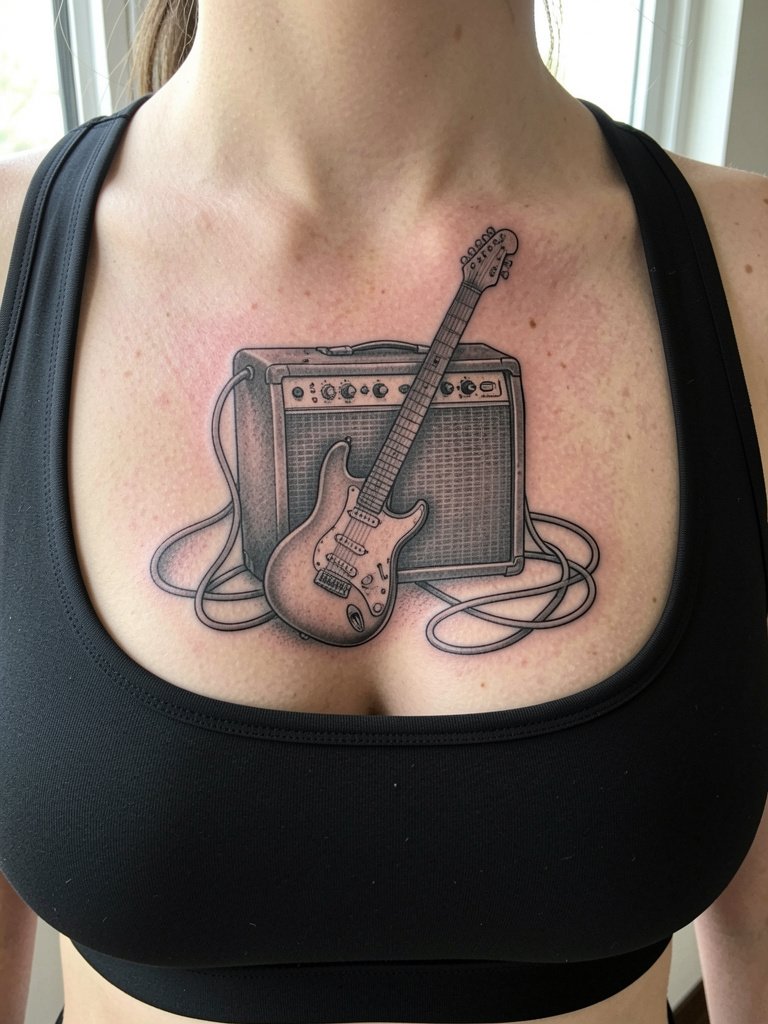
This chest panel can be bold and theatrical. The typical mistake is making cable loops too tight which read as clutter; air between elements keeps each object legible for years. The sternum can be sensitive. If you plan color accents in the amp knobs, discuss saturation choices and a mid-term color top-up if you want long-term vibrancy. For the session wear a button-down or strapless top to give the artist full chest access.
23. Outline Acoustic on Upper Arm (First-Timer Friendly)
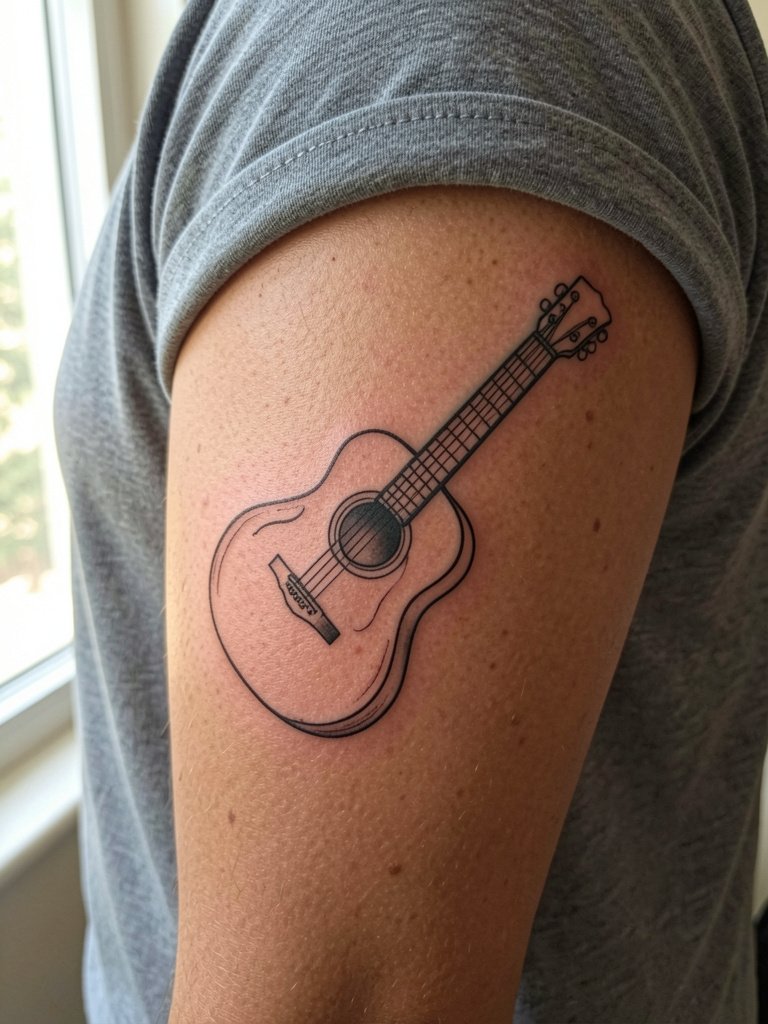
If this is your first tattoo, an upper-arm outline is forgiving and visible. The usual error is picking an ultra-fine outline that looks hesitant after a year. Ask for a hair thicker contour than the Pinterest sample to avoid early softening. Session time is short and pain is moderate. For showing it off choose a comfortable solid short-sleeve shirt and a minimalist leather strap on the opposite wrist.
Frequently Asked Questions
Q: How much should I budget for a small guitar tattoo?
A: Small pieces have shifted upward in price. Expect a reputable studio minimum in the low to mid hundreds for tiny silhouettes and simple line work, and plan for larger budgets for color, realism, or multi-session micro-realism. Tipping around 20 percent is common and appreciated.
Q: Will neon or watercolor show up well on darker skin tones?
A: Pastel and neon pigments can lose vibrancy on darker skin without careful pigment choice. One camp favors black and gray or deep saturated reds and blues for longevity and contrast. The other camp points to examples where experienced colorists maintain bright hues with deeper saturation and planned touch-ups. If you have darker skin, ask the artist for healed photos on a similar tone and prefer deeper pigments over pale pastels.
Q: Where can I find guitar tattoo portfolios and healed examples without naming artists directly?
A: Search hashtags like #guitartattoo and #guitartattoomen on Instagram and TikTok, then use location filters to narrow down nearby studios. Tattoodo and the Inked App let you combine style and location keywords to find portfolios that include healed shots. Reddit threads in r/tattoos and r/guitartattoos are also a good place to see honest healed photos across skin tones.
Q: How quickly do fine-line guitar tattoos need touch-ups?
A: Fine-line pieces often soften faster than bold work. A realistic window to plan for a check-in is around two years for delicate inner-forearm or rib work. Micro-realism and dense blackwork may need touch-ups later depending on daily exposure and pigment saturation.
Q: Is numbing cream safe for sensitive placements like ribs?
A: Opinions differ. One camp says numbing cream is a legitimate way to get through long, painful sessions and helps clients stay in the chair. Another camp warns that numbing can cause uneven ink absorption and patchy healing, and some artists decline it for that reason. If you consider numbing, specify the product and timing in advance and follow the artist’s protocol to reduce uneven healing risk.