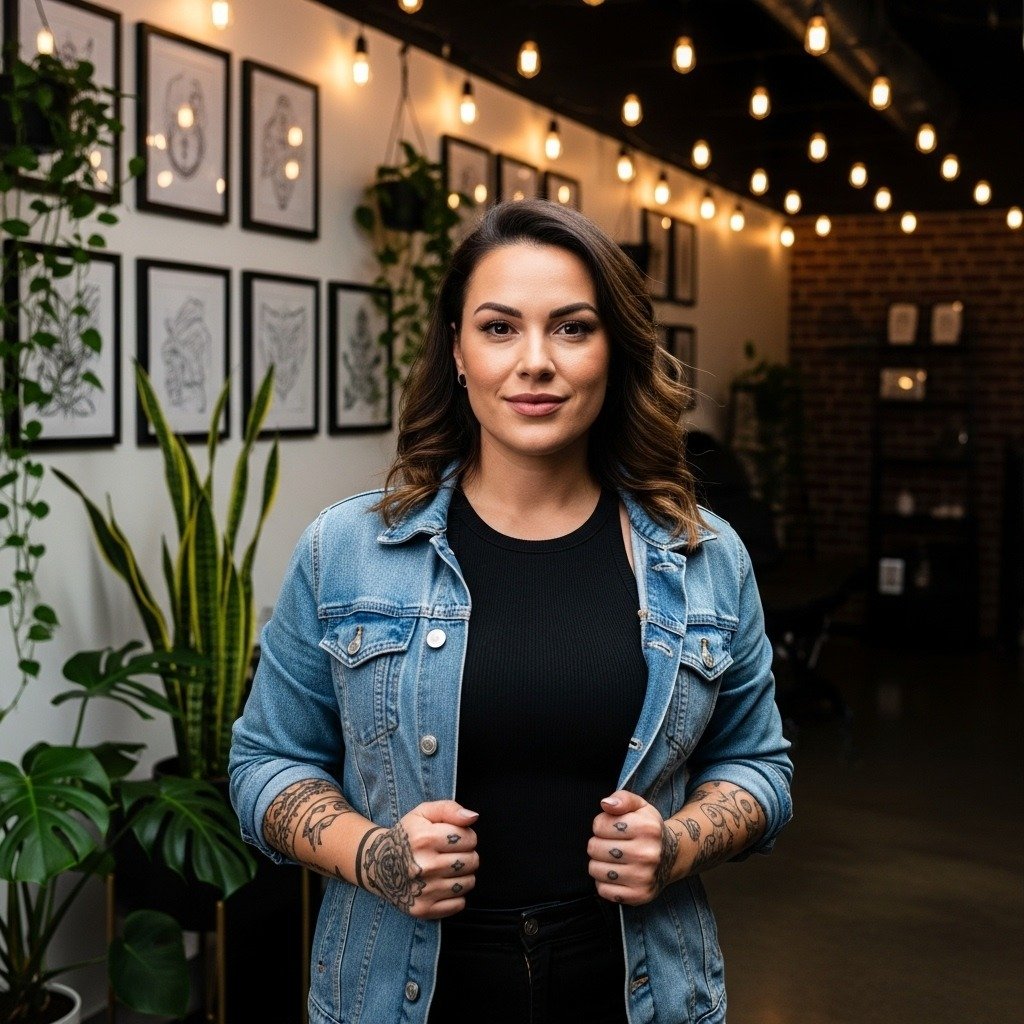
A lot of tiny ocean tattoos look gorgeous in photos and then soften into a gray whisper after a year. That happens when the line weight, placement, and aftercare are mismatched to the design. Read these 19 minimalist wave ideas with realistic notes on how they age, what to wear to the session, and a few styling picks so the finished piece reads the way you want it to.
1. Minimalist Single-Line Wave, Inner Forearm
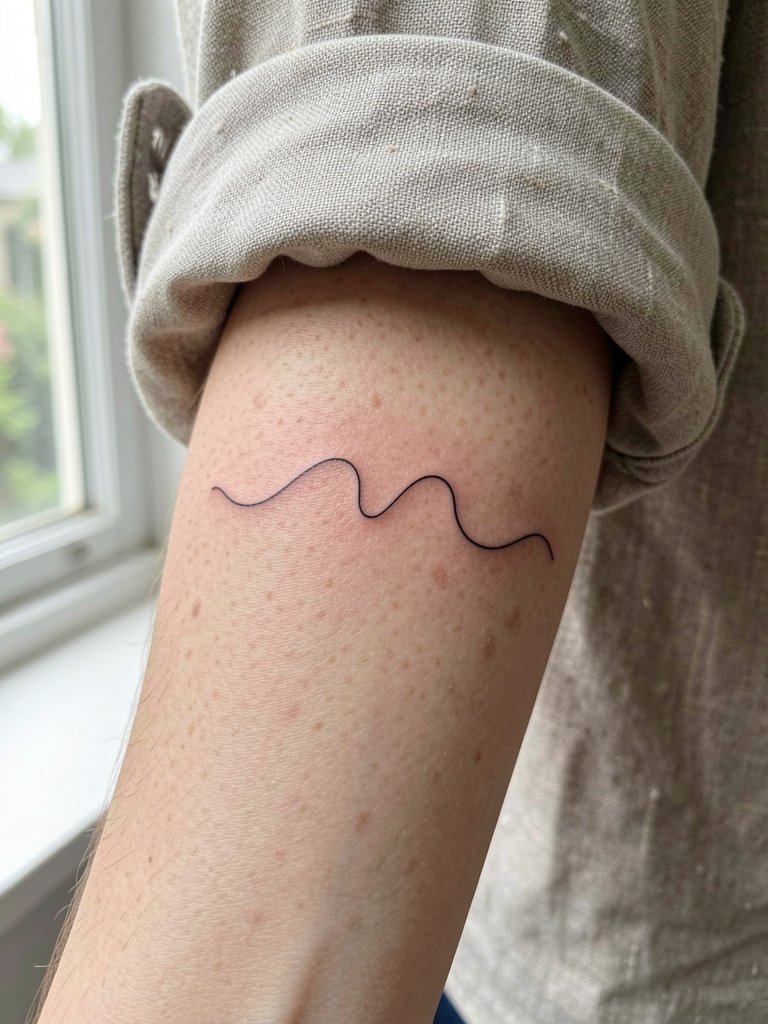
A single unbroken line reads elegant on a palm-up forearm, and it is fast in the chair. Expect a short session and low pain, but also higher movement and flexion so the design must have breathing room. Artists split on whether fine-line waves on the inner forearm hold long term. One camp says ultra-thin single-needle lines on that surface blur within one to two years because the skin flexes and the wrist area compresses. The other camp argues slightly thicker spacing and 0.35–0.40 mm line weight keep the wave readable for three years or more.
Styling note. For showing off, wear a linen button down shirt with the sleeves rolled so the wave reads like a bracelet. During the session wear a loose button-down or short sleeve for clear access. Common mistake. People request a too-thin single-needle variant without asking how the area moves day to day. If you want longevity, ask for a version with slightly more line density and a test stencil placed where your arm bends.
2. Tiny Geometric Wave Triangle, Wrist
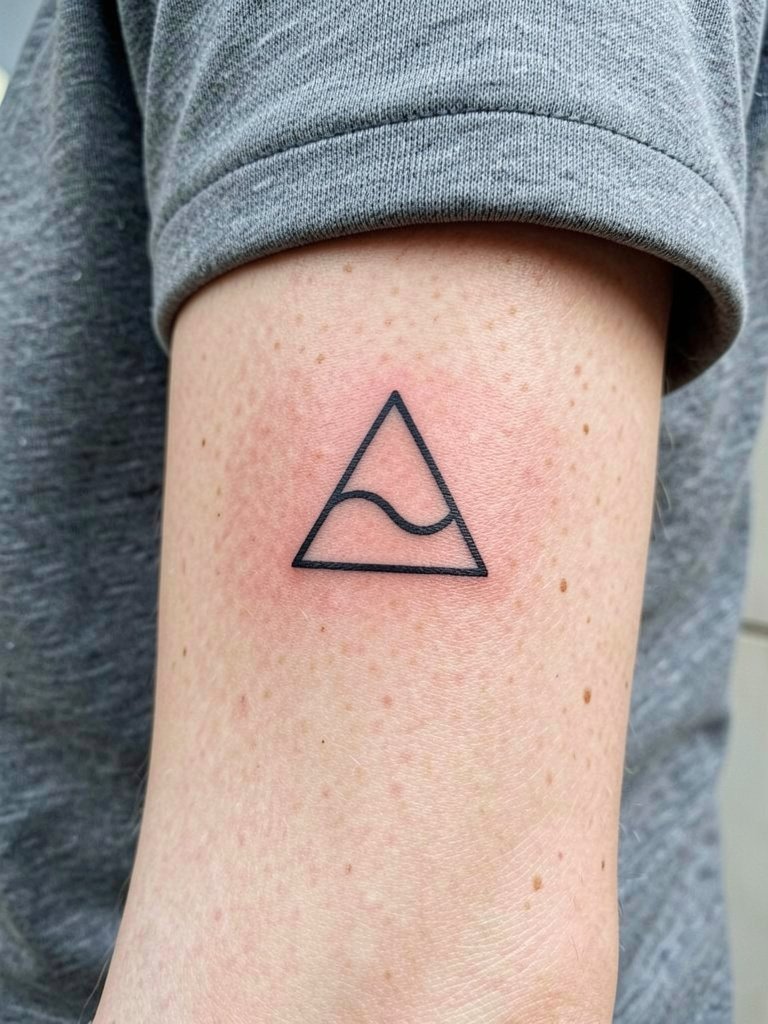
The triangle badge compresses a wave into a single wearable icon that works well at wrist scale. If you want it to read crisp after a few years, keep the triangle at least 0.75 to 1 inch across. Session feel is quick and mildly sensitive on the wrist bone. Styling tip. Pair the wrist triangle with a thin chain bracelet set on the opposite wrist to balance attention without crowding the tattooed side. Tell your artist you want the triangle to act like a stamp so they can space the interior linework accordingly. A common mistake is shrinking the geometry too small and then expecting the interior wave to stay distinct.
3. Fine-Line Dotted Wave, Inner Forearm
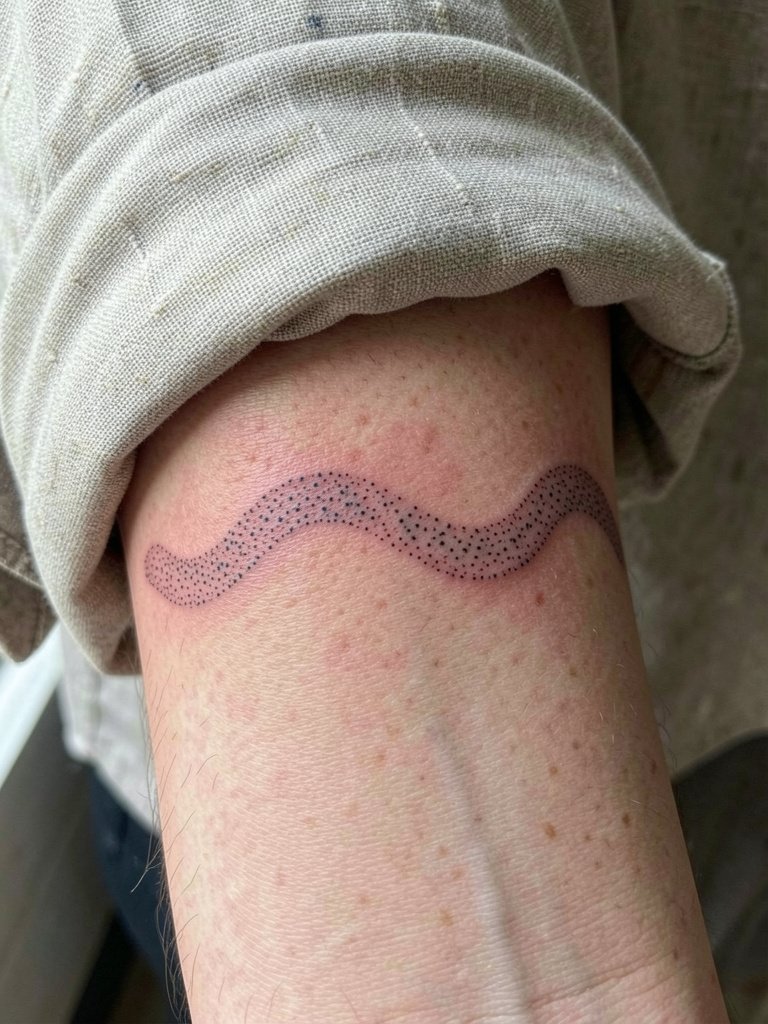
Dotted waves age differently than solid lines. The stipple method softens gracefully because there is less continuous pigment to drag, but the dot spacing matters. Recommend the artist space dots slightly wider than a dense stipple used for shading. Session-wise this takes a little longer than one smooth pass, and some clients report a rhythmic buzzing that feels less jarring than a heavy liner. For the appointment wear a rolled cuff linen shirt so the artist can work the whole forearm without tight cuffs. Common mistake. Asking for dots without specifying spacing results in a blotchy texture when healed. If you plan heavy forearm movement, choose slightly larger dots so the pattern survives stretch.
4. Abstract Curved Wave, Lateral Hip Bone
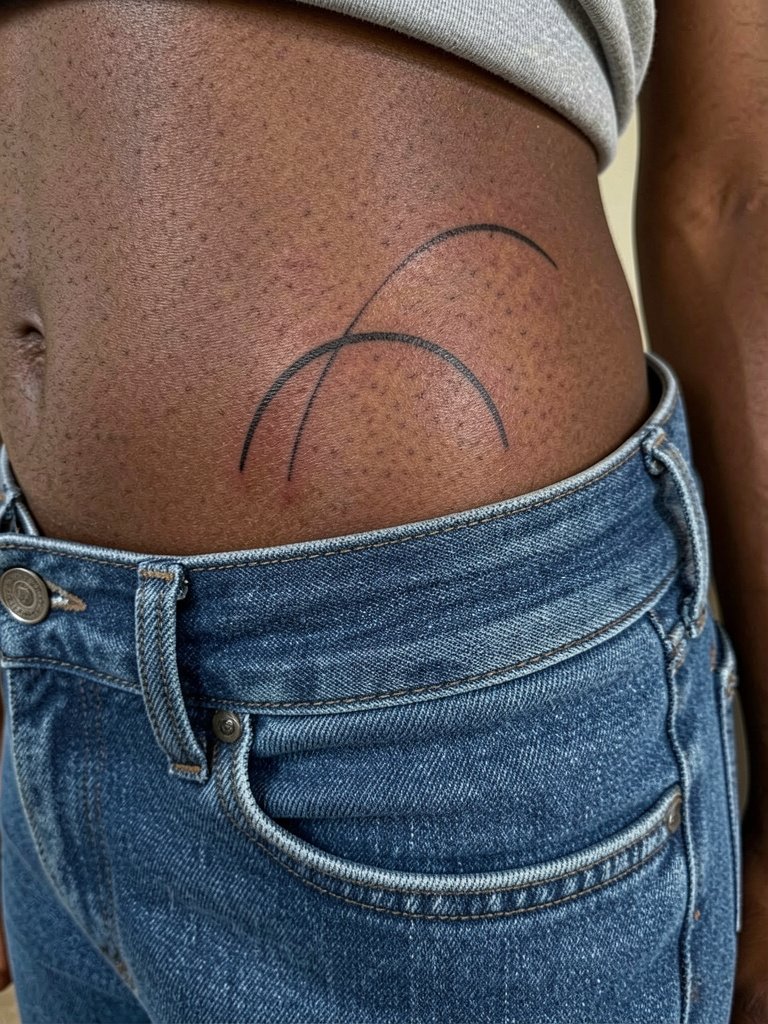
An arc that suggests water trough rather than crest reads meditative and avoids the cliché curling wave. Placement at the side hip gives natural concealment and a low-pain session compared with ribs. Plan the stencil so the curve aligns with your body lines when you stand relaxed. Session wear. Use loose drawstring pants the day of your appointment so you can roll them down comfortably without pressure on the area. Aging note. Friction from jeans can rub fine lines if the tattoo sits near the waistband, so ask for the design to sit slightly above where your pants normally hit. The biggest mistake is requesting a hairline curve too close to the waistband.
5. Minimalist Wave Plus Moon Silhouette, Inner Upper Arm
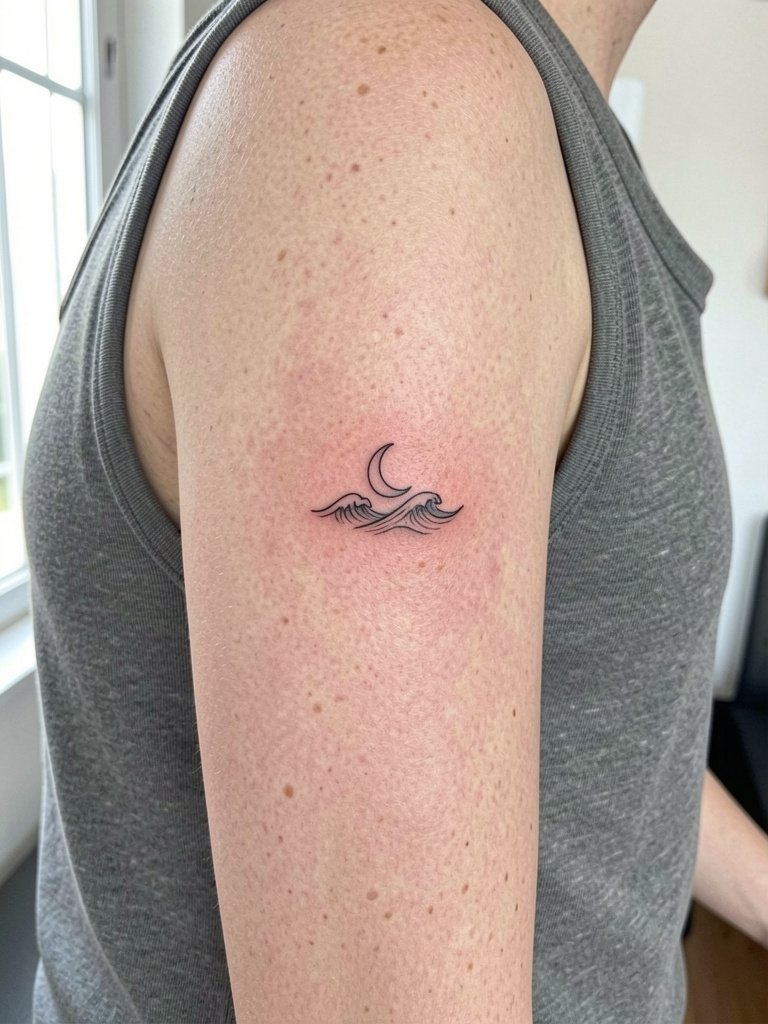
Pairing a small wave with a moon keeps ocean and nocturnal symbolism clear without crowding the space. The inner upper arm is lower on the pain scale than forearm or ribcage and stretches less, so the fine line holds up better. For showing off, throw on a sleeveless tank top in cream or sand and let the moon peek when your arm is relaxed. Consultation tip. Bring two reference scales so the artist can show how the moon relates to the wave at both 1.5 and 2.5 inches. Common mistake. Placing the moon too close to the wave makes the whole motif read as one blob over time.
6. Single-Needle Wave with Breaking Tip, Outer Forearm
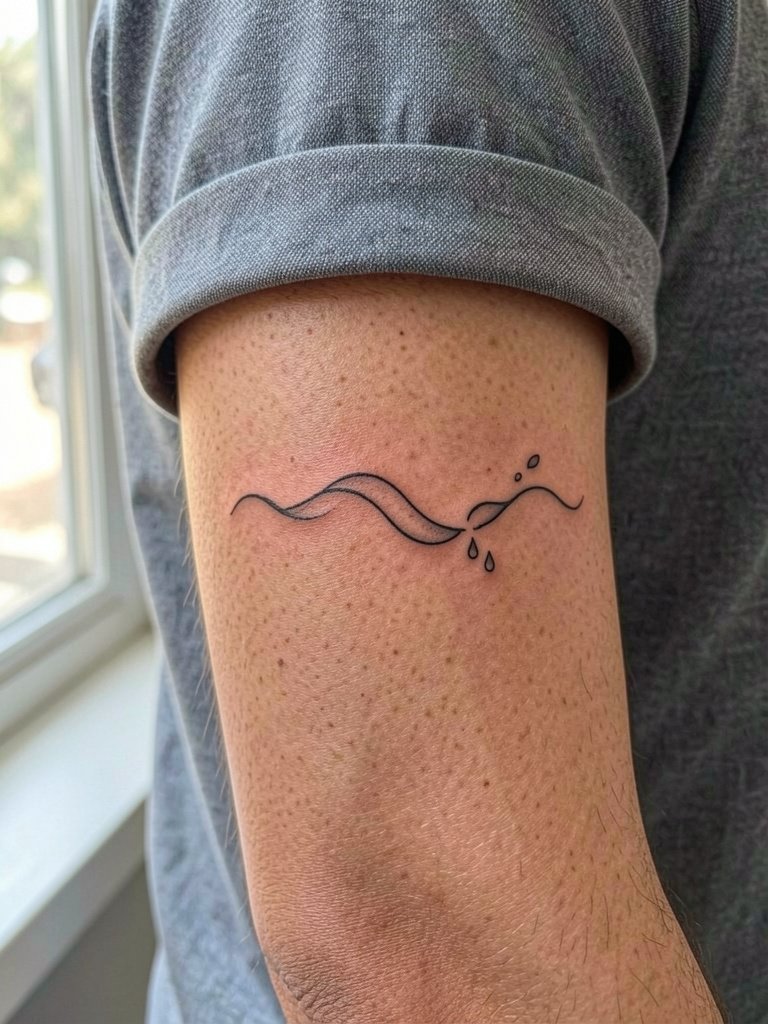
A breaking-tip detail adds motion without adding shading. Outer forearm movement is less aggressive than the inner forearm, so single-needle detail can last longer here. Session time is short and discomfort is moderate. Visual note. If you want the droplets to remain crisp, ask for slightly separated droplet spacing and for the artist to mark where the pieces end relative to the wrist crease. Common mistake. Letting droplets touch skin folds invites blurring. Aftercare. Keep sunlight off and avoid tight watchbands that press down on the drying droplets.
For The Healing Window
The forearm, wrist, and finger ideas above require slightly different first-week care than thigh or hip pieces. These five items smooth the session and the first week.
-
Japanese-style thin aftercare balm. A thinner plant-based balm can reduce tiny bump formation on fine-line work and is gentle during the first week.
-
Australian indie tattoo balm. Many people prefer a lightweight formula that sits less heavy on small stitches and stipple work.
-
Light gray tattoo ink set. For two-tone minimal designs the subtle gray gives depth without full shading, useful for sand lines under waves.
-
0.35+ mm fine needle cartridges. Slightly thicker fine-line options help tiny wave designs survive skin stretch on wrists and forearms.
-
Plant-based balm alternative. A softer plant-based ointment works well for clients who found Aquaphor heavy on micro linework.
7. Minimalist Wave Band, Ankle
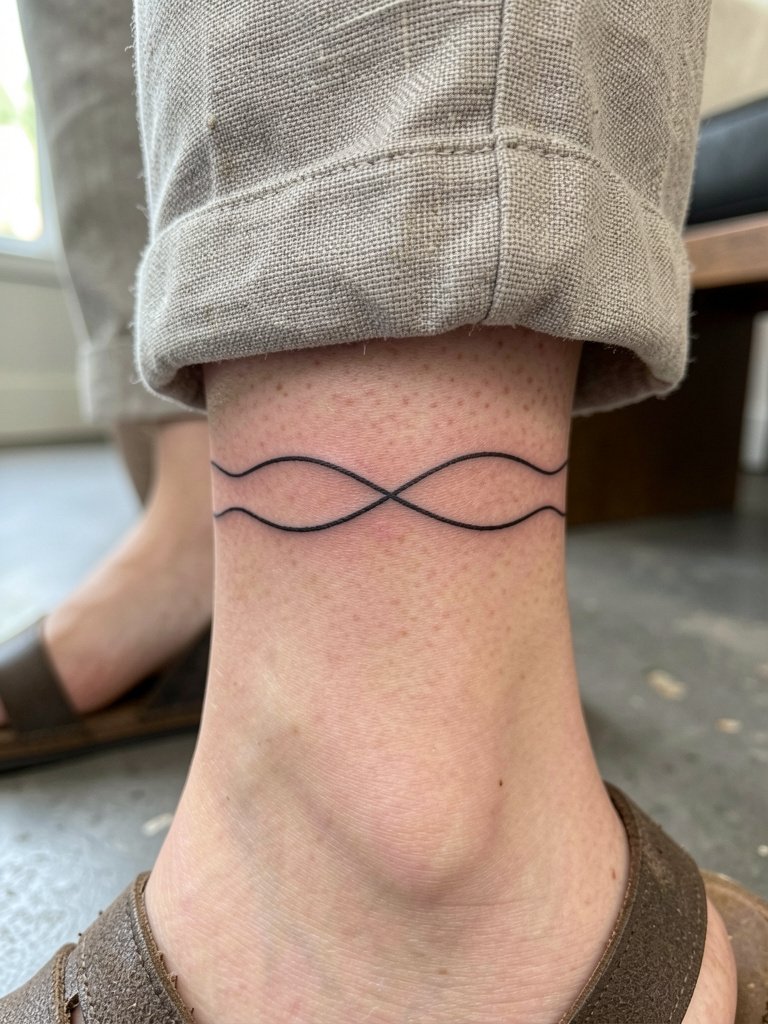
The wave band reads like jewelry and handles movement from shoes and socks poorly if placed too low. For longevity place the band above the ankle bone where friction is lower. For summer showing-off pair it with minimalist ankle sandals. Session wear. Roll up loose pants to give the artist full access without tight sock marks. Most mistakes come from placing the band where socks or shoe collars rub during the first two weeks.
8. Tiny Wave Inside a Circle, Collarbone
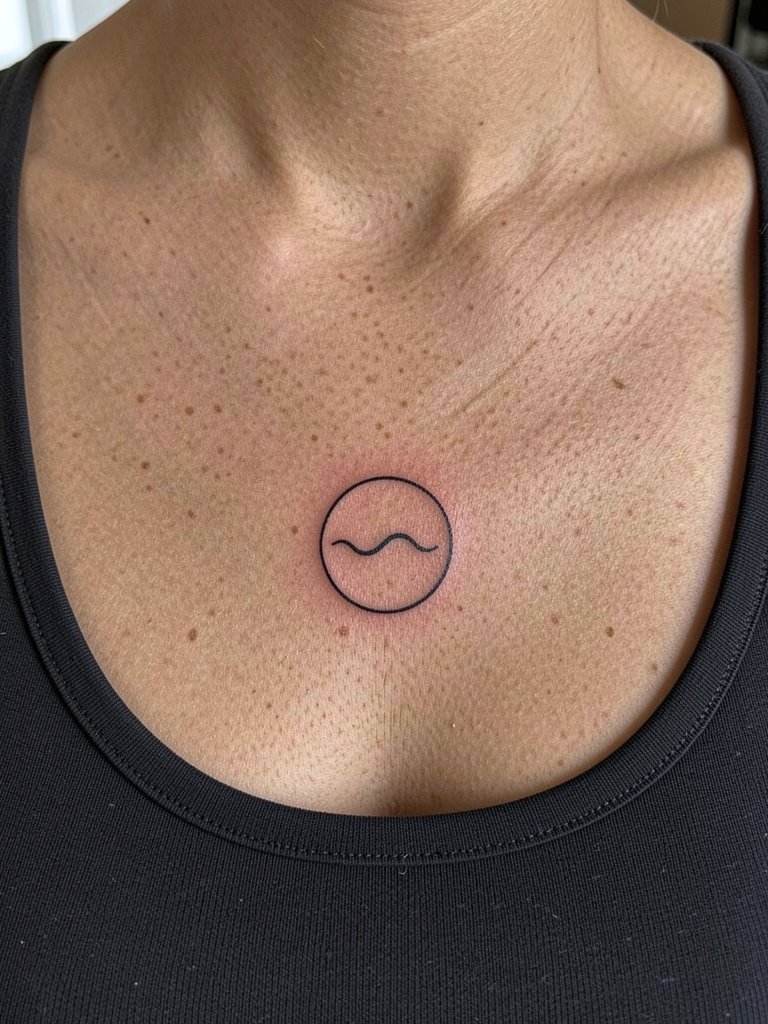
A small badge on the collarbone reads editorial and photographs well with layered necklaces that do not sit over the ink. Placement sensitivity is low to moderate and the stencil must align with your natural posture. Styling tip. Choose open-neck tops that frame the circle without covering it. Aging note. Collarbone skin receives sun exposure so sunscreen after healing is key to maintaining contrast. Mistake to avoid. Crowding the interior wave with extra dots will reduce clarity at standard badge scale.
9. Minimalist Wave Plus Compass Rose, Inner Forearm
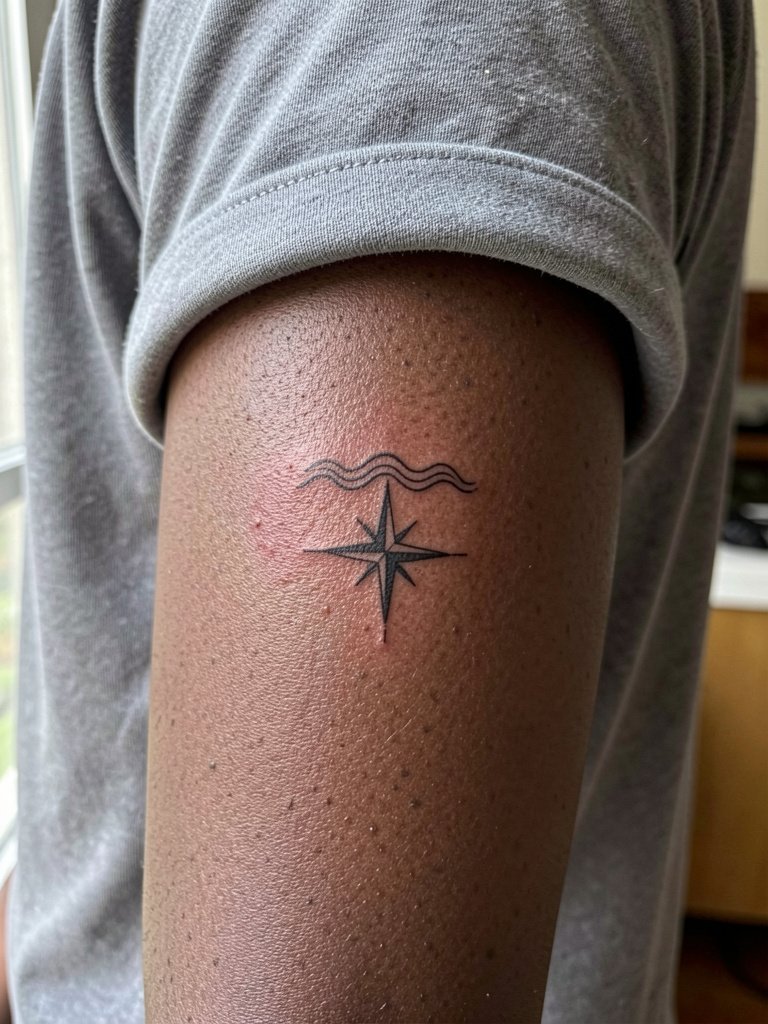
Combining navigation with ocean imagery works well for travelers who want compact symbolism. Because this sits on the inner forearm consider slightly bolder compass points so the motif reads after movement. Session reality. This piece takes a touch longer than a single-line wave because of the tiny compass details. Consultation tip. Bring a photo of the compass scale you like so the artist can balance it with the wave. The common error is shrinking both elements down too far and losing the compass points in the healed result.
10. Wave Made of Three Dashes, Side of Neck
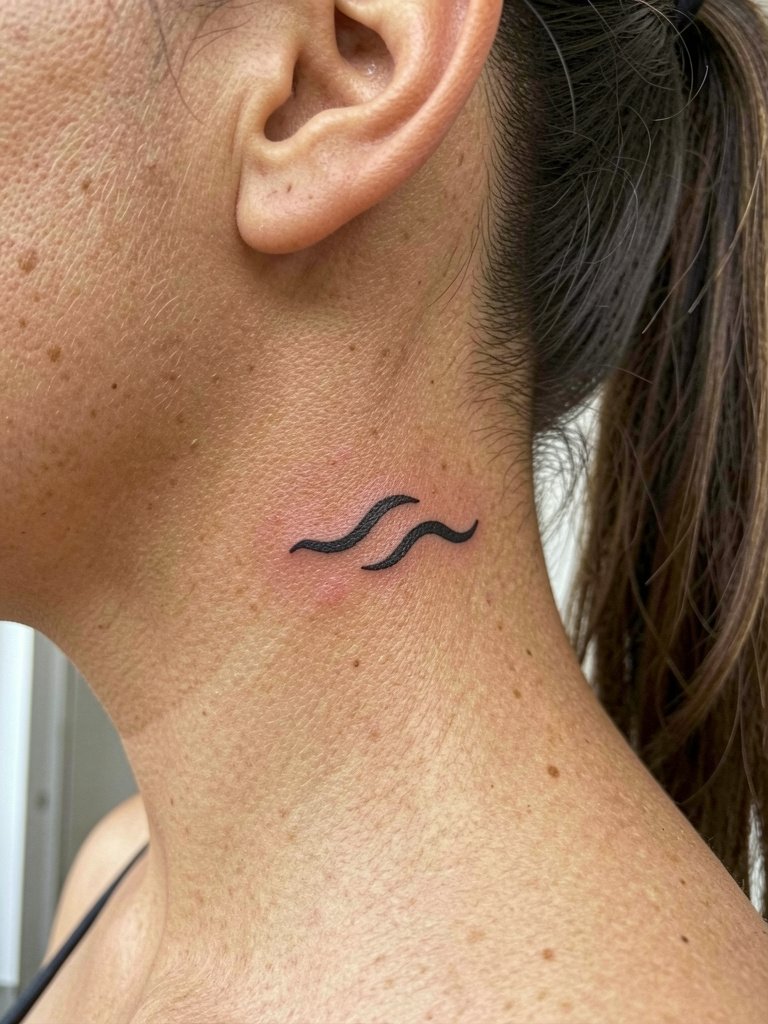
Three dashes give you an "almost-not-there" look that reads bold up close and subtle from a distance. Neck pieces are visible and tend to age like thin lines anywhere that sees sun and friction, so keep spacing intentional. Styling pick. Wear hair up and use a hair clip or scrunchie when you want the tattoo exposed. Professional note. Side-of-neck work sometimes triggers workplace conversations so consider that before booking. Typical mistake. Requesting dashes too close to the hairline invites ink migration into the nape over time.
11. Minimalist Wave Across the Wrist
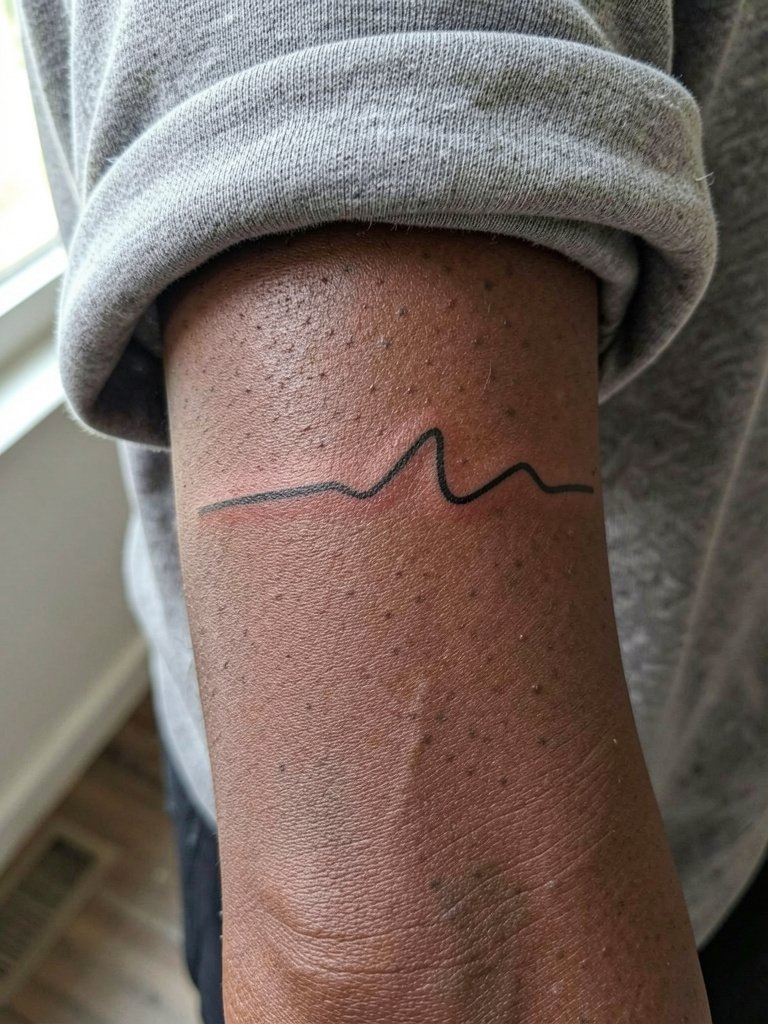
A wrist wave that sits like a bracelet is highly visible and takes frequent sun and washing, which can dull fine lines fast. The numbing cream debate shows up here for first-timers. One camp says numbing cream undermines the ritual and can slightly alter ink uptake leading to patchy saturation. The other camp sees it as a practical tool that reduces trauma and helps people complete small sessions without panic when applied correctly. Session advice. Wear short sleeves and avoid watches for two weeks. Mistake to avoid. Letting a bracelet rest on a fresh wrist tattoo increases scab irritation and can affect final linework.
12. Fine-Line Wave and Star Cluster, Upper Chest
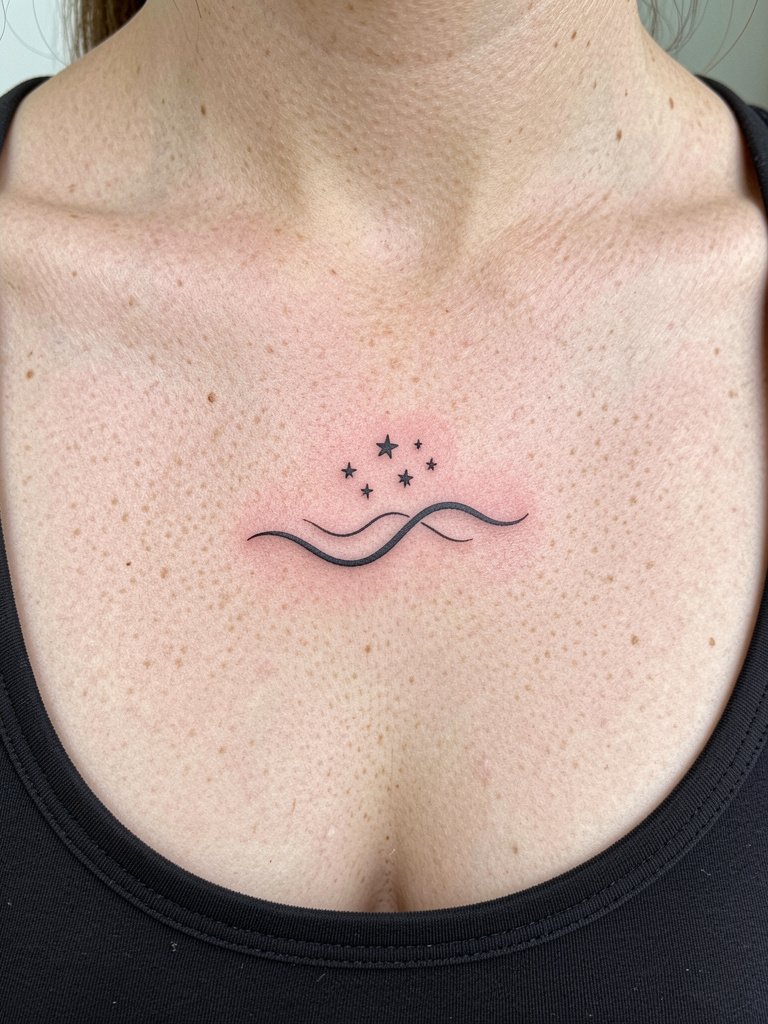
Stars above a wave add narrative without clutter. Upper chest is a moderate pain placement and sits near collars that can rub during healing, so choose tops that frame rather than cover the design. For display, layer thin chains and choose an open-neck top that sits below the tattoo. Aging note. This area often gets sun during summer so plan sunscreen after healing to preserve black contrast. Common mistake. Letting necklaces lie on top of the fresh tattoo during the first week leads to unnecessary abrasion.
13. Minimalist Wave on the Side of a Finger
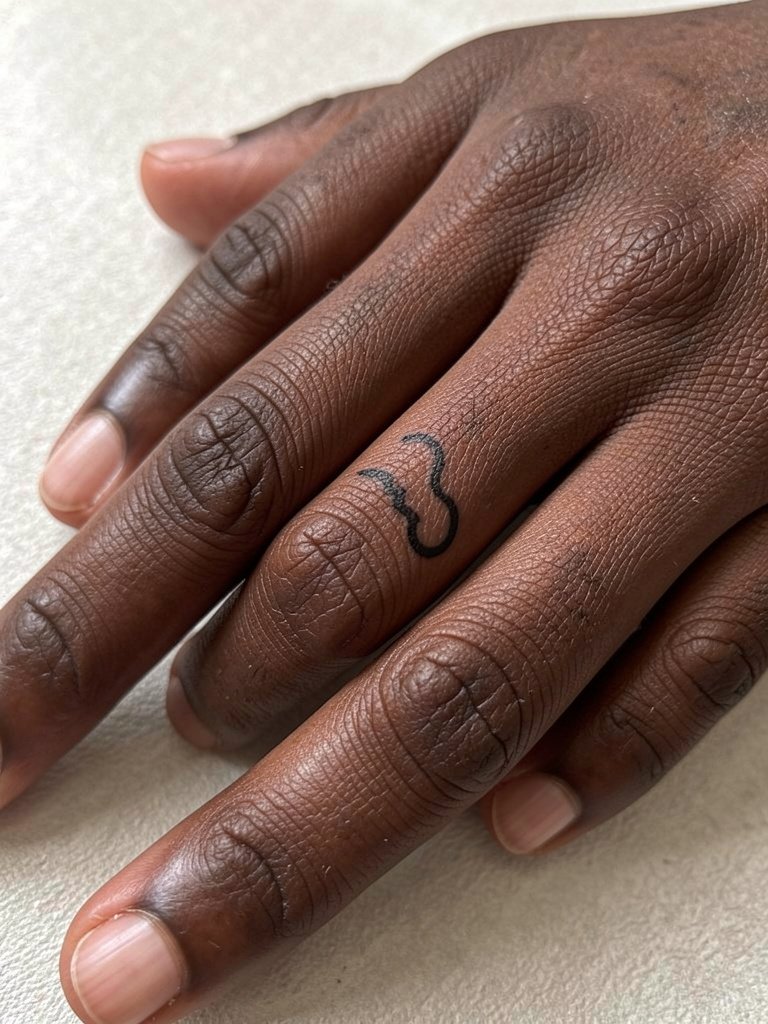
Finger edges are tiny and wear fast because of constant washing and friction. Expect faster fading and a higher chance of touch-ups. Session feel is quick and sharp because of thin skin. Styling note. Keep rings minimal or wear a minimal ring set on other fingers to keep attention away from heavy contact on the tattooed edge. Mistake. Choosing an ultra-fine single-needle curve on a heavily used finger guarantees early loss of crispness.
14. Wave with Sand Line, Front or Outer Upper Thigh
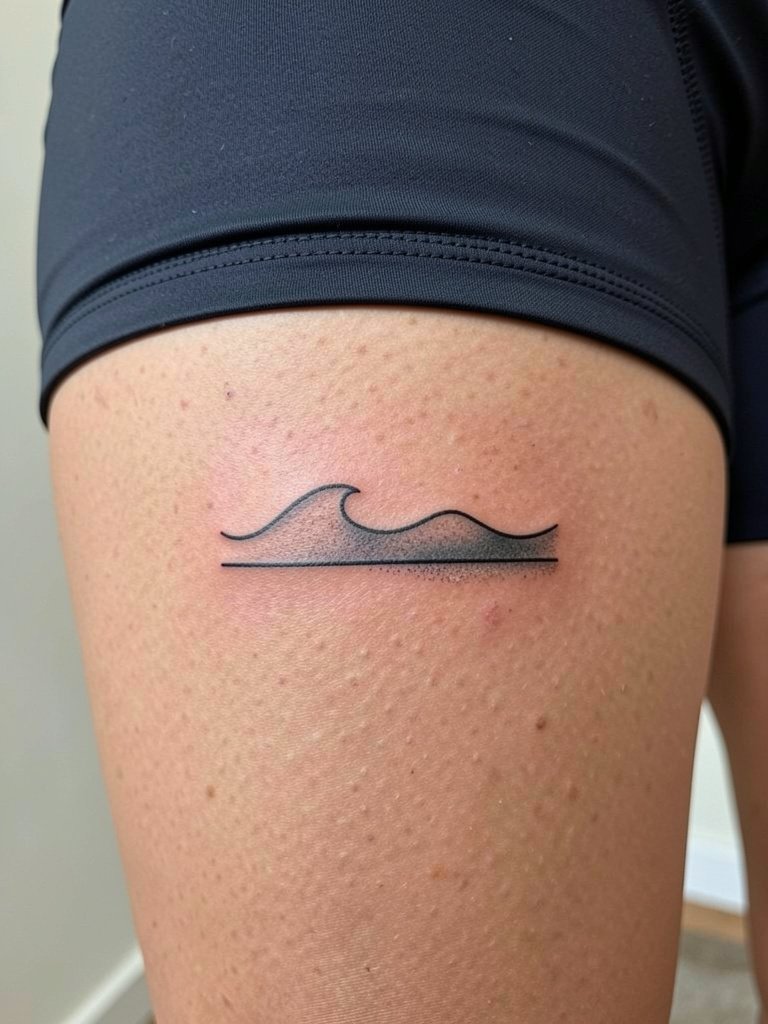
Two-tone minimalism on the thigh reads subtly and photographs well. The upper thigh is a forgiving canvas with less movement than the knee area, so fine shading holds better. Session wear. Choose loose drawstring shorts so the artist can roll the leg up without pressure. Aging note. Thighs tend to keep contrast longer than wrists, but weight fluctuation can change proportions so place the motif where you expect stable tissue. Common mistake. Placing the sand line too close to the crease invites distortion when seated.
15. Minimalist Wave Silhouette, Medial Inner Thigh
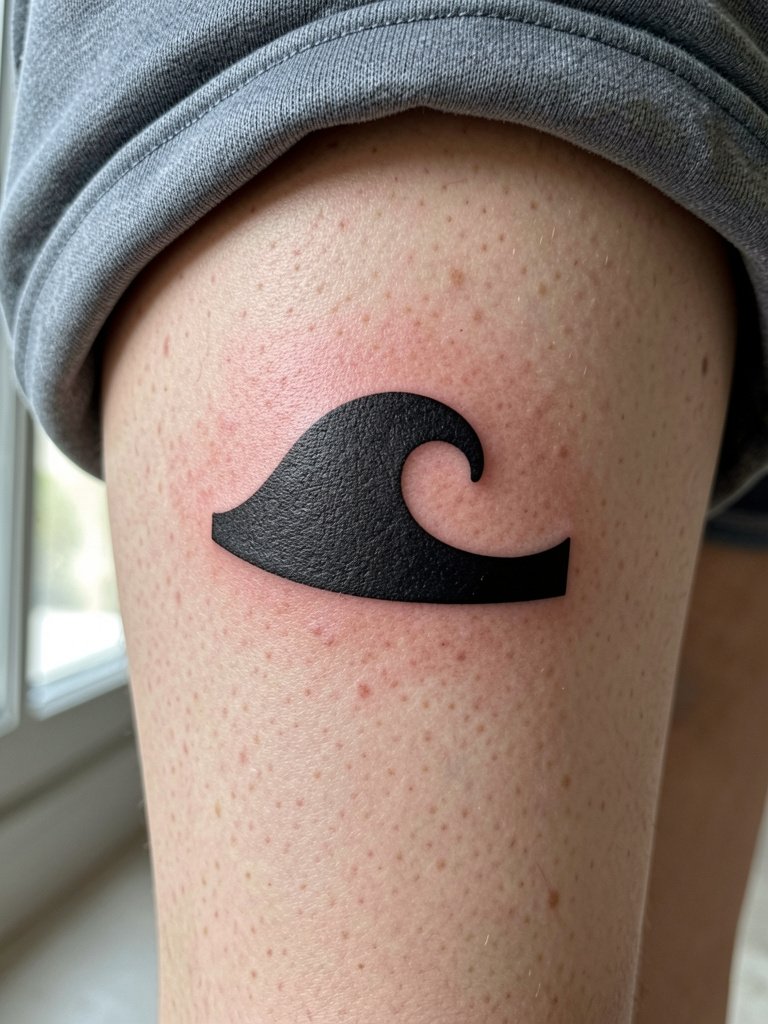
A silhouette gives the bold presence some minimal energy and avoids the too-faint problem of micro-lines. The inner thigh is intimate so choose an artist experienced with delicate skin in that area. Styling pick. This placement pairs well with high waisted shorts or skirts when you want it visible under casual summer clothes. Professional note. Specialists often recommend a touch-up timeline at six to nine months for silhouette fills in this zone. Mistake. Asking for hairline edges on inner thigh increases the risk of patchy saturation.
16. Patchwork Mini-Wave Layout for Sleeves
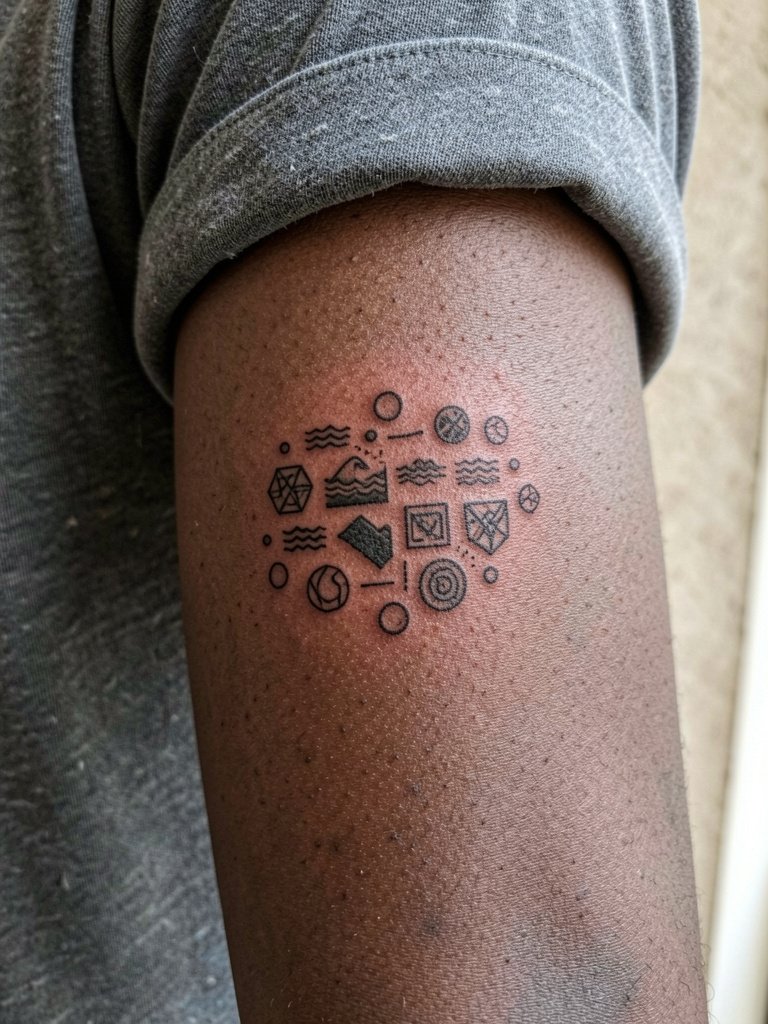
Building a sleeve from tiny waves over time works if you plan spacing from the start. Think of each small piece as a patch that breathes. Practical advice. Ask for stencils that show negative space so later additions do not crowd earlier work. Session reality. Small pieces are quick but repeated sessions require consistent line weight to read cohesive. Common pitfall. Collecting random tiny tattoos without a layout leads to a visually noisy sleeve that lacks rhythm. If you plan additions, keep a folder of healed photos so the artist can match density.
17. Minimalist Waves on Dark Skin, Healed Examples
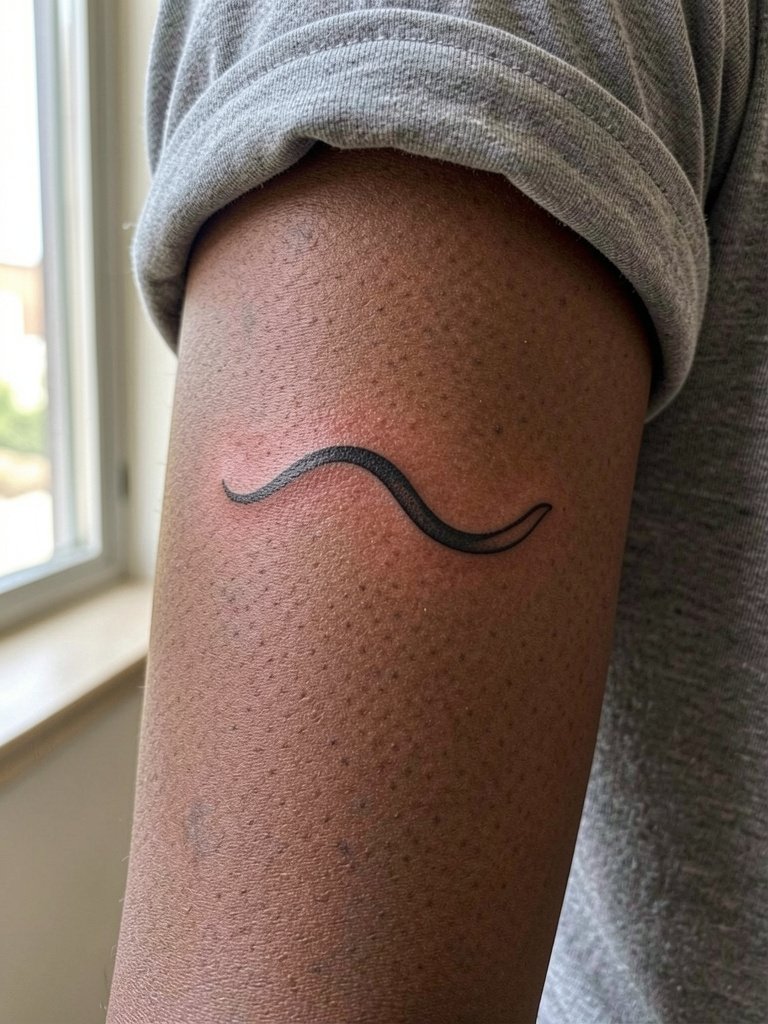
Dark skin requires different line choices than light skin to keep minimalist work readable in photos and in person. Practical rule. Many clients and artists use a slightly wider 0.35–0.40 mm needle and a bolder line weight so the line does not read like a gray shadow. Styling suggestion. A scoop-neck top or a scoop neck top frames forearm-to-shoulder motifs nicely and gives contrast in photos. Common mistake. Insisting on the tiniest single-needle line without testing pigment density often leads to disappointment in healed shots.
18. Seasonal Healing Guide for Wave Placements
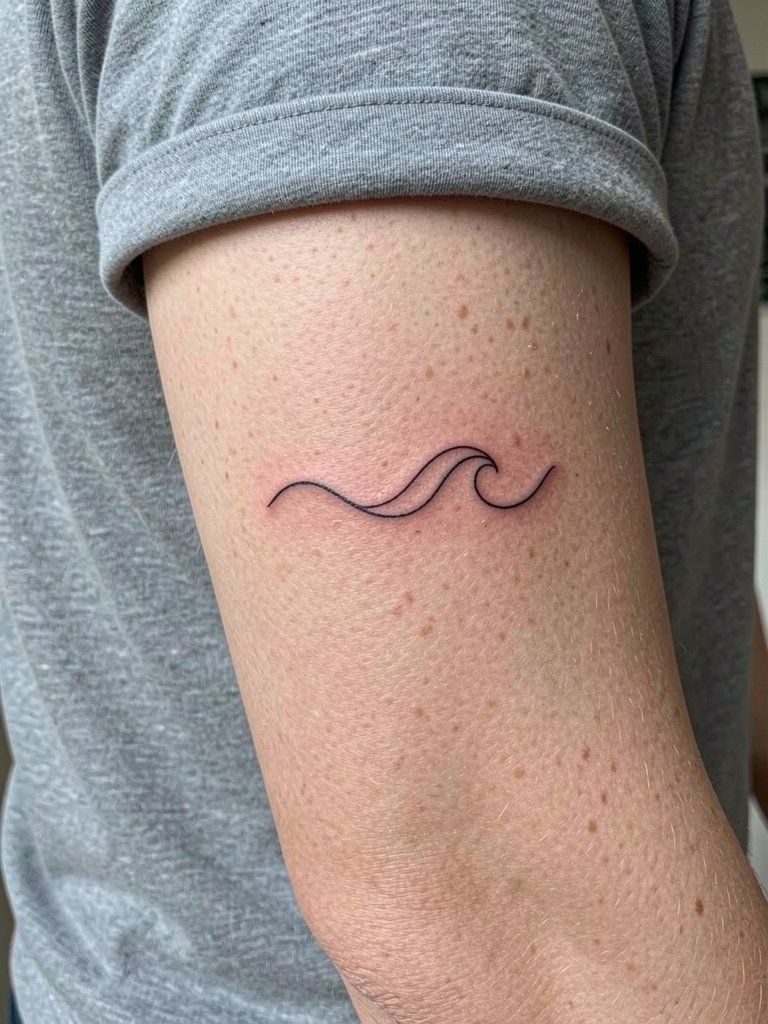
Summer heat, sweat, and frequent swimming change how small wave tattoos heal. Summer quick tips. Avoid prolonged chlorinated pools in the first two weeks and wear breathable loose clothing to reduce friction. Winter quick tips. Keep the area moisturized and avoid heavy Vaseline-style layers that trap dry skin. Placement differences. Wrists and fingers suffer more from seasonal wear because they see daily washing. Thigh and hip spots are more stable across seasons, which is why they are good choices if you want less seasonal maintenance.
19. Mini Finger Patchwork for a Subtle Sleeve
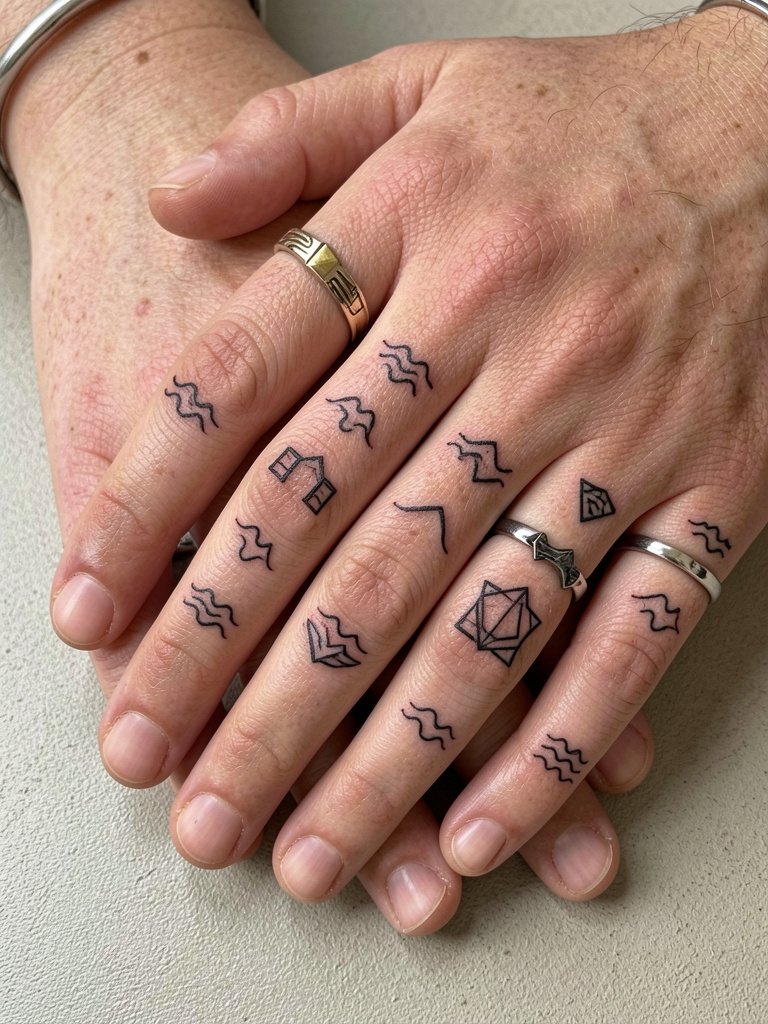
Stacking tiny waves across fingers and hands creates the illusion of a micro sleeve that you can reveal or hide. These pieces fade faster than forearm work, so plan touch-ups into the first year. Styling pick. Keep the look minimal with a minimal ring set on non-tattooed fingers so the hands read clean. Practical mistake. Crowding multiple tiny motifs in one session without allowing for healed photos makes composition planning harder later. A slow-build approach yields a more intentional result.
Frequently Asked Questions
Frequently Asked Questions
Q: How much should I expect to budget for a small minimalist ocean tattoo?
A: Small waves vary by studio, but a realistic range for single-session micro work is commonly in the lower pricing tier for small tattoos. Expect differences between apprentice rates and established fine-line specialists, and remember that touch-ups count as additional time and cost if needed.
Q: Which placements age best for fine-line ocean tattoos?
A: Thigh, hip, and inner upper arm tend to hold steady because they experience less repeated flex and sun exposure. Wrists, fingers, and high-movement forearm areas need slightly bolder proportions to stay readable over time.
Q: Where can I find healed portfolios and local artists without using individual names?
A: Search hashtags like #minimalistwave, #finelinetattoo, and #oceanminimalist on Instagram and TikTok and use location filters to find nearby portfolios. Directories such as Tattoodo, Booksy, and the Inked App let you filter by style keywords and show recent healed examples. Reddit communities for tattoos also surface peer-shared healed shots in a variety of skin tones.
Q: What should I wear to my appointment for a collarbone or chest wave?
A: For collarbone and upper chest pieces, wear a fitted scoop-neck or wide V-neck top so the artist has clear access without you pulling clothing mid-session. A scoop neck top works well and keeps the area comfortable during touch-ups.
Q: How long before I should plan a touch-up for fine-line wave work?
A: Many fine-line clients budget for a touch-up between six months and a year, especially in high-friction spots. If you notice loss of crispness or small gaps in line saturation, a targeted touch-up usually restores clarity without a full redo.