
The forearm is one of the few canvases that both shows and moves, so design choices that look great in the shop can soften fast on the skin. Fine single-needle feathers often blur sooner than people expect. This list shows 23 forearm eagle approaches that read well at the stencil stage and have the best chance of holding their character after healing and a couple of years of wear.
1. Head-and-Shoulders Bald Eagle Portrait
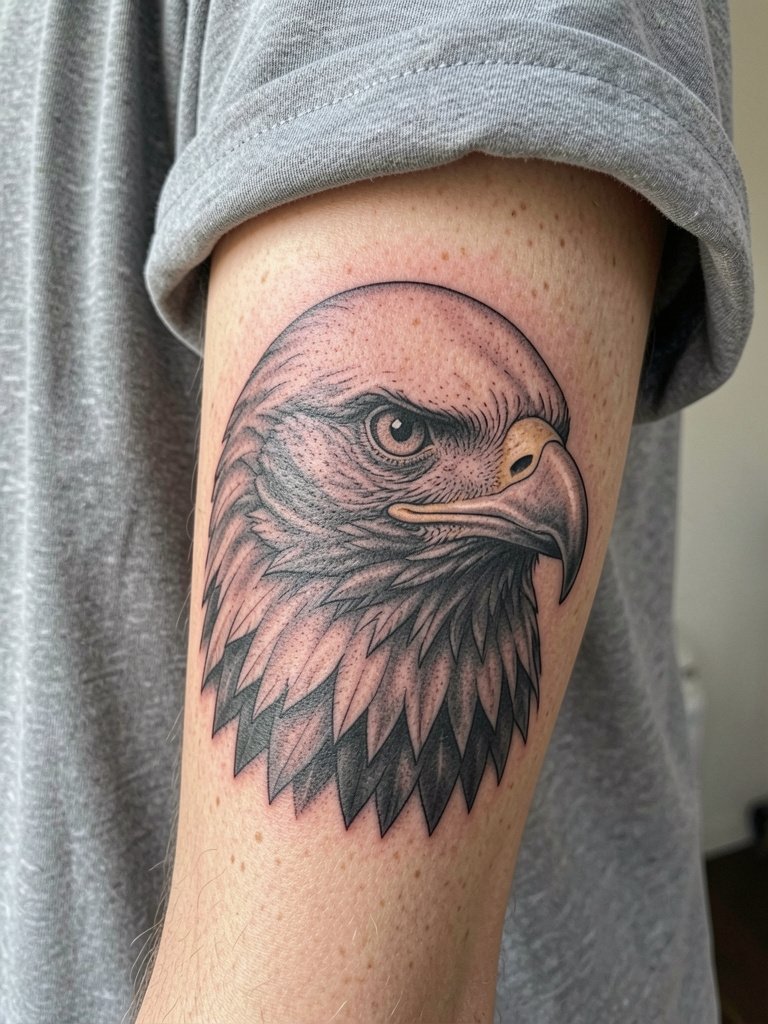
A head-and-shoulders eagle concentrates expression in the eye and beak, so you get emotional weight without needing wings that run past the forearm width. I recommend this for first-timers who want strong detail on a 5 to 7 inch vertical canvas. Tell your artist you want dense feather texture only around the eye and a softened neck transition to avoid busy micro lines that can merge. A common mistake is shrinking a full-wing reference down to forearm size. At six months the eye should stay crisp, at two years small feather tips may soften, and at five years a light touch-up on contrast often restores the depth.
2. Traditional American Eagle in Mid-Hunt
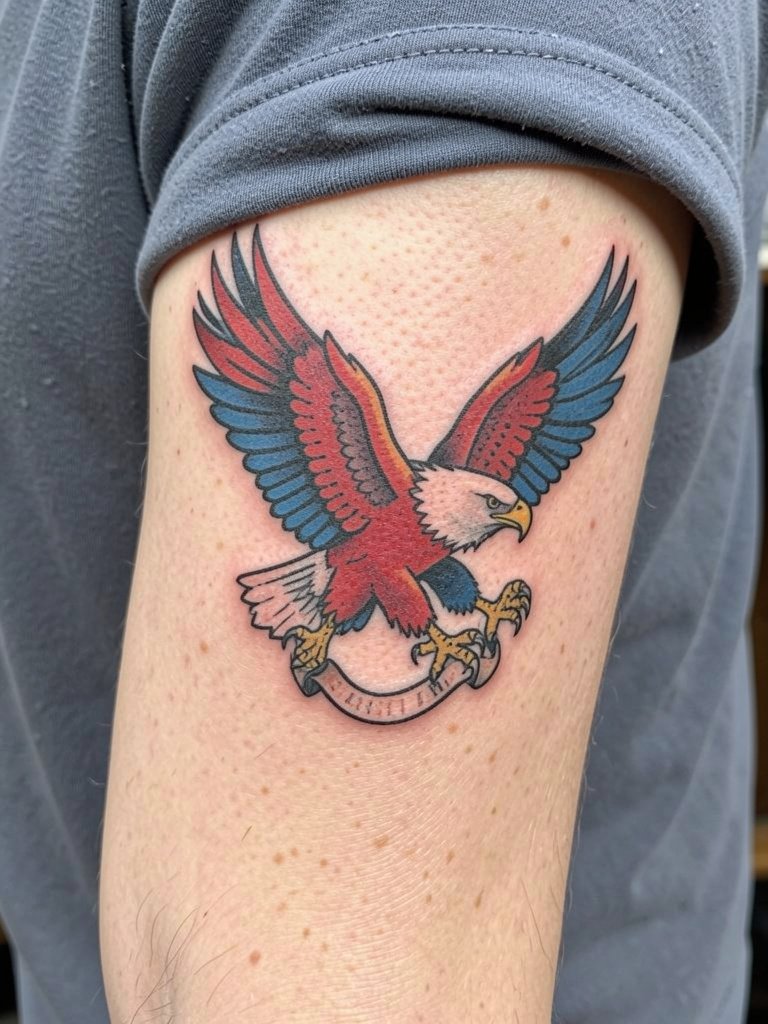
This mid-hunt pose reads well across the wider outer forearm where movement is lower than the inner side. Bold 7-round liner work and saturated fills are the technical choices that give the style longevity. For the consultation bring a banner shape and a sample color swatch so the artist can plan saturation that pops on your skin tone. People who request thinner lines in this style often lose contrast in photos after a year. Expect a single long session for a forearm-sized traditional eagle and plan for a 20 percent tip on busy shading days. For showing off, pair with a solid color men t shirt to make the reds and blues sing.
3. Neo-Traditional Eagle with Ornamental Feathers
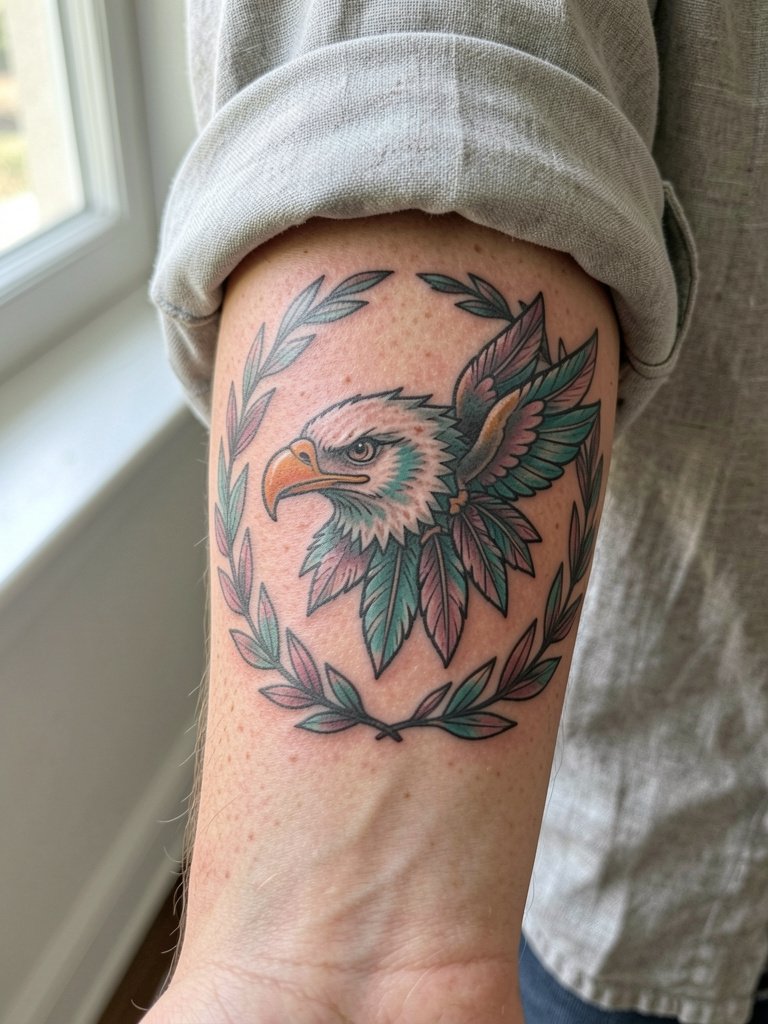
If you want color that reads softer than classic flash, neo-traditional palettes with teals and dusty pinks give depth without gaudiness. Ask for ornamental feathers to be slightly larger than your reference so the negative space holds up. A frequent error is packing tiny decorative dots and then losing them to blur. At six months color settles into skin, at two years you may notice some fading in pastels, and a targeted touch-up keeps the ornaments crisp. For outfits, this placement looks great with linen button down shirt women sleeves rolled to showcase the framing.
4. Black and Gray Eagle with Cross-Hatching
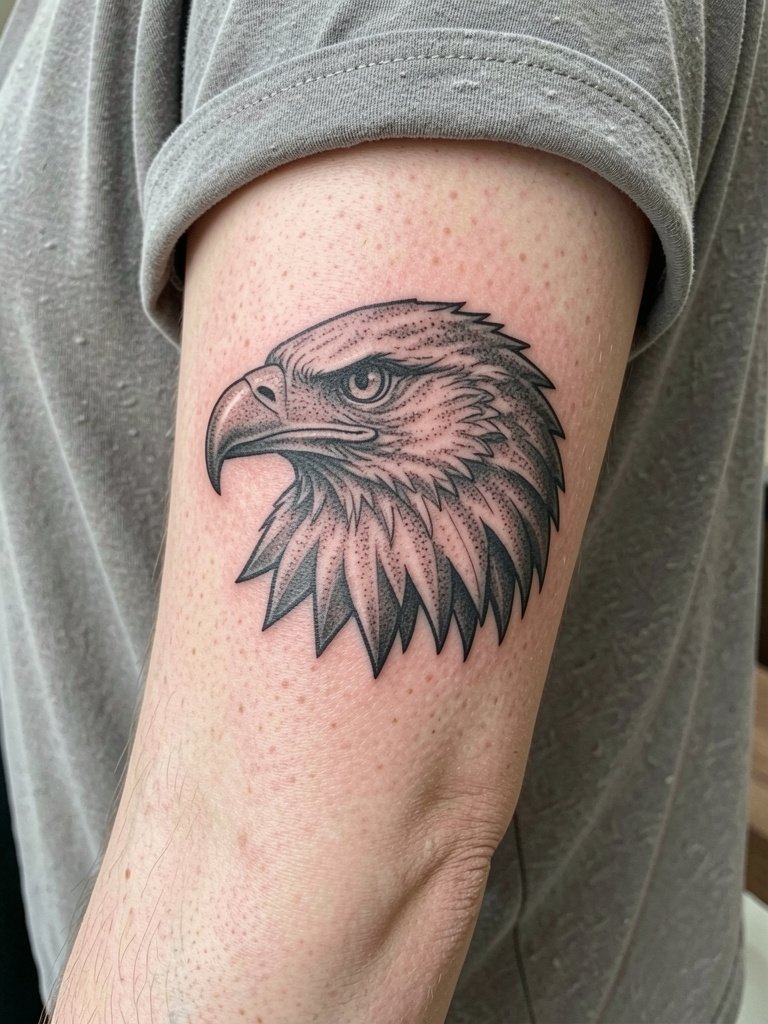
Black and gray cross-hatching gives a refined, graphic texture that avoids loud color. There is an active debate about numbing creams with this approach. One camp says numbing creams help clients sit through long shading runs and keep movement low. The other camp argues topical numbing swells the skin and can cause puffiness that softens fine hatch lines after healing. If you plan numbing, specify how long it should be applied and request a conservative patch test so the artist can adjust needle depth. Expect shading sessions to feel long but manageable, and budget for a touch-up if feather edges soften after the initial year.
5. Japanese Taka Head with Wind Bars
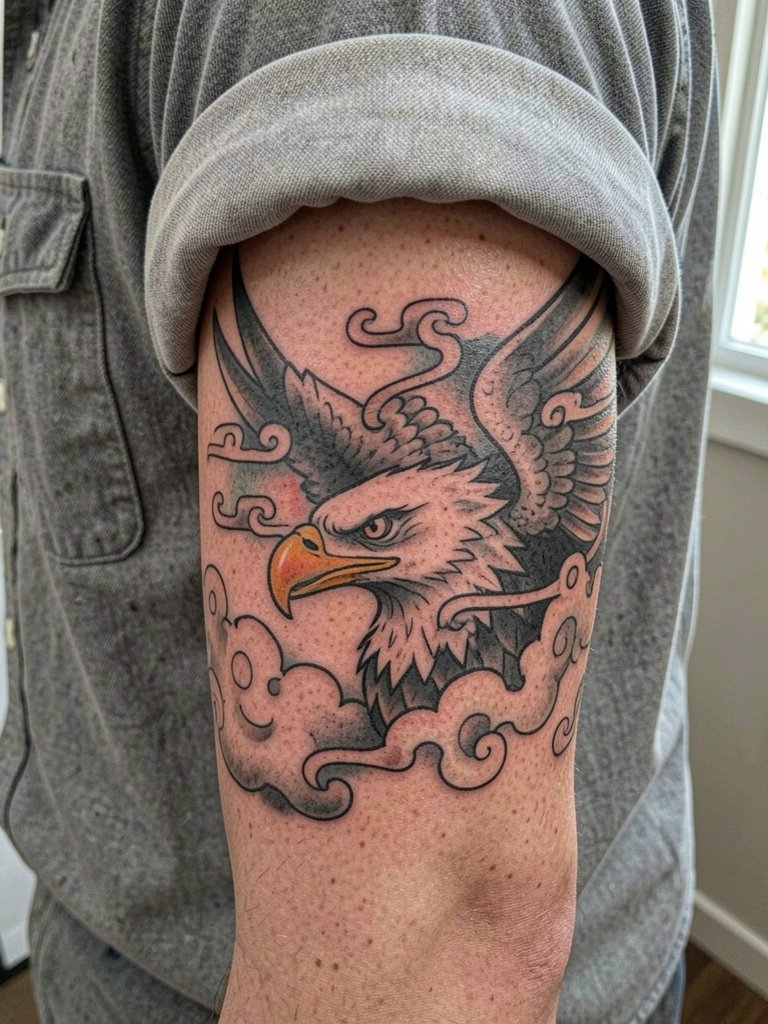
Japanese taka work needs compositional breathing room, which is why full-body versions often demand sleeve space. For a forearm-friendly take, keep it head-only and commit to one or two wind bars as background. A common mistake is cramming cloud motifs into the narrow forearm and losing the rhythm. Discuss background scale with your artist and ask them to mock up wind-bar spacing at the size you want. This placement pairs well with vintage-cut shirts and a leather bracelet on the opposite wrist when you want a classic look.
6. Geometric Eagle Breakdown
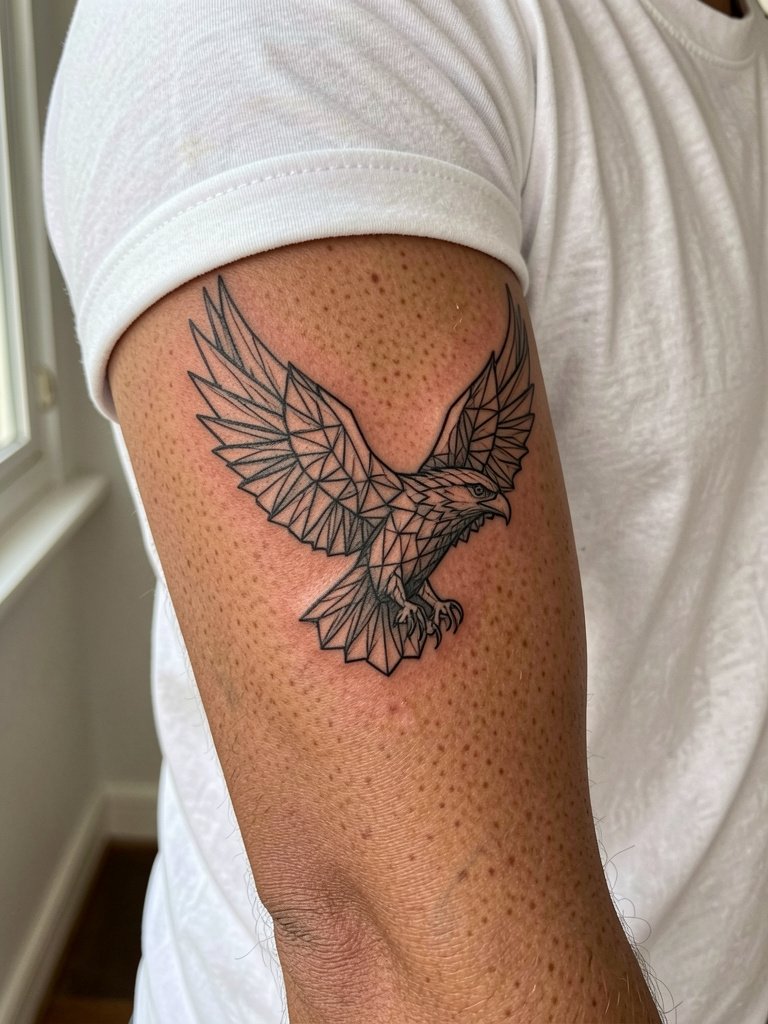
Geometric breaks respect minimalism but demand scale. The main mistake is making the polygons too small, which leads to line merging. Specify minimum line spacing and minimum triangle sizes during the consultation so the geometry keeps its angles after a few years. For longevity ask for slightly heavier linework than your initial reference. Six months in the shapes remain crisp, two years later tiny vertices can round, and a thoughtful touch-up at year three preserves the graphic edge. For a clean wardrobe pairing try a white crew neck t shirt when you want an uncluttered look.
Before You Book
These first six forearm approaches have different session lengths and aftercare needs, so a few practical items smooth booking and healing.
- Mad Rabbit Tattoo Balm (Organic). Thinner than heavy ointments, this balm helps black and gray feather detailing settle without suffocating the needle channels.
- Kinship Aftercare Balm. Gentle for neo-traditional pastels and keeps teals and dusty pinks from washing out during the first week.
- Lush Tattoo Aftercare (Vegetarian). Low-grease option for watercolor splashes so colors don’t spread under heavy ointment.
- Dr. Jac's Healing Oil. Favored for Japanese-style work where minimal swelling helps the wind-bar crispness stay true during healing.
- Saniderm Second Skin. Useful for bold forearm pieces to lock ink in for the first 48 to 72 hours then switch to dry care as recommended.
7. White Eagle in High-Contrast Black and White
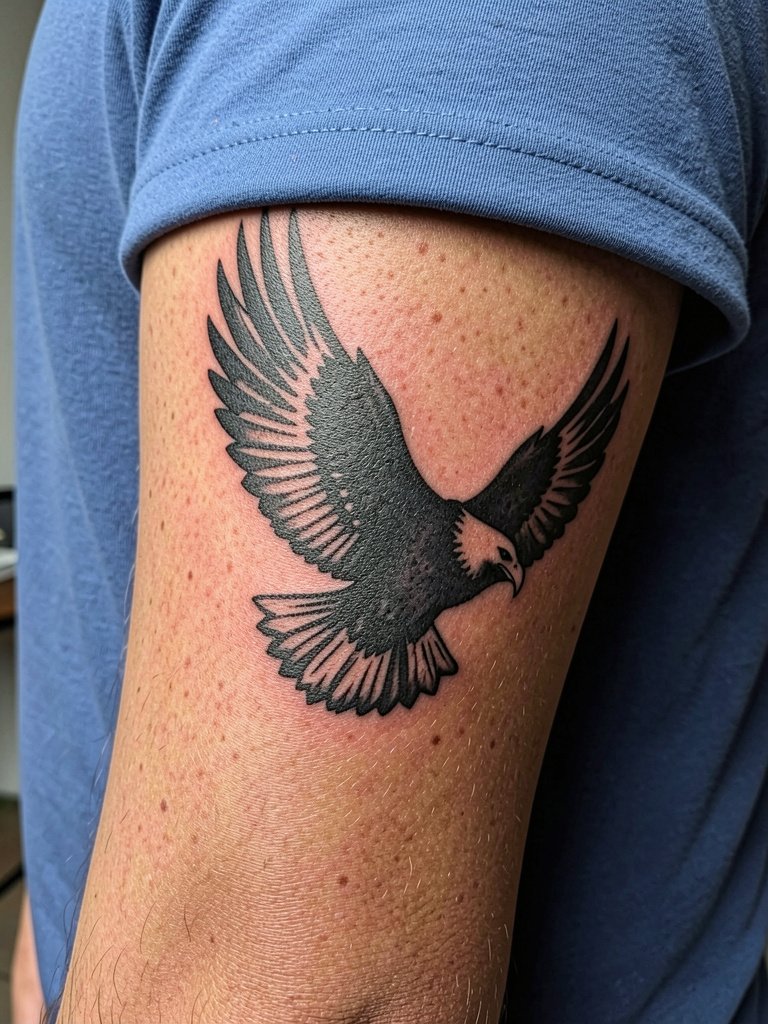
White-on-black compositions can read dramatically on melanin-rich skin when the artist plans contrast intentionally. Request that the negative white space be created by surrounding dense black fills rather than relying on a white pigment alone. A common misstep is over-using white ink in delicate strokes; white pigment can yellow if the wrong aftercare is used. For show-off outfits, a black solid color t-shirt will amplify the background and make the negative eagle silhouette pop.
8. Perched Eagle on Branch with Rose Accents
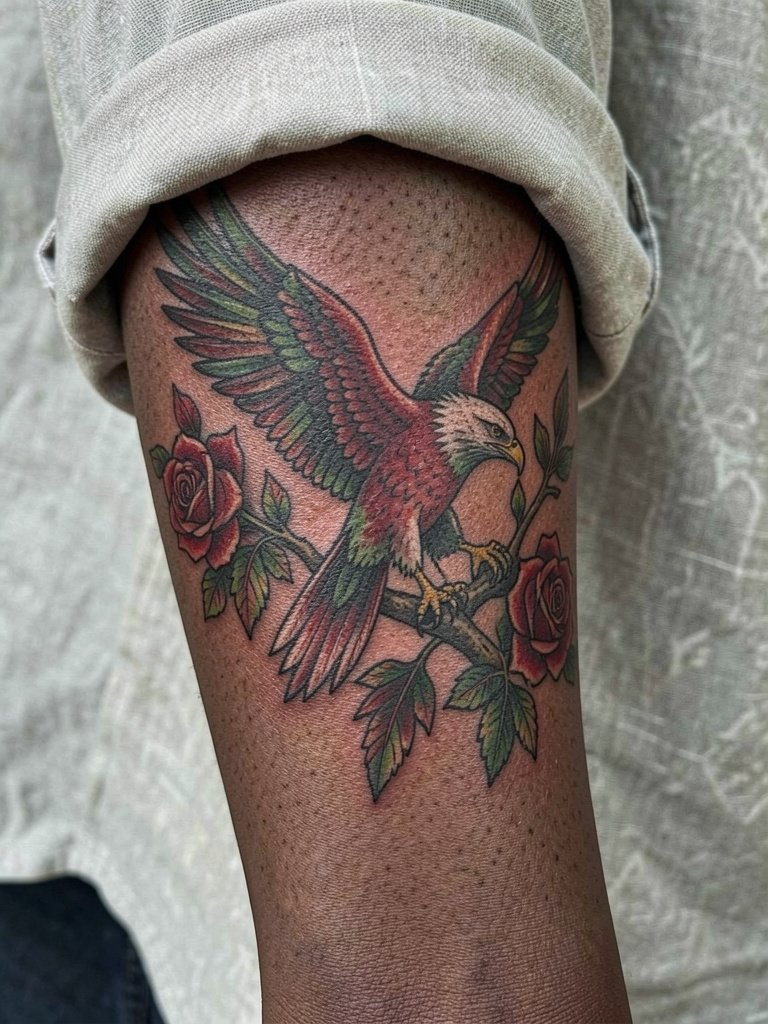
A perched eagle gives a calmer, storybook feel and is forgiving with vertical composition on the inner forearm. Avoid tiny rose petals that rely on hairline shading. Tell the artist you want the branch direction to follow the forearm grain so movement does not distort the rose placement. Expect shading sessions to take longer than flat color work. When showing off the piece, rolled-up linen shirts in cream or olive frame the vertical branch without stealing focus.
9. Profile Eagle with Asymmetrical Sweep
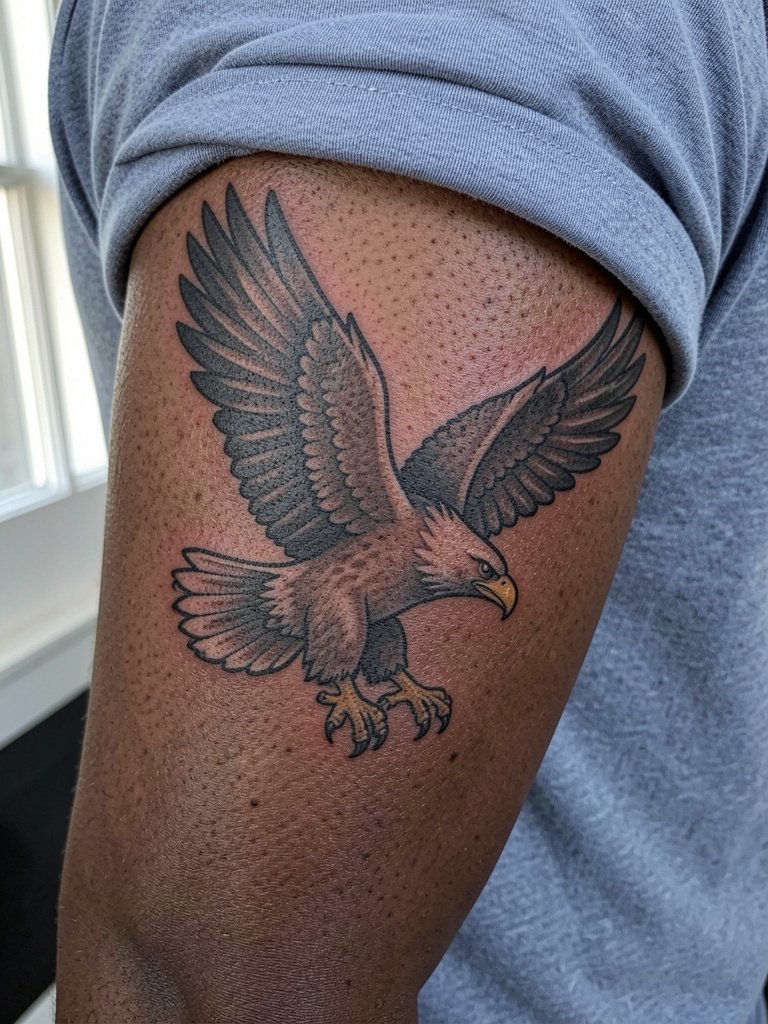
This sweep-style design uses the forearm curve to create implied motion and reads well from a distance. The usual error is forcing symmetrical wings into an asymmetrical layout which flattens the movement. Ask for mockups that show the wing sweep in both relaxed and flexed arm positions to verify the silhouette. Session pain is generally low to moderate on the outer forearm, and a single session usually suffices for medium scale. Simple leather wrist cuffs on the opposite arm add a rugged contrast to the profile view.
10. Minimalist Outline Eagle
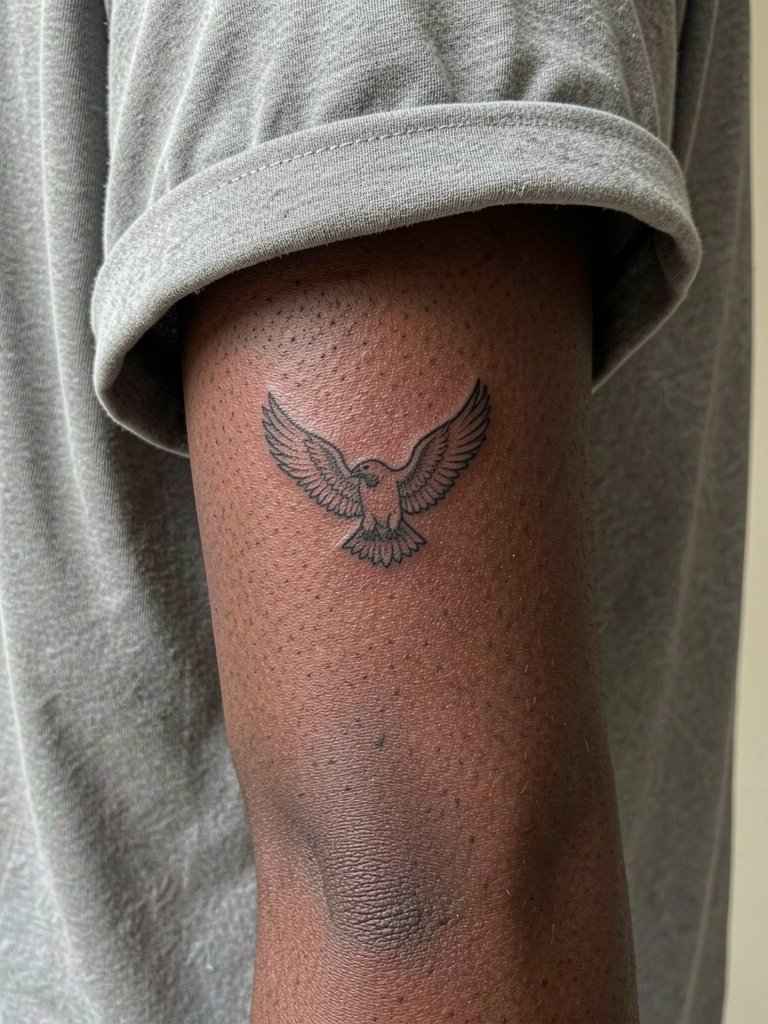
Minimalist single-needle eagles are appealing for discretion but they carry the fine-line longevity debate. One camp says fine line on the forearm blurs within 2 to 3 years because the palm-up skin stretches often. The other camp maintains fine line can hold for four years or more when artists use slightly wider spacing and careful depth control. To push longevity, request a minimum line weight and at least 6 millimeter spacing between parallel strokes. For a pared-back outfit, pair with a thin silver chain bracelet on the opposite wrist.
11. Abstract Eagle with Flowing Lines
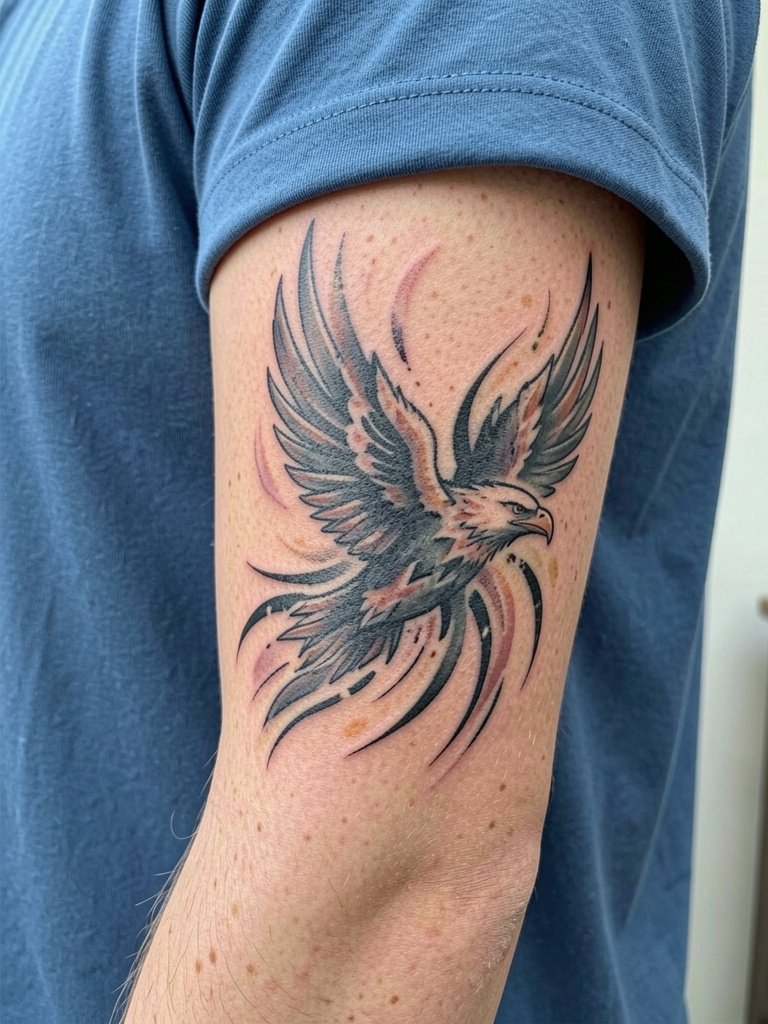
Abstract takes let you suggest an eagle without literal anatomy and they age well because the design relies on flow not micro detail. A common mistake is adding too many thin swirls that collapse into a muddle. During the consult, specify which lines must remain bold to anchor the composition. After healing, the flowing lines keep their rhythm at six months and usually promise good readability at year two. For a modern-clean wardrobe, neutral uncluttered tops help the design read clearly.
12. Tri-Fold Head-Forward Eagle Adaptation
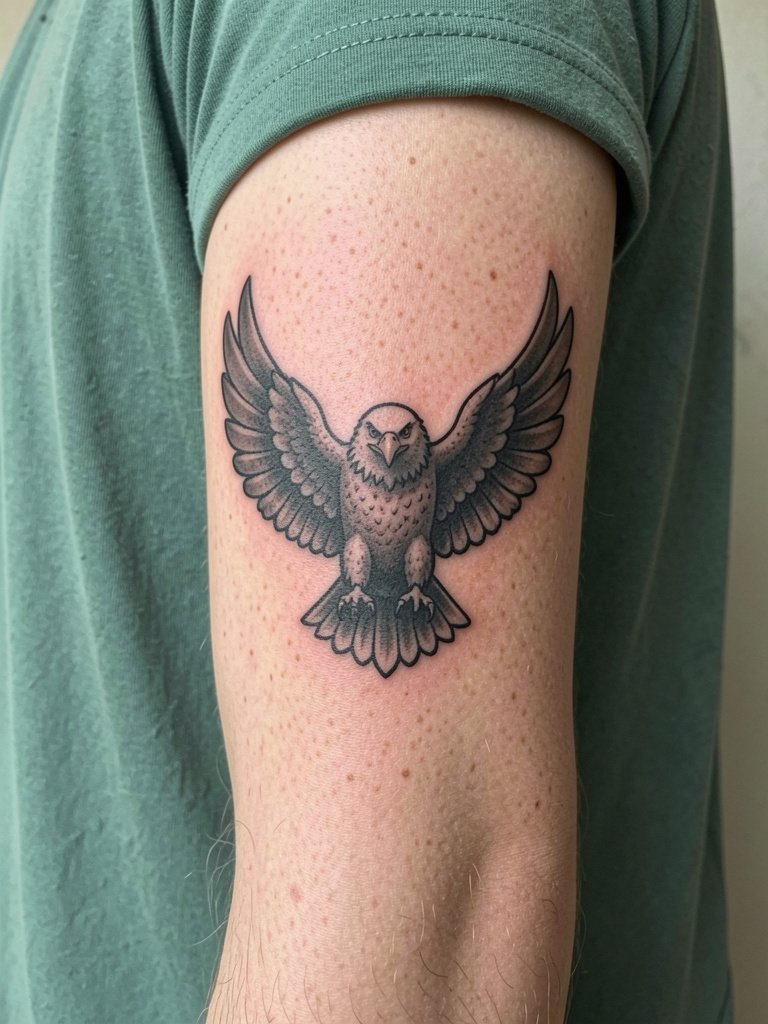
Tri-fold frontal eagles normally need chest space but a head-focused adaptation keeps the dramatic frontal gaze on the forearm. The risk is shrinking wing detail so that the head loses context. Ask the artist to compress wing shapes into strong framing elements instead of tiny feathers. Expect one full session and plan for a touch-up on the frontal highlights after the first year if contrast fades. For an everyday look, simple solid tees keep the frontal silhouette visible.
13. Tribal Eagle with Symmetrical Patterns
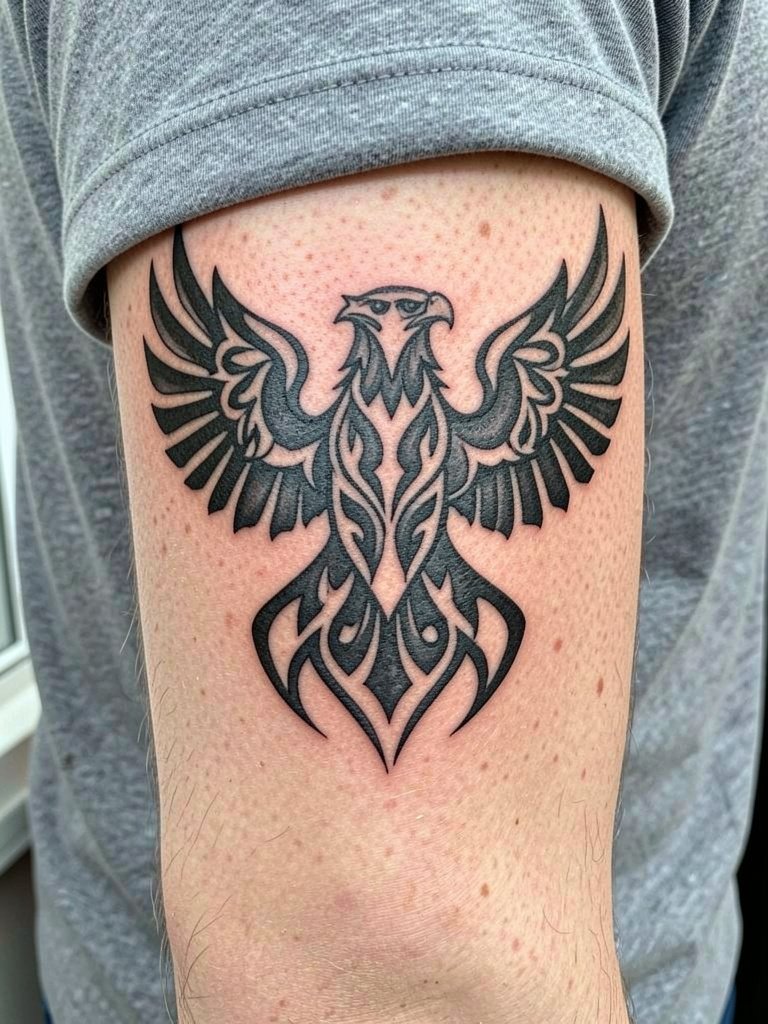
Tribal patterns are crisp when kept bold and symmetrical. For clients with cultural heritage ties, state the origin and request culturally appropriate motifs rather than generic shapes. The most common mistake is copying patterns meant for other contexts and losing meaning. Thick linework holds up well on the forearm, but thin interior lines can fill in over time. If you want a rugged pairing, a leather cuff bracelet men complements the heavy blackwork.
14. Watercolor Eagle with Splashes
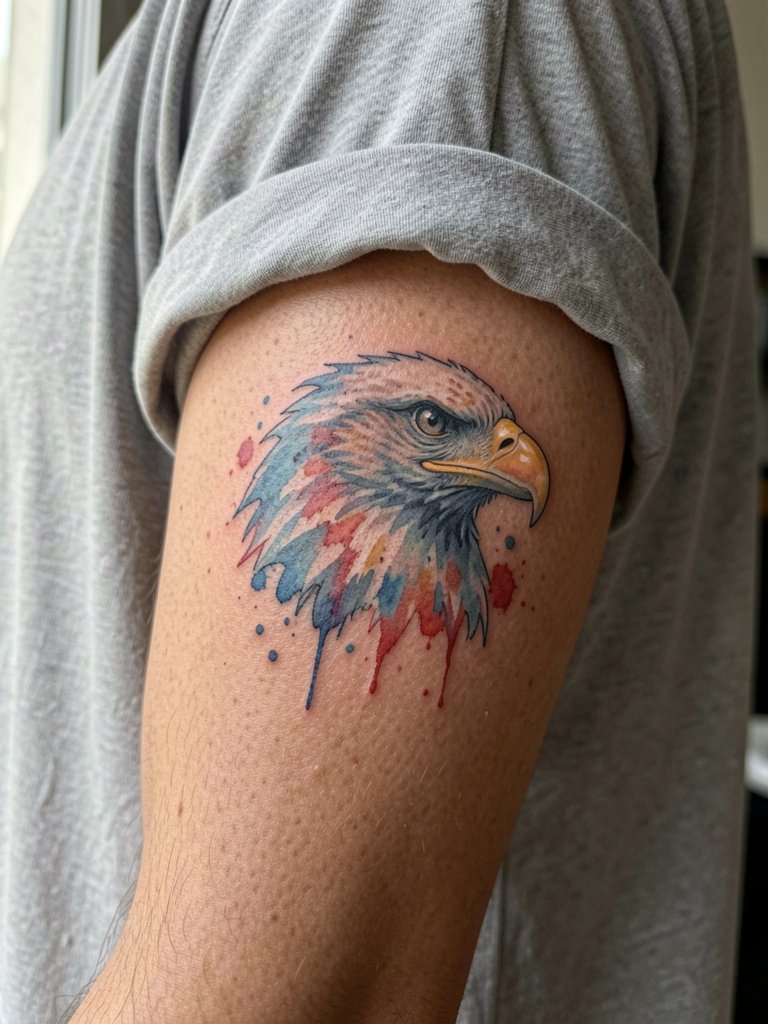
Watercolor eagles are expressive but are not the best match for melanin-rich skin unless saturated pigments are used. A frequent error is light pastels that read as faint stains after healing. Specify richer pigment loads and a plan for a second color-pass if the artist recommends it. Expect softer edges at six months and moderate fading by two years unless retouched. For session wear, choose a loose drawstring linen pant so sleeves and cuffs do not rub the fresh ink.
15. Geometric Halo Eagle
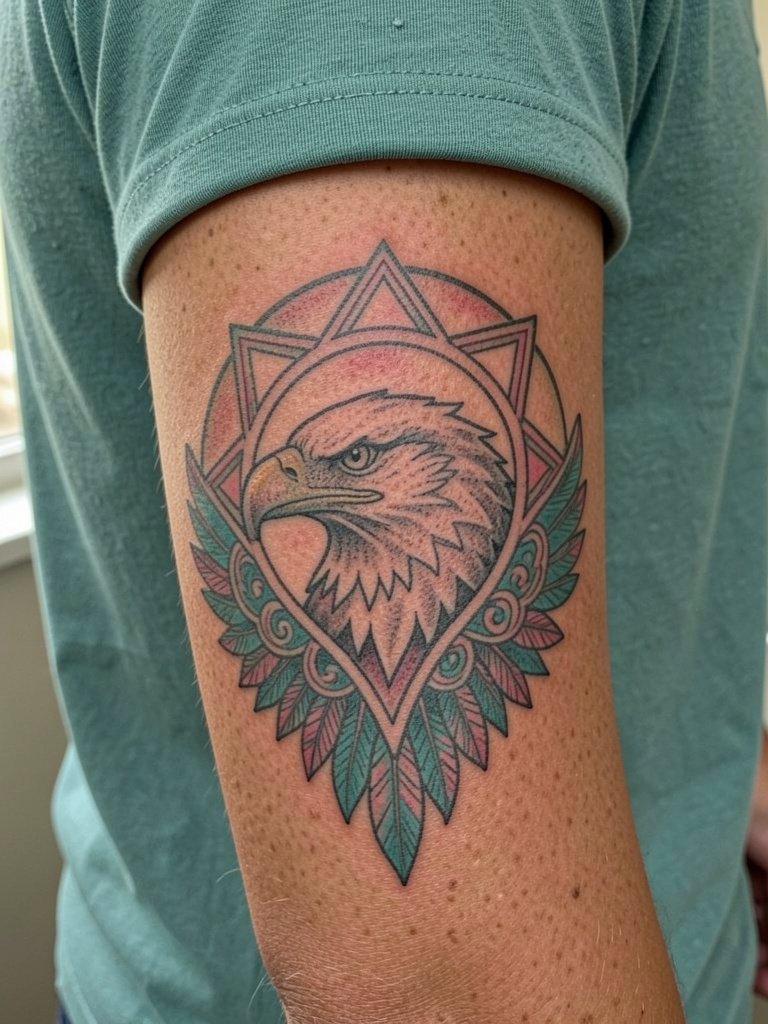
A geometric halo elevates a traditional eagle while keeping the focal point centered. The main mistake is over-detailing the halo with tiny filigree. Ask the artist to set a minimum line width for the halo so it remains legible at distance. This style looks sharp on the outer forearm and pairs nicely with a leather watch or cuff for a dressier contrast.
16. Eagle Talon Close-Up with Banner
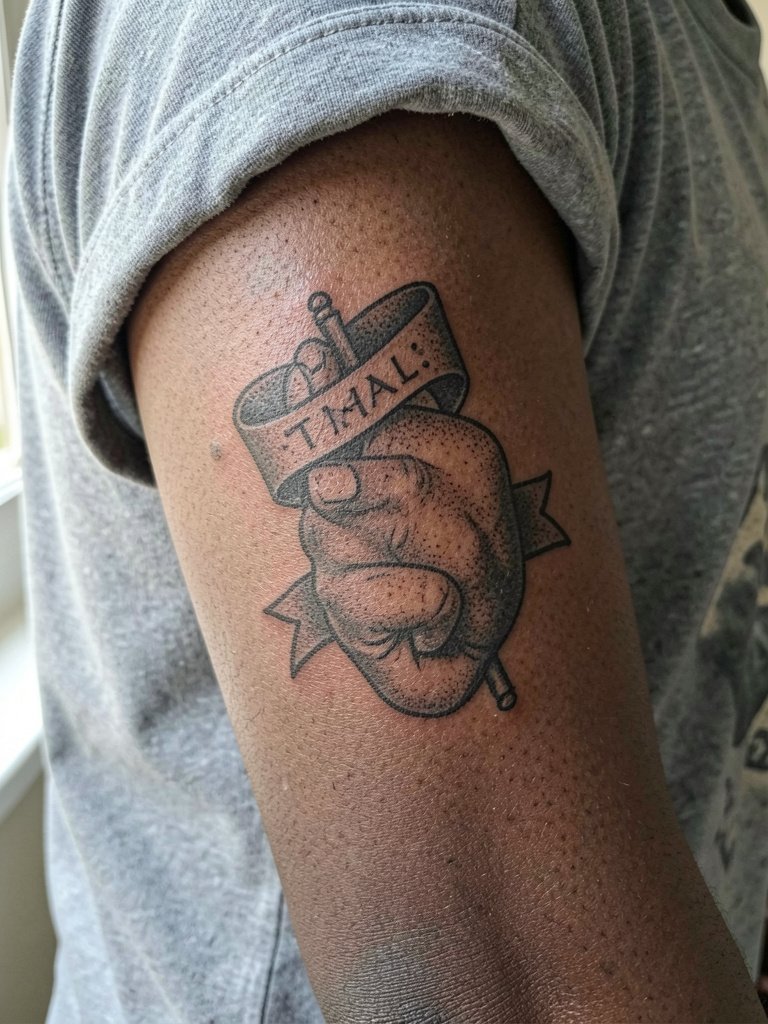
A talon close-up is a small, punchy option for wrist-adjacent forearm placement. The usual error is packing lettering into a tiny banner. If you want text keep it to two or three characters and request bold lettering. Session pain at the wrist edge is slightly higher than mid-forearm, so wear a sleeve you can easily move. A minimal cuff or slim bracelet on the opposite wrist frames the piece for evenings out.
17. Half-Realism, Half-Graphic Split Eagle
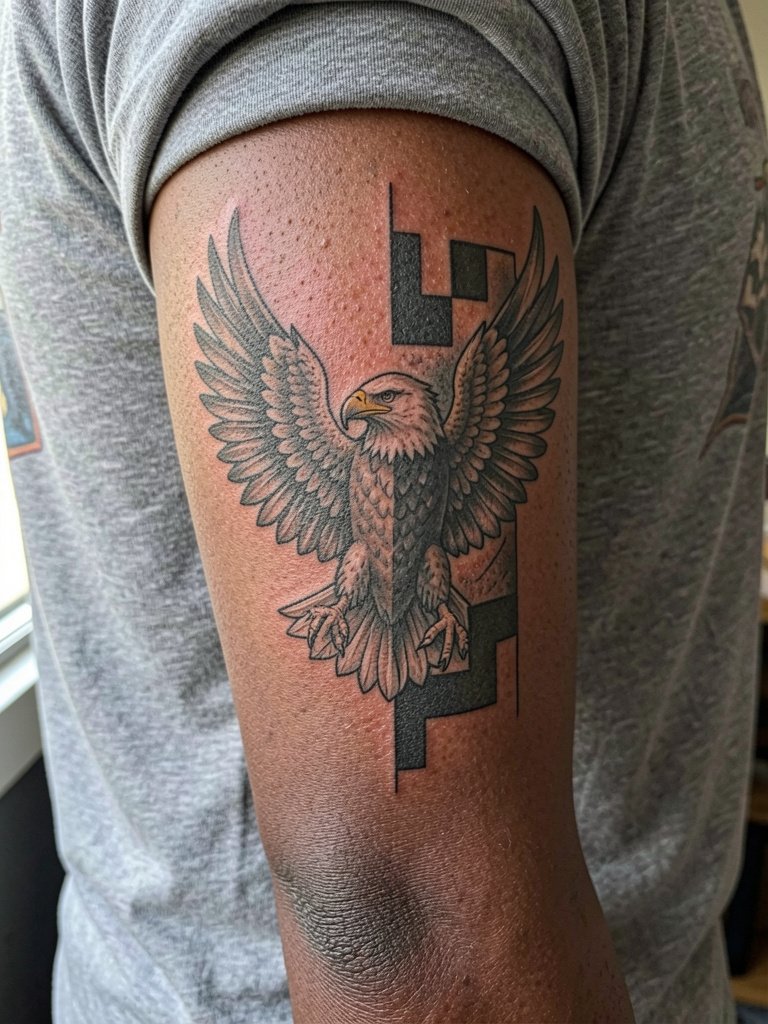
A split-piece lets you have realism and graphic edge in one composition. Plan the split line carefully so it falls on a stable part of the forearm to avoid distortion when you flex. The common mistake is mismatched contrast where one side overwhelms the other. During the consult, request mockups at your exact forearm scale so the balance reads in real life. This style often needs longer sessions but looks striking with a simple neutral top.
18. Micro-Realism Eye Focus
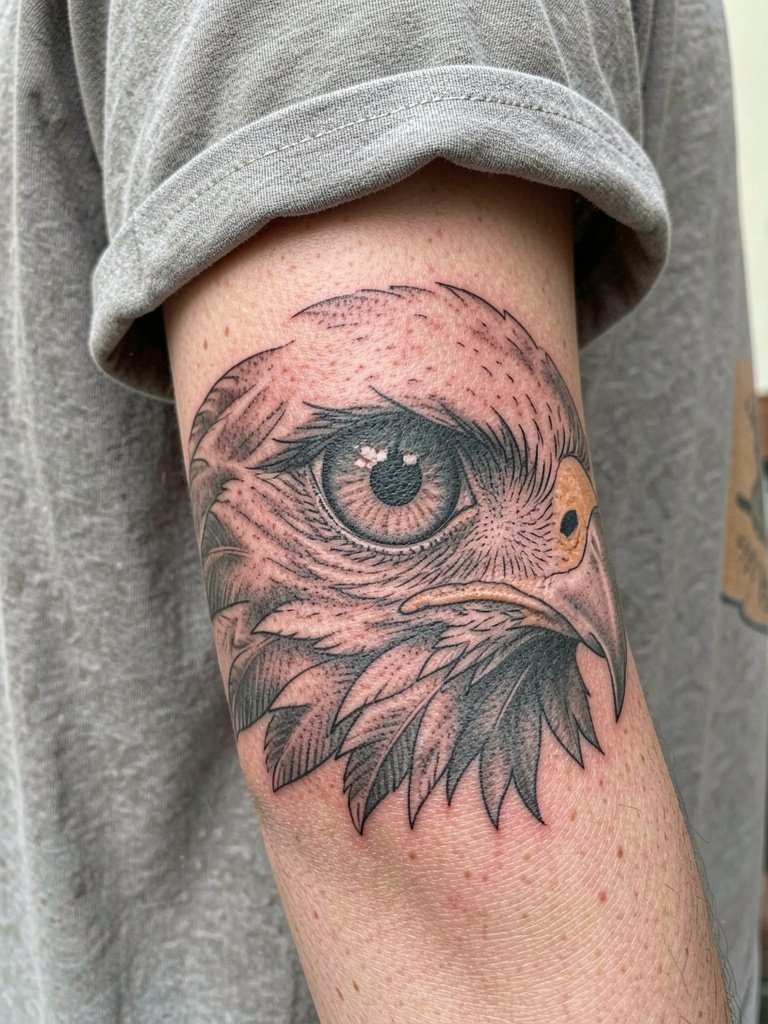
Focusing on the eye is a compact way to keep the emotional center intact. Micro-realism needs clean value transitions and slightly more contrast than a larger portrait. The risk is over-detailing in a tiny area that can fuzz with time. Ask the artist how they approach iris highlights and whether they recommend a second session for contrast refinement. For a polished casual look, a dainty gold stacked bracelet on the opposite wrist keeps attention on the focused eye.
19. Eagle and Compass Combination
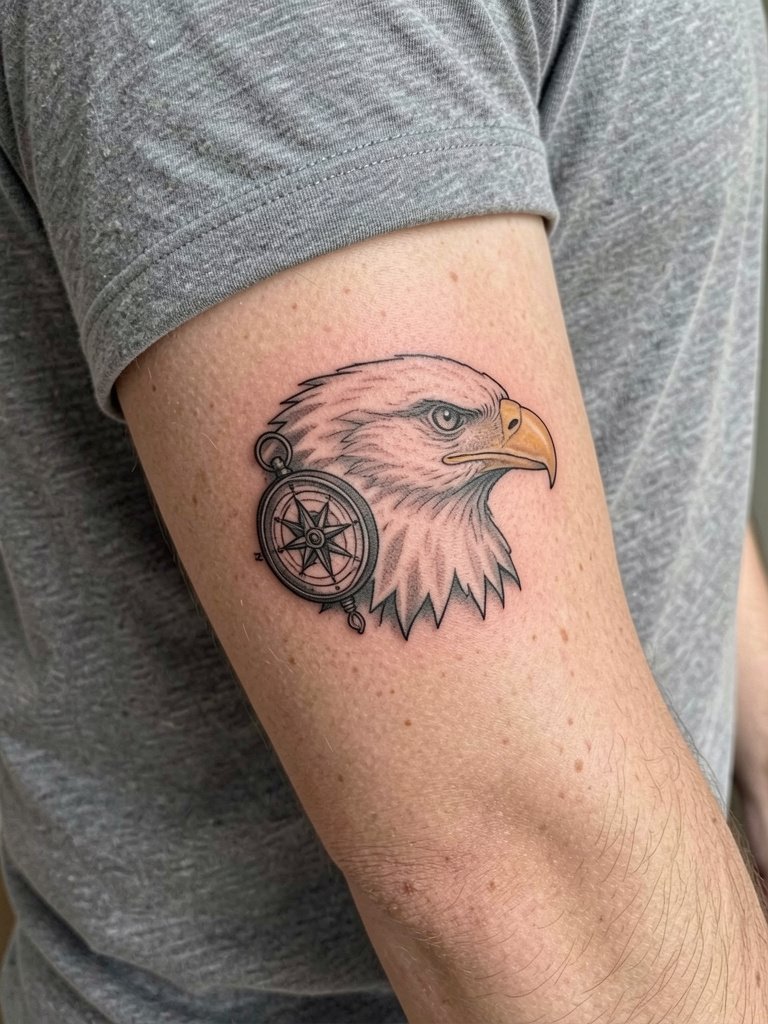
Pairing an eagle with a compass gives directional context and reduces the need for broad wings. Place the compass so its cardinal points align with the forearm axis to avoid forced perspective. People often compress the compass into unreadable glyphs, so request bold cardinal marks. This compact combination makes for easy sleeve coverage if you later expand. A neutral knit or fitted tee keeps the motif visible during everyday wear.
20. Stipple Shaded Eagle Head
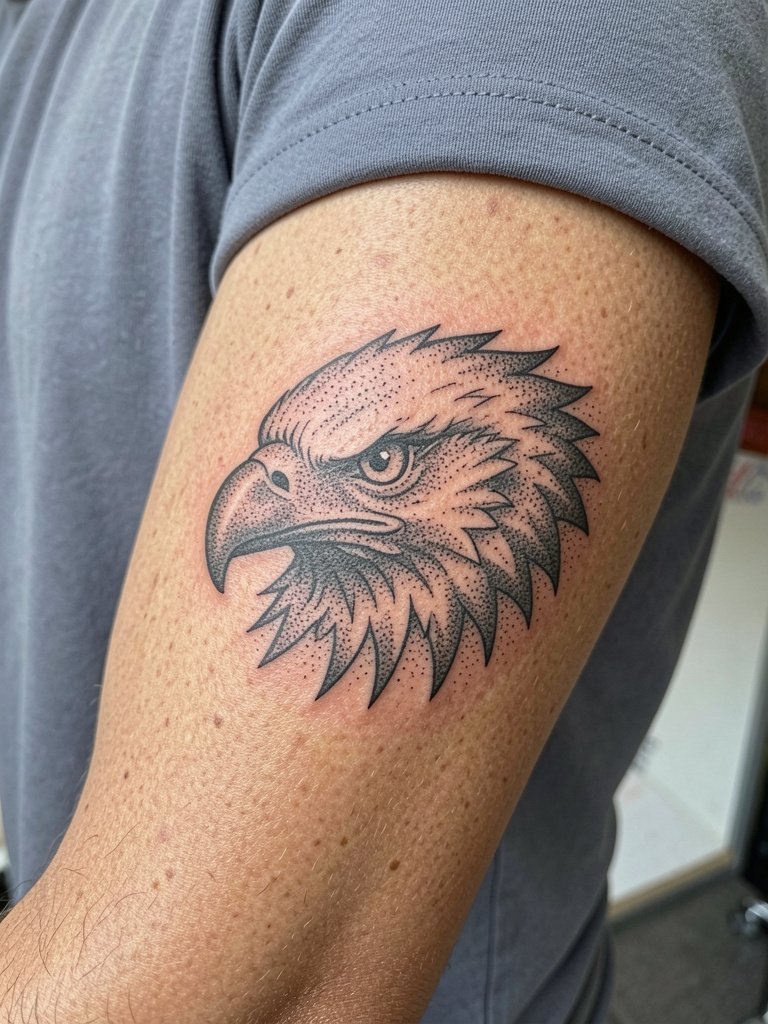
Stipple work ages well when the dot density is planned for scale. The common mistake is using ultra-fine stipple in a small area which can blur into a gray patch. Ask for dot spacing samples on a similar skin area so you can see how the visual texture reads. Stipple sessions usually take longer than flat shading and feel like a steady rhythmic pass. For a minimal accessory, a thin chain on the opposite wrist complements the dot texture.
21. Double-Exposure Landscape in Eagle Silhouette
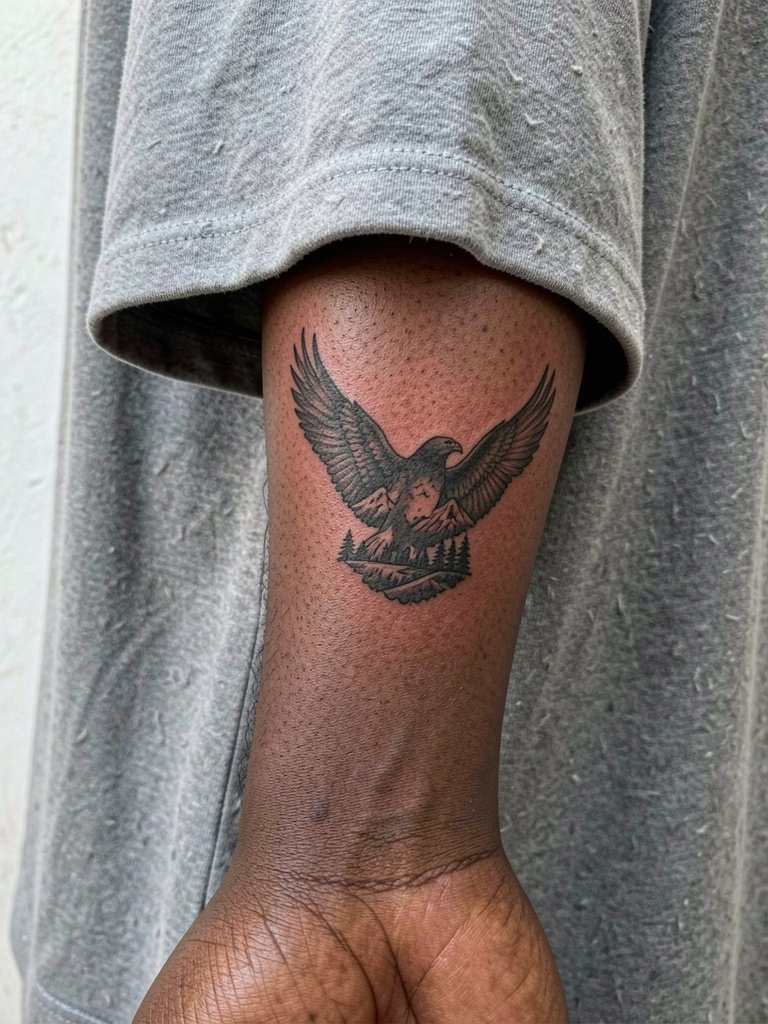
Double-exposure silhouettes are cinematic but require restraint. The landscape inside the silhouette must be simplified so it reads at forearm scale. The usual error is adding too many micro trees and losing depth. Ask for a one-inch mockup to verify readability. These pieces pair well with casual layers where the inner forearm peek is visible.
22. Eagle Skull Hybrid
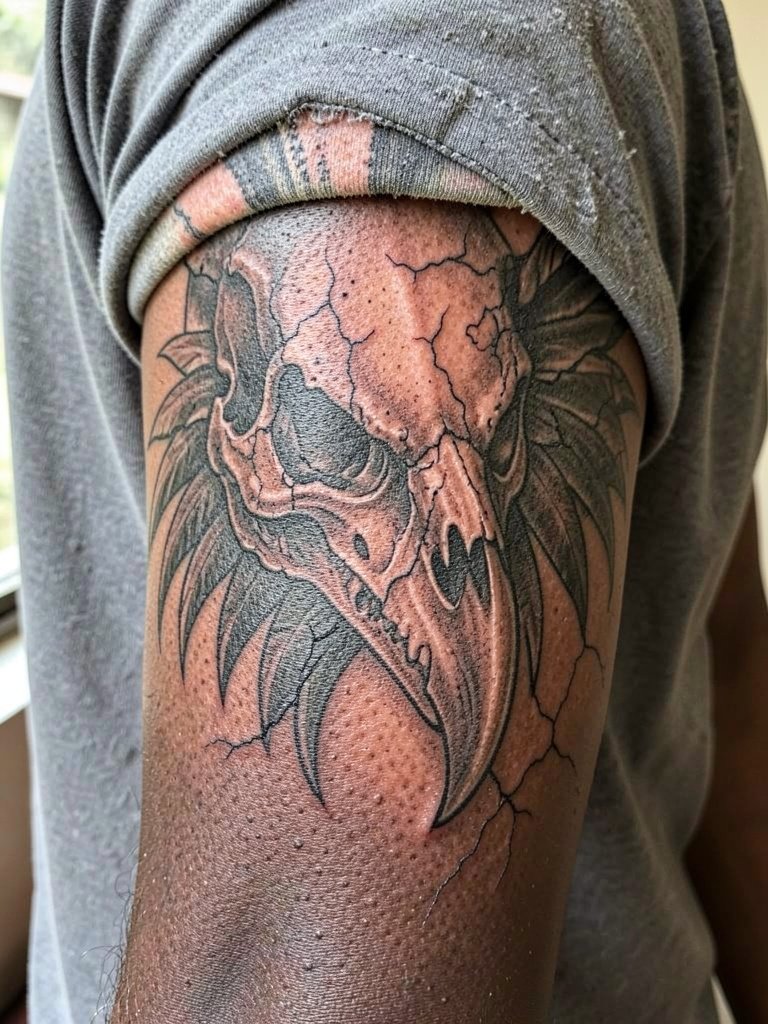
For collectors who favor darker motifs, an eagle skull hybrid offers edge without sacrificing forearm readability. The main danger is leaving tiny crack lines that later blur. Ask for bold primary contours and reserve thin cracks for areas the artist says will hold. Sessions are usually heavier shading days and can require multiple passes. Pair with dark solid shirts and a leather watch for a coherent vibe.
23. Linework Feather Band Wrapping the Forearm
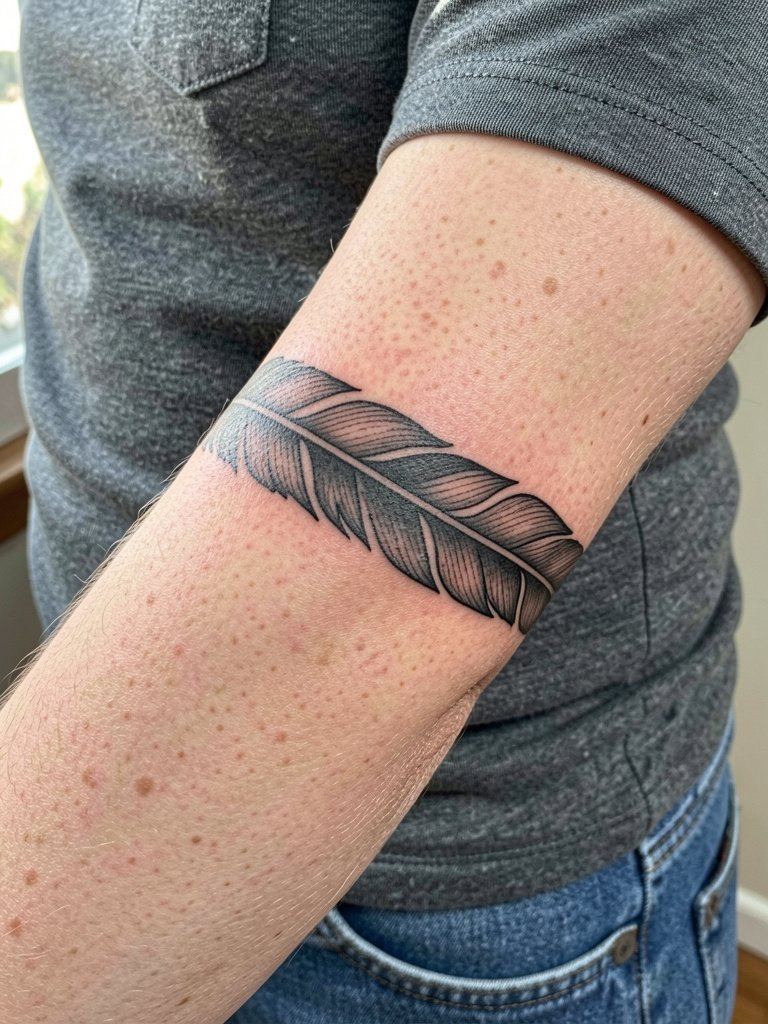
Band-style feather wraps read like an accessory and can be scaled to avoid blowout risk. The biggest mistake is making the band too narrow which leads to line merging. Ask your artist for minimum band width and be explicit about how much negative space you want between feathers. For session wear, roll sleeves so the artist can wrap the stencil around the arm without fabric interference. A cuff or watch on the opposite arm balances the visual weight.
Frequently Asked Questions
Q: Which forearm side holds fine detail better, inner or outer?
A: The outer forearm (palm-down surface) is generally more stable and better for detailed or shaded eagles. The inner forearm stretches with palm-up movement and can soften fine single-needle work faster. If you want micro detail, choose the outer side or ask for slightly heavier line spacing to compensate.
Q: How long should I budget between booking and touch-up for fine-line or micro-realism eagles?
A: Plan for a check-in touch-up around year two for fine-line work, and around year three for denser shading pieces. I suggest scheduling a consult about six weeks after the primary session to decide if a minor contrast pass helps. Touch-up timelines vary by skin type and exposure habits.
Q: Where can I find local portfolios and healed examples without naming artists?
A: Search hashtags like #eagletattoo and #forearmtattoo on Instagram and TikTok then filter by location to find nearby portfolios. Use Tattoodo or the Inked App for keyword searches such as "eagle head portrait forearm," and check Reddit communities like r/tattoos for peer-shared healed shots. Convention guest lists also reveal specialists who travel for specific styles.
Q: Will a white-on-black eagle work on darker skin tones?
A: It can if the design relies on strong black fills to create the silhouette and uses negative space rather than tiny white strokes. Ask for mockups that emphasize contrast so you can see how the negative white shapes read in photos and in natural light.
Q: What should I wear to the session for an outer forearm traditional eagle?
A: Wear a short-sleeve or sleeveless top that fits normally so the artist can access the area easily. For showing it off after healing, a solid color men t shirt keeps the colors visible and reduces background distraction.