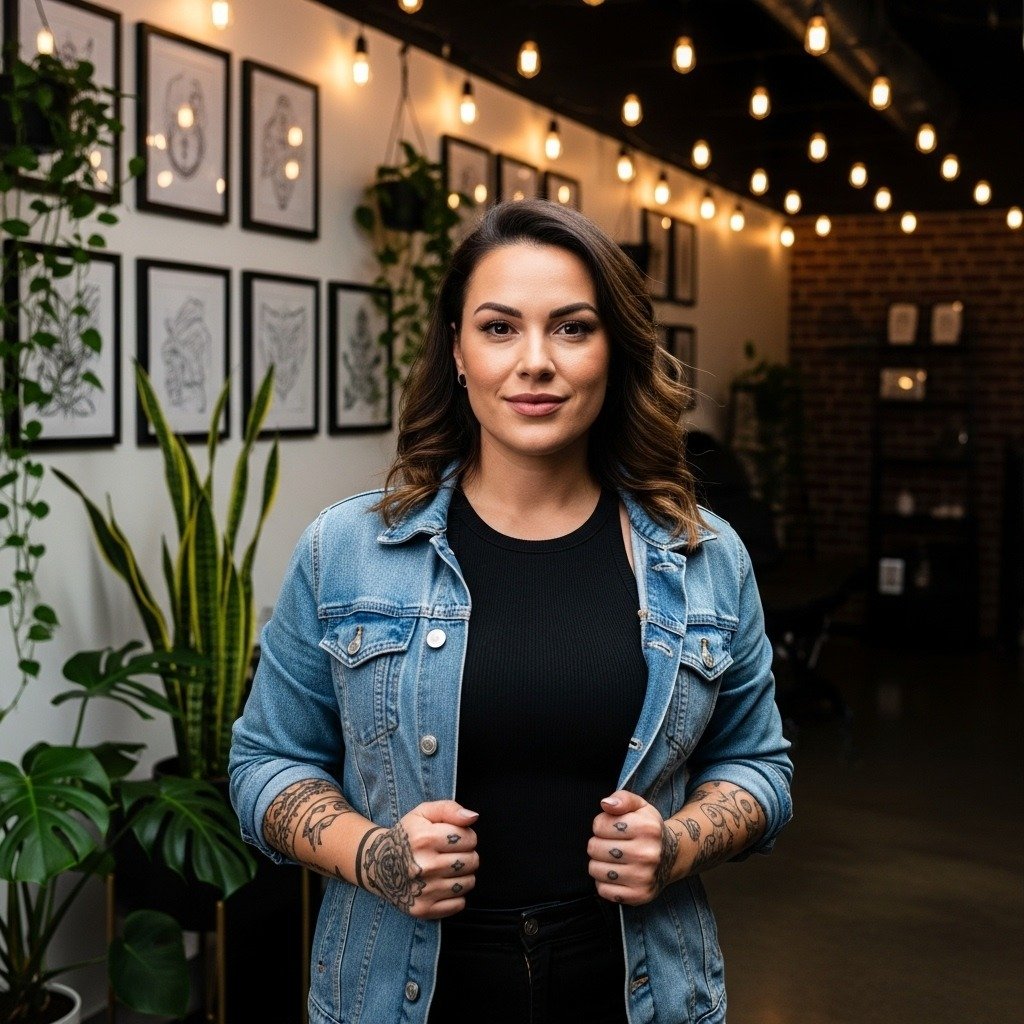
The cleanest gaming tattoos often break one assumption beginners make. Tiny, single-needle portraits that earn instant likes rarely hold their look after two years on moving skin. Bold shapes, deliberate spacing, and a tighter scale choice give icons longevity and real presence. Read on for concrete design options, what ages well, and which wardrobe pieces actually help a new forearm or chest piece read the way you imagined.
1. Cybersigilism Gaming Glyphs on the Inner Forearm
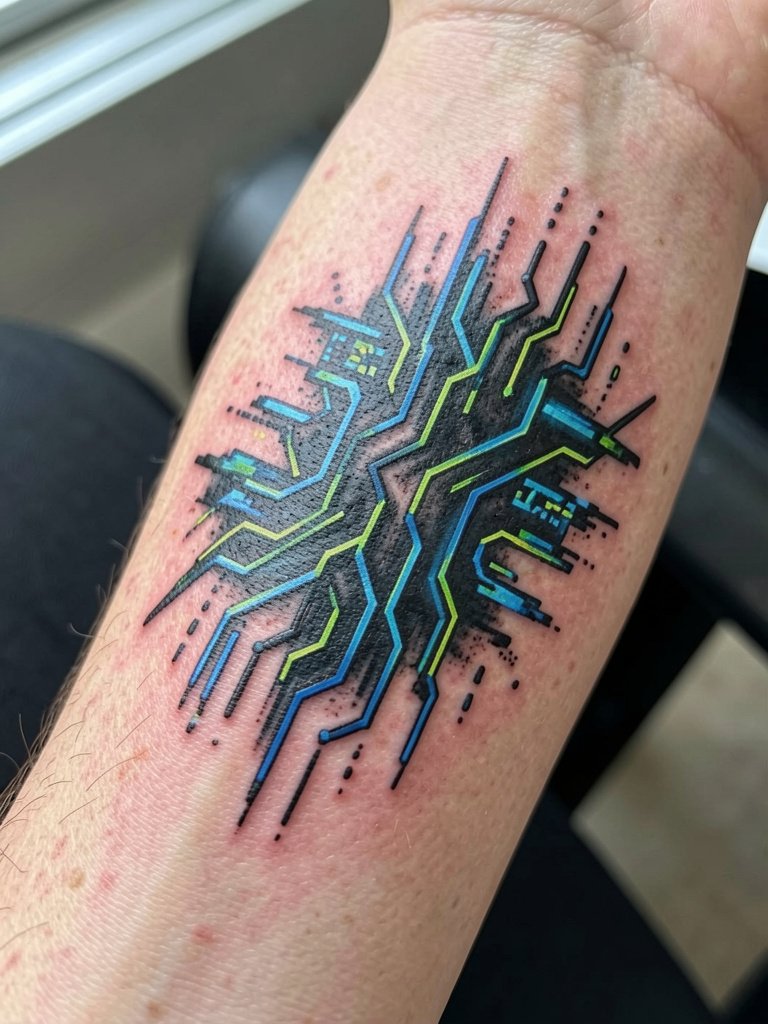
Cybersigilism reads like a personal tech rune. It works best scaled to cover a forearm band rather than tiny dots, because the fine circuit work needs room to avoid merging at year two. Bring two reference images that show line weight at both three inches and six inches so your artist can plan spacing. For showing it off, roll up a linen button-down in cream or olive and keep accessories minimal, the neutral shirt lets electric accents pop. Session note. Plan 1 to 2 hours for a medium band and expect a one-year touch-up for bright accent lines.
2. Retro-Glitch Pixel Portrait on the Outer Shoulder
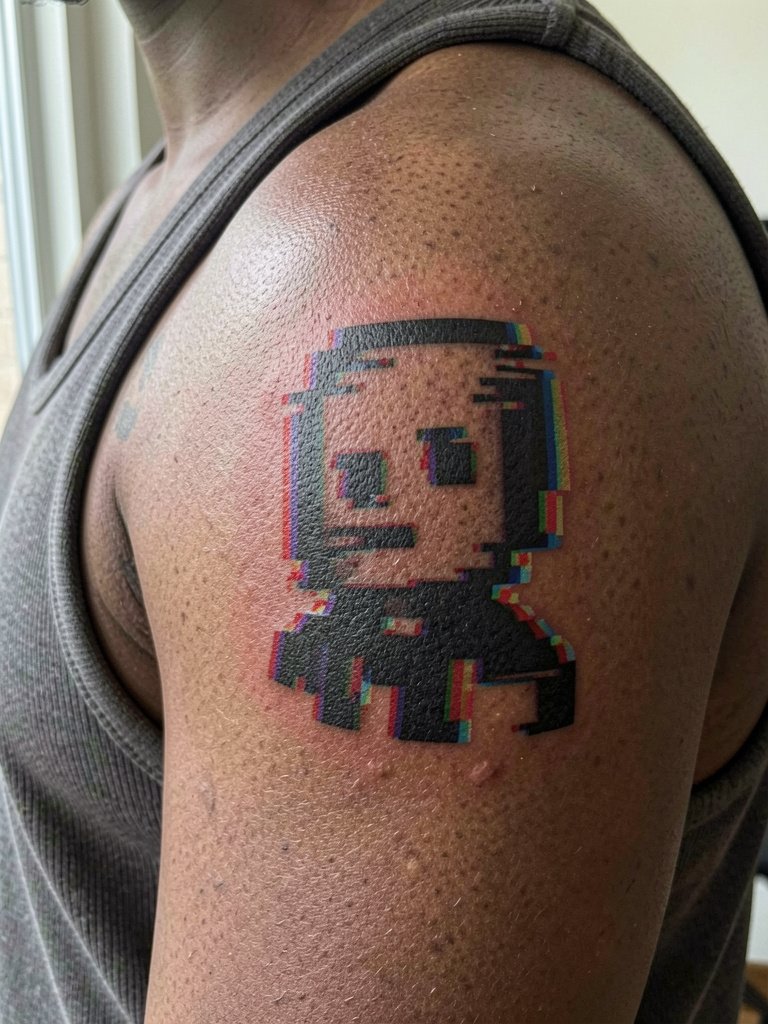
Retro-glitch melds pixel nostalgia with VHS-style tracking. The outer shoulder gives the blocks room so color bleed reads intentional rather than blurry. Avoid asking for photo-accurate faces at small scale, because pixelation loses character detail. For wardrobe, an open-collar vintage shirt in navy keeps the shoulder composition front and center. During consultation, show healed examples so the artist judges saturation for medium-to-dark skin tones. Plan one session for small-to-medium pieces and a likely two-year color refresh for neon accents.
3. 3D Mechanical Gear with Motion Illusion on the Outer Forearm
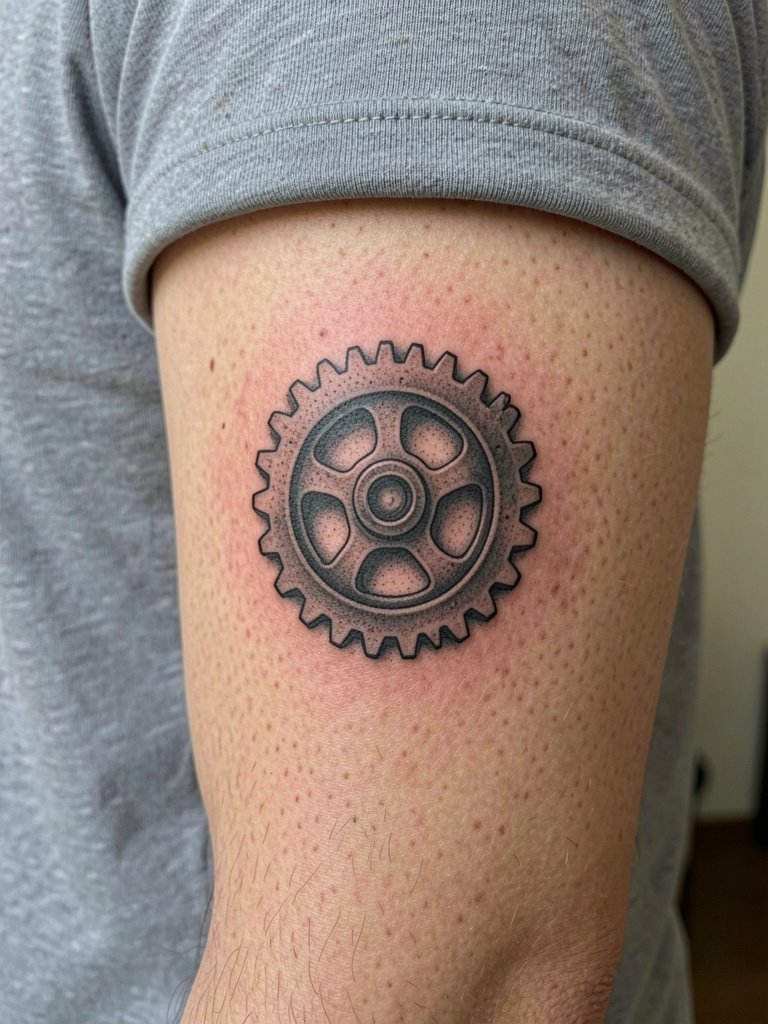
A mechanical gear reads as motion when shadow, perspective, and contrast are dialed in. Recommend heavier contrast in the first session so metallic highlights retain depth as saturation softens. Common mistake. People ask for tiny gears that blur into a gray smudge by year two. For session wear, roll up a denim jacket or wear a short sleeve so the artist has full palm-down access. Bring a clear photo of the spot you want scanned to check angle and how the illusion will read with your arm movement. Expect 2 sessions for a larger forearm illusion.
4. Organic Machinery Biomech with Flora on the Ribcage
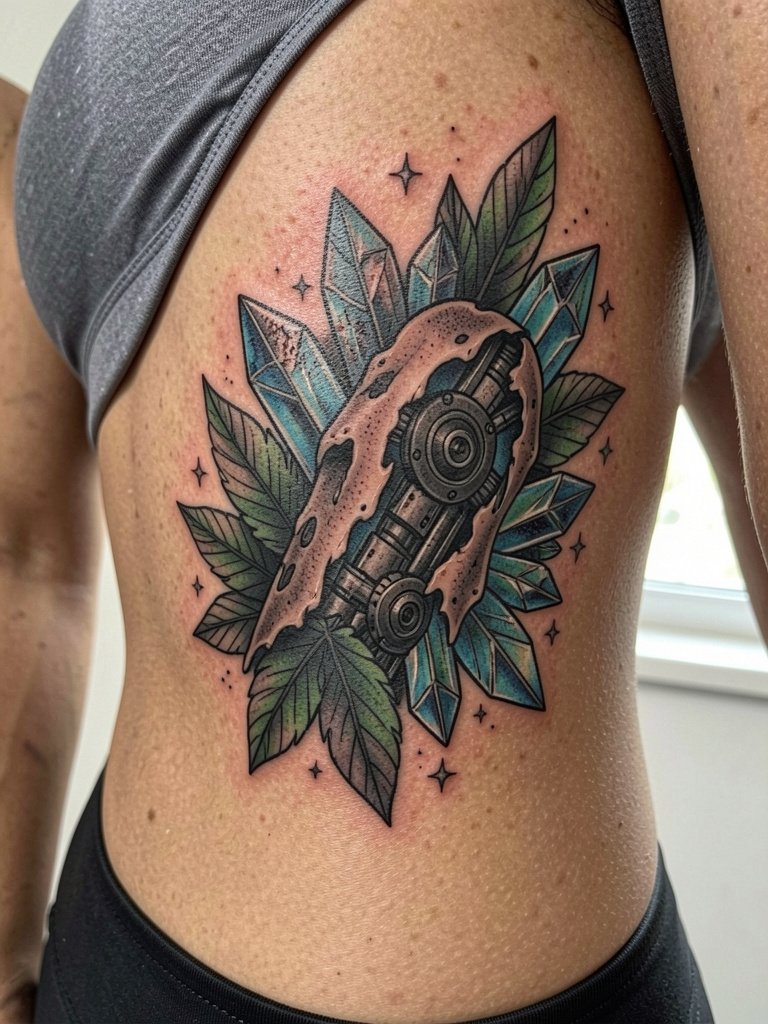
Ribcage biomech sessions demand planning because breathing moves the canvas. If you want florals and small crystals mixed with metal, size up by 20 percent to preserve detail as skin shifts. There is a debate over numbing cream for multi-hour sessions. One camp says numbing cream is a legitimate tool that prevents tension and preserves linework. The other camp argues numbing masks natural feedback that helps the artist adjust and some shops refuse it. Spell out your tolerance and whether you want breaks so the artist can schedule the session with or without topical anesthetic. Expect higher pain and 3 to 4 sessions for a full side piece.
5. Neo-Renaissance Micro-Realism Mini on the Upper Chest
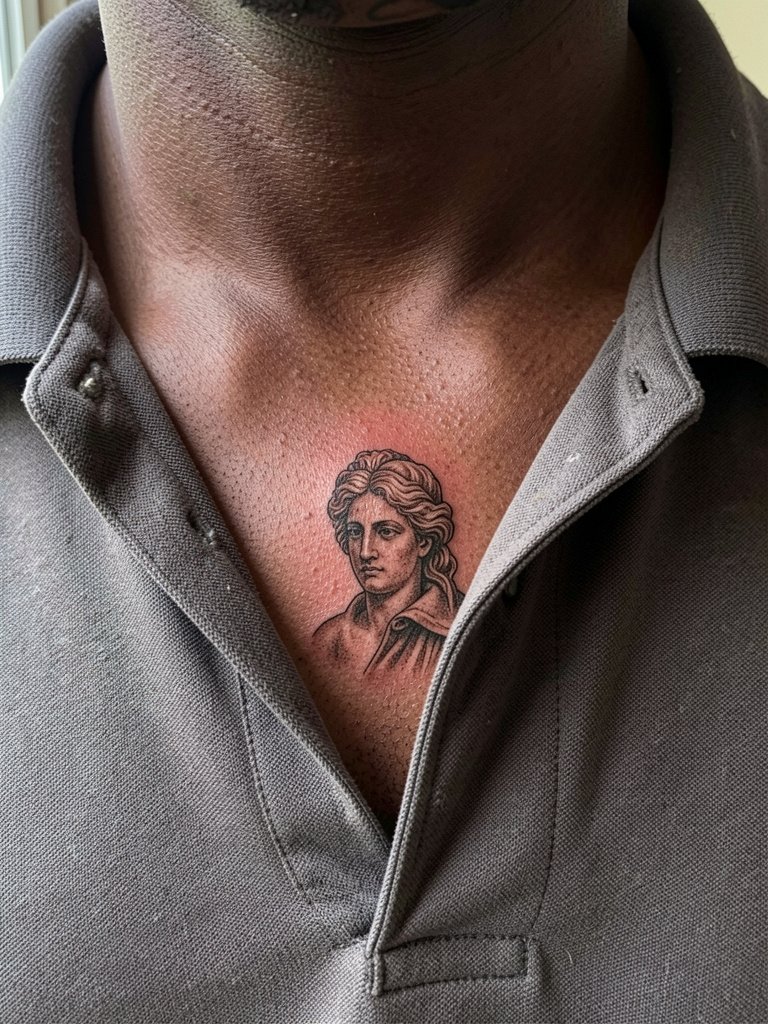
Tiny classical pieces on the chest look striking when done with micro-realism and slight sepia wash. Avoid single-needle micro on the sternum line itself because movement and friction shorten crispness. A common mistake is placing a two-inch portrait directly on the clavicle with no breathing room. For outfits, an open-collar polo in black or charcoal frames the piece without competing with the detail. During consult, ask for a healed shot at chest scale so you see how light plays over the clavicle. Sessions usually run two hours and may need a touch-up after the first year for tonal balance.
6. Blackwork Geometric Puzzle on the Inner Wrist
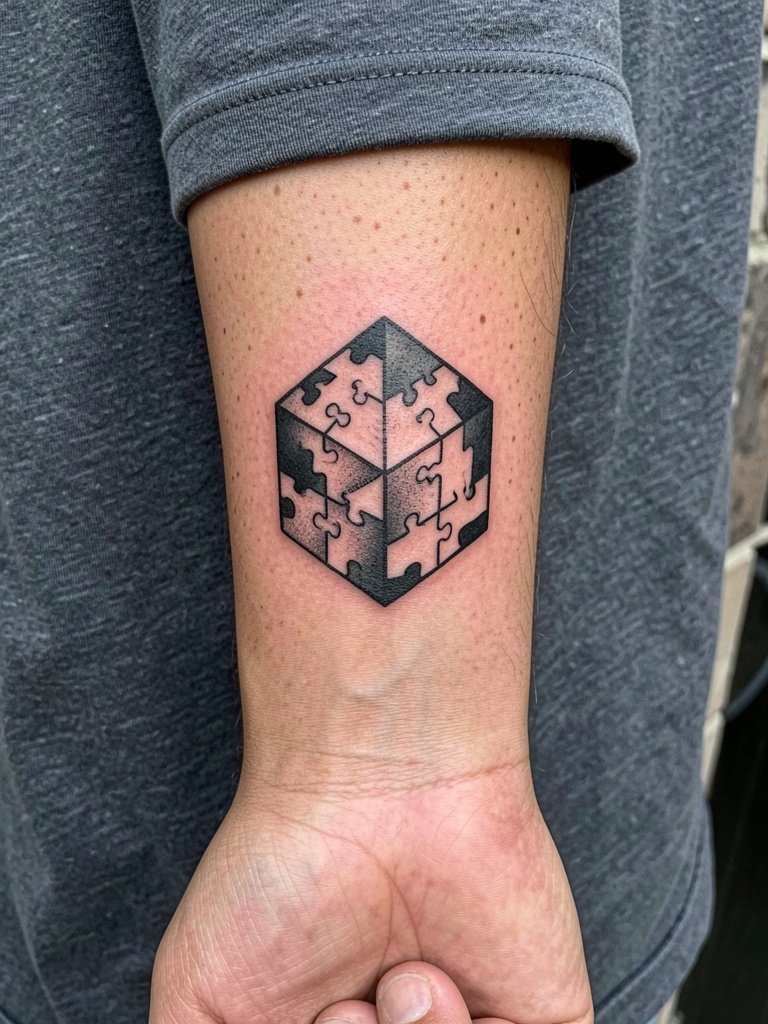
Blackwork puzzles hold up well at wrist scale because solid fills age more predictably than fine lines in that spot. The wrist gets a lot of friction, so expect some edges to soften by year two. A key session detail is to let the artist map the design over the bone ridge so negative space breathes. For the appointment, avoid watches and wear a short-sleeve so your wrist is fully visible. This placement is best for someone who wants a bold, low-maintenance icon that still reads from a distance.
Session Essentials
A few small tools and products smooth out early healing for the pieces above, especially fine-line forearms and color accents.
- Hadalabo Aftercare Balm. Thinner than heavy ointments so it does not clog pores on fine-line work, which helps the single-needle detail in glyphs and script stay visible during healing.
- Electric Blue Accent Ink Set. Handy when you want consistent neon blue for cybersigilism or crystal highlights without guesswork from mixed bottles.
- Thermochromic Novelty Ink. Novelty pieces that react to heat are useful for small control accents, especially on controllers or UI icons that you want to shift subtly with temperature.
- VHS Tracking Line Stencil Kit. A simple stencil tool can help reproduce consistent tracking lines for retro-glitch script and VHS-style quotes during layout.
- Neo-Balm Lightweight Healing Ointment. A thin, fast-absorbing balm that many people switch to from heavier greases when healing neon or fine-line game HUD clusters.
7. Japanese-Style Dragon Wrapped with Game Weapon Motifs on a Full Sleeve
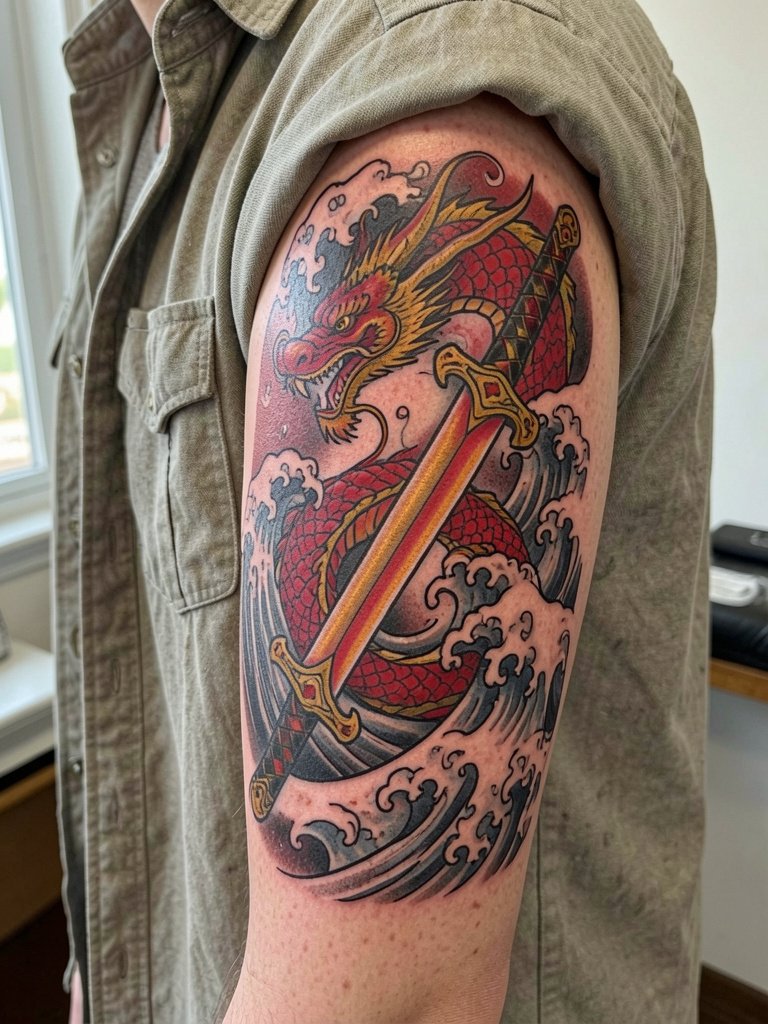
A sleeve that blends Irezumi lines with a recognizable weapon motif reads like a narrative when the sword is scaled to fit the arm flow. Cultural origin note. Respect traditional Irezumi motifs and ask about symbolism if you want authentic iconography. For the session, wear a loose button-down or tank so the artist has full arm access and the sleeve can be mapped in panels. A common mistake is cramming tiny weapon details into a dense sleeve without letting the dragon and background breathe. Expect multiple long sessions and higher pricing for saturation.
8. Realism-Stylized Character Adaptation on the Upper Back
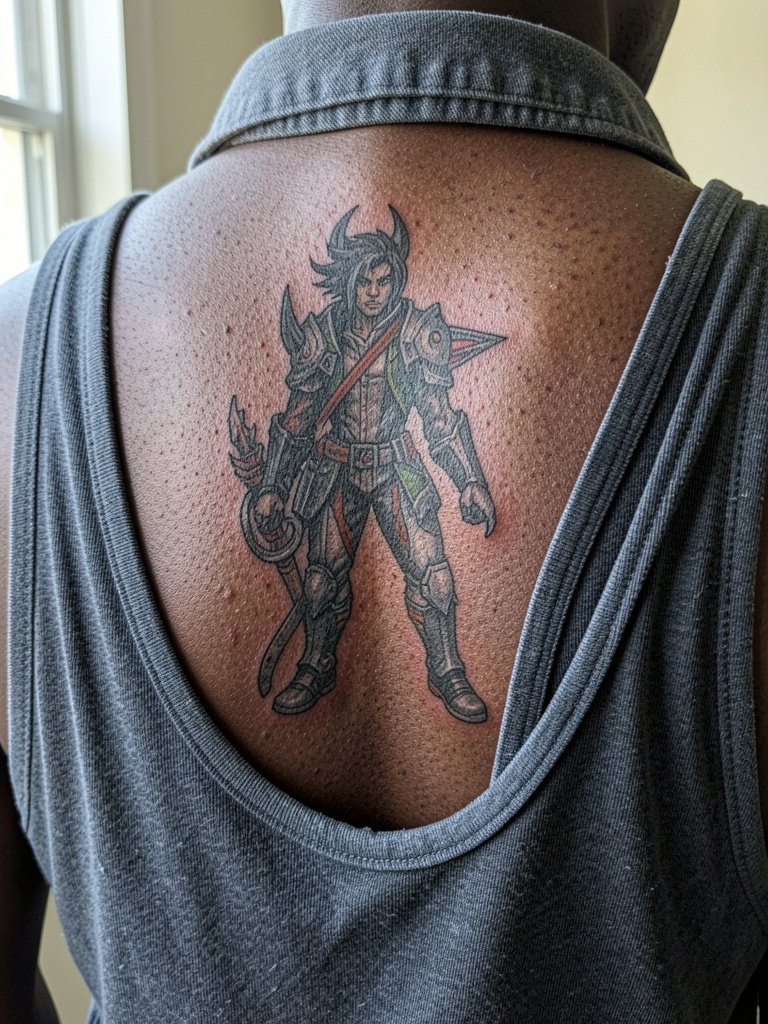
Adapting a stylized character into realism requires the artist to translate flat features into believable anatomy. Bring references showing the original character at multiple angles and a photo of your back so the piece can be composed around shoulder blades. A frequent mistake is asking for exact sprite details at chest scale, which flattens the portrait. Session feeling. Expect longer sessions for chest-to-back transitions. Touch-ups for color faces are common by year three if neon highlights are used.
9. Trash Polka Abstract Gaming Collage on the Lower Back
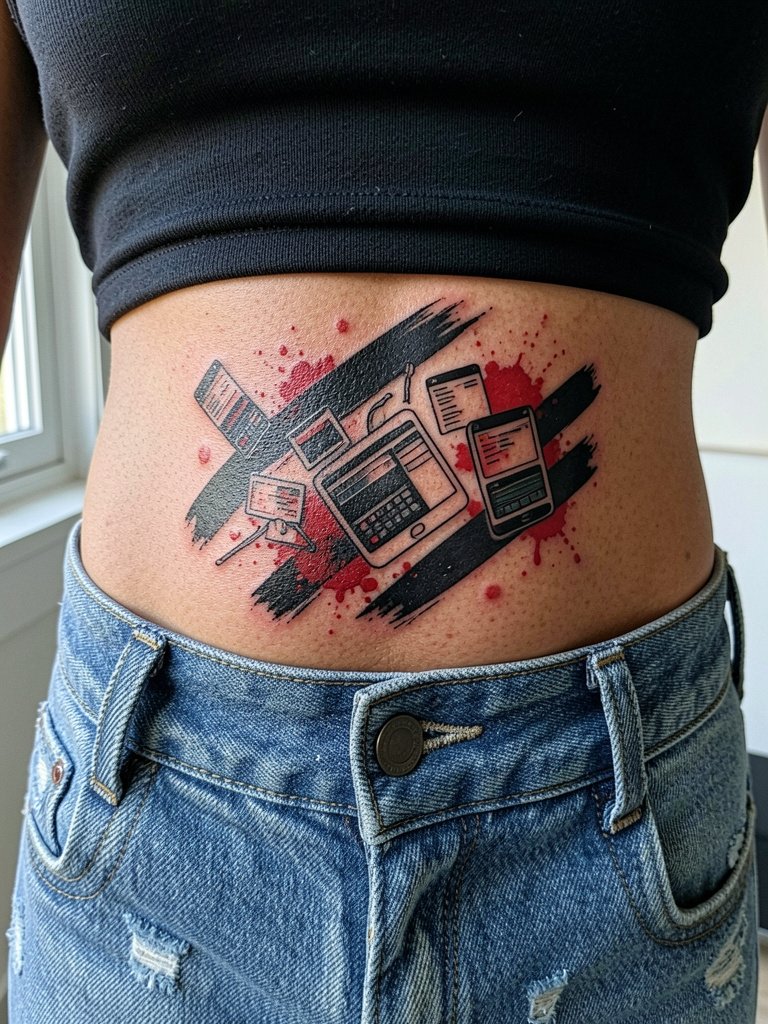
Trash Polka thrives on high contrast and aggressive composition, and the lower back gives the sweep needed for collages. Because the small of the back moves with sitting, plan for bolder marks rather than fragile brushline scripts. For outfit pairing, low-rise open-back shirts with dark palettes frame the composition without overexposing the design. During the consult, request healed portfolio shots of Trash Polka pieces on lower backs so you know how the red and black settle over time. Expect two sessions for medium collages and a potential two-year touch-up for saturated red.
10. Fine Line UI Icon Cluster on the Inner Forearm
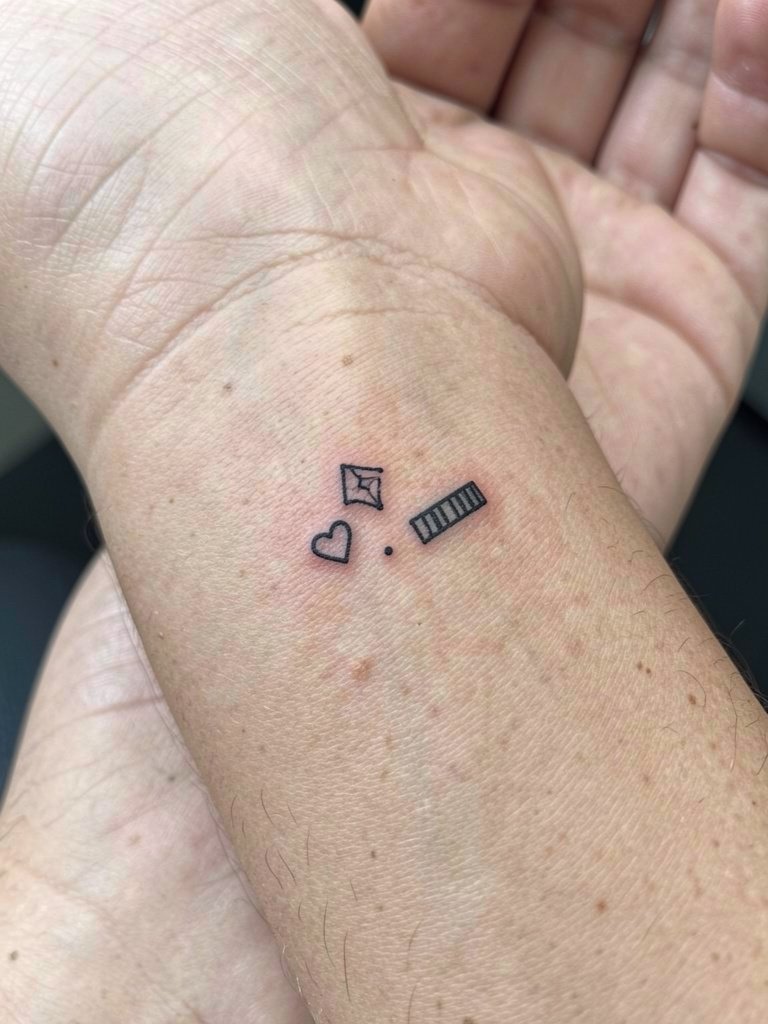
Fine line HUD clusters are subtle and clever, but longevity depends on placement. The controversy over fine line vs bold outlines splits artists into two camps. One camp says single-needle HUD icons blur within one to two years on moving skin because thin lines spread. The other camp says slightly heavier line weight and correct spacing let fine work settle for five years or more, supported by healed examples. Make a clear call about desired lifespan during the consult and size up the icons if you hope for multi-year clarity. Session is short, but expect a touch-up window after 12 months for most single-needle pieces.
11. Nostalgia Corrupted VHS Tracking Script on the Inner Forearm
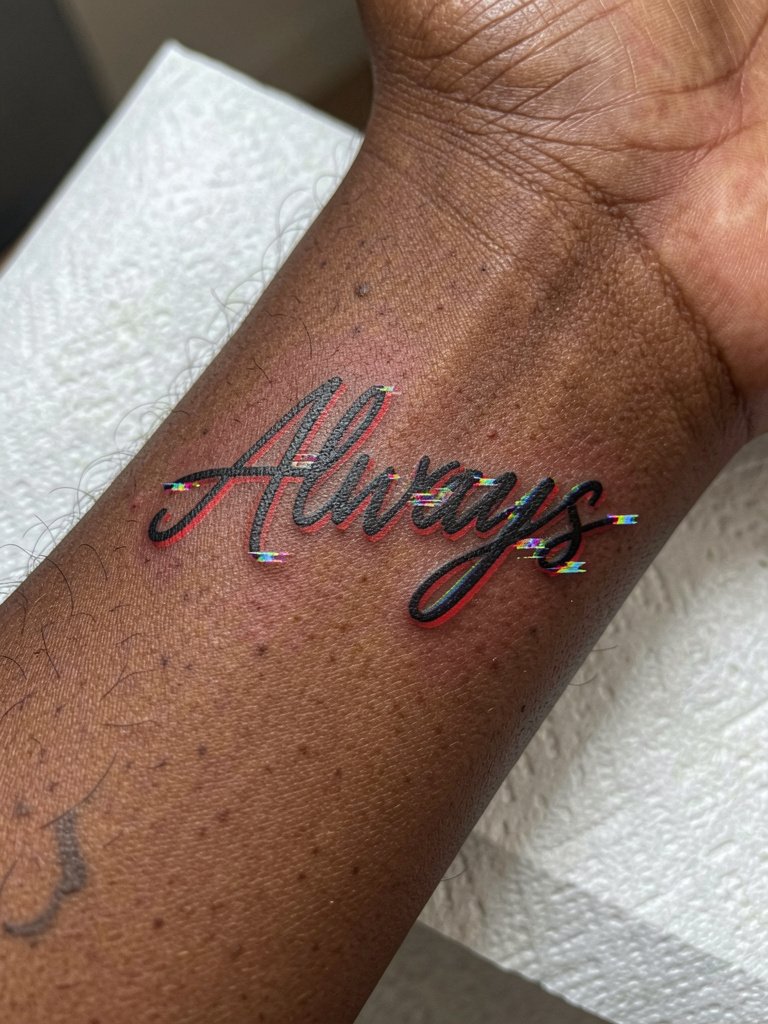
A tracked-script quote reads like a corrupted memory when the offset colors are used sparingly. Pick a short quote and show the exact text at consultation. For wearing, rolled-up linen shirts in neutral tones put the palm-up surface on display and keep attention on the script. Common mistake. People request ultra-thin cursive that disappears on darker tones; slightly bolder single-needle strokes or faint shadowing keeps legibility. Expect one session for small script and a likely first-year touch-up if chromatic accents are key.
12. 3D Floating Game Controller with Depth Illusion on the Outer Forearm
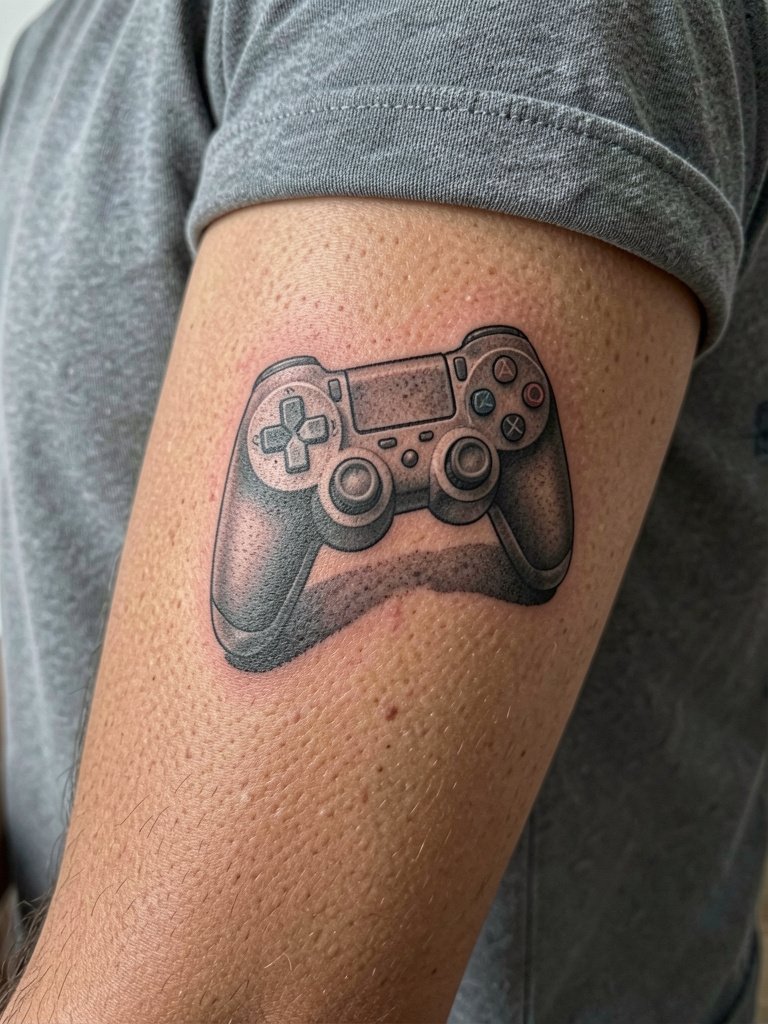
Controller illusions rely on a strong light source in the composition so the artificial shadow feels plausible on skin. A practical consultation point is to show the lighting you want mimicked, such as overhead versus side-light. For session comfort, wear a short-sleeve shirt so the palm-down surface is free and the artist can test rotation angles. Realism details like buttons read clearly at medium scale and usually need two sessions for clean depth and blended gray tones.
13. Pixelated Landscape Block Scene on Outer Shoulder
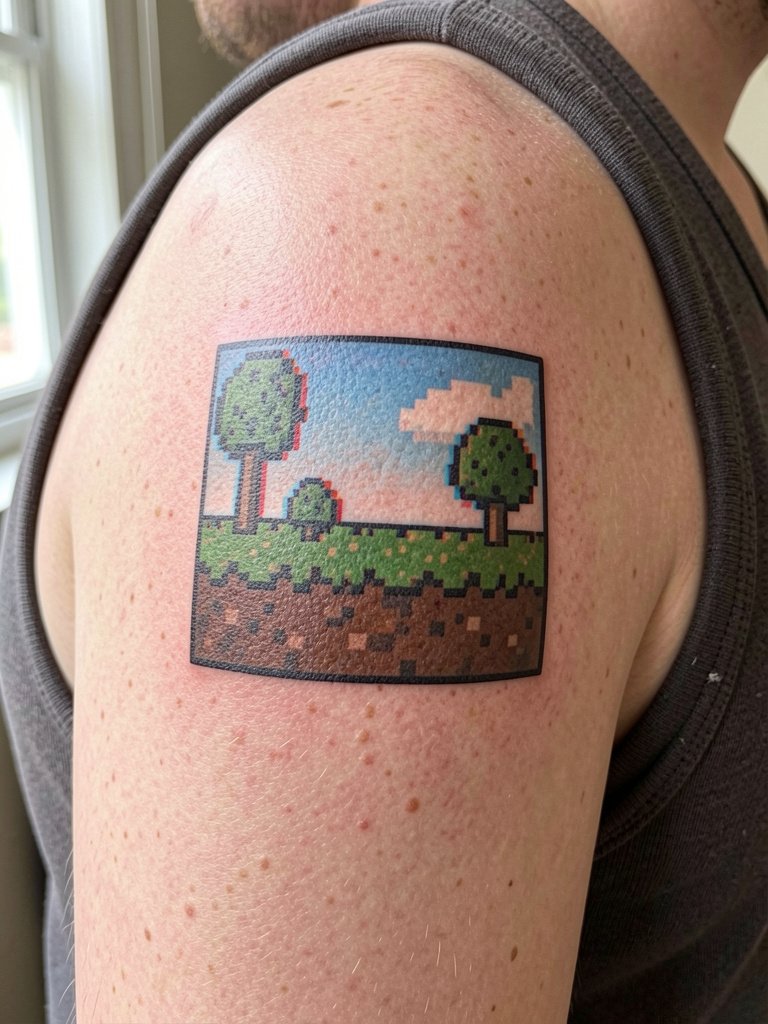
An 8-bit scene needs clear, slightly thicker outlines to preserve block edges across time. On the outer shoulder it reads like a small banner and shows well with open-collar shirts in black or navy. Avoid trying to cram multiple landscape layers into a one-inch square. For different skin tones, ask the artist to show palette substitutions so green and blue contrast properly. Sessions are usually short for small landscapes, but color touch-ups can be expected after two to three years for vibrant palettes.
14. Blackwork Minimal Game Logo on the Upper Chest
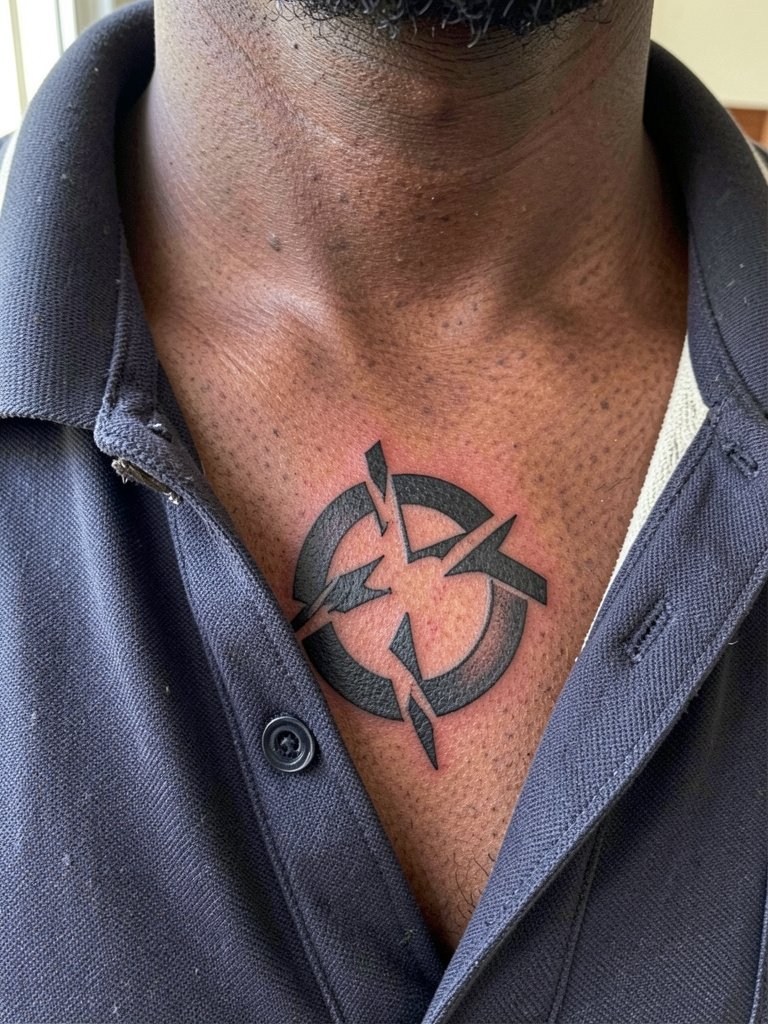
A single-color black emblem is the low-maintenance route for fans who want iconography without full characters. Bold shapes crisp up on the chest and age predictably. For showing off this placement, open-collar polos in black or charcoal frame the emblem without distraction. The main mistake is asking for too much internal detail inside a tiny logo, which merges with the sternum lines over time. Sessions are brief and touch-ups are rare if the fill is saturated at the time of inking.
15. Orthogonal Game Map with Grid Lines on the Inner Forearm
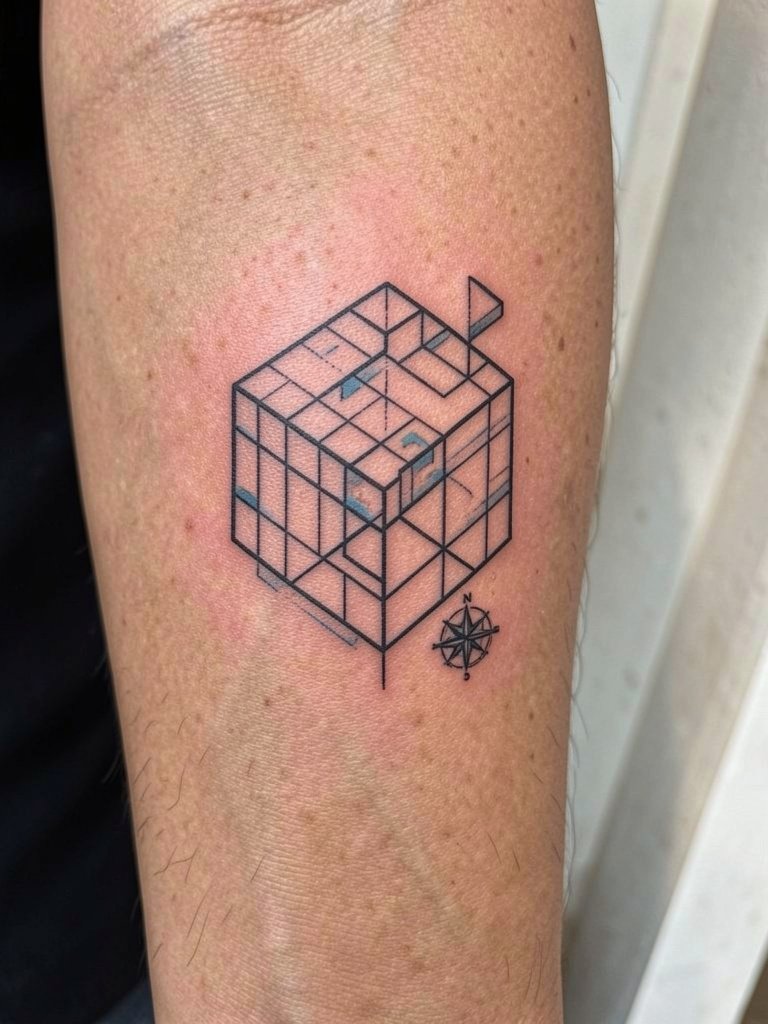
Map tattoos need precise spacing so grid lines do not visually collapse with time. A practical consult item is to request mockups at different scales so you can see how a one-inch square grid will read after healing. For session wear, choose a loose button-down so the artist can access the palm-up surface without cuff pressure. This style ages best when the grid lines are slightly heavier than purely single-needle work, and many artists recommend a one-year check to see if any lines require a minor touch-up.
16. Pixelated Minecraft-Style Block Scene on the Shoulder Blade
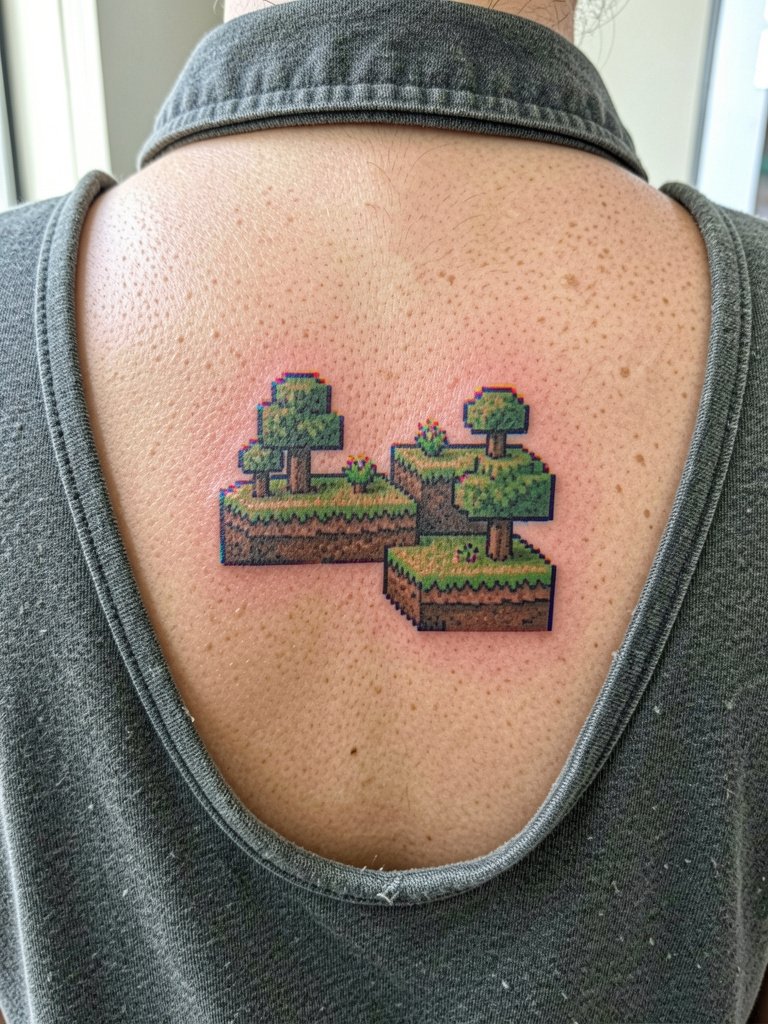
Blocky landscapes translate well to the back because there is room to maintain block edges. If you have dark skin, request bolder outlines and higher contrast palettes so color remains visible in photos. A common error is shrinking a landscape to a wrist-size decal, which loses the charm of negative space. Sessions vary from one to two long sittings depending on color. For display, open-back summer shirts reveal the shoulder blade scene cleanly.
17. Trash Polka Portrait Collage on the Lower Back Flank
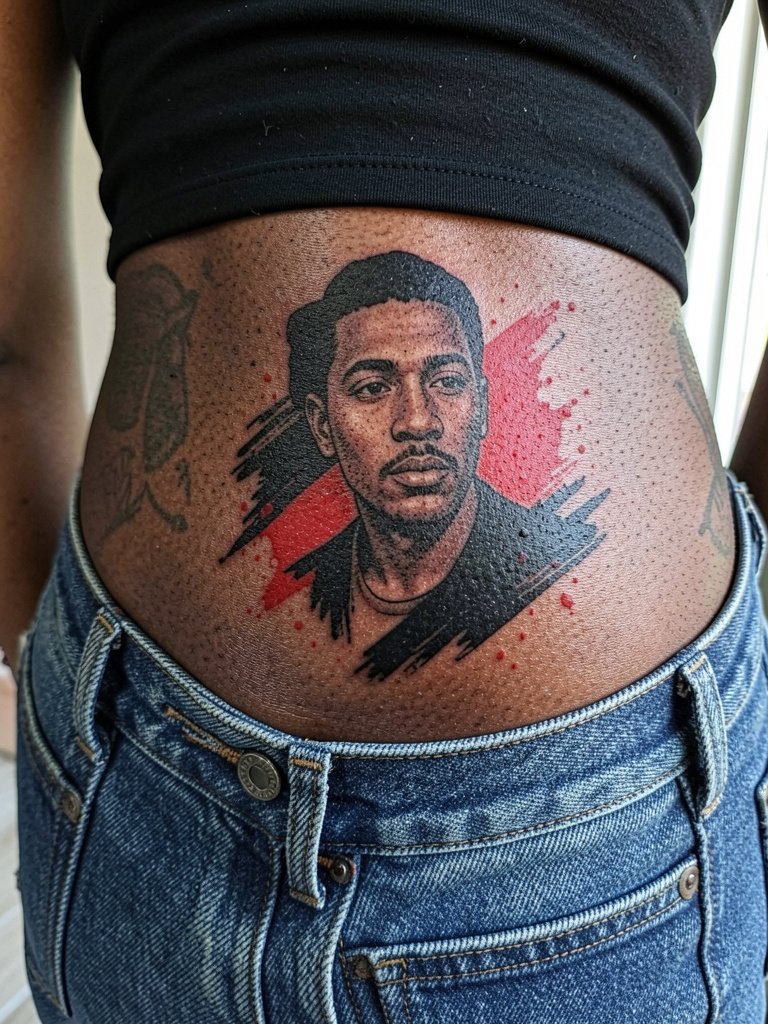
Trash Polka portraits are dramatic but sensitive to placement. Lower back movement from sitting can soften brushwork, so favor broad marks and avoid tiny portrait detail at a small scale. Pair with low-rise open-back clothing for nights out if you want the collage visible without full exposure. During consult, ask to see healed lower-back Trash Polka examples to judge how the red stains age against black brushwork. Expect two sessions and a likely color touch-up if red is heavily used.
18. Minimalist HUD Wrist Cluster on the Inner Wrist
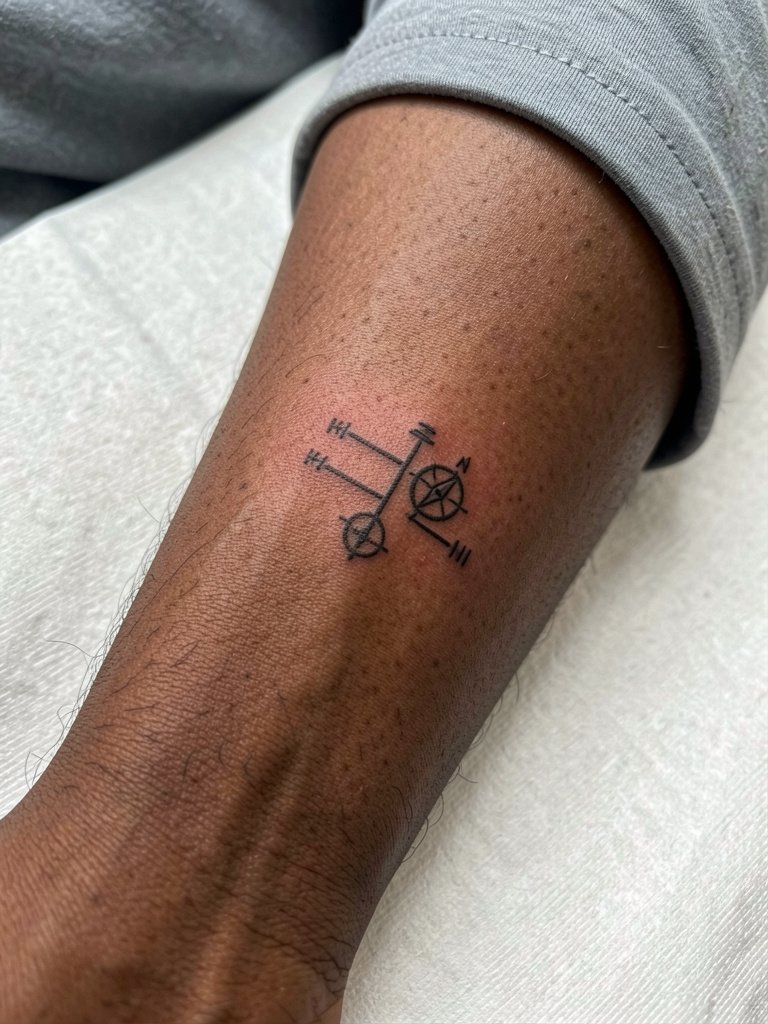
The inner wrist is high-friction and sees frequent washing, so single-needle work sometimes needs reinforcement. A common mistake is placing ultra-fine icons tight to the bone ridge, which digests detail over a year. For session clothing, short sleeves are best and avoid wrist accessories for two weeks after. Expect a small session but plan for a one-year assessment to see if lines have softened.
19. Organic Crystal-Biomech Thigh Panel
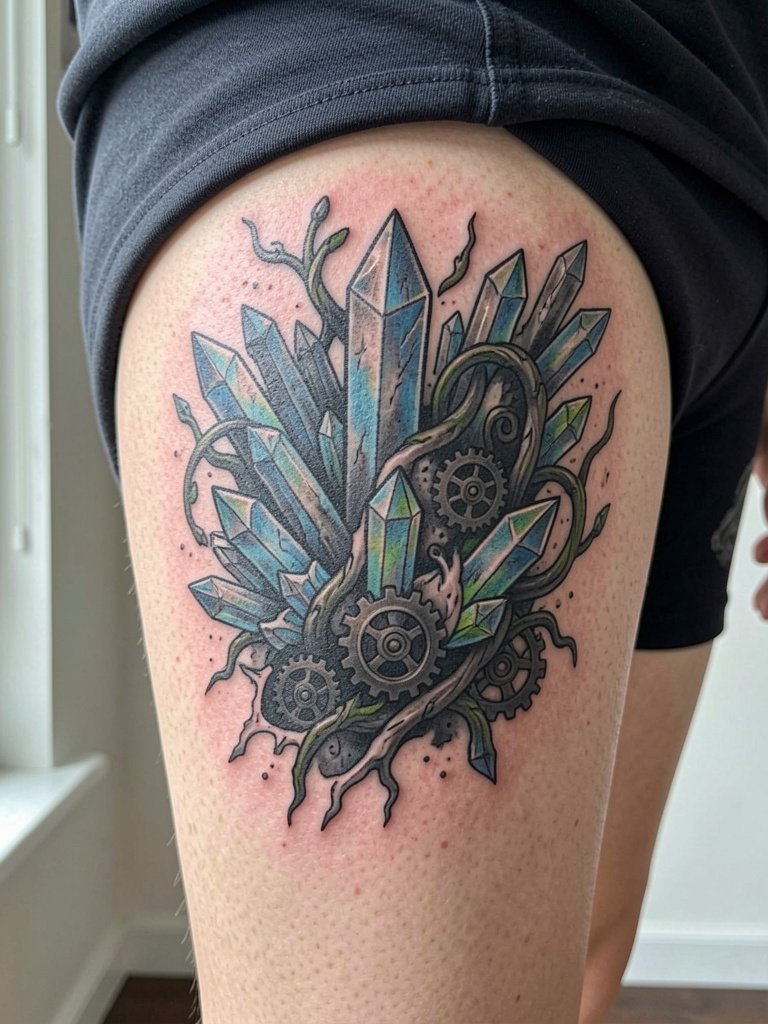
Thigh panels give artists room for delicate biomech detail and flora without the worry of constant stretching. The outer thigh is stable, so fine stipple and dot work hold better than on ribs. During consult, mention if you plan significant weight change because scale needs adjustment to avoid distortion. Session feel is moderate and often done seated to keep the area steady. Expect 2 to 3 sessions for a complex thigh panel and occasional color refreshes for bright crystal tones.
20. Neo-Traditional Game Crest on the Upper Arm
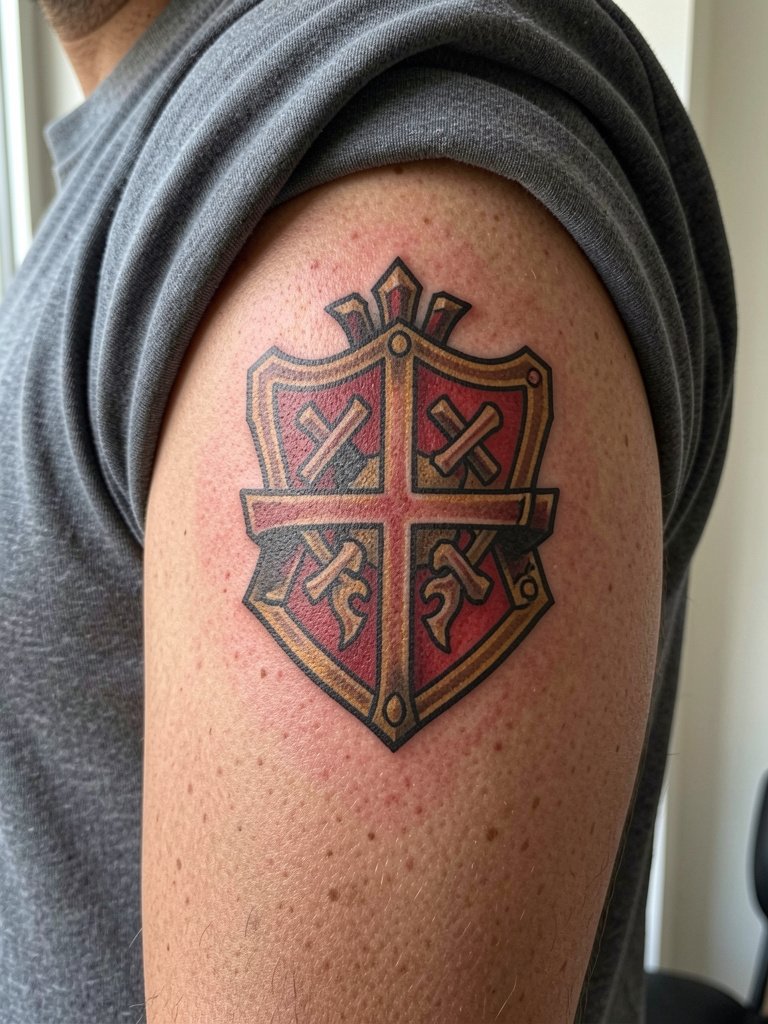
Neo-traditional crests combine bold outlines and saturated fills that age gracefully on the upper arm. A common misstep is compressing too many house panels or symbols into a palm-sized crest. For the appointment, choose a short-sleeve that gives easy access and lets the artist map the bicep curve. Touch-ups for saturated fills are rare if the initial session achieves full saturation.
21. Stylized Weapon Silhouette on the Sternum
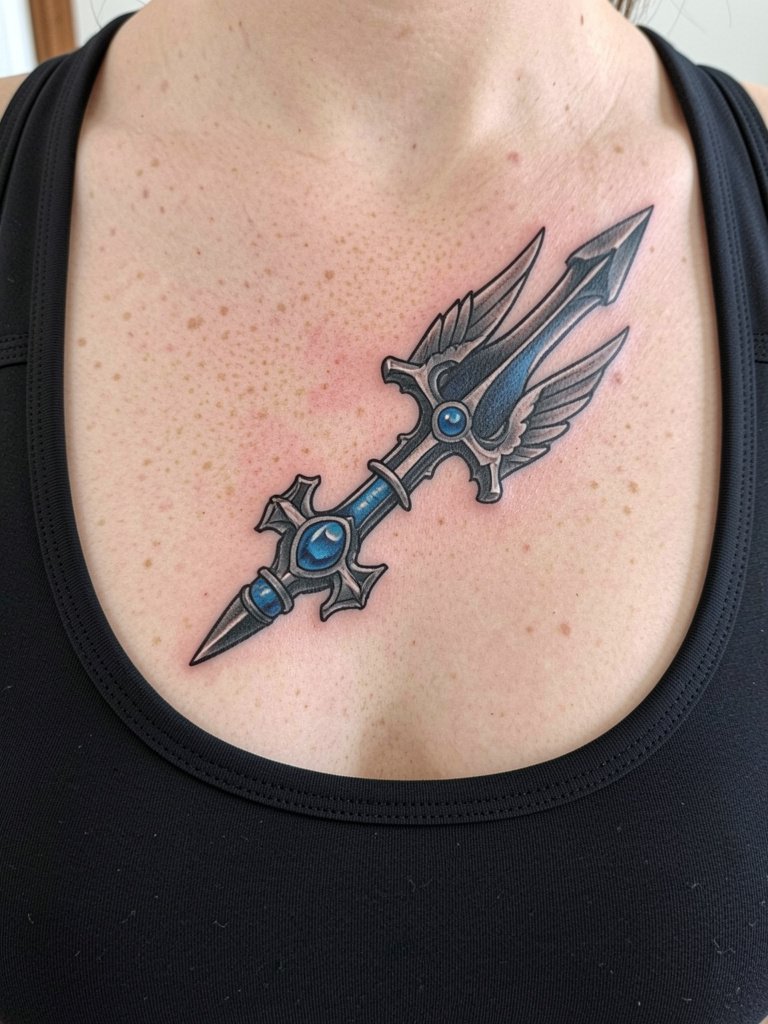
A sternum silhouette reads as a central emblem when scaled and spaced correctly. The sternum can be sensitive during sessions, and many artists prefer shorter passes for client comfort. Cultural sensitivity note. If the sword motif references a sacred symbol, name its origins and aim for respectful adaptation. Wear a fitted sports bra during the appointment so the area is accessible and modest. Expect one or two sessions and a touch-up window after healing.
22. Low-Profile Controller Outline Behind the Ear
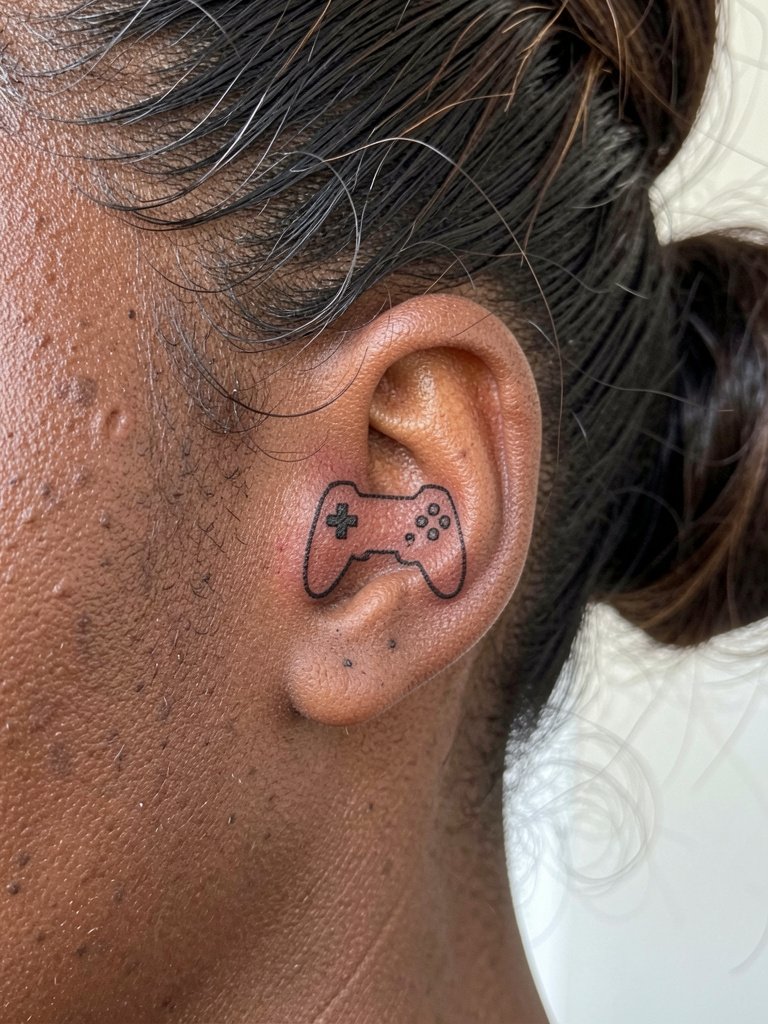
Behind-the-ear glyphs are discreet and personal, perfect for tiny controller nods. The skin there is thin and may blur if lines are too close together, so keep the glyph simple. Session time is brief and feels like a quick pinprick area. Post-session, avoid heavy hair products that contact the fresh ink for the first week. This placement suits someone who wants a subtle fandom nod rather than a full character.
23. Thermochromic Accent Strip on the Forearm
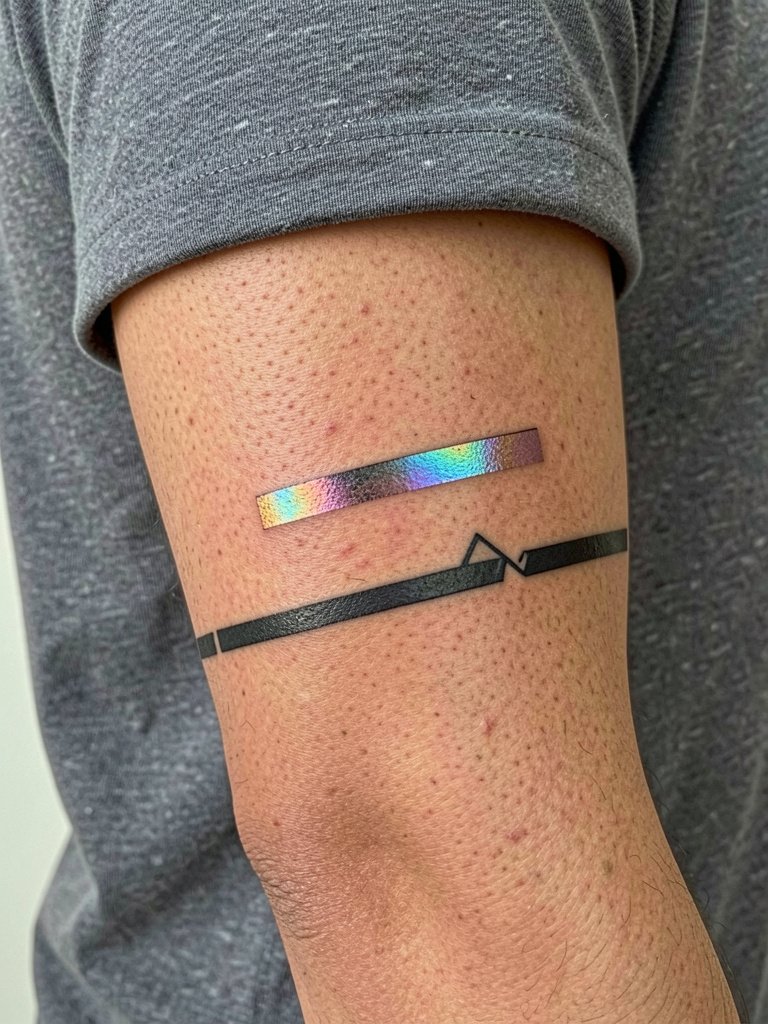
Thermochromic inks are novelty and can add dynamic interest to small accents, but longevity is experimental. Discuss realistic expectations for novelty ink lifespan during the consult. A sensible approach is to pair the thermochromic strip with solid blackwork so the piece remains readable if the novelty pigments fade. Session impact. Expect one brief session and potential fading within a couple of years depending on sun exposure.
24. Compact Retro-Tracker Script on the Rib Side
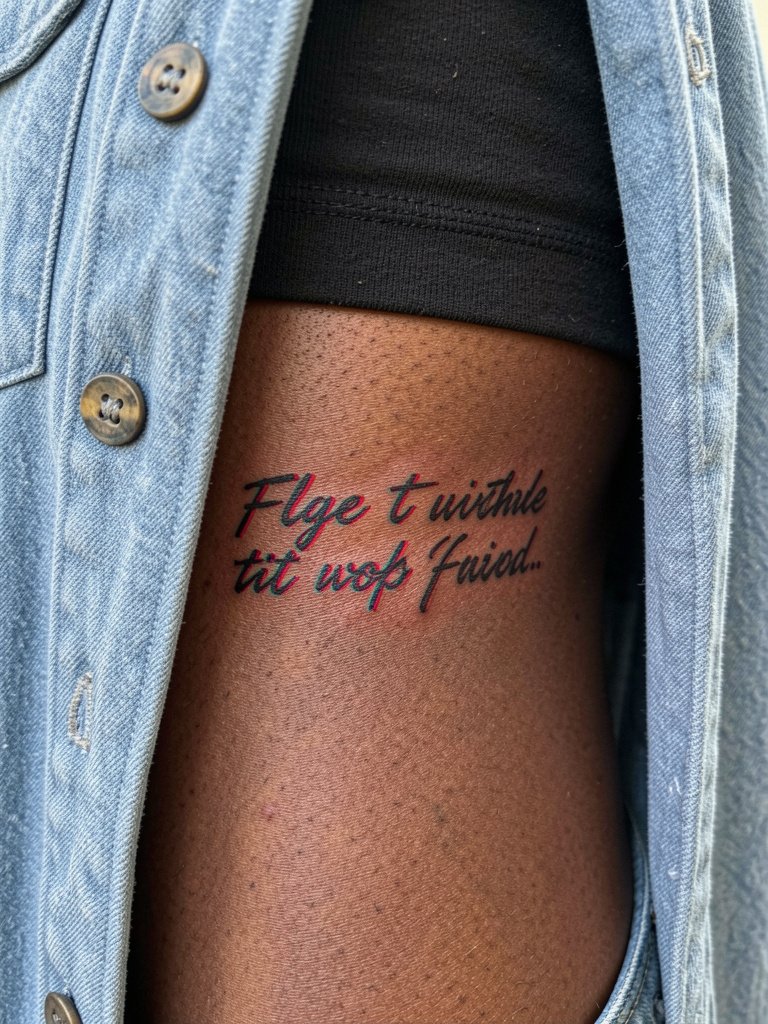
Rib-side scripts are intimate and vulnerable to stretch. Keep script compact and slightly bolder than a wrist script to compensate for rib movement. A frequent mistake is demanding ultra-thin cursive across the rib without accounting for respiration. For the session, plan numbing and scheduled breaks if you have low pain tolerance. The numbing cream debate applies here as well. One camp values topical anesthetics for multi-hour rib sessions to reduce muscle tension. Another camp says numbing masks feedback that helps correct needle depth. Decide which approach you prefer before booking.
25. Bold Black Ring Emblem on the Upper Chest
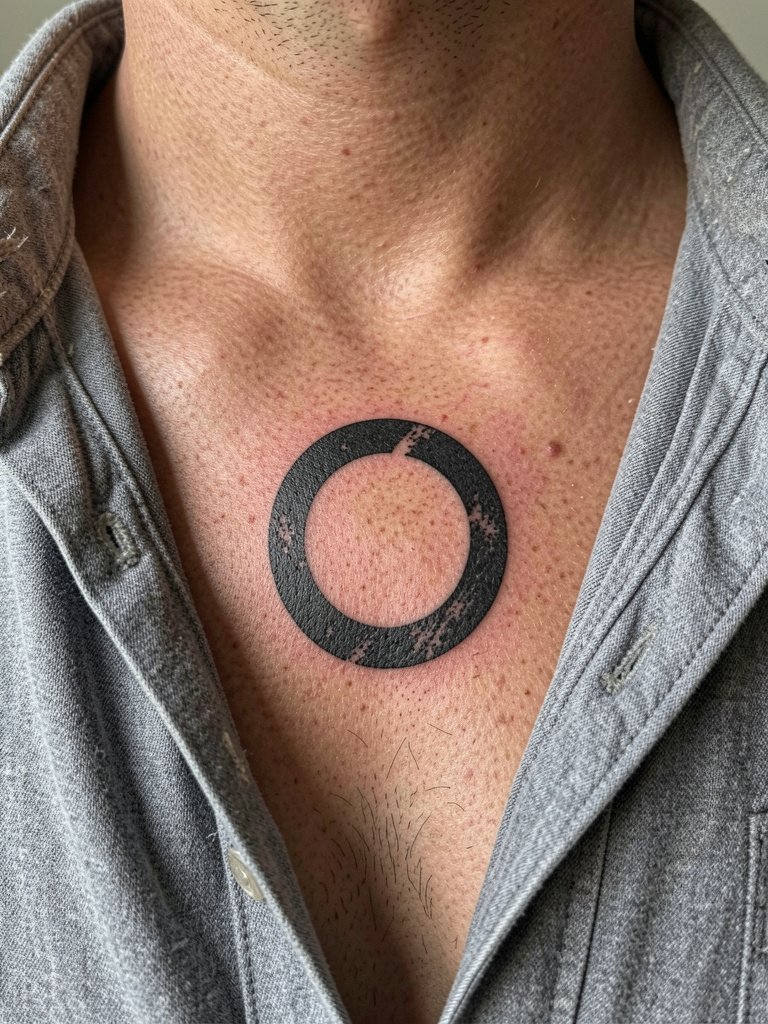
A strong black ring emblem is a low-fuss way to represent a game world symbol without full character work. Big solid forms resist aging better than micro-detail on the chest. Avoid packing inner detail into the ring when you want longevity. For showing off, open-collar shirts in dark tones keep the emblem visible while maintaining everyday wearability. Sessions are short and touch-ups rarely needed if the fill is saturated properly.
26. Pixel Compass on the Ankle
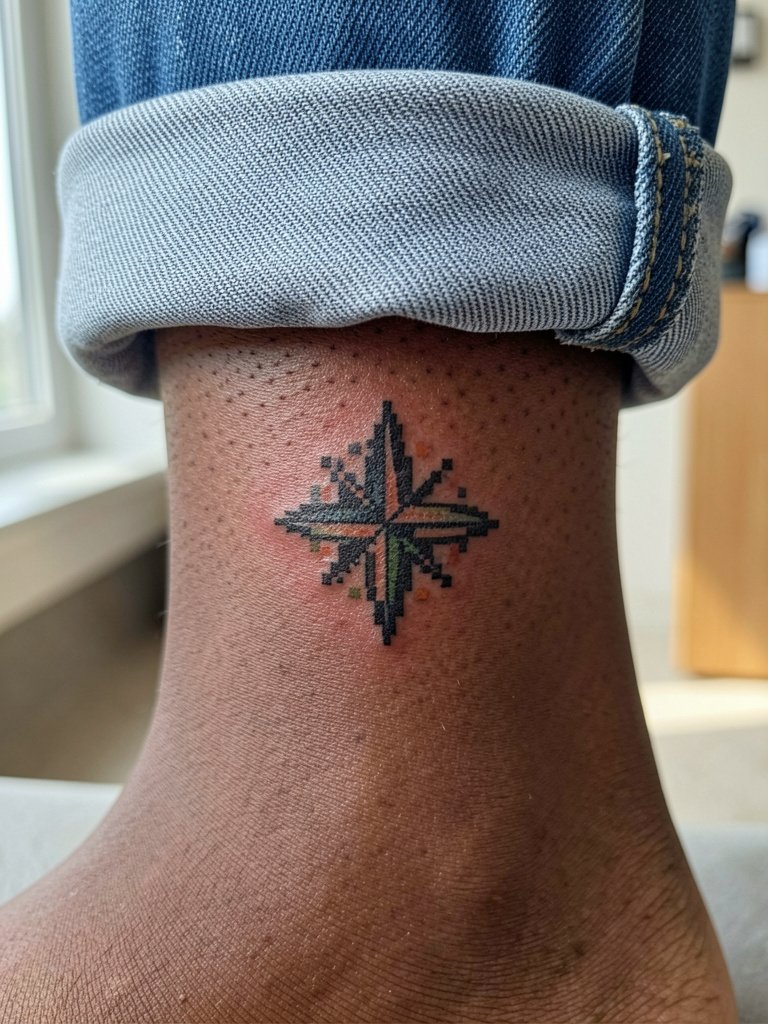
Ankle pixels are charming but face constant friction from socks and shoes. Thicker outline pixels and slightly larger block sizes keep the compass readable. For session wear, roll jean cuffs to allow full ankle access and minimize rubbing after the appointment. Plan for small touch-ups in the first year if you are active or wear low-cut shoes a lot.
27. Sleeve Collage Combining Retro-Glitch, Biomech, and Map Elements
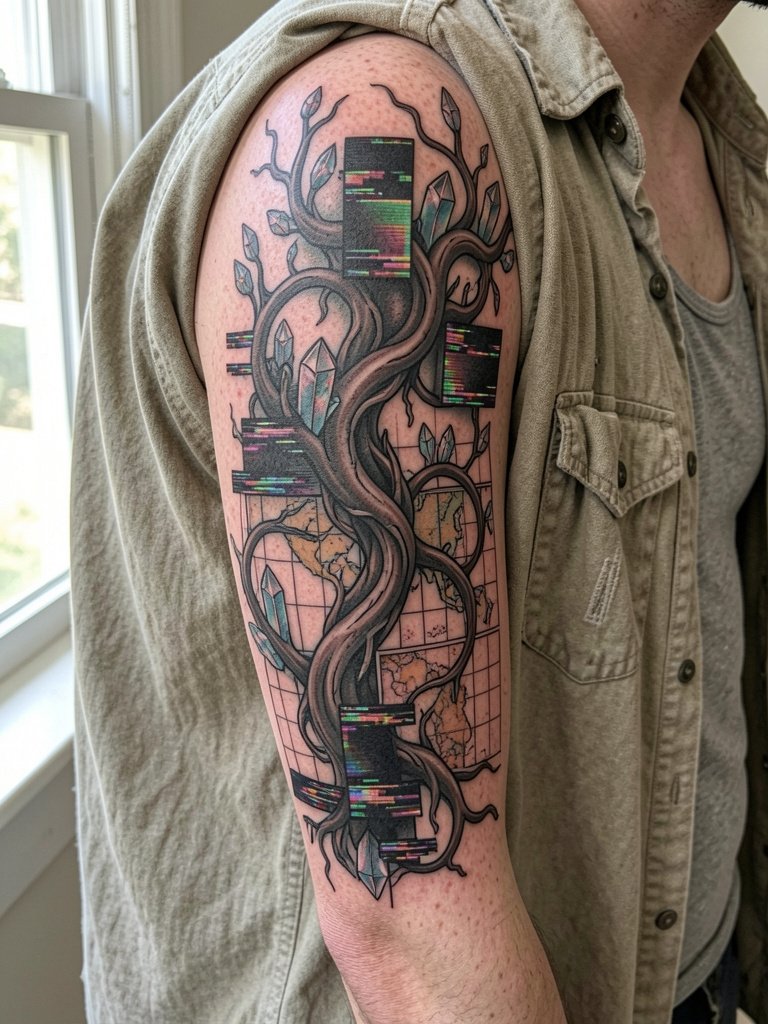
A hybrid sleeve lets you combine favored aesthetics while keeping each element scaled to survive time. The common mistake is stacking three highly detailed themes at too-small a scale. Plan the sleeve in modules, map how the eye moves from shoulder to wrist, and prioritize which elements get saturation versus fine-line treatment. For the sessions, wear a loose button-down or tank so artists can section the arm without fabric pressure. Expect many sessions and a multi-year plan for color maintenance.
Frequently Asked Questions
Q: How much should I realistically budget for a small gaming tattoo?
A: Expect small, clean pieces to fall into the low-to-mid pricing tier that most people report. Budget a baseline and add room for potential touch-ups later. In many cities a small custom piece is most often quoted in the mid-hundreds rather than triple digits.
Q: Where can I find artists who specialize in cybersigilism, retro-glitch, or 3D game illusions without naming individuals?
A: Search hashtags like #gamingtattoo, #cybersigilismgame, #retrogltitchgame, and #pixelarttattoo on Instagram and TikTok, then filter results by your city to locate nearby portfolios. Tattoodo and the Inked App let you search by keywords such as "cybersigilism gaming glyphs" and show healed examples. Reddit communities like r/gamingtattoos and r/tattoos also surface peer-recommended shops and healed photos across diverse skin tones. Use location filters and portfolio photos that include healed shots before booking.
Q: What are the biggest mistakes gamers make when picking a character tattoo?
A: One major misstep is choosing a trendy glitch character at a tiny scale rather than an icon that ages well at that size. Another is neglecting how weight changes or active sun exposure will warp small pixel details. If you are unsure, start with a tiny icon or test design as a temporary transfer before committing.
Q: How do color gaming tattoos age compared with black-and-grey ones?
A: There are two legitimate views. Some people find neon greens and bright pinks fade faster and need touch-ups every couple of years, especially when exposed to sun. Others report modern UV-stable inks and confident outlines that keep color vibrant for four years or more. Expect touch-ups sooner for saturated neon accents and plan sunscreen into your long-term care routine.
Q: What clothing should I wear to my session for an outer forearm or shoulder piece?
A: For outer forearm appointments, a short-sleeve shirt or rolled denim jacket lets the artist reach the area without tight cuffs. For outer shoulder work, choose a tank top so they can access the deltoid cleanly. These small choices reduce adjustments during the session and protect fresh ink from fabric pressure.
Q: How long until I should expect a touch-up on a color-heavy retro-glitch piece?
A: Most color-heavy retro-glitch pieces show initial settling by six months and often benefit from a targeted touch-up between one and two years. Neon accents are the parts most likely to need refreshment sooner than broad black areas.