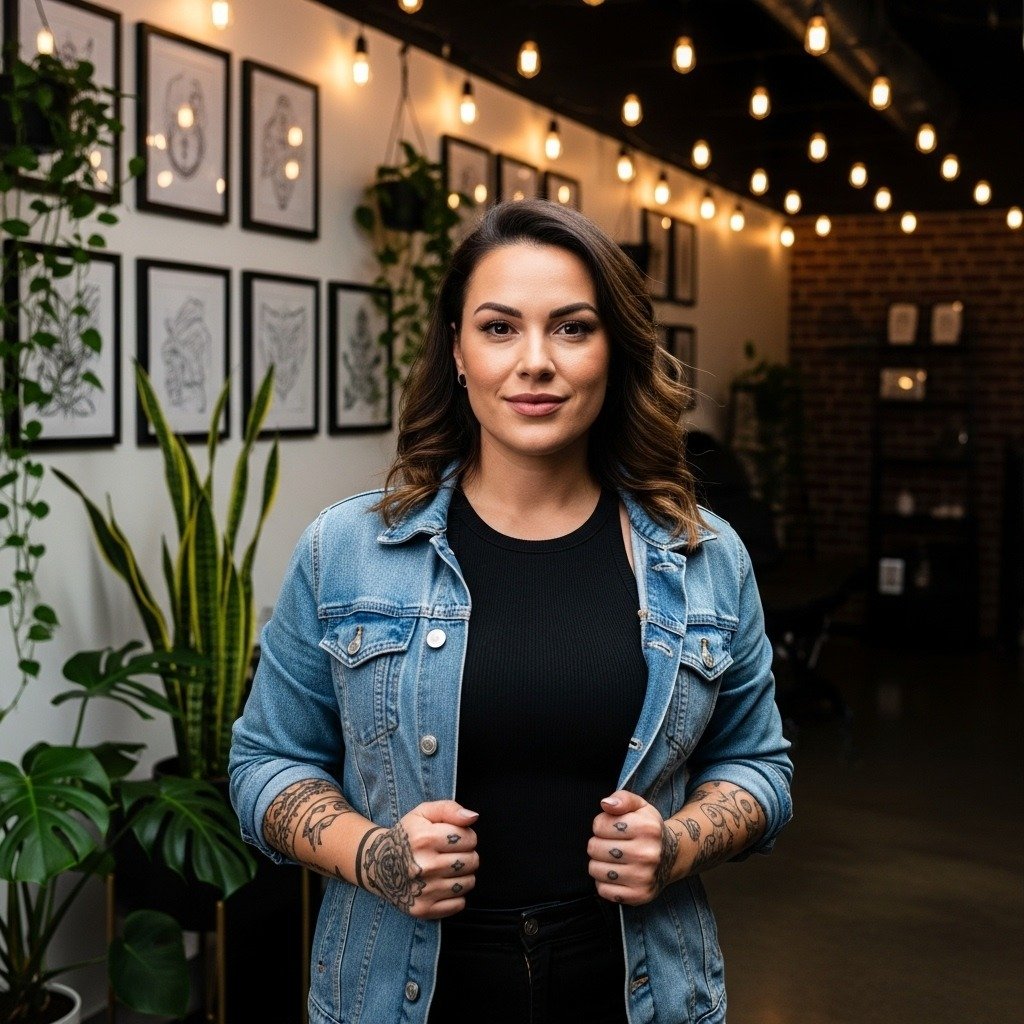
The smallest crescent can look like a whisper on day one and like a soft smudge by year three if it was drawn too fine for the placement. Many beginners chase single-needle crescents because they are Instagram-friendly, but durability depends on canvas and spacing more than on how little ink the design uses. Read on for 25 real-world moon ideas with placement notes, what to tell your artist, and wardrobe tips that actually help the healed result.
1. Fine Line Single-Needle Crescent on the Wrist
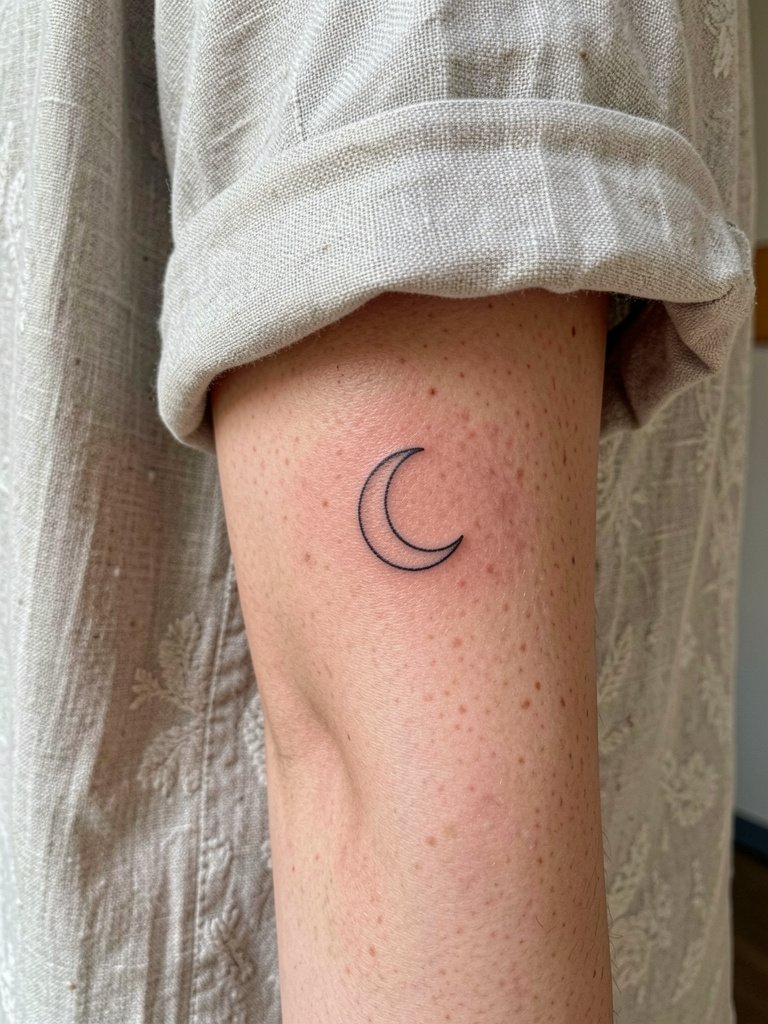
A single-needle crescent reads as a delicate punctuation on the wrist when spaced and sized for the motion of the hand. Recommend this style when you want a subtle marker that still survives daily hand washing. Tell the artist to use a hairline contour but increase line weight by one size from your reference so the linework does not feather at year two. Common mistake is asking for the tiniest possible crescent without accounting for wrist creasing. Expect faster softening where the dorsal wrist creases, and plan a touch-up at the three-year mark if you want crisp hairlines. For showing it off, roll a cuff and stack thin gold bracelets on the opposite wrist, and consider a linen short sleeve shirt women for casual looks.
2. Aligned Moon Phases, Vertical on the Inner Forearm
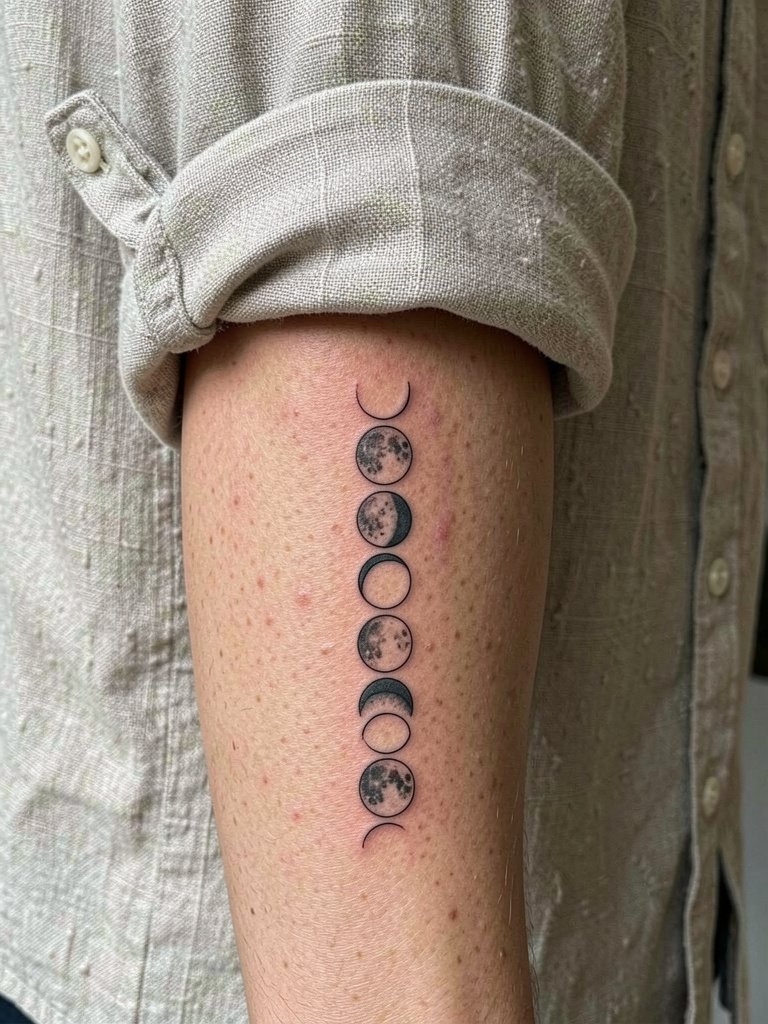
A vertical phase line suits the inner forearm because the long canvas lets each silhouette breathe. I recommend this over a compact cluster when you want readable phases at a glance. Bring two reference images that show the exact spacing at three and five inches so the artist can map the vertical rhythm. A frequent error is cramming phases too close together, which blur into a single shape after a few years. Expect mild fading on the forearm from sun exposure and plan for a touch-up in four to five years for hairline work. For wardrobe, roll your sleeves and wear a linen button down shirt women when you want the line visible in bright light.
3. Dotwork Moon with Crater Texture on the Upper Thigh
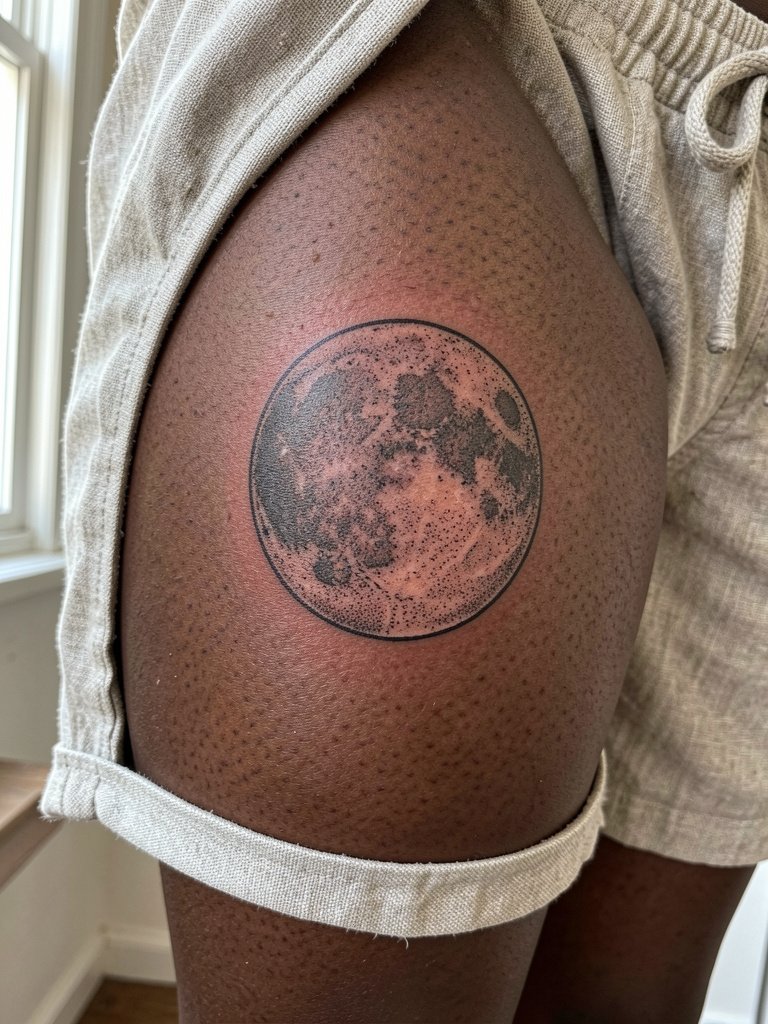
Stipple shading brings lunar topography to life without heavy outlines and it ages predictably when the dots are spaced correctly. Choose dotwork when longevity matters more than a fast session. Specify that you want gradual stipple density transitions and ask the artist how many passes they plan so you know the session time. The controversy here is about speed versus durability. One camp says dotwork is slow and costly because true stippling requires patience from the artist. The other camp argues that the slower build gives a piece that holds up for decades, so the extra time is an investment in longevity. A common mistake is asking for dense stipple too small, which can look muddy after healing. For showing the healed piece, pair cropped linen pants or high-waisted shorts and slip-on sandals, and bring linen drawstring pants women to the appointment so the artist can roll the leg without pressure.
4. Ornamental Moon Mandala on the Sternum
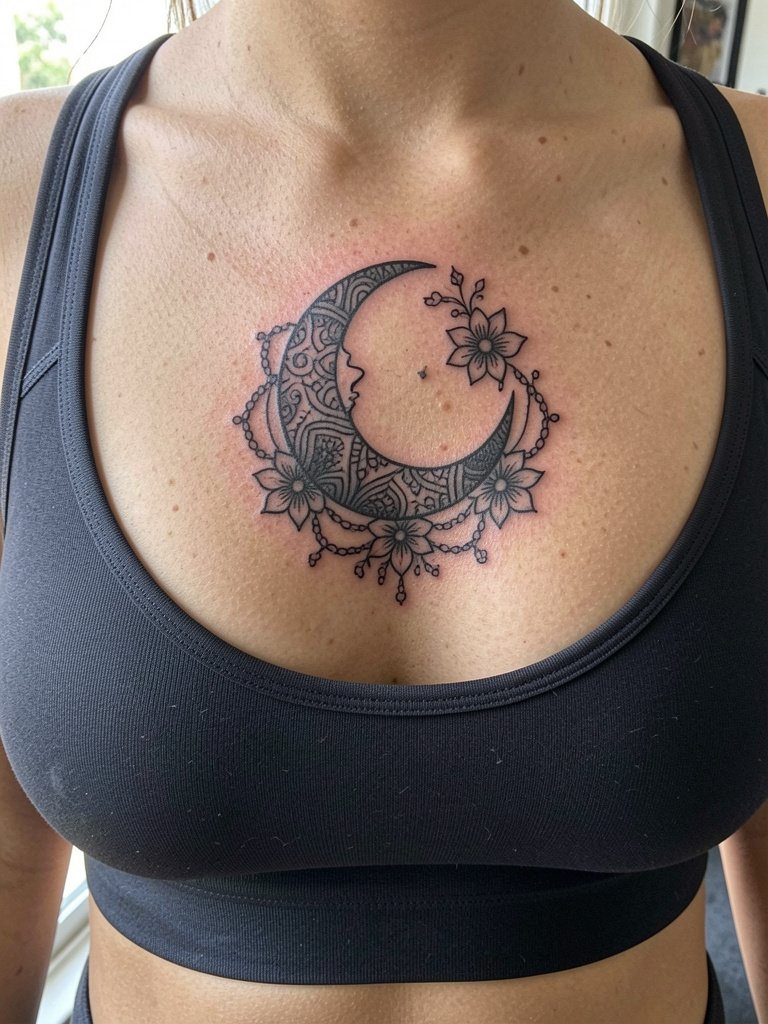
Sternum mandalas read like jewelry when they wrap around the breastbone and use radial symmetry. For this placement, prioritize session pacing and breaks because sternum sessions often require two visits. Tell the artist you want clear negative space in the chain elements so the piece does not bleed together as swelling subsides. Expect higher pain and a longer healing rhythm than on limbs, and schedule a light meal and water before sitting. A sensitivity to origins applies here because mandala and henna motifs draw from specific decorative traditions, so mention you want a respectful ornamental approach rather than direct cultural imitation. To show it off, layer delicate chains over the chest and try a strapless top women for evenings out.
Note: Sternum sessions can be interrupted by chest sensitivity, so expect pauses.
5. Watercolor Moon with Galaxy Splashes on the Lateral Hip
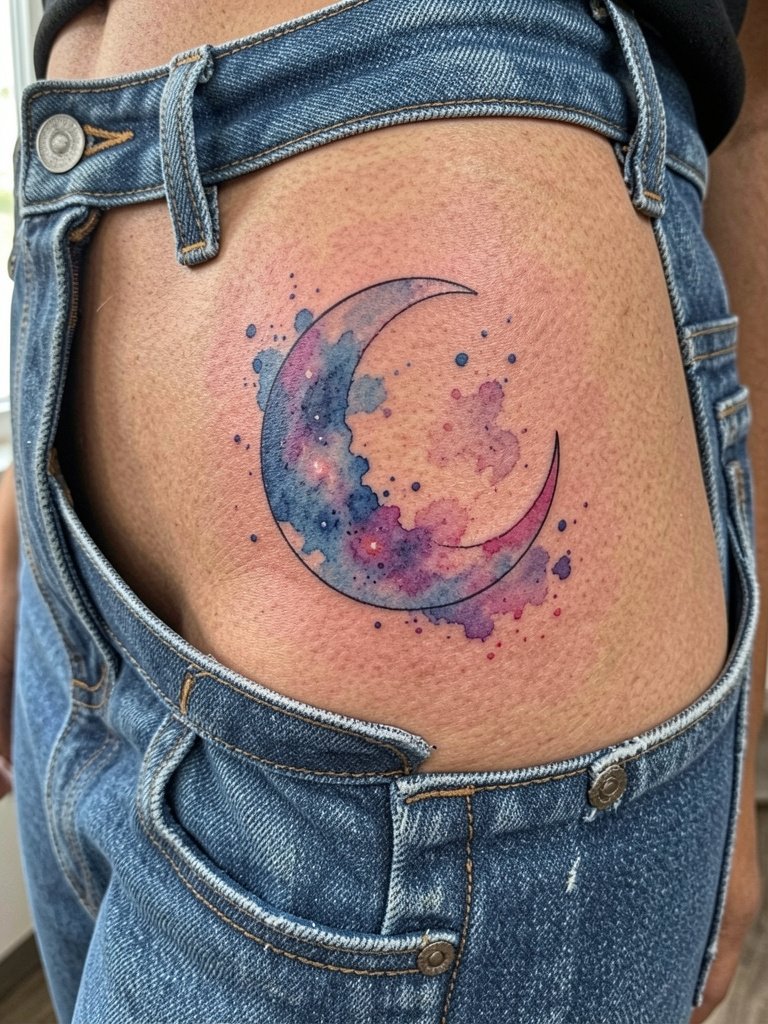
Watercolor moons give a soft, painterly feel but they trade outline protection for luminosity. One camp argues watercolor fades faster than blackwork and needs strict sun protection. The other camp says modern pigments and careful saturation can hold well if the client commits to diligent sunscreen. If you favor longevity, ask the artist how they plan to layer pigment and whether they will add subtle black anchors to protect key shapes. A common mistake is choosing very light washes over high-motion areas where color dissipates faster. For workouts and beach days, slip into low-rise cropped tanks and sheer skirts when you want the hip art visible, and bring high waist cropped tank styles for breeze-friendly looks.
6. Crescent Moon Wrapped in Vines and Roses on the Ribcage
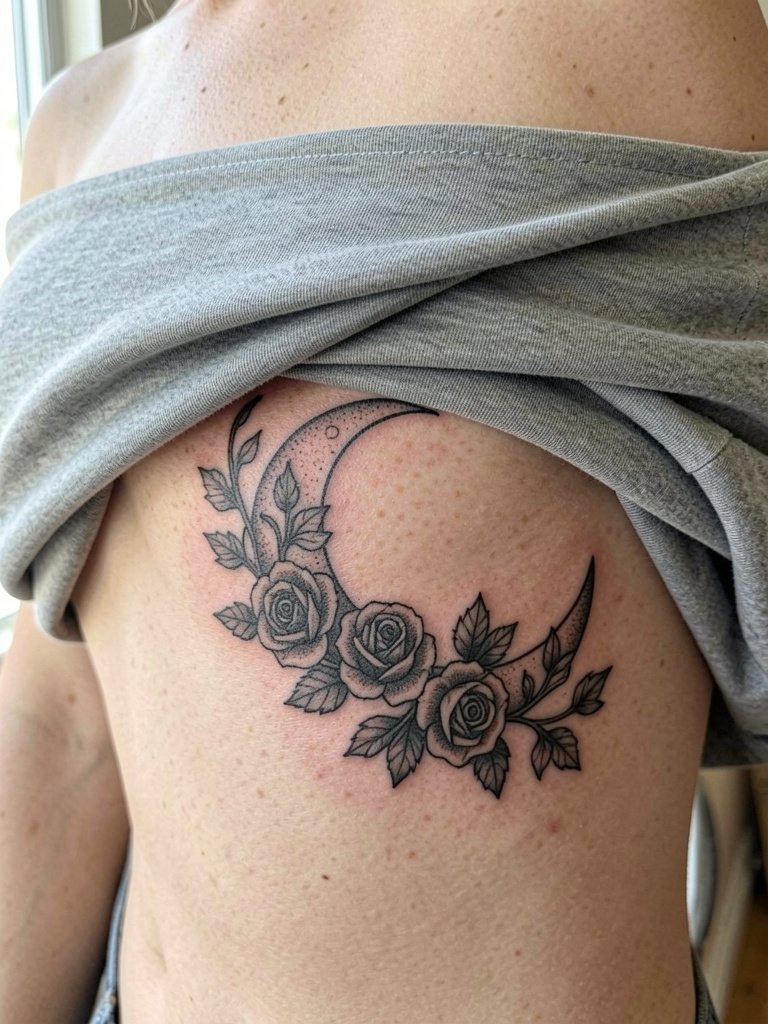
The ribcage is a dramatic canvas, but fine-line choices there spark a real debate. One camp says fine line on ribs blurs within two years because the skin stretches and shifts daily, especially under the breast crease. The other camp maintains that with correct needle depth and slightly wider spacing, fine line settles fine and can show excellent three-year healed results. If you want a filigree crescent here, ask for slightly increased line weight and firm spacing between petals so the design has room to age. Expect higher pain, scheduled breaks, and a recommended budget for a two-session plan. For after-session comfort, choose off-shoulder tops or loose button-down shirts and bring a off shoulder top women to avoid underwire irritation.
Pre-Session Essentials
The wrist pieces and the sternum mandala above raise different prep needs, so pack a few items to smooth the day and the first week.
- Dotwork stipple needle set. Useful background reference for artists who specialize in stippling and for clients who want to compare needle groupings when discussing stipple density.
- Filigree body chain necklace. Mirrors the henna-style chains used in ornamental sternum designs and helps you preview how layered jewelry will sit over a healed mandala.
- Thin protective film roll. Keeps dressings in place during the first few days on high-friction spots like the wrist and ankle.
- Fragrance free gentle body wash. Mild cleansing matters for delicate fine line and watercolor pieces during the healing window.
- Aquaphor healing ointment. A thin layer for the first 48 hours helps retain moisture for fine-line areas without clogging the channels.
7. Minimalist Moon Behind the Ear
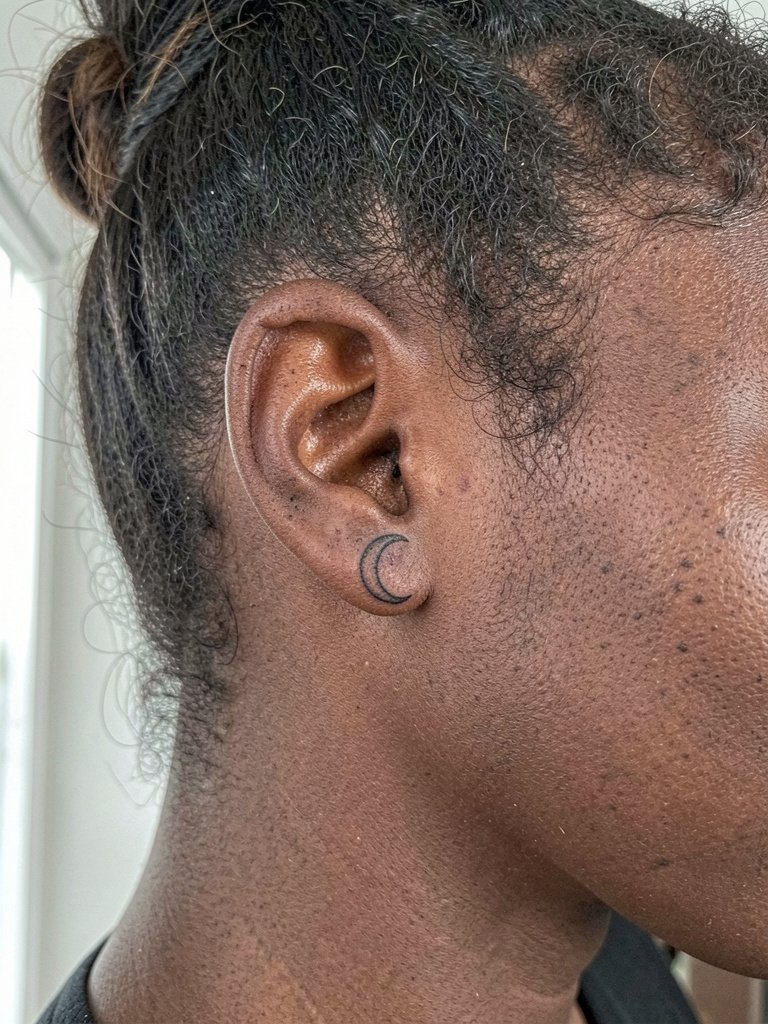
Behind-the-ear pieces work when you want concealment and a discrete symbol. I recommend a slightly bolder hairline than your saved photo because mastoid skin and hair movement soften ultra-fine lines. Bring a reference that shows the exact single-needle thickness you like and point to a healed example so the artist can advise on spacing. Expect this area to lose crispness faster than flat skin, so budget for a touch-up at three years. Short hair or pinned styles frame the spot, and a pair of delicate drop earrings women complements the hidden crescent when you want it visible.
8. Tribal Moon with Geometric Shapes on the Outer Forearm
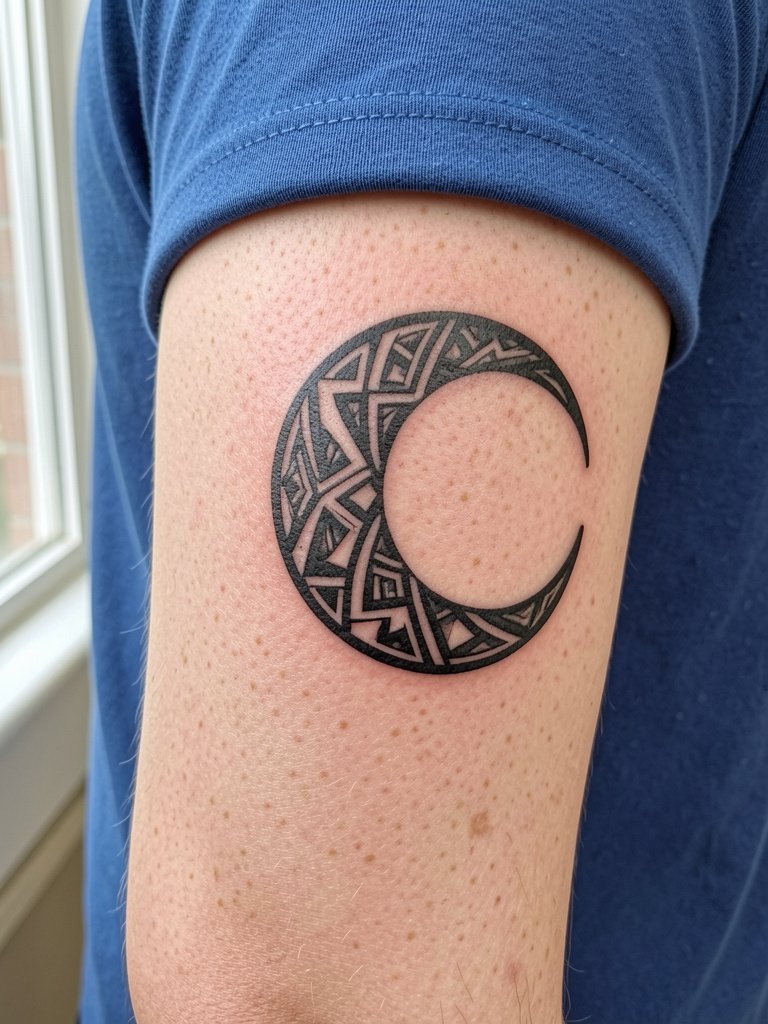
Blackwork moons with geometric contrast hold up well because saturation protects shapes as they age. Choose this when you want a high-impact silhouette that reads from a distance. Specify to the artist the intended viewing scale so the geometry retains its negative-space rhythm after healing. A common mistake is shrinking the composition too small, which loses the bold interplay and risks early blowout. For everyday wear, pair with vintage-cut denim jackets or clean solid tees and try a vintage denim jacket for an elevated casual look.
9. Realistic Full Moon with Craters on the Collarbone
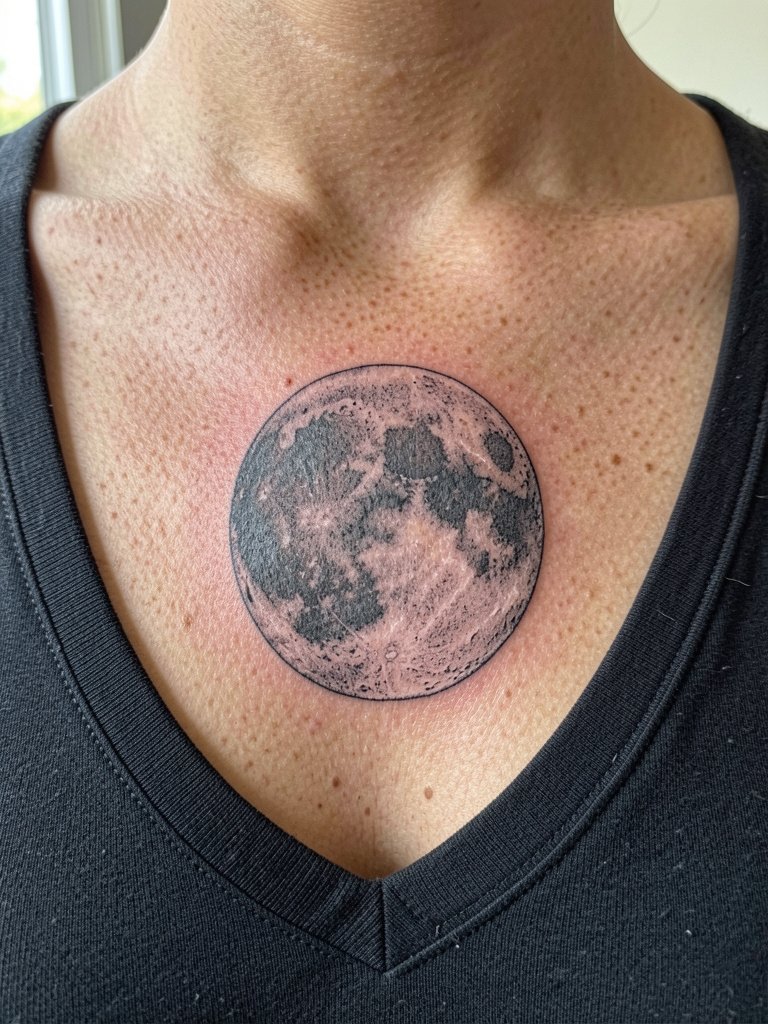
Micro-realism collars require careful shading and strong early contrast so craters still read after a few years. Ask the artist for a healed reference photo on similar skin tone so you know how shading will translate. Many people underestimate glare from necklaces, so plan jewelry that sits below or above the tattoo. A pendant that avoids overlapping the ink keeps the crescent crisp, and pairing with a pendant necklace women prevents unwanted abrasion.
10. Moon and Stars Cluster on the Inner Upper Arm
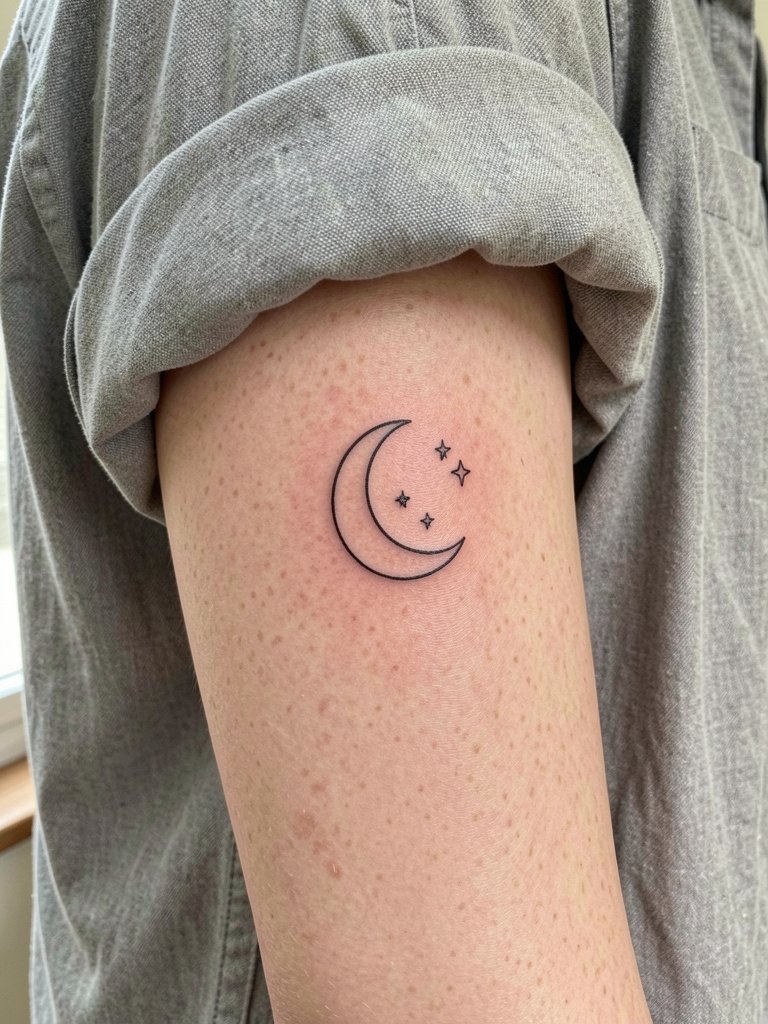
The inner bicep is a discreet spot for a moon-and-stars motif because it can be hidden for work and revealed in warm weather. Recommend slightly wider spacing between stars and moon so small dots do not merge in a few years. A typical session feels moderate because this surface is softer than bone but has less movement than the wrist. For session comfort and access, wear a loose button down shirt you can roll up easily.
11. Wiccan Triple Moon with Baroque Chains on the Lateral Neck
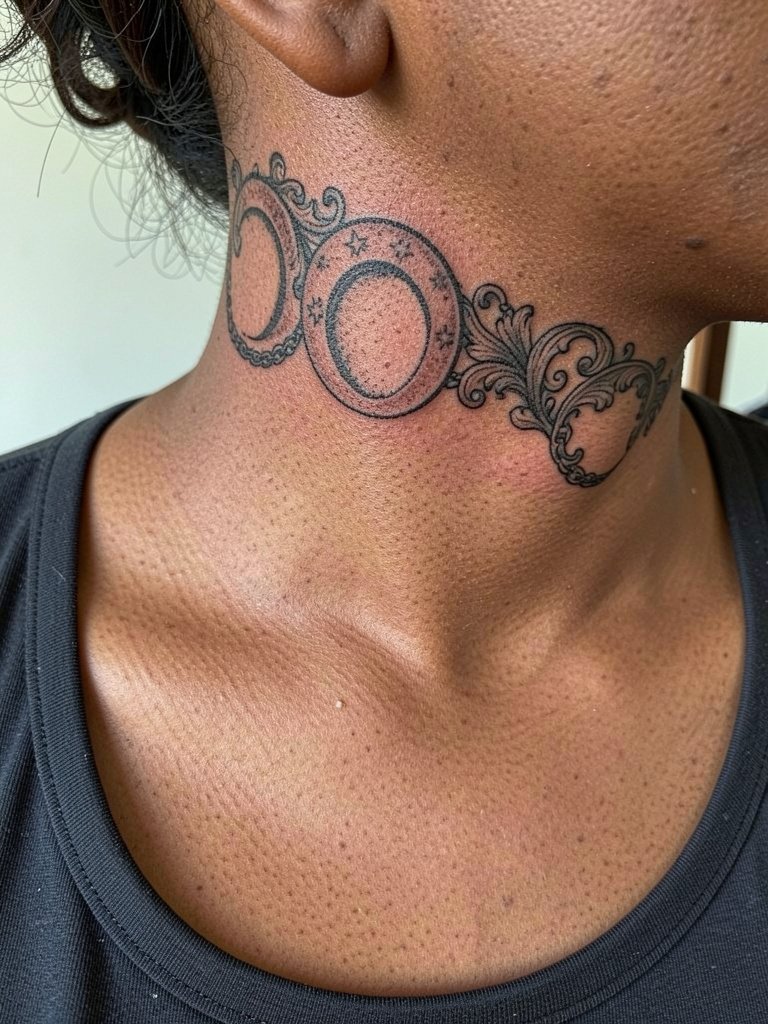
Neck placements show up fast and age under sun and clothing friction. If you want an ornamental triple moon here, ask for chain spacing that keeps negative space around each crescent so the triple motif remains distinct. Note that a handcrafted approach to the chains reduces the chance of muddiness after healing. For show-off outfits, high-neck or off-shoulder tops work, and a delicate necklace women positioned below the tattoo frames but does not overlap the ink.
Note: Neck pieces may require discussions about workplace visibility and piercing interactions.
12. Moon with Lotus and Crystals on the Outer Upper Thigh
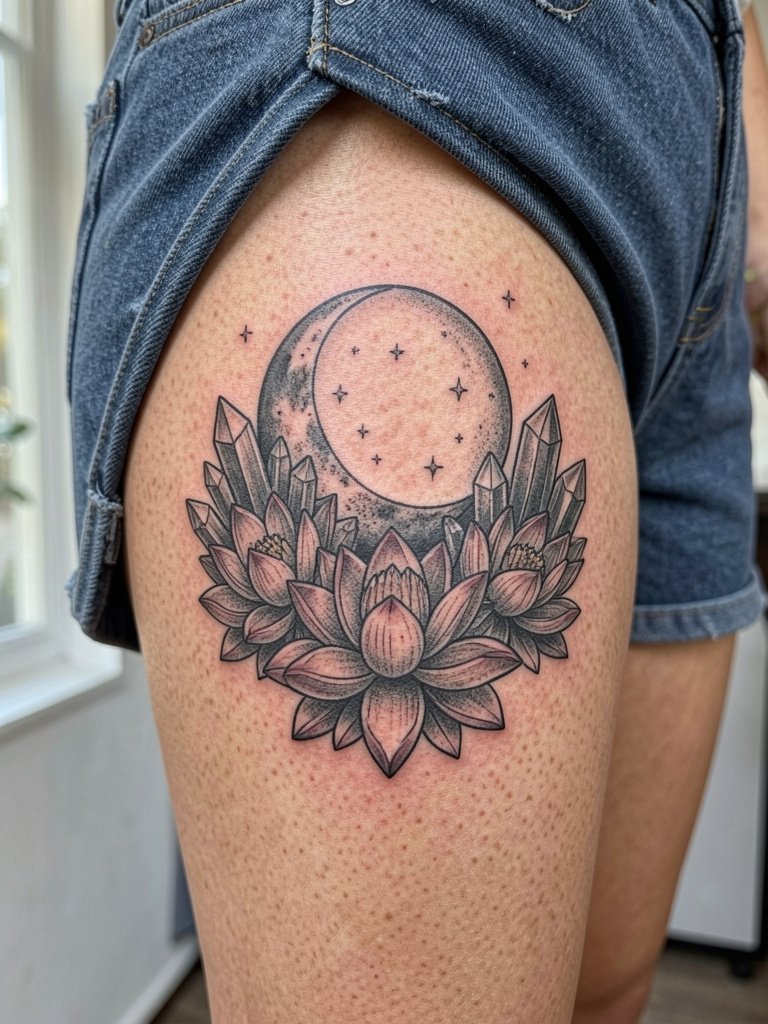
Combining organic forms and crystals around a moon gives the piece context and scale. For a thigh composition request a clear focal moon size and ask how floral elements will read at three and six inches. A common mistake is over-detailing the crystals in a small area, which flattens once healed. Session wear that keeps the site comfortable includes drawstring shorts, and to show the piece choose high-waisted cropped tanks and sandals for summer looks. Consider high waist shorts linen for that breezy pairing.
13. Abstract Curved Moon on the Ankle
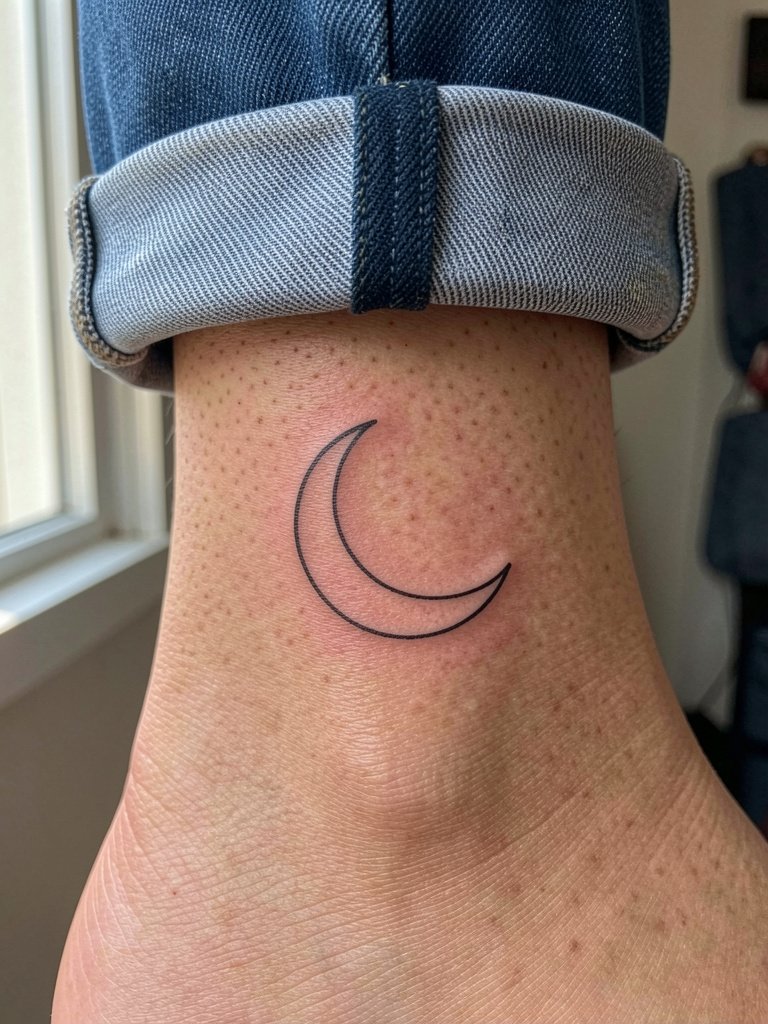
Ankle work faces constant abrasion from socks and shoes so silhouettes must be bold enough to survive. Ask the artist for slightly increased line thickness compared with your reference to compensate for wear from footwear. A common error is placing ultra-fine detail where friction will erase it in months. For showing off, strappy sandals and cropped linen pants frame the piece nicely, and a pair of strappy sandals women highlights the area.
14. Moon Howling Wolf Silhouette on the Lower Back
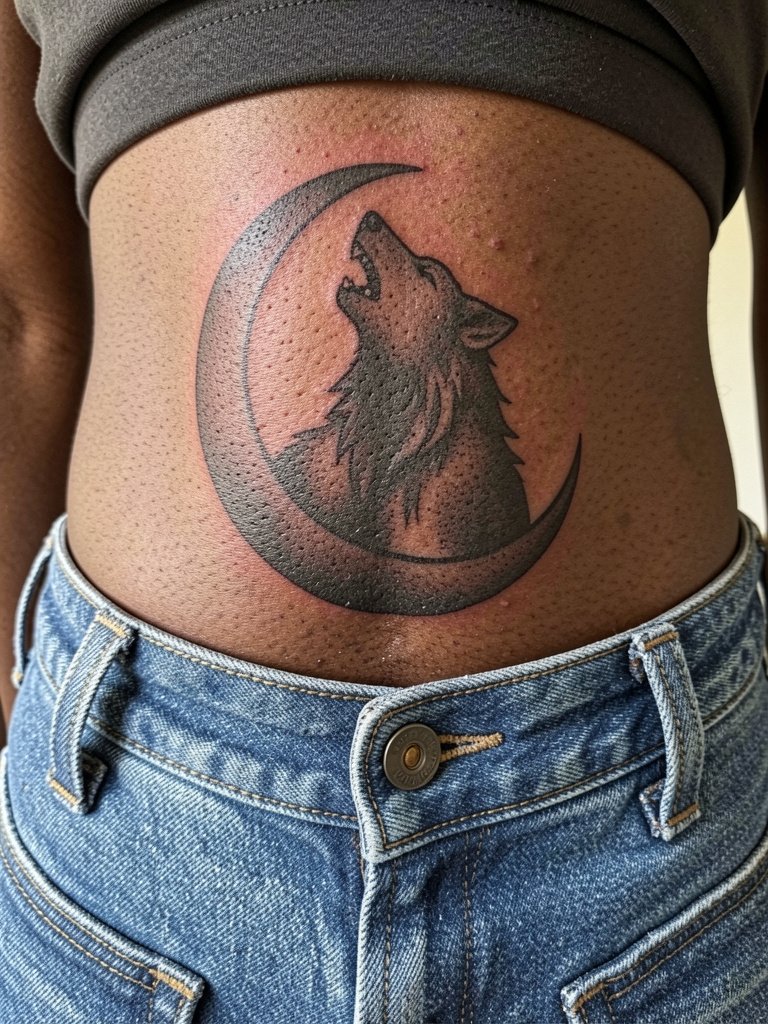
Lower back silhouettes read clean when given strong negative space around the subject. Ask for clear margins between the moon and the wolf silhouette so the forms do not merge with waistband pressure. A common mistake is placing a detailed face where a silhouette would read better. For summer looks, low-rise tops and layered back chains show it off, and consider a back chain necklace when you want to wear open-back garments.
15. Spine Moon Phases Flow from Lumbar to Upper Back
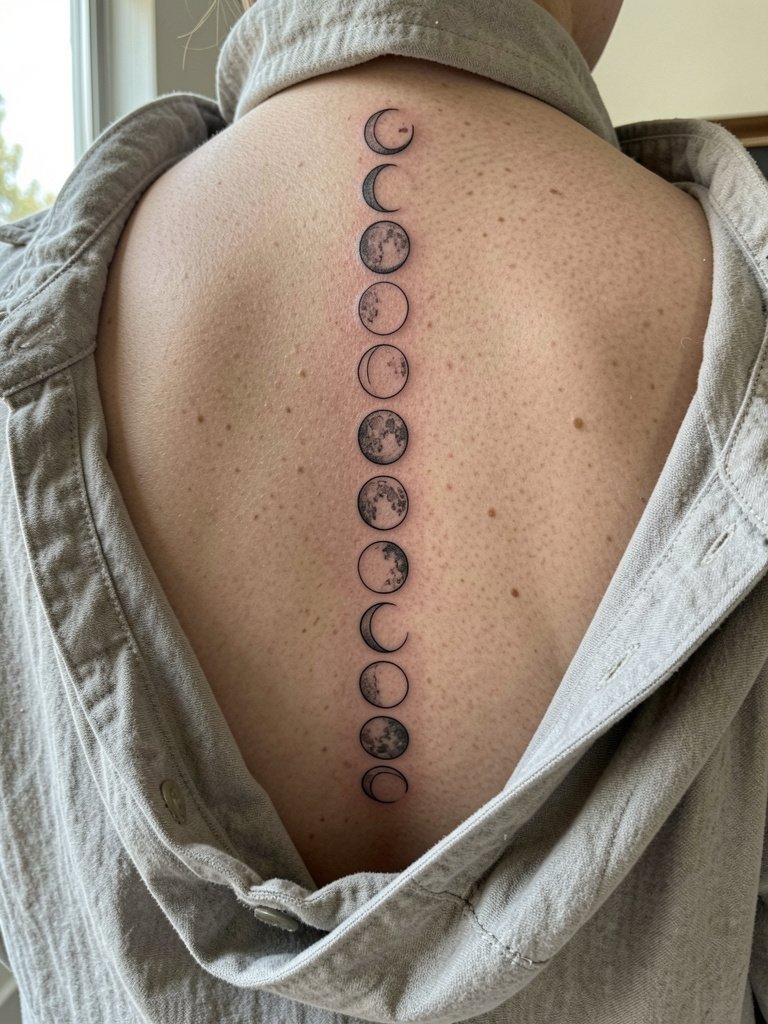
A vertical spine composition emphasizes body movement and reads strong when phases are evenly spaced. Make sure the artist maps negative space between phases to accommodate natural spinal curvature. Expect a longer session if the piece spans multiple vertebrae because line continuity is critical. For showing the sequence in clothing choose low-back or crop tops, and bring a crop top women for the reveal.
16. Micro-Realism Lunar Slice on the Side of the Neck
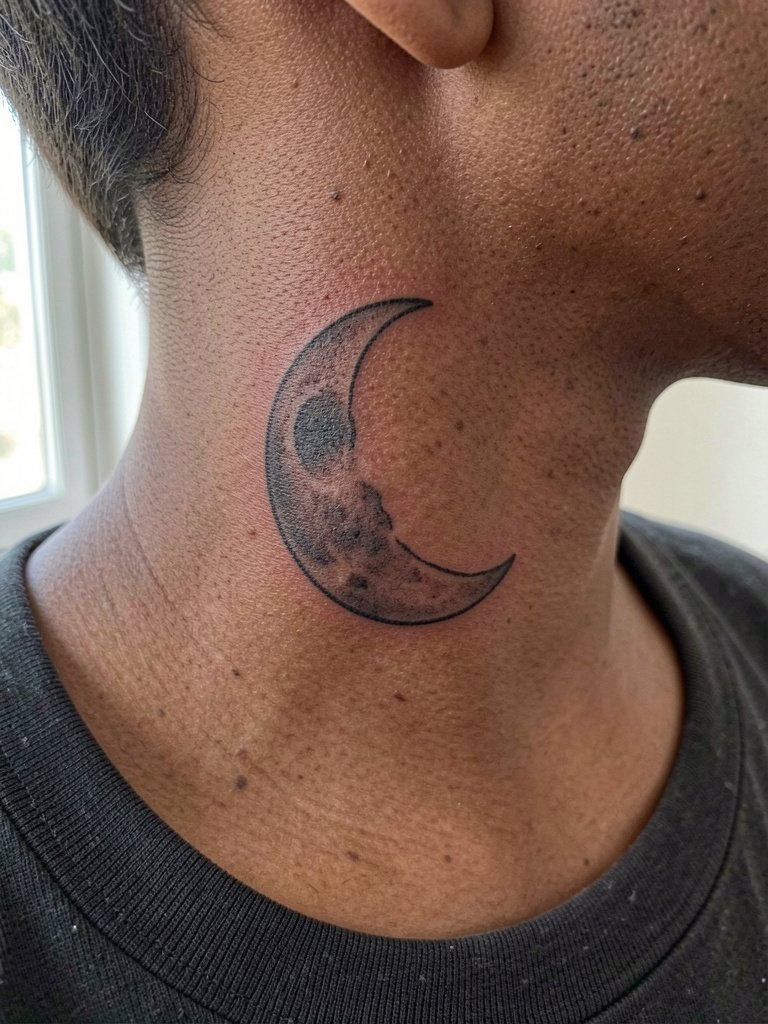
Neck skin shows detail quickly but also exposes ink to sun. If you want micro realism here, request a grading plan that keeps highlight areas minimal to avoid early washout. A common session nuance is brief breaks for comfort because this area has thinner skin. For daytime looks try wide-neck tops and a wide neck top women that reveal the artwork without rubbing.
17. Line-and-Dot Crescent on the Inner Wrist
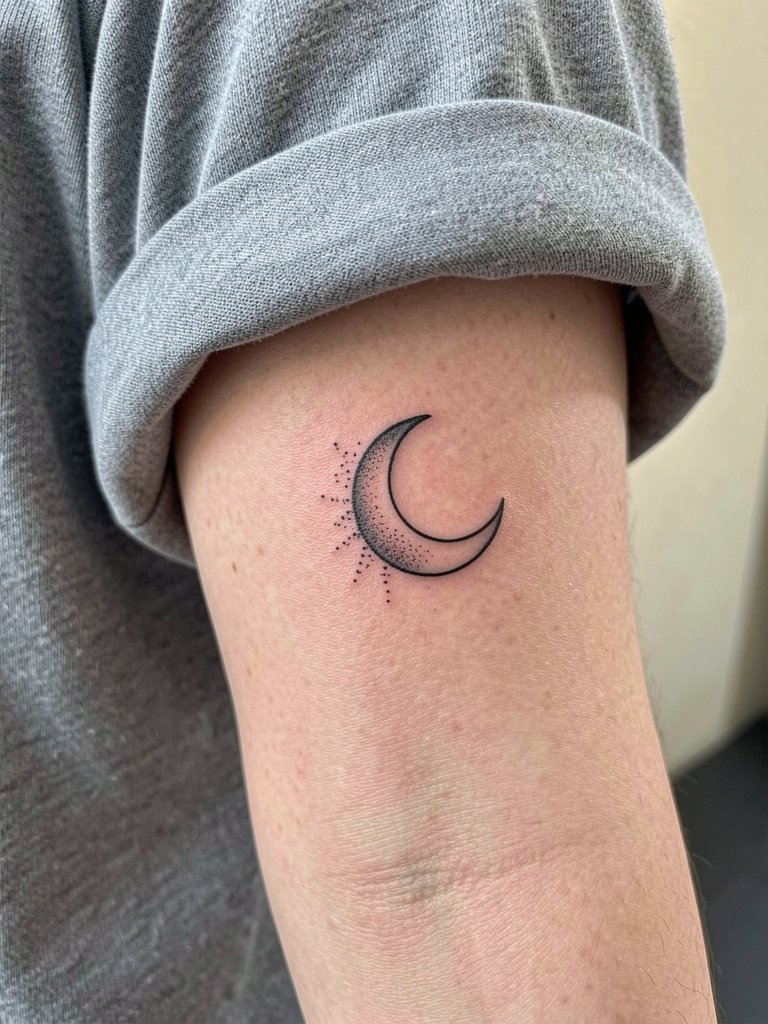
Inner wrist placements can soften quickly because of movement and washing. To keep a dotted halo readable, ask for dot spacing that builds shape rather than solid fills. The common mistake is placing stippling right on a crease where ink loss accelerates. For session wear, choose a short-sleeve shirt the artist can move without tugging, and try rolled cuff shirt looks for photos.
18. Negative-Space Crescent with Stars on the Calf
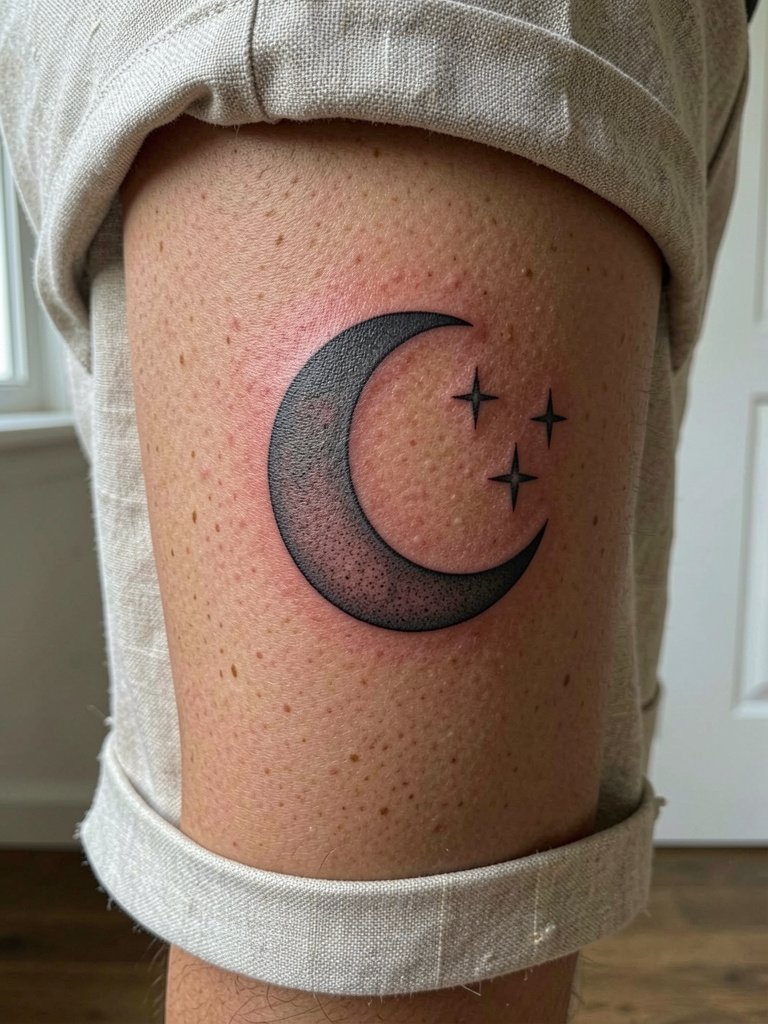
Calf placements tolerate saturation and larger silhouettes, making negative-space techniques read well. Ask the artist to mark the muscle shape so the negative-space crescent curves with the calf. A typical mistake is neglecting how the piece looks in motion when walking. For summer footwear, pair with loafers women or slip-on sandals to keep the tattoo visible.
19. Minimal Script Crescent Near the Collarbone
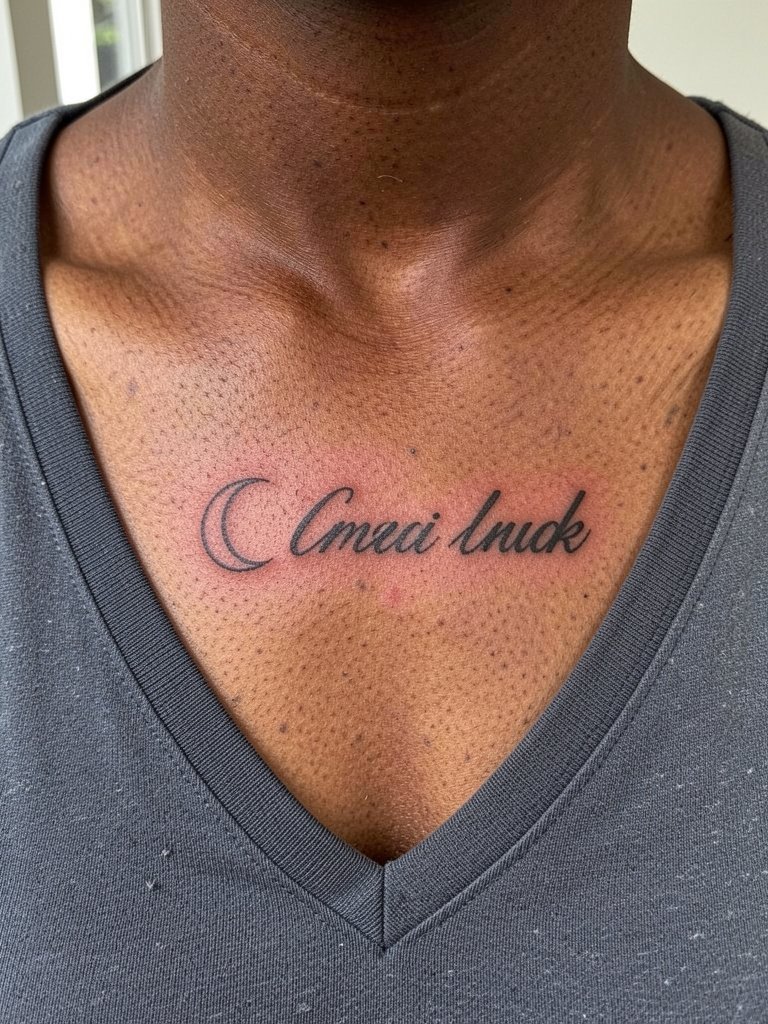
Text near the clavicle needs exact kerning so letters do not blur into shading over time. Provide the exact word and font scale so the artist can render it cleanly in one pass. Lettering mistakes are often about size; too small fonts lose legibility after healing. For everyday wear, V-neck tops and open collars keep the area visible and prevent necklace overlap. Try a v neck top women when you want to reveal the piece.
20. Crescent with Henna-Style Chains on the Sternum Side Lobes
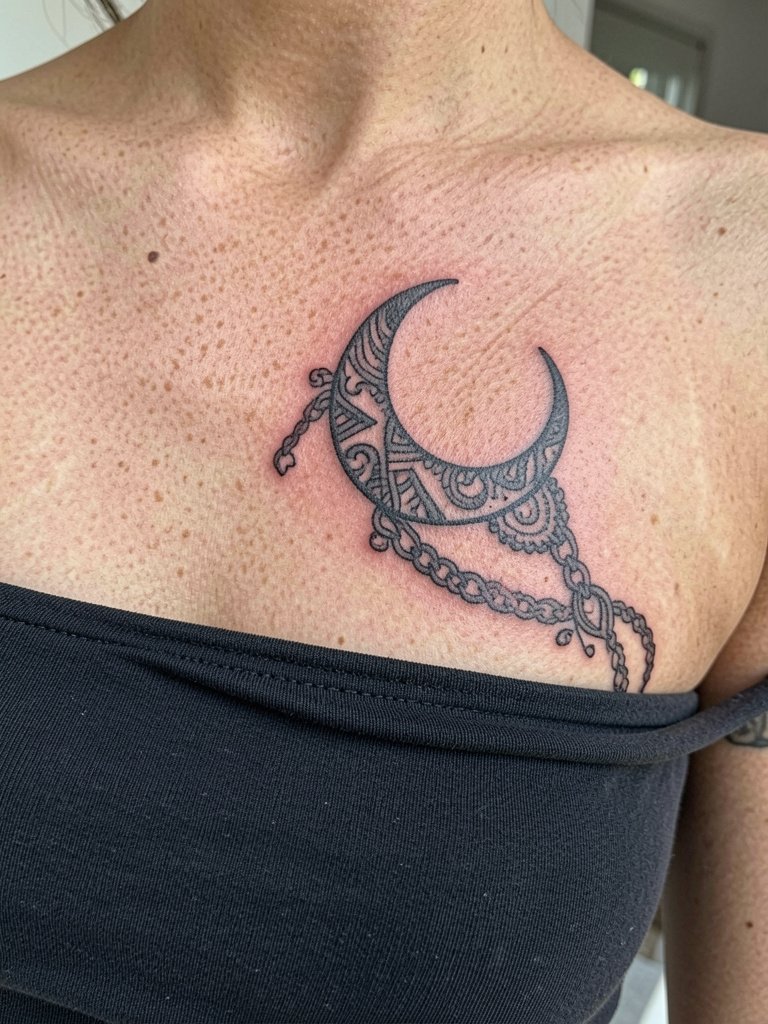
These decorative chains read like temporary jewelry and need clear spacing to hold over time. If the design borrows henna motifs, request an ornamental interpretation rather than a copy of ceremonial patterns. Common mistakes include over-detailing tiny chain links that fill in as they heal. For session wear avoid underwire bras and bring a strapless option, and for show-off pairing try layered delicate chains with a layered delicate chain necklace.
21. Geometric Crescent with Animal Elements on the Shoulder Blade
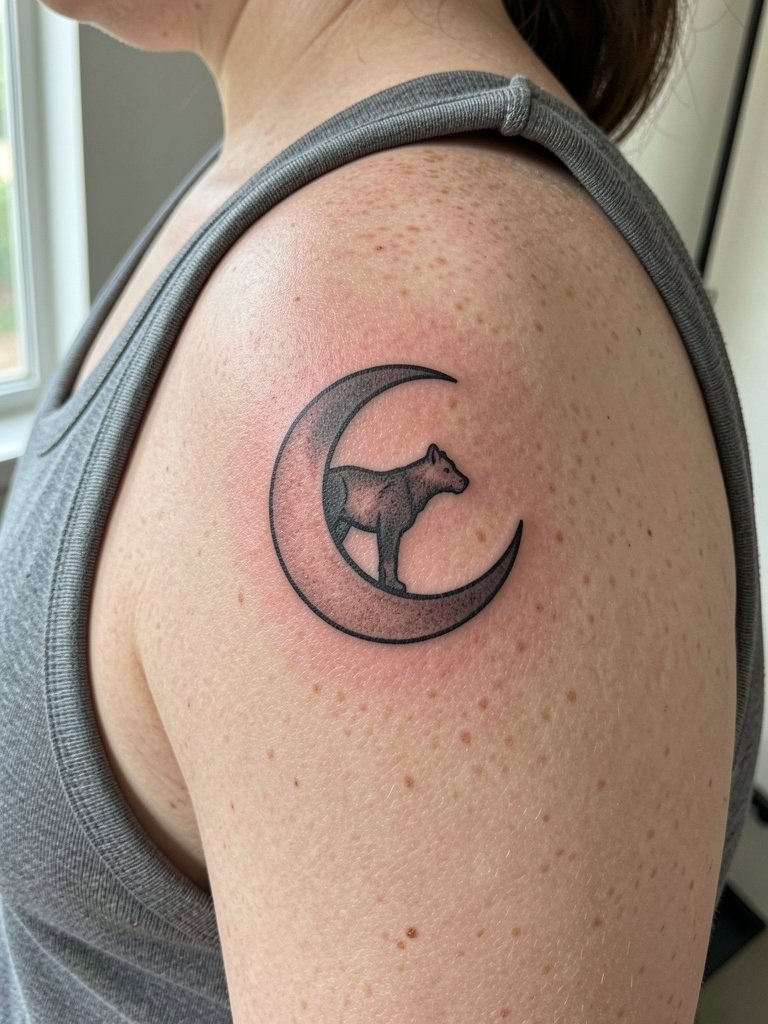
Shoulder blade pieces drape with clothing and movement, so balance the geometric frame so the animal silhouette stays central. Ask the artist how the piece reads sitting versus standing so you avoid an off-center focal point. A common mistake is putting too much tiny detail where stretching will soften it. For coverage and showing off, sleeveless tees and denim vests work well, and you might pair with a sleeveless top women.
22. Small Crescent with Constellation Linework on the Upper Arm
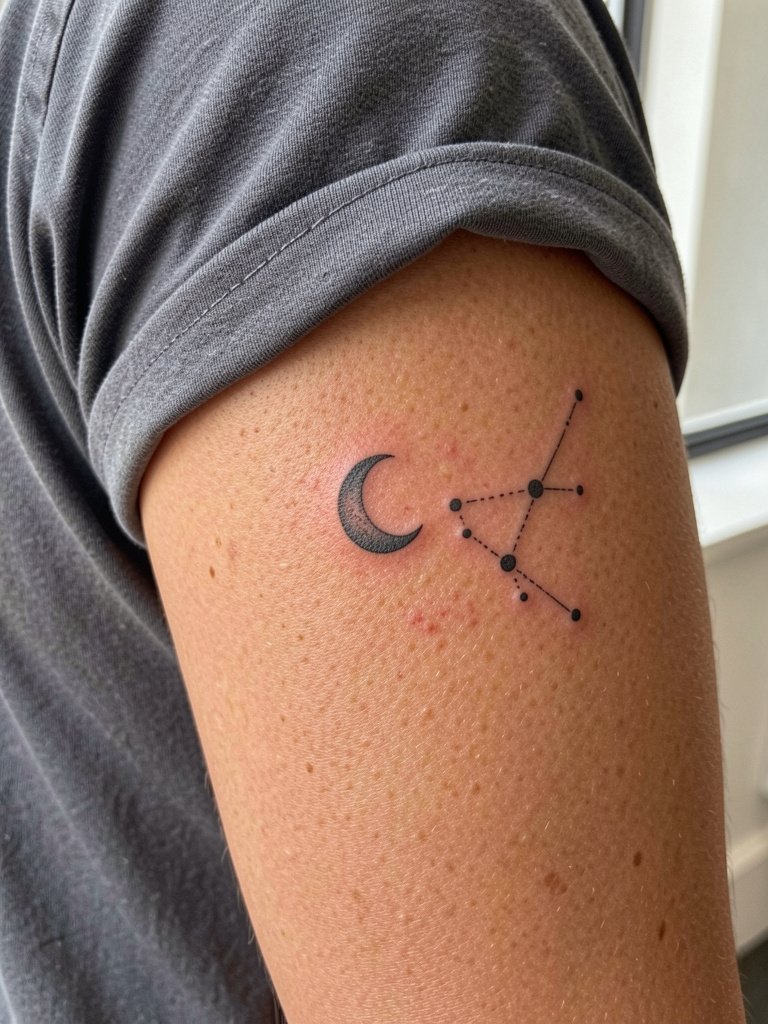
Upper-arm constellations are forgiving for detail because the surface is broad and stable. Specify whether you want solid dots or micro-stippling in the stars so the artist can plan needle changes. A typical error is an overly thin connector line between stars that may blur; ask for slightly heavier connectors than your online reference. For casual display, solid color tees and rolled sleeves keep the piece visible.
23. Blackwork Lunar Cycle Half-Sleeve on the Outer Arm
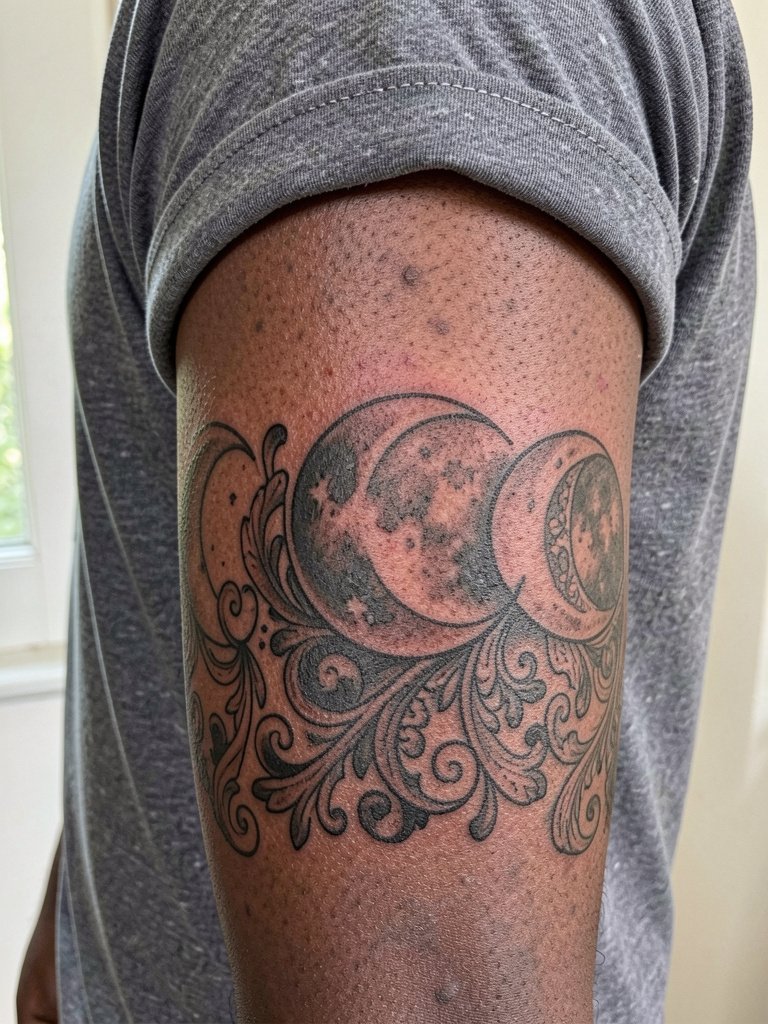
Half-sleeves need consistent saturation so large blackwork blocks do not heal patchy. Discuss session pacing and check healed photos of large black fills by the artist to judge coverage. A frequent mistake is rushing fill passes which leads to uneven saturation and longer touch-up cycles. For wardrobe, solid dark tees and a vintage denim jacket complement bold black silhouettes.
24. Crescent Anchored by Whip Shading on the Rib Side
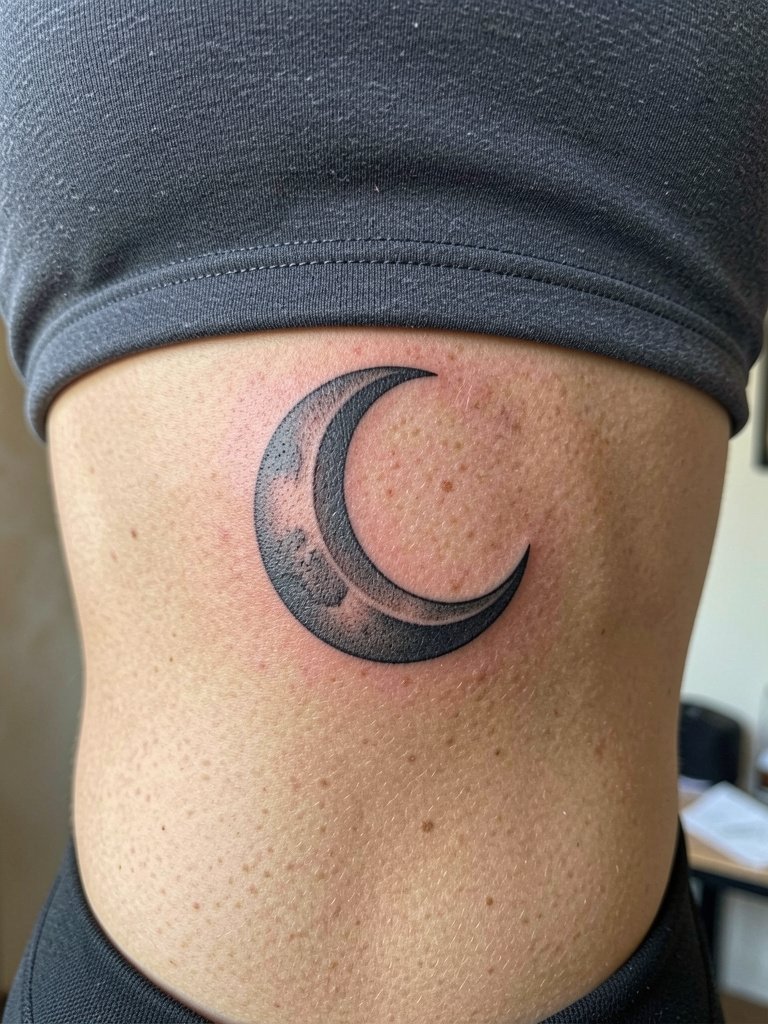
Whip shading creates soft gradients that flatter curved rib anatomy but it also demands experienced layering to avoid blotchiness. Request test patches or healed examples of whip shading on ribs so you can gauge how the tonality will age. Because of the fine-line-on-rib controversy, be explicit with spacing and ask the artist how many passes they intend to use. Expect more breaks in the session and a possible second appointment for touch-up. Off-shoulder tops and flowy skirts show the placement well, and wearing flowy skirt women helps frame it when you want to display the piece.
25. Lunar Minimalist Ring on the Finger-side of the Thumb
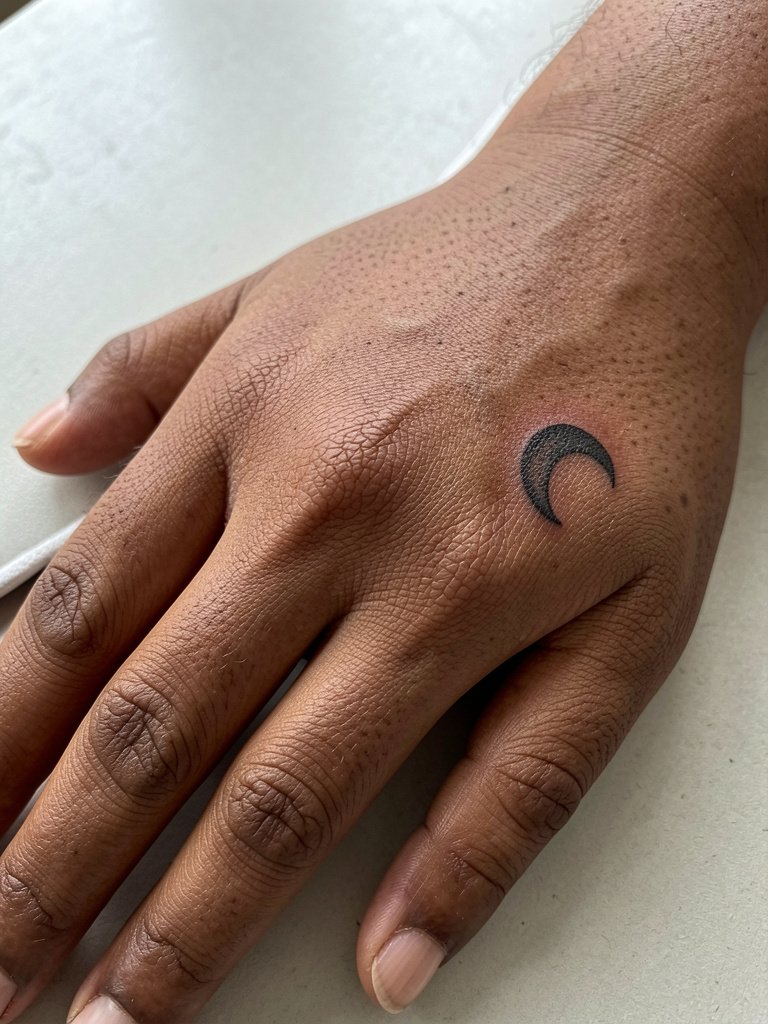
Finger and thumb placements are tempting but fade quickly because of constant friction and hand washing. If you choose a thumb-side crescent, request bolder line weight and anticipate annual touch-ups rather than a multi-year timeline. The single mistake is asking for ultra-fine detail on a motion-heavy surface. For the session, avoid ring and tight-wrist jewelry for two weeks and plan to protect the area during heavy hand work.
Frequently Asked Questions
Q: How long will a fine-line moon on the wrist or behind the ear stay crisp?
A: Expect a fine-line crescent on the wrist or behind the ear to soften in three to five years. Wrist pieces face daily abrasion and constant movement, which thins hairlines faster, and mastoid-area pieces can blur where hair follicles and friction meet. Plan a touch-up around year three to restore crispness.
Q: Watercolor versus dotwork for a moon—which should I choose for longevity?
A: If longevity is the priority pick dotwork stippling because packed dots and careful spacing tend to hold up longer than outline-free watercolor washes. That said watercolor offers a look you cannot get with blackwork, and if you commit to daily SPF 50+ protection and avoid long sun exposure it can last several years with good care.
Q: Where can I find healed portfolio examples and local artists without naming them directly?
A: Search hashtags like #finelinemoon, #dotworkmoon, and #moonphases on Instagram and TikTok while applying your city filter. Tattoodo and Inked App let you search by keyword for healed work, and Reddit communities such as r/tattoos and r/finelinetattoos surface peer recommendations and healed photos across skin tones.
Q: What should I wear to my appointment for a sternum, rib, or hip moon piece?
A: For sternum or rib sessions wear a strapless or loose button-down so the artist can access the chest without underwire interference. For hip and thigh work choose loose drawstring shorts or low-rise pants so the artist can move fabric without stretching the skin. Bringing session-appropriate clothing makes the appointment smoother.
Q: How do touch-ups work for dotwork and blackwork moon pieces?
A: Dotwork and saturated blackwork may need touch-ups at different intervals. Dotwork can hold for decades but often benefits from a five- to seven-year single-session refresh to restore contrast. Solid black fills may need edge cleanup sooner if coverage was uneven, typically two to five years depending on sun exposure and friction.