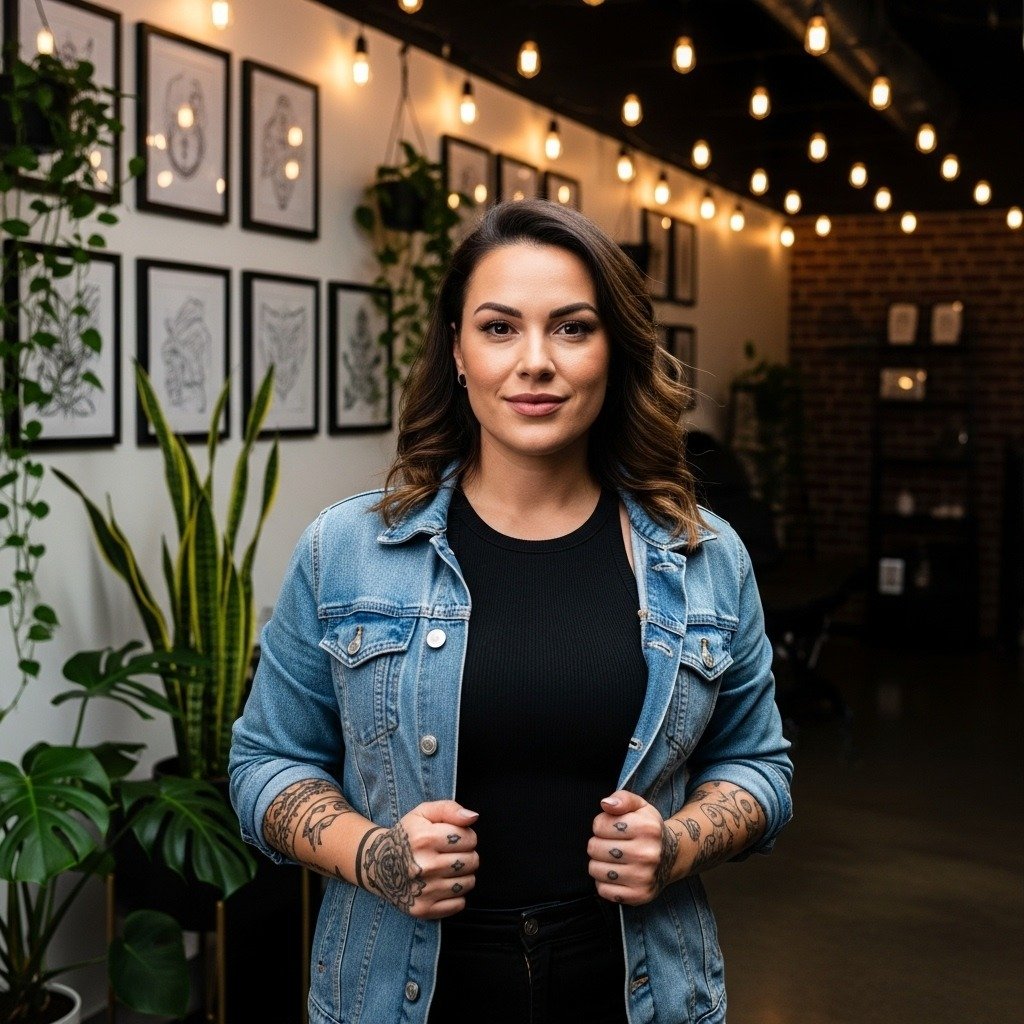
Coordinates tattoos look simple but they force three decisions that determine how they heal and read over time. Pick a placement that suits movement and clothing, choose a line weight that resists blur, and lock down the exact hemisphere and punctuation on a printed map before the needle touches skin. The list that follows balances small styling moves with practical consultation notes so the numbers keep meaning for years.
1. Minimalist Numerical Script on Inner Forearm
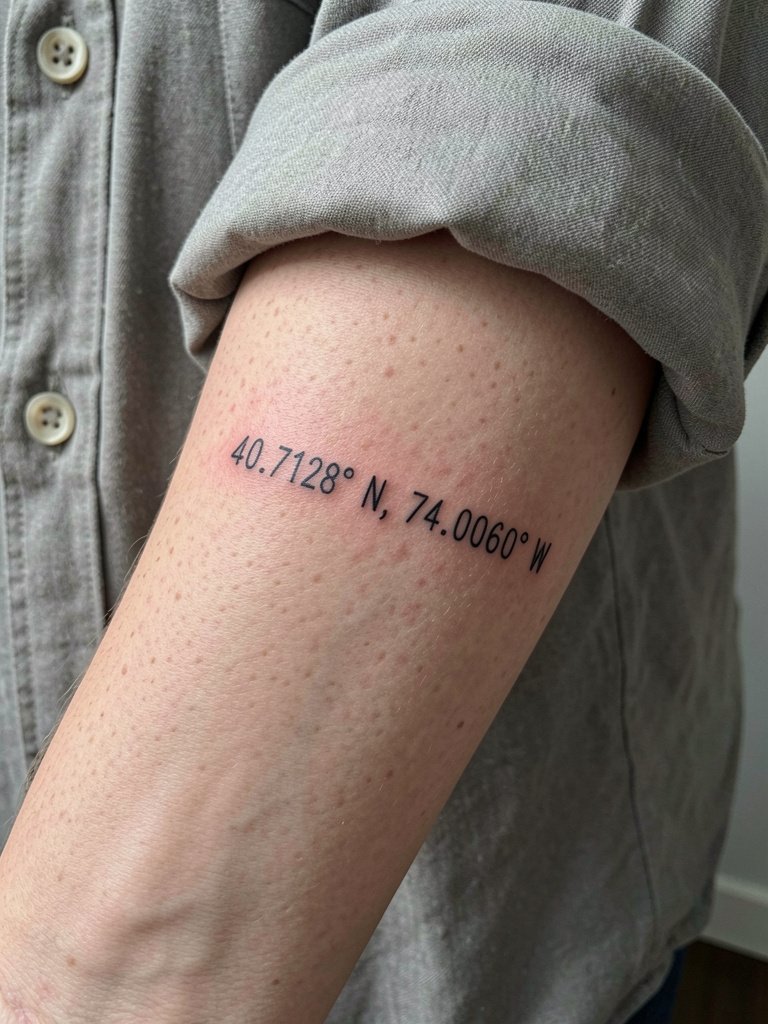
This is the default for a first tattoo because it reads like a tidy label and fits many placements. I recommend sizes at or above 1.5 inches so the numerals have room to breathe and not merge into one another by year two. Bring a printed screenshot of your map with the exact characters and punctuation so the stencil matches the coordinates you expect. A common mistake is asking for single-needle hairline numbers and then needing a touch-up inside a year. For the session wear, roll up a linen button-down shirt so the artist can work without compression on fresh skin. Expect a quick 20 to 40 minute session and a likely touch-up at 6 to 12 months.
2. Script with Anchor Map Dot on Lateral Hip Bone
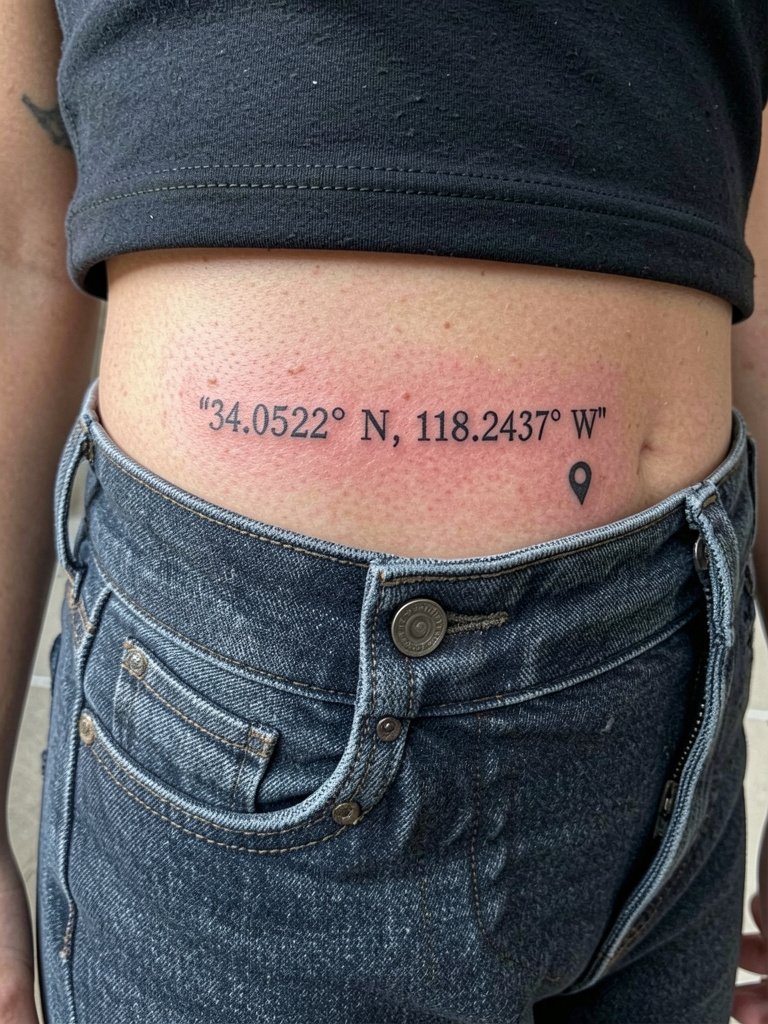
This pairing gives numbers immediate context without spelling out the place. The lateral hip tolerates small detail well because it does not face constant rubbing, but keep the piece at least 1.5 inches wide to avoid fading of fine numerals. Tell the artist where the dot sits relative to the numbers so it does not crowd the glyphs. Wear low-rise pants for the session so the area is accessible and comfortable. Many people pick the hip to keep the design private and visible only in certain outfits. Expect mild sensitivity and a short single-session booking.
3. Coordinates with Subtle Compass Rose on Inner Upper Arm
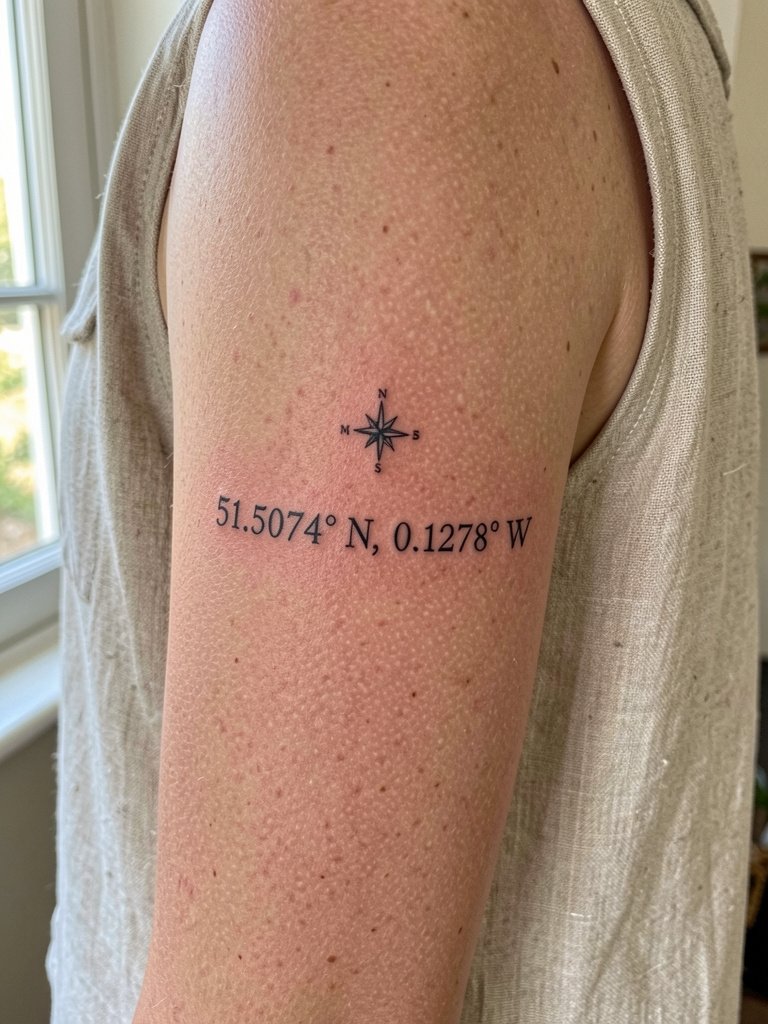
The compass adds a thematic layer about direction without adding size. One camp in the community insists on heavier lineweight for numbers to avoid blur over time. The opposing camp prefers single-needle fine line because it keeps the design airy and journal-like. If you favor the fine look, ask for slightly wider spacing between characters and a slightly heavier compass outline so the symbol keeps contrast as the numbers soften. For showing it off, sleeveless tops in neutral tones pair well, and you can link a sleeveless linen top to give the area natural exposure. Expect a 30 to 50 minute session and plan a touch-up if the numerals feel weak at the six month check.
4. Double-Row Coordinates with Dot Separator at Nape
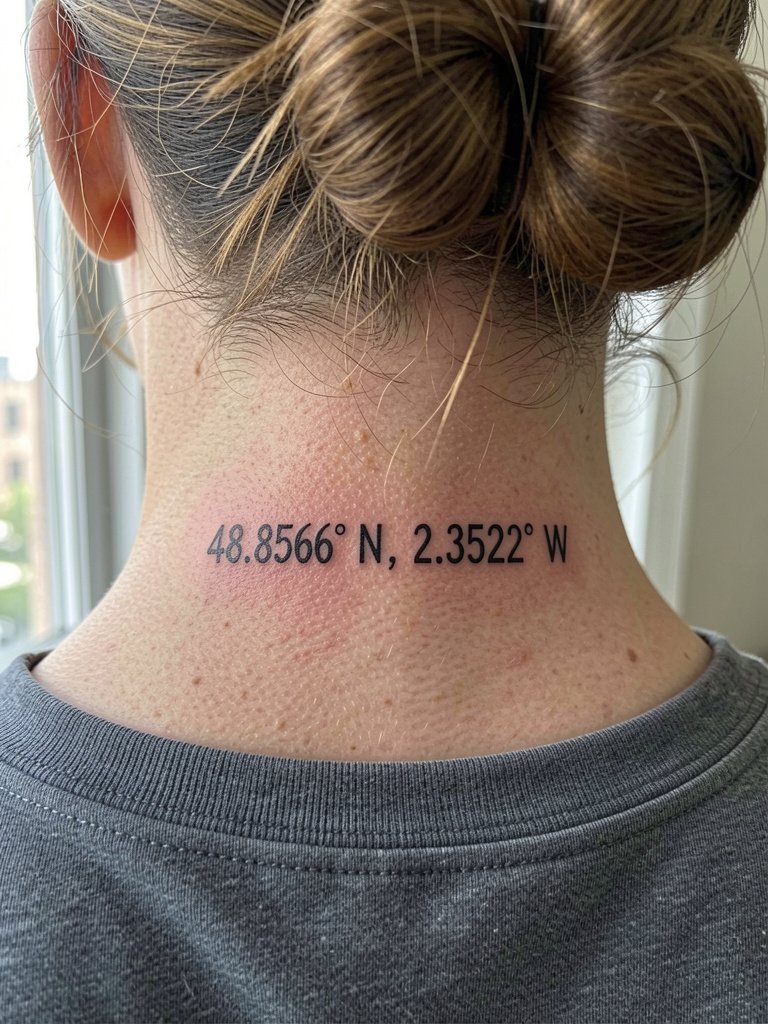
Nape placements read like a private label you only reveal when you wear your hair up. The nape tolerates tidy typography but can be sensitive to sun and shampoo friction; plan to protect the area while it heals. A frequent mistake is making the characters too tight for the small canvas. Bring the exact punctuation you want printed on a stencil to verify everything lines up. The session is short but precise. If you plan to show it off occasionally, use hair clips that keep the nape unobstructed during photos.
5. Coordinates with Abstract Landscape Line on Sternum
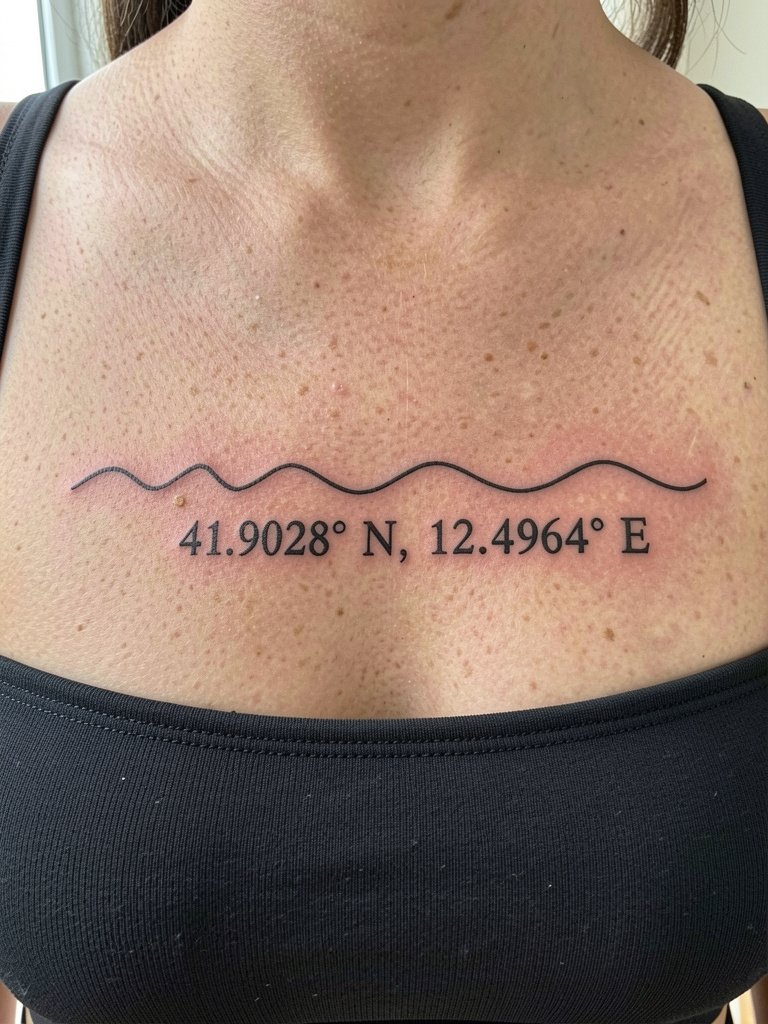
Sternum pieces let the coordinates become part of a larger composition that reads like an emotion, not raw data. Note that the sternum can be a higher pain zone for many. A common aging pattern is that extremely thin horizon lines lose continuity where the chest skin stretches. Ask for slightly heavier linework in the horizon and a compact set of numbers so the whole piece heals as a cohesive unit. For session comfort, wear a strapless or wide V-neck top you can remove without disturbing the area. This design takes longer than a forearm typographic piece but rewards you with a central visual anchor.
6. Hand-Lettered "Found" Coordinates on Inner Forearm
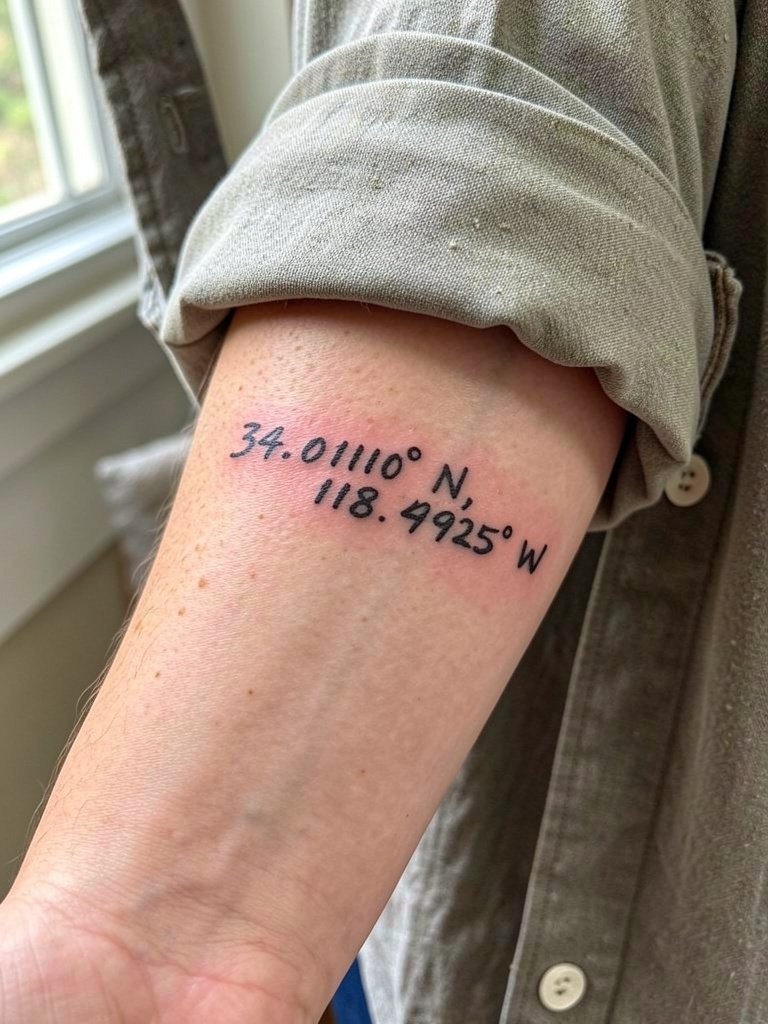
Hand-lettered coordinates feel like a note you carried in your pocket. Make sure the artist reproduces the exact swoops and baseline of the handwriting you prefer by bringing high-quality reference on paper. The inner forearm is a great canvas for readable script but avoid single-needle runs for numerals. For session wear, bring a loose button-down that you can roll without stressing fresh ink. Expect a 30 to 45 minute appointment and a likely six-month check for line clarity.
Session Day Essentials
These first six options include several small placements where aftercare and session prep matter, especially for fine numerals and inner-arm work.
- Hush Tattoo Balm. A thinner, non-greasy balm that helps thin linework settle without the heavy occlusion that can cause softening.
- Ink Rivaled Tattoo Balm. Aloe-based option noted for being gentler on sensitive areas like wrists and inner arms.
- TattooGlo Gel Aftercare. Gel texture avoids pore-clogging while keeping fine numerals moisturized during the first week.
- Lubriderm Fragrance-Free Lotion. Good for later stage moisturizing after scabs slough and for maintaining healed saturation.
- Aquaphor Healing Ointment. A mainstream initial option for locking in moisture during the first few days, helpful if your artist recommends an occlusive.
7. Coordinates with Tiny Heart Pin on Collarbone
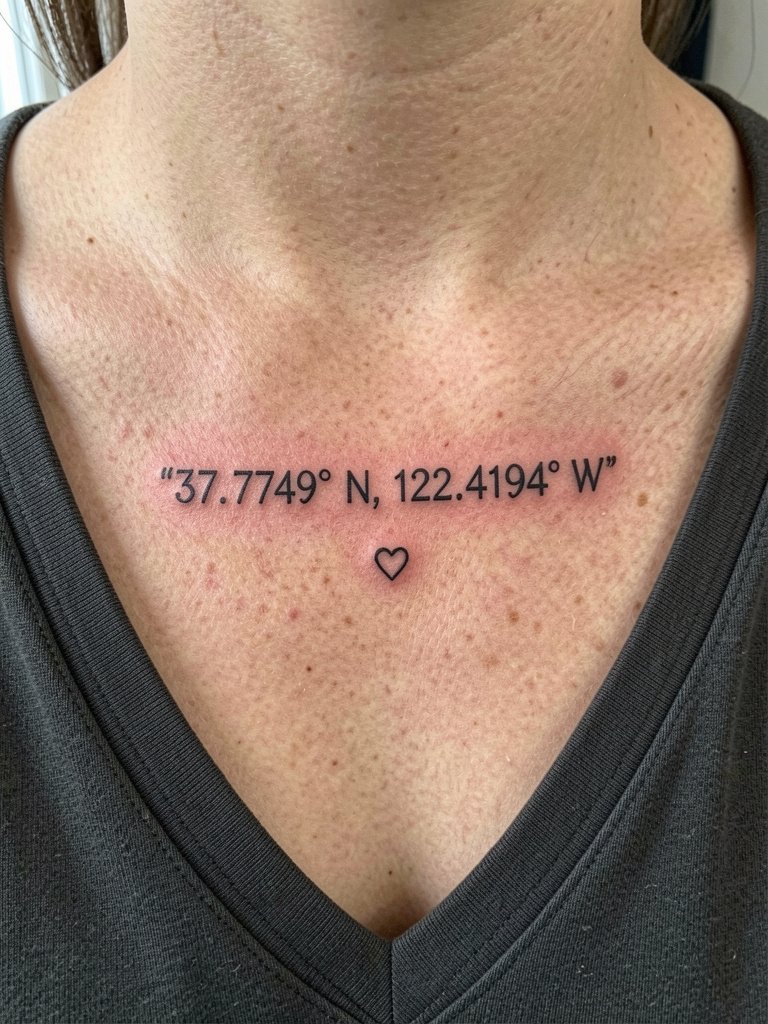
A tiny heart pin signals romance while keeping the idea private enough for daily wear. The collarbone is often photographed, so consider contrast on medium and darker skin by having the artist deepen the heart fill. Discuss exact placement so it aligns with bone contours and avoids a visually tilted number row. For outfits, off-the-shoulder or V-neck tops frame this area well, and I like pairing it with a thin gold chain necklace so the pieces relate visually. Sessions are brief and the healing window responds well to light sun avoidance.
8. Coordinates with Faint Compass Arrow on Inner Upper Arm
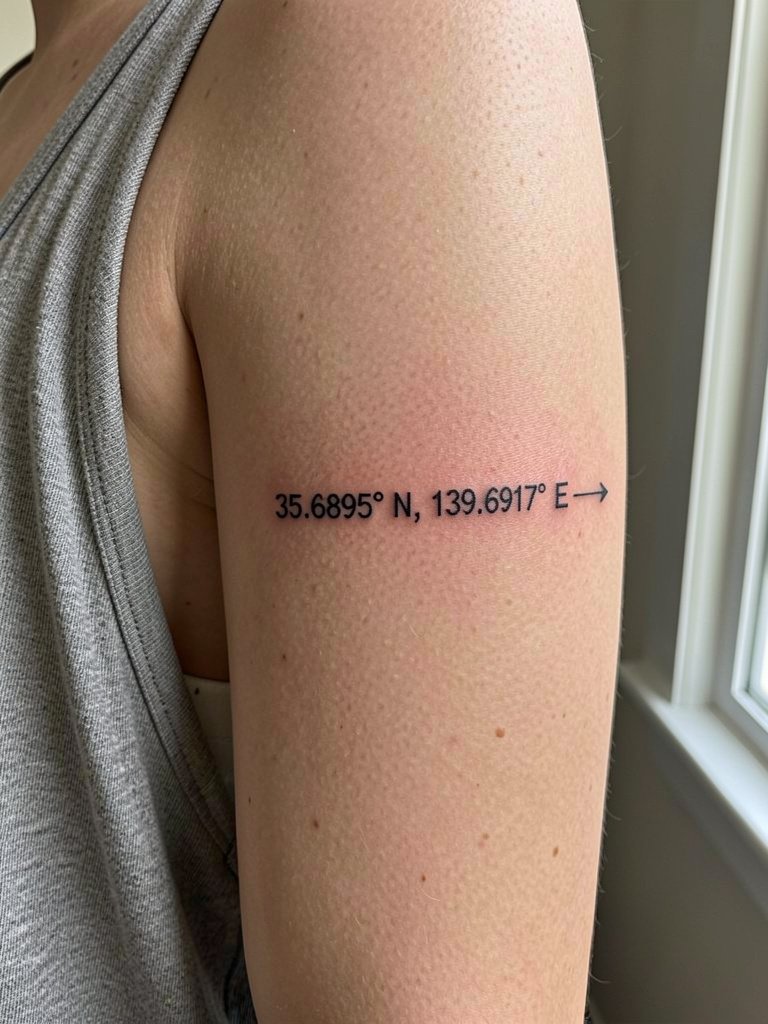
An arrow adds subtle directional symbolism without requiring extra space. If you want the arrow to function as a design anchor, tell the artist which way it should point relative to your body so it does not appear reversed in photos. Inner-arm skin moves differently than forearm skin, so wider spacing helps numbers stay readable for longer. For appointments, wear a loose tank that you can push without compressing the area during healing. Expect a 25 to 40 minute session.
9. Stacked Coordinates with Date on Lumbar Lower Back
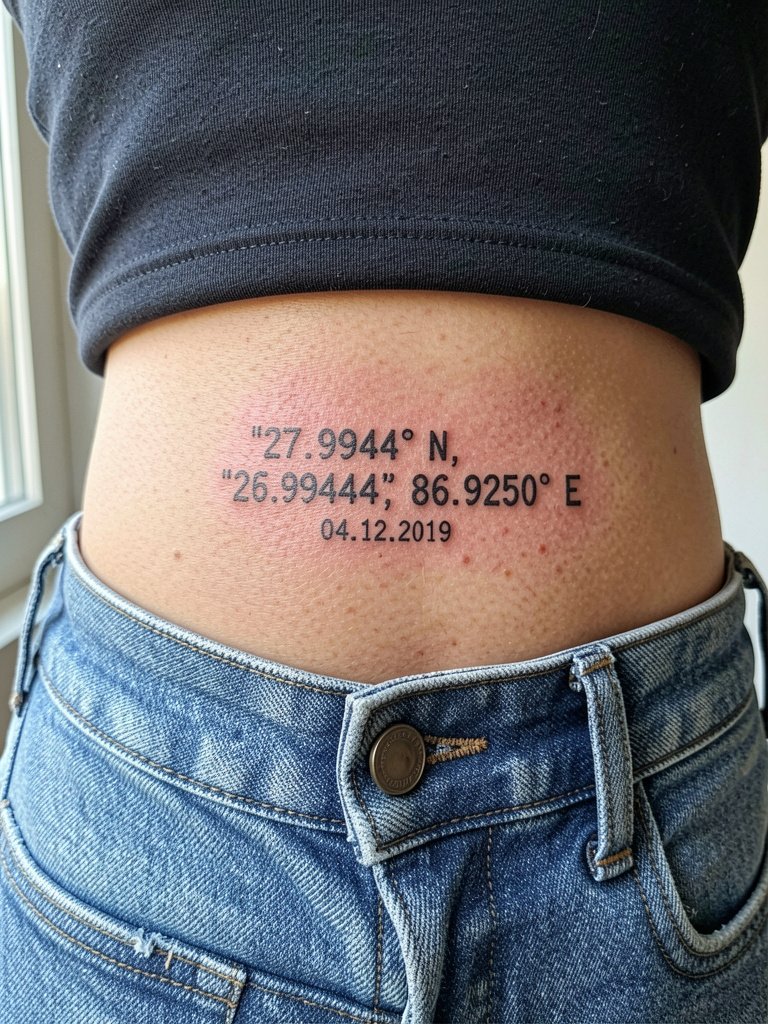
Stacking coordinates with the date creates a compact memory capsule that sits comfortably above the waistband. Lower back skin is forgiving for short text but can be affected by clothing friction. A common mistake is choosing a date font so small that it becomes unreadable after healing. For session-day comfort, low-rise pants make access easier and keep pressure away from fresh skin. This placement pairs with low-rise silhouettes when you want to show the design; for sessions wear loose bottoms you can move aside without tugging the area.
10. Coordinates with Minimalist Map Outline on Upper Thigh
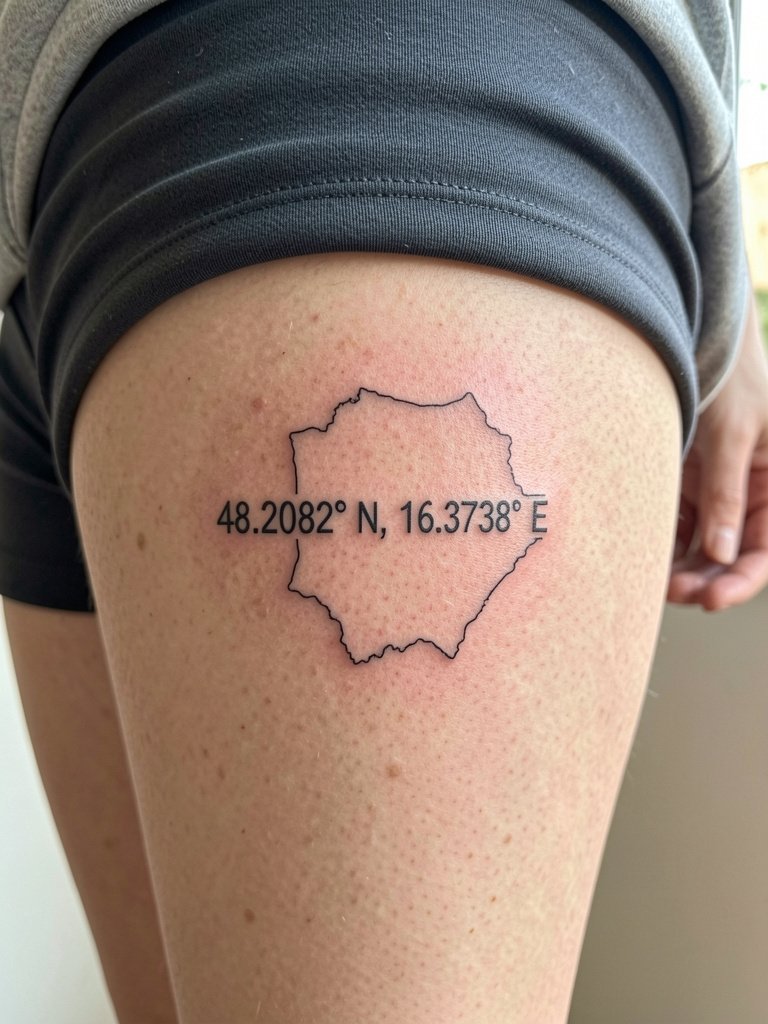
A faint map outline provides context without heavy shading. The outer thigh tolerates larger sizes, so if you want the outline legible for years, scale it to three inches or more. A common error is asking for an outline so thin it disappears on darker skin tones. For showing it off, high-waisted shorts or swimsuits frame the area. For the session wear, bring shorts or a skirt with a high slit that gives the artist access without pulling or putting pressure on the freshly inked surface.
11. Coordinates with "Home" Anchor on Inner Forearm
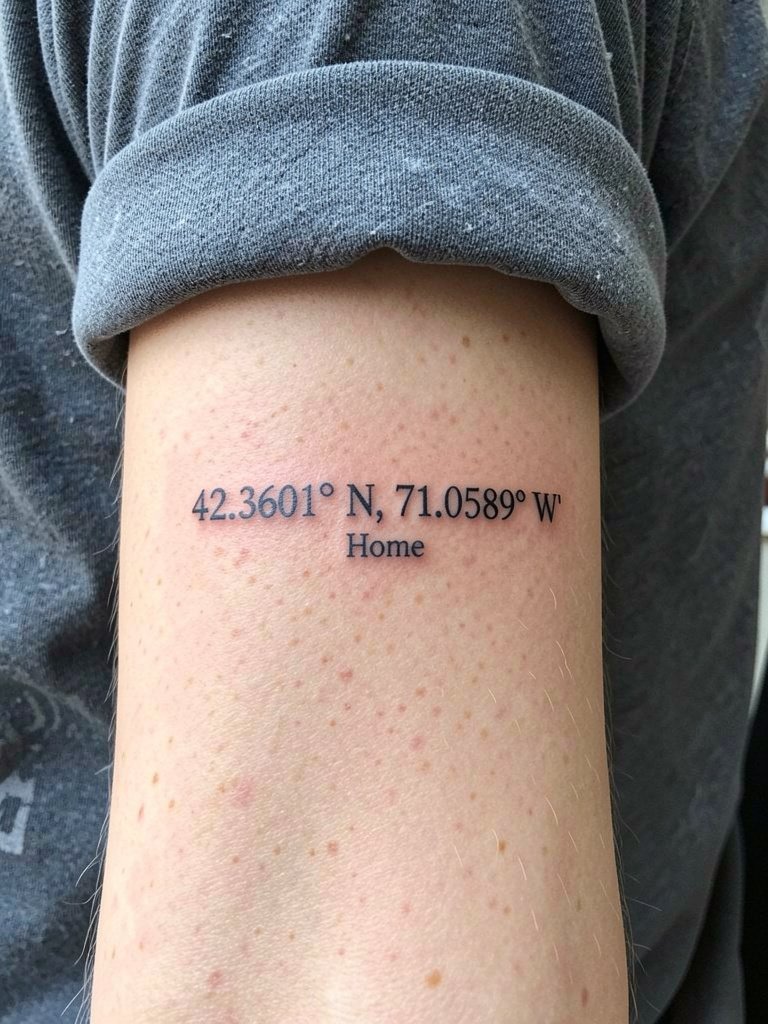
Adding a small word anchors the coordinates for viewers who might otherwise see just numbers. If you want the "Home" text to age well, choose a slightly bolder weight than the numerals so it remains legible as lines soften. For daytime styling, rolled-up linen shirts in neutral tones make the forearm visible; try a rolled cuff linen shirt for that look. The inner forearm is a low to medium pain zone and usually heals cleanly if you avoid tight bracelets during the first week.
12. Coordinates with Dot-Grid Background on Inner Upper Arm
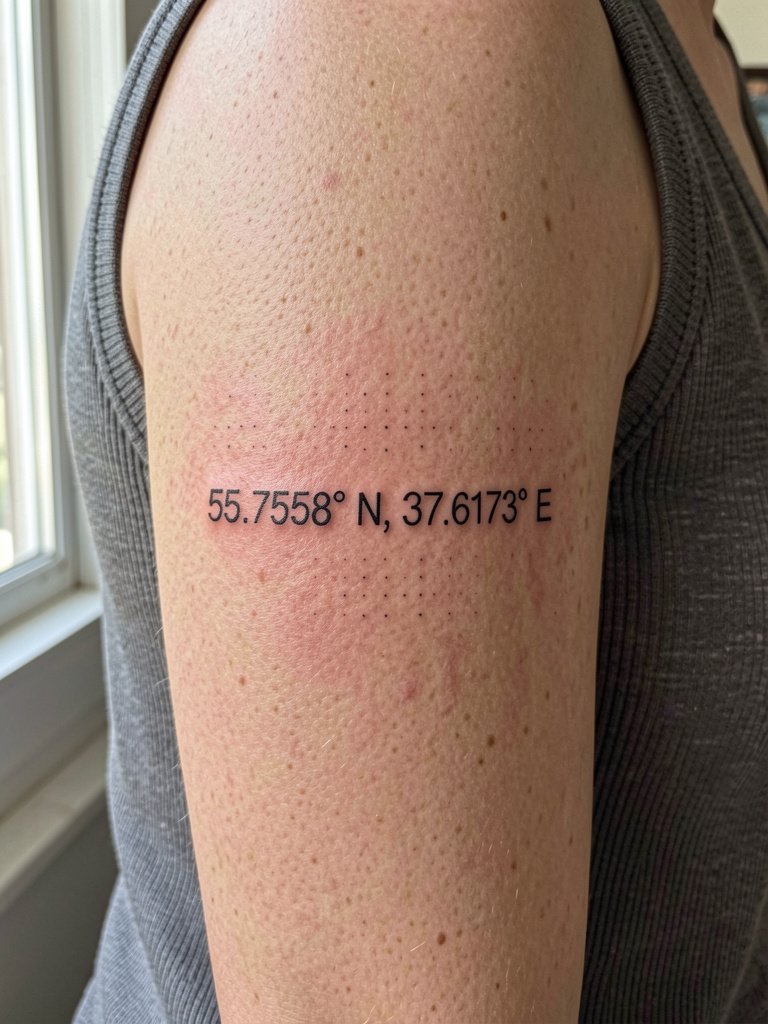
A dot-grid creates a technical map feel that complements coordinates, but it increases session complexity and session time. Discuss how dense you want the grid and whether any dots should be fused to the numerals. The inner upper arm reads well for textured backgrounds, but very tiny dots can blur if the grid sits too close to numbers. For session wear, a loose tank top lets the artist work comfortably and keeps fabric from sticking to fresh ink.
13. Single-Line Continuous Coordinates on Wrist
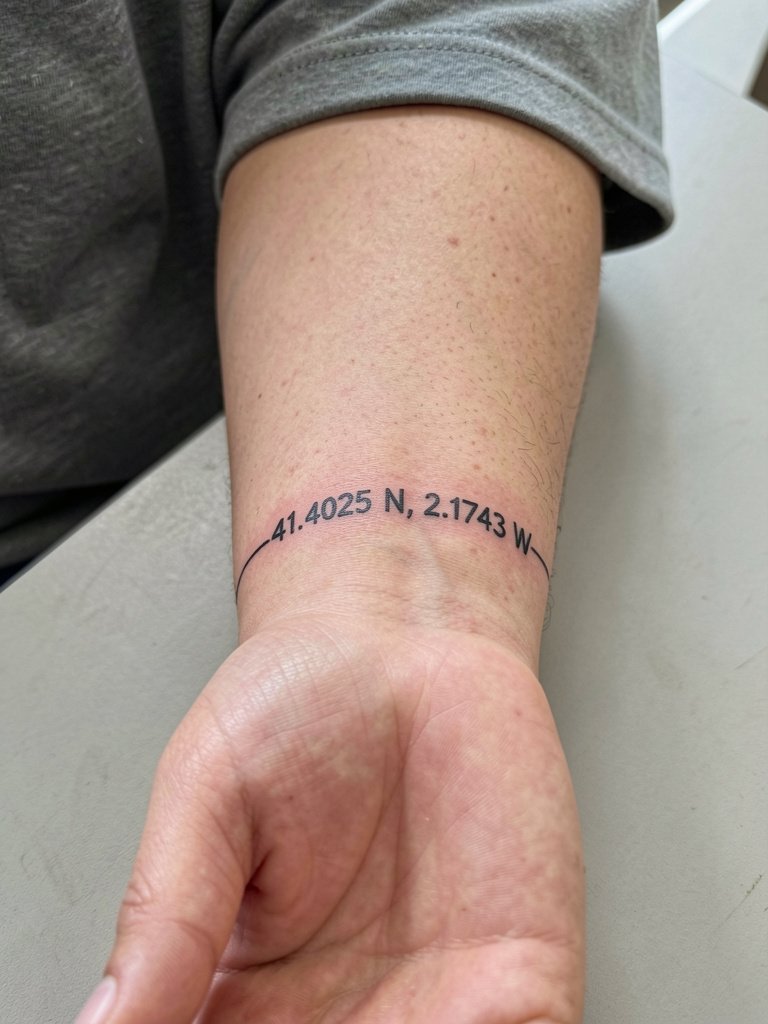
Wrist work is visible and delicate, but here the community splits. One group argues that the wrist and other high-movement zones blur thin numbers within a year. The other group says with correct depth and slightly wider spacing, fine single-line pieces can hold for multiple years. If you want this continuous look, ask the artist to widen the line a hair and test the spacing on a temporary transfer before committing. For show-off styling, a thin minimalist watch on the opposite wrist complements the piece without crowding it. Wrist sessions are short but expect more touch-ups than forearm pieces.
14. Coordinates with Tiny Star on Collarbone
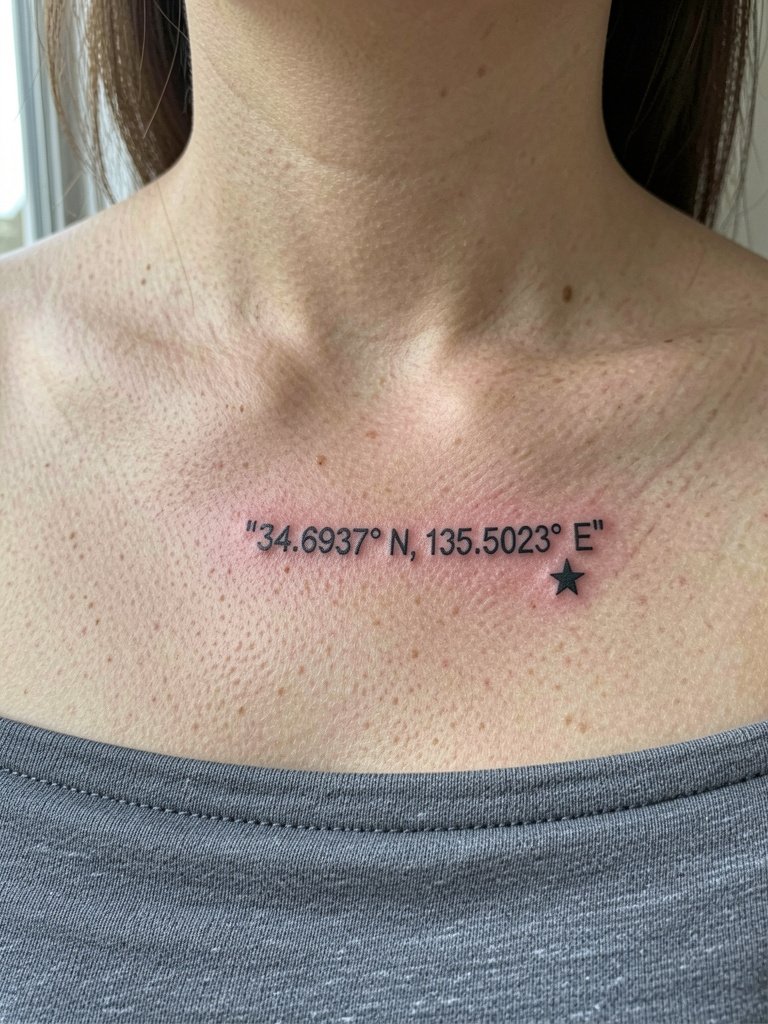
A star gives a celebratory accent while keeping the coordinates compact. On the collarbone pick a star size that contrasts with the numbers so it remains a focal point as lines soften. Photogenic placements like this reward minimalist jewelry such as a thin pendant necklace that sits above the tattoo. Sessions are brief, but watch for sun exposure during healing to keep contrast.
15. Coordinates with Compass Circle on Sternum
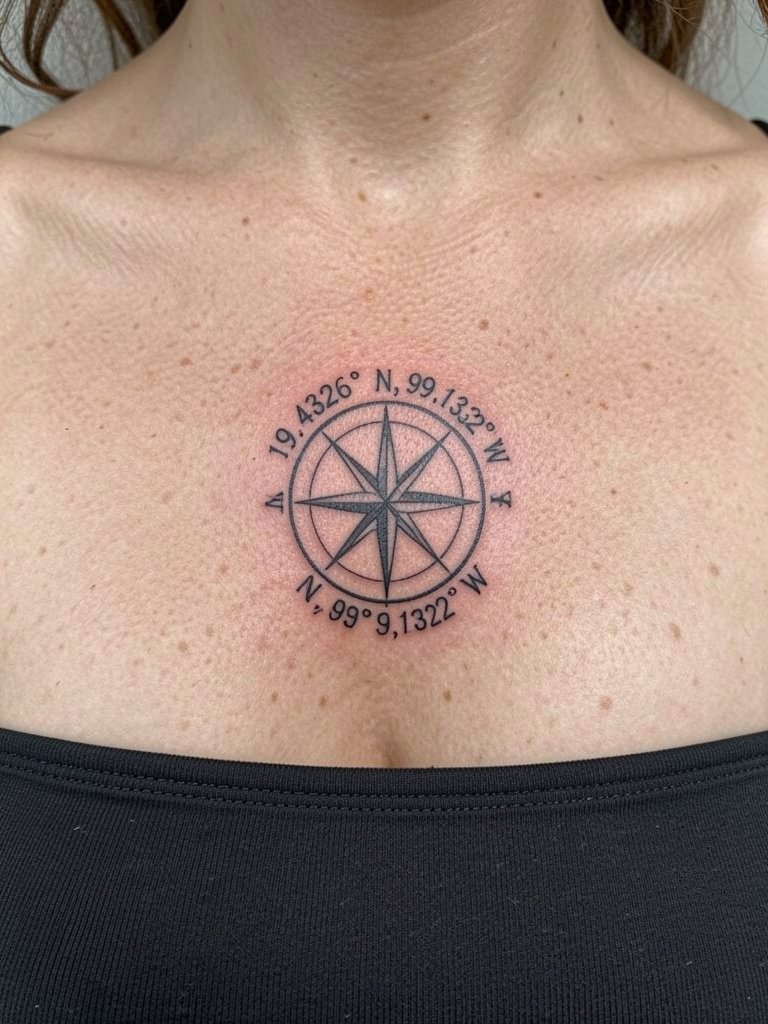
Encircling the numbers frames them as a focal point and helps the design age as a single object rather than separate glyphs. The sternum tolerates geometric shapes well, but the area can hurt more during the session. A practical consultation point is to determine circle thickness so it keeps structure without overpowering the numerals. For the session wear, a strapless piece or bandeau gives the artist full access without fabric pressure. Expect longer needle time than a wrist or forearm piece.
16. Time Zone Tag Under Coordinates on Inner Wrist
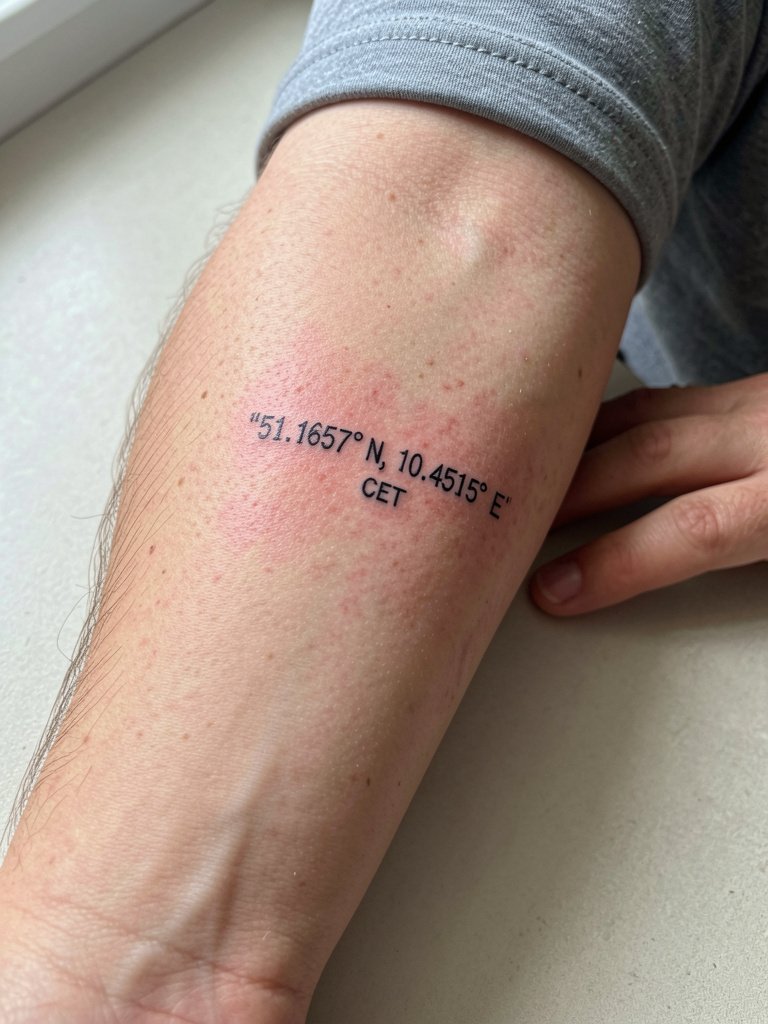
Adding a time zone lines up location with the moment it mattered. This is especially useful if the date and coordinates mark a moment like a birth or wedding. Avoid fonts so tiny they require magnification. For the appointment, pick a slightly larger font weight for legibility and say so in your pre-session proof. Wrist pieces are easy to photograph, and a thin bracelet on the opposite wrist keeps balances in pictures.
17. Secret-Code Coordinates for a Partner on Hip
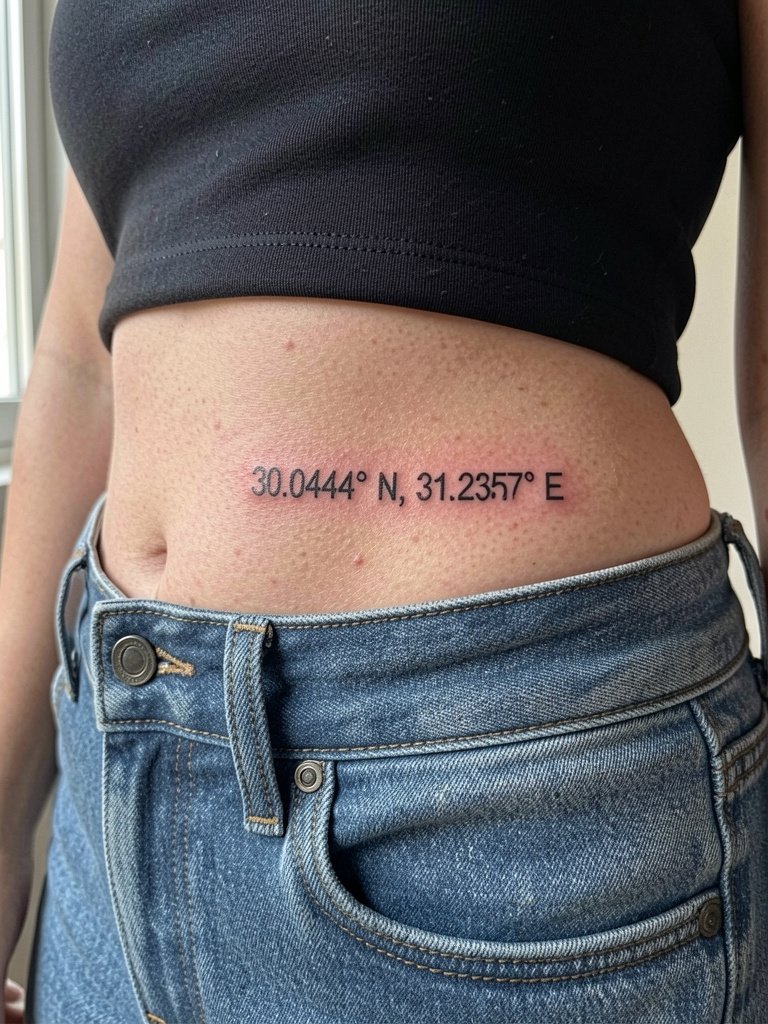
Hidden coordinates are a classic private token between partners. Keep the numerals plain and avoid extras so the meaning stays private unless you reveal it. For the session, low-rise bottoms help the artist access the exact spot without tugging. This placement is forgiving for simple type and rarely needs touch-ups if lineweight and spacing are set correctly from the start.
18. Coordinates with a Path Line Between Two Sets on Outer Thigh
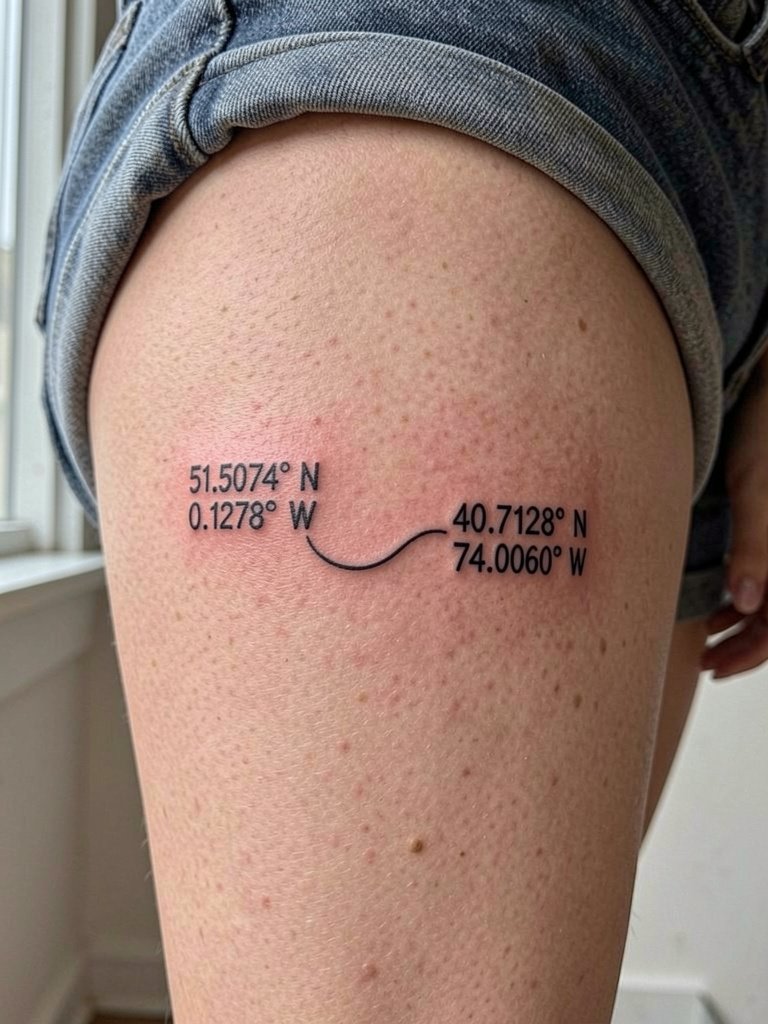
A path line makes the concept explicit: two anchors, one journey. Larger scale suits the thigh because it gives the line room to curve and age gracefully. During consultation, bring the two exact coordinates and indicate whether the path should be straight or meandering so the stencil reflects the intended rhythm. For outfits, high-waisted shorts or skirts with a side slit show the layout beautifully. Expect a longer session than single-coordinate ideas.
19. Wind Direction Arrow with Coordinates on Ribcage
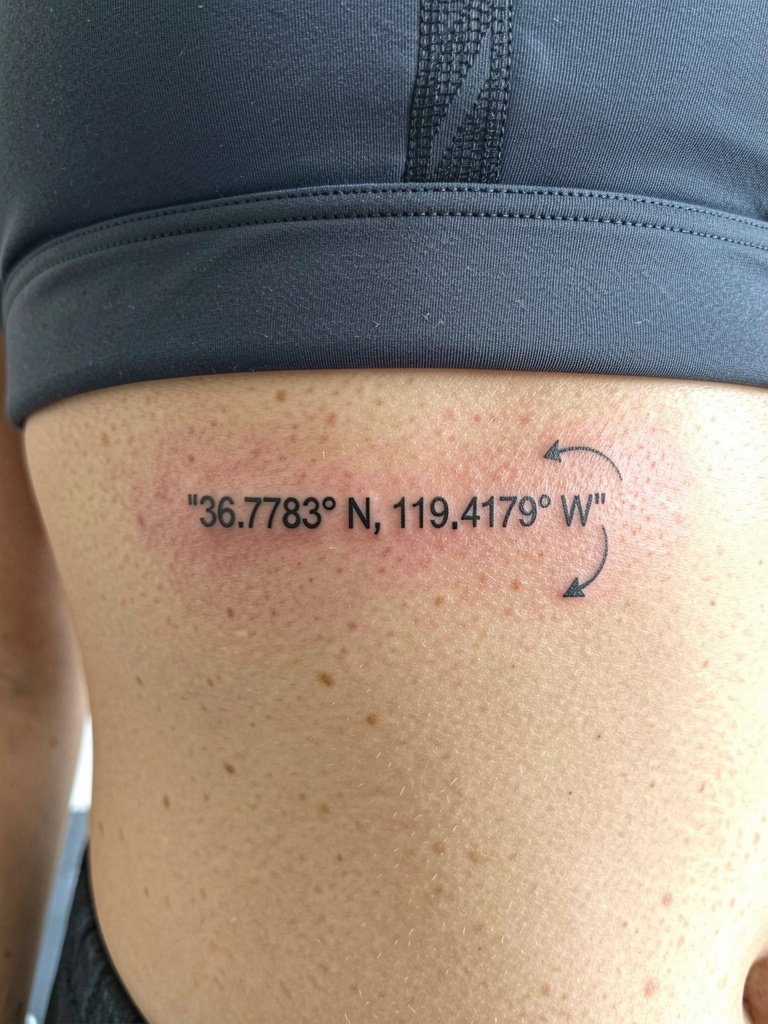
This sensory detail layers a directional moment into the location. Ribcage work triggers the familiar debate about fine line aging in high-stretch areas. One camp insists ribs stretch and blur thin linework quickly and recommends bolder lines. The other camp says with expert depth control and wider spacing, fine line ribs can remain crisp and will point to healed portfolios as evidence. If you choose the ribs, ask for a mid-weight line and a stencil placed while seated so the piece sits right when your body moves. Numbing and session pacing matter here because this area can be painful.
20. Secret Inside-Lip Coordinates
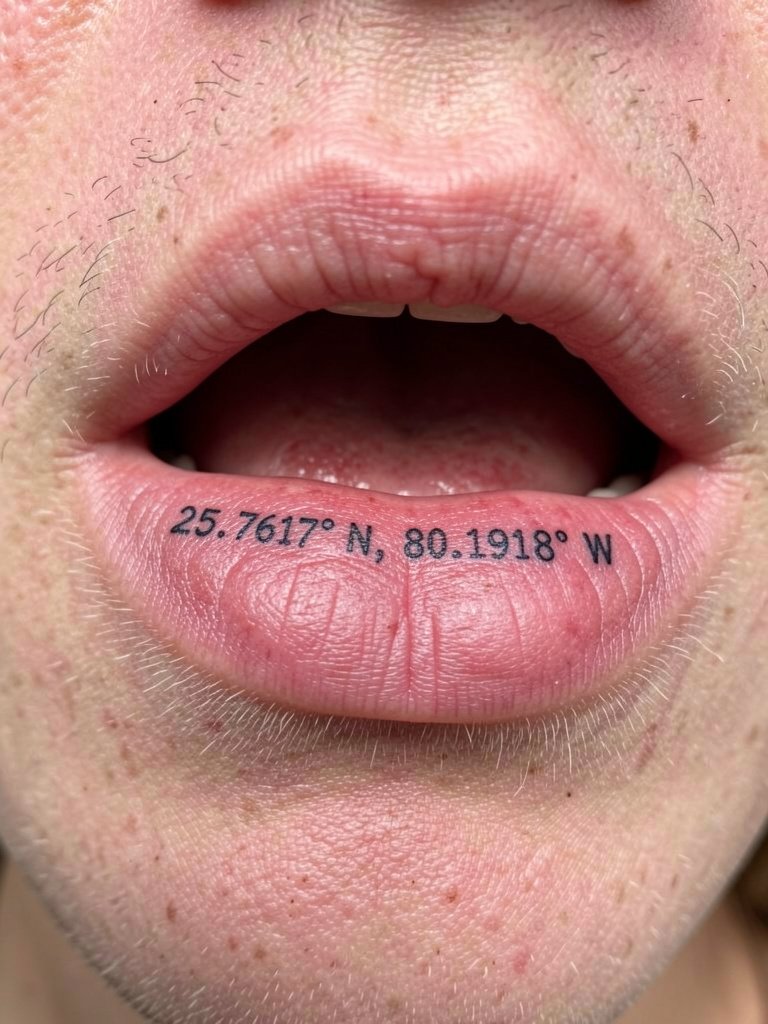
An inside-lip coordinate is ultra-private and ephemeral because mucosal tattoos often fade faster than epidermal ink. If permanence is a priority, pick a different placement. For privacy, this is unmatched, but you should know touch-ups may be needed within a year. Discuss mucosal longevity with the artist and plan for a maintenance pass if you want repeated visibility. The session is quick but can sting more than expected.
21. Matching Pair Coordinates for Couples or Friends on Ankles
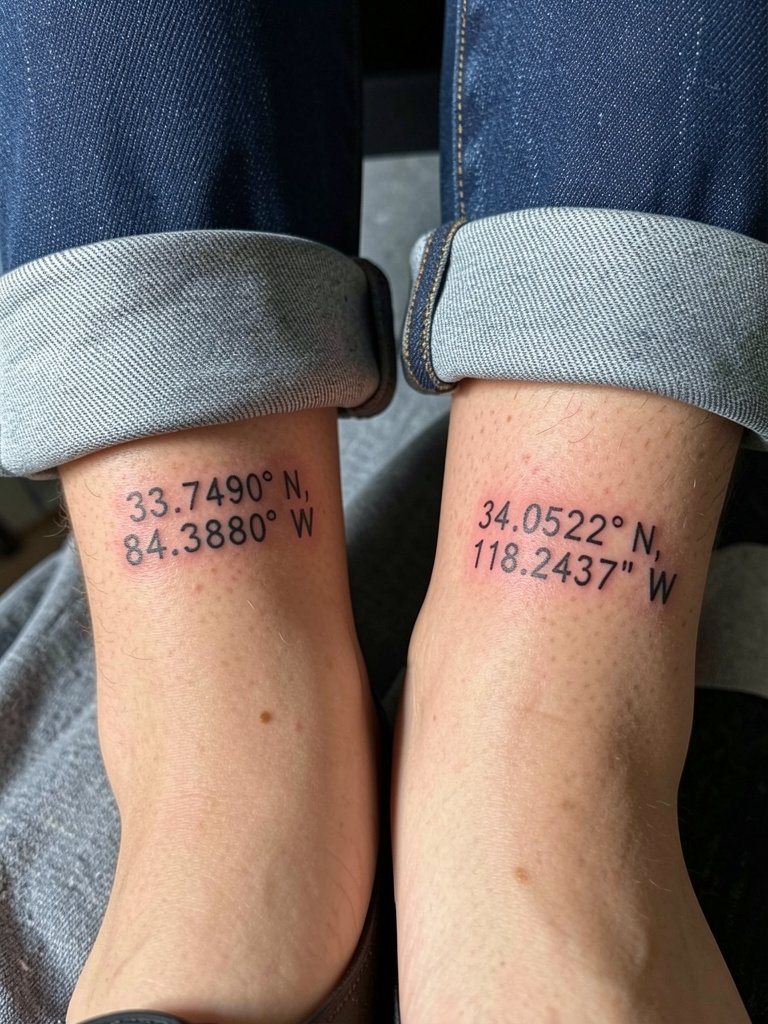
Matching ankle coordinates work well for pairs who want symmetry. Ankles face frequent rubbing from socks and shoes during the first weeks, so protective aftercare and sock choices matter. For session wear, cuff your jeans or bring sandals so the artist can work without fabric contact. If you both want the same scale, get both done in the same session so lineweight and spacing match precisely.
Frequently Asked Questions
Q: How can I make sure the hemisphere and punctuation are correct before inking?
A: Bring a printed map screenshot that shows the coordinates and the N/S or E/W letters. Have the artist transfer that image to the stencil and check the stencil on your skin before the needle. If you need extra certainty, mark the exact punctuation you want on the paper copy so the stencil is verbatim.
Q: Which placements are most likely to need touch-ups for coordinates?
A: High-movement and high-friction areas like the inner wrist, fingers, and lip commonly need touch-ups. Inner forearm, outer thigh, and lateral hip usually hold detail longer. For placements exposed to rubbing, budget for a touch-up at six to twelve months.
Q: How do I find artists who show healed coordinate work and a range of skin tones?
A: Search platform hashtags such as #coordinatesTattoo and #finelinetattoo while filtering by city on Instagram and TikTok. Use directories like Tattoodo or Booksy to narrow by specialty, and read Reddit threads for peer-shared healed photos across skin tones. That combination helps you find portfolios showing healed shots rather than just fresh work.
Q: Do I need to change what I wear to keep the tattoo safe during the session and early healing?
A: Yes. For forearm pieces, wear rolled sleeves or a button-down you can easily move without compressing the area. For hip and lower back work, low-rise bottoms give the artist access without tugging fabric. For the sternum and collarbone, strapless or wide-neck tops avoid fabric rubbing while dressing and undressing.
Q: Will numbers look like a random code to others and is there a subtle way to signal the meaning?
A: Adding a small symbol such as a heart, pin, star, or the word "home" under or beside the coordinates cues viewers without spelling out the place. Another option is stacking a date beneath the numbers so the design reads as a memorial capsule rather than a mysterious string.
Q: How soon can I swim or do heavy workouts after getting coordinates inked?
A: Avoid submerging the tattoo in pools, hot tubs, or open water for at least two weeks, and skip heavy sweating sessions for around seven days to limit friction and bacteria exposure. Light activity is fine once you avoid direct rubbing of the fresh ink.