
Small, single-line acoustic guitar outlines look great in photos, but on wrists and fingers they often soften into a gray blur after a few years. Bigger shapes, slight spacing, and controlled saturation tend to keep fretboard details readable longer. Below you will find ideas that balance what trends photograph well with what actually holds up on skin, plus concrete notes to bring to your consultation so the result still reads at year three and year five.
1. Minimal Single-String Outline on Inner Wrist
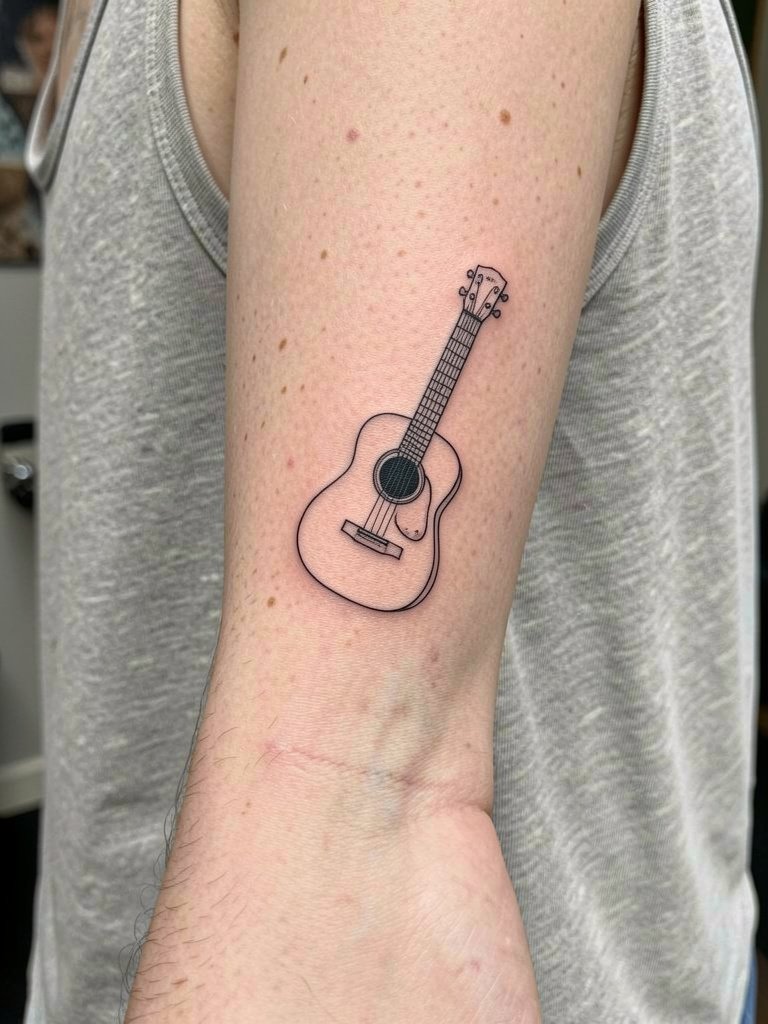
The inner wrist suits a tiny acoustic outline for a discreet music nod. Fine-line single-needle work looks delicate at first but the inner wrist has thin skin and regular movement, so plan for slightly bolder linework than your Pinterest reference. Bring a scaled reference that shows the design at both two inches and three inches, and ask the artist to show the stencil at that exact size on your skin. Expect a quick 30 to 45 minute session and one touch-up within 12 to 18 months for crisp soundhole detail. For showing off, wear rolled-cuff linen shirts that keep the wrist visible and let the thin silhouette read.
2. Micro-Realism Half Guitar on Outer Forearm
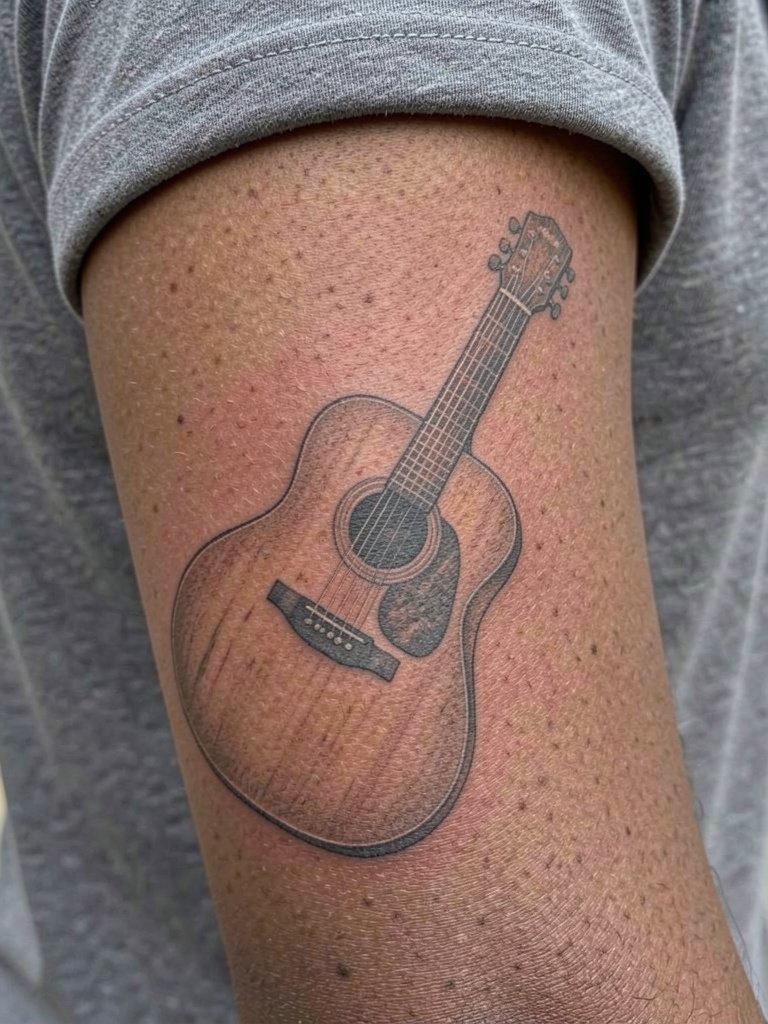
Micro-realism brings acoustic detail like grain and bridge knots into a compact forearm piece. The outer forearm holds detail better than wrists because the skin is thicker and expands less with movement. During consultation, point to the exact wood grain reference and specify you want mid-tone saturation so highlights remain visible after healing. Sessions run about two hours and may require a short break to check how shading reads. A common mistake is asking for ultra-high contrast in tiny areas which can turn muddy when healed. For daytime outfits, a short-sleeve lightweight tee keeps the piece visible without sun overexposure.
3. Soundwave-Fretboard Wrap on Ribcage
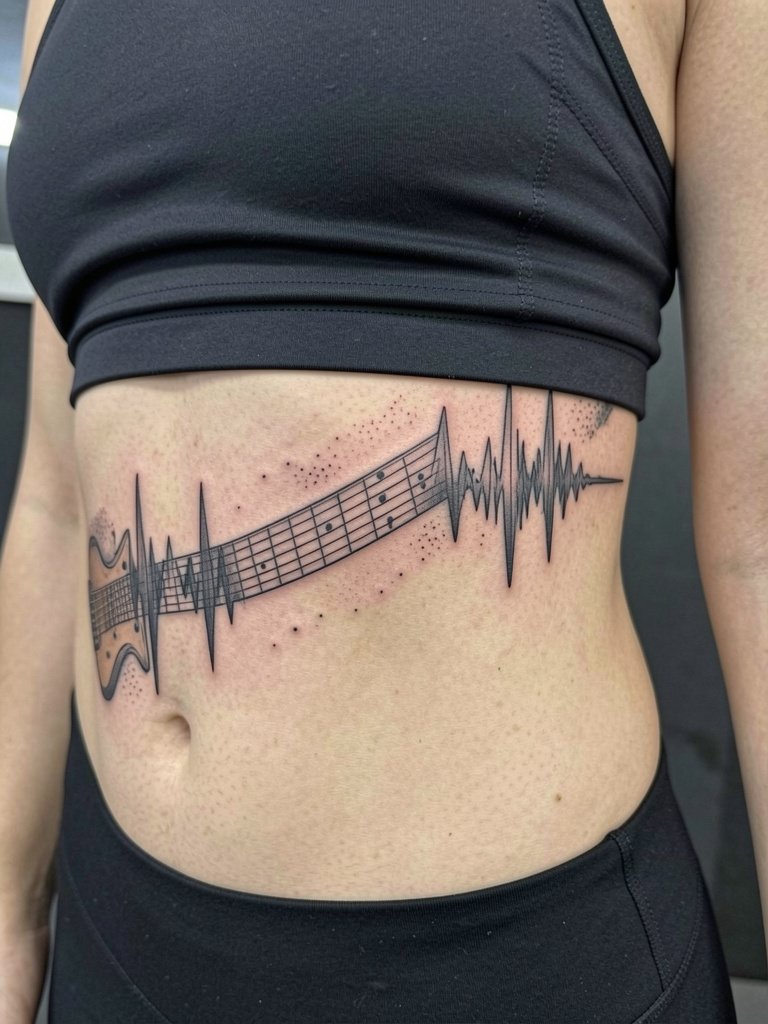
A soundwave that morphs into a fretboard suits the ribcage if you want a dynamic shape that follows the body. Ribs are higher on the pain scale and the skin stretches with breathing, so request slightly thicker linework and spaced frets to avoid early blurring. Specify exact placement relative to the bra or waistband so the artist can map the motion of breath. This session usually takes 2 to 3 hours with short breaks and most people schedule it on a day they can rest afterward. For the session wear, a fitted cropped top makes access straightforward and keeps you comfortable while the artist works.
4. Tiny Pick on the Finger with Micro Lettering
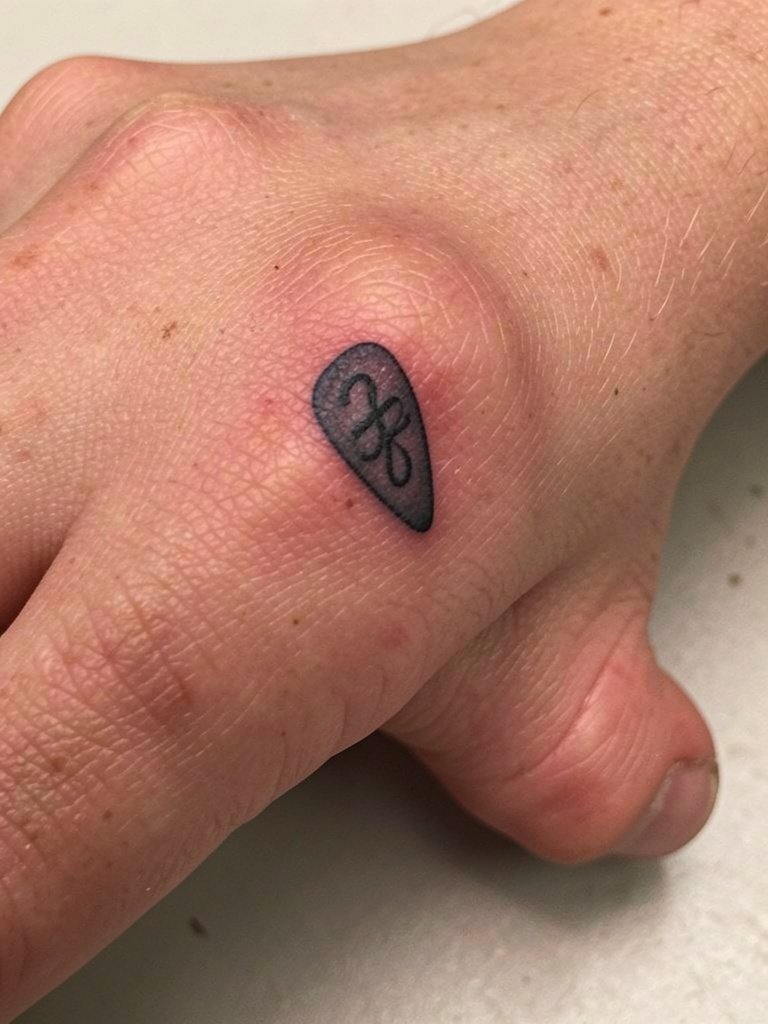
Finger tattoos fade and blur faster than arm pieces because of constant washing and friction. One camp argues that fine micro lettering on fingers will blur within a year and recommends bolder shapes instead. The other camp believes that careful single-needle placement with slightly increased line weight can last longer on fingers, and they point to healed examples that stayed legible after touch-ups. Plan for annual touch-ups and accept that the pick may soften at the edges. Session time is short but expect at least one touch-up, and for the appointment wear clothing that gives the artist full hand access like a short-sleeve top.
5. Floral Guitar Neck on Calf
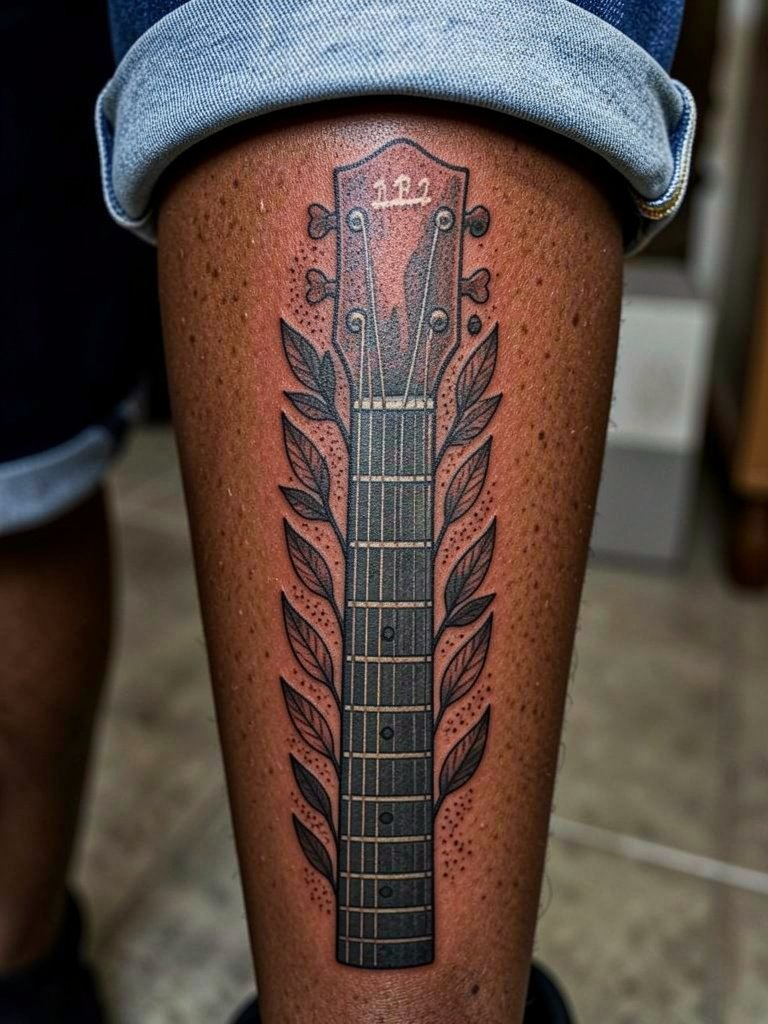
A vertical guitar neck wrapped in florals reads beautifully down the calf where rounded muscle helps the design keep its shape. Ask the artist to map how the frets will sit when you stand and then when you walk, because muscle flex can distort long linear pieces. Calf sessions are medium pain and usually run 90 to 150 minutes. The most common mistake is squeezing too many small leaves into the frets; give the botanicals room to breathe and they age cleaner. For showing off, cuffed jeans or rolled-up denim cuffs frame the vertical line without exposing the lower leg to too much sun.
6. Geometric Soundhole Mandala on Upper Chest
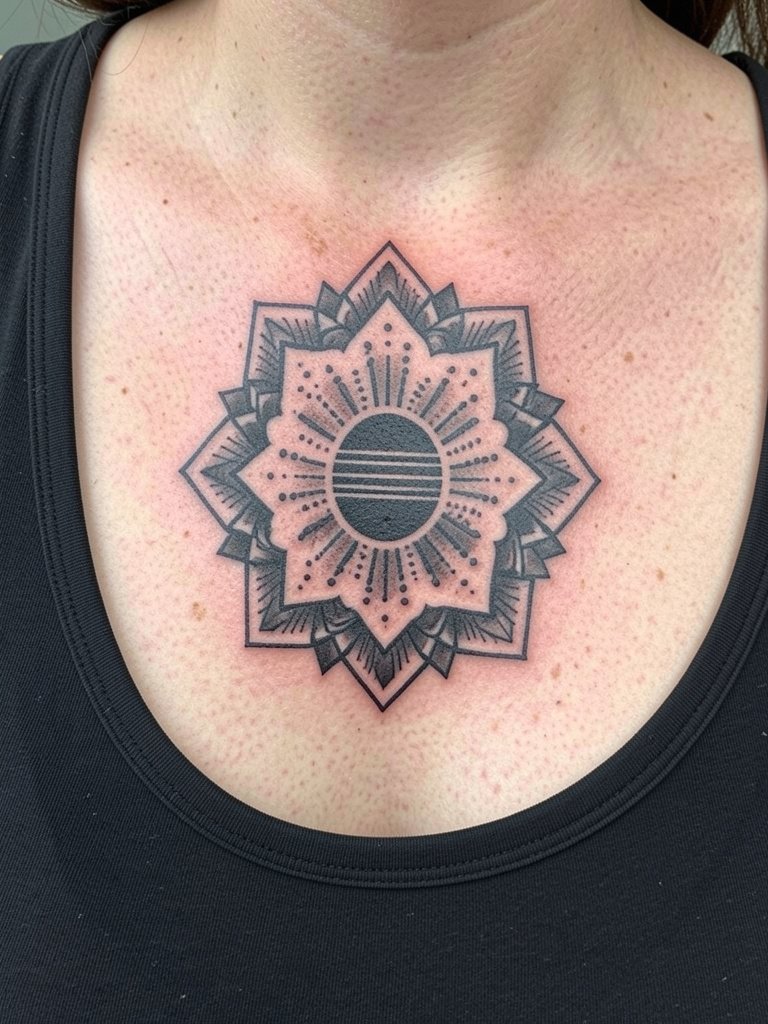
A mandala-style soundhole plays well across the upper chest because the flat plane emphasizes symmetry. This design borrows mandala forms that have cultural origins, so respect starts with research and clear credit in your consultation. When you sit down with your artist, bring references that show both the mandala spacing and the precise radius you want for the soundhole effect. Sternum-adjacent chest pieces can be sensitive so expect moderate discomfort and a two-hour session window. For day-of comfort, a scoop-neck top worn normally gives the artist access without adjustments.
Session Day Picks
The wrist, ribcage, and calf pieces above each need slightly different session prep, so these items smooth the appointment and the first healing week.
- Stencil transfer paper kit. Lets you preview the exact linework on skin before commitment, especially helpful for the wrist and finger layouts in ideas above.
- Cooling gel pack wrap. Provides soothing compression during breaks and helps reduce redness after longer sessions like the ribcage and calf work.
- Non-slip grip mat for chair. Keeps your limb steady during delicate micro-realism and single-needle work so the artist can maintain consistent lineweight.
- Cotton compression sleeve for calf. Protects healed calf pieces during the first week of activity and prevents rubbing from pant seams.
- Aquaphor healing ointment. Thin layers help lock in moisture for linework without clogging fine needle channels during the early healing window.
7. Retro Sunburst on Shoulder Cap
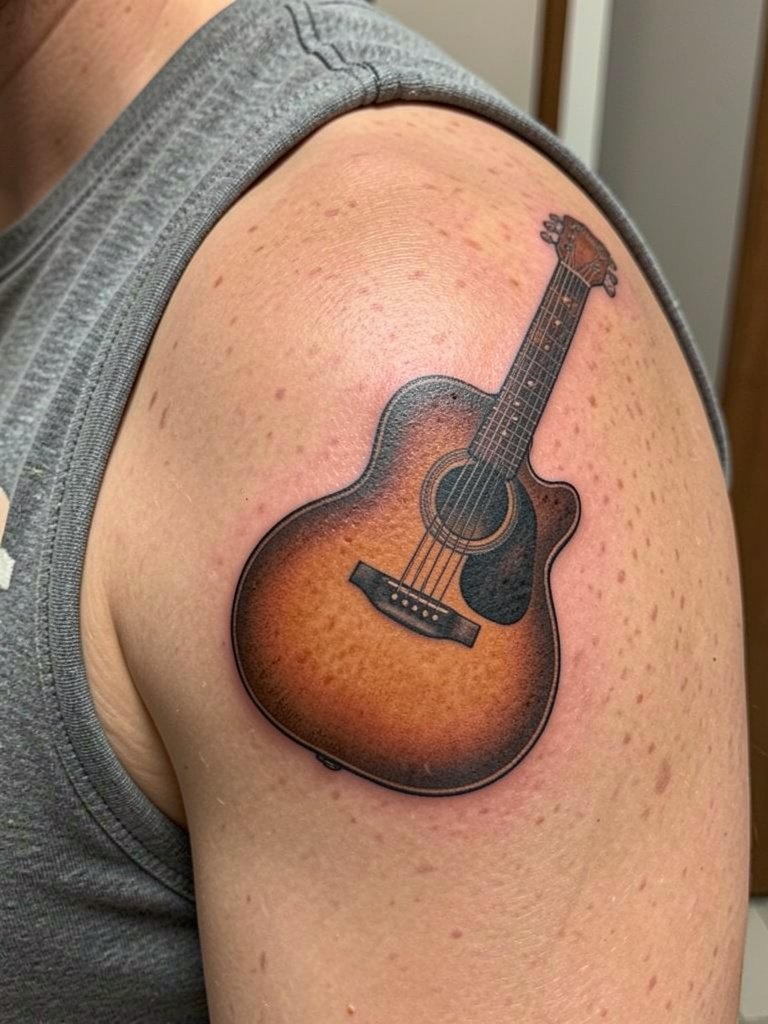
The rounded shoulder cap is ideal for a sunburst acoustic body because the shape follows the muscle curve and prevents edge distortion. Choose heavier saturation and a clean outer outline so the color reads from a distance and stands up to sun exposure. Shoulder sessions are low to moderate on pain and typically finish in a single two-hour block. Avoid asking for ultra-fine gradients in a small area or those will fade into mush. For showing off at concerts, an open-back or sleeveless tank dress keeps the shoulder visible without risking sun damage.
8. Negative-Space Cascade on Ankle
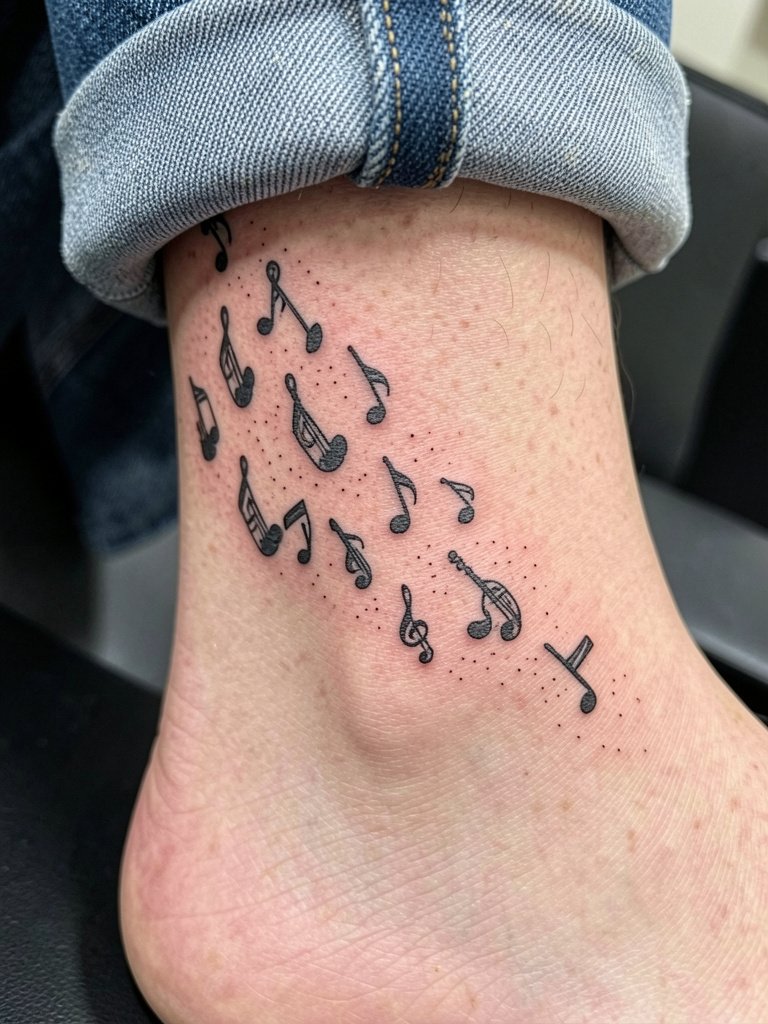
Ankle placements face constant friction from shoes and socks, so negative-space silhouettes hold better than tiny filled shapes. Plan slightly thicker outlines and limit micro detail to avoid early loss of definition. Session time is short but the ankle often needs a touch-up between 9 and 18 months depending on shoe friction. A common mistake is placing the cascade too close to the shoe line which invites rubbing. For footwear pairings, rolled cuffs and low-top sneakers frame the cascade nicely without rubbing the area.
9. Guitar Pick Mosaic Behind the Ear
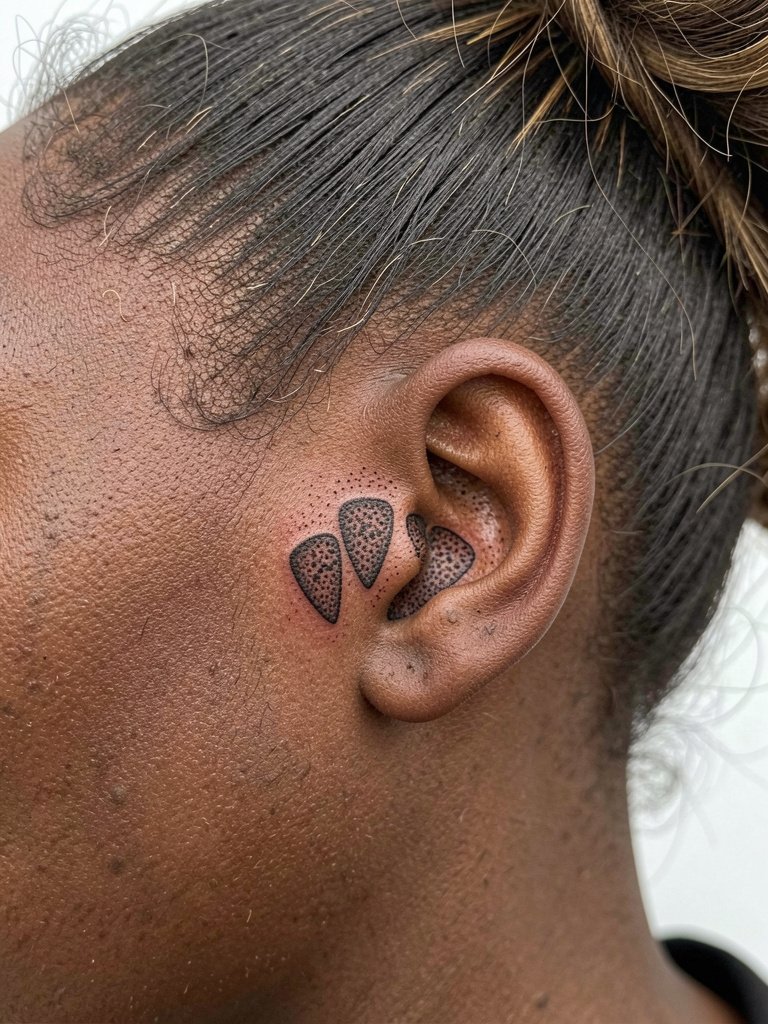
Behind-ear tattoos require a highly experienced hand because the area is small and healing is prone to scabbing that can affect detail. This spot is sensitive and the skin is thin, so request slightly bolder picks than your reference to preserve shape. Note that some artists decline extremely small clusters here, so bring two scale options and let them place the stencil. Session time is usually under an hour but book a touch-up window. This area shows best with hair up, so consider hair styles that keep the mastoid visible and pair with subtle ear jewelry like small hoops for a balanced look. Professional consideration: seek an artist experienced with head and neck placements.
10. Watercolor Acoustic with Bird Notes on Thigh
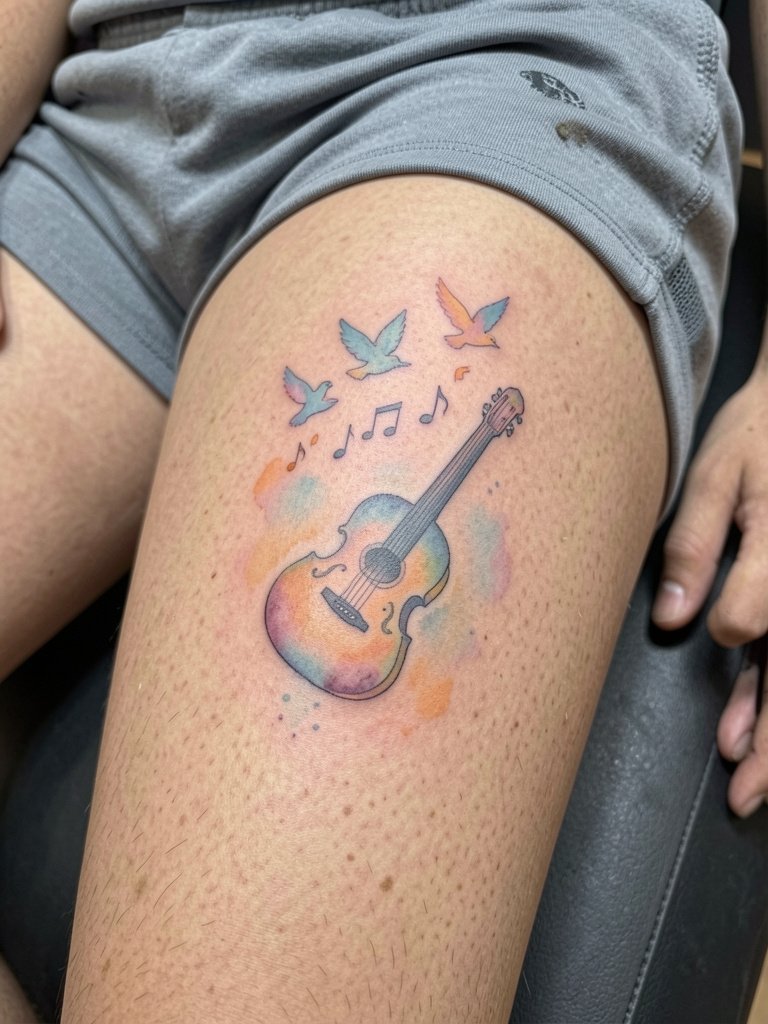
Watercolor styles look lively at first but can spread and lose crisp edges over time, which splits artists into two camps. One group warns that watercolor bleeds on soft tissue like the inner thigh and recommends strong outlines to protect the image. The other group believes subtle watercolor can be done well with controlled saturation and strategic white highlights, and they will show healed photos from three to five years out. Inner thigh pieces are intimate and often need an artist used to that area. For the session, wear fitted bike shorts so the artist can expose the exact mid-thigh zone without fabric shifting.
11. Sheet Music Fretboard Collarbone Strip
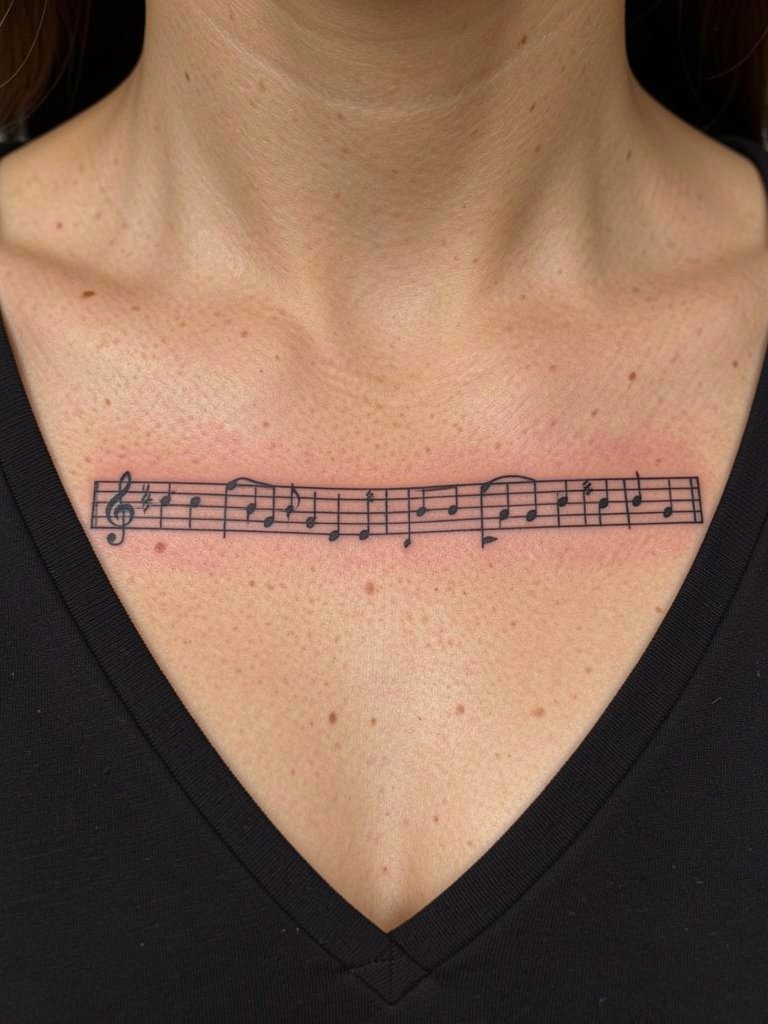
A collarbone strip merges lyric lines and fretboard visual language for a music-first aesthetic. The collarbone moves with shoulder motion so ask for slightly heavier staff lines than a paper reference to keep notes readable over time. Sessions are moderate in pain and usually done in one sitting under 90 minutes. The common mistake is compressing too many notes into a short strip which makes the music illegible when healed. For outfit pairings, wide V-neck tops or open-collar blouses let the collarbone strip be visible and photograph well.
12. Broken Strings Abstract on Upper Back
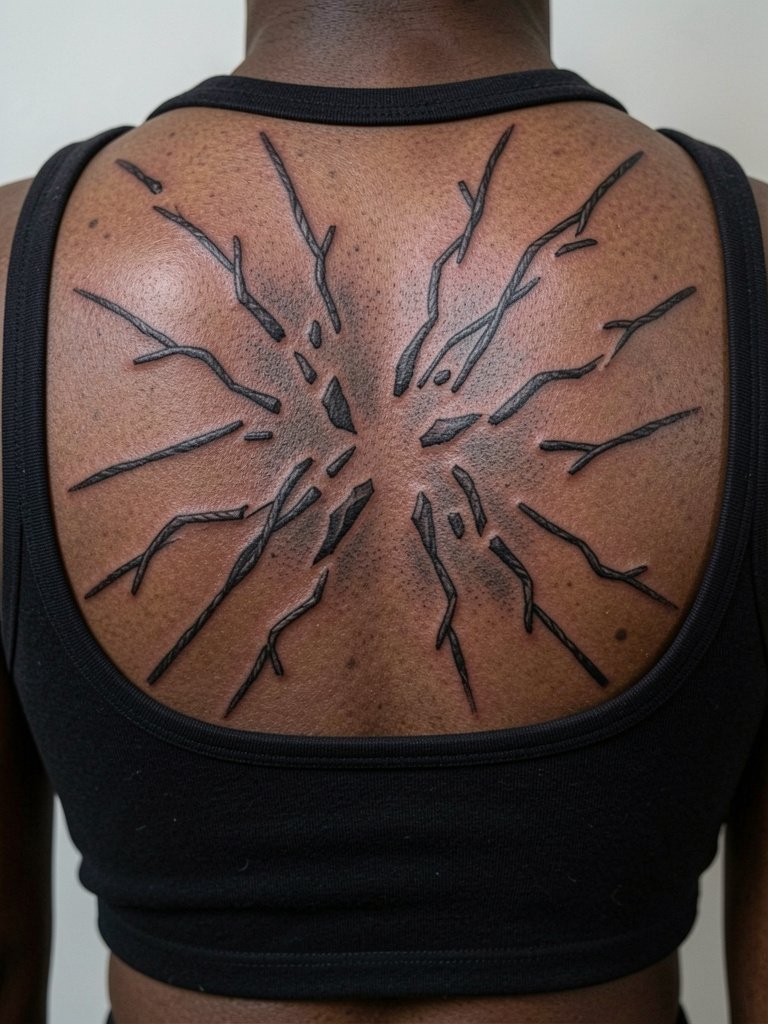
Upper back canvases suit abstracted string breaks because the flat area keeps radial lines true. Ask the artist to mark the design with you in a standing pose and then while you slightly round the shoulders to see how the constellation reads in both states. Sessions are medium length and may be split if you want breathing room. A common mistake is over-refining tiny shards which read as noise at distance; embrace bold punctuation. For evening wear, a wide-back dress frames the piece without exposing it to constant sun.
13. Tiny Chord Diagram Behind the Ear Lobe
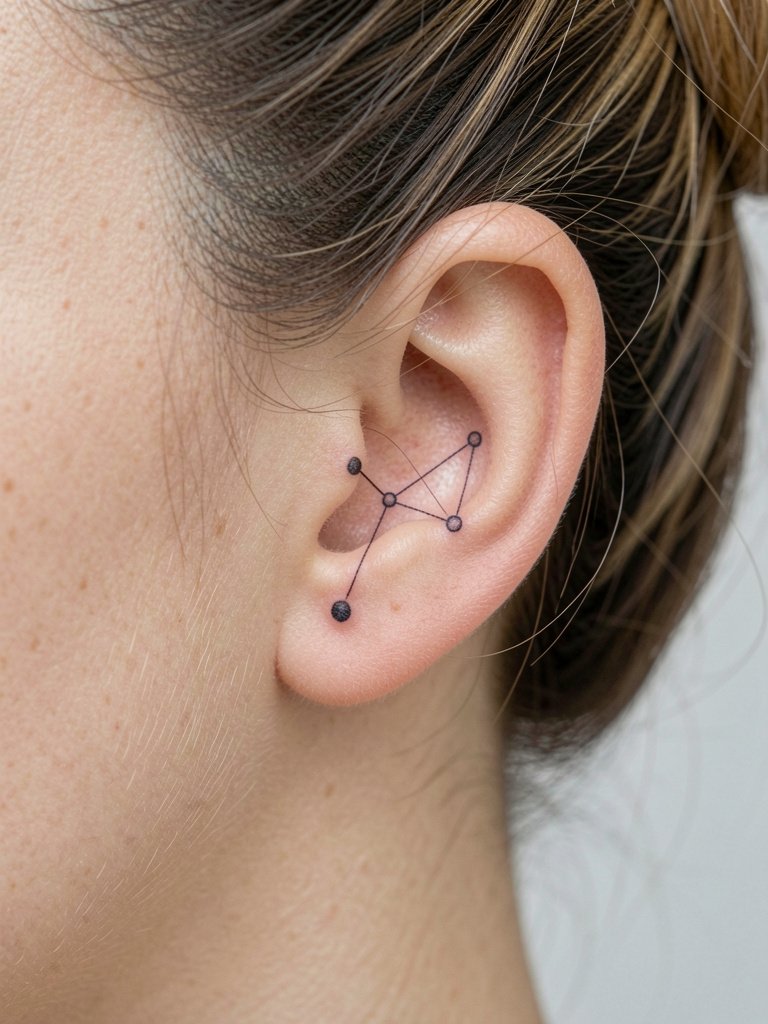
Small chord diagrams behind the ear are a subtle musician signal and heal quickly, but the area is tiny and artist experience matters. Specify that you want the dots slightly larger than a printed reference and ask for a precise stencil check on-site so spacing remains accurate. Sessions here are brief but expect possible softening at the edges and plan for a touch-up if you want the dots razor sharp. Consider hairstyles that keep the area visible, and pair with minimal stud earrings or small hoops for balanced visibility.
14. Classic Acoustic with Rose on Upper Thigh
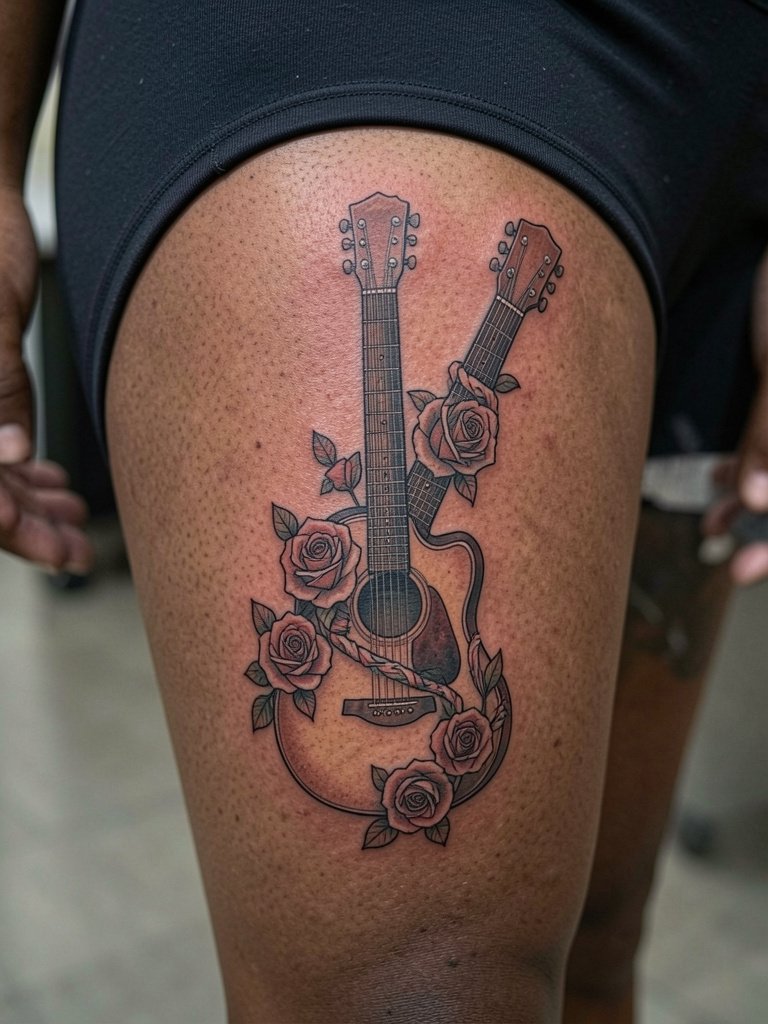
The front upper thigh is graceful for larger acoustic compositions because it offers a soft, private plane that ages well under less sun exposure. Request a mock-up that maps how the rose will sit when you stand and when you sit, because curvature changes the petal fall. Sessions are medium to long depending on color fill and can be split into two appointments. A mistake is over-saturating pastels in the same sitting which can lead to muddy healing. For reveal-ready looks, high-waisted skirts let the piece peek through without constant friction.
15. Minimal Fret Silhouette on Inner Bicep
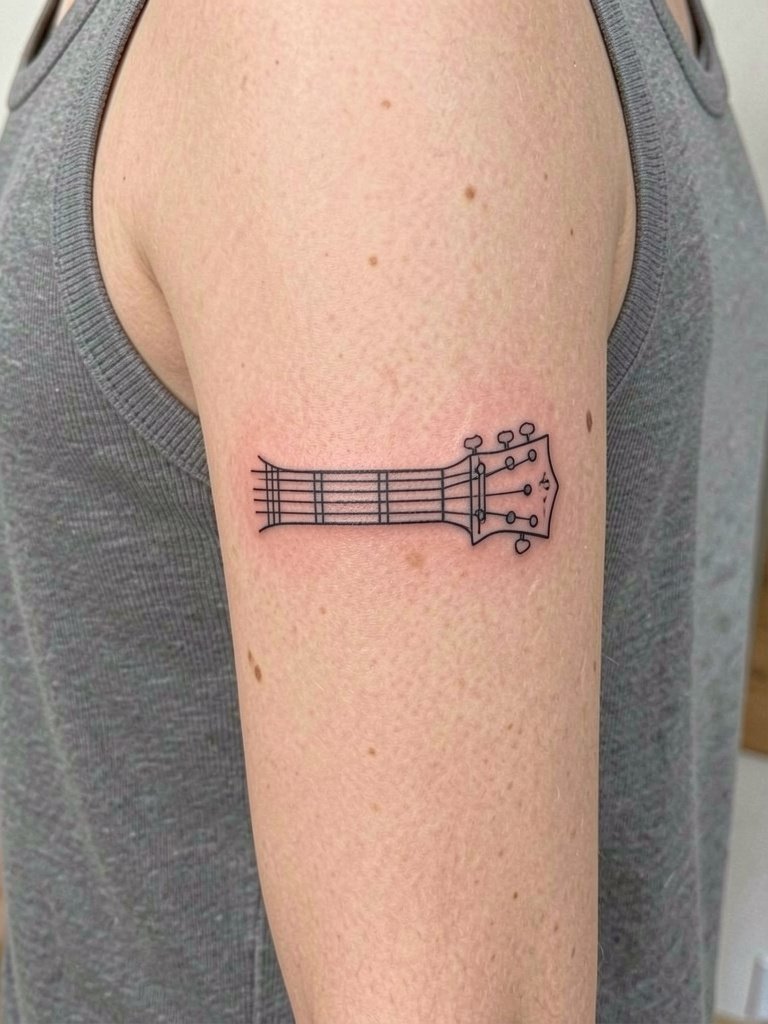
Inner biceps are forgiving for linear guitar motifs because the medial surface faces the torso and expands less than the outer arm. Ask the artist to show the stencil with your arm relaxed and then slightly flexed so you can confirm fret spacing. This placement is moderate on pain and usually finishes in 60 to 120 minutes depending on length. Common problems arise when artists try single-needle fineness on the inner bicep without adjusting for movement, which leads to early softening. For the session wear, a loose tank top that keeps the arm accessible is ideal and avoids fabric rubbing afterward.
Frequently Asked Questions
Q: How long will a small acoustic wrist outline actually stay readable?
A: Small wrist outlines typically remain crisp for one to three years before softening. If you want legibility beyond that, request slightly heavier line weight and plan on a touch-up around the one- to two-year mark.
Q: Are fine-line acoustic designs a bad idea for ribs and sternum?
A: Fine-line work on ribs and sternum divides artists into two camps. One group says the skin and movement blur lines within two years and recommends bolder spacing. The other group says properly placed spacing and careful needle depth make fine-line succeed, and they will show healed examples to illustrate their point.
Q: Where can I find healed acoustic guitar portfolio examples without naming artists directly?
A: Search platform tags and keywords like #acousticguitartattoo, #guitarink, and "acoustic guitar healed" on social video and image sites. Use location filters to find nearby portfolios and focus on healed shots rather than fresh work to judge real longevity.
Q: What should I wear to a session for a thigh or ribcage acoustic piece?
A: For thigh work, fitted bike shorts or modest athletic shorts let the artist expose just the mid-thigh without moving fabric. For ribcage sessions, a fitted cropped top gives clear access and keeps you comfortable during breathing breaks. A helpful item is a fitted bike short for thigh appointments.
Q: How do I respect cultural designs if I want a mandala soundhole or similar motif?
A: Start by asking about the design origins and choose elements that come from sources you understand. If you want a mandala influence, describe which motifs you mean and request that your artist credit the inspiration during the consultation. Some artists will adapt the geometry into a new composition that honors the source without copying sacred symbols.