
Saturn has a way of asking for detail and patience. The narrow rings that make the planet readable in a photo will fade into blur if tattooed at single-needle scale on a high-friction spot. Conversely, a simplified silhouette or a bold ring with negative-space textures often keeps its identity for years. Below you get ideas that balance spectacle with staying power, plus what to plan for at the stencil stage.
1. Fine-Line Saturn and Constellation on Inner Forearm
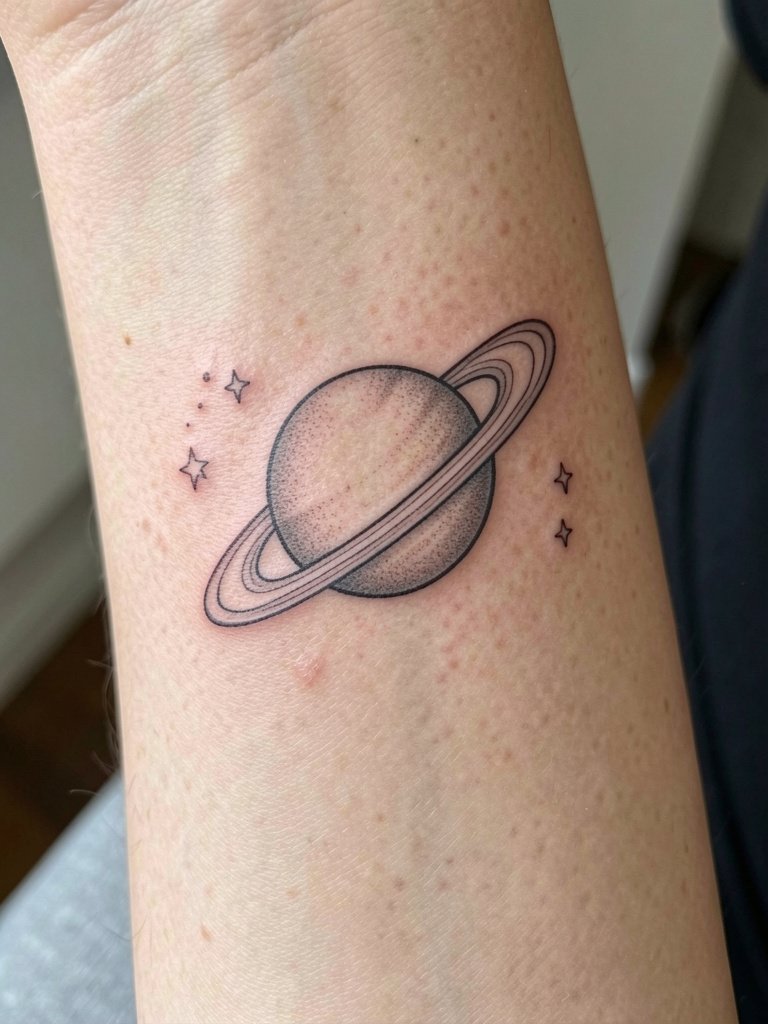
This placement reads well as an everyday piece and is a low-risk spot for blowout compared with fingers. Pain is low to moderate, and a single session usually runs thirty to sixty minutes. The common mistake is asking for the rings too thin at three inches across, which softens into an indistinct grey line by two years. For longevity, request slightly heavier linework inside the rings and ask for stipple shading rather than solid micro-fill. For showing it off, roll up sleeves and pair with a loose linen button shirt that frames the inner forearm without crowding the piece.
2. Minimal Saturn Outline on Wrist
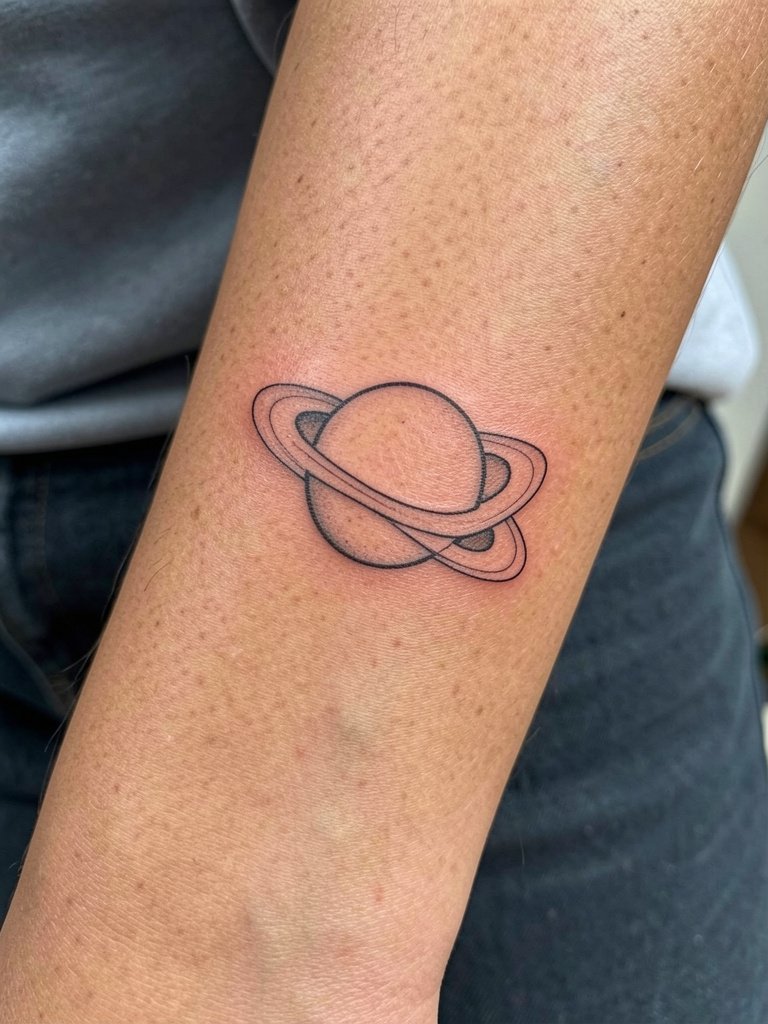
The wrist eats ultra-fine detail and sees constant washing, so expect touch-up needs at the eighteen month mark. Session time is short, often under forty-five minutes, and discomfort is a two to four out of ten. The usual error is asking for teeny negative gaps inside the ring that vanish as the skin ages. Specify that the ring gap should read at three months and at two years. For the appointment, wear a short-sleeve tee so the artist can access the area without fabric tugging.
3. Saturn with Floral Wreath on Shoulder Blade
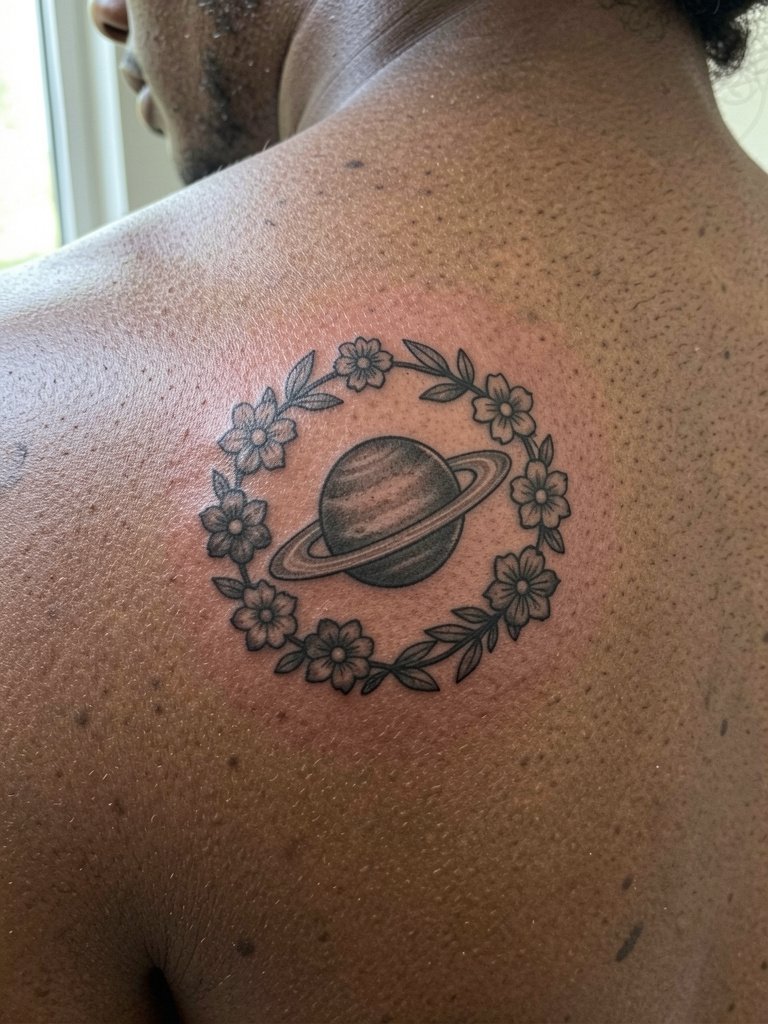
The shoulder blade is forgiving on linework and ages slowly because it avoids constant friction. You should budget about ninety minutes in the chair for the wreath to get clean saturation. A common misstep is crowding petals too close to the rings, which reads as muddled shading after a couple of years. During the consultation, bring two reference photos that show scale against the shoulder blade so the artist can map how the wreath flows with muscle contours. This placement shows elegantly with off-shoulder tops and a wide-neck blouse when you want the piece visible.
4. Geometric Saturn Sleeve Accent on Outer Bicep
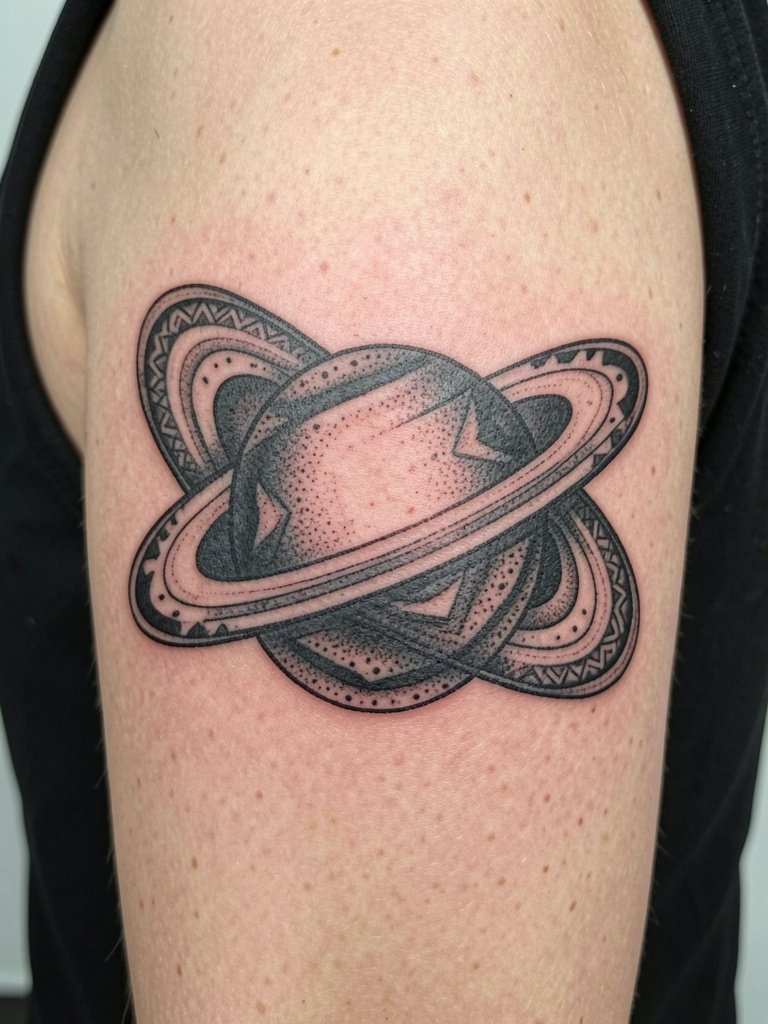
Outer bicep tolerates heavier linework and larger motifs, so this design pairs well with partial sleeve plans. Expect a one to two hour session depending on ring complexity. A mistake is dialing ring detail too tight and then needing more sessions to keep contrast. Tell the artist you want alternating solid and negative ring sections so the design keeps definition at one year and at five years. For wardrobe, this sits nicely with sleeveless knit tops and tank dresses when you want the bicep to be visible.
5. Saturn Orbit Linework Around the Ankle
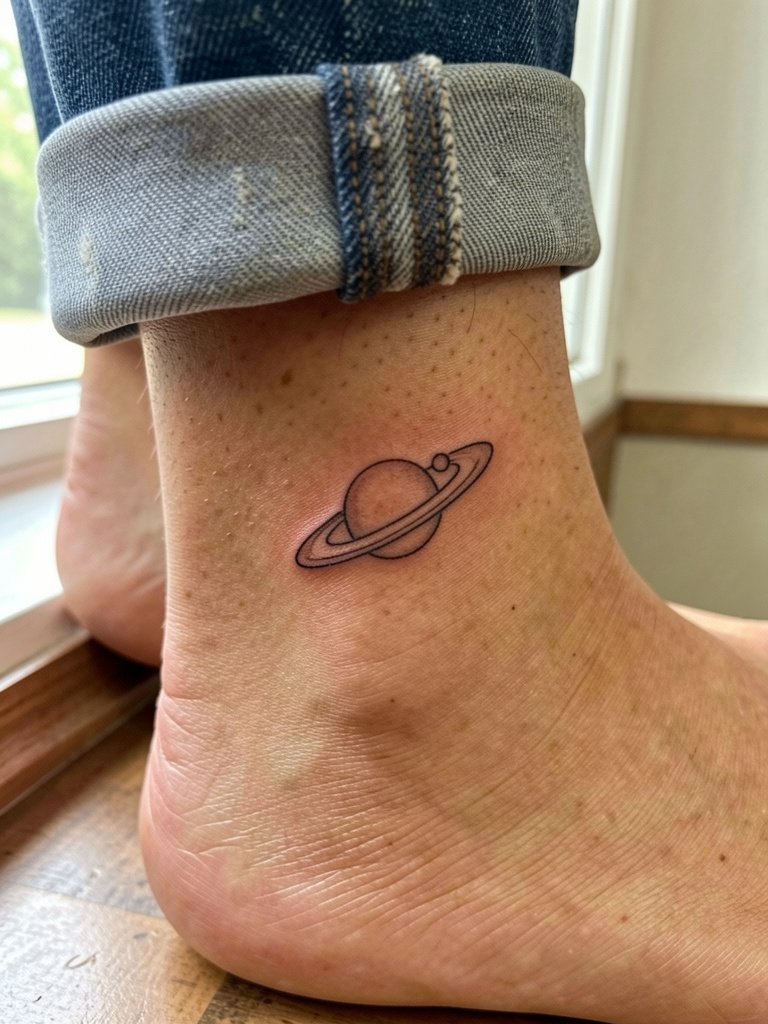
Ankle work faces constant friction and occasional swelling, so plan for touch-up in the second year. Sessions are short, usually under forty-five minutes, and pain is a four to six depending on your tolerance. The usual error is asking for micro details in a spot that rubs against socks and shoes. Request the orbit line be slightly thicker than your saved reference so the curve survives daily wear. For showing it off, roll your jeans and pair with low-profile ankle boots that expose the tattoo naturally.
6. Saturated Neo-Traditional Saturn on Upper Thigh
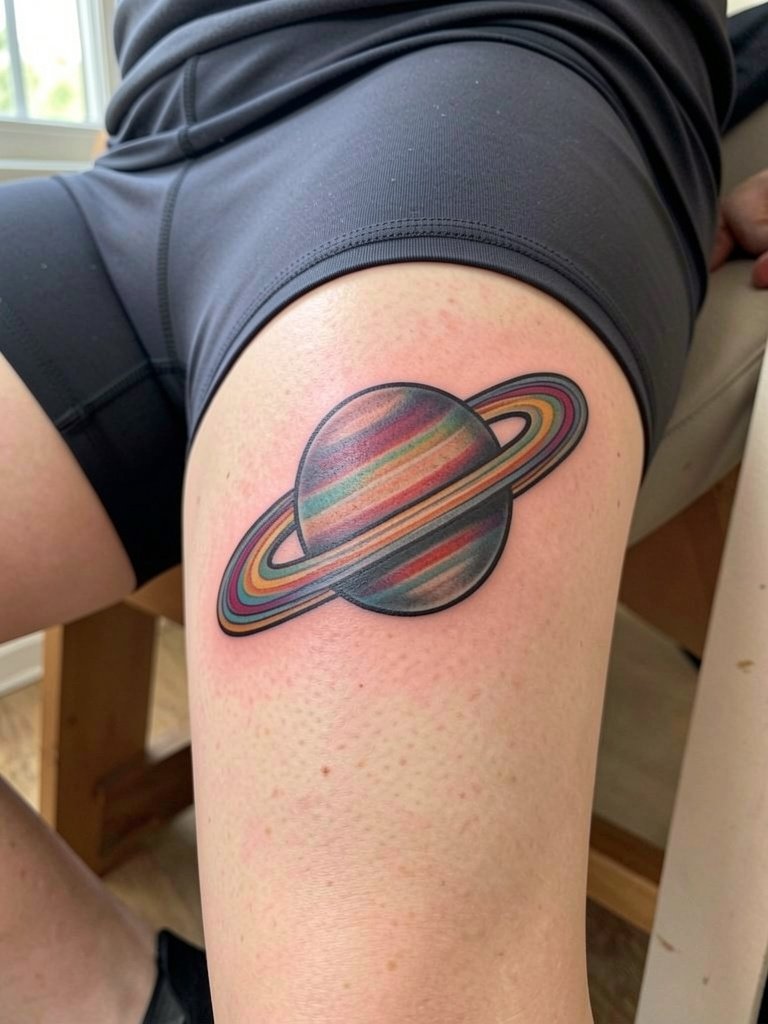
Upper thigh is forgiving for color and saturation, and it heals well because it avoids constant sun exposure. Session time for a medium-sized neo-traditional Saturn runs between ninety and one hundred twenty minutes. A common mistake is compressing too many color gradients into a small area, which muddles after a year. Specify the palette and ask for solid black outlines to contain color. Because this slot is often covered, it pairs with nights out in midi skirts with a side slit when you want a glimpse without exposing the whole piece.
Before You Book
These products smooth the first week for both small wrist bits and thigh saturation mentioned above.
-
Stencil transfer paper kit. Lets you preview line placement on skin before the needle hits, which matters for ring spacing and constellation alignment on forearms and wrists.
-
Silicone barrier film roll. Useful for ankle and finger work, it reduces friction from socks and shoes during early healing.
-
Breathable tattoo bandage strips. These are handy for thigh and shoulder blade pieces when you want a sterile cover after the studio wrap comes off.
-
Fragrance-free gentle body wash. Cleanses healing skin without irritating fresh lines on the inner forearm or rib work.
-
Aquaphor healing ointment. A mainstream go-to for a thin protective layer during the first few days on saturated color or fine-line pieces.
7. Saturn Negative Space Band on Collarbone
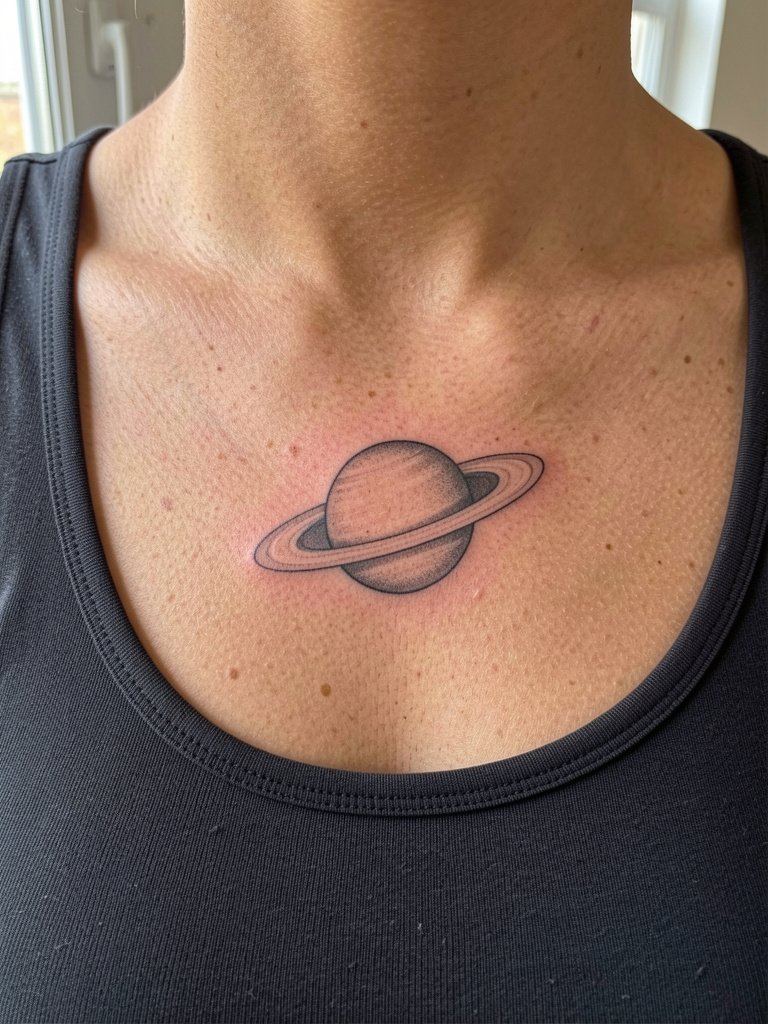
Collarbone pieces can be higher on the pain scale because of thin skin and bone proximity. Plan for a forty-five to ninety minute session and expect tenderness for a few days. The common error is filling the negative center with too much micro shading, which defeats the contrast after healing. Tell the artist you want crisp negative space and preview the stencil while sitting upright. For outfits that highlight the piece, try an open-back midi dress or scoop-neck tops that frame the collarbone.
8. Saturn with Planetary Linework on Ribcage
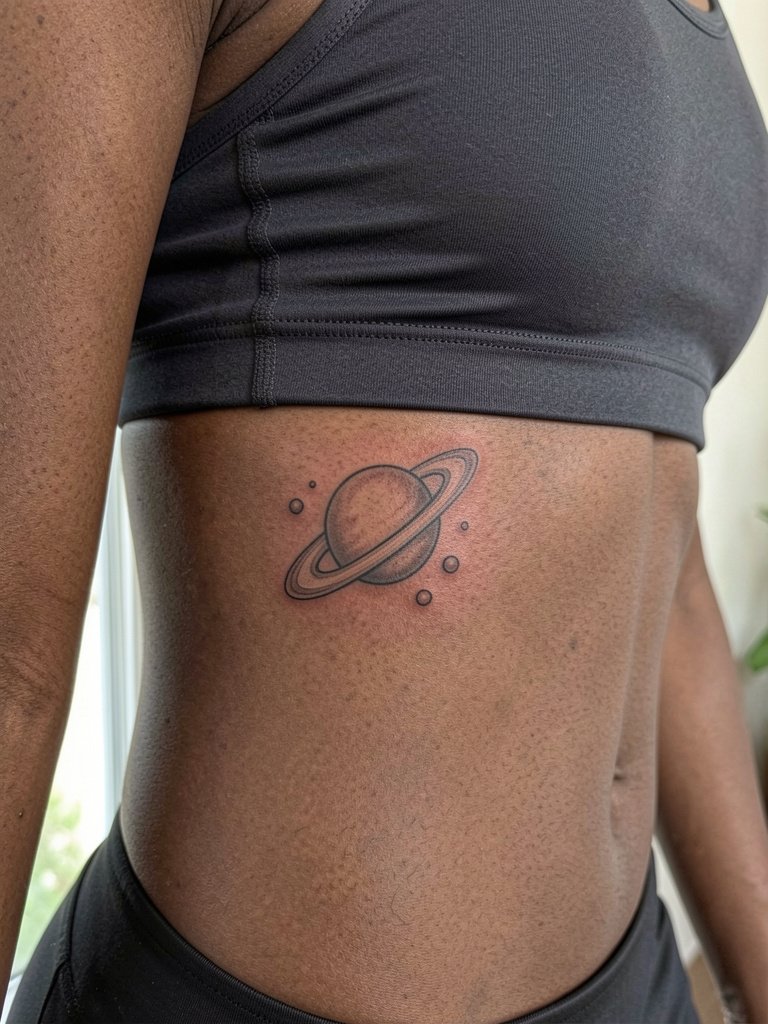
Rib tattoos come with real pain and a slower session pace because the skin moves with breathing. Expect breaks and a session length of one and a half to three hours depending on size. Artists split into two camps on fine-line ribs. One camp argues the skin stretch and motion blur lines within two years, especially near the breast crease. The other camp says with slightly wider spacing and careful depth it settles well and they will show healed photos to support that claim. Given this split, request a slightly bolder contour than your Pinterest sample so the orbit dots remain distinct at year two. Sensitive placement note: ribcage work needs an artist experienced with breathing pauses.
9. Saturn Tattoo as Part of a Sleeve Background
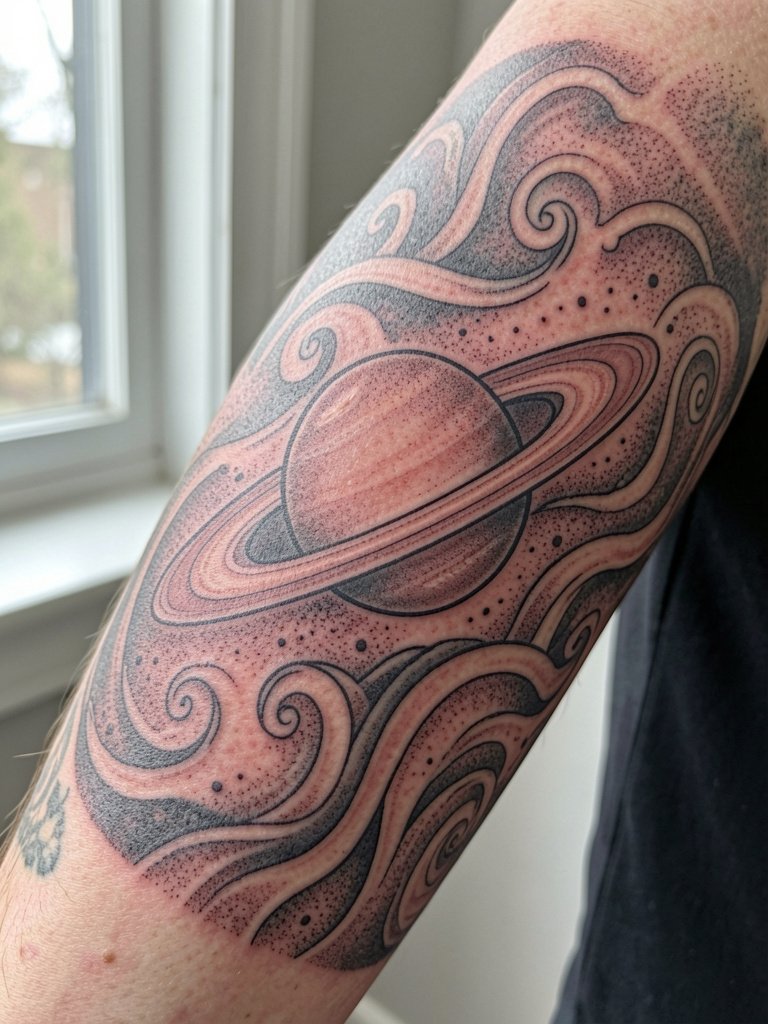
When Saturn becomes a background element in a sleeve, it should be simplified so it does not compete with foreground imagery. Sessions vary, but expect multiple two-hour visits to weave the planet into surrounding textures. A frequent mistake is over-detailing the rings which then muddle next to bolder sleeve pieces. Tell the artist which motifs should read as foreground and which as backdrop and bring scale references at three and five inch widths. For showing a forearm sleeve, cuffed shirts and rolled-up linen shirts reveal the work without crowding the view.
10. Watercolor Saturn Wash on Calf
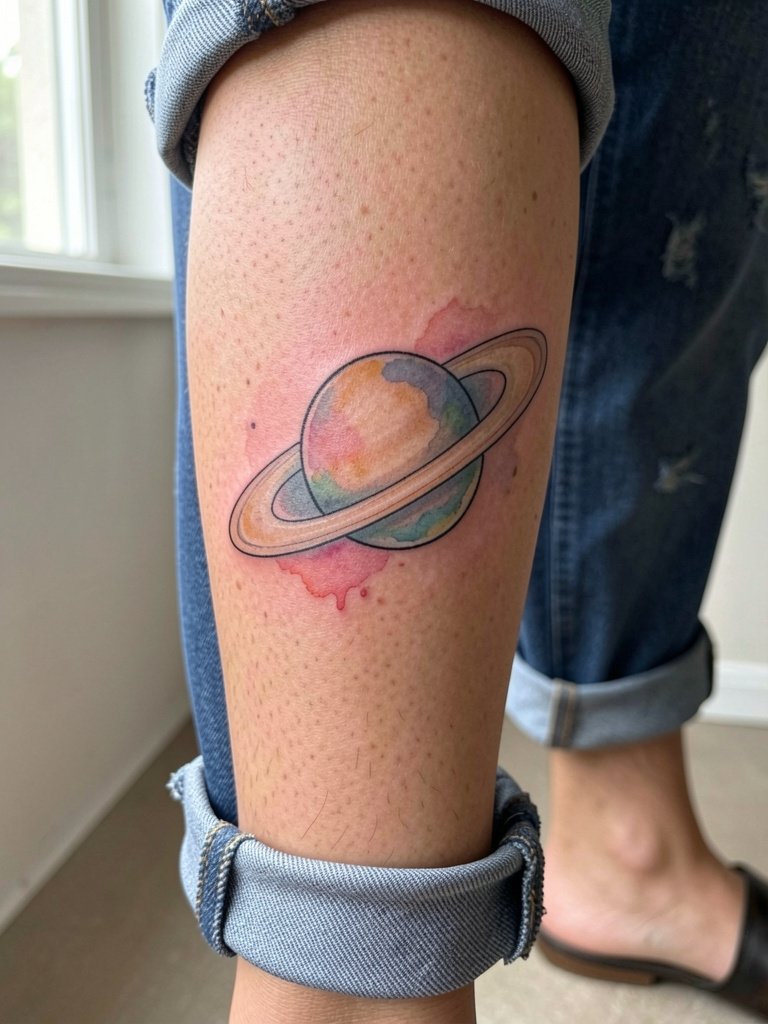
Watercolor techniques are visually appealing but they fade faster on high-motion areas like the calf. Expect a ninety to one hundred fifty minute session for decent saturation. A common problem is asking for feathered edges at small scales, which drain into a soft blur within a year. Ask for a slightly firmer outer anchor line so the color wash has a boundary as it ages. Calf pieces pair well with casual summer looks like wrap skirts and show nicely when you wear sandals.
11. Micro-Realism Saturn on the Side of the Neck
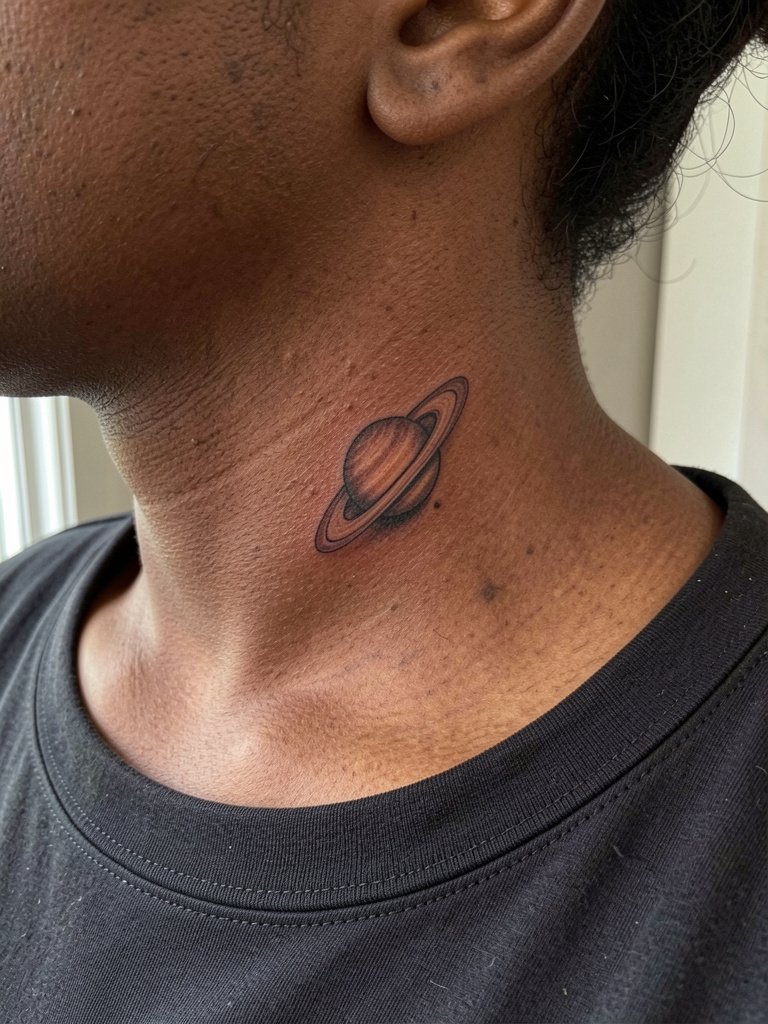
Neck tattoos age differently because of sun exposure and movement. Sessions here are short but sensations can be intense, so plan for breaks. Artists disagree about ultra-fine neck detail. One perspective warns that tiny micro-realism on neck skin blurs quickly due to constant motion and sun. The other perspective says careful placement and modest size keeps the piece readable and they cite healed neck work at year three. If you choose this route, request slightly stronger contrast and plan for a touch-up at year two. Sensitive placement note: side-neck work requires an artist who specializes in head and neck proportions.
12. Saturn Ring Finger Band
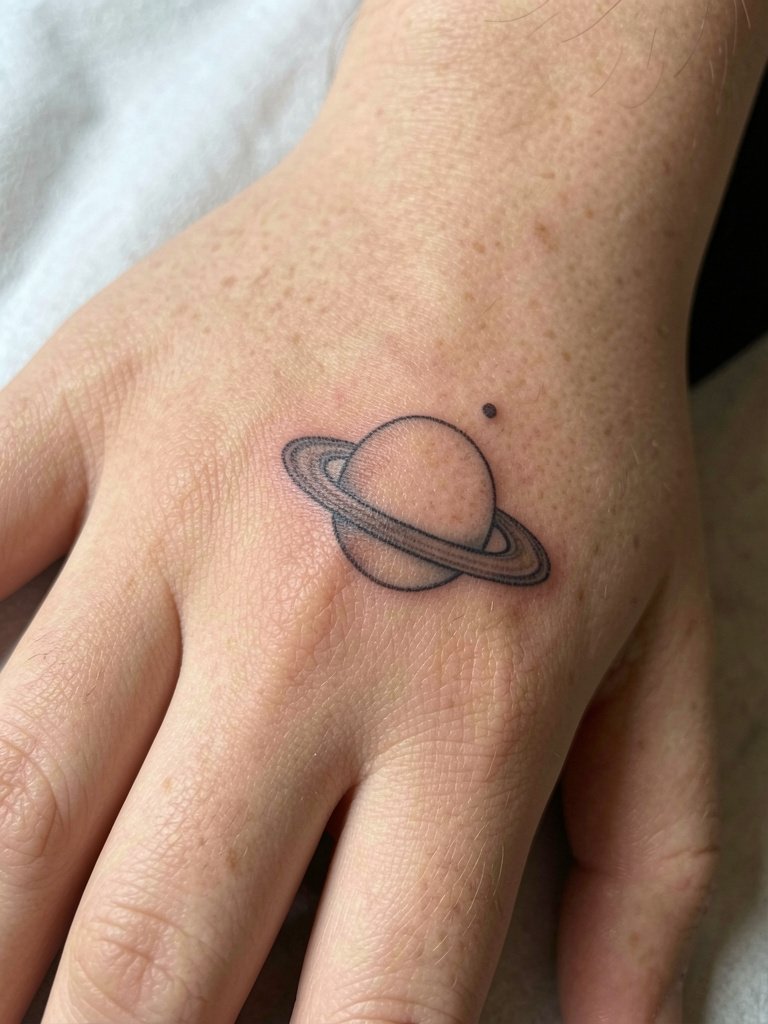
Finger tattoos are high-friction and prone to faster fading and blowout. Sessions are short but the upkeep is real, with likely touch-ups every twelve to twenty-four months. A frequent error is expecting fine line fidelity over time. Ask for a slightly thicker band and plan touch-ups to keep the ring crisp. For the appointment, wear an open-finger glove or minimal jewelry so the artist has clear access and you do not cause extra rubbing.
13. Blackwork Saturn Back Piece With Starfield
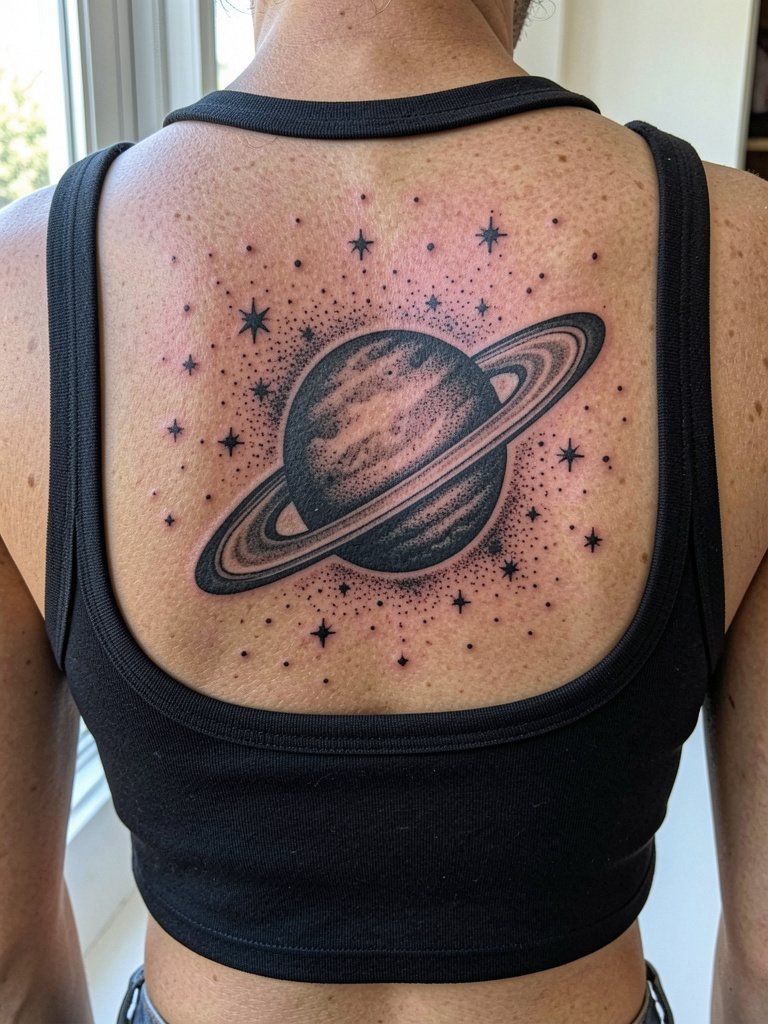
Large blackwork absorbs well on the back and holds contrast longer than small micro details. Expect multiple sessions for saturation and dot work, each two to three hours. A common mistake is overcomplicating the starfield with tiny dots that compete with the saturated rings. Specify a mix of large and small dots so the texture reads at distance and up close. For showing this piece, low-back dresses or open-back tops work, and a backless evening top reveals the composition without strain.
14. Tiny Saturn Tattoo Behind the Ear
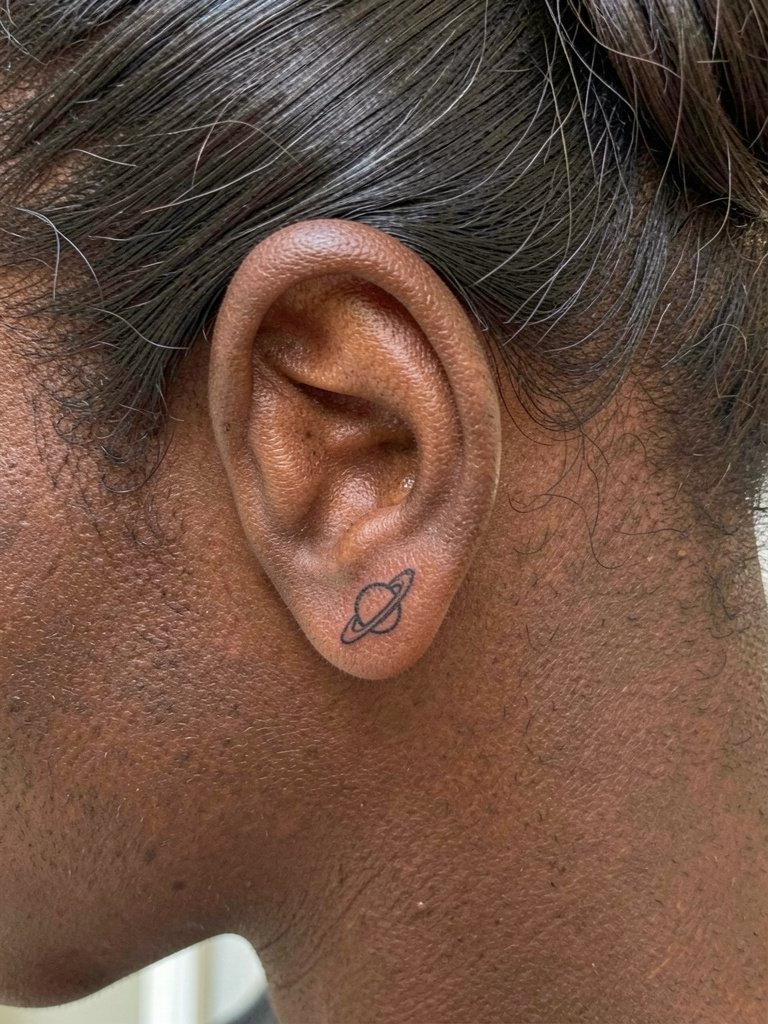
Behind-the-ear tattoos are intimate and delicate, but they fade faster due to hair products and sun when hair is up. Sessions are brief, often under thirty minutes, with moderate pain. People often ask for text or micro filigree that becomes unreadable. Choose a bold simplified silhouette instead and plan for touch-up at year eighteen months. Sensitive placement note: behind-ear work requires clean stencils and an artist who understands the mastoid contour.
15. Saturn Celestial Compass on Sternum
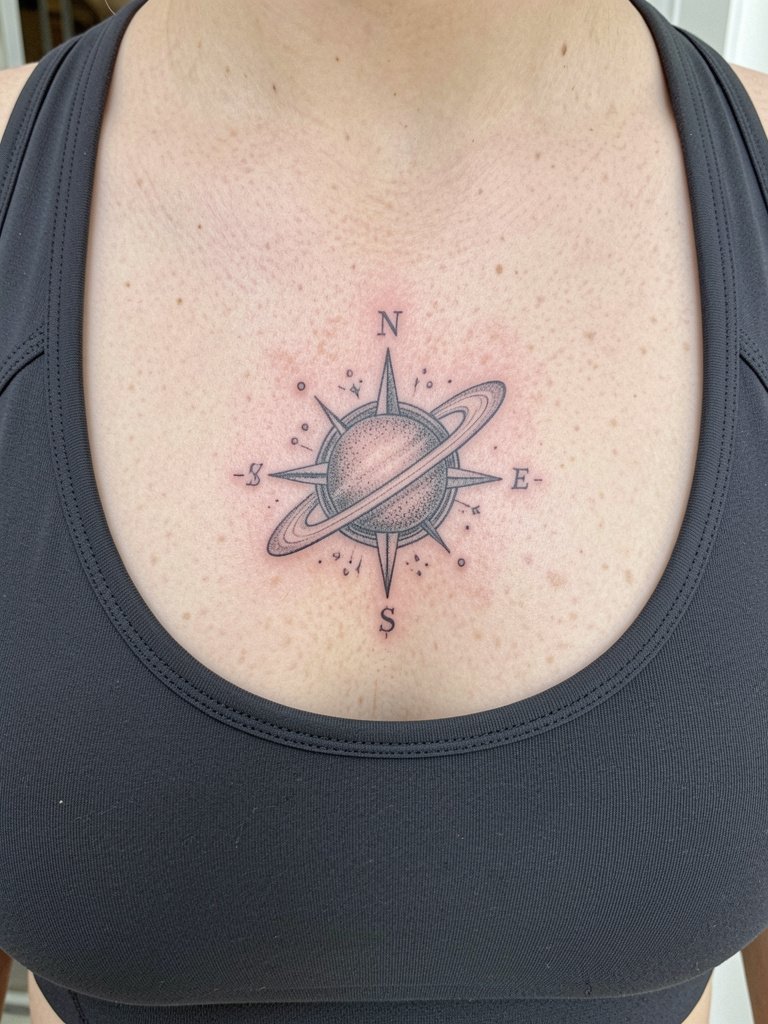
Sternum work pinches between the ribs and under the chest, and pain is often high. Sessions require pacing and can take two to three hours for a medium-sized compass. Fine-line sternum tattoos trigger a real debate in the field. One group cautions that the skin under the chest moves and compresses, which blurs ultra-fine points within a couple of years. The other group argues that with slightly wider spacing and strategic negative space the compass will retain clarity and they will point to healed examples to demonstrate. Because opinions split, ask for previewed spacing that reads both at four inches and at two inches. Sensitive placement note: sternum pieces need an artist experienced with chest anatomy.
Frequently Asked Questions
Q: How do ring thickness and spacing affect longevity for Saturn tattoos on different placements?
A: Ring thickness and spacing are the two biggest longevity levers. Thicker, cleaner outlines resist blur on wrists, fingers, and ribs, while slightly wider negative space keeps inner detail visible on forearms and thighs. Expect touch-ups sooner on the ankle and fingers than on the shoulder blade or back.
Q: Where can I find healed examples and portfolios without naming artists directly?
A: Search platform hashtags for healed shots and use location filters to find portfolios near you. Try tags like #SaturnTattooHealed, #CosmicInkHealed, and #MicroRealismTattoo on Instagram and TikTok, and scan Reddit tattoo threads in city subs for recommended studio names. Use keywords when browsing portfolio sites to surface healed images in different skin tones.
Q: I want color for a Saturn piece, which placements handle saturation best?
A: Thigh and back pieces accept saturated color well because they avoid constant sun and friction. Calf and shoulder blade also hold color, but expect more gradual fading on the calf because of movement. Pack a loose outfit for the session and plan for a touch-up at year two for bright pigments.
Q: How should I dress for sessions for collarbone, sternum, and thigh placements?
A: Wear clothing that gives the artist unobstructed access without tugging. For collarbone or sternum consider a fitted sports bra or wide V-neck top. For thigh work wear fitted bike shorts so the artist can expose the area without you fully disrobing. A sample session outfit is a fitted sports bra and loose joggers.
Q: Do certain Saturn styles need specialized artists or different session pacing?
A: Yes. Micro-realism and single-needle work need artists who routinely show healed micro work in portfolios. Large blackwork and saturated neo-traditional pieces require longer saturation sessions and sometimes separate color fills. Plan realistic session lengths and expect more breaks for chest and rib placements.
Q: How often do Saturn tattoos need touch-ups and what affects that timeline?
A: Touch-up frequency varies by placement, size, and technique. Fingers, ankles, and ribs often need top-ups within one to two years. Forearms, thighs, and backs can go longer, often two to five years. Heavy sun exposure, friction, and very fine initial lines accelerate the need for touch-ups.
