
The hourglass is shorthand for time kept close to the skin, and how you render it decides what that sentence will say in five years. Small single-needle hourglasses can look fragile at first but often blur, while bolder silhouettes hold their language. Read on for carefully chosen hourglass concepts that balance meaning, aging, and wardrobe so you can sketch the right brief before the stencil goes down.
1. Fine Line Hourglass on the Inner Forearm

A thin inner-forearm hourglass reads like a quiet note on time. Recommend this for someone who wants visible placement without heavy contrast. Ask for slightly heavier single-needle weight than a hairline so the grains stay discrete after a year. The most common error is copying a Pinterest micro design too small, which often fills in. At six months the frame will look crisp, at two years fine dots may soften, and at five years expect some merging of the smallest grains. Session time is usually short, under an hour. For showing it off, pair with a rolled-cuff short sleeve linen shirt that stops above the forearm so the piece sits in plain view.
2. Geometric Hourglass in Negative Space on the Outer Bicep
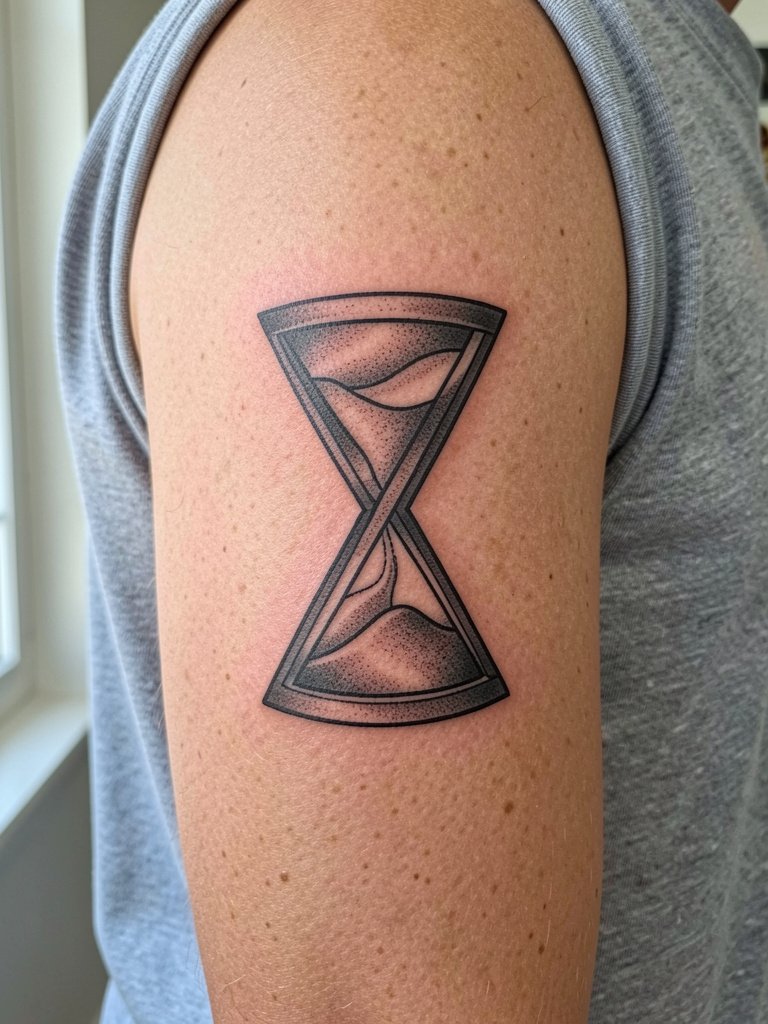
This geometric take holds up well because larger planes of black and negative space resist softening. Recommend it when you want visual weight without color. During the consult, show the artist the exact scale you want and request stipple shading around the silhouette rather than washed grey, which ages into a patch. Outer bicep blowout risk is modest, but avoid razor-thin internal bars. Expect a two-hour session with moderate discomfort. Style it with a muscle-tank linen vest for warm months so the arm shape frames the design.
3. Botanical Hourglass with Wildflower Sand on the Ankle
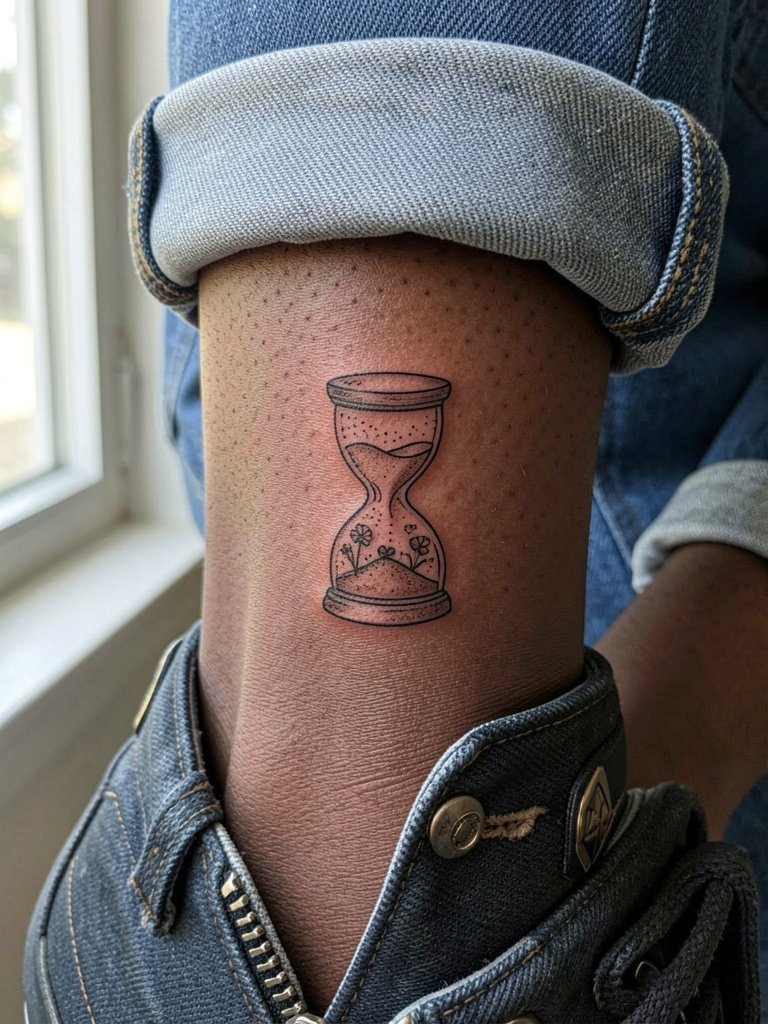
Ankle placements face constant friction from socks and shoes, so silhouettes beat super-fine filigree here. Opt for clear negative-space flowers rather than tiny petal details. Bring two reference photos that show the flowers at a few sizes so the artist can judge scale for the ankle curve. The common mistake is compressing too many tiny elements into a small area. Expect short sessions under 90 minutes and a touch-up often within the first year. To show it off, wear rolled cuff jeans or low-cut sandals that leave the ankle visible.
4. Hourglass with Moon Phases on the Side Ribcage
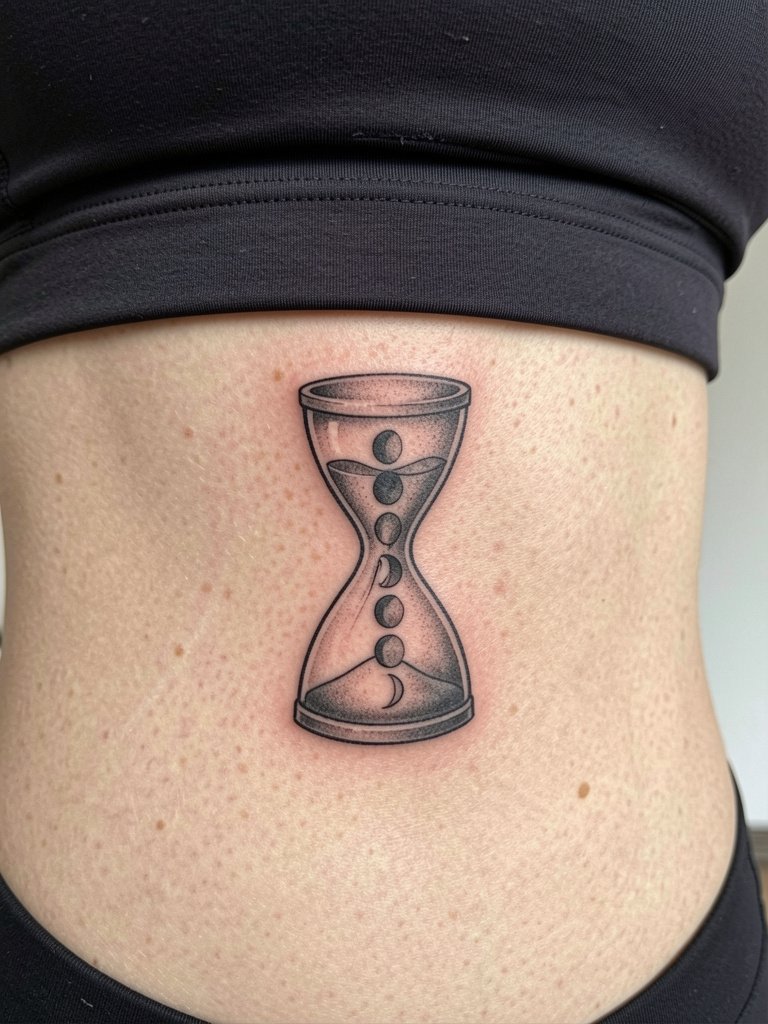
Ribcage hourglasses make a strong vertical statement, but fine line there splits artists. One camp says the skin stretch and movement blur fine lines within two years on the ribs. The other camp argues that with slightly bolder single-needle depth and wider spacing the lines settle clean. If you choose ribs, request a mock-up at full scale and plan for a longer session with breaks. Pain levels are high compared with limb work so bring a strategy for pacing. For session wear, a fitted sports bra lets the artist access the area while keeping modesty. Expect a touch-up at 6 to 18 months if you favor thinner linework.
5. Neo-Traditional Hourglass with Animal Motif on the Shoulder Blade
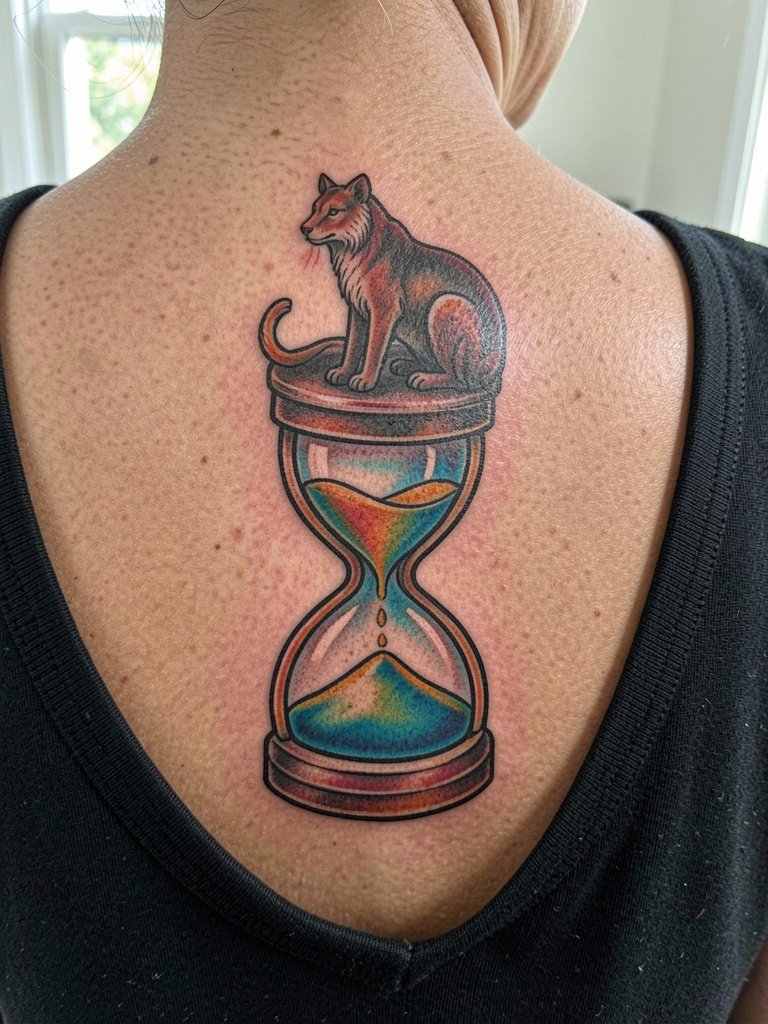
Neo-traditional color reads well on the shoulder blade because the flat surface takes saturation evenly. Choose this if you want a dramatic motif that still ages predictably. Bring color swatches and ask the artist to map out saturated zones rather than thin washes. A common mistake is asking for micro-dot color fills which can fade into a dusty look. Sessions run two to four hours depending on color complexity, and pain is tolerable. Show it off with off-shoulder tops that frame the back without covering the artwork.
6. Minimalist Hourglass Linework Behind the Ear

Behind-the-ear hourglasses are discrete and low session-time, but the skin there can be patchy. I recommend a slightly heavier single-needle stroke so the silhouette keeps reading as the skin moves. The technique that ages poorly is ultra-microscopic detail, which blurs quickly in that thin skin. Sessions are short, often under 30 minutes, and pain is moderate. Note that artist experience with ear-adjacent work matters because of surface irregularities. For visible styling, tuck hair into a casual claw clip when you want that hint of ink behind the ear.
Session Day Picks
A few practical items shorten chair time and keep the small, visible pieces above looking like you expected during the first week.
-
Stencil transfer paper kit. Lets you preview exact placement, which is especially useful for forearm and ribcage mock-ups in ideas above.
-
Breathable compression wrap. Useful for ankle and shoulder blade pieces to reduce swelling during long sessions.
-
Non-slip chair grip socks. Keep your foot steady during ankle and lower-leg work without shifting the stencil.
-
Reusable water bottle with wide mouth. Staying hydrated helps recovery and keeps you comfortable during multi-hour sessions.
-
Aquaphor healing ointment. A thin layer can lock in moisture in the immediate days after most of the small visible pieces above.
7. Blackwork Silhouette Hourglass on the Calf

Calf pieces let you go large without the torso pain. Recommend blackwork silhouettes when you want a bold statement that resists softening. During the consult, ask for saturated fills with crisp negative highlights instead of grey shading that can look patchy later. Mistakes include over-detailing internal elements that vanish under muscle movement. Expect two to three hours for a solid fill. To pair with everyday wear, use mid-calf boots or cropped trousers that let the calf sit in view when you want it seen.
8. Hourglass with Portrait Fragment on the Inner Thigh
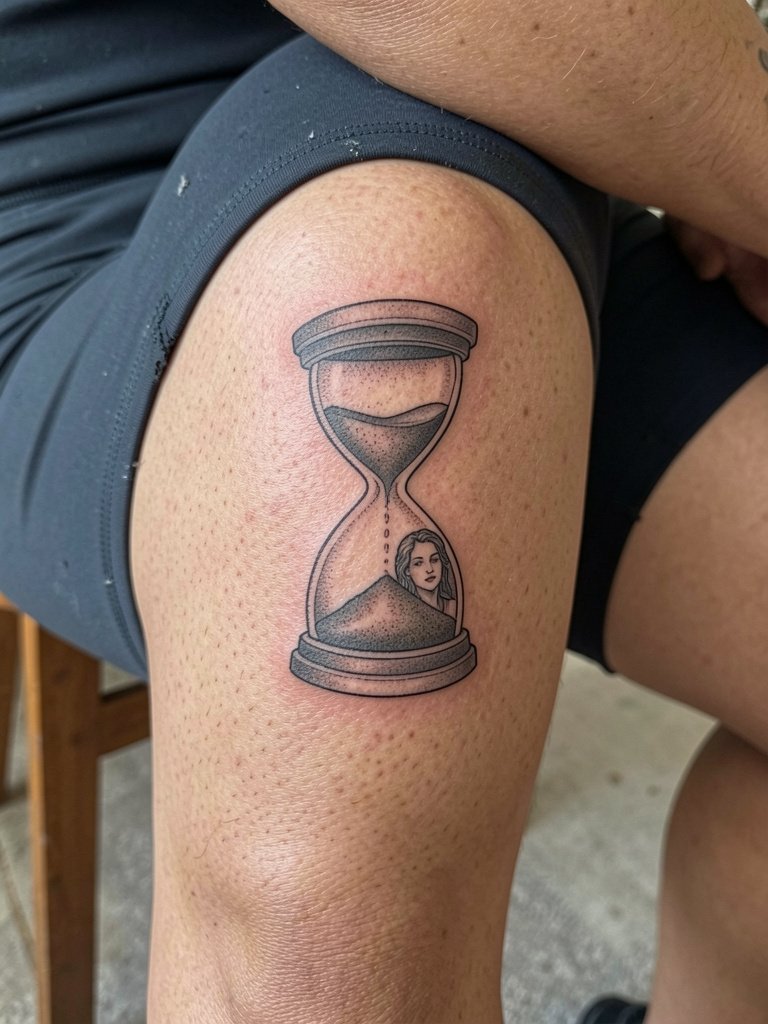
Inner-thigh hourglasses are intimate and require an artist experienced with that canvas. One common oversight is asking for extreme portrait detail too small for the movement-prone inner thigh. I suggest a slightly larger portrait fragment and stipple shading to hold over time. Sessions can be longer and more tender than limb work, so plan for breaks. For professional considerations, seek an artist comfortable with intimate placements. Choose session wear like mid-length bike shorts so the artist has access while you stay comfortable.
9. Architectural Hourglass with Clockwork Gears on the Outer Thigh
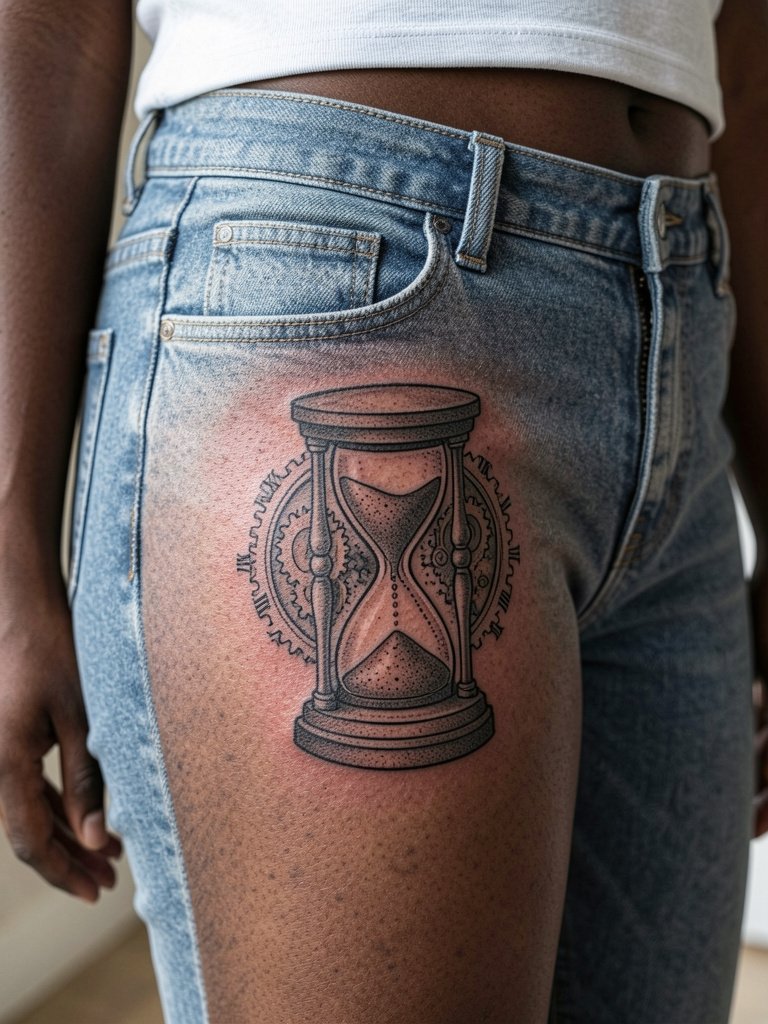
Outer-thigh pieces let you go large and detailed with less blowout risk than hands or ribs. Recommend this when you want mechanical motifs that age with the body. Ask the artist to map mechanical parts at full scale and leave slightly wider gaps between gears so the details read at two years. Mistake patterns include cramming micro-gear teeth that disappear when the skin shifts. Sessions vary but expect multiple hours if color is added. Style with high-waisted shorts or skirts that stop above the piece to frame the artwork.
10. Stippling Hourglass with Celestial Map on the Sternum
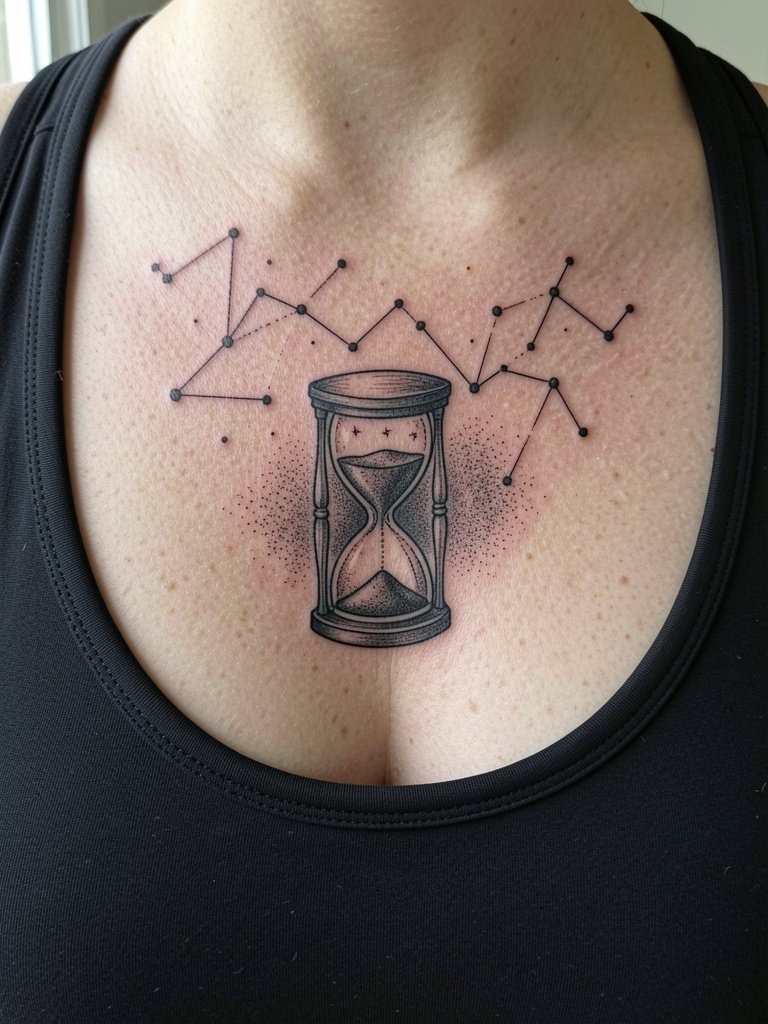
Sternum work is intimate and polarizing. One camp believes that fine stipple and single-needle constellations blur fast on the sternum because of chest movement and thin skin. The other camp points to healed photos of well-spaced stippling and claims the look lasts when spacing and depth are managed. If you want this placement, request larger dot spacing and a planned touch-up window. Pain is higher than limb work so prepare for measured breaks. For session clothing, a fitted sports bra keeps access clear while preserving comfort.
11. Illustrated Hourglass with Botanical Frame on the Collarbone
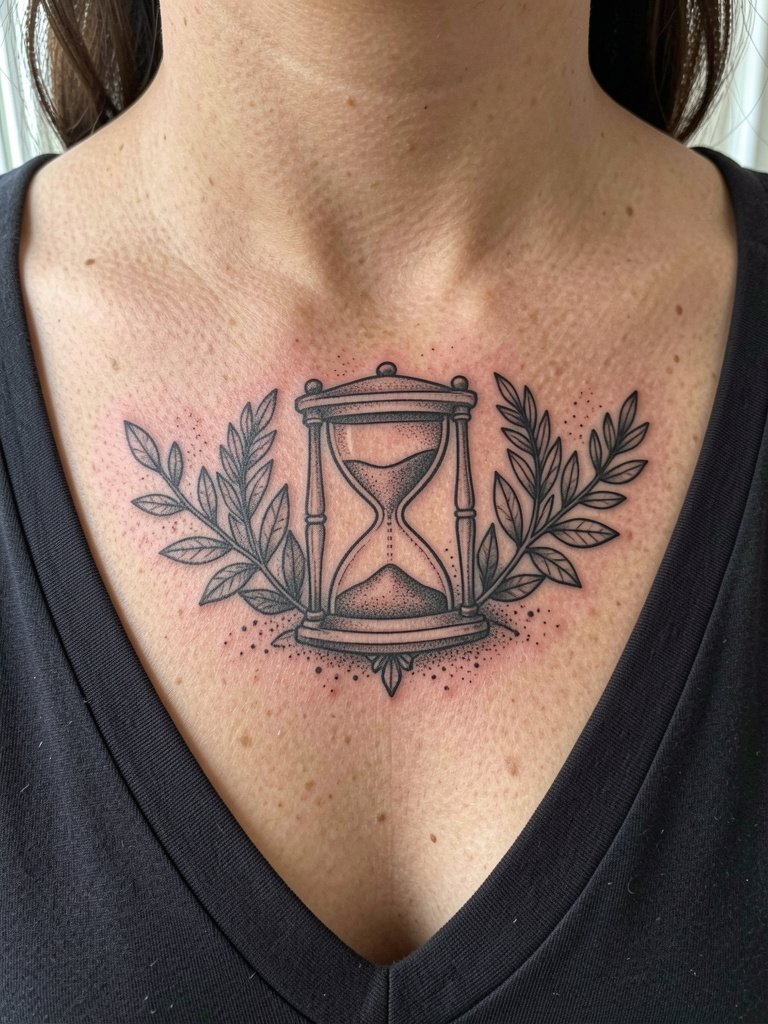
Collarbone pieces show beautifully but the area is high motion and sun exposure. Ask for a design that uses slightly bolder external outlines and lighter internal detail so the frame keeps reading as the inner elements age. The common mistake is tiny internal filigree that fades into indistinct marks after sun exposure. Expect a moderate session time and keep sun protection afterward. Pair the piece with open-neck blouses that let the collarbone sit in frame for evenings out.
12. Hourglass with Wave Motif on the Lower Leg
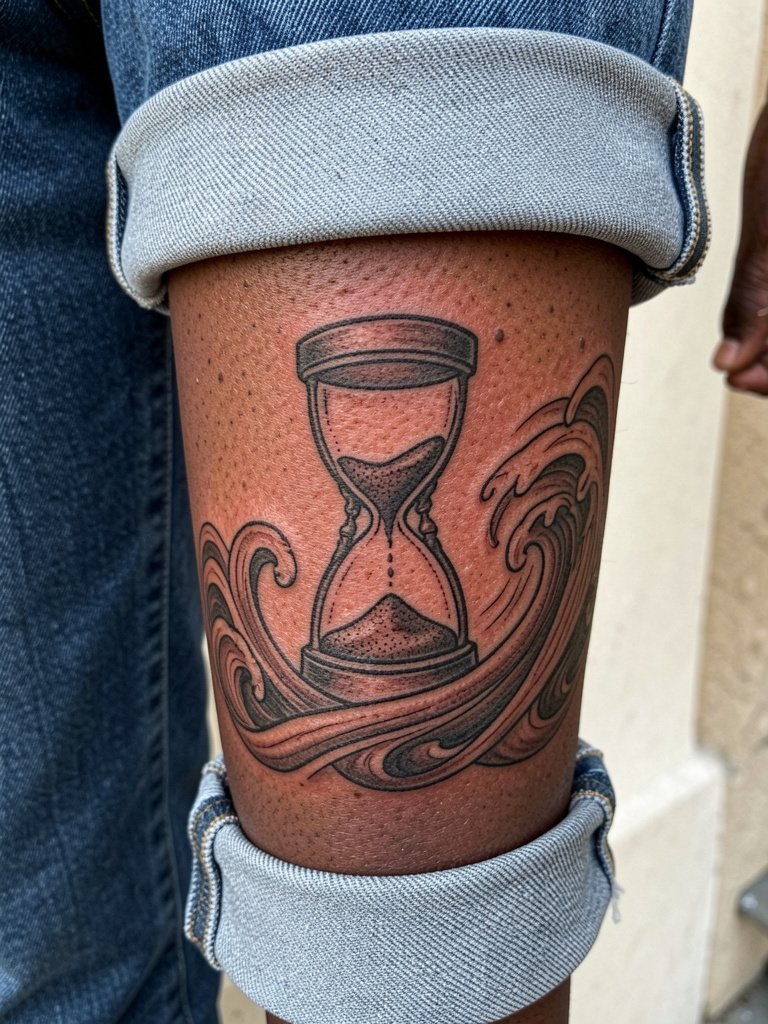
Lower-leg hourglasses are durable and visible when you want movement in the piece. This is a good pick when you want a flowing composition that reads at distance. During consultation, request that the flow of the waves follows muscular contours so the design bends naturally with walking. Avoid squeezing too many thin curls into a small area. Sessions usually run one to two hours. For showing off the design, cropped trousers or boat-neck sneakers keep the leg visible without overexposure.
13. Micro Hourglass on the Finger Side Panel

Finger placements demand compromise. I recommend a bold micro silhouette rather than delicate filigree because the skin and frequent washing cause rapid fading and migration. Be specific about slightly heavier line weight and reserve expectations for a future touch-up. Many people expect finger pieces to be permanent without revisits and that leads to disappointment. Sessions are relatively short but touch-ups are common at 6 to 12 months. For pairing, rings and stacked bands work well, and a fine adjustable midi ring set keeps attention on that side panel.
14. Surreal Hourglass with Landscape in the Chambers on the Back

Upper-back hourglasses give room for storytelling and scale that stands the test of time. For this, request layered greywash and clear separation between the chambers so the landscapes do not merge as the piece ages. A frequent error is adding minuscule landmarks that vanish under shoulder movement. Expect longer sessions often split into two visits. To display it for events, pick open-back tops or low-back dresses that frame the work without stressing the healing skin.
15. Transitional Hourglass Sleeve Accent on the Forearm

Using the hourglass as a repeating sleeve element ties a larger composition together without forcing a single centerpiece. Recommend planning the accents at consistent scale and alternating bold and fine elements so future touch-ups are predictable. A mistake is mismatched scale between accents so some look like stamps and others fade into the background. Forearm sleeves involve multiple sessions and moderate pain during longer sittings. For wardrobe, rolled sleeves and lightweight cuffed shirts let the sleeve read without hiding the transitions.
Frequently Asked Questions
Q: How do single-needle hourglasses hold up compared with bold silhouettes?
A: In my experience single-needle pieces can look very crisp for the first year but often soften faster than bold silhouettes. If you want longevity without frequent touch-ups, ask for slightly increased line weight and space between internal dots. For collarbone and rib placements plan for touch-ups sooner than forearm or calf work.
Q: Where can I find healed examples and portfolios without naming artists directly?
A: Search platform tags like #HourglassTattoo, #HealedHourglassInk, and #TimepieceTattoo on Instagram and TikTok and add your city to filter local portfolios. Reddit tattoo communities and portfolio galleries on specialized sites are also helpful for seeing healed shots in different skin tones. Use location filters and "healed" as a keyword to narrow results.
Q: Are there cultural or symbolic concerns I should worry about when adding iconography inside an hourglass?
A: Yes. One camp argues that inserting sacred or culturally specific iconography inside a decorative object can strip that imagery of context and feel appropriative. The other camp contends that respectful homage with clear attribution and artist collaboration can be meaningful. If you plan to use symbols with known cultural origins, mention their origin and ask the artist how they will honor context and avoid reductive treatment.
Q: What should I wear to a ribcage or sternum session to stay comfortable and give access?
A: For sternum or ribcage work wear a fitted sports bra or a crop top that you can leave on during the session. That keeps modesty and gives the artist clear access. For ribs bring a loose button-front shirt you can step into after the session without pulling fabric over the head.
Q: How often should I expect touch-ups for visible placements like hands, fingers, and ankles?
A: Based on what I have seen, hands and fingers often need touch-ups within the first year because of friction and washing. Ankles and outer calves generally last longer but may need a small refresh at 18 months. Plan touch-ups as part of the process rather than an emergency.