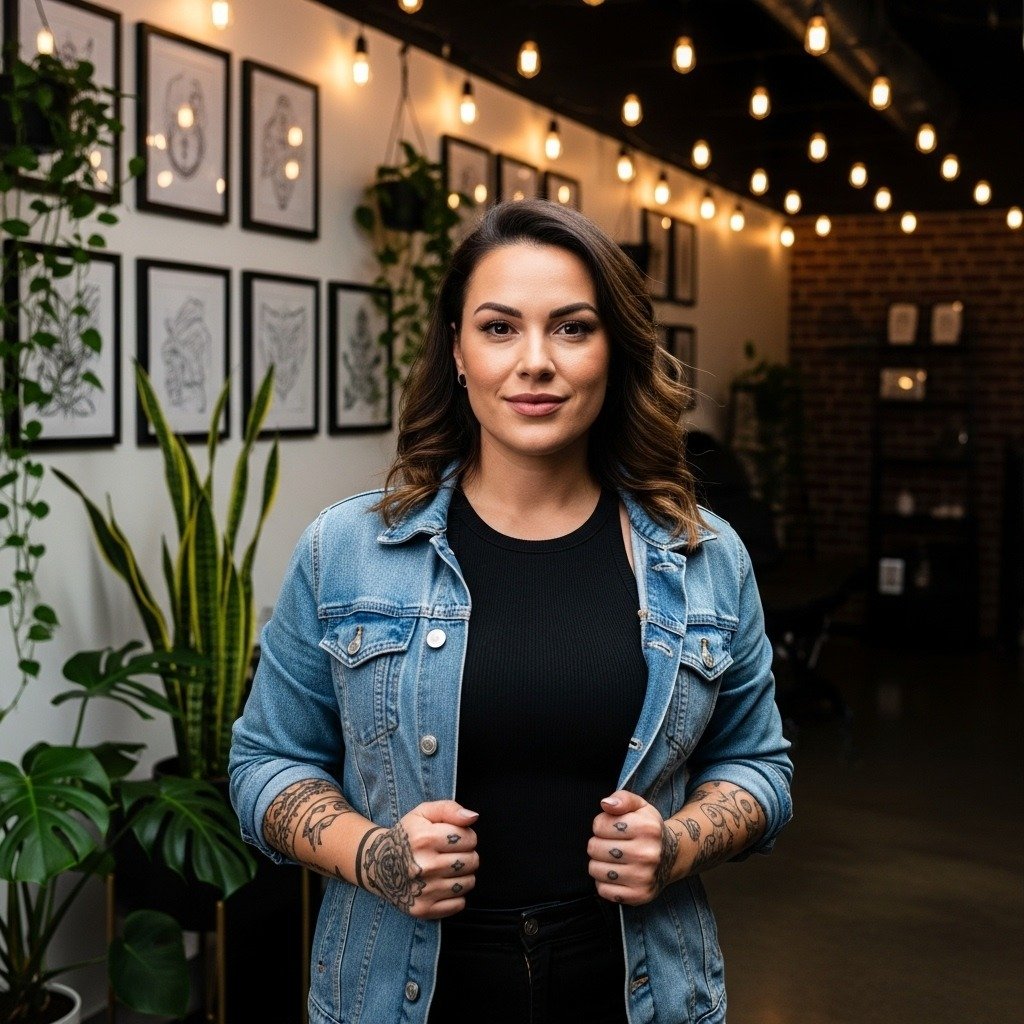
Traditional snake tattoos keep circulating through trend feeds, but what actually lasts is a mix of scale, spacing, and ink saturation. Bold black outlines and simple curves tend to age cleaner on moving skin, while ultra-fine single-needle snakes can blur if they sit too close to joints. Read through these designs with an eye for how they will look healed, and the first idea will show a fine-line approach that still holds up.
1. Fine‑Line Coiled Snake on Inner Forearm
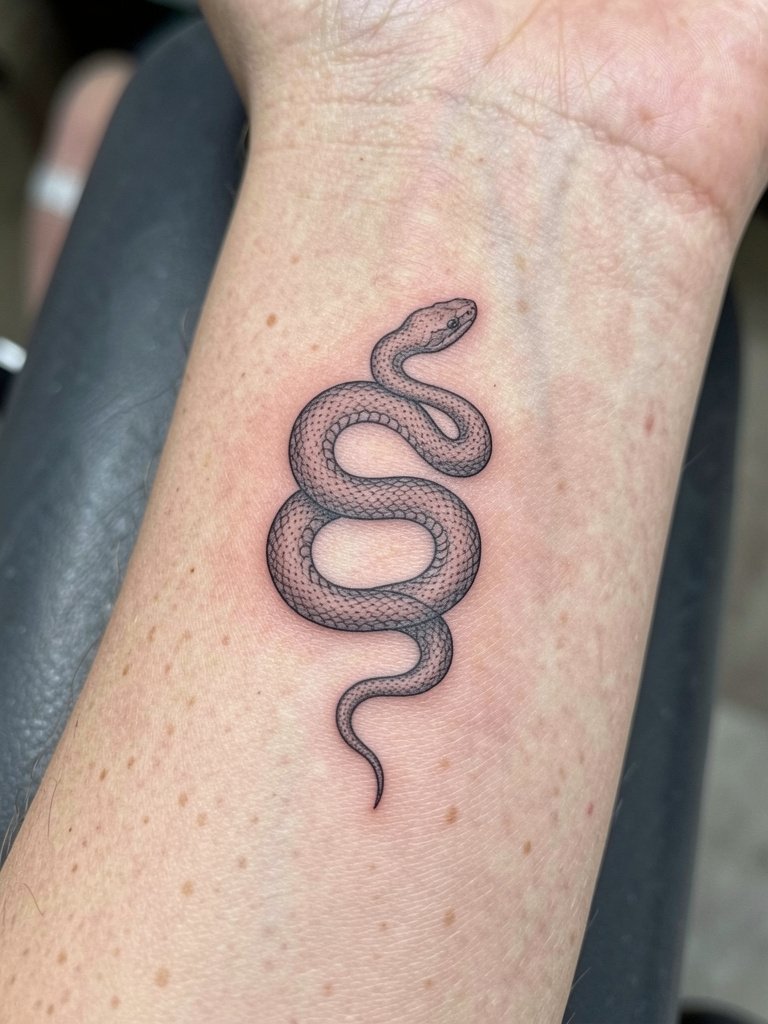
A finely detailed coil on the inner forearm reads intimate and spare. I recommend this when you want visible linework without a heavy color block. Specify slightly heavier single-needle weight than the Pinterest reference so the line keeps structure after a few years. Expect a one- to two-hour session, mild soreness, and a touch-up around year two for redefinition. Common mistakes include asking for the thinnest possible script lines which the inner forearm can blur. For show-off outfits pick a rolled-up linen shirt in a neutral tone so the forearm sits clean against the sleeve.
2. American Traditional Snake and Rose on Outer Bicep
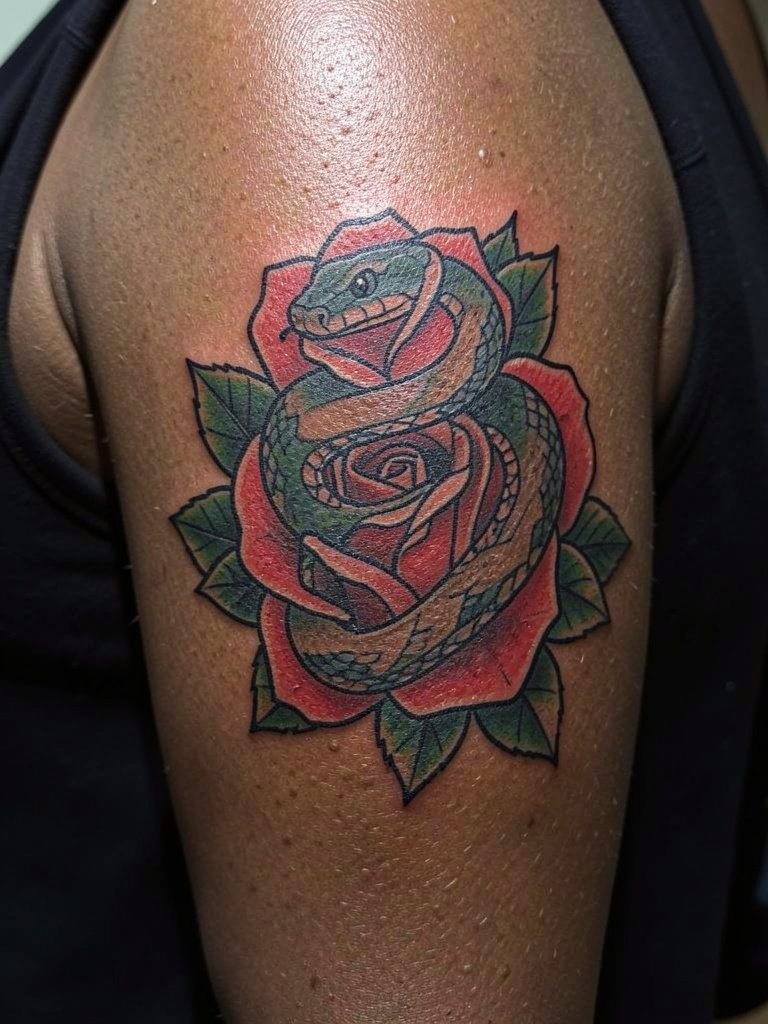
This combination is a go-to when you want a design that reads from across a room. I suggest asking for thick, confident outlines and saturated fills to avoid early fading. The session is moderate in time and pain, often two to three hours. Discuss with the artist where the snake head and rose align so the piece rolls naturally when you flex. Blowout risk is low on the outer bicep, but tell the artist to keep heavy blacks away from extremely thin lines to preserve crispness. Pair this with short-sleeve henleys to show the composition without covering it.
3. Hooded Serpent on the Ribcage
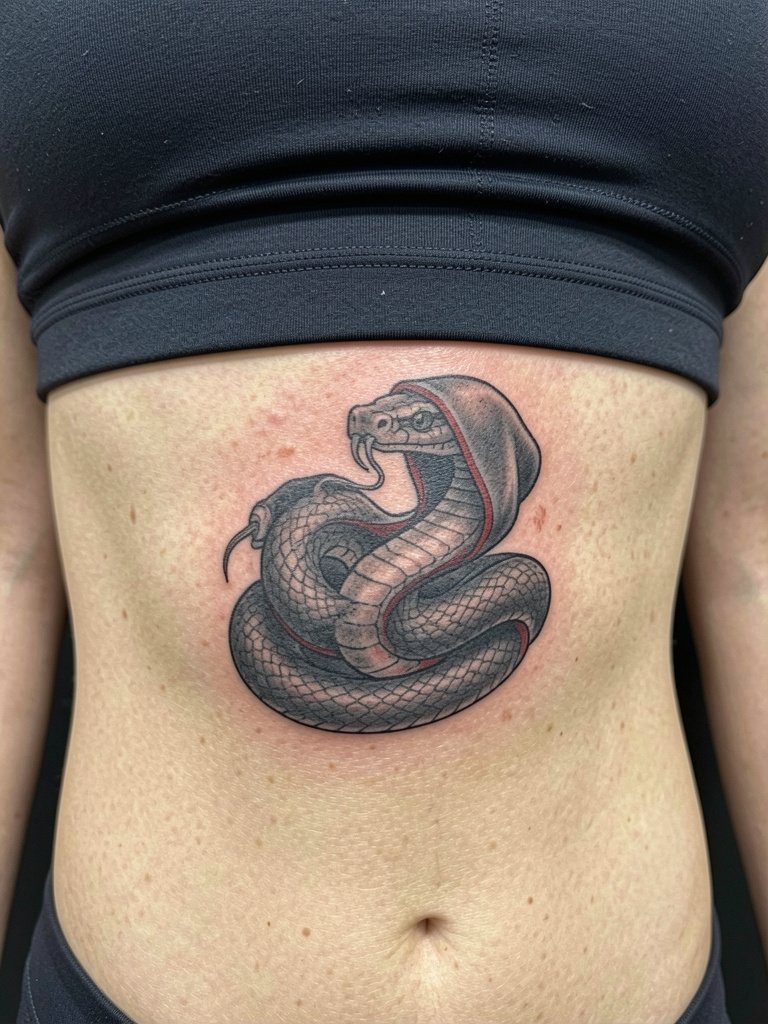
Ribcage tattoos move with breath and body shape, so spacing matters more than tiny detail. One camp says fine line on ribs blurs within two years because the skin stretches and moves too much. The other camp says properly spaced lines and slightly heavier depth will settle fine, and they point to healed photos that show it. Expect a longer session with sharp discomfort in spots and plan for a break halfway through. A common mistake is requesting intricate micro details that the rib skin will not hold at small scale. For session comfort wear a fitted sports bra so the artist has clear access without fabric shifting.
4. Minimalist Ouroboros at the Nape
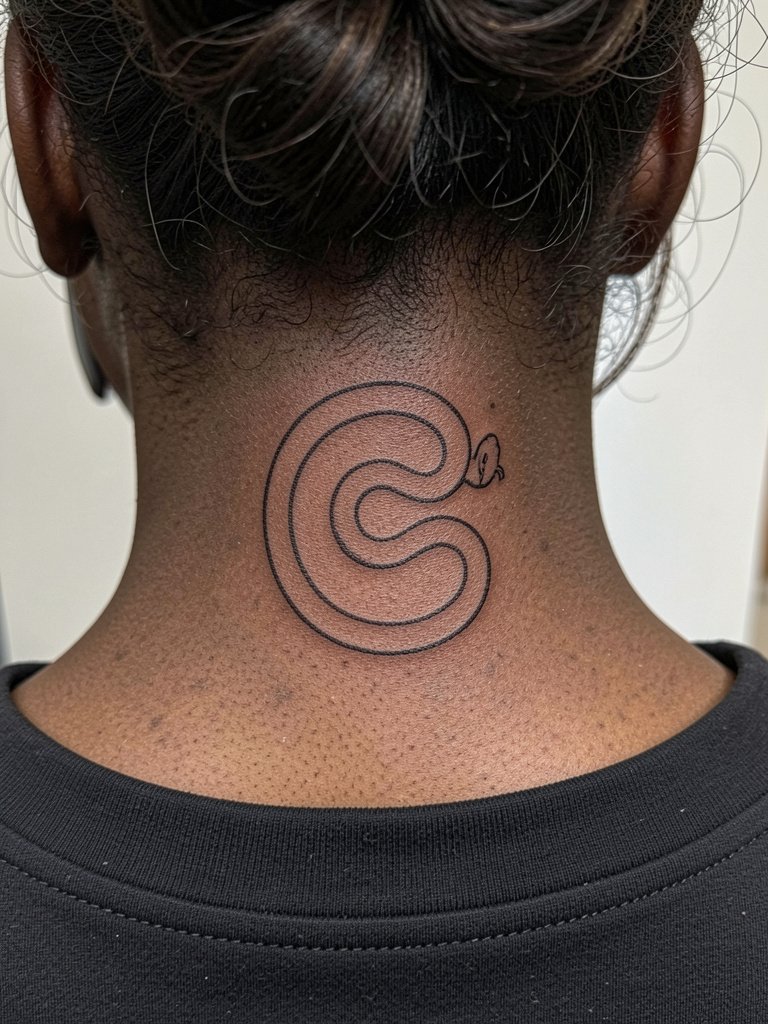
A compact ouroboros at the nape feels discreet and geometric. Because the area sits against hair and collars, ask for a slightly thicker line than your flat reference so the circle keeps its form after a year. Session length is short and pain is low to moderate. A mistake I see is placing this too close to the hairline where touch-ups require shaving or awkward access. For display, choose a low ponytail clip that keeps hair away and frames the symbol.
5. Blackwork Coil Sleeve Segment on Shoulder
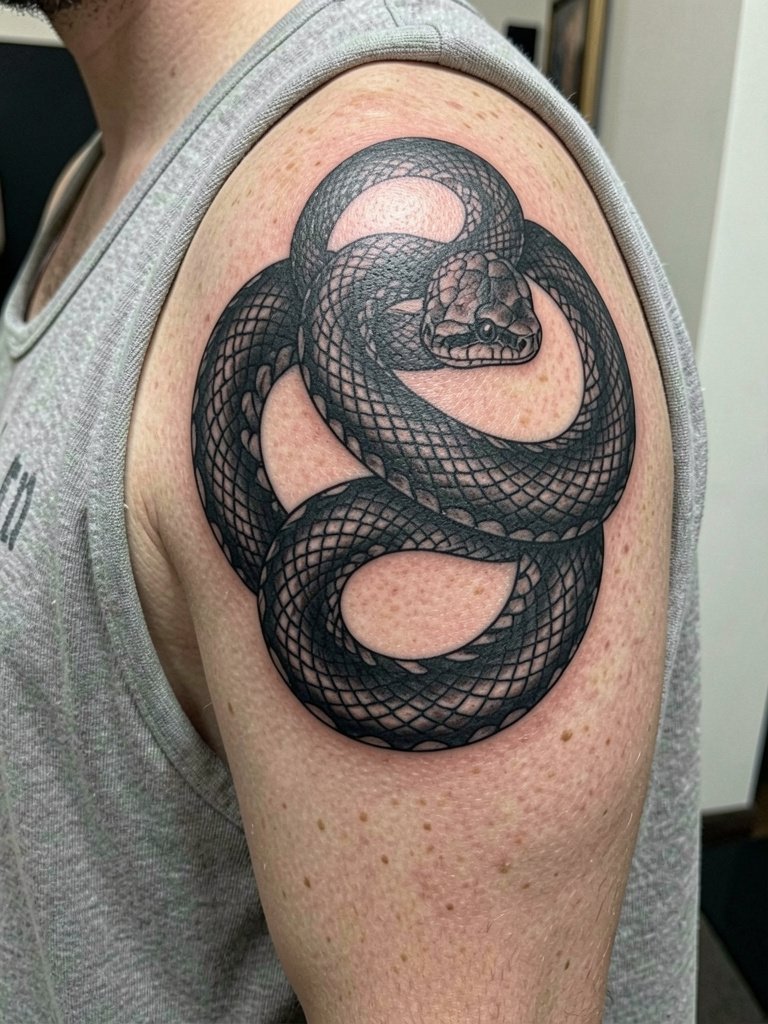
Blackwork holds up because saturation resists early fading. I recommend this if you want a bold piece that still reads as it ages. Sessions can be split; expect multiple blocks depending on coverage. Tell the artist where you want negative space so the pattern breathes when you move. A common mistake is requesting too many tiny details inside a saturated area, which then disappears. For the appointment wear a loose tank top so the shoulder is accessible and the fabric does not press on the fresh work.
6. Snake Piercing a Dagger on the Calf
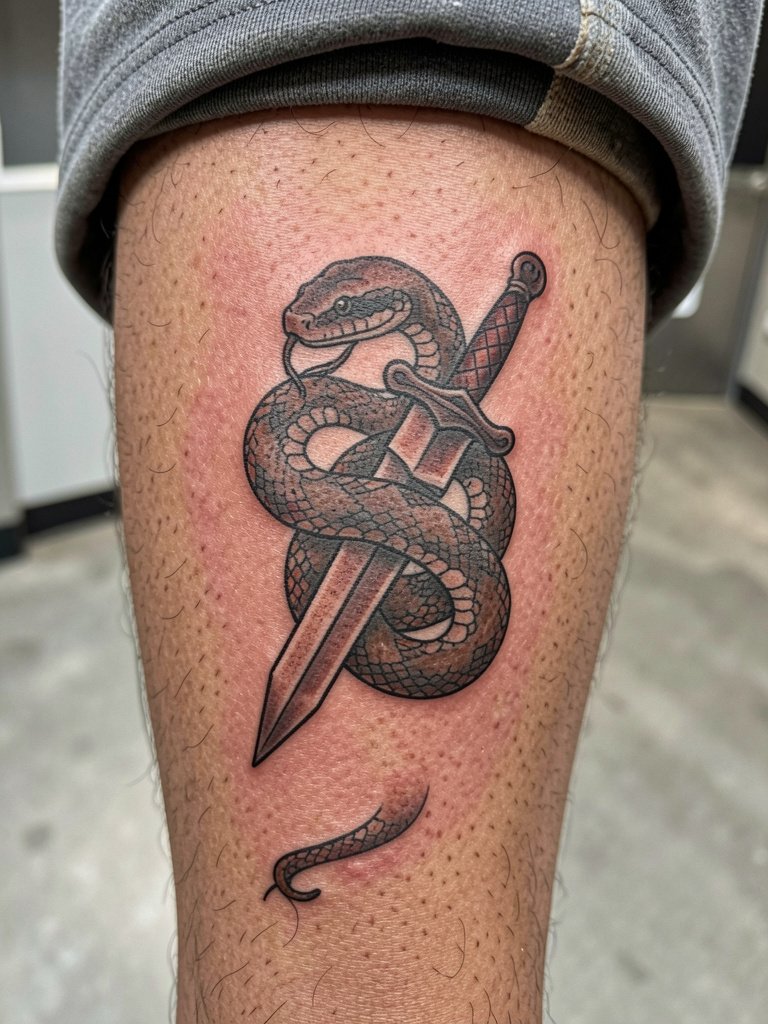
A calf piece reads well for vertical imagery like a dagger. It is low on blowout risk and sits comfortably for longer sessions. Plan for a two- to four-hour block depending on color. During consultation specify how the dagger point aligns to the muscle so it looks natural when you walk. A frequent mistake is asking for tiny script on the blade edge which fades into a thin mark. For showing it off, cropped shorts and mid-calf boots work well.
Pre-Session Essentials
These picks make scheduling and the first week easier for the forearm, shoulder, and calf pieces above.
-
Stencil transfer paper kit. Lets you preview the placement on skin before the artist inks, which helps with the coiled forearm and dagger alignment in ideas above.
-
Natural numbing cream. Applied per instructions reduces discomfort on ribs and sternum sessions without interfering with ink uptake.
-
Thin protective film roll. Keeps ankle and finger tattoos protected during the first week of frequent washing.
-
Fragrance-free gentle body wash. Cleanses the healing area without stripping pigments for the shoulder and calf work above.
-
Aquaphor healing ointment. Widely used for the initial sealing phase to keep fine line pieces supple without clogging the skin.
7. Geometric Serpent Wrist Band
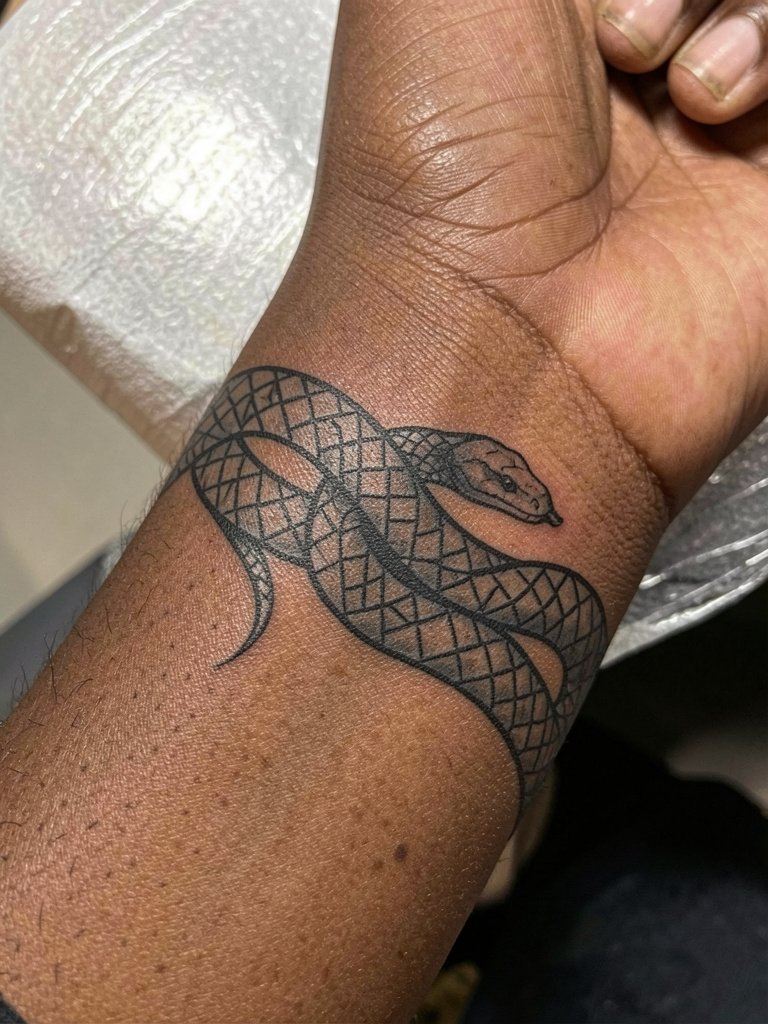
A banded geometric snake gives a modern edge to a traditional motif and works well as a wraparound accent. Ask for slightly wider spacing between pattern repeats so the design remains legible after frequent hand washing. A session is short but the wrist has higher movement, so expect a touch-up at year one. A mistake I see is squeezing too much detail into the band which then becomes a blurred stripe. For wear, a slim leather cuff bracelet can frame the band without covering the central motif.
8. Snake and Skull Sternum Centerpiece
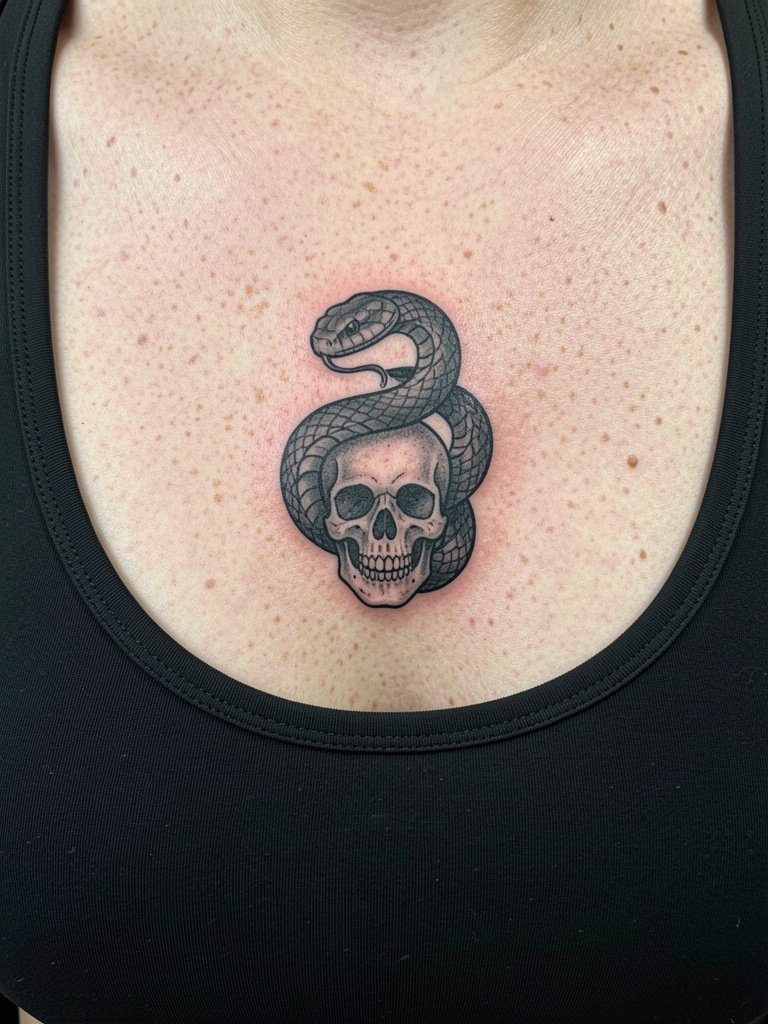
Sternum work sits on sensitive tissue and demands careful placement. Sessions are more painful and often broken into two passes. One common error is placing tight micro detail in the center line where swelling distorts the composition during healing. Discuss where the top of the skull aligns relative to the breast mound so symmetry remains after swelling. This area benefits from an artist experienced with underbust and sternum anatomy. For session comfort, wear a fitted top that gives access yet stays in place.
9. Floral Serpent Wrap on Upper Thigh
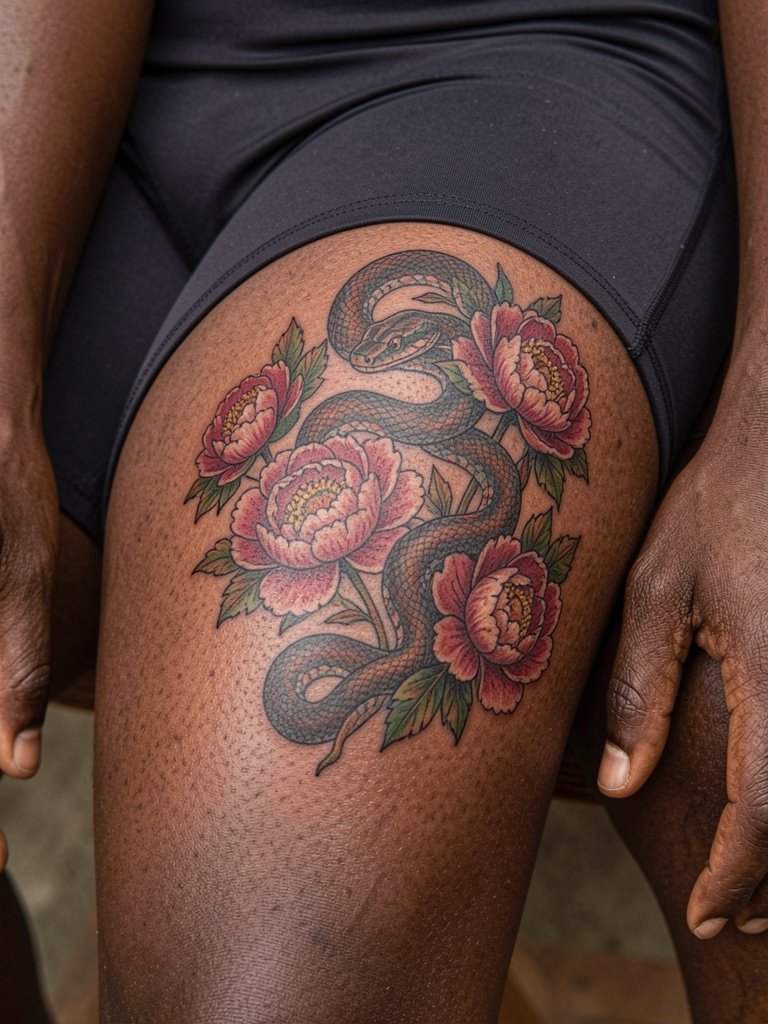
Thigh pieces let you go larger with flowing form and color. This placement bruises more, so expect a tender few days after a long session. Ask the artist to map how the snake curves when you sit and stand, so the composition does not look fragmented in daily poses. A common mistake is cramming tiny petals into open thigh space which then blends over time. For reveal-ready outfits try high-slit skirts or wrap midi dresses that let the pattern peek without full exposure.
10. Micro Coiled Finger Snake
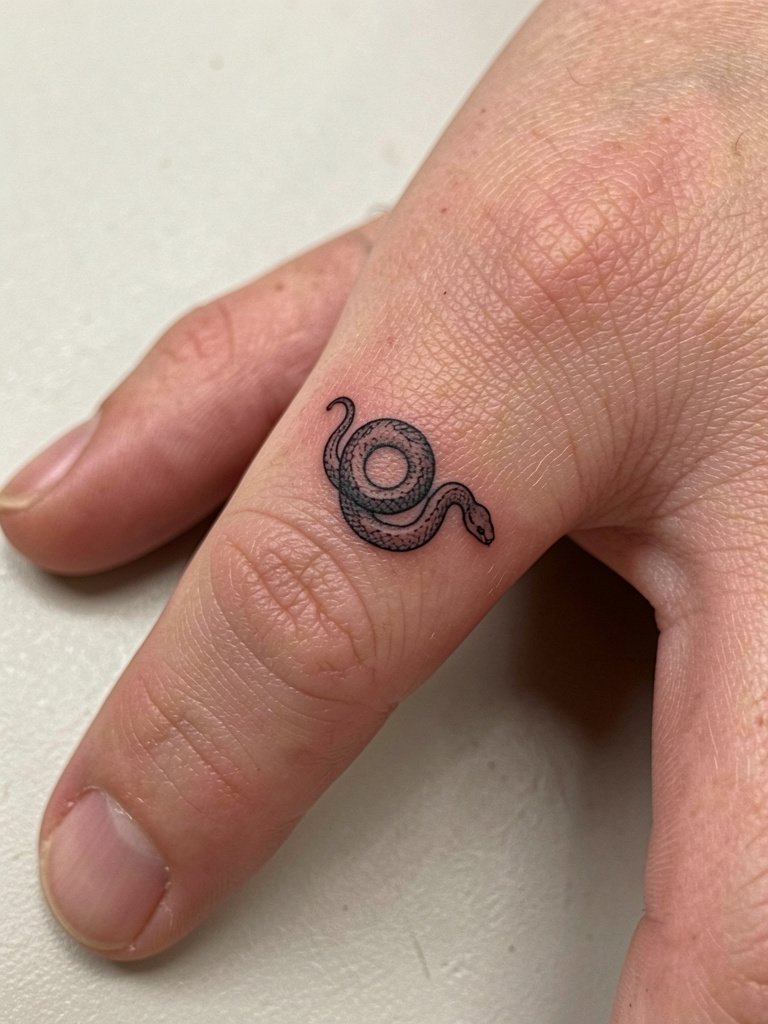
Finger tattoos are highly visible and face constant friction. I recommend broader single shapes rather than tiny intricate scales so the piece retains form. Expect faster fading and more frequent touch-ups than other placements. A mistake is asking for hairline detail across knuckles which usually becomes a soft blur. For session wear choose clothing that keeps hands accessible and avoids pressure on the fresh ink during travel.
11. Bannered Snake with Script on Upper Chest
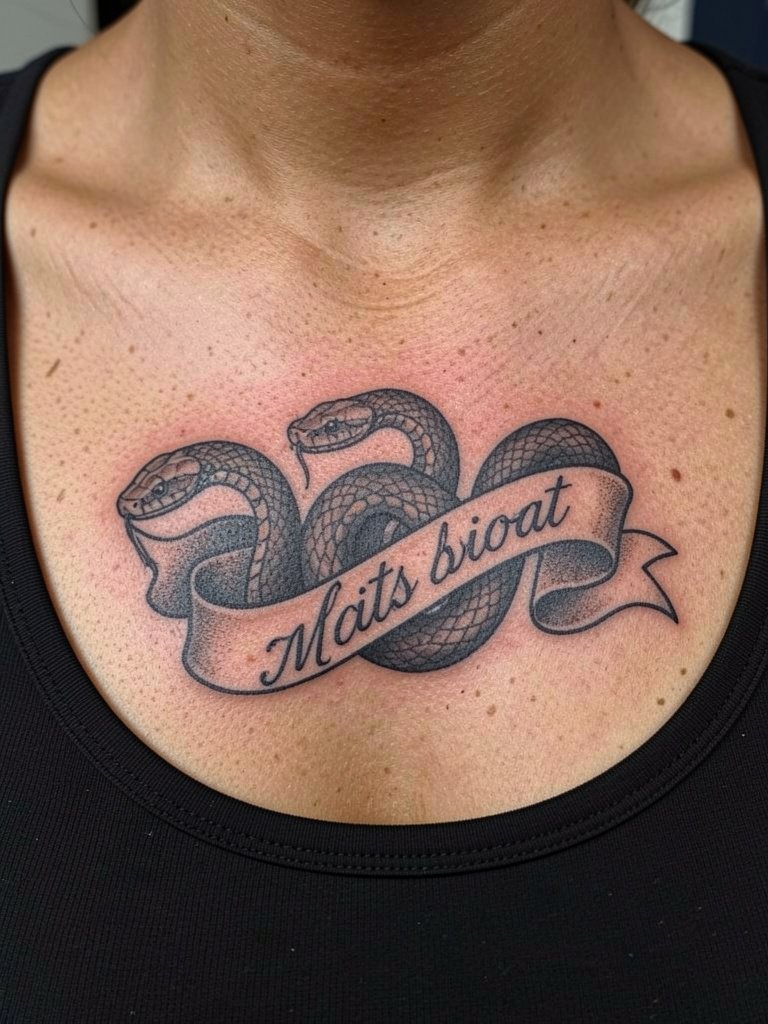
Chest banners read clearly when spaced across the sternum or collarbone. There is debate among artists about how thin script holds here. One group argues that thin cursive on chest softens quickly because chest skin moves and stretches. The other group argues that if letters are slightly bolder and spacing is increased the script will age well, and they often show healed examples to back that up. Be specific about letter size and spacing. Sessions are moderate and healing can be affected by chest expansion during sleep.
12. Coiled Snake Around Ankle
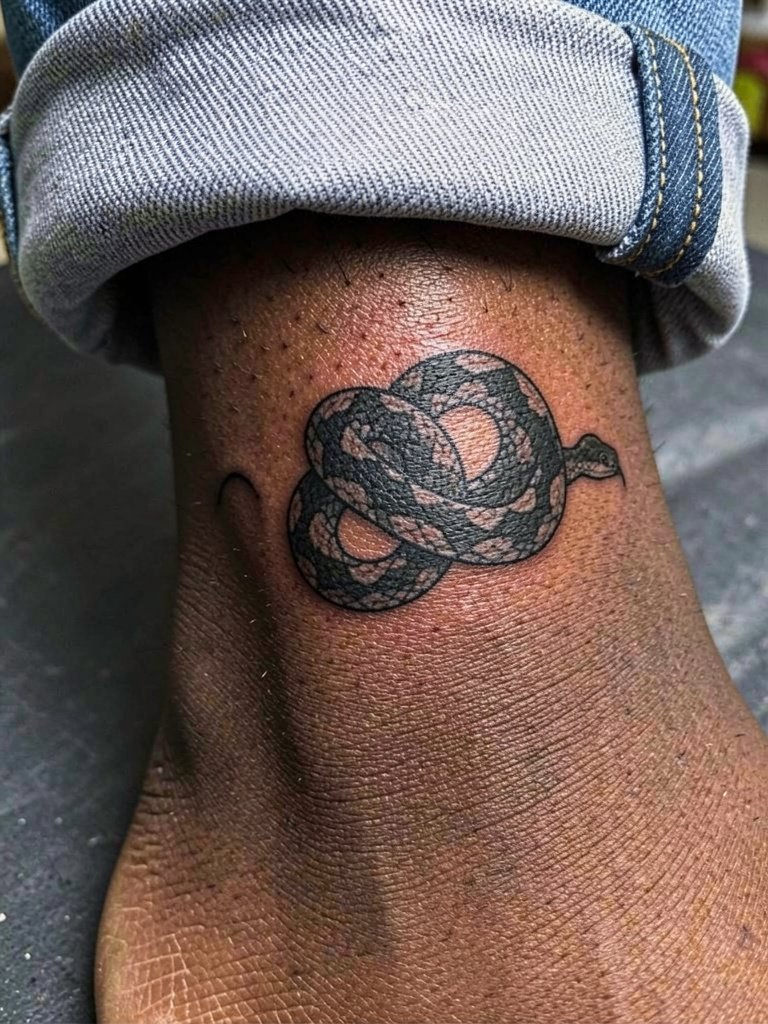
Ankle tattoos face friction from socks and shoes, so silhouette beats micro texture. Ask for clear negative space between scales and enough solid black to resist early break-up. Sessions are short but the area is sensitive and can sting during longer passes. A typical mistake is cramming too many tones into a tiny wrap, which muddies after a few months. For display pair with ankle boots or cuffed jeans to keep the tattoo visible without rubbing.
13. Two-Headed Serpent Over the Shoulder Blade
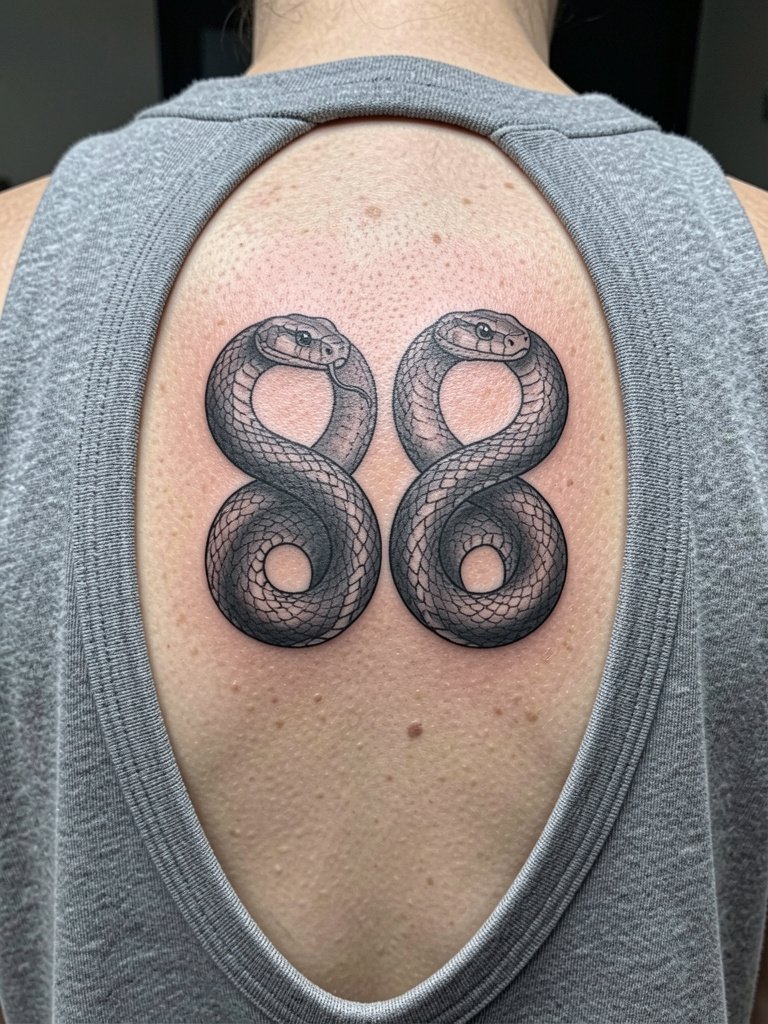
Shoulder blade pieces are forgiving because the skin is flatter and less prone to constant stretching. They take well to symmetrical compositions. Tell the artist how the two heads align with your shoulder blades so posture does not skew the design. Sessions are moderate in length and sensation varies with body fat and muscle. A common mistake is putting too many tiny scales in areas that will crease under bras or straps. For evenings out choose open-back tops to showcase the symmetry.
14. Snake Wrapped Around a Mandolin on Forearm
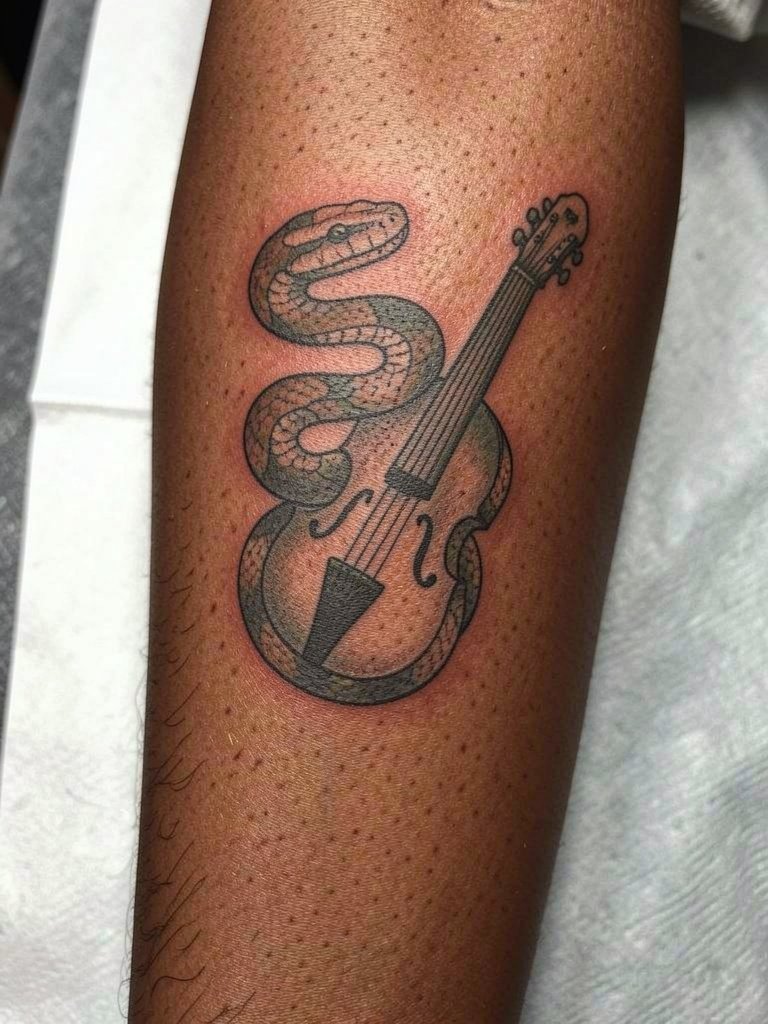
Combining an instrument with a snake creates personal symbolism that sits well on the forearm. Ask the artist to map the instrument length so frets and curves fall naturally when the arm is at rest. Sessions vary depending on color blocks and complexity. A mistake is shrinking the instrument too much so it reads as an indistinct shape. For stage-friendly outfits a three-quarter sleeve shirt rolled to the elbow keeps the forearm on display.
15. Watercolor Serpent Slither on Side Rib
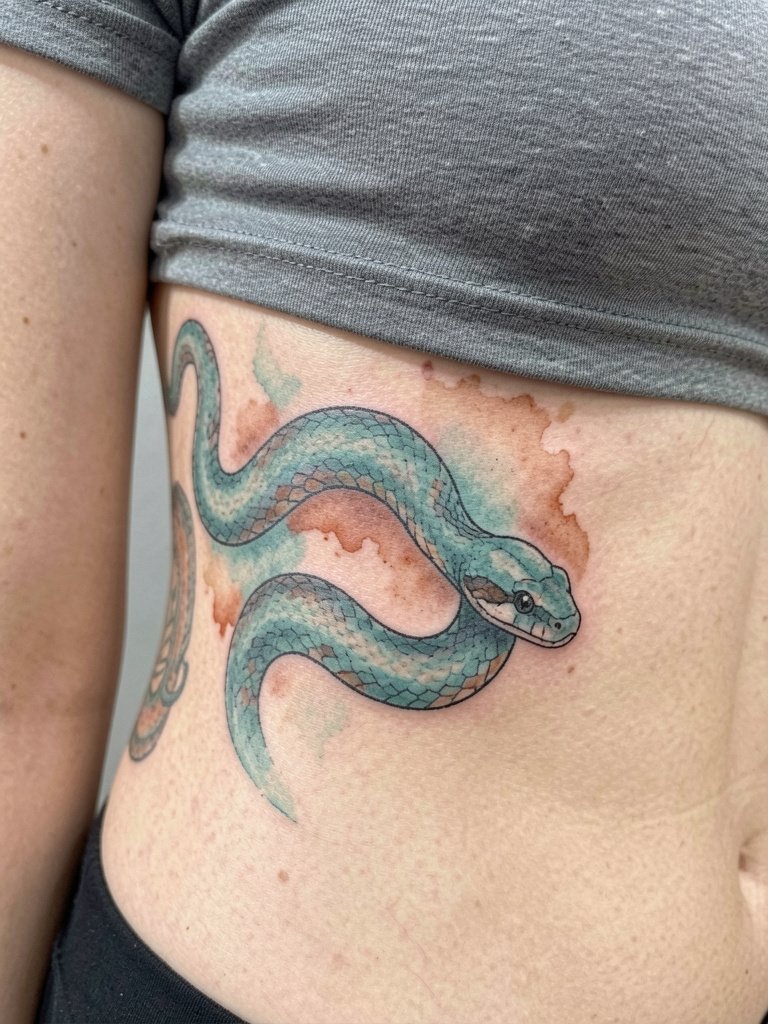
Watercolor effects are pretty but can age into a washed look if placement moves a lot. Discuss with the artist which areas will keep pigment rather than blur into the surrounding skin. One risk is too much diffuse color close to the spine or rib creases which can smudge visually. Sessions are longer and aftercare must reduce rubbing from clothing. For sessions wear a fitted crop top so the artist has access without fabric bunching.
16. Retro Pinup Snake on Thigh Side
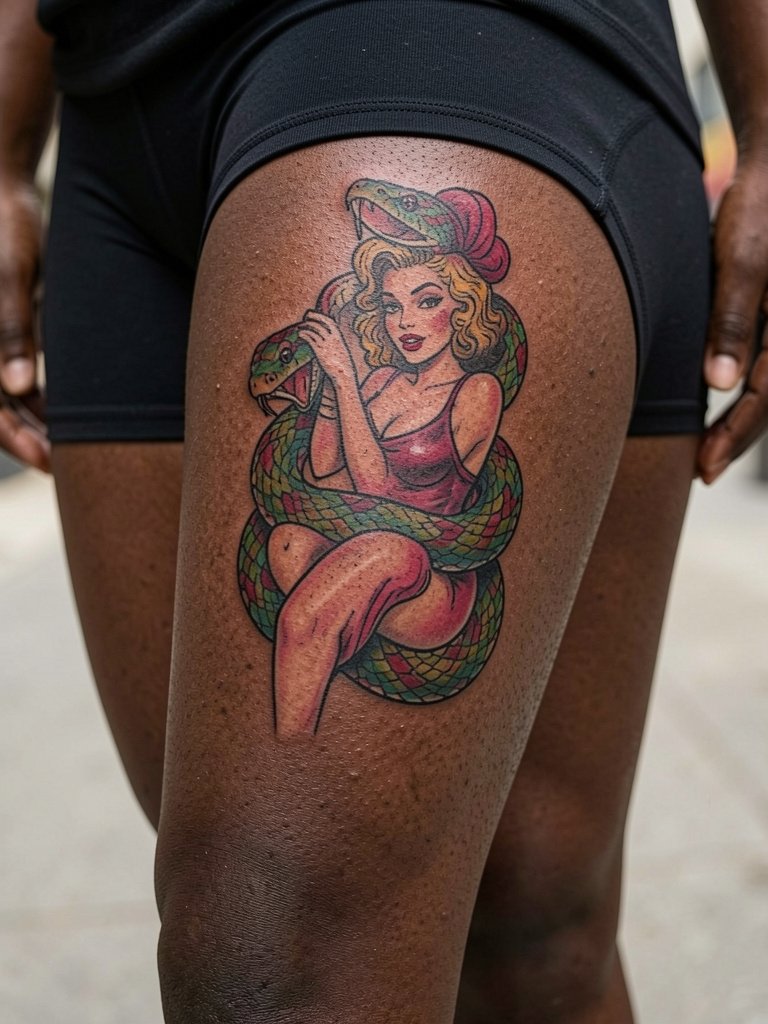
Thigh canvases let you include figurative work and pattern. I advise specifying the scale of the figure so facial detail does not turn into a blotch on healing. Sessions are longer and you will feel pressure rather than sharp needle pain in many areas. A common mistake is over-inking tiny facial features which later require touch-ups. For shows try high-slit skirts or thigh-grazing wrap skirts that reveal the art without full exposure.
17. Stipple-Shaded Serpent Collarbone Accent
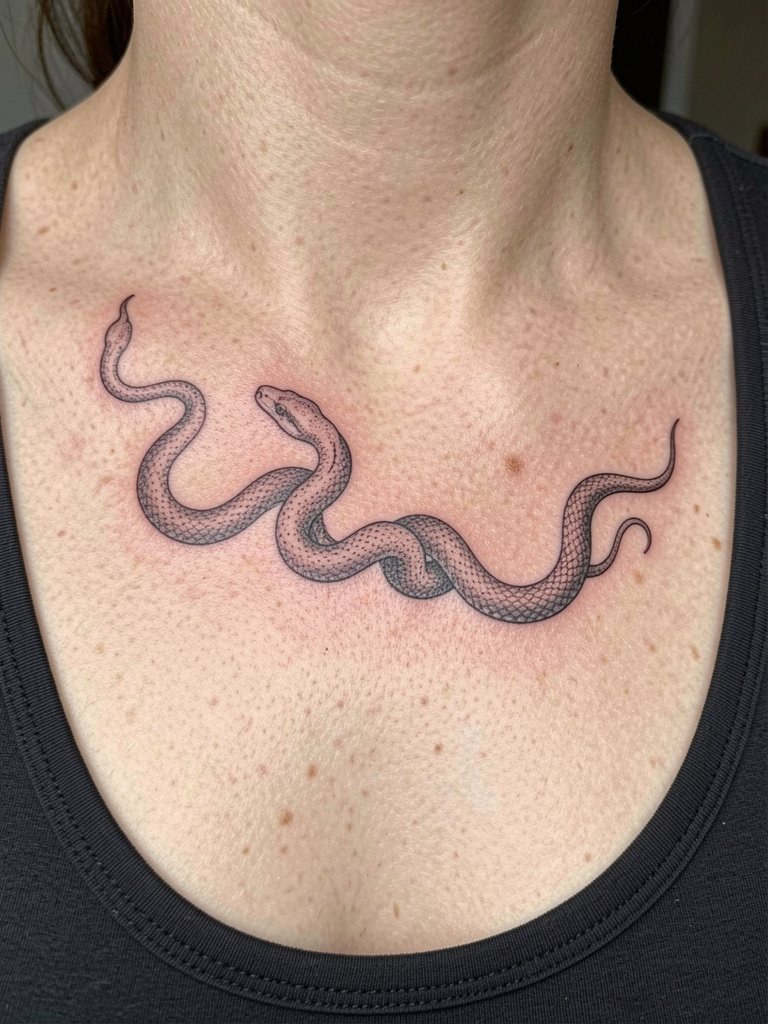
Collarbones are high-visibility zones with thin skin. Stipple shading gives texture without heavy saturation, but it needs room to breathe. Ask for slightly wider negative space around the stippling to avoid a muddy edge after healing. Sessions are short and can sting where bone is close. One mistake is requesting ultra-fine stipple too close together which reads as a grey wash later. For outfits choose wide-neck tops or open collars to frame the piece.
18. Serpent and Lantern on Inner Arm
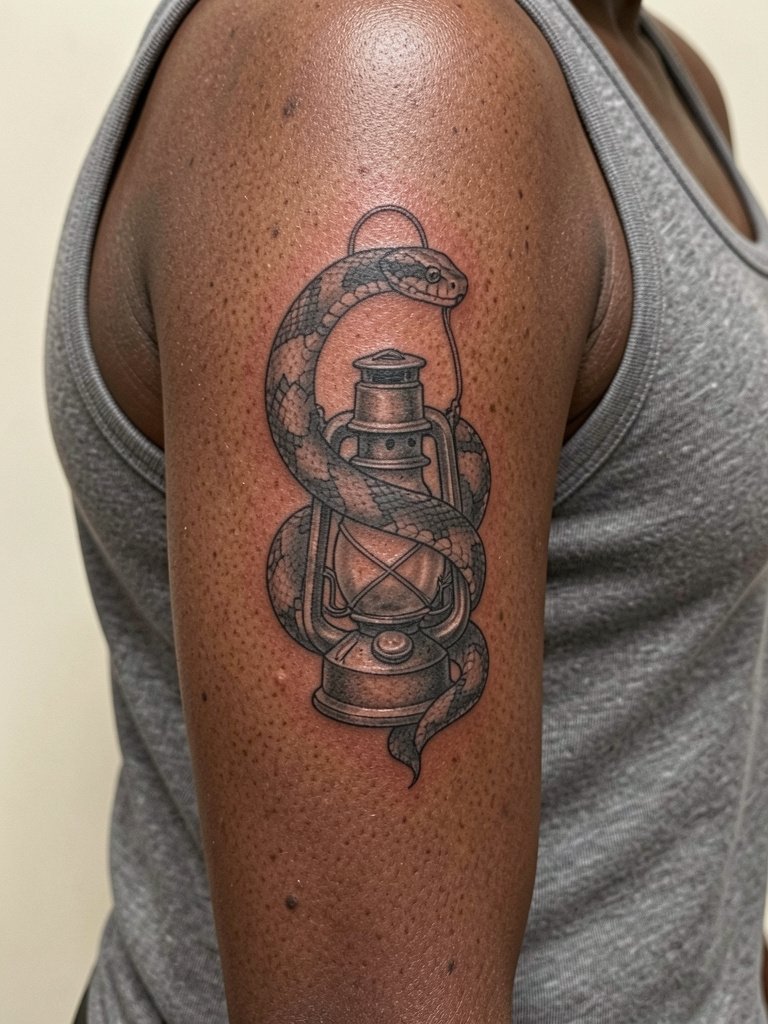
Inner arm pieces read as private statements that show when desired. They require design breathing room since the skin there is softer. Specify how the lantern sits relative to the crease so illumination lines do not compress when the arm relaxes. Sessions can be mildly painful and a touch-up might be needed at year two. A common mistake is cramming background texture too close to the subject. For the session wear a sleeveless tee so the artist can work without the fabric rubbing.
19. Snake in Floral Heart on Upper Back
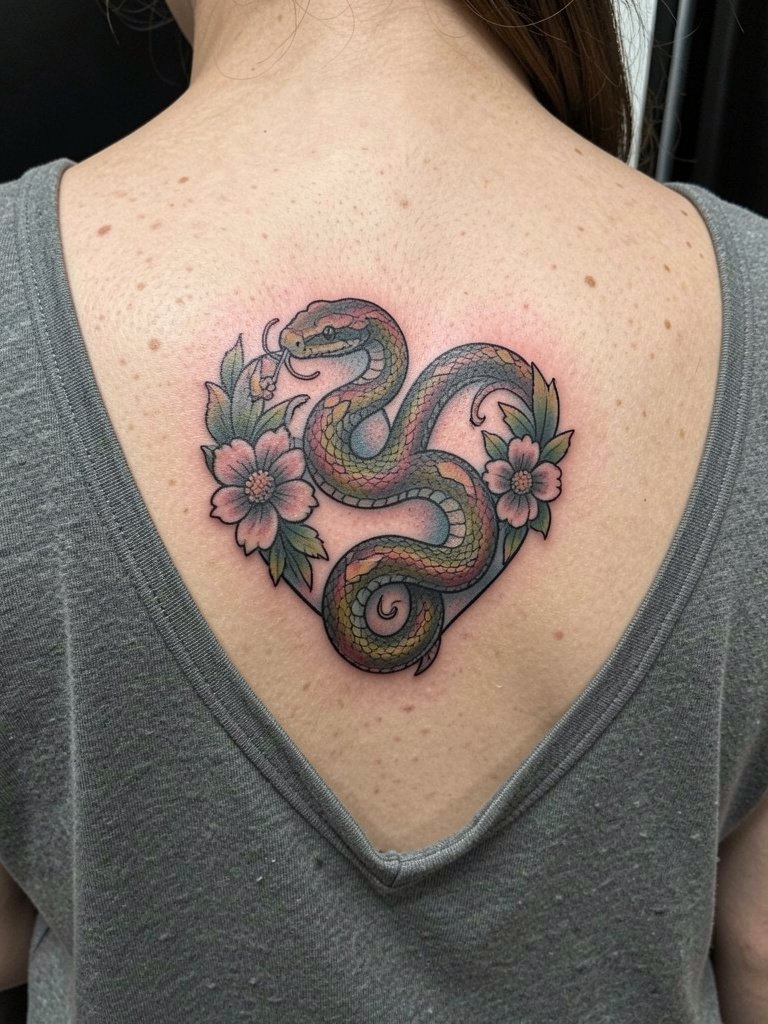
Upper back pieces are stable and ideal for symmetrical work. They heal well and tolerate more detail than wrists or fingers. Discuss how the heart shape aligns with the spine and shoulder blades, especially if you want it centered. Sessions are moderate and may require two passes for layered color. A mistake is fine micro detail near the spine where movement and pressure from straps can distort the edges. For showing off pick open-back dresses or halter tops that leave the center of the back visible.
20. Small Serpent Lining the Collar on Neck Side
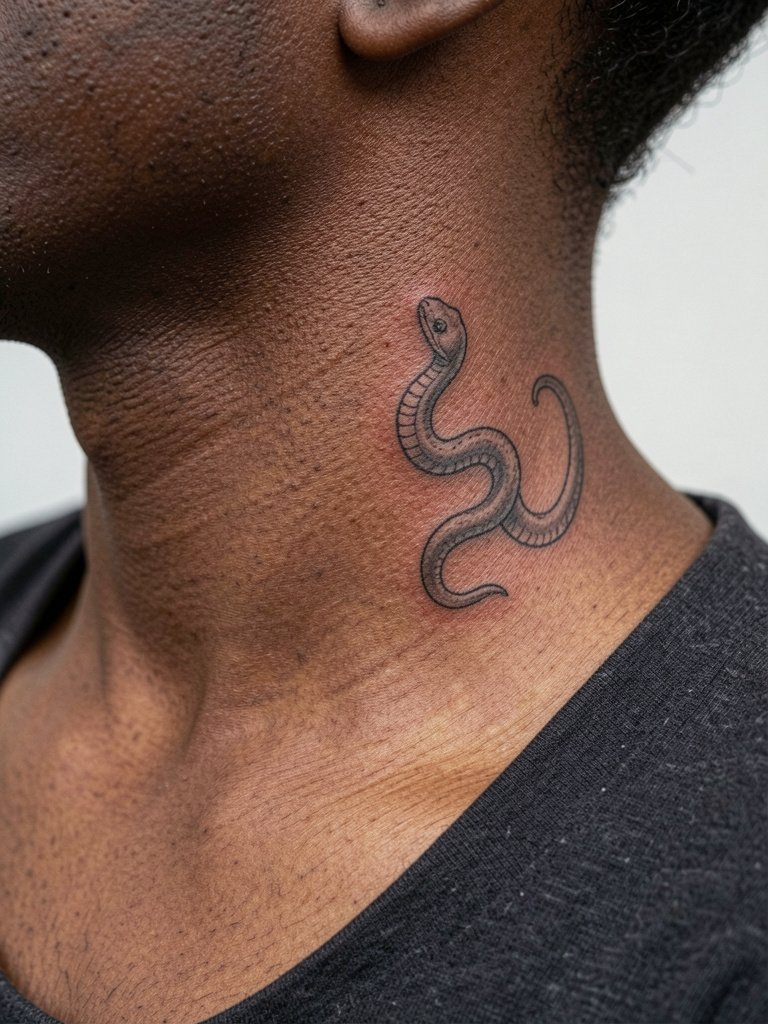
Neck tattoos demand consideration for visibility and career impact. They are more sensitive and tend to need touch-ups because the skin is exposed to sun and friction. Ask the artist about spacing of scales and whether slight bolding will help longevity. A common mistake is requesting super-fine detail that fades unevenly with sun exposure. For discreet styling try high collars or scarves when needed.
21. Snake and Compass Calf Portrait
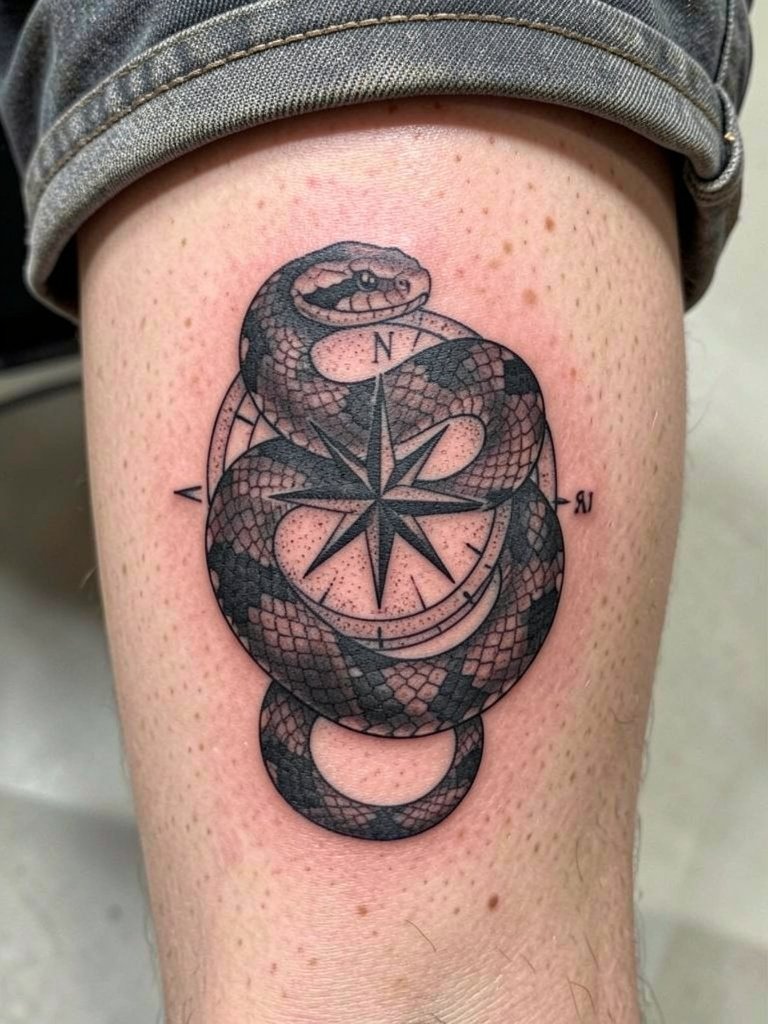
A compass element gives the snake a directional story and suits the vertical calf space. Ask the artist to align the compass north so it reads correctly when you stand. Sessions are moderate and calves tolerate saturation well. A mistake is reducing the compass size too much which loses cardinal clarity. For shoes and shorts a low-top sneaker keeps the lower calf visible without rubbing.
22. Tiny Snake Behind the Ear
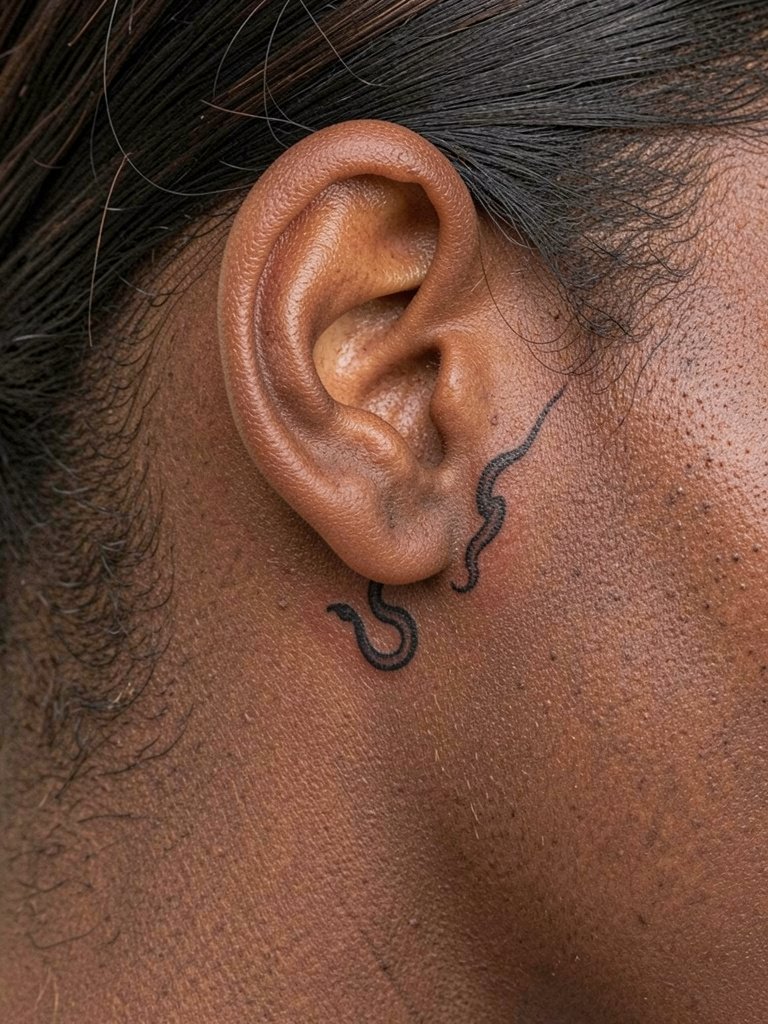
Behind-the-ear work reads as a secret accent. Expect sharp sensation during the session because the area is thin. The biggest mistake is asking for too much detail in the small plane which then fills in as a smudge. Request a slightly bolder silhouette so the shape remains distinct. For styling hair that keeps the area visible use simple clips or a loose bun, and consider a small hair claw clip for reveal.
23. Coiled Snake with Geometric Halo on Lower Back
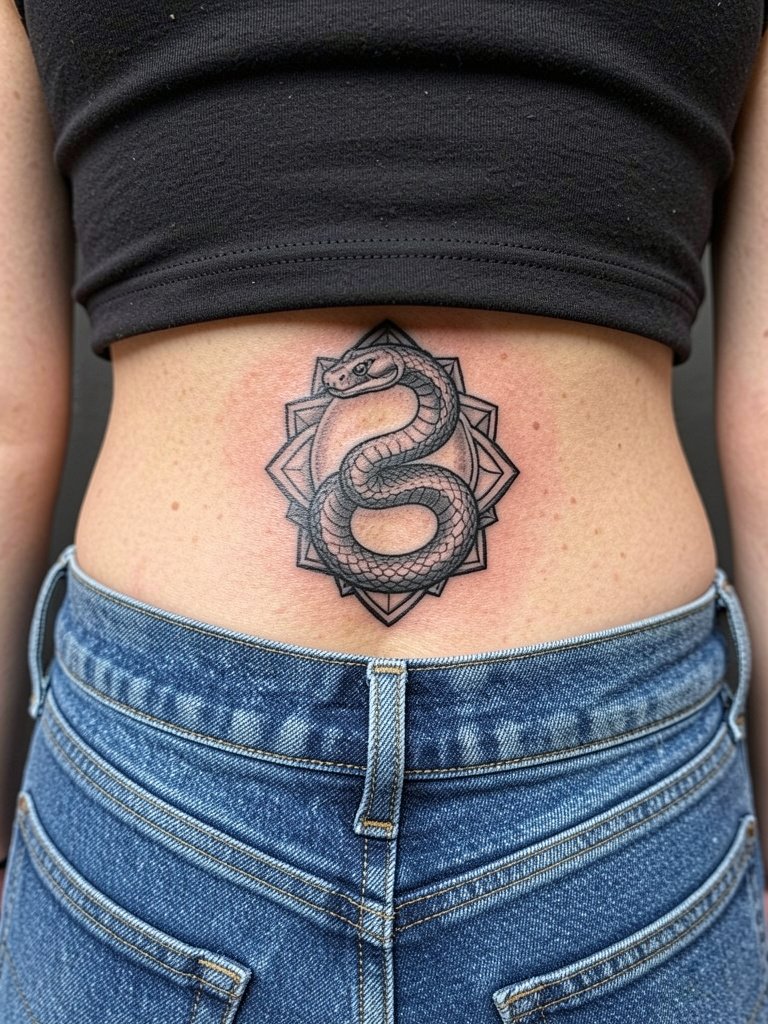
Lower back placements let you center imagery and include bold halos without much distortion. Sessions are comfortable but watch for sleeping positions that press on fresh ink. A mistake is pushing for tiny geometric lines too close together which can blur. Ask the artist to show a mockup while you stand so the halo sits balanced over the lumbar curve. For clothing pick mid-rise jeans and cropped tops to reveal the area without fabric rubbing.
Frequently Asked Questions
Q: How do traditional snake tattoos age compared with fine-line snakes on the ribs and hands?
A: From what I have seen, bold traditional pieces with solid outlines and saturation fade more predictably over five years. Fine-line snakes on high-motion skin like ribs and hands are more likely to soften into discreet marks without periodic touch-ups. Choose slightly heavier line weight for areas that move a lot if you want the design to remain legible longer.
Q: What should I wear to a session that covers the inner arm, ribs, or thigh?
A: Wear clothing that gives clear access without shifting the fabric. For ribs and inner arm sessions a fitted sports bra or a loose tank top works best. For thigh work choose bike shorts or modest athletic shorts so the artist can lay stencils without you needing to hold fabric; a fitted sports bra or shorts keeps things simple.
Q: Where can I find healed examples and portfolios without naming specific artists?
A: Search platform hashtags and keyword filters for healed shots using terms like #TraditionalSnakeTattooHealed and #SnakeTattooHealed. Use location filters on image platforms and browse portfolio collections labeled "healed work" or "flash" for studio-released images. Reddit tattoo threads often point to healed examples in different skin tones.
Q: How often do snake tattoos need touch-ups and which placements need them most?
A: Fingers, hands, and ankles usually need touch-ups within a year to keep detail crisp. Forearms, shoulders, and backs can go longer before a small touch-up, often two to five years depending on sun exposure. Plan realistically for one small touch-up around year one and another in years three to five for high-visibility spots.
Q: Are there cultural sensitivity issues with snake imagery I should consider?
A: Snakes have varied meanings across cultures, from protective symbolism to religious connotations. If your design draws on specific cultural motifs, discuss origin and permission for those elements and consider adapting motifs respectfully rather than copying sacred imagery.
Q: Is there a quick discovery pathway for finding shops that photograph healed traditional snake tattoos?
A: Use platform filters and search terms like "healed traditional snake tattoo" plus your city or region. Look for portfolio tags that mention "healed photos" and use community threads to request examples in different skin tones. Studio pages that label work by year often show how pieces mature.