
A compass tattoo can read like a promise to a path or a simple nod to the sea. Many people want the tiny, intricate needle that looks delicate on day one and dramatic in photos. The reality is that compass designs age very differently depending on scale, line weight, and placement. The next sections show distinct compass treatments, what holds up after two years, and what to tell your artist at the stencil stage to avoid early softening.
1. Fine Line Inner Forearm Compass
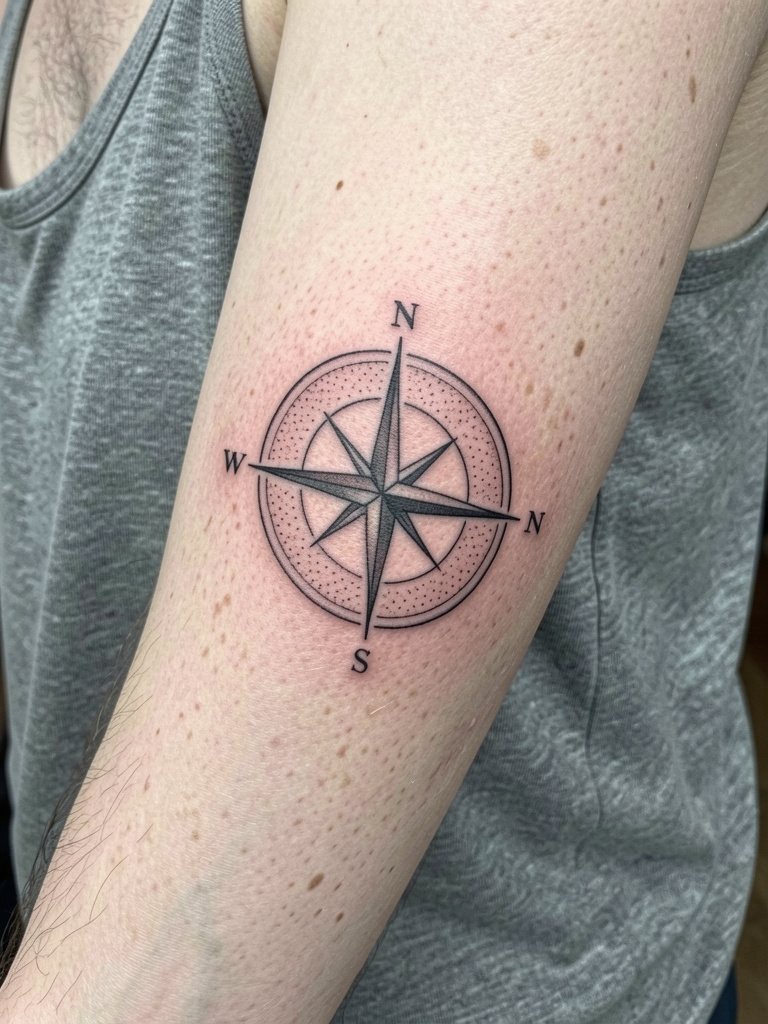
This is the quiet compass that reads like a personal cue rather than a room statement. Recommend it when you want a subtle directional mark that sits under shirts and shows when you roll a sleeve. For consultation bring a reference shot scaled to three inches and ask for slightly heavier single-needle work than the photo so the needle has room to settle. A common mistake is asking for ultra-thin script-level linework at a thumb-width size; fine lines at that scale often blur by year two. Expect a one-hour session for a three-inch compass and a touch-up window at nine to fifteen months for most skin types. For showing it off, pair with stackable minimalist bracelets that sit just above the wrist.
2. Bold Traditional Shoulder Compass
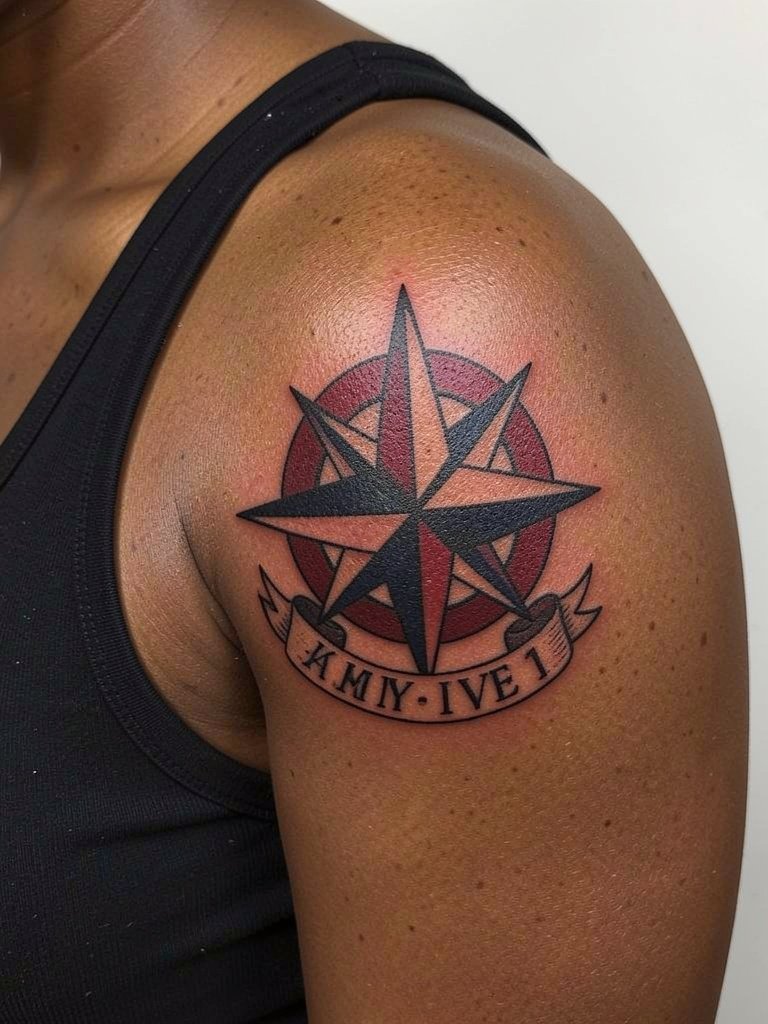
This compass reads loud and ages into a badge rather than a whisper because of heavy outlines and saturated fills. Choose it if you want something that still reads clearly at five years on sun-exposed skin. During the consult specify the banner scale if you want text visible at arm's length. Pain on the shoulder is moderate and most sessions fit into two short passes of 45 minutes each. The main aging issue is UV fading, so plan touch-ups after two to three years if you spend a lot of time outdoors. Avoid asking for micro-detail inside color blocks unless you want the pattern to soften over time.
3. Micro-Wrist Compass with Minimal Shading
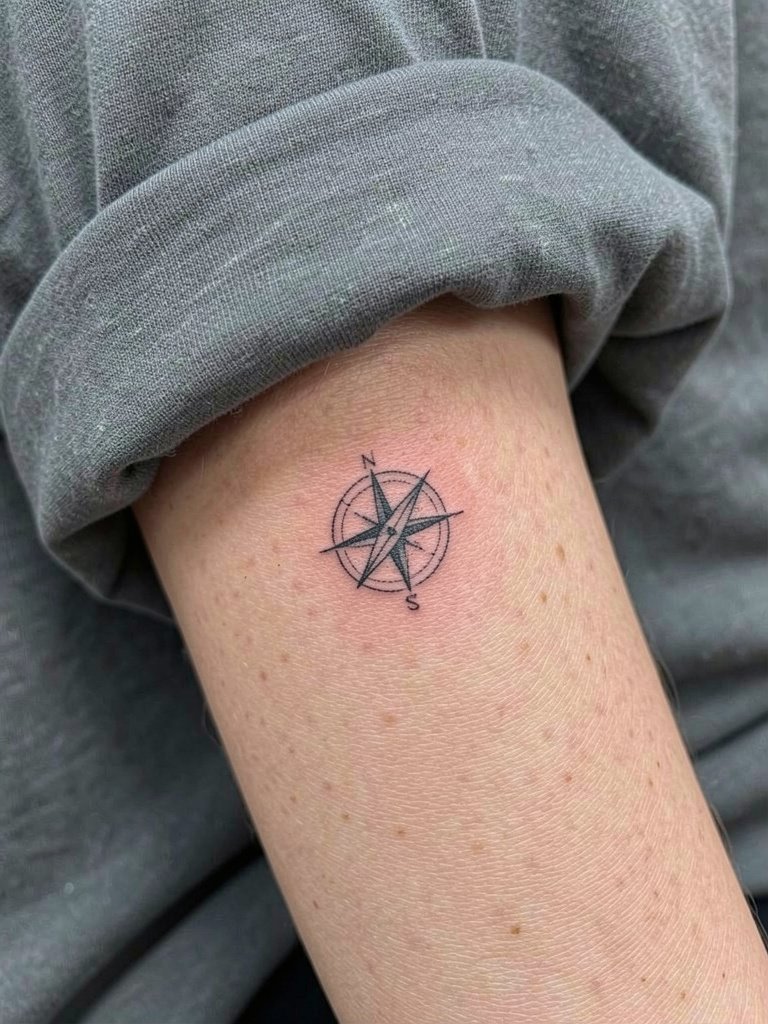
A micro compass on the wrist is great for someone who wants a visible anchor without committing to heavy sessions. The wrist has more movement and thin skin, so request slightly bolder line weight than your reference photo and expect a 30 to 45 minute session. Wrist tattoos are prone to faster blur because of constant washing and friction. Plan a touch-up at the one-year mark rather than waiting longer. For daytime styling try a slim leather cuff bracelet worn below the tattoo to frame the needle during close-ups. Avoid tiny inner-detail flourishes that become muddled within months.
4. Compass Rose Between Shoulder Blades
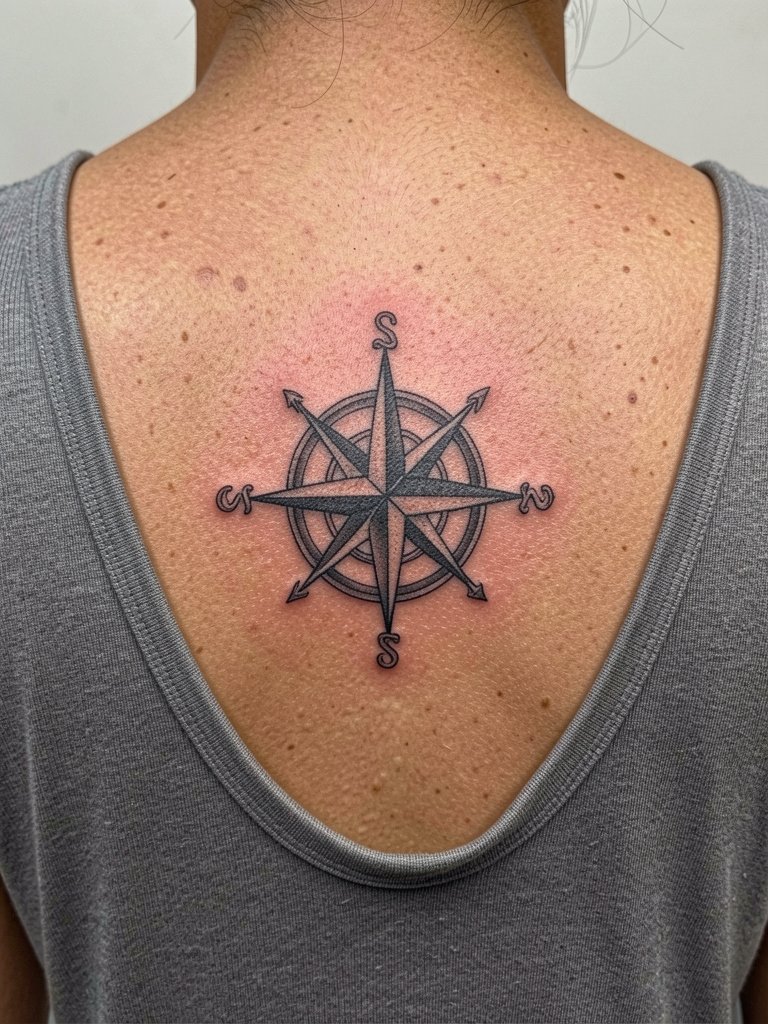
A back-centered compass gives breathing room for filigree and holds detail well because the skin is less prone to friction. Expect a 90 to 150 minute session with moderate discomfort due to scapular bone proximity. Discuss spacing with your artist so the compass does not sit too close to the spine or fall under bra straps. The common mistake is overscaling filigree into the shoulder blades where movement will distort fine tendrils over time. For show-off outfits choose an open-back midi dress that frames the design on cooler nights. If you want someone else to see healed photos, request progress shots at six months and two years.
5. Sternum Compass with Delicate Dot Work
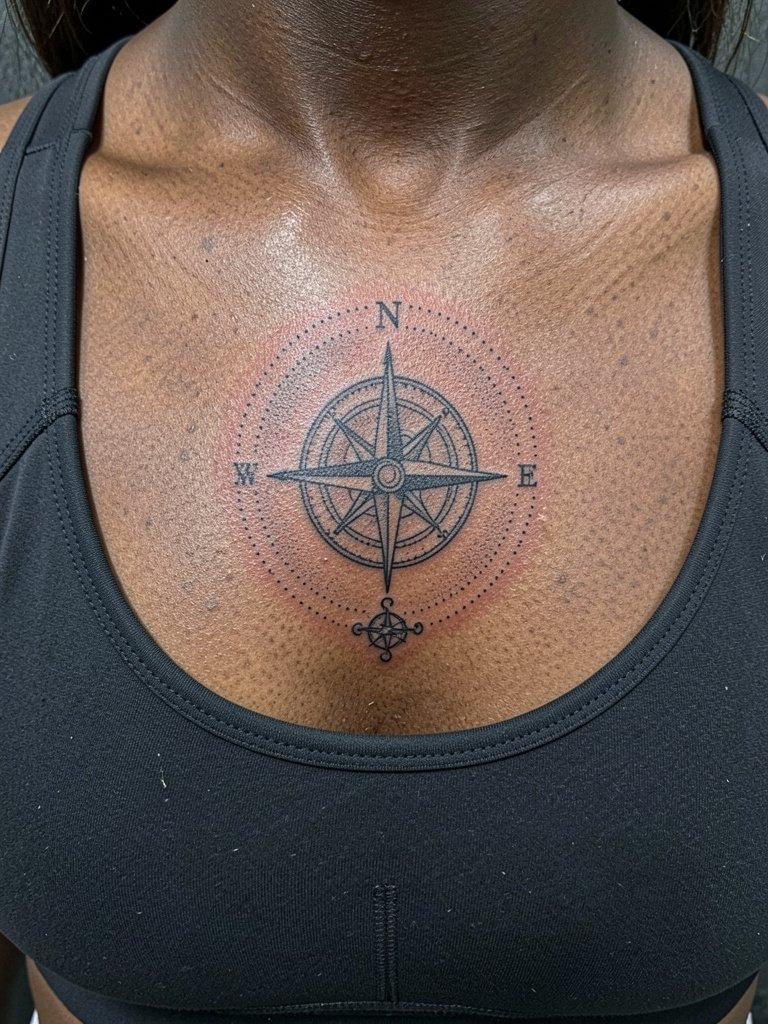
Sternum placements are intimate and sensitive, and fine dot work there can look exquisitely detailed for the first year. One controversy around fine-line work on the sternum or ribs splits practitioners. One camp argues that skin stretch and constant movement cause very fine dots and hairlines to blur within one to two years. The other camp contends that with deliberate depth, slightly wider spacing, and planned touch-ups, fine dot work settles and retains reading for many years. If you choose this spot, request mockups with scaled spacing so you see how each dot translates at an actual stencil size. Sessions feel intense with extended breaks, so plan for a two-hour window and wear a fitted sports bra for easy access.
6. Geometric Compass on the Calf
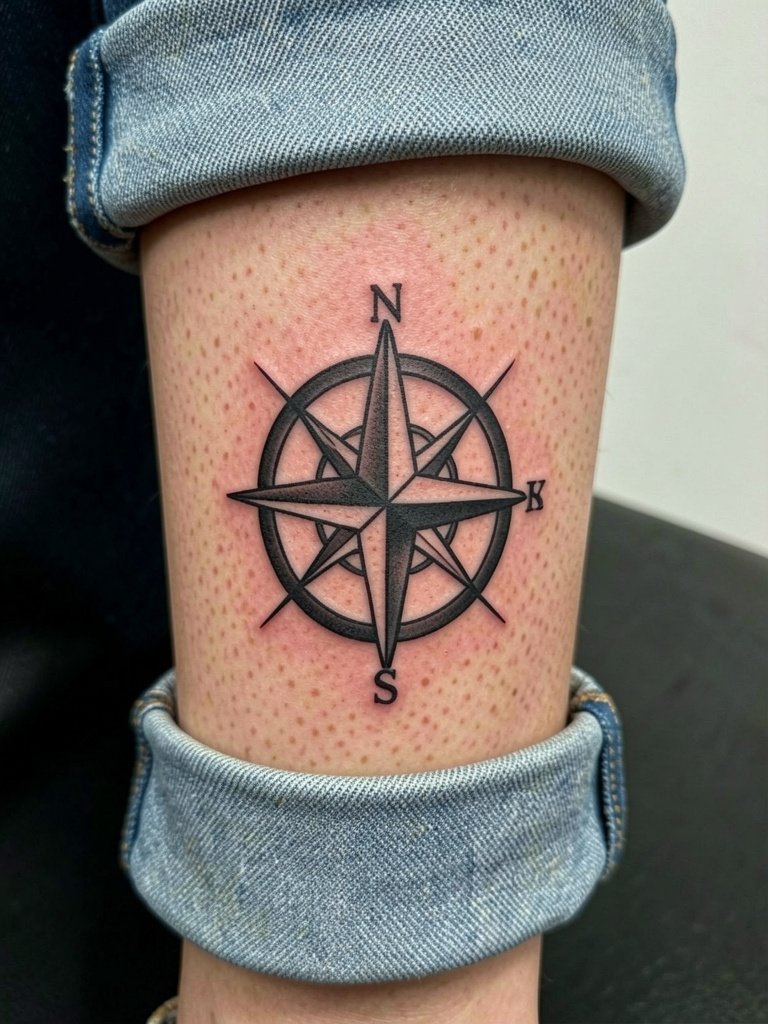
A geometric compass on the calf plays well with motion and athletic wear. Choose this if you want a longer canvas for compass symmetry and crisp negative shapes. The calf tolerates heavier linework and holds contrast nicely, so ask for even spacing and a reference at full-size to check rhythm. Expect a 60 to 90 minute session with surface soreness that subsides in three to five days. Common mistakes include overcomplicating the negative space at small scale which makes the compass lose its graphic clarity after a year. For sessions wear loose drawstring shorts so the artist can roll the leg without pressure on the area.
Session Day Picks
The first six ideas cover wrist, forearm, shoulder, back, sternum, and calf placements, each with slightly different session needs and healing quirks. These items smooth the chair day and the first week after those placements.
-
Disposable stencil transfer paper kit. Useful for previewing how compass scale and needle thickness read on skin before committing to the final stencil, especially for inner forearm and wrist pieces.
-
Topical numbing cream with clear instructions. For the sternum and ribs apply as directed about 45 minutes before the session start to reduce discomfort during longer passes.
-
Thin protective film roll for small areas. Keeps wrist and finger placements clean through that first week of friction from washing and daily wear.
-
Unscented gentle body wash. Cleans healing tattoos without irritating fine line work on the inner forearm and sternum.
-
Aquaphor healing ointment. A mainstream balm that many artists recommend for short-term moisture retention after the initial bandage is removed.
7. Compass Finger Band
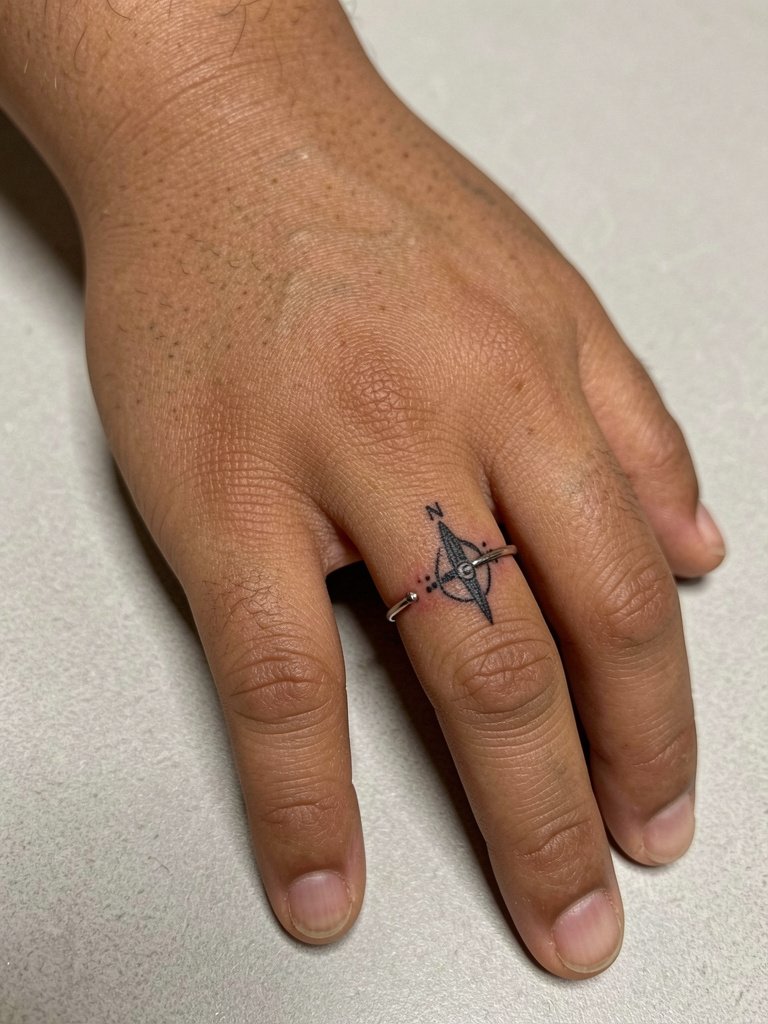
Finger compasses are intimate and highly visible but have one of the highest maintenance needs. The skin on fingers regenerates frequently and tattoos here fade or blur faster. One camp of artists says finger bands require frequent touch-ups and are better as a temporary choice. The other camp argues small, bold glyphs with thicker line weight can last reasonably well if placed off the knuckle. For planning, decide whether you want a thin decorative band or a tiny bold mark. Sessions are brief, often 20 to 40 minutes, but expect a touch-up at six to twelve months. If you plan rings, consider slim adjustable stack rings that complement the band without rubbing directly on the tattoo.
8. Nautical Map Compass on the Thigh
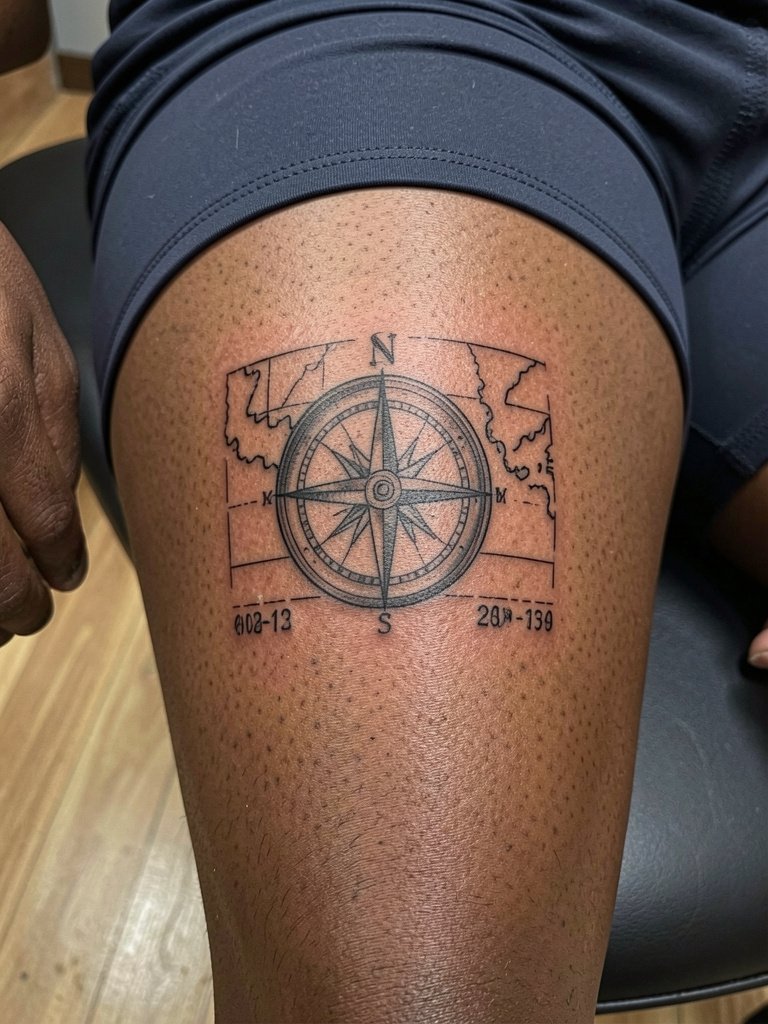
A thigh compass with map elements gives scale and storytelling room, and it benefits from the thigh's thicker skin. For a long-lasting look, choose bolder contours for the compass and lighter, faded linework for the map so the elements do not compete. Bring both close-up and full-leg references and ask the artist to show a mockup at the intended size. Session time is typically 90 to 180 minutes depending on map detail. For after-session visibility pair the piece with high-waisted skirts that reveal the upper thigh for evenings out. Avoid centering too close to the groin or underwear line to spare extra wear from friction.
9. Watercolor Compass on the Ribcage
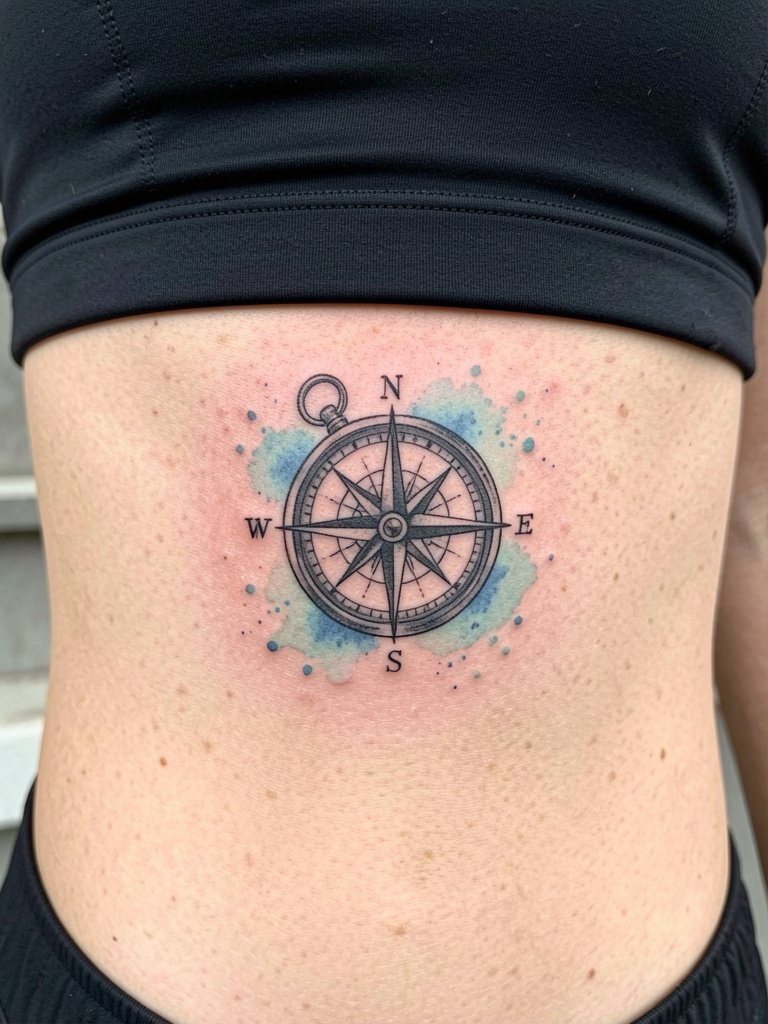
Watercolor compasses can be striking but they require careful planning on the torso. Fine wash edges that look great immediately often lose definition after healing. Artists split on this approach with two clear positions. One side warns that watercolor pigment spreads unpredictably on the rib skin and that blended edges will look like faded bruises in two to three years. The other side maintains that strategic anchoring with darker linework and reserved color zones keeps the watercolor effect readable long term. If you want this look, insist on an anchor outline and ask for healed photos of similar placements from the artist. Prepare for a longer session with breaks and a likely touch-up at the one-year mark.
10. Compass and Anchor Sleeve Accent
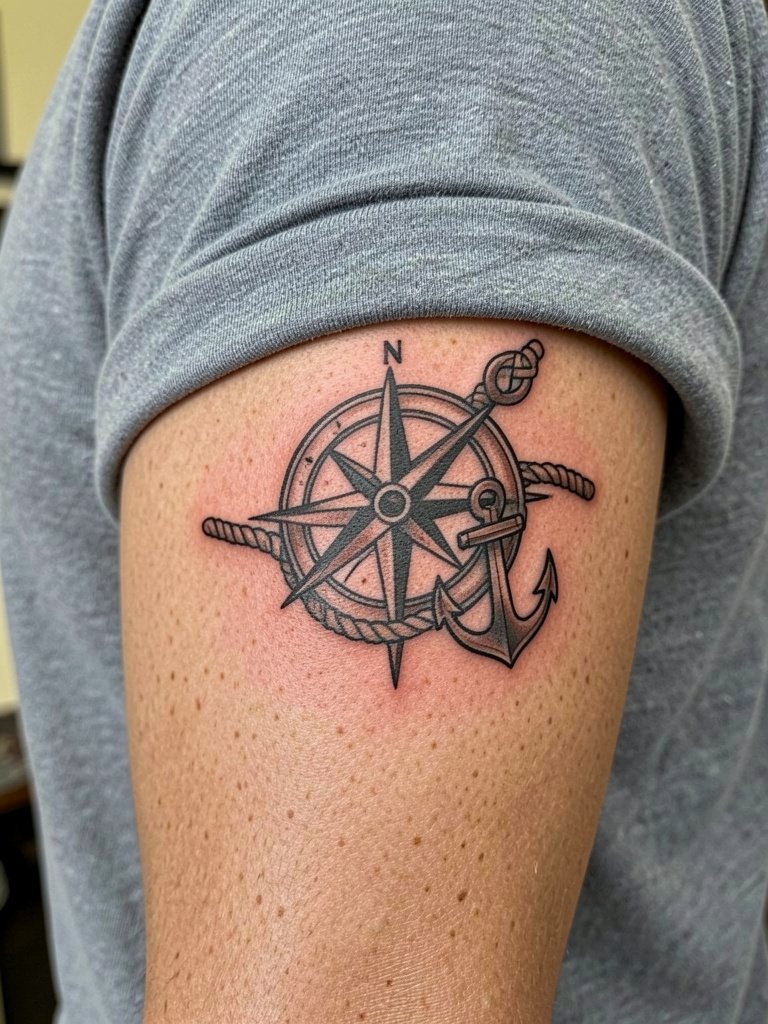
This option works when you want a nautical motif that flows into larger sleeve work. Request that the compass anchor into surrounding imagery with negative space pathways rather than a dense, competing background. The bicep tolerates longer sessions and generally feels less painful than ribs or sternum. A common mistake is boxing the compass too tightly into other elements which makes future expansions awkward. For wardrobe pairing, a rolled short-sleeve button-up in linen tones complements the nautical palette, try a linen short-sleeve shirt that frames the outer arm during warm-weather outings. Expect a 60 to 120 minute pass for a small accent.
11. Tiny Compass Behind the Ear
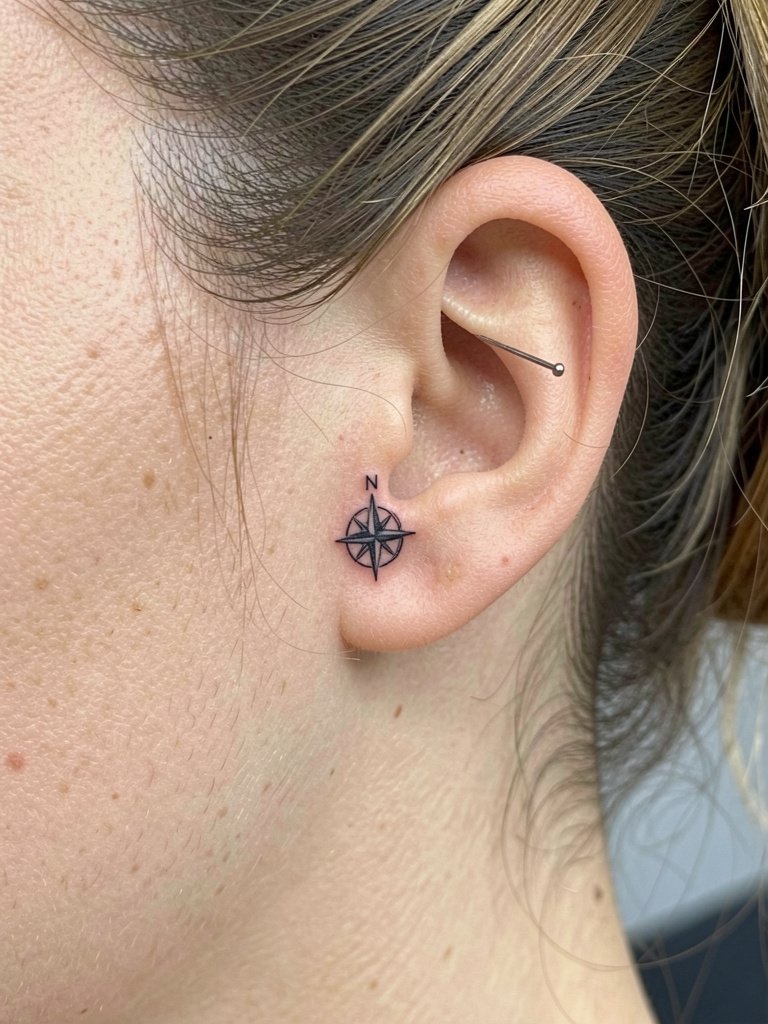
Behind-the-ear compasses offer discretion and a secretive charm because they are visible only on demand. The area is delicate so needle depth matters for longevity. Some artists say tiny ink there holds fine detail when applied shallowly by a skilled hand. Others disagree and say shallow work fades into speckled spots that need early retouching. If you pick this spot, ask the artist to show healed examples on similar skin tones and hair textures. Sessions are short, often under 20 minutes. For low-effort styling, wear hair up with a simple elastic bun wrap that keeps the nape clear without pressure on the tattoo.
12. Compass with Scripted Coordinates on the Collarbone
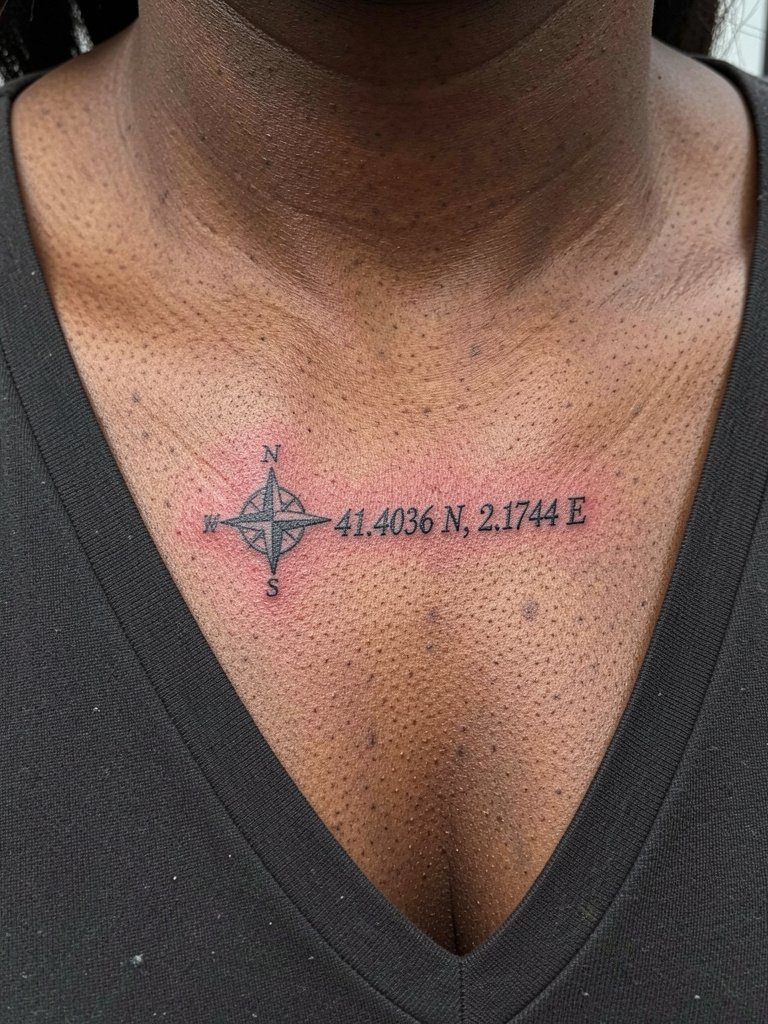
A collarbone placement reads elegantly if spacing is handled well. Scripted coordinates require precise letter sizing so they remain legible after healing. Discuss exact font size and ask to see a life-size stencil across the collarbone so you can confirm readability at arm's length. The collarbone can be tender, so expect moderate pain and short sessions of 30 to 60 minutes. A common mistake is choosing an ornate script that curls into the bone shadow and becomes hard to read later. For outfits that highlight the line, try an open-front cardigan layered over a scoop-neck top that lets the coordinates peek through.
13. Compass Integrated into a Sleeve of Stars
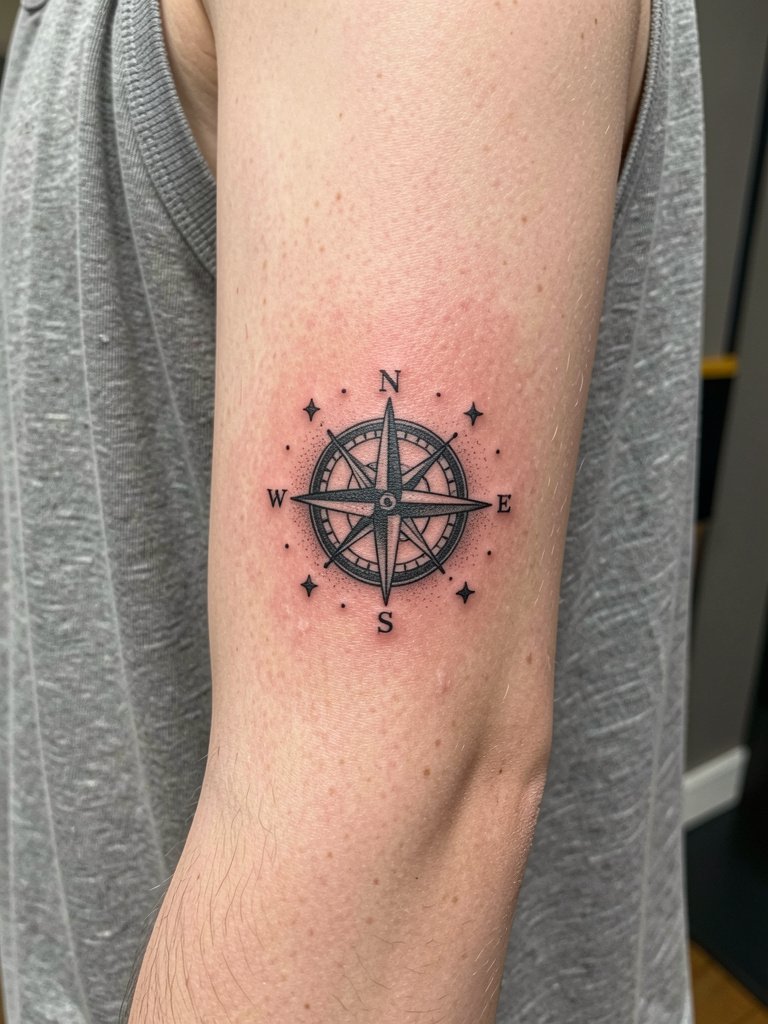
Integrating a compass into a constellation sleeve keeps the focal point readable while giving the design room to expand later. The inner forearm supports fine detail more than the wrist but less than the thigh, so balance dot work and linework accordingly. Ask the artist to map star placement at actual size so the negative space works with your skin tone. Expect a 60 to 120 minute session depending on the number of small stars. One practical tip is to wear a comfortable roll-up sleeve shirt on session day for easy access and minimal fabric interference. The biggest mistake is cramming too many micro-stars close to the compass edge, which can make the central motif lose its presence.
14. Blackwork Compass on the Chest
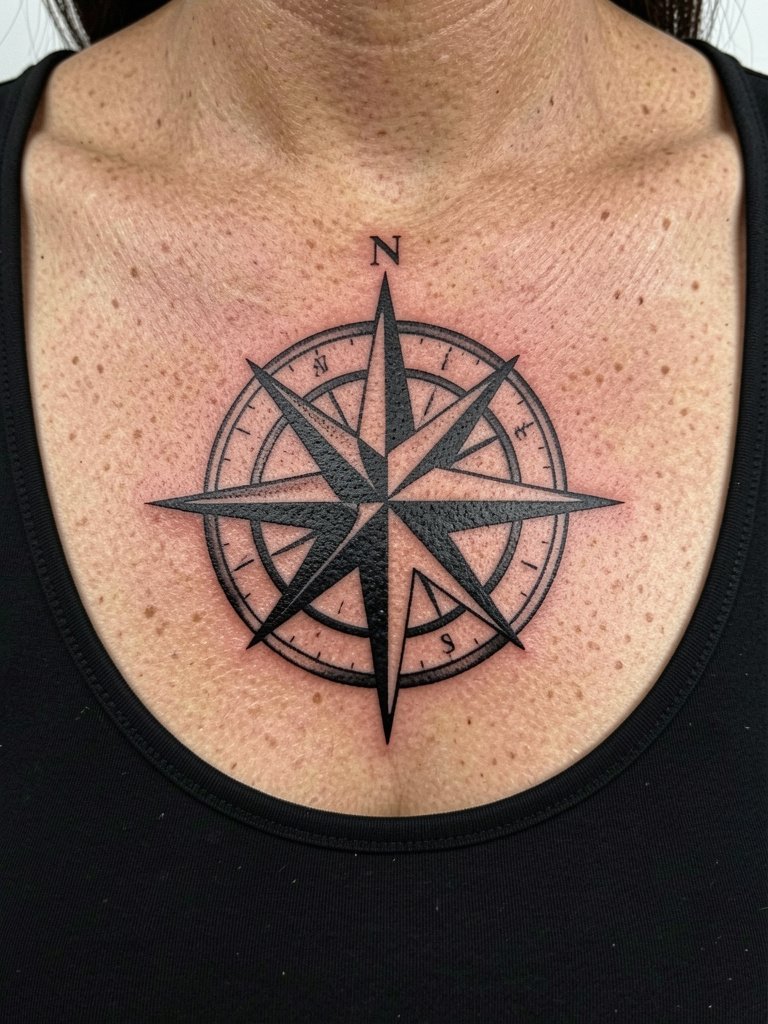
Blackwork compasses make a statement and tend to age predictably because heavy saturation resists early fading. Choose this if you want longevity without micro-detail maintenance. For chest work, ask for clear negative space channels so the compass reads from distance and across time. Pain is variable depending on proximity to bone and sternum, with sessions often split into multiple passes to manage discomfort. A mistake is mixing too many tiny shaded elements into large black fields which can create uneven healing. Pair with open-neck shirts that show the upper chest, such as a scoop-neck tee during casual outings for visual balance.
15. Minimalist Ankle Compass
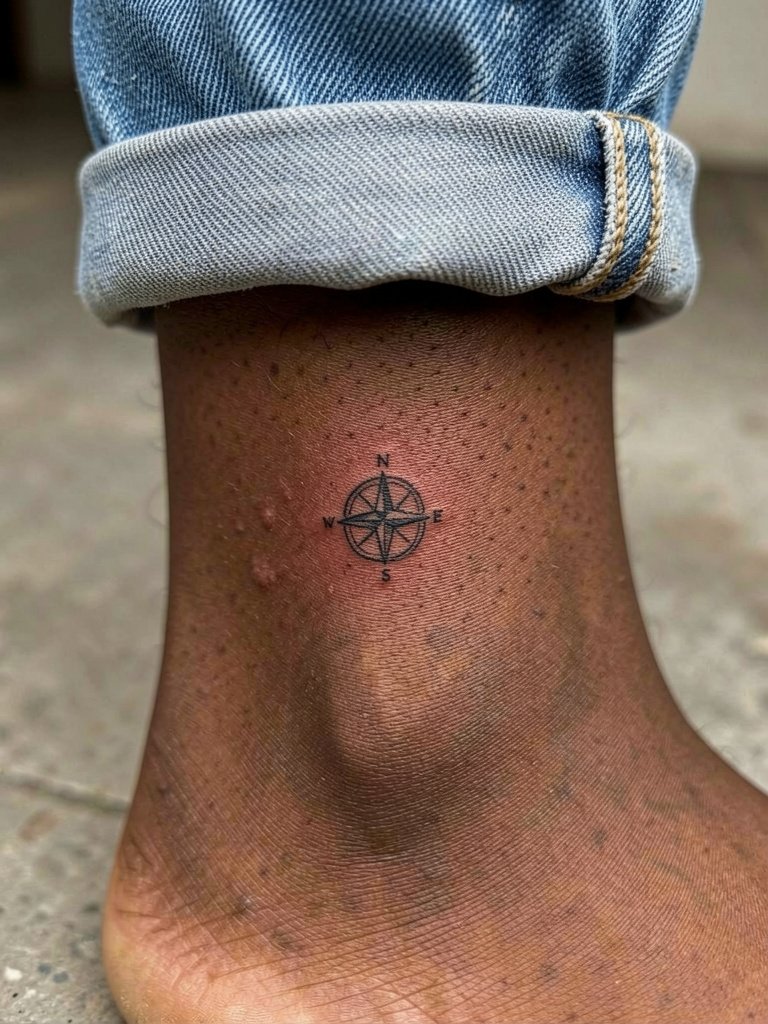
Ankle compasses are a low-commitment visible option that pairs well with shoe and sock choices. The ankle sees a lot of friction from socks and footwear so choose a slightly stronger line weight than a paper sketch. Expect a 30 to 60 minute session and plan for a touch-up in the first year because of abrasion from shoes. A frequent mistake is crowding the compass with too much micro-detail which will fade fast at this placement. For styling, try an ankle wrap bracelet to frame the design for summertime looks.
Frequently Asked Questions
Q: How do I find healed compass examples and portfolios without naming specific artists?
A: Search platform hashtags like #NauticalCompassTattoo, #CompassTattooHealed, and #NauticalInk on Instagram and TikTok. Use location filters to narrow to nearby portfolios and look for posts tagged "healed" or "one year." Reddit tattoo subs often have photo threads with varied skin tones that show long-term results.
Q: Will a tiny compass on the wrist last, or will it blur quickly?
A: Tiny wrist compasses can soften faster than larger pieces because of constant washing and movement. If you want longevity, increase the line weight slightly compared with the reference and plan a touch-up at nine to fifteen months. For jewelry that complements small wrist compasses consider a slim minimalist bracelet that avoids rubbing the ink directly.
Q: Are compass designs culturally sensitive, and how do I show respect?
A: Many compass motifs draw from maritime traditions rather than a single cultural origin, but some elements can link to indigenous or religious symbols. If your design incorporates specific cultural patterns, mention the origin and ask the artist about ethical adaptation. Choose motifs that honor source meanings and avoid direct appropriation of sacred symbols.
Q: How painful is a sternum or ribcage compass and how long will the session be?
A: Sternum and ribcage placements are among the more painful spots due to thin skin over bone and frequent movement. Sessions for a detailed compass with shading usually run from 60 to 180 minutes with scheduled breaks. Numbing can help for the sternum but discuss timing and application method before the session.
Q: Can I get a compass tattoo that will still look good if I gain or lose weight?
A: Large, simple shapes with clear negative space tolerate moderate body changes better than intricate micro-detail. Place larger compass elements away from areas that tend to stretch dramatically. If you expect major weight fluctuations, ask the artist to design with bold anchors and maintain a plan for a future touch-up if necessary.
