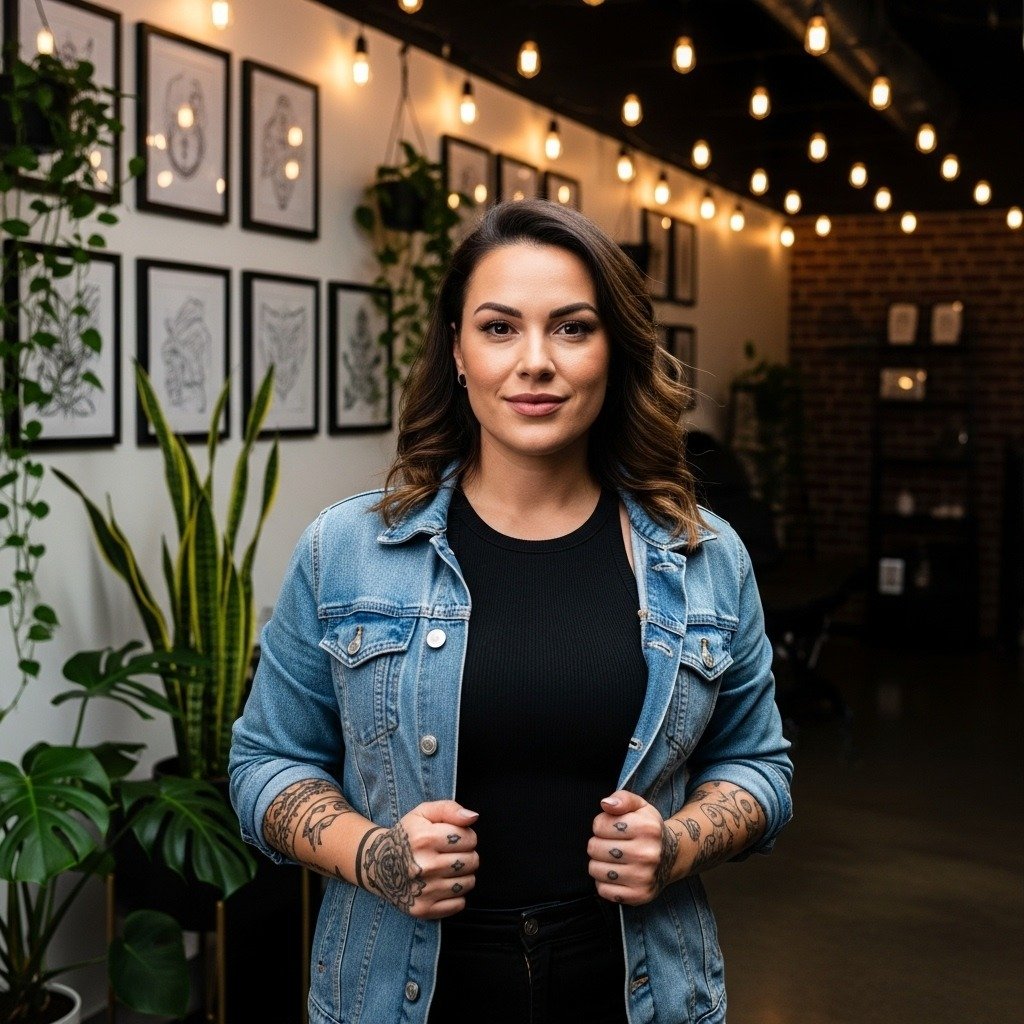
The delicate tree silhouette people obsess over on social feeds rarely tells the whole story about longevity. Smaller, single-needle trunks tend to blur on textured skin while modestly bolder roots and clearer negative space keep a tree readable for years. I prefer designs that give the branches room to breathe and the roots a little heft because that choice determines how the piece looks at one year and at five.
1. Fine Line Sapling on Inner Forearm
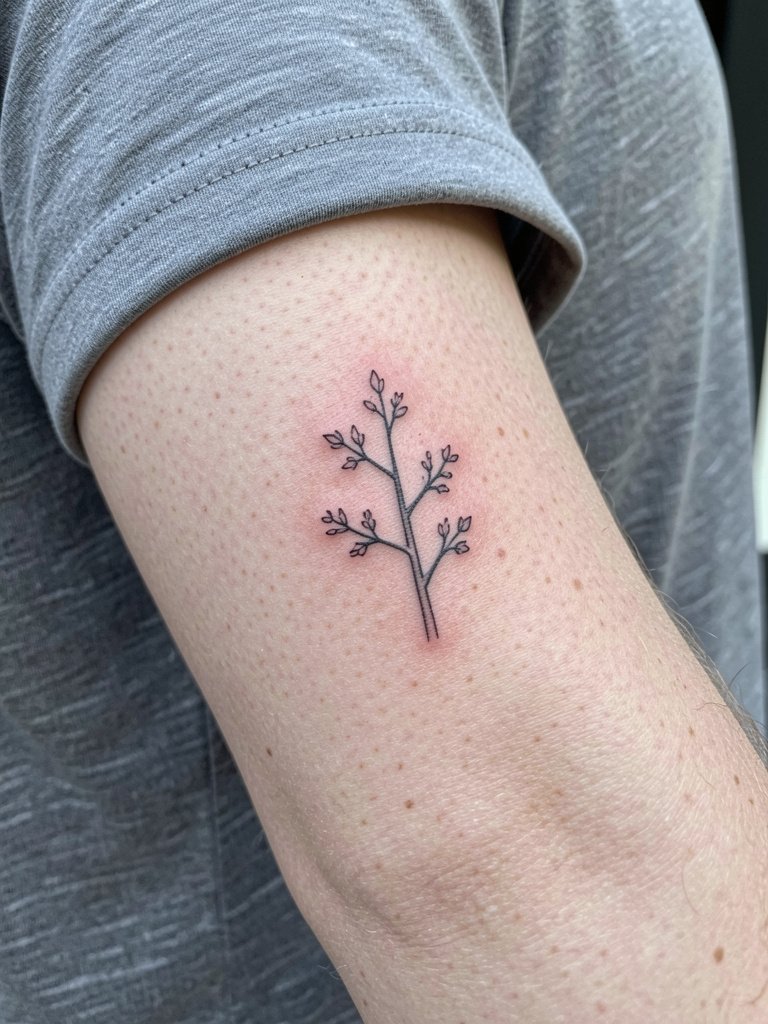
This tiny inner-forearm sapling is for someone who wants the symbolism without a long session. Expect a one-hour appointment with low to medium pain on the underside of the forearm. The biggest mistake is asking for ultra-fine single-needle detail at two inches. On textured or hairy forearms those thin lines can soften by year two. I recommend a hair-weight increase on the trunk and a little spacing between branch junctions so the silhouette reads after a touch-up. For showing it off, pair with rolled-sleeve linen shirts that keep the inner forearm visible. At six months the lines look crisp. At two years minor feathering appears. A light touch-up at year three usually restores the original contrast.
2. Roots-and-Ring Wrist Band
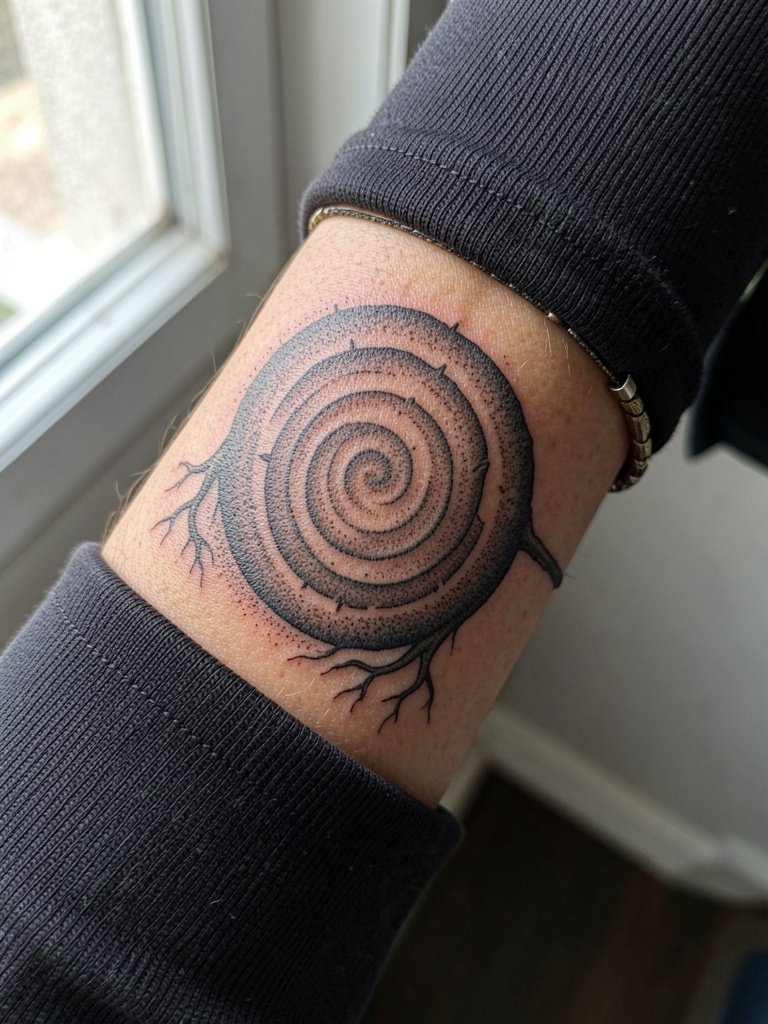
A wrist band built from tree rings reads like jewelry without the weight. Wrist skin moves a lot so thicker ring lines and denser stipple shading keep contrast over time. A common error is packing tiny root details too close to the joint. That invites early blur because the skin flexes with every movement. For the session wear a loose button cuff you can roll up easily. Pair the finished band with slim chain bracelets or a minimal leather cuff to frame the piece. Expect near-surface needlework and a 45 to 90 minute session. Touch-up needs vary but plan for one at year two for crispness.
3. Stipple Shaded Circle on Sternum
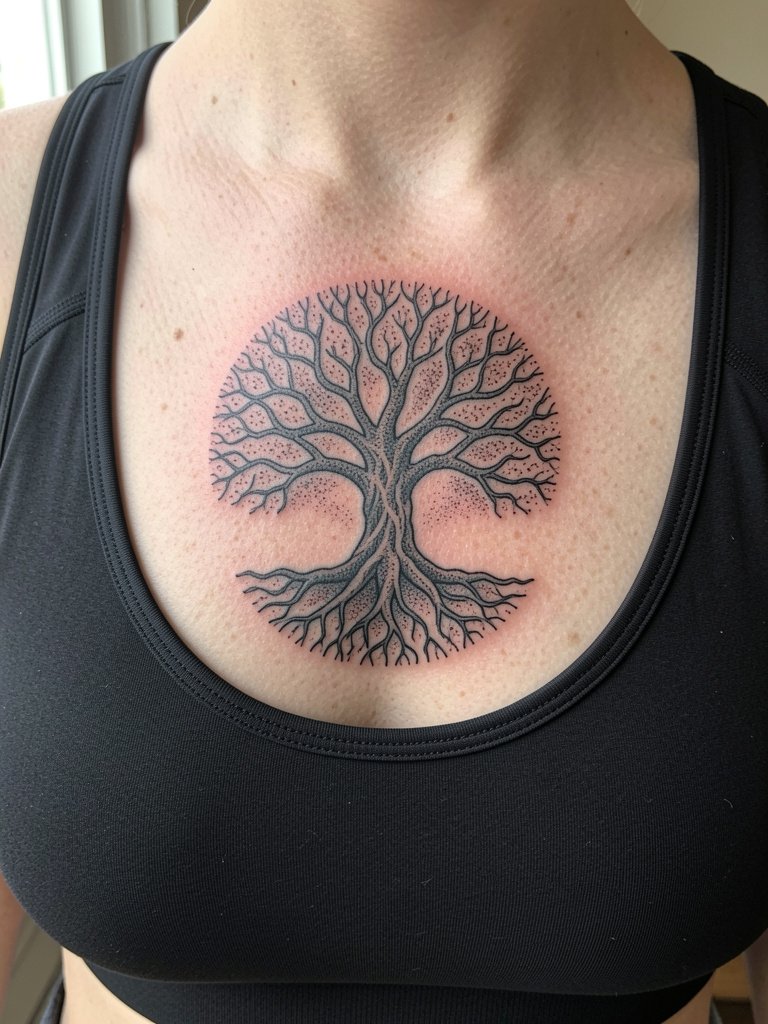
Sternum pieces look striking but the area is sensitive and the skin moves with breathing. Pain on the sternum is higher than forearm work and sessions often break into two sittings for depth and comfort. Most people ask for too much micro detail on the center trunk. The safer route is to use stipple shading for texture instead of tiny filigree that will blur. For session clothing, bring a supportive fitted top you can easily remove without tugging the chest. If this piece touches sacred patterns, acknowledge the origin and consider simplified motifs instead of exact cultural symbols. Healed at six months this reads soft, at two years the stippling holds better than single-needle text.
4. Ribcage Branchwork That Ages Better
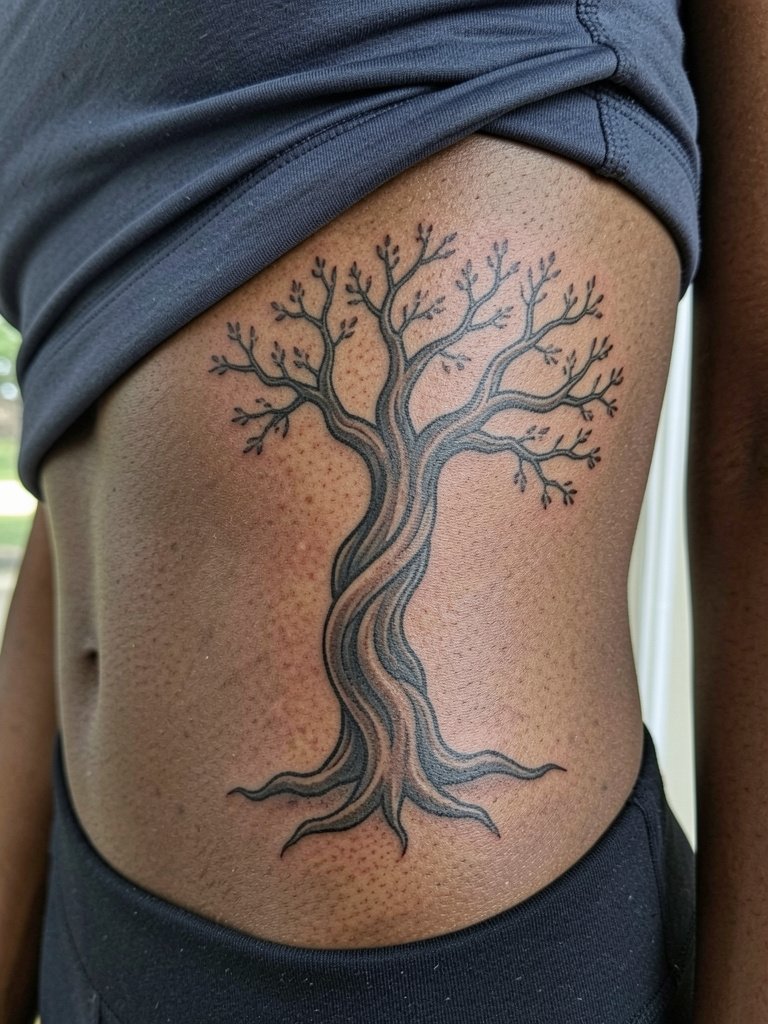
Fine-line trees on ribs spark debate in the community. One camp argues ribs stretch and blur fine line work within two years, especially along the breast crease. The other camp contends that with slightly heavier line weight and careful spacing the ribs accept fine work and it settles clean. If you lean into the first approach choose mid-weight trunk lines and negative space between branches so the tree stays legible as skin shifts. Rib sessions hurt more than most placements and can run multiple hours. Plan comfortable clothing for afterward and consider a staged session length to manage pain and swelling.
5. Celtic Knot Rooted Tree on Outer Calf
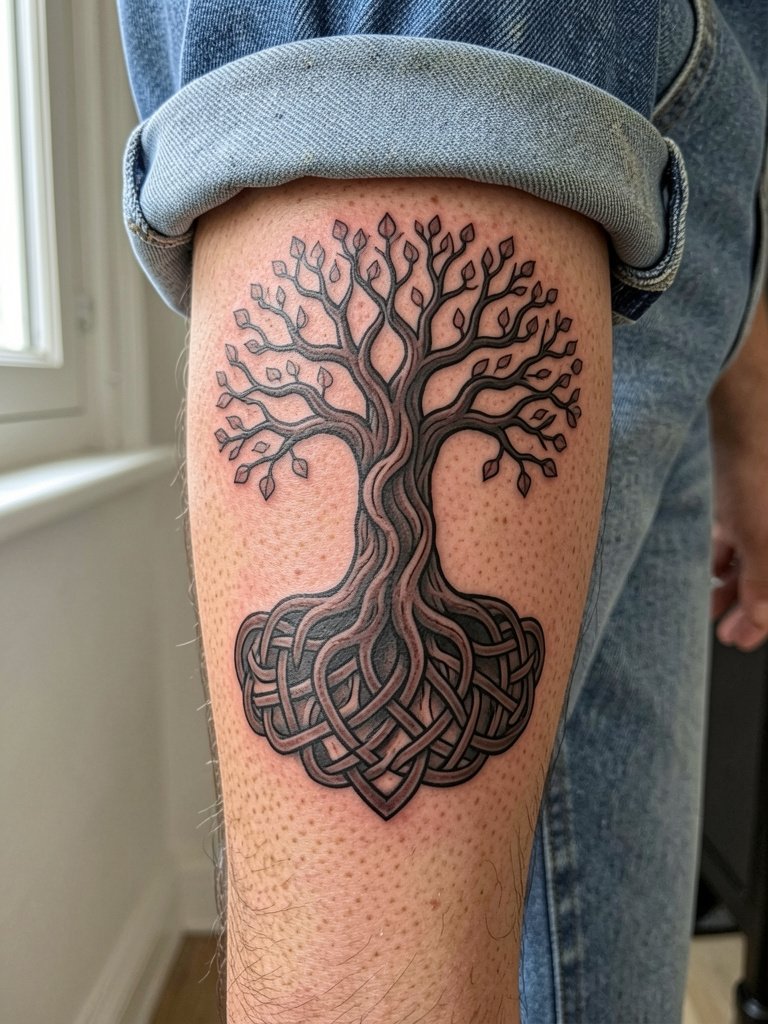
Celtic-inflected trees carry visual impact on the calf because there is room for knotwork. The common mistake is shrinking knot patterns too small. When knotwork runs into tight curves it loses definition with movement. Request knot lines that are bold enough to survive calf skin stretching. For showing this design off, pair with mid-length skirts or rolled jeans so the outer calf is visible. Calf sessions are moderate pain and usually finish in a single two- to three-hour block. If the design draws from real Celtic symbols, be mindful of cultural context and prefer inspired geometry over direct copies.
6. Watercolor Canopy Over Shoulder
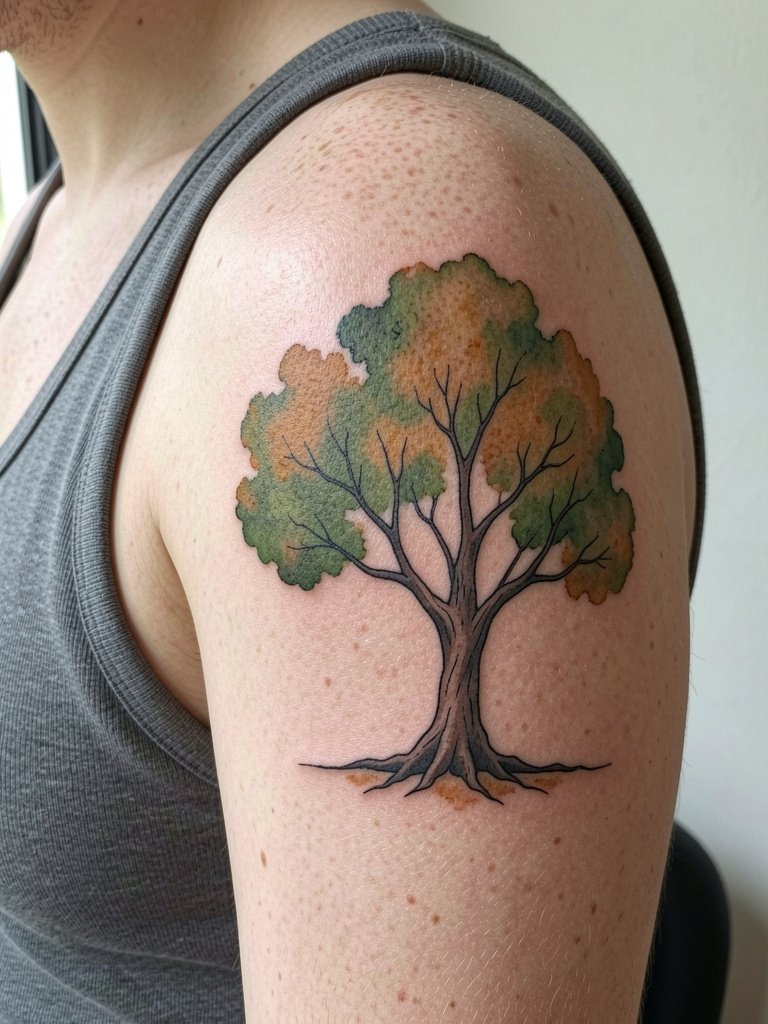
A shoulder canopy that uses watercolor technique offers movement and color without heavy linework. However watercolor pigments can fade and migrate more quickly than saturated black. A common compromise is to use a slightly stronger outline for branches and let color sit behind it. For the appointment wear a loose tank so the artist can access the shoulder without fabric shifting. To frame this design on warm days try open-back tops or strappy sundresses that keep the shoulder visible. Expect medium pain and a two-hour session for color layering. A color refresh at year two keeps the palette lively.
Session Day Essentials
These items smooth the first day for small forearm, calf, wrist, and shoulder work covered above.
-
Stencil transfer paper kit. Lets you preview scale and placement for small inner-forearm and wrist motifs before the needle touches skin.
-
Topical numbing cream. Applied as directed eases rib and sternum sensitivity without altering pigment deposit when used correctly.
-
Thin protective film roll. Keeps ankle and wrist work clean during the first showers and reduces friction from socks and watches.
-
Fragrance-free gentle body wash. Cleans healing skin without added irritants, useful for calf and back pieces.
-
Aquaphor healing ointment. Thin layer for immediate aftercare locks in moisture for fine line areas without suffocating the skin.
7. Geometric Roots Around the Ankle
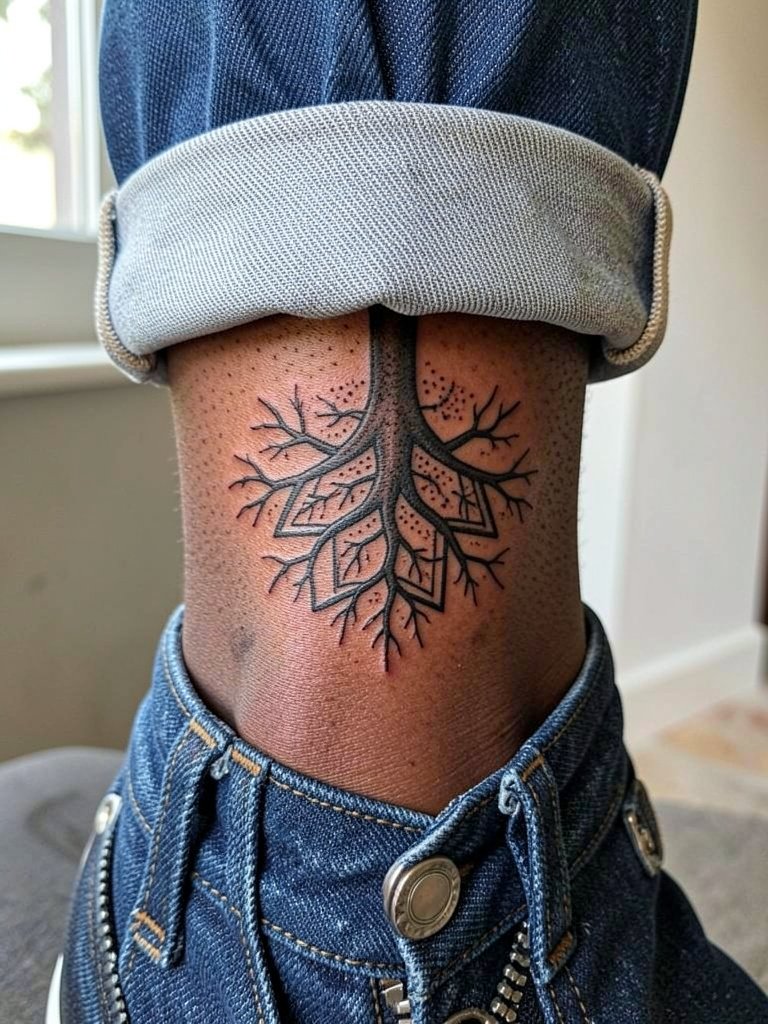
Ankle placement needs line decisions that respect friction from socks and shoes. Tiny, intricate roots right above the bone will fade faster because of constant rubbing. I suggest slightly thicker root terminals and an open negative-space ring so the geometry holds. Sessions are short but the area heals amid daily movement, so plan 6 to 8 weeks of careful sock choices. Show it off with cropped trousers or ankle boots and a pair of clean low-profile sneakers. If you work a lot on your feet, factor in extra touch-up risk.
8. Micro-Realism Tree Portrait on Inner Thigh
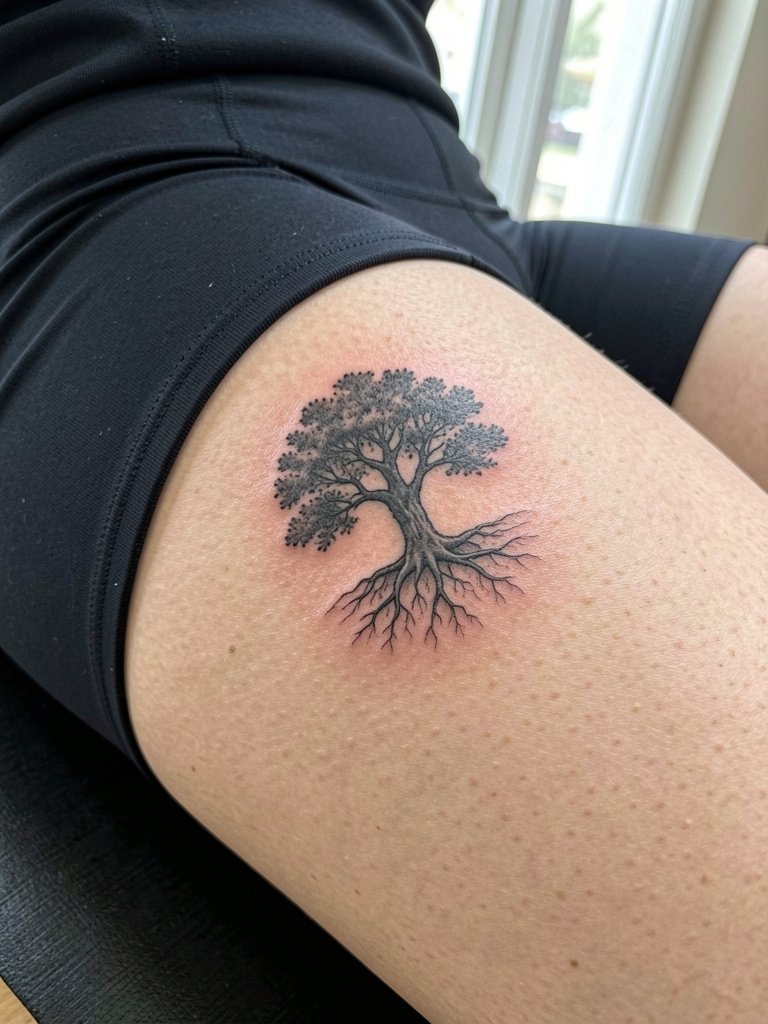
Inner-thigh tattoos benefit from privacy and larger canvas for realistic detail. Pain varies but is often lower than ribs. A common mistake is packing ultra-fine detail too close to the groin line. Keep the composition centered mid-thigh and give roots breathing room so the piece reads in pants. For the session wear comfortable shorts that you can remove without tugging. Because this placement is intimate, choose an artist experienced in thigh realism to ensure even saturation and clear edges. Healed images at one year show softer shadowing, so expect a potential touch-up at year two to sharpen contrast.
9. Minimalist Linework Collarbone Accent
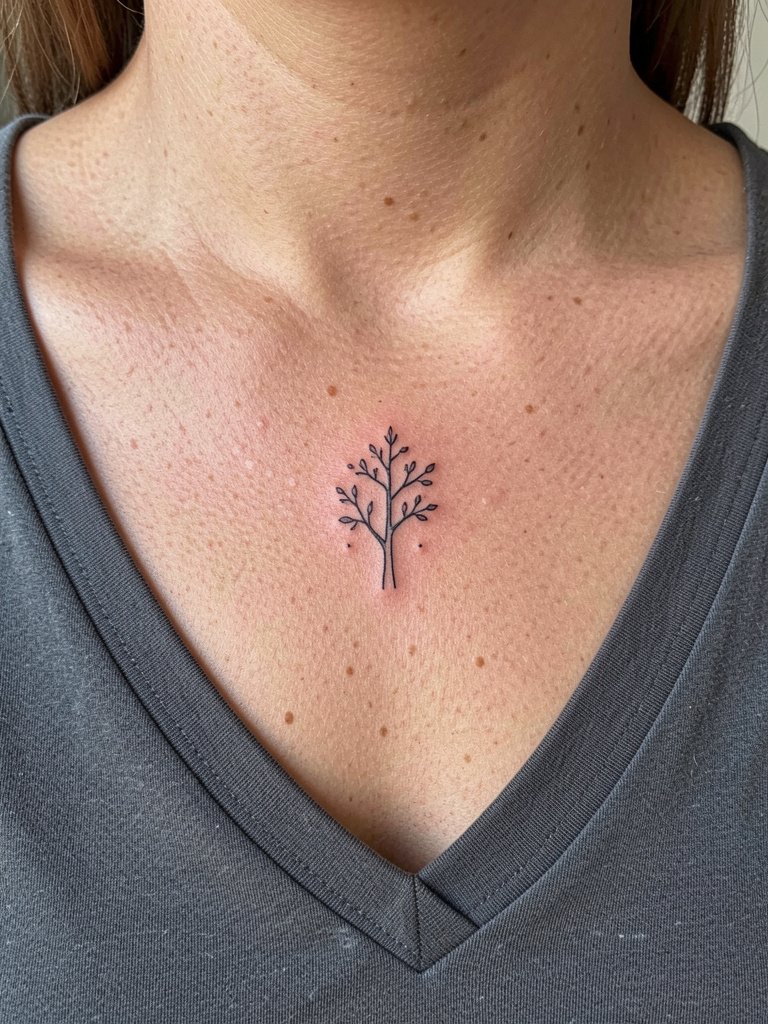
Collarbone lines look delicate in photos but the area is exposed to sun and clothing friction. Tiny single-needle trunks look great initially. Over time UV and necklace rubbing can soften the piece. To avoid this, ask for slightly denser linework near the bone and plan on sunscreen on exposed chest. For outfit pairings try open-neck blouses that let the collarbone sit in frame. Sessions are short and pain is low to moderate. If this piece includes text or sacred symbology, confirm spelling and spacing exactly in stencil form so it reads when healed.
10. Celtic-Style Disc on Thigh With Cultural Note
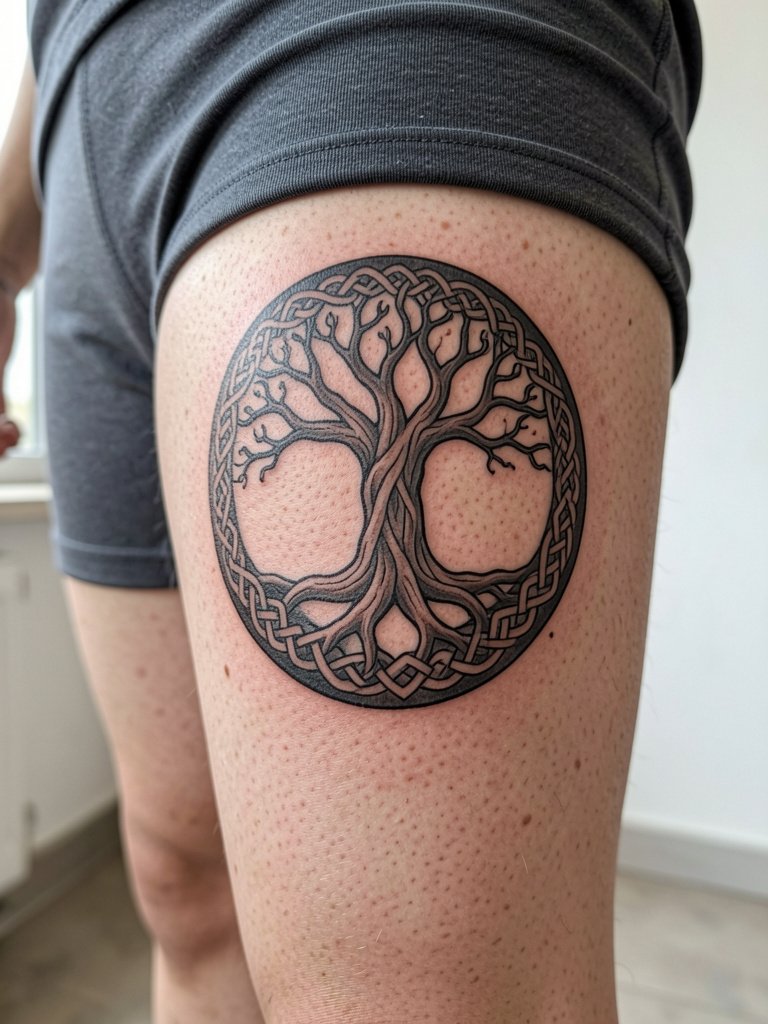
Disc compositions with knotwork are powerful on the thigh but they raise cultural questions. One camp points out that Celtic knotwork has deep cultural ties and prefers crediting or avoiding trivial use. Another camp believes respectfully inspired patterns can be worn if you learn the origin and work with educated designs. If you choose knotwork, opt for inspired geometry rather than literal copying of sacred symbols. Thighs accept detail well so session time can be two to three hours. For outfits that show it, pair with high-waist shorts or a wrap skirt that highlights the circle without crowding the motif.
11. Tiny Seedling Behind the Ear
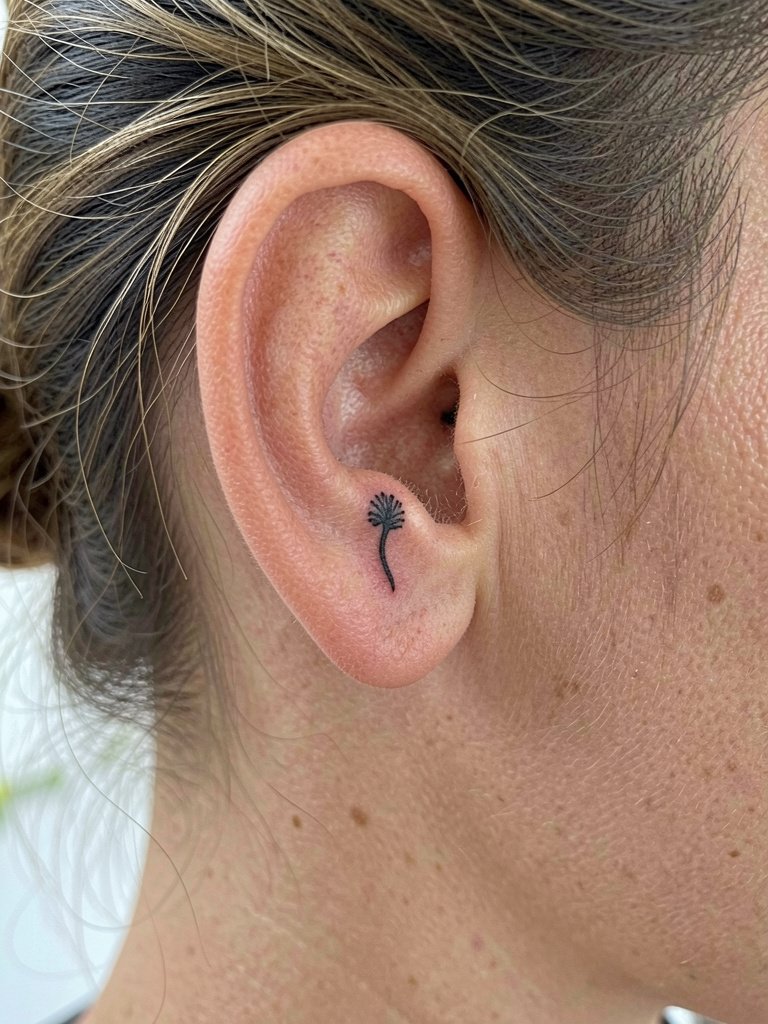
Behind-the-ear pieces are discreet and require an artist used to small placements. The area heals differently because of hair and oil. A frequent error is insisting on hairline-thin strokes that vanish under hair regrowth. Ask the artist to place a slightly heavier anchor point at the base of the stem so the silhouette stays visible. This is a one-hour spot with a low to moderate sensitivity level. If you want to make it visible for nights out, try short hairstyles or pinned-up looks and use lightweight hoop earrings as a frame. Because the area requires precision, check healed photos of the artist's similar placements before booking.
12. Yggdrasil-Inspired Vertical Spine Piece
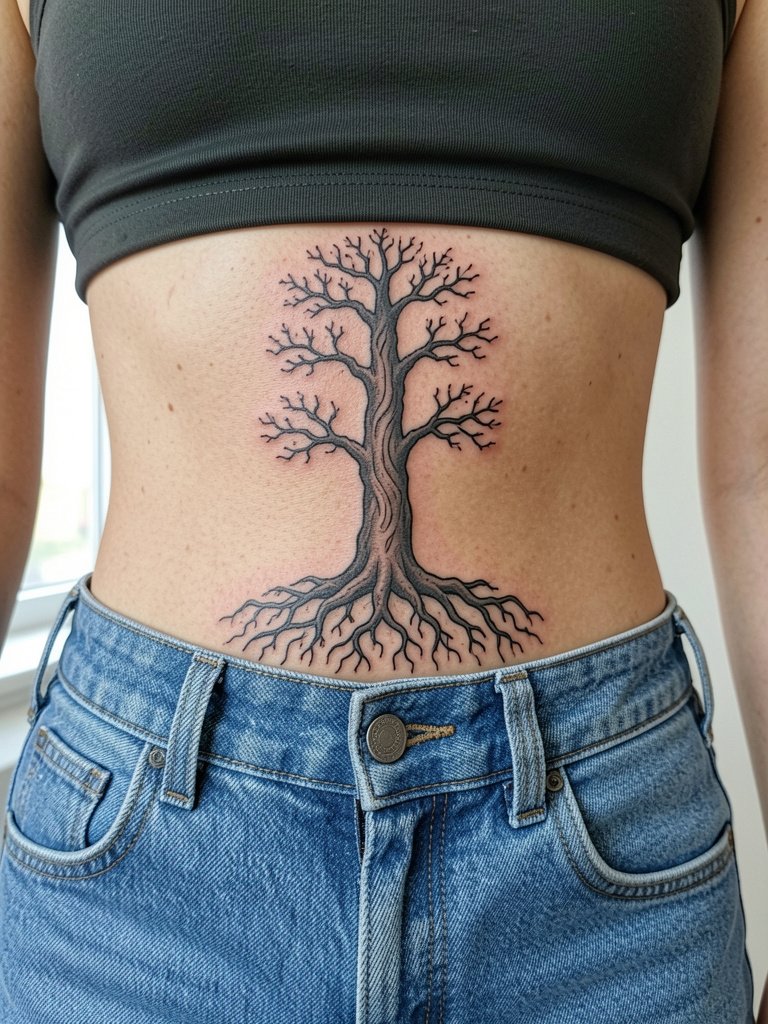
A vertical spine tree makes for a dramatic centerline piece that complements posture and clothing. Lumbar skin handles mid-weight lines well. Watch out for trying to cram symmetrical micro-detail too close to the spine where movement and stretching can thin the lines. Sessions typically require multiple passes for consistent saturation along the column. For session clothing, bring a top you can remove without bending too much. Lower-back pieces are often covered in daily life so touch-ups are less frequent, but when you do show it a low-rise pant or crop top makes the vertical composition sing. If mythic names are used, be aware of origin and intent.
13. Blackwork Circle Sleeve Accent
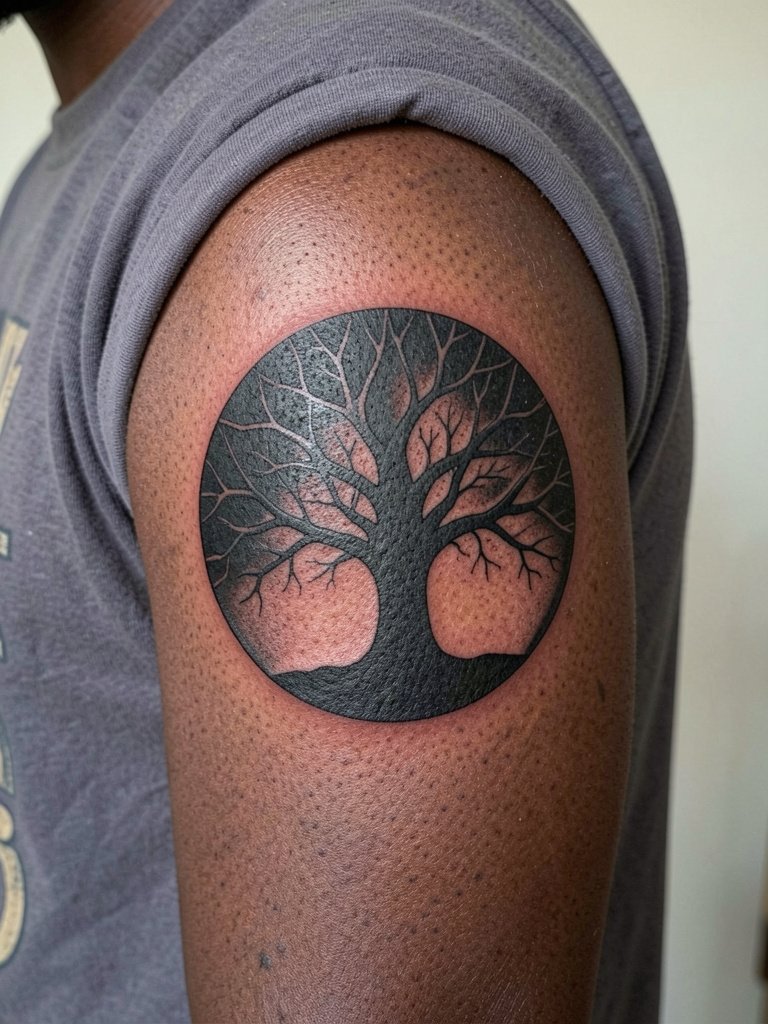
Blackwork approaches hide aging well because saturation creates contrast that persists. The main decision is how much negative space to include so branches do not merge into the dark fill. A typical mistake is too many tiny branch tips inside saturated blocks. For a sleeve accent, balance thick limb anchors with airy branch tips. Outer-arm sessions are moderate in pain and often run two to three hours. For showing the piece off try sleeveless tops or folded sleeves and pair with a structured denim jacket for contrast. Saturated black holds better than faint coloring, which may require fewer touch-ups.
14. Linework Family Tree on Upper Arm
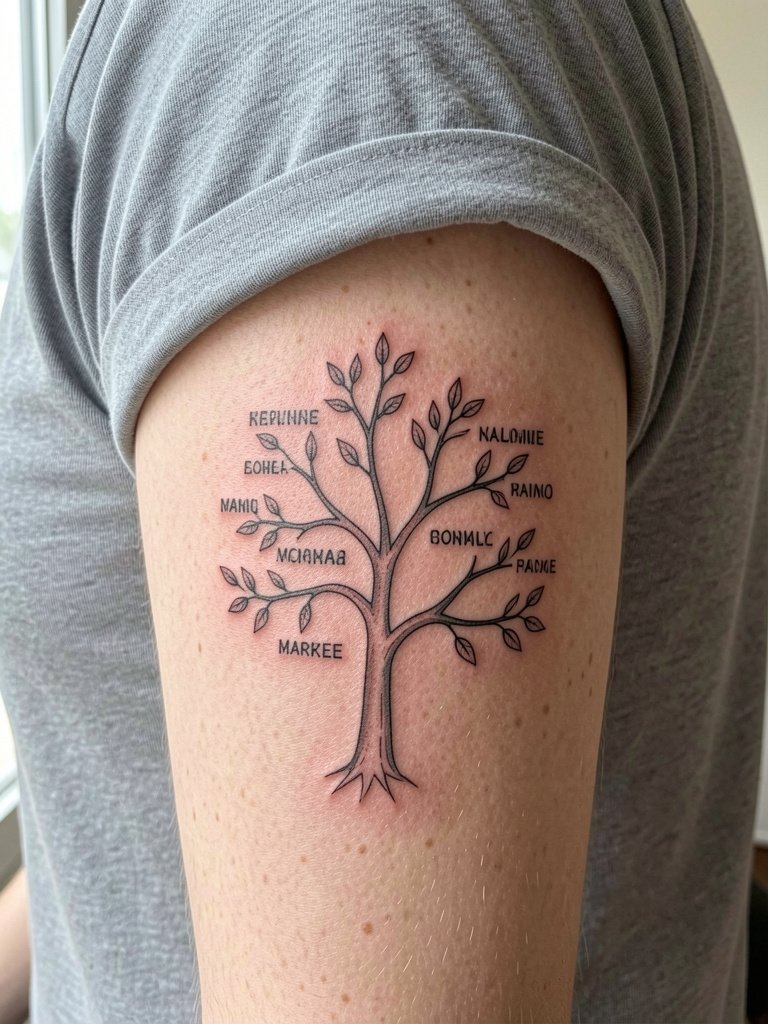
Family trees demand planning for text balance and future additions. The common mistake is under-spacing name nodes which makes later additions cramped. A practical approach is to design with extra branch length and built-in negative space so the piece can grow. Outer upper arm tolerates larger script and can take a three-hour session for multiple names. For wardrobe that highlights the art, wear sleeveless cuts or mid-sleeve shirts and consider a short-sleeve button shirt in neutral tones. Ask for stenciled name sizing on the skin before ink to confirm scale.
15. Botanical Sleeve with Leaf Veins
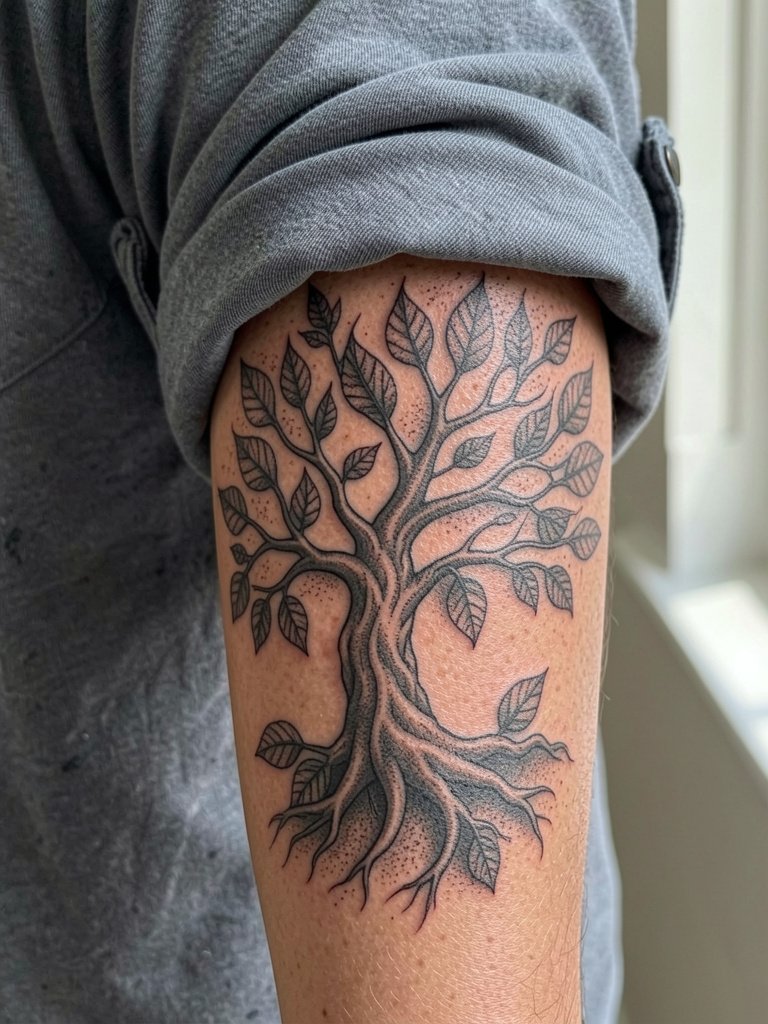
Botanical sleeves combine tree trunks with leaf detail that ages at different rates. Vein work is delicate and looks great for the first year but needs adequate spacing between veins to remain crisp. A common error is layering too many tiny veins in a dense area. For the session wear clothing that allows the artist to roll the sleeve without pressure, like a loose flannel or cotton button-up. Forearm work usually heals predictably and touch-ups are cosmetic. Discuss the visual hierarchy for trunk, branches, and leaves so the sleeve retains its reading from arm length and distance.
16. Negative Space Mandala Tree on Upper Back
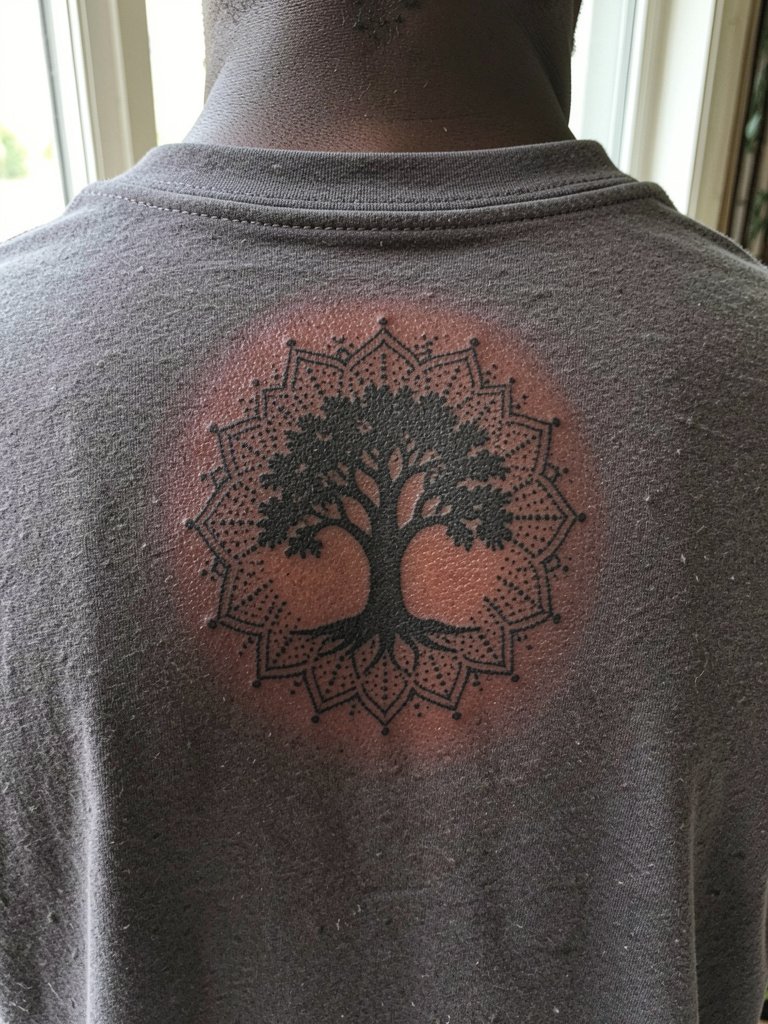
Using negative space to form a tree inside a mandala yields a strong graphic read that behaves well as the back moves. A mistake is over-detailing the mandala so the negative tree silhouette loses clarity. Ask for clear central negative areas and balanced dot work radiating outward. Upper-back pieces allow multi-hour sessions and usually perform well with medium-weight lines. For outings, the piece pairs with open-back tops or halter dresses to showcase the negative silhouette. Consider UV protection on the back to slow fading over years.
17. Rooted Infinity Wrist Accent
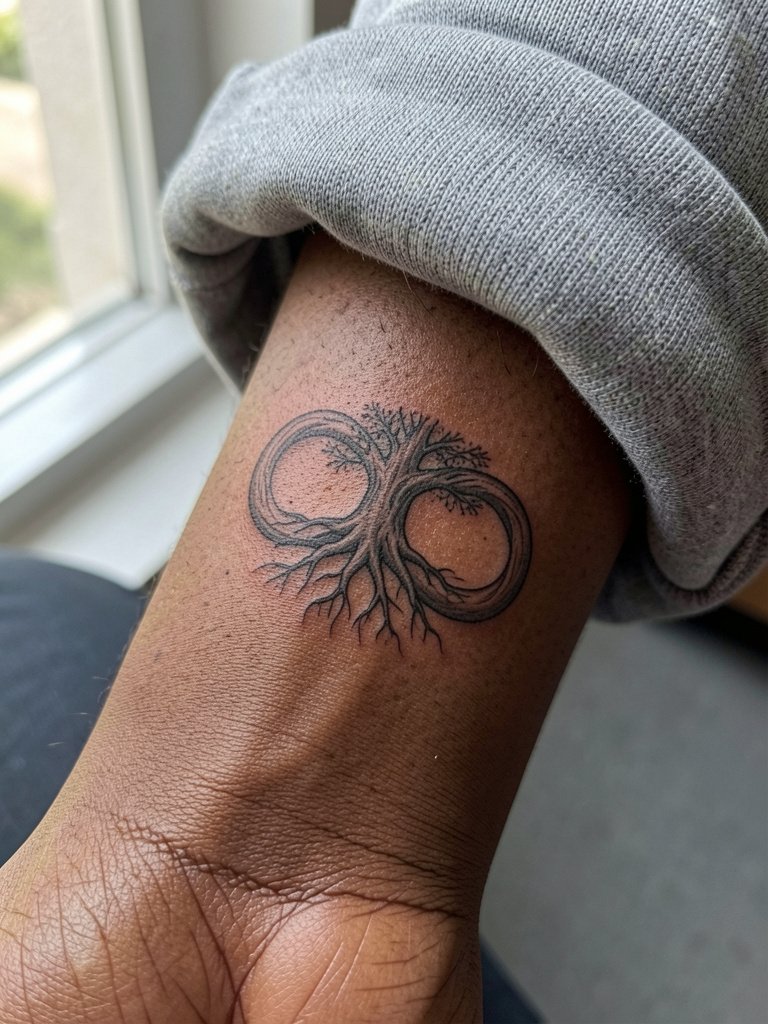
The inner wrist is high-visibility but high-motion territory. Many people request ultra-fine loops which later become uneven with wrist flex. For a durable result choose a slightly heavier loop and keep the root junction open. The session is brief but sensitive. During booking, confirm placement distance from the wrist crease so rings and bracelets do not sit on top of the ink. For outfit pairings try short-sleeve knits or cropped sleeves and a minimal watch band to frame it. Expect a possible one-year touch-up to restore crispness.
18. Ornamental Chest Piece with Gold Accents
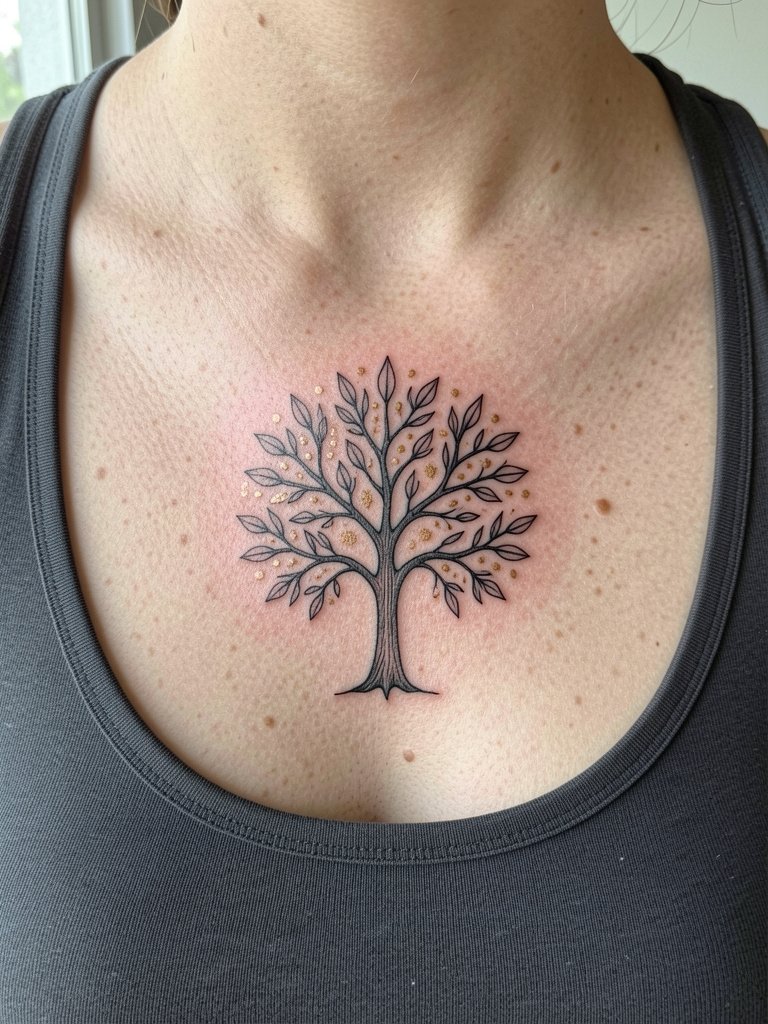
Delicate metallic accents can add depth to a chest tree but metallic inks show and age differently on various skin tones. The common error is expecting gold dots to maintain the same brightness as fresh photos. If you want metallic highlights, mix them sparingly with black anchors and accept that they often need refreshes. Chest sessions can be sensitive depending on placement and may require breaks. For daytime outfits that reveal the work, open-neck shirts and lightweight necklaces keep focus on the pattern. If you choose metallics, request healed examples from the artist to understand real-world results.
19. Tiny Bark Texture on Finger
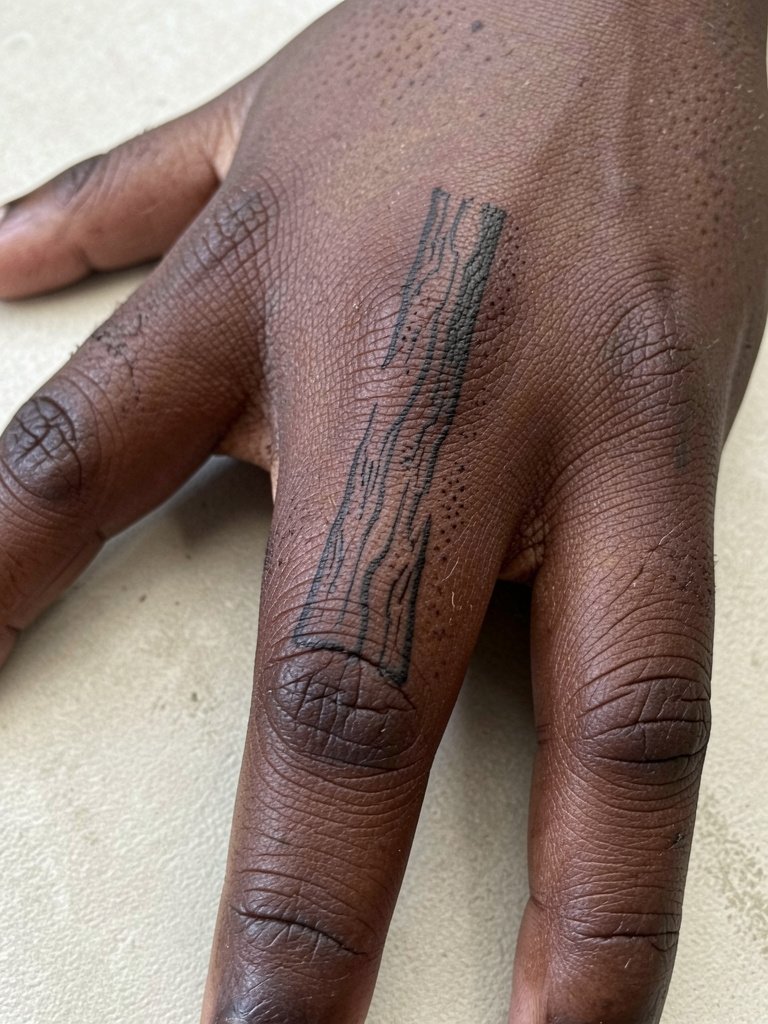
Finger tattoos face high wear from washing and friction which makes bark textures fade fast. A common mistake is requesting micro-detail along the knuckle lines. Opt instead for a slightly bolder textured stripe and accept that fingers often need touch-ups every one to two years. Session time is short but expect lower saturation at first because the skin there rejects some pigment. For styling, wear rings that sit above the ink to avoid direct rubbing and try thin stackable rings that complement the vertical bark. If you need longevity, place the texture on the outside of the finger rather than the pad.
20. Minimal Geometric Tree on Calf
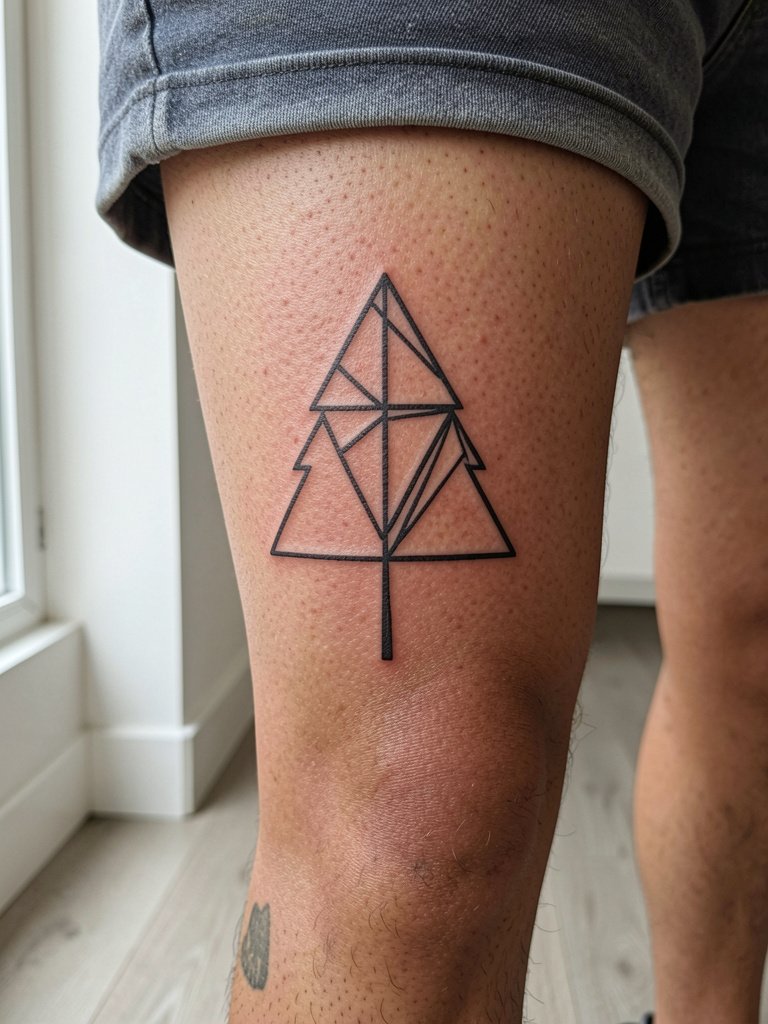
Geometric trees read clean on the calf thanks to the long canvas. The typical error is adding too many intersecting thin lines which creates visual clutter as the skin moves. Keep the geometry bold and legible at a distance. Calf sessions are tolerant of detail and often finish in a single two-hour block. For showing it off pick cropped pants or a casual short that keeps the calf exposed. A well-spaced geometric tree will need fewer touch-ups than a heavily stippled design.
21. Hand-Palm Seedling Accent
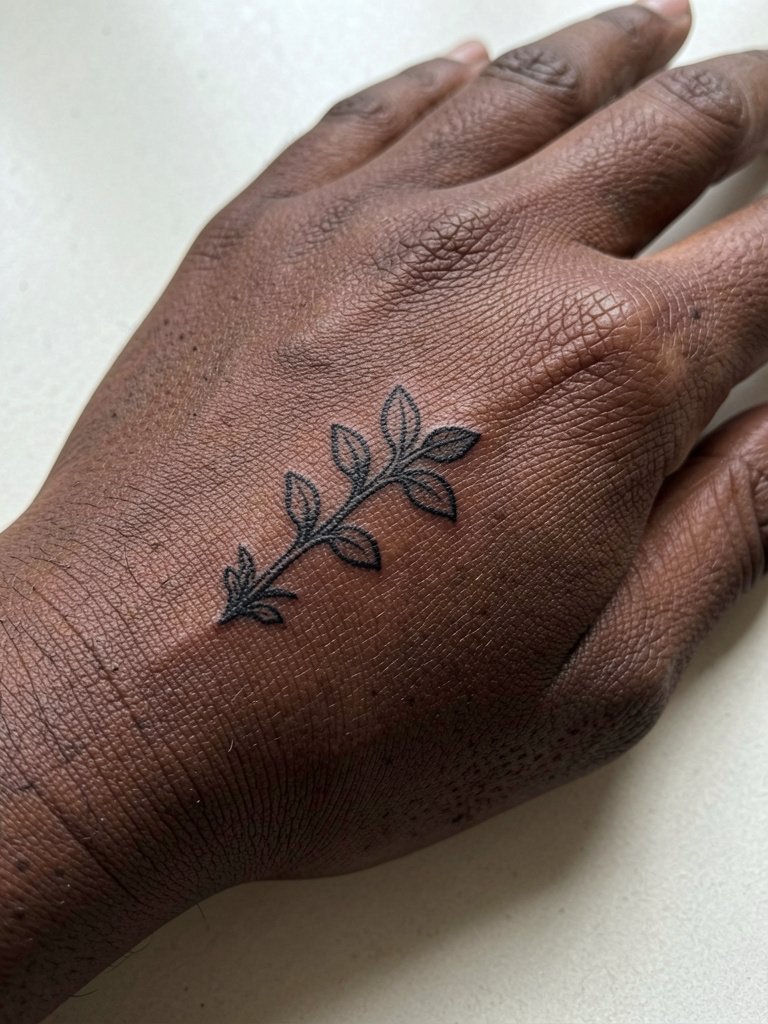
Hand tattoos are immediate and visible but they age fast. The skin on the hand is thin and exposed to elements which makes ink blur or lighten. If you want hand work, choose a bold anchor shape rather than a web of fine detail that the skin will lose. Sessions are short but painful and often leave the area looking slightly raised for a few days. For styling, rings and bracelets can either hide or highlight the motif. Try a slim stackable ring set that coordinates with the seedling. Expect yearly touch-ups if you want to maintain high contrast.
22. Solar Eclipse Tree on Shoulder Blade
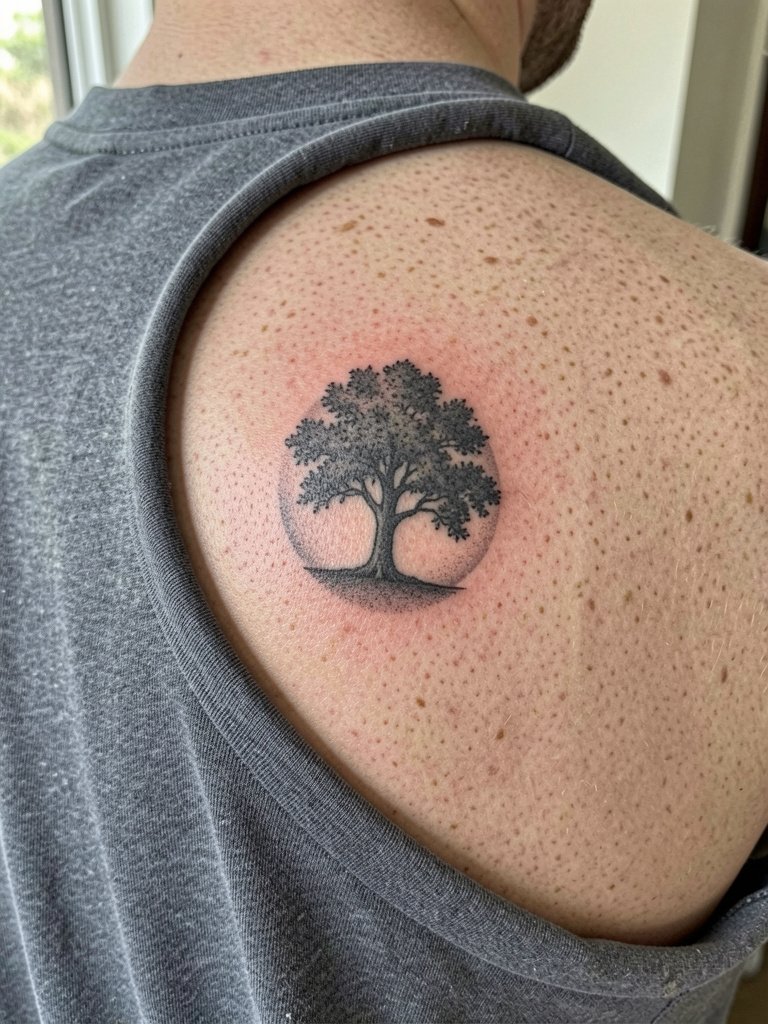
Combining celestial motifs with tree silhouettes gives a compact visual story on the shoulder blade. The area handles moderate detail and the rounded surface flatters circular compositions. The common mistake is shrinking the eclipse smaller than the tree crown which confuses focal points. Keep the eclipse proportionate so the halo reads as atmosphere rather than a speck. Shoulder-blade sessions are medium in discomfort and usually complete in one session. To showcase the piece, wear a scoop-back top that reveals the area. UV protection will preserve the halo shading.
23. Braided Trunk Half-Sleeve
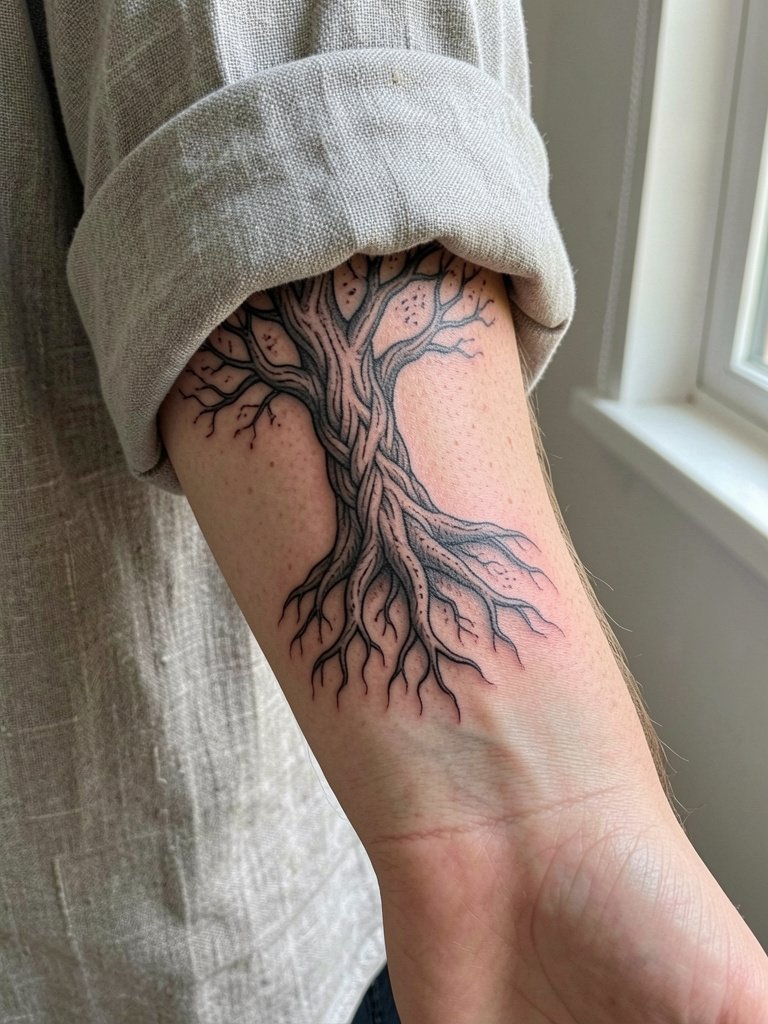
Braided trunk designs give motion to forearm work and age predictably when the braids are left slightly bold. Many people want ultra-fine hairline braids that blur into a single mass. For a lasting read, choose hair-weight lines with open negative channels between braid strands. Forearm half-sleeves often take multiple sessions and cause moderate discomfort. For long-term styling pair the braid with rolled sleeves or forearm bracelets and consider a thin cuff bracelet to echo the wrapped motion. Touch-up timelines are typical at year two for maintaining crisp braid separation.
Frequently Asked Questions
Q: How do Tree of Life tattoos change between one and five years healed?
A: Smaller single-needle trees often soften by year two as line edges feather. Designs with slightly heavier trunks, open negative space, and bold root anchors tend to keep their silhouette longer and usually only need a light touch-up around year two to restore contrast.
Q: Where can I find healed portfolios and discovery pathways without naming artists directly?
A: Search platform tags and keywords with location filters on social platforms and community forums. Look for hashtags that combine the motif and placement like #TreeOfLifeForearm and #HealedTattooPhotos, and use thread filters on Reddit or portfolio keywords on dedicated tattoo sites to find healed examples across skin tones.
Q: Are there cultural concerns I should consider when choosing a Tree of Life design?
A: Yes. One group insists on crediting origins and avoiding appropriating sacred iconography for fashion reasons. Another group feels inspired reinterpretations can be respectful when created with knowledge of the symbol. If your design borrows from a specific culture, research its meaning and choose a design that honors rather than copies sacred forms.
Q: What should I wear to a rib or sternum session to make the appointment easier?
A: For sternum or rib sessions bring a fitted sports bra or a crop top that you can remove without pulling on your chest. Loose drawstring pants are helpful if the lower body needs access. Comfort and easy removal reduce unnecessary movement during the session.
Q: How often do different placements need touch-ups?
A: Fingers, hands, and ankles often need yearly touch-ups because of friction and washing. Forearms, calves, and upper back generally last longer and may only need a refresh at two to three years. Plan touch-ups based on daily wear patterns rather than arbitrary timeframes.
Q: Can I wear jewelry or clothing to show off my new Tree of Life right away?
A: Yes. Choose soft fabrics and low-friction accessories for the first two weeks. For visible forearm and wrist pieces try thin bracelets or open-sleeve tops. For chest and back work open-neck or open-back tops let the design occupy center stage without rubbing the healing skin.