
The shamrock still reads as a quiet emblem more often than a billboard. Lately fine-line three-leaf pieces are the go-to for subtle diaspora markers, but they age differently depending on placement, ink choice, and skin tone. Read these curated ideas with realistic expectations about fade, touch-ups, and what to wear the day of your session so the design you pick looks like you wanted five years from now.
1. Celtic Shamrock with Trinity Knots
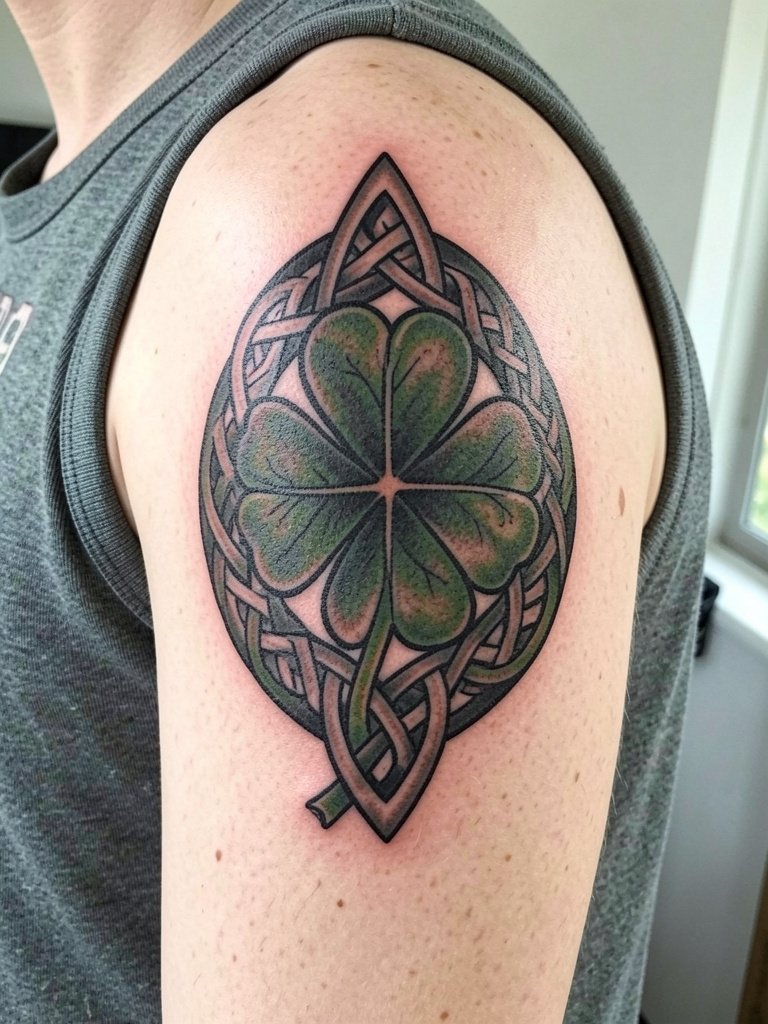
A medium-scale Celtic shamrock with trinity knotwork reads like heritage shorthand without needing extra text. I recommend this for an upper-arm placement if you want detail that holds because the area is low-friction and ages predictably. For consultation bring two images showing knot thickness and leaf spacing so the artist can scale line weight appropriately. Common mistake: shrinking the knotwork too small, which blurs by year three. Touch-up timeline: expect a first touch-up in two to five years depending on sun exposure. For show-off outfits try a sleeveless tank top in a deep jewel tone to contrast the blackwork.
2. Shamrock Irish Flag Tattoo
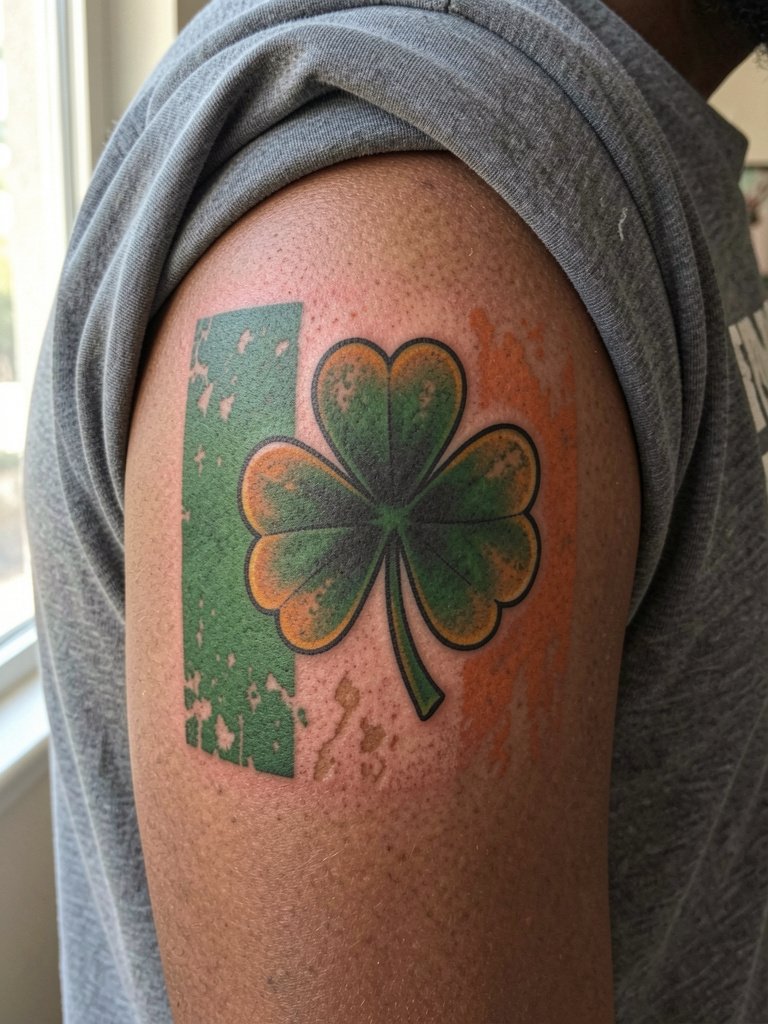
This tricolor mash-up makes heritage explicit while keeping the shamrock as a focal device. It needs enough surface area to avoid color bleed, so aim for three to four inches. The common error is jamming full color into a 1.5-inch piece, which goes muddy after a few years. Ask for saturated base layers rather than fragile washes so the green and orange hold longer. Session time usually runs one to two hours for a medium piece. Wear a cap-sleeve T-shirt to the appointment so the artist can access the shoulder easily.
3. Realistic Shamrock with Irish Harp
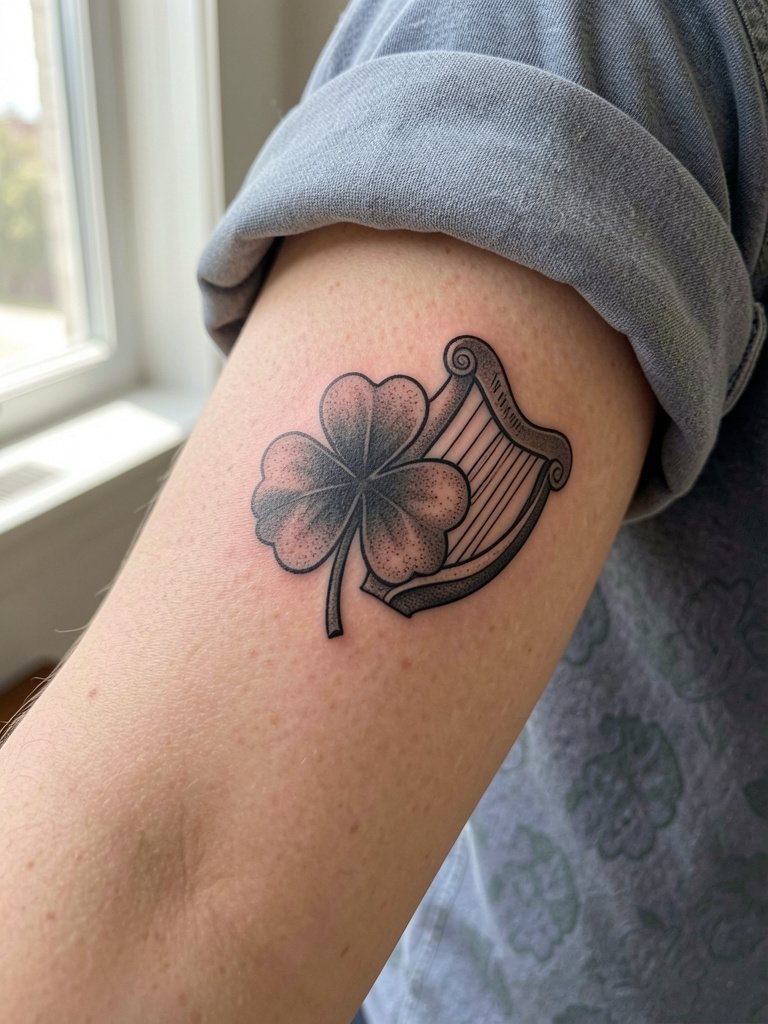
A realistic shamrock plus harp reads like a small crest. This is best on the outer forearm where flat, low-motion skin lets fine details sit cleanly. Tell the artist which element you want to dominate so the composition balances at three to five inches. A common mistake is asking for extreme micro-detail at too small a scale, which softens into gray within a few years. Expect two sessions for high-detail micro-realism. For the session wear a short-sleeve solid tee that you can roll without tugging the healing area.
4. Watercolor Shamrock with Anchor (Traveler's Design)
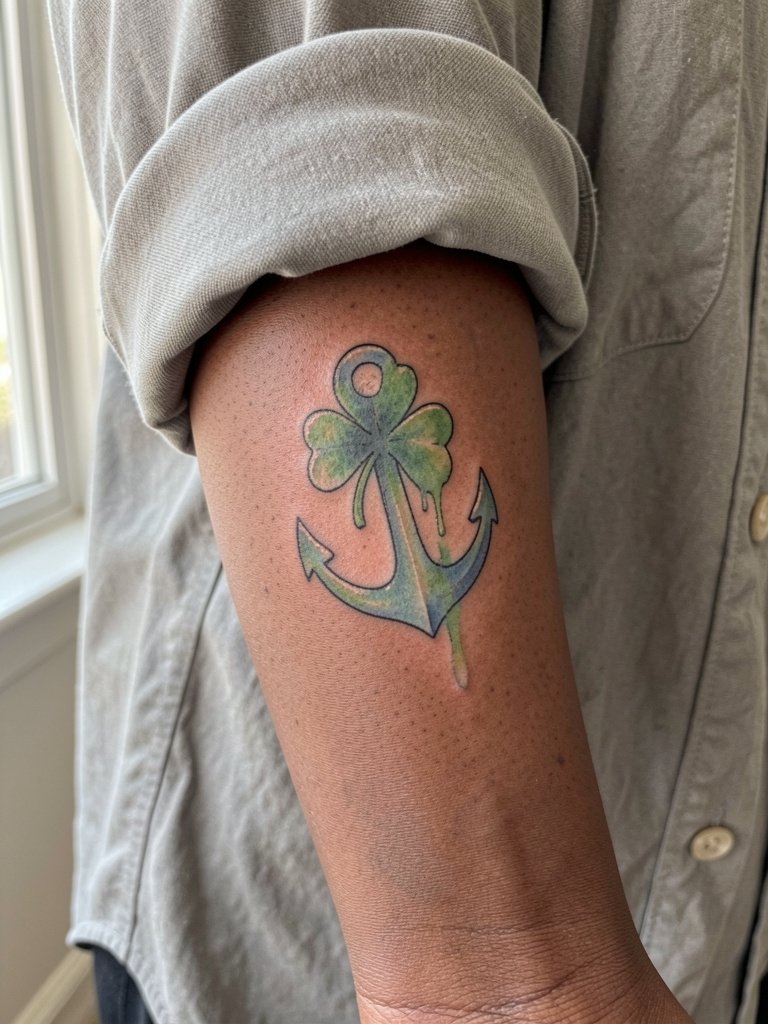
This traveler-focused combo looks painterly and expressive, and it pairs well with inner forearm placement where you can see the color often. Watercolor requires a skilled hand and acceptance that lighter greens may soften over time. The frequent mistake is expecting watercolor to hold bright hue for a decade without touch-ups. If you prefer longevity, ask for slightly more saturated base colors and a subtle black outline to anchor the wash. Session time is typically two to three hours. For showing off the finished piece try a rolled linen button-down that keeps the forearm visible without competing.
5. Irish Blessing Shamrock with Traditional Prayer Text
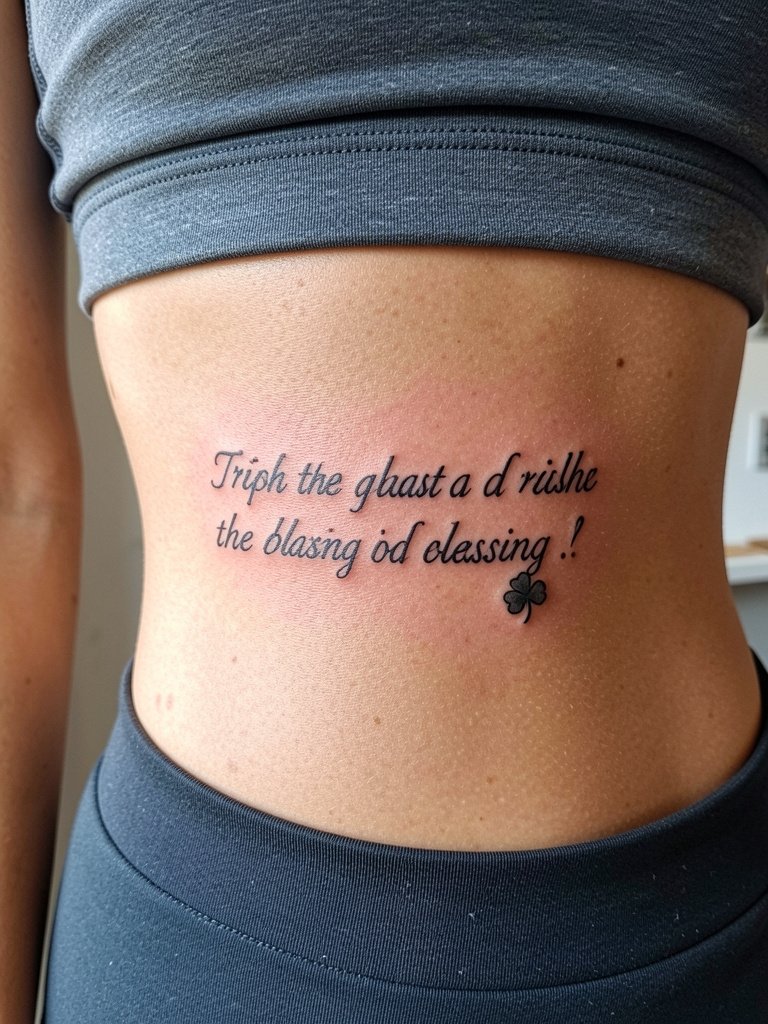
This ribcage placement gives a prayer text room to breathe, but it also brings the fine-line longevity debate front and center. One camp argues fine-line on the ribs blurs within 18 to 24 months because constant motion and skin stretch make delicate lines spread. The opposing camp says that with correct needle depth and slightly wider spacing the lines settle fine and their healed examples at three years show clear script. If you want the look but worry about fade, request a slightly heavier single-needle weight and plan for a touch-up at the two-year mark. For the session wear a fitted cropped athletic top so the artist can access the side torso without fabric shifting.
6. Minimalist Fine Line Shamrock
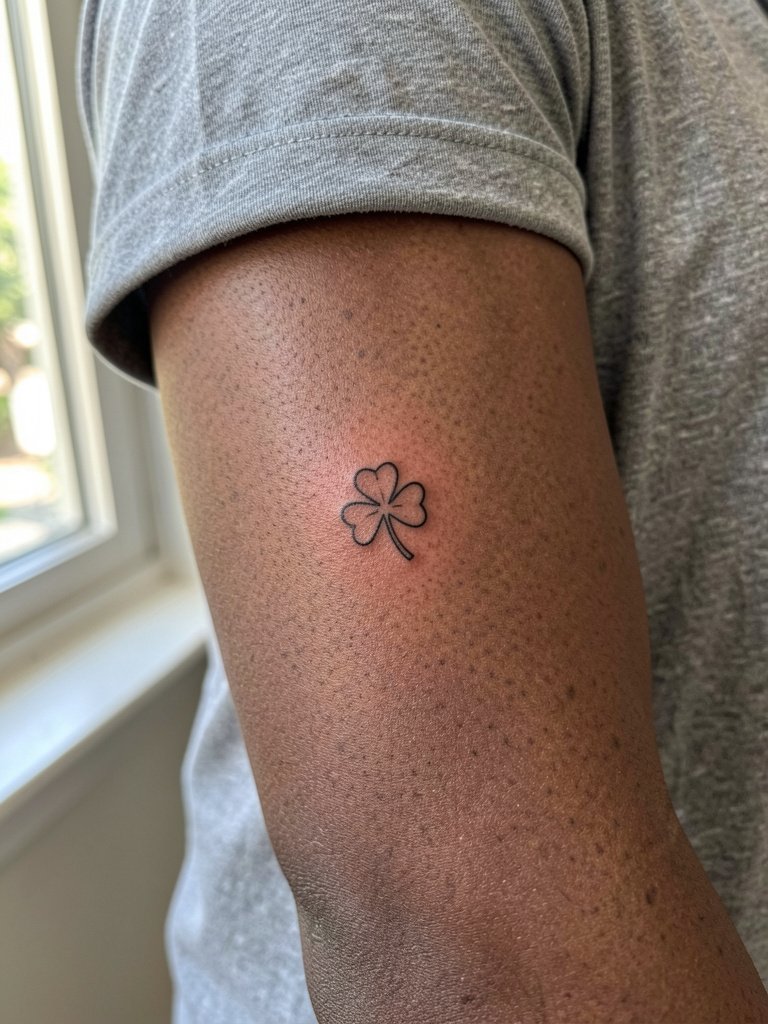
Fine-line wrists are the poster child for both subtlety and maintenance. A crisp single-needle shamrock reads charming at first but may need touch-ups every 12 to 24 months because wrist skin renews quickly and gets constant friction. If you want durability, slightly increase the leaf outline thickness and keep the overall size at least one inch. Bring reference photos showing exact line weight so the artist can match the needle choice. Session time is usually under an hour. For the appointment skip watches and wear a short-sleeve tee that does not rub the fresh ink.
Before You Book
The upper-arm, wrist, and ribcage pieces above all benefit from a small kit that smooths the session and the first week of healing.
-
Hustle Butter Deluxe. A non-petroleum balm many clients use after the initial scab phase for light moisturizing without heavy residue, helpful for large neo-traditional leaf fills.
-
Black Widow Aftercare Salve. Lightweight salve that fine-line clients favor because it does not obscure delicate line contrast.
-
Bepanthen Healing Cream. Internationally trusted panthenol-based cream many travelers swear by for consistent skin hydration during healing.
-
Emu Oil Natural Healing. Used by some for second-stage healing on older pieces where scab reduction and softness matter.
-
Aquaphor Healing Ointment. A common, affordable ointment for the first few days that many artists recommend as a short-term layer for clean sites.
7. Infinity Shamrock (Combining Symbolism)
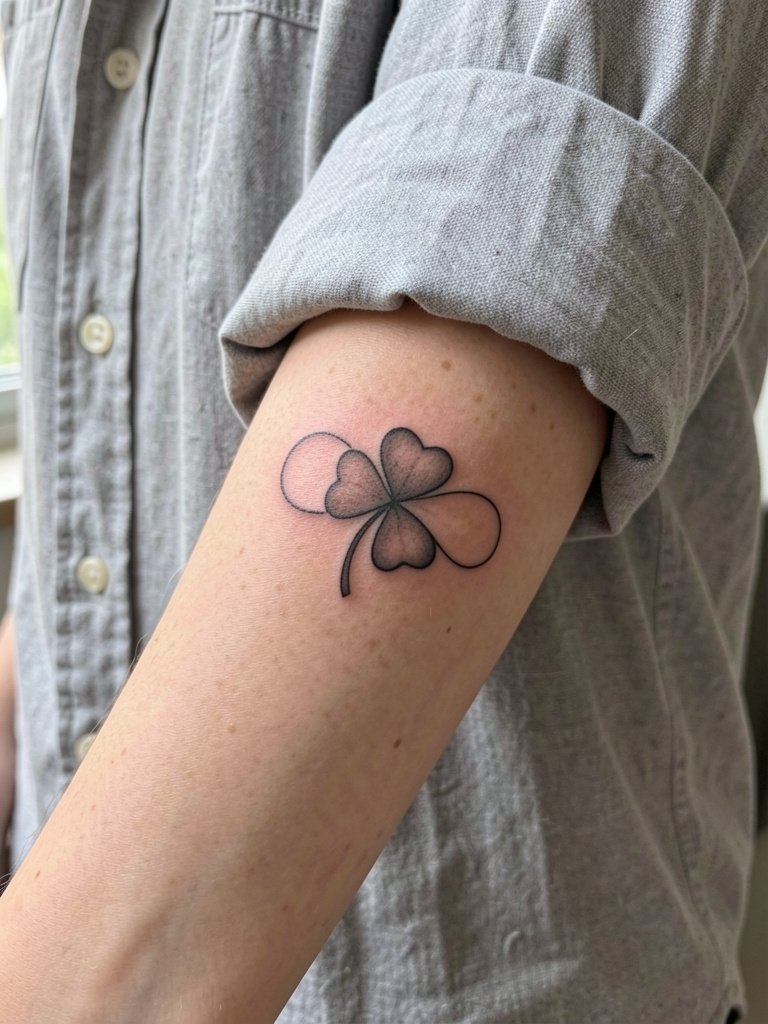
The infinity-shamrock hybrid makes a compact symbol of ongoing family ties. It works best at a slightly larger small scale so the crossover point between loop and leaf has enough negative space to stay legible. A typical mistake is compressing the loop so the leaves overlap too much. In a consultation ask for a compositional mock-up at two sizes so you can compare how it reads at one inch versus three inches. Inner forearm placement lets you show it or keep it private. For the session pick a loose button-down shirt that removes easily and does not press on the fresh ink.
8. Shamrock with Initials or Names (Family Memorial)
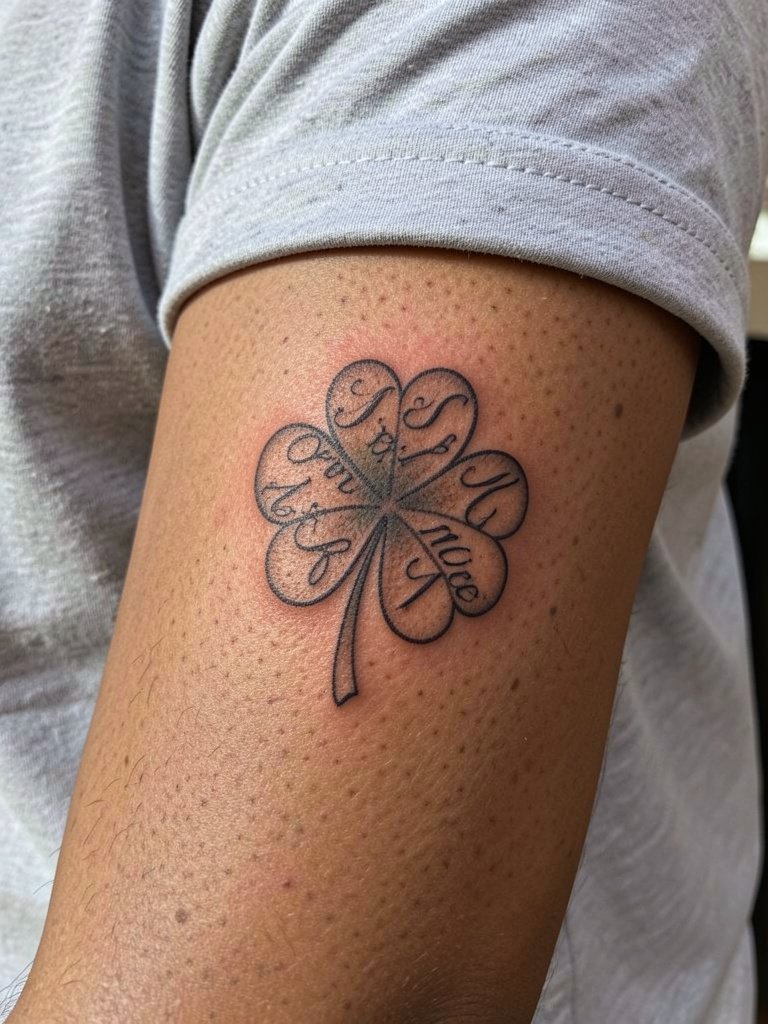
Integrating initials into leaf veins is a tasteful memorial approach, but text legibility depends on scale and font weight. Ask the artist to show the initials at the exact final size in the stencil so you can confirm readability. A common error is choosing ornate lettering that collapses into a dark smudge at small sizes. If your skin tone is darker, prefer slightly bolder linework for contrast. Plan for a single session under two hours for a medium piece. If you want to highlight the piece in outfits, pair it with a delicate chain bracelet set on the opposite wrist so attention distributes evenly.
9. Old School Traditional Shamrock (Vintage Flash Style)
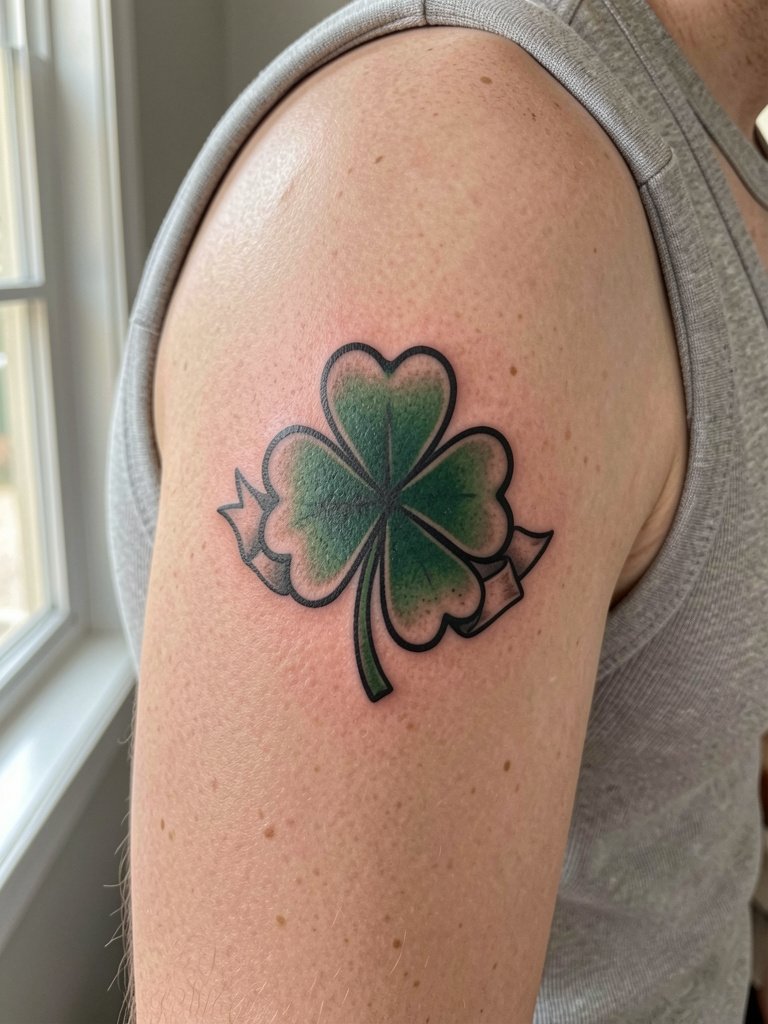
Old school flash holds up because of bold outlines and saturated fills. If you want low-maintenance longevity, this style is the safe bet. The main mistake is requesting tiny, traditional fills that end up as blobs with age. For a classic look, stick to 2–3 inches minimum for strong fill and outline. Single-session time is often an hour for small pieces. To show it off, wear a solid color tank top so the saturated green reads against a neutral background.
10. Blackwork Geometric Shamrock
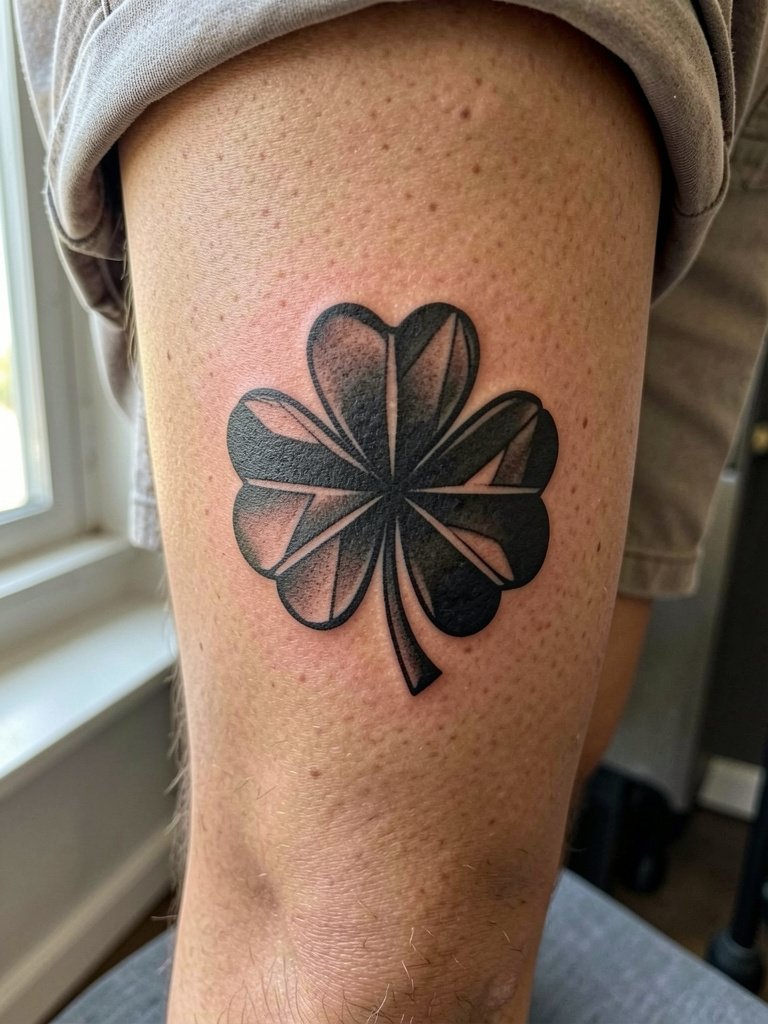
Geometric blackwork reframes the shamrock as a modern emblem rather than a literal leaf. It needs room to keep the negative-space lines crisp, so aim for at least two to three inches. Pitfall: scaling the geometry down too much, which causes shapes to merge. This style ages well because bold black is stable, but heavy fills will always need sun protection. Calf placement is forgiving and visible in summer. Pair the finished piece with denim shorts to keep the calf in view.
11. Watercolor Shamrock Without Anchor (Pure Floral Wash)
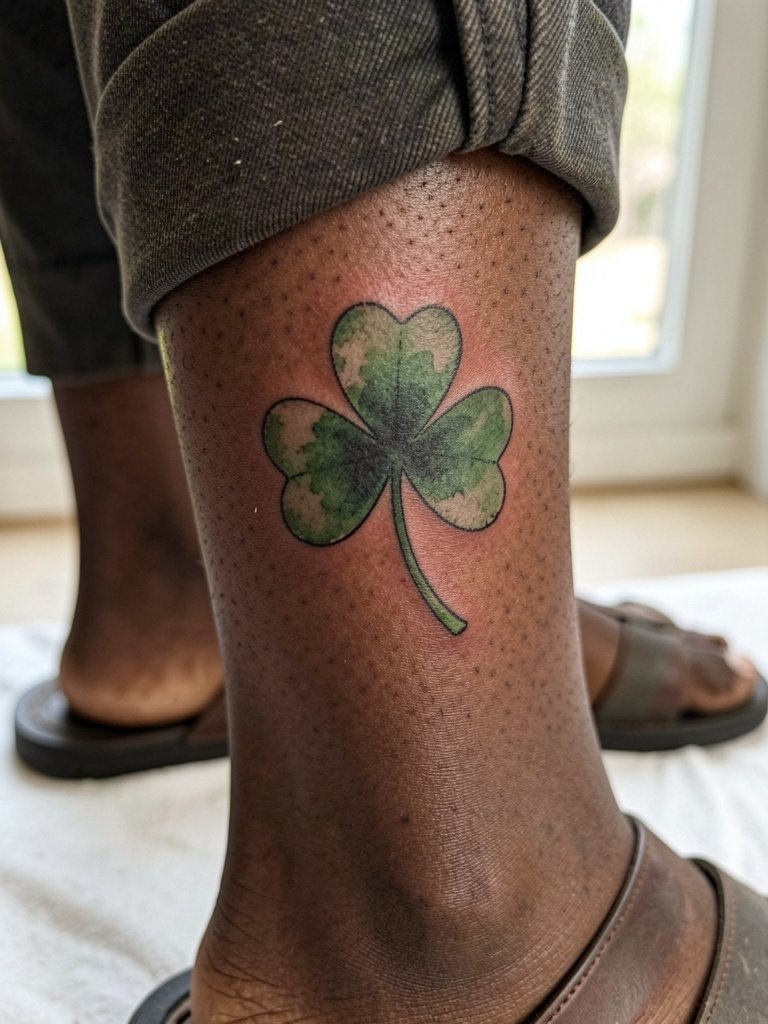
A pure watercolor shamrock reads very soft and painterly, which is beautiful but requires acceptance that lighter greens will fade faster than black. The usual mistake is picking a very small size for a color-only design, which can wash out in two to five years. If you want the aesthetic but need longevity, request a faint anchor outline or a slightly more saturated base color. Session time for a small watercolor piece is one to two hours. For summer styling try flat sandals or cropped pants so the ankle piece is visible.
12. Shamrock with Celtic Cross (Hybrid Design)
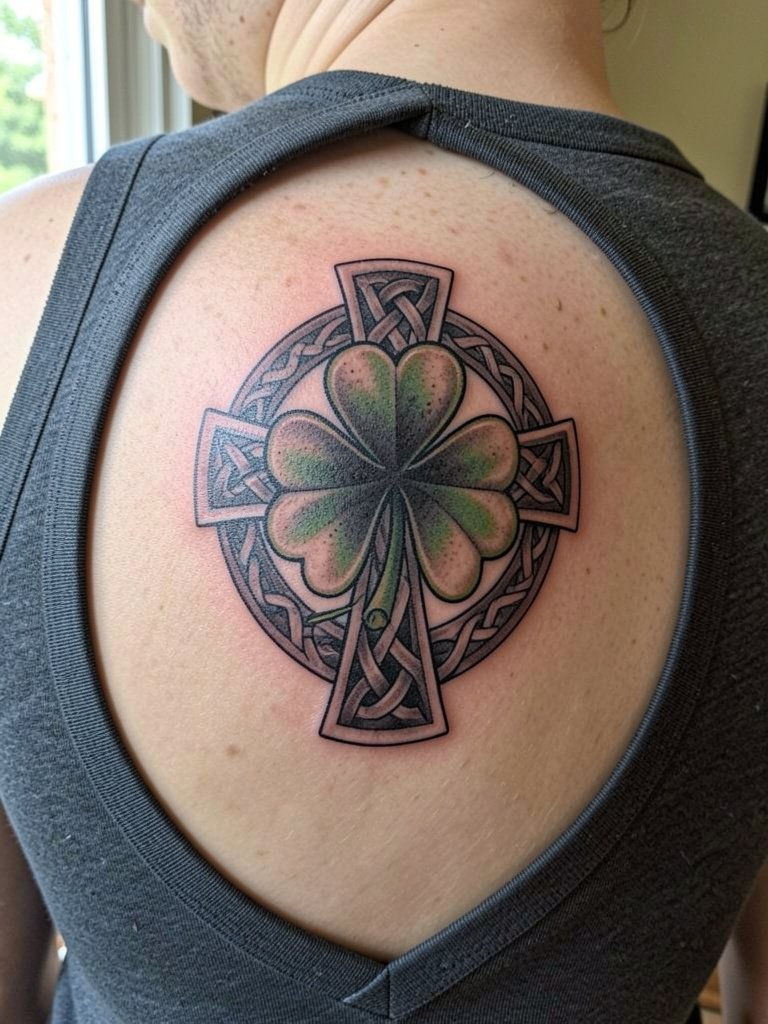
Combining the shamrock with a Celtic cross makes the symbolism explicit and usually suits larger canvas areas like the back shoulder blade. The common error is overloading the piece with too many tiny knots at a small scale, which reads as texture rather than pattern after healing. Ask the artist to simplify knot intersections for long-term clarity. Expect two to three sessions for detailed black-and-grey work with green accents. For outfits that hint at the piece, use off-shoulder tops that reveal one shoulder in a subtle way.
13. St. Patrick's Day Themed Shamrock (Pot of Gold Combo)
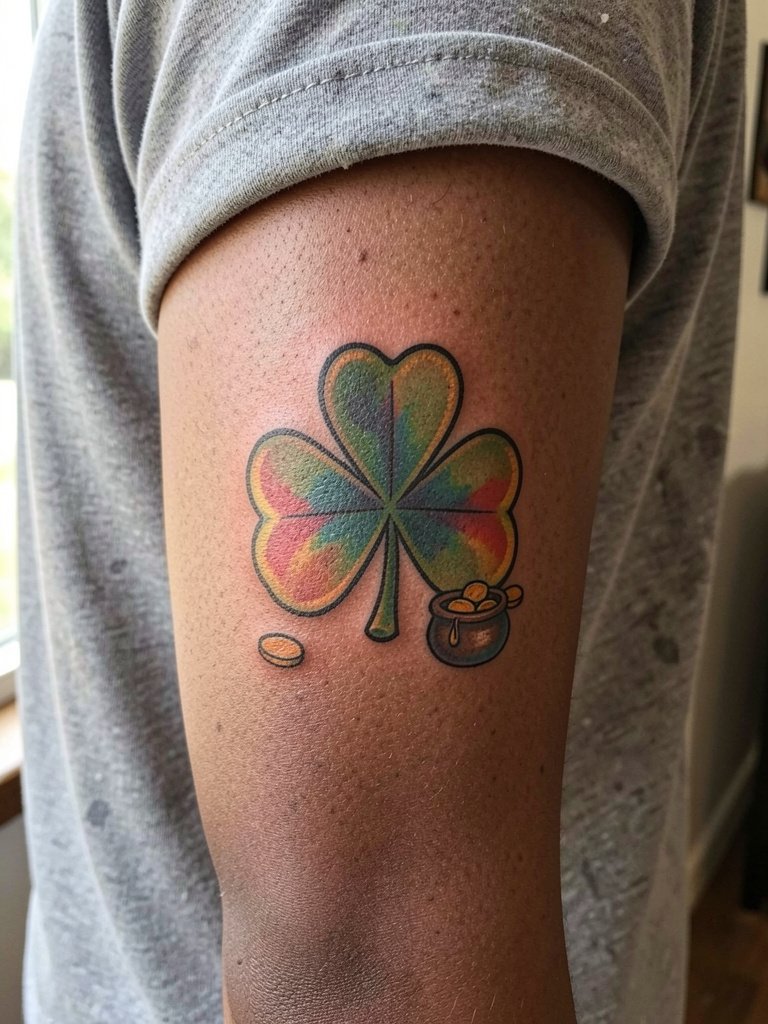
This festive combo reads as playful rather than heritage-first, so it works well for people who want seasonal flair. The design is best kept medium scale to prevent tiny rainbow gradients from blurring. A typical mistake is trying to cram a full rainbow into a one-inch badge. If you want color longevity, ask for stronger pigment saturation in the base layers. Session time for a medium color piece is often two hours. For casual show-off, pair it with a short-sleeve tee that keeps the forearm visible.
14. Micro Shamrock (Minimalist Micro-Realism)
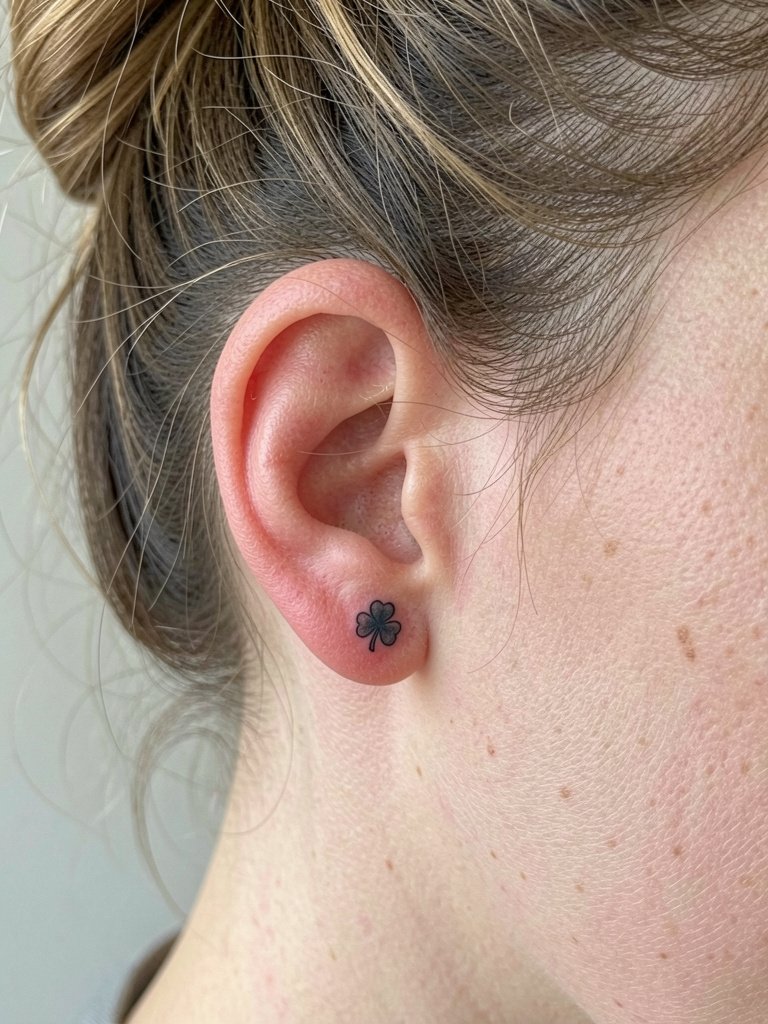
Micro pieces can be surprisingly durable when placed on low-motion, low-friction skin like behind the ear. The main mistake is trying to put complex shading into a sub-inch area. If you want longevity, keep the design as a clean silhouette or with minimal stipple. Single session time is short, often under 45 minutes. If you plan to show it in photos, wear your hair up or pick a shorter cut, and consider a minimal hair clip for styling shots.
15. Patchwork or Sleeve Shamrock (Multi-Session Project)
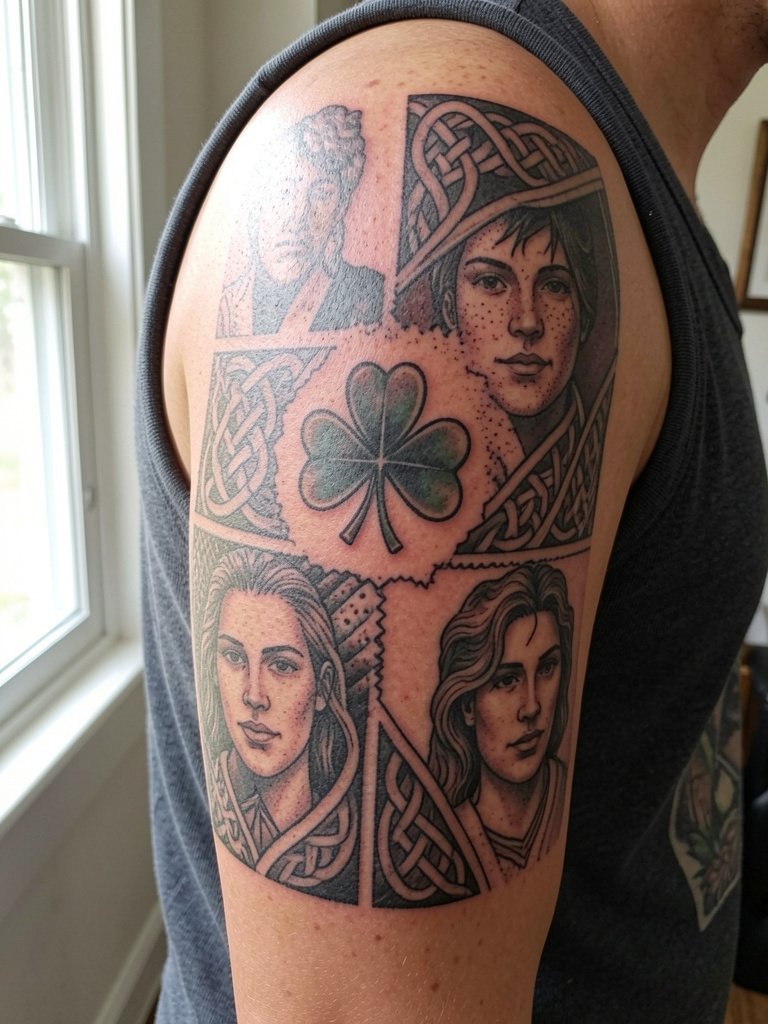
A sleeve lets you collect shamrock motifs across styles and eras, which helps if artists change or you want variety. The practical advice is to plan a loose visual spine that every artist can reference so pieces integrate over time. A common regret is lacking a cohesive palette and ending with a disjointed sleeve. Budget planning matters here because five-plus sessions add up. For session comfort, wear a button-down shirt you can remove without pulling anything tight across the arm.
16. Shamrock with Family Crest Elements
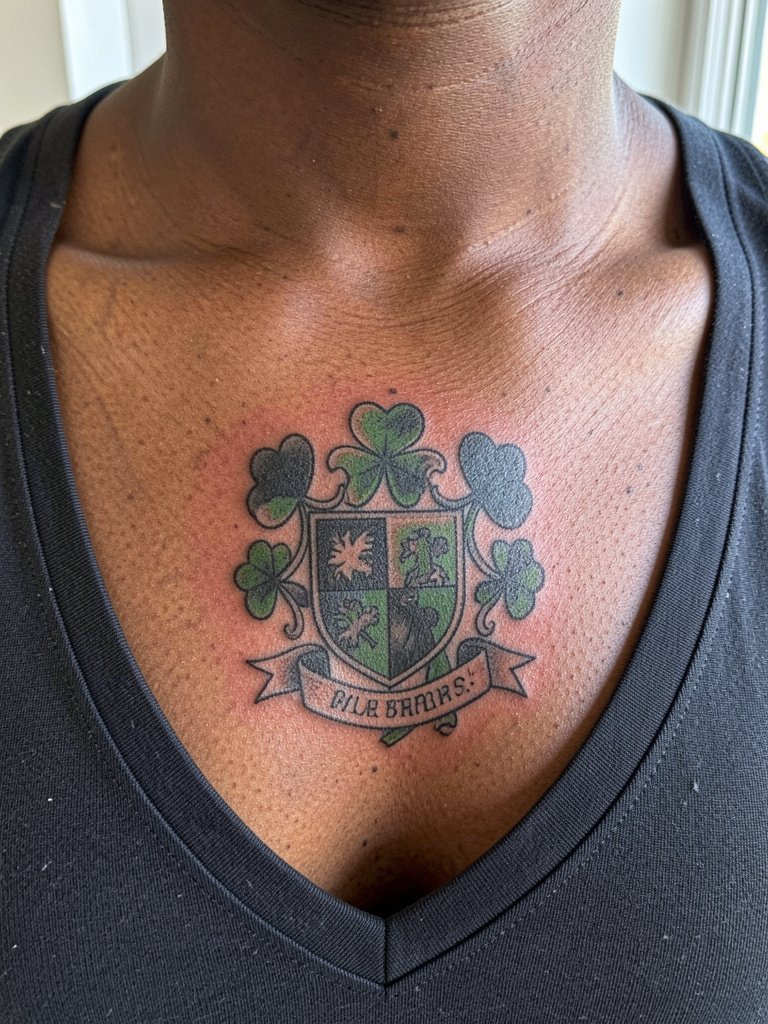
Mixing a shamrock with family crest elements creates a readable emblem across the chest. Keep the shield lines bold enough so details do not blur when the skin shifts with movement. A mistake is packing too much tiny lettering into banners that age into smudges. For a chest piece, plan at least two sessions if you want shading and accents. For styling, scoop or V-neck tops frame the collarbone and let the piece peek through in a refined way with a V-neck camisole.
17. Botanical Shamrock Cluster (Floral Pairing)
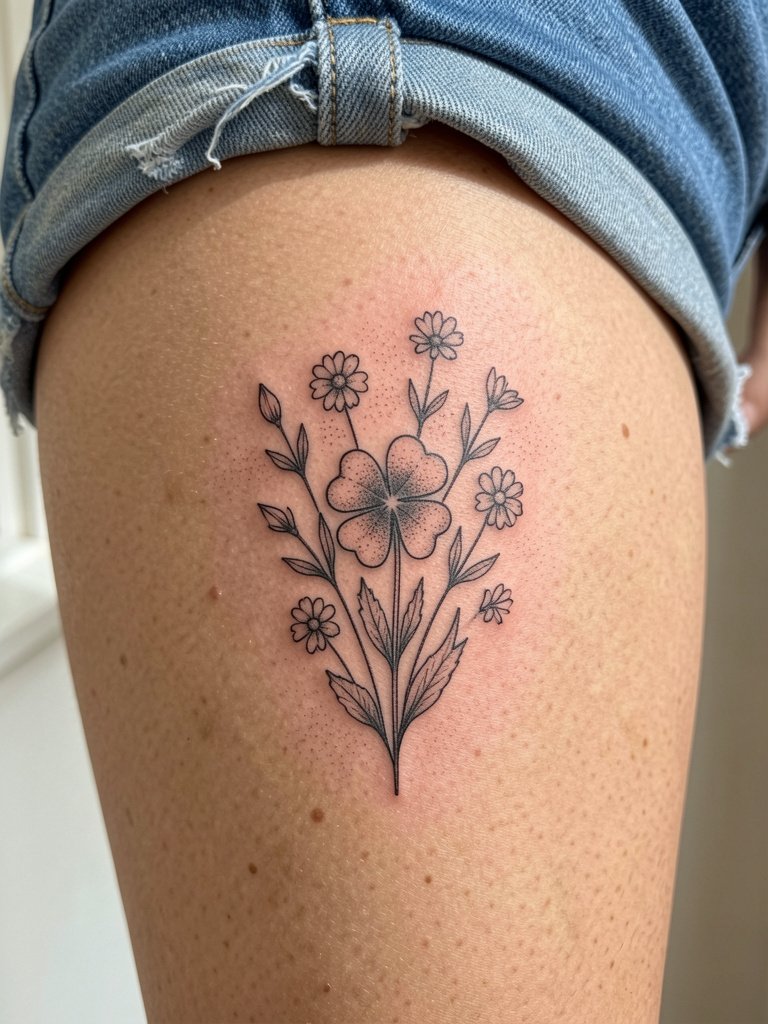
Pairing a shamrock with other botanicals softens the symbol into an ornamental motif that works on the thigh. The advantage of the thigh is scale and forgiving skin, so you can include fine details without immediate blowout risk. Common error: asking for hair-fine stems at tiny scale, which dissolves into texture over time. Expect one to two sessions depending on size. For summer reveal, high-cut or bike shorts are the easiest styling choice.
18. Shielded Shamrock (Minimal Cover-Up Friendly)
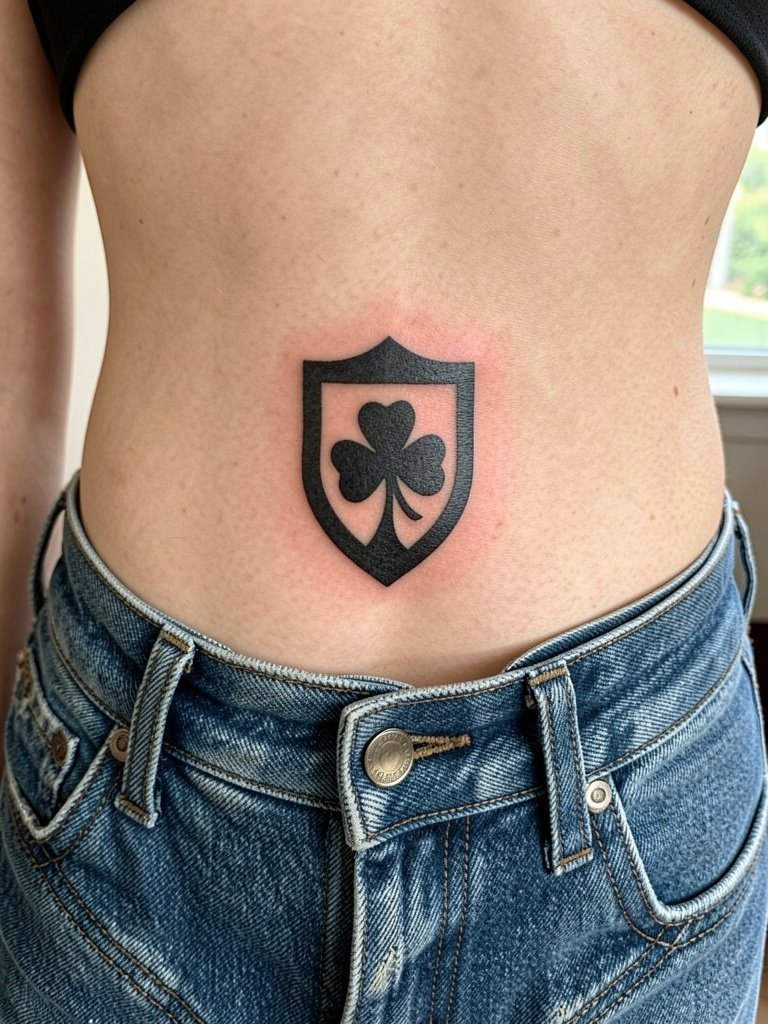
If you have an old mark to hide or expect body changes, a shielded black-work piece makes cover-ups and future edits easier. The black background gives artists options for layering and touch-ups. Mistakes happen when people try decorative filigree over scar tissue without extra consultation; scarred skin takes ink differently. For lower back placement plan clothing that keeps the area accessible for sessions, like low-rise jeans. For show-off looks in summer use low-rise denim that lets the lower back peek out.
19. Dot-Work Shamrock Mandala
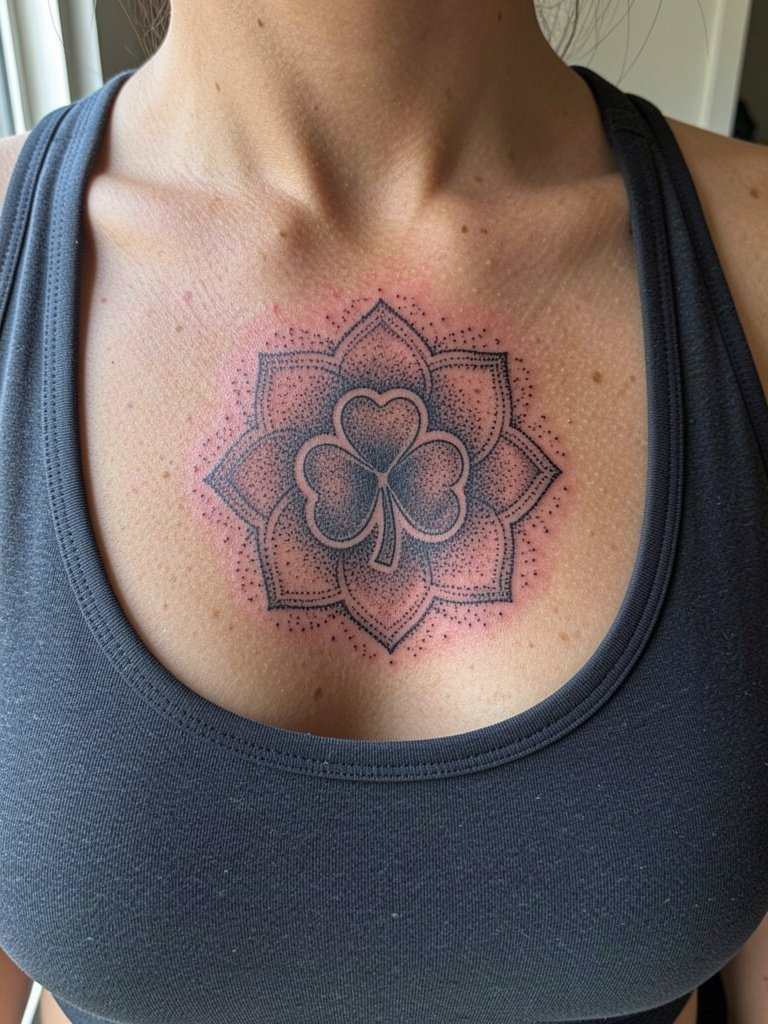
A dot-work mandala using the shamrock as a centerpiece reads intimate and ornamental. Because stipple relies on many small points, pick a scale that keeps dots distinct so they do not merge over time. Sternum placement is private and often chosen for personal reasons. A common pitfall is underscaling the mandala. Plan for a session that may include a break for comfort. For discreet reveal pair the piece with a plunging scoop top that shows the upper sternum if you want glimpses.
20. Geometric Negative-Space Shamrock
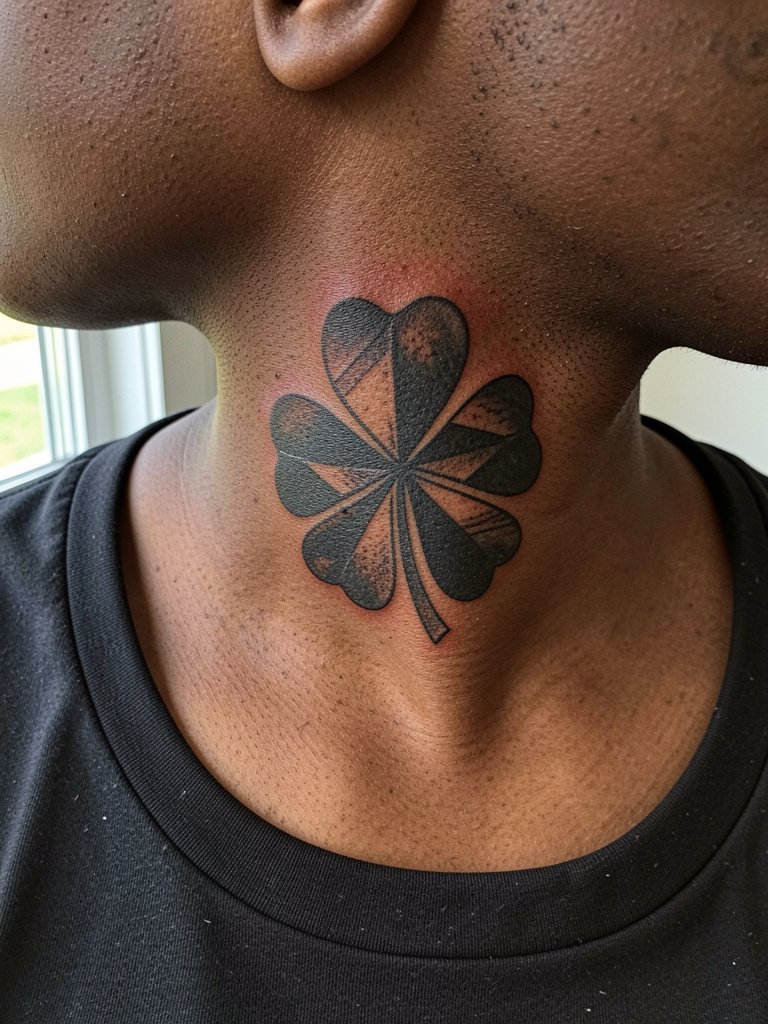
Negative-space geometric work reads bold and modern on the neck, but note the neck is a high-visibility placement with social considerations. The design is low-maintenance because black holds well, but placement means you will see it constantly. A frequent mistake is undersizing the negative-space elements so the leaf outline disappears. Discuss the exact edge width and contrast with the artist so the negative shape reads from a distance. For daily wear, minimal crew or wide-neck tops frame the neck without covering the piece.
21. Harp + Tiny Shamrock Stack (Vertical Forearm)
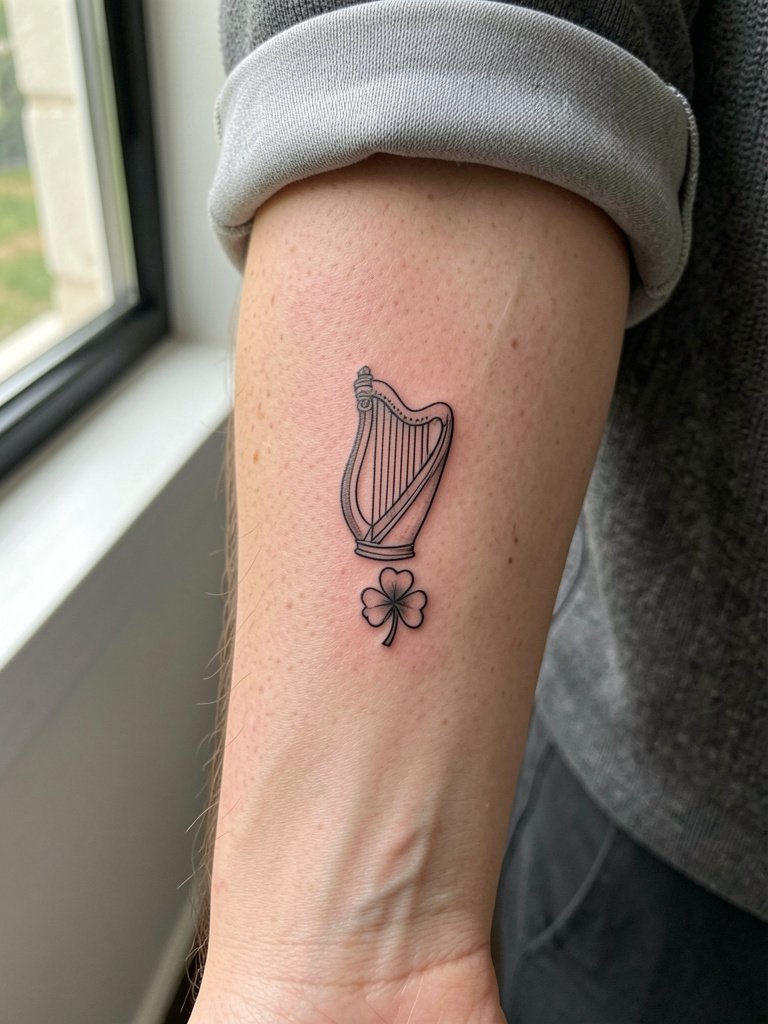
Stacked tiny elements create a neat vertical composition that sits well along the forearm. Keep the harp simplified so it does not get lost next to the shamrock. Common error: asking for intricate harp strings in a sub-inch design. For readability pick simplified linework and allow a millimeter or two of spacing. Session time is short. To complement the vertical piece wear a minimalist watch on the opposite wrist for balance.
22. Stipple Shamrock with Date Ribbon
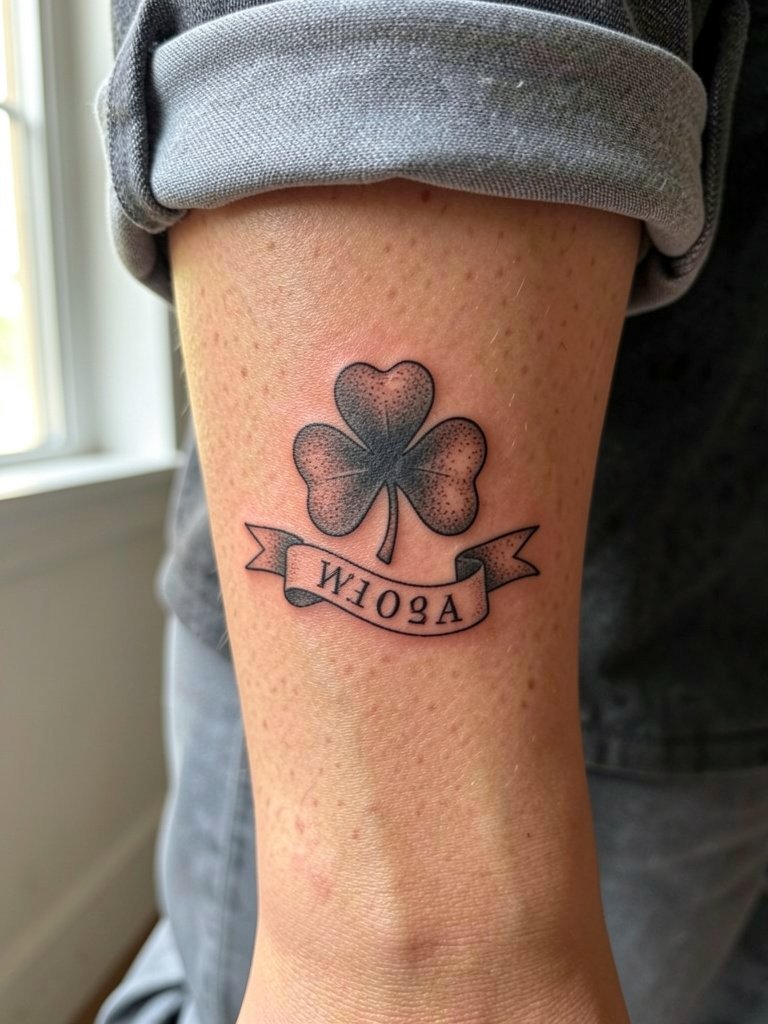
Adding a date ribbon under a shamrock makes a compact memorial that sits well on ankles. Numbers must be scaled clearly, so pick a simple numeral style rather than ornate fonts. A typical mistake is using tiny roman numerals that blur. Expect a single short session. For summer styling try flat leather sandals so the ankle stays visible.
23. Negative-Outline Shamrock on Shoulder Cap
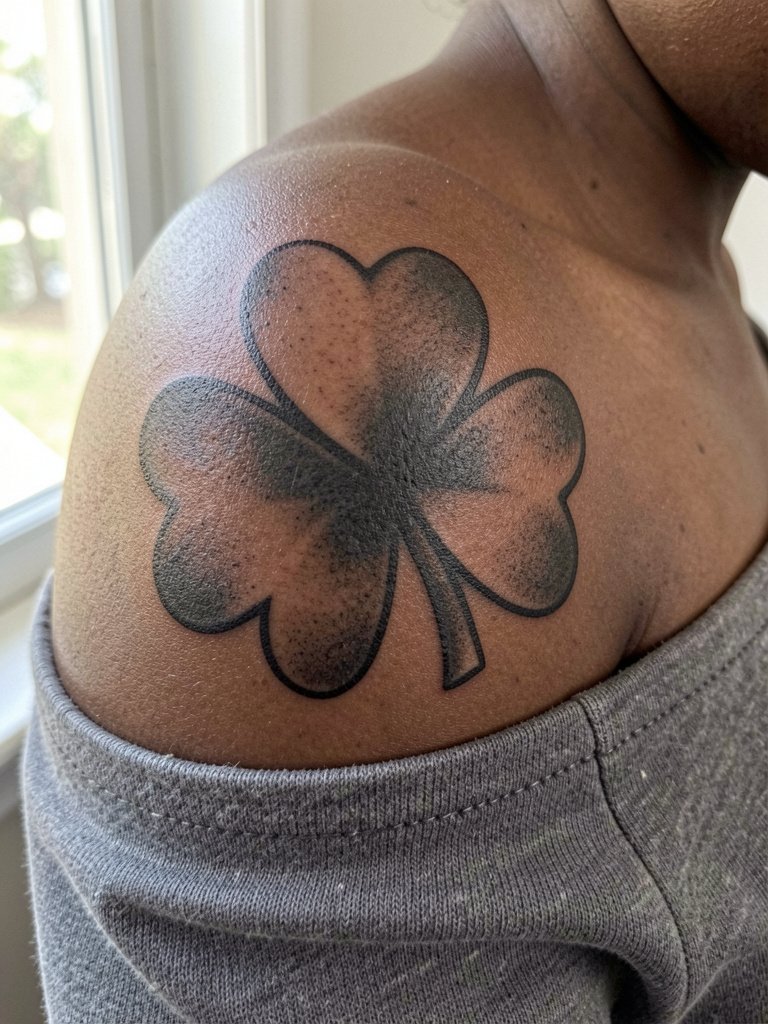
A negative-outline approach flips expectations and reads graphic from across a room. Shoulder cap placement is forgiving of body changes and is easy to display with seasonal clothing. The main mistake is making the negative area too small which reduces contrast. For long-term readability choose a larger motif and bold surround fields. For events, pair it with an off-shoulder top to show the shape cleanly.
24. Micro-Realism Shamrock with Dew Drops
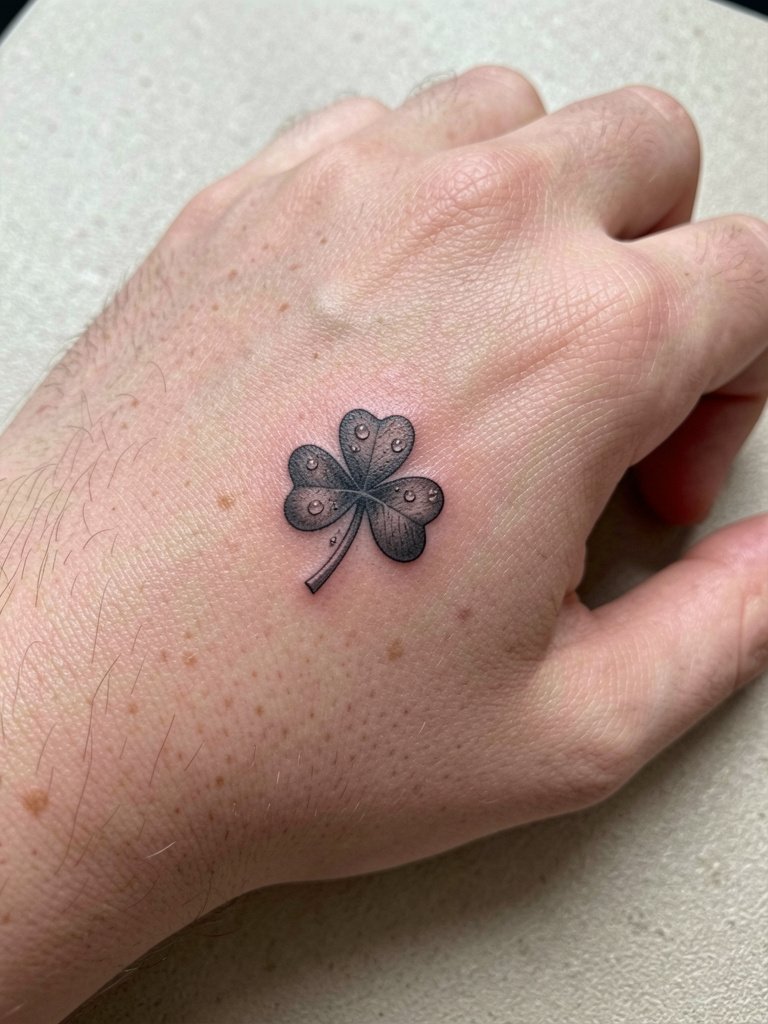
Micro-realism with tiny highlights can be stunning on hands, but hands have high wear and heavy fading risk. If you choose the hand, accept regular touch-ups and careful sun protection. A common mistake is expecting a hand micro to age like a forearm micro. Discuss maintenance cadence and photography tips with the artist so you know how it will read in pictures. Keep session time short and schedule touch-ups proactively. Remove rings on session day and consider a minimalist ring set for photos when not tattooed.
25. Shamrock Pocket Motif (Thigh or Hip)
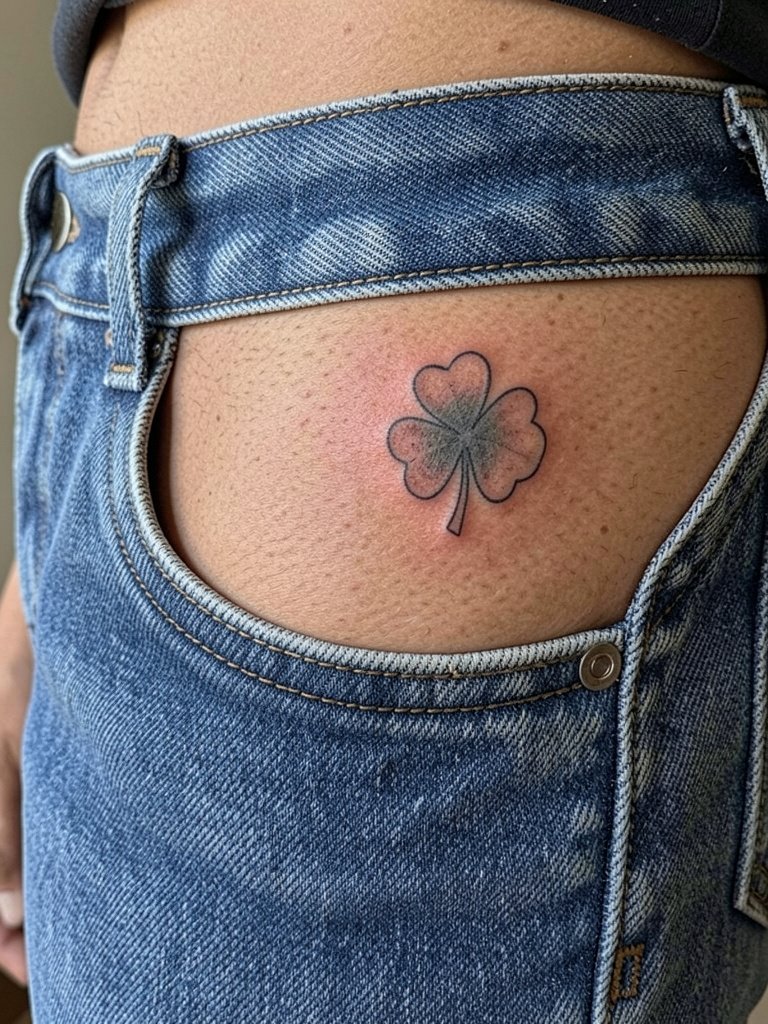
A hip pocket motif is intimate and seasonal in visibility. Because the area sits near waistlines, think about how clothing will sit after weight changes. The frequent mistake is placing it too close to the waistband where friction shortens ink life. For sessions wear low-rise pants you can lower for access without tugging the skin. For beach show-off, pair it with high-cut swimwear that complements the placement.
26. Sternum Cluster with Tiny Shamrocks
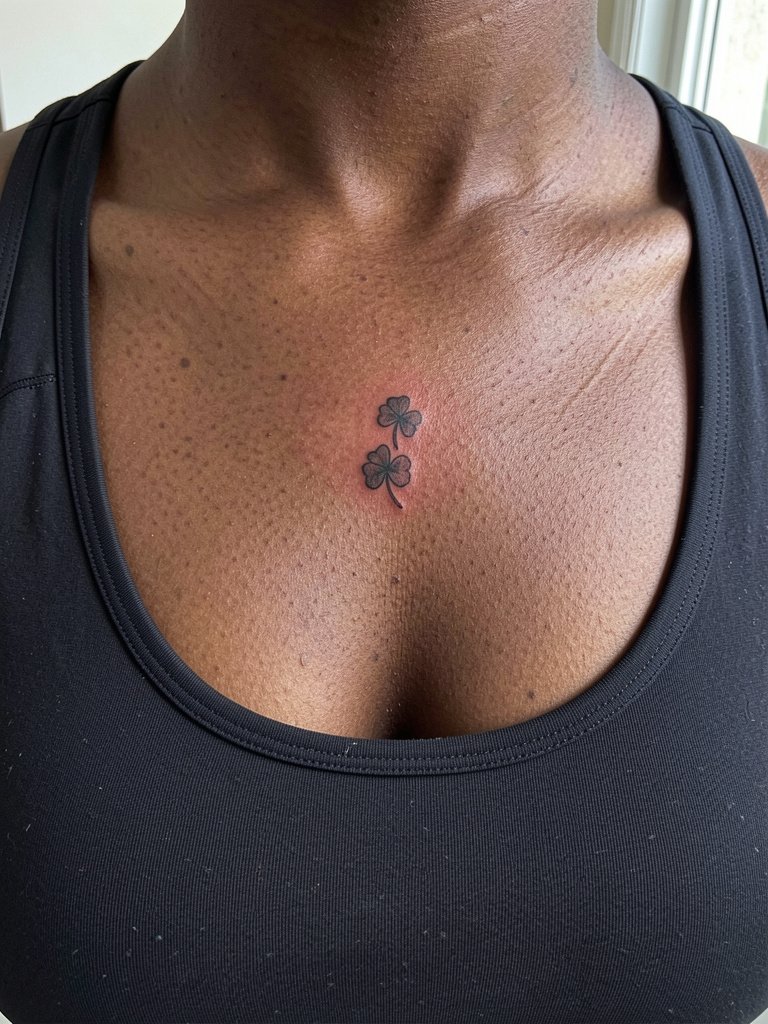
Small clusters on the sternum are intimate and look great in private or swim settings. Keep expectations about visibility in daily photos because the area is often covered. The main mistake is overcomplicating each tiny shamrock with detail that fades. Single session times are short. For occasional reveal pair it with a deep V-neck top or swimwear with a plunging neckline.
27. Classic Flash Shamrock Behind the Ear
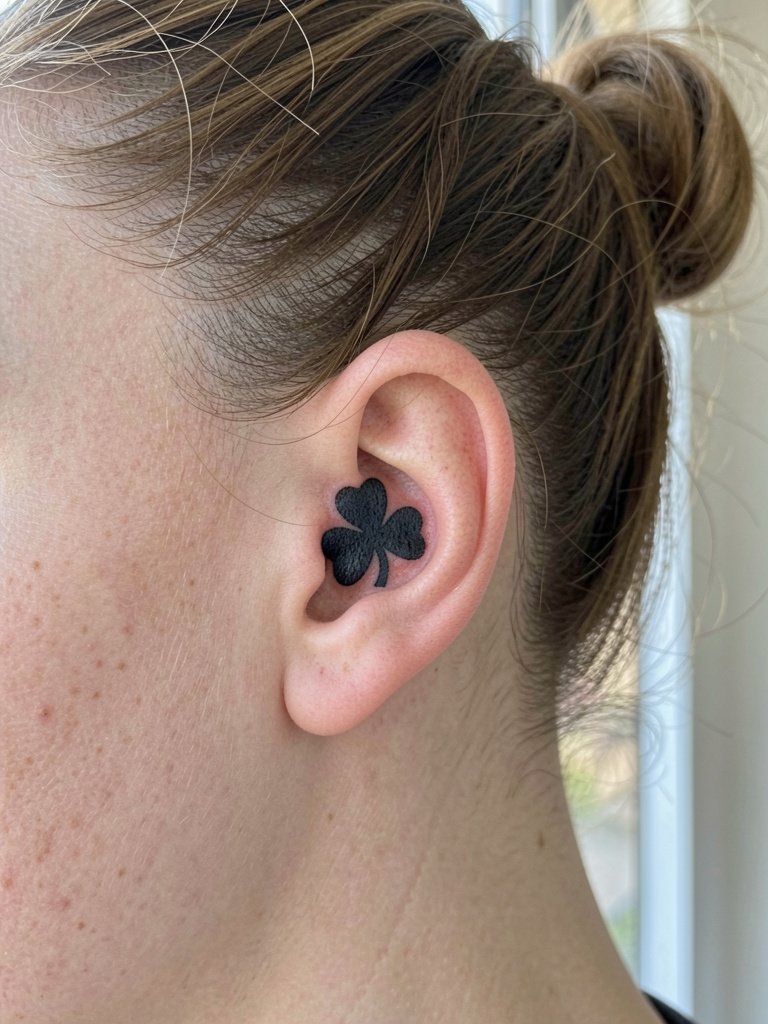
A behind-the-ear flash shamrock is a discreet, low-commitment spot that photographs well when your hair is up. Because the area is small, keep the design simple and bold. Expect the piece to need a touch-up sooner than a large back piece because of constant sun and hair product exposure. For appointment day have your hair up in a natural style and bring a small hair clip to keep the area clear.
Frequently Asked Questions
Q: How should I decide between fine-line and bold traditional shamrock styles?
A: Fine-line gives a subtle look but often needs touch-ups every one to three years on wrists and hands, while bold traditional pieces usually hold three to five years before touch-up. Pick fine-line if you want low-visibility and accept maintenance, choose bold if you want long-term legibility with less frequent upkeep.
Q: Where can I find artist portfolios and healed examples without relying on tags or handles?
A: Use platform and style keywords, then filter by location. Search hashtags like #shamrocktattoo and #finelinetattoo on Instagram and TikTok with your city added in the query to narrow local artists. Browse Tattoodo for keyword searches that surface healed photo galleries. Reddit communities such as r/tattoos and r/tattooadvice also host healed shots and peer recommendations.
Q: Saniderm or dry healing? Which side is right for my shamrock?
A: Practitioners split into two clear camps. One camp says second-skin products like Saniderm speed healing, limit scabbing, and reduce daily care needs when applied correctly. The other camp warns that occlusive bandages can trap moisture and cause irritation for some skin types or in humid climates, preferring careful dry-to-moist cycle methods. Both approaches work when matched to your skin and environment, so tell the artist about your skin reactivity and local climate so they can recommend a protocol.
Q: How does skin tone affect how a green shamrock photographs?
A: Lighter greens and thin fine-line work can photograph faintly on darker skin tones even though the tattoo looks clear in person. To improve photo readability choose a small black outline or increase saturation in the green base, and take pictures in natural window light rather than harsh flash.
Q: Can a shamrock be part of a sleeve even if artists change mid-project?
A: Yes. Planning a patchwork sleeve around a shared motif like the shamrock lets different artists add pieces that still read as a cohesive whole. Keep a visual reference folder with palette notes and sample line weights to hand to a new artist, and prioritize a central spine element that anchors future work.
Q: What should I wear to a session depending on placement?
A: Choose clothing that gives the artist full access without tugging the area. For upper arm and shoulder wear a sleeveless tank top, for ribcage a fitted cropped top or sports bra that stays put, and for leg work bring shorts that roll up easily. Comfortable, removable pieces make the session simpler for both you and the artist.
