Someone I know spent months bookmarking tattoos before they realized the real problem was picking a design that would still look good after a year of sun, sleeves, and gym time. I spent time in five shops across Brooklyn and noticed the tiny pieces that age best share clear linework and breathing room. Below are ten small gaming tattoos for men that balance character with longevity, plus the prep and aftercare essentials to keep them looking sharp.
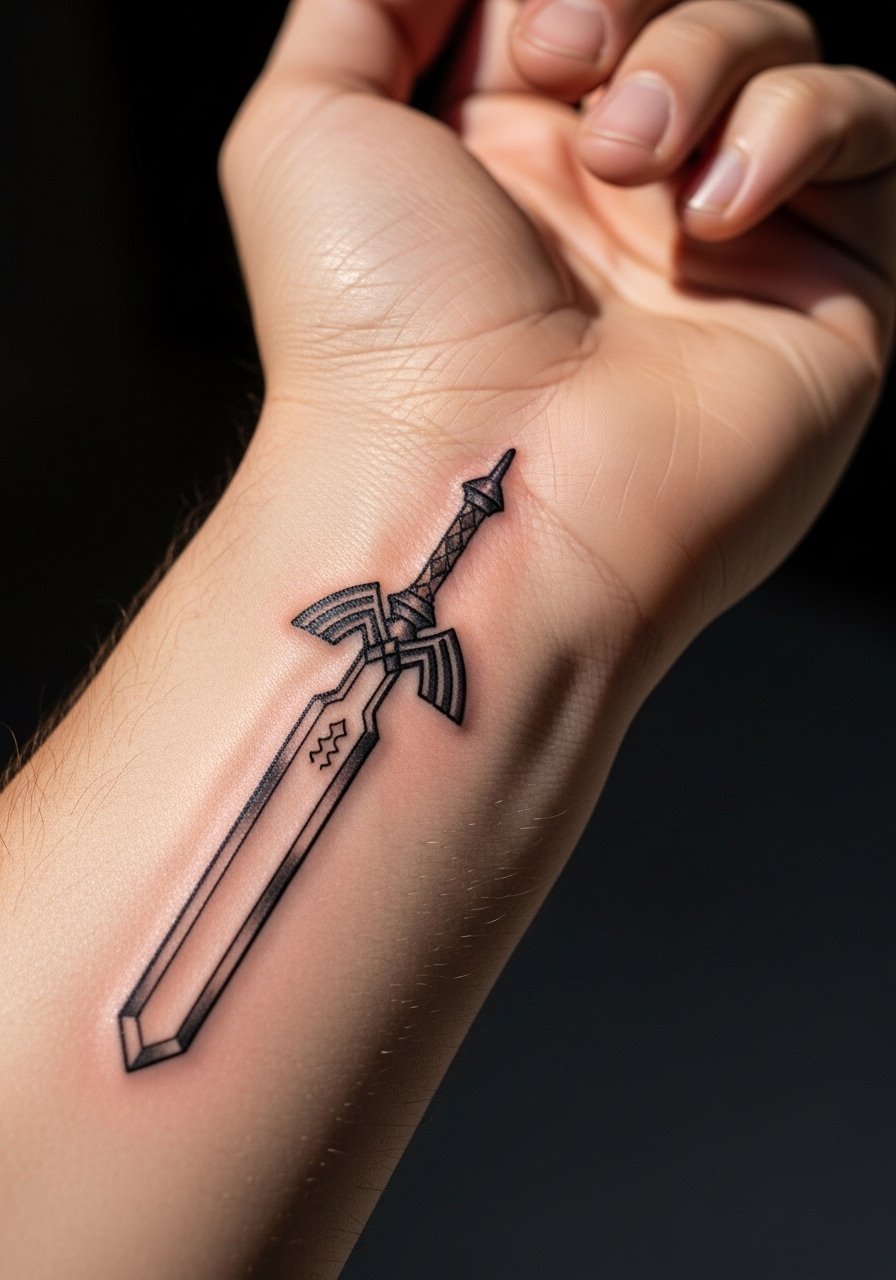
1. Fine Line Master Sword on the Inner Wrist
When you sit down with your artist for this one, bring reference photos that show the exact line weight you want and a close-up of the hilt. The wrist reads small designs well because the bone keeps linework stable. Fair warning, wrists are visible so minor blowout shows faster than on fleshier areas. Ask your artist for slightly heavier contour lines than a classic ultra-fine approach so the sword keeps shape after a year. Expect one short session and light soreness while healing. A common mistake is asking for too much tiny detail in the guard. Keep the crossguard simple and the blade long and clean to avoid early blurring. Touch-ups are common around year two if you want the blade to stay crisp.
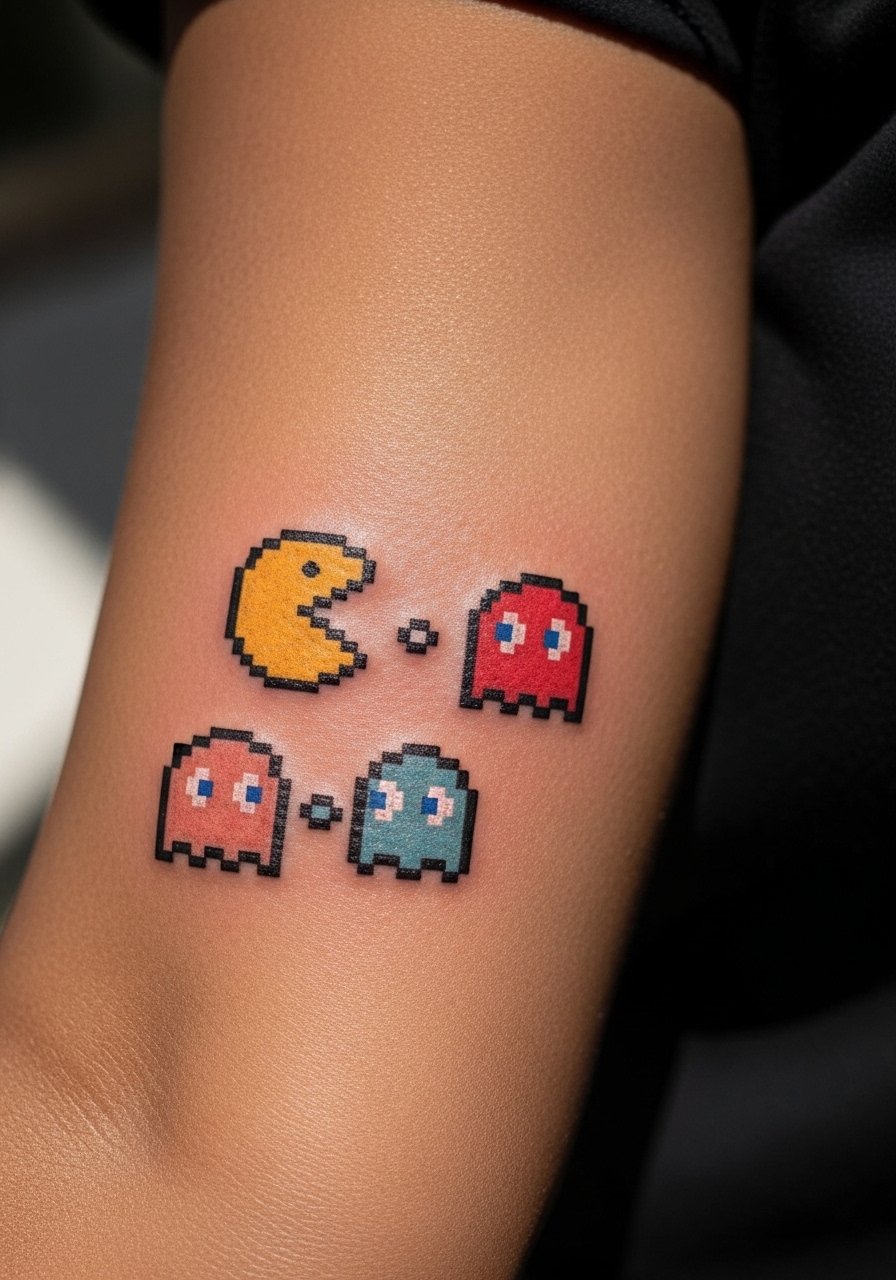
2. Pixel Pac-Man Mini Chase on the Forearm
Someone I know first saw this on a friend and liked how the tiny squares still read after months of wear. Pixel art holds up because each "pixel" is a tiny block of saturation rather than hairline strokes. For the forearm placement, ask for slightly larger pixels than you think you need. Too-small pixels can merge with time. Forearm sessions are low pain and usually finish in one sitting. The design scales well into a quick sleeve later if you want to add ghosts or a power pellet. A mistake I see often is asking for gradient dithering at micro size. Keep the palette limited to two or three strong colors so saturation stays stable and touch-ups remain straightforward.
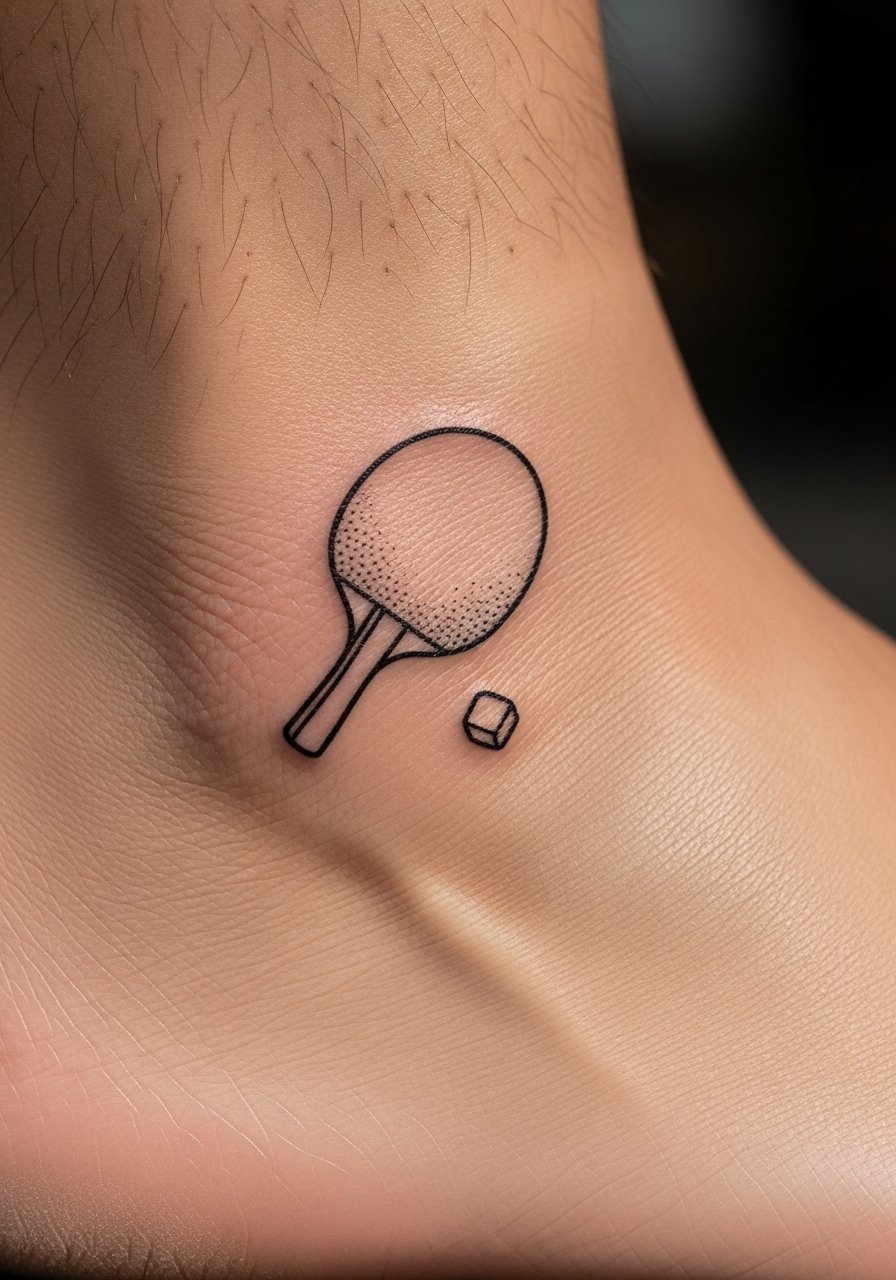
3. Minimalist Pong Paddle at the Ankle
Fair warning, the ankle has thin skin and the session feels sharp for a short time. The minimalist paddle is a nod to gaming origins and solves visibility problems on very small areas. For an ankle piece, ask your artist to center the paddle over the bone for a clean silhouette when you move. Most people book a single quick session. The common error is asking for thin parallel lines too close together. Give the paddle one solid bar of black filled with even saturation and the tiny ball as a small filled circle. Healed at six months it looks crisp. Expect a touch-up sooner than on fleshier spots if you wear low shoes that rub the area.
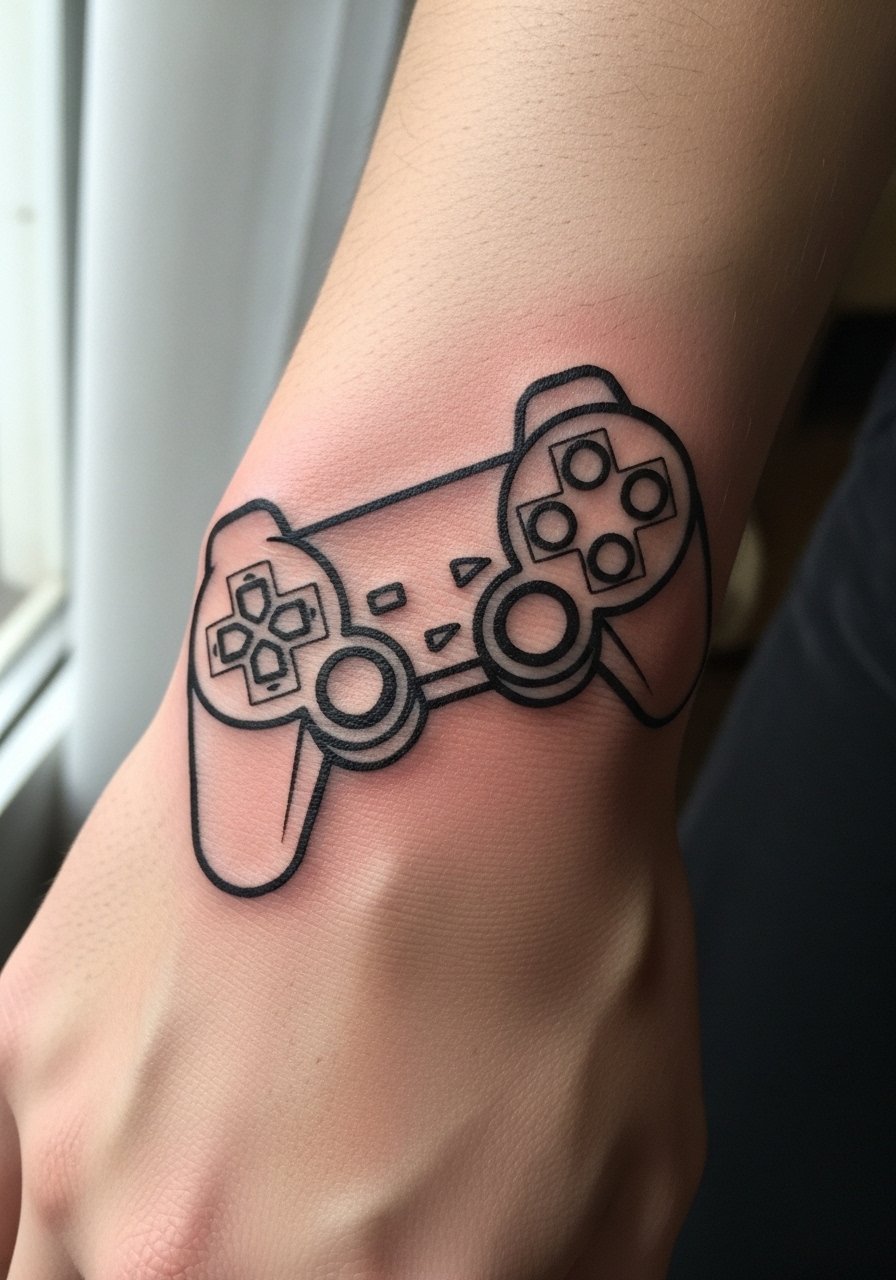
4. Ignorant-Style Controller Outline on the Side of the Hand
Hand tattoos still affect hiring in some industries, so think about your career path before committing. The ignorant style works here because bold single-stroke outlines read well on moving skin. When you consult, say you want bold, confident contours and avoid internal micro detail. Hands are notorious for faster fading and a higher touch-up rate because of exposure and frequent washing. Expect a short but uncomfortable session with some swelling. A common mistake is asking for thin decorative lines inside the controller. Keep it graphic and solid so the silhouette lasts. Plan for a touch-up at six to twelve months rather than assuming one session will be enough.
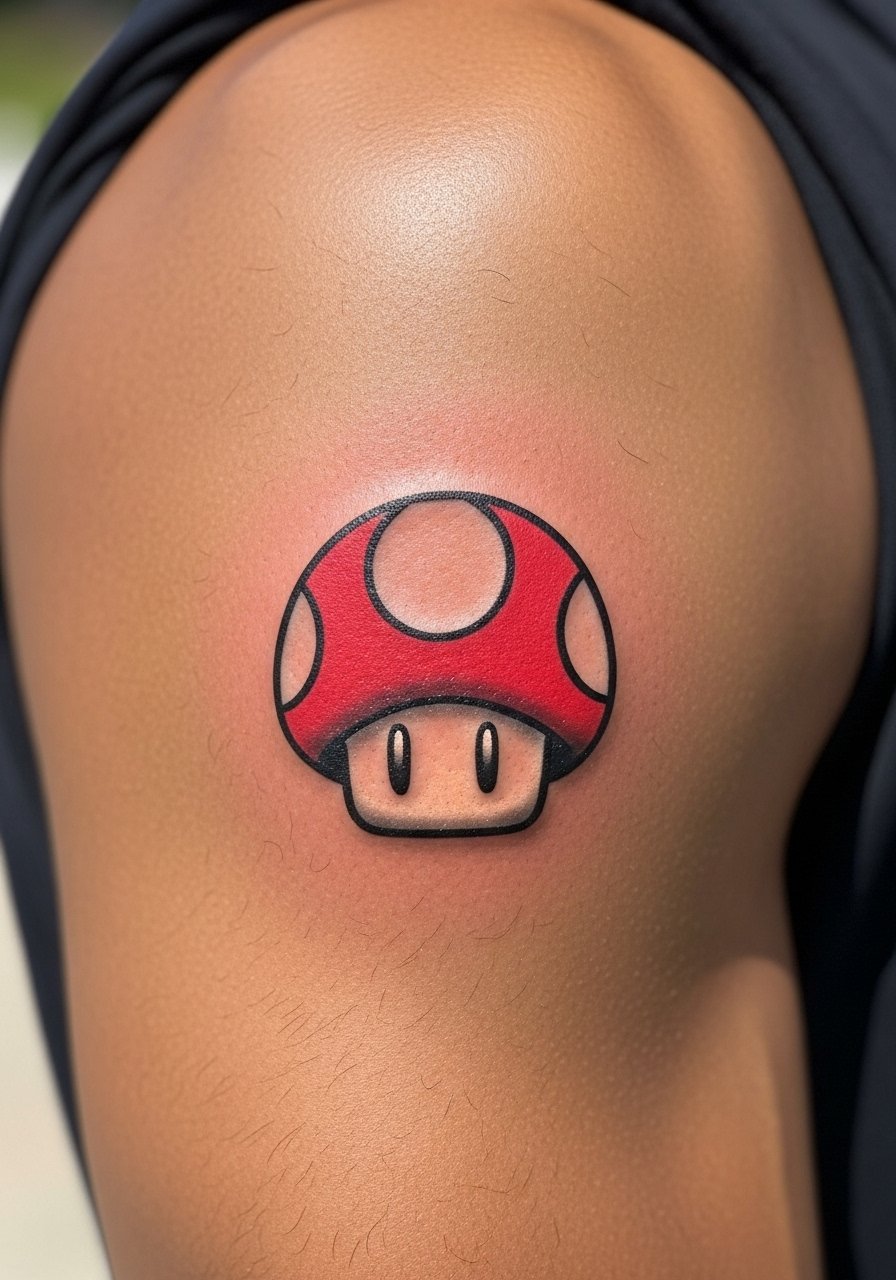
5. Tiny Traditional Mario Mushroom on the Upper Bicep
There is something about bold black outlines and solid color fill that reads from across a room. The upper bicep offers muscle and movement that helps saturated color age more predictably. Ask for solid saturation in the cap and a slightly wider outline than you would for a larger traditional piece. Sessions are short and the pain is mild. A common mistake is packing too many tiny dots or highlights that disappear once healed. Keep the highlights simple and the white spaces clean. For men who lift, place the mushroom where muscle expansion won't distort the cap shape. Expect color to soften over a couple of years and to budget for a color touch-up when you want it vivid again.
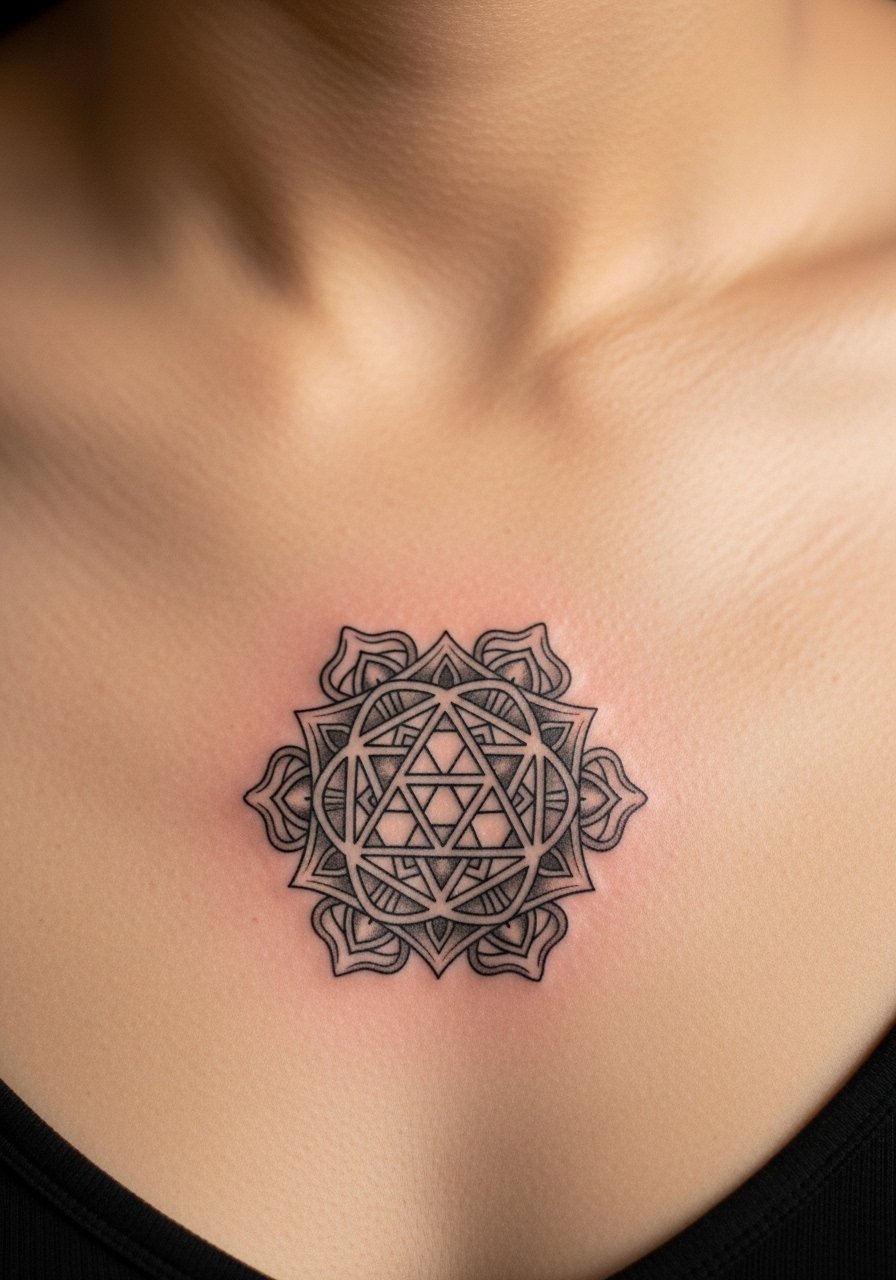
6. Ornamental Triforce Mandala near the Sternum
This pattern traces to sacred geometry and some people treat it as spiritual symbol. If you use motifs that come from cultures, consider subtle variations rather than a direct replica. The sternum is a sensitive placement so plan for a more intense session and slower healing. Artists split on mandala density in tight spots. One group says packing too many thin concentric lines makes the pattern blur within two years. The other group argues that with correct spacing and slightly bolder linework, mandalas settle fine on chest skin. Ask where your artist stands and show them clear examples of healed mandalas. For longevity, keep negative space between rings, and expect a touch-up to maintain crisp points.
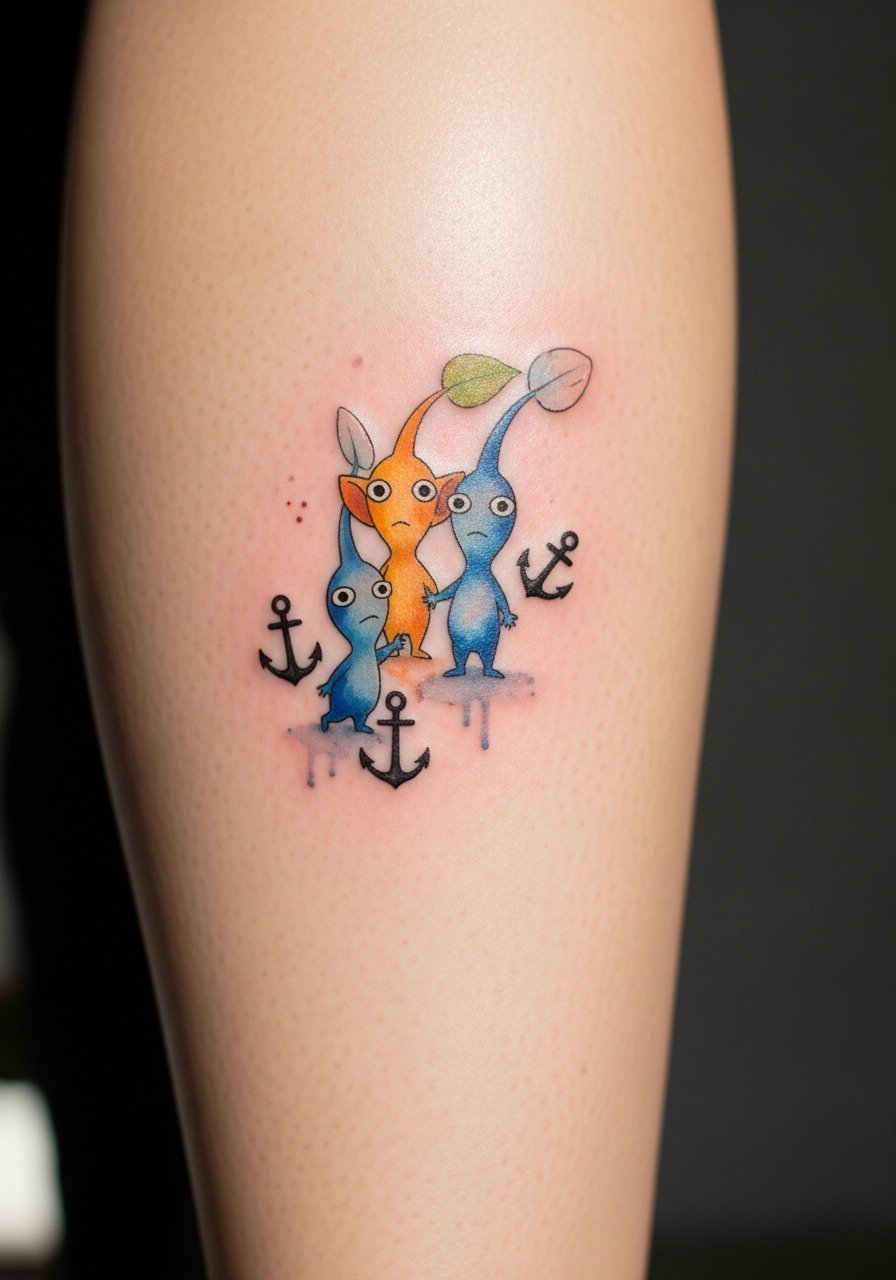
7. Watercolor Pikmin Cluster on the Outer Calf
Most watercolor pieces from years ago lost punch because artists treated them like temporary tattoos. One camp says watercolor inevitably fades faster than solid work. The other camp says modern layering and careful saturation can keep color lively for years. For a tiny Pikmin cluster on the calf, ask for a blend of watercolor washes framed by a subtle black micro-outline to protect edges. Calf placement is forgiving for color and sessions are moderate in length. A common mistake is asking for watercolor without any line anchor. That looks pretty for a few months and then softens unevenly. Expect annual sunscreen habits and a possible touch-up to revive washes if you spend time outdoors.
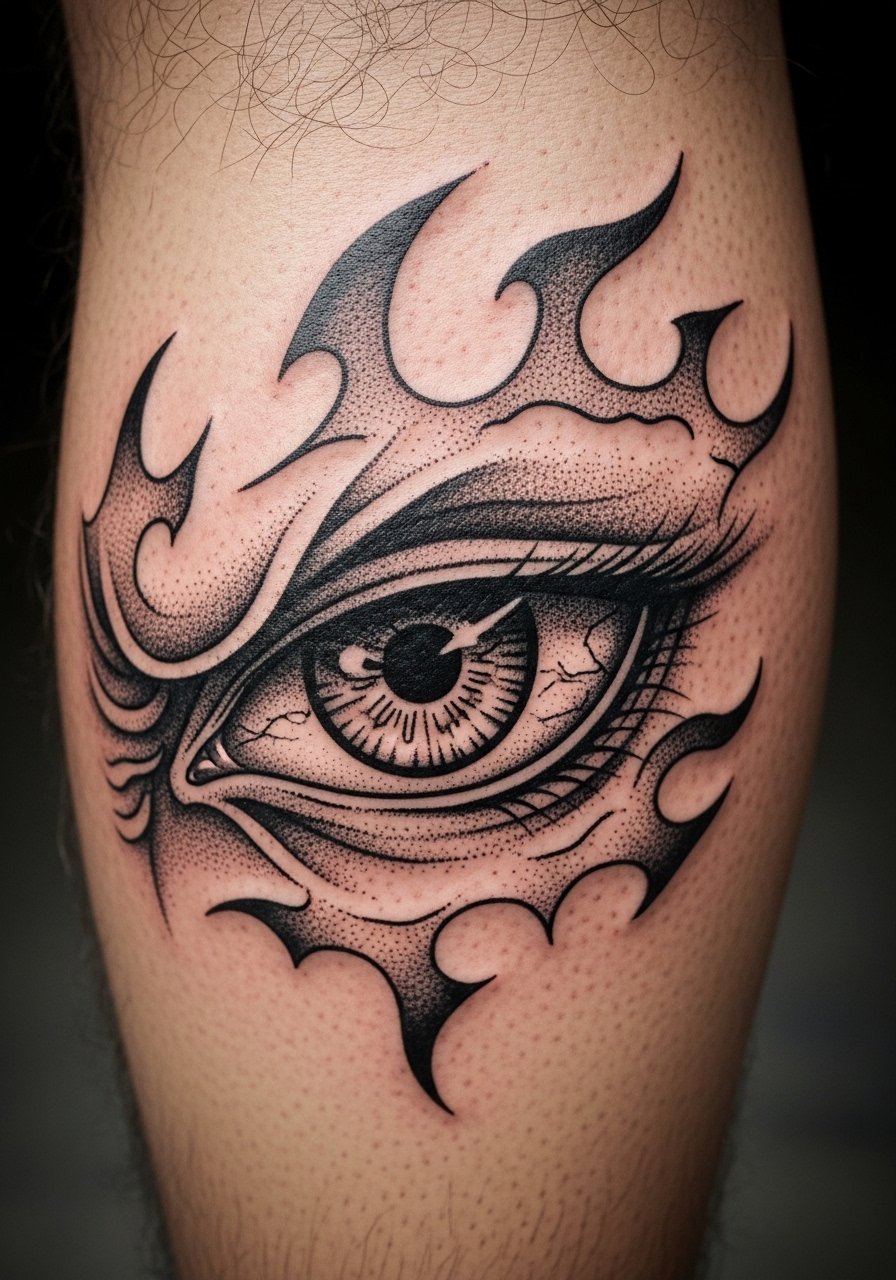
8. Micro-Realism Akuma Eye on the Back of the Calf
A tiny micro-realism portrait element like just the eye or forehead works better than trying to miniaturize a full face. The biggest mistake is asking for photographic detail at postage stamp scale. When you book this, discuss which micro element will retain emotional impact when reduced. Calf skin handles shading well and stipple shading blends into muscle motion. Sessions can run longer if your artist layers grayscale for depth. Expect mild soreness and a clearer healed image at six months. Plan on a touch-up in two to three years if you want to keep the gray gradients tight and the pupil dark.
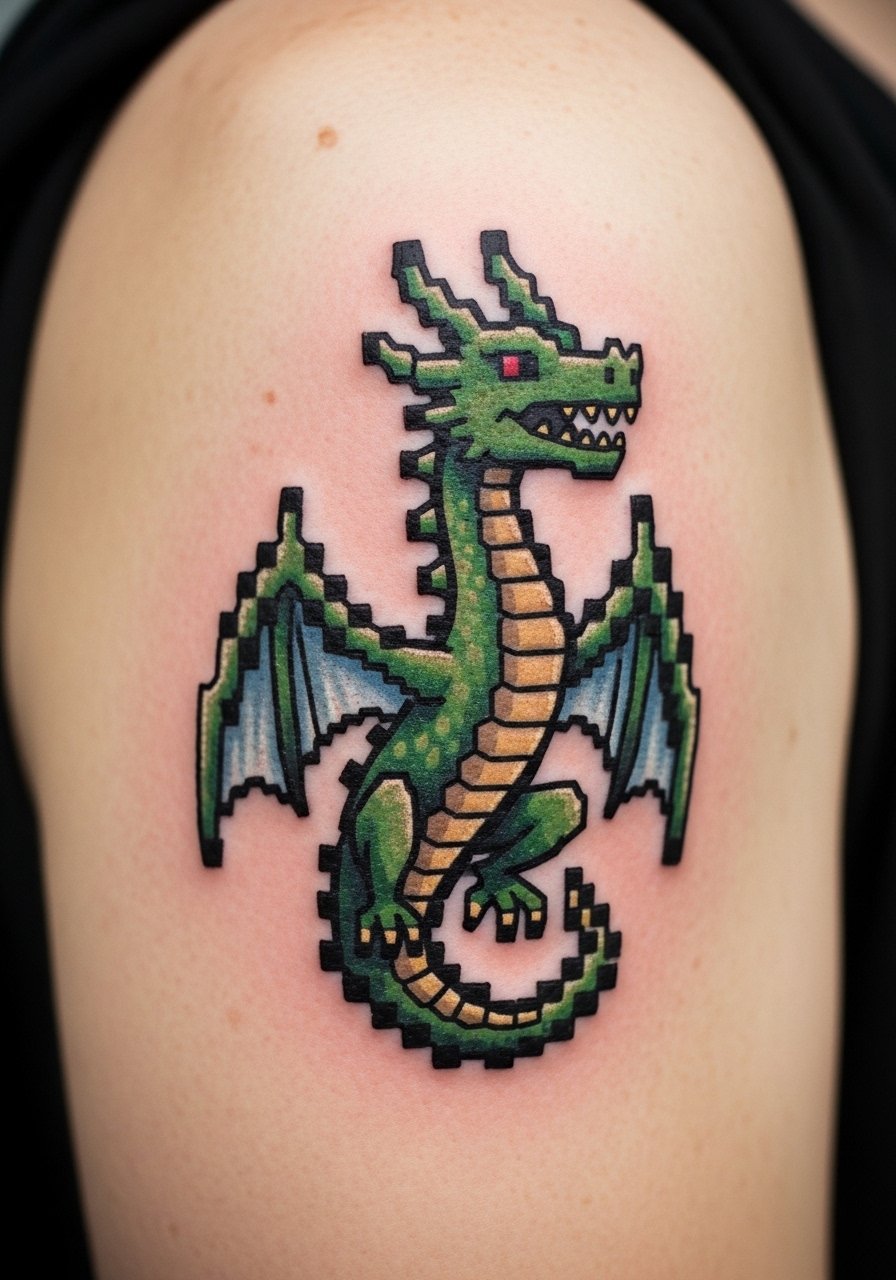
9. Pixelated Skyrim Dragon on the Upper Arm
There is a clarity to reduced-resolution beasts when each block is treated as a solid shape. Upper arm placement lets the pixels breathe and resists blowout better than inner bicep. For a mini dragon, ask for slightly larger squares and a limited palette so the silhouette reads at a distance. Sessions are short and pain is low. A frequent error is stacking pixels too close together for intricate curves. Give the wings a stepped angle so the form reads without gradation. Healed at two years, the dragon often needs only minor saturation touch-ups to keep the contrast high.
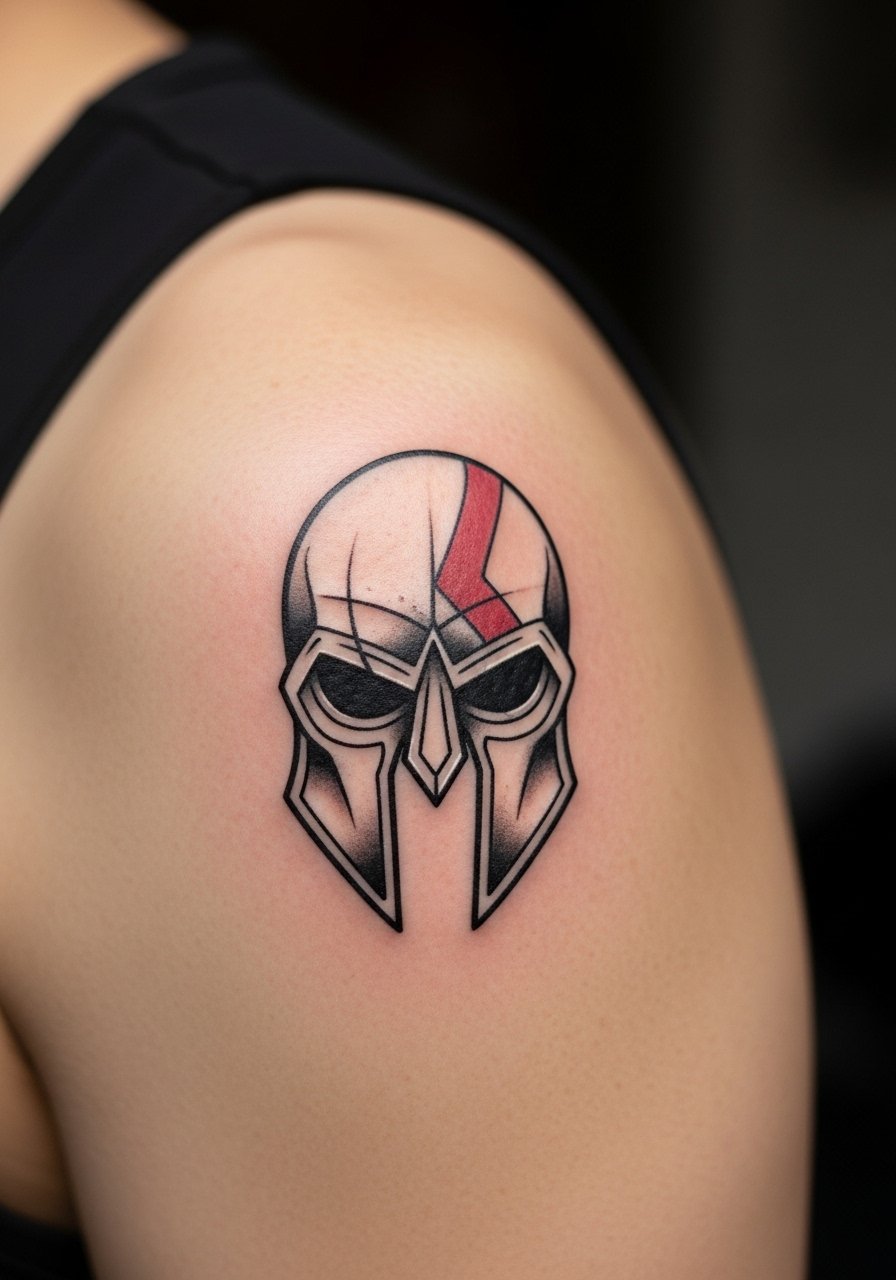
10. Neo-Traditional Tiny Kratos Helmet on the Shoulder Cap
The shoulder cap is forgiving and a good place for a tiny neo-traditional motif with bold outlines and restrained color accents. Expect lower pain than ribs and one moderate session. What to tell your artist is you want a compact composition that keeps the helmet silhouette readable when you wear a sleeveless top. A mistake I see is asking for too many facial details inside a compact helmet. Opt for emblematic features like a cheek scar line and a simple laurel band. Over time the bold outlines keep the form clear and a color touch-up can happen at three to five years depending on sun exposure.
Tattoo Prep and Aftercare Essentials
Prep matters for tiny work because the artist needs crisp contrast and clean skin. Arrive hydrated, rested, and with the area shaved if requested. For aftercare, follow your artist but also use a light occlusive for the first few days and a fragrance-free moisturizer while the skin finishes healing. Find artists and flash via style-specific hashtags, local studio location tags, tattoo directories, and community threads on Reddit when you want peer feedback before booking. Below are practical items I recommend for short-session gaming tattoos.
Fragrance-free tattoo aftercare balm, tube or jar search. A gentle balm helps keep small lines from drying into scabs that can pull pigment. Use a thin layer three times daily after the first wash.
Medical-grade transparent film dressing, single roll search. Useful for the first 24 hours to avoid excess friction, especially on hands and wrists.
Gentle, fragrance-free foaming cleanser for tattoos search. Mild cleansing removes excess plasma without stripping ink.
Lightweight fragrance-free moisturizing lotion search. Long-term hydration keeps color looking even.
Silicone scar gel, small tube search. For pieces that need smoothing after a raised healing period, a thin layer can help flatten edges during the later stages.
Disposable antibacterial soap sheets search. Handy when you are traveling during the first week and need to clean the area without harsh rubbing.
Saniderm transparent adhesive dressing, pack search. Use this as your one mainstream product if your artist recommends occlusive bandaging for the initial phase. It protects without smothering the ink.
Aftercare Disclaimer
Every tattoo is different. Always follow your artist's specific aftercare instructions. Consult a dermatologist if you have skin concerns or unusual healing issues.
Frequently Asked Questions
Q: Will fine line wrist pieces blur faster than the same design on my forearm?
A: It depends on skin type and line weight. Wrist skin is thinner and closer to bone which can make tiny lines show minor blowout earlier. Ask for slightly bolder contour lines and allow a touch-up window at year two if you want the lines to stay crisp.
Q: Do watercolor-style gaming tattoos need different aftercare than traditional pieces?
A: Yes, watercolor washes rely on softer saturation and can appear uneven if scabbed heavily. Keep the area moisturized with a fragrance-free balm and avoid heavy exfoliation for at least six weeks. If you plan on sun exposure, apply high SPF regularly once healed to protect the washes.
Q: Is a micro-realism element like Akuma's eye realistic at tiny sizes?
A: Micro-realism works only when you choose a single focal element rather than a full portrait. Ask the artist which feature will translate. If you insist on full-face detail at tiny scale, you will likely lose definition and need earlier touch-ups.
Q: How often do hand and ankle gaming tattoos need touch-ups compared with upper arm pieces?
A: From what I've seen, hands and ankles need touch-ups more often because of friction, washing, and thinner skin. Upper arm and shoulder pieces usually keep saturation longer. Budget for a follow-up sooner for hands and ankles.
Q: Where should I look to find an artist who specializes in small pixel or fine line gaming designs?
A: Use style-specific hashtags, local studio tags, tattoo directories, and Reddit communities to narrow options. Look at healed photos in portfolios and ask about healed images from six months to two years. That will tell you more than fresh photos about how tiny work holds up.