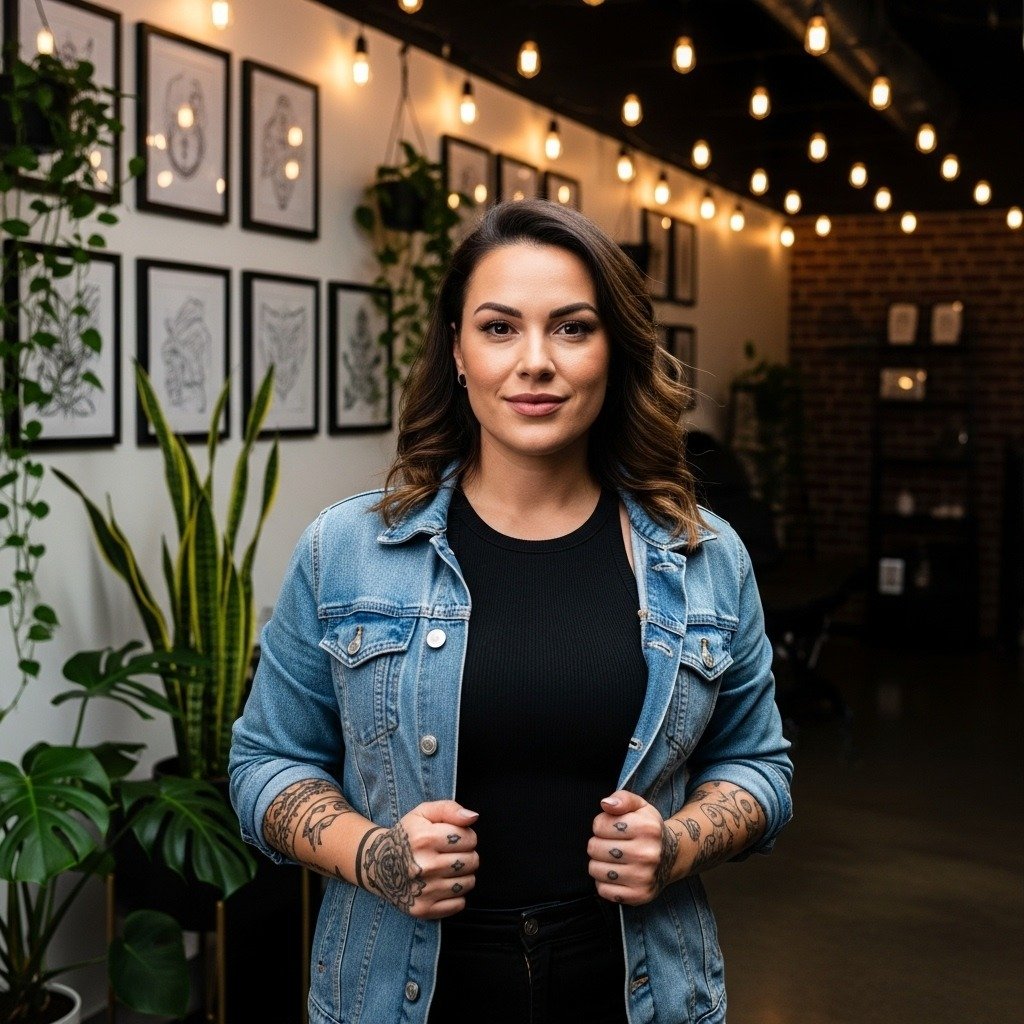
Someone I know spent months scrolling styles before realizing the real problem was picking a design that would still look good after a year of life, sweat, and sun. I have spent time in five shops across Brooklyn and seen fine line dates that blurred, and bold work that held tight. Below are twenty year-of-birth tattoo ideas that balance style with how they heal, where to place them, and what to tell your artist to get a lasting result.
1. Roman Numeral Wrist Band, MCMXCIV in thin serif

Someone I know got this as a first wrist piece and liked that it reads like jewelry. Tell your artist you want slightly heavier linework than flash Roman numerals so the numerals do not blur into each other at year two. Expect a 30 to 50 minute session and low pain. Common mistake is asking for single-needle thin lines on the underside of the wrist where movement speeds fade. Ask for clear spacing and a soft outline so touch-up at 12 to 18 months is straightforward. Wrist placement shows well but needs SPF from month two onward.
2. Fine Line Birthdate with a Tiny Heart on Collarbone
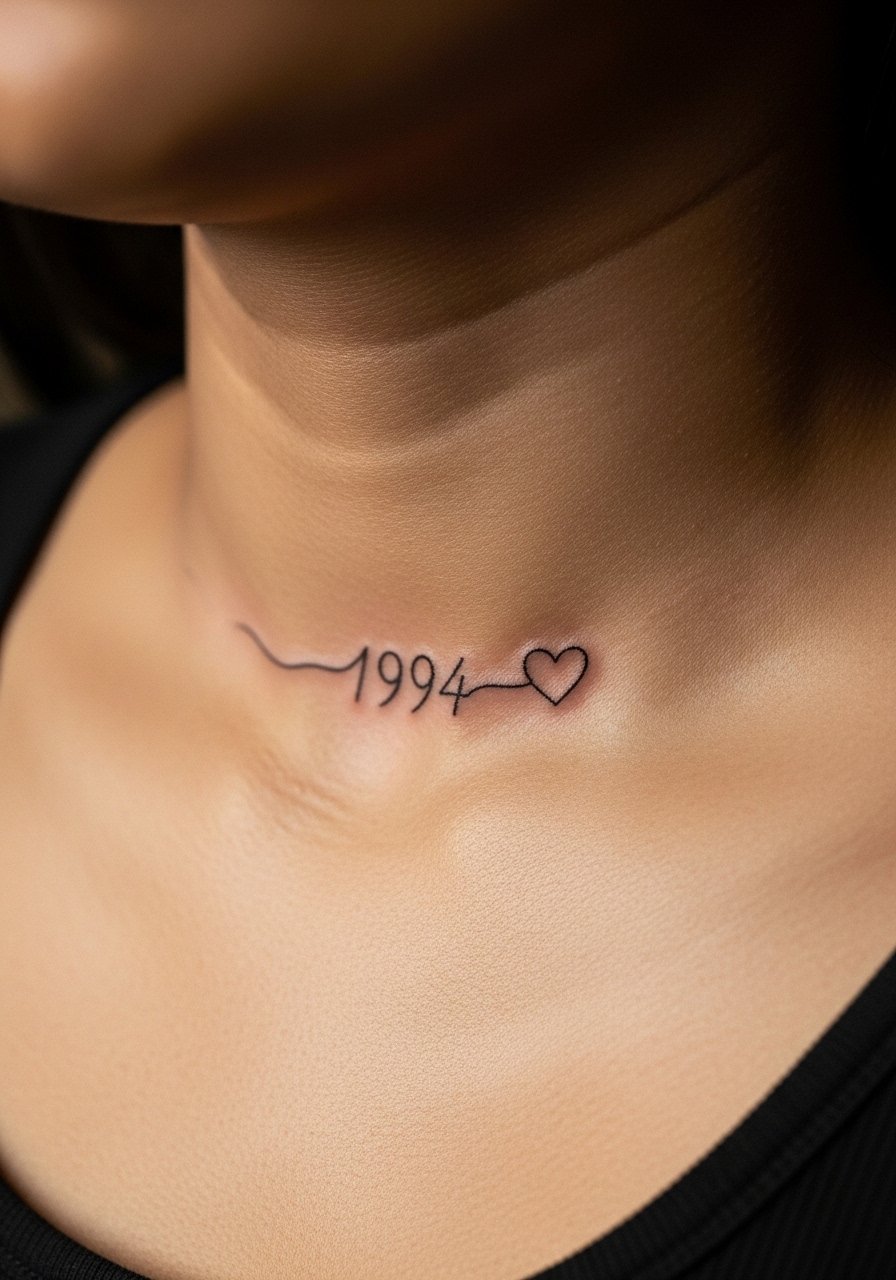
Fair warning: collarbone work can feel sharp while in the chair. This micro one-sitter is cosmetic and heals well on low-friction skin. In consultation, bring a reference for single-needle weight and ask the artist to test the line depth on a small patch so the line settles clean on your tone. One camp of artists says single-needle holds fine on collarbones. The other camp warns that thin lines can feather if too shallow. Plan a touch-up at year one if you pick the ultra-thin look.
3. Barcode Style Year Tattoo on Forearm, 1994 as scannable bars
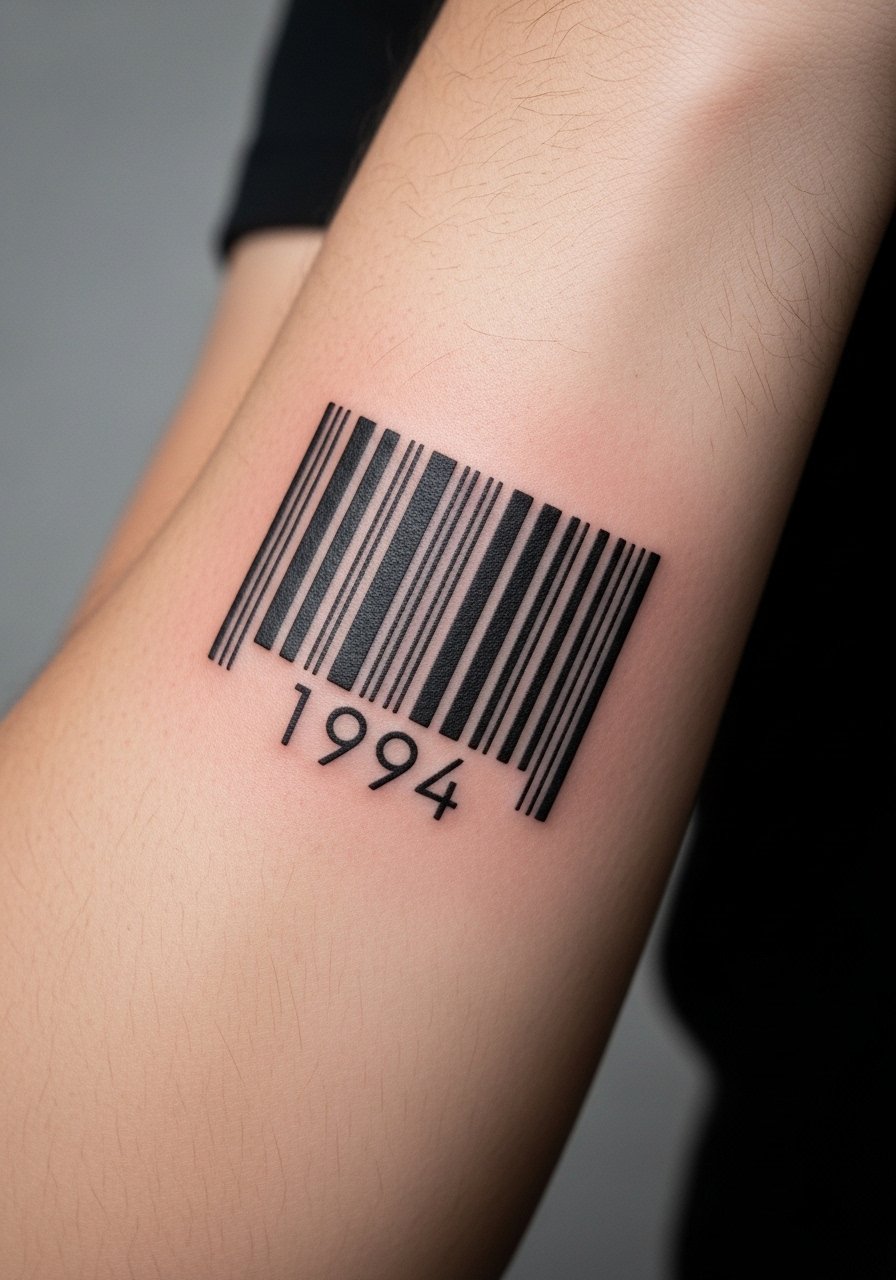
I saw a couple get matching barcode years and then realize scanning fails when lines are uneven. The forearm gives room so make the bars intentionally wider than a logo barcode. Tell your artist you want functional spacing that reads visually rather than exact retail scan accuracy. Session time is about one hour and expect medium discomfort. Common error is making it too small. At two years it will still read as a graphic if linework has room to breathe.
4. Celestial Roman Numerals with Tiny Stars on Ankle
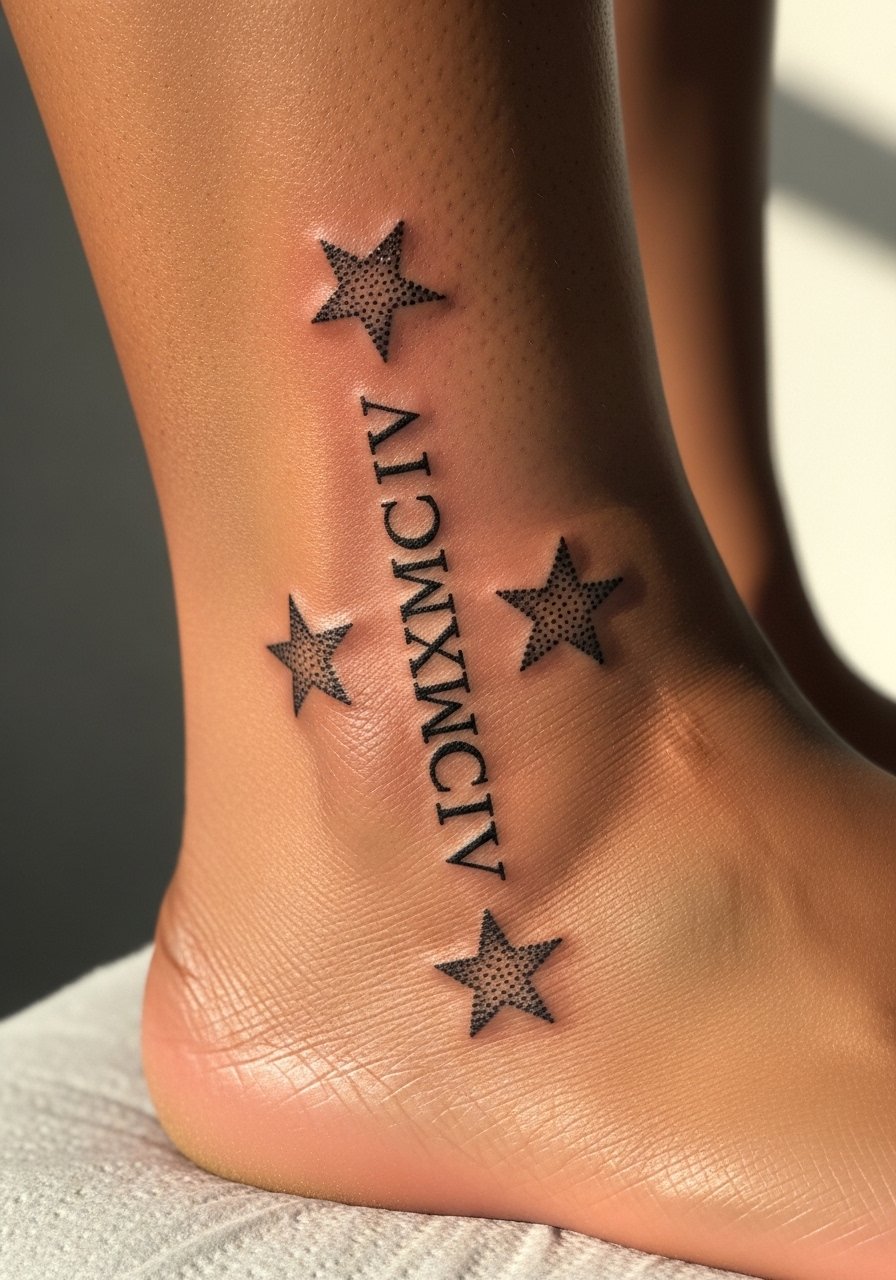
Most people pick the ankle for zodiac flair. The ankle can be painful depending on bone proximity. Ask for dot work stars and spaced numerals so the dot work holds longer than continuous thin shading. There is a debate about fine line longevity on ankles. One camp says dot work and spacing preserve detail. The other camp says constant rubbing from socks causes fade. Expect a single session and plan SPF protection when shoes are swapped for sandals.
5. Minimalist Numeric Stack on Ribcage, vertical 1994
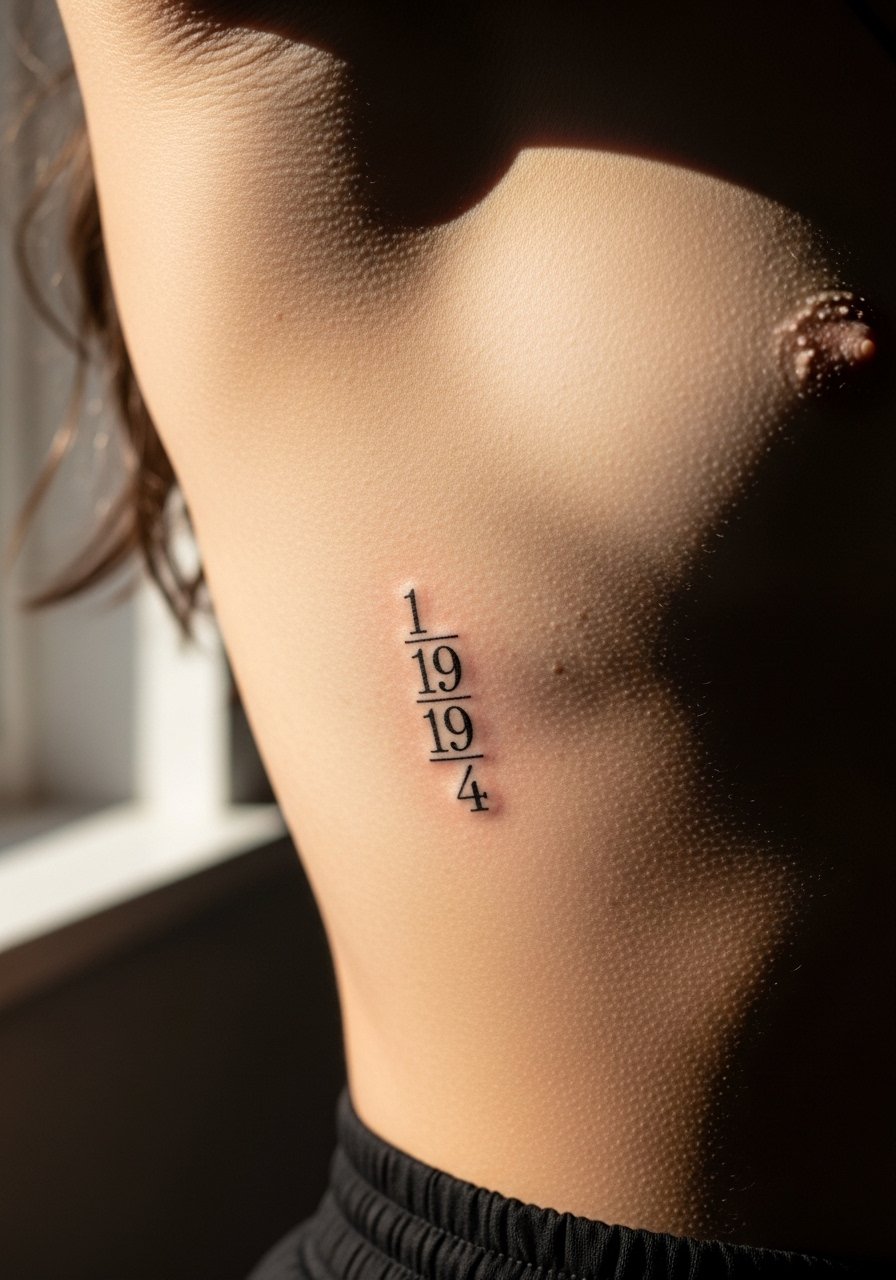
Fair warning: the ribcage is high on pain. Most clients take the rib route for privacy and the result looks tucked under clothes. Tell your artist you want slightly thicker numerals than the usual micro stack. The common mistake is choosing single-needle on ribs; that tends to feather with skin stretch, especially after body changes. Expect a longer single session and plan for touch-up at year two if needed. Test placement with a temporary first.
6. Neo-Traditional Birth Year Banner on Upper Arm
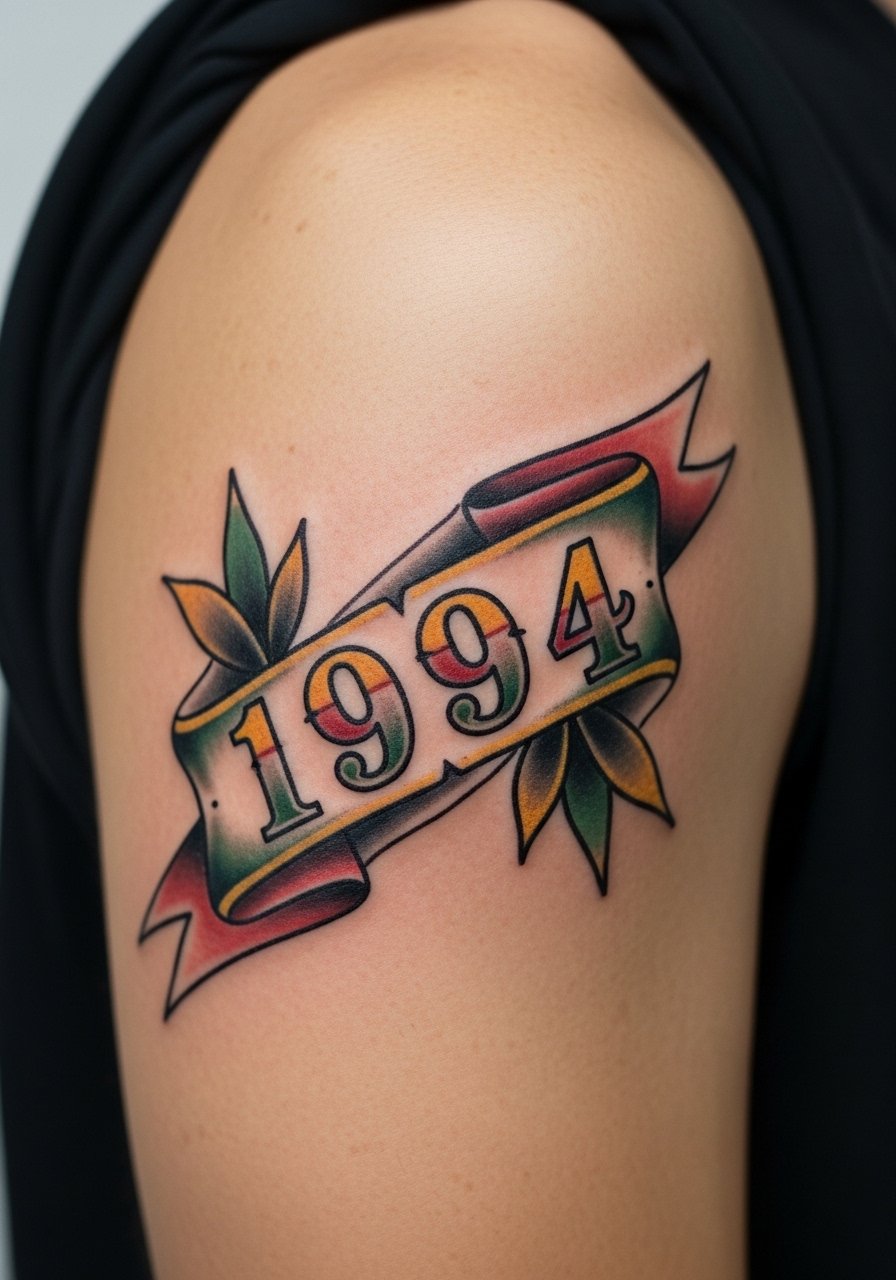
There is something about bold outlines and saturated color that reads from across a room and still photographs well. This sits neatly on the upper arm with low blowout risk if the artist uses solid linework and good saturation. Tell the artist you want classic weight and color that will hold with minimal touch-up. Session is two to three hours depending on color. Common mistake is asking for tiny script inside a banner which becomes illegible once healed.
7. Watercolor Date Splash with Flowers on Shoulder Blade, "1994"
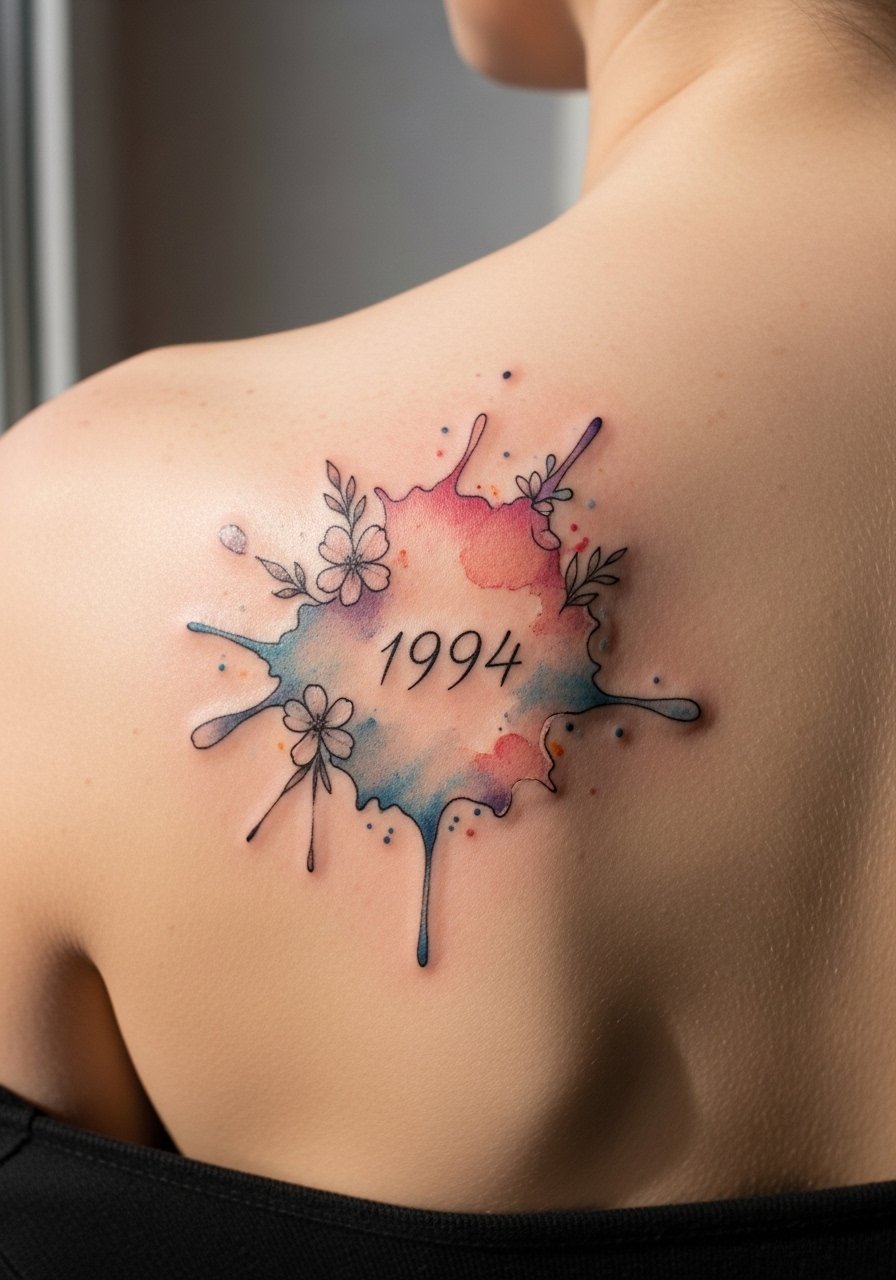
Most watercolor pieces need more planning than they look like on Instagram. The shoulder blade heals well because it avoids constant friction. Ask your artist to anchor the watercolor with a thin black outline for contrast and to preserve color. The session can run over multiple sittings for layering. The common aging issue is washout at edges. Plan a color top-up at year two if you want the original vibrancy preserved.
8. Ignorant Style Numeric Letters on Calf, bold hand-drawn 1994
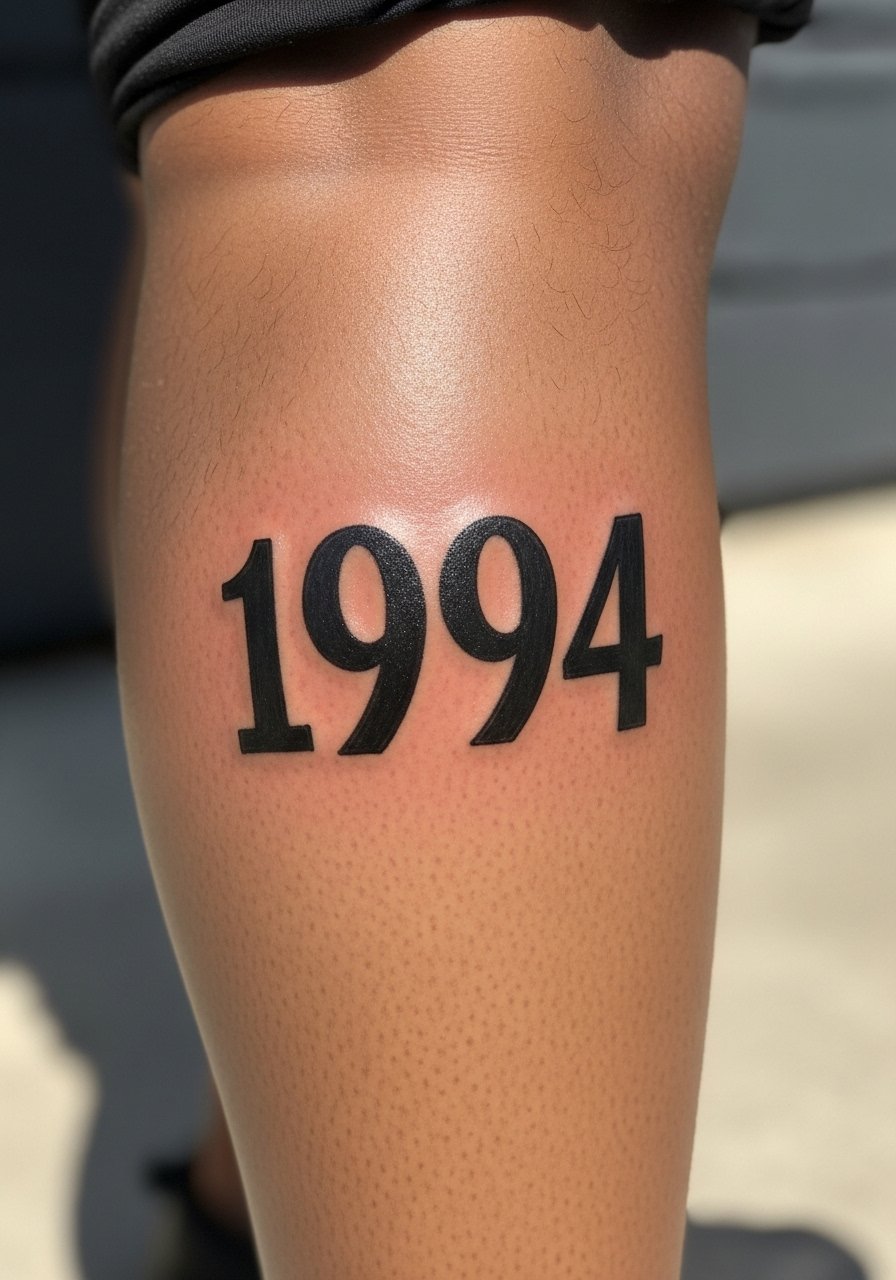
When I first saw this raw style on Reddit, it felt like an anti-perfect statement. Calf placement gives room for bolder stroke and low friction, so the hand-drawn vibe ages into character. During consultation, bring the exact hand-drawn sketch you want so the artist can match the wobble. Session time is one hour. A common mistake is shrinking the design. Keep the letters chunky so blowout and feathering do not erase the personality.
9. Ornamental Mandala Frame Around Year on Upper Back
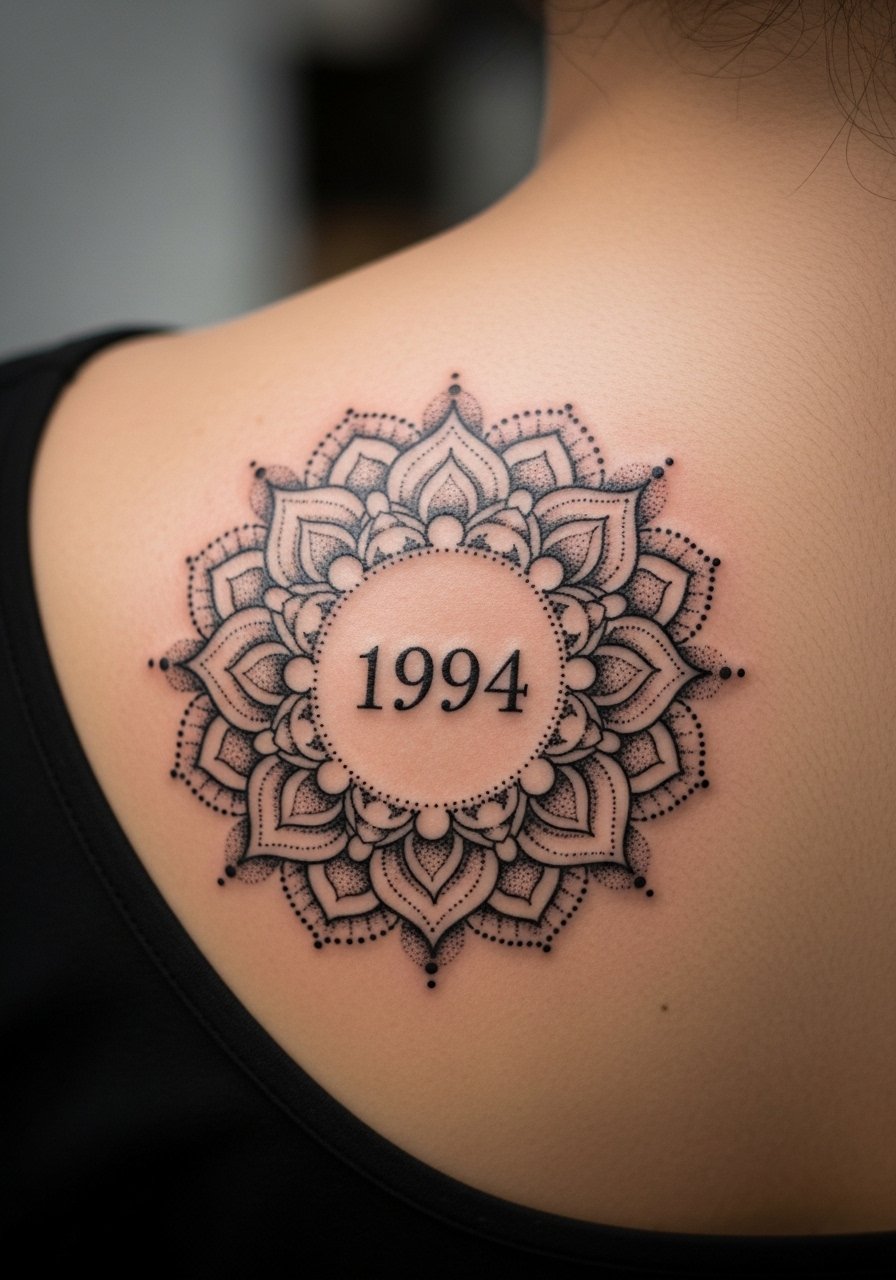
This design traces to meditative geometry from specific traditions. Some opt to slightly alter motifs rather than copy sacred patterns exactly out of respect. Upper back gives a flat canvas for precise dot work and stipple shading. Tell your artist you want balanced spacing between mandala rings so the central year stays readable at five years. Sessions are two to four hours and might require multiple visits. Watch for the mistake of squeezing too many small elements which makes the center blur over time.
10. Micro-Realism Portrait with Date on Inner Bicep
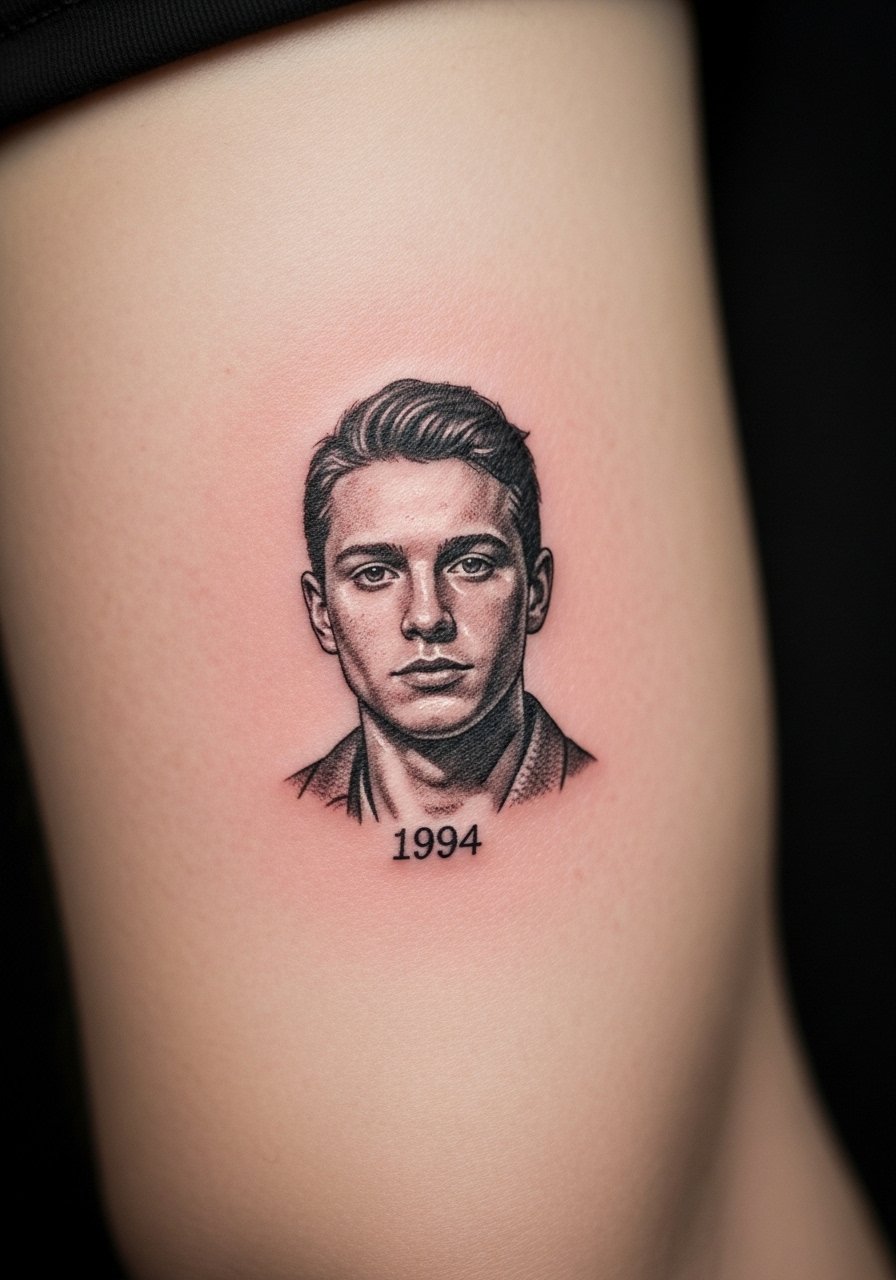
Most memorial birth-year pieces pair well with a micro portrait. The inner bicep gives a softer canvas and hides well under sleeves. Ask the artist to show a healed micro example in their portfolio and to keep the portrait scale large enough for detail. Sessions often run multiple hours across visits. A common mistake is asking for too small a portrait which blends into a gray blob. Expect touch-up planning for very fine shading.
11. Blackwork Geometric Date Cube on Thigh
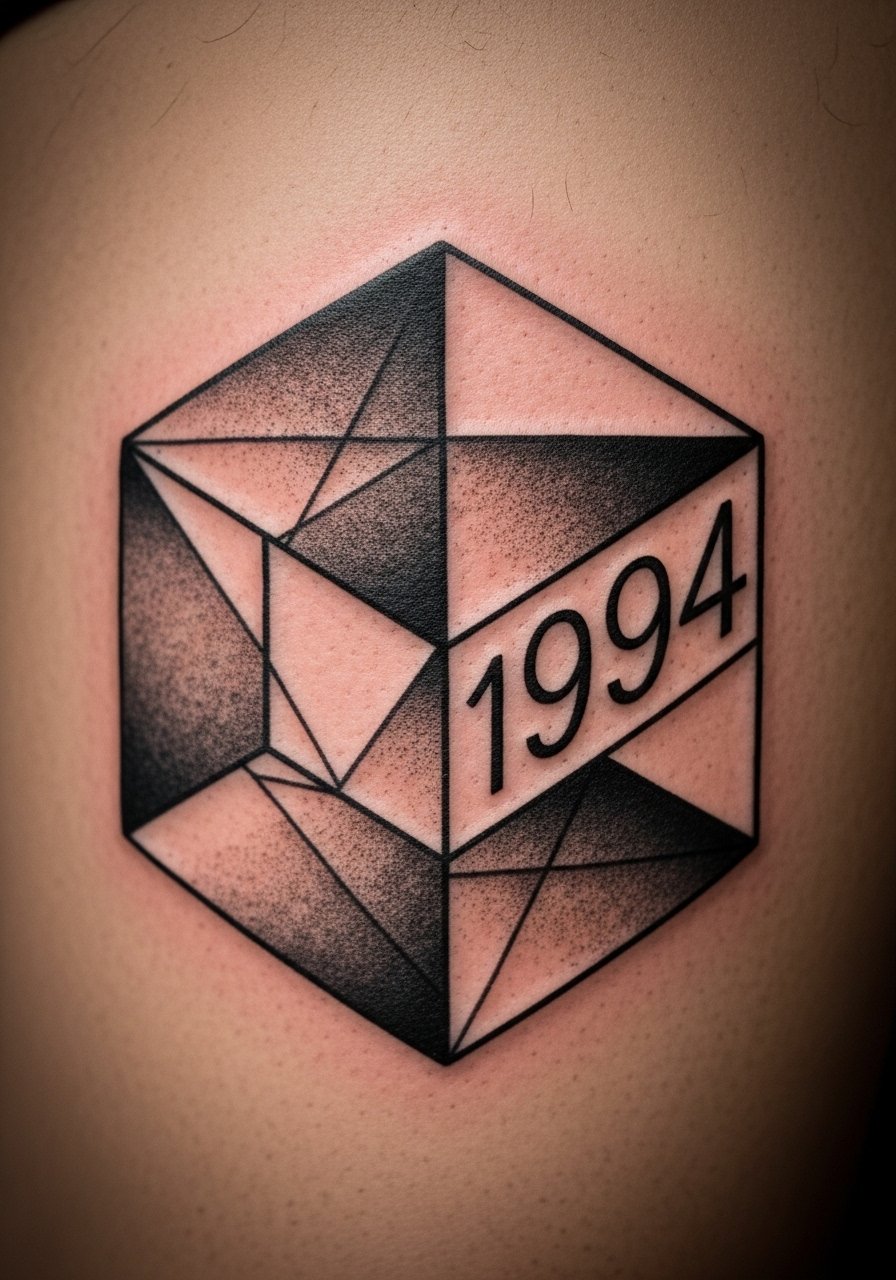
There is a modern joy in having a 3D illusion carry a date. Thigh placement keeps it safe from constant sun and clothing rub. When you consult, describe how visible you want the numerals versus the shape. Sessions are two hours for medium size. A common mistake is making the cube too small for the desired 3D effect. At two years the geometric readability depends on crisp linework and even saturation.
12. Fine Line Floral Birth Year Script on Ankle
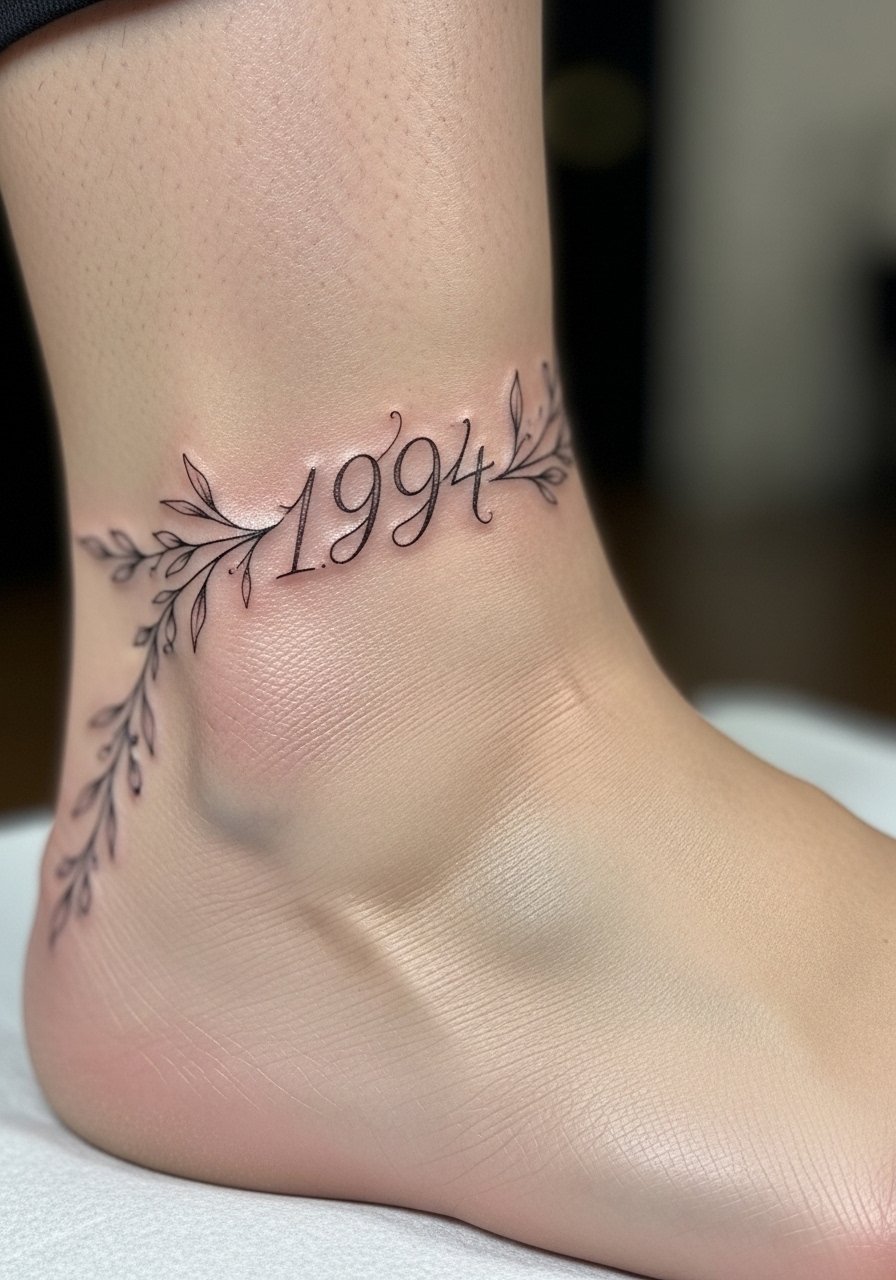
Most fine line floral numbers look lovely early but can fade if placed where socks rub constantly. If you want this delicate style, ask the artist for slightly more line weight on the outer stems and for minimal shading between petals. One group of artists insists single-needle holds when done on low-friction zones. Another group warns that ankles wear faster. Expect a 45 minute session and a likely touch-up at year one.
13. Birth Year as QR Code Linking to a Playlist on Inner Forearm
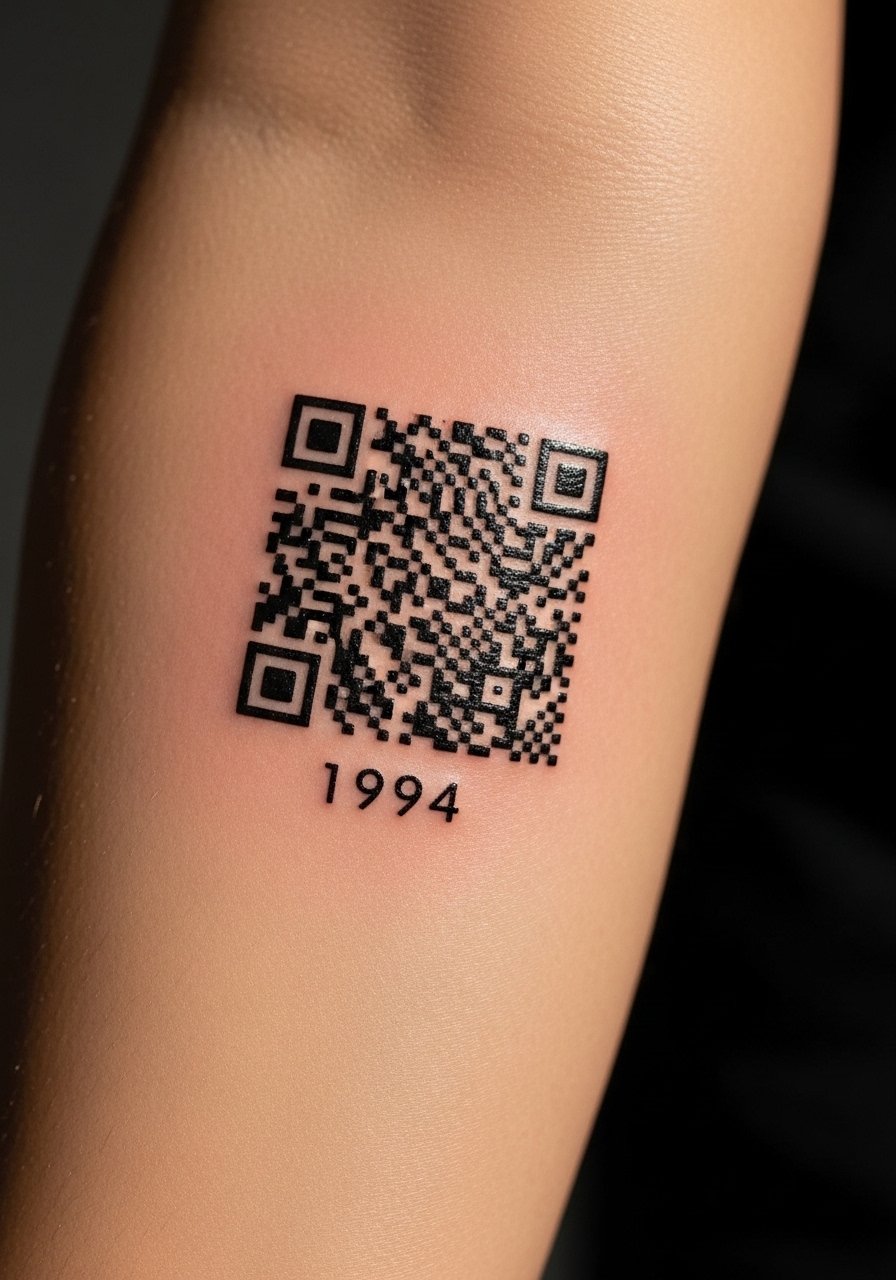
I have seen QR year codes trend for private links. Forearm scanning depends on perfect square sizes and spacing, and a rushed job will not scan. Tell your artist you want the QR printed and test it on skin with a temporary transfer first. Session time is about an hour. Common mistake is making the QR too small or curving it on muscle. If scanning is essential, expect a slightly larger block than you first imagine.
14. Birthstone Gem Micro-Realism Beside the Year on Upper Thigh
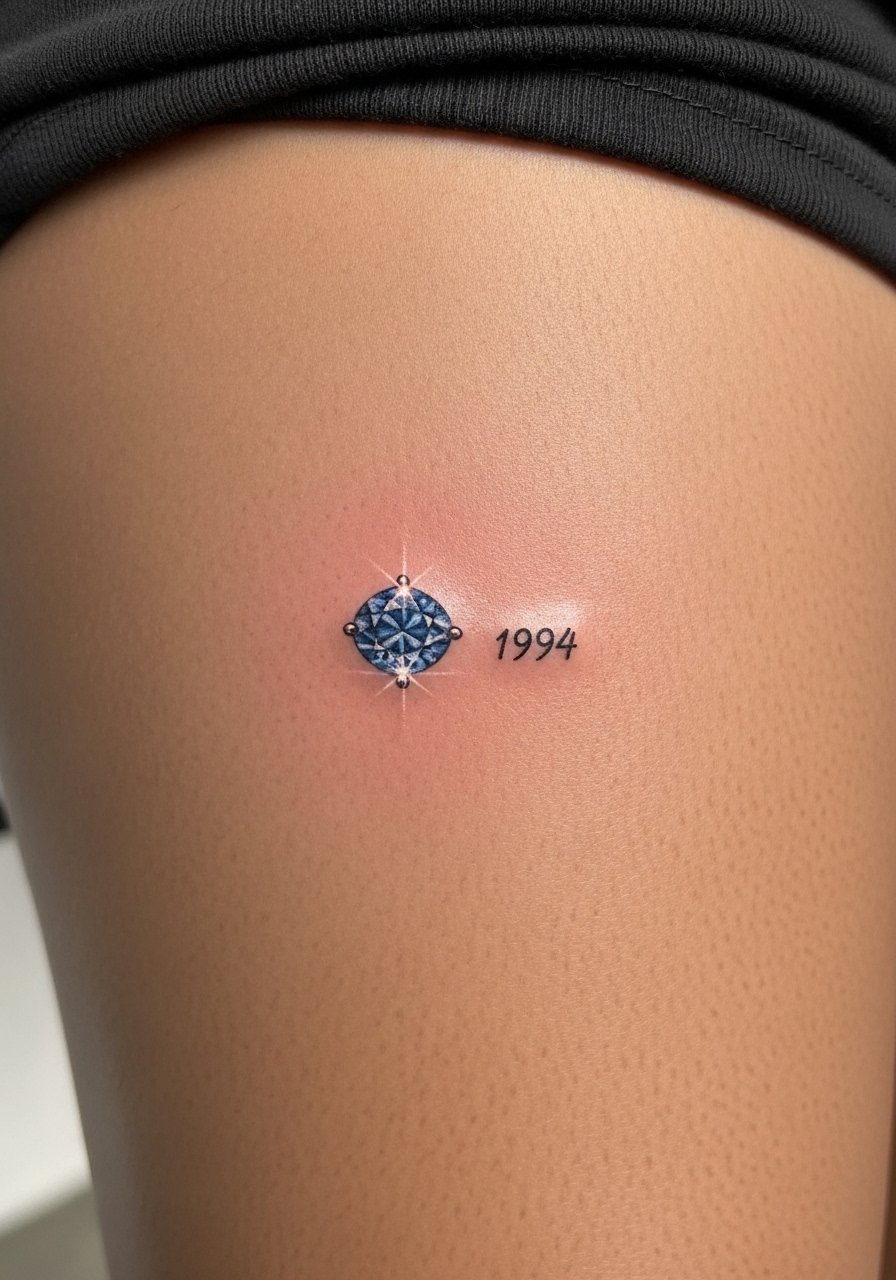
Pairing a year with a micro gemstone gives subtle 3D pop. Upper thigh is low sun exposure which preserves highlights and saturation. Tell your artist to build contrast with white highlights and deep shadow to make the gem read on darker tones. Sessions can be longer for realistic color layering. A common mistake is under-saturating the color which flattens the gem in photos.
15. Minimalist Matching Numeric Stacks for Couples on Inner Wrist
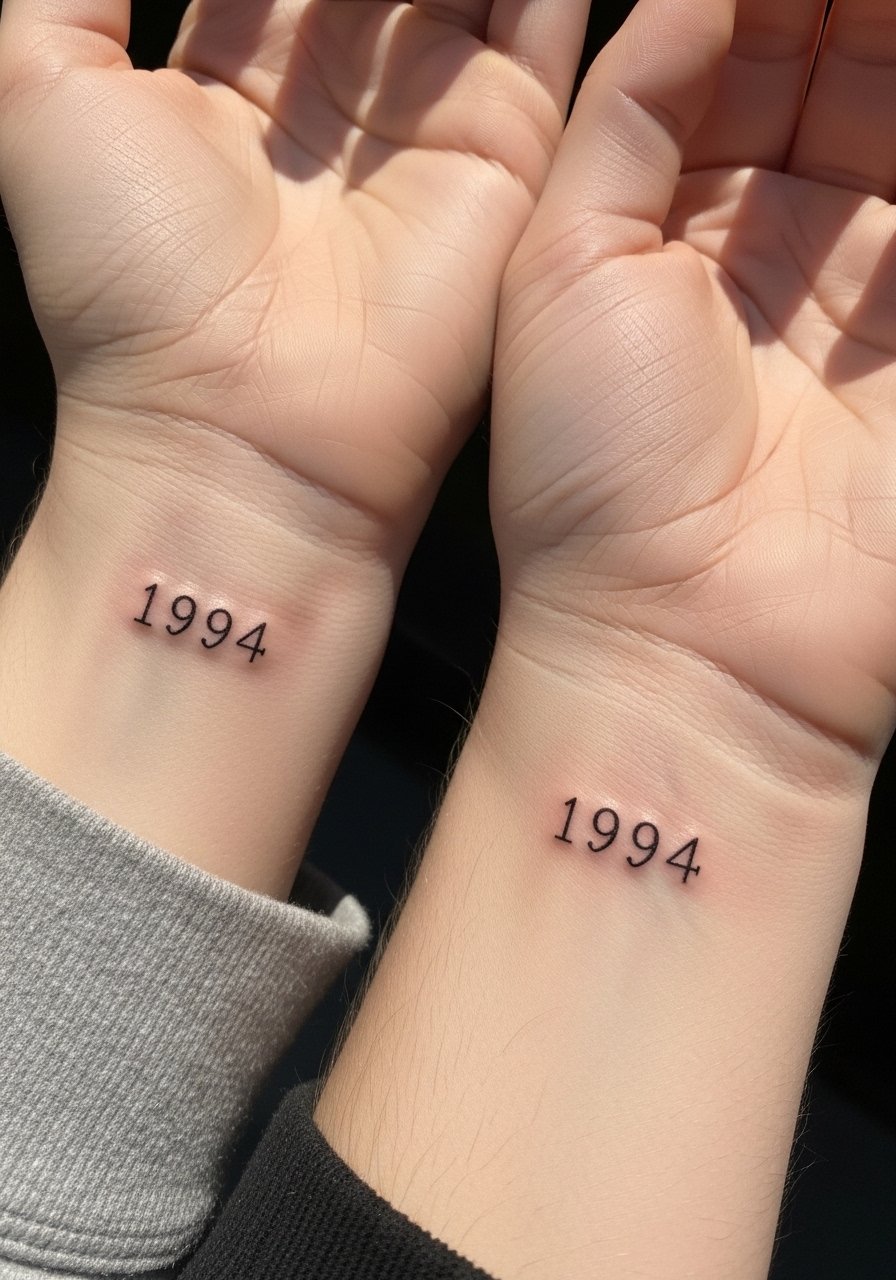
I have seen couples choose matching stacks that later regret being too similar to dozens of social media examples. If you want a pair, customize spacing or add a tiny symbol to differentiate. Inner wrist sessions are quick and low in pain. The biggest mistake is copying a trending layout that fades into the sea of similar tattoos. Tell your artist you want a small, recognizable tweak so matching feels custom without being complex.
16. Antique Typewriter Font Year on Collarbone
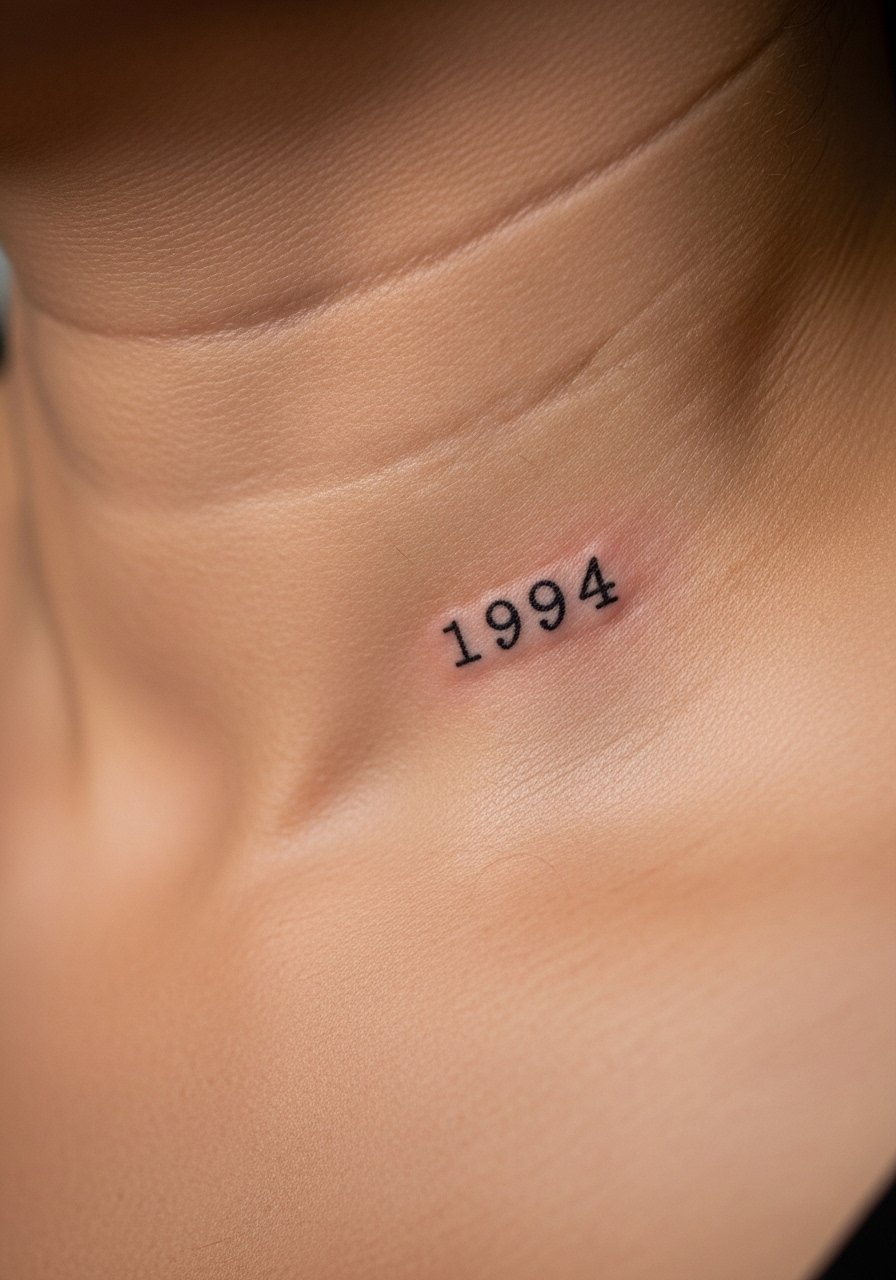
There is a vintage appeal to typewriter numerals and the collarbone shows them elegantly. Ask for slightly uneven ink saturation to mimic typewriter ink rather than mechanical razor-sharp lines. Expect one short session and mild discomfort. A common mistake is choosing an ultra-small size which blends at six months. Keep the characters roomy so the printed texture stays legible.
17. Vertical Spine Bar Year, stacked numerals down the spine
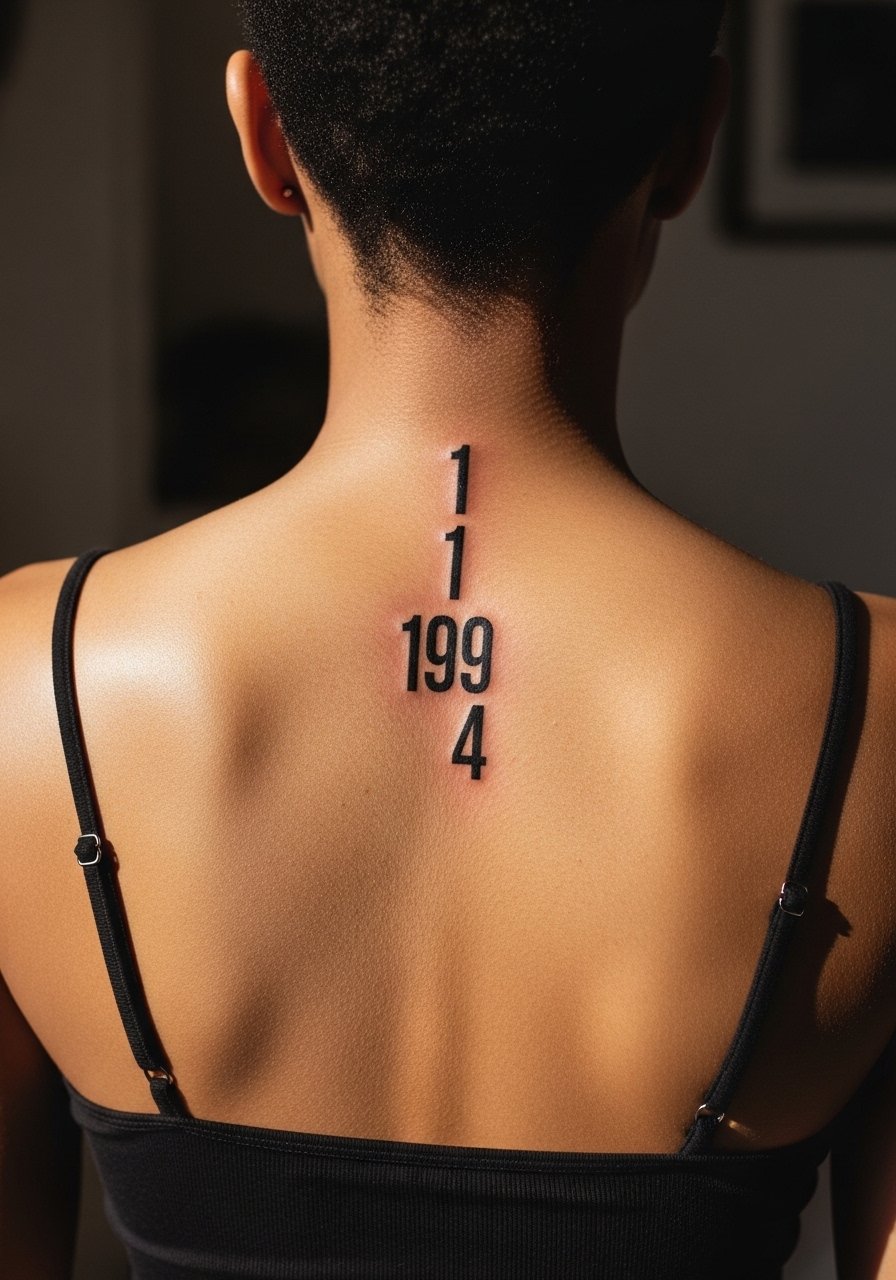
Fair warning: spine tattoos can be intense during the session. The vertical spine bar reads cleanly if alignment and linework are exact, so bring a posture-corrected temporary to the consult. Tell the artist you want constant spacing between digits so natural body movement does not compress one number. Sessions vary by length and pain tolerance. A common error is skimping on stencil placement and then regretting the tilt.
18. Coordinates with Year Combo on Inner Forearm
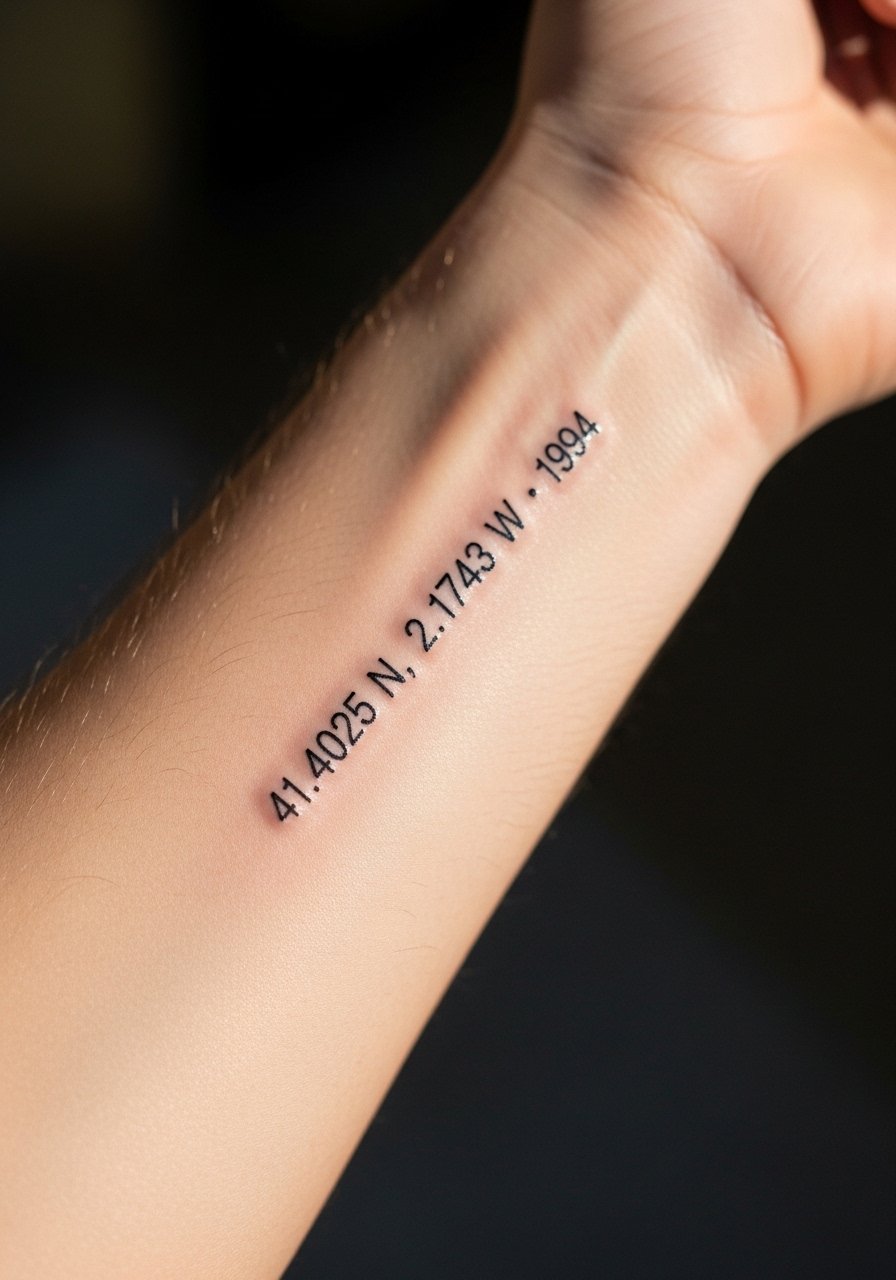
When you pair coordinates with a year you create a precise memory anchor. Inner forearm is forgiving for text. Tell your artist to use a slightly heavier type weight than web text so the numbers stay crisp. Sessions are usually under an hour. Mistakes include choosing an overly delicate font that blurs against movement. If the coordinates are meaningful, double check them aloud and on paper during the consult.
19. Dot Work Constellation Year, stipple stars linking to "1994"
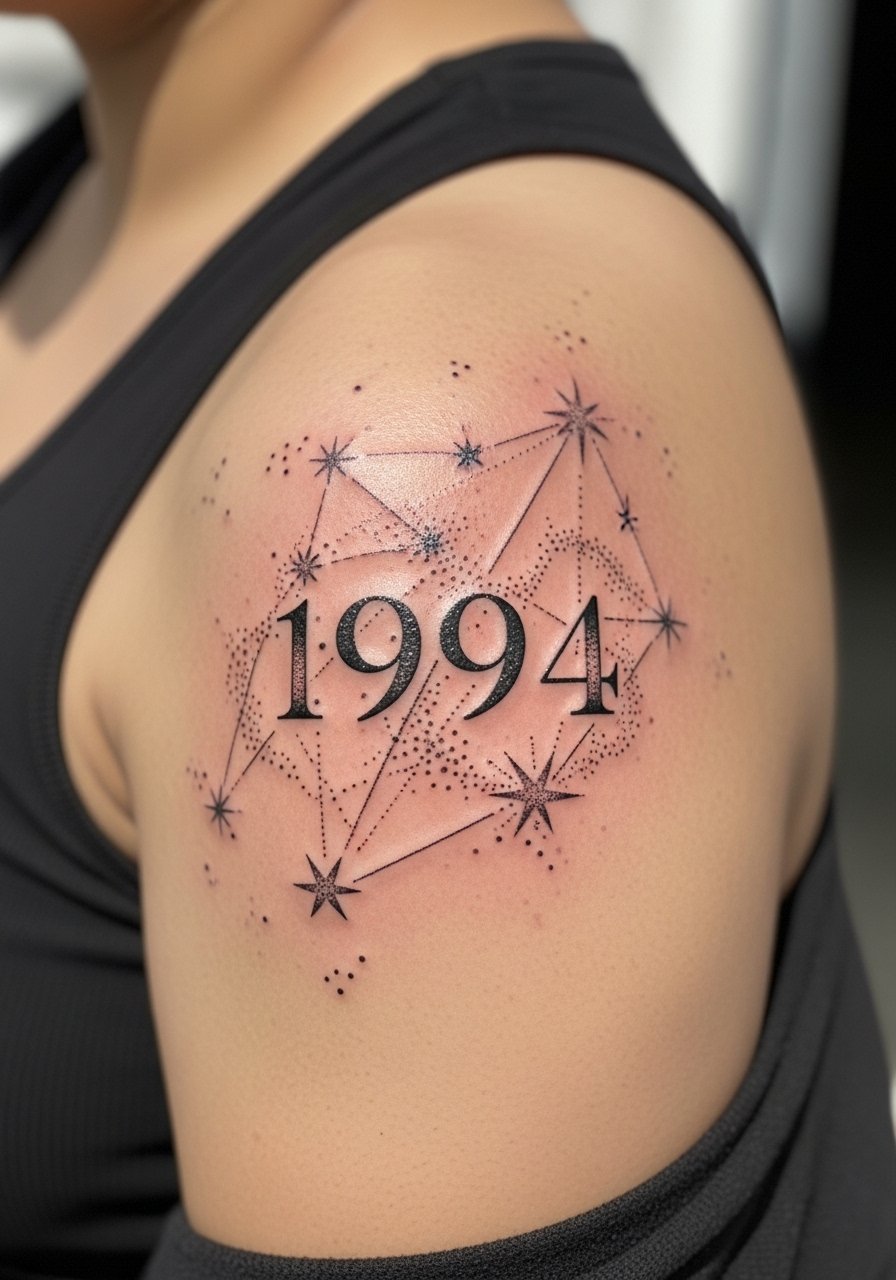
Constellation pairings ride the zodiac trend and look great when stipple shading is balanced. Outer shoulder is low friction and photographs well. Ask the artist to map the dot density so the numbers do not disappear into the shading. Session time is flexible and could be done in one visit. The common mistake is overfilling dots around the digits which eats legibility over time.
20. Bold Circular Year Seal on Chest with Small Lettering
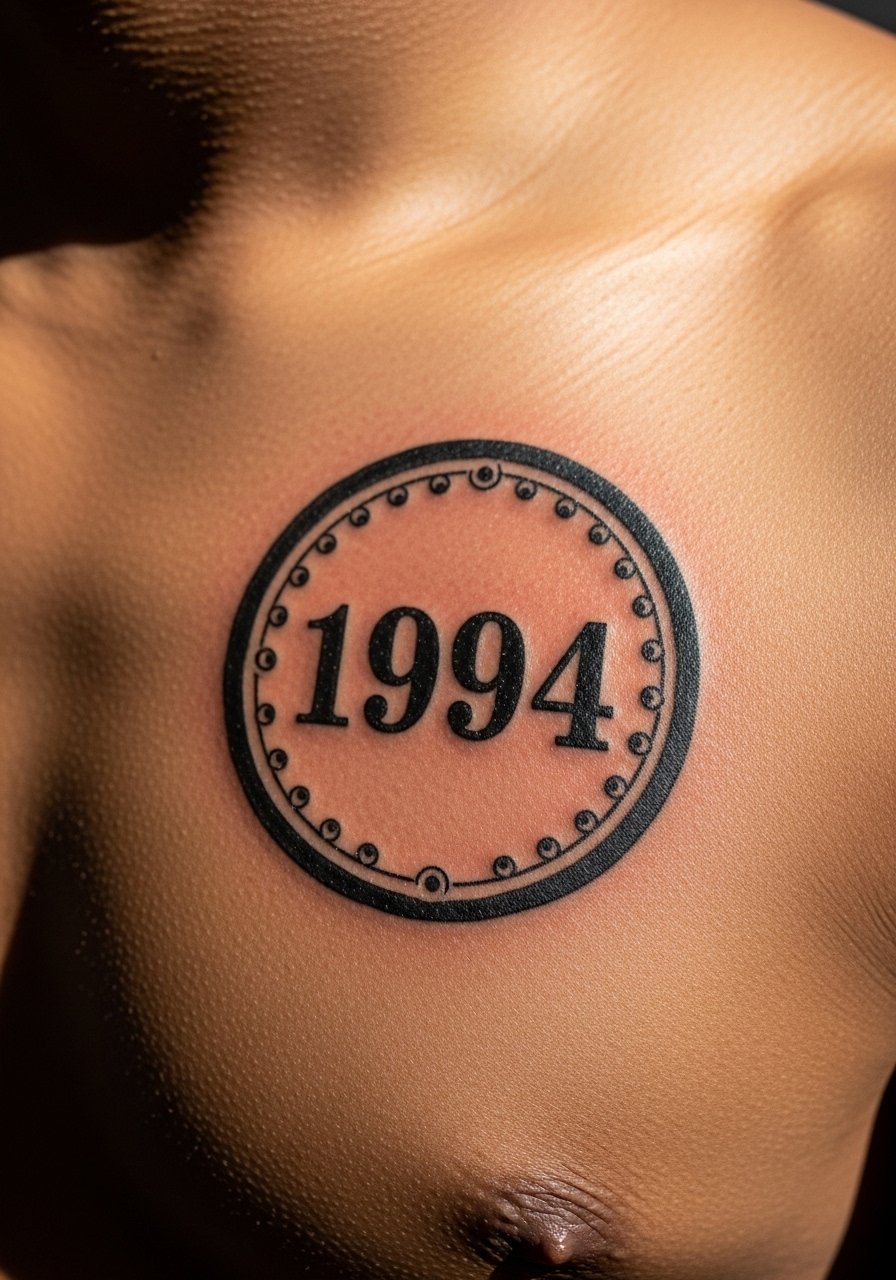
Most chest seals read like badges and sit prominently under shirts. Sensitive placement note: chest work can affect job visibility depending on clothing choices, so think through exposure. When you consult, ask for a slightly thicker outer ring to preserve the shape as it ages. Sessions range from one to two hours depending on size. The common error is choosing too fine internal text which will soften in five years. Aim for readable proportions so touch-ups are minimal.
Tattoo Prep and Aftercare Essentials
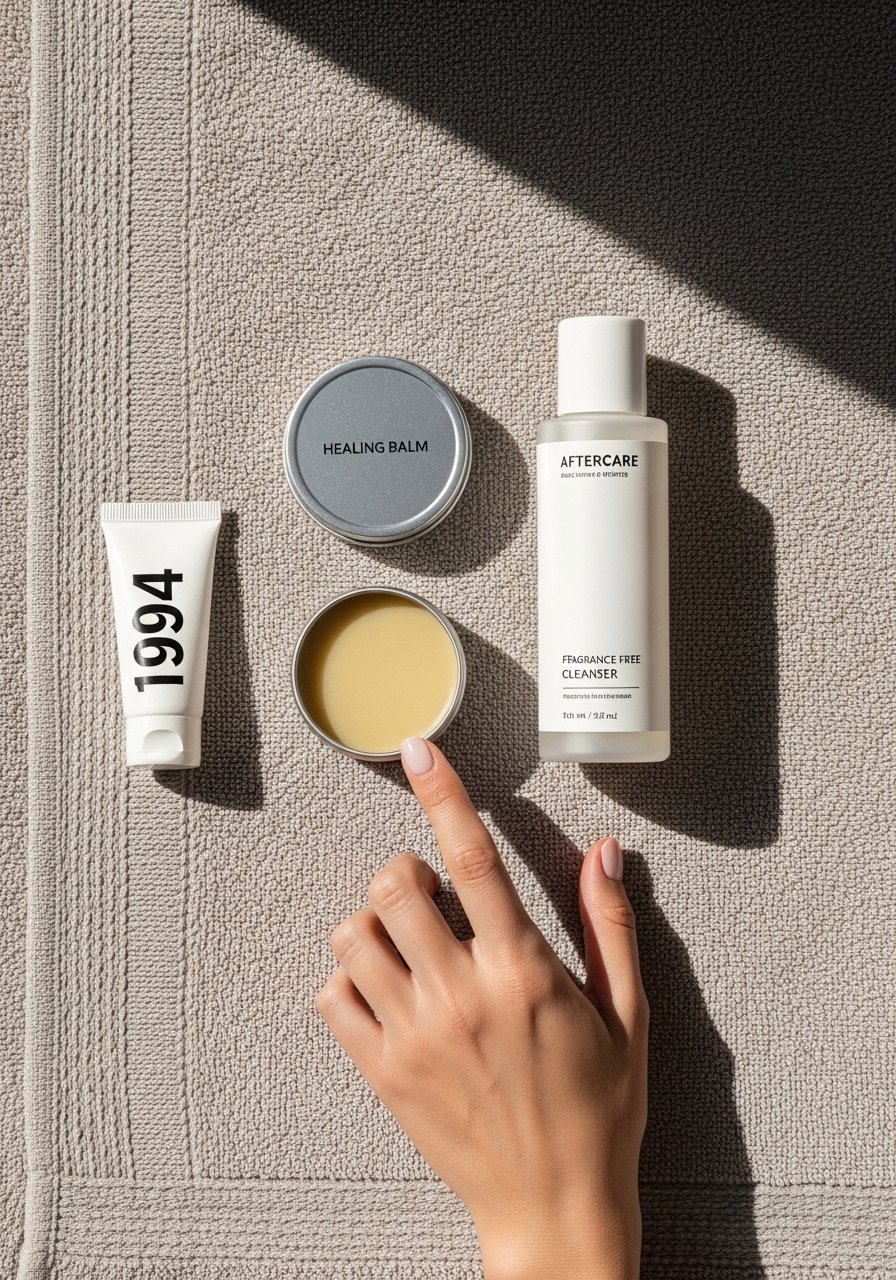
Australian Tea Tree Ink Fixx. Lightweight tea tree balm favored in forum threads for itchy ribcage heals. Use sparingly days three to ten to calm irritation without heavy shine.
Green Sheep Tattoo Goo. Breathable alternative recommended for ankle work where thick ointments trap sweat.
Hada Labo Super Hyaluronic Lotion. Hydrates without gloss, useful for darker tones to keep contrast during healing.
Indie Butter Balm. Thinner guest-spot balm that artists mention for color retention on watercolor pieces.
Lightweight fragrance-free balm. Generic option for daily moisturization once scabs fall.
Fragrance-free gentle foaming cleanser. Use for first wash and then twice daily as recommended.
Medical-grade second skin bandage. Helpful for large pieces or summer sessions to reduce chafing.
Broad-spectrum mineral sunscreen SPF 50+. Essential after month one for color and line retention.
Every tattoo is different. Always follow your artist's specific aftercare instructions. Consult a dermatologist if you have skin concerns or unusual healing issues.
Frequently Asked Questions
Q: Will a fine line birth year on my wrist blur within a year?
A: It depends on placement, lifestyle, and how bold the original linework is. Fine line on high-movement or high-friction wrist areas tends to blur faster. If you love the ultra-thin look, ask for slightly heavier line spacing or plan a touch-up at 12 to 18 months. From what I have seen, low-friction placements hold single-needle work longer.
Q: Are barcode or QR-code year tattoos likely to stop scanning after healing?
A: QR and barcode pieces can fail to scan if the lines are too narrow or the block distorts on curved skin. Forearms and flat shoulder blades give the best chance of scanning. Bring a test print to your consult and ask for a slightly larger scale than a logo so the pattern survives healing and minor skin shifts.
Q: How should I approach a birth year tattoo on dark skin so the numbers read in photos?
A: Contrast is the key. Many people I follow prefer bolder outlines, strategic white highlights, or pairing the year with a shallow shadow to preserve separation. Ask your artist for healed photo examples on similar skin and consider placements with less sun exposure like upper thigh or inner bicep.
Q: Do watercolor-style dates need different aftercare than traditional blackwork?
A: Yes, watercolor pieces often rely on softer saturation and layered color, so keeping the area out of heavy friction and direct sun in month one helps color retention. Use a thin, breathable balm during the moist healing phase and avoid thick occlusives that can pool pigment. If you are worried about clogging pores, pick a lighter balm from the shopping list.
Q: If I want a small matching couple year, how do we keep it from looking generic?
A: Small customization is everything. Change line weight, add a tiny glyph only one of you has, or shift placement slightly to avoid mirror copycating. During the consult, ask your artist for two small variations so the ink reads personal without borrowing a mass trend.
Q: Is Saniderm recommended for wrist numerals given the Saniderm versus dry healing debate?
A: Artists and community members split on this. One group says Saniderm keeps wrist numerals clean and reduces scabbing. The other group worries it traps moisture and can lift shallow ink if left too long. If you choose Saniderm, remove it at the recommended time and monitor edges. Follow the product timing and your artist's guidance.
Q: How soon should I plan a touch-up for micro-realism or fine line birth years?
A: Plan a check-in around twelve months. Micro-realism often needs detailed tolling to restore highlights and contrast. Fine line pieces can require touch-ups sooner if placed in high-friction areas. A year check lets you and the artist decide what needs freshening without surprises.