
Someone I know spent months bookmarking neck tattoos before realizing the real problem was picking designs that age well on the neck. Visibility at work, oily skin that mutes dots, and nape pieces that rub on hair all came up in conversations with artists at five shops across Brooklyn. Below are 20 dotwork neck ideas with what to ask for, how they heal, common mistakes, and when a touch-up becomes realistic.
1. Dotwork Mandala on Side of Neck
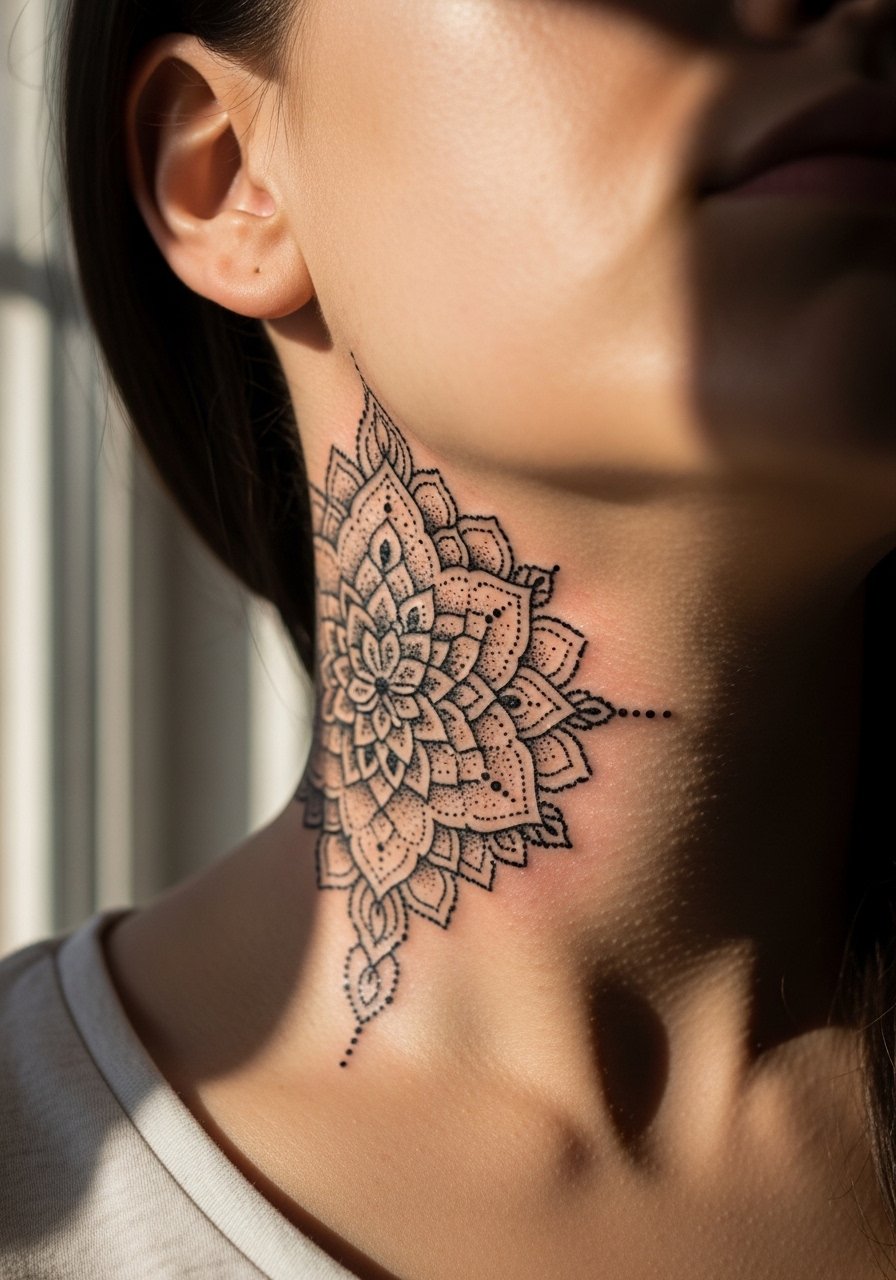
A side-neck mandala reads like a meditative frame for the face. I recommend this when you want an architectural motif that can hide under hair if needed. Tell your artist you want moderate dot density and a slightly larger scale than a thumbnail so the petals do not blur. A common mistake is shrinking the central geometry so the dots merge after a year. Expect a two-session process and a touch-up around year one for oily skin. Pain sits around a 5 out of 10 on the side neck. Note about professional considerations. Ask about healed photos on similar skin tones.
2. Geometric Dotwork Neck Collar
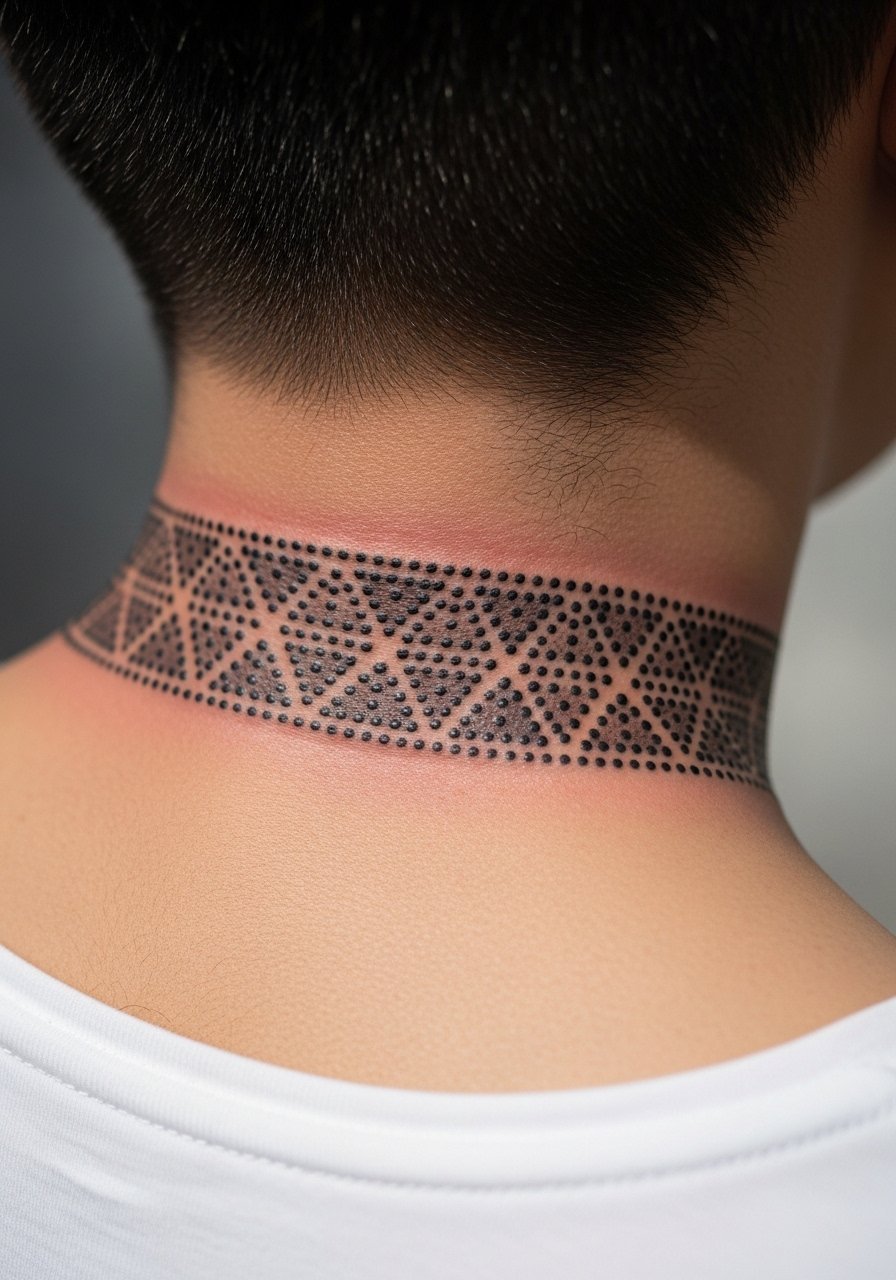
This collar mimics a choker without actual jewelry. It works well for anyone wanting bold patterning that still reads feminine. During consultation, ask for repeating units with negative space so the collar breathes as you move. If the pattern is too tight it will age into a muddled block. Most small collars take a single session if under three inches. You will feel more vibration than sharp pain near the spine. For long-term contrast on darker skin, request stronger gradients rather than only fine dots. Cultural origin note: some motifs have sacred geometry roots, so opt for respectful variations.
3. Stipple Flower Neckline Design
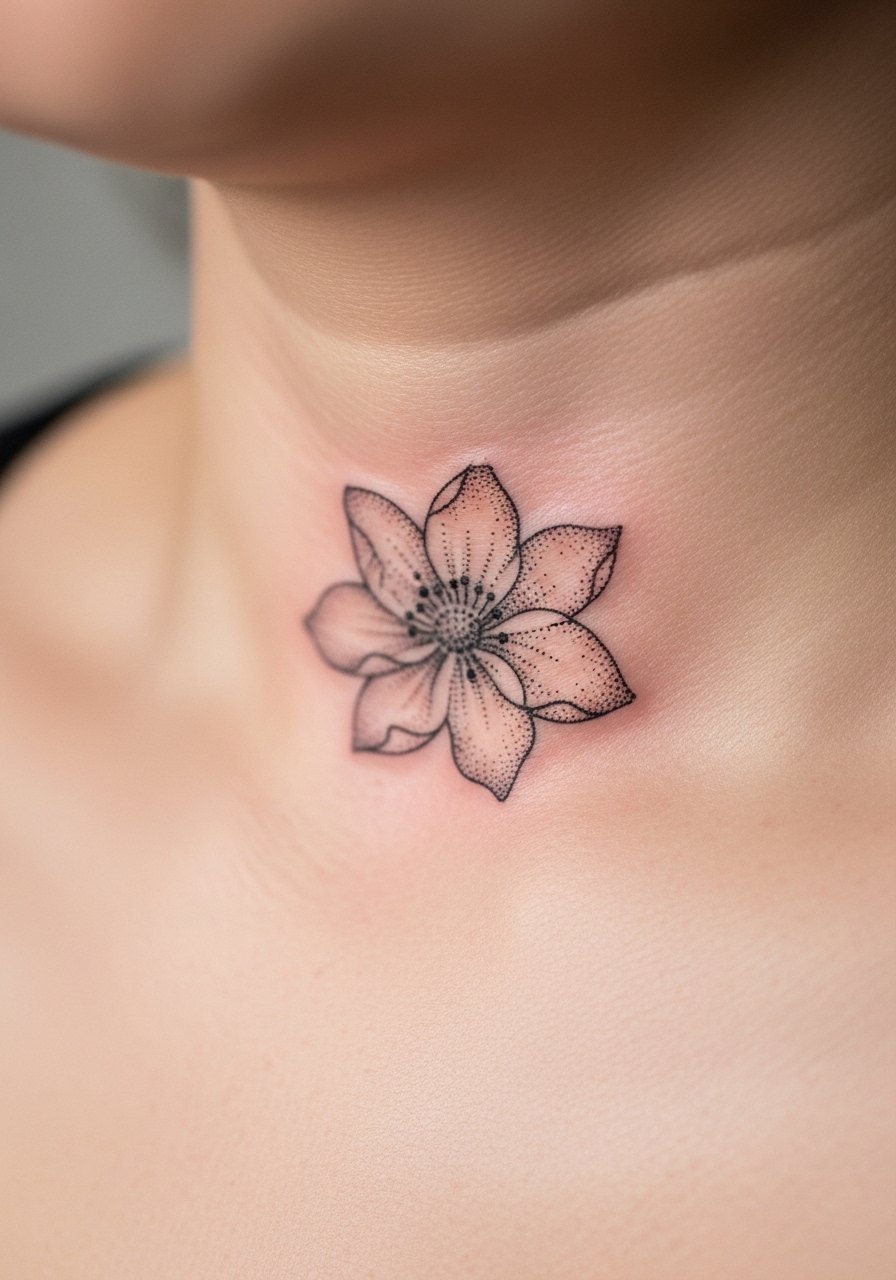
A stippled flower softens a front-neck placement and works well for those who prefer an organic silhouette. Ask for open petal negative space and a denser stipple at the center to preserve shape as it settles. People often ask for ultra-fine dots across petals which can fade into a gray puddle on oily skin. In contrast, a micro-gradient keeps the bloom readable at six months and at two years. Session time is usually short but plan for two passes if you want deeper saturation. One-sentence professional consideration about neck visibility at interviews. Expect a touch-up window around 6 to 12 months.
4. Sacred Geometry Dotwork Point on Nape
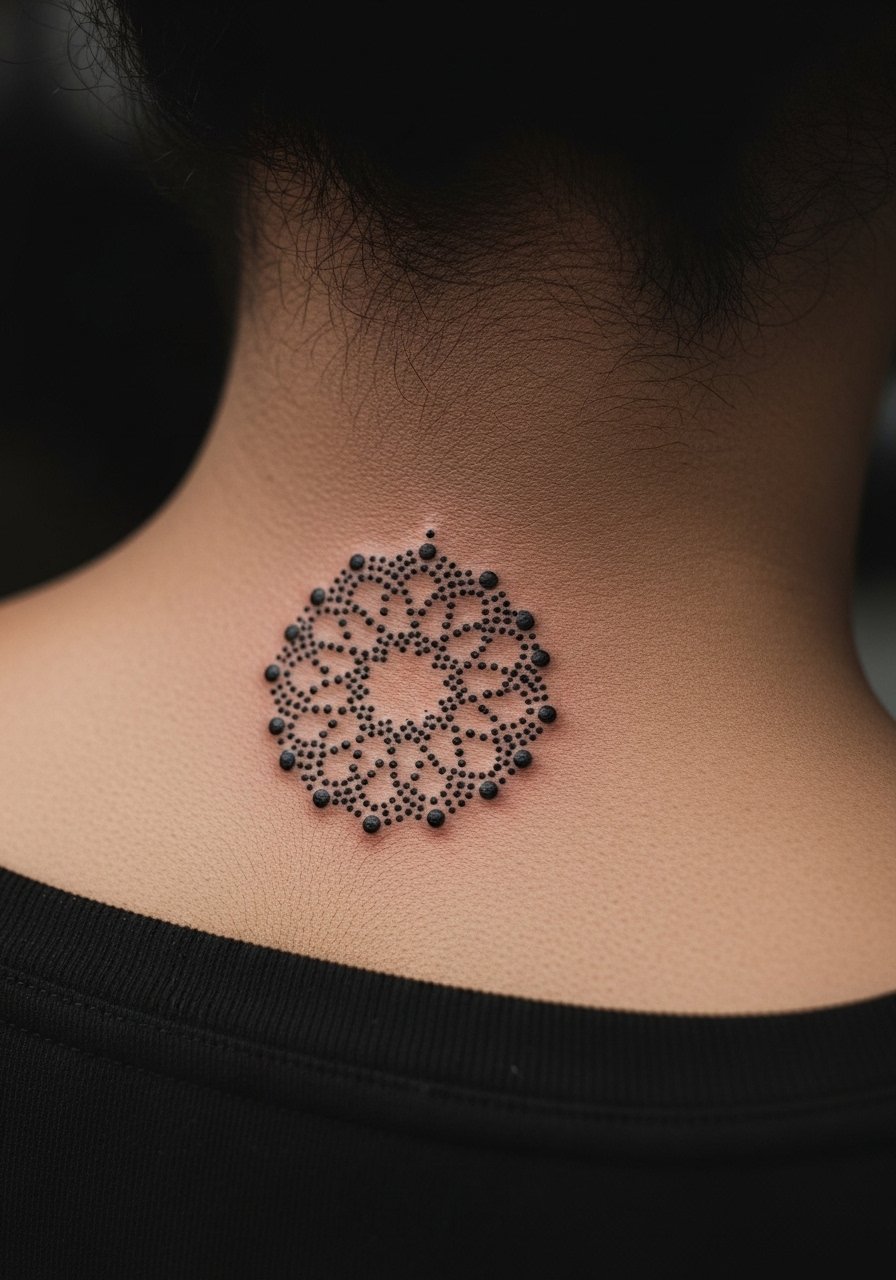
Minimal nape points are trendy because they hide under hair and heal with less friction. There is a split among artists about fine-line minimalism versus denser dot packing. One camp says tiny fine dots are intentionally subtle and will mellow gracefully. The other camp wants higher density to prevent early blur. When you book, ask which approach the artist prefers and why. This is a one-session piece that is low on pain. Keep hair tied up for the first week to reduce rubbing. If you plan to hide it daily, nape placement is a smart move.
5. Dotwork Wave Pattern Side Neck
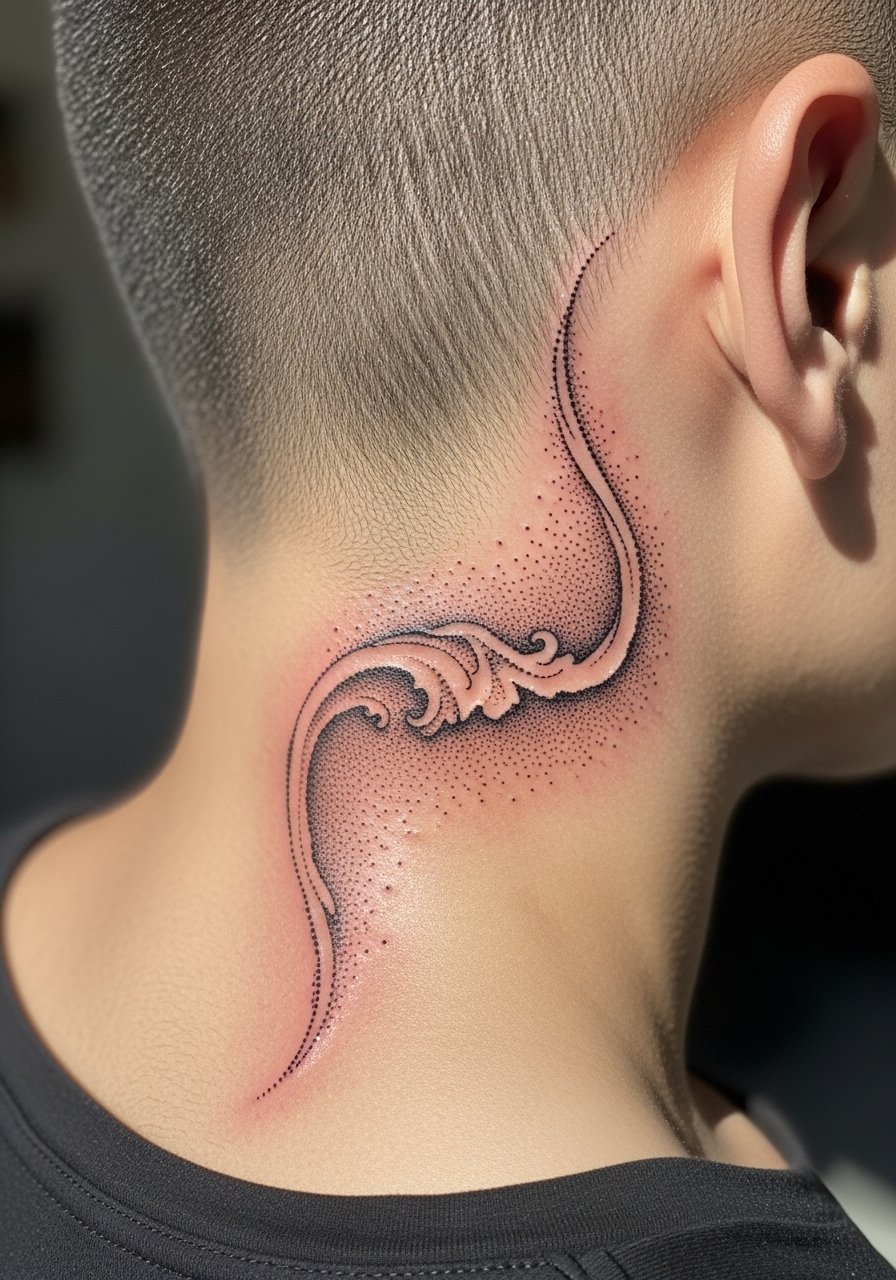
Waves elongate the neck visually and move with the body's curves. Recommend this when you want motion rather than a static symbol. Tell the artist to follow the natural muscle lines so the pattern reads smooth during movement. A common mistake is forcing perfect symmetry on a curved surface which creates tension points that age oddly. Expect two sessions for longer runs and a slightly higher blowout risk near soft tissue. The sensation tends to be an ongoing ache rather than sharp stabs. Design ages well if dots are spaced to allow minor spreading.
6. Mandala with Dotwork Shading Throat Piece
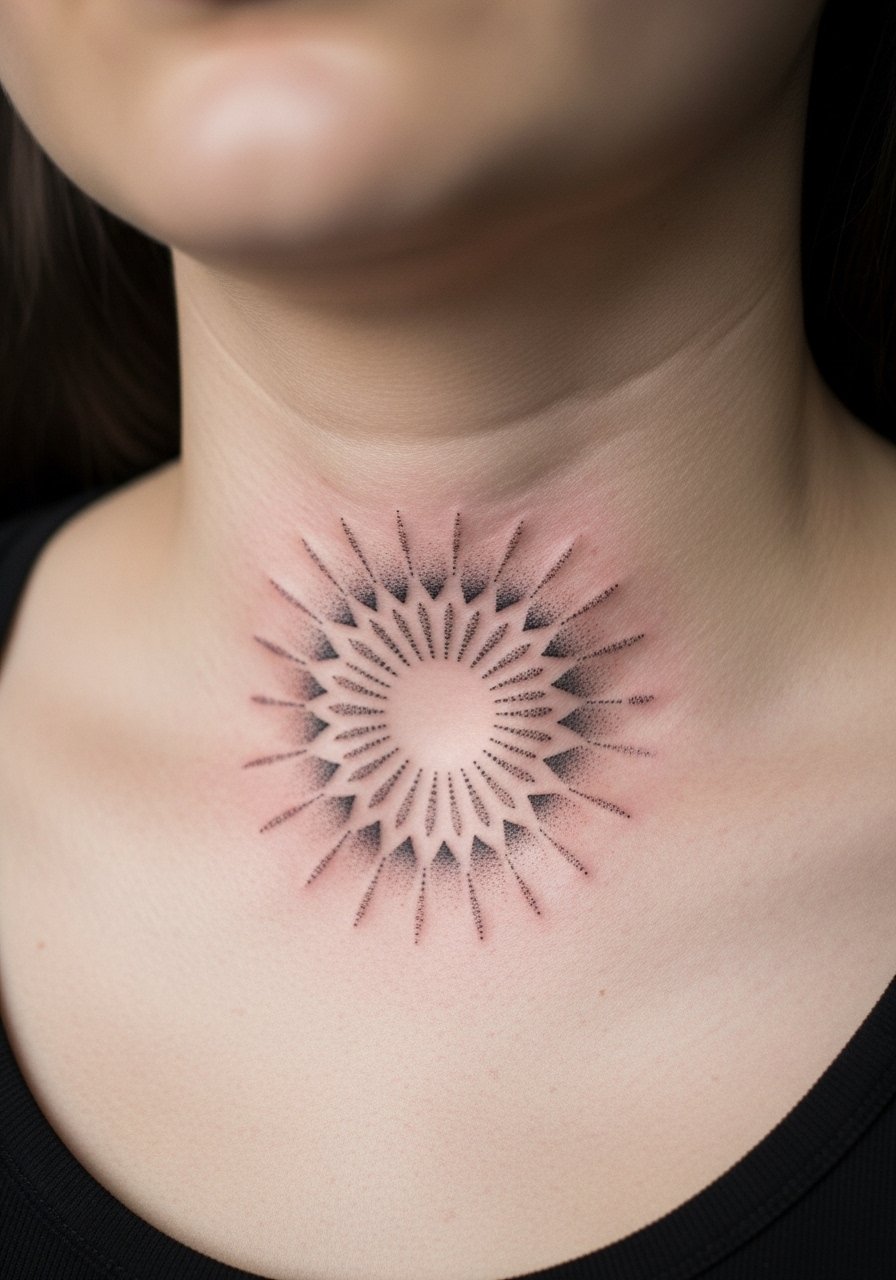
A throat mandala makes a deliberate front-and-center statement for those ready for high visibility. Ask for an off-center option if you want easier concealment with scarves. The mistake I see is demanding ultra-fine internal detail in too-small a diameter. That detail disappears by year two. Plan for three shorter sessions rather than one long marathon to allow artist to assess healing between passes. Pain is higher on the anterior throat due to thin skin. If you work in conservative settings think about placement and wardrobe.
7. Pointillism Butterfly Back Neck
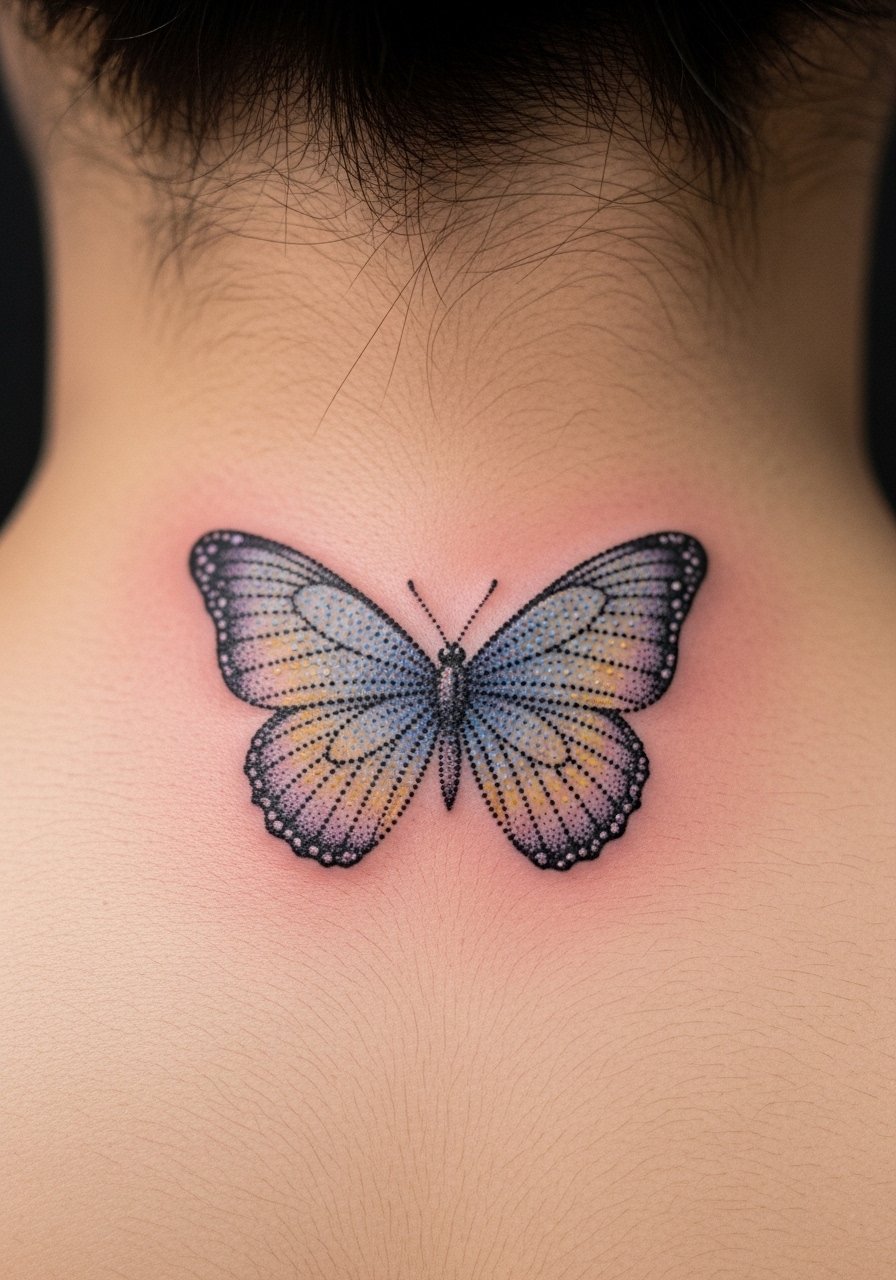
Butterflies read as light and symbolic while still benefiting from dotwork texture. This is a good first neck tattoo for many because it is small and discrete. Tell the artist you prefer concentrated dots at wing joints with sparser outer stippling. People sometimes ask for delicate filigree that ages into a blurred silhouette. A denser center and softer outer dots avoid that. Expect one to two sessions and a touch-up at the one-year mark on oily skin. Sensitive placement note. Mention hair friction concerns if you wear high buns.
8. Dotwork Skull Outline Collarbone Neck
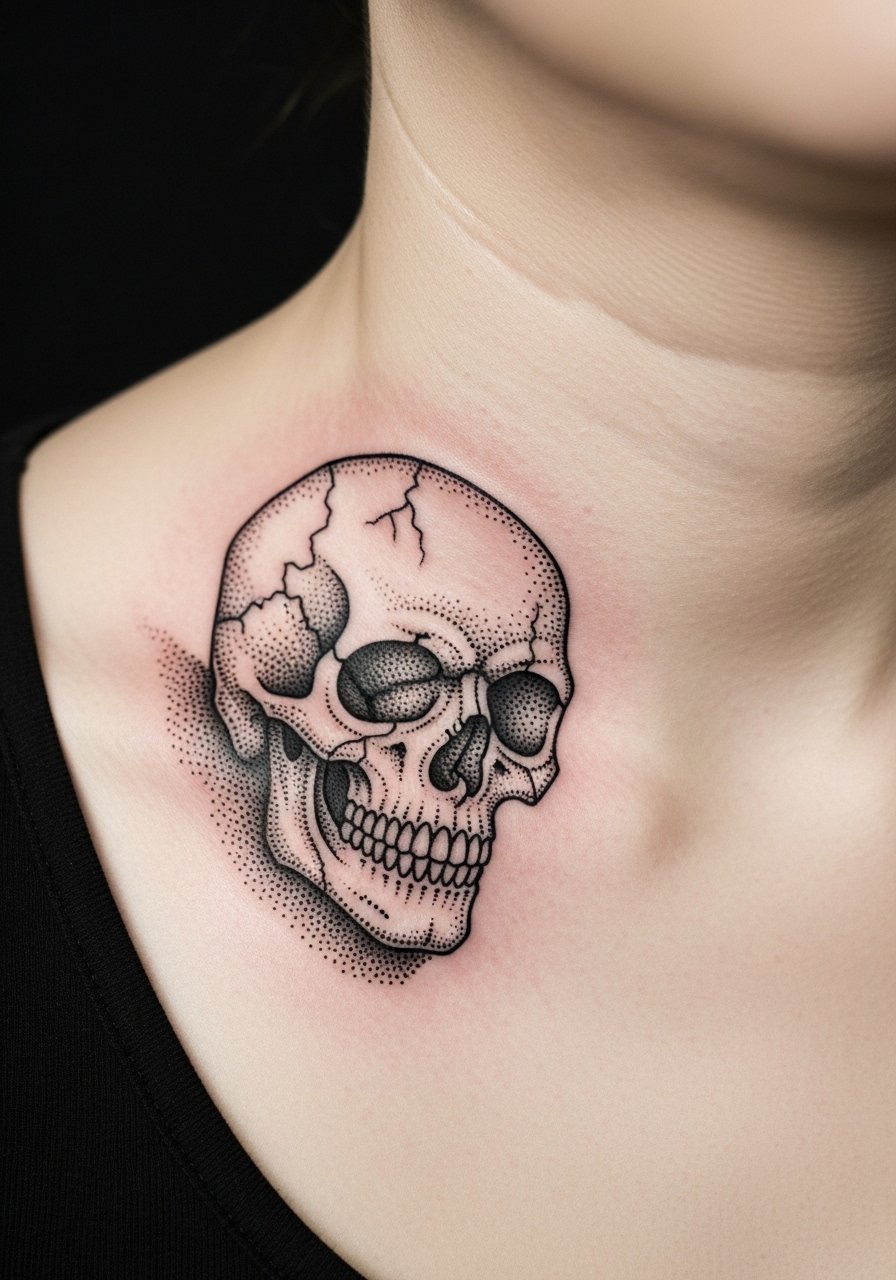
This collarbone-to-neck skull blends edge with subtlety. I recommend it when you want a motif that grows bolder over time rather than fading into nothing. During consultation specify open negative spaces around the jawline so the skull keeps definition. A frequent mistake is packing too many tiny dots into fine cavities which merge after healing. Sessions often span two appointments to build texture gradually. Pain near the collarbone can spike during shading passes. For career concerns consider how visible the piece will be with tops you wear.
9. Intricate Dotwork Labyrinth Side Profile
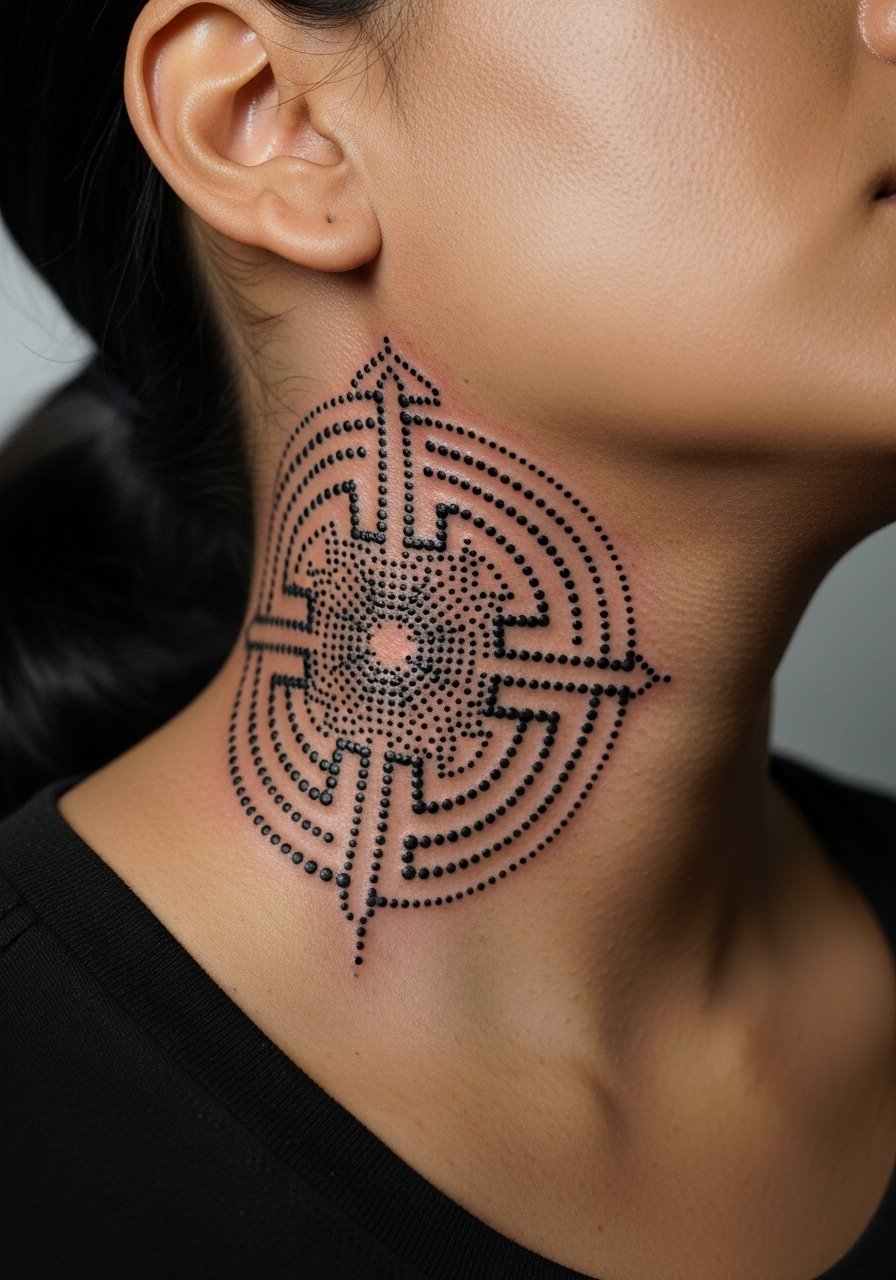
Labyrinth patterns reward scale and spacing because they depend on readable paths. I suggest this for collectors who like puzzles in their ink. Tell your artist you want thicker corridors and fewer hairline ticks so the path stays legible for years. The mistake is overcomplicating the maze at a small scale which becomes indecipherable. Plan for two to three sessions and a realistic touch-up timeline of 12 to 24 months. Pain feels like sustained pressure along the side of the neck. Note about cultural origins and preference for adapted motifs.
10. Stippled Crescent Moon Nape Accent
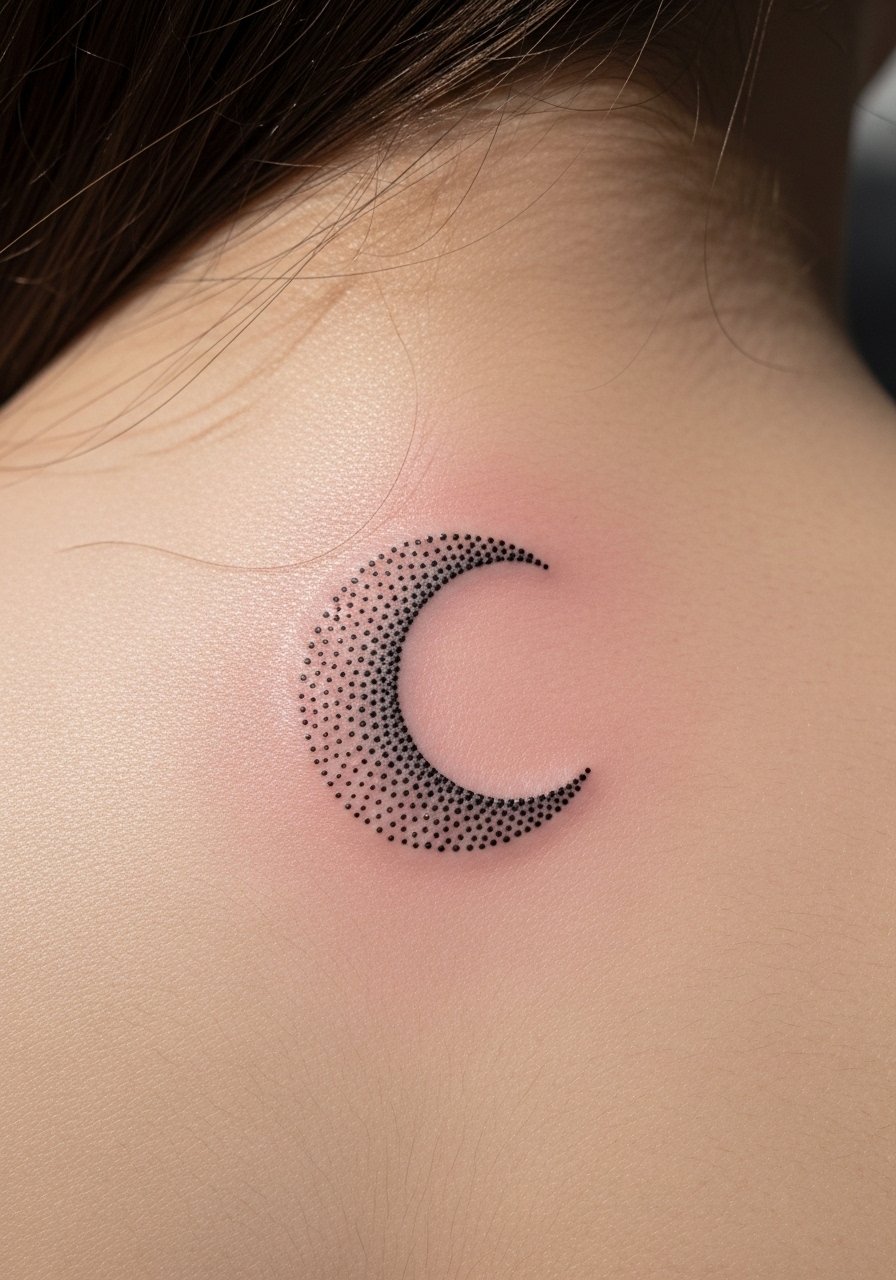
A crescent moon is low-pain and easy to conceal under hair. Ask for a heavier inner dot cluster and a faint outer halo so the moon preserves shape on lighter and darker skin. The worst mistake is asking for a thin outline only, which tends to blur into a gray smudge. This is typically a single-session piece with a short recovery window. Nape friction from collars and hair can irritate healing if you do not protect the area. For those seeking memorial options, a small date in Roman numerals can accompany the curve.
11. Dotwork Honeycomb Pattern Throat
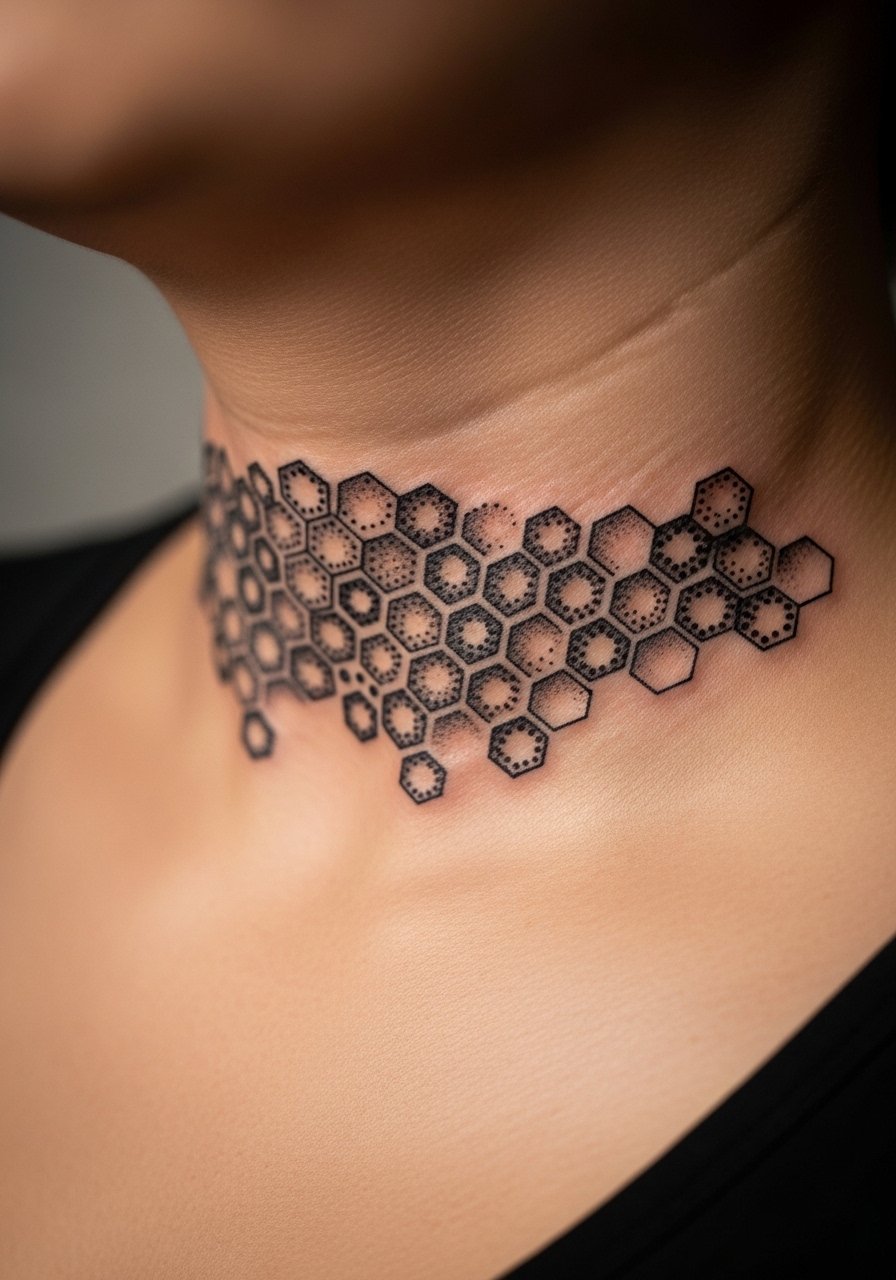
Honeycomb plays with organic texture that hugs the throat. Recommend this if you want modular expansion later onto chest or clavicle. Tell the artist to stagger cells slightly instead of rigid grids for better movement with swallowing. A common mistake is matching every cell exactly which creates visible seams as skin shifts. Sessions normally require two appointments to build contrast. The surface area near the throat increases sensitivity and you will feel longer stretches of pressure. If you plan future sleeve extensions map the negative spaces now.
12. Full Dotwork Sleeve Extension to Neck
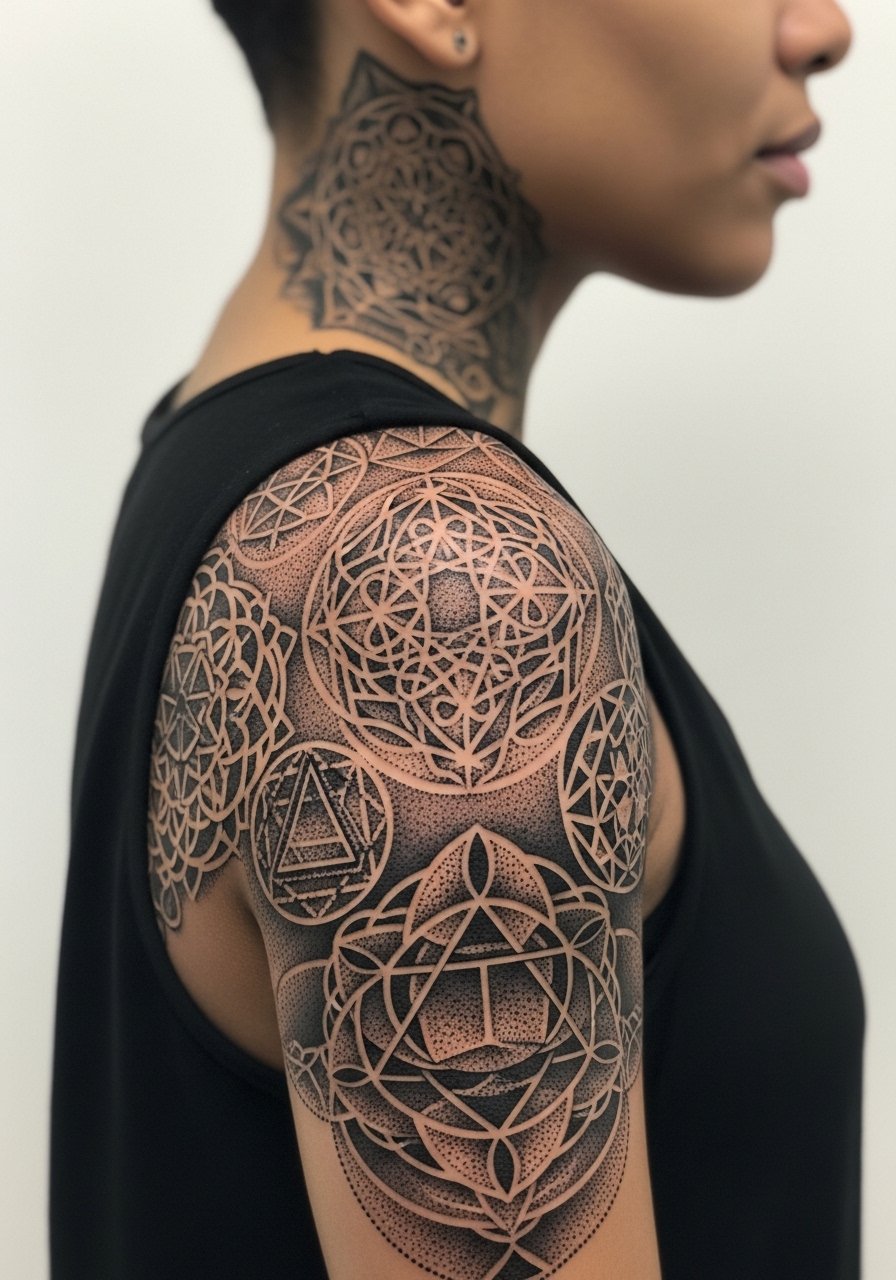
If you are building a cohesive body piece, extending a dotwork sleeve to the neck ties composition together. This is for collectors comfortable with multiple long sessions and a larger budget. During consult, show full-sleeve references and discuss how the neck pieces will age relative to arm saturation. A mistake is treating the neck as simply another canvas and not accounting for thinner skin and more movement. Expect four or more sessions across months. Blowout risk near the neck is higher so keep dots spaced and ask about healing protocols. Professional considerations apply for high-visibility work.
13. White Ink Accents in Black Dotwork Collar
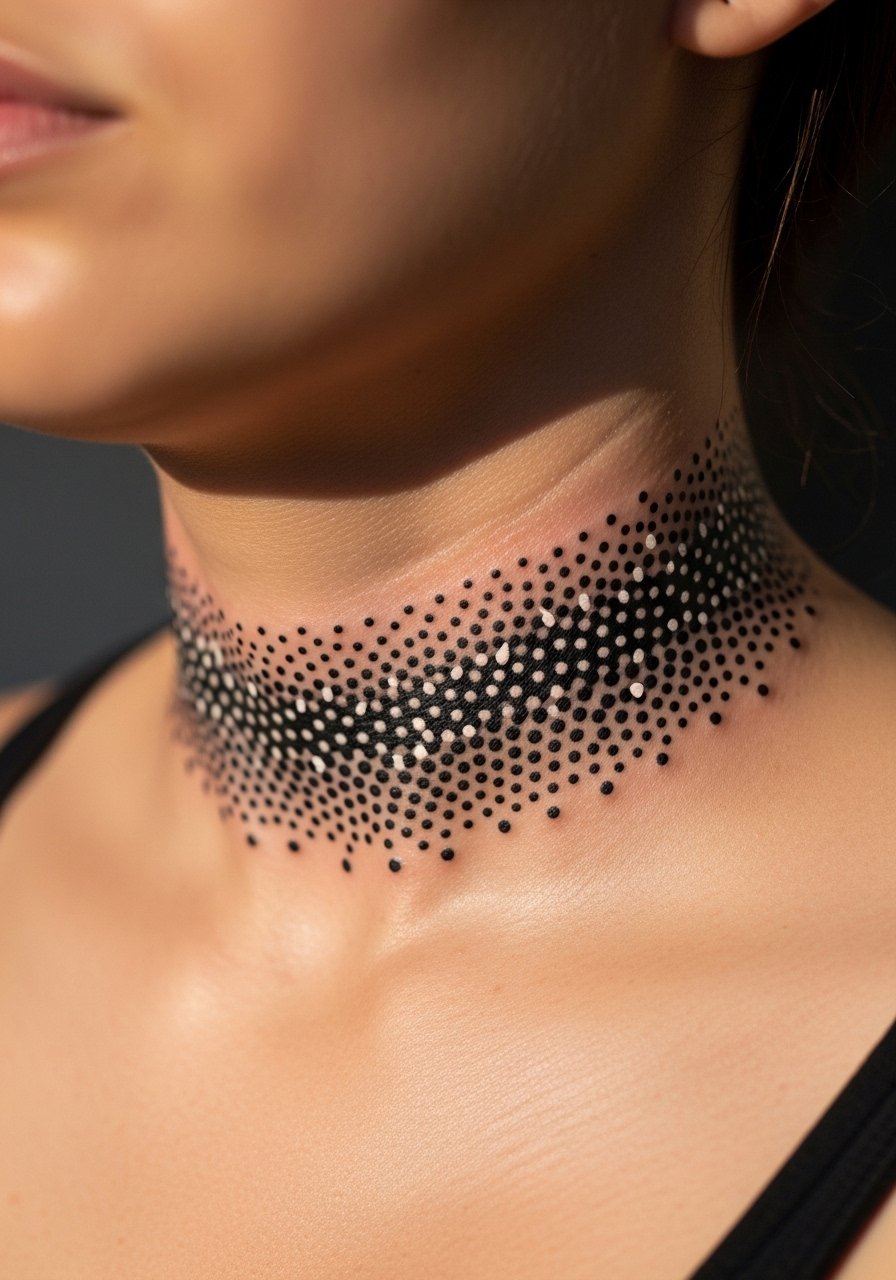
White ink can add a glow on tanned skin when used sparingly. I suggest requesting tiny white dots for highlight rather than full white fills which fade faster. The major error is overusing white so it becomes patchy within a year. Ask your artist about healed photos on similar skin tones because white behaves differently across skin types. This piece usually takes two sessions, with the second adding white accents after initial settling. If you have darker skin discuss alternatives since white may not pop as expected. Sensitivity note about needing experienced hands for white ink.
14. Micro Teardrop Behind the Ear with Dot Halo
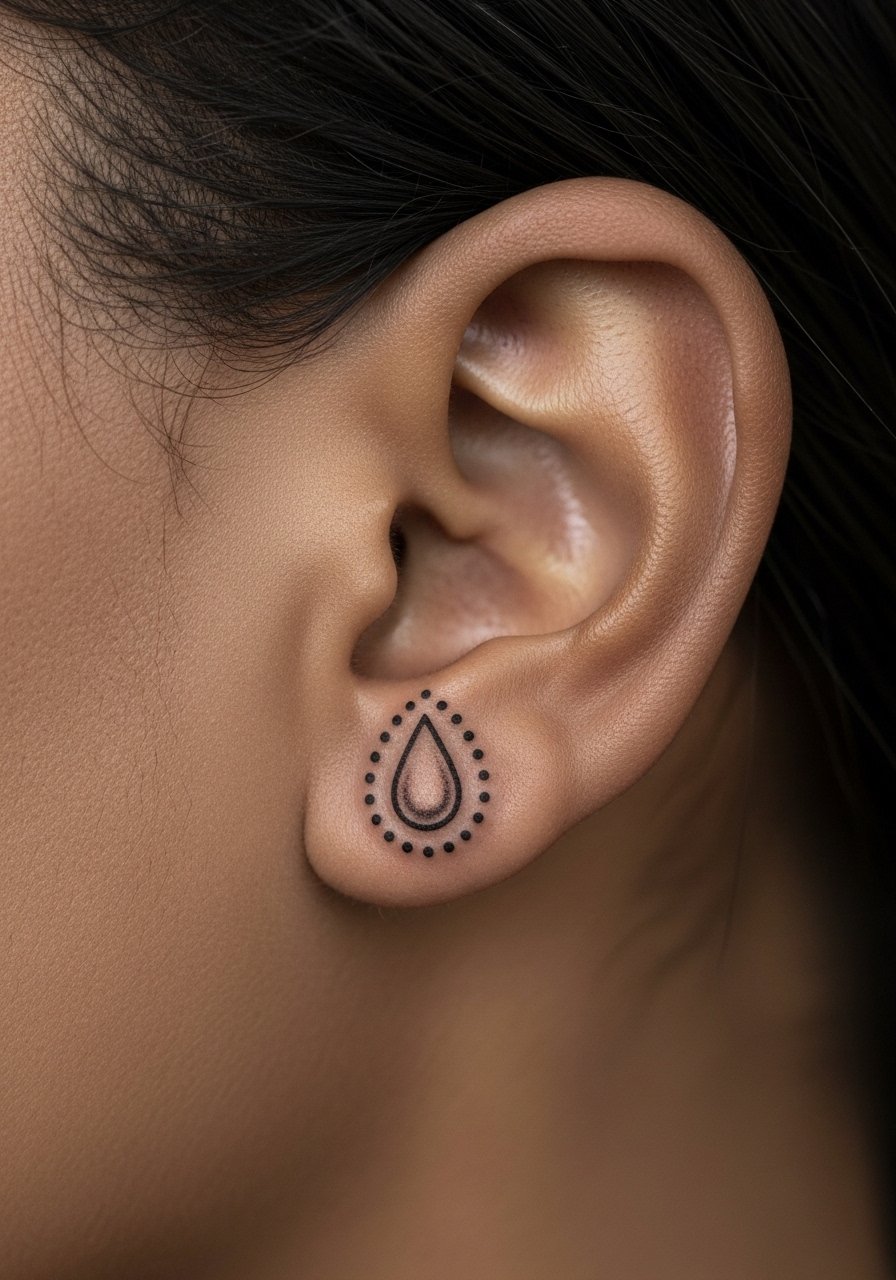
This behind-the-ear placement is discreet and low-pain due to soft tissue, and it tucks easily under hair. Tell your artist to prioritize single-session clarity and to avoid over-layering so the halo remains distinct. A common mistake is asking for a halo too tight to the main shape which becomes a fuzzy ring. Expect a quick session and a minor touch-up if needed after three to six months. Note about professional considerations and workplace visibility if you wear your hair up frequently.
15. Micro Script with Dot Halo at the Throat
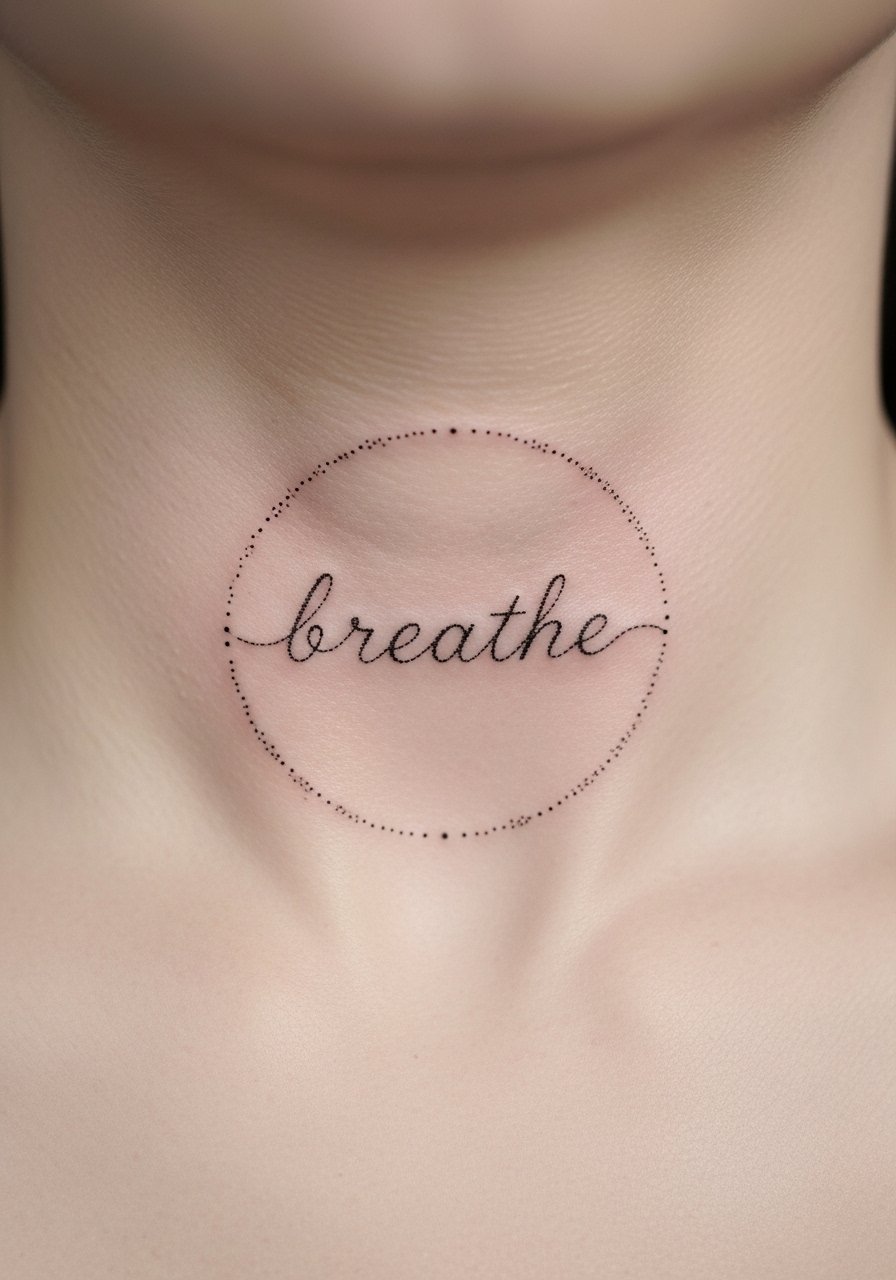
A tiny script word framed by dotwork makes a readable focal point. When requesting lettering, provide exact text and font reference so the artist can stencil accurately. People often choose fonts that are too thin which blur within a year. Request slightly heavier stroke weights for better longevity. Sessions are short but sensitive because of throat placement. For darker skin tones, ask for gray shading around letters to increase contrast. Professional consideration: front-throat ink remains visible despite scarves and collars.
16. Dotwork Star Cluster Near Clavicle and Neck Junction
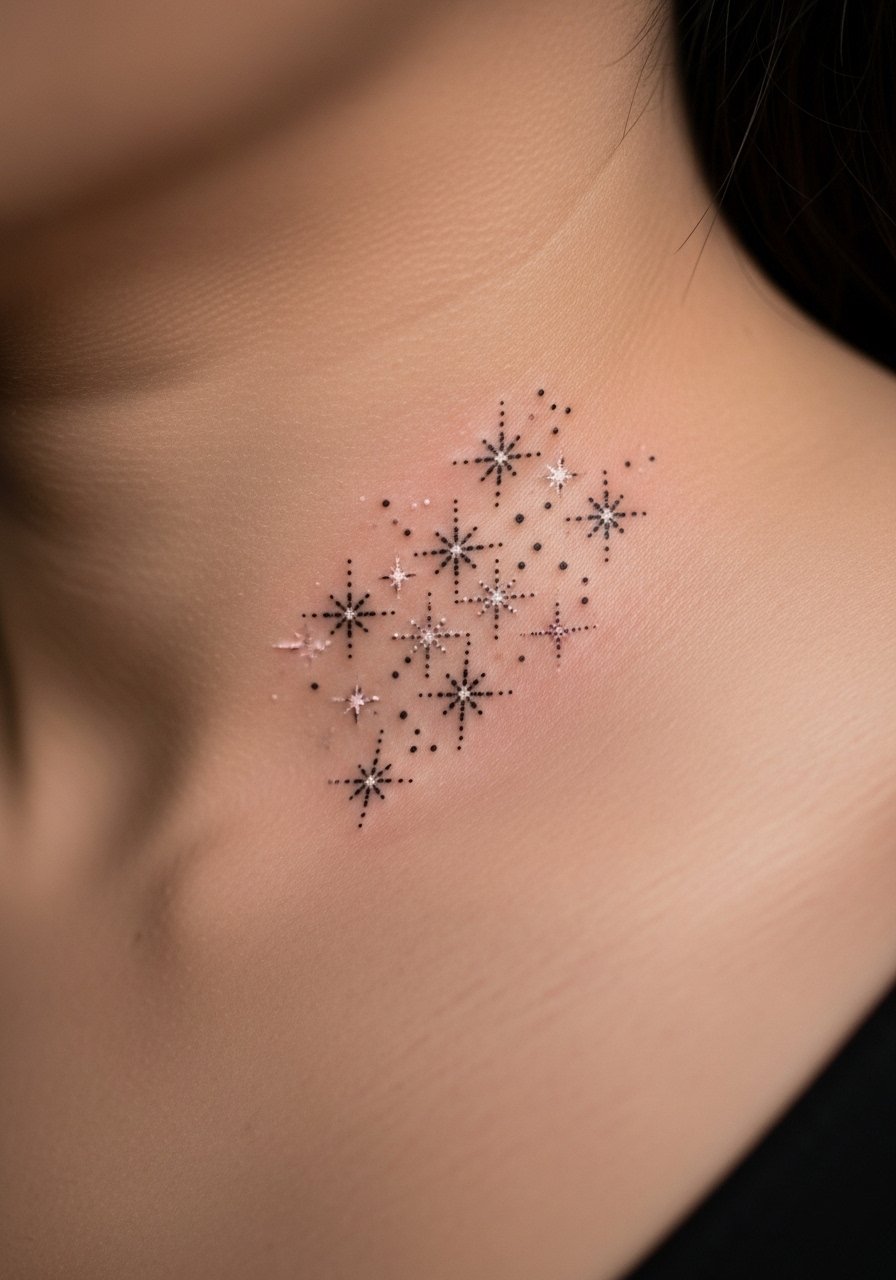
A star cluster feels playful but reads mature with careful spacing. Ask for variable dot sizes so stars do not compete visually. A mistake is cramming too many stars into a compact area which ages into a single gray blotch. One session is typical and touch-ups are rare if dots are spaced well. Sensation is a mild series of pinpricks across the clavicle. For long-term contrast on darker skin tones, request subtle gray wash anchors behind the cluster.
17. Micro Constellation on Side Neck with Coordinates
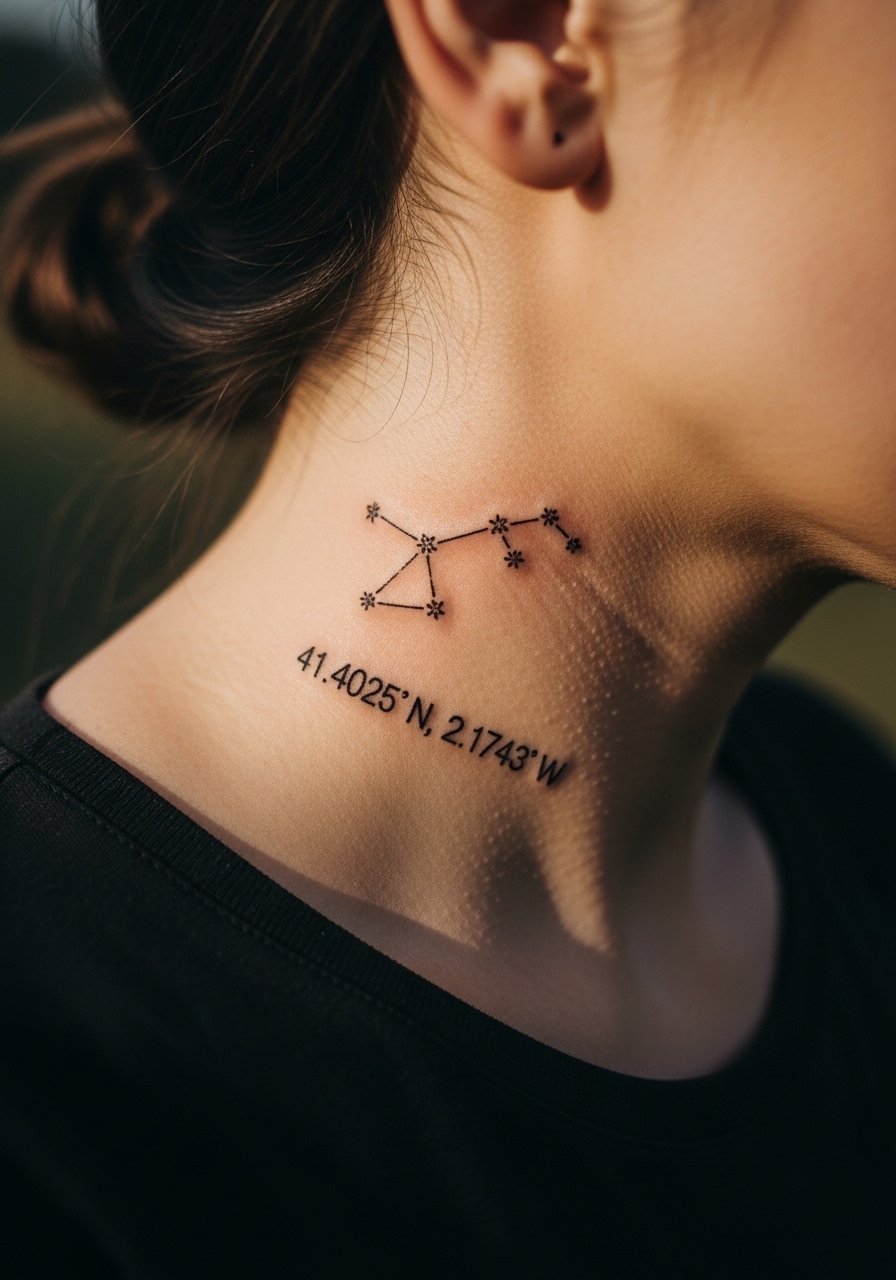
Constellations make for personal yet geometric placements. When you include visible text like coordinates, give the exact string to the artist. Tell them you want the constellation dots slightly larger than the script to avoid visual competition. A common error is selecting tiny script that becomes illegible. Expect a single short session and a touch-up if the fine script fades. Sensitive placement note: side-neck script is highly visible and can affect professional scenarios. If you travel often, show the artist healed examples of similar work.
18. Dotwork Fern or Vine on the Nape
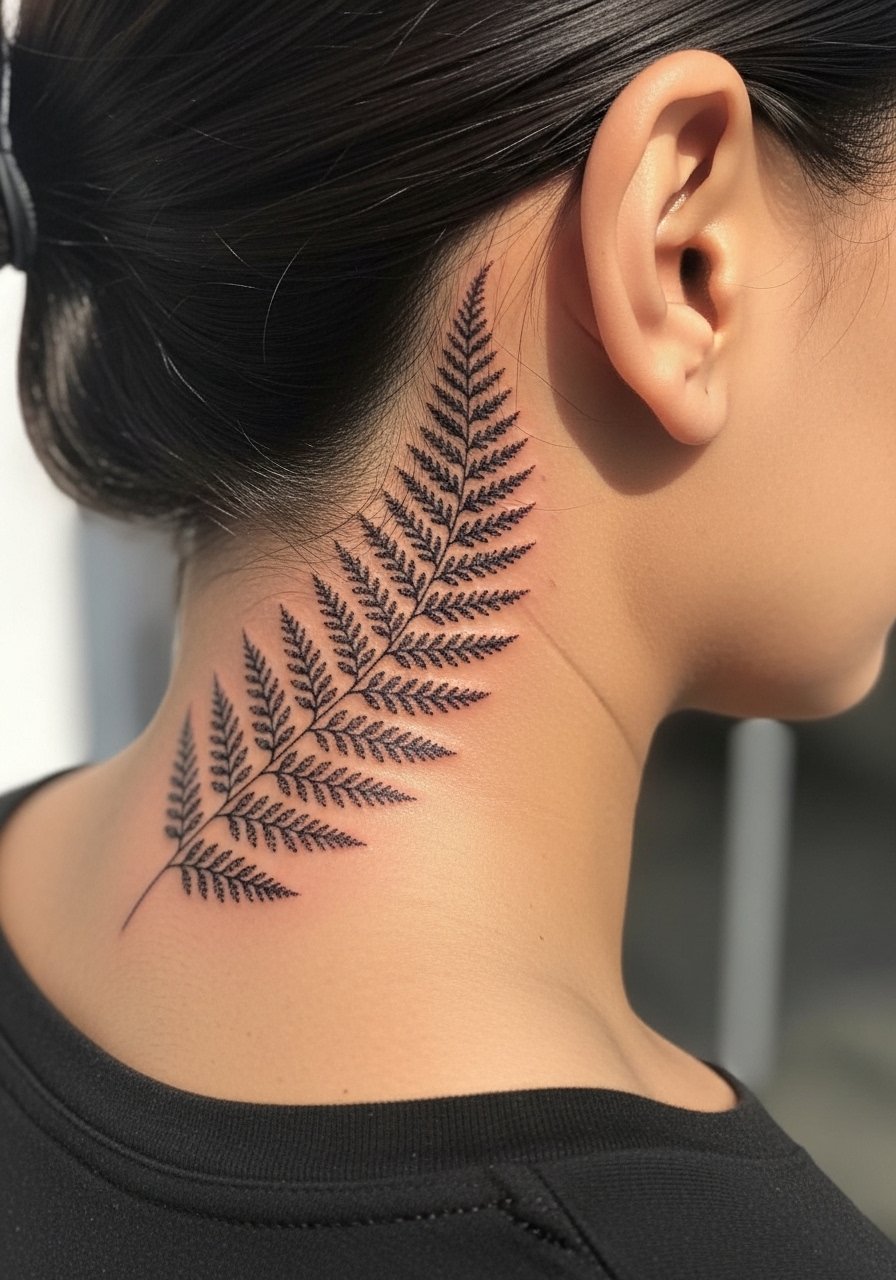
Botanical vines adapt well to neck curves and are forgiving for future additions. I recommend this if you want an organic movement that can expand onto the shoulder. Tell your artist to leave breathing room so the vine does not crowd future pieces. A mistake is planting too many tiny leaves close together which merge as the skin shifts. Expect two sessions and a low to moderate pain level. Nape friction from hair and collars matters during healing, so plan clothing accordingly. Cultural origin note if using specific botanical symbolism.
19. Dotted Compass Throat Accent
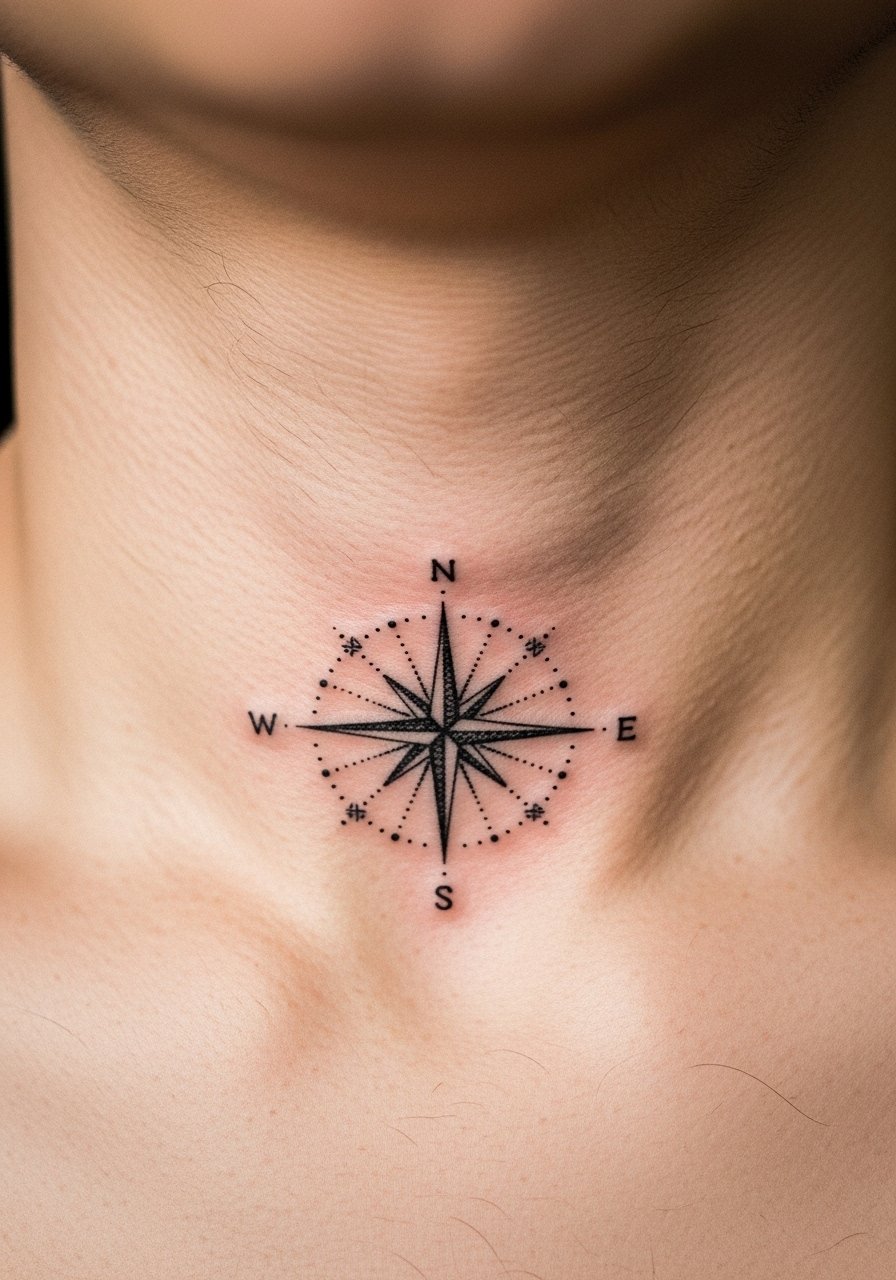
Compasses read as directional statements and sit naturally on the center throat. Ask for stronger primary points and lighter secondary dots so the motif reads from a distance. Many clients ask for ultra-fine needlework which loses clarity with movement. Two short sessions usually build depth without overworking the area. Pain is higher on the anterior throat and may feel like a burning pressure during stippling. One-sentence professional consideration about visibility in formal settings. Request healed photos from the artist for similar placements.
20. Whip-Shaded Dotwork Jawline Vine
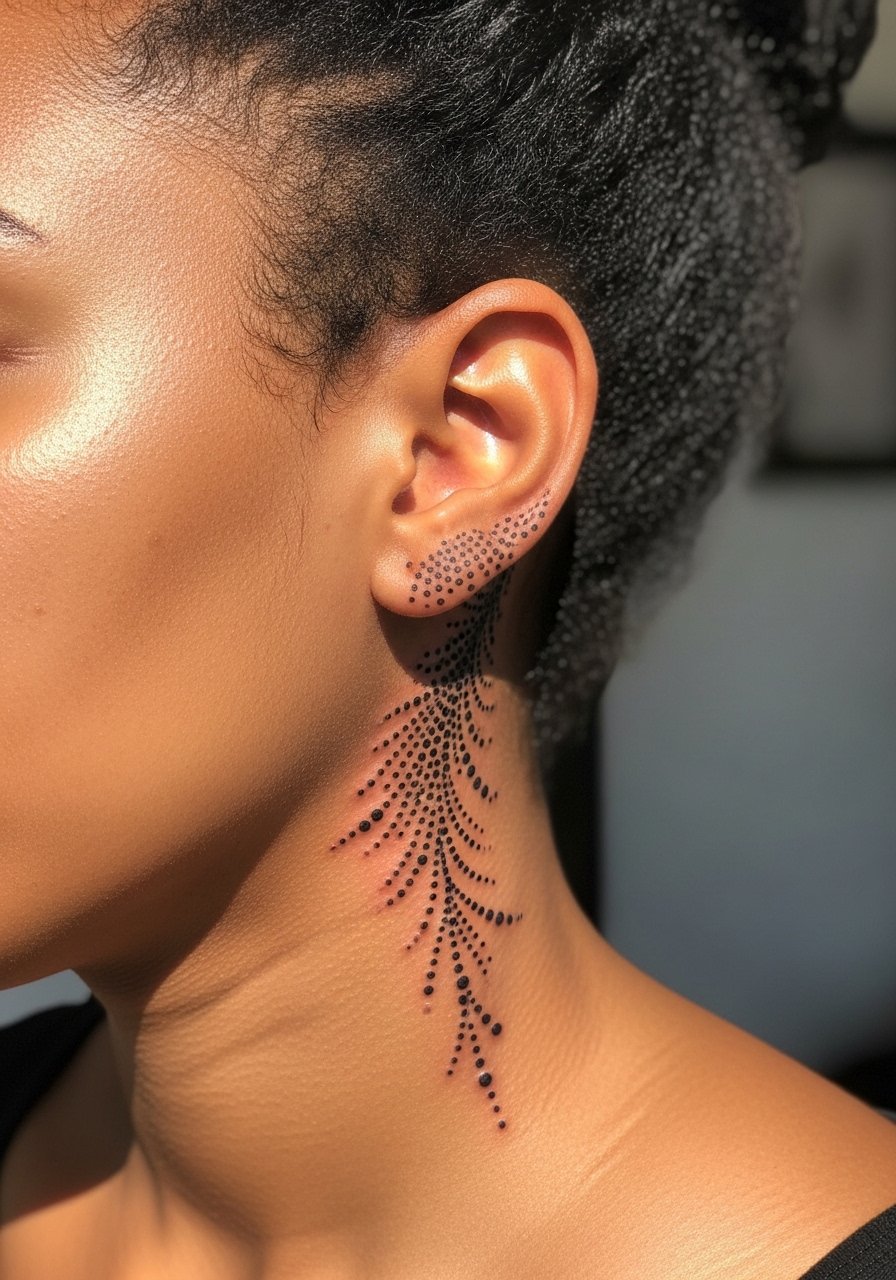
A jawline vine uses stipple and whip-shaded dots to follow the bone structure and can elongate the face visually. I recommend this when you want a piece that accentuates bone without heavy linework. Tell the artist to test the curve against your natural jaw movement to avoid awkward bends. A common mistake is pushing too much symmetry onto an asymmetrical face which looks off once healed. Sessions span two appointments and the area feels sharp near the angle of the jaw. Because this touches the face line, choose an artist experienced in sensitive placements.
Tattoo Prep and Aftercare Essentials
Below is a compact shopping list to support neck dotwork healing and prep. Links search common product terms so you can find options quickly.
Fragrance-free gentle foaming cleanser. Use for the first week to keep the area clean without stripping moisture. Apply with clean hands and pat dry.
Lightweight fragrance-free balm for tattoo aftercare. Apply thin layers once the initial scab softens. Balms that absorb reduce pore clogging on the neck.
Medical-grade second skin bandage, single roll. Helpful for nape pieces that catch on clothing or hair during the first 48 hours.
Breathable tattoo-specific adhesive pads, multi-pack. Use to protect delicate throat or jaw-line work while sleeping.
Aftercare SPF 50 mineral sunblock. UV exposure is the main cause of premature fading so protect healed ink daily.
Silicone scar-care sheet, small size. For clients prone to raised healing, these can even out texture once the tattoo is fully healed.
Saniderm tattoo adhesive bandage. Some artists recommend Saniderm for neck tattoos to limit friction. Keep in mind the Saniderm versus dry-healing debate and follow your artist's preference.
Lightweight, wide-collared sleep pillowcase or satin scarf. Reduces friction from sheets and collars during the crucial first week.
Every tattoo is different. Always follow your artist's specific aftercare instructions. Consult a dermatologist if you have skin concerns or unusual healing issues.
Frequently Asked Questions
Q: Will a fine-line dotwork mandala on the side neck blur faster than a denser dot version?
A: Fine-line mandalas split artists into two camps. One group accepts subtle fading as part of the aesthetic. The other group prefers higher dot density to preserve shape. In my experience, denser internal dots hold their geometry longer on oily skin, but an artist versed in delicate linework can still produce lasting fine-line pieces. Ask the artist to show healed photos of both approaches.
Q: How do I decide between a nape point and a front-throat mandala if I need concealability?
A: Nape points hide easily under longer hair and are lower risk for rubbing. Front-throat pieces are more visible and need clothing or scarves to conceal. If concealment is a priority, choose the nape and discuss size under two inches so it tucks away naturally.
Q: Is Saniderm safe for neck tattoos and should I use it?
A: Saniderm users praise reduced irritation while dry-healing supporters worry about dot smudging. The right choice depends on your skin and the artist's workflow. If you consider Saniderm, tell your artist and follow their timing for initial wear. My recommendation is to defer to an artist who has used Saniderm on necks and can show healed examples.
Q: How often will dotwork on the neck need touch-ups compared with linework?
A: From what I have seen, dotwork often needs touch-ups around the one- to two-year mark, especially on oily or sun-exposed necks. Fine-line neck pieces may need touch-ups sooner. Plan realistic maintenance and ask your artist about a yearly check-in.
Q: Are dotwork neck tattoos suitable for darker skin tones?
A: Yes, but approach contrast intentionally. On darker skin add subtle gray gradients and denser dots to create readable shapes. Request healed photos from the artist on similar skin tones and consider slight scale increases to preserve detail.
Q: What should I say in a consultation if I want white ink accents with black dotwork?
A: Be explicit that you want sparse white accents only for highlights and that you understand white behaves differently across skin tones. Ask the artist to show healed examples on similar skin, and plan the white for a second session after initial black settles.