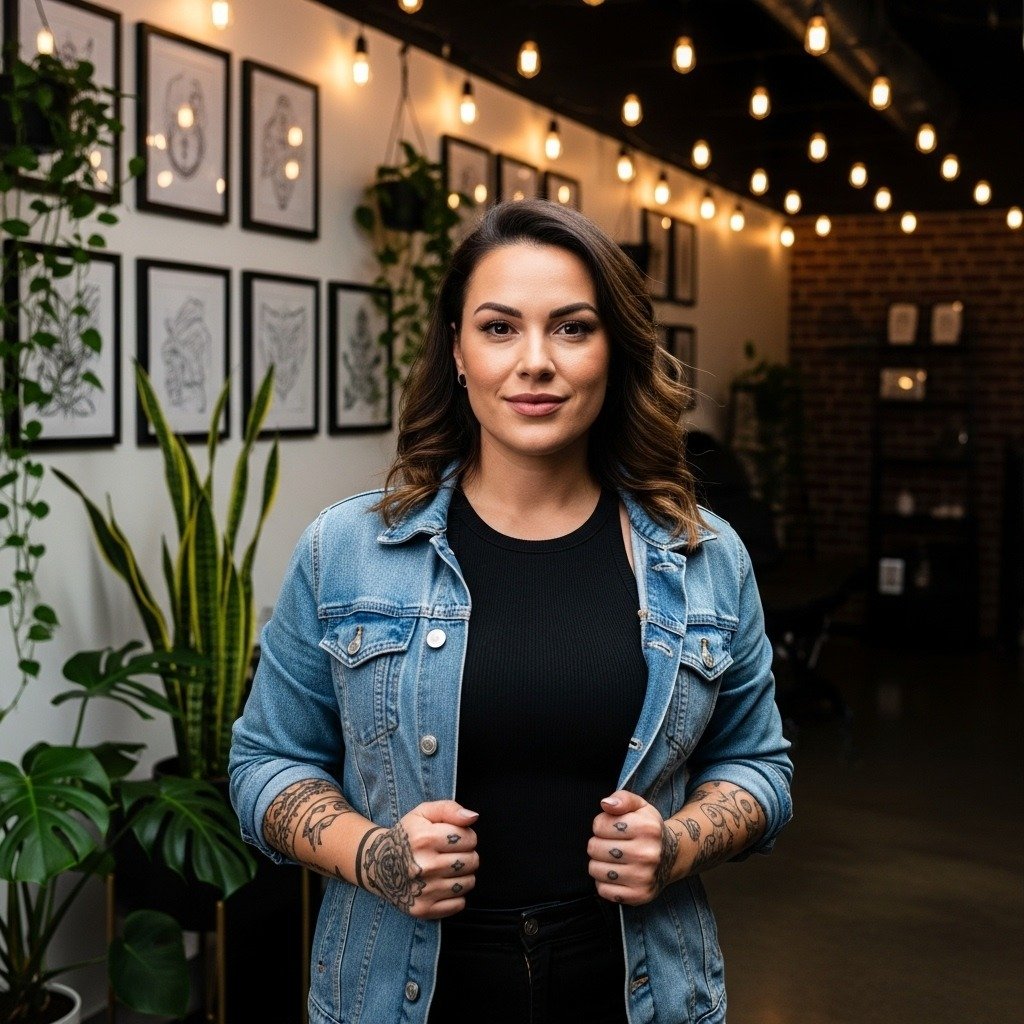
I spent months collecting healed sun tattoos before committing to my own. The hard part wasn’t finding pretty designs. It was choosing a style that actually held up and still felt meaningful a year later. These 25 sun tattoo ideas focus on strength, renewal, and longevity—what I’ve seen age well and what to avoid.
Fine Line Floral Sun On Inner Forearm
Style/Technique: Fine Line / Floral Mandala
Pain Level: Low-Medium (3/10)
Session Time: 1–2 sessions
Best For: Meaningful, visible daily reminder
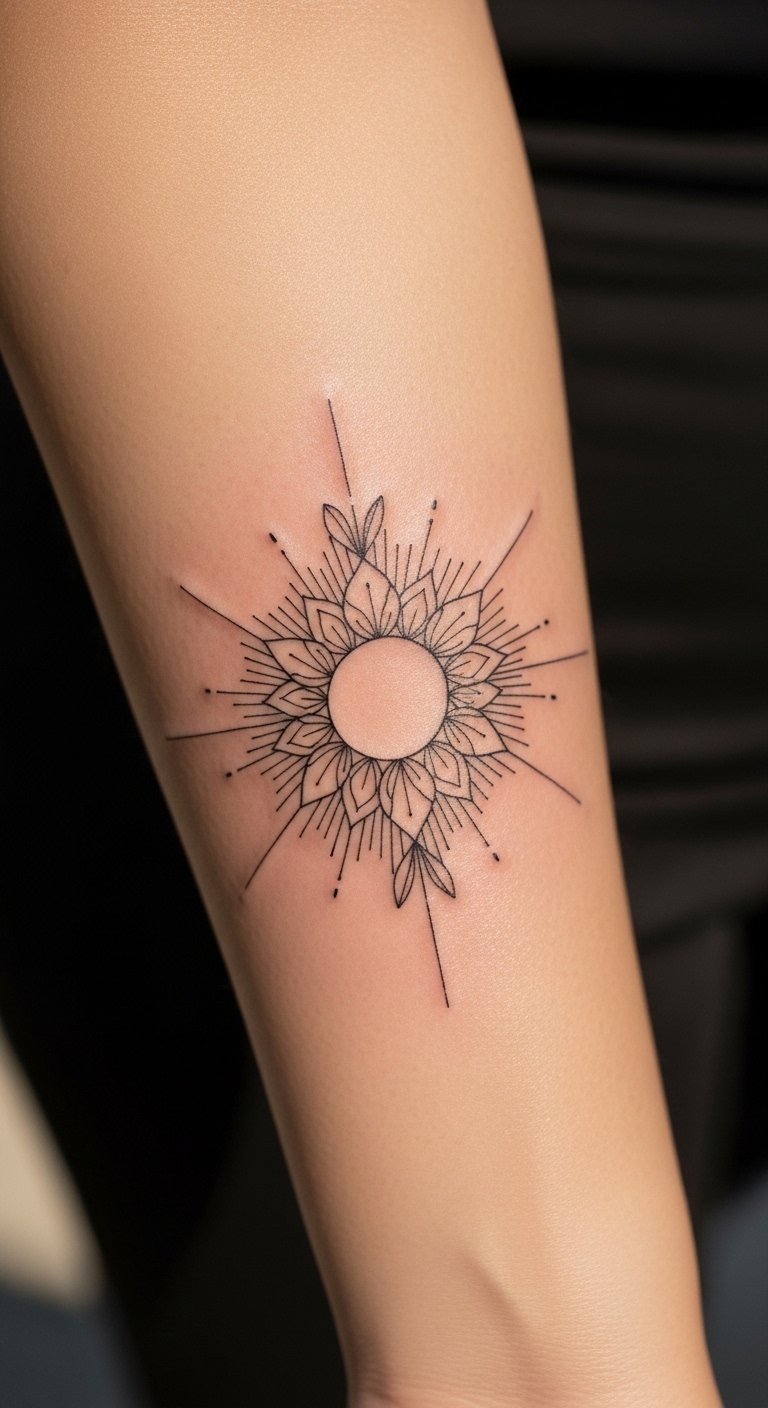
I love this for its delicate strength. The floral elements soften the sun while keeping the symbol of energy and renewal. Inner forearm placement gives daily visibility without constant sun exposure. Expect mild soreness and standard two-week surface healing. Fine line needs an experienced hand—ask to see healed photos. Black or subtle color holds better over years than bright yellows. Common mistake: cramming too much tiny detail into a small space; give the lines room to breathe.
Cloudy Sun With Face On Wrist
Style/Technique: Illustrative / Minimalist
Pain Level: Low (2-3/10)
Session Time: 1 session
Best For: Small, symbolic first sun tattoo
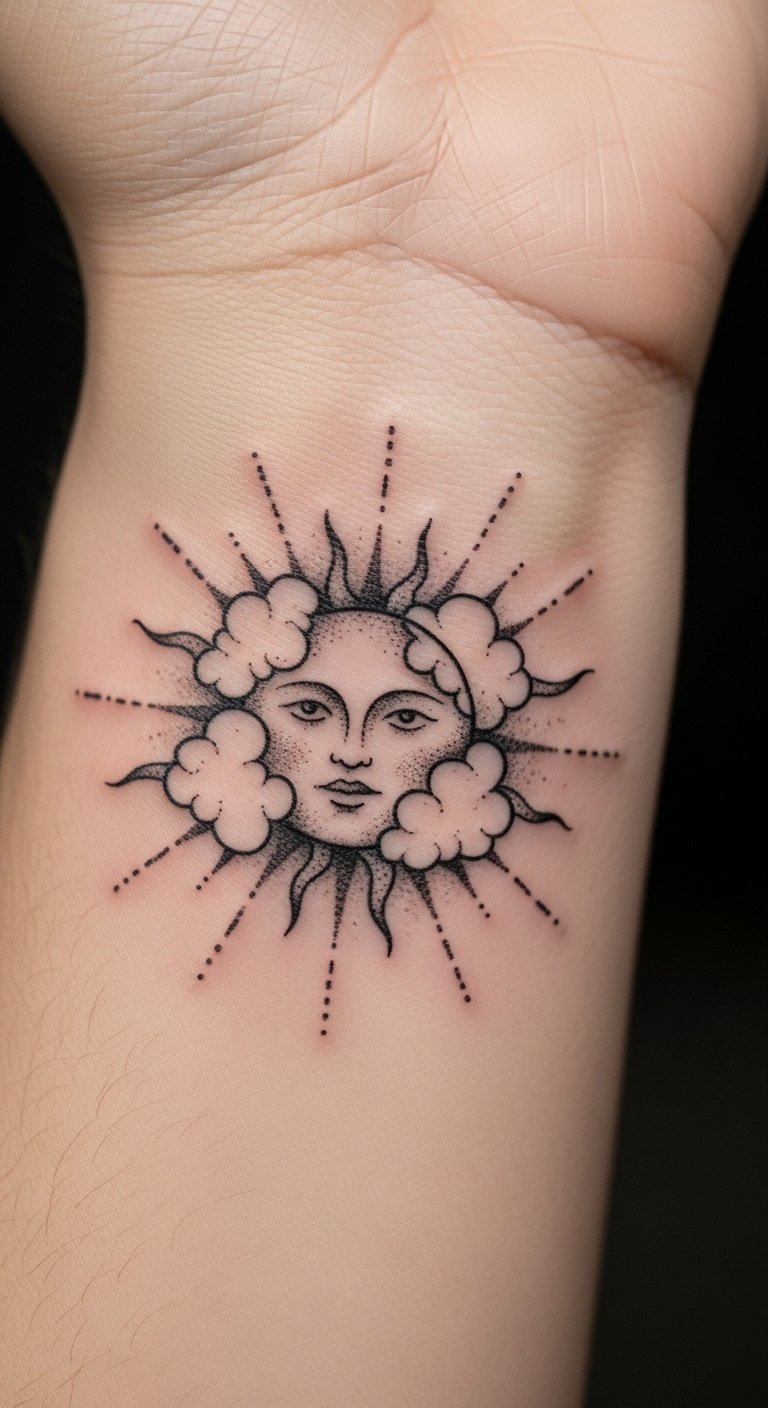
This one reads as resilience—sun piercing clouds. It’s a tiny, meaningful piece I’ve seen people use for milestones. Wrist placement is visible and lower pain, but it gets sun exposure so plan for daily SPF. Heals in 2–4 weeks on the surface. Avoid overly fine facial details unless your artist shows healed examples; faces can lose clarity if too small.
Peeking Dotwork Sun On Ankle
Style/Technique: Dotwork / Minimalist
Pain Level: Medium (4/10)
Session Time: 1 session
Best For: Tucked charm, low-visibility option
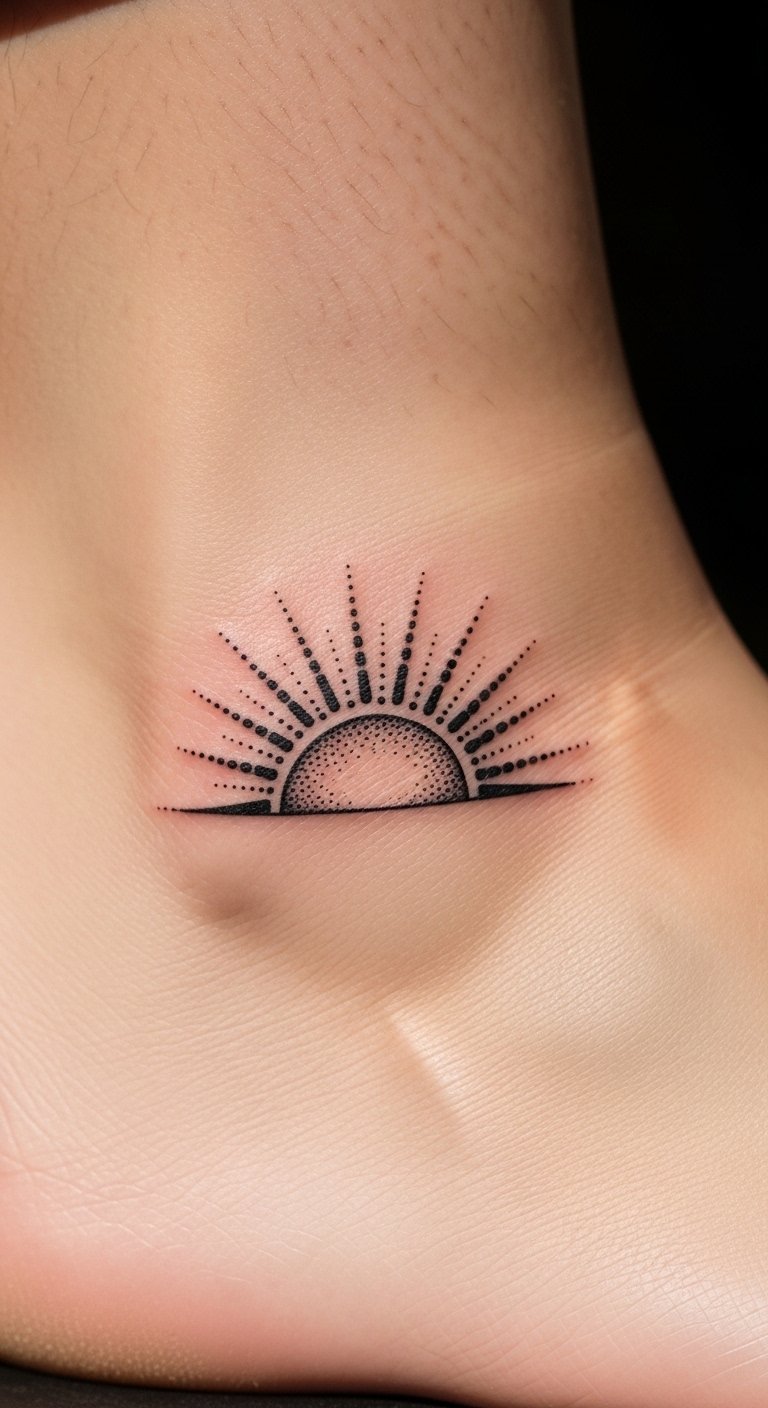
Peeking suns with dot rays read hopeful—like sunlight after rain. Ankle is discreet but can sting more than the arm because of bone proximity. Dotwork ages gracefully if dots are spaced well. Keep it small but not micro; dots need room or they’ll bleed together. For workouts, protect while healing; sweat can irritate the area.
Sun Tarot With Sunflowers On Upper Arm
Style/Technique: Neo-Traditional / Illustrative
Pain Level: Low-Medium (3-4/10)
Session Time: 1–2 sessions
Best For: Symbolic statement piece
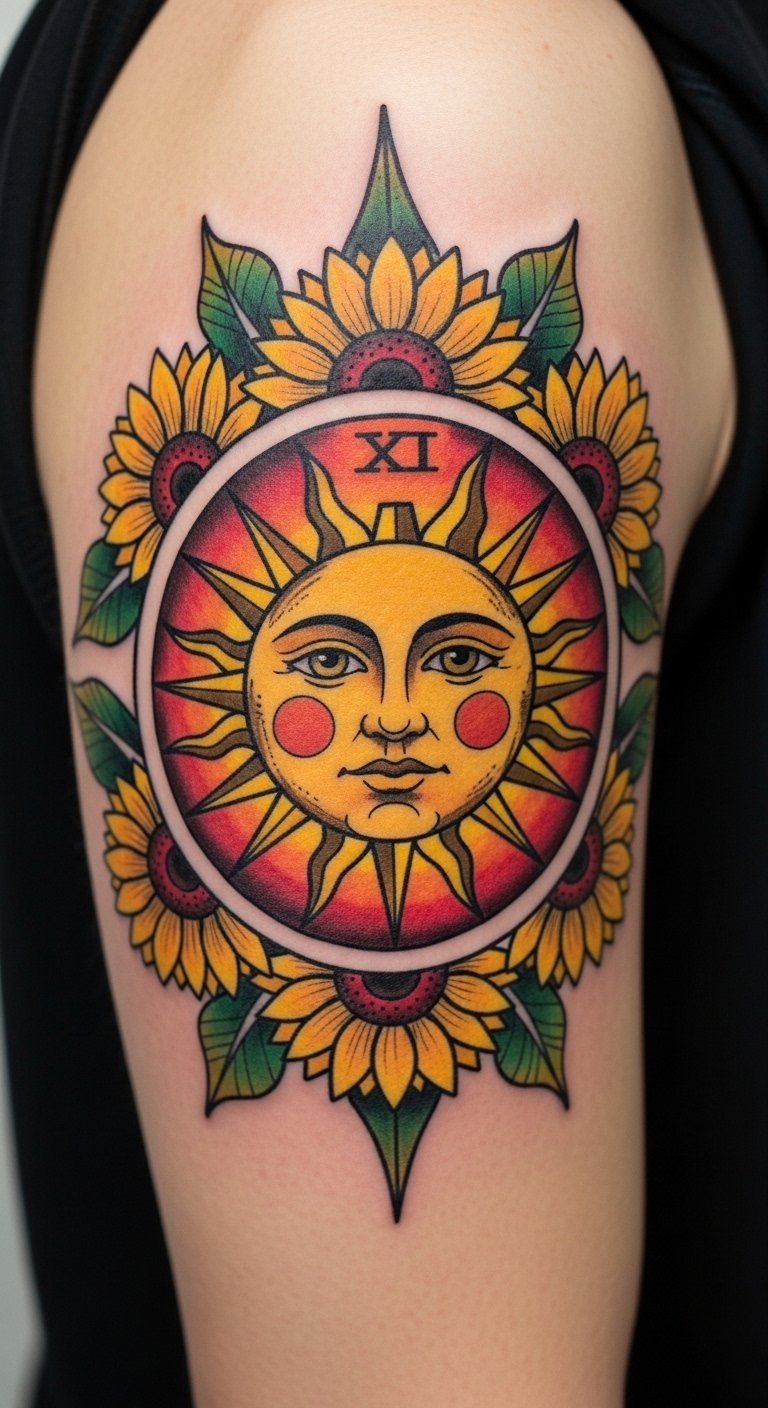
I’ve seen tarot suns paired with sunflowers used as personal success and resilience symbols. Upper arm placement hides well and ages gently. Color brings warmth but expect some softening over time—ask your artist about saturation and healed photos on similar skin tones. Avoid tiny lettering or micro-detail in the rays; neat bold lines and solid fills last longer.
Rising Sun Japanese Style On Shin
Style/Technique: Irezumi / Traditional Japanese
Pain Level: High (6-7/10)
Session Time: Multiple sessions
Best For: Major renewal pieces
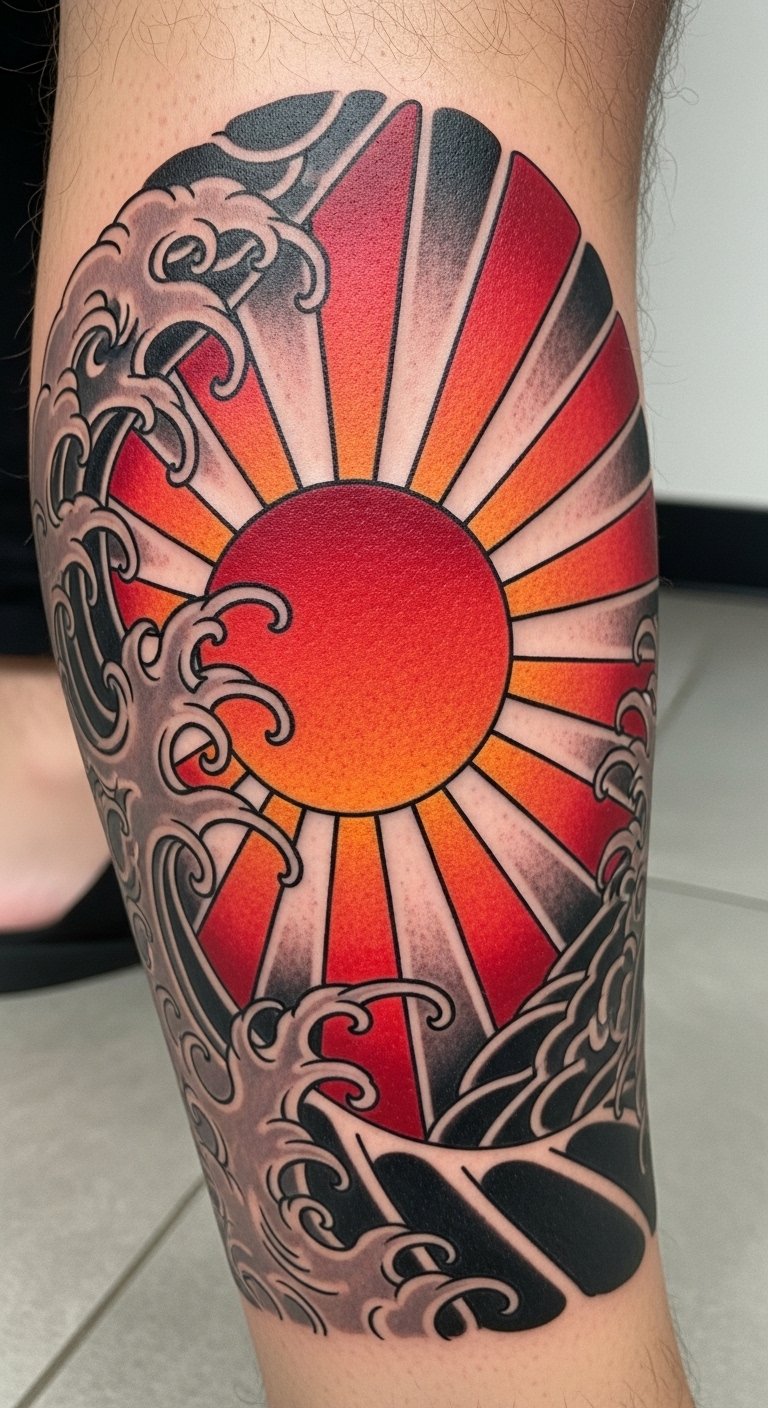
The rising sun screams renewal. In larger Japanese-inspired pieces it reads as a life chapter shift. Shins are painful and need staged sessions. These designs require an artist experienced in flow and scale. Healed color can stay vibrant if properly saturated, but sun exposure will dull reds—use sunscreen. Common mistake: forcing a large composition onto a small curved area; let the artist design for body flow.
Sun And Moon Minimalist Match On Wrists
Style/Technique: Geometric / Minimalist
Pain Level: Low (2/10)
Session Time: 1 session each
Best For: Couples or balance tattoos
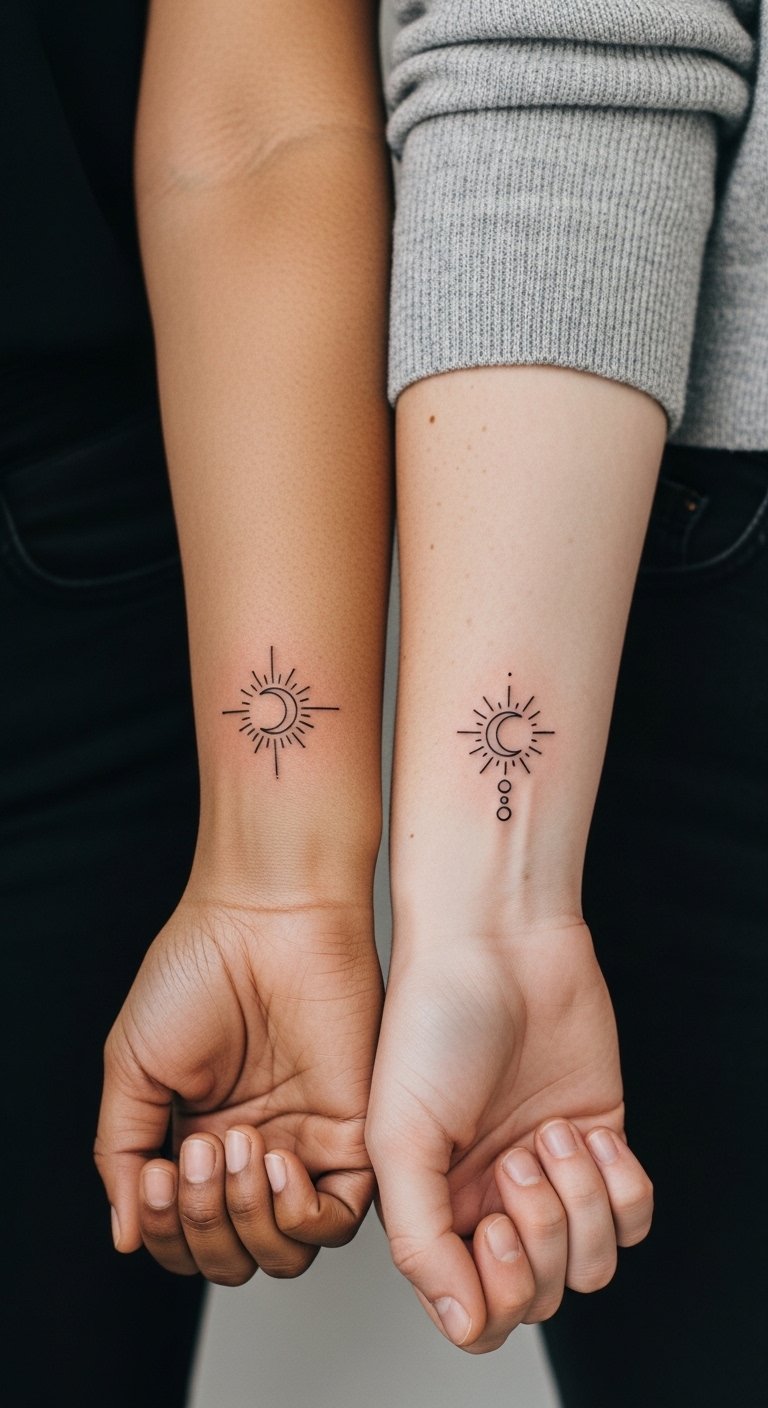
Sun and moon pairs are classic yin-yang symbolism. Wrist placement makes them visible and intimate. Minimalist line work usually heals cleanly but keep them protected from constant sun. I recommend matching line weight between artists for consistency. Avoid complex fills if you want long-term clarity.
Sun And Lion Blackwork On Chest
Style/Technique: Realism / Blackwork
Pain Level: Medium-High (5-7/10)
Session Time: Multiple sessions
Best For: Statement of leadership and strength
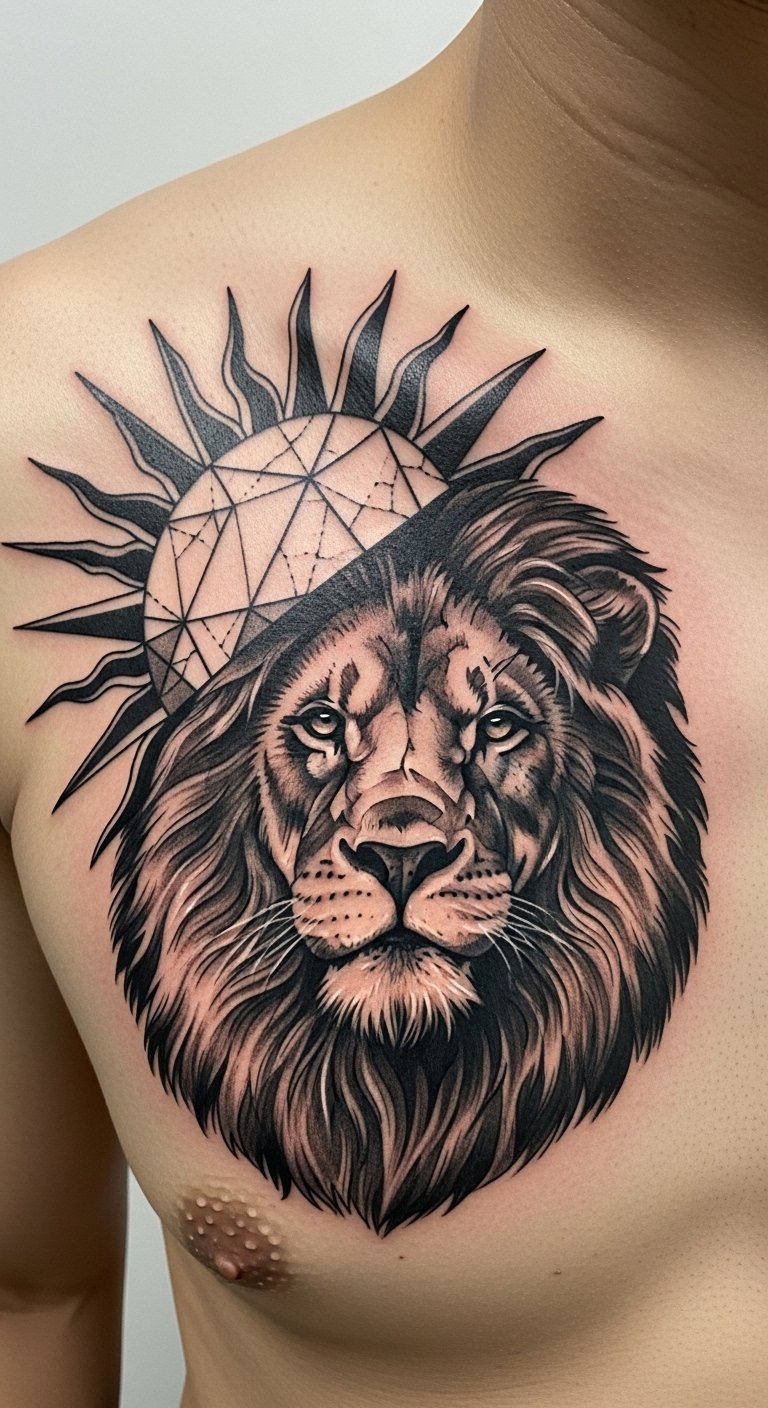
Pairing a sun with a lion projects leadership and triumph over darkness. Chest placement gives scale and presence but can be higher pain. Blackwork holds up best over years and reads bold on darker tones. Expect multiple sessions and heavier aftercare. Avoid overly fine whisker detail too close to the sun’s rays—contrast between elements keeps the design legible.
Ornamental Sun With Eye On Forearm
Style/Technique: Ornamental / Symbolic
Pain Level: Low-Medium (3-4/10)
Session Time: 1–2 sessions
Best For: Spiritual or guiding-symbol tattoos
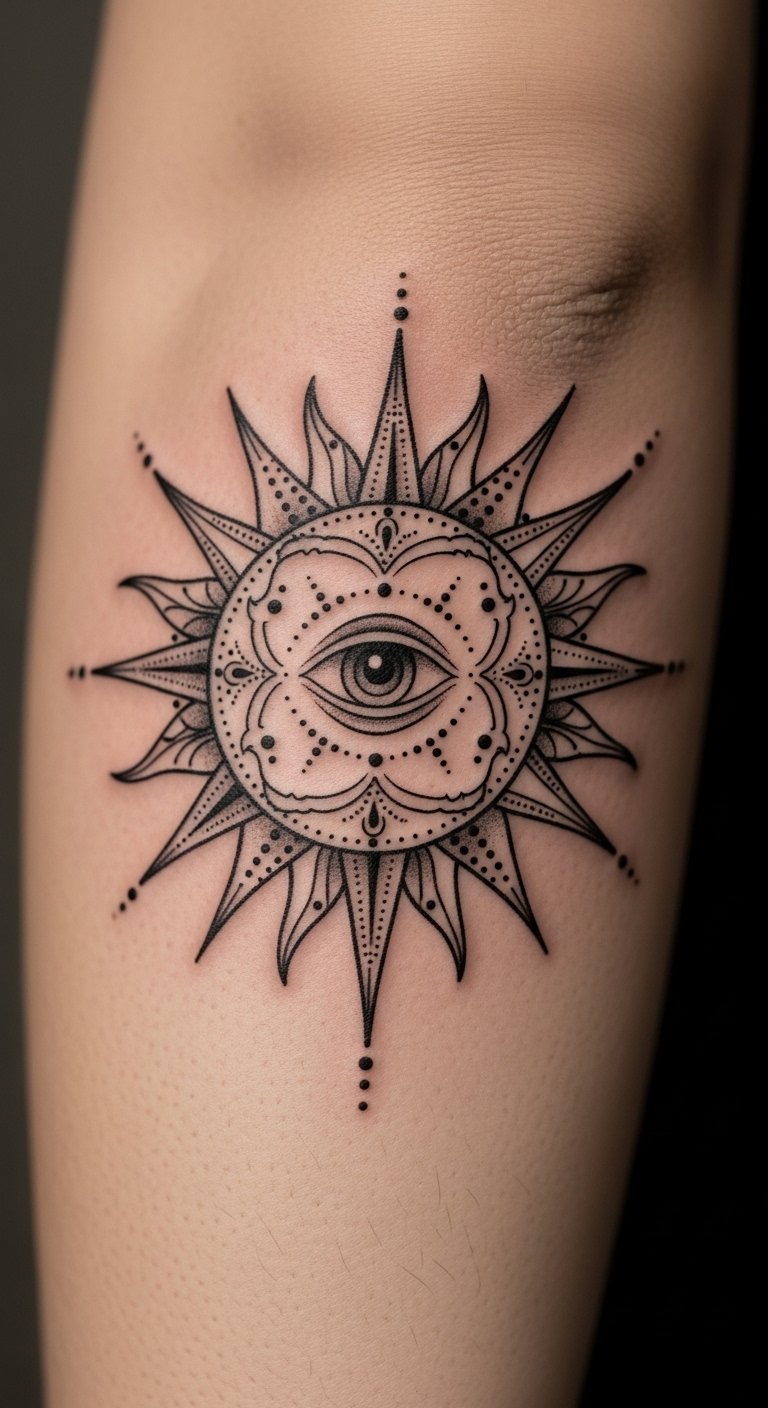
A sun with an eye reads as guidance, protection, and higher faith. Forearm placement is excellent for visibility and for showing healed detail. Linework must be bold enough to resist early blurring. Ask to see healed forearm pieces—ornamental lines can soften if too thin. Suns with central eyes age interestingly; the eye can remain sharp if framed with solid lines.
Celtic Sun Knot On Shoulder
Style/Technique: Celtic / Tribal Knotwork
Pain Level: Low-Medium (3/10)
Session Time: 1–2 sessions
Best For: Mythic symbolism and heritage pieces
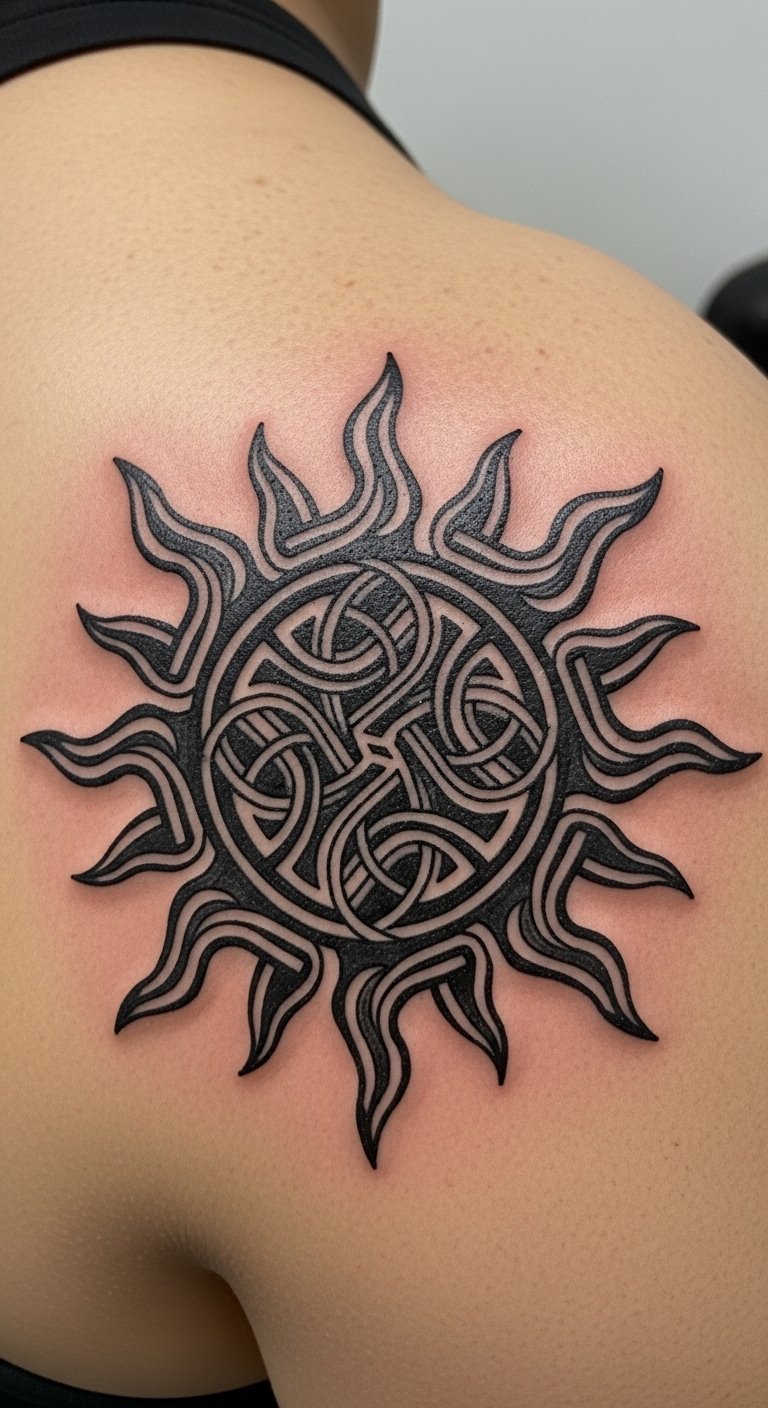
Knotwork suns carry life-force, fertility, and continuity meanings. Shoulders provide a forgiving canvas and lower pain than ribs. Intricate Celtic patterns need an artist who understands knot flow; if lines are too thin, knots blur over time. I recommend moderate scale so the interweaving stays distinct when healed.
Black Sun Transition On Bicep
Style/Technique: Blackwork / Geometric
Pain Level: Low-Medium (3-4/10)
Session Time: 1–2 sessions
Best For: Rebirth, cover-up projects
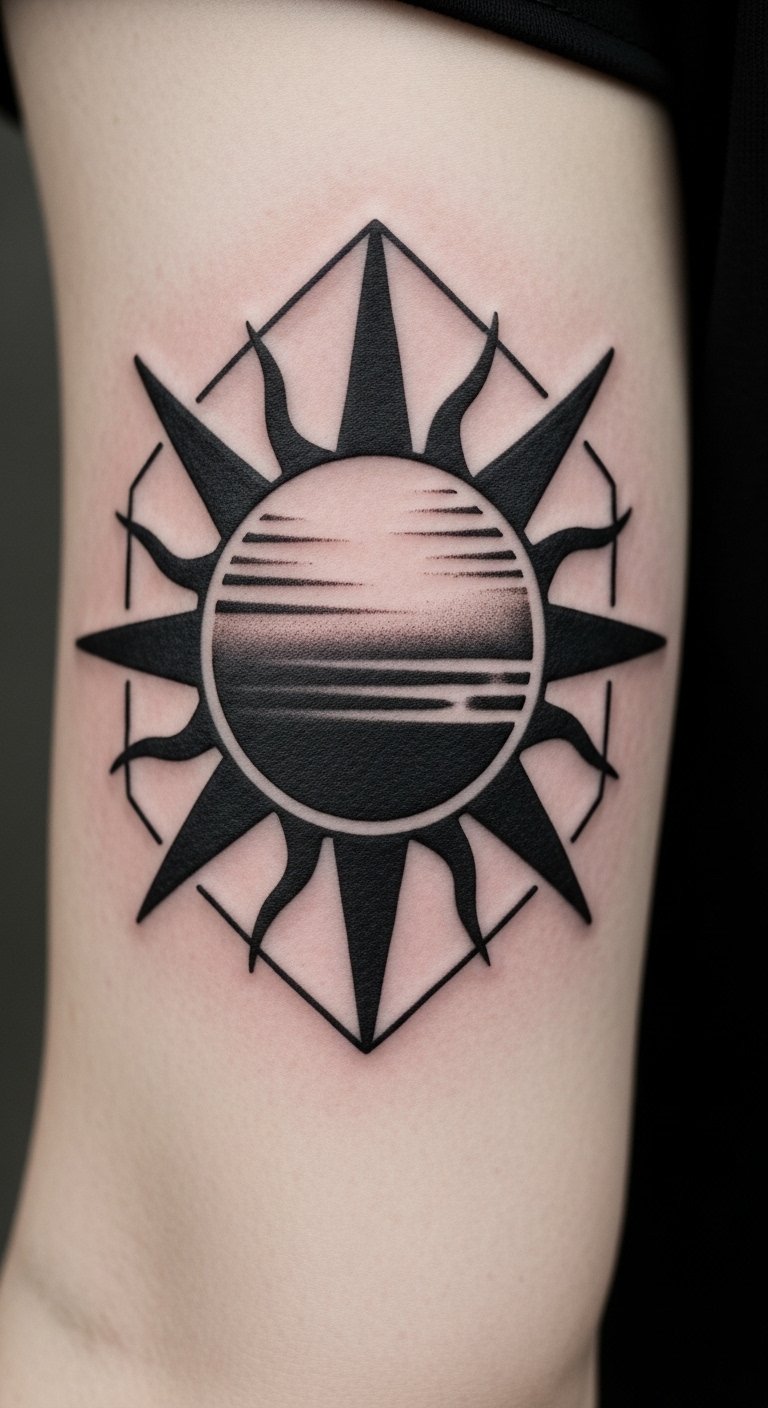
Black sun pieces symbolize dusk-to-dawn rebirth. Solid blackwork ages predictably and hides well on darker tones. Biceps are easier to heal and are lower pain. This style is great for cover-ups. A common mistake is uneven edge work—ask to see healed blackwork edges.
Tribal Sun With Stars On Ribs
Style/Technique: Tribal / Dotwork
Pain Level: High (7-8/10)
Session Time: 1–2 sessions
Best For: Bold, personal statement
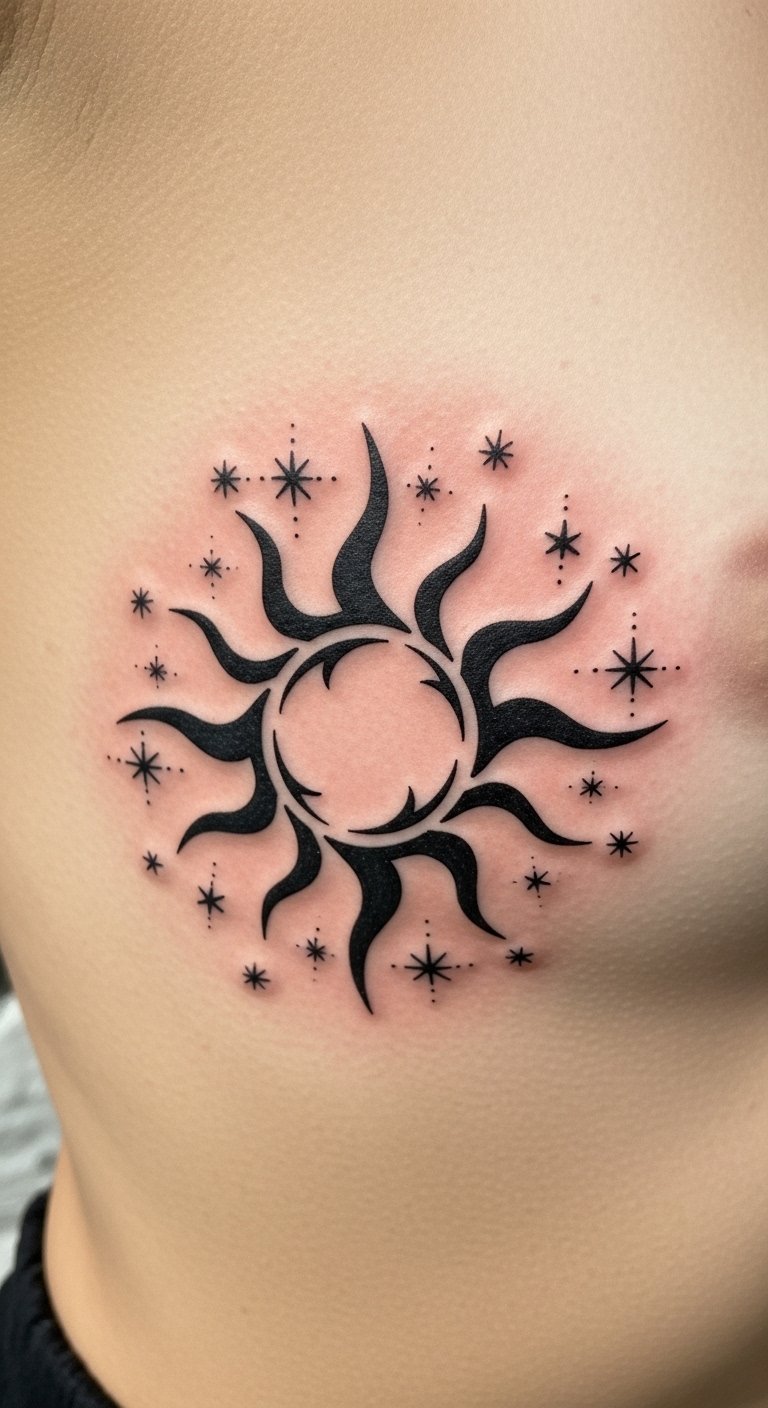
Tribal suns feel powerful and rooted. Ribs are a high-pain placement but give dramatic reveal and concealment when needed. Bold black lines last longer than intricate thin knots on this spot. During consultation, confirm the design flows with your rib curvature to avoid distortion when you move.
Geometric Sun Mandala On Ankle
Style/Technique: Geometric / Mandala
Pain Level: Medium (4/10)
Session Time: 1 session
Best For: Modern, balanced small tattoos
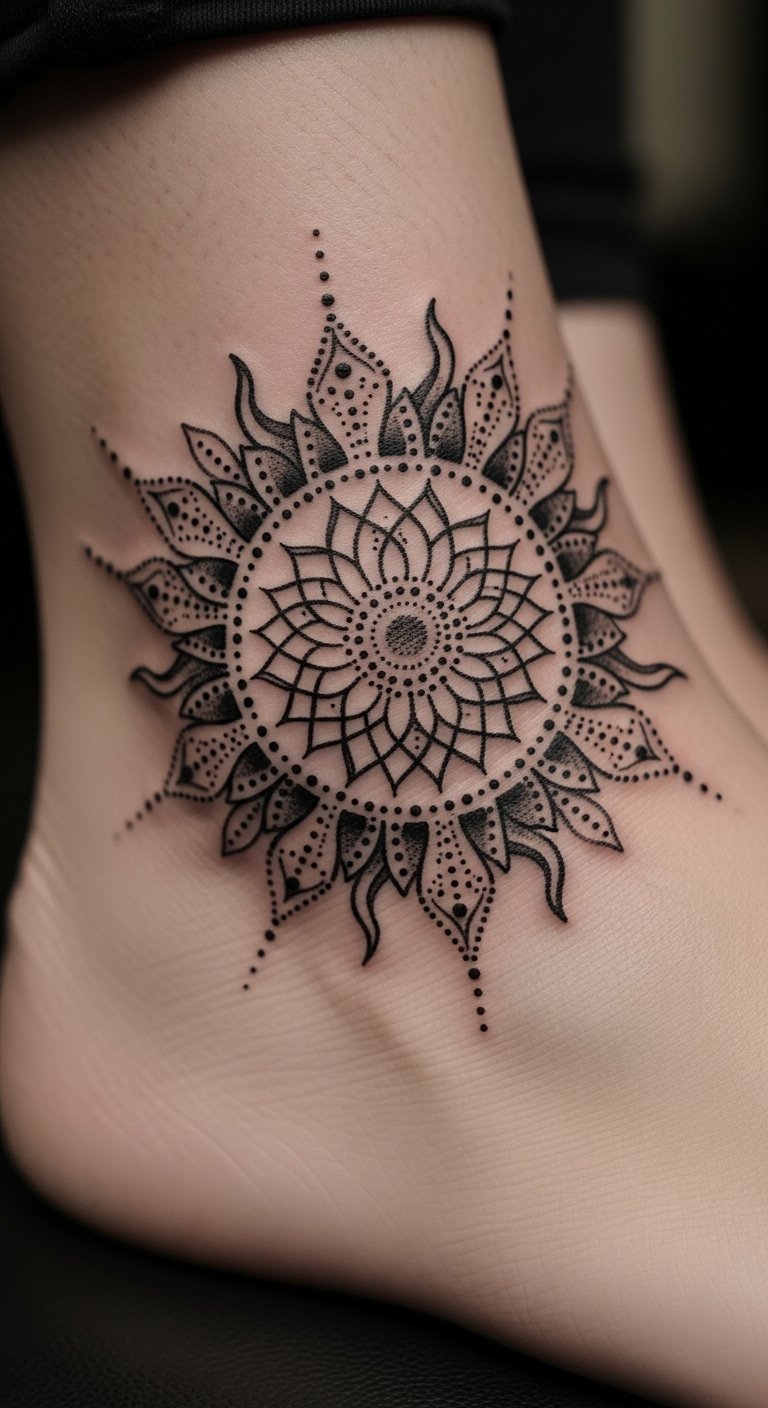
Geometric mandalas feel grounded and modern. Ankles are visible but can blur if detail is too fine. Mandalas need clean spacing and moderate line weights. For me, these read as calm power—great for someone who wants a spiritual yet subtle piece.
Watercolor Sun On Ribs
Style/Technique: Watercolor / Painterly
Pain Level: High (7/10)
Session Time: Multiple sessions
Best For: Vibrant renewal statements
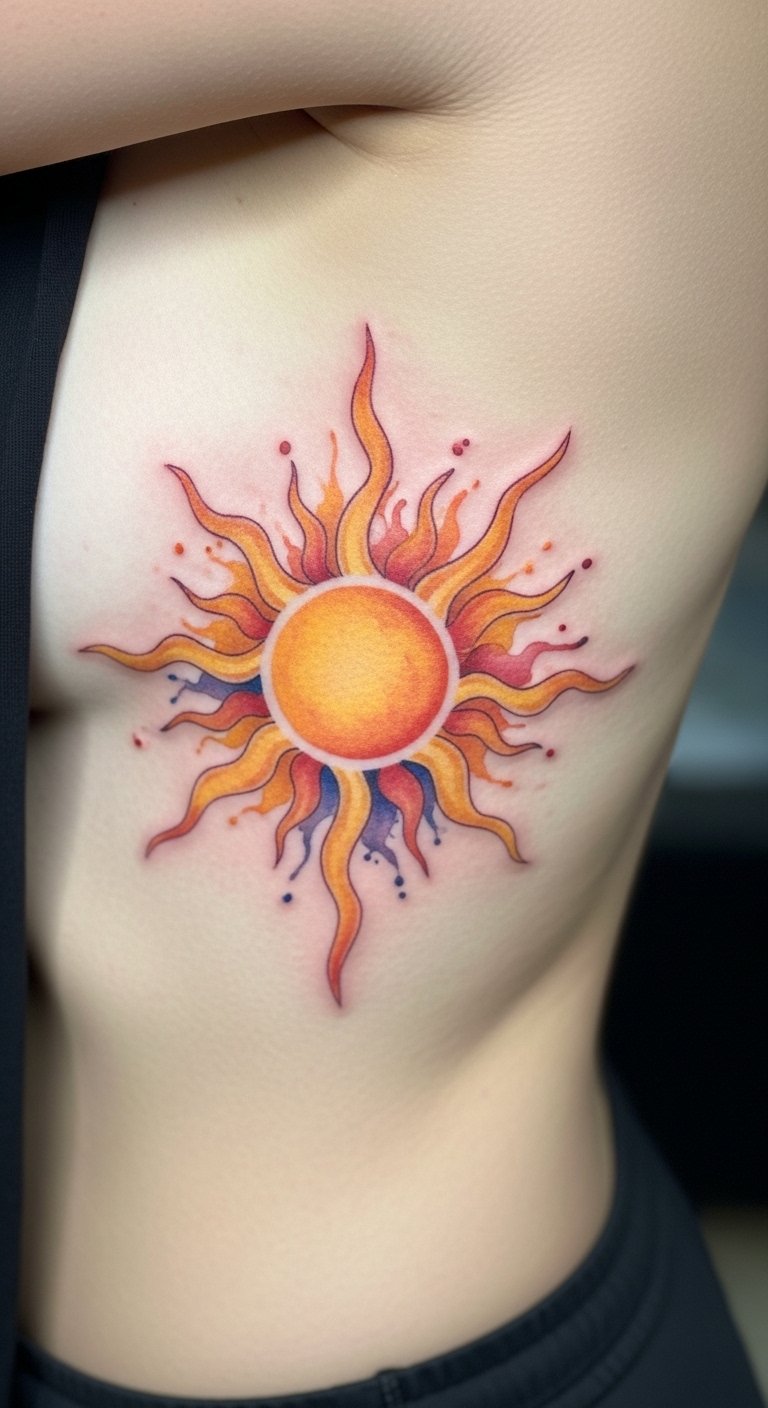
Watercolor suns are joyful and expressive. Ribs give a dramatic canvas but are painful and prone to movement during healing. Colors like orange and yellow fade faster, so discuss saturation and touch-up plans with your artist. Expect slower color settling; healed photos can look softer than fresh work.
Minimalist Sun Line Art On Finger
Style/Technique: Fine Line / Minimalist
Pain Level: Medium-High (4-7/10 depending on finger)
Session Time: 1 session
Best For: Tiny, daily talismans
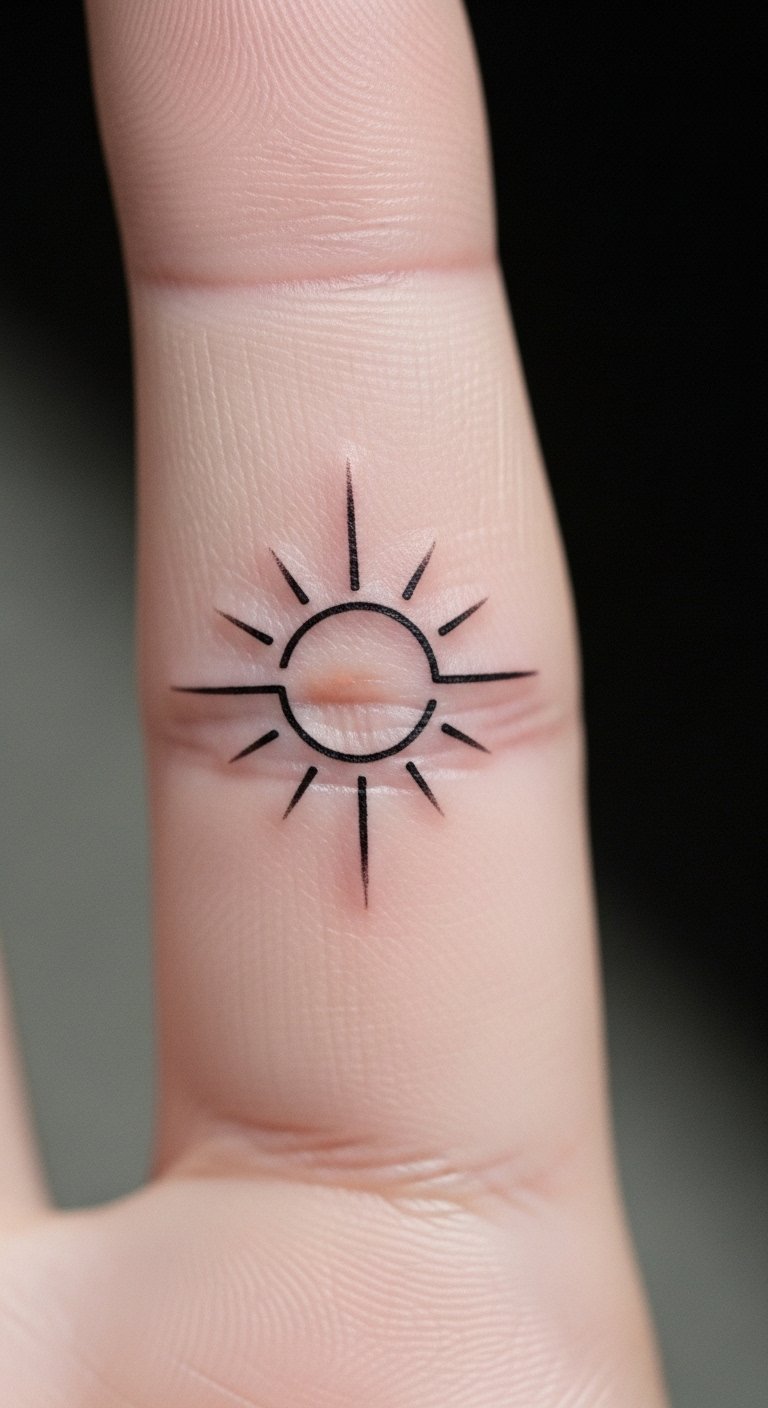
Finger tattoos are visible and intimate but fade faster. Minimalist suns here are meaningful but may need touch-ups. If you want longevity, prefer thicker lines and simple shapes. I tell friends: only get fingers if you accept potential fading and occasional refreshes.
Micro Sun Portrait On Wrist
Style/Technique: Micro-Realism / Dotwork
Pain Level: Low-Medium (3-4/10)
Session Time: 1 session
Best For: Tiny detailed faces and portraits
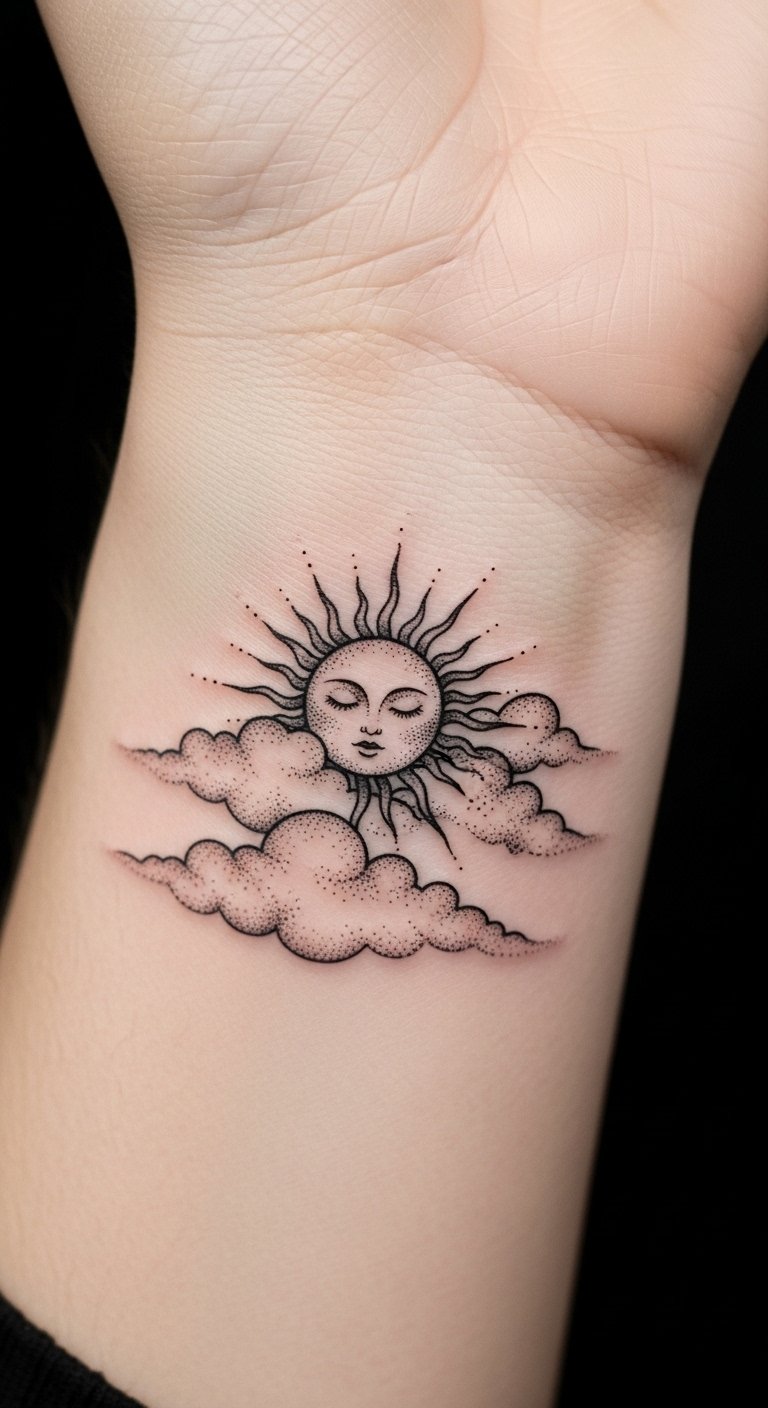
Micro sun portraits are trending for daily motivation. On the wrist they’re readable and personal. Micro realism needs an artist who shares healed wrist photos—small facial features can blur if compressed. I recommend slightly enlarging any face to preserve expression over time.
Radiant Sunburst Forearm Starter Piece
Style/Technique: Illustrative / Radiant Rays
Pain Level: Low-Medium (3/10)
Session Time: 1–2 sessions
Best For: Sleeve starts or standalone statements
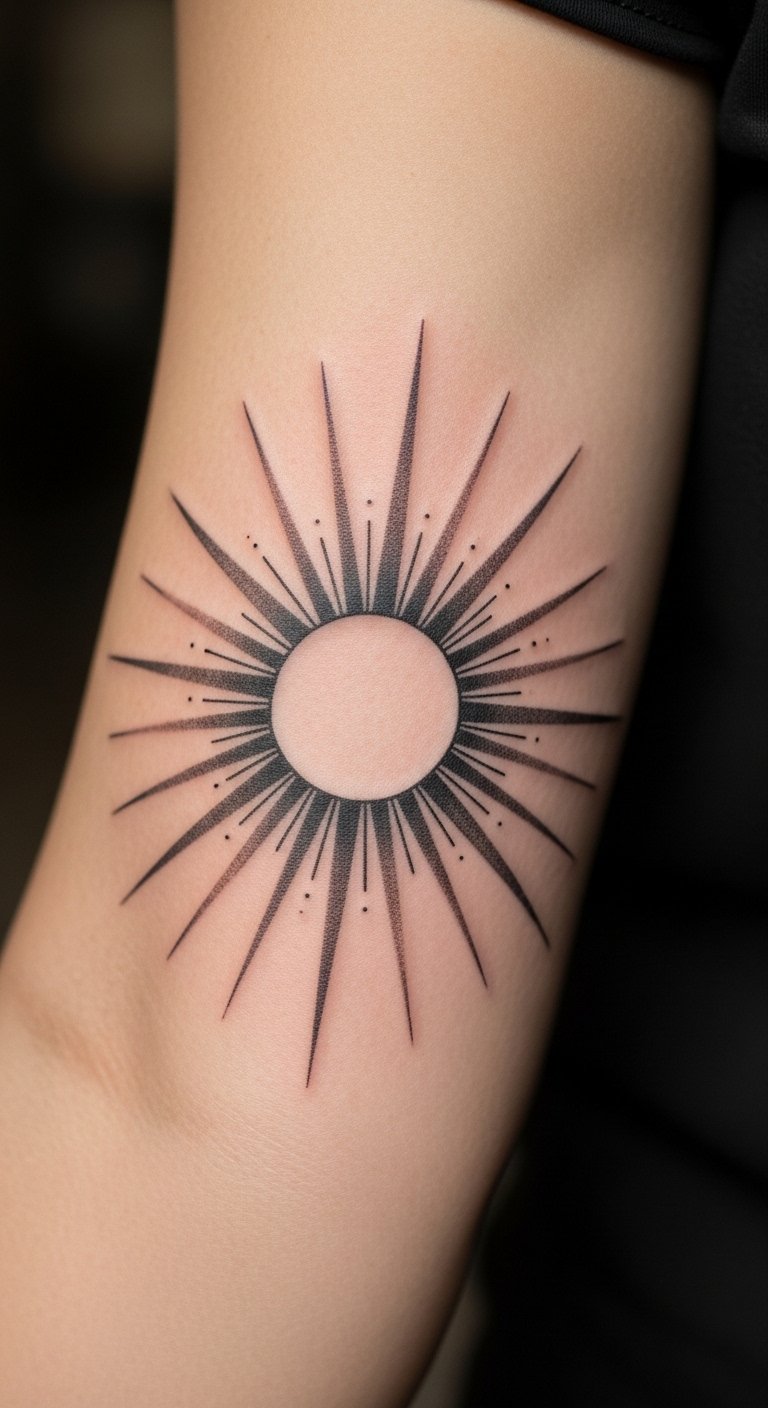
A sunburst reads energetic and confident. Forearm placement is low pain and shows well. It’s a great anchor for future sleeve work. Keep rays balanced; extremely long thin rays can soften. This style pairs well with stars or floral elements later.
Floral Collarbone Sun Mandala
Style/Technique: Fine Line / Floral Collarbone
Pain Level: Medium (4/10)
Session Time: 1–2 sessions
Best For: Feminine strength and visibility
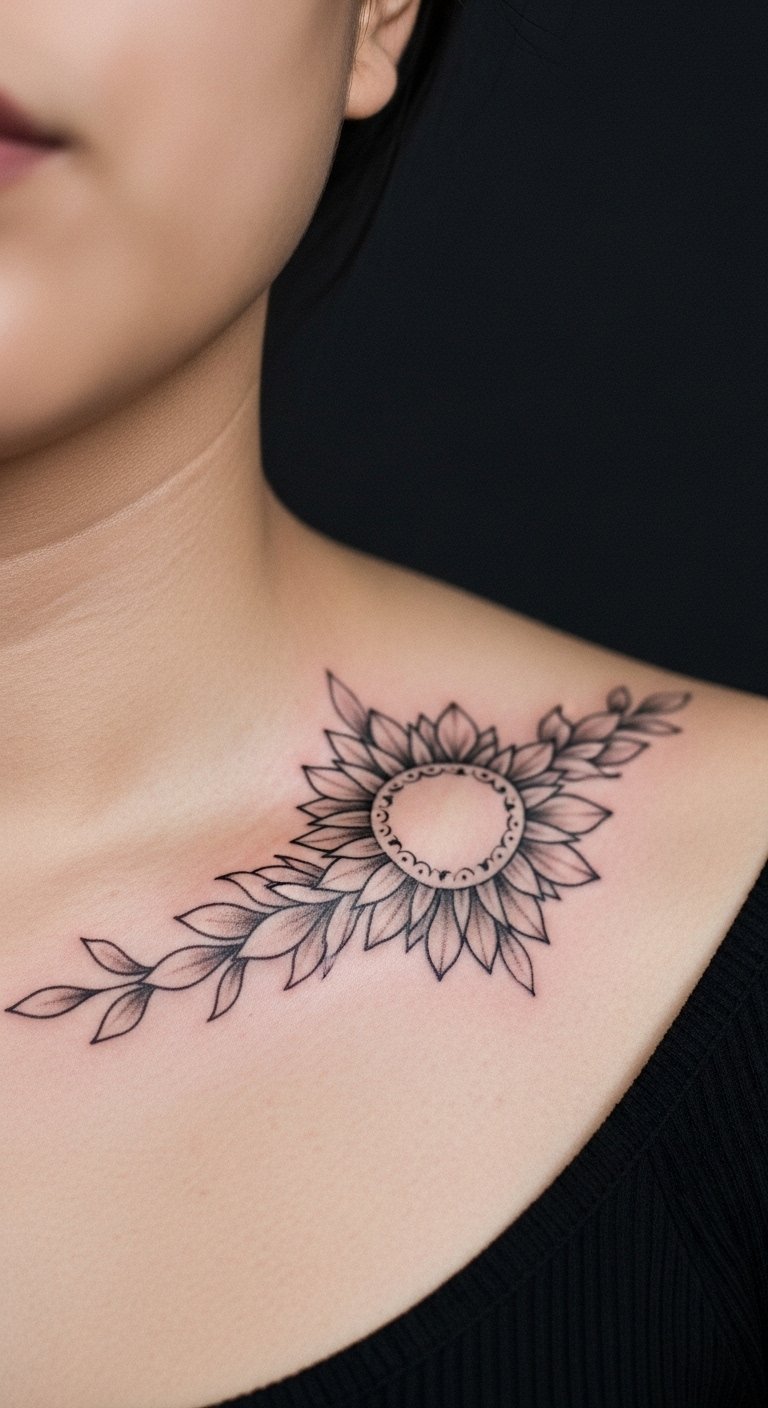
Collarbone sun pieces look delicate but carry weight. Pain is moderate. They photograph beautifully and hold meaning for seasonal visibility. Use black or muted color for longevity. Avoid tiny filigree that will blur on the thin skin here.
Solar Compass On Calf
Style/Technique: Neo-Traditional / Symbolic Compass
Pain Level: Low (3/10)
Session Time: 1 session
Best For: Guidance and travel motifs
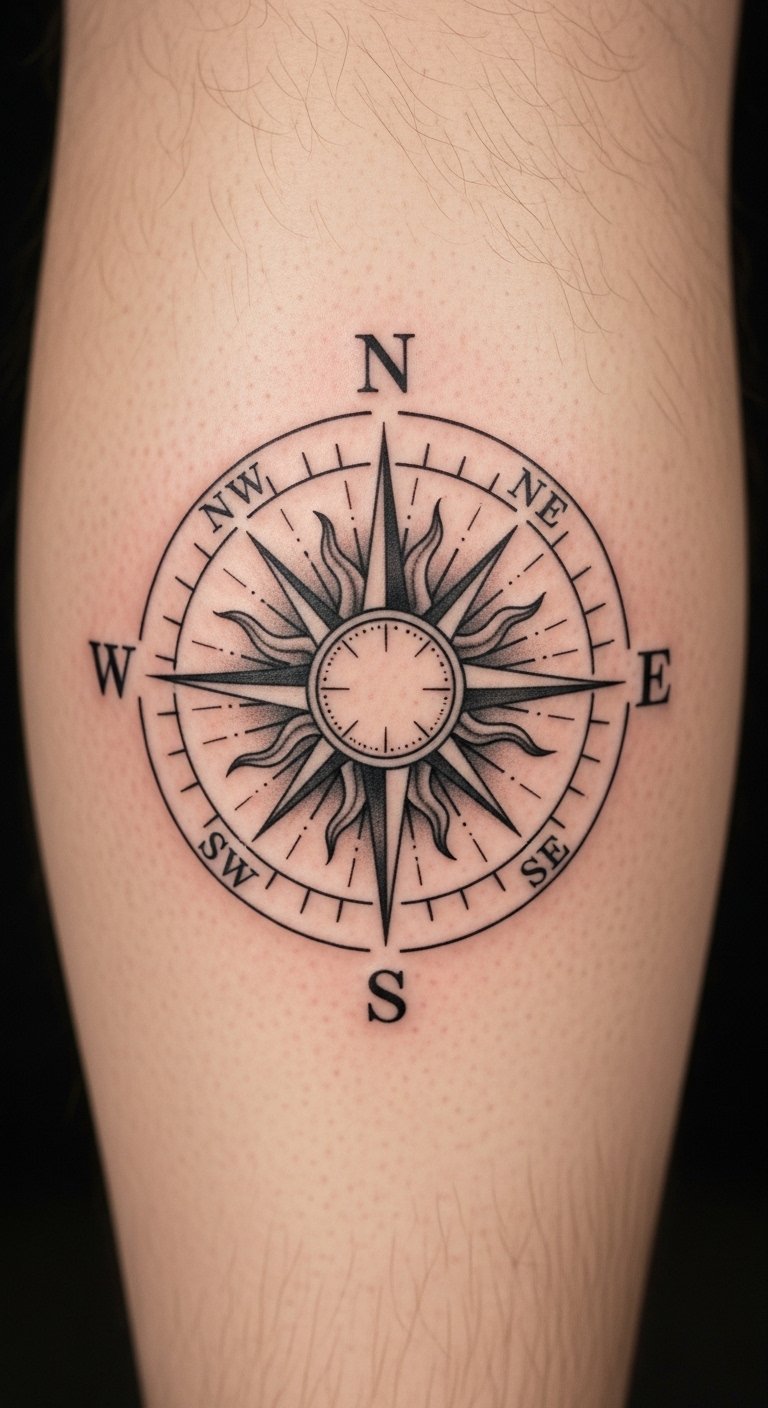
Combining a sun with a compass signals guided strength. Calf placement is forgiving and shows well when you want it to. This design holds up across skin tones when done in crisp black or muted color.
Solar Plexus Sun Chakra On Sternum
Style/Technique: Symbolic / Tarot-Inspired
Pain Level: High (7-8/10)
Session Time: Multiple sessions
Best For: Spiritual center work and statement pieces
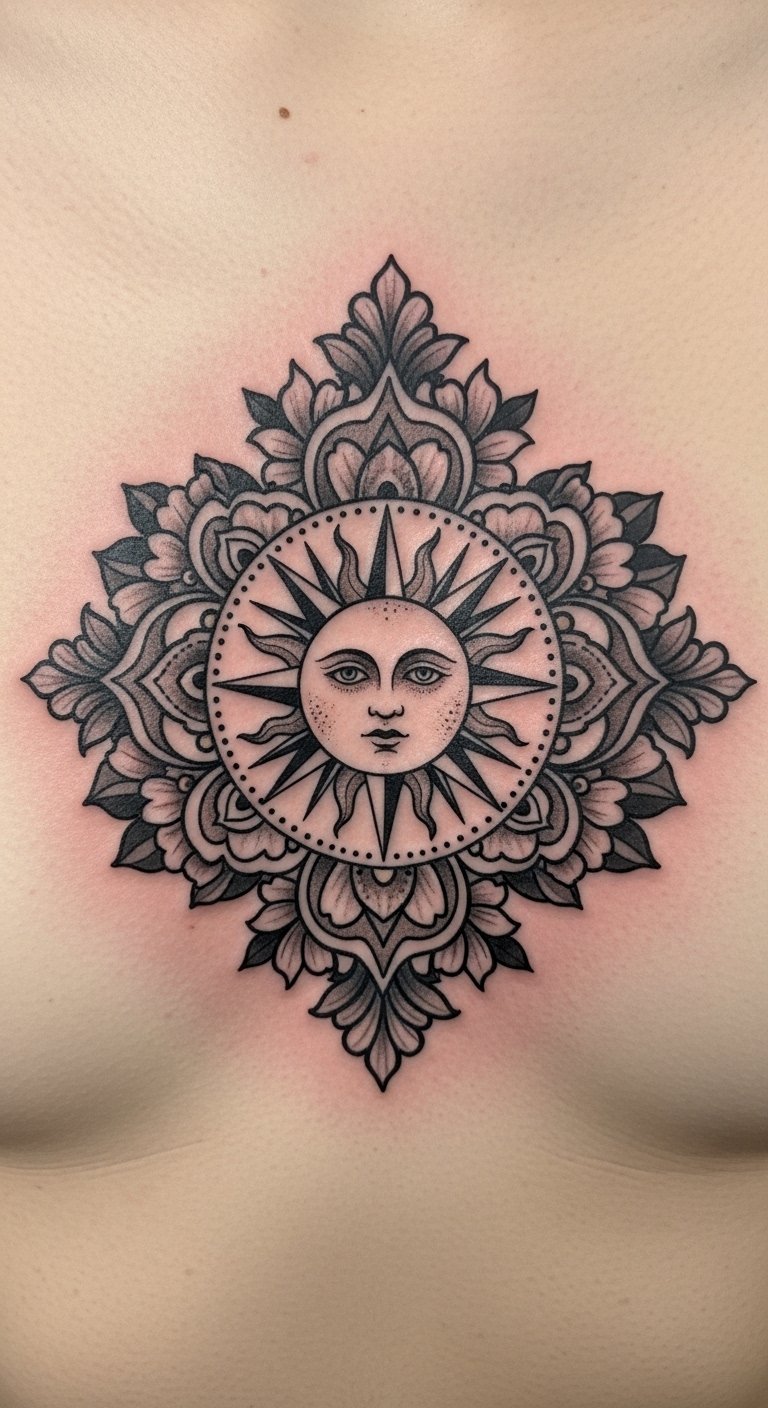
This is one of the more personal placements. Sternum pieces read as internal strength and chakra activation. Pain and healing require commitment. The art should be bold and balanced. I recommend viewing healed sternum examples before booking.
Handpoke Sun Rays Behind Ear
Style/Technique: Handpoke / Micro-Organic
Pain Level: Low (2-3/10)
Session Time: 1 session
Best For: DIY aesthetic, subtle texture
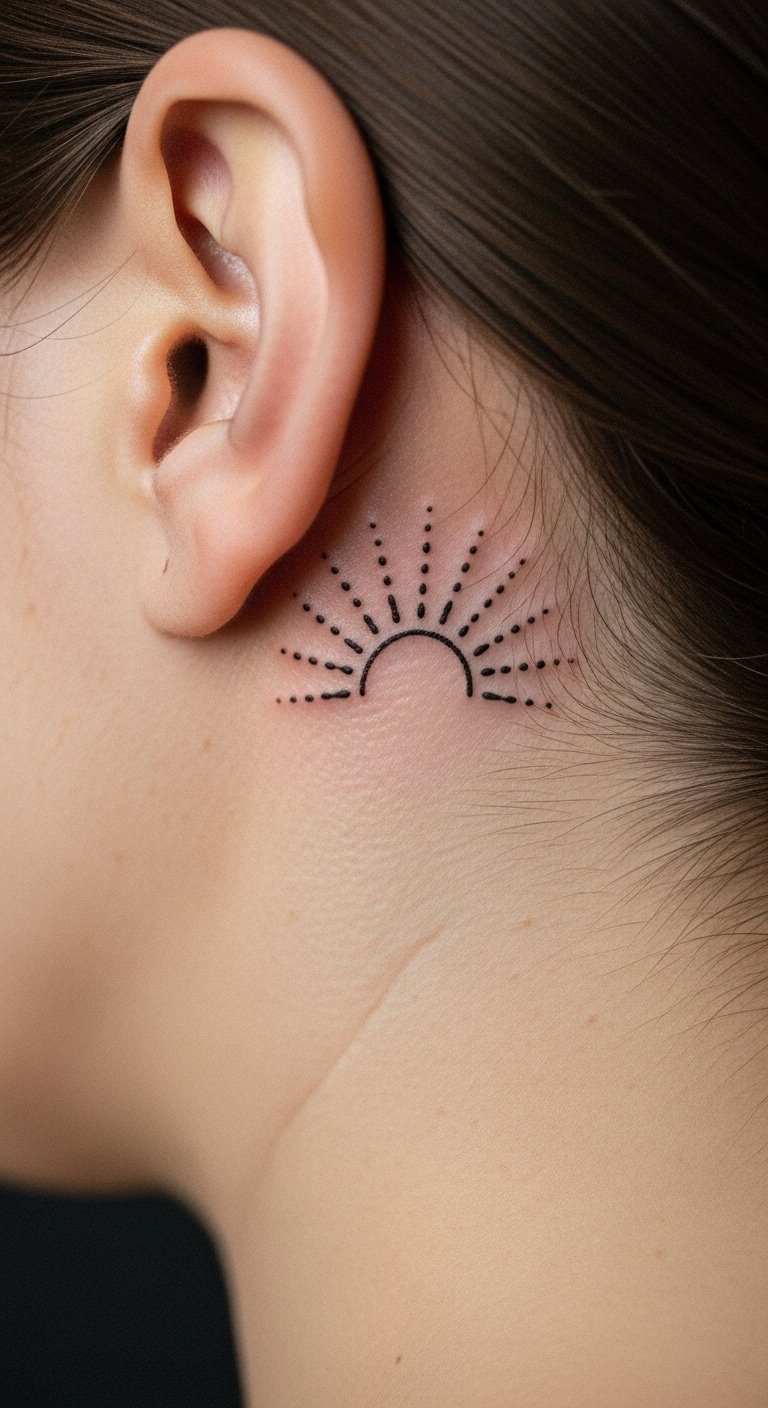
Handpoke rays have an organic, imperfect charm. Behind the ear is discreet and low pain. The technique yields softer edges and can age uniquely. Make sure the artist has handpoke healed photos—consistency varies by practitioner.
Sun With Eye Mythology On Back
Style/Technique: Large Ornamental / Mythic
Pain Level: Medium-High (5-7/10)
Session Time: Multiple sessions
Best For: Big symbolic narratives
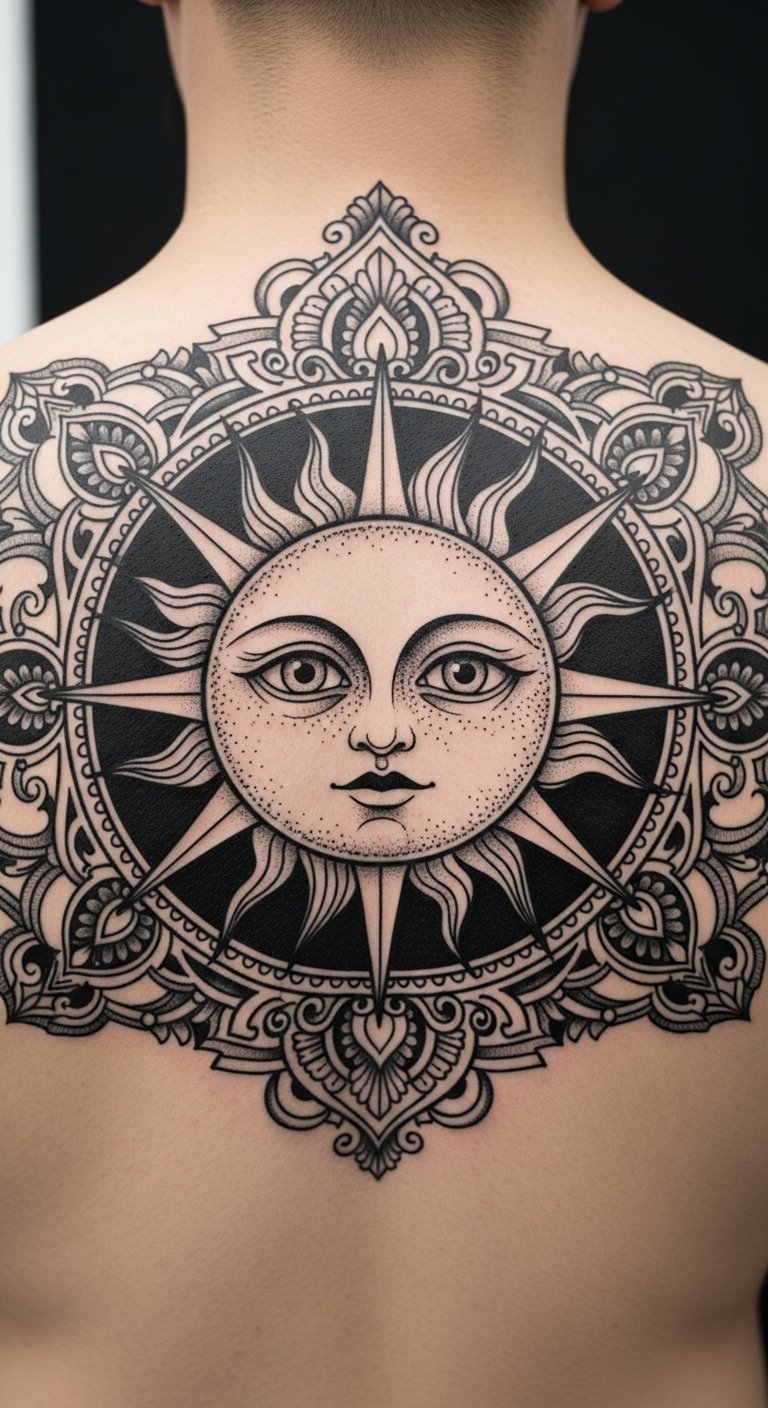
On the back, a sun-with-eye piece can tell a mythic story about guidance and protection. It’s a bold choice that ages well if lines are solid. This theme is less common and feels fresh. Avoid overly tiny detail in the eye when scaling large compositions.
Mandala Sun Ankle Wrap
Style/Technique: Dotwork / Mandala Wrap
Pain Level: Medium (4/10)
Session Time: 1 session
Best For: Stylish, balanced small tattoos
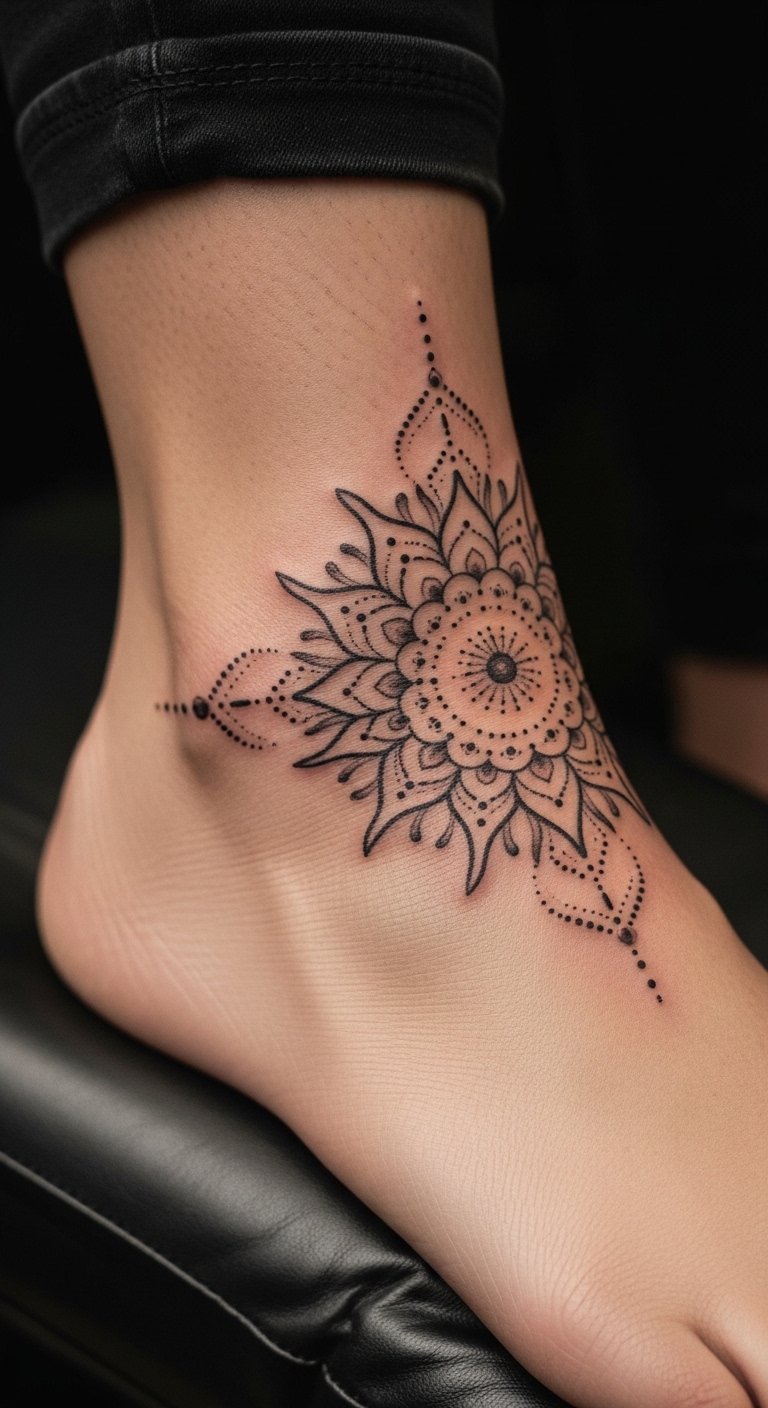
Wrapping mandalas bring symmetry and meditative energy. Ankle wraps are fashionable and subtle. Keep patterns open—too tight detail on the ankle can blur. Good for someone who wants a decorative yet meaningful piece.
Sun And Stars Hip Piece
Style/Technique: Illustrative / Celestial Pairing
Pain Level: Medium (4-6/10)
Session Time: 1–2 sessions
Best For: Concealable, personal designs
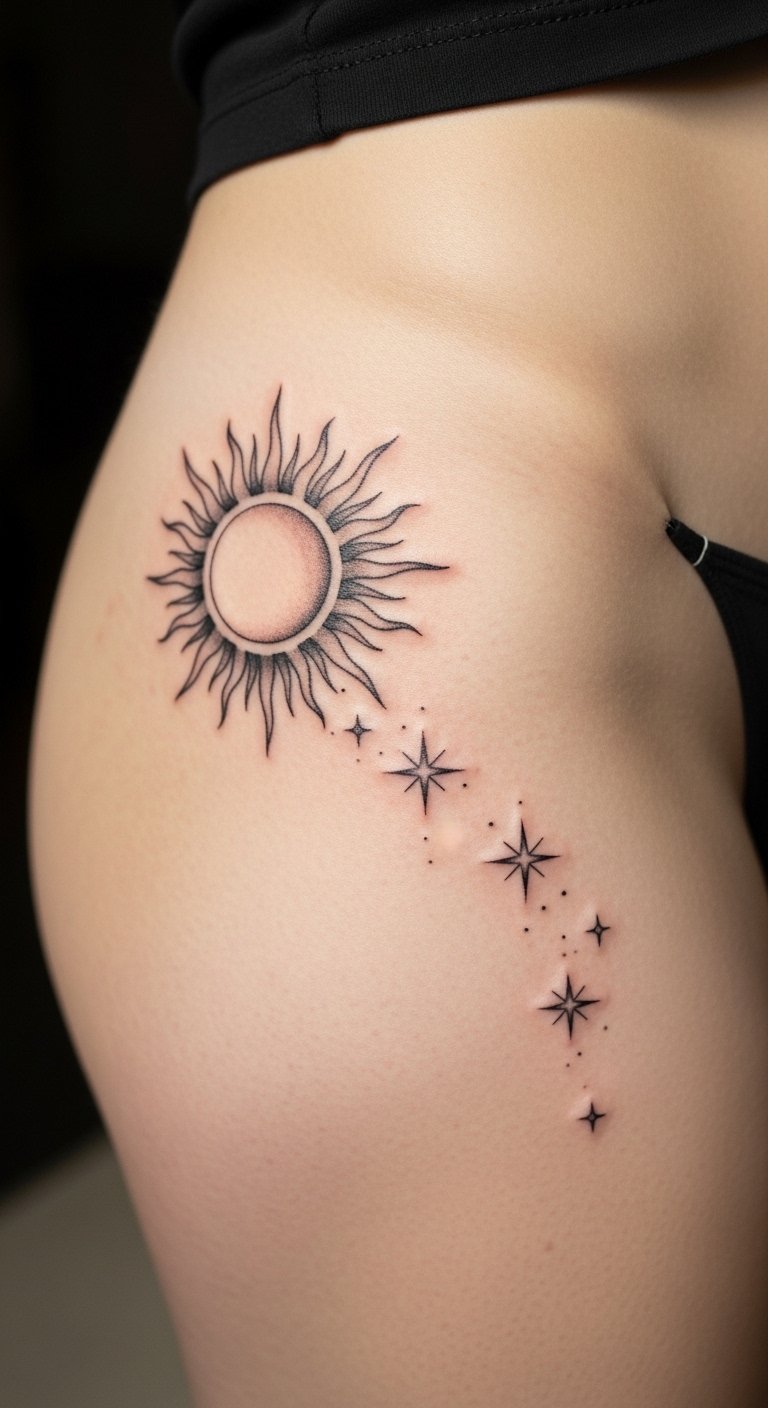
Hips hide well and let you choose who sees the piece. Sun-and-star pairings feel like steady strength with a bit of whimsy. Healing needs careful clothing choices to avoid friction.
Realism Sun And Lion Shoulder Cap
Style/Technique: Realism / Shoulder Cap
Pain Level: Medium (4-6/10)
Session Time: Multiple sessions
Best For: Bold realism collectors
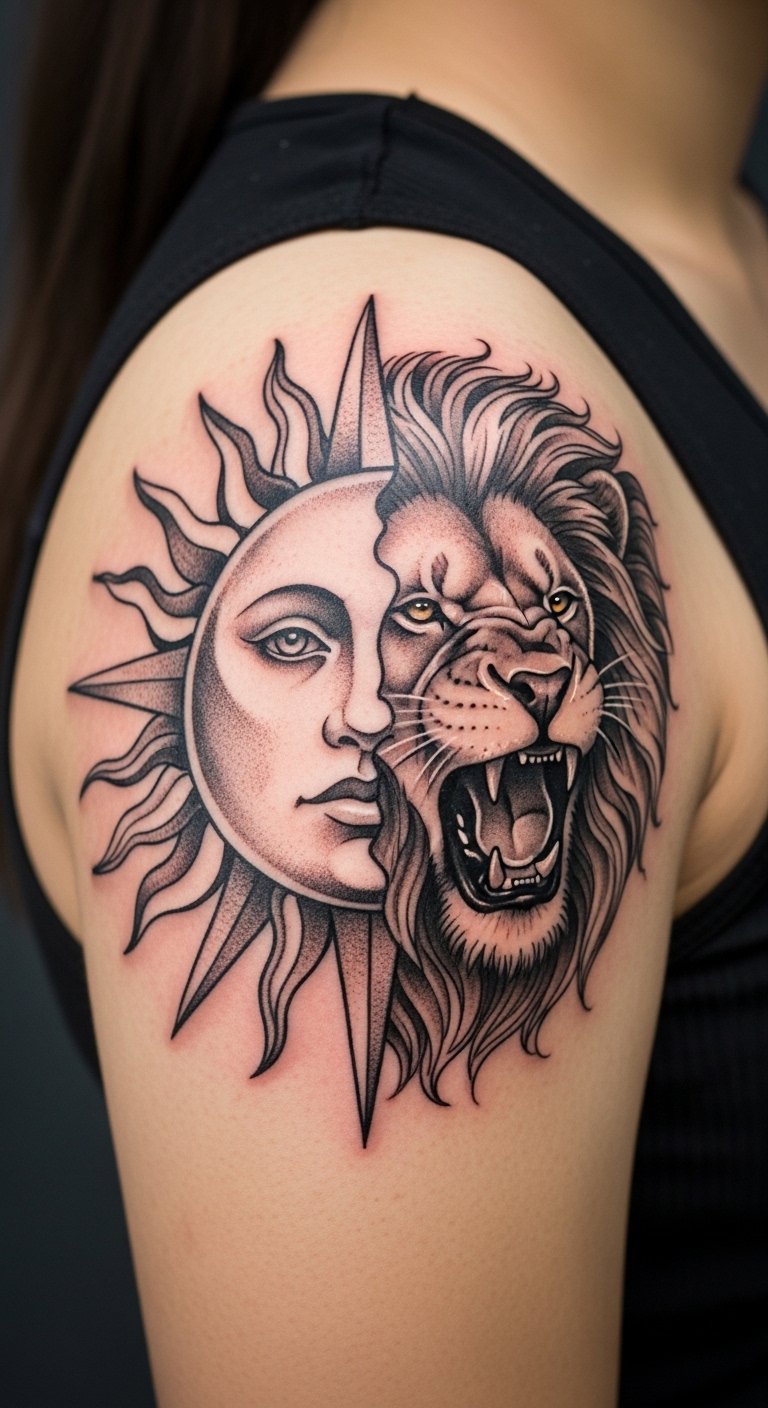
For realism lovers, this reads as raw power and protection. Shoulders allow large scale without extreme pain. Realism needs a specialist—ask for healed realism portfolios.
Hidden Rising Sun On Ribcage
Style/Technique: Irezumi-Inspired / Hidden Placement
Pain Level: High (7-8/10)
Session Time: Multiple sessions
Best For: Private renewal symbols
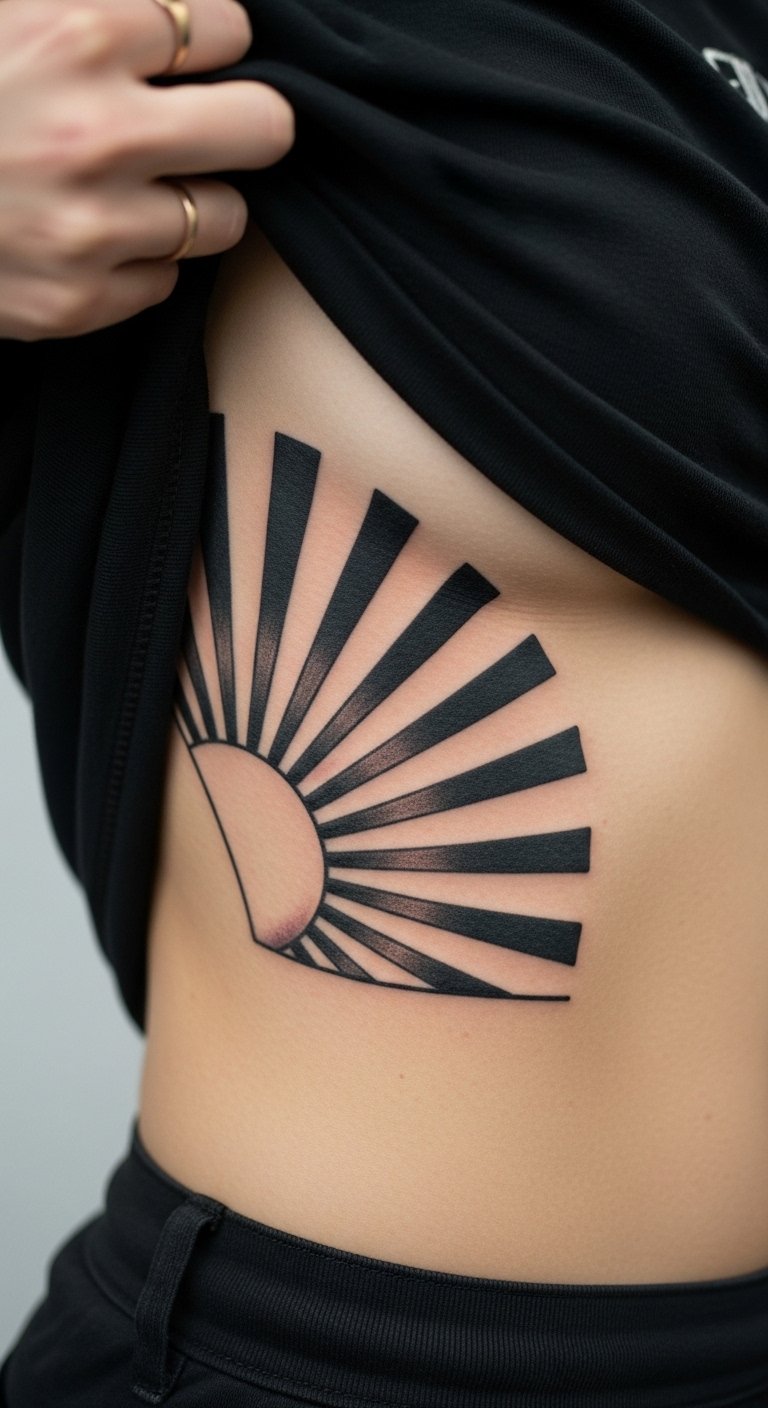
Ribcage rising suns are intimate. They symbolize private renewal. Pain is high, but concealability and meaning are strong draws. Healed photos show how movement affects the piece—discuss flow with your artist.
Tattoo Prep and Aftercare Essentials
Aftercare Essentials:
- Aquaphor Healing Ointment, 14oz Tube — Recommended first-aid ointment many artists mention
- Saniderm Transparent Adhesive Bandage, 6-Inch Roll — Second-skin option for the first 24–72 hours
- Dr. Bronner's Unscented Castile Soap, 32oz — Gentle cleaning during initial wash phase
- CeraVe Fragrance-Free Moisturizing Lotion, 12oz — Daily moisturizer once scabbing finishes
Before Your Appointment:
- Tattoo Numbing Cream 5% Lidocaine — Ask your artist before using
- Tattoo Stencil Transfer Paper — For personal sketch prep if you’re designing at home
Long-Term Maintenance:
- SPF 50 Sunscreen Stick For Tattoos — Daily protection to prevent UV fading
- Mad Rabbit Tattoo Balm — Popular long-term balm for vibrancy
- Hustle Butter Deluxe, 2oz — Vegan maintenance option many artists recommend
Optional Comfort Items:
- Hydrocolloid Bandages (Large) — For spot protection during peeling
- Tattoo Numbing Spray — For touch-ups or sensitive areas
I listed items my artist and peers actually use. Saniderm and Aquaphor came up the most when I asked about healing. Pick a gentle soap and an SPF you’ll wear daily.
Frequently Asked Questions
Q: How bad does a sun tattoo actually hurt?
A: Pain depends on placement. Outer forearm and calf are on the lower end (around 3/10). Ribs, sternum, and shin are higher (7–8/10). It’s often a dull burning or scratching sensation. For sensitive spots ask about tattoo numbing cream but check with your artist first.
Q: What if I regret the symbolism later?
A: I waited months before my chest sun. Choose motifs that tie to personal milestones—rising suns for renewal, sun-and-moon for balance. Regret is common (some surveys put tattoo regret near 25%); sit with designs and consider hidden placements while you decide (source: HubPages summary[3]).
Q: How do I keep my sun tattoo from fading?
A: Suns get exposed a lot. Daily sunscreen is essential. Use an SPF 50+ stick on exposed pieces. Blackwork holds longest; bright yellows and oranges fade faster.
Q: Can I work out after getting a sun tattoo?
A: Wait 48–72 hours for surface healing and avoid heavy sweating for a week if possible. Fresh ink plus sweat can irritate and introduce bacteria. Protect with breathable clothing and use recommended aftercare.
Q: Are sun tattoos different on darker skin tones?
A: Yes. Black and gray suns show well across tones. Bright colors may read differently; discuss saturation and healed examples on your skin tone with the artist. I’ve learned to ask for healed photos on similar skin.
Q: How long does a sun tattoo take to heal?
A: Surface healing typically 2–3 weeks; full settling can take 2–3 months. Expect peeling around day 3–7. Keep it clean with gentle soap and moisturize with fragrance-free lotion afterward.
Conclusion
I still look at healed photos before booking a session. A sun tattoo can signal strength, renewal, or protection depending on the style and placement. When you’re ready, book a consult, bring reference images, and invest in aftercare like Aquaphor and SPF. Which sun style are you leaning toward?