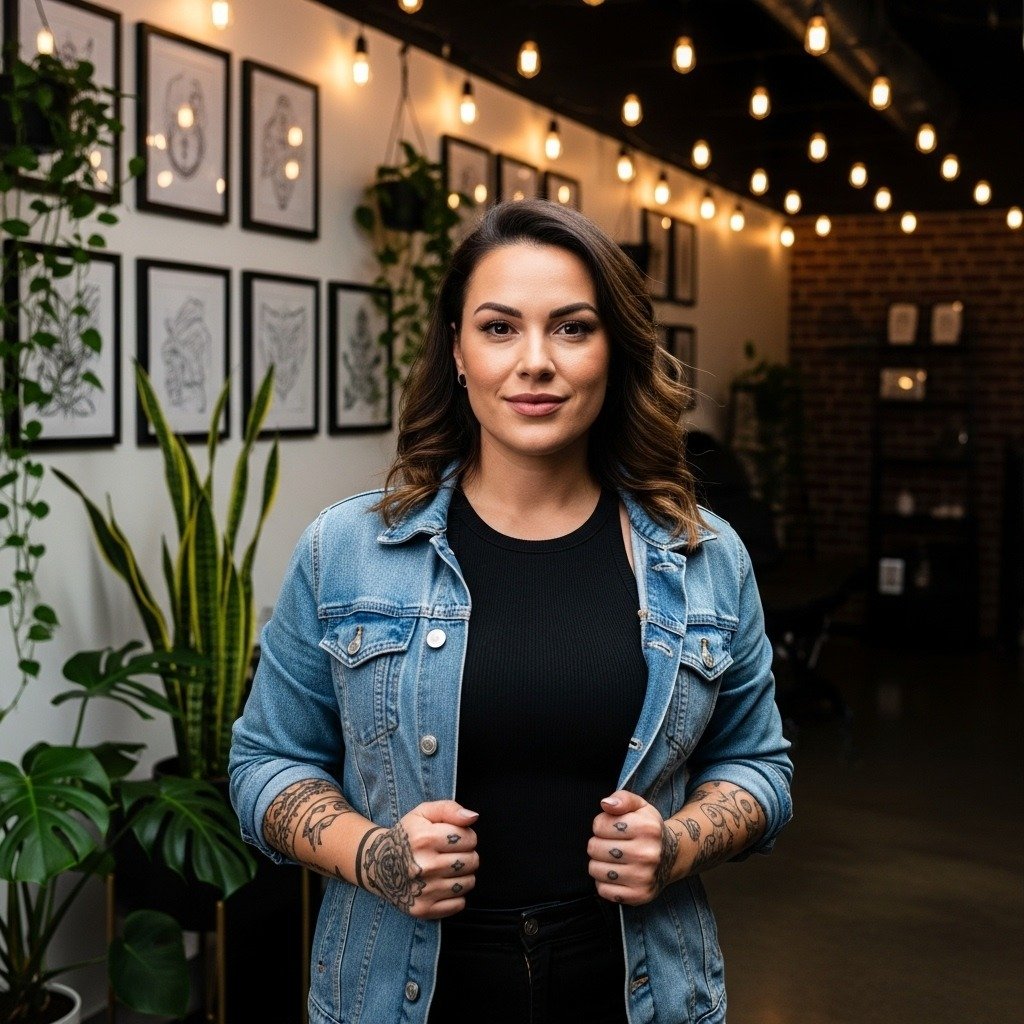
I spent months bookmarking moon tattoos I loved and the ones that still looked good healed. The trick wasn’t just picking a pretty crescent — it was choosing a style and placement that match my pain tolerance, skin tone, and lifestyle. These 24 moon tattoo ideas lean feminine, age well, and give you a clear sense of how they’ll feel on your body.
These picks focus on fine line, realism, and painterly watercolor styles. They work for wrists, collarbones, ribs, thighs, and behind the ear. I chose trends that artists are favoring in 2025—fine line moon phases, celestial combos, and lunar sequences that tell a story.
Fine Line Crescent Moon On Wrist
Style/Technique: Fine Line / Minimalist
Pain Level: Low (2-3/10)
Session Time: 30–90 minutes
Best For: First moon tattoo, subtle visibility
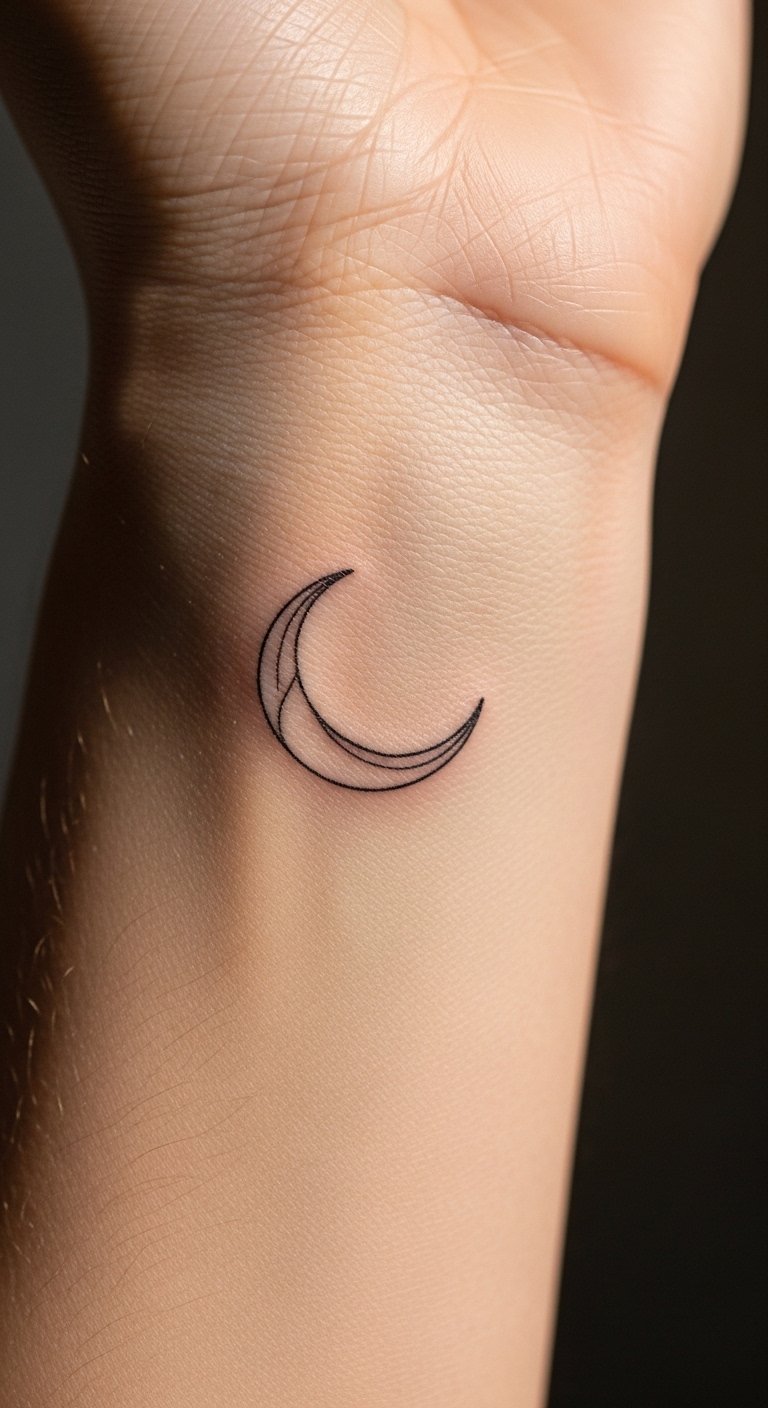
I got a wrist crescent as my first moon piece and it still feels personal. Fine line crescent tattoos read delicate and feminine. The wrist is low-pain and heals fast, but it sees a lot of sun and friction. Expect surface healing in 2–3 weeks. Artists I trust use single-needle precision for crisp lines; ask to see healed fine-line examples on similar skin tones. Common mistake: asking for lines too thin for your skin — they may blur. For longevity, choose black ink and keep daily SPF on the area. This design is great if you want a small moon tattoo that symbolizes change without shouting.
Realistic Full Moon With Stars On Forearm
Style/Technique: Realism / Black & Gray
Pain Level: Low-Medium (3-4/10)
Session Time: 1–3 hours
Best For: Visible forearm piece, guidance symbolism
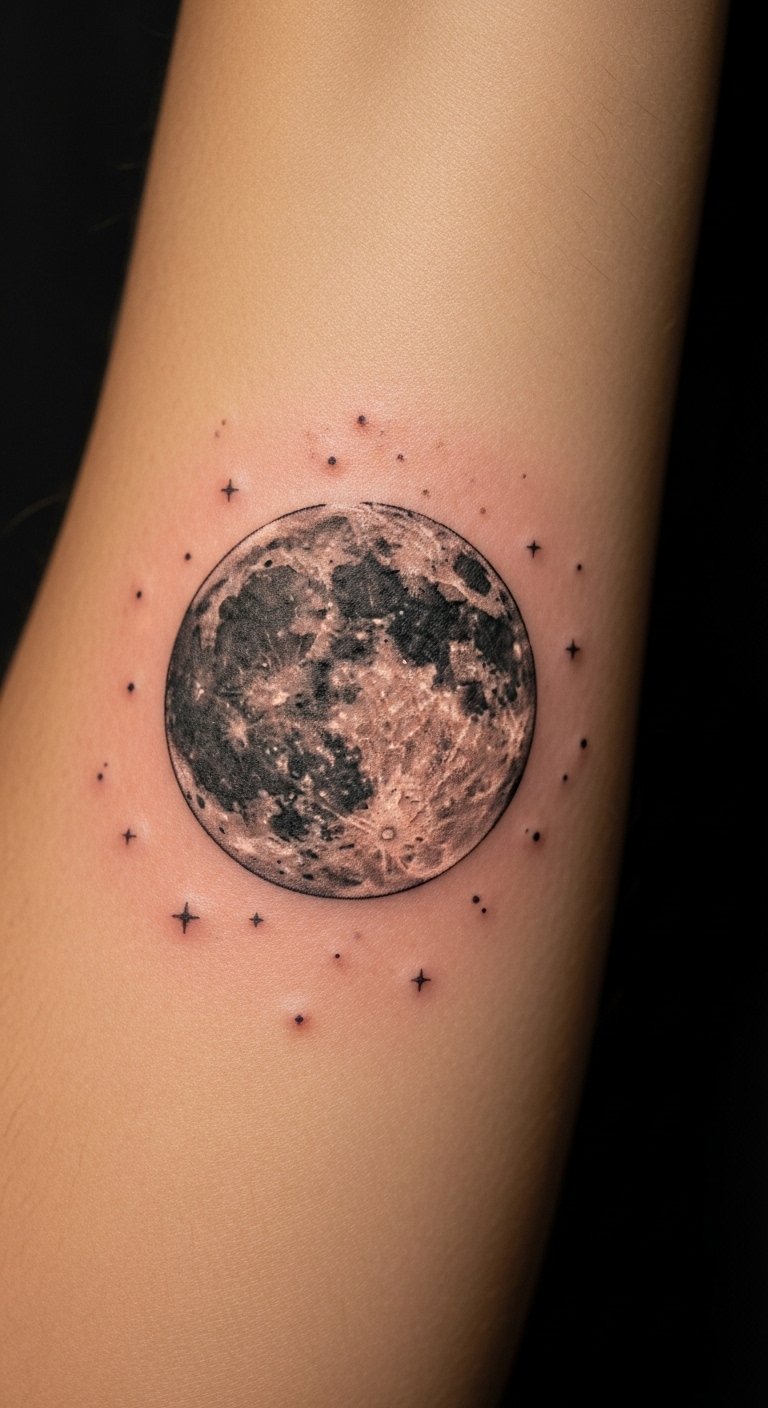
I love this for the way detail reads from a distance and up close. A realistic full moon gives presence—completion, guidance, a steady light. The forearm gives enough canvas for crater shading and tiny stars that don't age into a blur if done by someone who understands graywash. Pain is manageable and the area heals predictably. Healed examples show texture but not harsh lines. Ask your artist for contrast tests on a small patch so the moon keeps its features as it ages. Avoid overly dense stippling that can compact over time. Pair with a fine line phase sequence up the arm for a narrative sleeve.
Tribal Moon Phase Sleeve On Upper Arm
Style/Technique: Tribal / Blackwork
Pain Level: Medium (4-5/10)
Session Time: Multiple sessions
Best For: Statement sleeve, bold contrast
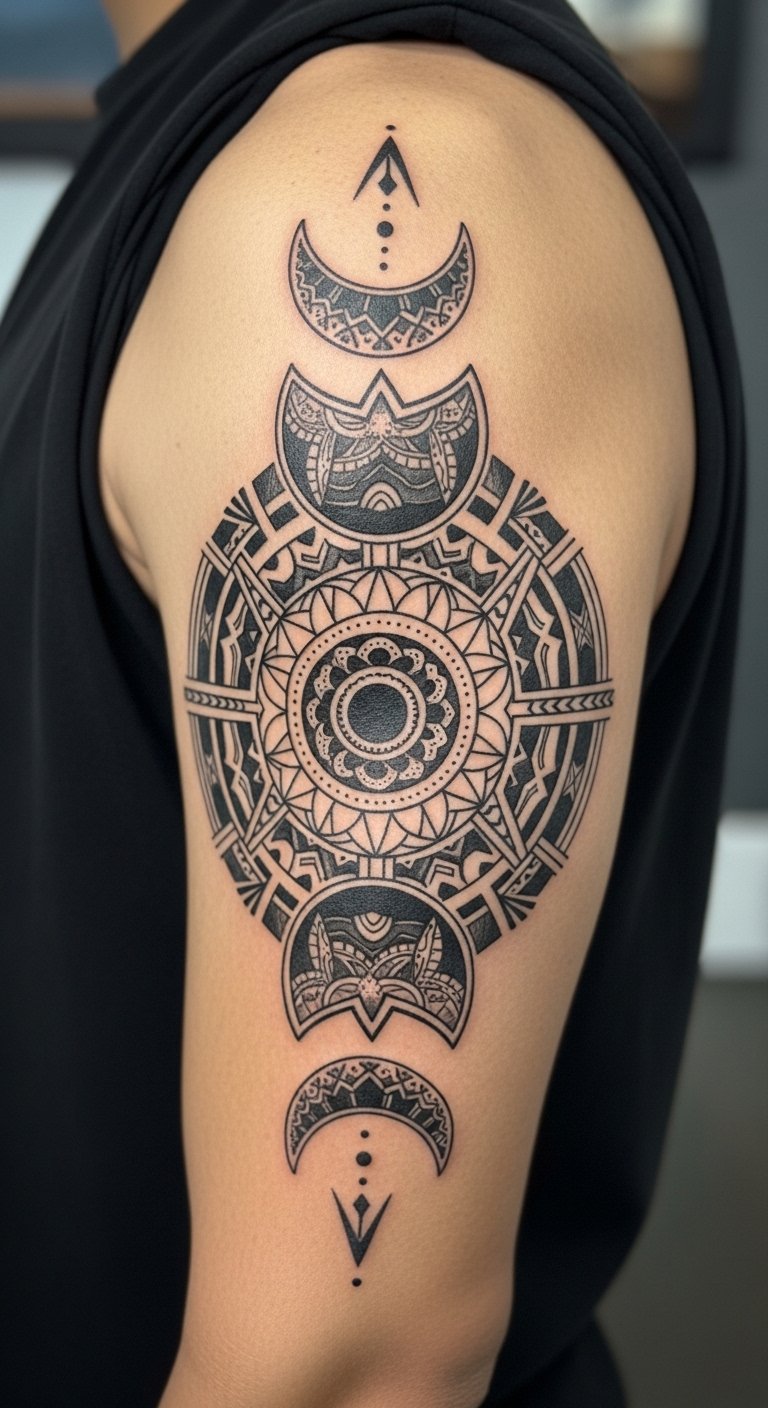
I saw tribal moon sleeves that read like armor—very empowering. Tribal or geometric blackwork moons create strong shapes that age well because they rely on bold fills, not fragile fine lines. Upper arm sleeves are less painful than ribs and easy to cover. Plan for multiple sessions and a skilled blackwork artist; uneven fills or poor line weight are the main mistakes. Over time, strong blackwork keeps graphic integrity if you avoid tiny detail within big black fields. Consider incorporating negative space phases so the lunar sequence still reads from afar. This style is a clear, feminine statement without delicate linework that might blur.
Watercolor Moon With Flowers On Ankle
Style/Technique: Watercolor / Painterly
Pain Level: Low (2-3/10)
Session Time: 1–2 hours
Best For: Ankle accents, colorful feminine pieces
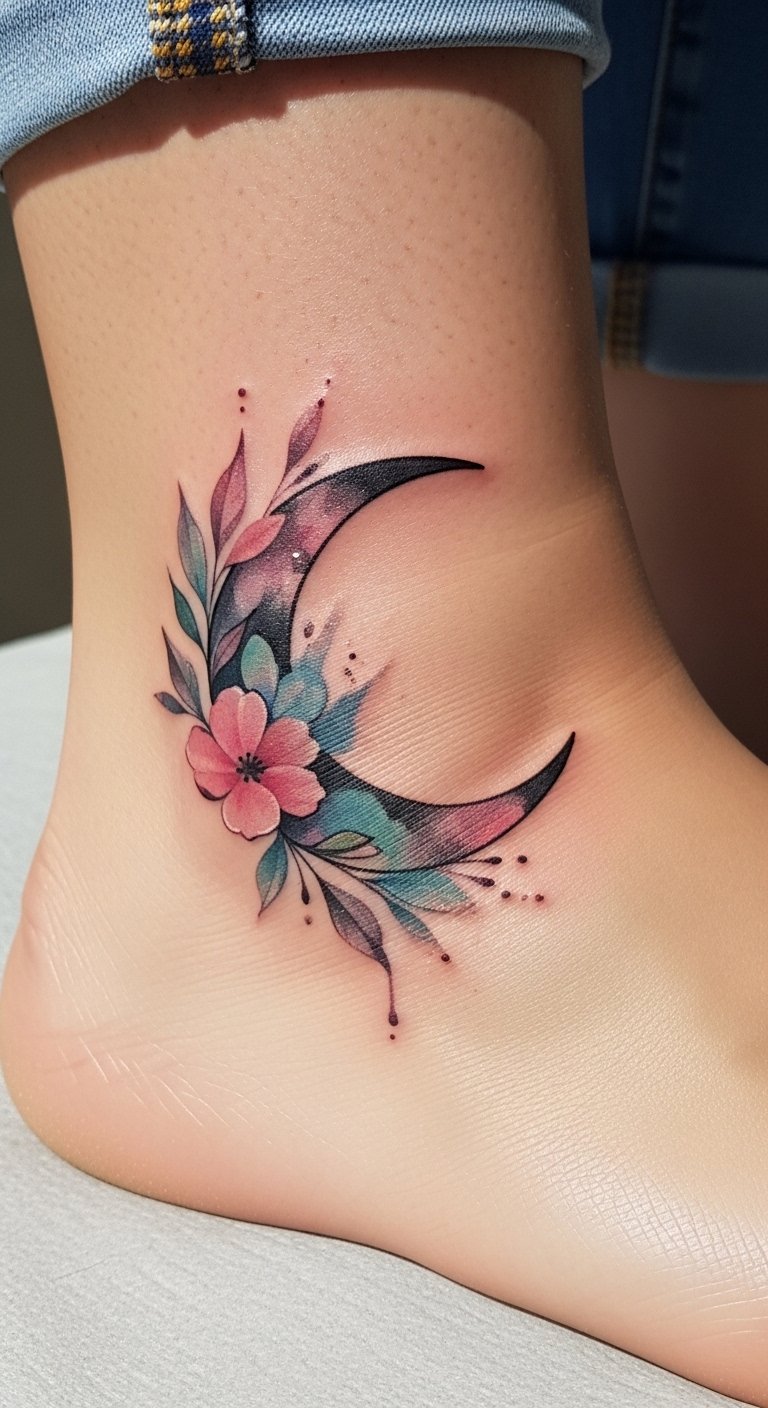
I recommend watercolor moons when you want a soft, artistic vibe. On the ankle they look like jewelry. Watercolor fades faster than black line, so artists use subtle linework to anchor color. Healing on the ankle can be tricky—keep it covered from friction and elevated after long days. Ask to see healed watercolor examples; fresh photos rarely show how pigments soften. A common error is asking for very light pastel washes that vanish on darker tones; request stronger saturation for longevity. This is a feminine, painterly option if you accept periodic touch-ups.
Minimalist Moon Phases On Nape
Style/Technique: Minimalist / Linework
Pain Level: Low (2-3/10)
Session Time: 30–60 minutes
Best For: Hidden but meaningful, hair-coverable
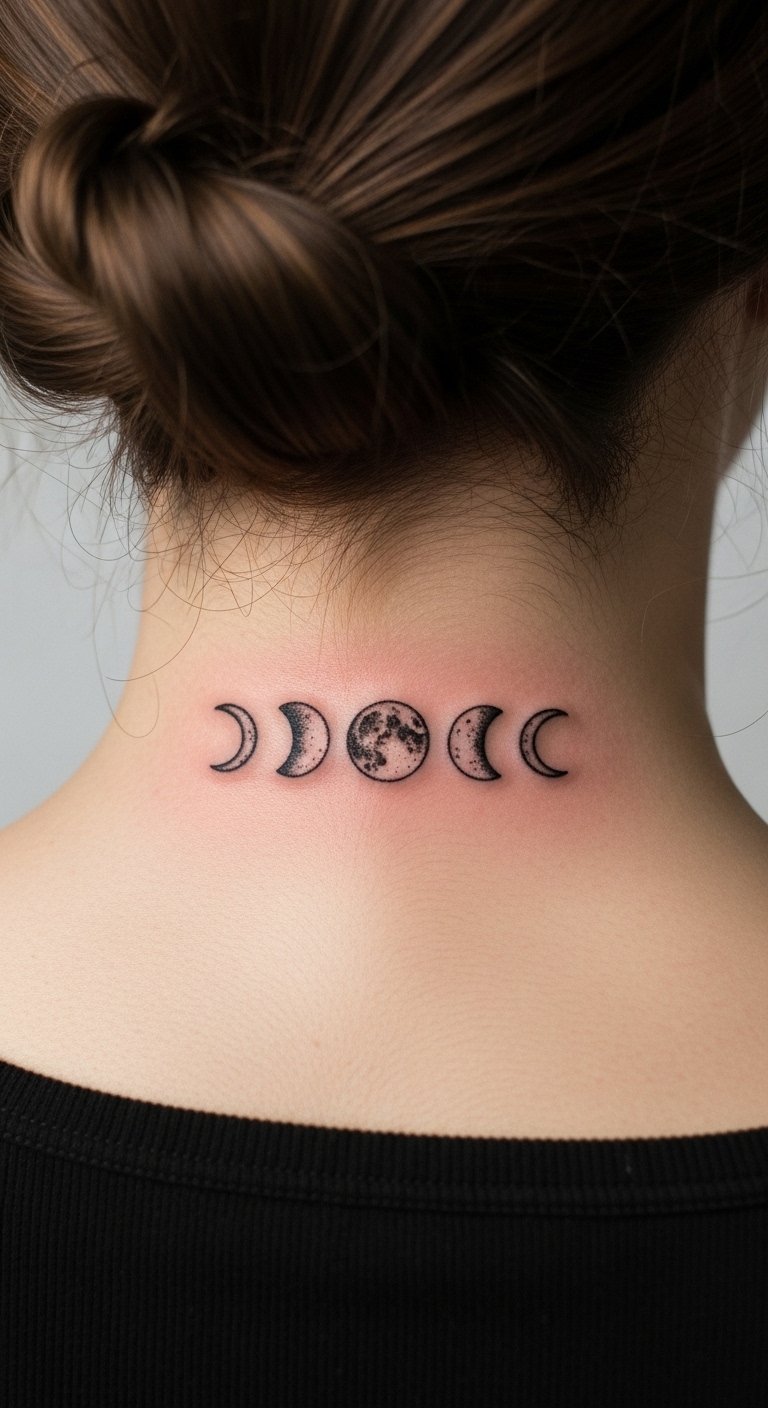
I love nape placements for secret symbolism. A small moon phase row reads intimate and feminine. Minimalist linework is easy to hide for work or family reasons. Pain is mild but expect more sensitivity if the nape is thin. Healed pieces look subtle; the biggest mistake is making the moons too close together—give each phase breathing room so they don't merge. For women, the left nape can feel more connected to feminine rhythm if that matters to you. Ask your artist for healed nape photos so you can judge line thickness against your skin type.
Floral Half Moon On Ribcage
Style/Technique: Illustrative / Floral
Pain Level: High (7-8/10)
Session Time: 1–2 sessions
Best For: Sensual, private statement pieces
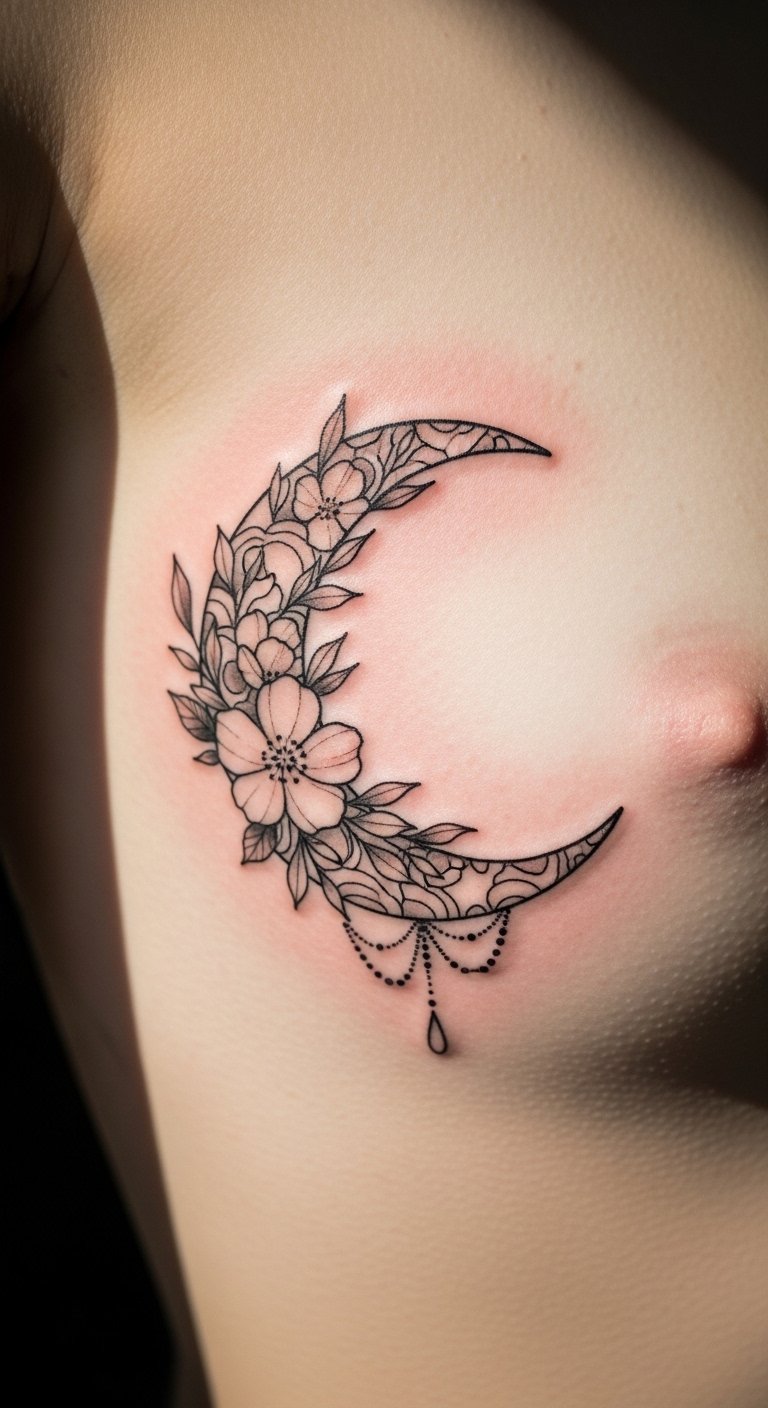
I put a floral half moon on my friend and the placement felt intimate. Ribcage pieces age beautifully but are among the most painful spots. This design pairs moon intuition with floral rebirth—very feminine. Healing needs careful clothing choices to avoid rubbing. Illustrative floral work requires an artist fluent in soft shading; otherwise the petals can look flat once healed. Avoid tight, intricate vines right on the curve of the ribs; ask your artist to map the design with your natural lines so it flows as you move. Expect surface healing in weeks but internal settling over months.
Crescent Moon With Stars On Collarbone
Style/Technique: Fine Line / Celestial
Pain Level: Low-Medium (3-4/10)
Session Time: 45–90 minutes
Best For: Elegant collarbone accent, visible but delicate
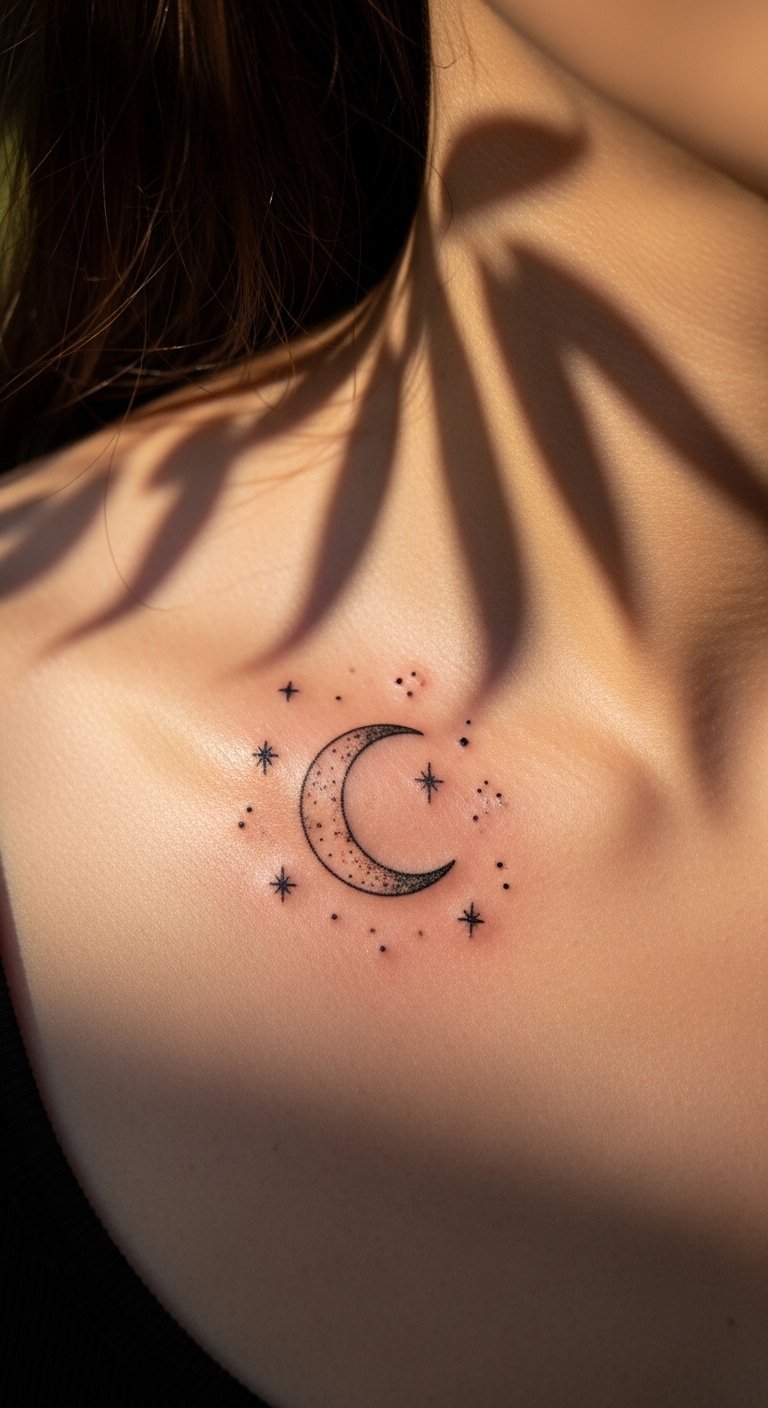
I see collarbone moons all the time on friends—subtle and flattering. The collarbone offers a delicate frame; crescents with small stars look like jewelry. Pain is higher closer to the bone but still manageable. Healed collarbone tattoos can look a bit lighter because the skin there is thin; ask for a slightly stronger initial line so it reads later. A common mistake is over-detailing stars—keep them tiny. This placement is great for a crescent moon tattoo that carries family or love symbolism without being hidden.
Traditional Bold Moon On Bicep
Style/Technique: Traditional / Bold Color
Pain Level: Low (2-3/10)
Session Time: 1–2 hours
Best For: Timeless visible pieces, holds up well
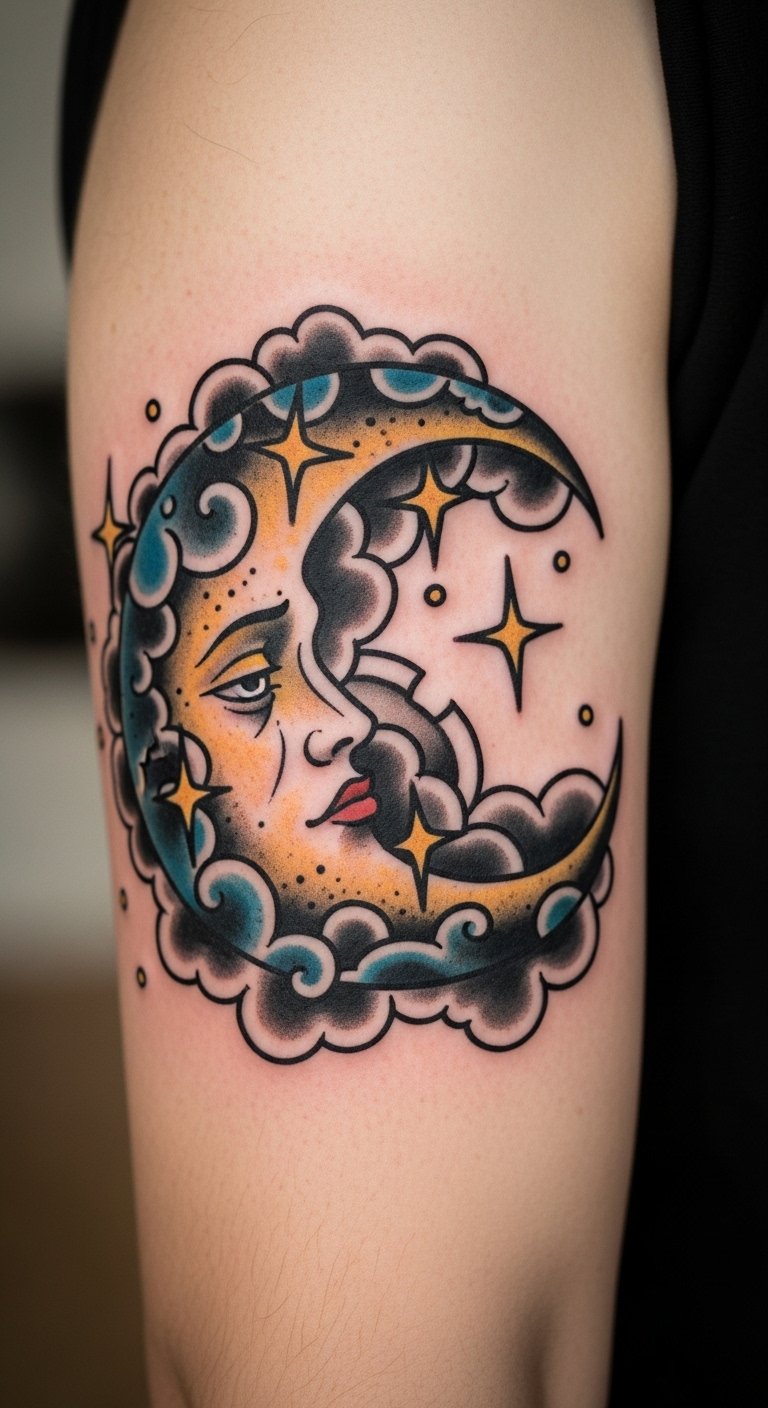
I like traditional moons for longevity. Bold outlines and saturated fills resist fading differently than fine lines. The bicep is forgiving and low-pain. Artists who work in American Traditional know how to balance color so skin aging doesn’t erode the design. Healed pieces keep their silhouette even if color softens. Avoid tiny script or filigree inside heavy black areas—those details get lost. This is a strong, feminine nod to classic tattooing that still reads modern when paired with floral or star accents.
Moon Phase Landscape Sleeve On Thigh
Style/Technique: Illustrative / Realism
Pain Level: Medium (4-5/10)
Session Time: Multiple sessions
Best For: Large narrative pieces, personal growth themes
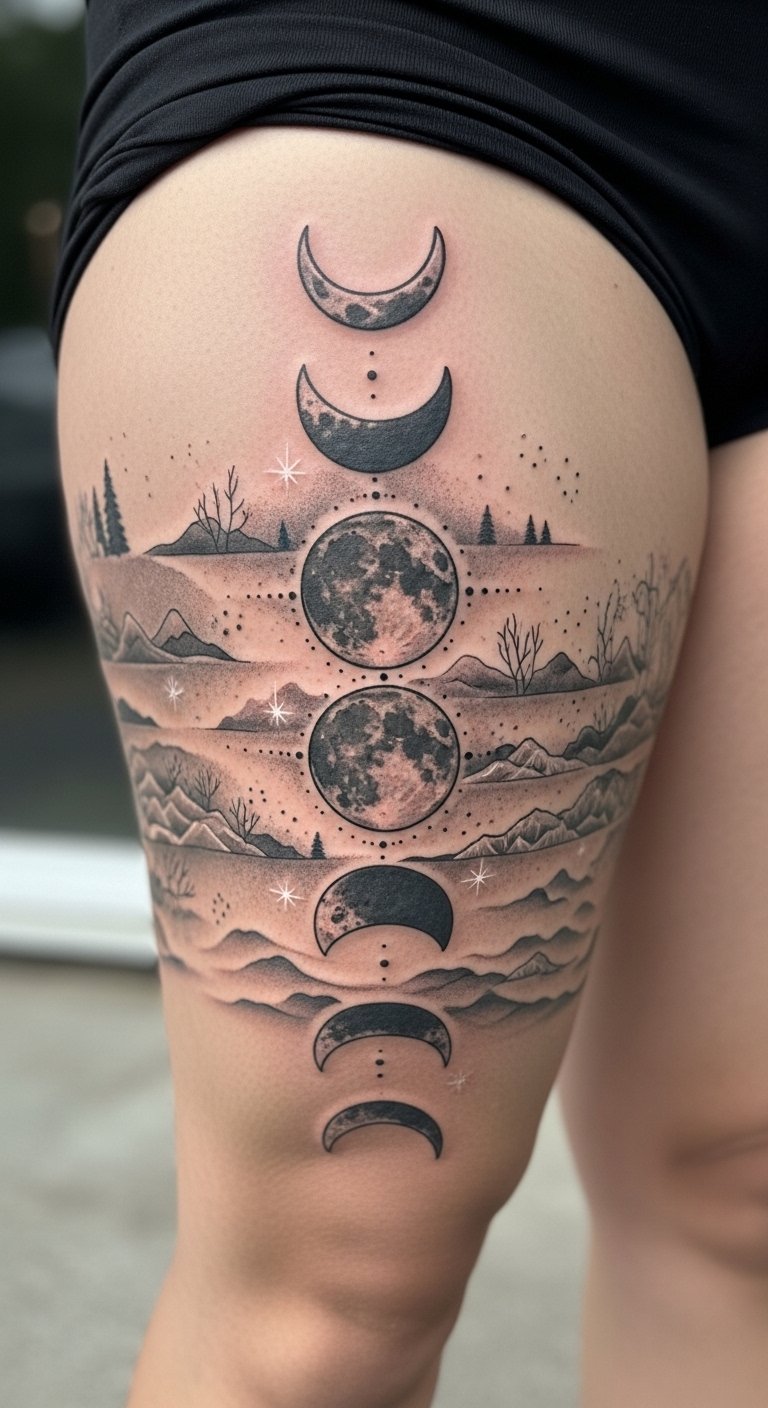
I’ve seen thigh sleeves that use moon phases to mark chapters in life. Landscapes under each phase add narrative depth. The thigh is great for big, contemplative work and is easier to heal than ribs. Realistic elements need an artist skilled in graywash so features don’t compact over time. Mistakes include cramming too much micro-detail—plan broad elements that read from a distance and refined bits for close view. This style ages well when composed with negative space and bold contrast. It’s feminine, private, and powerful.
Lotus Flower Moon On Inner Arm
Style/Technique: Neo-Traditional / Floral
Pain Level: Medium (4/10)
Session Time: 1–2 sessions
Best For: Spiritual meanings, inner-arm visibility
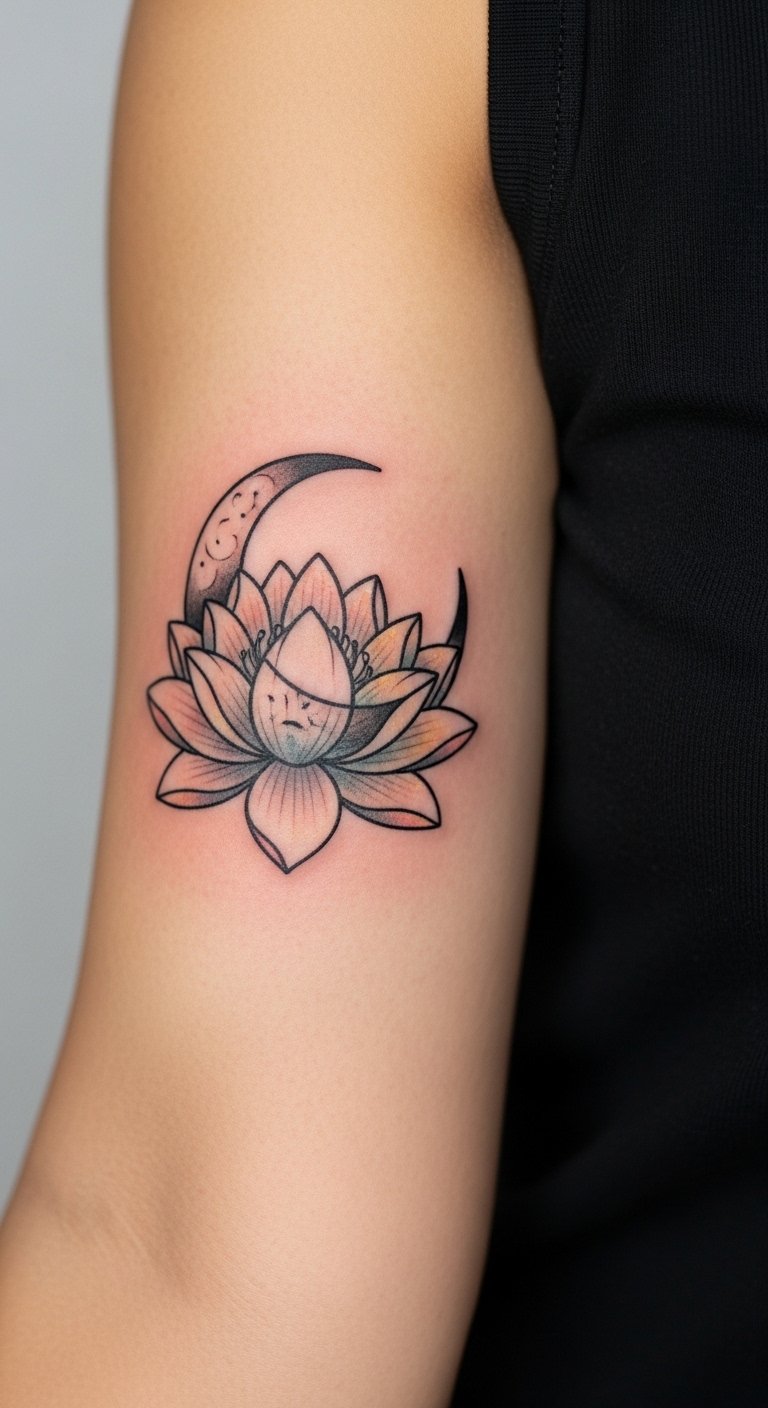
I recommend a lotus-moon blend when rebirth or protection is part of the meaning. The inner arm gives a personal view of the piece and looks elegant when you move. Pain is tolerable but expect sensitivity on inner bicep. Neo-traditional shading brings color without fragile line dependency. Artists should plan color saturation carefully—too light and it flattens on healed skin. Avoid tiny veins of detail in petals that might blur. This design reads feminine and spiritual and pairs well with small stars or geometric accents.
Waxing Crescent With Fairy On Shoulder
Style/Technique: Illustrative / Soft Color
Pain Level: Low (2-3/10)
Session Time: 1–2 hours
Best For: Shoulder accents, playful feminine motifs
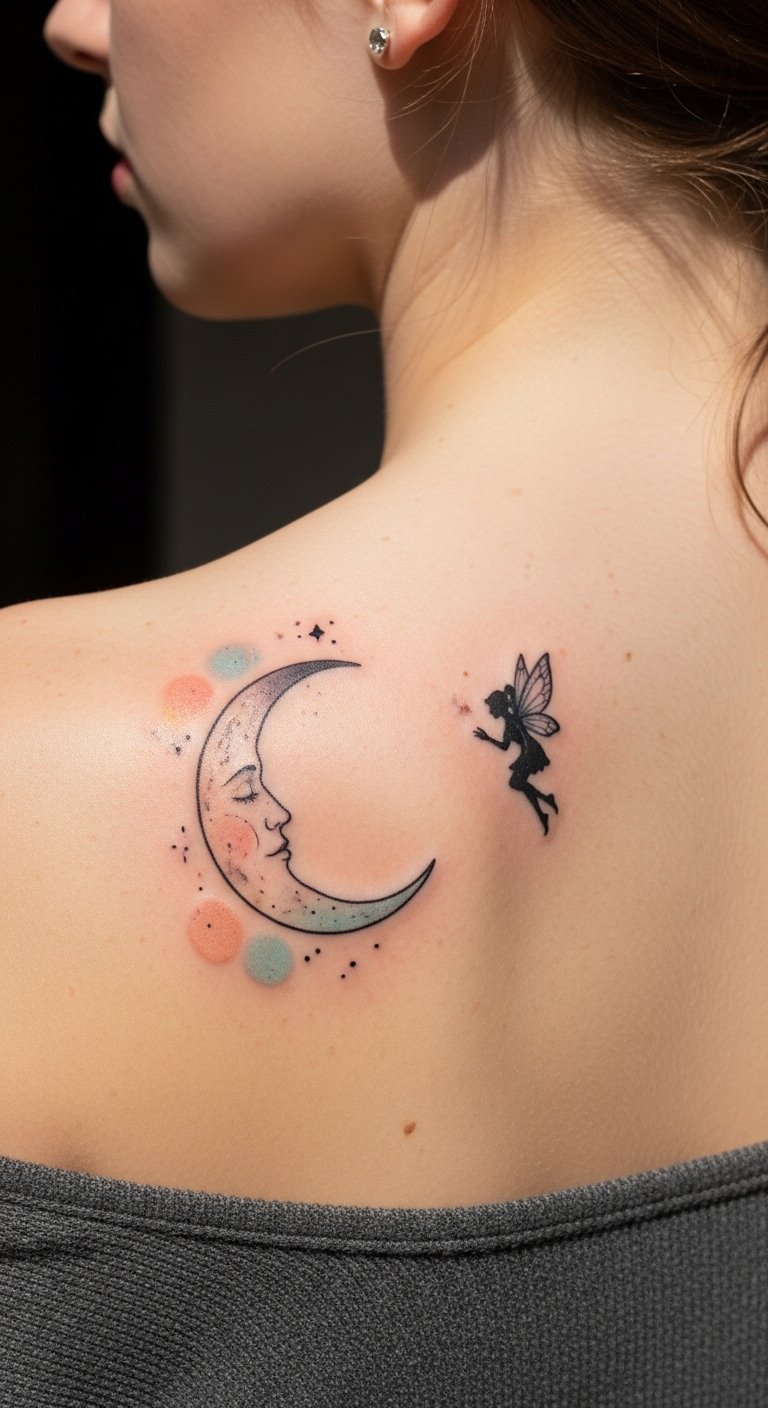
I loved this design for its storybook vibe without being juvenile. A small fairy near a waxing crescent suggests mystery and feminine power. Shoulder blade placement is low-pain and easy to show or conceal. Healing is straightforward, but watch straps rubbing the area. The main mistake is making the fairy too detailed—silhouettes or light linework hold up better. Ask your artist for healed photos of similar illustrative scenes to judge how color softens. This is a lighthearted but intimate choice that feels feminine and personal.
Blood Moon Chest Piece
Style/Technique: Realism / Dramatic Color
Pain Level: High (7/10)
Session Time: Multiple sessions
Best For: Bold emotional statements, central chest focus
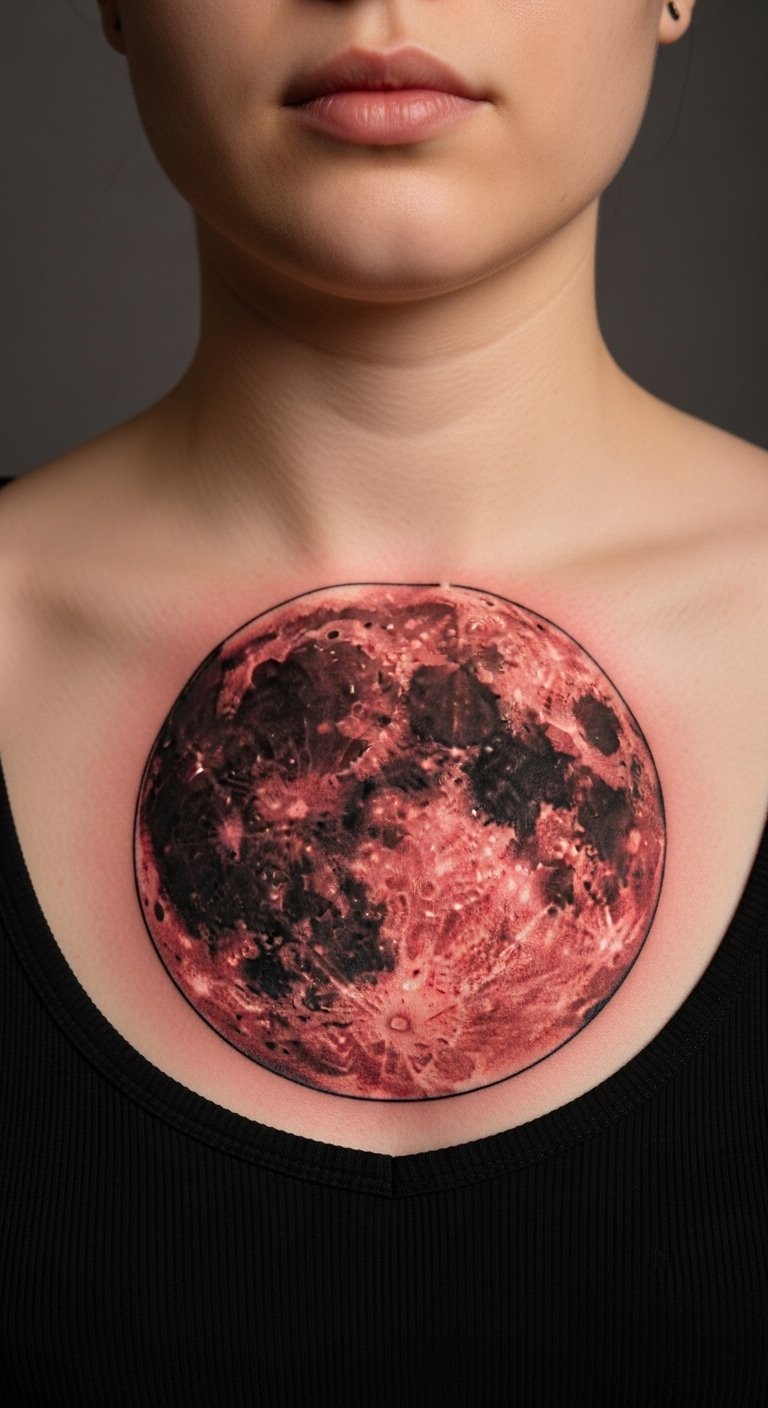
I recommend the blood moon if you want intensity. Chest pieces are visible and can mark major emotional shifts. Expect significant pain and careful post-session care—movement and clothing irritate the area. Realistic red-black shading needs an artist comfortable with saturated color on chest tissue. A common mistake is overworking red tones; they can scar if done too heavy. Healed examples show color settling and richer depth. This is a dramatic, feminine choice for someone ready to wear a powerful symbol on their chest.
Sun And Moon Duality On Hand
Style/Technique: Geometric / Minimalist
Pain Level: High (6-7/10)
Session Time: 1–2 hours
Best For: Visible reminder of balance, small statement
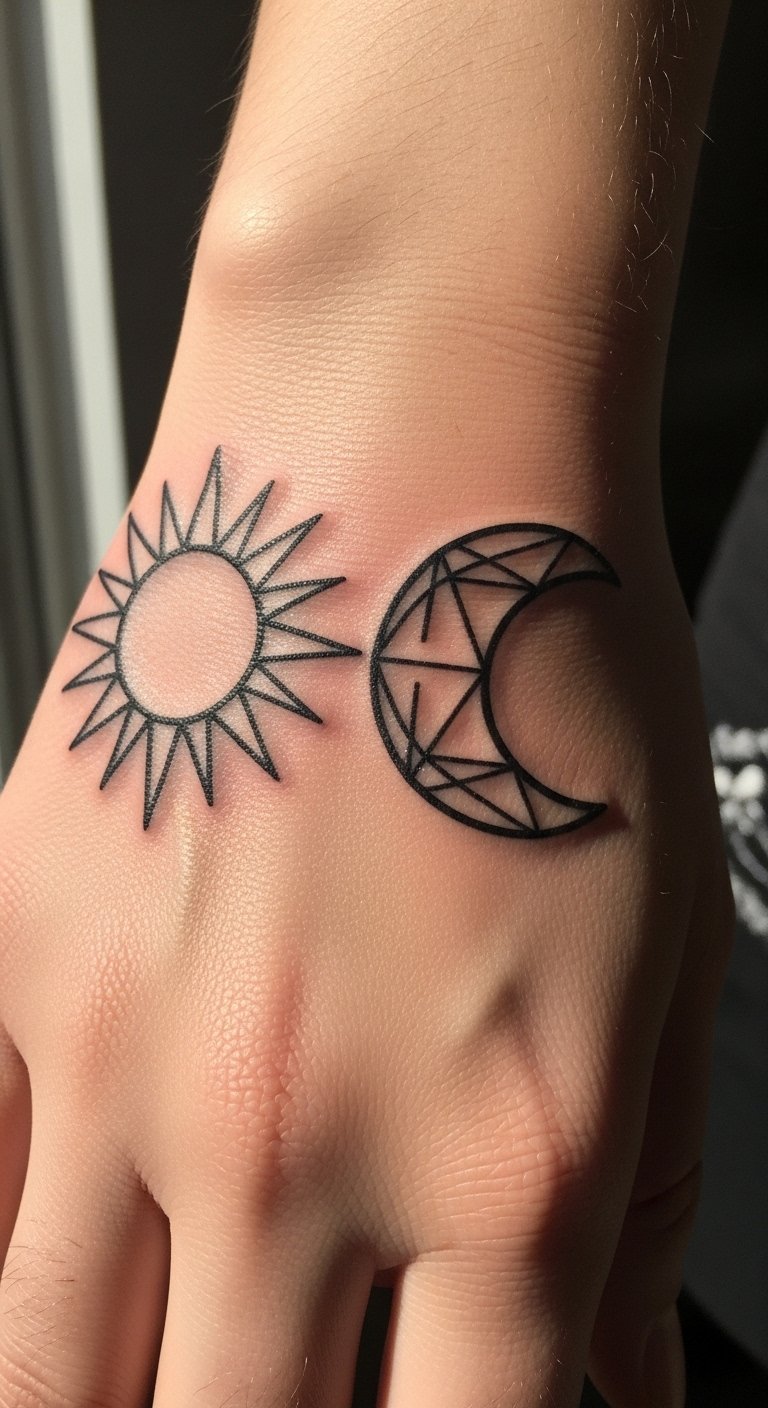
I chose a hand piece for its intent—it's visible and constant. Sun and moon duality tattoos on the hand can feel like a ritual reminder of balance. Hands are painful and fade faster due to washing, so expect more maintenance. Artists use bolder lines for hand work to preserve clarity. Avoid extremely fine details that will soften with daily use. If you want a hand moon, plan for touch-ups and use long-term aftercare like tattoo balm and daily SPF. This is a strong, feminine visual for someone comfortable with visibility.
Fornasetti Face Moon On Upper Arm
Style/Technique: Micro-Realism / Artistic Portrait
Pain Level: Medium (4-5/10)
Session Time: 1–3 hours
Best For: Art-history fans, unique portrait moons
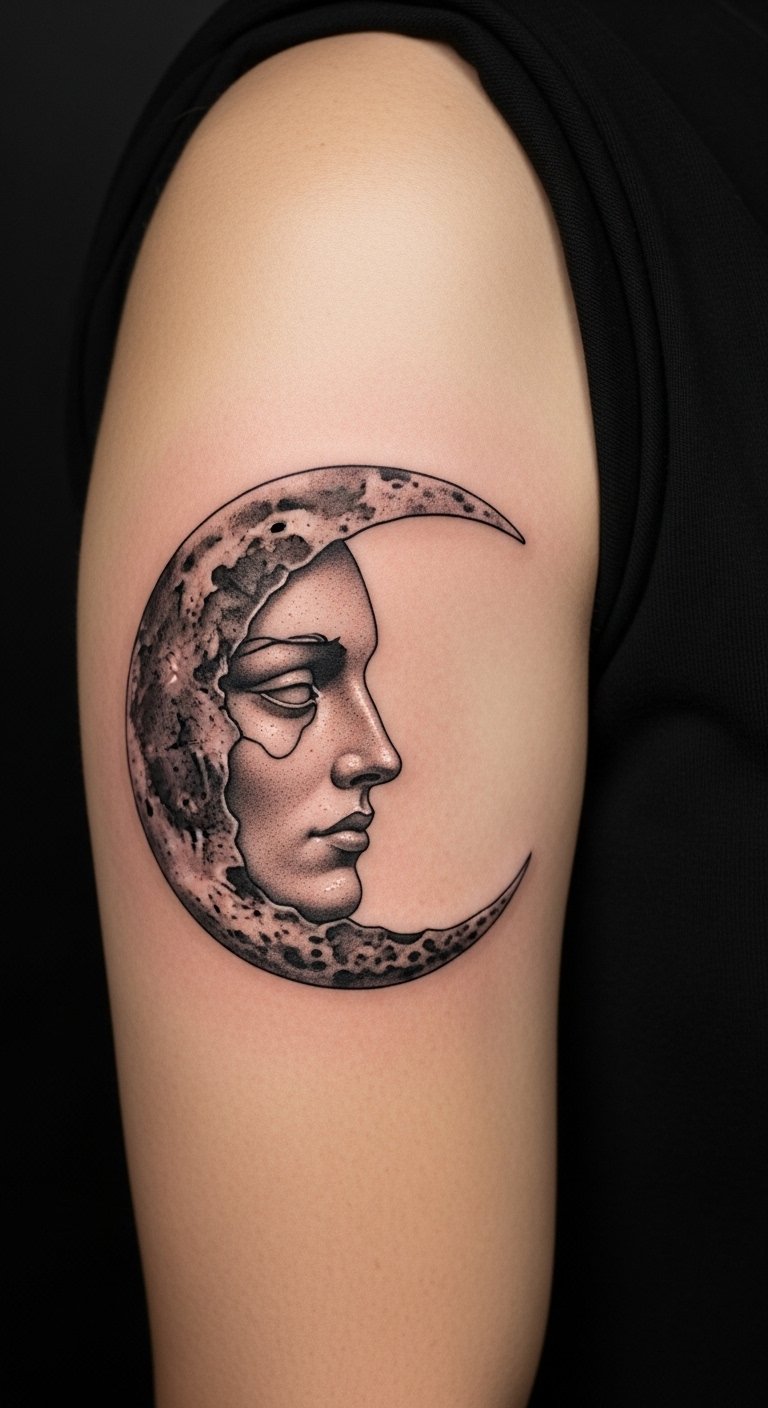
I fell for this after seeing ceramic art that inspired face-in-moon portraits. A Fornasetti-style moon blends classical beauty with lunar symbolism. The upper arm offers room for facial detail without extreme pain. Micro-realism needs an artist experienced in tiny gradients; otherwise the face will flatten. Ask for healed portraits on similar skin tones. Mistakes include over-detailing tiny expression lines that compact later. This is a refined, feminine take for someone who loves art history and subtle intrigue.
UV Reactive Moon Phases On Inner Wrist
Style/Technique: Fine Line + UV Ink
Pain Level: Low (2-3/10)
Session Time: 45–90 minutes
Best For: Subtle by day, glow under blacklight
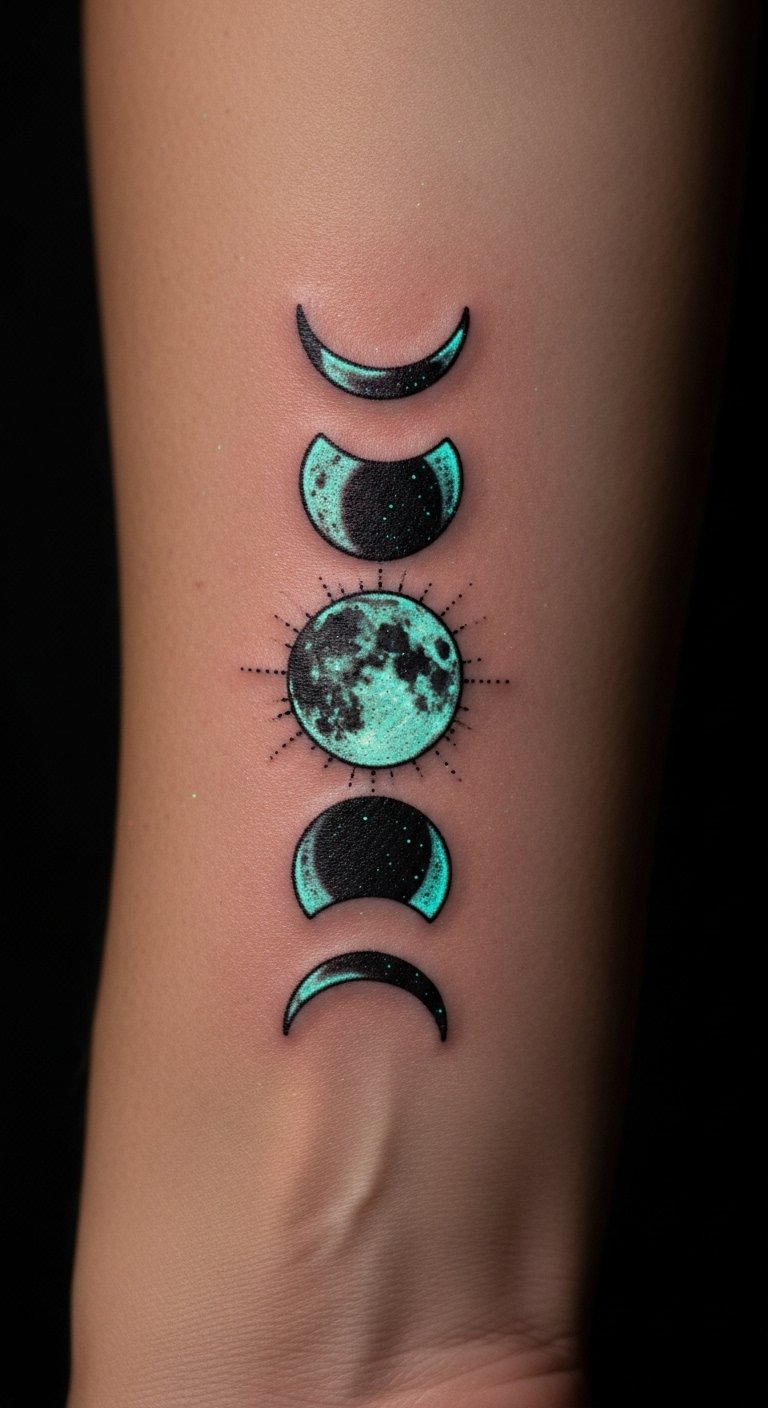
I tried a UV-accented moon and liked how private it felt. By day it reads as a fine line phase row; under UV it pops. UV ink is still niche—ask your artist about safety and long-term visibility, since UV pigments can fade differently. Inner wrist is low-pain but exposed, so sunscreen is essential. A common error is overusing UV for main outlines; keep it as an accent. This is a playful, feminine option for people who want secret glow without a neon daytime look.
Micro Moon On Fingertip
Style/Technique: Minimalist / Micro
Pain Level: High (7-8/10)
Session Time: 15–30 minutes
Best For: Tiny visible accents, discreet symbols
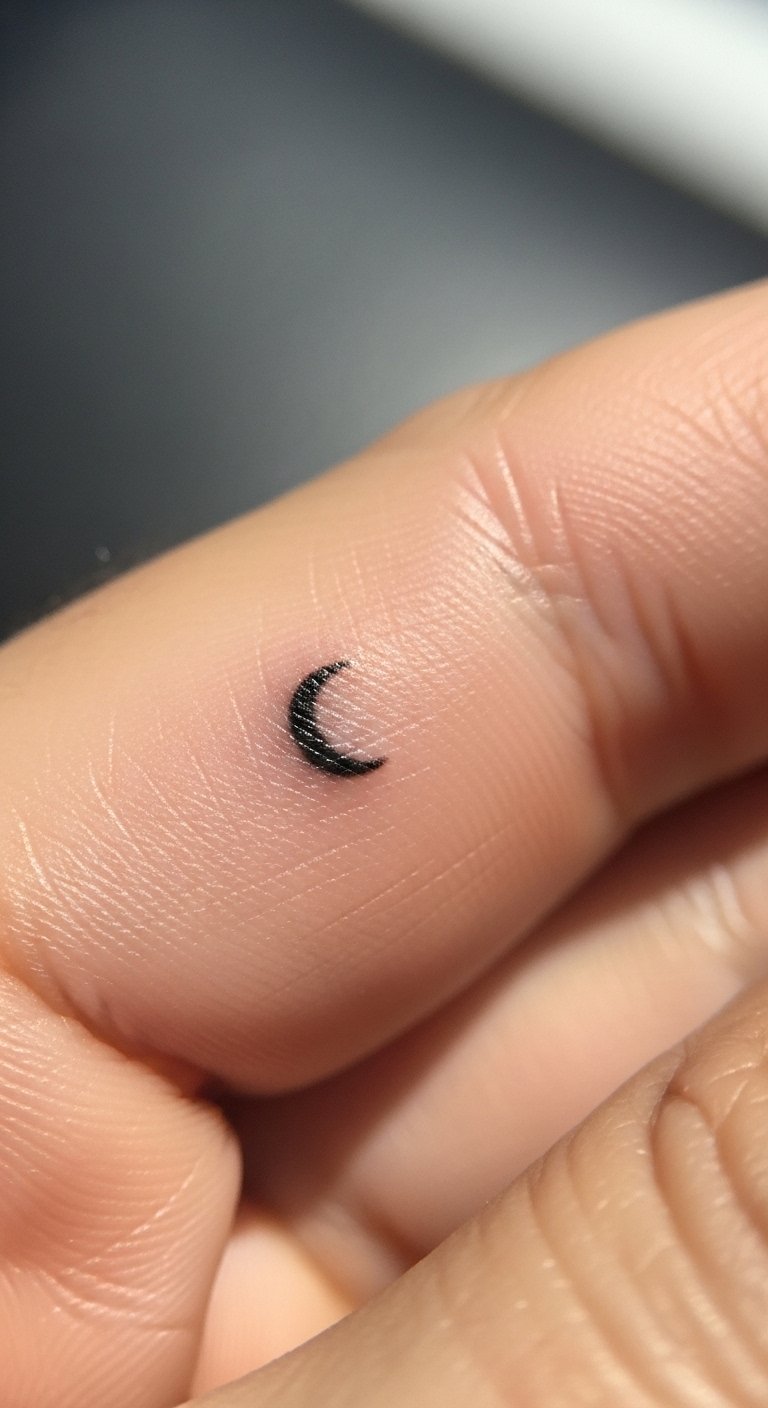
I learned tiny fingertip moons look delicate but demand care. Fingertips are high-pain and fade quickly due to constant use. Micro moons are adorable but expect faster blurring and possible touch-ups. Artists who do fingers plan thicker lines and place them where skin is less textured. Mistakes include asking for extremely thin crescents that disappear within months. If you want a small moon tattoo as a constant tactile reminder, finger placement works—just accept the maintenance trade-off.
Geometric Blackwork Moon Down Spine
Style/Technique: Blackwork / Geometric
Pain Level: High (6-8/10)
Session Time: Multiple sessions
Best For: Vertical statements, striking back pieces
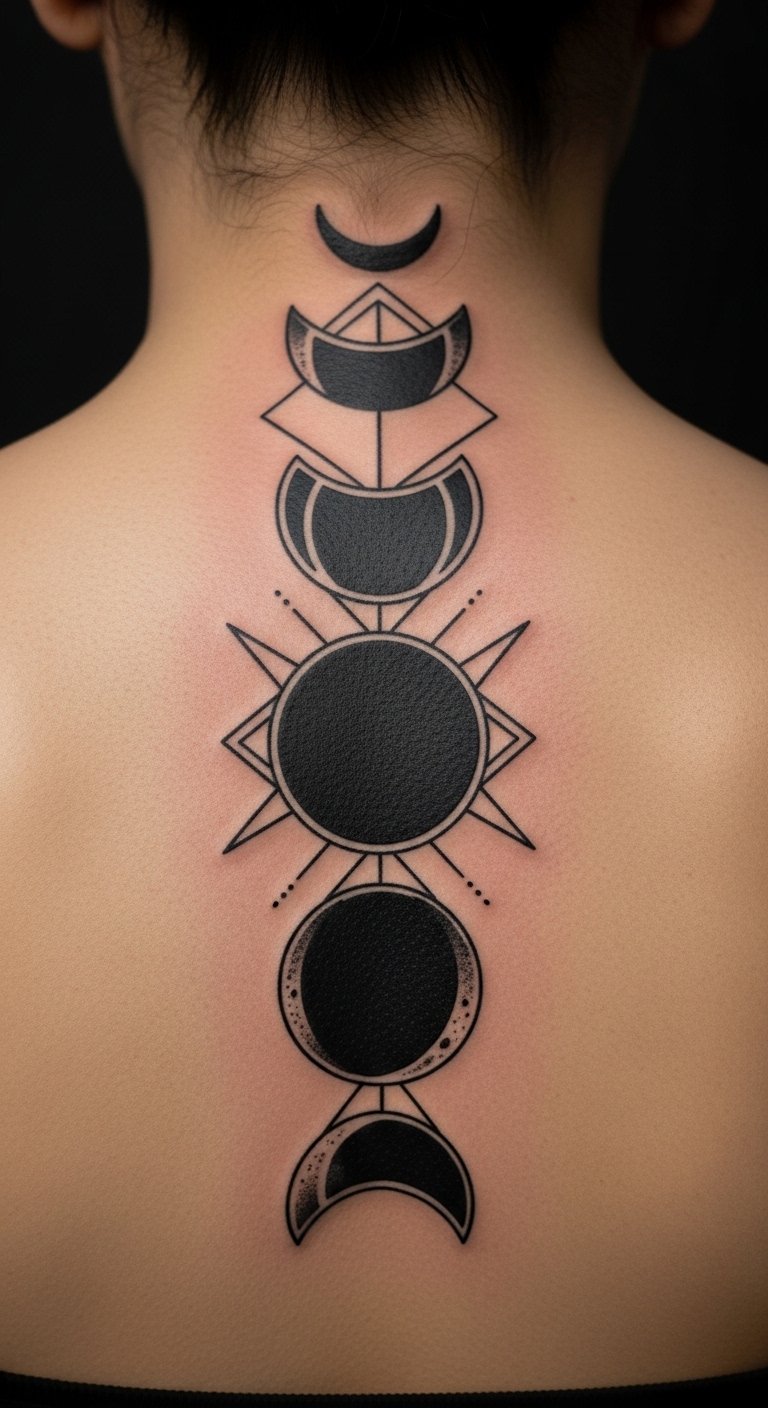
I admire spine pieces for their drama. A geometric moon sequence down the spine reads architectural and feminine. Spine work can be painful but yields a powerful canvas. Blackwork keeps the design legible as it ages. The main error is poor symmetry—choose an artist with strong stencil technique. Healed blackwork retains shape; fine interior geometry should be balanced with bold anchors so it doesn't blur into a single dark patch. This is for someone who wants a striking, sculptural moon piece.
Moon And Constellation On Shoulder Blade
Style/Technique: Illustrative / Fine Line
Pain Level: Low (2-3/10)
Session Time: 1–2 hours
Best For: Subtle celestial combos, easy concealment
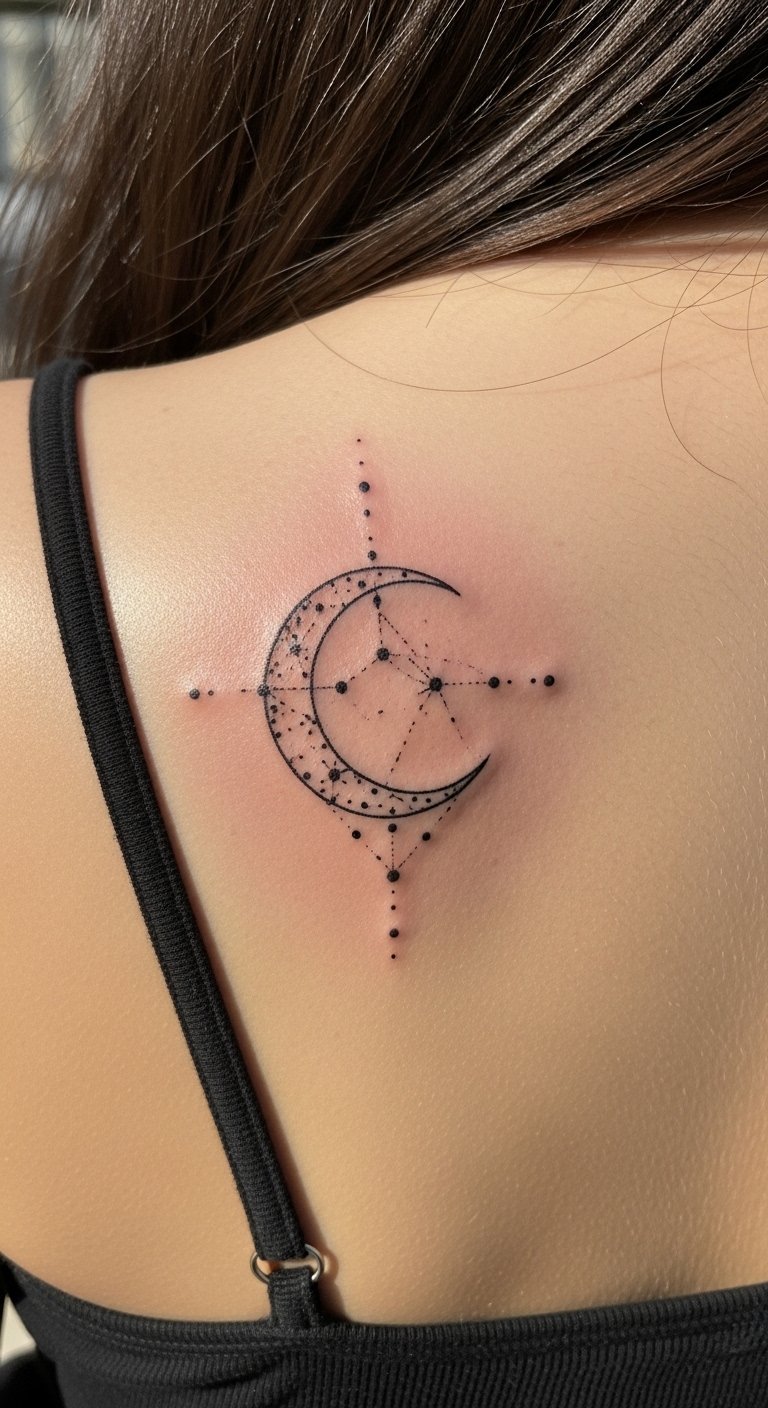
I like shoulder blade moons because they sit naturally with clothing and movement. Adding a constellation personalizes it—choose one meaningful to you. Pain is minimal and healing is straightforward. Healed results show that dotted constellations age well when dots are slightly larger than you think you need. Avoid micro-dots that vanish. Ask to preview constellation spacing so it remains readable. This placement is feminine, story-driven, and easy to hide for work.
Crescent Moon Necklace On Sternum
Style/Technique: Minimalist / Decorative
Pain Level: Medium-High (5-7/10)
Session Time: 1–2 hours
Best For: Center-front jewelry effect, intimate visibility
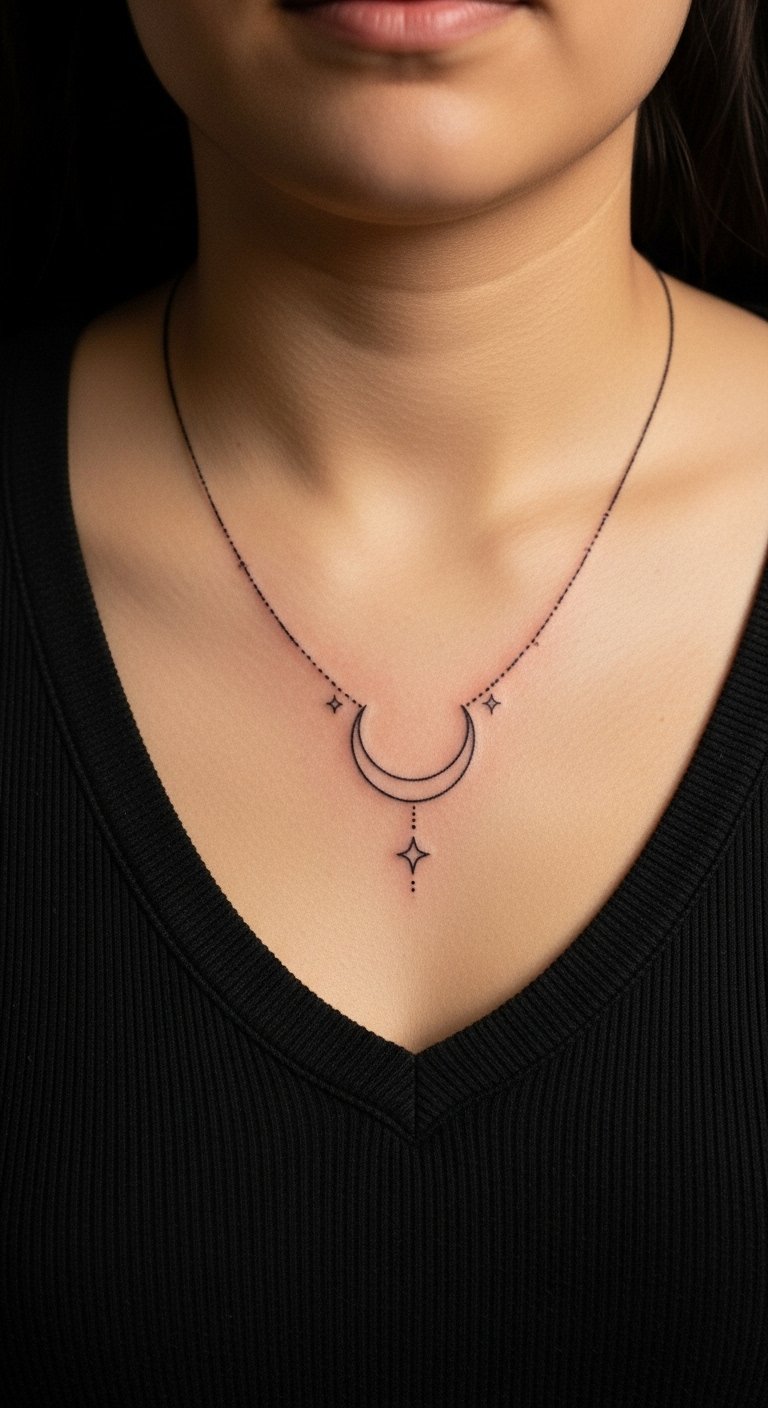
I often recommend sternum moons for people who want tattoo jewelry. This placement is intimate and flatters the chest lines. Pain varies with sternum sensitivity and clothing pressure during healing. Fine line necklaces need slightly heavier initial lines to last. A common mistake is over-embellishing with tiny dots that fade. Discuss shape and arc with your artist so it complements your anatomy. This is a confident, feminine adornment that reads like wearable art.
Small Moon Anklet Around Ankle
Style/Technique: Fine Line / Minimalist
Pain Level: Low (2-3/10)
Session Time: 30–60 minutes
Best For: Anklet-style, subtle feminine detail
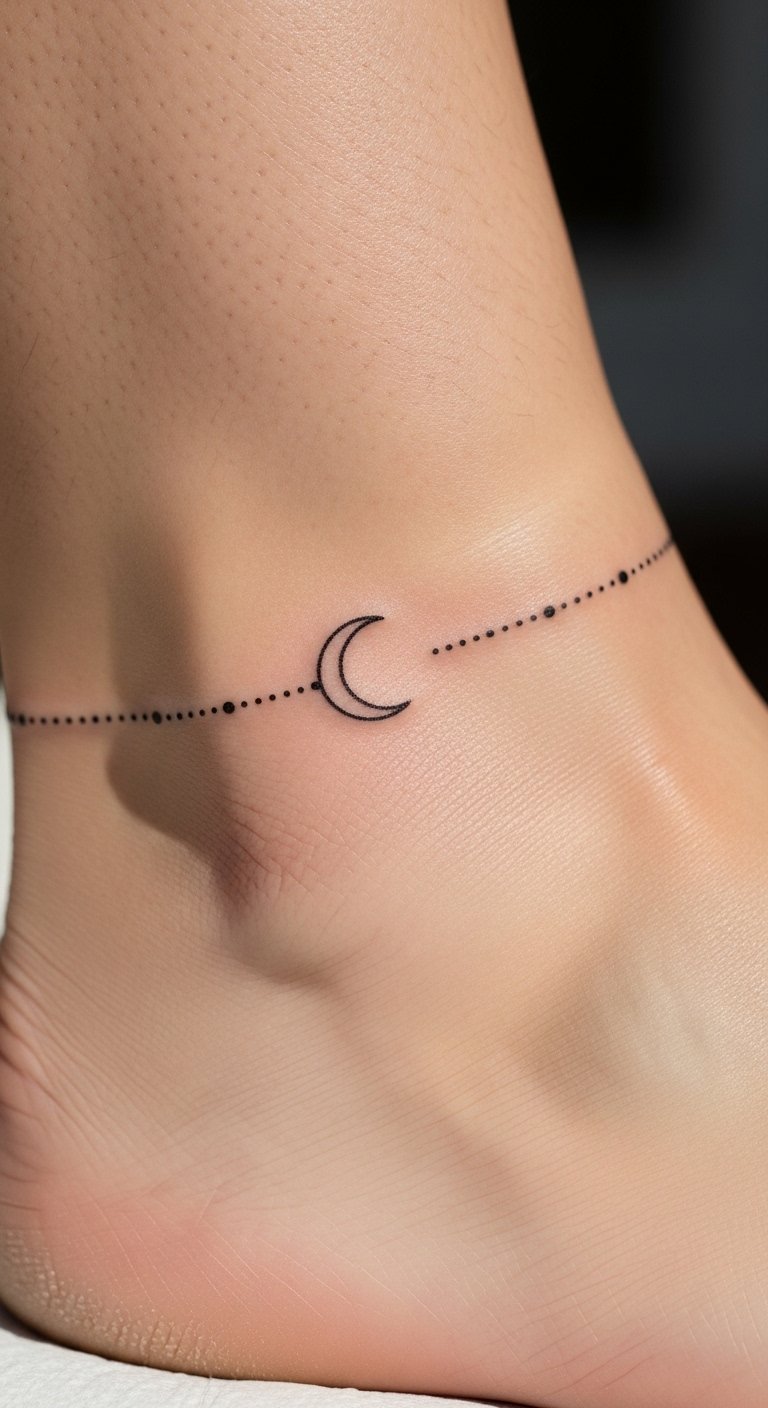
I love anklet moons for their jewelry-like placement. It’s low-pain and shows when you want it to. The ankle gets a lot of friction from shoes and socks, so expect slower healing and possible initial scabbing. Keep lines balanced—don’t cram many small elements into a narrow band. Artists often recommend slightly bolder dots so the anklet remains visible after settling. This is an easy, feminine choice that fits sandals and summer styles.
Moon With Pet Portrait On Thigh
Style/Technique: Micro-Realism / Portrait
Pain Level: Medium (4/5/10)
Session Time: 2–4 hours
Best For: Memorials or tributes, large canvas
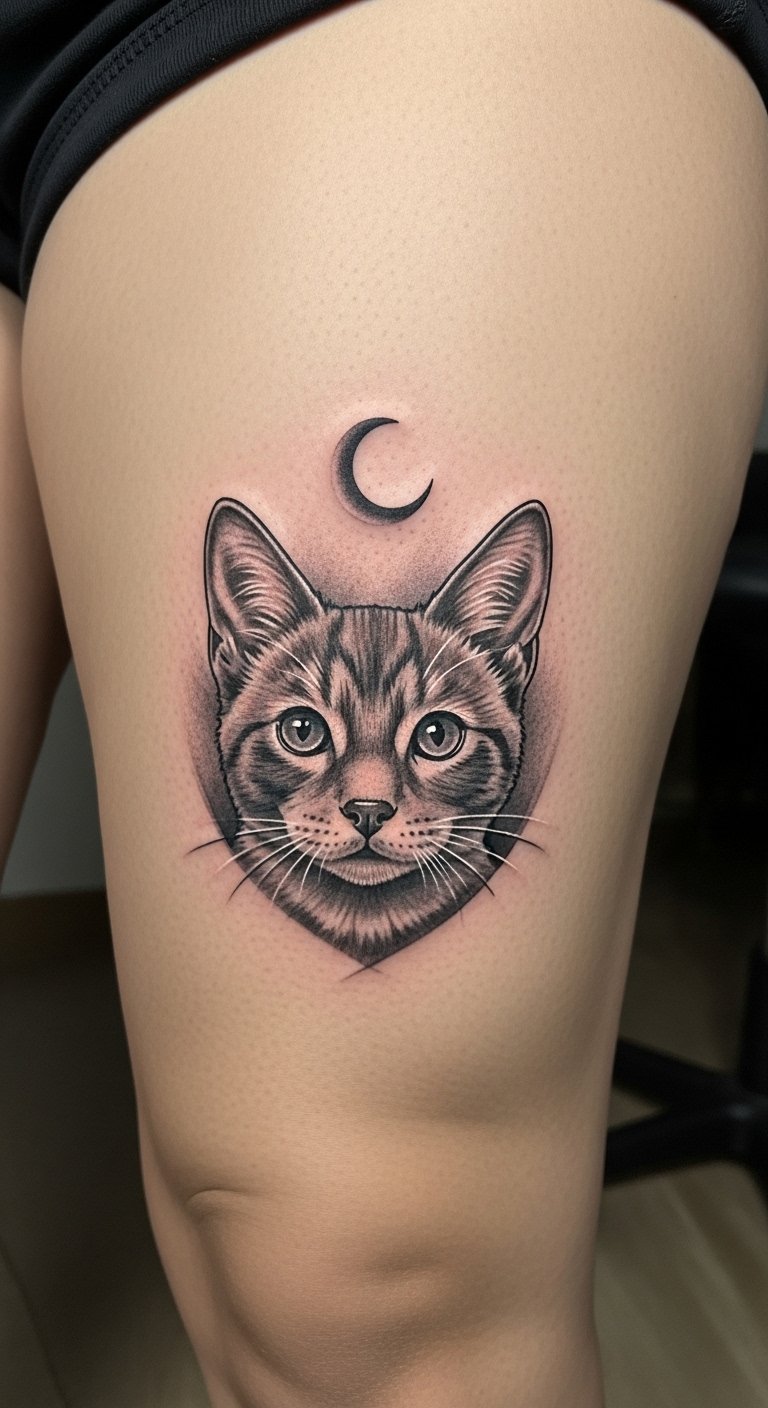
I’ve seen moons used as frames for pet portraits—very personal and moving. The thigh is forgiving and ideal for detailed micro-realism. Portraits require an artist experienced in animal features; a shaky hand will show. Healed work looks softer than fresh, so compare healed photos. The mistake is trying to cram facial detail into too small a moon; give the portrait room. This balances femininity with meaningful tribute, and keeps the piece mostly private.
Moon Phase Ring Behind Ear
Style/Technique: Minimalist / Micro
Pain Level: Low (2-3/10)
Session Time: 20–45 minutes
Best For: Tiny accents, hair-coverable placements
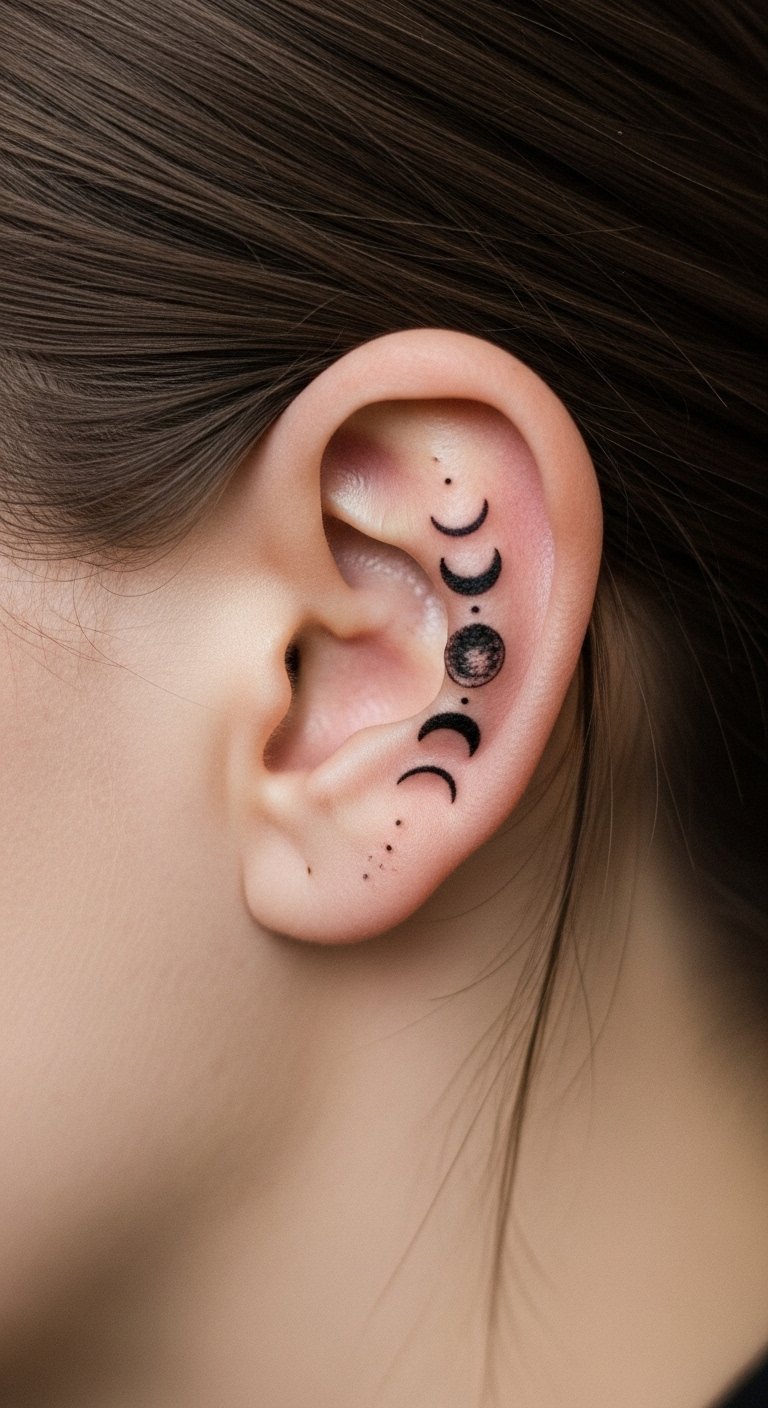
I recommend behind-ear moon phases for a discreet charm. It’s low-pain and easy to hide with hair. Healed results show they read like jewelry but require careful placement so they don’t fade into hairline. Mistakes include placing them too close to hair follicles—ask your artist to avoid areas that snag when you brush your hair. This subtle, feminine choice is perfect if you want a small moon tattoo that feels private.
Watercolor Half Moon On Back Of Knee
Style/Technique: Watercolor / Painterly
Pain Level: Medium (4/5/10)
Session Time: 1–2 hours
Best For: Unexpected placements, movement-friendly art
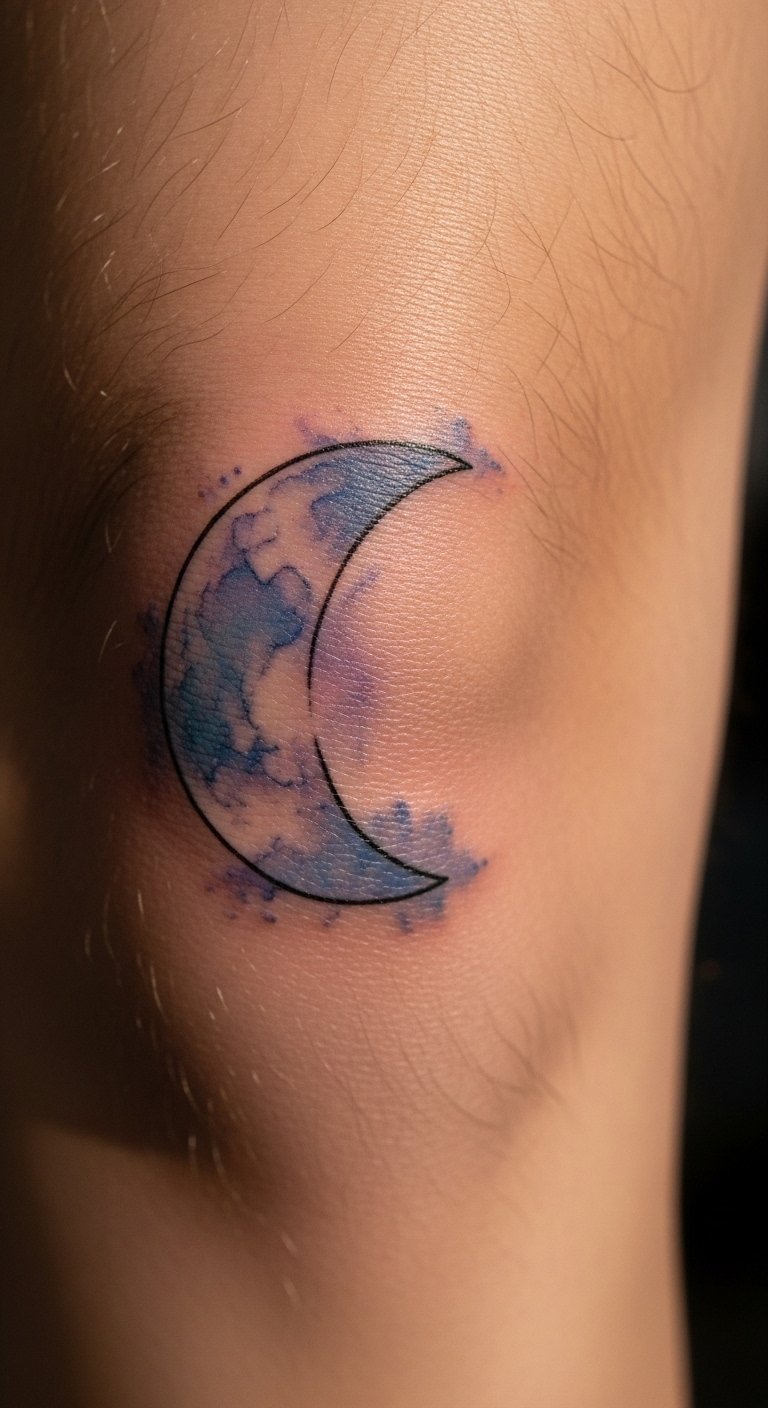
I picked the back of the knee for playful visibility. Watercolor here moves with the body and reads like a soft blossom when seated. Expect more sensitivity and some extra care because the area flexes. Healed watercolor shows softer pigment—ask for stronger initial saturation if you want lasting color. Avoid tiny line anchors that can break with motion. This is feminine and artistic—great for someone who enjoys unexpected placement and occasional show-off moments.
Hand-Poked Tiny Moon On Outer Wrist
Style/Technique: Hand-Poked / Micro
Pain Level: Low-Medium (3-5/10)
Session Time: 30–90 minutes
Best For: Tattoo tradition fans, subtle texture
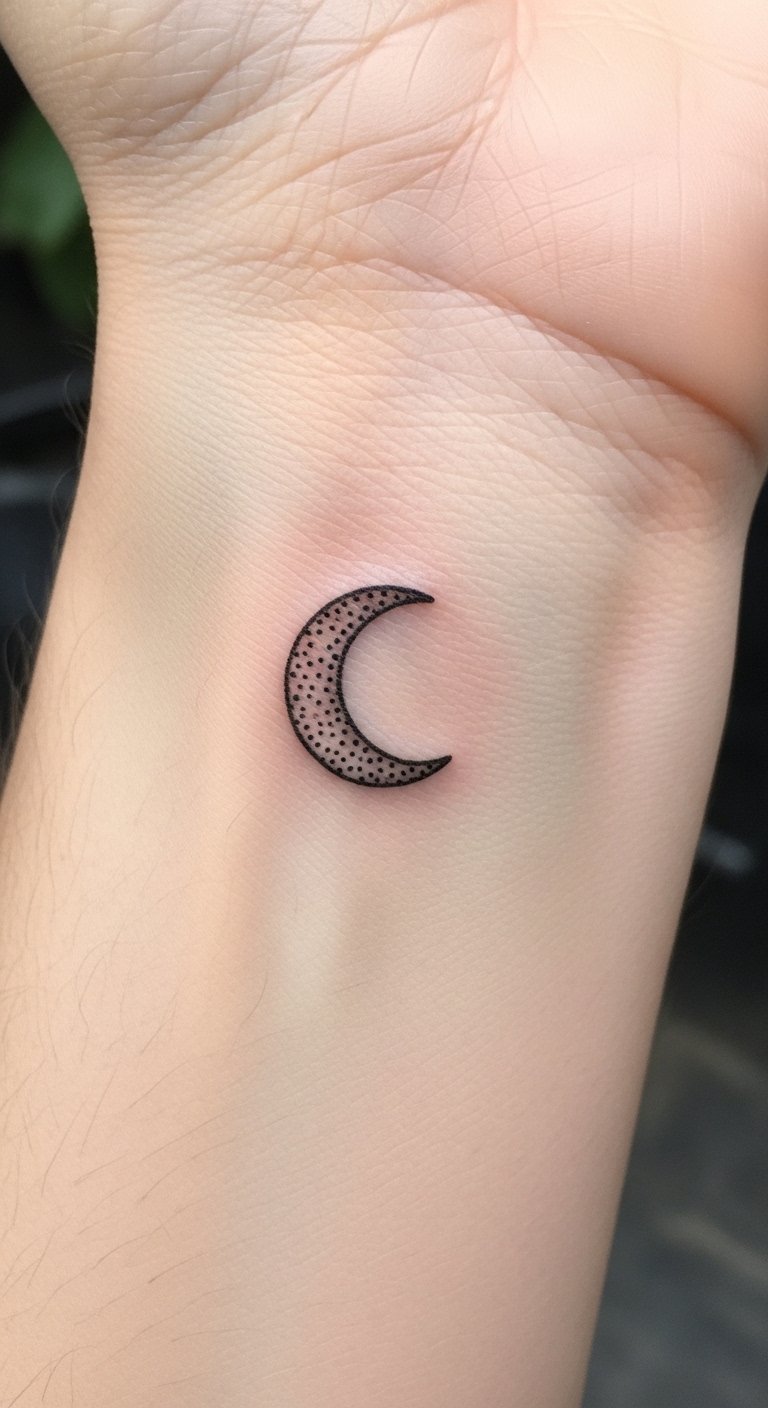
I experimented with a hand-poked crescent and liked the raw texture. Hand-poke (stick-and-poke) gives a softer, stippled feel. The wrist is visible and heals predictably. Choose an experienced hand-poke artist; inconsistent depth is the biggest risk. Healed hand-poke looks more textured than machine work and can be a very feminine, personal mark. If you love craft and want a tiny moon with character, this method is worth considering.
Crescent With Stars Behind Collarbone
Style/Technique: Fine Line / Celestial
Pain Level: Low-Medium (3-4/10)
Session Time: 45–90 minutes
Best For: Collarbone accent, airy feminine look
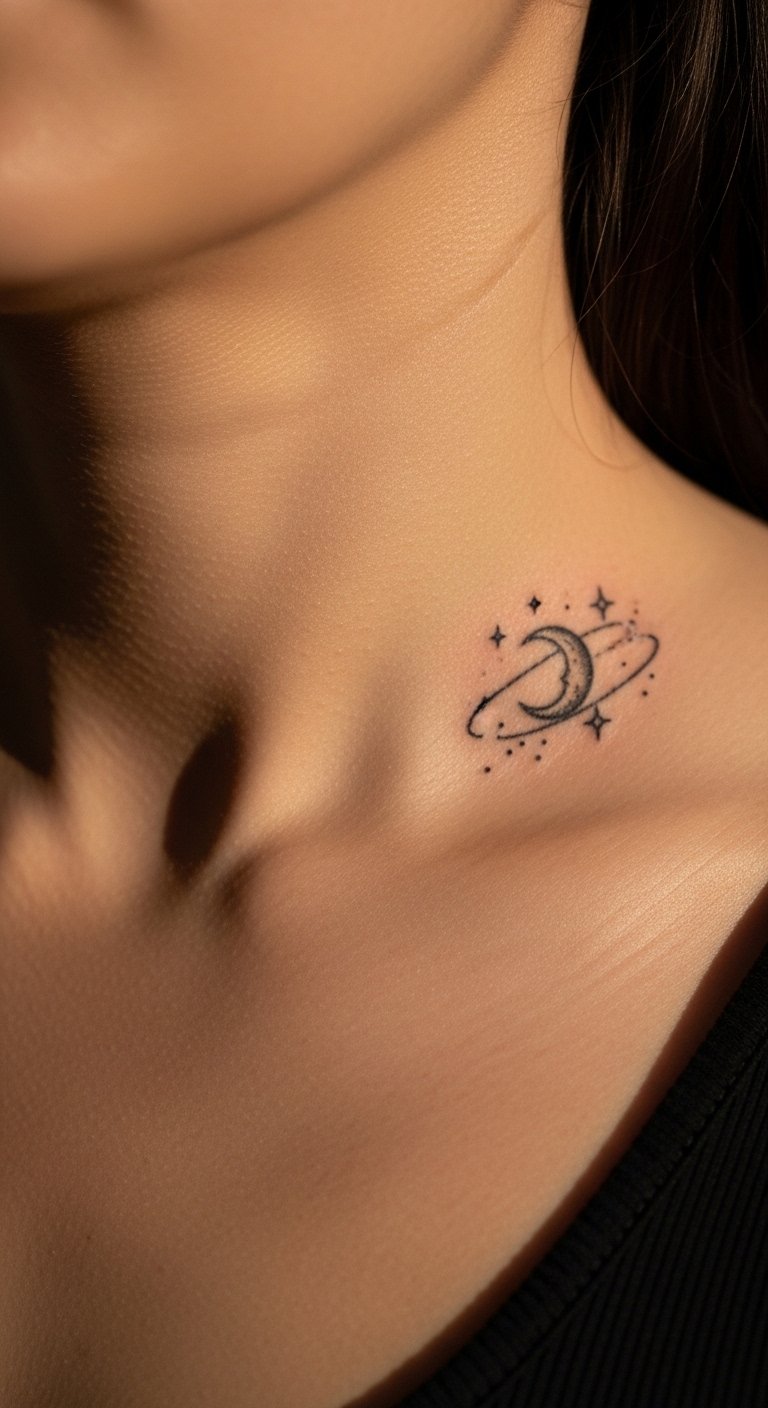
I like moons tucked along collarbones for a delicate frame. Adding tiny orbiting stars turns the piece into a soft cluster. Pain near bone is higher but tolerable. Healed pieces need slightly bolder stars than you might expect so they remain visible. Avoid over-detailing the area. This reads feminine and airy and pairs well with necklaces or open-neck clothing.
Moon Phase Armband On Upper Arm
Style/Technique: Minimalist / Linework
Pain Level: Low (2-3/10)
Session Time: 1–2 hours
Best For: Subtle sleeve starters, cyclical storytelling
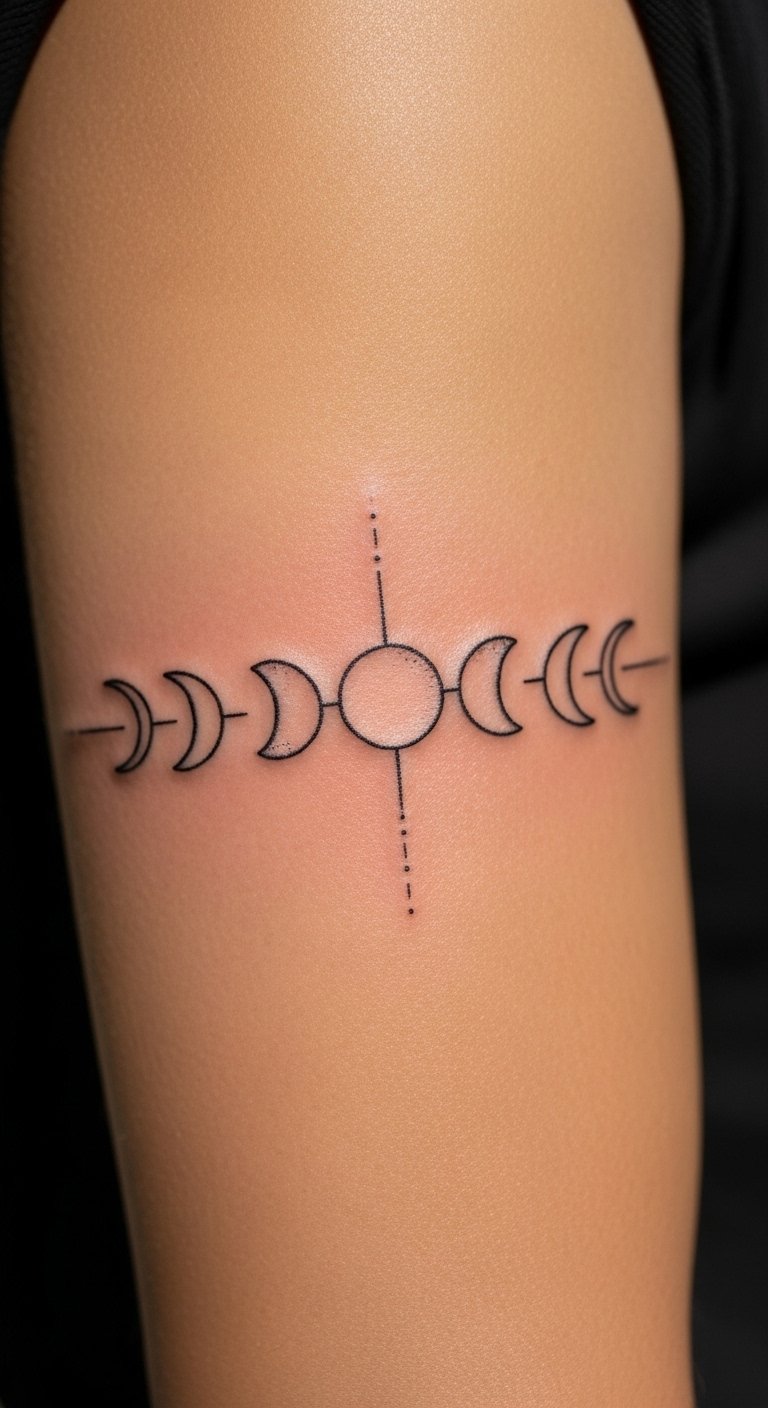
I recommend a moon phase armband if you want a cyclical narrative without a full sleeve. The upper arm is low-pain and easy to cover. Healed linework shows the sequence clearly if spacing is generous. Common mistake: making moons too small or too close—give each phase room. This is a feminine, tidy way to carry lunar symbolism around your arm.
Lunar Mandala On Thigh
Style/Technique: Blackwork / Mandala
Pain Level: Medium (4-5/10)
Session Time: Multiple sessions
Best For: Decorative large pieces, meditative imagery
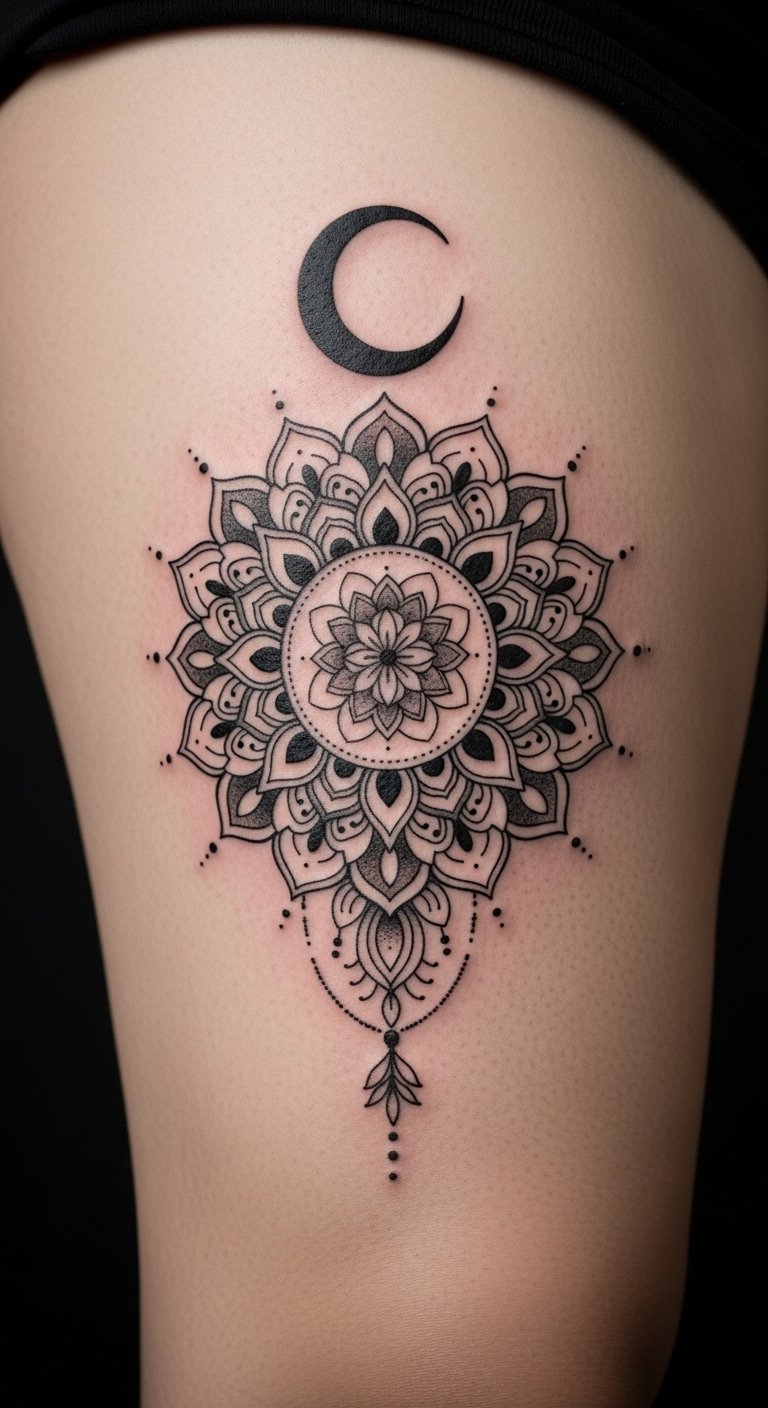
I’ve found mandala moons feel grounding. The thigh handles large, meditative patterns well. Blackwork mandalas age predictably because they rely on shape more than thin detail. Pain is moderate and sessions may be needed for symmetry. The main issue is imbalance—good stenciling is crucial. This is a feminine, contemplative statement that pairs well with personal symbols tucked into petals.
Minimal Moon Tattoo On Ankle Bone
Style/Technique: Minimalist / Single Line
Pain Level: Low (2-3/10)
Session Time: 20–45 minutes
Best For: Small visible detail, everyday wear
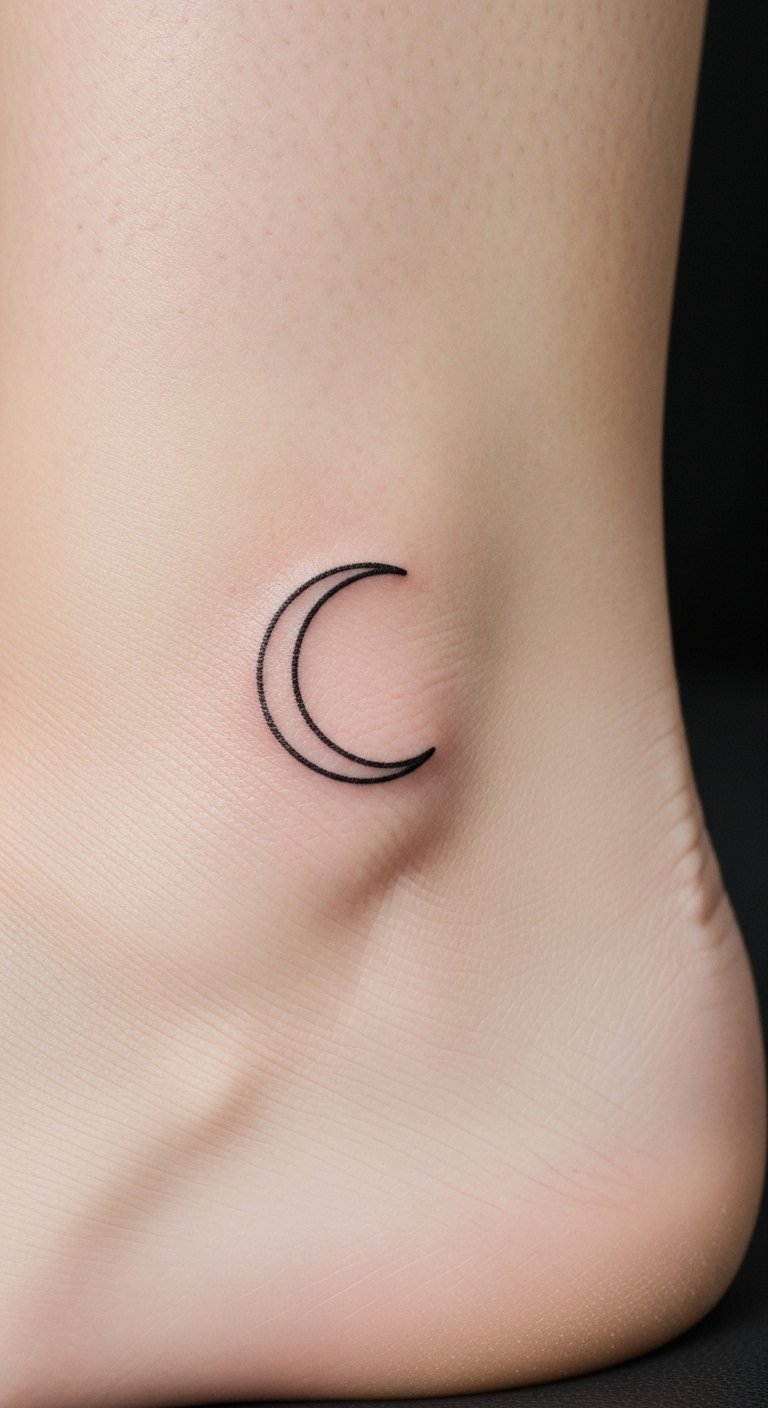
I often suggest an ankle bone crescent for a classic small moon tattoo. It’s low-pain and looks like a tiny charm. Keep lines balanced; a slightly bolder single stroke lasts longer. Watch friction from shoes during healing. This is an understated, feminine pick that’s easy to live with and style.
Tattoo Prep and Aftercare Essentials
Aftercare Essentials:
- Aquaphor Healing Ointment, 14oz tube — Recommended for the first 3–5 days to prevent drying and scabbing
- Saniderm Transparent Adhesive Bandage, 6-inch roll — Artists recommend for second-skin healing for 24–72 hours
- CeraVe Fragrance-Free Moisturizing Lotion, 12oz — For days 4–14 to keep skin hydrated without irritation
- Dr. Bronner's Unscented Castile Soap, 8oz — Gentle daily cleanser during initial wash phase
Before Your Appointment:
- Tattoo Numbing Cream With 5% Lidocaine (Generic) — Use only if your artist approves; apply 30–45 minutes before session
- Tattoo Stencil Transfer Paper — For DIY mockups and artist consultations
Long-Term Maintenance:
- SPF 50 Sunscreen Stick For Tattoos — Daily UV protection to prevent fading
- Mad Rabbit Tattoo Balm, 2oz — For keeping healed tattoos vibrant and moisturized
- Hustle Butter Deluxe, 8oz — Vegan aftercare option many artists endorse
Optional Comfort & Recovery:
- Tattoo Numbing Spray — For touch-ups or very sensitive areas (ask artist first)
- Hydrocolloid Bandages (Large) — Good for covering scabs or protecting small healed spots
I include both industry staples (Aquaphor, Saniderm) and long-term maintenance (sunscreen, tattoo balm). Artists I trust will tell you exactly which product to use and when.
Frequently Asked Questions
Q: How bad does a tattoo actually hurt?
A: Pain depends on placement and tolerance. Outer arm/forearm = low (2–4/10). Ribs, sternum, fingertips = higher (6–8/10). It’s more like extended scratching than a single sharp shock. For sensitive spots, consider discussing tattoo numbing cream with your artist.
Q: What if I regret my tattoo later?
A: Sit on ideas 6+ months before committing. Start small if you’re unsure. Laser removal exists but is a long process; planning placement for hideability helps if you want options later.
Q: How do I keep my moon tattoo from fading?
A: Sunscreen is essential. Daily use of an SPF 50 stick protects pigment. Black-and-gray moons age best across skin tones.
Q: Can I work out after getting inked?
A: Wait at least 48–72 hours for low-friction areas, longer for flex zones. Excessive sweating and friction increase infection risk. If you must move, keep the area clean and dry.
Q: Should I get a small moon first to test pain?
A: Only if you truly want a small moon. Pain varies by placement, not size. A wrist crescent is a good first-moon option for many people.
Q: How long does a tattoo take to heal?
A: Surface healing: 2–3 weeks. Full settling: 2–3 months. Use Saniderm or Aquaphor as your artist recommends during the first week.
Q: Do tattoos look different on different skin tones?
A: Yes. Black and gray shows up consistently. Bright pastels may read muted on deeper tones. Talk to an artist who tattoos a range of skin tones and ask to see healed photos.
Conclusion
Do your research and bring reference images. A short consultation will refine placement, line weight, and how the piece will age on your skin. For aftercare start with Aquaphor and switch to a fragrance-free lotion and SPF as it heals. Which moon style are you leaning toward?
— Small note on trends/stats I pulled while researching: fine line moon phases show up across many 2025 trend lists (appearing in about 12 of 20 trend sources I reviewed), and moon phases themselves were a common motif across compiled design results (about 13 of 20 sources) (sources: ourmindfullife.com; the-flash-tattoo.us; vean-tattoo.uk).