
Someone I know spent months scrolling before realizing the real decision was which tiger lily style would still read clearly after two years. I have seen fine line stems blur on wrists and bold thigh pieces hold color through summers. Below are twelve tiger lily tattoo ideas with practical notes on aging, pain, touch-ups, and what to say at the consult so your ink looks like you want it to after the first year.
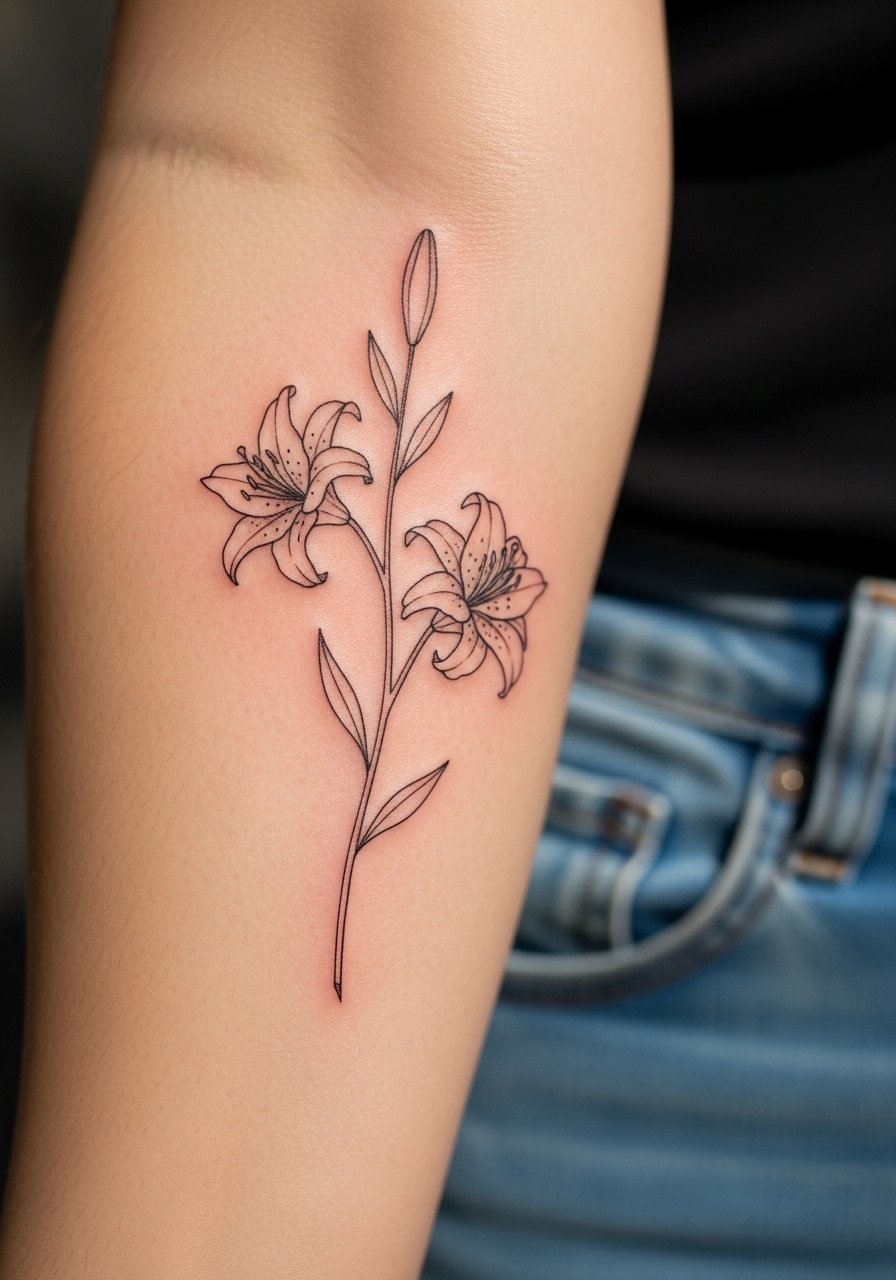
1. Fine line tiger lily on forearm
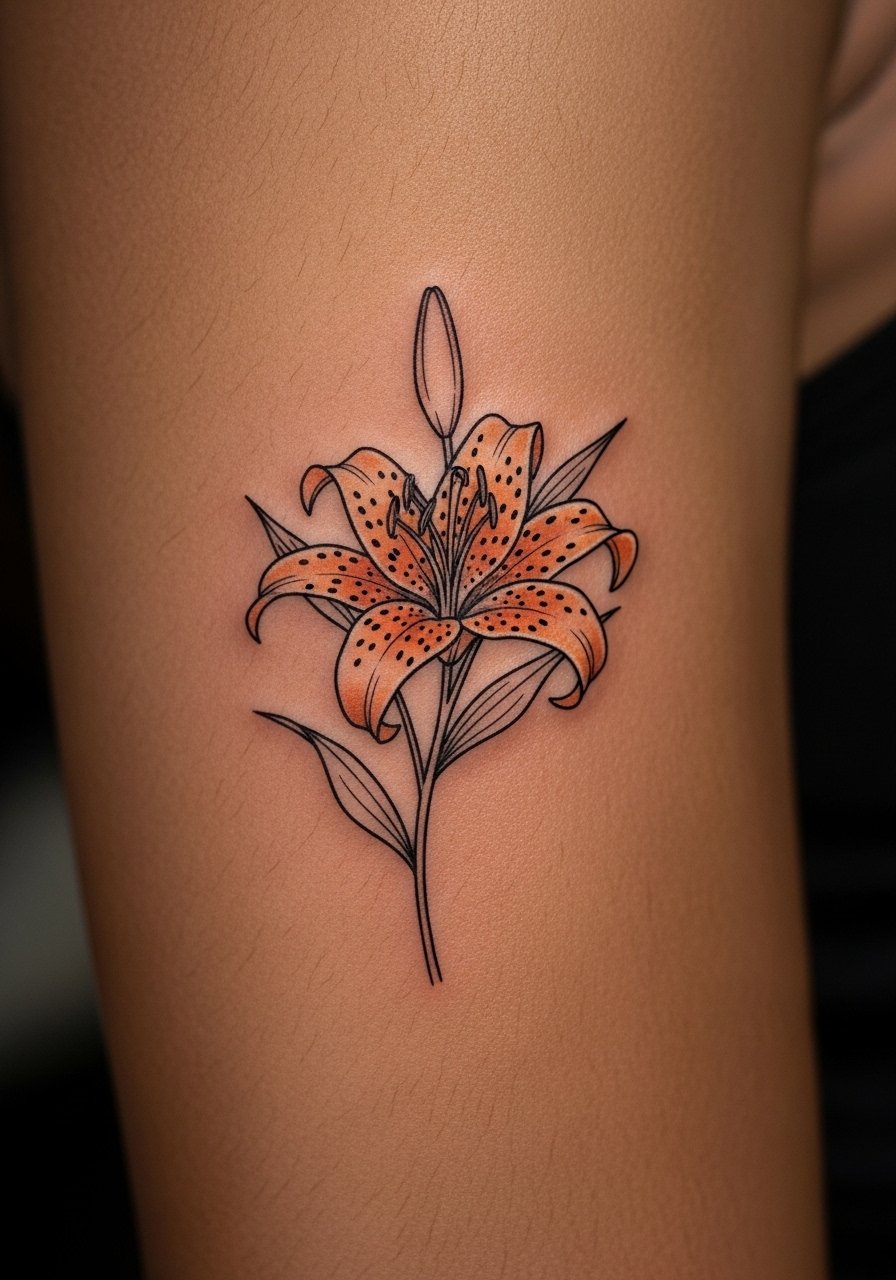
Someone I know first saw this on a friend's inner forearm and booked something similar right away. Fine line reads as delicate and works well for small to medium stems, but expect touch-ups at the one to two year mark if the wrist gets sun. Tell your artist you want visible linework with modest spacing, not single-needle impossibly tight lines. Pain is mild to medium for forearm work. Blowout risk is low here, but avoid overly thin linework on active areas like the wrist. Best for first-timers who want botanical clarity and easy concealment with long sleeves.
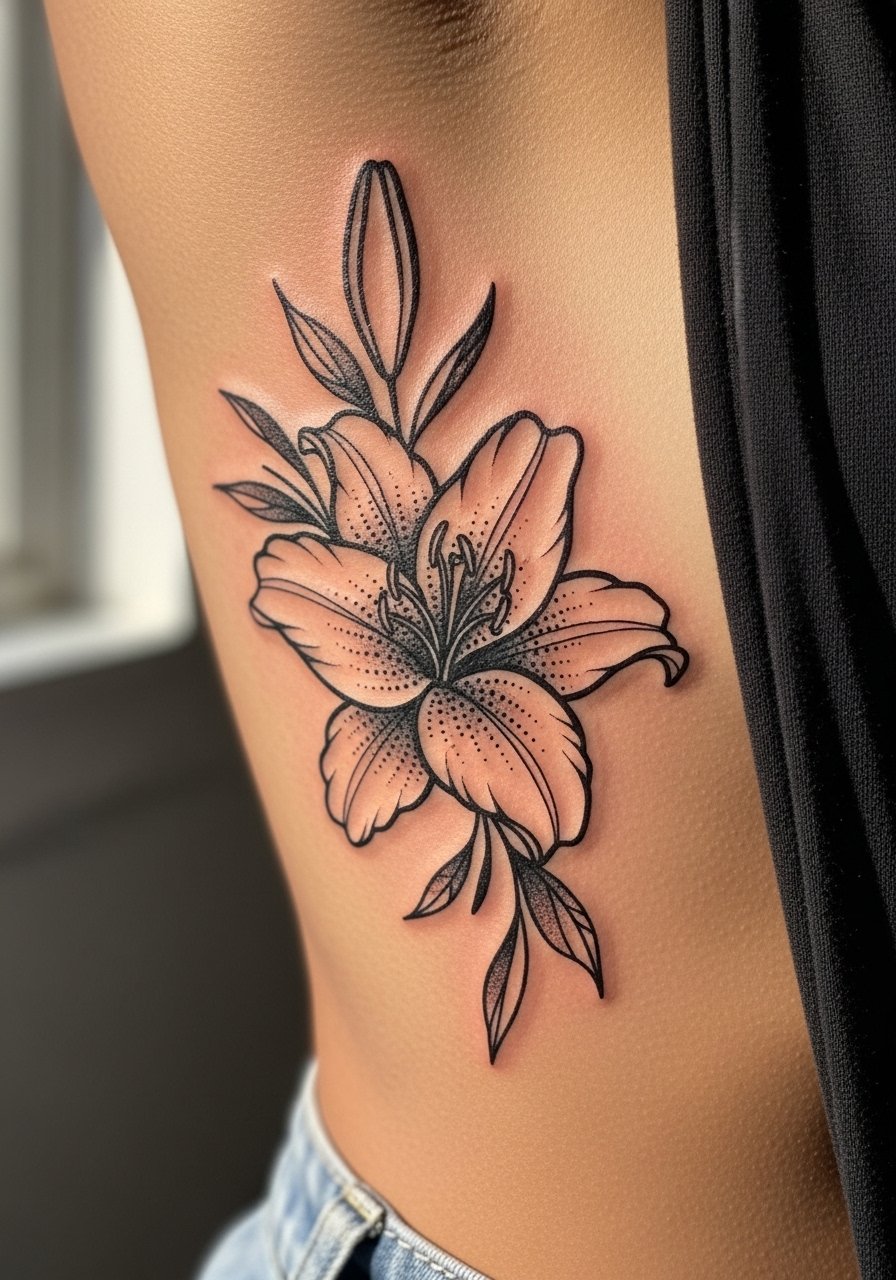
2. Blackwork tiger lily outline on ribcage
Fair warning, ribs are an eight on most informal pain charts. The stark black outline reads strong and ages clean because saturation is dense. Artists split on fine line on ribs. One camp says the skin stretches and lines blur within two years. The other camp says correct needle depth and spacing solve that. If you prefer blackwork, ask for slightly thicker contour lines and plan a single touch-up session after healing. The session feels sharp but quick between breaks. This placement suits someone chasing contrast and symbolic permanence.
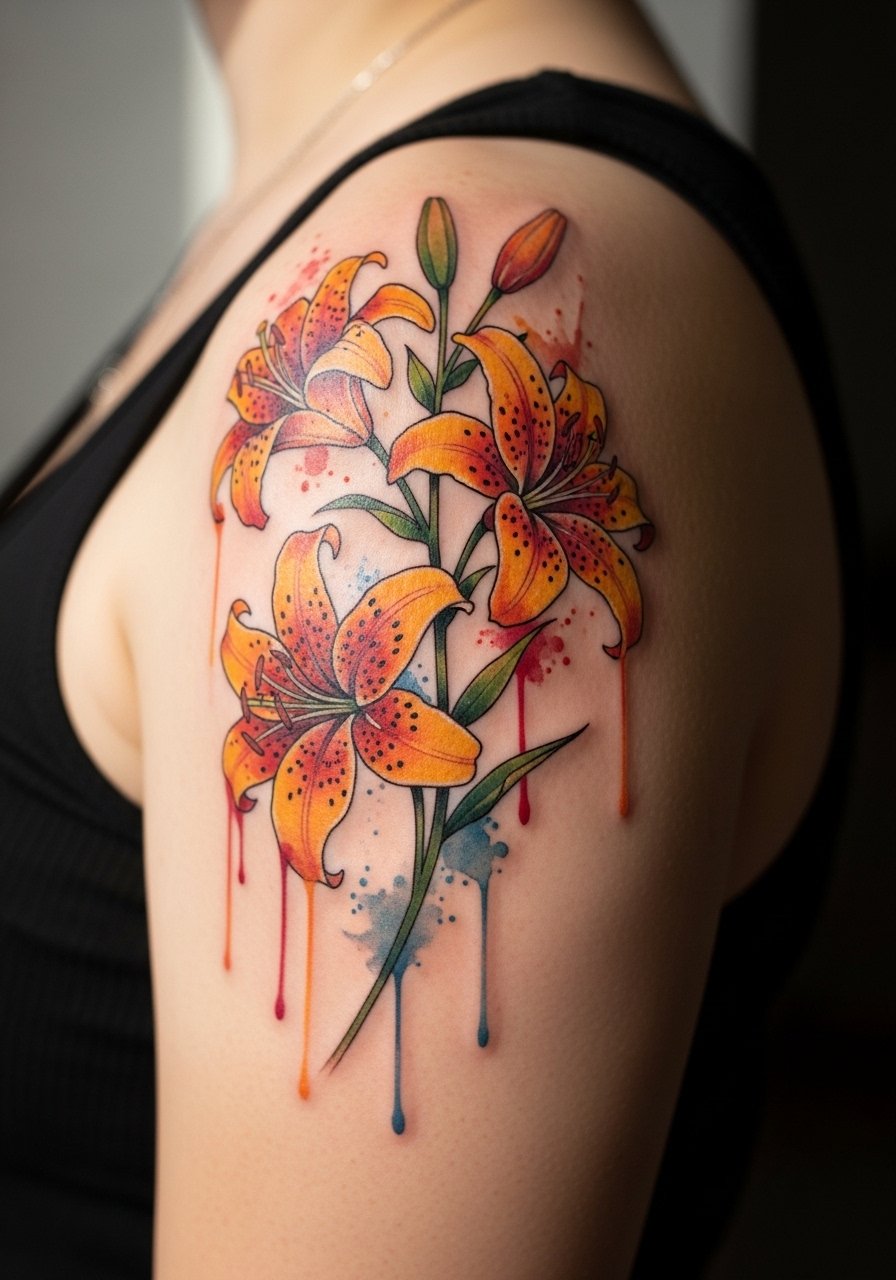
3. Watercolor tiger lily with splashes on shoulder
Most watercolor pieces from a few years ago lost their edge from sun exposure. This shoulder version keeps the watercolor feel by anchoring it with a thin contour line and controlled pigment placement. The shoulder is forgiving for saturation so the burnt orange and crimson washes last longer than on hands. Tell your artist you want soft wash edges and a small outline to protect shape. Pain is low and sessions are short. Expect gradual fading at two to five years and plan light color touch-ups if you want that original pop preserved.
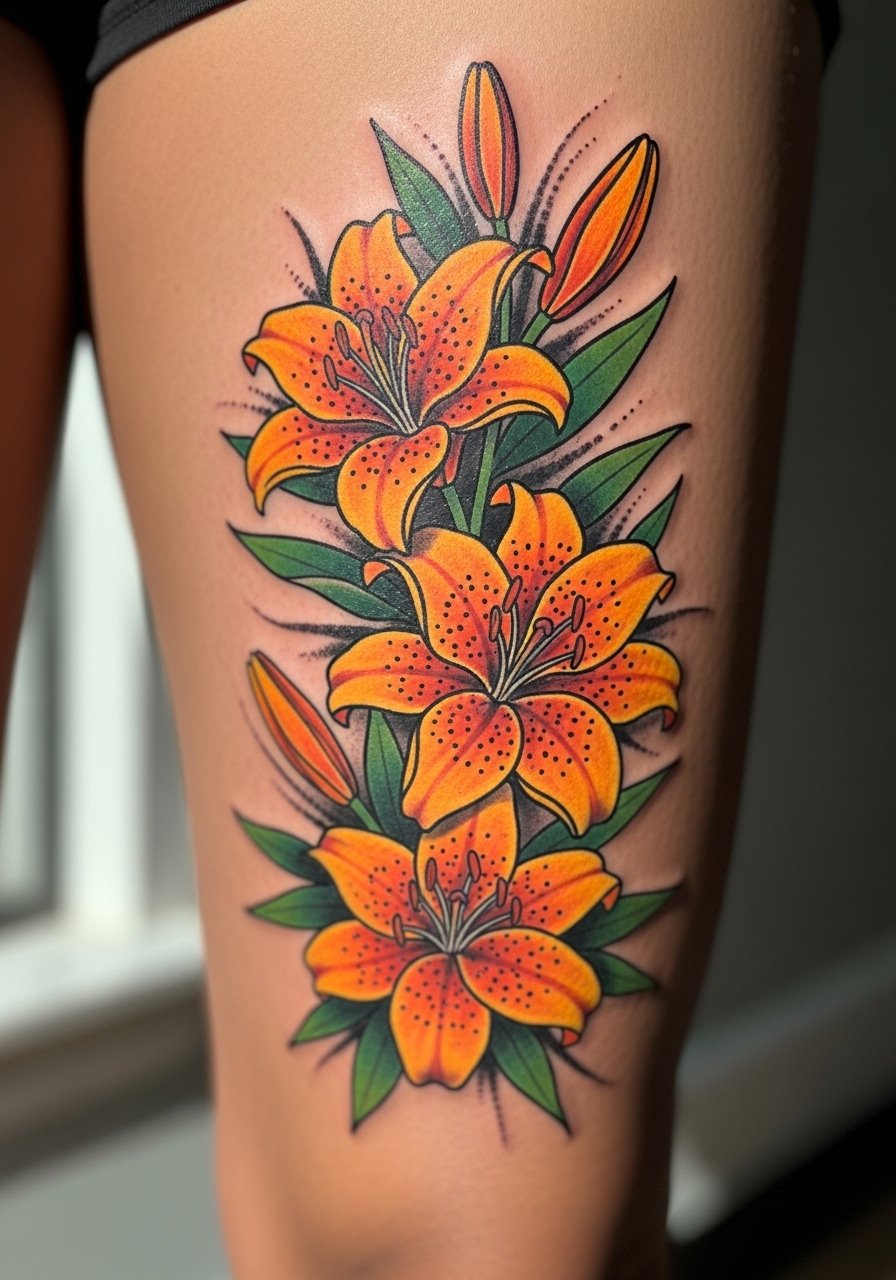
4. Neo-traditional tiger lily on thigh
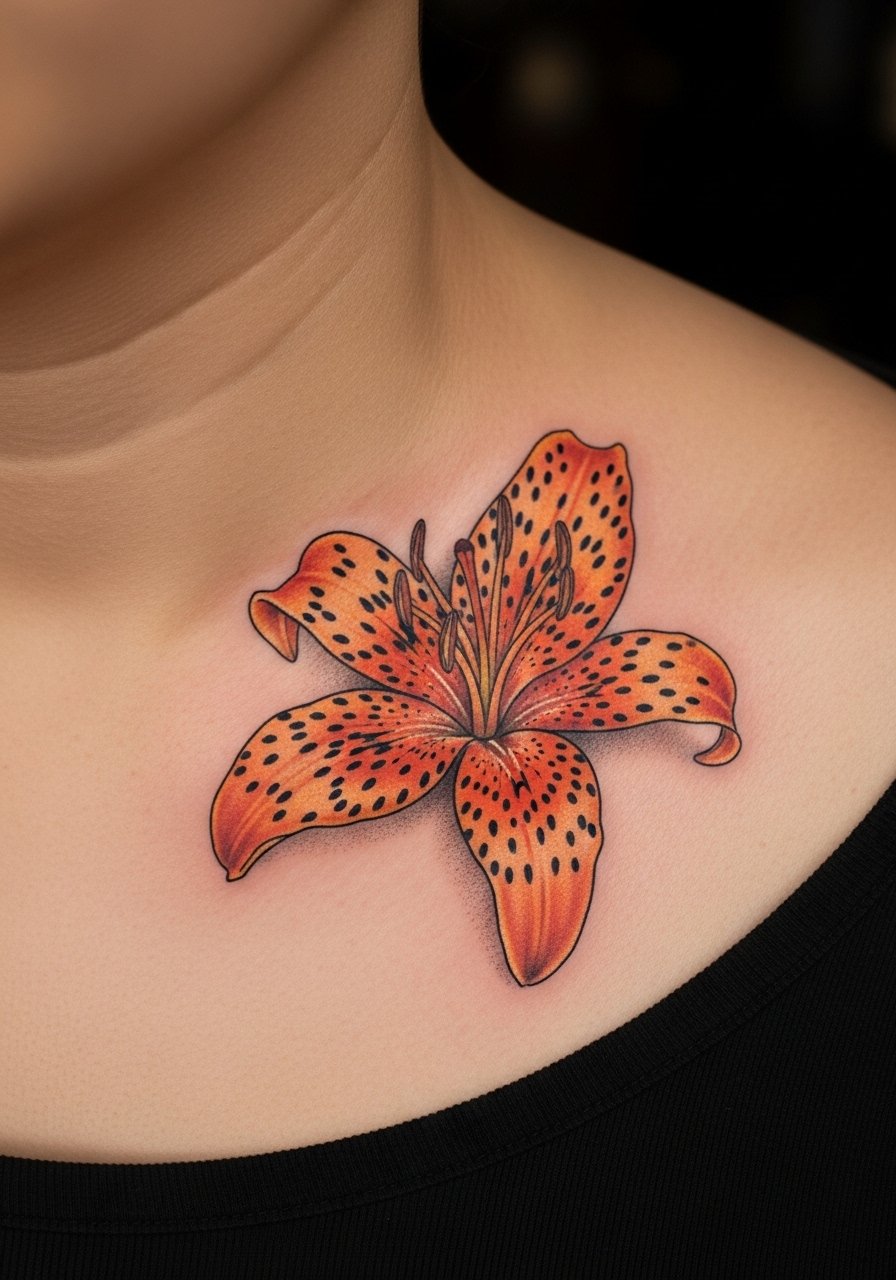
There is something about thick contour linework with full color fills that reads across a room. Thighs hold pigment well and the larger canvas lets the artist play with petal layering. During consults I recommend showing reference photos that match your preferred color palette and scale. Healing is easy for most people but watch summer sweat if you plan a multi-session build. Stretching after weight change is a real issue here. If you expect body fluctuation, ask the artist to favor shapes that tolerate a few inches of change.
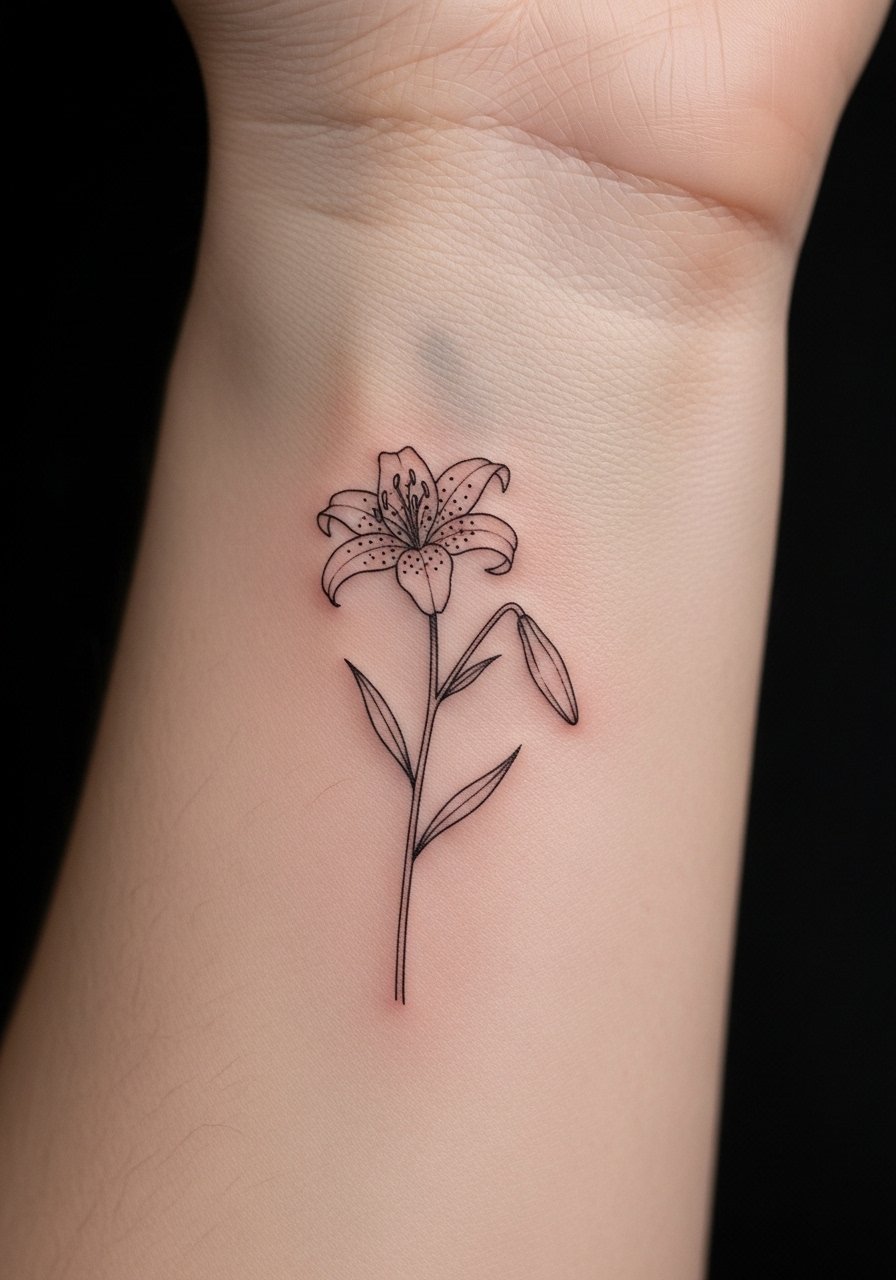
5. Minimalist single tiger lily stem on wrist
The biggest mistake with wrist pieces is going too thin with linework. Thin lines on the wrist can blur fast because the skin flexes and sees sunlight. If you want subtle, ask for slightly heavier linework than a single-needle flash and plan a touch-up at year one. Pain is mild. This style suits first-timers who need something small and concealable. Include a one-sentence note for hand or wrist placement in your consult about career considerations and visibility expectations.
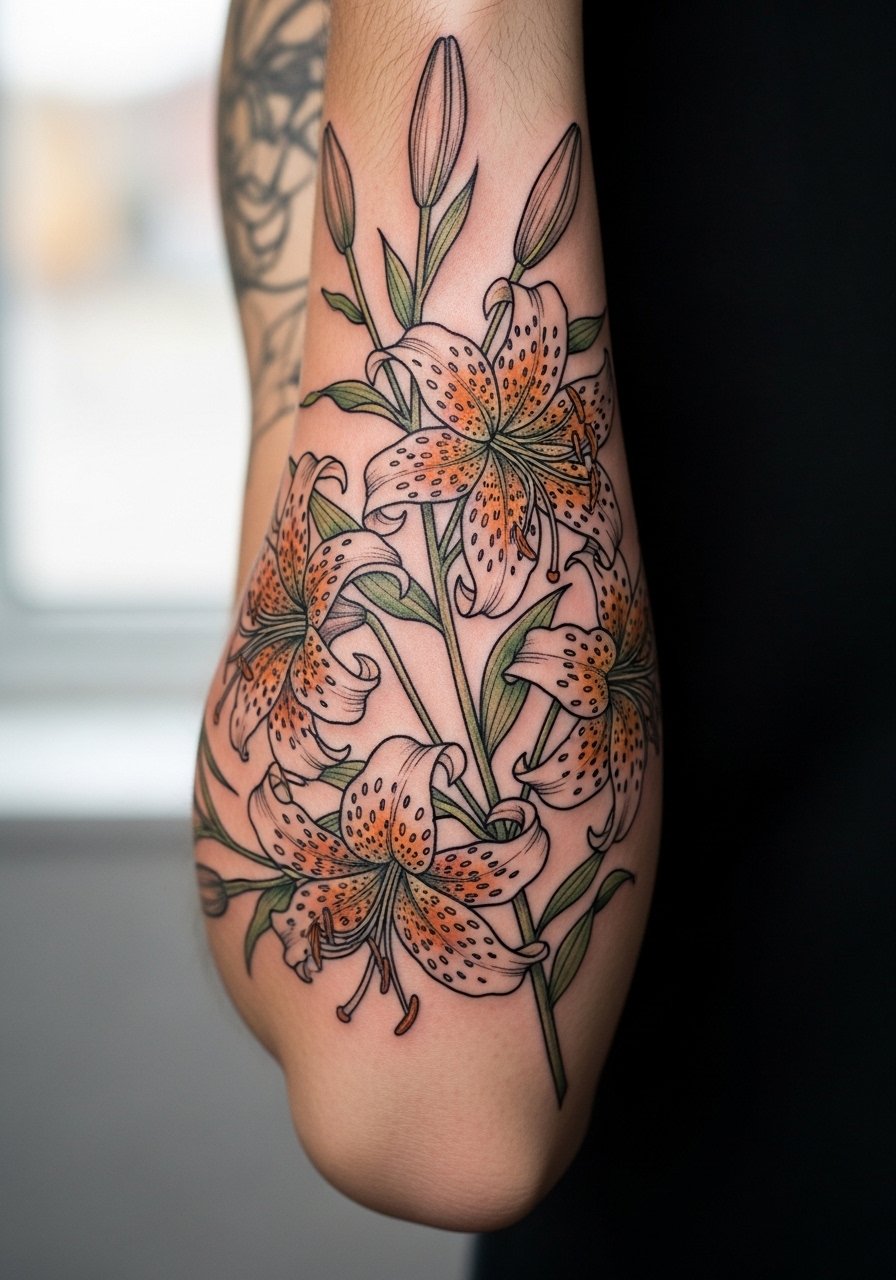
6. Botanical tiger lily sleeve with leaves on arm
When you build a sleeve in stages you can create a coherent plant story that expands without looking stuck-on. I have seen patchwork sleeves start with a small lily and grow into a dense botanical band over two to four years with predictable session planning. Discuss session sequencing in your booking and request portfolio examples of completed sleeves for skin tones like yours. Sessions vary from short touch-ups to full-day color blocks. Expect multiple touch-ups down the road but sleeves generally age predictably if saturation is consistent.
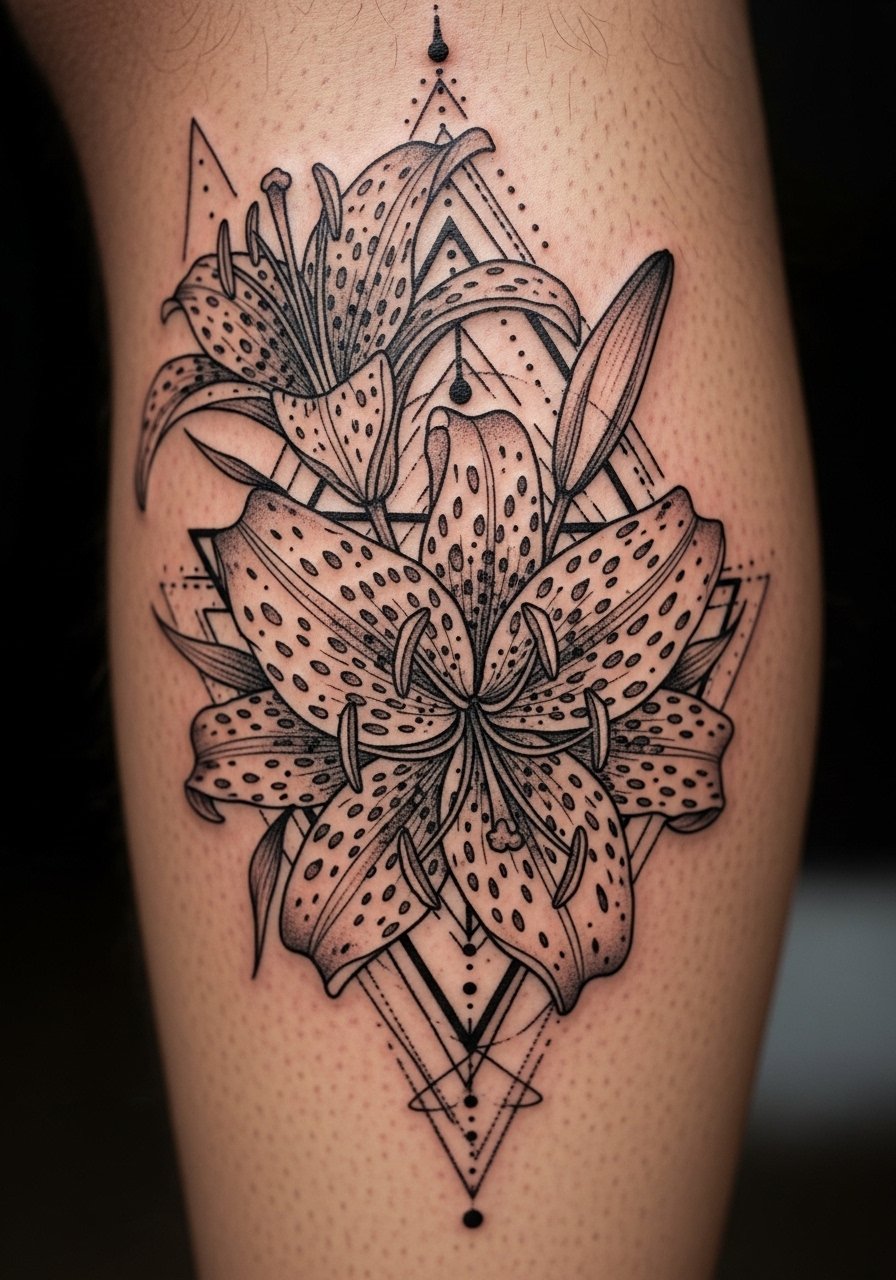
7. Tiger lily with geometric elements on calf
The biggest mistake with geometric hybrids is scaling the geometry too small. Calf muscle gives lines room to sit clean, and geometric overlays help the flower hold its shape as skin settles. During consults ask for squared grid references and discuss which angles will work with your calf curvature. Pain is moderate. Expect crisp lines at six months and slight softening at two years. This placement is a good match for someone who wants floral with architectural structure.
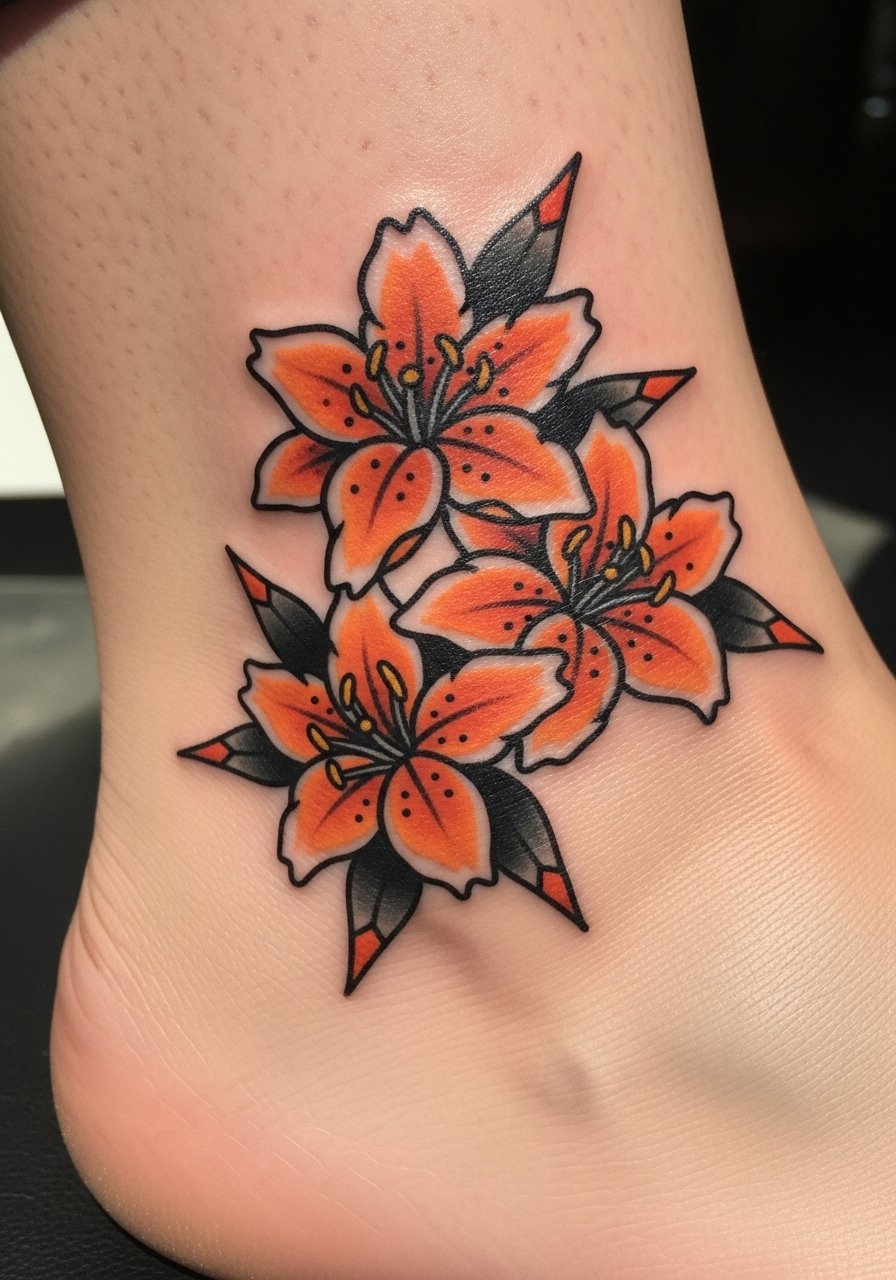
8. Vibrant cluster on ankle for a color pop
There is practical value to ankles for small clusters because they can be shown off easily. Color on lower legs faces abrasion from socks and shoes during healing, so schedule your sessions with footwear in mind. Tell your artist you want compact petal groupings and mindful placement away from tight shoe lines. Pain is low to medium. For darker skin tones ask about pigment mixes that read as burnt orange rather than muddy brown. Expect touch-ups at year two for saturated areas near bone.
9. Micro-realism tiger lily petal on collarbone
Most micro-realism works rely on tight value changes and subtle stipple shading. The collarbone is a high-visibility spot that shows healed detail well if the tattoo is executed with careful contrast. When you sit with an artist request micro shading samples and healed photos on similar skin tones. Pain is moderate. Small pieces like this age gracefully if the tattoo avoids excessively thin lines and keeps contrast in the shading. Plan only one short session and a possible touch-up to restore subtle highlights.
10. Neo-traditional tiger lily and sleeping cat on thigh
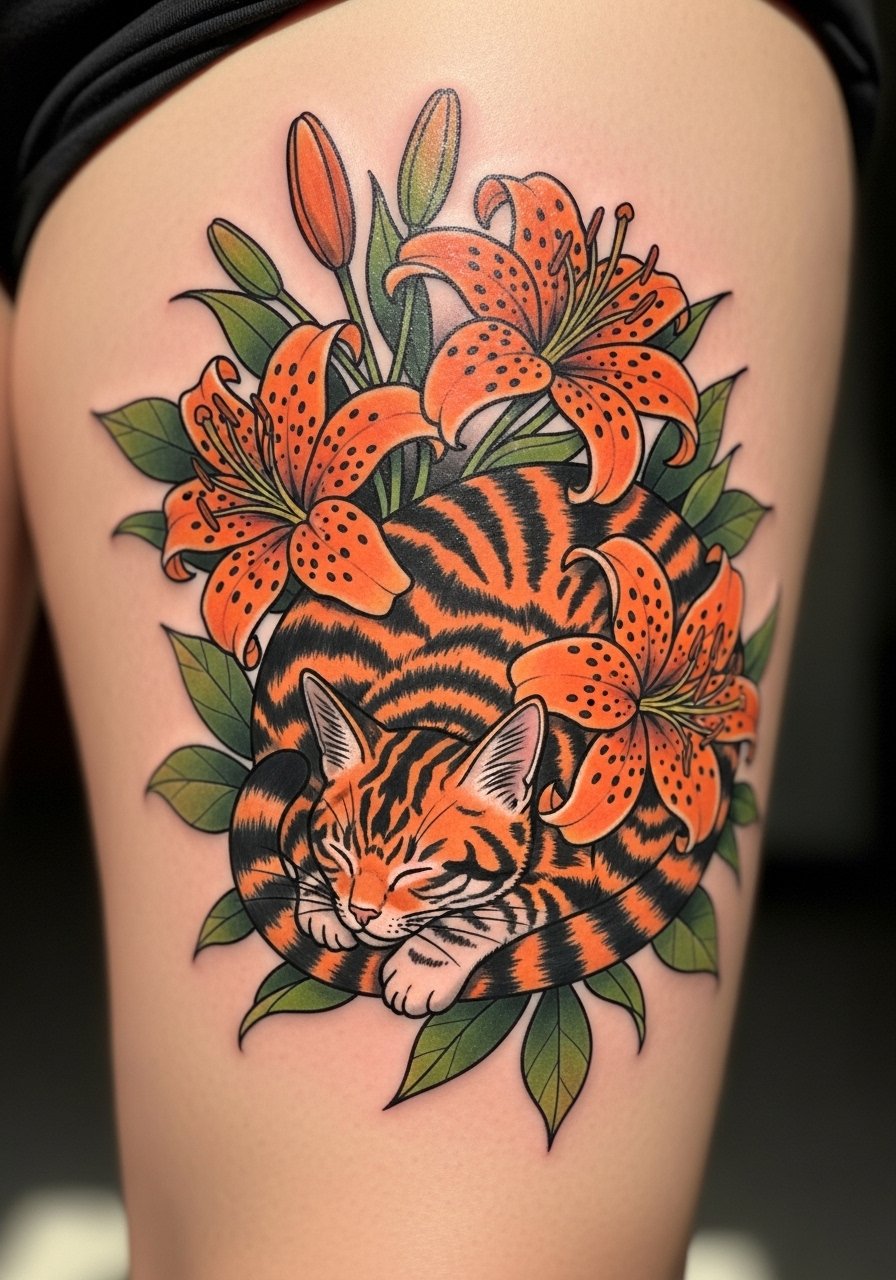
There is a soft charm to combining a tiger lily with a sleeping cat that adds narrative without being literal. Thigh placement keeps the piece private and gives room for larger features like the cat sleeping curled by the stem. During consults bring cat pose references and clarify how integrated you want the plant and animal to be. Pain is moderate. This fusion is one of the under-covered ideas I have noticed online and it heals well when the artist spaces elements for touch-ups rather than trying to cram everything into one dense small area.
11. Patchwork tiger lily sleeve starter
When you plan a patchwork sleeve start with a small lily and leave planned negative space for future pieces. Artists and collectors on forums talk about building sleeves year over year with a consistent stem language. If you want this route, ask for anchor points and scale references during your first session. Pain and session time vary depending on expansion plans. Patchwork sleeves age well when each new addition matches established linework and saturation. Expect touch-ups as pieces are integrated.
12. Memorial tiger lily with date or name near rib or sternum
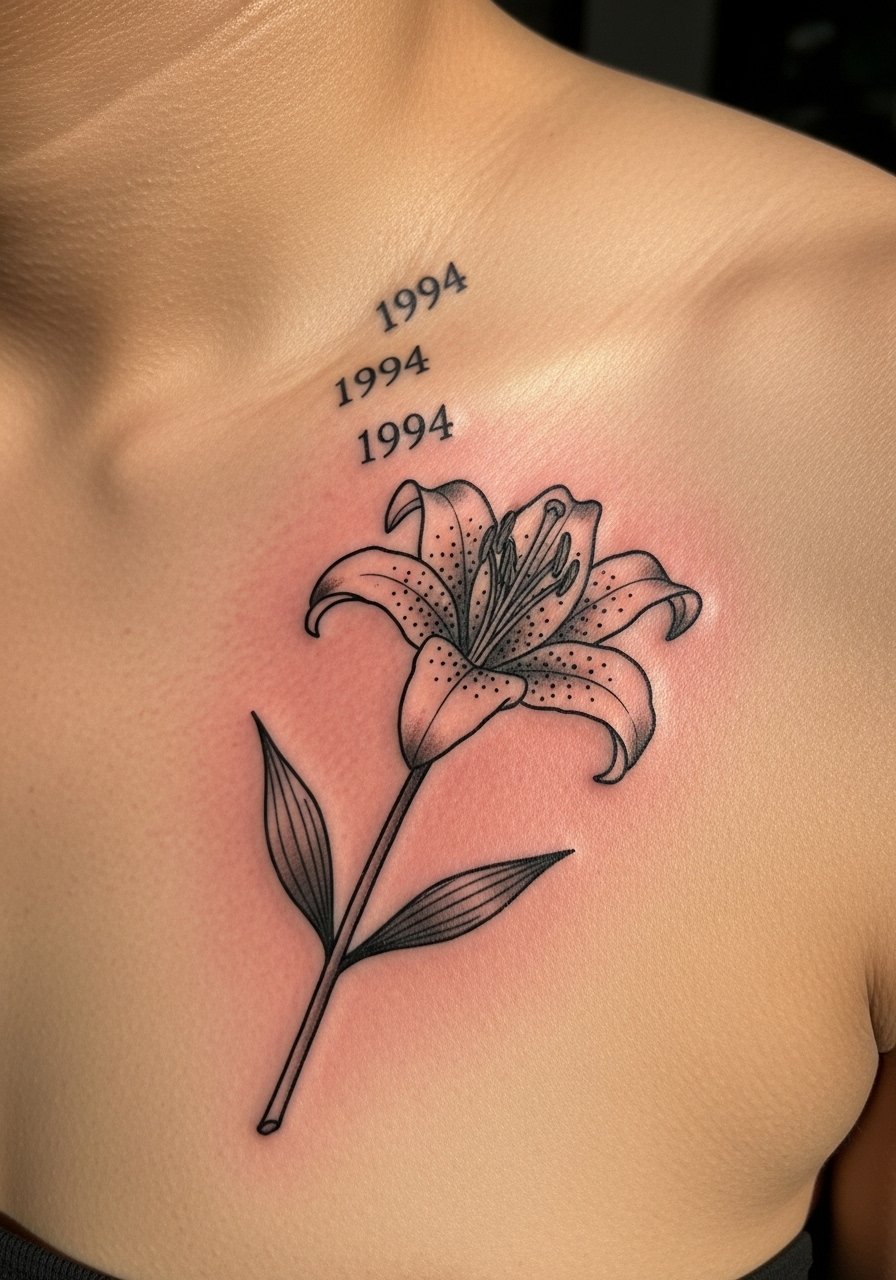
When memorial work is the intent people often choose a single stem with a small date or name in fine script. Sensitive placements like sternum require an artist experienced with chest work and patience during the consult. Ask for lettering samples and healed photos with similar skin tones. Pain ranges from high on sternum to moderate on nearby rib areas. Keep the lettering large enough to avoid blurring over time and plan a touch-up after the initial healing window.
Tattoo Prep and Aftercare Essentials
If you want a tiger lily that keeps its shape, preparation and aftercare matter as much as the design. Book a consult that covers placement, touch-up timelines, and how the artist manages breaks during long sessions. The Saniderm versus dry healing debate splits communities. One group prefers second-skin dressings for color pieces and faster initial recovery. The other group argues dry healing reduces maceration risk in humid climates. Test what works for your skin and follow the plan you and your artist agree on.
Shopping list
CeraVe Healing Ointment for light occlusion and non-greasy moisturizing . Reddit users often mention this as a lighter option that avoids pore clogging during the scab-free phase.
Indie Butter travel tin, fragrance-free balm for summer thigh work . Artists I know prefer breathable balms for larger colored pieces that sweat during healing.
Hada Labo Gokujyun lotion, lightweight hydrator for dry blackwork areas . Good for restoring skin moisture without heavy grease.
Fragrance-free gentle foaming cleanser . Use for rinsing ink residue without stripping natural oils.
Medical-grade second skin bandage, 6-inch roll . Useful for initial protection on high-friction areas like ankles and ribs.
Lightweight fragrance-free balm sampler . Swap this in if you find heavier balms clog pores during humid months.
Broad-spectrum SPF 50 mineral sunscreen stick . Protects healed color and prevents premature fading.
Every tattoo is different. Always follow your artist's specific aftercare instructions. Consult a dermatologist if you have skin concerns or unusual healing issues.
Frequently Asked Questions
Q: Will a fine line tiger lily blur faster on a wrist than on a forearm?
A: Yes, wrists see more movement and sun exposure which accelerates line softening. In my experience a slightly heavier fine line on the wrist with planned touch-ups at year one holds better than ultra-thin single-needle work.
Q: Do watercolor-style tiger lilies need different aftercare than traditional ones?
A: They can. Watercolor pieces often rely on lighter saturation and soft edges, so preventing excess rubbing and avoiding heavy occlusives during the initial week helps. A breathable balm or second-skin bandage for color pieces is a common approach I have seen work.
Q: How should I test orange pigment on dark skin before committing to a full thigh piece?
A: Ask your artist to do a small color patch or show healed photos on similar skin tones. I have noticed burnt orange mixes with warm sienna read clearer than plain orange on darker skin. Discuss pigment mixes during your consult.
Q: Is a tiger lily sleeve realistic to build over 18 months?
A: Yes, if you plan sessions and leave anchor points for future additions. Expect multiple sessions and at least one integration touch-up. Booking guest spots or smaller studios can help manage budget and scheduling.
Q: What's the blowout risk for calf geometric lilies compared to forearm stems?
A: Calves have thicker skin and lower blowout risk than forearms on most people. Sharp geometry needs space to avoid lines bleeding together, so scale up the geometry rather than shrinking it.
Q: Should I use Saniderm for a watercolor shoulder lily?
A: People are divided. Some artists favor Saniderm for color retention and quick recovery. Others say dry healing avoids maceration on humid skin. Try a short test or follow the aftercare method your artist recommends for your skin type.