Someone I know spent months hunting surreal designs before they realized the real problem was picking a style that will still read clearly after a year. These dark surreal tattoo ideas keep appearing in shop portfolios this season, and I narrowed them down with practical notes on healing, placement, and what to tell an artist during the consult. Read on and you will get targeted options if you want bold longevity or photoreal drama.
1. Galaxy Face Morph With Floating Eyes on the Forearm
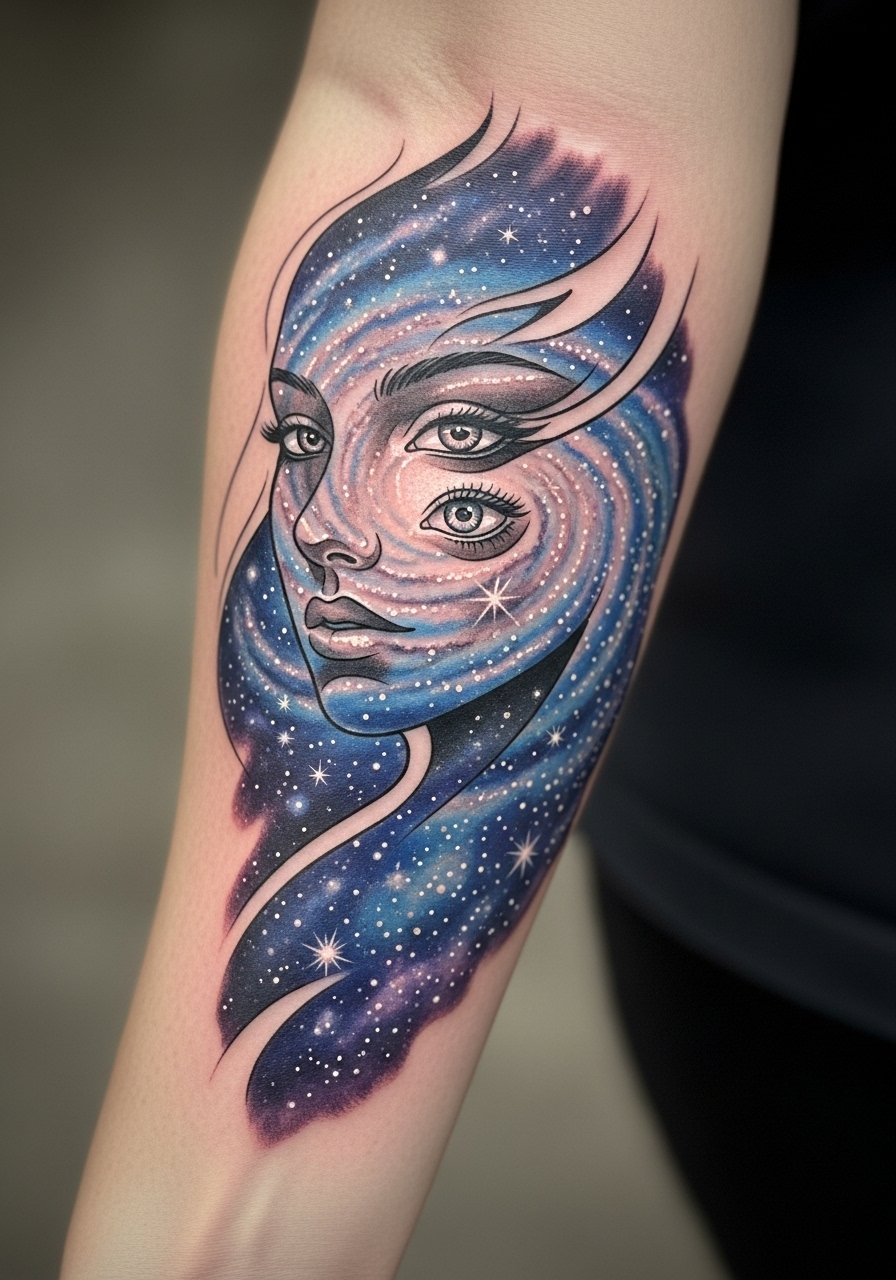
I first saw this on a forearm at a convention and it read like a small mural. It works best on forearms because the flatter canvas lets photorealistic shading hold. Tell your artist you want deeper black saturation around the eyes and soft stipple shading for the galaxy so the tiny stars do not puddle on healing. A common mistake is asking for ultra-fine hairline details too close together. Expect a one to two session build and plan a touch-up at six to twelve months for star highlights. Forearm blowout risk is low if the artist spaces dots correctly.
2. Beetle Wings Emerging From a Stone Statue Face on Upper Arm
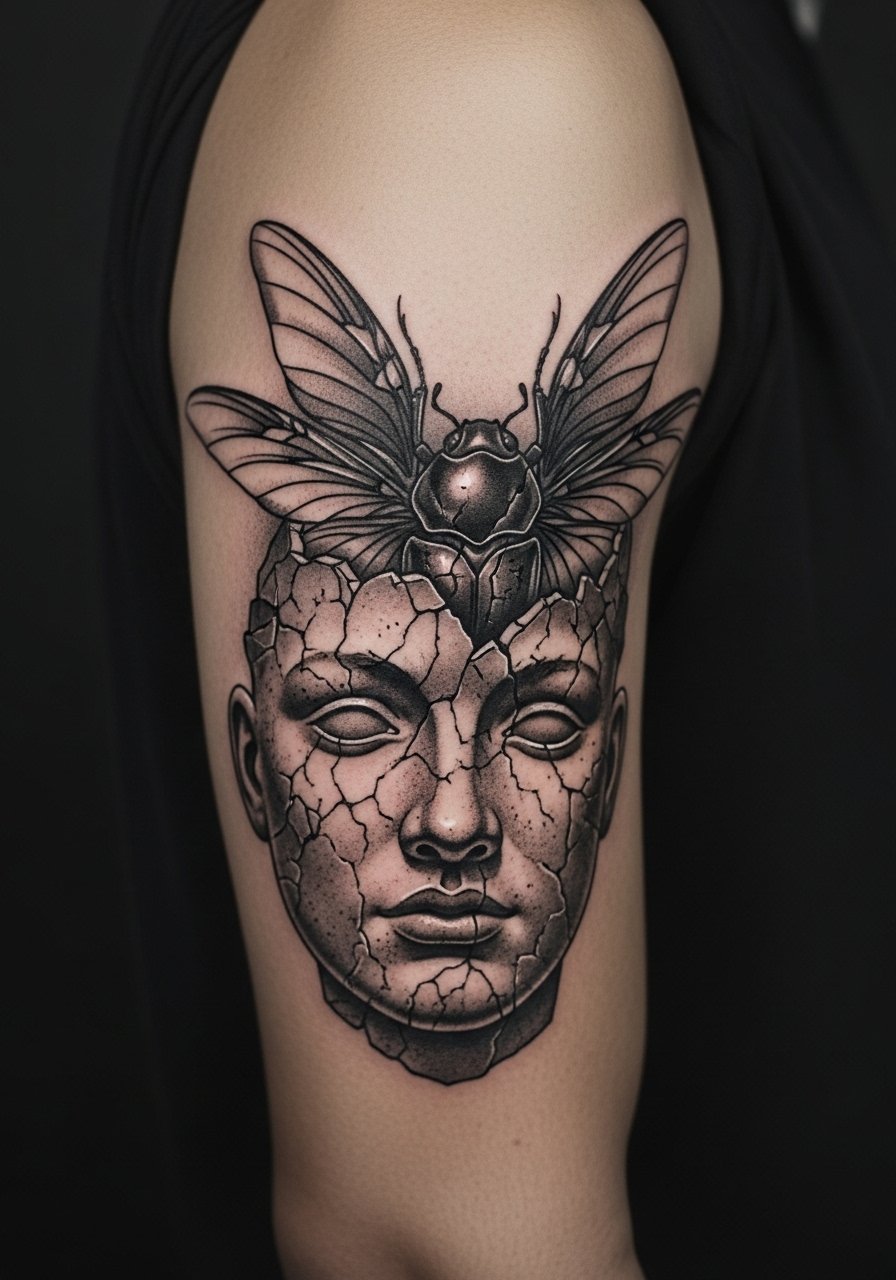
The upper arm gives enough space for the illusion without the distortion that comes with joints. For a Salvador Dali vibe, ask for heavy contrast in the statue texture and thin negative-space lines for wing veins. Artists split on whether fine detail on curved muscle will last. One camp says bold contour keeps the stone readable longer. The other camp argues precise depth and feathered shading make the delicate wings survive. If you like small-scale detail, keep the wings slightly larger than you think and expect a one to two session appointment. Tell your artist where you work if you need a design that reads at a glance.
3. Human Figure Dissolving Into a Geometric Portal on Chest
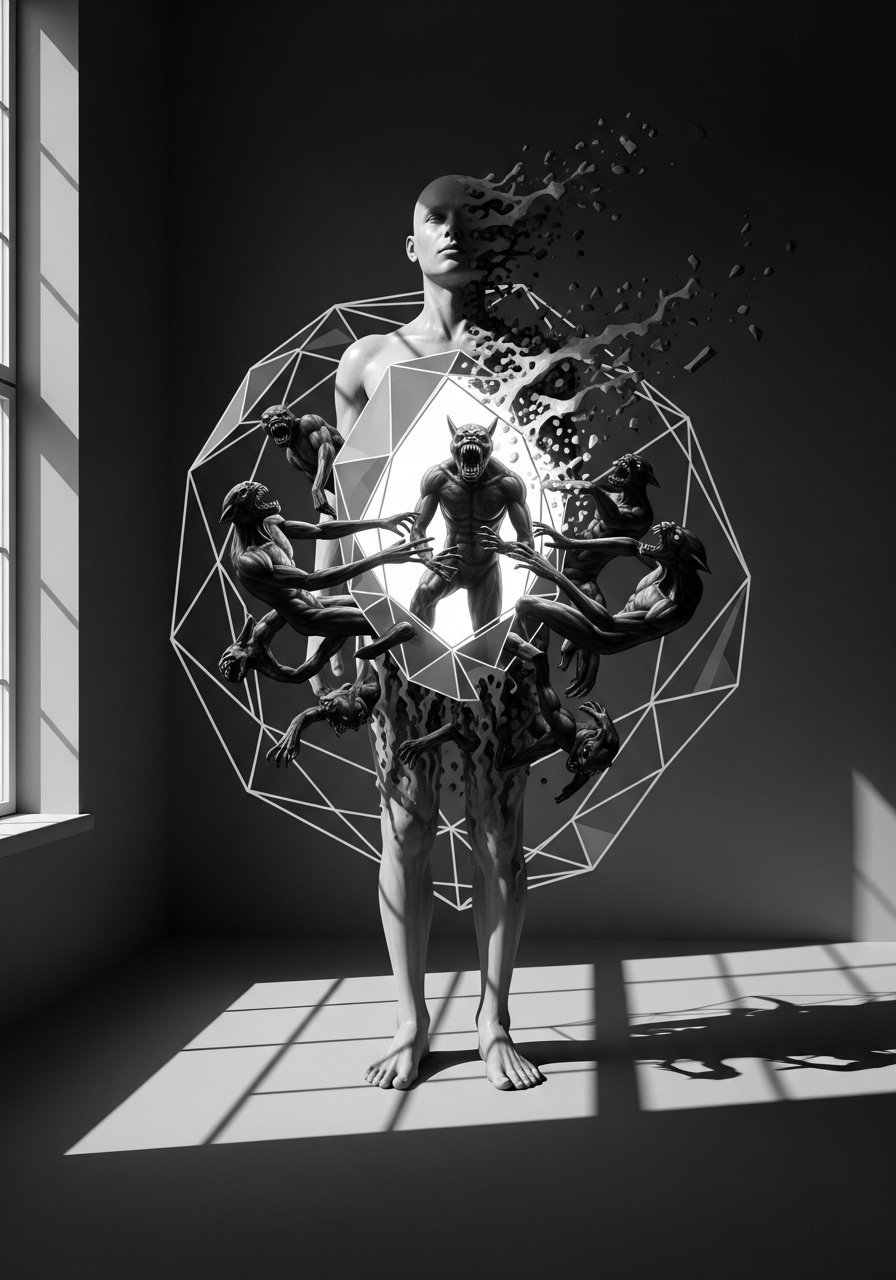
Chest pieces let large surreal scenes breathe and they are great if you want multi-session work. For this one be explicit about scale so that faces in the beasts do not shrink into indistinct blobs. A mistake is trying to compress the whole scene into a single session. Expect at least three sessions with one or two longer installments. Healed at six months this reads as layered depth. At two years you will notice some softening in tiny beasts, so budget a touch-up after year two. The chest stretches with weight changes, so plan lines with that motion in mind.
4. Floating Astronaut On Muted Volume Icon for Wrist
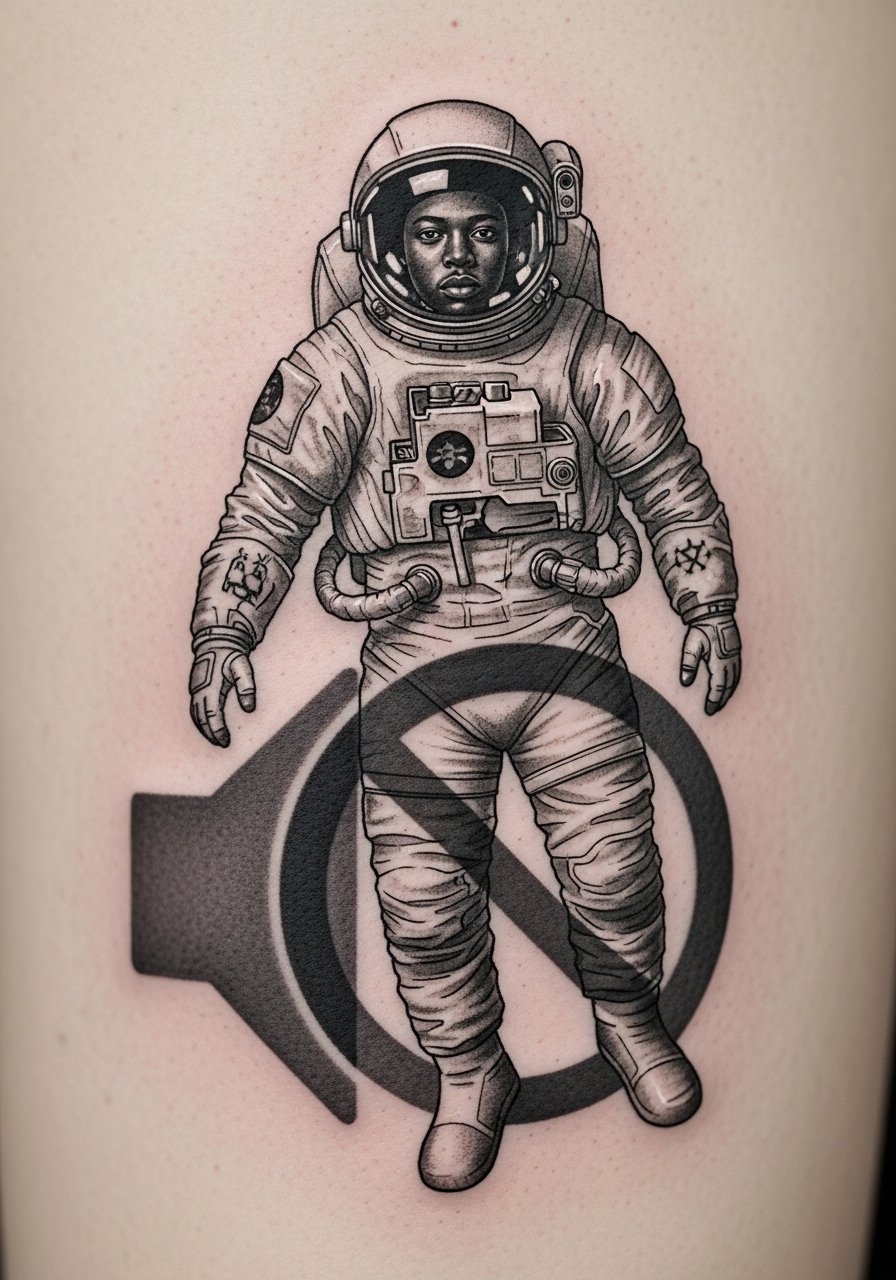
This is a guest-spot favorite because it is small and clever. Wrist placement is fun but expect sharper fading because the area gets lots of sun and friction from shirts. Tell the artist you want slightly bolder outlines than a pure micro piece. The biggest mistake is asking for extremely light micro shading that disappears on dark skin. A single short session does the trick. Plan a touch-up at the one-year mark if the tiny highlights soften. Hands and wrists can affect work opportunities, so think about career visibility before booking.
5. Peephole Distortion Revealing Objects That Form Animals on the Ribcage
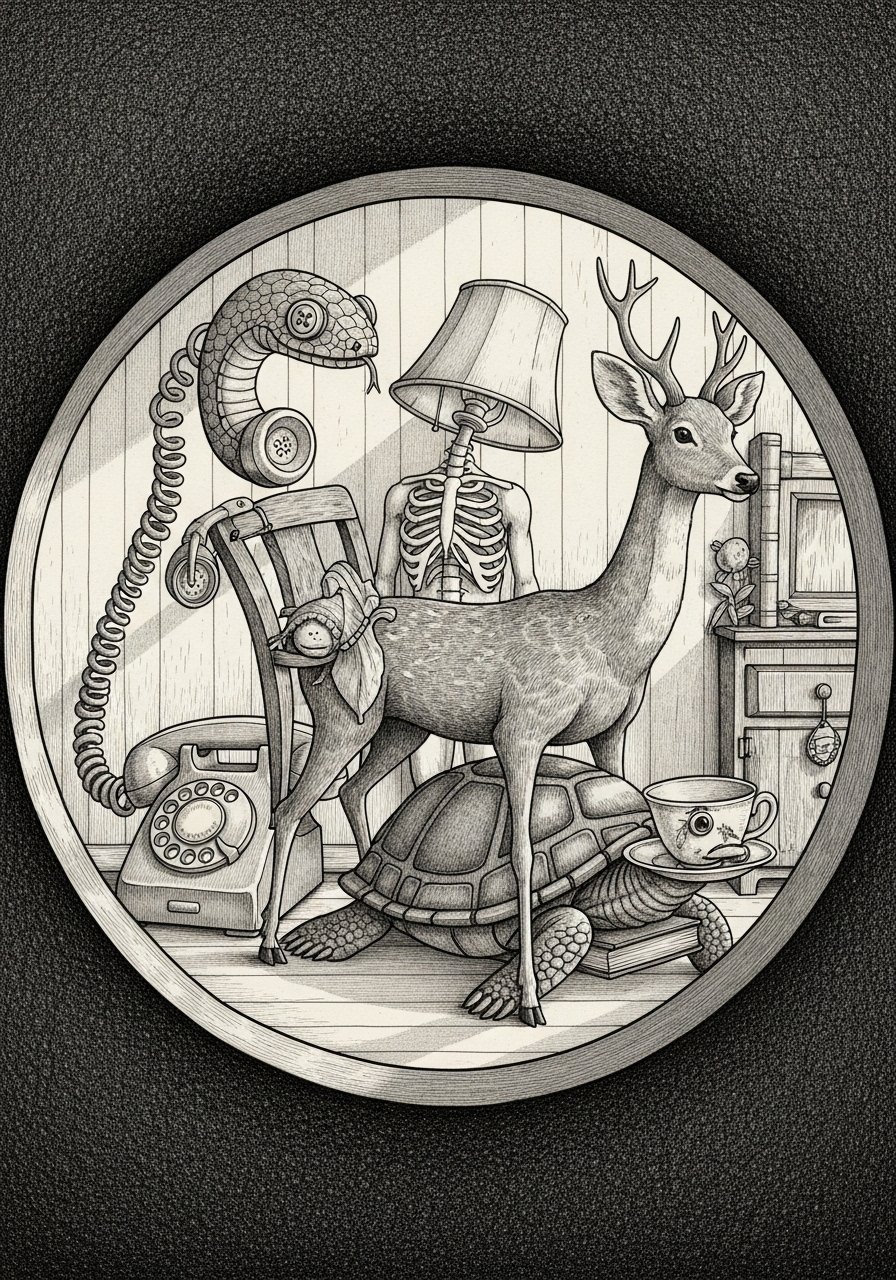
Fair warning, ribs are one of the more painful spots. That pain pays off because the curvature actually amplifies the peephole illusion. For this design bring multiple references that show how small objects can read as larger forms. The common error is crowding the inside of the peephole so elements merge during healing. I recommend bolder silhouettes for the animal forms so they survive two years without losing identity. Expect two to three sessions and a touch-up timetable around year one to maintain crisp silhouettes.
6. Cybernetic Body Morphing With Gears and Flesh on a Sleeve
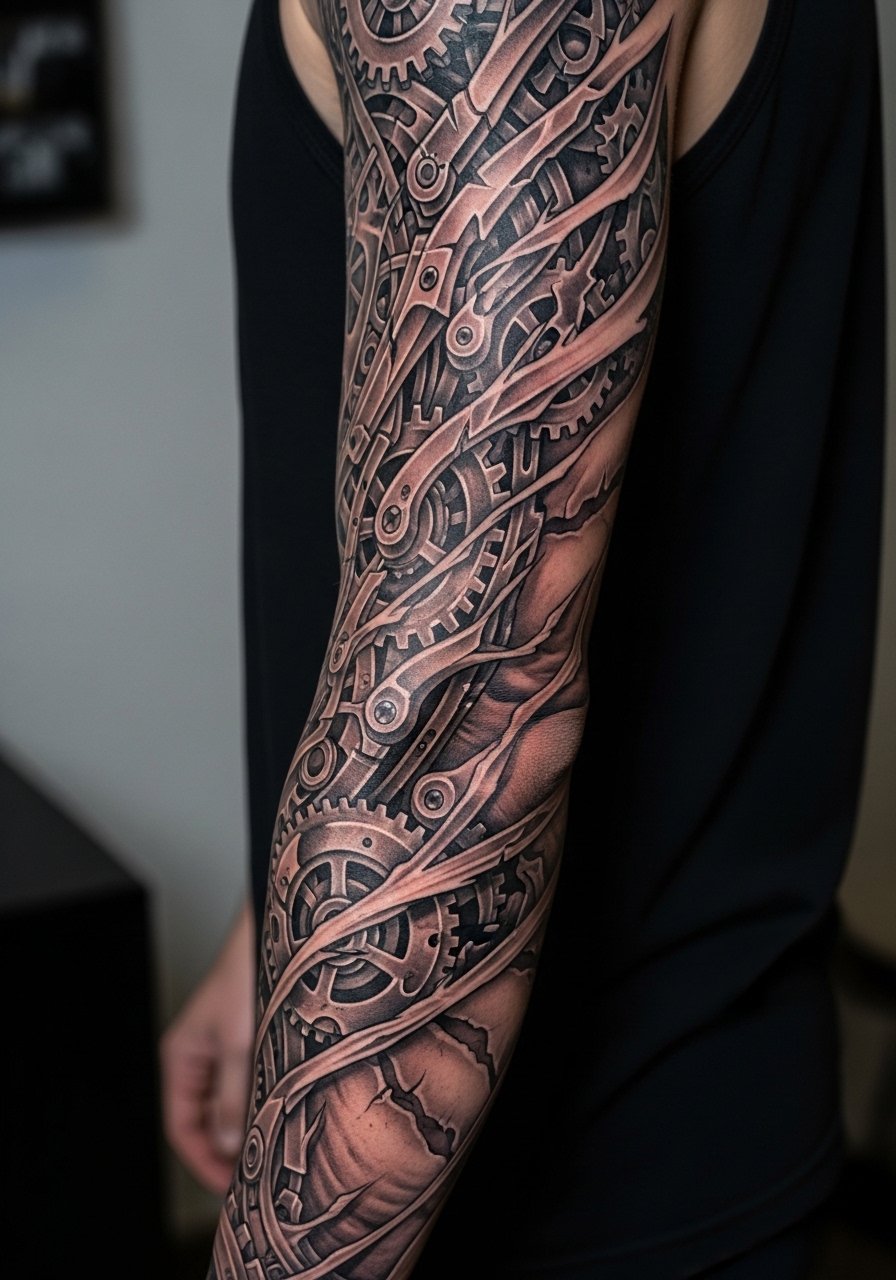
This is for folks who want sci-fi scale. Sleeve placement requires careful session planning because saturation and density change with more coverage. Tell your artist you want layered blackwork with whip shading to avoid muddy blocks of tone. A mistake is asking for all tiny gears with little contrast, which blurs into one mass when healed. Expect four or more sessions. At two years dense blackwork will hold better than faded color. If you plan major body changes, avoid heavy morphed elements across joints that flex constantly.
7. Snake Morphing Into Python Coils With Distorted Scales, Forearm Wrap
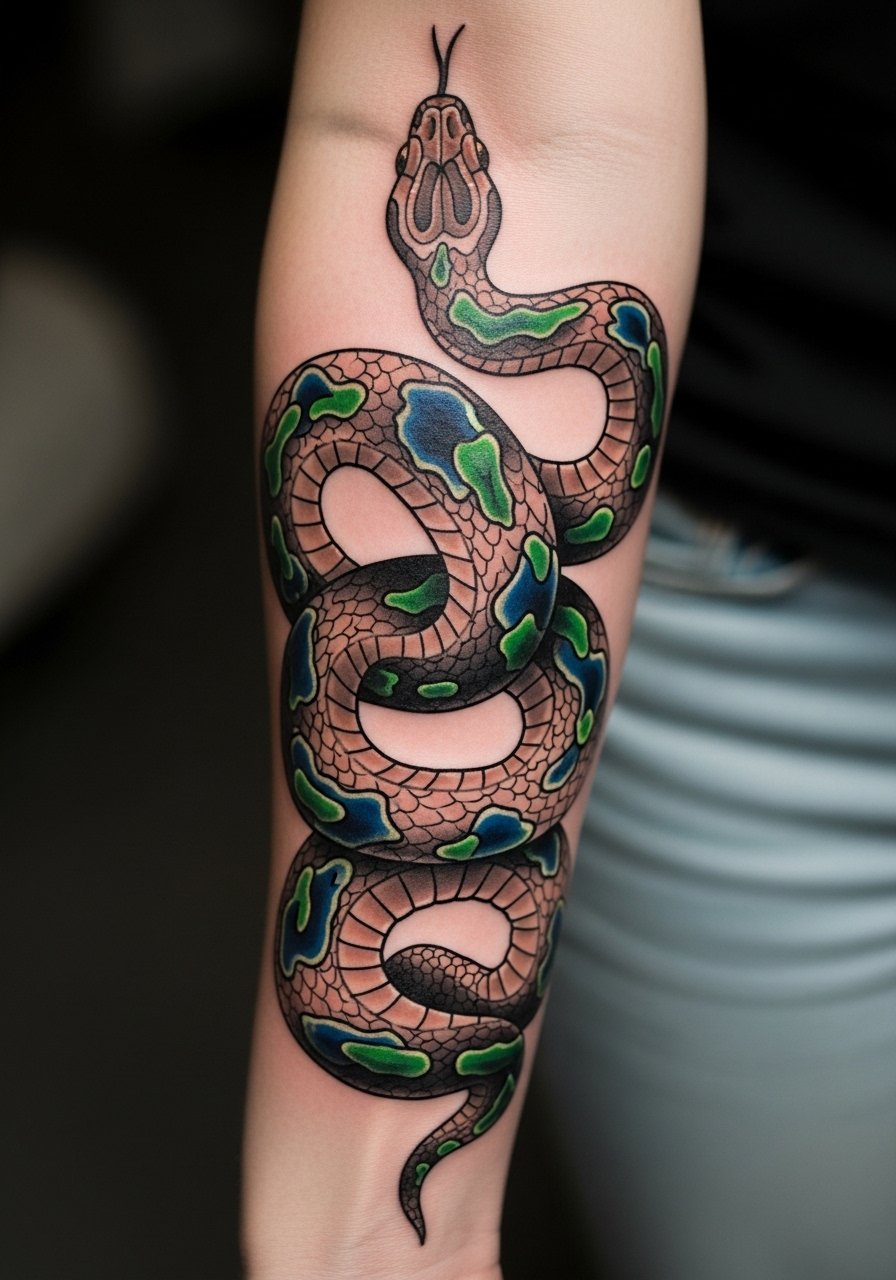
A forearm wrap is a reliable place for flowing imagery. Ask for slightly exaggerated scale patterns and bold outer linework to prevent the scales from blurring together. A common mistake is letting scale detail get too fine on the inner forearm where friction is higher. Sessions are usually two, depending on color saturation. At six months the colored accents pop then settle into subtle depth. Expect touch-ups in year one for color refresh. Forearms sun bleach, so plan sun protection for long-term saturation.
8. Skull With Surreal Flames and Mythical Creatures Emerging on the Shoulder
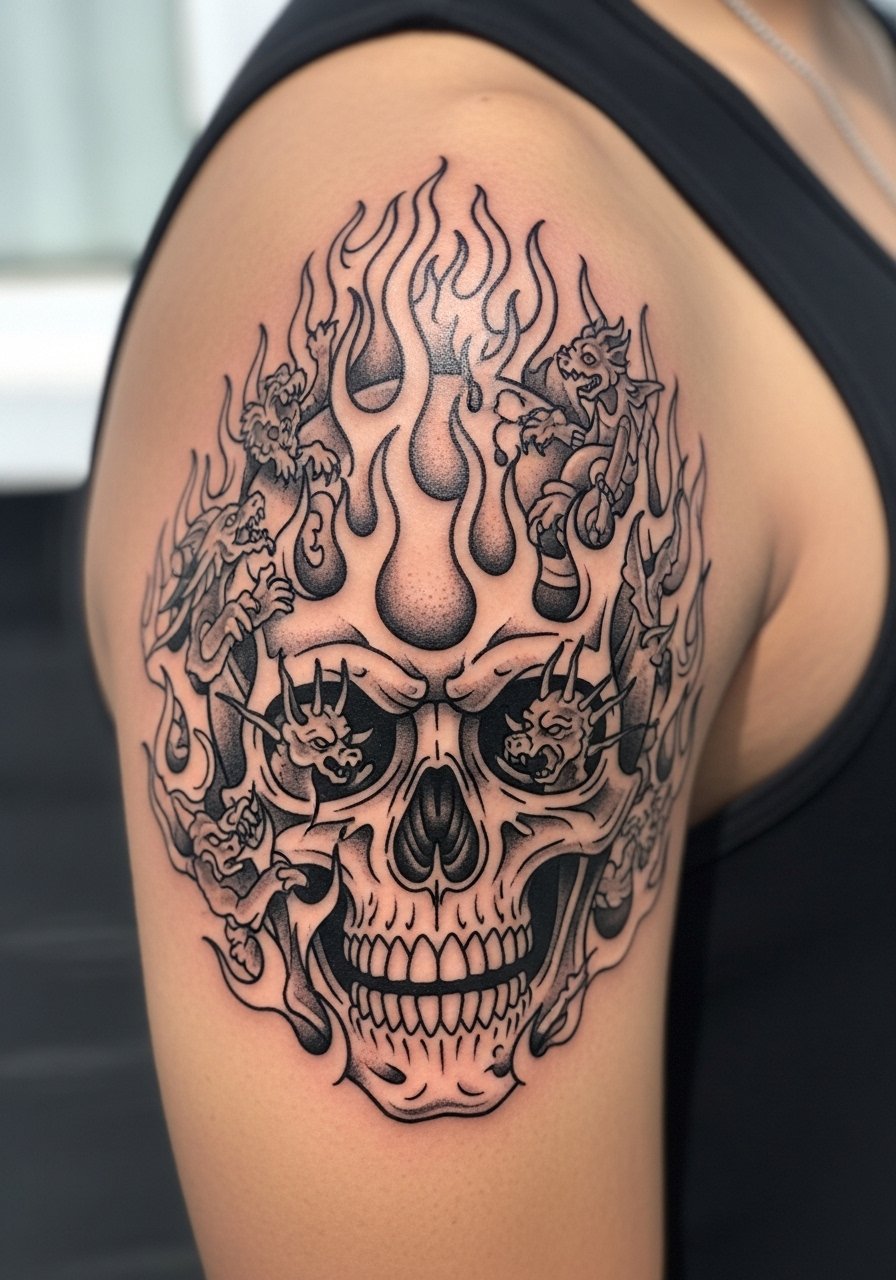
Shoulders are forgiving for medium pieces and they read from a distance. Tell the artist you want solid fills where the flames are strongest and small creature silhouettes tucked into the negative space. The common error is over-detailing the creatures so they vanish after healing. A one to two session approach usually works. Healed, solid black flames retain drama better than thin flame strokes. If you want impact, prioritize saturation over miniature detail. Shoulders also take touch-ups easily at year two if any black softens.
9. Repeating Nature Patterns Replacing Facial Features on the Ribcage
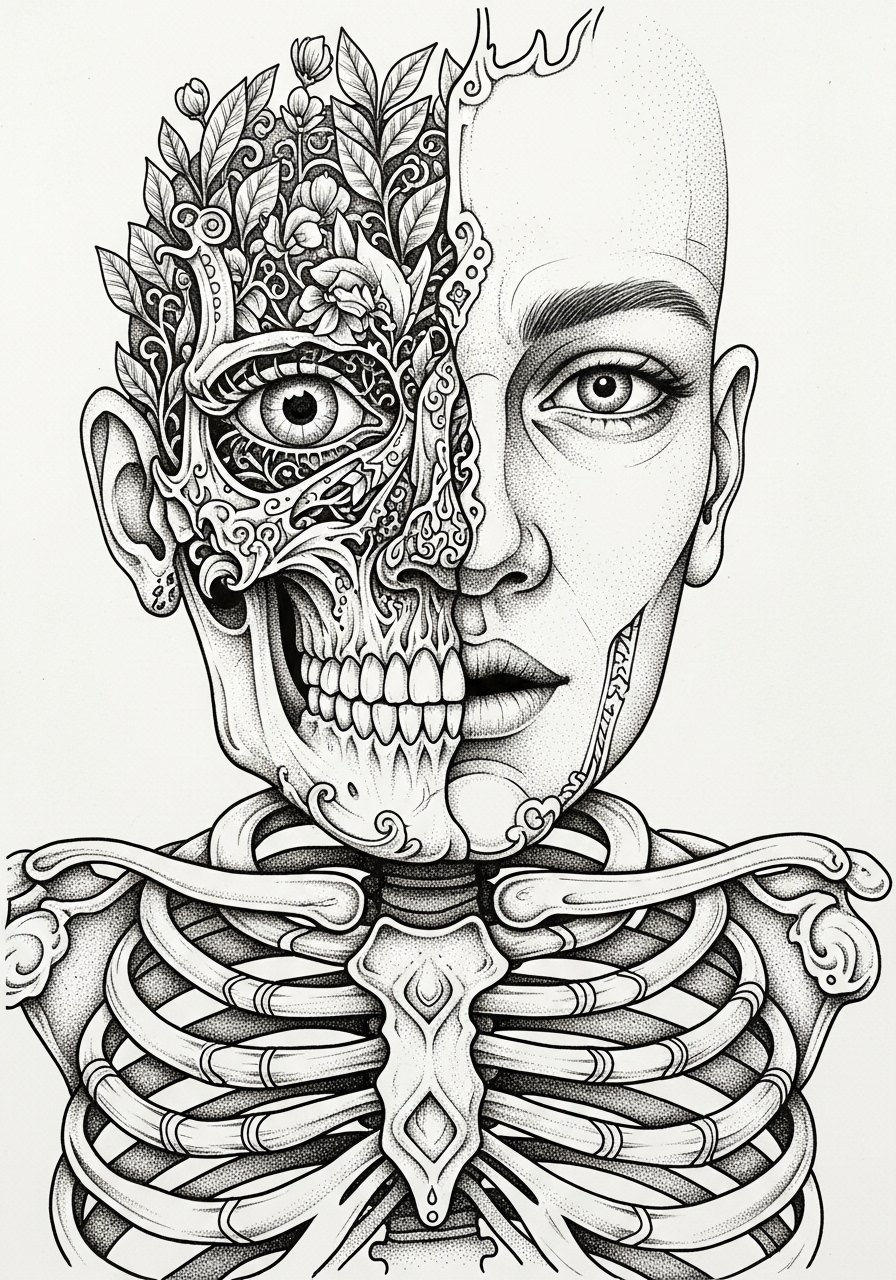
This ornamental idea scales well on a rib panel and creates a quiet, uncanny effect. For this version ask for clear spacing between repeated elements and avoid tiny hairline splits in leaves. Most mistakes come from compressing patterns so closely that they merge when healed. Two to three sessions give the artist space to build tonal depth with stipple shading. At two years the pattern rhythm should still read if spacing was respected. Also consider how torso movement shifts repetition across breaths.
10. Photorealistic Landscape With Eyes Hidden in the Horizon on the Back
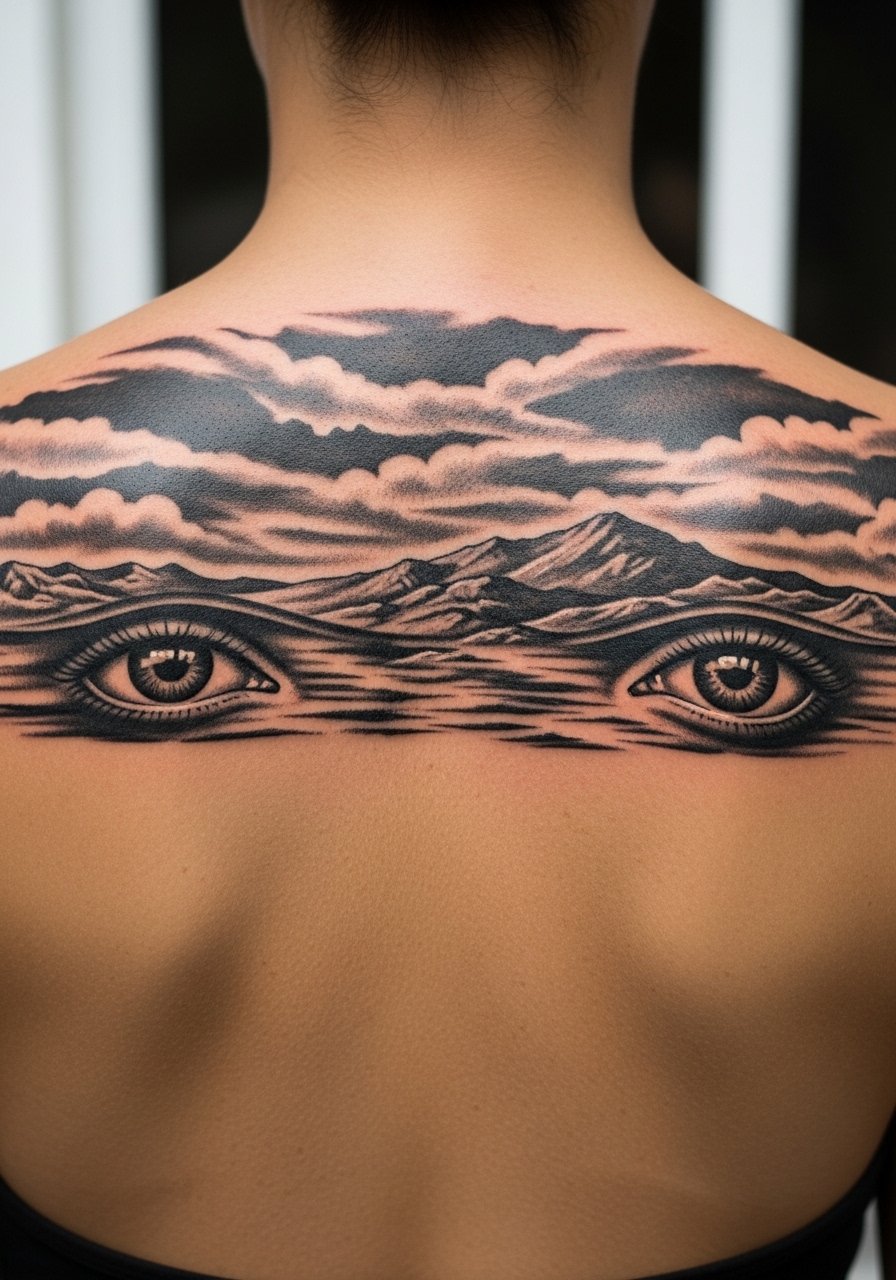
Back placement is ideal for sprawling photoreal scenes because the artist gets a flat, stable canvas. When briefing the artist, ask for larger eye elements rather than tiny pupils tucked in the distance. A common mistake is overworking micro highlights that go blotchy as the skin heals. Photoreal pieces benefit from multiple sessions to build contrast slowly. At six months expect strong depth. Budget for a multi-year touch-up plan for the finest highlights. Healed back pieces show much less blowout than forearm micro work.
11. Abstract Grotesque Human-Animal Hybrids on the Bicep
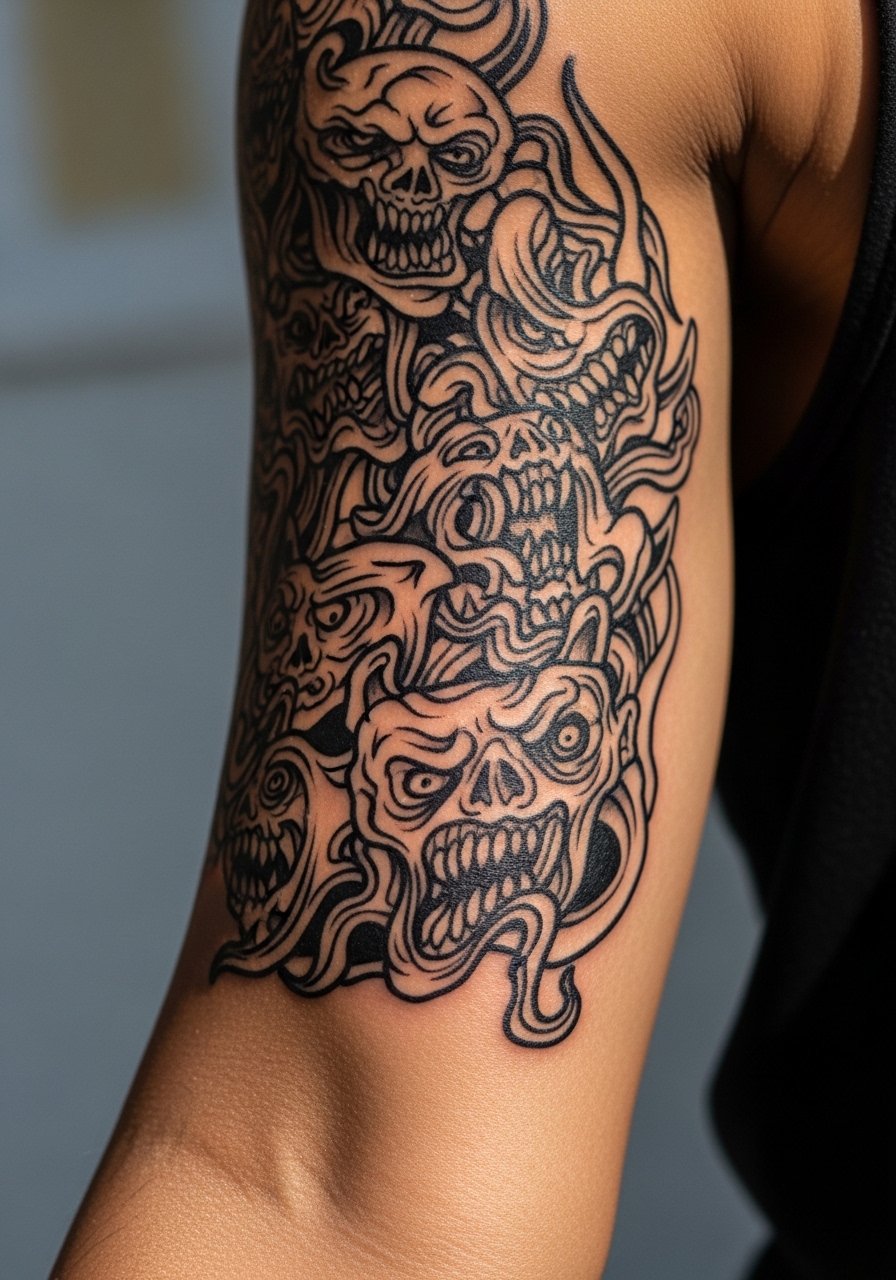
The bicep gives enough bulk to keep exaggerated grotesque elements legible. Tell your artist which features must stay dominant so they do not get lost in abstraction. A typical error is packing too many small faces into the same area. One to two sessions are typical for medium designs. After healing you will see subtle softening in small teeth or whisker lines, so plan touch-ups around year two. If you want the piece to read aggressively, favor solid black silhouettes and crisp negative space rather than micro textures.
12. Watercolor Geometric Portal With Beasts on Inner Bicep
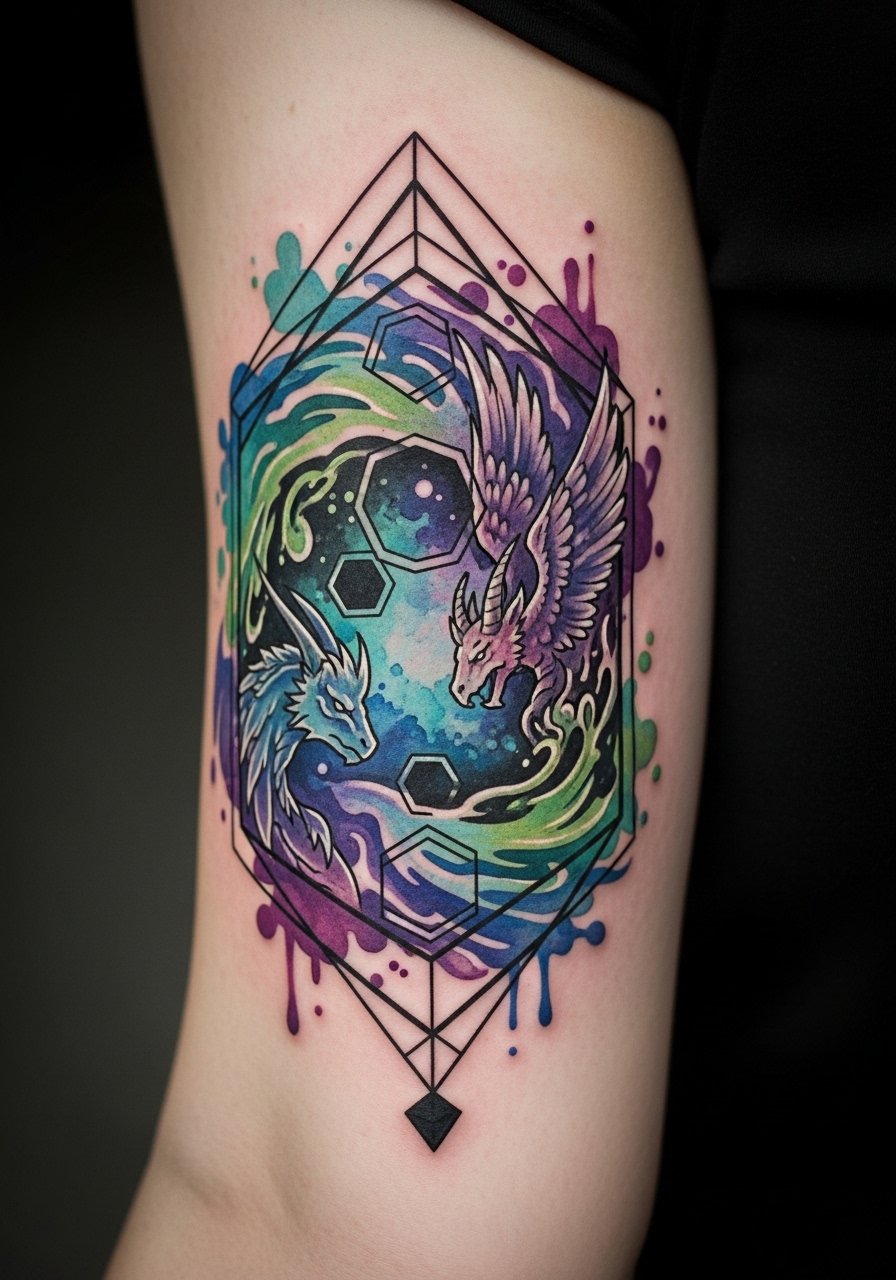
Inner bicep is sensitive but characterful for color fades that travel with arm motion. Because watercolor fades faster, ask for bold black geometry to anchor the piece. The controversy here involves color versus black and gray. One camp says watercolor looks fresh but fades into blurry washes. The other camp prefers black and gray for longevity. Picking hybrid work with firm black anchors usually gives the best of both worlds. Expect two sessions. At six months the color may soften, so a color touch-up at year one is common.
13. Repeating Eyes Embedded in a Landscape for Full Back Work
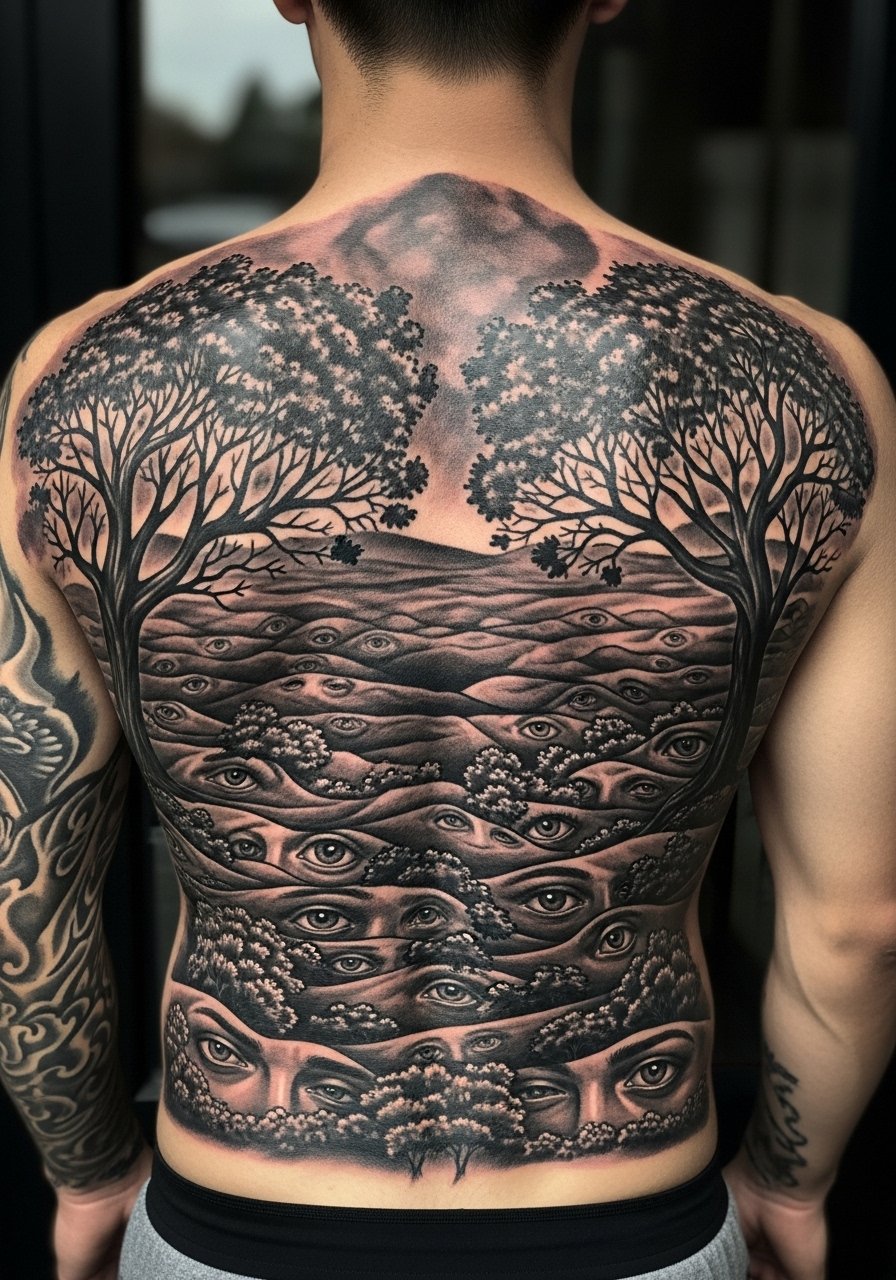
Full back canvases allow for careful placement of repeating motifs that do not fight for attention. When you consult your artist, highlight which eyes should read from a distance and which are meant for close viewing. A mistake is trying to make every eye the same size. Expect multiple long sessions over months. At two years the larger motifs still anchor the piece while smaller eyes may require a touch-up to restore sharp pupils. Back work benefits from strong black horizons for long-term legibility.
14. Geometric Portal On the Calf That Curves Into 3D Illusion
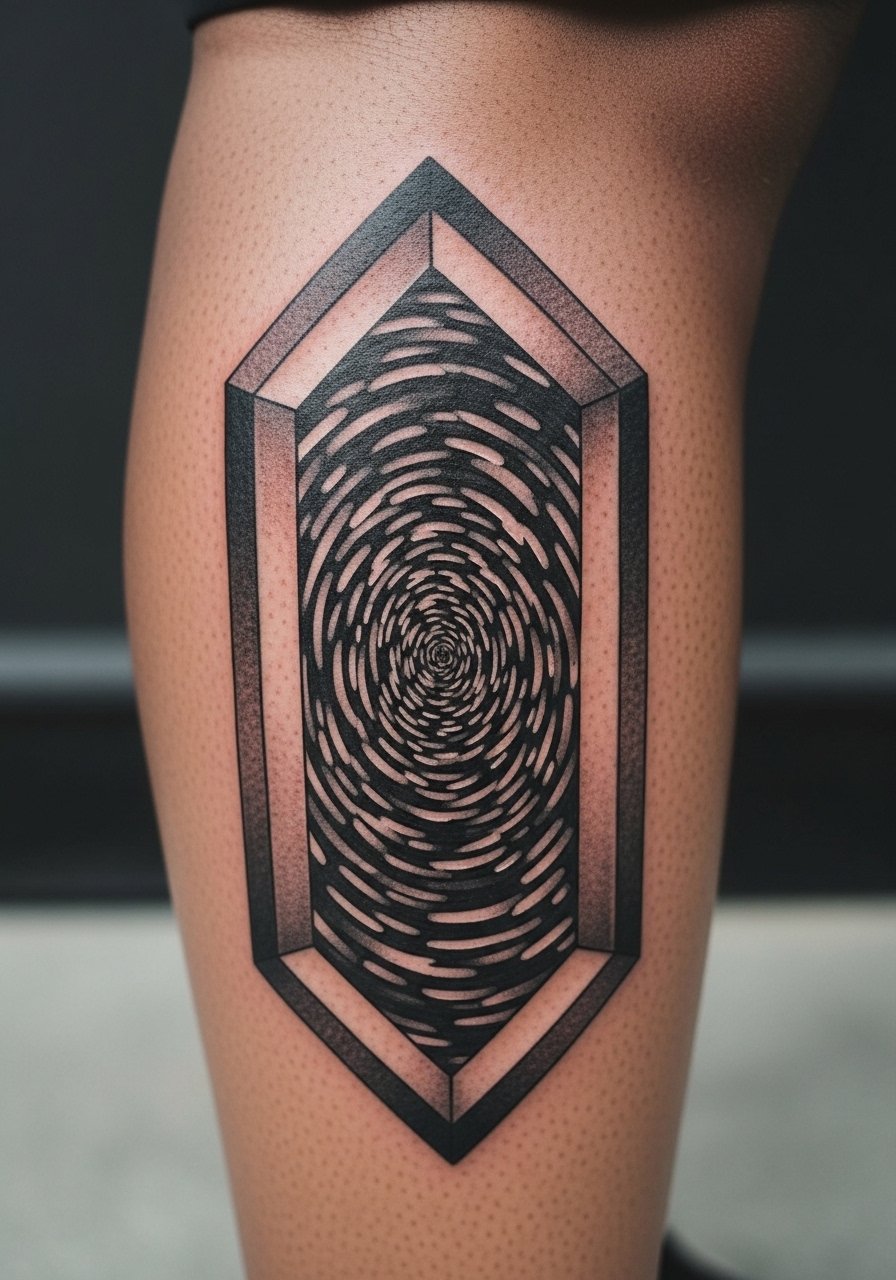
Calves are excellent for optical illusions because of their cylindrical shape. Ask for line spacing that accounts for muscle curvature so the portal reads as three-dimensional. A common error is scaling lines too tightly to the skin, which causes a wobble after healing. One to two sessions can nail the illusion. Healed, the portal usually keeps form, but expect a touch-up at year two to sharpen contrast. Calf work also photographs well if you want to track healed progress for future reference.
15. Micro-Realism Saturn Ring On Ankle With Minimalist Astronaut
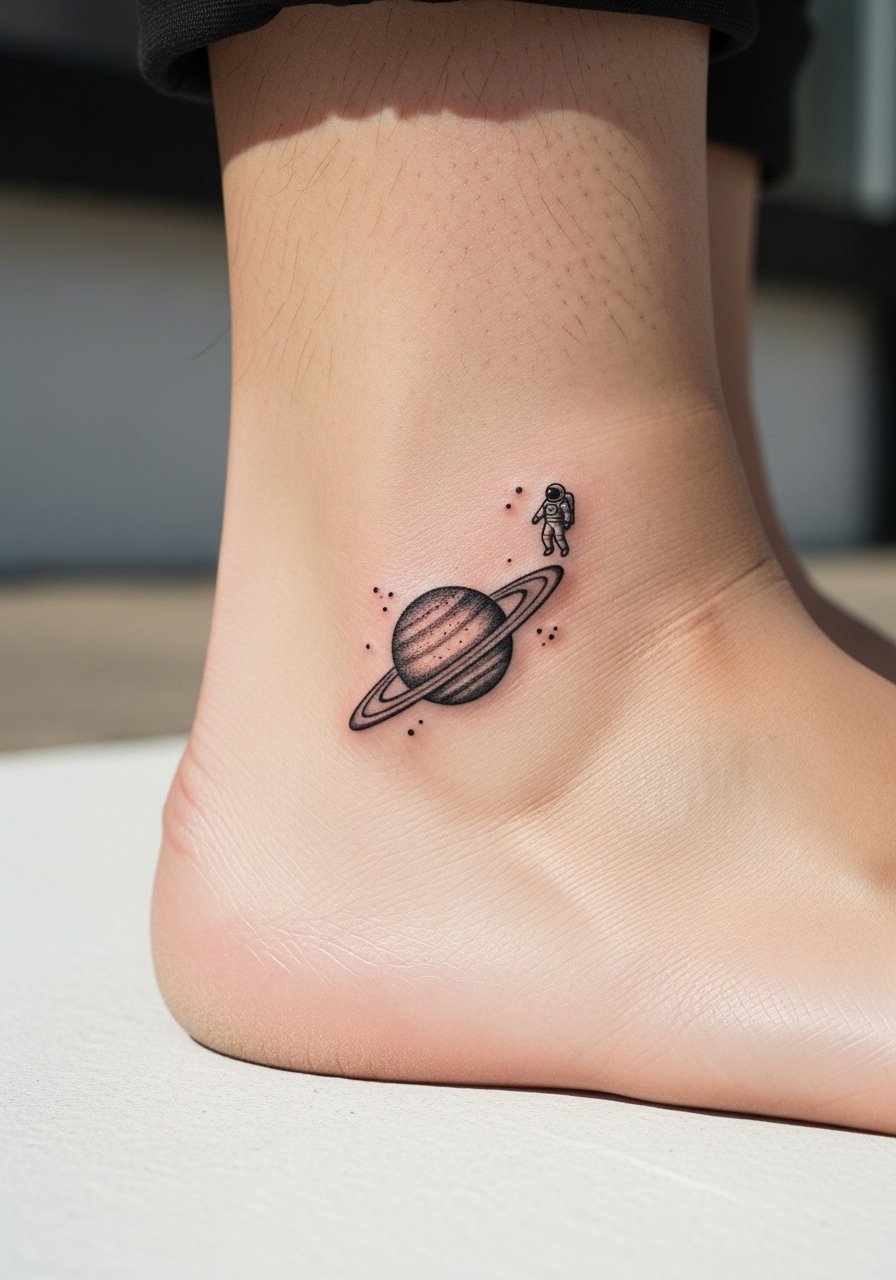
Ankles age fast because of footwear friction and sun exposure. For micro-realism here, ask for slightly thicker primary outlines to keep the planetary shape readable. The mistake is insisting on the thinnest possible micro lines. Single session but expect faster fading. Plan a touch-up at six to twelve months if you use shoes that rub the area. Minimalist surreal icons read best with few well-placed highlights rather than dense micro shading. This one is a summer guest-spot favorite.
16. Surreal Matchstick Man With Growing Flora on the Forearm Outer Wrap
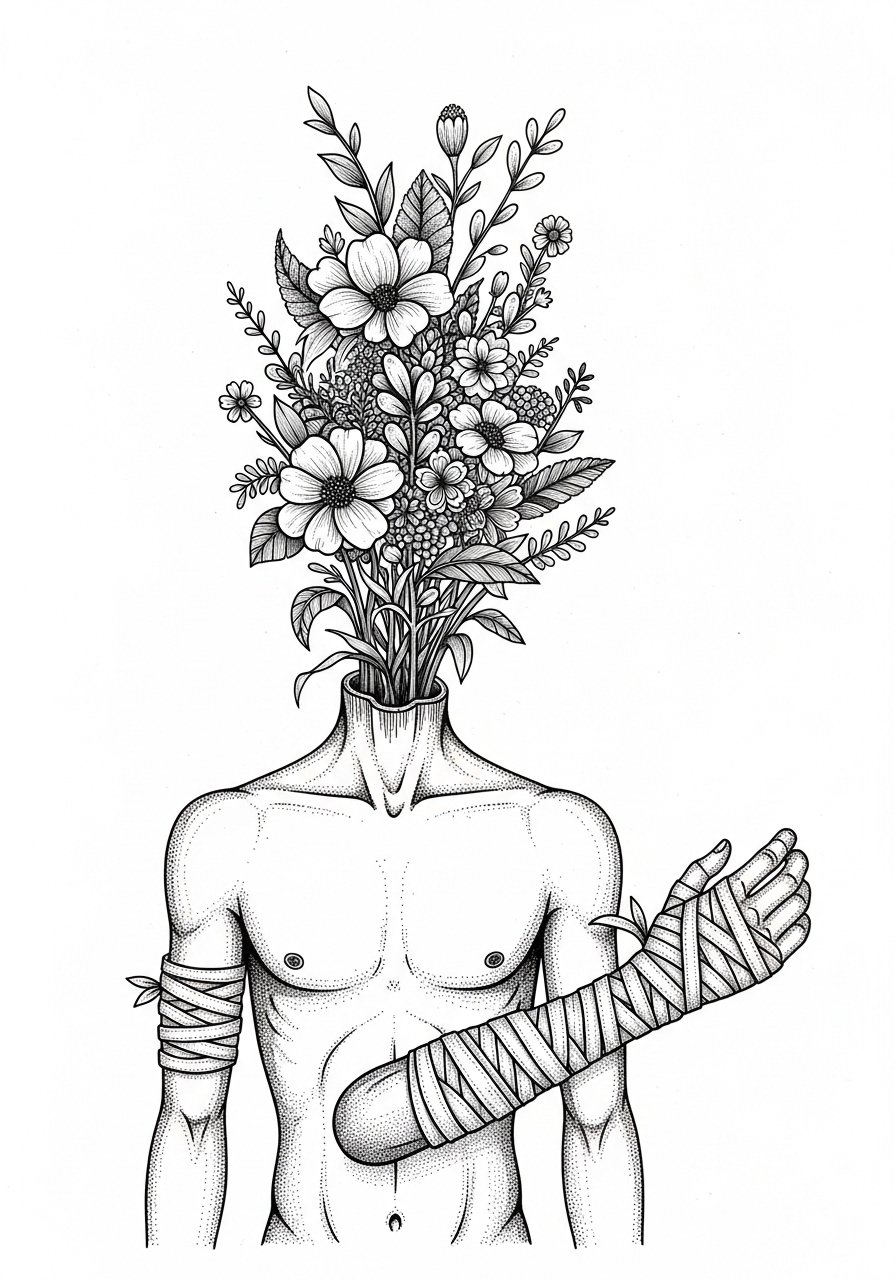
Outer forearm wraps are readable and low-risk for blowout. For this piece, request clear negative space around the flora so leaves keep shape. A common mistake is overfilling the stem area with tiny dots that merge when healed. Two short sessions usually suffice. Expect the dot work to soften slightly by year two, so plan a minor touch-up. Forearm is forgiving for adjustments if you change direction later. Also mention which leaves or flowers have cultural origins to avoid insensitive replication.
17. Oversized Python Coils Wrapping Into a Portal On the Thigh
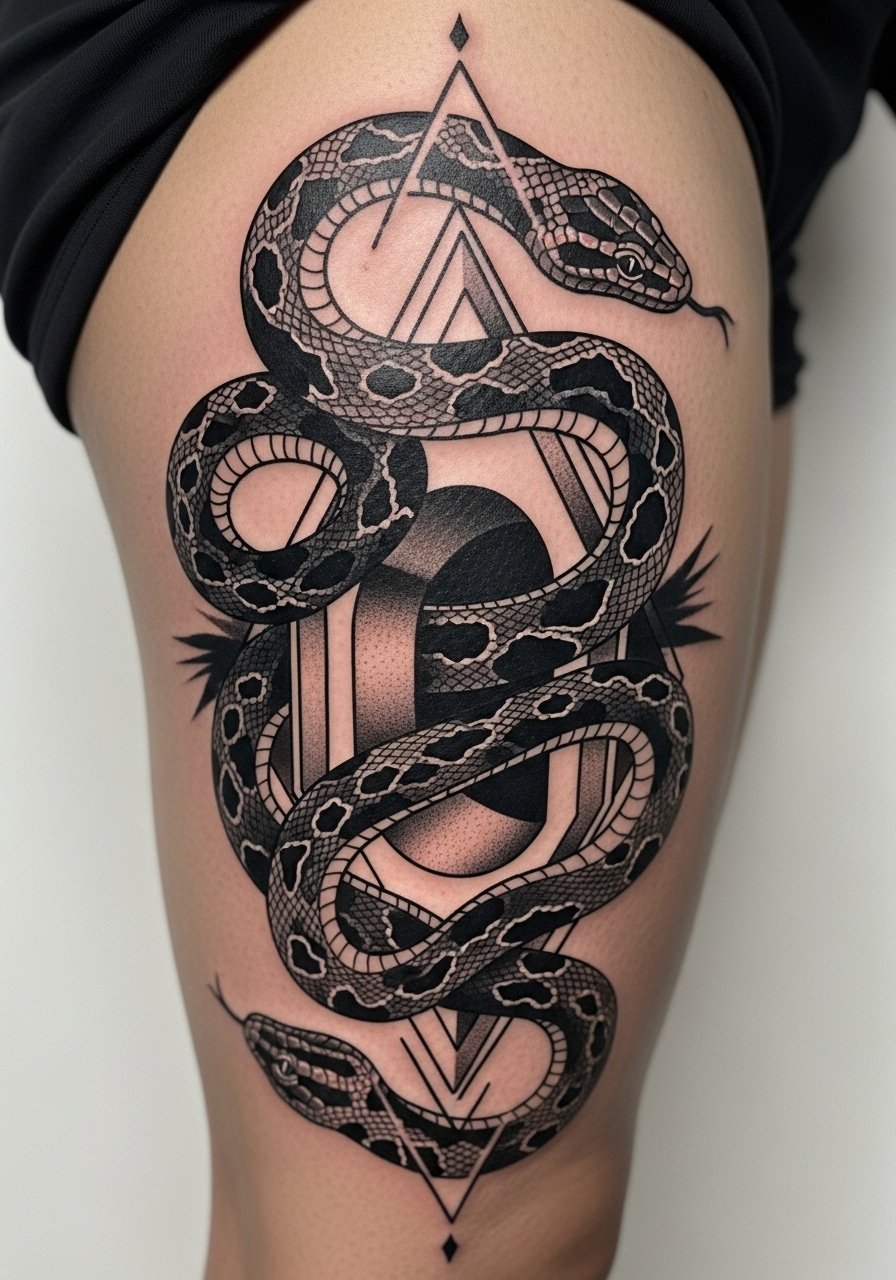
Thigh pieces tolerate big scale and heavy saturation. Tell your artist you want bold outer lines on coils so the motion reads from several feet away. The mistake is relying on tiny internal scales to provide the motion. Expect multiple sessions for saturation and shading. Healed at six months the portal effect holds well because of the large negative space. Thighs can stretch with weight change, so keep major focal points off high-stretch areas if future body changes are likely.
18. Photorealistic Eye in a Desert Landscape on the Upper Arm
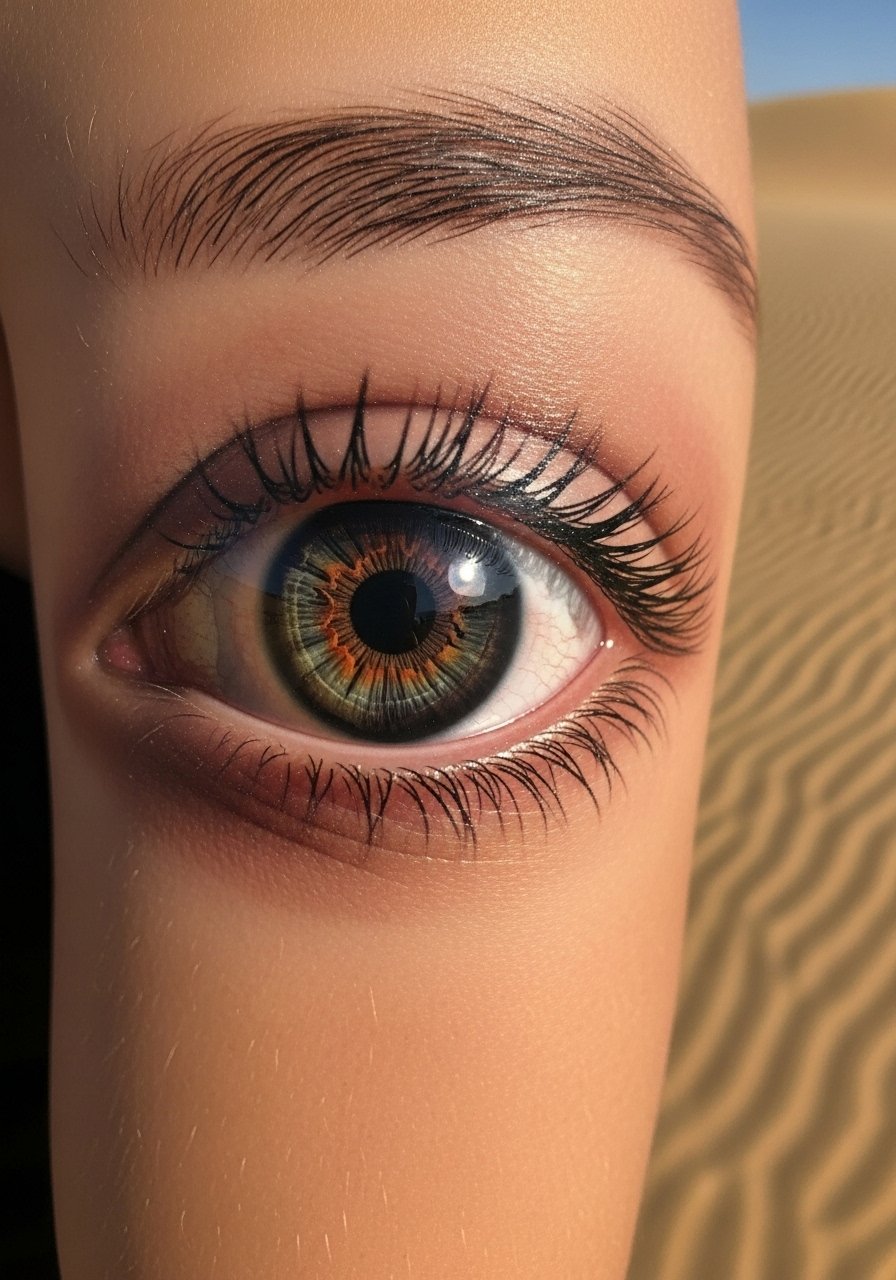
Upper arms give artists a steady surface for photoreal textures. For this concept ask for distinct contrast between the eye and the surrounding dunes so the eye remains the focal point. The usual error is blending the eye too softly into the ground. One to two sessions usually cover it. After a year the texture in the sand may flatten a bit, so prepare for a touch-up to restore micro highlights. Upper arm placement also photographs clearly for portfolio viewing if you want to track healing.
19. Distorted Clockworks Emerging From a Portrait on the Sternum
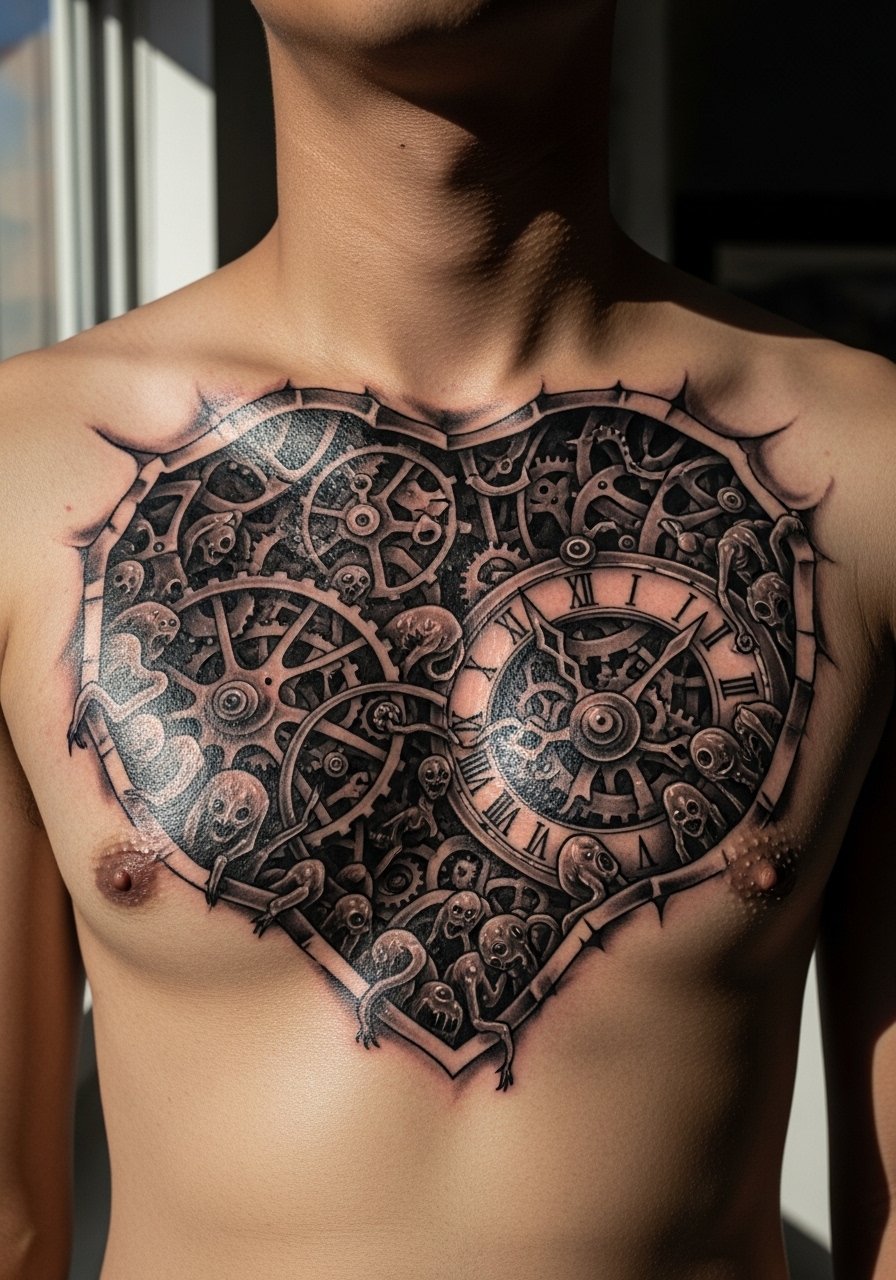
Sternum work is intimate and often more painful. If you choose this placement, be ready for longer single-session stretches. Tell the artist which portrait features must remain bold so expression survives healing. A common mistake is asking for too many tiny gears right over the sternum where skin movement blurs detail. Expect three or more sessions with an initial longer appointment. Sternum tattoos can affect professional interactions, so think about visibility before booking.
20. Ornamental Repeating Flora That Replaces a Sleeve Seam On the Back of the Arm
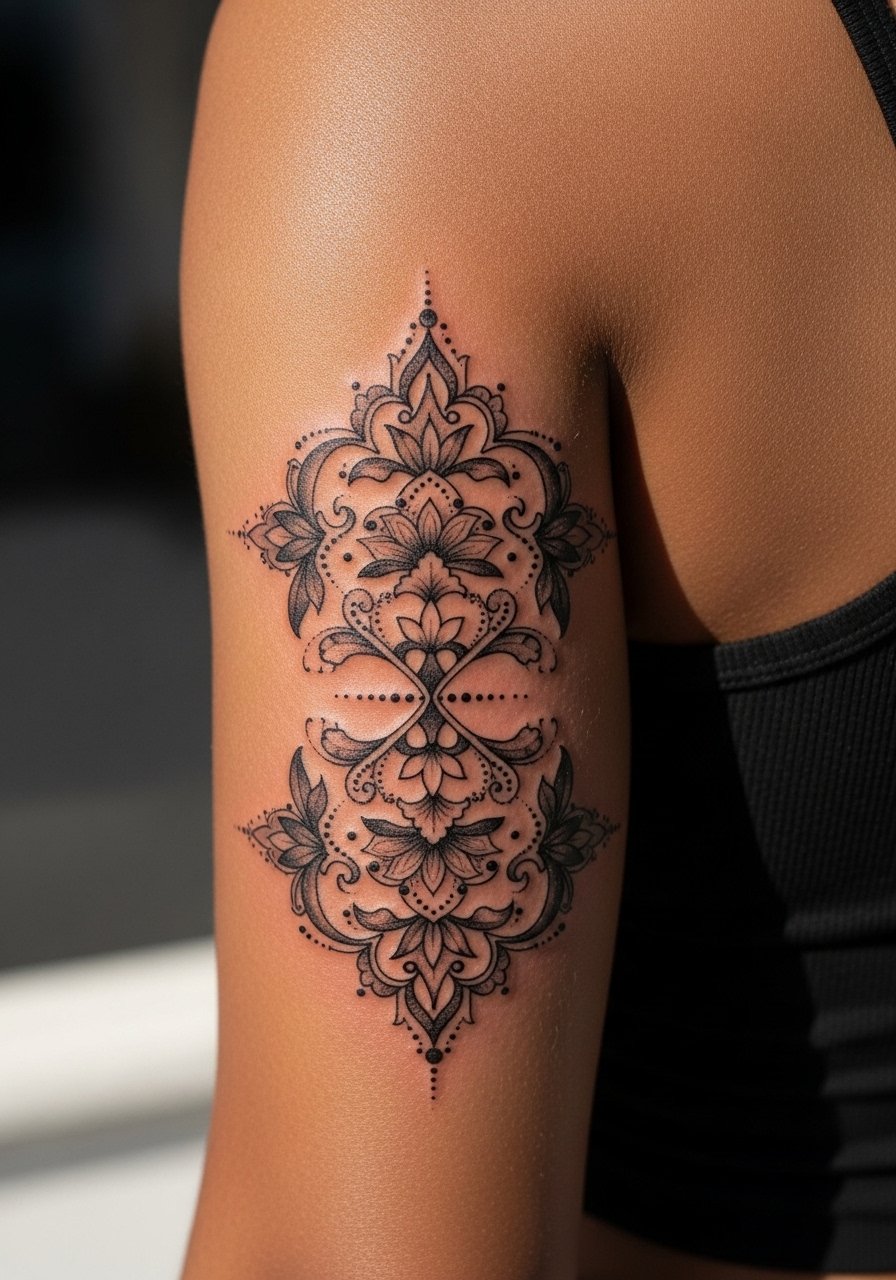
The back of the arm is a subtle place to continue sleeve work or to start a new seam. Ask your artist to map the repetition so each motif keeps breathing room with muscle movement. A mistake is compressing repeat elements into the fold at the elbow. One to two sessions usually cover the seam. At two years the dot work may lose the finest contrast, so plan a gentle touch-up to keep the rhythm crisp. This placement is low-visibility for workplaces that frown on arms.
21. Hybrid Mecha-Human Face With Exposed Circuits on the Throat Area
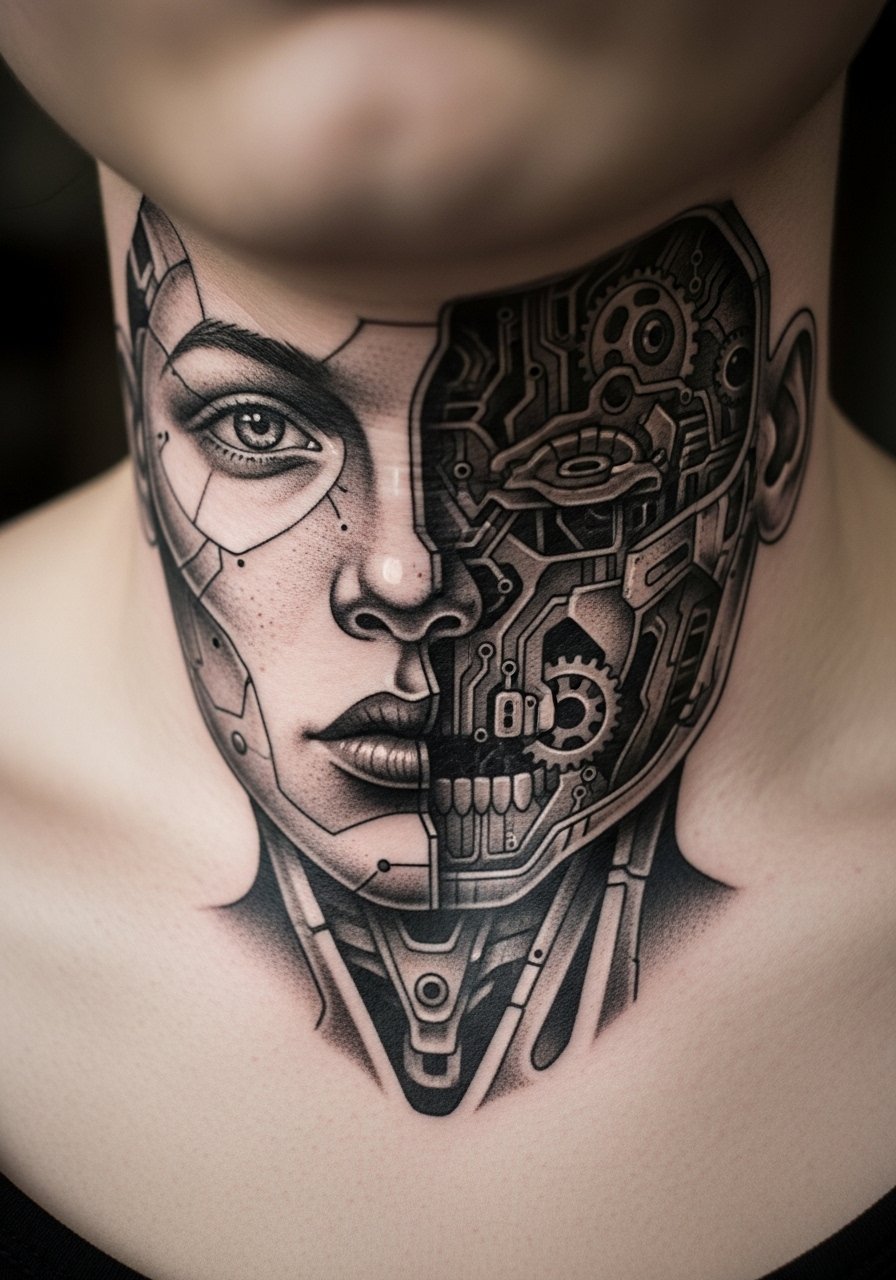
Neck and throat placements require a specialist who knows how to keep linework stable on thin skin. This is a place to be explicit about bold contour and saturation. The common error is over-detailing small internal circuitry that blurs with motion. Expect multiple small sessions. Healing on the throat can be prone to early scabbing and scarring if aftercare is lax. If you plan neck work, ask about the artist's healed neck portfolio and factor in how visible the piece will be for employment considerations.
22. Distorted Scene Through a Window Where Objects Form Animals on the Calf
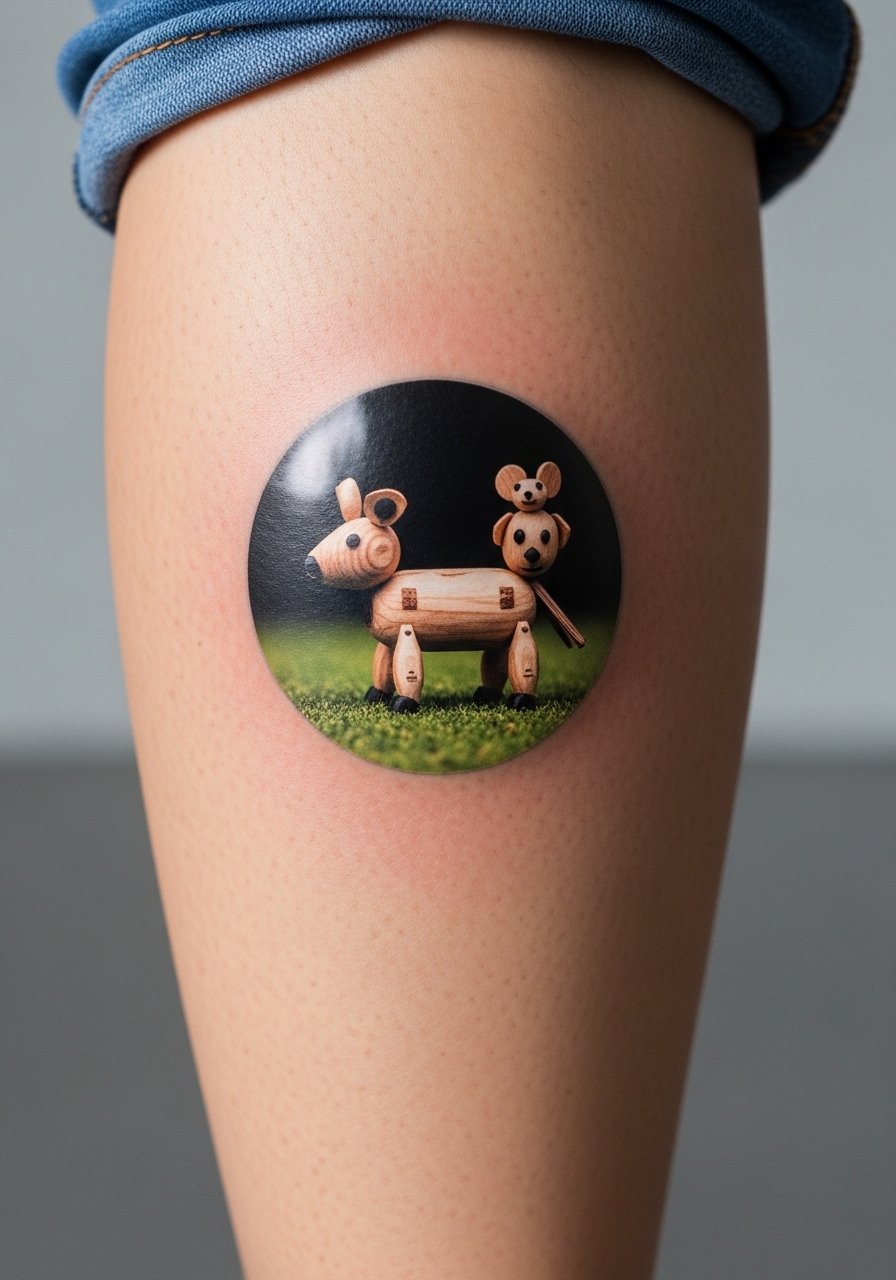
Calf placement is forgiving and creates strong 3D illusions when the design curves with the leg. For a peephole scene, ask for larger focal objects to avoid tiny forms getting lost. A typical mistake is packing the window with many micro items that lose definition. Two sessions gives time for solid contrasts and mid-tones. Healed at one year the main animals remain readable while smaller details may need touch-ups. Calf pieces photograph well for healed series if you want to document the evolution.
23. Fragmented Portraits With Galaxy Negative Space on the Forearm
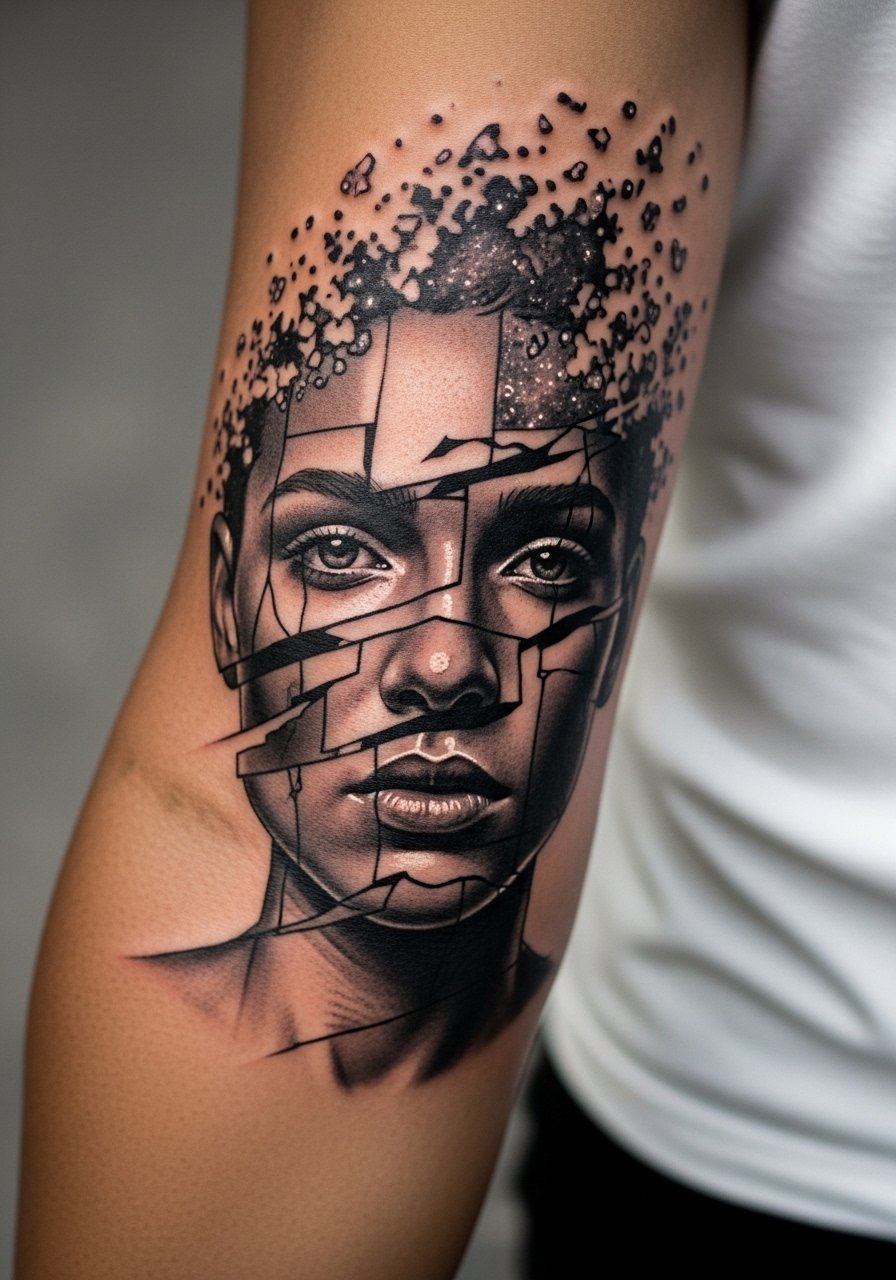
Fragments work well on forearms because the elongated canvas helps the dissolution read naturally. When you consult, show which fragments must remain sharp. A common mistake is compressing the galaxy into tiny dots that smear during healing. Two sessions are common to layer saturation and galaxy dots. Expect the galaxy to settle by six months then soften by year two, so plan a touch-up to restore bright specks. Forearm placement also gives you room to expand the piece later into a sleeve.
24. Minimalist Volume Icon With Tiny Floating Elements On the Wrist
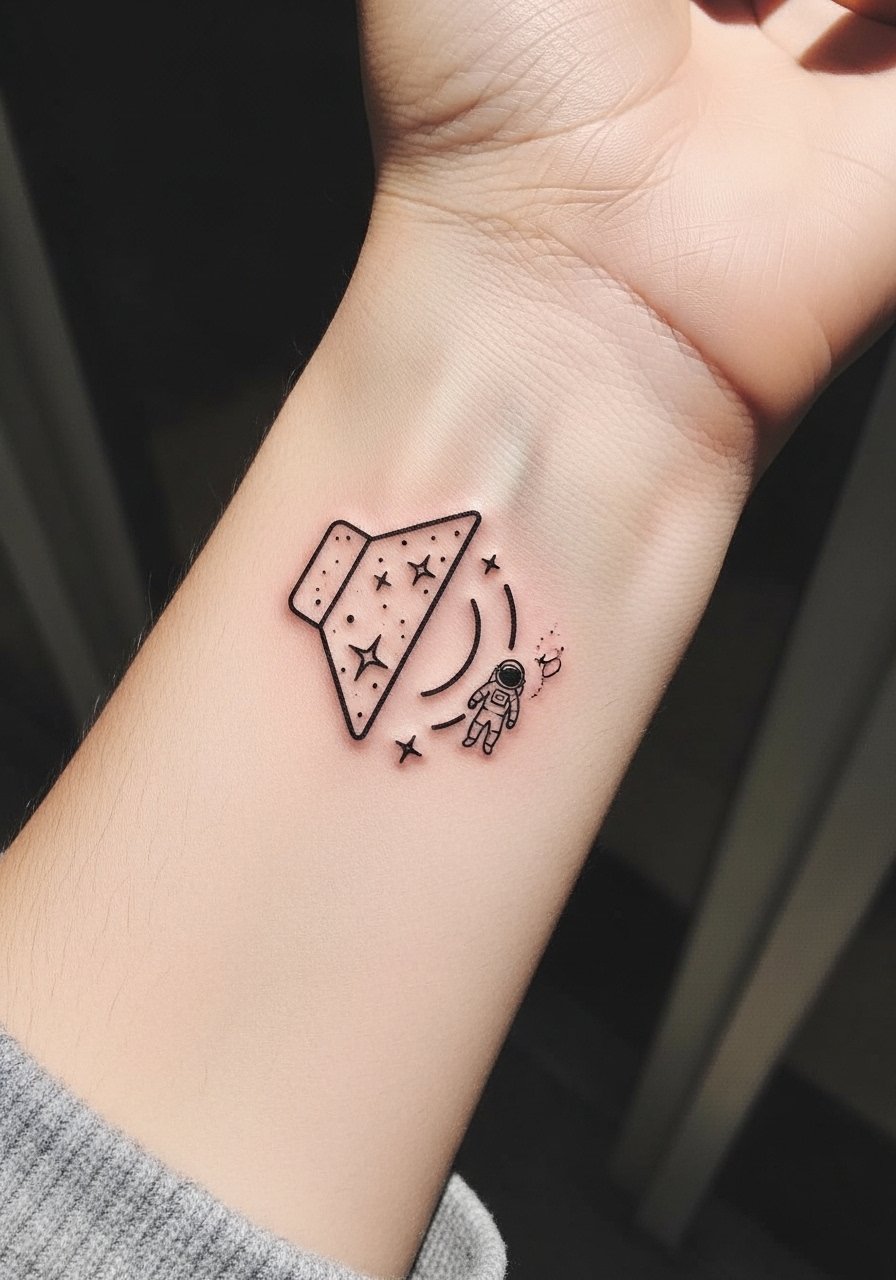
Minimalist wrist icons are classic guest-spot designs. The trick is ordering slightly heavier primary outlines so the icon does not wash out. The mistake is going too thin on the very first line. A single short session should suffice. Expect fading faster than on upper arm pieces, with a potential touch-up in the first year. Short sessions are easier to schedule if you have limited downtime. Wrist placement also means daily exposure to soaps and sun, so follow aftercare closely.
25. Water-Distorted Portrait Where Water Forms Mythical Creatures On the Ribcage
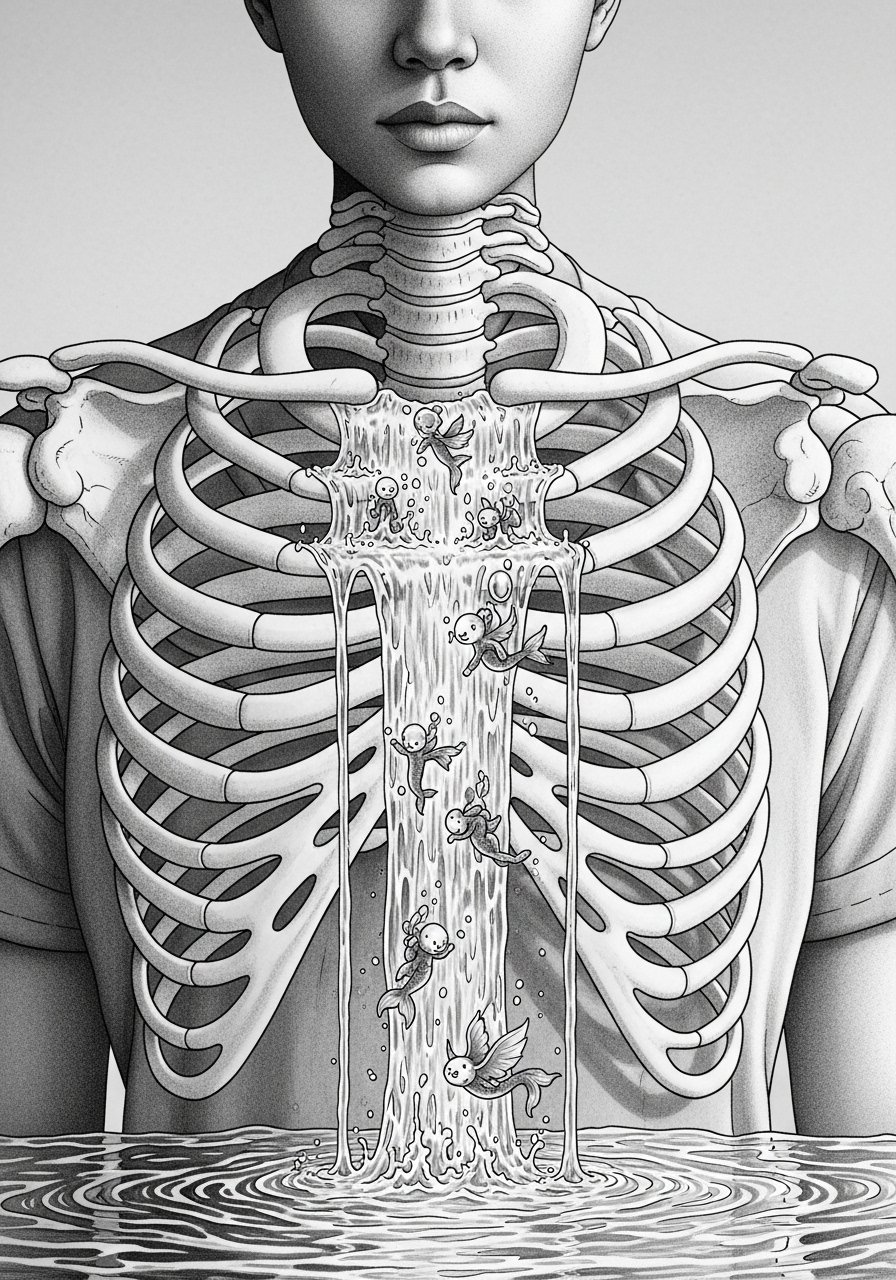
This ribcage idea depends on fluid motion, which the ribs enhance. Tell your artist you want clear negative space between water tendrils to avoid blurring during healing. A common mistake is over-layering dot work in narrow channels. Expect two to three sessions. At six months the ripples will read well and at two years finer dots may need a refresh. If the design leans on cultural mythic creatures, mention the origin to your artist so they avoid inappropriate replication.
Tattoo Prep and Aftercare Essentials
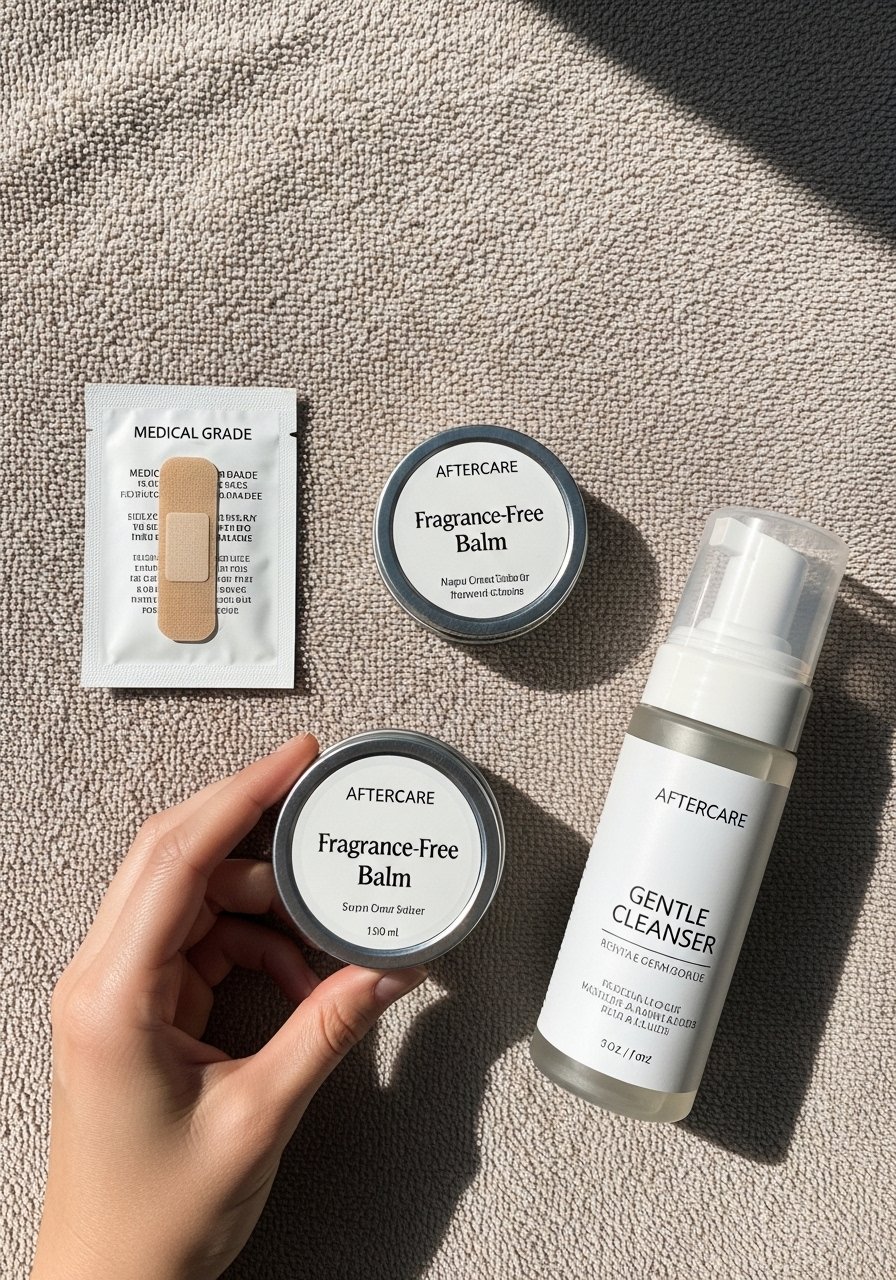
Indie breathable tattoo balm, lightweight formula that claims quick absorption and less clogging than heavier ointments. Use after the initial peel once scabs start flattening. It helps keep saturation without feeling greasy.
UK-style second-skin alternative, medical-grade breathable film patch single-use packets. Good for humid climates or first 24 to 48 hours to cut down mess.
Australian tattoo oil for blackwork maintenance, marketed for retaining contrast on darker skin tones. Apply sparingly for long-term sheen on blackwork pieces.
Fragrance-free gentle foaming cleanser for daily washing. Use twice a day in the first week to remove excess lymph without stripping moisture.
Medical-grade occlusive bandage, 6-inch roll for custom coverage after sessions. Handy for protecting fresh large pieces at night.
Aquaphor Healing Ointment, single small tube for the first 48 hours if you prefer thicker occlusion. Use this as your one mainstream option for the very initial stage only. It can clog for some skin types so follow up with a thinner balm.
Lightweight fragrance-free moisturizing lotion for long-term maintenance. Good for daily wear once the tattoo is fully healed.
Small sunscreen stick for tattoo touch-ups in the sun, SPF 50 travel size. Apply on healed tattoos to protect saturation during outdoor exposure.
Every tattoo is different. Always follow your artist's specific aftercare instructions. Consult a dermatologist if you have skin concerns or unusual healing issues.
Frequently Asked Questions
Q: Will micro-realism or fine line surreal tattoos blur faster on forearms than bold blackwork?
A: From what I have seen, fine line and micro-realism on forearms tend to soften sooner because of sun and clothing friction. Many artists caution that ultra-fine elements can lose crispness by year two. If you want detail on a forearm, ask for slightly bolder primary outlines and plan a touch-up window around year one.
Q: For photoreal back pieces with eyes in landscapes, how many sessions should I expect and when will I need a touch-up?
A: Photoreal back pieces usually need multiple sessions to build contrast slowly. Expect at least three sessions, sometimes more depending on size. I recommend a touch-up at year one to reinforce the finest highlights, then reassess at year three to maintain depth.
Q: Should I use a second-skin product or dry-heal a ribcage peephole piece?
A: Artists and hobbyists split on this. One camp likes second-skin for reduced mess and faster initial healing. The other camp prefers dry healing for natural scab formation. A practical middle path is to use a breathable film for the first 24 hours then switch to gentle cleaning and a light balm. Mention your choice during the consult so the artist can adapt post-session care.
Q: How do I find an artist who can pull off biomechanical morphing without it looking cartoonish?
A: Search hashtags like #surrealismtattoo and #biomechtattoo on Instagram and filter by city. Check tattoo directories and Reddit threads for recommendations in your area. Look for portfolios that show healed work and pay attention to linework, saturation, and how three-dimensional elements read on the body. Ask an artist about their touch-up rate for dense blackwork during the consult.
Q: Do watercolor-infused geometric portals require different aftercare than black and gray surreal pieces?
A: Yes. Watercolor elements often need gentler long-term maintenance because their saturation is less dense. During healing use a thin breathable balm rather than heavy occlusives and plan a color refresher at around the one-year mark. Black and gray pieces tolerate more aggressive saturation and usually need fewer color touch-ups.
Q: Is a throat or neck biomech tattoo likely to affect job prospects and what should I ask the artist before booking?
A: Neck and throat placements are highly visible in many professional settings. Ask the artist for healed neck portfolio examples and inquire about line thickness and saturation choices that keep the piece legible. Discuss how long sessions will be and whether they recommend staged appointments to manage healing visibility for work.
Q: For dark skin tones, which surreal styles retain contrast best and what should I ask for during a consult?
A: Solid blackwork with strong negative space often reads best on darker skin. Ask the artist to prioritize high-contrast silhouettes and slightly bolder primary outlines rather than dense micro textures. Also discuss which oils or balms they recommend to maintain saturation during the first year.