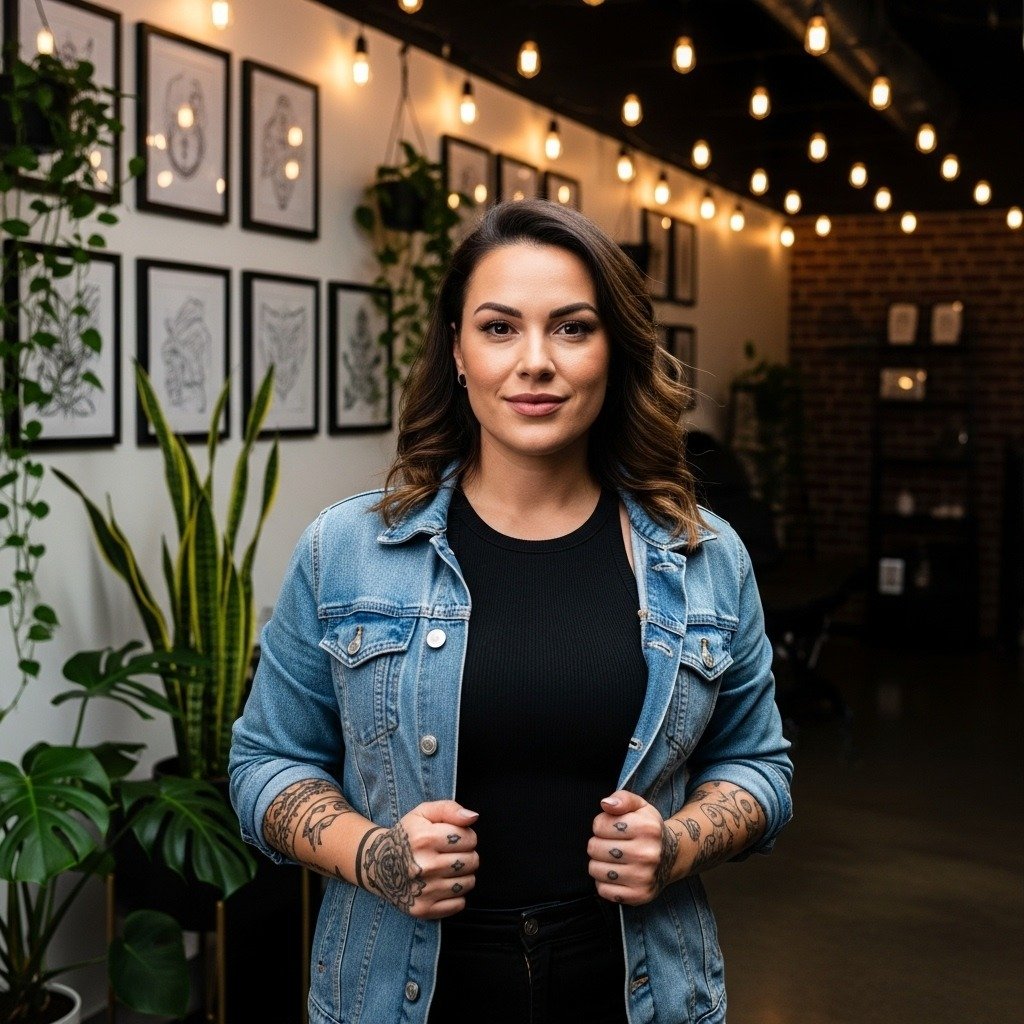
A friend spent eight months scrolling through galleries before realizing the real problem was not finding pretty images. It was knowing which small styles actually age on real skin and where they will hide when life or work calls for discretion. I talked with artists at five shops across Brooklyn and watched healed pieces in person. What follows are small designs that tend to work in the long run, and when to ask for thicker linework or a touch-up down the road.
1. Minimalist Arrow on Inner Forearm
Someone I know picked this after a short conversation about alignment and ended up with the cleanest linework I’ve seen. The inner forearm is a forgiving spot for fine line work, with low friction and fast healing. Tell your artist you want single-needle linework with a slightly heavier backbone line so it keeps shape at year two. Common mistakes are shrinking the design too small and asking for hairline detail that will blur. Pain is low, most sessions finish under an hour, and expect a small touch-up around year two if you get a lot of sun. This placement works well if you want something easy to conceal with long sleeves.

2. Fine Line Wolf Head on Wrist
Fair warning, the wrist sits right where movement and soap meet ink, and fine line there splits artists into two camps. One group says subtle fine line ages fine on low-friction spots. The other group argues that wrists need slightly bolder line weight to avoid blur within a couple years. When you consult, ask where the artist stands and request a compromise with delicate shading but firm contour. Expect moderate pain and a session under an hour. This design reads as quiet strength. A common error is packing too much micro detail into a 1.5 inch piece. Plan a touch-up at year two to retain muzzle definition.

3. Micro-Realism Lion on Finger
The finger is notorious for fast fading and blowout risk because of thin skin and high use. Micro-realism here is a commitment. If you want a tiny lion, make it under an inch and ask the artist to simplify textures into contrast blocks rather than dense stipple. The session is short but painful, and touch-ups are common at year one and again by year three. A real mistake is insisting on extreme hair detail at this scale. For discrete placement, the outer finger or side of the finger will last better than the pad. Hand tattoos still affect some hiring decisions, so consider career impact before booking.

4. Blackwork Spider on Ankle
There is something practical about solid black on the ankle since it hides under socks and heals fast. The ankle has thin skin over bone so expect a sharper pinch during the session that usually runs under an hour. Ask for saturated black fill and clean edgework to reduce early patchy healing. A common aging problem is sparse saturation leaving a patchy silhouette after a year. The artist should pack saturation and soften the legs where needed to prevent blowout along tendons. If you want to hide it for work, choose the inner ankle for easier concealment.

5. Neo-Traditional Melting Watch on Upper Bicep
The upper bicep gives the space and fleshiness neo-traditional needs to keep color saturation and outline crisp. Most people feel this as a tolerable ache, not a sharp pain, and sessions can be one to two hours when color is involved. Tell your artist you want bold outlines with restrained color fills so the melting effect reads from a short distance. Avoid tiny flavor details that turn into smudges later. Over five years the color may soften but the strong contour will hold the composition. This is a conversation-starting piece that still tucks under short sleeves when you prefer.

6. Ornamental Snake Coiled on Ribcage
Fair warning, the ribcage rates high on the pain scale. People pick this spot for concealment and for the way a curved design hugs the body. Artists disagree about fine line on ribs. One camp warns skin movement and stretch can blur ultra-fine lines within two years. The other camp says with proper needle depth and spacing fine ornamental linework can last. Ask which camp your artist belongs to and request slightly bolder linework if you plan weight changes. Sessions are usually one long sitting. Expect a clear healed look at six months and a softening of the finest details by year three, with touch-ups as needed.

7. Ignorant Style Skull on Chest
The chest is forgiving for thicker ignorant style lines since the skin there takes saturation well. Someone I know chose this to lean into unpolished aesthetics and it reads raw without overworking. Sessions are usually under an hour and pain is medium. Tell your artist you want thick, confident lines and avoid tiny interior flourishes that age into mud. A common mistake is requesting ultra-thin fills in this style. Over time the solid black will hold, but expect the skull’s small teeth or internal dots to need a touch-up around year three.

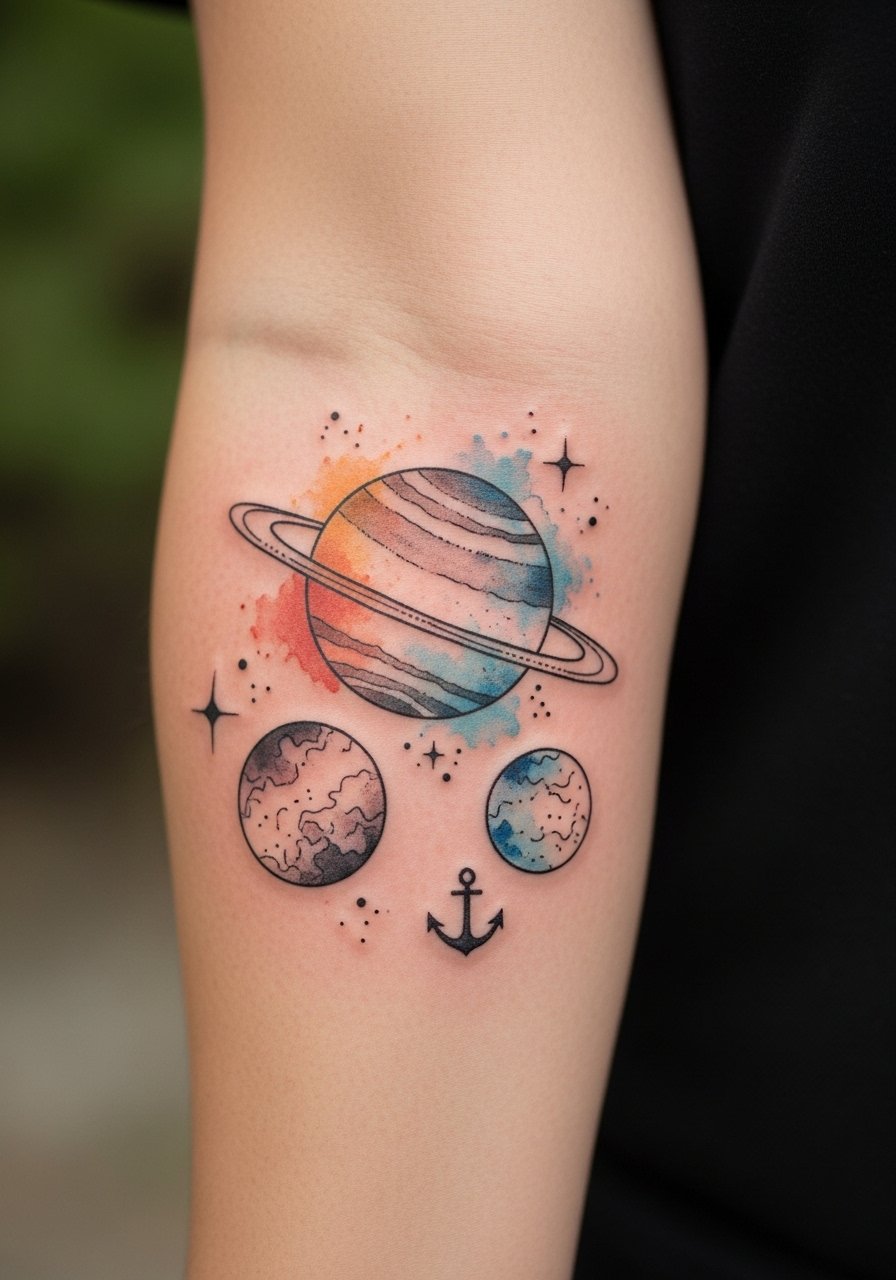
8. Watercolor Celestial Planet on Outer Forearm
Most watercolor minis fade faster when artists overuse thin washes at tiny scale. The outer forearm gives space and less friction so you get better longevity. Ask for muted color washes with a stronger black anchor line or dot work to protect edges. The session is usually under an hour. A mistake people make is insisting on full watercolor blending in a one-inch piece. Expect the color to soften by year two, and plan a color refresh if you want the original vibrancy. This design reads well when paired with subtle stipple shading for depth.
9. Traditional Matchstick Flame on Knuckle
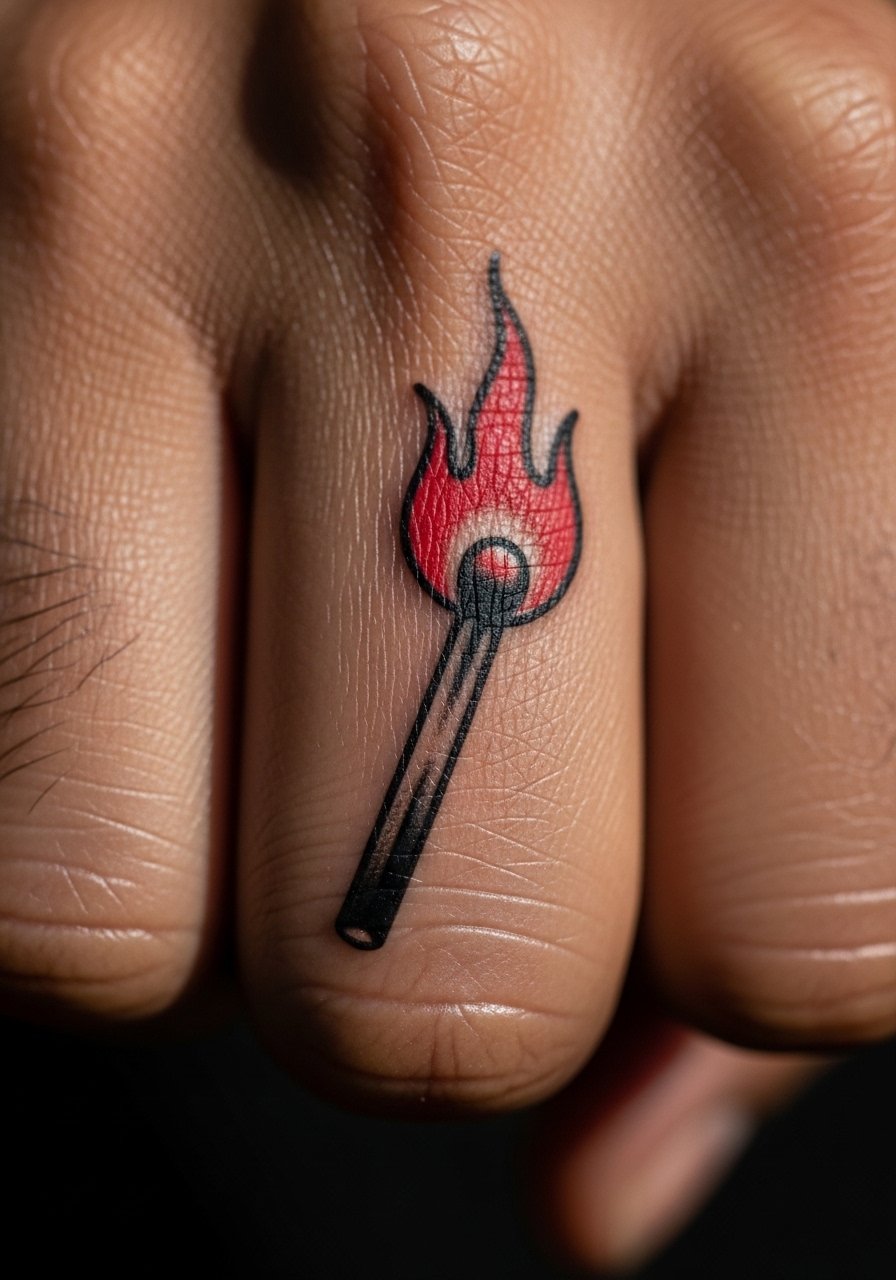
Knuckles suffer heavy abrasion and soap exposure, so boldness matters. Traditional matchstick designs need dense black outlines and a solid red fill in the flame to last through constant hand use. Pain here is high and sessions are quick. Tell your artist you want heavy contour and minimal interior detail so the flame remains readable at year one. A real mistake is tiny script or fine shading on knuckles. Expect touch-ups more often than other placements, sometimes as early as six to twelve months, especially if you wash hands frequently.
10. Linework Owl on Collarbone
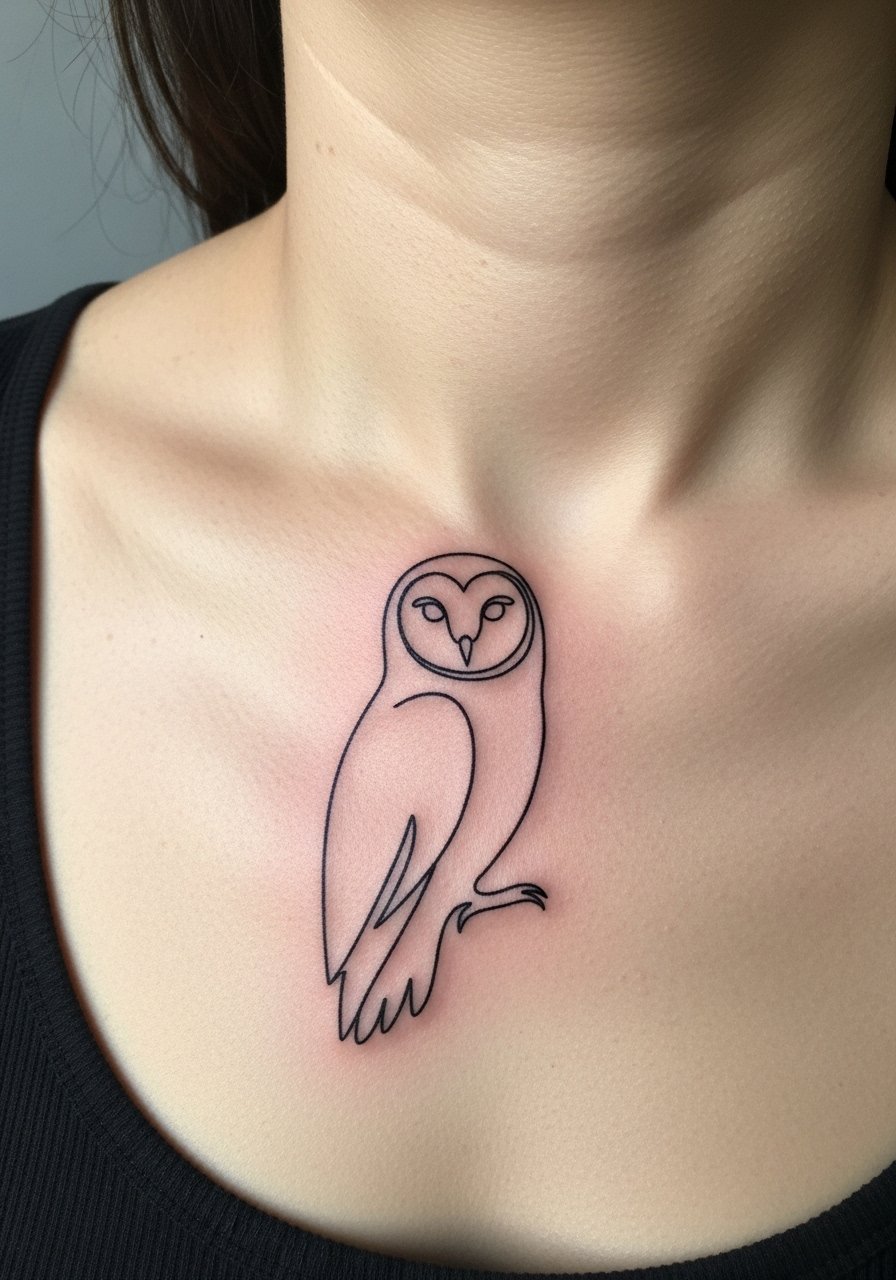
The collarbone line gives a sleek placement that reads well beneath a shirt collar. Expect a sharp sting over bone followed by mild soreness. Ask for confident linework with open negative space so the owl breathes on the shallow canvas. A common error is packing too much stipple or dense shading into 1.5 inches. Healed at six months the piece should keep its silhouette, with only minor softening of the finest lines by year three. Collarbone pieces pair nicely with clavicle placement for symmetry or with offset single-line branches.
Tattoo Prep and Aftercare Essentials
If you are booking one of these small pieces you will get better results with a simple prep and a short aftercare kit. Pack these by category so you do not overbuy.
Healing and aftercare essentials
Fragrance-free moisturizing balm in a small tube, non-greasy and rapid-absorbing. Use after the initial crusting stage to keep skin supple and reduce itching without heavy residue.
Medical-grade occlusive bandage, single-use sheet format, 4×4 inches. Great for first 24 hours if your artist recommends second-skin protection.
Gentle, pH-balanced foaming cleanser, fragrance-free. Clean with cool water and a soft pat dry to avoid scabbing.
Lightweight, breathable healing ointment replacement, balm-style jar. Swap in after the initial bandage stage to prevent over-saturation.
Pre-appointment prep
Disposable razor and antiseptic wipe pack. Trim hair near the area the day before to help the artist work cleanly.
Sleeve extender or loose shirt for easy access to placement. Wear something that pulls off easily without rubbing the fresh piece.
Long-term maintenance
SPF 50 mineral sunscreen stick for small spots. Sunscreen is the biggest long-term protector for color and linework.
Saniderm medical second skin, pack of adhesive sheets. If your artist recommends second-skin, this seals and speeds early healing. Use only when advised.
Every tattoo is different. Always follow your artist’s specific aftercare instructions. Consult a dermatologist if you have skin concerns or unusual healing issues.
Frequently Asked Questions
Q: Will fine line wolf or owl tattoos blur faster on my skin type?
A: It depends on placement and lifestyle. Fine line holds best on low-friction areas like the inner forearm or collarbone. Wrists and hands see more wear and may need touch-ups sooner. When you book, ask the artist how they adjust line weight for your skin tone and daily habits.
Q: How often should micro-realism on a finger get touched up?
A: Expect at least one touch-up within the first year and another by year three for most finger micro-realism pieces. Fingers get the most exposure and skin turnover, so plan for maintenance if you want the detail sharp.
Q: Are there special prep steps for getting a ribcage snake versus a bicep watch?
A: Yes. The ribcage benefits from being well rested and hydrated because sessions can be painful and longer. The bicep tolerates color work better and heals quickly. Bring loose clothing and avoid heavy exercise for 24 to 48 hours after a ribcage session.
Q: If I want watercolor color to last, what should I ask the artist to do?
A: Ask them to anchor the wash with small amounts of black linework or stipple shading so edges do not feather. Request slightly denser pigment in color fills than you might for a large watercolor piece. A color refresh may be necessary by year two.
Q: Can Saniderm be used on knuckle or finger tattoos?
A: That depends on the artist and the location. Saniderm can help early healing on low-motion spots. For knuckles and fingers the adhesive may peel sooner because of movement. If your artist recommends it, follow their exact timing. See the second-skin search link above for options.
Q: How do I find a small-tattoo specialist who does micro-realism or cyber sigilism nearby?
A: Use style-specific hashtags like #microrealism and #cybersigilism on social platforms, search location tags for your city, and check sites like Booksy or Tattoodo for guest spots. r/tattoos and local convention listings also surface guest artists who travel through town.