Someone I know saved screenshots of tiny planet tats for months before booking. The real problem was not finding pretty pictures. It was knowing which tiny planets last on darker skin, which placements stretch into blobs after a few years, and where shop minimums will double the price. Below are ten compact planet designs I keep recommending, with what to ask for in a consult and realistic notes on healing, fading, and touch-ups.
1. Minimalist single planet outline on the inner wrist

Someone I saw at a convention got this on their wrist and kept it small so it could tuck under a watch. Tell your artist you want a one- to two-millimeter contour line and a little negative-space ring for readability. The biggest mistake is requesting a single-needle fineline so tiny it blurs into a dot after a year. For most wrists I advise slightly bolder linework than a pure single needle. Expect a 30 to 45 minute session with mild to moderate pain. At six months it reads crisp. At two years expect some softening and the need for a touch-up if you want that original edge. Ask to see healed photos on similar skin tones during the consult.
2. Fine line solar system arc along the forearm

Fair warning, fine line arcs split artists into two camps. One group says this style intentionally ages into a faint, subtle pattern. The other group insists bold spacing and slightly thicker contours prevent early blur. When you book, ask which camp the artist is in and to show recent healed forearm arcs. For a three to four inch arc plan on a one to two hour session with light to moderate discomfort. A common mistake is cramming planets too close together. Give each planet breathing room to avoid lines running into each other. On dark skin slight added contrast helps the pieces stay readable for longer. Expect a touch-up around year two if you like crisp edges.
3. Watercolor Saturn with soft rings on the collarbone

When color meets a small placement like the collarbone, the aftercare debate shows up. One camp swears by occlusive patches to lock moisture. The other prefers dry healing so the scab forms and sheds naturally. For watercolor Saturn tell the artist you want pigment placement that favors saturation near the outline and a gentle wash inside. The mistake is asking for extremely thin washes with no black anchor. That tends to migrate and lose definition after swimming or sun exposure. Sessions are usually two short passes across one or two visits. Expect the first six weeks to be the most delicate. Avoid heavy friction from straps while the piece seals.
4. Blackwork Earth globe on the outer calf
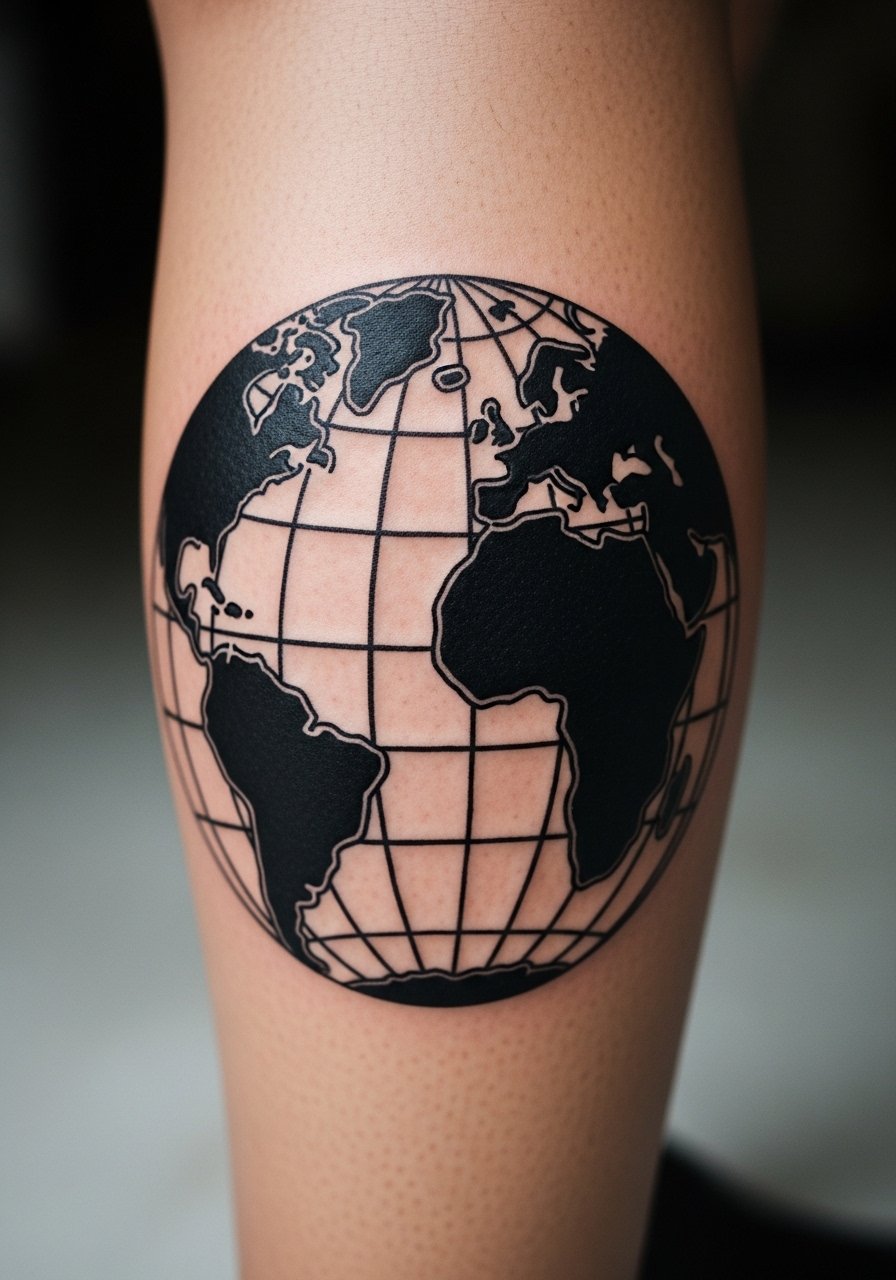
There is a reason blackwork is trending for all skin tones. Saturation holds and reads well from a distance. If you want a compact globe on the calf, ask for solid linework and a small area of saturated fill to represent oceans or land mass. The calf tolerates touch-ups well and has low blowout risk compared with fingers. People sometimes request ultra-fine details inside the globe and then complain the tiny stipple fades. For longevity favor bold contours plus selective stipple shading rather than full micro-detail. Session time is usually under an hour. Expect strong contrast at six months with only gradual softening over several years.
5. Micro-realism Mars surface on the side of a finger

The side of the finger is brutal for longevity, so choose placement carefully. Micro-realism can look incredible up close but will need commitment. When you consult, ask the artist to map the texture with stipple shading and to avoid packing too much pigment in one tiny spot. Common mistakes include putting hyper-detailed micro-realism directly over joints where skin moves and ink migrates. Expect a short session but plan for a faster fade and a likely touch-up within a year. Finger placements carry higher blowout risk if the needle sits too deep. If you want a discreet look, consider the pinky side or the outer finger where movement is slightly less.
6. Neo-traditional Jupiter orb on the upper bicep
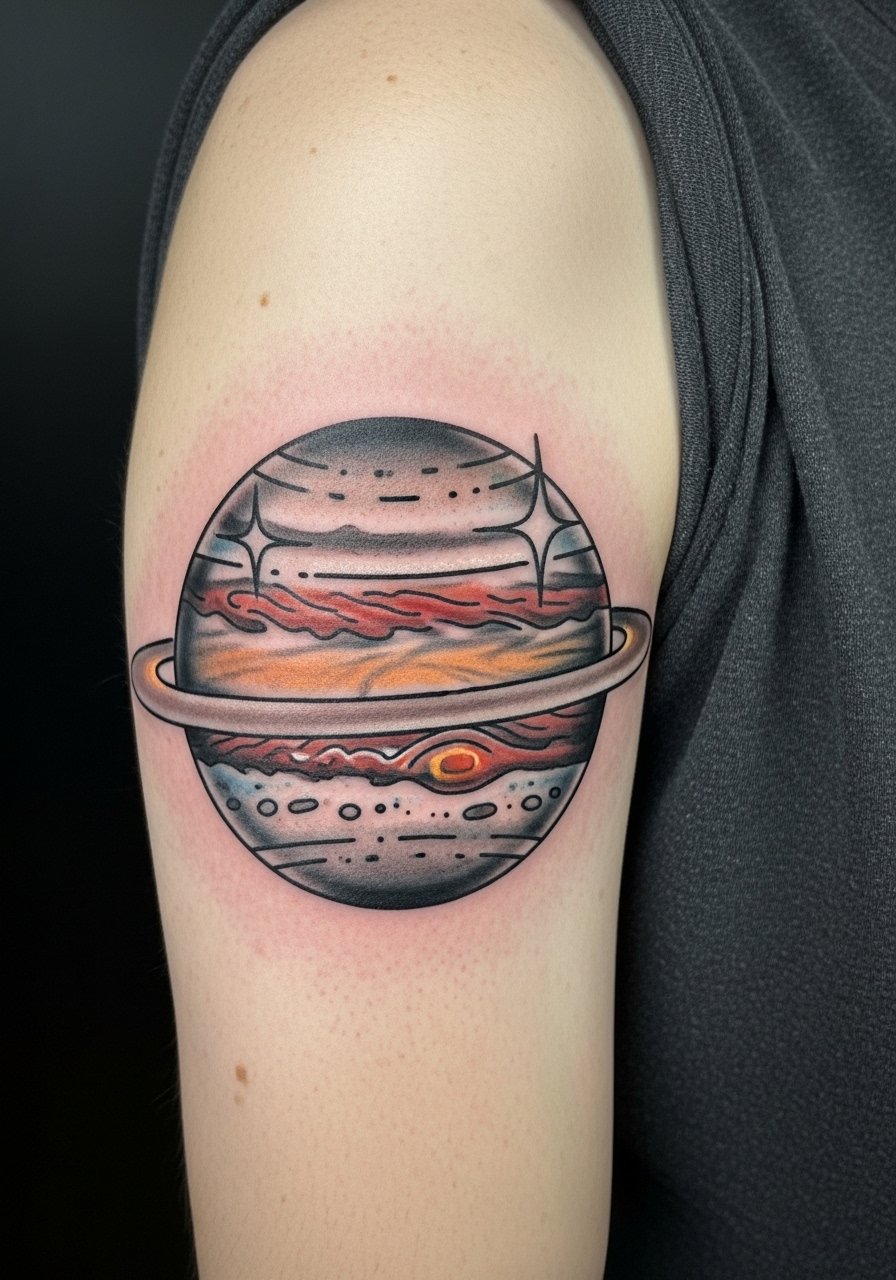
There is visual impact in a small illustrative planet when the outline reads from across a room. Tell your artist you want classic neo-traditional linework with saturated color pockets and a visible ring pattern. The bicep is forgiving for color retention and has lower pain than ribs. A common error is shrinking neo-traditional elements until the ornamental details disappear. Give the design two to three inches of space so those little swirls and color blocks age properly. Sessions run longer for color than for outline only, and touch-ups at year two are normal for vibrant hues. If you have sun exposure concerns, plan long-term maintenance with occasional color refreshes.
7. Ornamental Neptune mandala on the shoulder blade

When you pair a planet motif with mandala geometry, clarity depends on scale and line spacing. At three inches the shoulder blade gives room for dot work, stipple shading, and small negative-space rings that read well over time. Tell the artist you want consistent dot spacing and to avoid single-needle lines that might blur. A frequent mistake is overcomplicating the mandala at a micro scale. For ornamental work on the shoulder blade expect a single session that can run two hours if the pattern is dense. Should you use a mandala rooted in another culture, mention the origin and ask about respectful variation rather than a direct copy.
8. Ignorant style Uranus burst on the thigh

The ignorant style is purposefully raw and sketchy, and that quality survives even if the lines soften. When booking say you want loose, energetic strokes with intentional overlaps and a few deliberate "mistakes." Thigh flesh tolerates healing well but sweat and tight clothing in summer can affect color holds. A common error is asking for tiny ignorant marks that look messy rather than intentional. Plan for a one-hour session and moderate pain. For jobs that need concealment the thigh is an easy spot to hide while you heal. Expect the sketchy elements to blur into a softer graphic rather than disappear.
9. Minimalist Venus silhouette tucked behind the ear
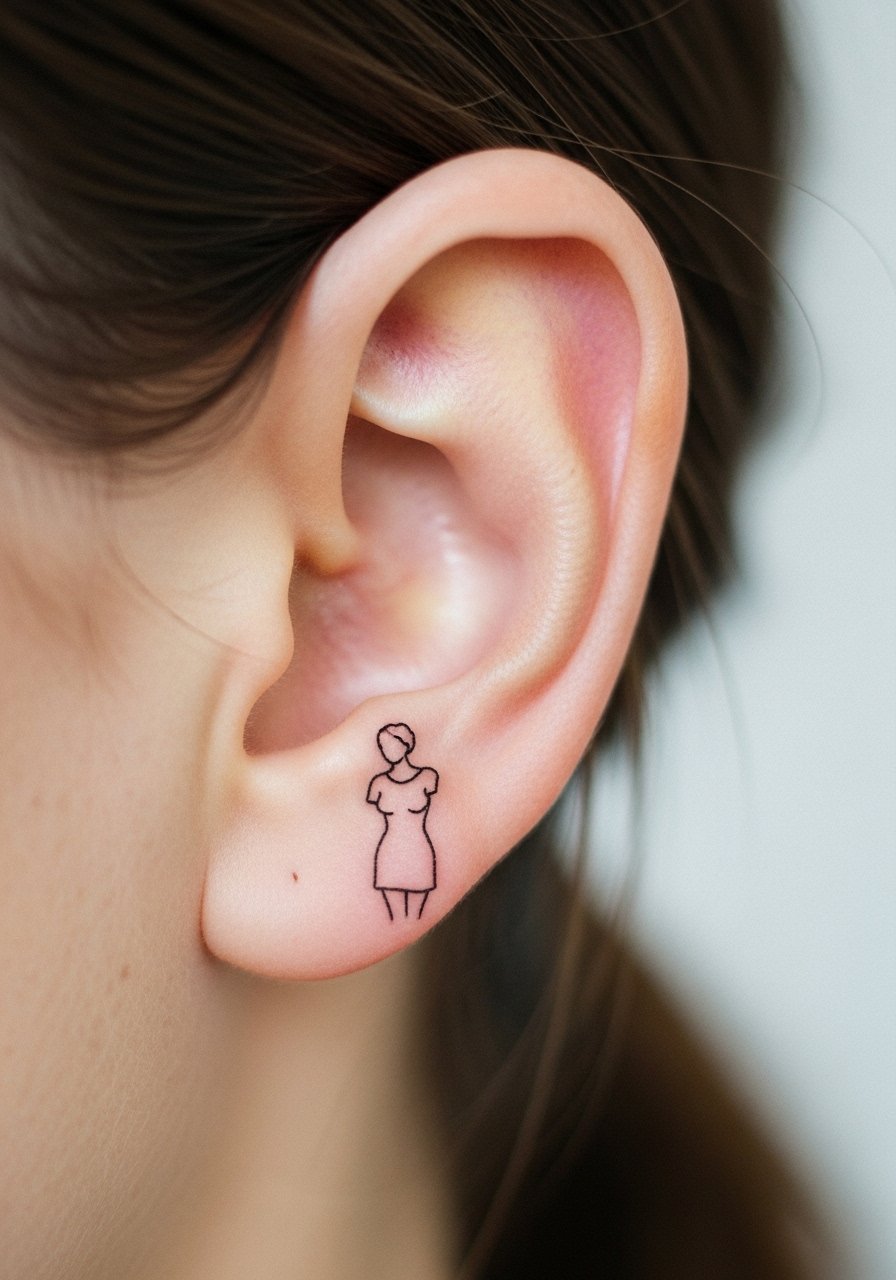
Behind-ear placements are discreet and charming but the area is thin and unforgiving. When you meet your artist be specific about line weight and ask for a slightly bolder contour than a single hairline. The frequent mistake is requesting a silhouette so fine it vanishes after sun exposure or short healing windows. Expect mild to sharp pain in a quick 20 to 30 minute session. Healed at six months the piece should read well if you avoided overworking the area. Keep sunscreen on the area after it fully heals to protect small color blocks and outline contrast.
10. Black and gray Pluto dwarf planet on the ribs
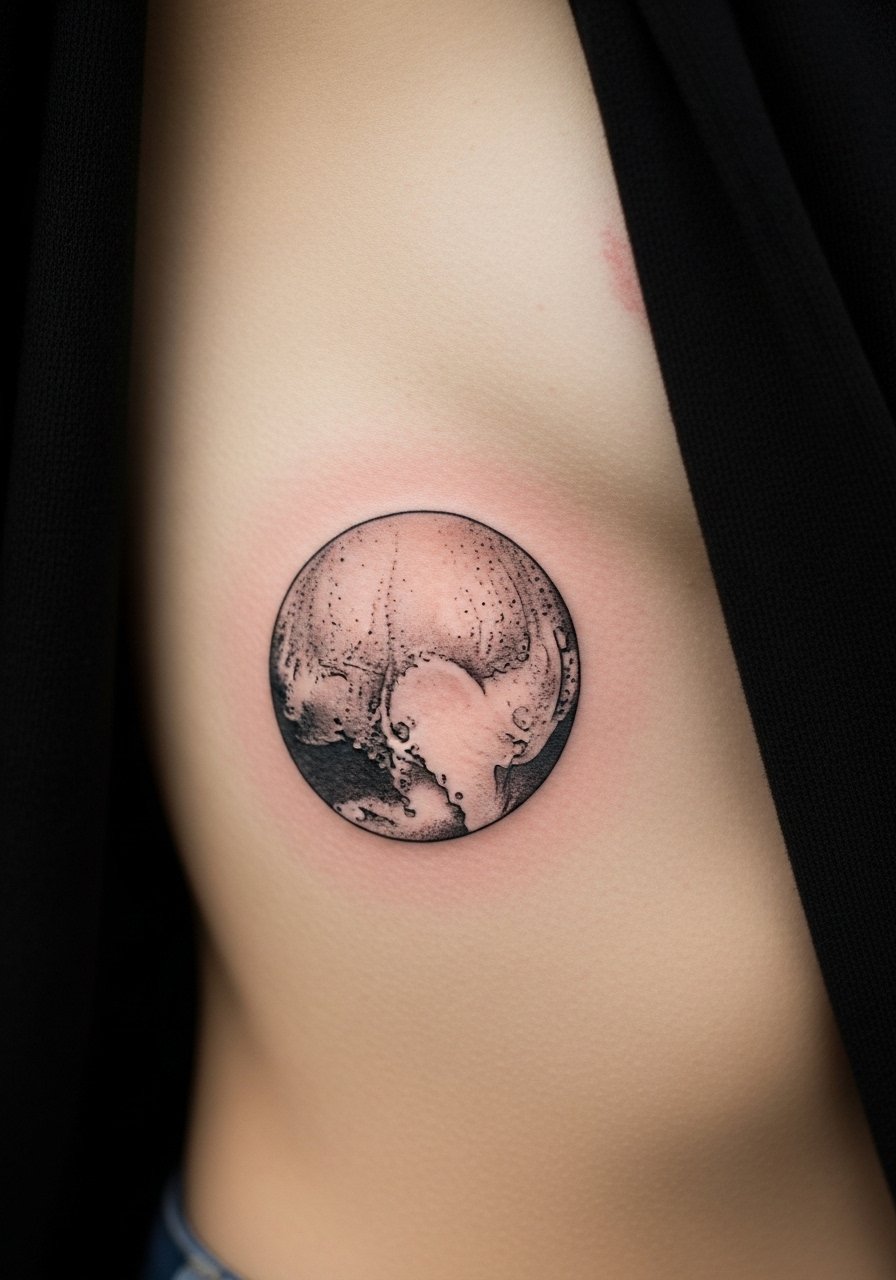
Fair warning, ribs are commonly reported as a high pain area with a seven out of ten on many charts. That does not mean avoid it, but plan for the sensation and shorter breaks. For a two-inch black and gray Pluto ask for shallow, consistent shading like soft stipple and avoid overpacking pigment into thin skin. The controversy about numbing shows up here. One camp recommends topical numbing for comfort on ribs. The traditionalists argue numbing blunts the experience and can alter how a client moves during the session. Ask your artist how they handle numbing and healing on the ribs. Expect a two session timeline if you want deep texture, and a realistic touch-up at year three for crisp shading.
Tattoo Prep and Aftercare Essentials
InkSafe Tea Tree Balm for Tattoo Aftercare. A tea tree balm can calm itch on fine line pieces without leaving a greasy shine. Use sparingly after day three to control irritation and to stop picking.
Dragon Blood Tattoo Serum. This UK-style serum is praised for color hold on small color planets. Apply as a thin layer during the moisturizing window to help saturation.
Hokusai Ink Balm, quick-absorbing. An indie Japanese balm noted for fast absorption and no shine. Good for blackwork planets where shine shows in photos.
CeraVe Healing Ointment. Reddit users mention this as an affordable, non-comedogenic balm for rib and sternum placements. Use only as your artist recommends. This is the one mainstream product on the list.
Lightweight fragrance-free balm. For hot summer heals choose a lightweight balm that denies heavy occlusion while keeping the area moisturized.
Medical-grade second skin bandage, 6-inch roll. Useful for watercolor planets if you and your artist opt for occlusive protection in the first 24 to 72 hours.
Gentle fragrance-free antibacterial soap. Use for the initial cleaning phase. Mild, fragrance-free formulas reduce the chance of irritation on tiny detailed work.
Every tattoo is different. Always follow your artist's specific aftercare instructions. Consult a dermatologist if you have skin concerns or unusual healing issues.
Frequently Asked Questions
Q: Will a fine line solar system arc blur faster if I have darker skin?
A: It depends on the exact line weight and contrast. From what I have gathered, very thin single-needle work tends to soften faster on darker tones. Ask for slightly bolder contours and healed examples on similar skin tones. Expect to schedule a touch-up around year two if you want crisp separation between planets.
Q: Do watercolor-style small planets need different aftercare than blackwork tiny planets?
A: Yes. Watercolor pieces often benefit from a more protective early phase because color pools can migrate. Some artists prefer occlusive bandaging for the first day or two. If you use an occlusive method, follow your artist closely. The medical-grade second skin bandage in the shopping list is an option many people use for delicate washes.
Q: How should I explain stretch risk to an artist when I want a wrist or ankle planet?
A: Bring up recent body changes and ask to test the placement with a temporary or sticker. I suggest telling the artist you want to avoid joints and to map how the design will look when the skin stretches. Forearms and outer calves are safer for small planets if you expect weight fluctuation.
Q: For tiny planets on fingers, what is a realistic touch-up timeline?
A: Fingers fade faster due to washing and movement. A realistic plan is a touch-up at six to twelve months and then another at year two if you want longevity. Expect to accept gradual softening as the baseline unless you commit to frequent touch-ups.
Q: Should I use an occlusive product like Saniderm or go dry for small watercolor planets?
A: Artists and collectors split on this. Occlusive patches can speed things up and reduce mess. Dry healing advocates worry about trapped moisture. Ask your artist their preference and to show you healed examples using that method. If you pick a patch route, follow strict hygiene and change schedules.
Q: How do I find the right artist without naming anyone here?
A: Use style hashtags like #FineLinePlanet or #BlackworkPlanet, filter local location tags, and check directories such as Booksy or Tattoodo for artists who list cosmic or fine line specialties. Look specifically for healed photos on varied skin tones and read recent community threads for guest spot schedules.