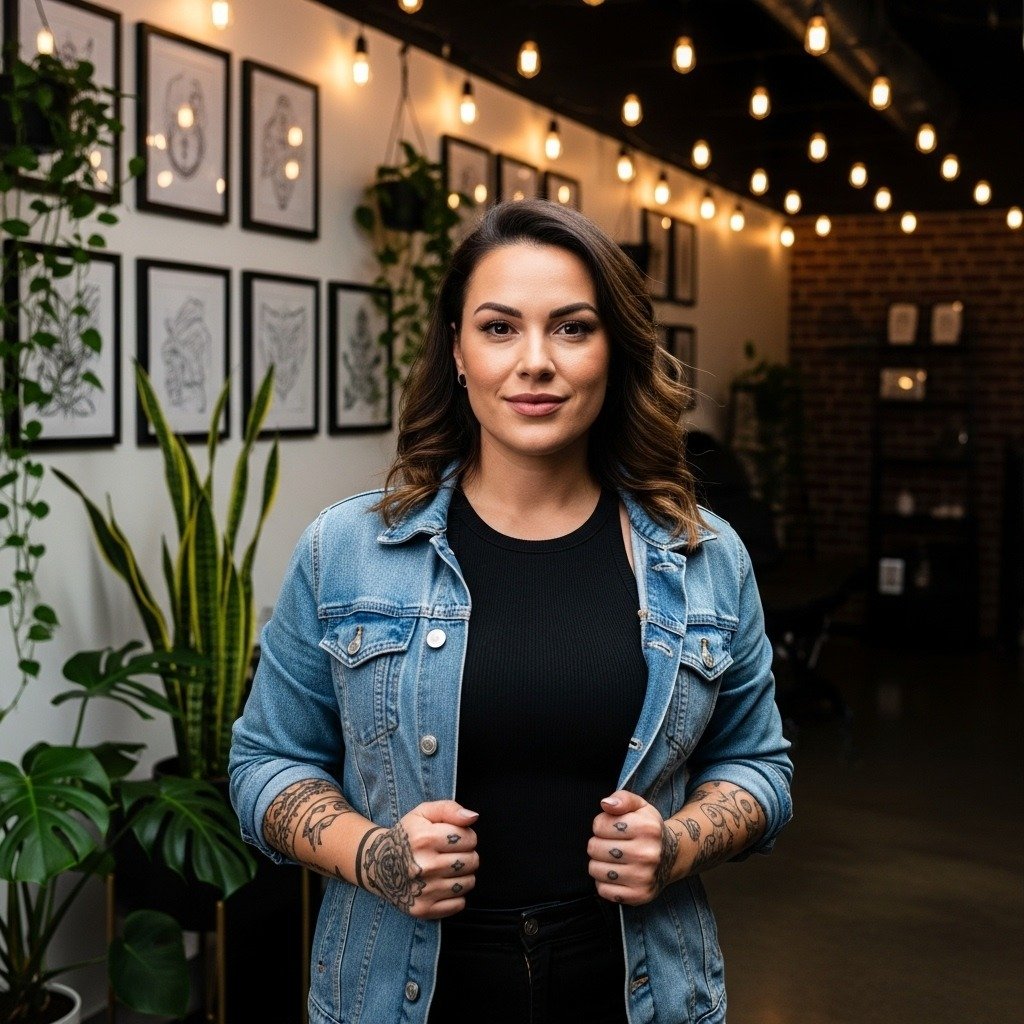
Someone I know spent months saving reference images before booking their first mountain piece. The real hurdle was deciding which style would sit well on their skin five years from now, which placement would fit their job, and how much the design would need to be simplified to avoid early blurring. I visited five shops across Brooklyn, talked with an artist who specializes in fine line, and pulled these 25 mountain tattoo ideas that balance wearability, symbolism, and long-term look.
1. Fine Line Mountain Outline on Inner Forearm

Someone I know first saw this on a college friend and liked how it read like a quiet reminder. Recommend it if you want a first tattoo that is visible but discreet. Tell your artist you want slightly thicker single-pass linework and 2 to 3 millimeter spacing between peaks so the design ages without merging. Fair warning, inner forearm is a low-to-moderate pain spot and the lines can lose crispness after a couple years. A common mistake is asking for ultra-hairline strokes when the skin there shifts. Expect a touch-up around year two to retain razor-sharp linework.
2. Watercolor Mountain Landscape on Shoulder Cap

Visual impact leads here because shoulder caps move with clothing and muscle to make watercolor feels like a painting in motion. When you consult, bring color swatches and say how much white skin you want left between washes. Watercolor fades differently than blackwork. At six months the washes soften and at two years they may look dusty unless saturation is built up in the first sessions. The session feels like steady shading rather than constant needle tapping. Be specific about saturation and ask about sun protection advice. If you like this, it's one of the best mountain tattoo for shoulder choices.
3. Sunrise Silhouette on the Ribcage

Fair warning, the ribcage rates high on most pain scales, but the vertical silhouette complements the body curve. Artists split on fine line on ribs. One camp says thin lines blur fast because the skin stretches. The other camp says controlled depth and slightly bolder line weight keeps it readable for years. Ask your artist which side they sit on before booking. A common mistake is squeezing tiny detail into a curved area. For a silhouette, aim for clean negative space around the peak so the sunrise reads at a glance. Touch-ups at year two are not unusual.
4. Cosmic Nebula Mountains Full Sleeve

There is something about star fields blending into jagged peaks that reads like a personal myth. This is a multi-session commitment and you should plan for layered saturation. Tell your artist you want concentrated color blocks that can be layered to avoid muddying later. Most sleeves look rich at six months and require color refreshes by year three if you work outdoors a lot. Blowout risk is moderate when going heavy on gradient work, so avoid overly thin contour lines near dense color. Expect four to six sessions and a clear touch-up plan.
5. Compass and Mountain Upper Back Piece

When you sit down for this, bring references that show exact compass scale and how ornamental motifs wrap the spine. This design reads as a directional marker and fits nicely between shoulder blades. Session time is moderate and you might need a short follow-up for shading. One mistake is asking for tiny compass teeth that blur, so keep geometric elements slightly enlarged. For women who travel often, this placement hides under shirts and ages predictably because back skin moves less. Ask about vertical symmetry during consultation to keep the compass centered.
6. Traditional Eagle Over Mountain on Outer Bicep

Visual impact is immediate with American traditional linework and saturated fills. Tell your artist you want heavy outlines and bold color blocks to hold for years. Outer bicep is moderate on pain and tends to keep saturation well because the skin is thicker. A common error is asking for too many small feathers and expecting them to read at arm distance. This piece ages like classic work, and touch-ups are usually for color boost rather than line repair. If you want to read from afar, this style works.
7. Lantern Amid Peaks on Outer Thigh
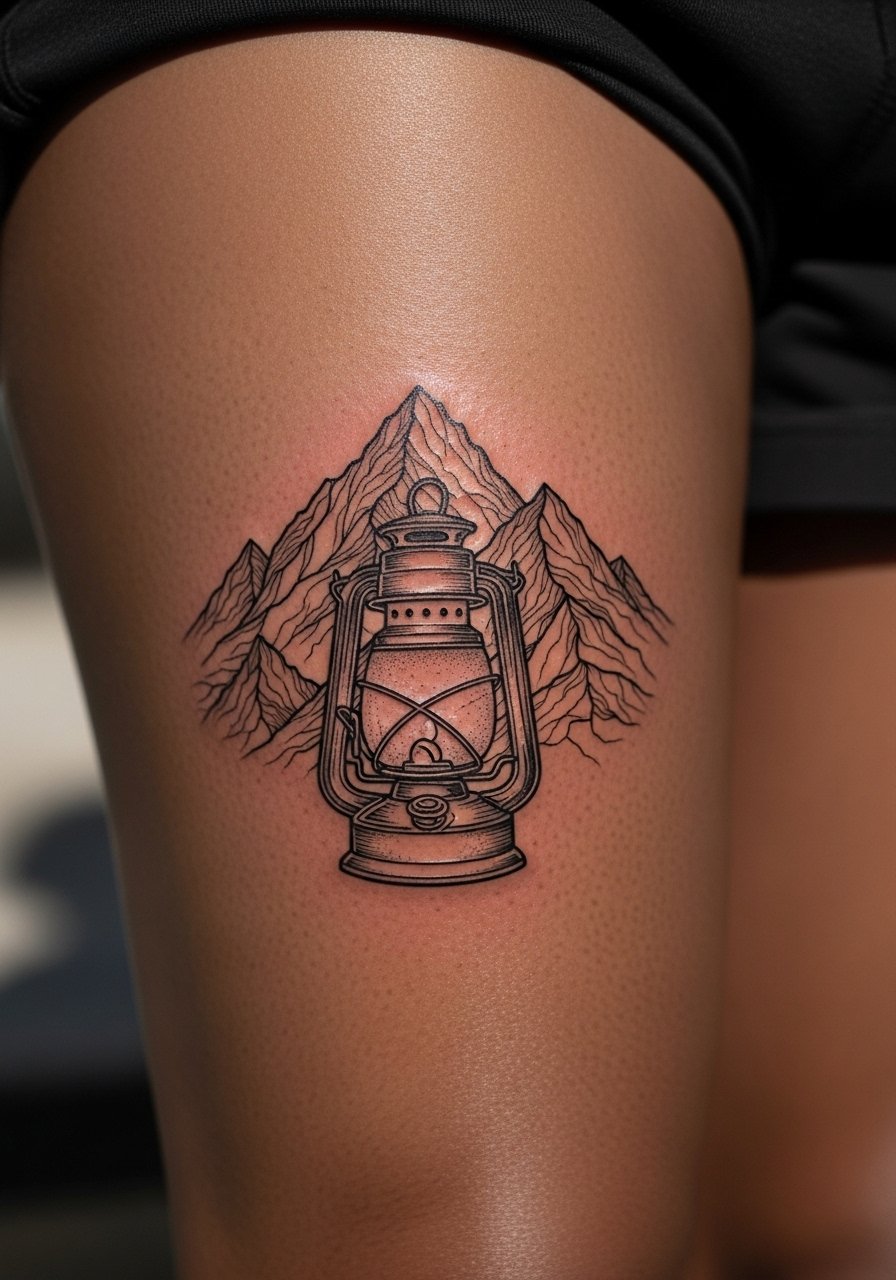
The outer thigh is comfortable during sessions and the extra real estate lets you play with negative space. This design suits someone who likes metaphorical elements rather than literal maps. During consultation say exactly how warm you want the lantern glow and where the light hits nearby rock faces. Healed looks at six months show soft contrast, while two-year photos may need a light touch-up on glow shading. Since thigh skin stretches with weight changes, plan for placement that follows the outer curve. This is a good pick for a private, symbolic piece.
8. Watercolor Flowers and Mountains on Ankle

A small ankle piece reads like a jeweled talisman. If you love florals, ask for saturated petals with a tiny mountain silhouette tucked behind them. Be realistic about longevity. Ankles are exposed to shoes and friction and watercolor there fades faster. I tell people to plan for annual sun-care and a touch-up at year two. The session is short and pain is typically low to moderate. A common mistake is packing too much color in too small an area which leads to muddiness as it heals.
9. Vine-Framed Mountains on Collarbone
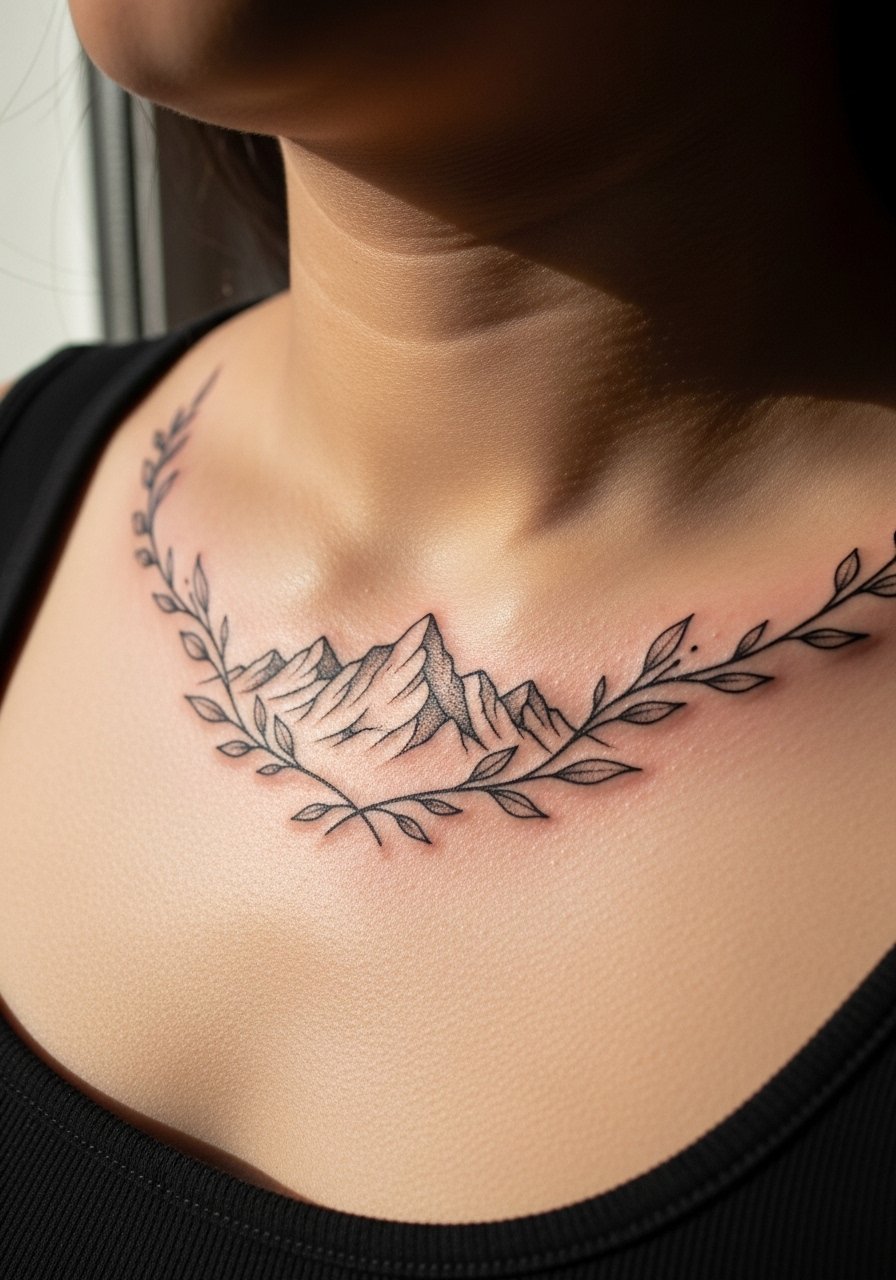
Someone I know chose this to balance femininity and grit. The collarbone moves when you breathe, so tell your artist about desired horizontal flow and how much neck exposure you want. Keep the vine spacing open so linework does not crowd the peaks. Collarbone skin can show blowout if lines are too shallow. For longevity ask for slightly stronger linework and expect a touch-up around year three. This placement is visible when wearing certain necklines, so consider wardrobe and work settings before committing.
10. Geometric Mountain Range on Inner Wrist
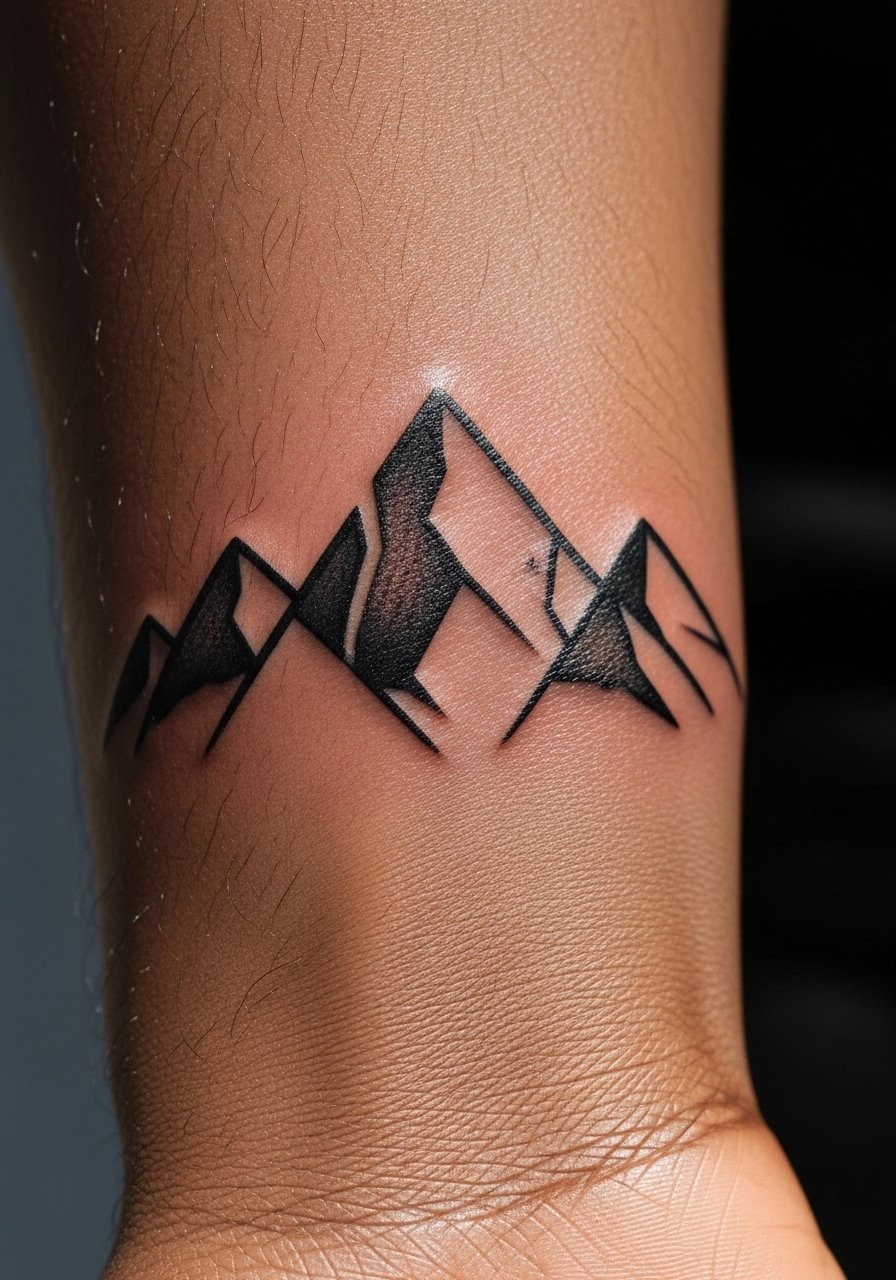
The biggest mistake with geometric wrist pieces is going too small. Linework needs breathing room on the wrist. When you book, show the exact wrist circumference and request bold geometry scaled to that width. The wrist sees constant sun and hand use, so expect faster fading and plan a yearly maintenance check. Pain is low to moderate and session time is short. Avoid super-thin blackwork there to reduce blowout risk. If you want coordinates or numbers, specify the exact text to appear for image prompts and artist reference.
11. Realistic Forested Peak on Calf
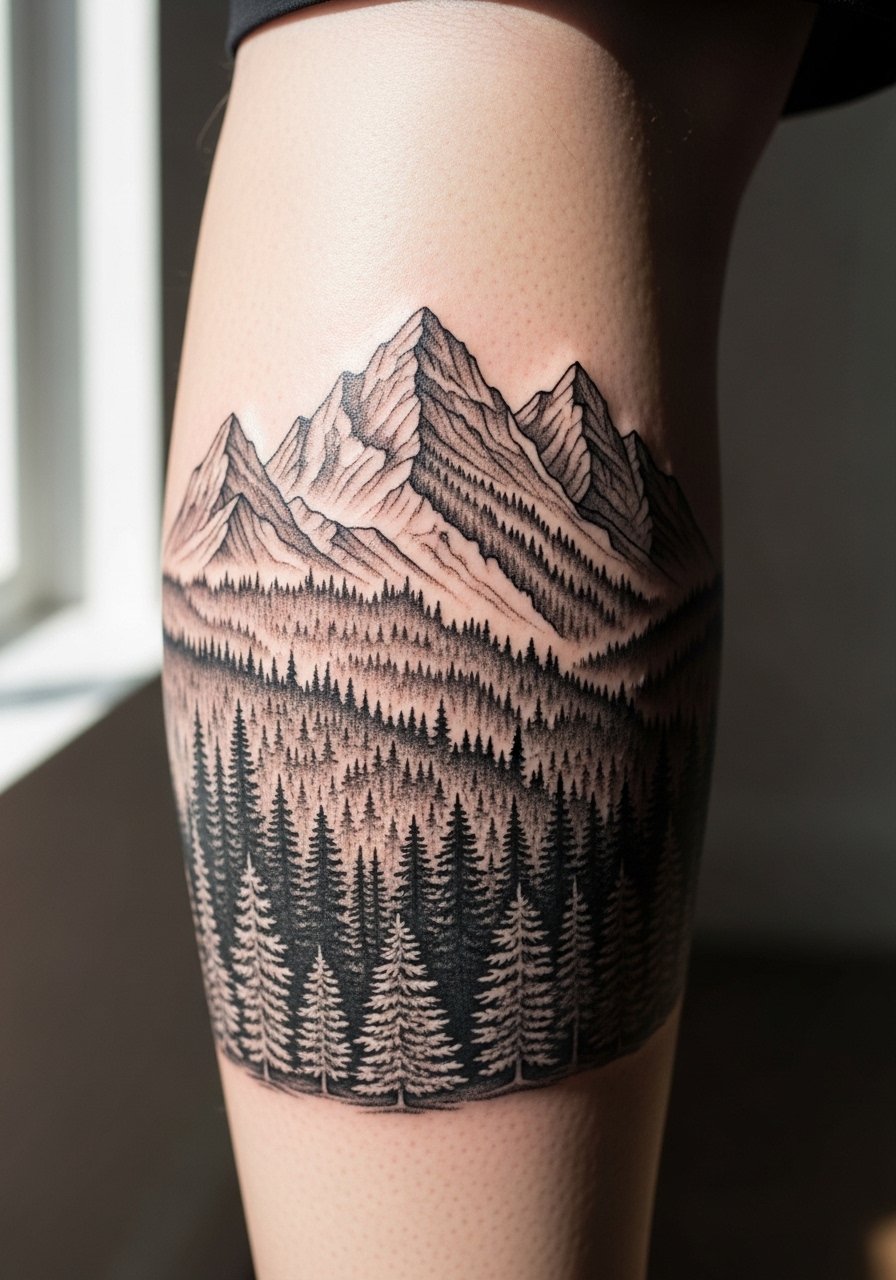
Most people pick calf for lifelike tributes to specific hikes because the surface allows vertical detail. When you consult, bring high-resolution photos of the landscape and tell the artist which trees to emphasize. Micro-realism needs crisp contrast early on, otherwise it can look flat after healing. The calf tolerates longer sessions and holds detail well, but expect a touch-up window around year two for fine contrast. A common error is asking to shrink a complex scene too small. Keep it at least five to six inches tall for readable realism.
12. Minimalist Single Peak Behind the Ear

This is a low-visibility pick for someone who wants a private symbol. Behind-ear pieces are sensitive placements, and you should consult an artist experienced with small, curved areas. The session is short but the skin is thin so the touch-up timeline is often sooner than for thicker areas. A mistake is asking for ultra-fine detail that cannot fit the curve behind the ear. Keep the design minimal and discuss noise from the needle during the appointment. If you want a text element, state the exact word in your reference.
13. Mountain and Crescent Moon on Upper Chest

There is a tender visual balance when peaks meet lunar shapes over the sternum. Sensitive placement note, sternum work needs an artist accustomed to working near the chest and rib bone. Tell the artist how centered you want it relative to cleavage and clothing lines. The area can be tender, and healing sometimes feels tight. For aging, black and gray holds well here but fine detail near the center might soften. Plan a modest touch-up at one to two years. People often forget to test how a bra strap might rub the edges during healing.
14. Stipple-Shaded Mountain on Shoulder Blade

There's a tactile quality to stipple shading that gives mountains depth without heavy saturation. When you visit an artist ask for sample photos of healed dot work. The shoulder blade offers a broad canvas and shading stays crisp longer because motion is moderate. A common mistake is asking for stipple too densely in small areas which can merge. Expect a longer session per shading pass and a touch-up to restore contrast after a few years if you spend a lot of time outdoors. This works well when you want texture rather than flat fills.
15. Coordinates Under a Tiny Mountain on Inner Wrist

When you include coordinates, specify the exact numbers to avoid generator gibberish. This is great for marking a meaningful summit or hometown. The inner wrist shows text clearly but fades faster due to hand use and sun exposure. Tell your artist you want slightly thicker numerals so they remain legible after healing. Expect a touch-up timeline around year one for script clarity. A typical mistake is using ornate fonts that do not age well on wrists. Choose a clean monospace or thin serif for longevity.
16. Half-Sleeve Alpine Scene with Floral Border

There is visual drama in a half-sleeve that balances natural elements with botanical framing. During consultation specify which flowers and whether you want them native to a region. Sessions come in blocks and the arm tolerates long appointments. A common error is asking for every small detail of a landscape in one pass. Break it into sessions and plan for color layering. For aging, color saturation can dull without sun care, so ask about a maintenance regime. If you work outdoors a lot, discuss higher initial saturation to compensate.
17. Mountain with Soundwave on Upper Rib

When a tattoo combines visual and audio memory, be precise about the sound element. If it represents a recorded audio clip, bring a visual of the waveform and specify the exact segment. Sensitive placement note, ribs are painful and the contour can distort straight elements. One mistake is wanting the waveform impossibly small. Keep it scaled so peaks are distinct. Artists often recommend a slightly bolder contour for waveform clarity. Expect a touch-up at one to two years if the lines soften.
18. Geometric Mandala Over Mountain on Upper Back
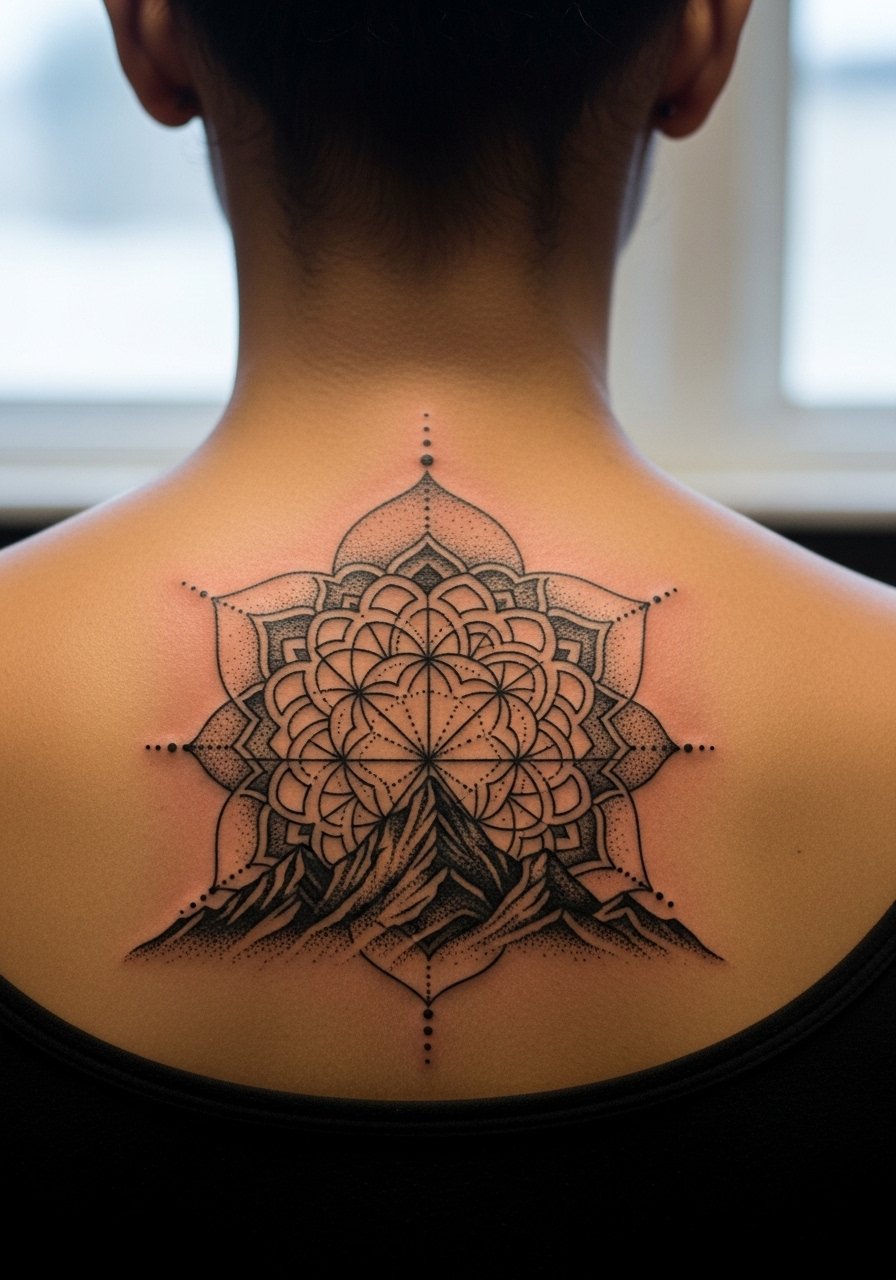
This design traces geometric precision and can nod toward meditative symmetry. For origin sensitivity, note that mandala motifs connect to spiritual traditions. Many people opt for stylized geometry rather than direct religious replication. Discuss symmetry tolerance with your artist and request a mock stencil so you can check balance before ink. The upper back holds detail well and ages predictably. A common mistake is packing too many tiny spokes into the mandala which blur. Leave open negative space to preserve pattern over time.
19. Minimalist Triple Peaks on Ankle Band

There is a neat graphic rhythm to a band that wraps the ankle. The ankle is exposed to shoe friction, so tell your artist about expected footwear and whether you need the band higher or lower. Pain is moderate for ankle work and healing needs attention for rubbing. People often err by demanding ultra-thin continuous lines that break during healing. Ask for slightly thicker linework and plan for a quick touch-up after scabbing finishes. This design reads nicely at small scale when given breathing room.
20. Micro-Realism Snow-Capped Peak on Outer Calf

I recommend this for someone who wants a near-photographic tribute to a specific summit. Bring reference photos and be honest about how large you can accept for detail. The calf tolerates longer sessions and holds micro realism well. A mistake is compressing a complex scene under three inches. Keep it larger for readable texture. Expect contrast touch-ups at two to three years, especially on white highlight spots that can fade faster. If you plan to travel with the design, include a small landmark to orient viewers.
21. Mountain Ring on Finger

Hand and finger tattoos require specialized considerations because they can blur faster and affect job prospects in some industries. Sensitive placement note, finger tattoos need an artist experienced with fast-healing areas. When you consult, ask about ink depth and realistic longevity. A common mistake is expecting ring-like durability without planning for frequent touch-ups. Most finger work needs maintenance within a year. If you want symbolic daily wear, discuss placement on the lateral side of the finger to reduce friction from hand washing.
22. Mountain Silhouette with Script on Upper Arm

If you include text, specify the exact word and font because image generators and artists will reproduce it literally. Outer upper arm gives muscle definition that can complement script flow. Tell the artist how connected you want the script to the silhouette. A frequent mistake is using a decorative script that does not scale well. Choose simple lowercase for legibility over time. The arm keeps black silhouettes stable and touch-ups are usually cosmetic rather than structural.
23. Night Sky Peaks on Thigh with Dot Work Stars
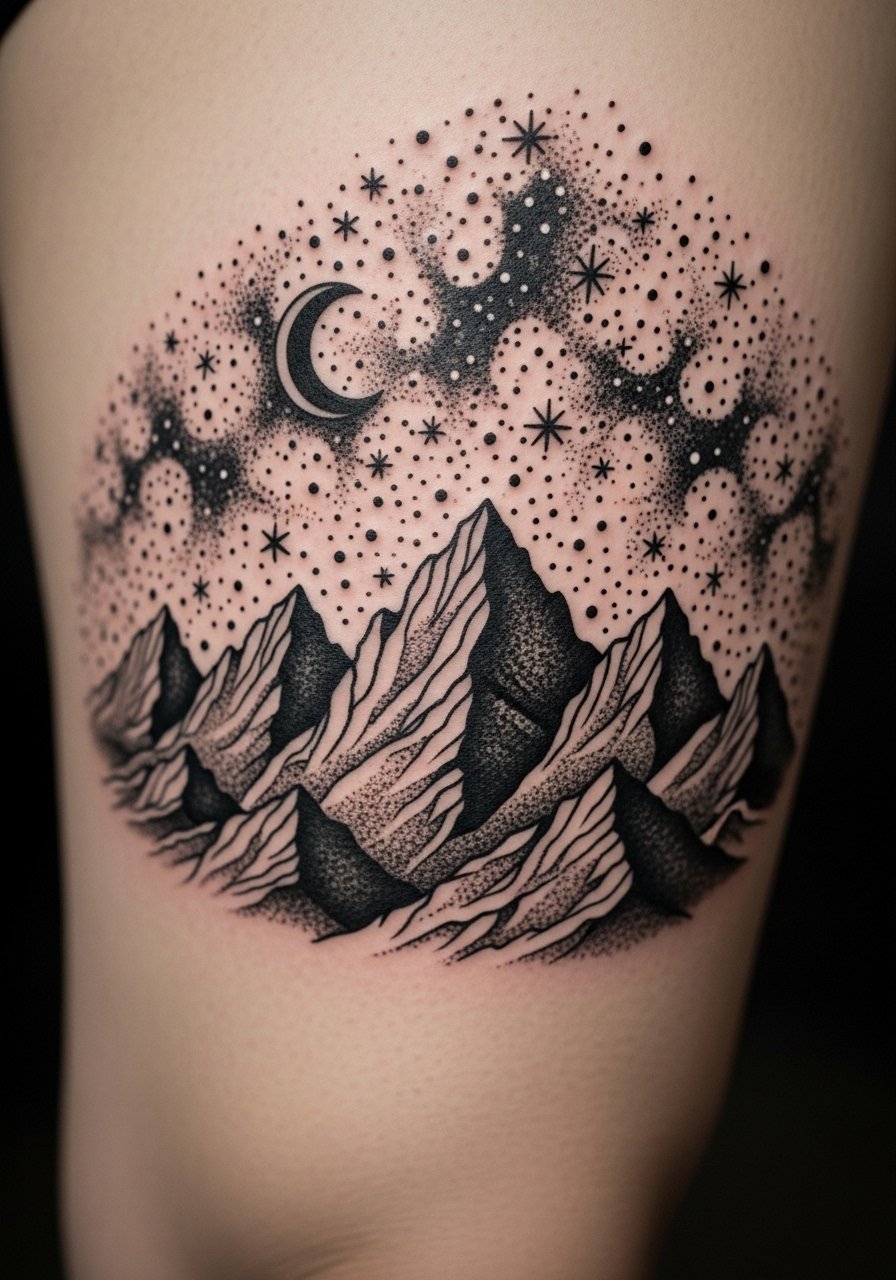
Visual impact comes from high-contrast night scenes with stipple stars that feel like a field. Thigh placement is forgiving during sessions and holds dot work nicely. During consultation show the exact star density you want and whether any stars should form a constellation. A common error is over-concentrating dots in a small area which can create patchiness. For aging, dot work remains legible better than ultra-thin lines. Plan a touch-up pass if you want to restore contrast after heavy sun exposure.
24. Abstract Linework Peaks Across Shoulder and Upper Arm

There is a visual flow when a single line morphs into multiple peaks across shoulder planes. Tell the artist how continuous you want the line and whether it should break at muscle boundaries. This placement moves a lot so plan for slightly bolder weight to prevent early softening. A common mistake is wanting hairline continuity across a joint. Expect a one to two year touch-up window depending on how much sun the area gets. The session feels like steady linework rather than heavy shading.
25. Nebula Fusion with Mountains on Full Sleeve

For a full sleeve nebula fusion, plan layered sessions and a clear color roadmap. This is one of the more unique takes on cosmic mountain work that blends sky and land into continuous narrative. Tell your artist you want star clusters preserved as negative space and where you want darkest saturation. Expect sessions to be longer and multiple touch-ups over the first two years as color settles. Muddiness can happen if colors are mixed too early, so ask about staged layering. If you spend time in strong sunlight, discuss UV protection strategies to maintain color.
Tattoo Prep and Aftercare Essentials
Fragrance-free gentle foaming cleanser for the tattooed area. Use for the first few days to remove excess ointment and avoid scented soaps that irritate. Clean with lukewarm water and pat dry.
Breathable medical-grade second skin bandage, single-serve sheets. Good for the first 24 to 48 hours if your artist recommends occlusion. It reduces scabbing and friction on high-movement areas.
Lightweight fragrance-free balm for daily moisturizing. Apply sparingly after the initial healing window to keep skin supple and protect pigment without clogging pores.
Silicone-based long-term scar and pigment conditioner. Use months after healing to even texture and support pigment longevity on raised or textured areas.
Satin pillowcase and soft clothing for the first week. Minimizes friction during sleep and helps prevent scab removal during the night.
A broad-spectrum SPF 50 mineral sunscreen. Apply once the skin is fully healed to protect color from UV fade. This is essential for watercolor and neo-traditional pieces.
Aquaphor Healing Ointment. Use this as your one mainstream option for very early aftercare if your artist recommends an occlusive ointment. It absorbs slower than some alternatives and can help during the first 24 hours if applied thinly.
Every tattoo is different. Always follow your artist's specific aftercare instructions. Consult a dermatologist if you have skin concerns or unusual healing issues.
Frequently Asked Questions
Q: Will fine line mountain outlines on the forearm blur quickly, and how often do they need touch-ups?
A: From what I've seen, fine line on the forearm holds better than on high-stretch areas but still loses crispness faster than bolder work. Expect a touch-up around year two to restore edge definition, especially if you spend a lot of time in the sun. Ask your artist for slightly stronger initial line weight to delay blurring.
Q: Do watercolor-style mountain tattoos need different aftercare than traditional blackwork?
A: Yes, watercolor pieces often rely on softer saturation and layered color, so sun protection and gentle moisturizing matter more long term. After healing, use a mineral SPF regularly and avoid abrasive exfoliation over the area. If your artist gives a specific balm or film protocol, follow that closely.
Q: Are ribcage sunrise silhouettes worth the pain, and what should I ask an artist before booking?
A: Rib pieces can be painful but look very intentional when done right. Ask which approach the artist recommends for your skin type and whether they prefer bolder lines or ultra-fine contours there. Artists differ on technique for ribs, so get a clear stance and view healed photos from their clients.
Q: How do I find an artist who can handle micro-realism forested peaks or nebula sleeves?
A: Use style-specific hashtags and tattoo directories, search for "[city] micro-realism tattoo studio" or "[city] watercolor tattoo studio," and check portfolios for healed photos not just fresh work. Reddit threads can offer user feedback, and Booksy or similar booking apps let you filter by style. Look for consistent healed examples in the exact style you want.
Q: Will ankle or wrist placements for watercolor and geometric mountain pieces fade faster than shoulder or back placements?
A: Yes, wrists and ankles face more friction, washing, and sun exposure, so expect faster fading. Plan for more frequent maintenance on those sites and ask your artist about slightly higher initial saturation or bolder linework for longevity.
Q: If I want coordinates or small script under a mountain, what are the key specifications I should bring to the consultation?
A: Bring the exact text or numbers formatted exactly as you want them, plus font examples and scale references. For coordinates use a clean monospace or thin serif and request slightly bolder numerals than you think you need so they remain legible after healing.