Someone I know spent nine months saving designs, then realized the worry was not the art. It was whether a Sanskrit line would still read crisp on their skin, if the script respected its cultural roots, and how to avoid a tattoo that looks blurred or like a bad translation after a year. Read on and you will get 15 specific Sanskrit Hindu tattoo ideas, with what to ask your artist and how each choice ages.
1. ॐ (Om) in Fine Line on Inner Forearm

Someone I know first saw this on a friend's forearm and booked a session for the clarity. Forearm placement is a moderate pain spot and usually a one-session job under two hours. Tell your artist you want slightly heavier initial linework than micro hairline so the glyph keeps its shape at six months and two years. A common mistake is making the symbol too tiny. That invites blowout. On forearm the piece holds saturation well, but lines thin over time with sun exposure. This design suits anyone who wants a visible daily anchor and who plans touch-ups around year three if needed. Respect note. The Om symbol is sacred in Hindu practice, so consider size and context before committing.
2. Gayatri Mantra Band around Upper Arm

Fair warning, wraparound script on the upper arm reads differently when you rotate your arm. Upper arm sessions typically run one to two hours depending on length. Ask for consistent letter spacing and a small margin between letters so the script does not compress as it heals. The biggest mistake is requesting tiny lettering to fit more words. That leads to legibility loss by year two. If you want a continuous mantra, this placement ages more predictably than ribs or stomach. Artists split on whether a full line of dense script counts as flash or custom work for shops. One camp treats it like flash and inks quickly. The other camp treats long mantras as custom pieces and breaks them into sessions. Decide how much time you can book.
3. Sri Yantra with Minimal Sanskrit Seed at Sternum

Most watercolor or ornate yantra versions from five years ago look soft now. A geometric blackwork Sri Yantra keeps crisp lines and contrast that age well. Sternum placement is sensitive and often rated around a 7 for pain, so expect a longer session and a steady hand from your artist. During consultation, bring precise references for the exact proportion between triangles and the central syllable. A mistake people make is asking for too much stipple in the intersections. That can muddle the geometry as the skin settles. Note on origin. The yantra is a ritual diagram in Hindu tradition so some people prefer subtle placement rather than a frontal chest display.
4. Lotus with Devanagari "सत्य" (Satya) on Calf

There is something about stipple shading paired with a single Sanskrit word that reads like a personal statement. Calf tattoos are lower on the pain scale and heal predictably in one to two weeks of careful aftercare. Tell your artist you want the dot work spaced so the petals keep texture at six months. A common error is asking for saturated solid black fills inside tiny petal sections. Those fills tend to sag and create a heavy block that ages poorly. The lotus traces to classical Hindu symbolism about purity, so consider a slight stylistic tweak if you want a nonliteral take.
5. Trishul Outline with Small "ॐ नमः शिवाय" on Upper Arm

When you sit down with your artist for this one, bring placement photos that show how the trident sits with your biceps movement. Outer upper arm is moderate pain and often a single session. People request a script line too close to a pointy trident tip and then complain the letters blur into the design. Space matters. If you want a bold silhouette and a readable mantra, keep some breathing room between the symbol and the text. Also include a line about origin respect. The trishul and Shiva mantra hold deep devotional meaning. Some choose a simplified emblem rather than a literal depiction.
6. Chakra Stack in Linework along Spine

Most artists I talked to say vertical spine work requires attention to curvature and breath control for the sitter. Expect multiple short sessions depending on how many glyphs you want. Pain is variable, often higher near the lower spine. Tell your artist you want consistent lineweight between each symbol so the stack reads balanced months from now. A typical mistake is compressing the lower chakras tighter to fit a shorter back. That makes the proportions look off as the skin settles. Also note that spine pieces often need touch-ups at year two to maintain crispness.
7. Tat Tvam Asi in Elegant Devanagari on Collarbone

There's a visual impact to collarbone script that reads as private but visible with certain clothing. Collarbone sessions are short but the area is bony and can feel sharp during the session. Request slightly bolder lines if you want the letters to stay defined longer. The mistake is picking a delicate calligraphic weight and expecting it to stay crisp without yearly touch-ups. The phrase translates to "You are that" and carries philosophical weight. Some people choose a smaller discreet version to respect the phrase's origin and avoid public display.
8. Ganesha Silhouette with Micro Sanskrit 'ॐ' at Ankle

A visual impact lead works here. Ankle tattoos feel intense while being short sessions. Expect a tingle and a focused 30 to 60 minute appointment. Ask your artist for a compact silhouette rather than a packed detailed head. Detail at the ankle tends to blur faster because of movement and friction from socks. The common error is over-detailing a small icon at this placement. If you plan to wear shoes and socks regularly, pick a simple silhouette and be ready for a touch-up in year two. Also include a note on devotional context for Ganesha imagery.
9. Bija Mantra Cluster on Wrist: "ह्रीं" and "क्लीं"

Mistake lead. The biggest mistake with wrist mantras is cramming too many syllables into a tiny patch. Wrist skin is thin and letters can blur into each other within months. If you want two syllables, space them with small gaps. The inner wrist is sensitive but session time is short. Ask your artist to avoid hairline strokes and aim for medium lineweight that keeps legibility at six months and two years. People who work with their hands should expect more fading and plan a minor touch-up earlier. Cultural note. Seed syllables are rooted in ritual use, so consider how you display them.
10. Mandala with Sanskrit Center on Shoulder Blade

Visual impact. Shoulder blade tattoos sit in a low-friction zone so geometric detail holds longer. Sessions vary by size, often two to three hours for a detailed mandala. Tell your artist you want clear negative space between rings to prevent the mandala from turning into a dark disc as it heals. A common error is asking for too many concentric lines in a small diameter. The shoulder blade allows larger scale, so let the design breathe. Origin note. Mandalas have roots in Hindu spiritual practice, so some people opt for a simplified abstraction.
11. Short Bhakti Line in Devanagari across Ribs
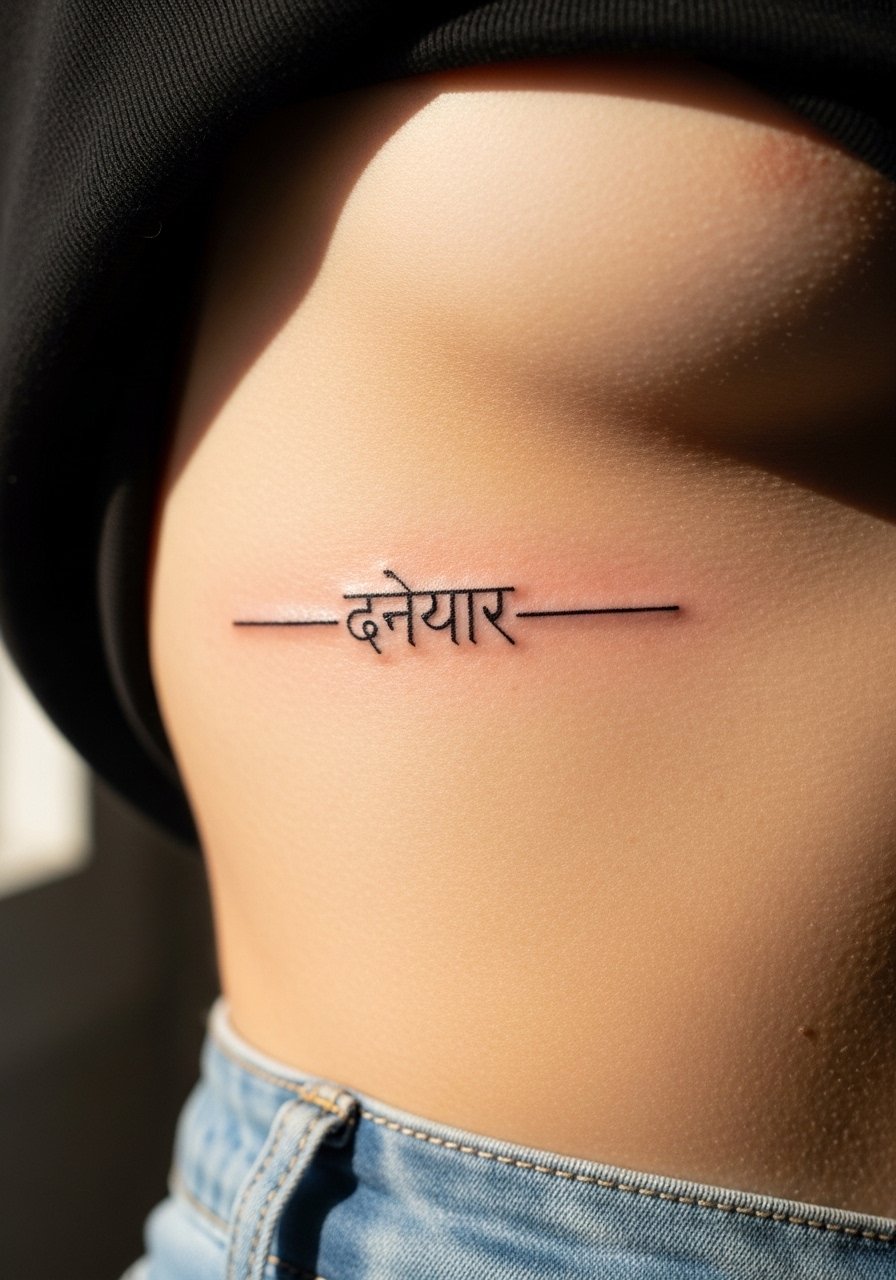
Fair warning, the ribcage is a 7 out of 10 on most pain scales. But a short devotional word placed there looks intimate and reads well under clothing. Artists split on whether fine line holds up on ribs. One camp says the skin stretch blurs lines within two years. The other camp says with proper needle depth and spacing it settles fine. Ask your artist where they stand before booking. A typical mistake is choosing hairline script. For ribs, slightly stronger initial lineweight helps the letters retain form during healing.
12. Hanuman Symbol with Small Sanskrit Chant on Thigh

When you book this, remember thigh sessions can be comfortable but may involve longer sits if you want more detail. Thigh skin holds saturation well, so color and black both last. People often request very heavy color blocks for mythic figures and later complain about cracking in tight skin folds. If you prefer longevity, work with linework and moderate saturation rather than huge solid fills. Cultural note. Images tied to strong devotional practice may prompt viewers to treat the tattoo differently, so consider placement accordingly.
13. Short Sanskrit Name in Devanagari on Finger
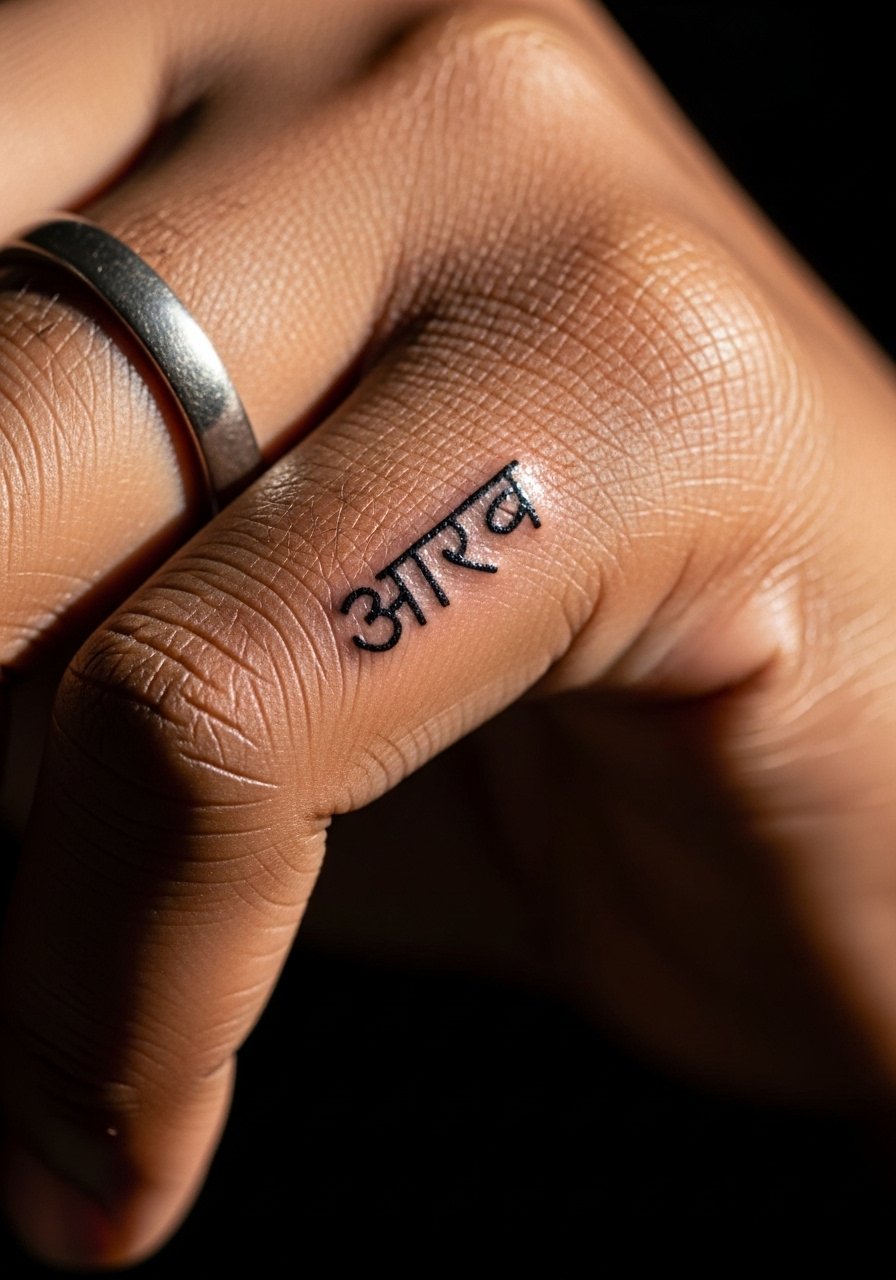
Mistake lead. The biggest mistake with finger script is expecting it to last like arm work. Fingers have high wear and often need touch-ups within a year. Sessions are quick but expect some fading by month six. Ask your artist for slightly bolder characters and be prepared for maintenance. Also be aware that hand and finger tattoos can affect professional settings. If career impact is a concern, consider inner finger or hidden placement. For a name in Devanagari, confirm spelling carefully with printed reference text during consultation.
14. Tiny Sanskrit Couplet under Collarbone in Mirror Script

Consultation lead. When you sit down for a mirrored couplet under the collarbone, bring photos of how you want each line to read when you look in the mirror. Collarbone skin moves with posture, so expect slight distortion when you breathe. Many people pick script that is too condensed which looks cramped after healing. Opt for modest spacing and a slightly larger letterform for longevity. Origin sensitivity. Short mantric texts carry devotional weight so choose placement that matches your personal relationship to the words.
15. Custom Devanagari Name with Floral Border on Upper Back
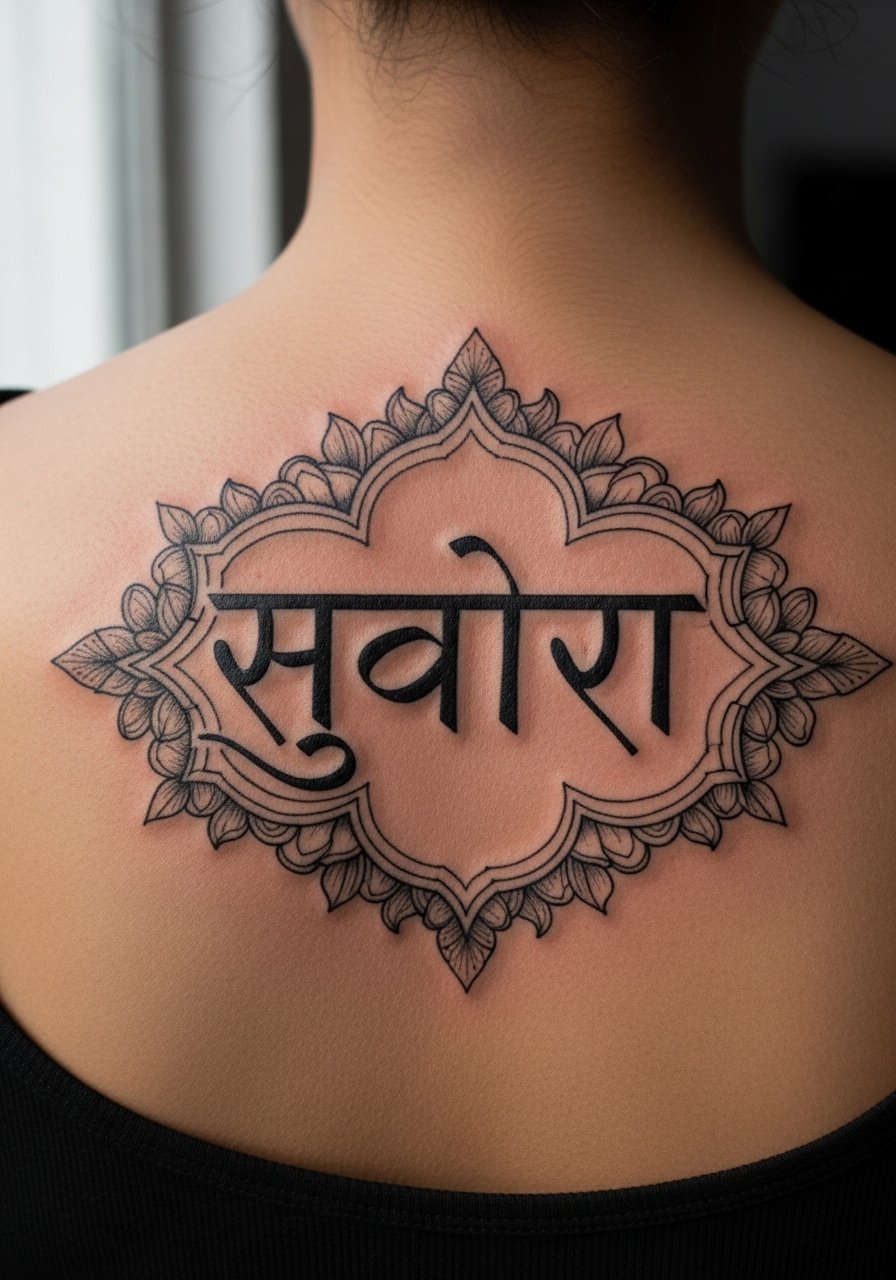
Personal observation. I have seen custom name pieces on the upper back age gracefully when artists preserve negative space around the letters. Upper back is a forgiving canvas and usually a one-session piece if kept small. Tell your artist you want the floral border to stay airy and not encroach on the script. A common error is overworking the border with heavy fill that competes with the name. For personal names, double check spelling with printed references during the consult. Also consider how public you want the name to be when choosing upper back placement.
Tattoo Prep and Aftercare Essentials
Fragrance-free gentle foaming cleanser for sensitive skin. Use for the first week to remove surface ointment and sweat without stripping the ink. Clean twice daily and pat dry with a sterile pad.
Lightweight fragrance-free healing balm. Apply a thin layer after cleaning for the first five days. It absorbs faster than Aquaphor and keeps the skin from crusting over.
Medical-grade second skin bandage, small sheets. Use for long pieces or areas that rub clothing. It protects against bacteria and reduces scabbing.
Non-stick sterile gauze pads. Keep a pack on hand for initial blotting after the session and for travel.
Antibacterial wound spray with saline base. Good for gentle cleansing when showers are brief and you need a low-contact option.
Broad-spectrum mineral sunscreen SPF 50, fragrance-free. Use after the tattoo fully heals to protect linework and prevent color loss from UV exposure.
Silicone scar treatment sheets. For raised or thick scars years after tattooing, silicone sheets help soften texture and can improve the look of healed ink.
Every tattoo is different. Always follow your artist's specific aftercare instructions. Consult a dermatologist if you have skin concerns or unusual healing issues.
Frequently Asked Questions
Q: Will a fine line Devanagari script on ribs blur faster than the same script on the forearm?
A: It depends on placement and lineweight. Ribs stretch and flex more with breathing which can blur hairline strokes sooner. For ribs, ask for slightly stronger initial linework and wider letter spacing. Forearm script sits on flatter skin and usually keeps detail longer. Also plan for a touch-up discussion early in the consult.
Q: Are Sanskrit symbols like Om and yantras cultural appropriation if I am not Hindu?
A: There are two camps on this. One camp says visible sacred symbols should be worn only by those who practice or deeply understand the tradition. The other camp sees personal spiritual exploration as valid. If you are not from the tradition, consider placement, context, and whether a stylized or abstract version would feel respectful. Talking with practitioners or a cultural community can help you decide.
Q: How long before a wrist mantra needs a touch-up compared with a shoulder blade mandala?
A: From what I have seen, wrist mantras often need touch-ups around year one due to high movement and friction. Shoulder blade mandalas usually hold up for longer without touch-ups, often two to three years, because they sit in a low-friction area. Always plan touch-ups as part of long-term maintenance.
Q: Is there special aftercare for Devanagari ink that includes text?
A: Aftercare for script is standard but stricter on timing. Keep the area clean, avoid direct sun during the first two months, and avoid friction that can smudge scabs. Using a lightweight fragrance-free balm from the shopping list helps letters remain sharp as they heal.
Q: Can finger Sanskrit names be made to last like arm tattoos?
A: Fingers are a high-wear canvas so expect more fading. You can increase longevity by choosing bolder letterforms and accepting that yearly touch-ups might be needed. If permanence is the goal, pick an upper arm or back placement instead.
Q: How do I find an artist who understands Sanskrit script and Hindu iconography?
A: Use a layered discovery approach. Search shop directories, check portfolios on local studio websites, browse relevant Instagram hashtags, and read recent convention lineups to find artists who list script or devotional work in their specialties. When you message shops, ask about previous Devanagari pieces and whether they consult on spelling and grammar. Trust your instincts and ask specific portfolio questions before booking.