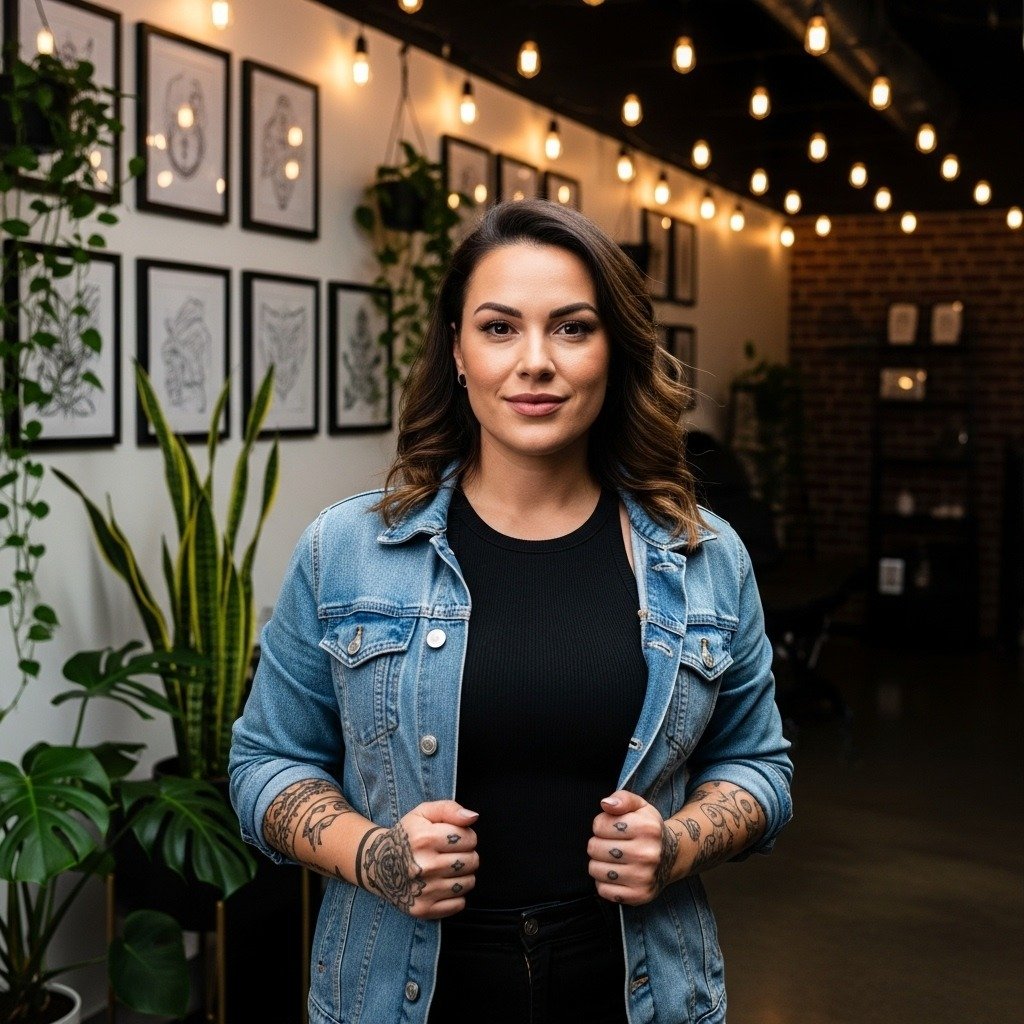
The smallest shoulder vines with single-needle stems often blur first, while a slightly bolder petal and a crisp negative-space outline keeps a floral motif readable for years. If you want a shoulder piece that still reads at arm's length after five years, plan spacing and saturation now. Below the surface of pretty sketches there are practical choices about placement, session time, and clothing for the appointment that make the difference.
1. Fine-Line Single Rose on the Shoulder Cap
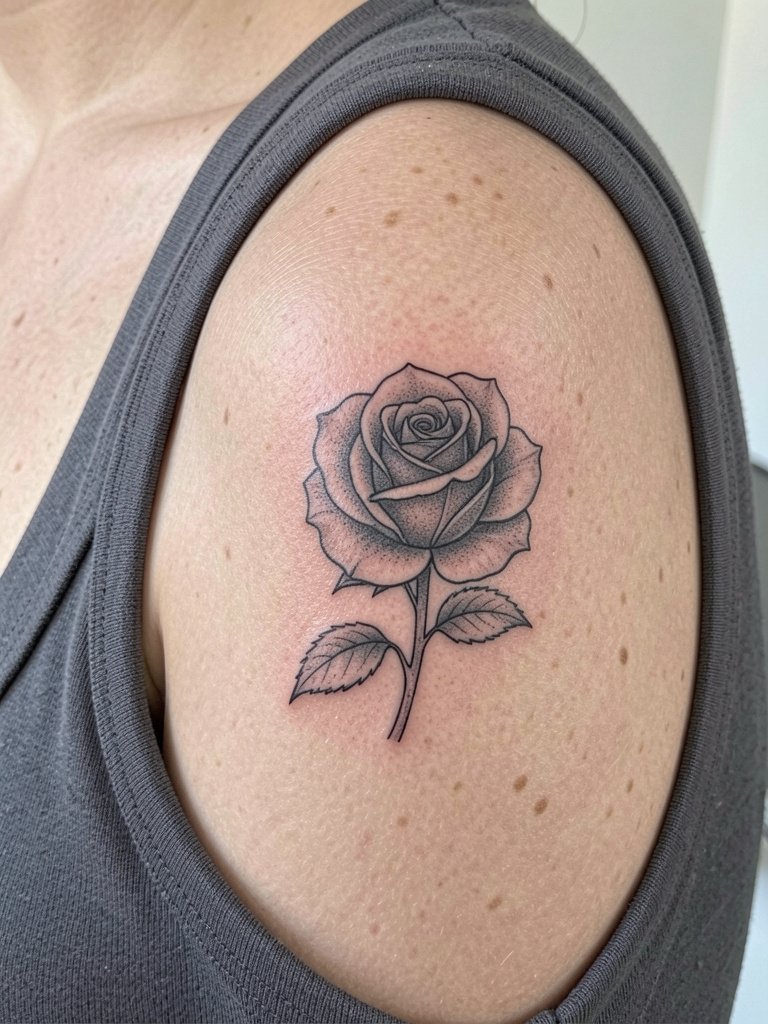
This is the classic beginner floral for anyone who wants a low-profile shoulder piece. It reads best at three to four inches across, and I say that because single-needle petals placed under three inches often blur into a dark mass by year three. Pain sits around a three out of ten on the shoulder cap, and most sessions are forty-five to sixty minutes. Tell your artist to leave a narrow rim of negative space between petals so the highlights hold. A common mistake is asking for the tiniest version of a reference that was much larger. For showing it off, pair with an open-back sundress to expose the cap.
2. Clustered Wildflowers Draping Over the Deltoid
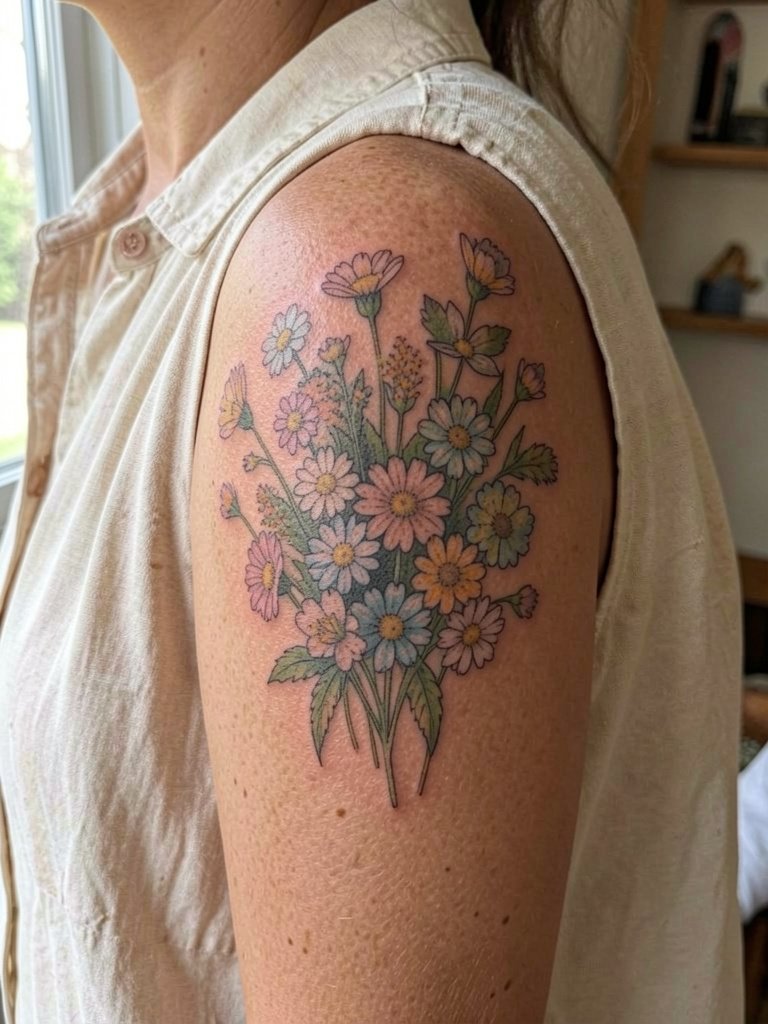
A loose cluster covers the curve of the deltoid and lets the shoulder move with the design instead of fighting it. I recommend this when you want a more organic, painterly effect that still sits well with a short sleeve. Session time runs around ninety minutes for a modest cluster, and the sensation is a steady vibration with brief sharper spots near the bone. Bring a reference showing the cluster at the scale you want so the artist can sketch flow across the shoulder. Overpacking tiny blooms too close together is the mistake I see most. For outfits, this shape looks intentional with cap-sleeve linen tops that let the colors read against neutral fabric.
3. Single Bold Peony Wrapped Toward the Back
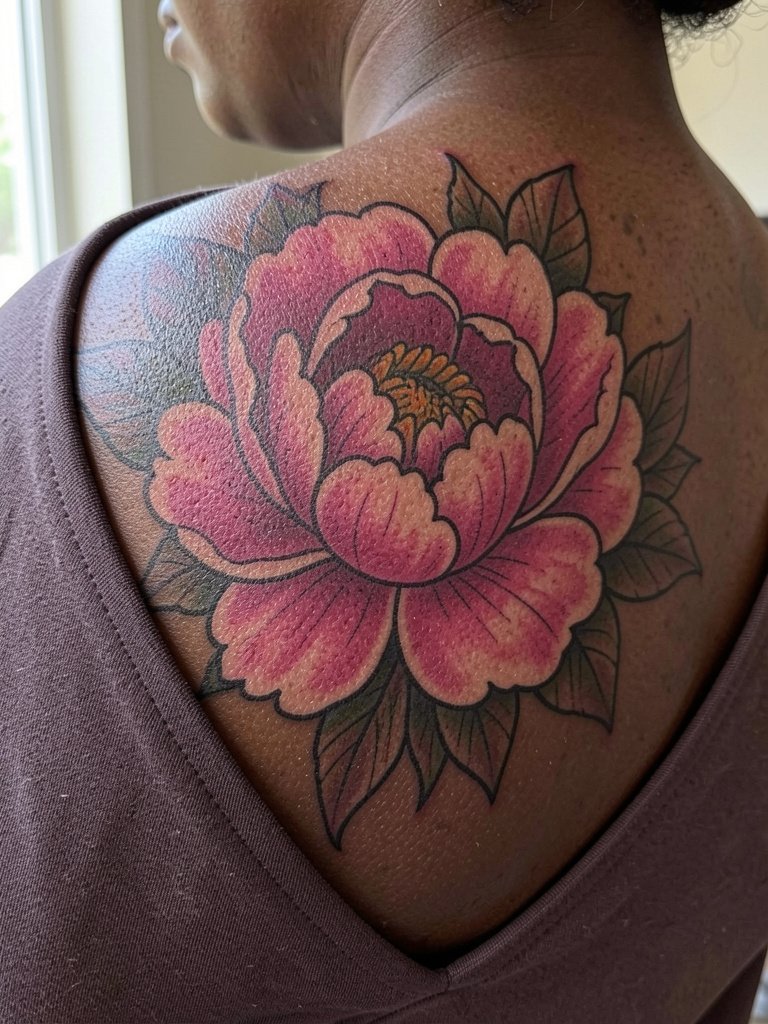
This is a workhorse design for anyone who wants a single dramatic blossom rather than a busy sleeve. It favors slightly bolder linework so the center stays legible as the skin stretches. Pain is about a three to four on the shoulder blade edge and nearer the spine it nudges higher, so expect a ninety to 120 minute session for a two to three inch bloom. Ask the artist for a heavier contour on the outer petals and softer stipple in the center to balance aging. The common error is requesting ultra-thin lines across the petals and then wondering why the center smudges. For evening wear, it frames a one-shoulder dress well.
4. Minimalist Line Bouquet Over the Collar Joint
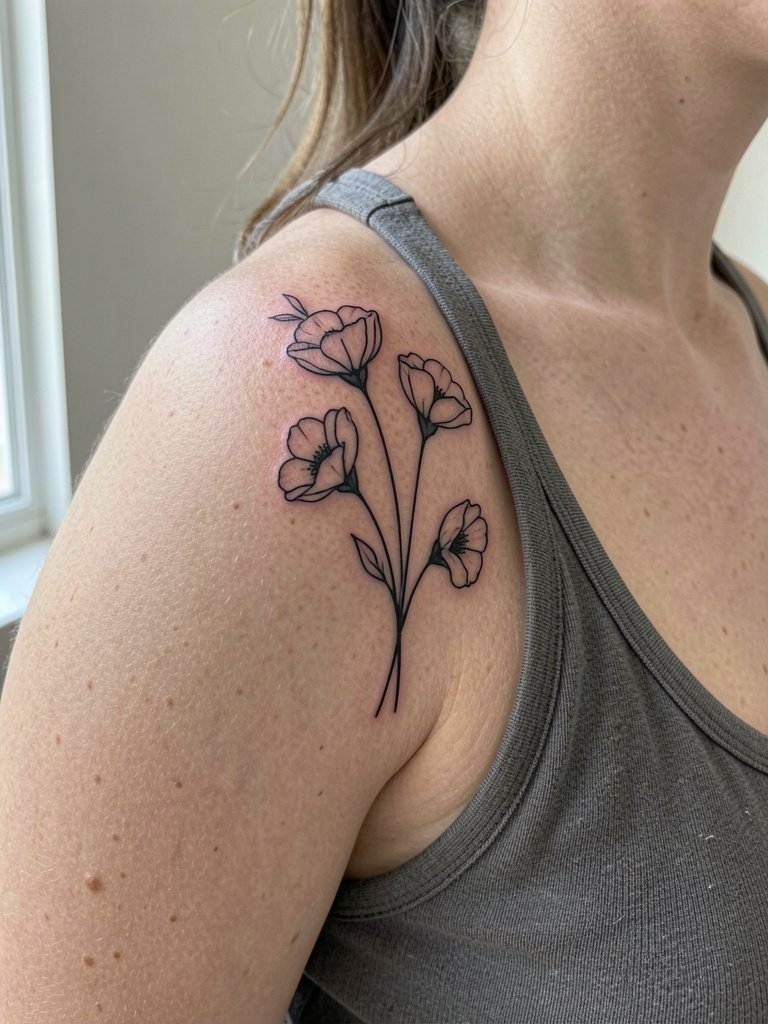
This pared-back bouquet is for people who want the look of floral ink without heavy color. It reads best at two to three inches and benefits from slightly bolder stems than a face-line portrait would use. Expect a shorter session of thirty to forty minutes and mild to moderate tenderness. During sketch review, ask for a stencil positioned to follow the natural shoulder slope so the stems do not appear to droop when your arm moves. A typical mistake is choosing too fine a script weight for stems and then needing a touch-up at year two. Pair this with a button-front blouse that keeps the shoulder visible without covering the composition.
5. Watercolor Splash with Negative-Space Petals
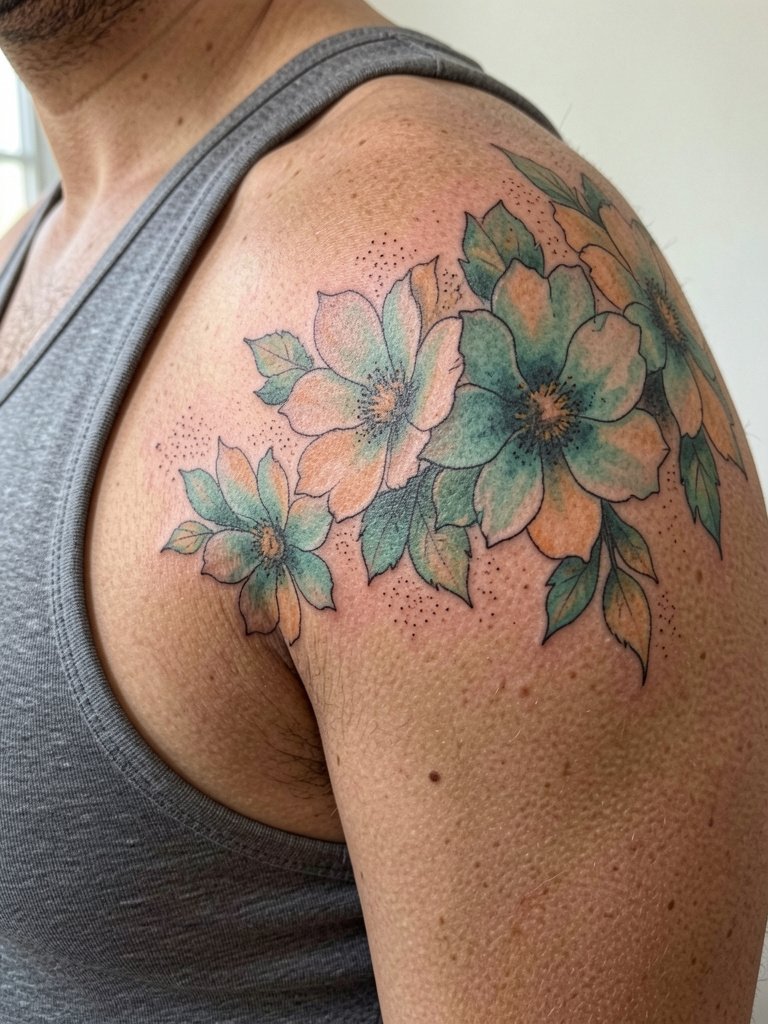
A watercolor approach gives movement without heavy linework, but it also ages differently. One camp of artists warns that watercolor on shoulders can diffuse and require touch-ups sooner. Another camp believes careful saturation and preserved negative space makes it hold. If you want this look, request subtle outlines around focal petals so the piece keeps a reading point as washes soften. Sessions usually run sixty to ninety minutes for medium-sized splash work. Avoid asking for wholly line-free washes in small sizes otherwise they tend to lose definition within a couple of years. For display, an off-the-shoulder knit highlights the watercolor edges.
6. Geometric Floral Medallion at the Shoulder Joint
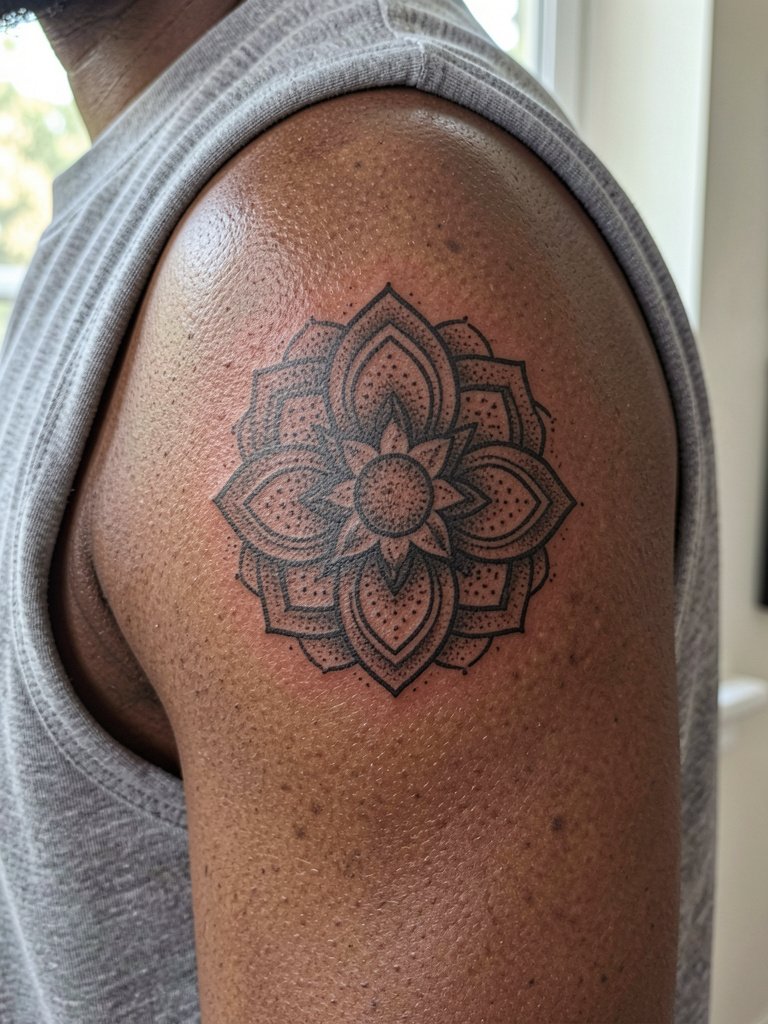
A medallion unites botanical motifs and geometry, and it is a good choice when you want symmetry and a bold focal point. It needs clear spacing between rays, so plan for a diameter of at least three inches to avoid crowding the lines. The shoulder joint can be a bit more sensitive and the session often takes around ninety minutes because of stipple shading. During consultation, bring a few medallion references at different sizes so the artist can scale the central negative space correctly. A frequent mistake is wanting a two-inch medallion with dense dot work, which flattens over time. This design pairs well with sleeveless linen vests for summer layering.
Session Day Picks
These shoulder designs share needs like easy access and minimal friction, so a few items smooth the booking and the first week.
-
Stencil transfer paper kit. Lets you preview line placement on the skin before the needle hits, which is vital for the precise compositions above.
-
Topical numbing cream. Applied before appointment eases sensitivity on the deltoid edge without affecting detailed linework.
-
Thin protective film roll. Keeps the shoulder area clean and protected from straps or seat belts during the first day of healing.
-
Fragrance-free gentle body wash. Cleanses the area without stripping delicate pigment from fine-line petals.
-
Aquaphor healing ointment. A thin layer supports initial moisture balance for seeded blackwork and single-needle pieces.
7. Botanical Sleeve Cap with Creeping Vines
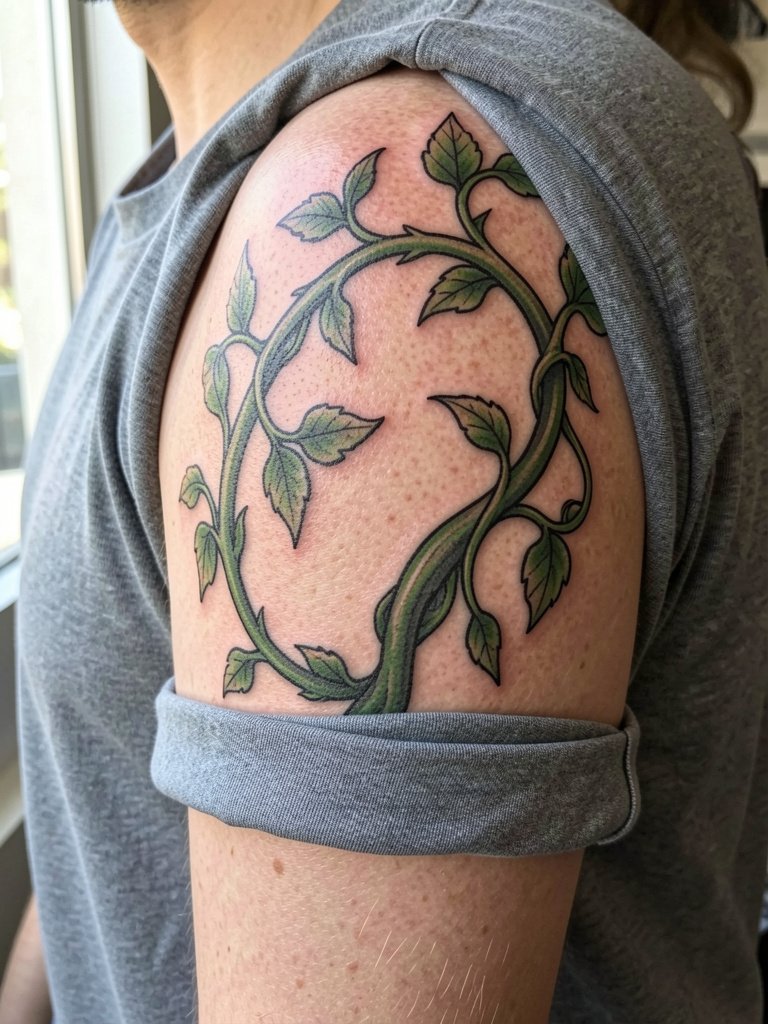
This cap-style sleeve works if you want floral movement across the shoulder without committing to a full arm. It is a good compromise when you plan later sleeve work. Expect two-part sessions, each around ninety minutes depending on shading. For longevity, ask for slightly heavier outer contour lines on the vines so they stay defined against the arm's frequent friction. A common mistake is starting too small with a wrap that looks busy once the arm moves. During the appointment wear a loose short sleeve or a rolled sleeve so the artist can map the wrap easily. For styling, a cropped denim jacket shows off the upper wrap while keeping warmth.
8. Antique Botanical Illustration Across the Shoulder Blade
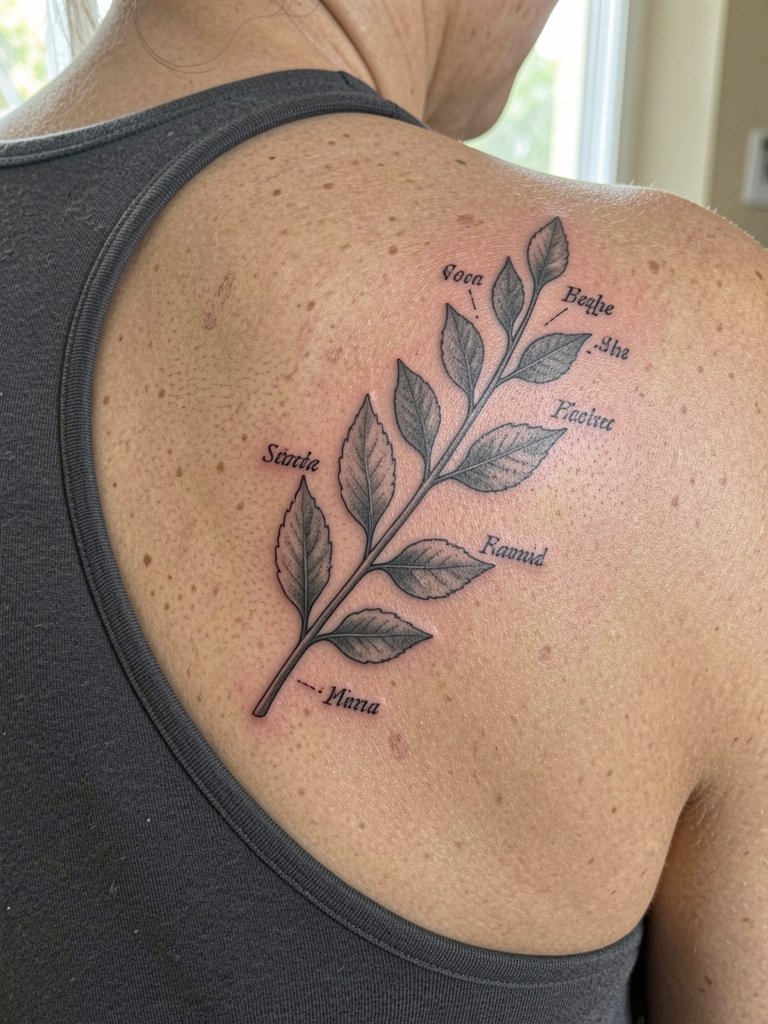
If you love botanical plates, this approach reads like a small study on the shoulder blade. It ages well because the stipple shading keeps soft edges readable, but the scapula area has slightly higher movement, so spacing matters. Plan for a two-hour session when the piece includes leaf texture. Ask your artist to map the stem so it follows the bone landmarks, not straight across muscle, which avoids distortion when you twist. The mistake I see is cramming too many tiny labels and expecting them to stay legible. This placement pairs with scoop-back tops so the art sits in the open.
9. Sunflower Quarter-Shoulder with High Contrast
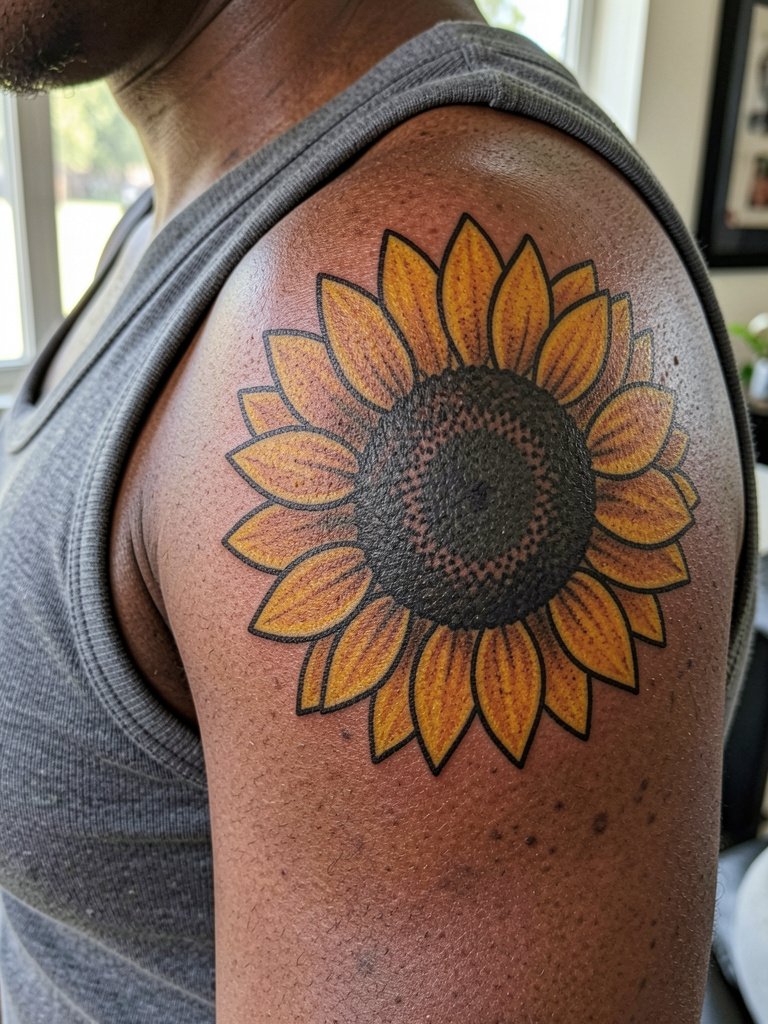
Sunflowers read from a distance when artists use bold centers and strong petal contours. This is an ideal pick if you want a defined statement piece rather than delicate filigree. Expect a session of sixty to ninety minutes and a pain level around three. During the consultation ask for increased saturation in the center and slightly heavier outlines on outer petals so the silhouette stays intact with sun exposure. The common error is low saturation in the center which fades to a flat disk. For warm-weather outfits, try a tank-style crop top that shows the bloom above the waistline.
10. Lace-Inspired Floral Around the Shoulder Strap Line
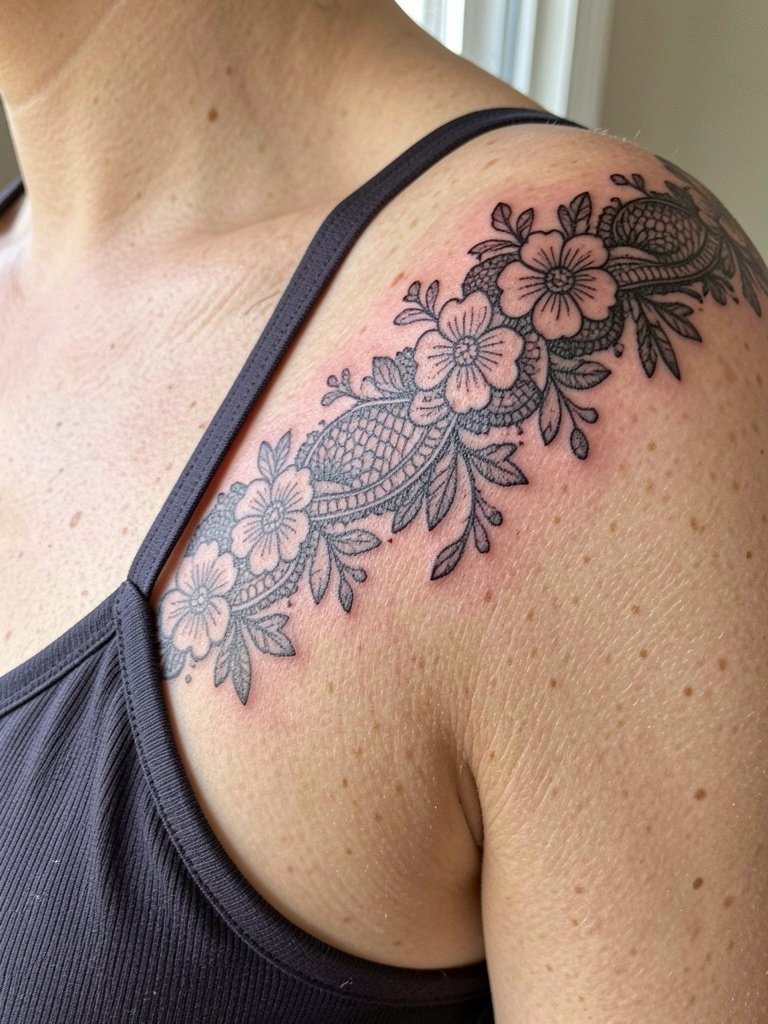
A lace motif hugs where straps typically sit and can peek out or stay covered depending on wardrobe. It is a great choice for someone who wants jewelry-like detail. Expect a forty-five to sixty-minute session for a modest band. Discuss strap placement with your artist so the lace follows where your clothing sits, not a generic template. People sometimes forget that bra and tank positions vary and that can misplace the lace. For showing this off, a cami top with adjustable straps keeps the design visible when you want it to be.
11. Bold Blackwork Floral Block Over the Shoulder
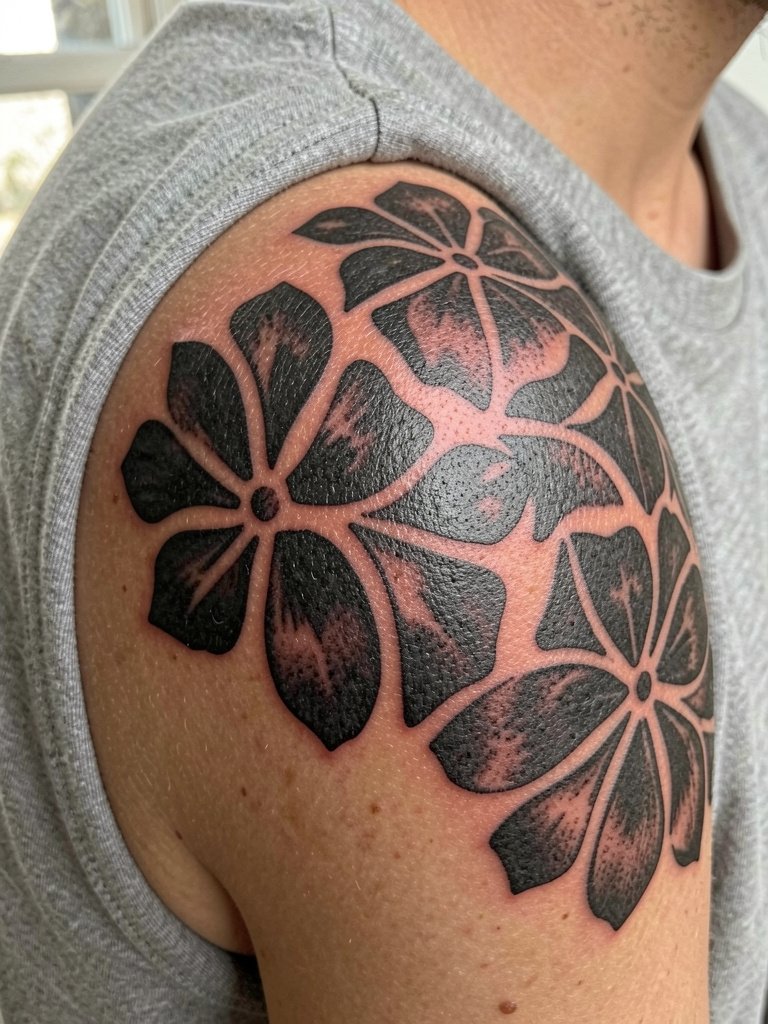
Blackwork flowers are an excellent pick for longevity since strong saturation tends to age sturdily. Pain is moderate because larger filled areas feel more intense, and sessions often run two to three hours depending on size. In the consultation specify where you want negative-space highlights so the block keeps a floral silhouette rather than a heavy blob. A frequent error is requesting too small a black block with intricate interiors, which loses definition. This design pairs with structured tees and a boxy cropped top that frames the silhouette.
12. Small Lotus Near the Shoulder Ridge with Cultural Note
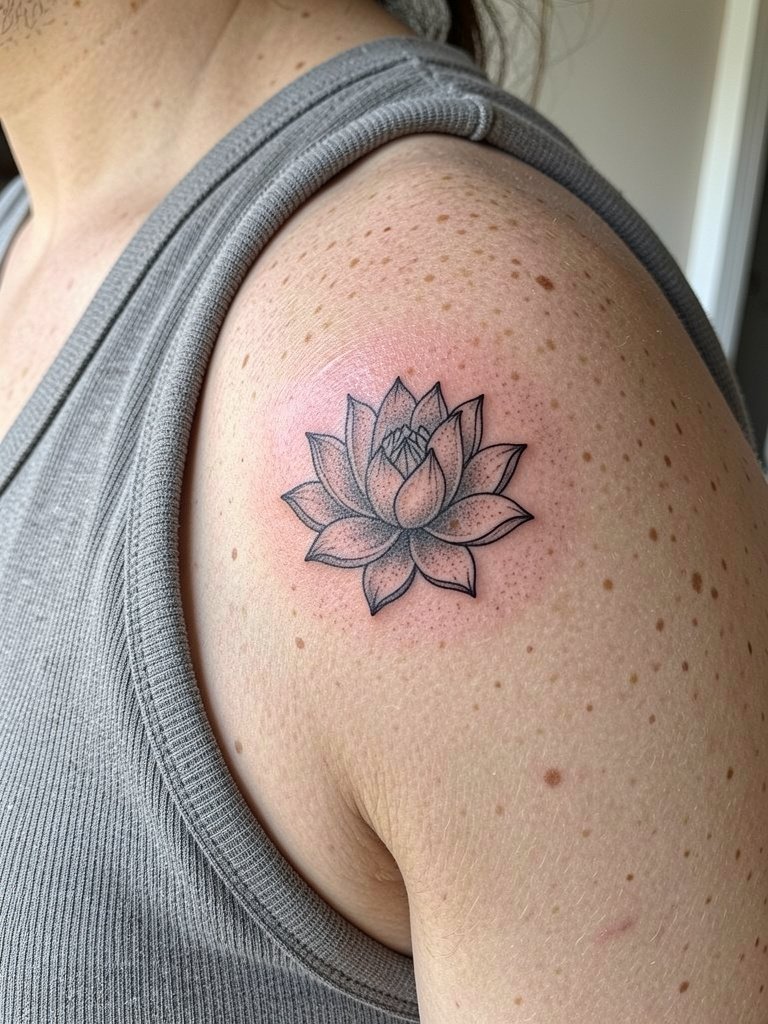
If you choose a lotus, note the symbol carries spiritual origins. One group believes wearing sacred motifs outside of their cultural context can be appropriation. Another group supports respectful adaptation with acknowledgement and informed design choices. If the symbol matters to you, include a short note on origin and intended meaning in the artist brief so the design respects the source. Expect a quick forty-minute session and minimal pain on the shoulder ridge. A common mistake is treating the lotus as mere decoration without learning its context. For display, a cropped wrap top keeps the area visible.
13. Abstract Petal Panels with Mirror Symmetry
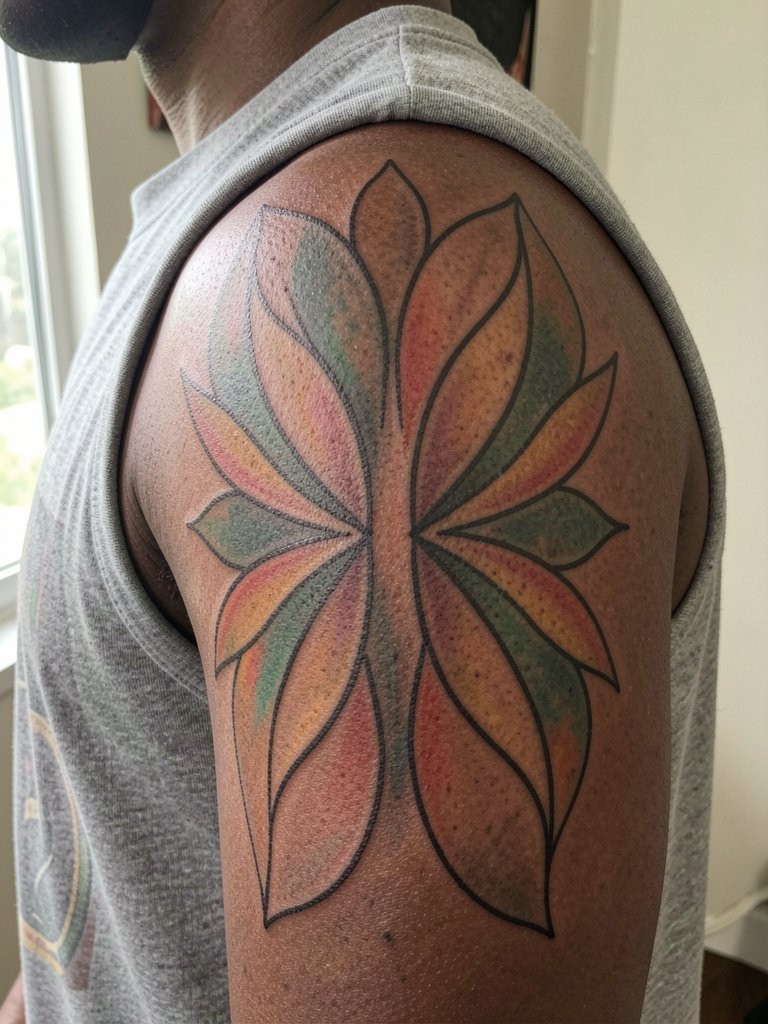
Abstract panels are for people who like floral language without literal petals. The symmetry helps maintain a balanced reading as you move. Ask for a mock-up in two sizes so you can see how the negative space performs at three versus five inches in diameter. Sessions usually last an hour to two depending on color. A typical mistake is choosing too-dense patterning that blurs where panels meet. This pairs well with a structured muscle tee that keeps the panels visible.
14. Vintage Script with a Small Floral Accent
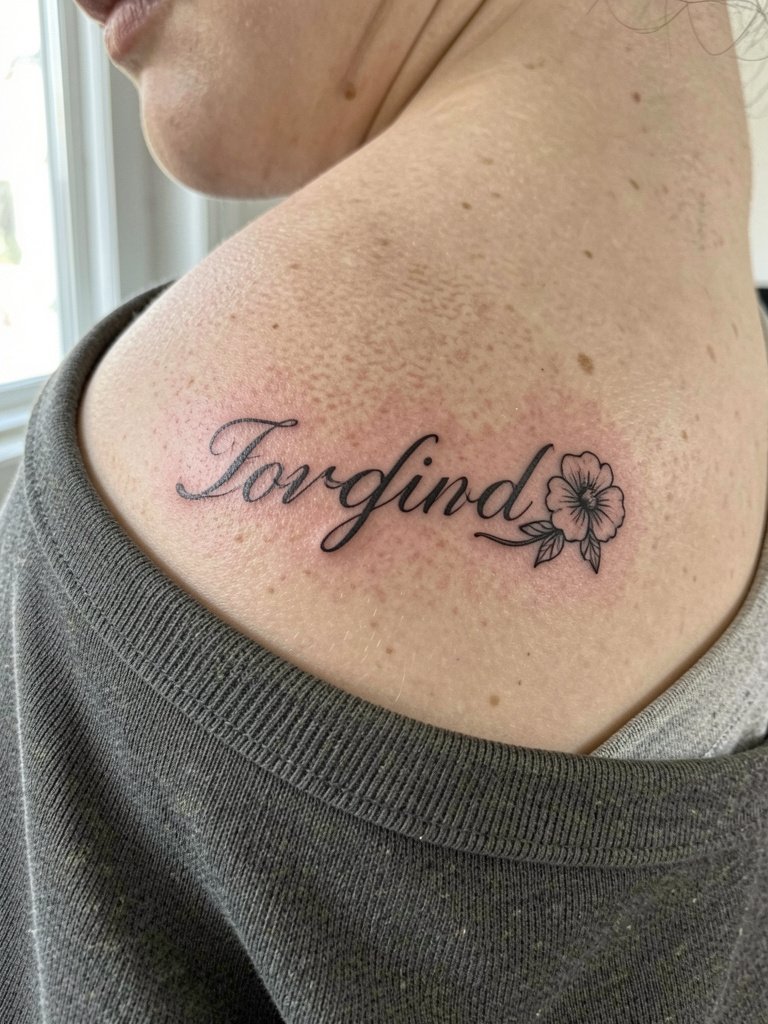
A small script with a floral cue can be an understated statement. Keep the lettering slightly heavier than delicate stationery cursive so the loops do not collapse over time. Session time is short at around thirty to forty minutes. Bring two scale references and request the artist perform a stencil check with you in sitting position to confirm readability. The mistake people make is asking for ultra-thin script that gets eaten by the skin texture. For nights out, an asymmetric blouse shows the accent without revealing everything.
15. Delicate Vine and Chain That Trails Over the Shoulder
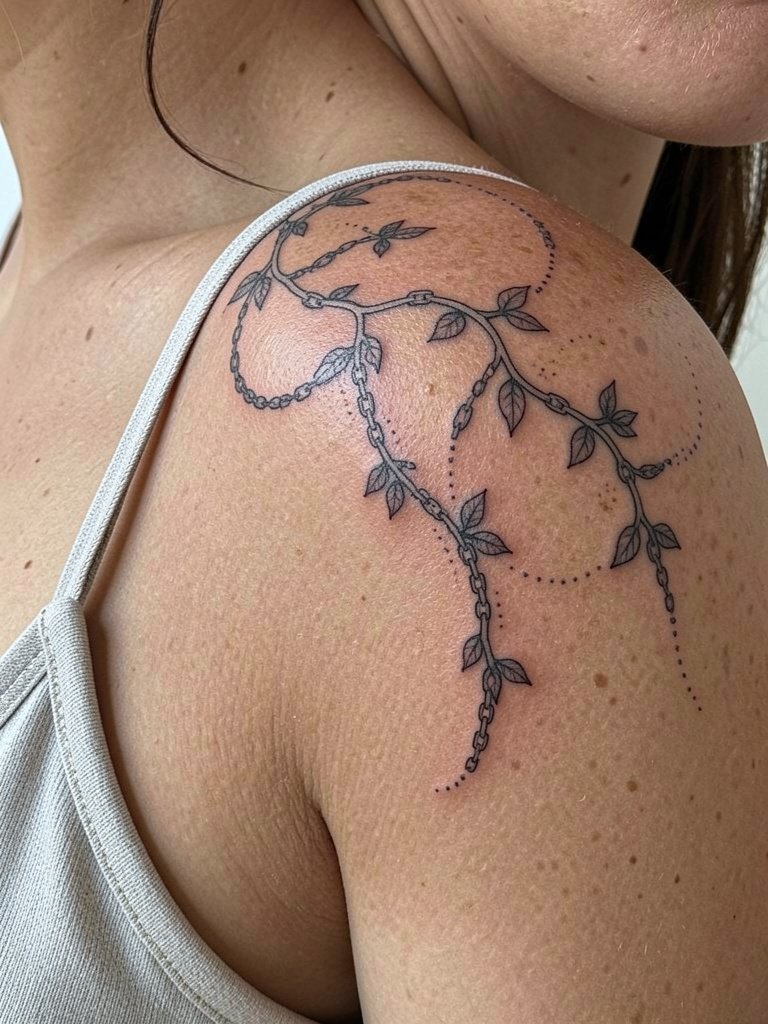
This piece reads like jewelry and works for people who want continuous flow without heavy color. It is sensitive to sizing so ask the artist to map the chain links on your shoulder while seated to check how fabric straps will interact. Sessions are typically forty-five to sixty minutes. A common complaint is chains done too small that look like a smudge after two years. During the appointment wear a loose top with removable or thin straps to give the artist unobstructed access. For show-off outfits, try a halter neck dress.
16. Peppery Black Dot Work Rose for Texture
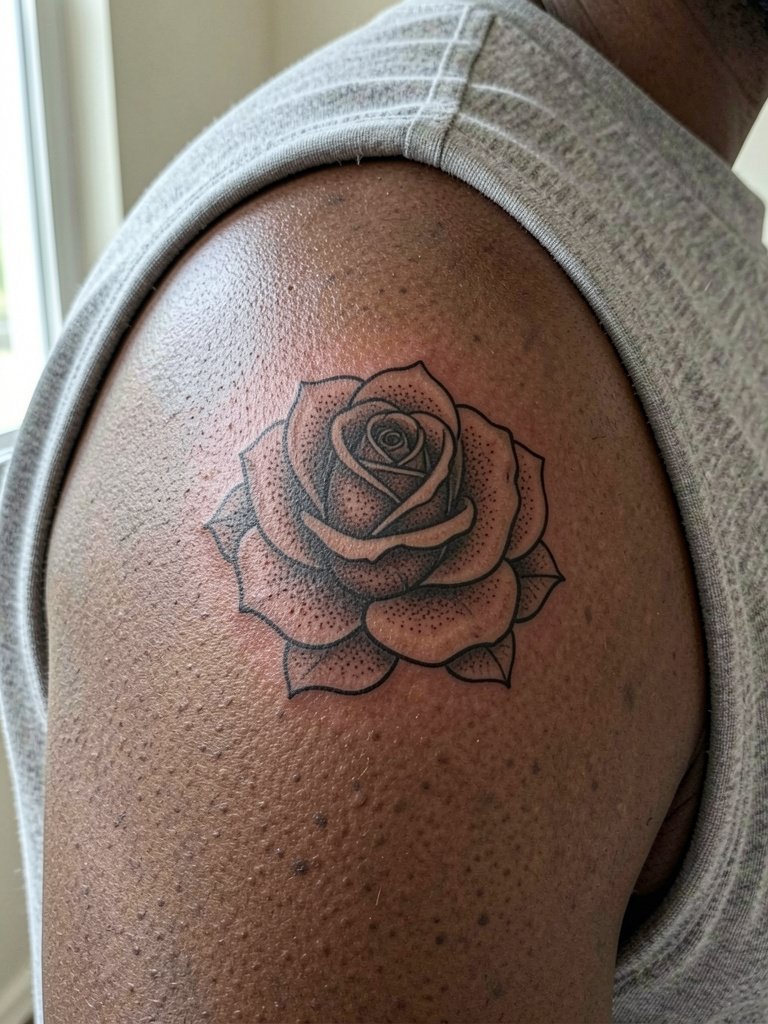
Dot work builds texture that ages with a softer appearance instead of hard fades. It takes longer to complete because shading is incremental, so expect a two to three hour session for a medium rose. Discuss dot density with your artist so the petals do not become a grey wash at year two in direct sun. Many people underestimate the time for stipple shading and book only a short session. For wardrobe, a tank-style bodysuit creates a clean frame for the textured surface.
17. Three Small Blooms Spaced Along the Shoulder Line
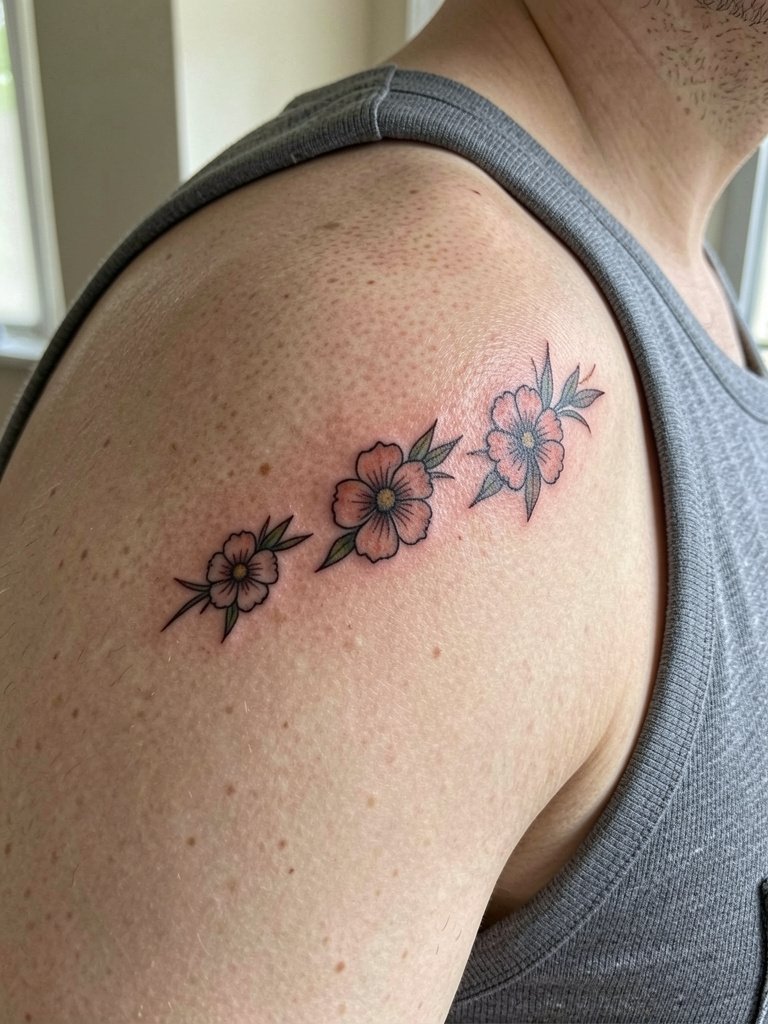
Spacing is the selling point here. Three small blooms read as intentional when each is given breathing room. Sessions are brief, about thirty to sixty minutes depending on color. Tell the artist the exact center-to-center distance you want measured in inches so placement matches your vision. The common error is placing them too close and then needing a filler to separate. For casual looks, pair with a muscle tank that leaves the blooms unobstructed.
18. Tiny Sprig Behind the Shoulder for Subtlety
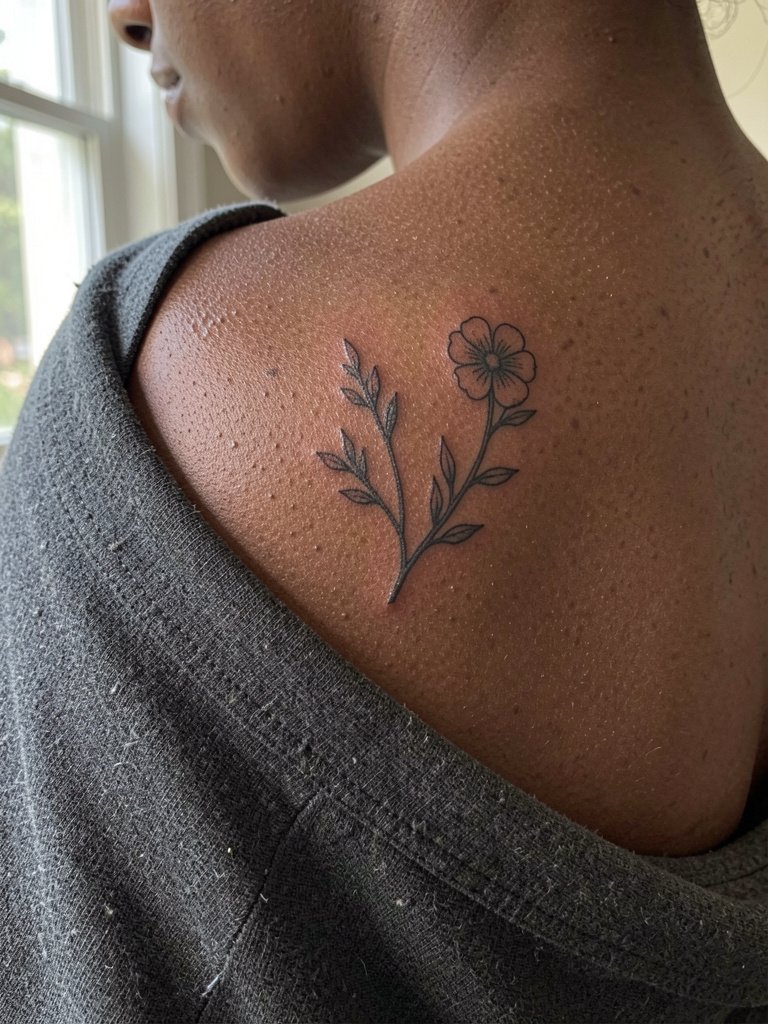
A tiny sprig is ideal for someone who wants discretion but occasional reveal. Keep it small and slightly bolder than stationery lines so the flourish reads after healing. Sessions are short and relatively painless. Ask for a stencil while standing to see how the sprig sits with your posture so it does not disappear when you move. People often pick overly thin strokes and then the sprig needs a touch-up. For showing it occasionally, a low-back dress creates that surprise reveal.
19. Inked Floral Band That Circles the Shoulder
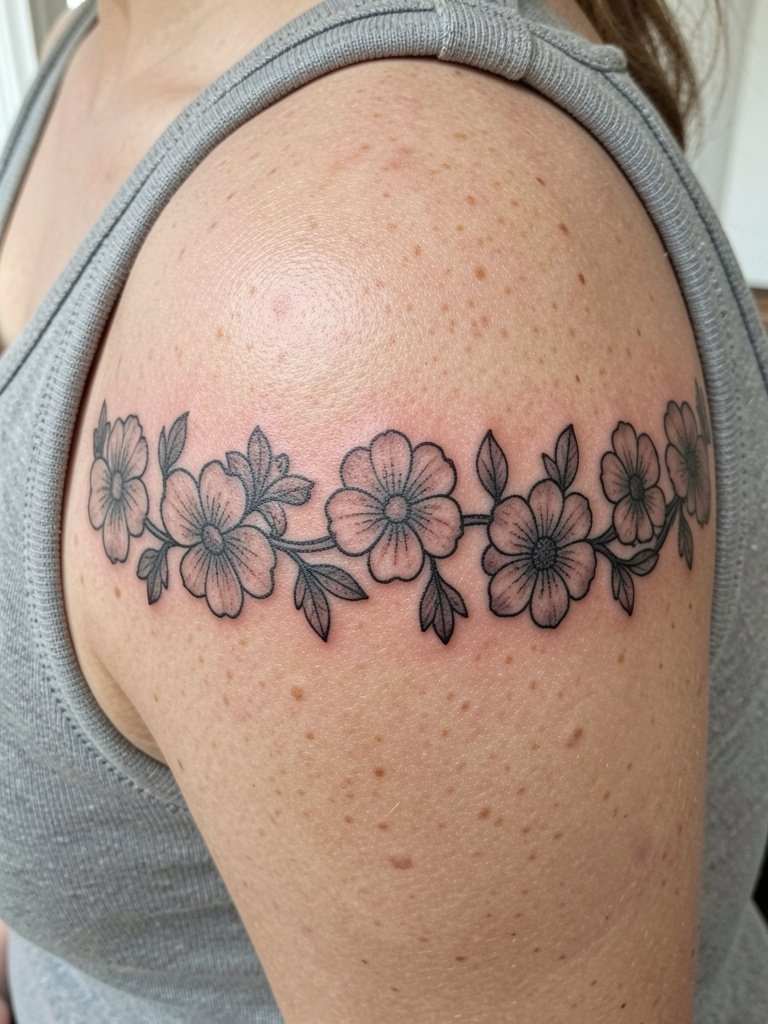
A circlet reads like wearable art and can be expanded later into a shoulder-and-back piece. This is moderate pain because it encircles bone and soft tissue. Book a session of ninety to 120 minutes for a detailed band. Ask the artist to show the full wrap stencil so you can confirm line continuity and knot points. The mistake is choosing tight repeats that look busy on close inspection. For outfits, a sleeveless mock neck top keeps the band visible and neat.
20. Small Irezumi-Influenced Blossom With Respect Note
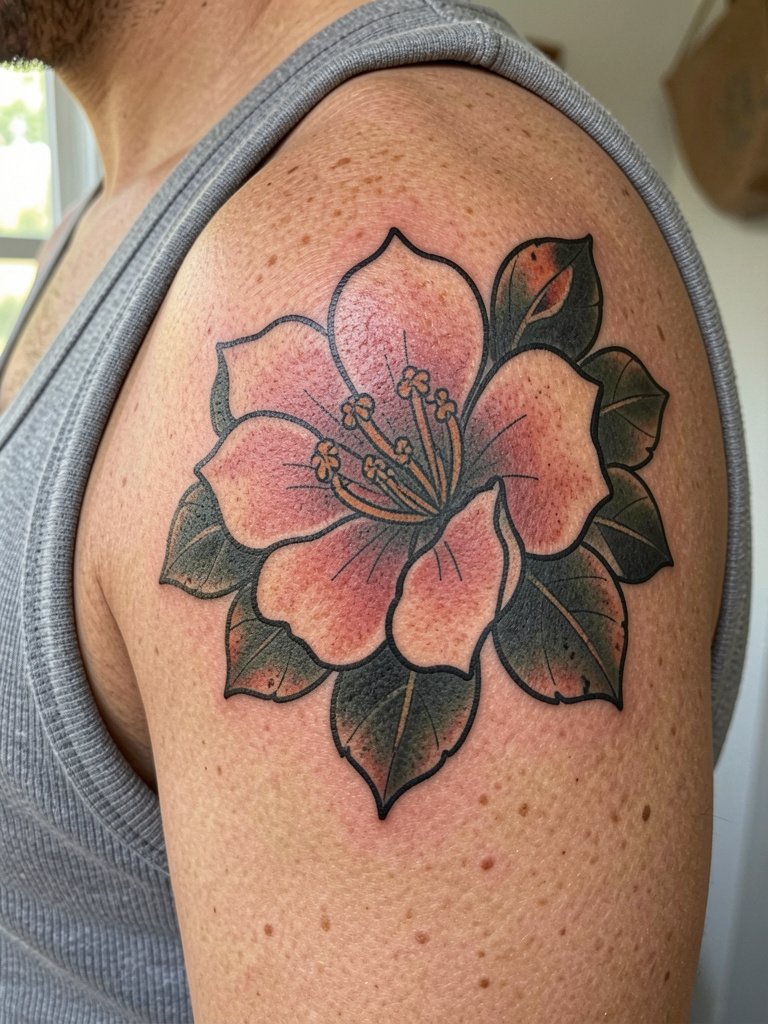
When adapting cultural styles like Irezumi, approach respectfully. One viewpoint recommends deep study and local context before adopting motifs. Another viewpoint supports tasteful incorporation when the design credits origin and avoids sacred imagery. If you choose a style like this, describe which visual elements you want and why, and ask the artist for historical cues that are decorative rather than ceremonial. Sessions for small Irezumi-inspired work run from sixty to 150 minutes depending on shading. Avoid copying specific traditional compositions without understanding their meaning. A silk-look kimono jacket can complement the aesthetic with care.
21. Tiny Daisy Chain Along the Shoulder Edge
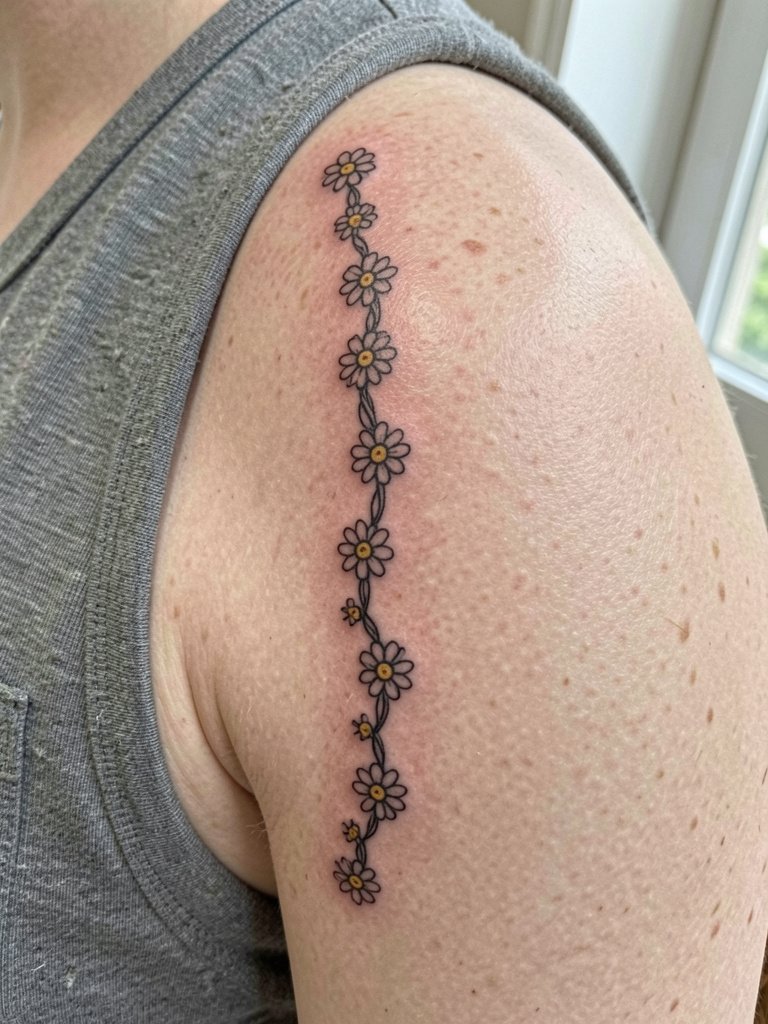
A daisy chain is playful and low commitment. Make sure each bloom has a center at least three millimeters wide so those dots do not disappear with time. Session time is short and pain is low. On consultation ask your artist to space each bloom evenly and test the chain curve on your shoulder by moving your arm. A common misstep is selecting centers that are too small to survive daily wear and sun. For casual wear, a tank with scalloped edge echoes the chain's rhythm.
22. Half-Moon Floral Fan Along the Shoulder Edge
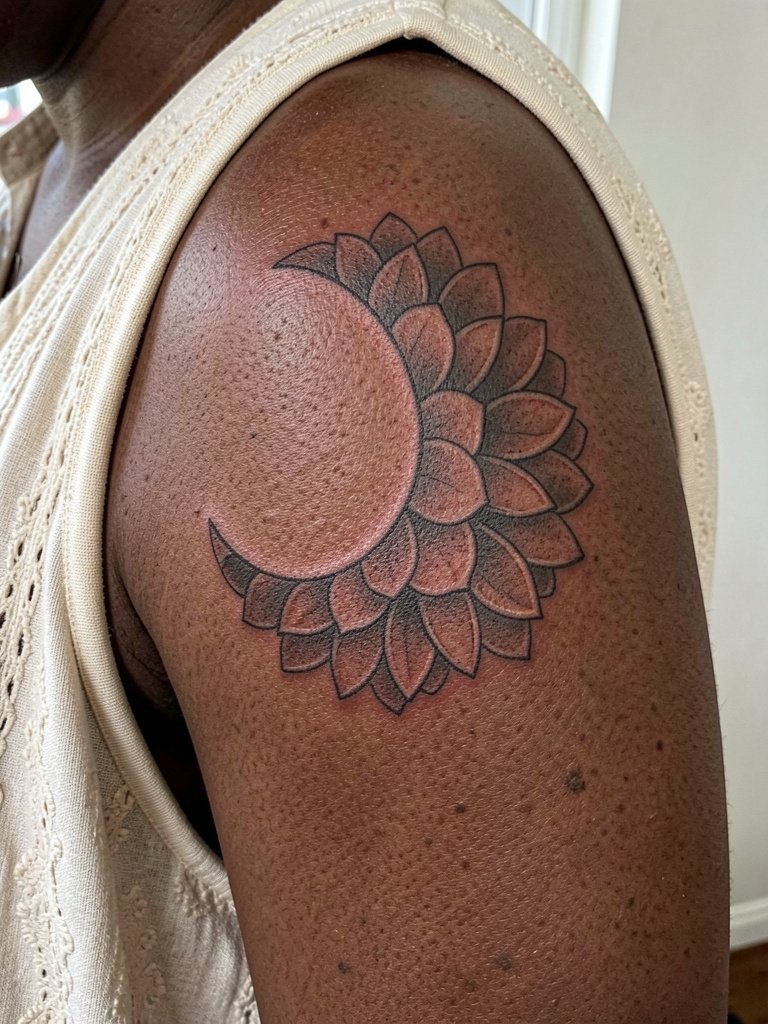
A fan shape uses the shoulder curve to dramatic effect and is very readable if spaced correctly. Expect a session of about ninety minutes for layered petal work. Ask the artist to mock the fan with temporary markers before inking so you can see how the arcs sit with your natural posture. The usual mistake is flattening the fan into one plane instead of following the three-dimensional curve. For style, a cap-sleeve dress keeps the fan visible without overexposure.
23. Micro-Realism Floral Sprig at the Shoulder Cap
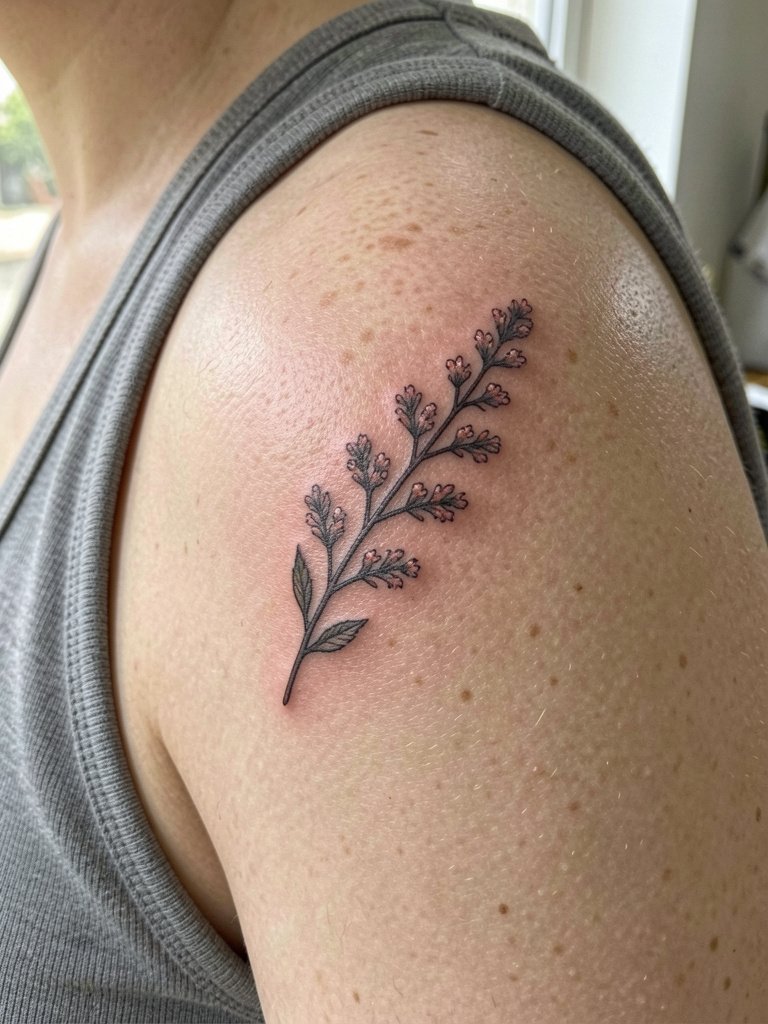
Micro-realism demands high contrast and exact stencil work to survive. Expect a longer appointment for a small scale piece because the artist needs steady passes. Discuss highlight placement and exact scale so the tiny highlights remain visible after healing. A common regret is choosing micro-detail at too small a size. For showing off minute detail, pair with a scoop-neck bodysuit that keeps attention on the cap.
24. Vintage Rose Compass Across the Shoulder
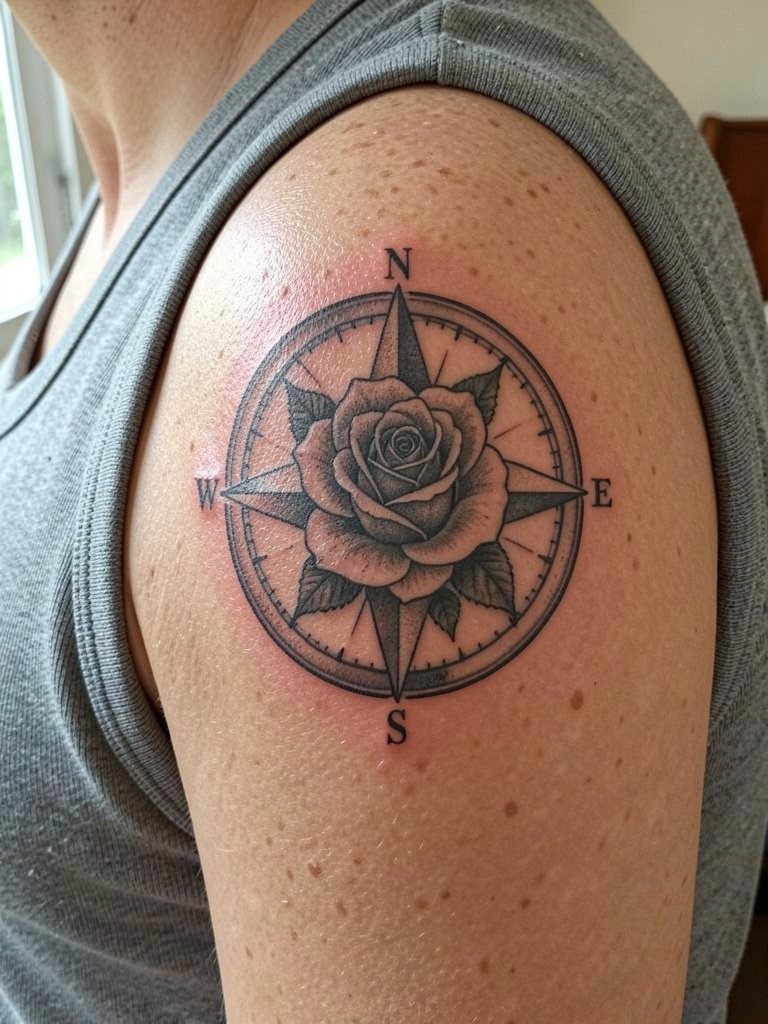
Combining compass structure with floral imagery yields a symbolic piece that still reads well from a distance. Clarify in the brief how distressed you want the texture so the ticks and directional points do not become a blur with time. Sessions are usually between ninety minutes and two hours depending on detail. A frequent error is packing the compass with tiny numerals that do not age. For an urban look, try a sleeveless utility vest that frames the motif.
25. Scandinavian Folk Flower Cluster Near the Shoulder
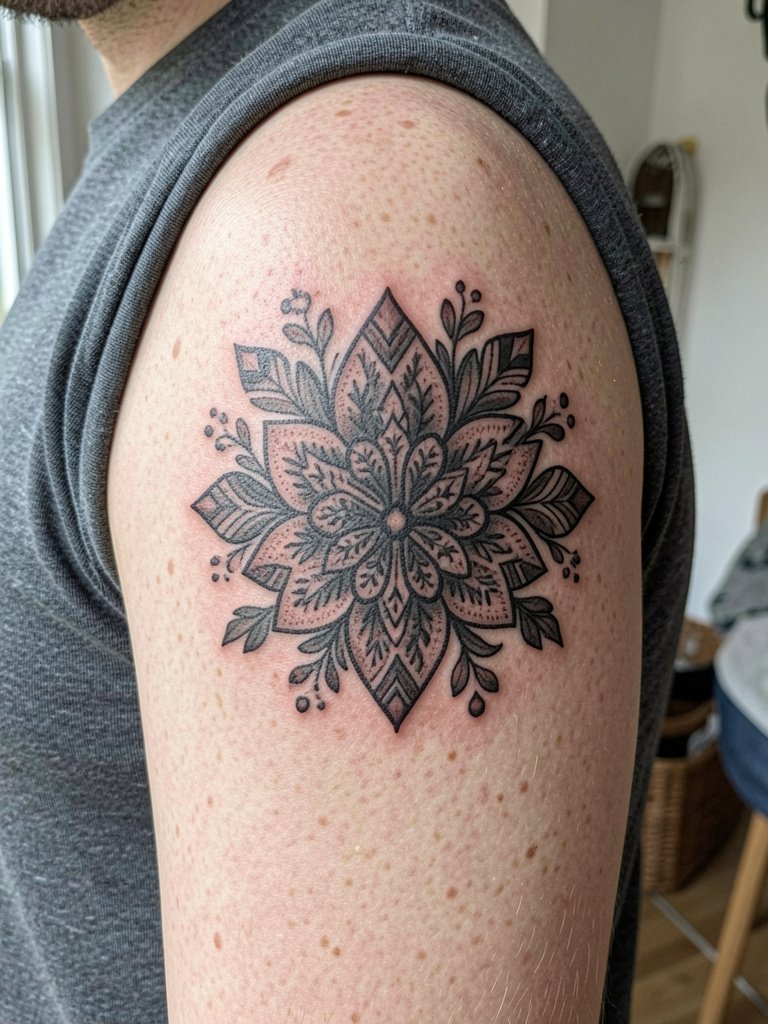
Folk motifs offer graphic shapes that age predictably because of their simple geometry. Ask for the reference pattern at the size you plan to avoid tiny repetitive elements that blur. Sessions vary but a cluster like this is often wrapped into a single two-hour booking. A classic mistake is shrinking a folk motif that needs thickness to keep its pattern language. Pair with a crew-neck knit sweater to echo the traditional pattern.
26. Single Stem That Drops Toward the Chest
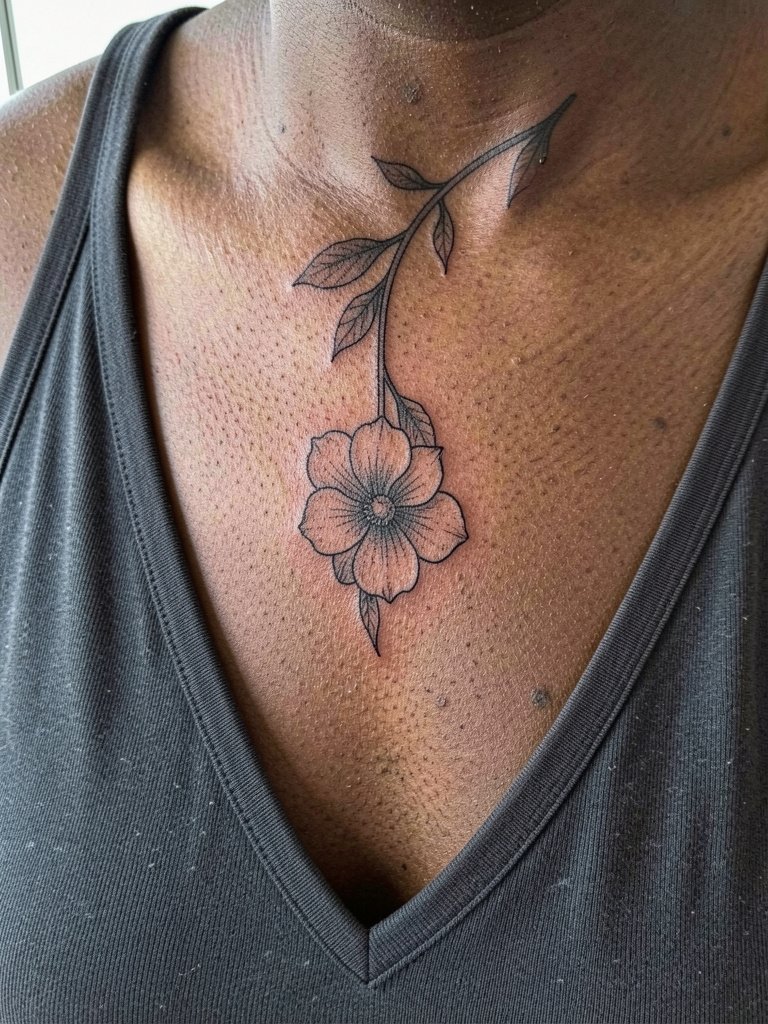
A drop stem is elegant and elongates the torso visually. It is sensitive to how your clothing sits, so during the consult have the artist place the stencil while you wear the top you expect to show with the piece. Sessions are often forty-five to seventy-five minutes. People sometimes forget to test the drop against their neckline, which can lead to awkward coverage. For display, a deep V knit top complements the trailing line.
27. Blooming Shoulder Maze with Negative Space
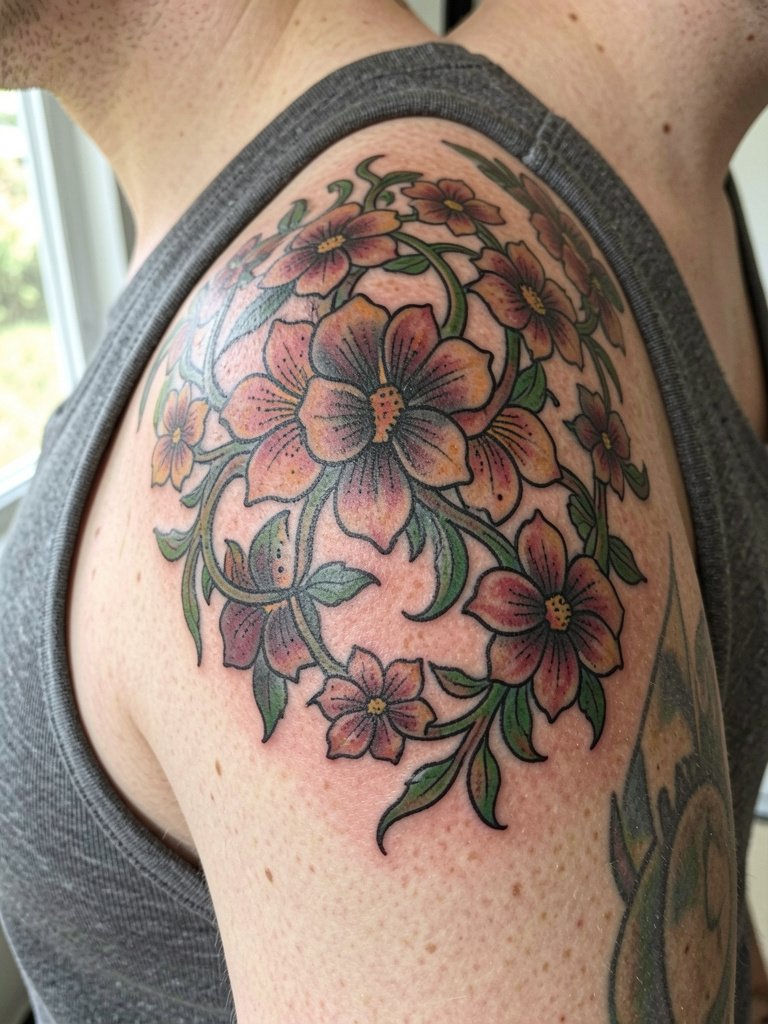
A maze-like bloom is ambitious and reads best when the artist designs clear negative-space corridors. Expect multi-hour sessions and plan for a touch-up window at six to twelve months for crispness. Ask the artist to mark the high-contrast lines that will serve as reading anchors so the piece does not devolve into muddied fill. A typical mistake is asking for too many tiny corridors which collapse. For dressing, a strappy summer top keeps the complex work visible and airy.
Frequently Asked Questions
Q: How much will a shoulder floral tattoo cost and how long should I book?
A: Pricing varies by studio and region, but plan booking in slots rather than fixed sums. Small shoulder pieces often fit into a one-hour or ninety-minute slot, while larger caps or wraps need two to three hours. Bring size references and ask the shop for their hourly booking recommendation so you leave time for shading and a brief stencil check.
Q: How do these shoulder florals heal over time and what causes common fading?
A: Shoulders see regular sun and friction from straps which both reduce saturation. Fine single-needle work often softens in the first two to three years, while bold blackwork holds longer. Realistic expectations are touch-ups at twelve to twenty-four months for fine detail and occasionally earlier for watercolor fades.
Q: Where can I find healed portfolios and discovery pathways without naming specific artists?
A: Look for healed photos using platform search terms like #HealedFloralShoulderTattoo and #ShoulderTattooHealed, filter by location if you want local studios, and check community threads on Reddit for healed photo compilations. Tattoo portfolio aggregators and gallery pages labeled "healed" are also helpful for seeing long-term results in different skin tones.
Q: Are shoulder florals suitable for all skin tones and how should color choices change?
A: Yes, but color choice and saturation should adapt to skin tone. Darker skin often benefits from higher contrast and richer pigment saturation, while lighter skin can carry softer pastels without losing legibility. Discuss color palettes with your artist and ask to see healed examples on skin tones similar to yours.
Q: What should I wear to a shoulder tattoo appointment to make access easy?
A: Wear a top that exposes the shoulder in its normal worn state, such as a tank, wide-neck tee, or a button-up you can loosen without pulling at the skin. Avoid tops that require active pulling or that press against the fresh work afterward. A loose, comfortable layer for the ride home is helpful.