
Someone I know spent months narrowing down a finger tattoo and then canceled at the last minute when they realized their choice would blur within a year. Finger tattoos live and die by lineweight, placement, and daily wear. Below are 12 tiny finger ideas that actually hold up, what to tell your artist in the consult, and the realistic upkeep you should plan for.
1. Fine-line Crescent and Dot on the Side of the Finger

Someone I know first noticed this motif on a friend and loved how subtle it read as jewelry. Pain is low to moderate for the finger side and a single session usually takes 10 to 20 minutes. Ask your artist for slightly bolder lineweight than the flash if you want it to last, and request spaced linework so the crescent does not fill in as the skin stretches. A common mistake is asking for ultra-thin lines, which often blur into a softer smudge by year two. At six months the edges will look crisp, by two years lines may soften, and a touch-up at year three is common. Hand tattoos can affect hiring in some industries, so weigh placement against career needs.
2. Tiny Ring Band with Dotwork Around the Finger
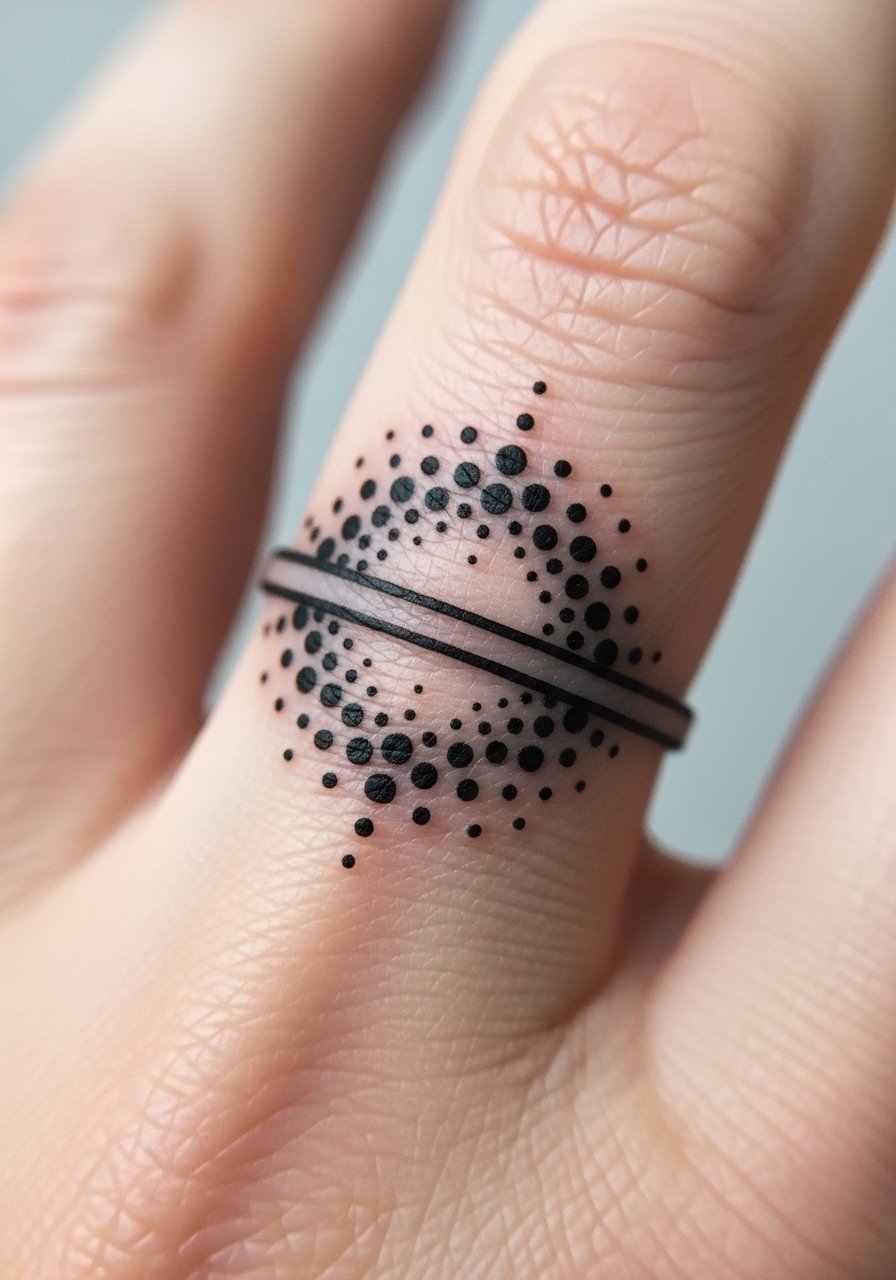
Fair warning, the knuckle and finger band area see constant friction. The session usually lasts 15 to 30 minutes depending on detail. Pick a slightly thicker outline and dense dotwork filling, because open fine lines on bands tend to fade fastest. When you consult, show photos with the exact width you want and ask for samples of healed bands in the artist's portfolio. One camp says ultra-delicate ring bands are romantic but require frequent touch-ups. The other camp argues small, bold bands age far better. Expect crispness at three months, softened edges at two years, and a likely touch-up by year three if you want it perfect. Finger placements can influence job perceptions so consider that before committing.
3. Micro Botanical Sprig Along the Finger Edge

Most watercolor or loosely shaded leaf tattoos age poorly on fingers because the pigment spreads. This version uses concise linework with light stipple shading to keep texture without bleeding. Tell your artist to avoid heavy saturation near joints and use stipple rather than full fill so the sprig keeps definition at six months and beyond. A common mistake is asking for full tonal shading on a narrow canvas, which can turn into a blurred patch. Session time is usually 20 minutes. At two years expect softening around joints and schedule a touch-up when the stem loses contrast. Hand placements still have workplace implications so factor that into placement.
4. Minimalist Roman Numeral Along the Side
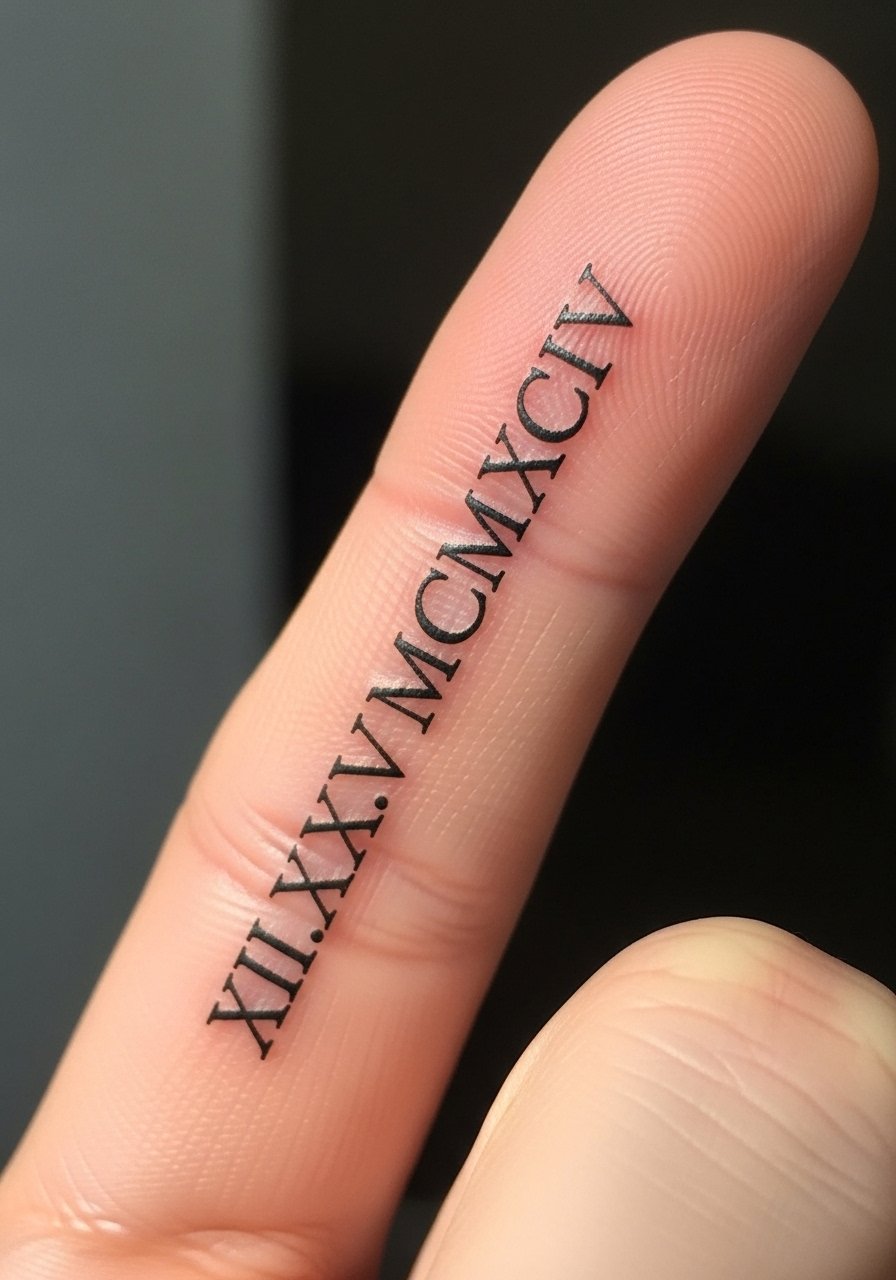
When you sit down with your artist for this one, bring the exact numerals you want etched into the consult. Pain is low and the session time is brief. The single-line serif can look elegant if the numerals are spaced slightly wider than typical print. The common error is cramming many numerals into a tiny area. At six months the numerals read precisely, by two years thin serifs can soften and require a light touch-up. If you want the numerals to remain sharp, request slightly increased lineweight and wider kerning from the artist. Remember that finger tattoos are visible in many professional settings, so place with care.
5. Tiny Heart Outline on the Finger Pad

The finger pad is a high-motion, high-wear spot so expect faster fading. A straightforward session of 10 minutes can deliver the look but the trade-off is longevity. Ask for a hollow outline rather than filled color so touch-ups are simpler and so the design does not blur into a solid shape. A common mistake is choosing solid color on the pad, which often erases into a faint smudge. At six months it will be readable, by two years you may only see a pale outline without a touch-up. Hand tattoos can still affect hiring in some workplaces, so consider career impact and consult an artist with hand-tattoo experience.
6. Micro Geometric Triangle Stack on the Finger

There is something about clean geometry that reads like jewelry from a distance. This one takes 10 to 25 minutes and fares well if the triangles have breathing room. Tell the artist to keep each triangle at least 2.5 to 3 mm per side so the geometry survives two years of wear. A typical mistake is pushing the scale too small, which loses symmetry as lines blur. At six months the stack looks precise, at two years small gaps may soften and a touch-up is normal if you want crisp angles. Because finger skin moves, ask about touch-up policies during booking.
7. Single Initial in Cursive on the Side of a Finger

When you choose lettering, control the exact font and scale in the consult. A single initial is quick and low in pain, often done in 10 minutes. The main mistake people make is picking intricate script that has tiny loops and flourishes. Those details vanish faster than plain cursive. Expect readable script at three months, softer loops at two years, and plan a touch-up if you want the same flow long term. Hand tattoos can influence professional impressions, so pick a discreet side placement if you are concerned.
8. Tiny Anchor at the Finger Base
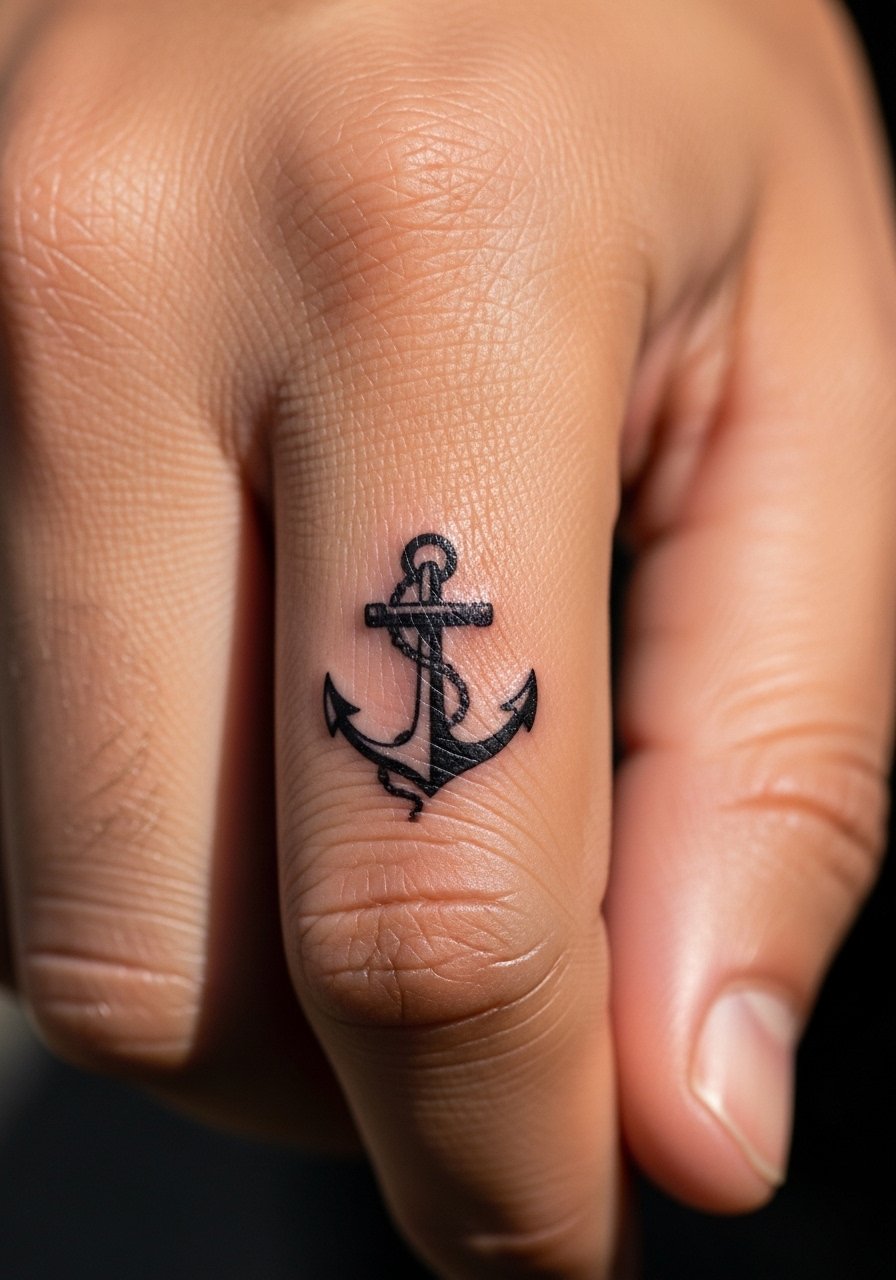
I noticed nautical symbols often get placed too low and then blur into creases. For this spot, have your artist center the anchor above the joint and keep interior fills minimal. Session time is 15 to 25 minutes with moderate pain near the base. The common error is heavy saturation with full black fill, which tends to spread on fingers. At six months the anchor will read solid, by two years edges may feather and a touch-up might be needed. Finger tattoos are visible, so think about job rules and placement before you commit.
9. Tiny Stipple Sunburst on the Knuckle
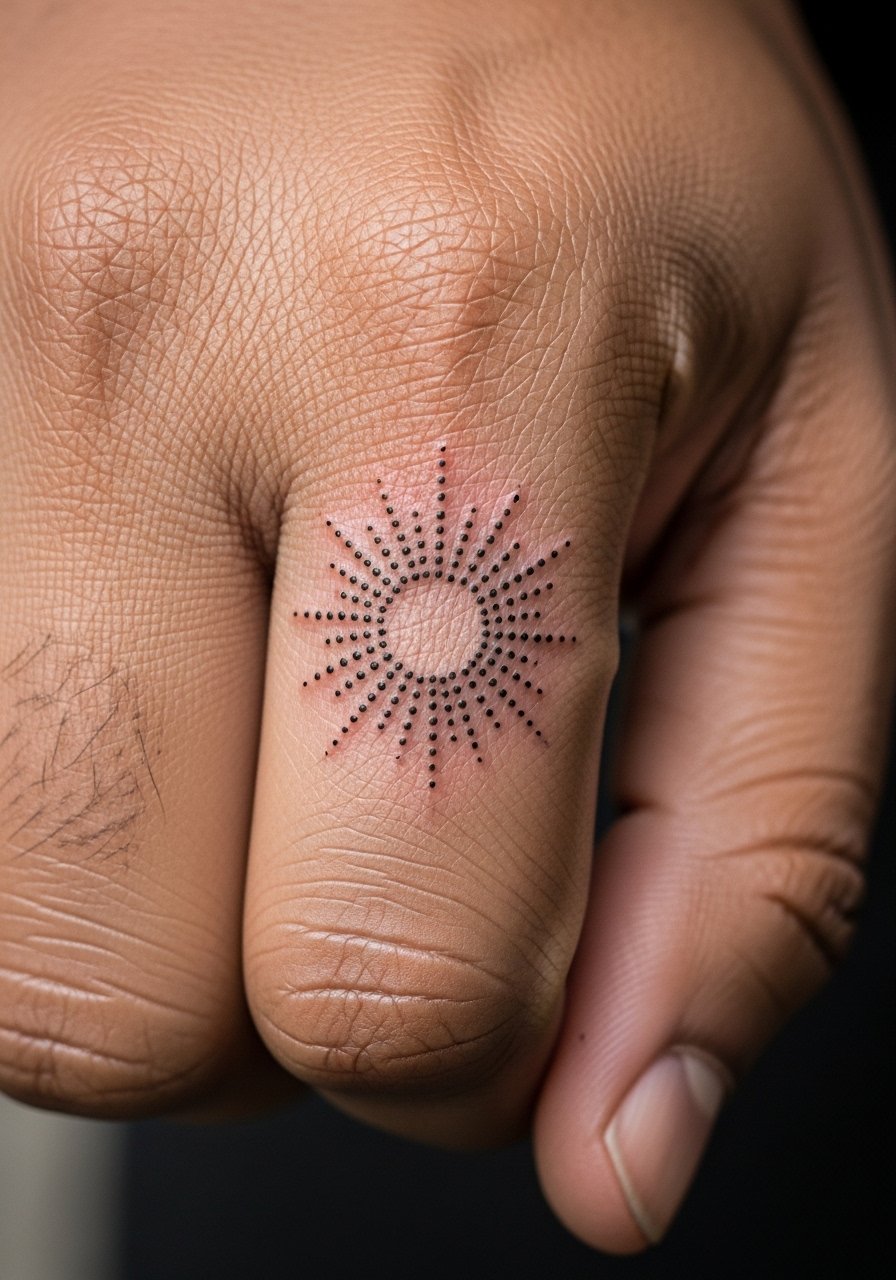
Artists split on knuckle work. One camp says knuckle skin gets heavy wear and dots will break down quickly. The other camp says with proper spacing and conservative stippling it holds up surprisingly well. Ask the artist which camp their technique aligns with before booking. This piece usually takes 15 to 30 minutes and can look sharp at three months. At two years expect dot loss around the creases and likely touch-ups are part of the plan. Knuckle tattoos show up in most social settings so factor that into placement decisions.
10. Micro-Realism Tiny Eye on the Finger Side
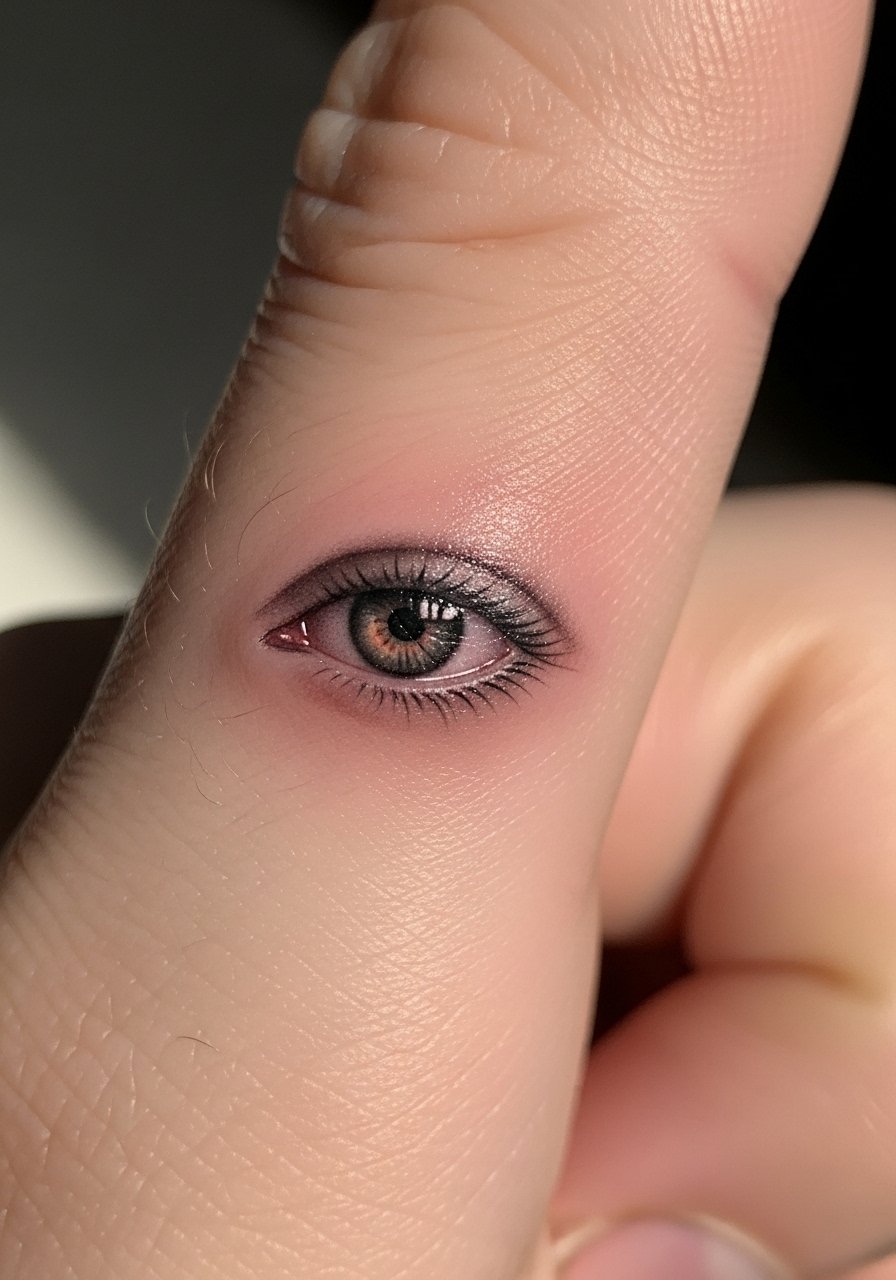
Most micro-realism on fingers ages into a ghost if artists push too much gradient into a tiny space. For this, request contrast in a compact layout and stipple shading rather than smooth gradients. The session can run 20 to 40 minutes depending on detail. Common mistakes include asking for full realistic shading that just turns into a blur. At six months the iris and lashes look defined, at two years midtones soften and a targeted touch-up often restores the details. Hand tattoos may affect workplace policies so pick discrete placement.
11. Tiny Star Cluster Along the Finger

Visual impact is high for small star clusters because they read like scattered jewelry. Keep the stars spaced to avoid merging over time. This takes 10 to 20 minutes and is low in pain. Tell your artist to use single-needle linework with small gaps between motifs so blowout risk is reduced. A common error is crowding many stars into a narrow strip, which quickly loses separation. Expect crisp shapes at three months and gradual softening at two years. Think about career visibility before placing stars on the tops of fingers.
12. Matching Tiny Pair for Index Fingers

When people ask for matching finger tattoos with someone else, they often forget how differently each skin will heal. In consultation, ask both artists or the same artist to check placement symmetry and discuss future touch-ups. Sessions are short, about 10 to 20 minutes per finger. The common mistake is assuming identical ink will age identically across two people. At six months both should look similar, by two years variations in fading are normal and a scheduled touch-up can sync them again. Hand tattoos remain visible, so plan placement with career considerations in mind.
Tattoo Prep and Aftercare Essentials
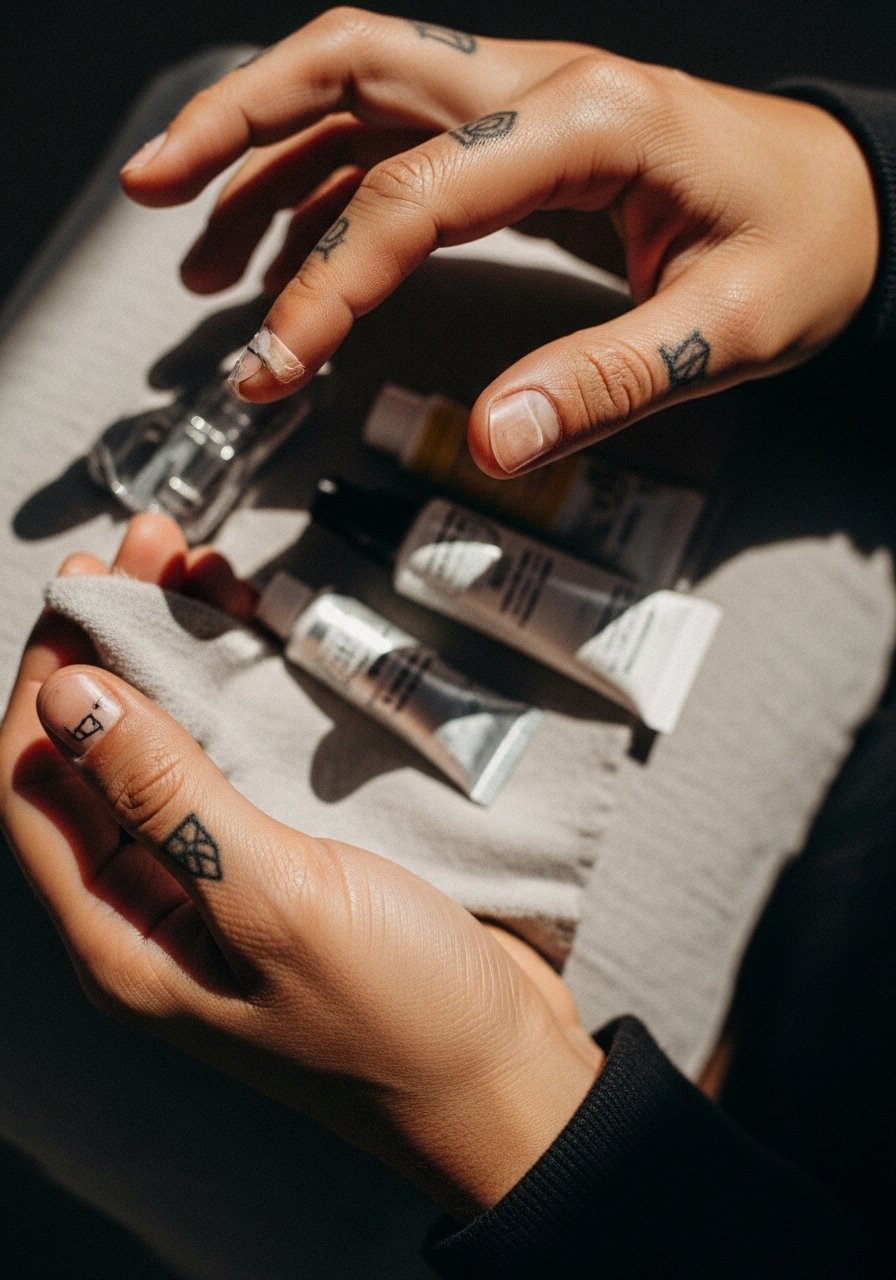
Fragrance-free gentle foaming cleanser for tattooed skin. Use this for the first week to remove sweat and residue without stripping ink. It helps avoid scabbing that pulls pigment out.
Tattoo Goo Aftercare Ointment. Apply thinly for the initial moist healing phase to support barrier recovery.
After Inked Tattoo Moisturizer. A lightweight lotion for daily use once scabbing ends, it keeps saturation without greasy residue.
Medical-grade second skin bandage. Use for the first 24 to 72 hours on fingers that rub against surfaces to limit scabbing.
Lightweight fragrance-free balm for touch-ups. Carry a small tin for daily maintenance in dry climates.
H2Ocean Tattoo Aftercare Salve. A lesser-known liquid salve that dries into a protective layer for high-motion areas.
Waterproof adhesive bandage strips for fingers. Useful for the first few days when tasks expose fingers to water.
Aquaphor Healing Ointment. Use sparingly if your artist recommends a petrolatum occlusive. This is the one mainstream product listed here.
Every tattoo is different. Always follow your artist's specific aftercare instructions. Consult a dermatologist if you have skin concerns or unusual healing issues.
Frequently Asked Questions
Q: Will tiny finger linework blur faster than the same design on my forearm?
A: Yes, finger skin moves and sees more friction so fine linework often blurs sooner than forearm pieces. Expect meaningful softening by year two and plan touch-ups sooner. If longevity is a priority, ask for slightly thicker lineweight and spacing.
Q: How long does a finger tattoo session usually take and how many sessions will I need?
A: Most tiny finger tattoos finish in 10 to 30 minutes in one sitting. Complex micro-realism or stacked bands may need two shorter sessions if swelling affects detail during the first pass.
Q: Are knuckles and finger pads riskier for blowouts?
A: Knuckles and pads have higher blowout risk because skin is thin and moves against bone and surfaces. One camp avoids knuckle dots for this reason. The other camp uses conservative spacing and stipple techniques to mitigate it. Ask your artist which approach they use.
Q: Should I use a specific aftercare product from the shopping list for finger tattoos?
A: Start with a gentle foaming cleanser and a thin layer of a balm for the initial healing week, then switch to a lightweight moisturizer. The cleanser and After Inked link above are good starting points, but follow your artist's advice.
Q: How often will I need touch-ups on finger tattoos?
A: Many people plan for a touch-up around year two to three for freshening. High-use fingers might need touch-ups more often. It depends on your skin, sun exposure, and daily tasks.