
Someone I know spent months saving for a chest dragon and then realized the real challenge was choosing a style that would age well on moving skin. I have spent time in five shops across Brooklyn and tracked how dragons look at six months, two years, and longer. These twelve dragon ideas focus on placement, linework, and realistic aging so you pick a design that still reads after touch-ups and life changes.
1. Sinuous Chinese Dragon with Pearl on Chest
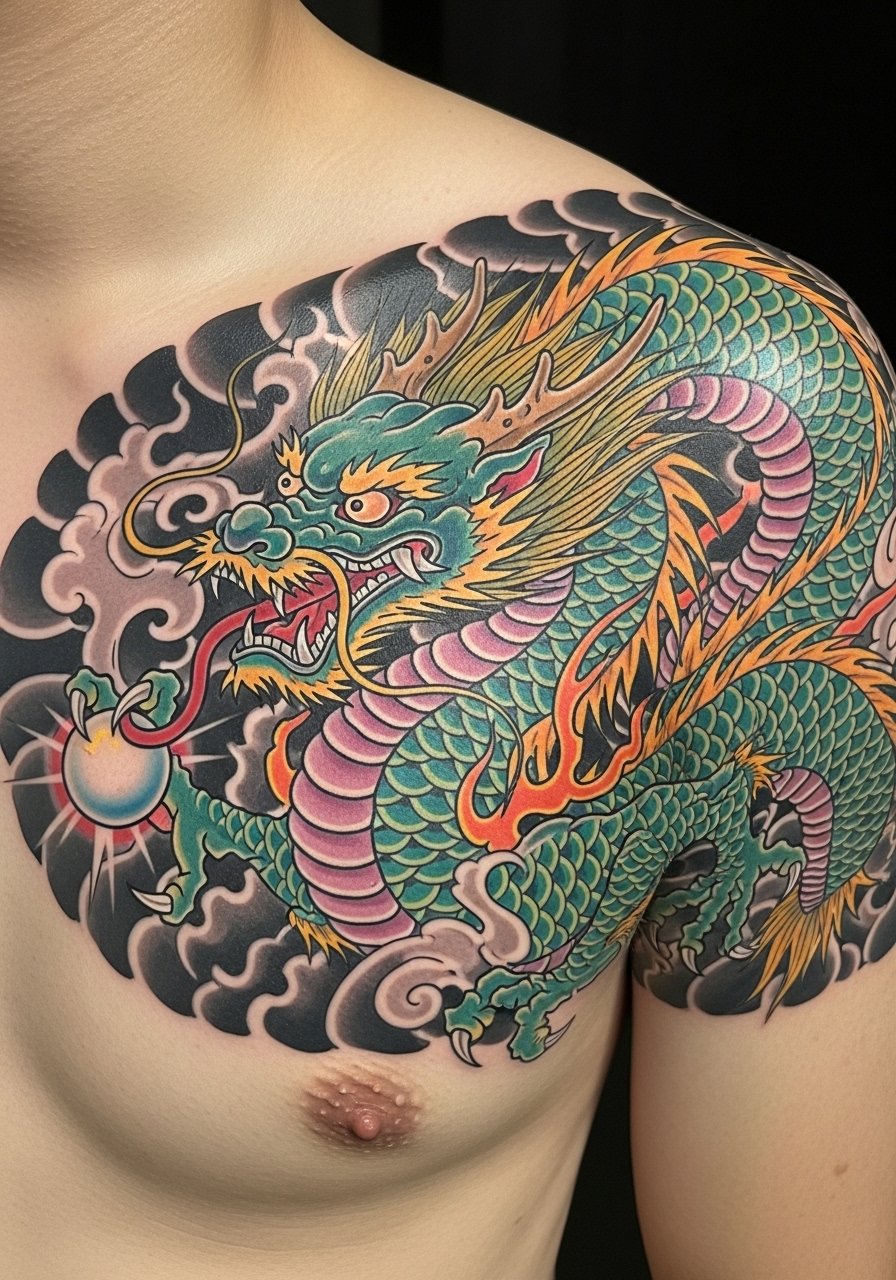
Someone I know first saw this flow on a friend and booked it because the dragon follows the pectoral curve. Expect a longer session on the chest and some soreness where ribs sit under the needle. Tell your artist you want the pearl positioned over the muscle so highlights catch when you flex. A common mistake is shrinking the pearl to fit a smaller stencil, which flattens the 3D effect. Healed at six months the reds stay bright with proper sun care, and at year two you may want a saturation touch-up to keep the pearl reflective. This suits people who want a statement that moves with their body.
2. Zodiac Dragon Coiling Around Upper Arm
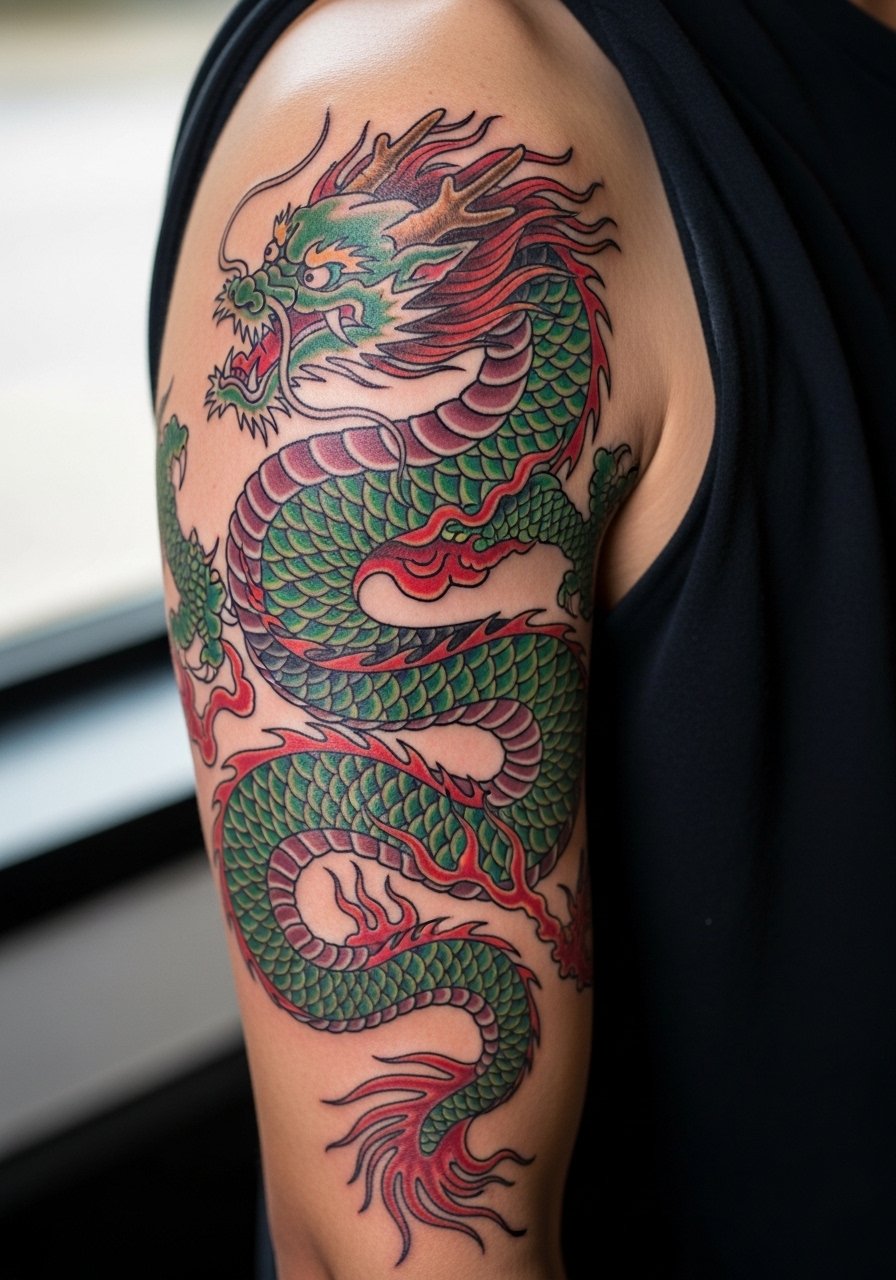
Fair warning, upper-arm sessions are popular during zodiac guest-spot seasons so book early and confirm cancellation policies. This style reads well at a distance because of bold outlines and solid saturation. When you consult, bring images that show the coil wrapping fully so the artist plans scale placement across the bicep and tricep. A common aging issue is too-fine scales on a moving arm, which leads to blurring after a few years. Ask for balanced linework and slightly larger scales if you want this to hold up. Pain is moderate and sessions often fit into one or two visits.
3. Minimalist Dragon Head Outline on Forearm
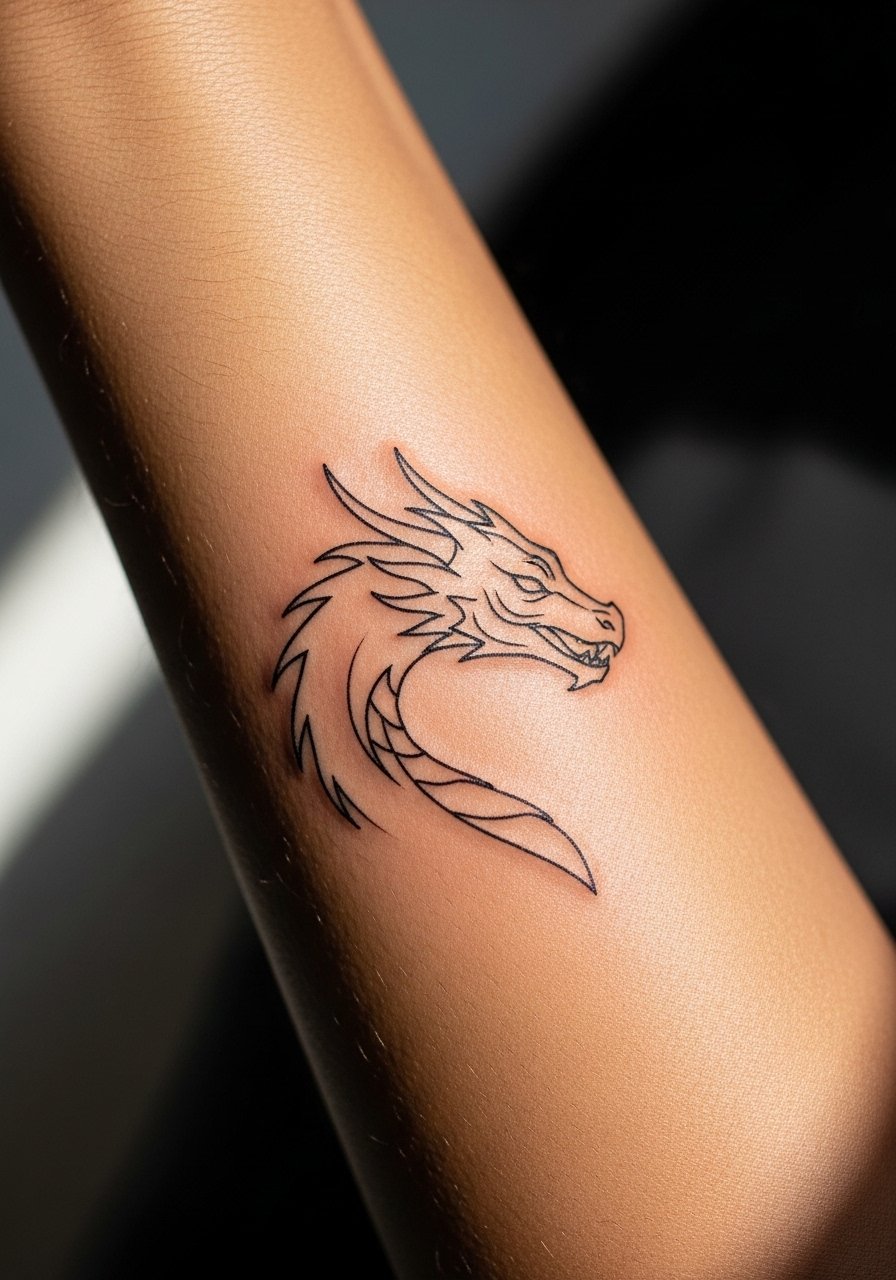
When you want subtlety, the forearm works if the linework has a little breathing room. Fine line fans split into two camps on this one. One group says fine line fades too quickly on forearms and blurs into a soft shadow. The other group contends that with correct depth and spacing fine line can stay crisp for years. During your consult ask how the artist spaces lines and what touch-up timeline they expect. Expect light soreness and a single-session appointment. If you have darker skin, insist on healed photos from the artist. A common mistake is requesting ultra-tiny details that the skin cannot hold on the forearm.
4. Mythical Asian Dragon with Clouds on Thigh

The thigh hides well and handles medium to large pieces without distortion from weight changes. If you like bookish or fantasy vibes, pair cloud scrolls or book elements to tell a story. Tell your artist during the consult that you want stipple shading for clouds rather than a soft wash, because stipple ages with more texture at two years. The biggest mistake is under-sizing the dragon so the clouds look cramped after healing. Pain is lower than ribs, and sessions usually take a couple of hours with room to spread the work across two visits if needed.
5. Full-Body Dragon Sleeve with Scales

There is something about a full sleeve that becomes its own narrative on the arm, but realize this is a commitment across many sessions and long hours. For sleeves, tell your artist how you move in daily life so they place scales away from constant friction points. Another common mistake is rushing to go full black on the first session, which makes later color or dot work hard to layer. Expect multiple sessions and a higher chance of touch-ups at year three. Sleeves age well when the linework is bold and saturation is deep, especially on forearms that see sun exposure.
6. Small Coiled Dragon on Wrist
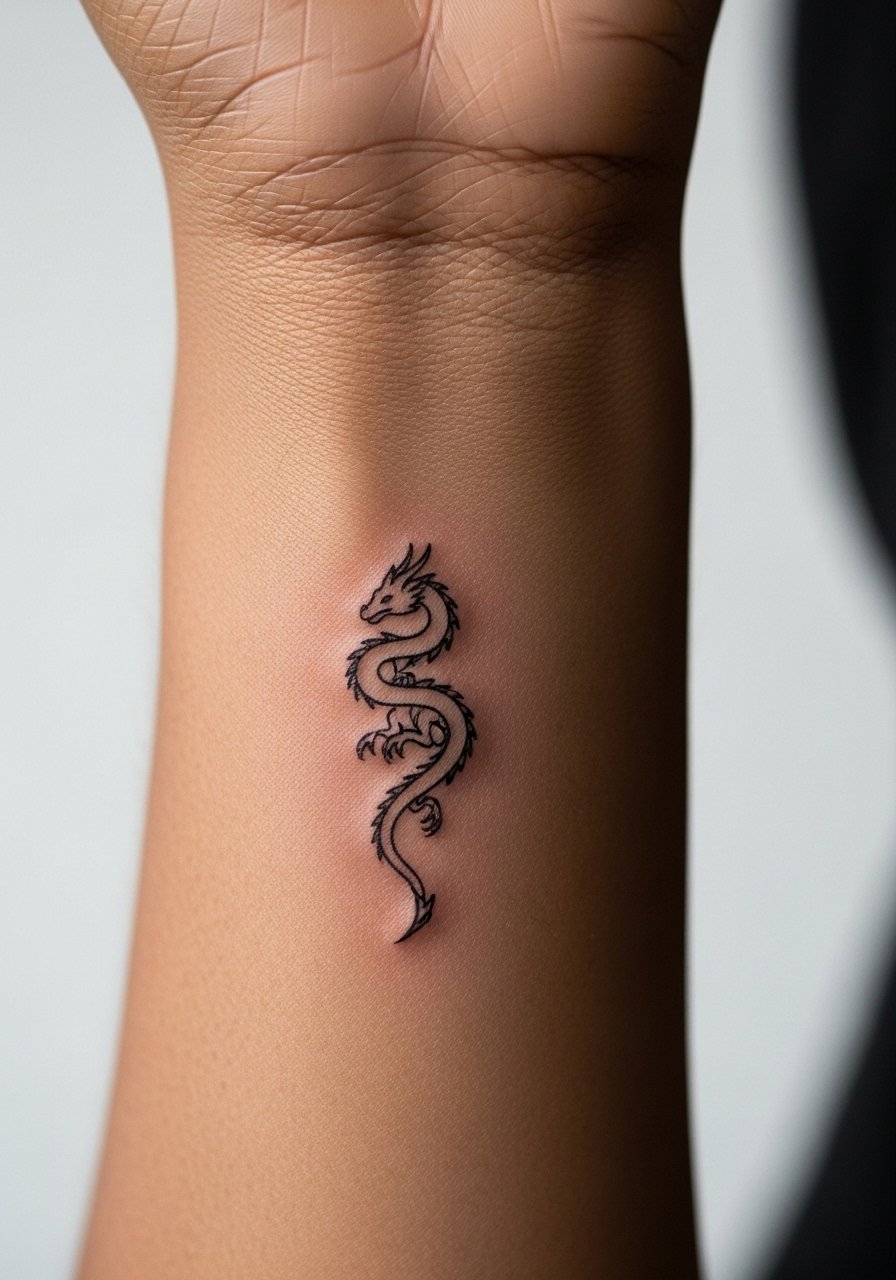
If you want a tiny charm for daily wear, the wrist is discreet and heals fast. Pain is moderate because of thin tissue near the bone. Ask for a slightly thicker line than you might normally pick, because micro lines on wrists can blur with movement. People make the mistake of requesting ultra-micro scales that disappear after healing. Healed at six months these read as a crisp icon, but plan for touch-up at year two if lines soften. This is great for someone who wants a small personal symbol rather than a full narrative piece.
7. Ornate Dragon Chasing Pearl on Upper Back
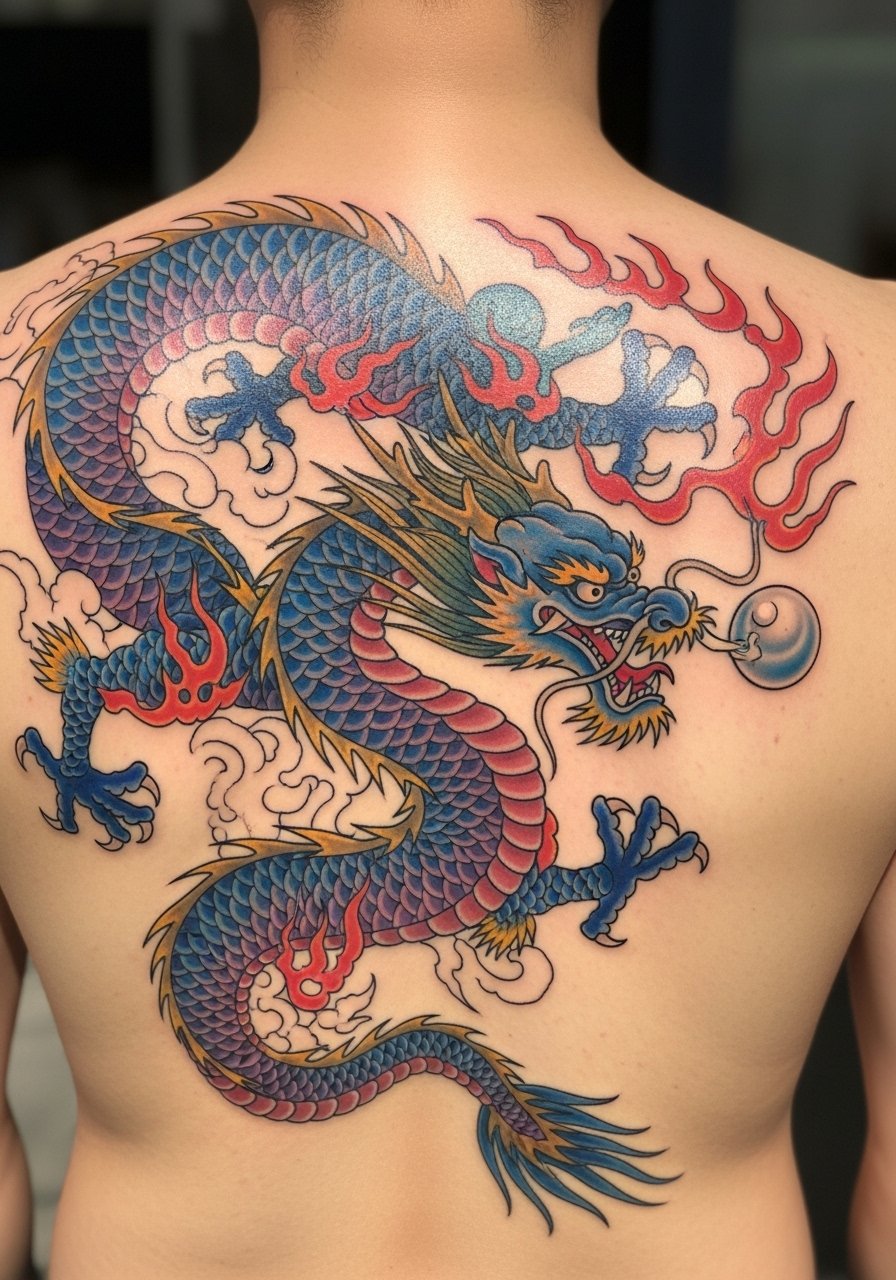
When you want drama without constant visibility, the upper back is ideal. Session time is longer and you should plan breaks. During consult ask where the spine and shoulder blades will interrupt the flow so the pearl sits centered and visible in clothes. One mistake is centering the pearl over the wrong muscle, which makes it disappear under certain movements. Healed colors hold well with low sun exposure, and many people report the need for a saturation touch-up after two to three years. This placement suits people who prefer larger, contemplative pieces.
8. Neo-Traditional Dragon with Flames on Calf

There's visual impact when a dragon rises along the calf, and the muscle gives the flames motion. Calf pain is manageable but the back of the leg can be tender during longer sits. Tell your artist you want whip shading on the flames rather than a flat fill to keep texture as it ages. A common error is over-detailing scales on a narrow calf which blurs into a patch of dark. Healed at six months the reds should retain pop if you protect them from sun. For runners and gym-goers, mention friction from shorts during the first week.
9. Fine Line Dragon Silhouette on Ribcage

Fair warning, the ribcage rates high on pain scales, but it also produces elegant curves that follow breath and movement. Fine line on ribs splits artists into camps. One side says ribs stretch and blur fine lines within two years. The other side argues that with correct needle depth and spacing fine line can stay sharp. Ask the artist for healed rib examples in similar skin tones and for a realistic touch-up timeline. A frequent mistake is scaling the piece too thin to fit under clothing. Expect one to two sessions and a possible touch-up at year three.
10. Blackwork Dragon Mandala on Shoulder

For meditative or ornamental intent, combining dragon forms with geometry creates a design that reads both close up and at a distance. Shoulders tolerate bold blackwork and it ages predictably if the negative space is clear. Tell your artist you want clean dot work transitions using stipple shading to avoid heavy patches later. A common mistake is packing too much black into a small shoulder area which can look muddy after healing. Sessions typically span two to three hours and touch-ups are usually minor after a year.
11. Watercolor Dragon with Mist on Forearm

Most watercolor pieces from years ago lost edge definition, so this version uses darker anchors to keep the form readable while keeping the misty look. When you book, ask for a combination of soft color washes and selective outline anchors so the dragon does not dissolve into a bruise after healing. The mistake people make is asking for pure watercolor without anchors, which ages into a wash of fading color. Forearm exposure to sun speeds fading, so plan sunscreen into long-term care. Expect a single session that can feel long because of slow, careful color layering.
12. Micro-Realism Dragon Eye on Ankle

When you want a focused, intense symbol, the ankle offers a stealthy spot. Micro-realism needs an artist experienced in tiny rendered details, and you should request healed photos from similar skin tones. The common mistake is asking for too much contrast in a very small area, which can cause the finer highlights to vanish after healing. Ankle sessions are short but can sting near bone. Expect one session and a possible touch-up at year two if highlights flatten.
Tattoo Prep and Aftercare Essentials

I recommend prepping like you would for a long hike. Stay hydrated, get sleep, and book a slot when you can rest the healed area. From what I have gathered, artists and clients argue about occlusive bandages versus dry healing. One camp uses medical occlusive dressings to speed a clean seal. The other camp prefers open-air dry healing to avoid trapped ink bubbles on detailed scales. I suggest asking your artist which camp they follow and why. Below is a compact shopping list that covers immediate healing and long-term maintenance.
Shopping list
Healing and aftercare essentials
Indie Australian color-retention tattoo balm. Use sparingly after the initial scab stage to keep scales from looking clogged in humid climates. Apply as your artist recommends to preserve saturation without greasy buildup.
Lightweight tattoo mist spray for delicate color work. Ideal for watercolor or soft-mist areas because it hydrates without a heavy film.
Fragrance-free gentle foaming cleanser. Use this for the first week to remove excess plasma without stripping ink.
Saniderm medical dressing, second skin bandage. This is a single mainstream reference. Some artists prefer it for an initial sealed healing phase, while others avoid film dressings on highly detailed scales.
Lightweight fragrance-free healing balm. A non-greasy balm to use after the first few days if you need extra moisture.
Pre-appointment prep
Breathable compression sleeve for transport and sleep. Use during the night if your piece rubs against sheets or clothing while fresh.
Medical-grade occlusive bandage roll. Useful for custom coverage if advised by your artist.
Long-term maintenance
SPF 50 mineral sunscreen stick. Protect healed dragons from UV fade.
Silicone scar sheet for texture smoothing. Use long term if a raised area needs evening, following professional guidance.
Every tattoo is different. Always follow your artist's specific aftercare instructions. Consult a dermatologist if you have skin concerns or unusual healing issues.
Frequently Asked Questions
Q: Will fine line dragons blur faster on forearms or ribs?
A: From what I have seen, forearms face constant movement and sun exposure which can soften fine lines faster. Ribs have stretch from breathing and weight changes which can blur ultra-fine work. Ask the artist to show healed examples on similar placements and skin tones before you commit.
Q: Do watercolor-style dragons need different aftercare than traditional ones?
A: Yes. Watercolor pieces often rely on soft washes that sit shallower in the skin, so gentle mist sprays and minimal heavy ointment help keep colors from pooling. Follow the artist's day-by-day instructions and protect the area from sun once healed.
Q: I want a pearl-chasing chest piece. What do I tell my artist to get the 3D effect?
A: Tell them you want the pearl placed over the convex of the pectoral and ask for layered highlights and subtle shadowing around the muscle. Bring images showing flexed and relaxed chest positions so they plan how it reads in motion.
Q: How should I plan for zodiac-season guest spots and booking?
A: Book well in advance for Year of the Dragon rushes and check cancellation policies on booking platforms. I have watched guest spots fill quickly and then cancel, so a deposit with clear reschedule rules helps avoid last-minute changes.
Q: Will Saniderm ruin scale detail if my dragon has tiny scales?
A: Some artists warn that film dressings can trap moisture and raise tiny ink bubbles on very detailed scales. Others say the cleaner sealed environment reduces infection risk. Ask your artist which method they prefer and see healed photos of similar detail before you follow that route.