Someone I know spent months saving screenshots and still felt uncertain at booking time. The problem was not finding pretty pictures. It was picking a style that would age, sit with the body, and not demand constant touch-ups. After talking with artists at five shops across Brooklyn and watching dozens of portfolios, I narrowed the small butterfly directions that actually work in real life. Start with the wrist option below and use the consultation tips to get it right.
1. Fine line monarch butterfly on wrist

Someone I know first chose this style because it reads delicate in short sleeves. Pain is low on the wrist though the inner wrist can sting for a few minutes. Plan a single short session of about 30 to 60 minutes for a one- to two-inch piece. Ask your artist to space the linework slightly wider than a micro outline so the wings do not blur into each other over the years. A common mistake is requesting hair-thin lines too close together. That ages poorly and invites blowout on thinner skin. Expect a touch-up around year two or three for crisp wing tips.
2. Watercolor butterfly with floral accents on shoulder blade
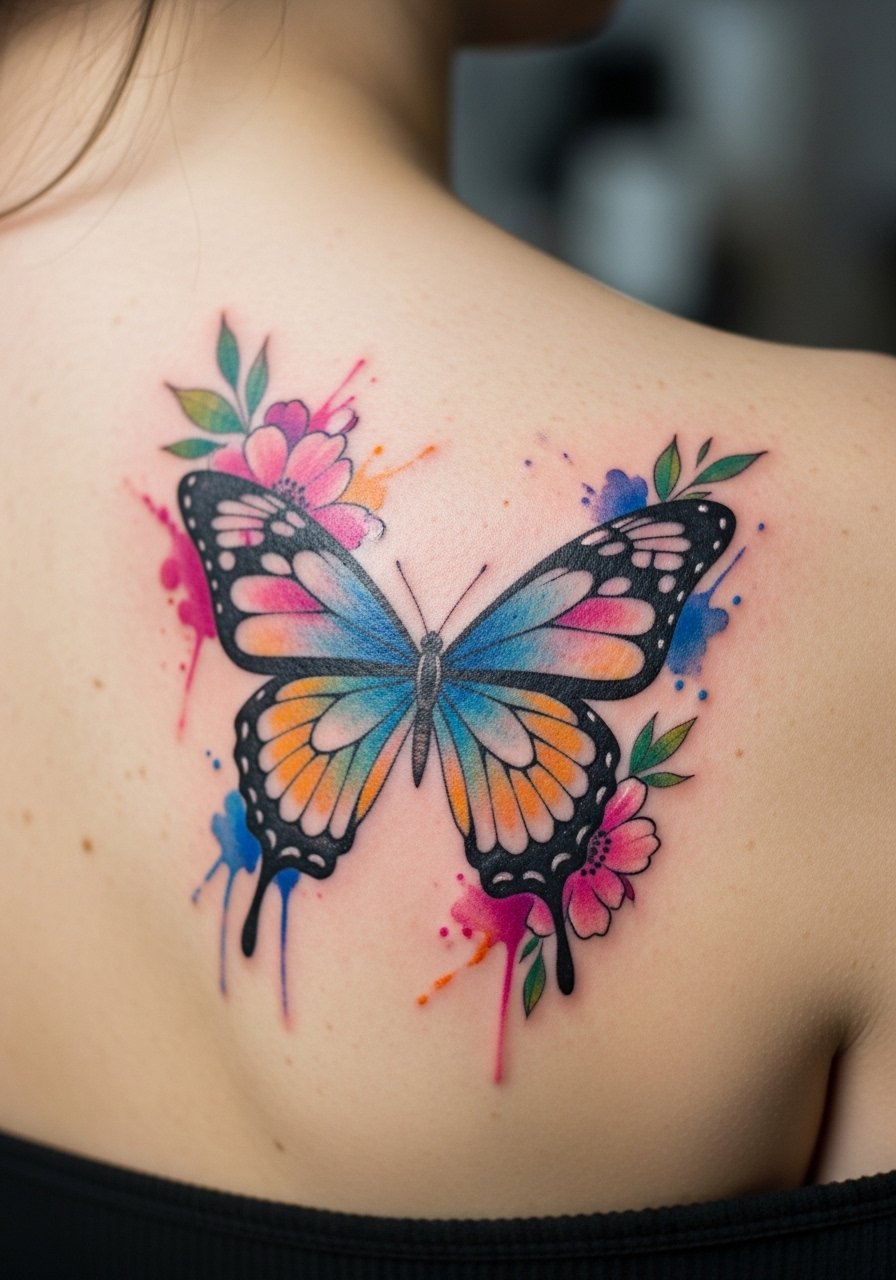
This one is about painterly color and flow. The shoulder blade tolerates color well, and pain is moderate. Sessions run longer, often 90 to 150 minutes, since artists build layered saturation. Tell your artist you want soft edges that blend into the flowers, not heavy outlines that turn the piece into a patch. Watercolor can fade unevenly on sun-exposed skin, so plan for a realistic touch-up at year three if you want the hues bright. The usual error is asking for neon saturation in a single sitting. Build color across two sessions to avoid scabbing and loss.
3. Minimalist outline butterfly on collarbone

The collarbone shows off a minimalist outline without overpowering clothing. Expect higher sensitivity near bone and a quick 30 to 60 minute session. This style suits someone who wants a visible piece that still reads subtle in interviews or formal wear. During consultation say exactly how much negative space you want inside the wings so the artist keeps consistent line weight. An aging mistake is making the outline too thin on mobile areas; lines need small breathing room to avoid merging after a few years. Ask about touch-up policies before you book.
4. Neo-traditional butterfly with geometric wings on forearm
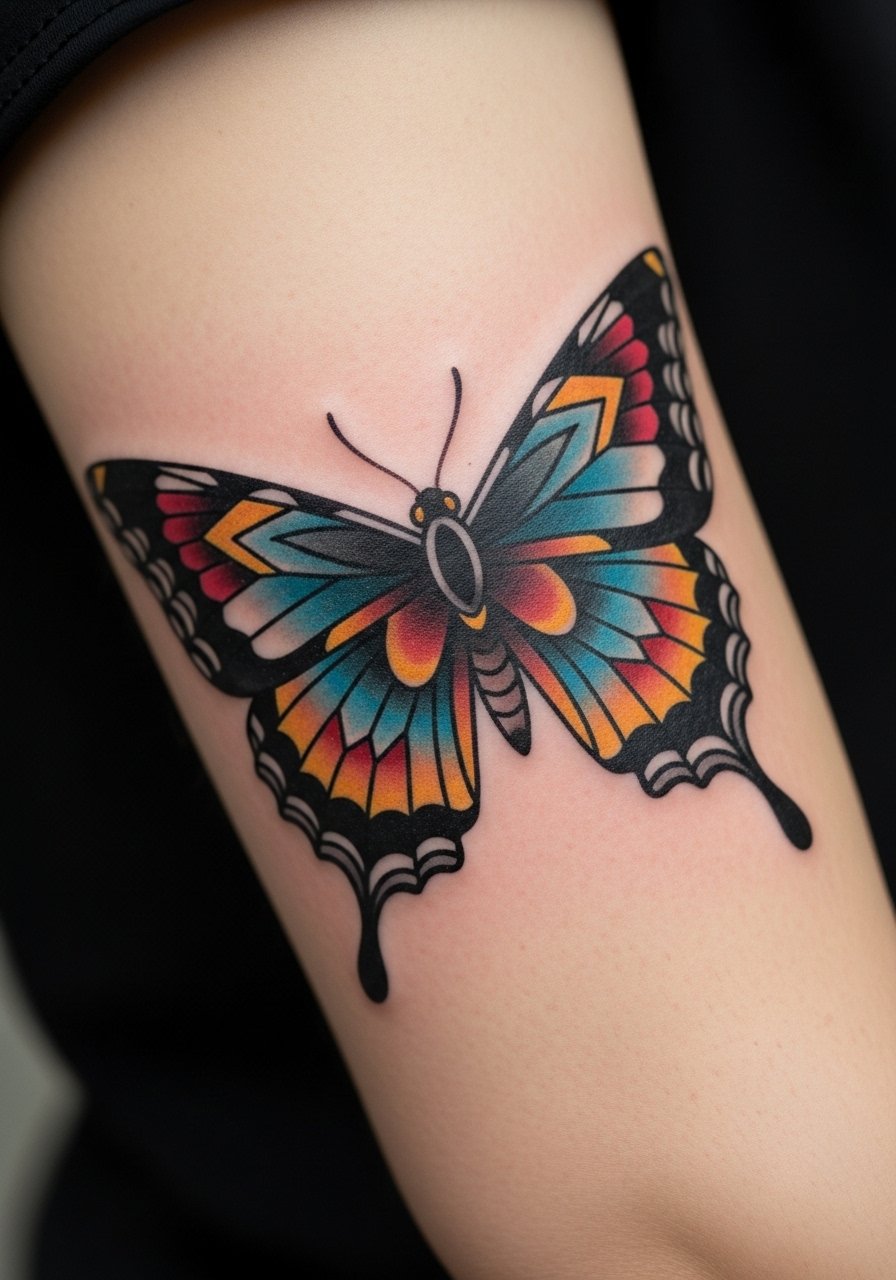
There is visual payoff in contrast and bold shapes on the forearm. Forearm pain is moderate and sessions can be 90 minutes or more depending on size. Ask for clear reference photos that show the geometric balance you want, and specify how much black you want inside the wings so color saturation holds. A common mistake is shrinking a neo-traditional layout too small. The shapes need room to read well from a distance. Expect solid longevity if saturation is built in stages and you follow sun protection advice.
5. Blackwork butterfly mandala on ribcage

Fair warning: the ribcage rates high on most pain charts. That said, the canvas there allows tight blackwork and mandala symmetry to look dramatic. Sessions are longer, often split across two visits to manage comfort and saturation. Artists split on fine line there. One camp says the stretch and movement blur delicate work within a couple of years. The other camp argues that with proper depth and dot work spacing fine details can hold. Ask your artist which approach they use and how often they schedule a follow-up touch-up. Common mistakes include asking for ultra-fine lines without allowing for wider spacing.
6. Micro-realism butterfly portrait on ankle

Ankle micro-realism is popular for storytelling pieces that read like tiny portraits. The ankle can be tender but the session length for a two-inch piece is typically 60 to 90 minutes. Tell your artist whether you want the focus on minute wing veins or on soft shading and highlights. A frequent error is forcing hyper-detail into an area that moves a lot. Expect the fine halftone shading to soften by year two, and budget for a touch-up if you want the contrast preserved. Stipple shading helps longevity on this placement.
7. Ornamental butterfly with dots on inner thigh
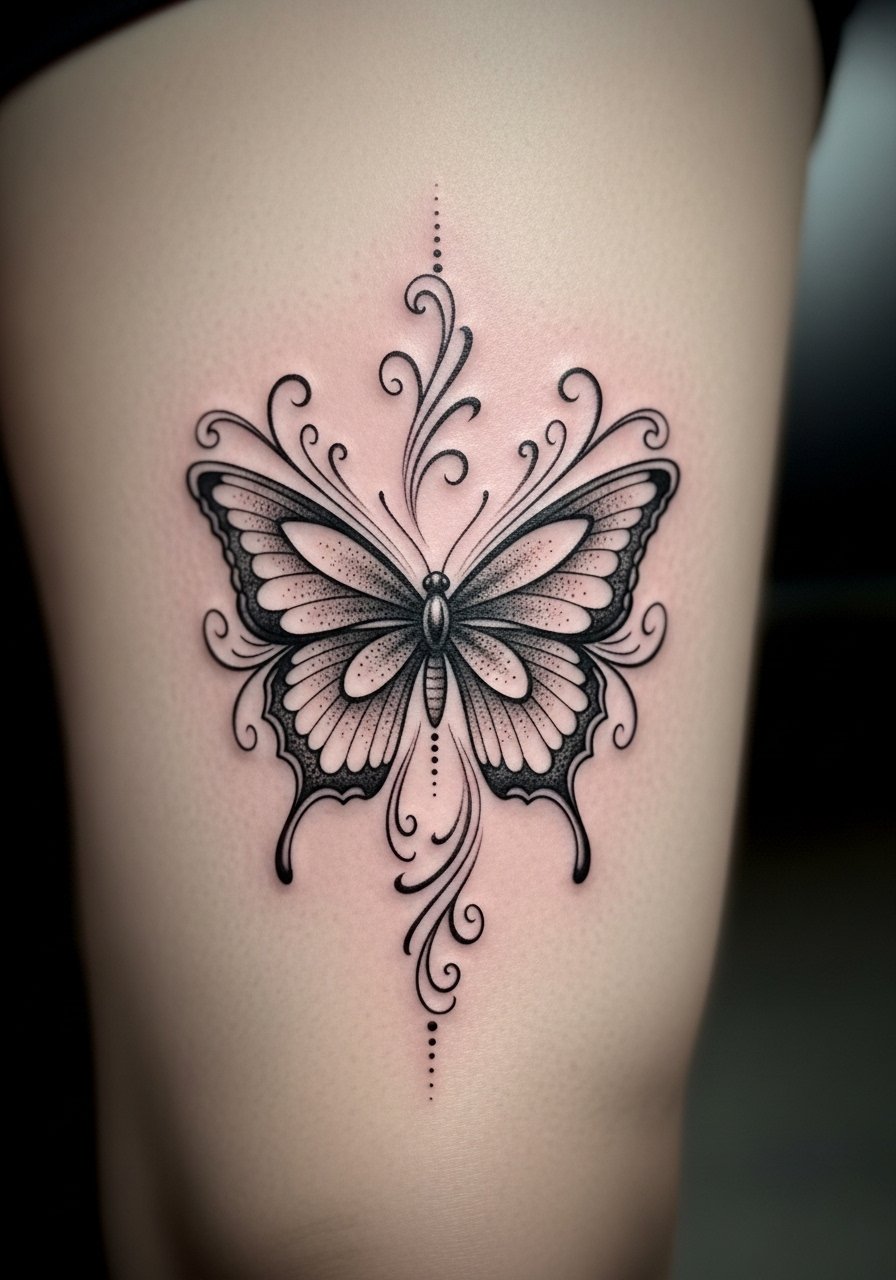
Thigh pieces give designers room to customize patterns that flow with the body. Pain is moderate but tolerable, and session time varies from one to three hours depending on complexity. When you consult, point out the body contour you want the pattern to emphasize so the dots fall on muscle rather than crease lines. A mistake is placing intricate dotwork too close to areas that rub against clothing. That speeds fade in the first year. For intimate placements like the inner thigh consider an artist experienced with larger blackwork patterns.
8. Traditional American butterfly on calf

There is a practicality to bold traditional work on the calf. Pain is low and sessions are split into outline and fill, often two 60-minute blocks. Ask your artist for a saturation plan so the bold colors are layered and will not patch out. A mistake is shrinking a traditional composition to a size where the background fills become muddled. The calf ages well for bold color, though heavy sun exposure will dim saturation over years. Expect touch-ups at year 4 to 6 depending on care.
9. Ignorant style butterfly skull hybrid on upper arm

This hybrid reads bold and intentionally naive, which suits upper arm placements that can take larger scale. Upper arm pain is mild and sessions can be 60 to 120 minutes depending on size. When you describe the piece to your artist say you want confident, uneven linework rather than shaky lines that look accidental. The usual error is over-polishing an ignorant concept into something too refined. That defeats the style. Expect strong longevity in black ink, though fine internal details may need light touch-ups after several years.
10. Patchwork butterfly cluster on spine
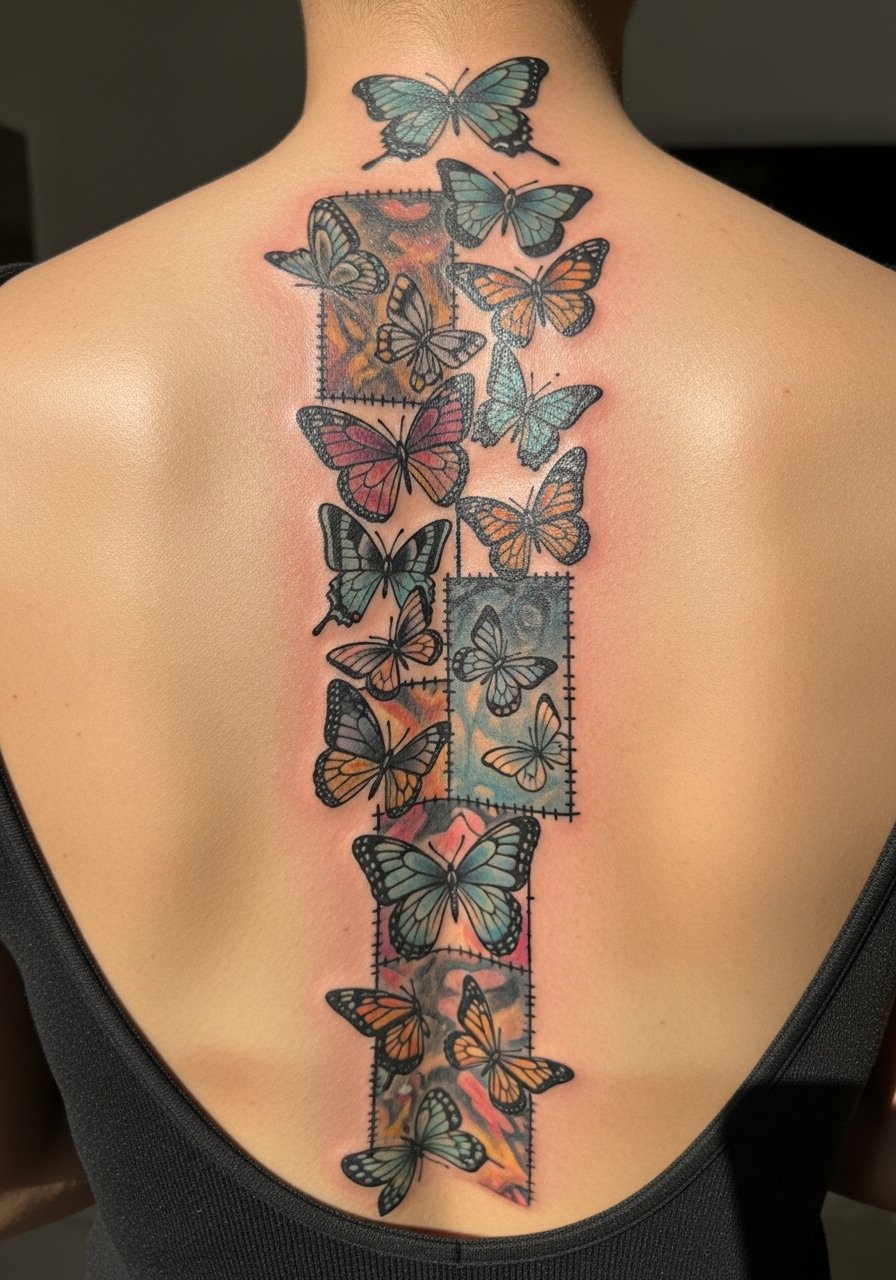
Spine clusters are great for narrative builds across multiple sessions. Pain varies along the spine and the middle back is more sensitive than the lower back. Artists commonly split this into several 60 to 120 minute sessions. Tell your artist if you plan to add pieces later so they will design negative space and flow accordingly. A common mistake is treating each butterfly as a separate flash without designing the transitions. That makes the cluster look disjointed later. Also think about how clothing will reveal parts of the vertical narrative as you move.
Tattoo Prep and Aftercare Essentials
- Fragrance-free gentle foaming cleanser for tattooed skin. Use in the first week to remove bacteria and excess ointment without stripping moisture. Gentle suds help keep the area clean without abrasive cloths.
- Lightweight fragrance-free healing balm. Apply a thin layer during the initial five days to prevent cracking and help skin knit. Use sparingly to avoid clogged pores.
- Medical-grade second skin bandage, 4×6 inch sheets. Ideal for larger shoulder blade or ribcage sessions when you want a breathable occlusive barrier for the first 24 to 48 hours.
- Antibacterial yet non-drying soap, mild formula. Use for daily showers in the first two weeks to keep the area clean without over-drying.
- Broad-spectrum mineral sunscreen 30+. Long-term color preservation relies on sunscreen once the tattoo is fully healed. Reapply when exposed to sun.
- Cooling gel pack for post-session swelling. Apply briefly after the initial dressing removal to reduce tenderness on sensitive placements like the ribcage or ankle.
- Soft cling-free clothing for healing periods. Choose garments that do not rub the tattoo for the first week to avoid scabbing loss.
- Silicone-based long-term scar and color maintenance sheet. Useful months after healing to even out texture and help pigment sit more evenly.
Every tattoo is different. Always follow your artist's specific aftercare instructions. Consult a dermatologist if you have skin concerns or unusual healing issues.
Frequently Asked Questions
Q: Will fine line wrist tattoos blur faster than a small forearm piece?
A: In my experience fine line on thinner, more mobile areas like the wrist and fingers tends to soften sooner than on the forearm. The forearm gives the artist a steadier canvas and more tissue between the needle and muscle. Ask about line spacing during consultation and expect a possible touch-up at year two to three if you want crisp edges.
Q: Do watercolor-style shoulder pieces need different aftercare than traditional colored butterflies?
A: Yes. Watercolor approaches often use softer edges and less black saturation. That means the pigment relies on gradual layering. During the first weeks avoid thick ointments that can clog and pull pigment. Use gentle cleansing and a lightweight healing balm. Sunscreen after healing becomes even more important to keep hues balanced.
Q: How risky is a fine line or dot-work mandala on the ribcage?
A: The ribcage is higher on many pain scales, and its skin moves more with breathing. Artists split on fine detail there. One camp cautions that very tight fine lines can blur within two years. The other camp says careful spacing and proper needle depth will keep detail. The practical step is to ask your artist to show healed photos of similar ribcage work and to schedule a planned touch-up if needed.
Q: For a small ankle micro-realism piece, how long is the session and what should I ask the artist?
A: Expect a 60 to 90 minute session for a two-inch micro-realism ankle piece. Ask whether they will prioritize contrast or minute line detail. Request a healed photo of past ankle micro work so you can judge how shading held up. Movement and footwear rubbing are common reasons for early soften, so plan footwear that reduces friction while healing.
Q: Can I build a spine patchwork over years without it looking disjointed?
A: Yes, if the initial layout accounts for future additions. Tell your artist you plan a narrative build so they will design negative space and connector elements. That prevents a collage of unrelated flashes. Regular consultation and consistent style notes help cohesion as the project grows.
Q: Should I expect different touch-up timelines for blackwork versus color on a butterfly?
A: Generally blackwork holds longer than bright color. Solid black saturates deeply and can remain bold for many years. Color, especially soft watercolor tones, can fade faster and often benefits from a touch-up at year three to five depending on sun exposure. Proper layering and sunscreen use extend color life.
Q: What discovery paths help me find artists who specialize in these butterfly styles without relying on social media handles?
A: Use style-specific hashtags, search city-tagged portfolios like "your city fine line butterfly studio," browse tattoo directories that filter by style, and check Reddit threads for healed photo posts. Also ask local shops for portfolios of healed work so you see real results rather than staged photos.