Fine line butterfly tattoos promise a quiet, wearable look that still reads like intent rather than trend. Pick the wrong placement or scale and the wings can blur or vanish within a couple of years. These ideas focus on line weight, healed appearance, and wardrobe pairing so the design you pick now keeps its shape and presence after the first touch-up window.
1. Single-Needle Minimalist Butterfly on the Wrist
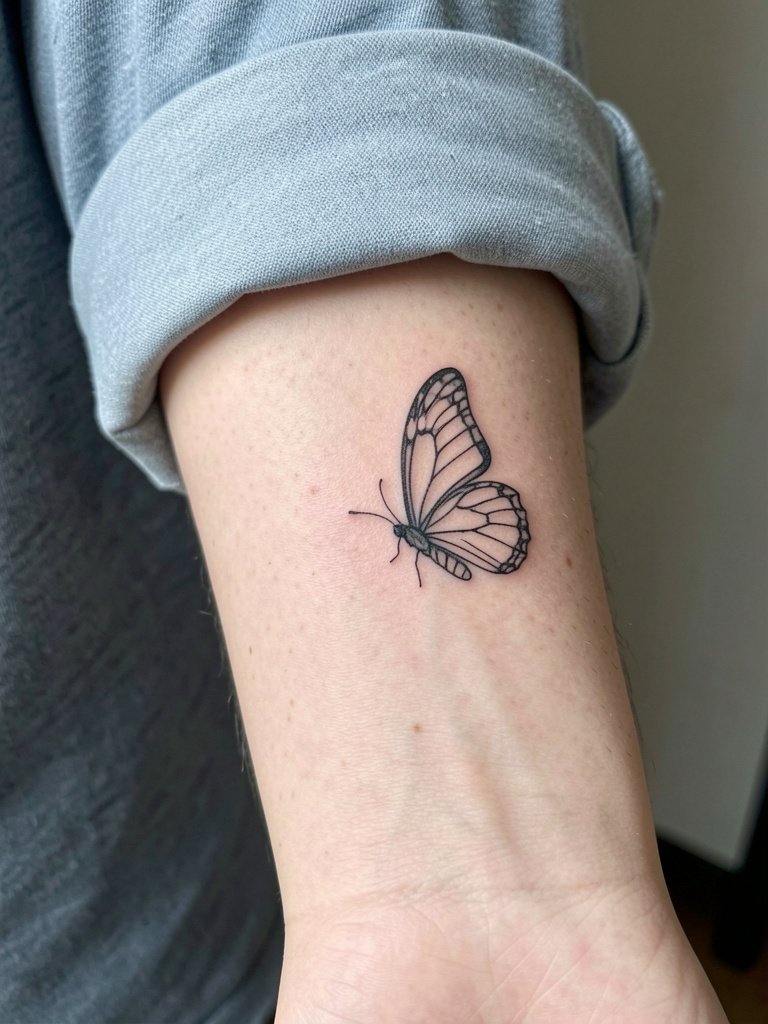
A true single-needle wrist butterfly looks feather-light at first and can vanish if the line weight is too thin for that high-motion area. One camp argues single-needle is too fragile on wrists and fingers and that slightly thicker two-needle linework holds detail longer. The opposing camp says single-needle is the only way to get the airy look and that careful depth control preserves lines for years. For this placement get a clear line-weight mockup at stencil scale and ask for slightly bolder vein spacing than the smallest reference image. Expect one short session and light wrist sensitivity, roughly a 2–3 out of 10 on most pain charts. Styling: show it off with a linen rolled cuff shirt and a dainty gold stacked bracelet on the opposite wrist so the fine line reads editorial in photos.
2. Abstract Linework Butterfly with Negative Space on the Inner Forearm
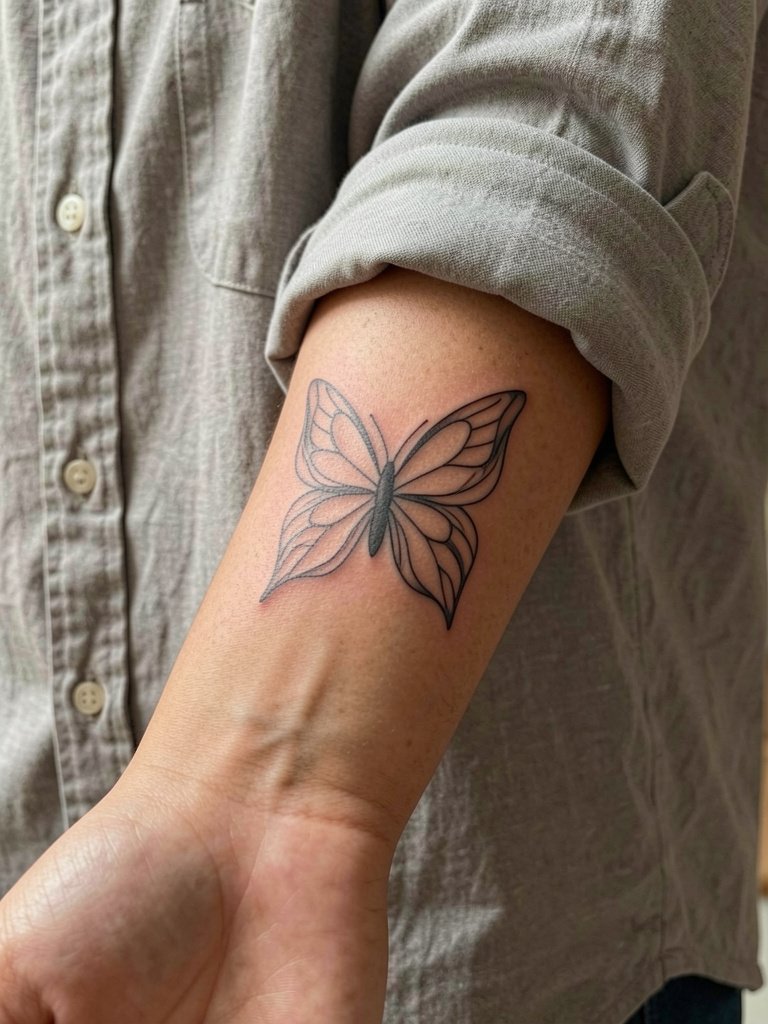
Go for asymmetry when you want something modern rather than literal. Recommend this when you dislike traditional wing patterns and want one wing to breathe with skin showing through. Ask the artist to map negative space at full scale so the empty wing does not collapse into other elements as the piece heals. The inner forearm is a forgiving surface for fine line because it is palm-up and moves less than the wrist, which helps linework settle. Typical session time is 30–60 minutes with low to moderate soreness afterward. Common mistake is asking for too many tiny internal marks inside the wings. Styling: wear a loose earth tone pullover or roll sleeves to display the palm-up surface without crowding the design.
3. Butterfly Plus Constellation at the Collarbone
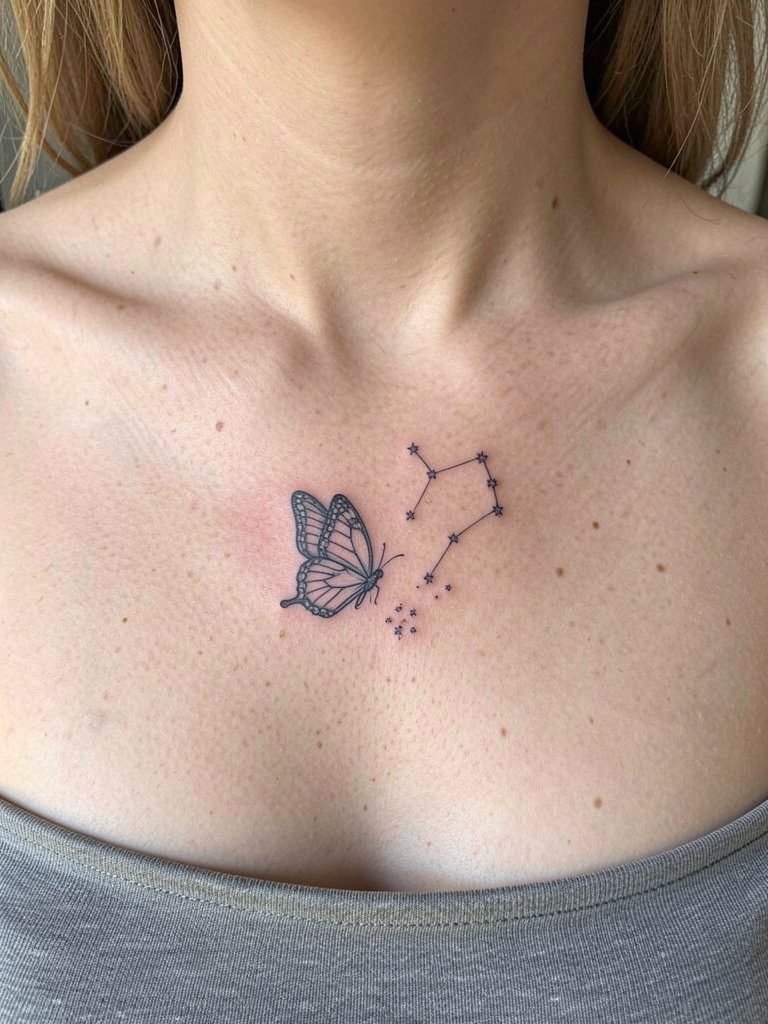
This placement is ideal when you want a visible but discrete piece that photographs well. The collarbone area shows off spaced star accents and tiny dot work without competing with bra straps. During consultation bring photographs of collarbone stencils at full scale and request slightly heavier primary outlines for the butterfly so the constellation dots remain legible after six months. Pain is low to moderate due to thin skin over bone, and sessions are short. Don’t let the artist crowd the design with too many tiny stars. Styling: choose an off shoulder cream top or a delicate pendant on the opposite side to frame the composition.
4. Floral-Integrated Fine Line Butterfly on the Inner Thigh
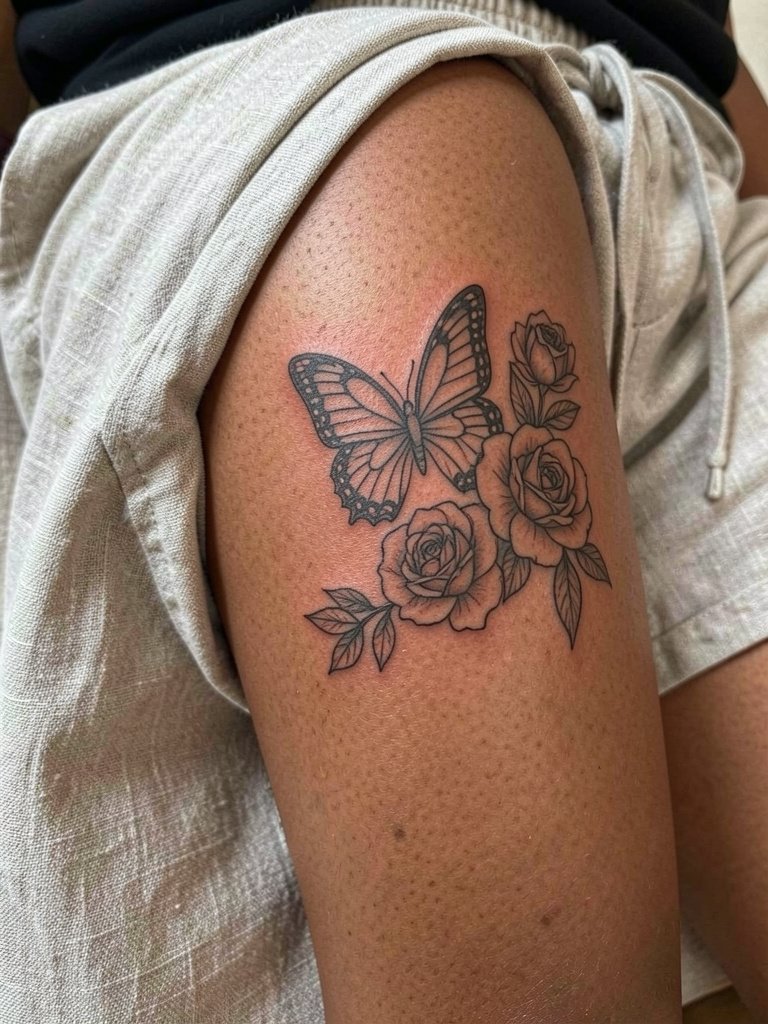
A floral frame adds depth when a plain small butterfly would look flat on textured skin. Recommend this if you want a quiet romantic feel but also need some visual mass to preserve the outline as weight fluctuates. Ask the artist to plan slightly thicker primary contours and to position key petals so they sit on firmer areas of the inner thigh rather than across seams of muscle. The inner thigh can stretch with weight changes, so expect touch-ups at the 1–2 year mark more often than on the forearm. Session wear note: come in loose drawstring linen pants so the artist can lower the leg without pressure on the area. Styling for reveal: high waist linen shorts work well with the thigh placement.
5. Asymmetrical Wing Detail Butterfly on the Hip
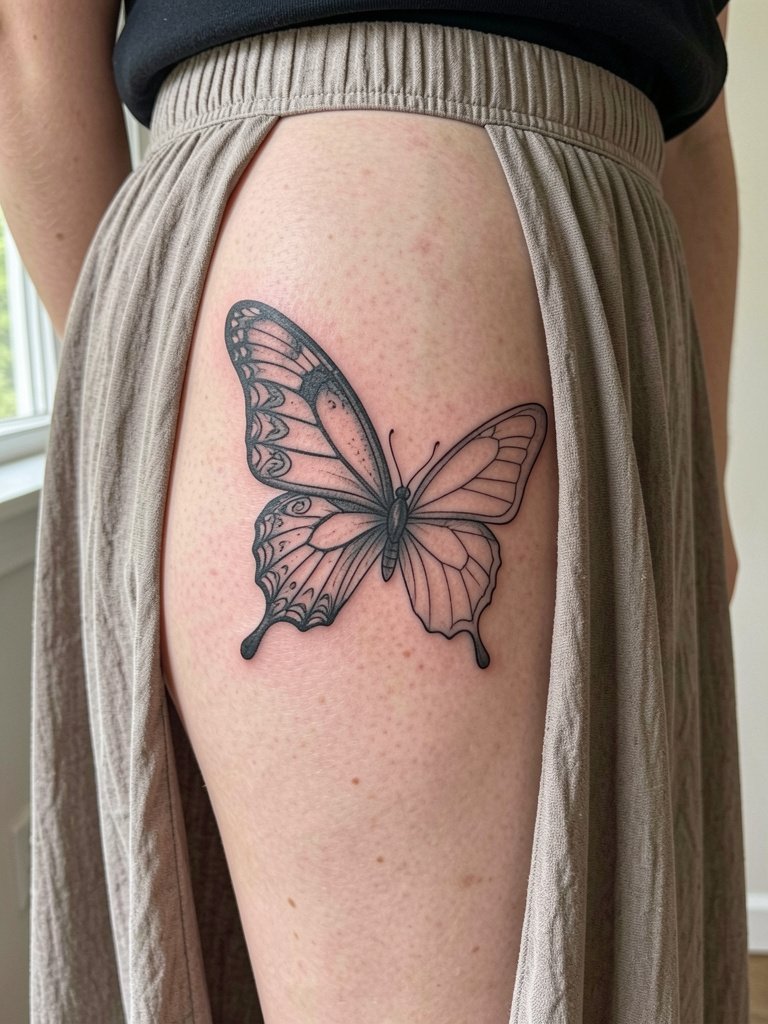
Asymmetry reads contemporary and keeps the visual weight interesting when the piece sits at the hip. One practical advantage is the detailed wing gives a focal anchor while the empty wing prevents blur on a shifting surface. During stencil approval, check how the detailed wing looks at the planned scale and request spacing between filigree elements so aging does not merge the pattern. Hip sessions are low to moderate on pain and are usually a single session. A common error is placing too many tiny dots near the waistband where friction can wear them down. Outfits like a flowy cream midi skirt show the hip when you walk without pulling focus from the linework.
6. Tiny Finger Butterfly (Micro)
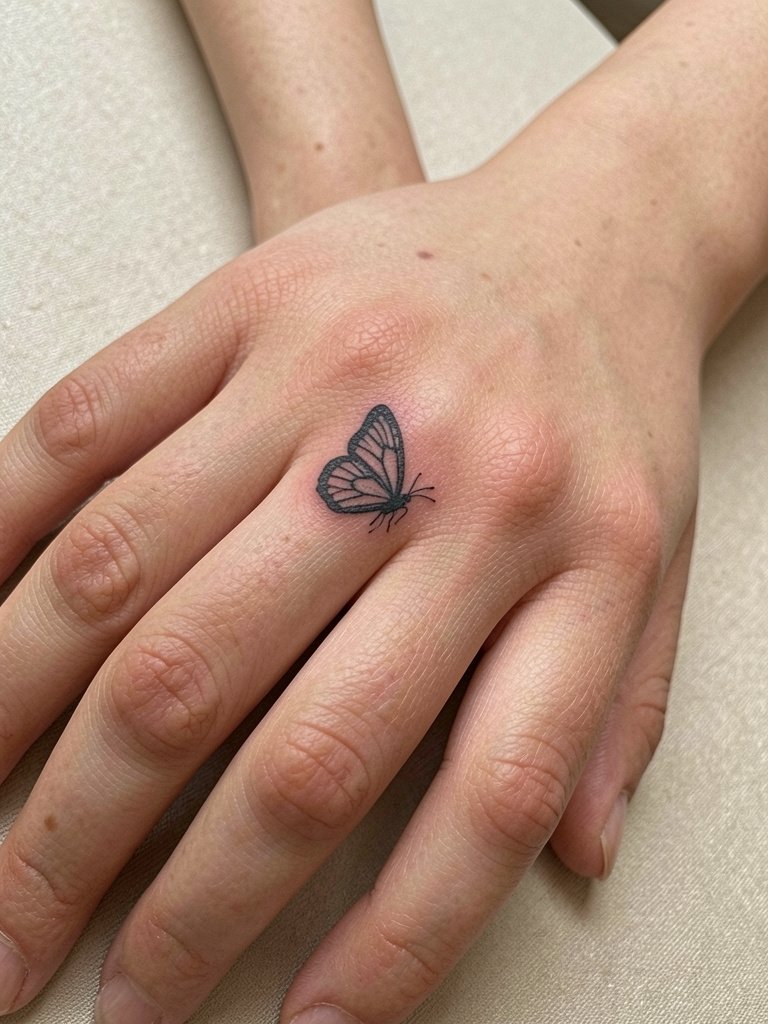
Finger micro butterflies are seductive because they are discreet and immediate, but they are higher risk for rapid fading and migration because of constant hand washing and skin turnover. If you want this, insist on a minimum readable scale rather than the tiniest possible dot. Ask the artist to show a healed micro example on a similar skin type and to recommend a slightly stronger outline. Expect faster color loss and plan a probable touch-up within 6–12 months. Session time is brief but the area is one of the highest in mechanical wear. For showing off, pick minimalist rings on the opposite hand and keep the tattoo finger free of chunky bands while it heals. Consider a minimalist thin ring set for balance.
Heal Smart
These first six placements span wrists, forearms, hips, and fingers, so a few targeted products make the first two weeks smoother and reduce clogging on finer work.
- HadaLabo Gokujyun Toner. A thinner hydrating toner artists sometimes recommend in days 5–10 to calm redness without leaving a heavy film on fine line areas.
- Australian Tattoo Soap. Gentle, scent-free cleansing helps keep delicate linework free of irritants during showers.
- Inkfix Tattoo Balm. Slightly richer but non-greasy for drier climates and winter healing windows.
- Mad Rabbit Tattoo Balm. Scent-free and non-greasy, a good option for people prone to redness on fine line work.
- Aquaphor Healing Ointment Unscented. A thin layer for the first 48–72 hours can help lock in moisture on fresh fine line pieces before switching to a thinner balm.
7. Butterfly Behind the Ear, Minimal Linework
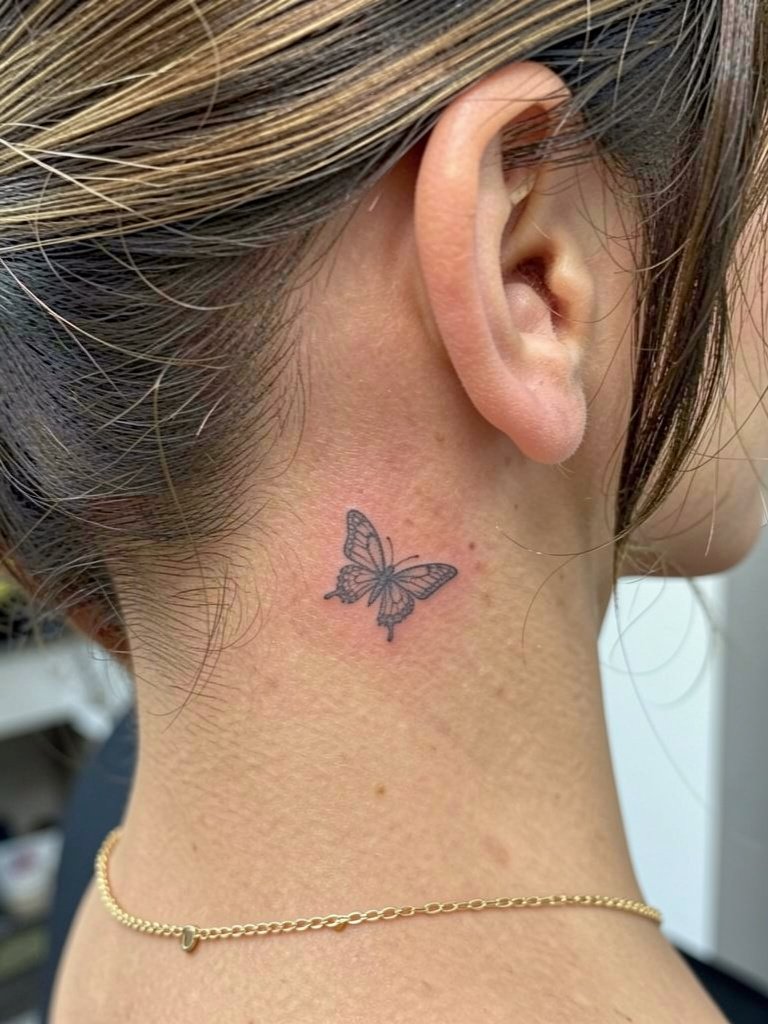
Behind-the-ear butterflies are quiet and suit anyone who wants on-off visibility. The mastoid area heals differently than flat forearm skin because of hairline friction, so plan for slightly bolder primary strokes to keep shape in photos. Ask for a small stencil transfer first so you can see how the scarped skin will hold the wings. This spot is low on pain but may need touch-up sooner if necklaces or long hair rub the area. For the session, wear an open-back or button-down shirt so you can move hair without tugging at clothing. When styling, a delicate gold chain necklace balances the subtle placement for evening looks.
8. Butterfly on the Ankle with Motion-Focused Lines
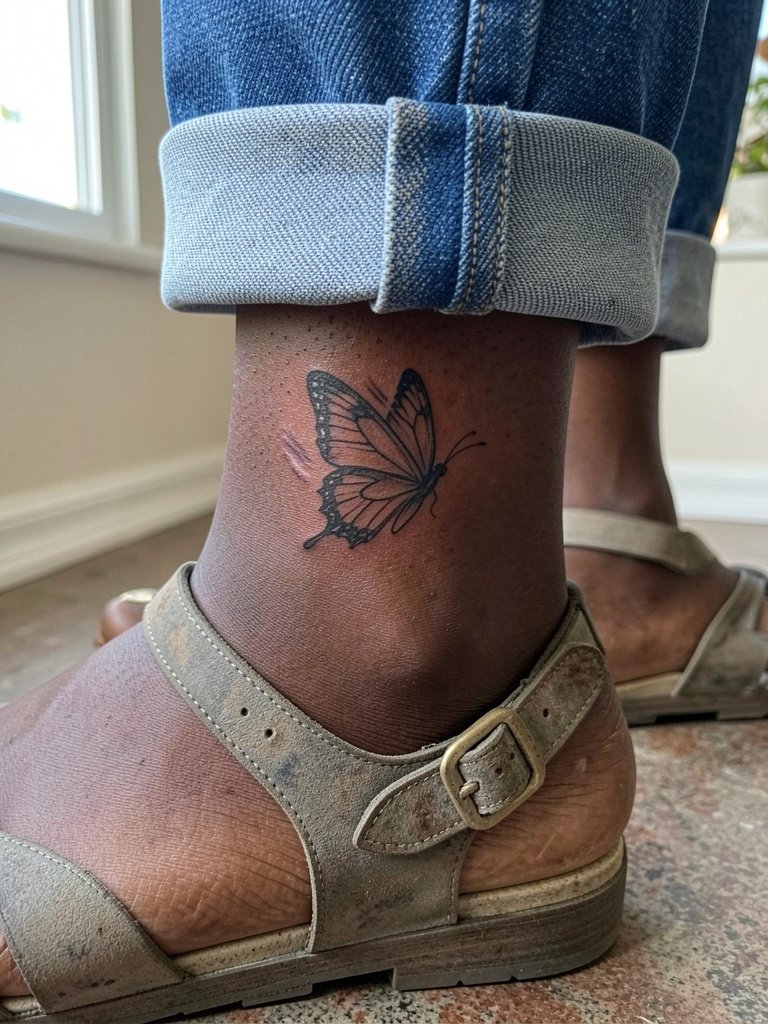
An ankle butterfly can emphasize flight by adding motion lines in the trailing edge of the wings. Recommend this for people who want a design that reads while walking. The ankle is low on soft tissue so linework should be placed to avoid constant rubbing from shoe straps. Ask the artist to show the stencil while standing so the final curvature reads when you move. Sessions are short but expect tenderness when wearing closed shoes in the first week. For showing off, ankle-strap sandals in sand or cream frame the piece well and keep attention on the linework.
9. Butterfly with Initial/Date Inside Wings on Inner Upper Arm
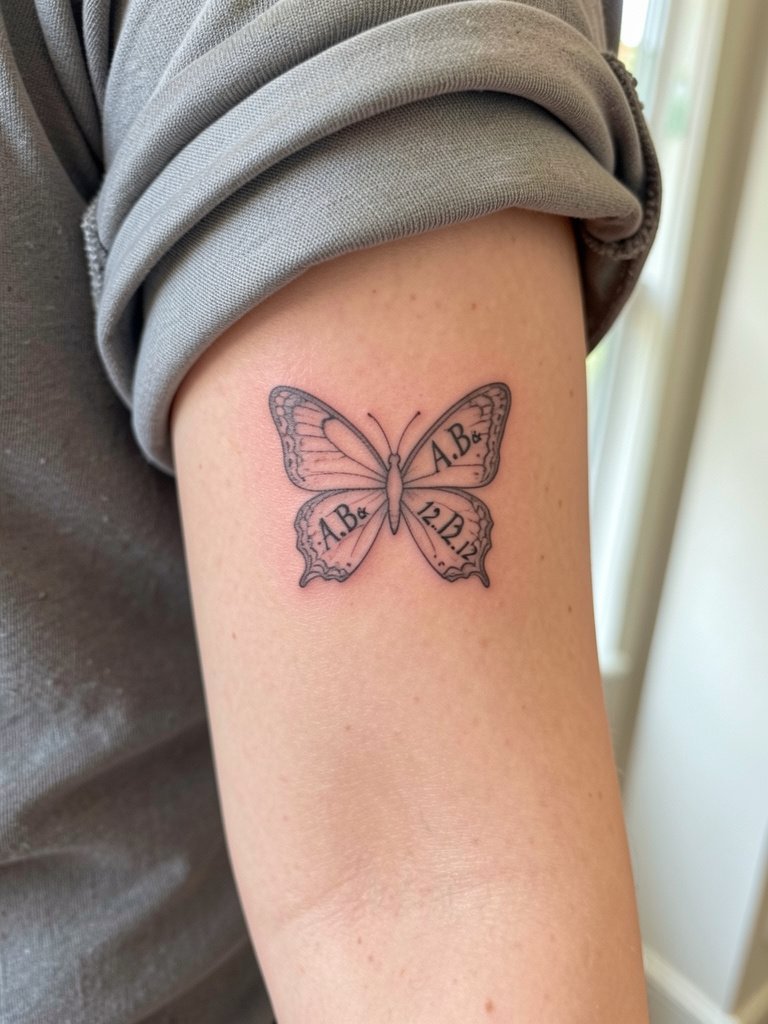
Embedding initials or a date inside the wings is a neat way to personalize without adding visible script next to the image. For legibility ask for a specific font size rendered inside the wing and request a mockup showing the text at final scale. Inner upper arm skin holds fine line well because it moves less than the wrist, so the text will likely remain readable longer. This is a good spot when you want private meaning that can peek out with rolled sleeves. Session wear: a loose button-down ensures easy access. Common mistake is asking for cursive lettering that is too thin to survive the first year.
10. Ornamental Mandala Butterfly on the Sternum
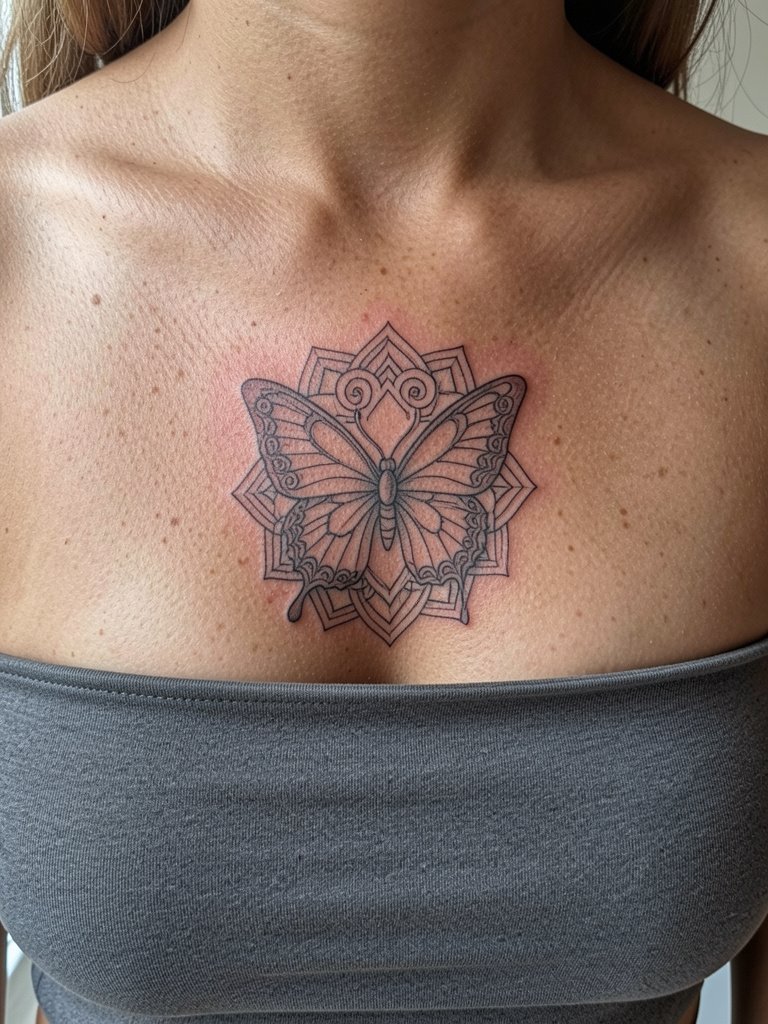
Mandala details add sacred geometry and give the butterfly a structured silhouette that ages predictably. Sternum pieces require careful composition so the radial symmetry reads when seated and standing. Tell the artist exactly how much negative space you want between mandala rings, and ask for a centered stencil check while sitting upright. Sternum work can be more painful and sometimes needs two short sessions for crisp stipple shading. Session wear: a strapless top or sports bra makes access simple. Because the area can be compressed by clothing, avoid overly fine inner filigree near the underbust line.
11. Double Butterfly Pair on the Lower Back
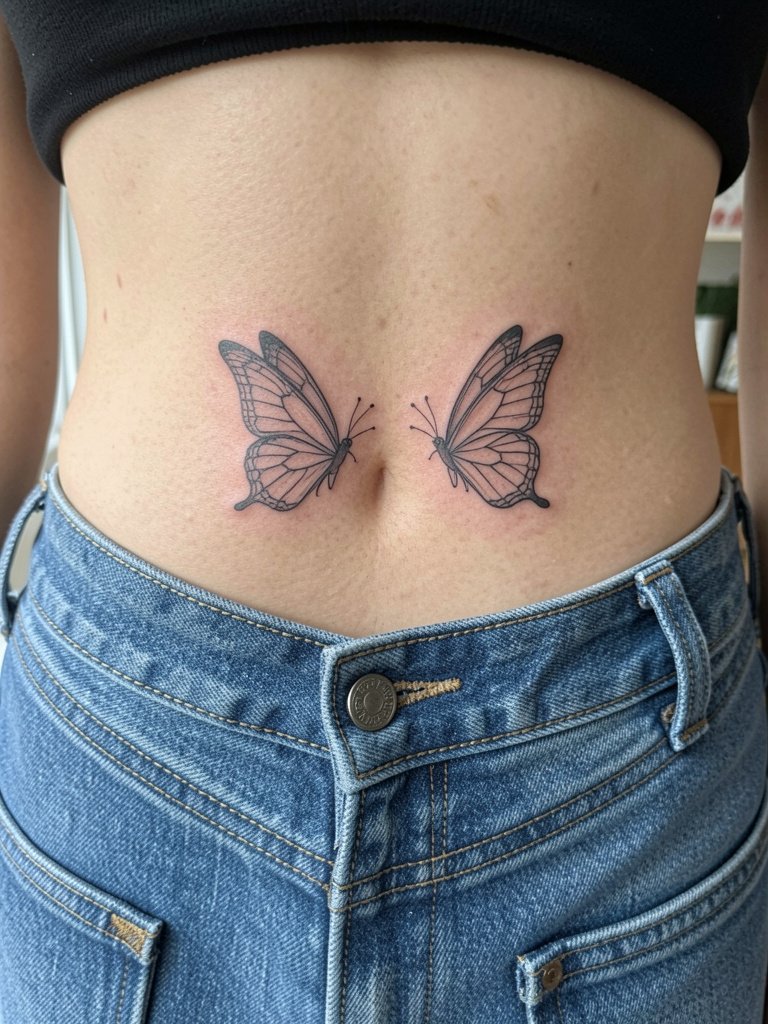
A paired composition suits themes of partnership or duality and balances across the spine for symmetry. The lower back offers a flat canvas so fine line details hold well compared with curved rib areas. When planning this piece, have the artist lay the flutter lines relative to the waistband to avoid parts slipping under clothing. Expect low to moderate pain and a single session for small to medium sizes. Common mistake is misaligned mirrors that call attention to asymmetry. For beachwear, low-rise skirts or shorts frame the lower back while keeping the design visible.
12. Butterfly with Negative Space Wing on the Ribcage
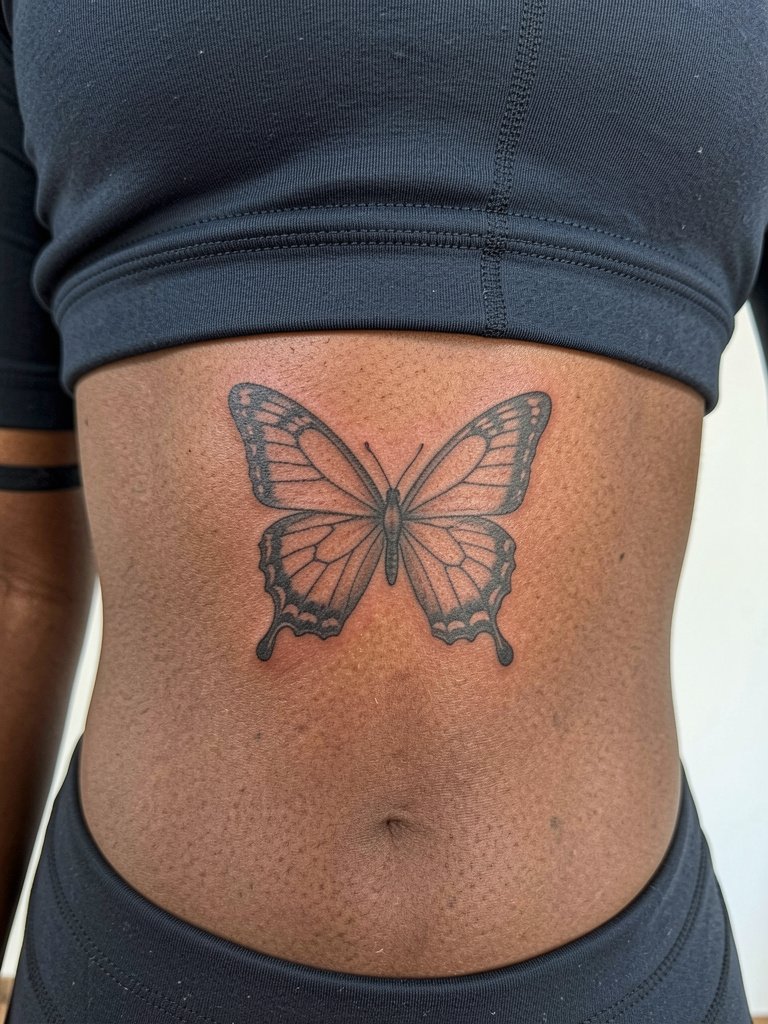
Fine line on ribs is a common flashpoint. One group of artists and clients says rib skin stretches and moves too much and that fine line blurs within two years, especially under the breast crease. The other group argues that when artists use correct needle depth and slightly wider spacing the lines settle and remain crisp, and they point to healed three-year photos as evidence. If you want ribs, ask the artist to show healed rib examples on similar skin tones and to plan slightly bolder primary contours while keeping internal detail spare. Rib sessions can be painful and may need breaks, so plan time and a numbing strategy if you tolerate lower pain thresholds. Avoid asking for ultra-fine single-needle filigree directly on the most mobile curves.
13. Butterfly Plus Moon Phase Series on the Outer Thigh
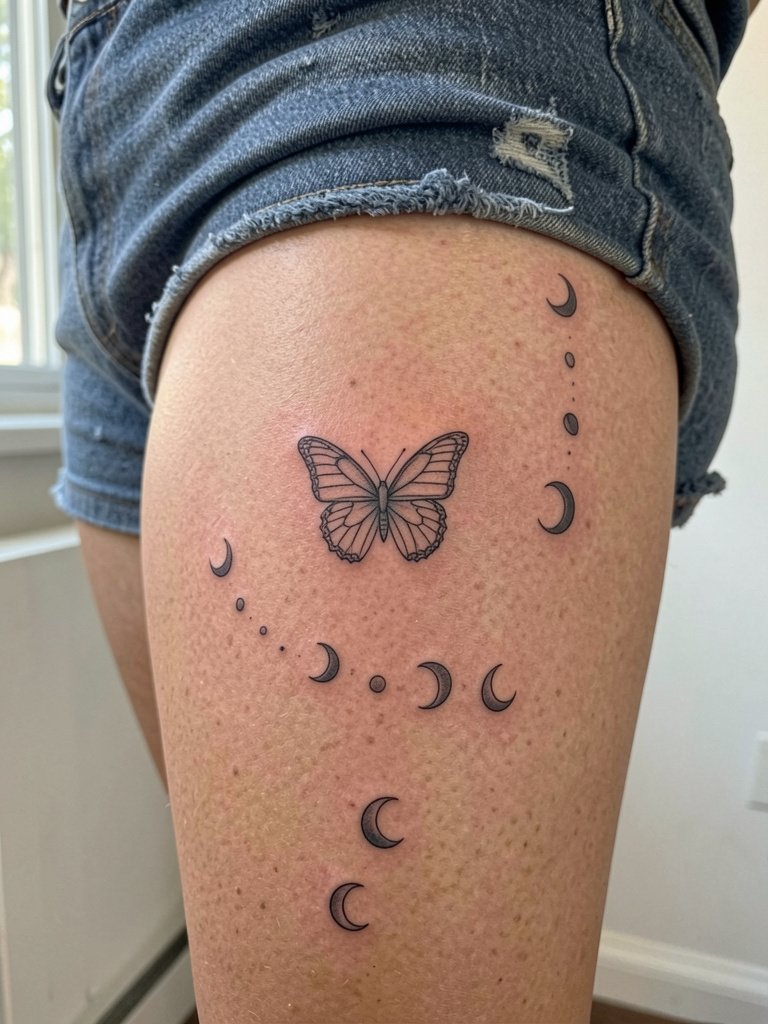
Combining moon phases with a butterfly creates a narrative of cycles and quiet chronology without explicit text. The outer thigh is a stable canvas that preserves dot work and moon crescents better than high-stretch inner curves. When you consult, ask how the moon sizes scale with the butterfly so the sequence reads from both close and distance shots. Sessions can be one to two sittings depending on scale. For summer reveals pair this with high rise olive shorts that keep the focus on the vertical lunar line.
14. Micro-Realism Butterfly at the Nape
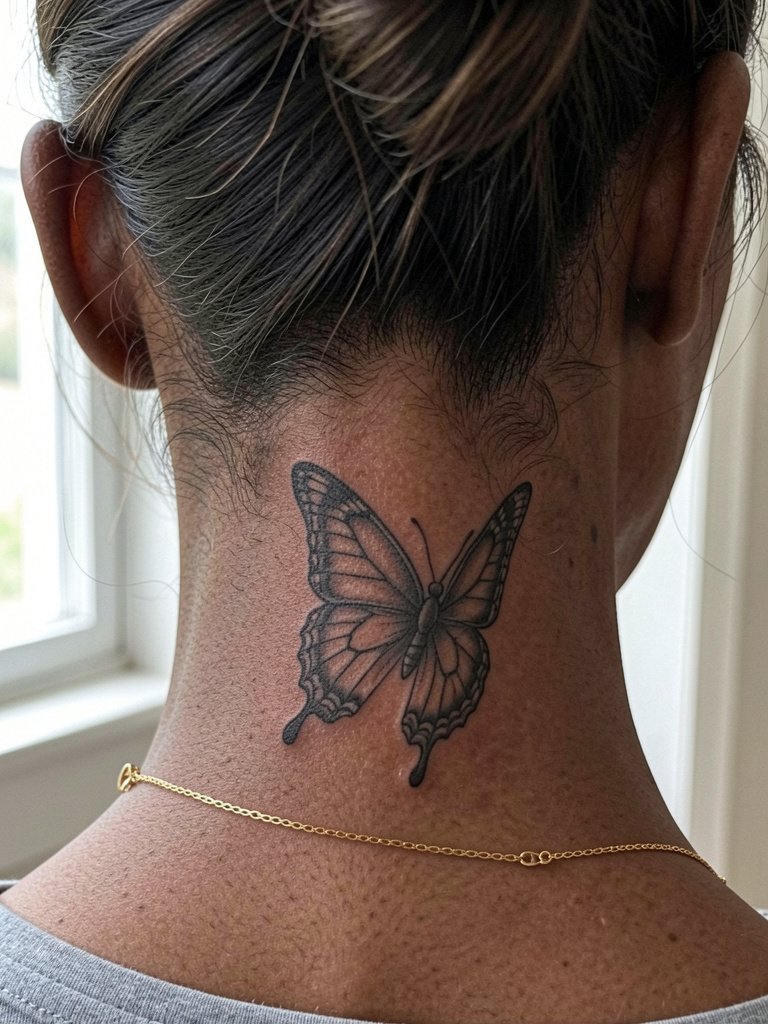
Micro-realism at the nape reads like a tiny portrait rather than a silhouette. This is a smart pick when you want detail without large scale. Because shading is minimal but precise, specify the degree of black-and-gray saturation you prefer so the artist knows how much contrast to build. Nape skin tolerates fine work but hair friction can soften edges over time, so plan a touch-up window at around two years. Session feel is usually low to moderate, and session wear should be a top you you can take off without pulling over the head, such as a button-down. Showing the piece with hair up and a simple pendant frames the area.
15. Butterfly with Abstract Dotwork on the Inner Upper Arm
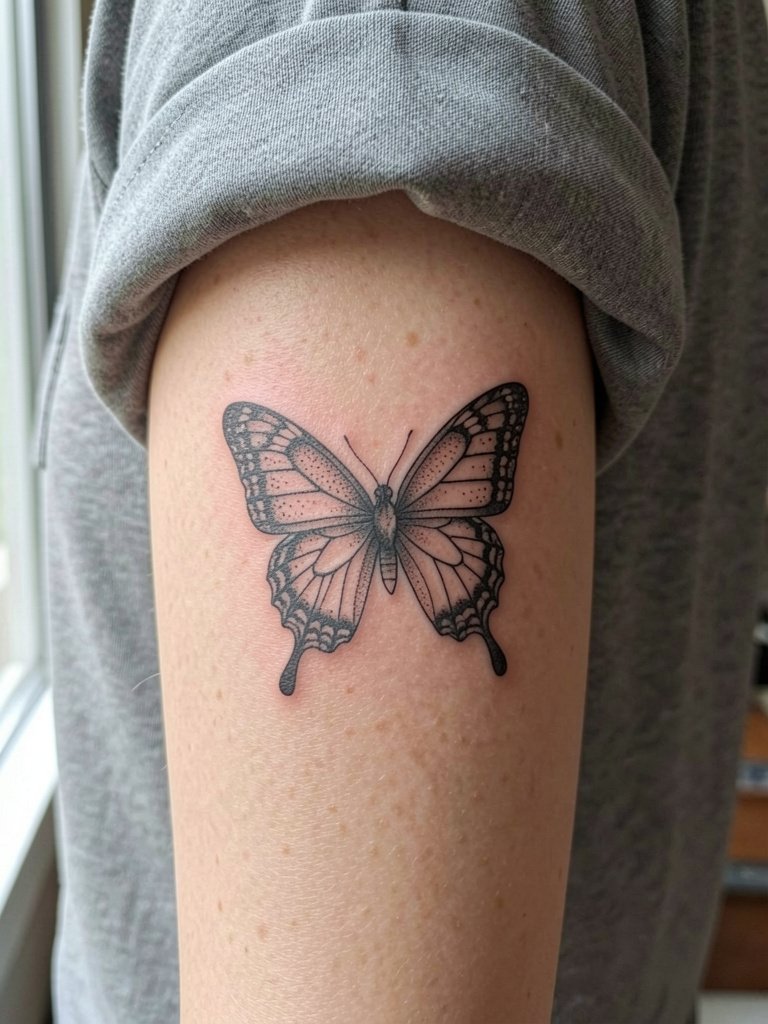
Dotwork provides texture that ages into soft tonal value rather than a single flat wash, which is useful for pieces that need presence without heavy outlines. Recommend this style when you want visual depth that does not rely on saturated fills. During consultation ask the artist to detail how many dot layers they plan and whether they will use stipple shading or denser pointillism in shadow areas. Inner upper arm skin keeps stippling readable longer than the wrist or ribs. Sessions are comfortable and often done in one visit. A common mistake is over-dotting too tightly, which can blend into a gray patch as the skin settles. For casual display roll your sleeves and wear earth tones to let the stipple texture read clearly.
Frequently Asked Questions
Q: Which placements from this list hold up best for first-timers who want fine line butterfly tattoos?
A: Inner forearm (palm-up surface) and inner upper arm are the most forgiving for fine line because they move less than wrists and fingers. Collarbone also photographs well though the skin rests over bone. Expect faster wear on hands, fingers, and the rib curves and plan a probable touch-up in the first two years if you choose those spots.
Q: How should I approach fine line butterflies on darker skin tones so the detail remains visible?
A: On darker skin, black-and-gray shading and slightly bolder primary contours help maintain contrast without losing the fine look. Ask to see healed examples on similar skin tones and request minimal reliance on white ink or tiny negative-space filigree, which can disappear. Dotwork and stipple shading often create more stable texture than thin single lines alone.
Q: If I want a tiny single-needle butterfly, what exactly should I ask for during the consultation?
A: Bring a reference at the size you want and ask the artist to show a scaled stencil on your skin. Request that the artist increase the primary vein spacing and make the outline a hair heavier than the reference so the internal details have room to breathe. Also ask for their healed micro pieces for the same placement to check real-world results.
Q: Where can I find reliable healed portfolios and peer feedback for fine line butterfly work?
A: Use hashtags like #finelinetattoo and #microfineline with a location filter on Instagram, search Tattoodo for keyword-filtered healed portfolios, and consult Reddit communities such as r/finelinetattoos for peer-shared healed photos and advice. Those combined pathways help surface artists who document healed results rather than only fresh work.
Q: What should I wear to my appointment for a sternum or inner thigh piece?
A: For sternum, a strapless top or fitted bandeau makes access simple and avoids tugging over the head. For inner thigh, loose drawstring pants or shorts that lower easily let the artist work without pressure on the area. Choosing session wear that the artist can move around without stretching your skin makes a noticeable difference in stencil placement.