
Celtic armband work reads like a language on skin, a looped sentence that can be loud and compact or quietly intricate. The pieces that look timeless start with bold decisions about spacing and lineweight, not tiny, delicate flourishes that vanish. There is a split in opinion about cultural use and long-term technique. One camp says knotwork should be reserved for people with direct heritage connections and deep study of the motifs. The other camp argues that respectful adaptation with proper credit and research keeps the art alive and shared.
1. Classic Endless Knot Armband on Outer Forearm
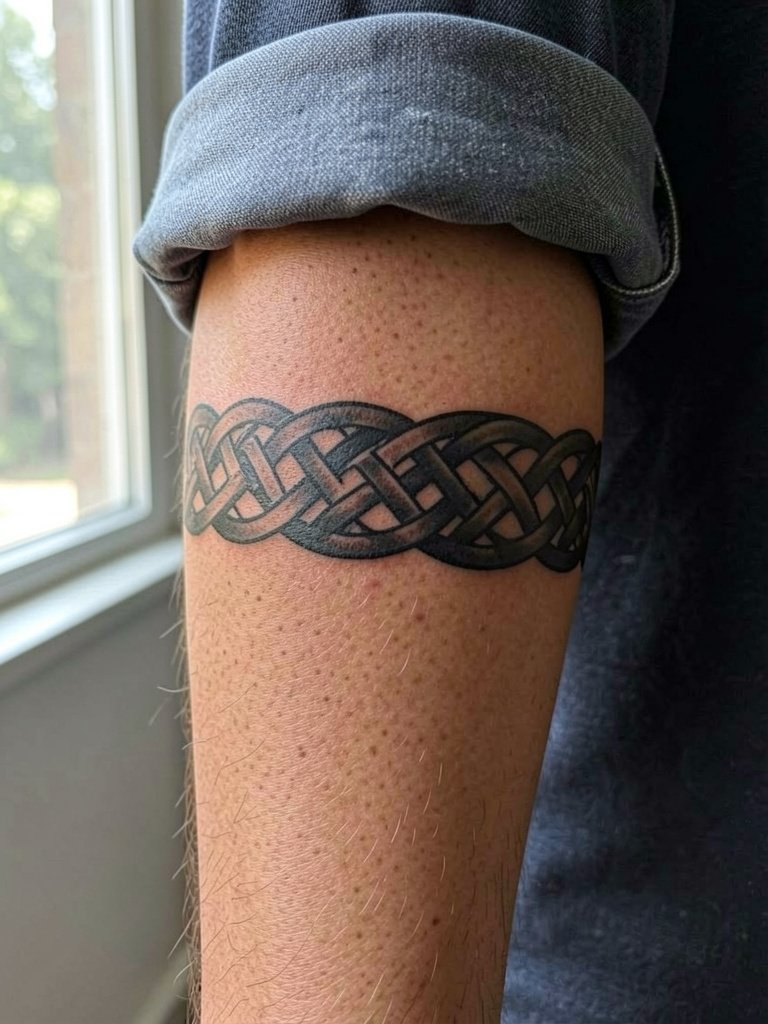
A classic endless knot reads well as an armband because the repeated pattern gives visual rhythm. Recommend this version when you want longevity rather than micro detail. Specify to the artist that the linework sits slightly thicker than a single-needle so the knot intersections keep separation at year three and five. The common mistake is making the loops too tight, which causes the interior lines to merge as saturation spreads. At six months the band will look crisp, at two years the negative spaces start to soften, and at five years a light touch-up often restores the original contrast. For showing it off, pair with a rolled cuff linen shirt that keeps the sleeve above the band without compressing the area.
2. Trinity Knot Split Band on Inner Forearm
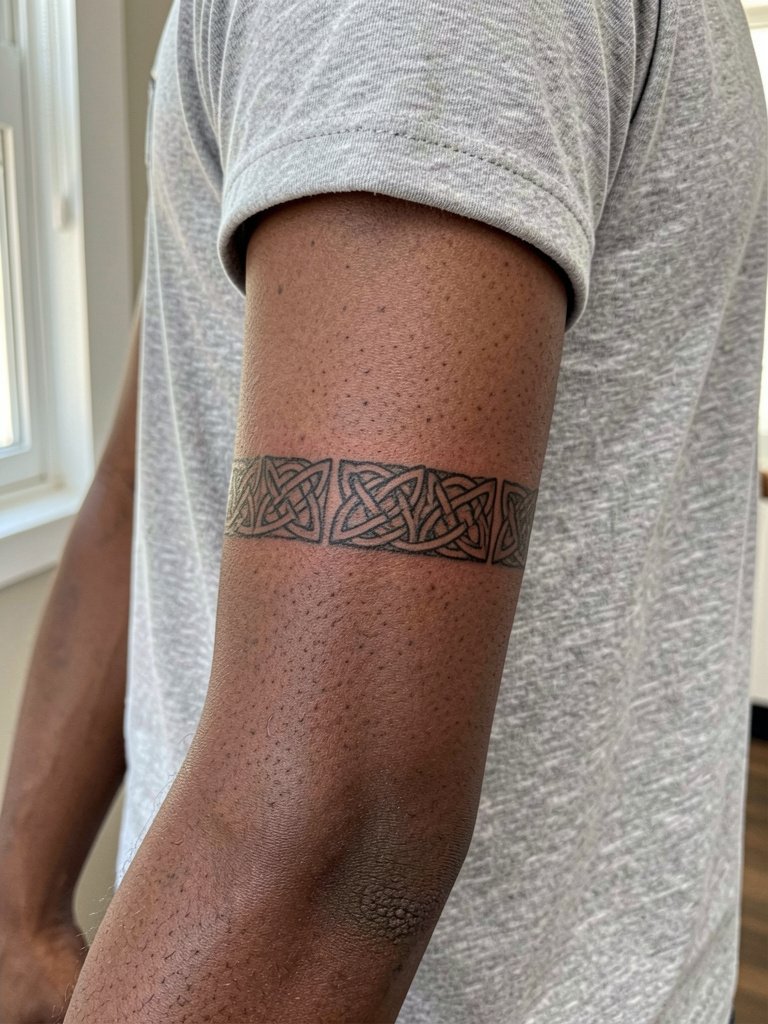
This trinity split band is a good pick if you want the symbolism without a heavy block of ink. I suggest slightly wider spacing between knots so each trinity reads separately over time. Tell the artist to adjust lineweight up from your smallest reference so blowout risk near the wrist is reduced. A common aging issue is the inner forearm eating the finest single-needle work, so ask for small, deliberate gaps at knot intersections. At six months the lines will settle neatly, by two years the narrowest strokes may soften, and a touch-up restores crisply separated loops. When styling, cuff the sleeve with a loose tank top to let the underside show without constriction.
3. Zoomorphic Knot Band Around the Bicep
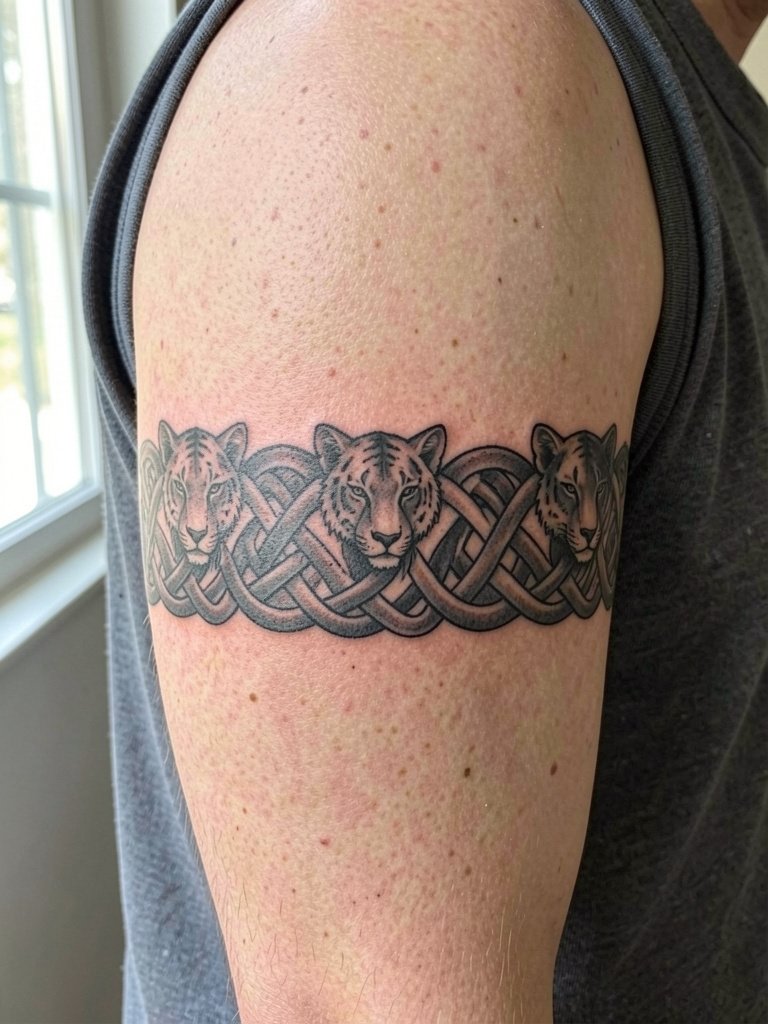
Zoomorphic knotwork makes an armband feel narrative rather than purely decorative. I recommend this for people who want a statement across the bicep with good longevity. Specify where animal heads sit relative to muscle curves so the shapes do not distort with flexing. A frequent mistake is wrapping a highly detailed head directly over the outer bicep peak, which can blur as the muscle moves. Expect the piece to look bold at six months, to spread slightly at two years along the edges, and to benefit from a light touch-up after three to five years. For evenings out, show it off with a sleeveless linen shirt that keeps the arm free and the knot readable.
4. Narrow Celtic Wire Band at the Wrist
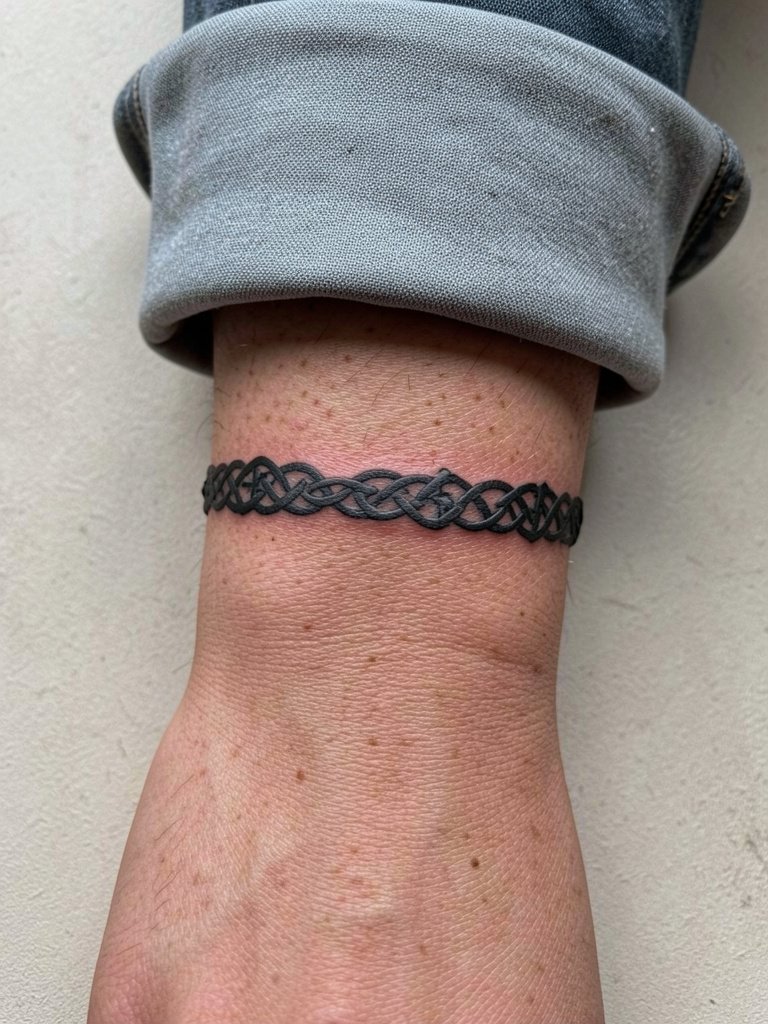
Wrist armbands read small and personal but they carry high wear from washing and bracelets. I recommend this narrow wire band for someone who wants subtle knotwork that can be kept bold by asking for slightly heavier anchor points. Discuss the spacing and request thicker outer anchors so the pattern survives daily friction. People often underestimate how wrist motion and jewelry will soften fine detail. At six months detail is clear, at two years inner loops may merge, and regular light touch-ups every few years keep the pattern legible. Style with a minimal cuff bracelet that sits just beside the band instead of over it.
5. Shielded Claddagh-Armband Hybrid on Upper Arm
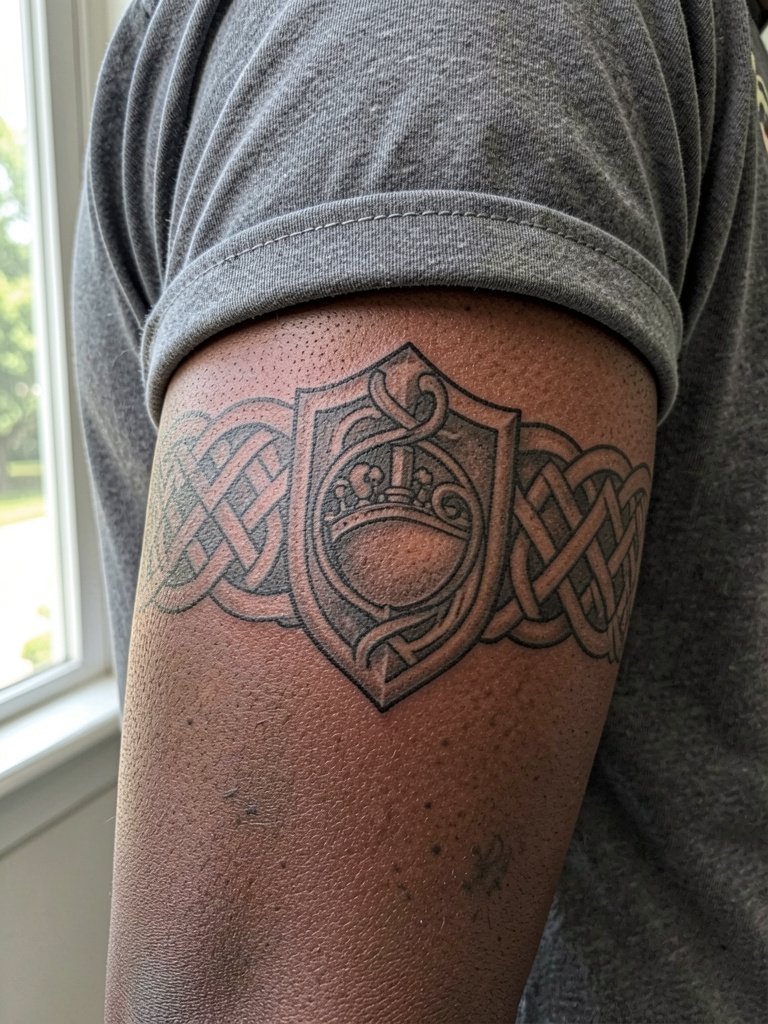
Combining the Claddagh with knotwork makes a band that reads symbolic and wearable. Use this design when you want a mid-width band with anchor motifs at the front. Tell the artist where to center the Claddagh so it aligns with your natural arm rotation. An avoidable error is offsetting the central motif so it twists when the arm hangs. The piece will look solid at six months, show softer edges by two years, and usually needs a touch-up in the first three years to maintain the shield contrast. Pair it with a rolled short-sleeve linen tee that frames the upper arm without compressing the ink during healing.
6. Interlaced Spiral Band with Negative Space
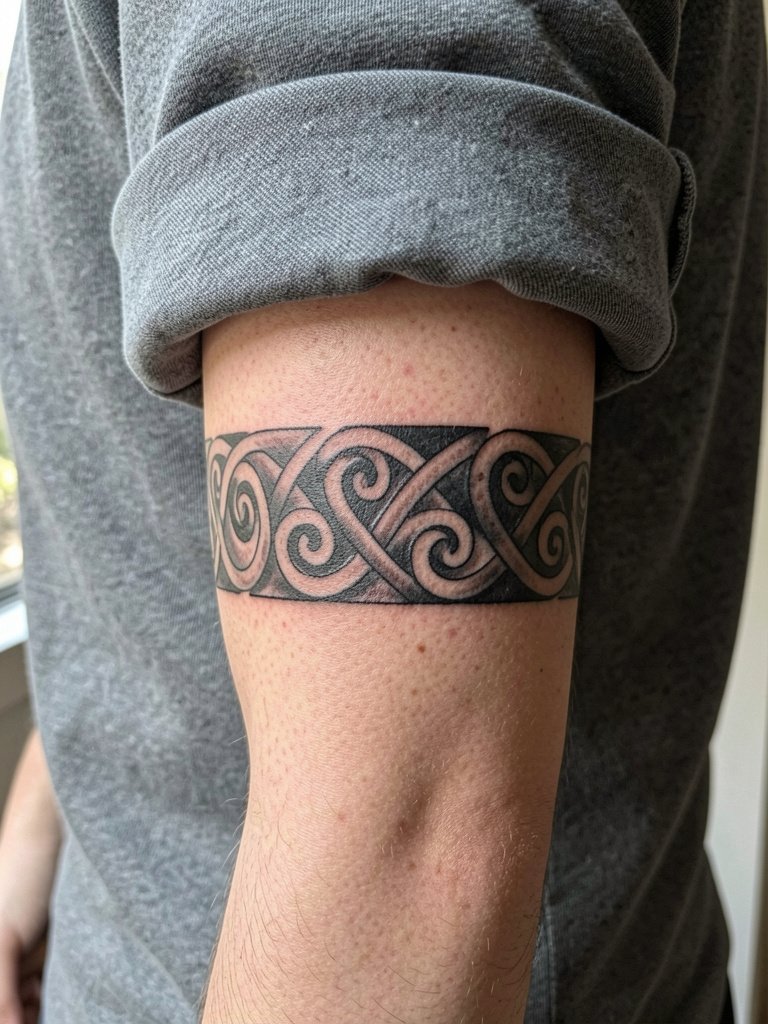
This interlaced spiral band uses negative space to create breathability in a heavy area. I recommend it for people who like bold contrast without a full black cuff. Ask for a proofed stencil on the skin so you can confirm where the negative spaces fall relative to veins and tendons. A common mistake is placing too much solid density over thin tendons, which can age into flat dark blocks. At six months the black will look saturated, at two years the negative areas soften but still read, and a touch-up later refreshes the contrast. For a casual look, roll sleeves up to the mid-forearm and wear a lightweight watch strap that complements but does not overlap the negative panels.
Session Day Picks
These first six armbands vary from delicate to bold, so a few session-day items smooth the appointment and early healing for wrist and forearm placements.
-
Stencil transfer paper kit. Lets you preview exact knot spacing on skin, especially helpful for the split trinity and spiral negative-space bands above.
-
Topical numbing cream. Applied as directed reduces wrist and inner-forearm sensitivity during longer knotwork sessions without compromising linework.
-
Thin protective film roll. Useful to cover small wrist bands in the first 48 hours when hands and washing create friction.
-
Fragrance-free body wash. Gentle cleansers reduce irritation for healing linework on the forearm and bicep.
-
Aquaphor healing ointment. A thin initial layer keeps fine knotwork hydrated and more likely to retain sharp edges during the first week.
7. Wide Shield Band Across the Tricep
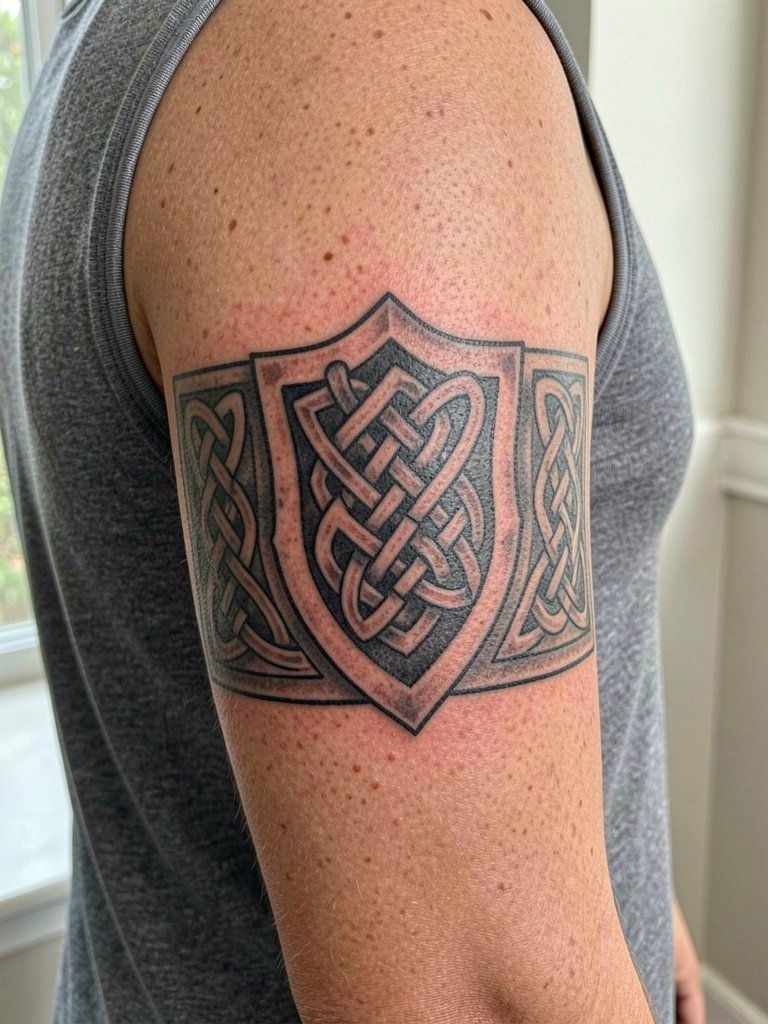
A tricep band reads larger because of the flat canvas and muscle movement. Recommend this when you want a strong silhouette that holds up through activity. Specify to the artist that the piece should have room for breathing at high-contrast junctions so blowout along the back of the arm is less likely. People sometimes pick excessive interior detail that softens across the first two years. At six months the shield planes will be crisp, at two years you may see edge softening, and a touch-up after two to four years preserves the block shapes. For session comfort, wear a sleeveless tee so the artist has unobstructed access to the tricep.
8. Knotwork Bar with Gaelic Script Accent
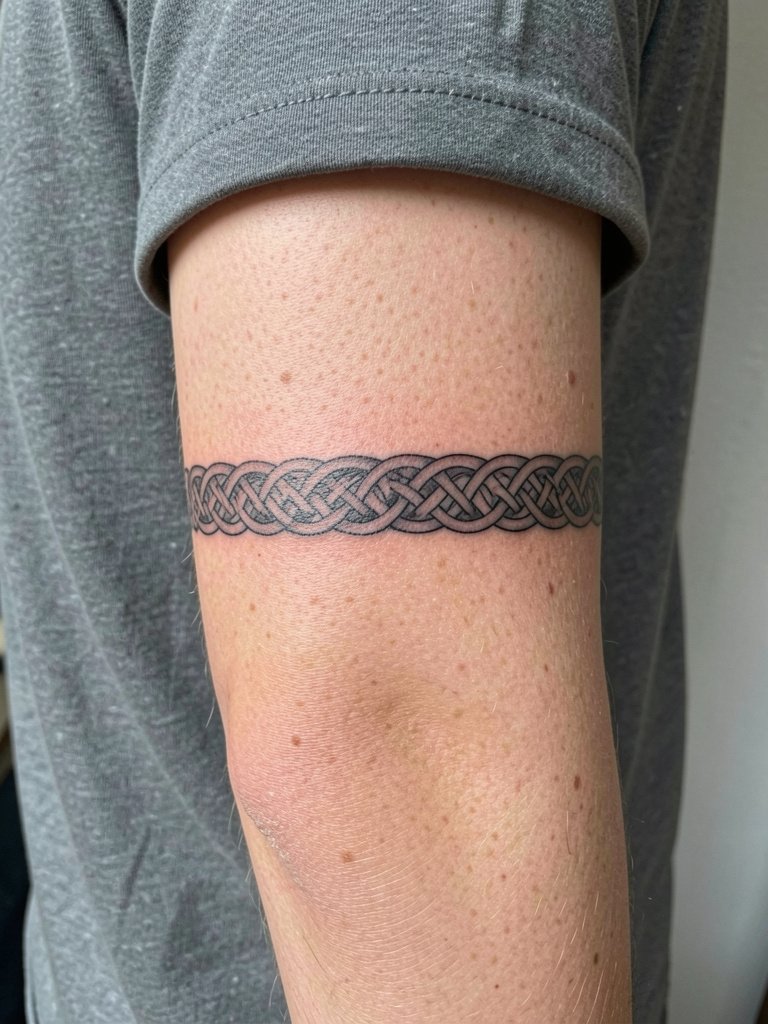
Combining knotwork with a Gaelic script accent adds a textual element without overpowering the band. If you plan text, give the artist the exact phrase and font size so the letters do not compress over time. A frequent mistake is crowding script into tiny letterforms within a moving band, which blurs by year two. Expect the knot bar to look stable at six months, for small letter narrowing at two years, and for a touch-up to sharpen any letters that have softened. Pair it with a button-up oxford with sleeves rolled so the script peeks as you move.
9. Double-Line Split Band Around the Mid-Arm
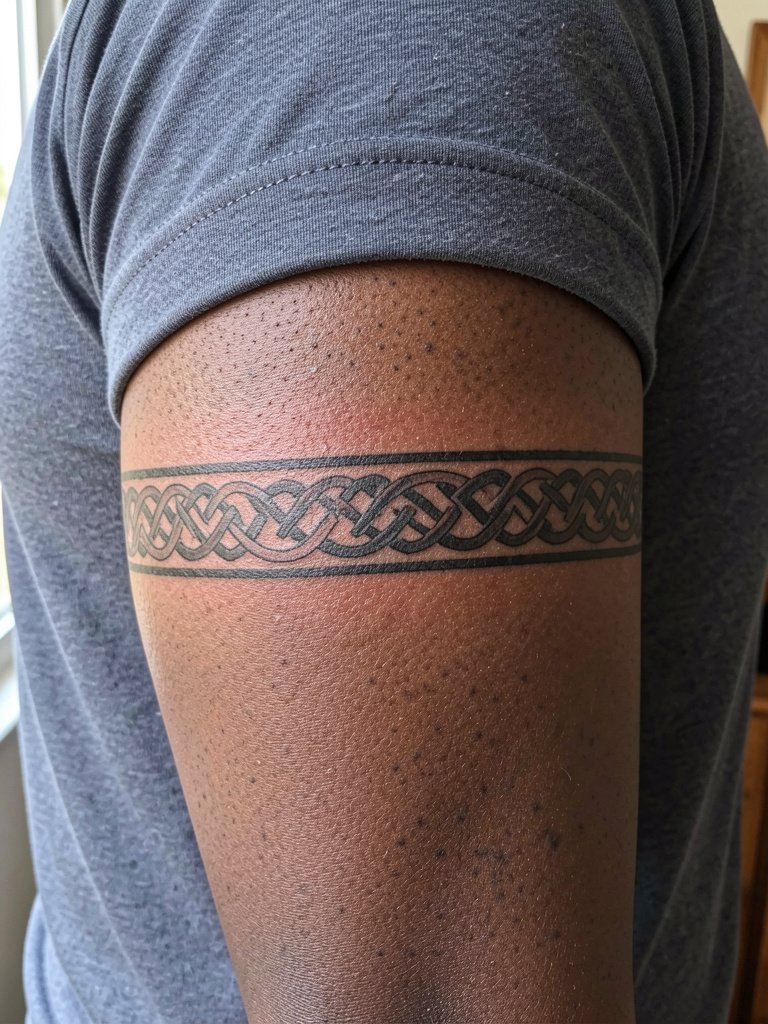
The double-line split band gives a layered look without requiring heavy shading. Recommend this for people who want symmetrical balance on both inner and outer arm surfaces. Ask the artist to stencil the spacing and confirm the parallel gaps align when the arm hangs. The common error is unequal spacing that becomes obvious as the arm rotates. At six months symmetry reads well, at two years the inner gaps may fill slightly, and a targeted touch-up restores crisp separation. For casual days, wear a short-sleeve henley that frames both bands when sleeves are rolled.
10. Celtic Spiral Half-Band for the Wrist Side
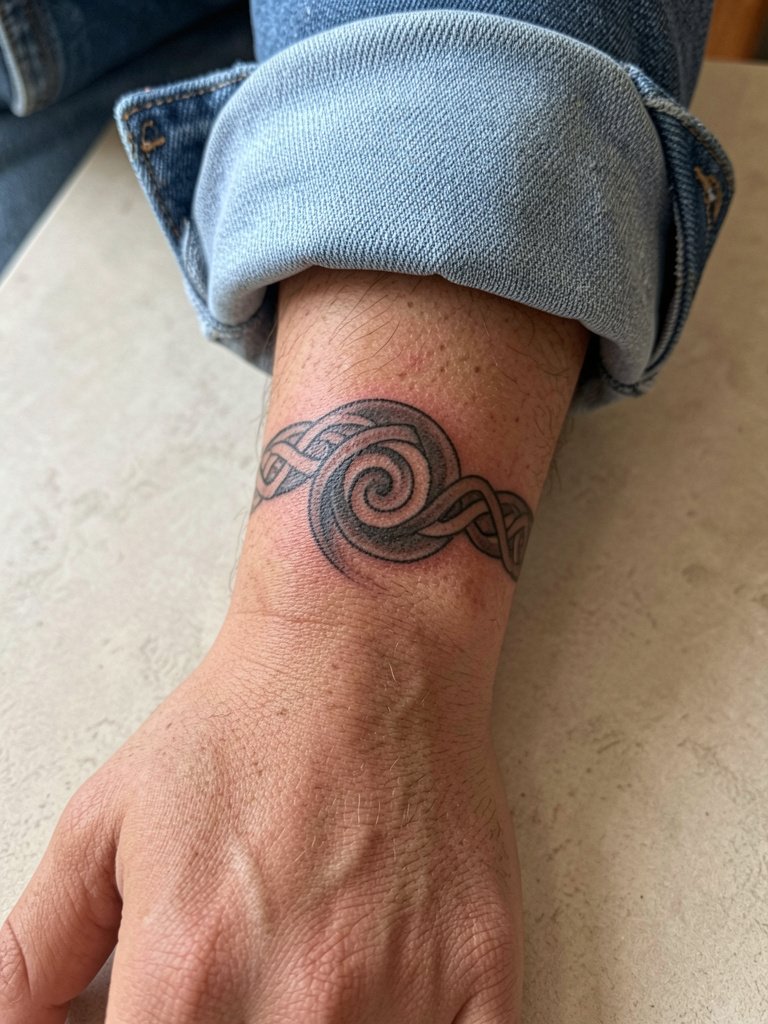
A half-band at the wrist offers a subtle hint of knotwork that avoids heavy wear across the top of the hand. Choose this when you want the pattern visible at rest but not constantly exposed on the back of the hand. Instruct the artist to keep the inner edge lighter to avoid smudging into the palm lines. The mistake here is wrapping the design too far onto mobile skin which accelerates blur. At six months the spiral holds, at two years slight softening occurs along high-motion edges, and light retouching is common after two to three years. Style with a delicate wristwatch strap that sits beside the half-band instead of directly on it.
11. Knot-and-Thistle Band for a Heritage Nod
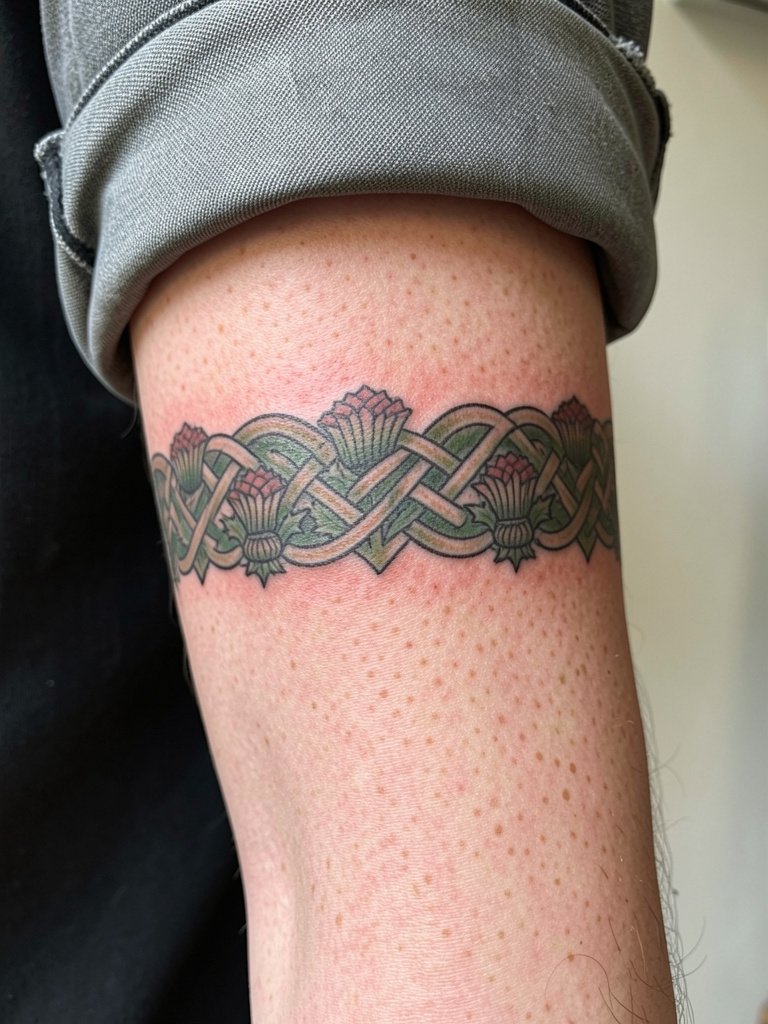
Adding a thistle gives a clear nod to Celtic botanical tradition without using explicit heraldry. This is suited for people wanting cultural reference while keeping the band readable. Tell the artist where to place the thistle so it becomes a repeating anchor rather than the single focal point. Mistakes happen when the accent is too small to hold up, turning the thistle into a smudge over time. At six months color sits bright, at two years green fades or softens, and a color touch-up can be scheduled after two to four years. Wear a rolled-sleeve chambray shirt that complements the botanical accent.
12. Minimalist Open Knot Armband on Upper Forearm
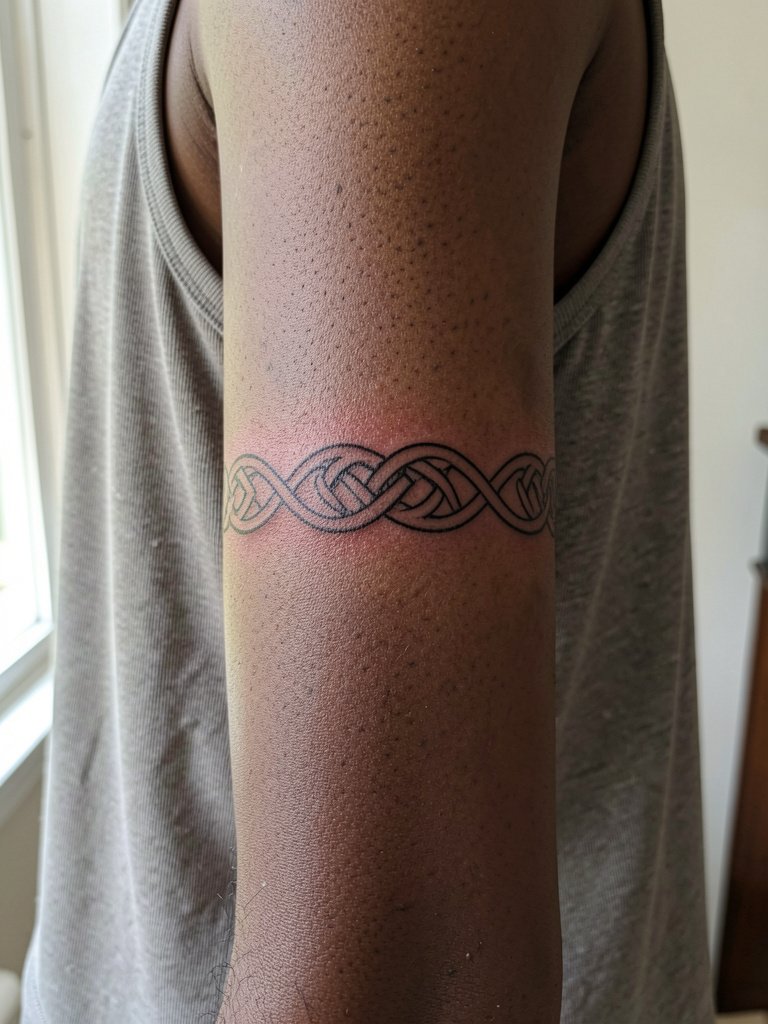
Minimal open knots give a modern take on knotwork and work best on the upper forearm where the skin is flatter. Specify a slightly heavier line at outer edges so the open interior retains definition. The aging risk is that ultra-thin interior strokes disappear on textured skin. At six months the negative spaces are crisp, at two years the finest internal strokes may blur, and a conservative touch-up maintains the airy look. For showing it off, choose a sleeveless blouse that leaves the upper forearm unobstructed.
13. Thick Black Cuff with Subtle Knot Insets
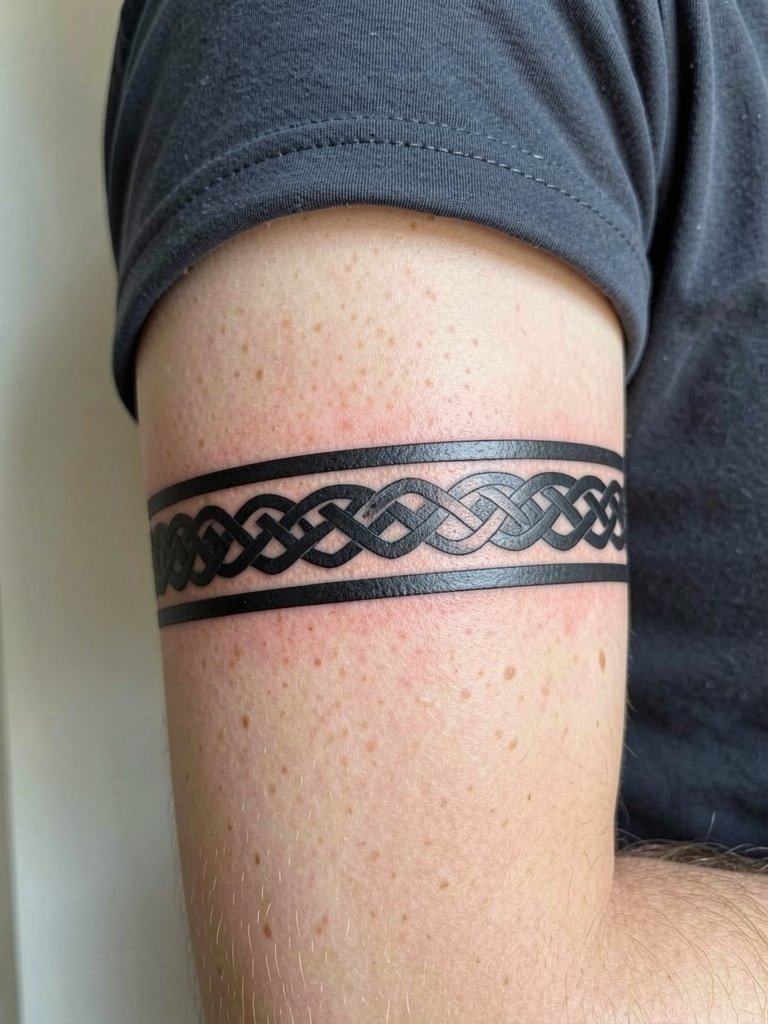
A thick black cuff ages predictably because bold saturation carries well. Use this when you want a modern, graphic armband that still nods to Celtic motifs via small knot insets. Tell the artist to keep the insets shallow so they do not become lost in heavy saturation. A common error is overdrawing the insets so they flatten into the cuff after healing. At six months the cuff reads dense, at two years edges may feather slightly, and a touch-up can reestablish crisp inset details. Pair with a short-sleeve cotton tee that shows the full cuff without rubbing the area during healing.
14. Interlocking Crossed Bands Around the Lower Arm
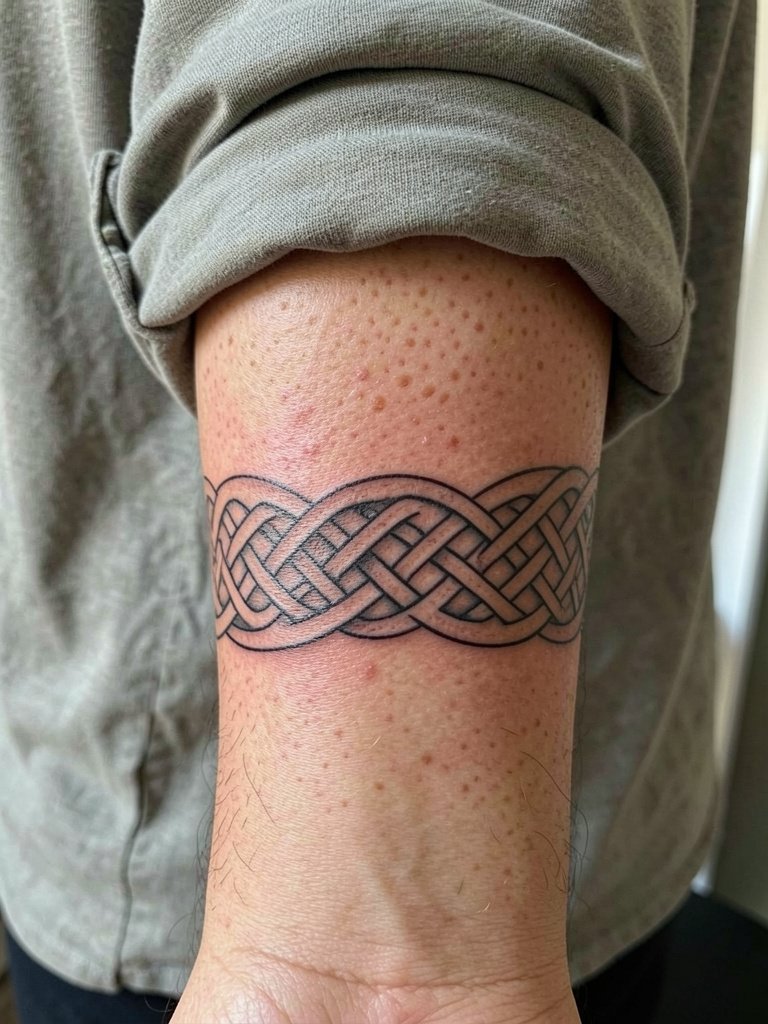
Crossed bands create motion and look complex while remaining stable if executed with clear spacing. I recommend this for people who like layered designs that still read from a distance. Make sure the artist stencils the crossover points on the living arm position to avoid distortions when you bend the wrist. The mistake is ignoring natural skin folds at the wrist which causes the crossings to misalign over time. At six months the interlock is clear, at two years minor misalignment can appear, and a targeted touch-up at the cross points restores definition. Wear a rolled-cuff linen shirt that leaves the lower arm visible.
15. Knotwork with Tiny Gem Motifs Along the Band
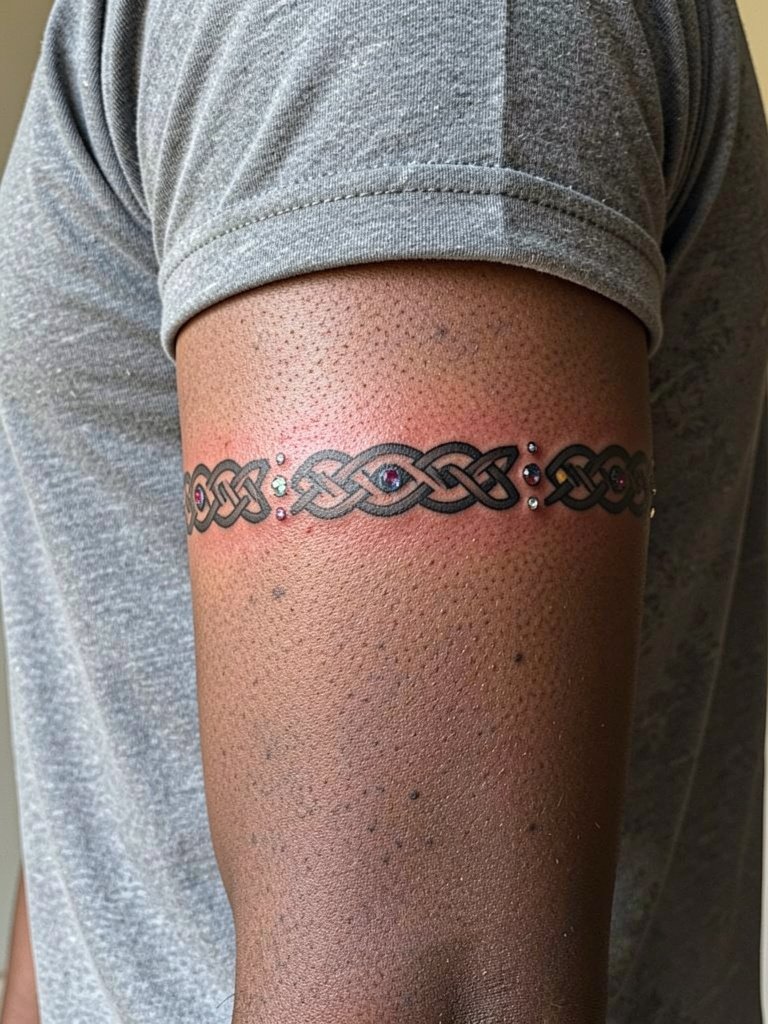
Tiny gem motifs add rhythm without overwhelming the knotwork. Use this approach when you want small color points inside a predominantly black band. Provide the exact dot size and color samples so the artist can recommend saturation that will hold on your skin tone. The common error is picking dots too small to retain color, which can wash out by the first year. At six months the gems look lively, at two years fainting may occur, and a color touch-up restores the accents. For styling, stack thin bracelets that echo the gem spacing and avoid bracelets that rub directly over the colored points.
16. Asymmetric Band That Wraps Toward the Elbow
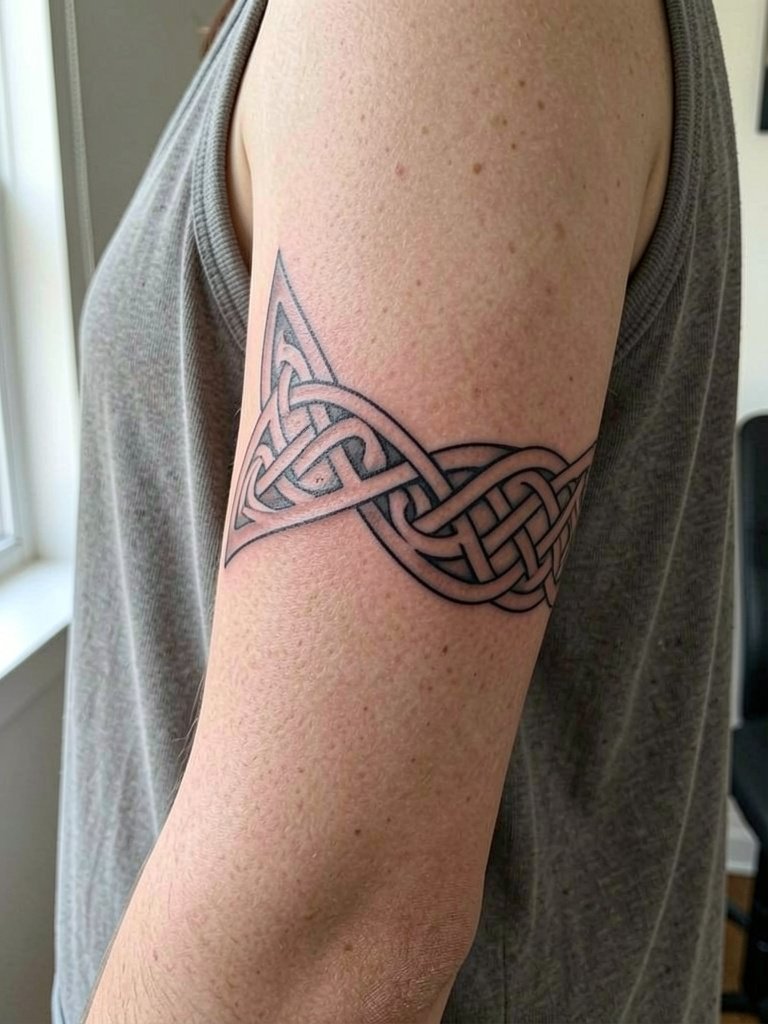
An asymmetric wrap gives motion and a handcrafted feel when you want something less uniform. I suggest mapping the slope on your arm so the wrap complements your muscle lines. The mistake is letting asymmetry become lopsided when stenciled in a flat reference. At six months the slope will read intentional, at two years subtle distortion can appear with muscle changes, and a small corrective touch-up evens the wrap. Show it with a cropped tee that keeps the forearm visible and comfortable during healing.
17. Runic-Inspired Knot Band with Subtle Spacing
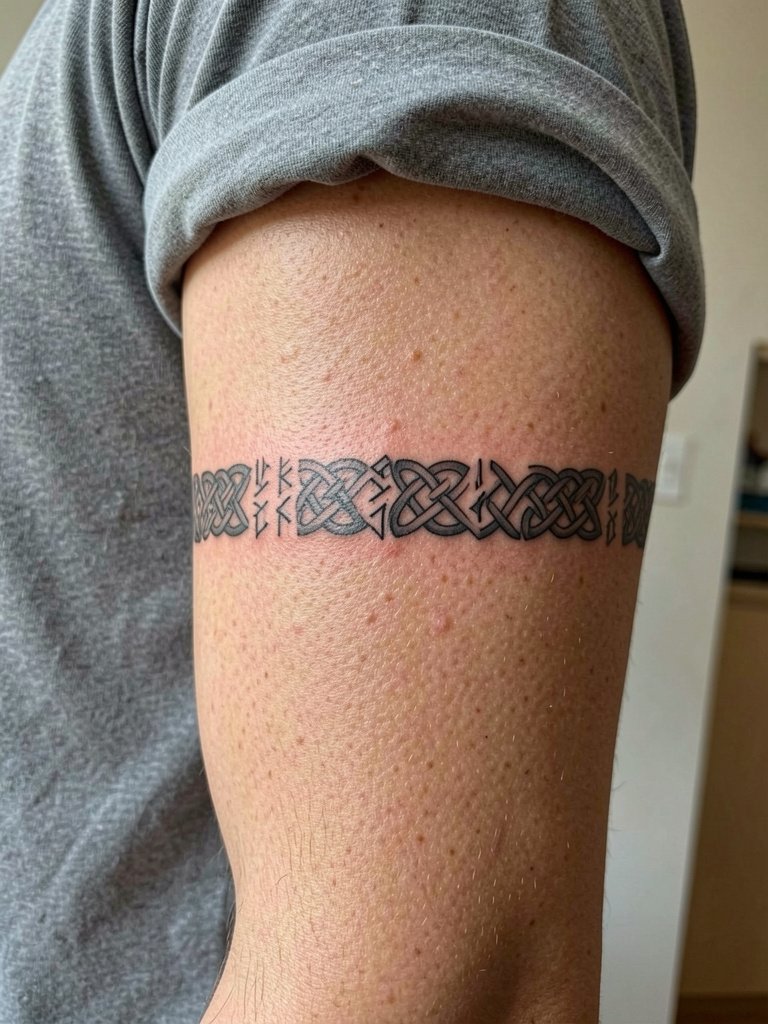
Runic accents provide a linear rhythm that helps the knot repeat read clean. Choose this if you want a pattern that reads vertical when the arm is at rest. Provide the exact runic marks and spacing so the artist can make them large enough to keep form. A common misstep is making the runes tiny decorative ticks which blur quickly. At six months separation is clear, at two years small runes may need a refresh, and a line touch-up restores clarity. Wear a rolled-sleeve utility shirt that frames the runic separators without rubbing them.
18. Half-Thickness Band with Dotwork Fill
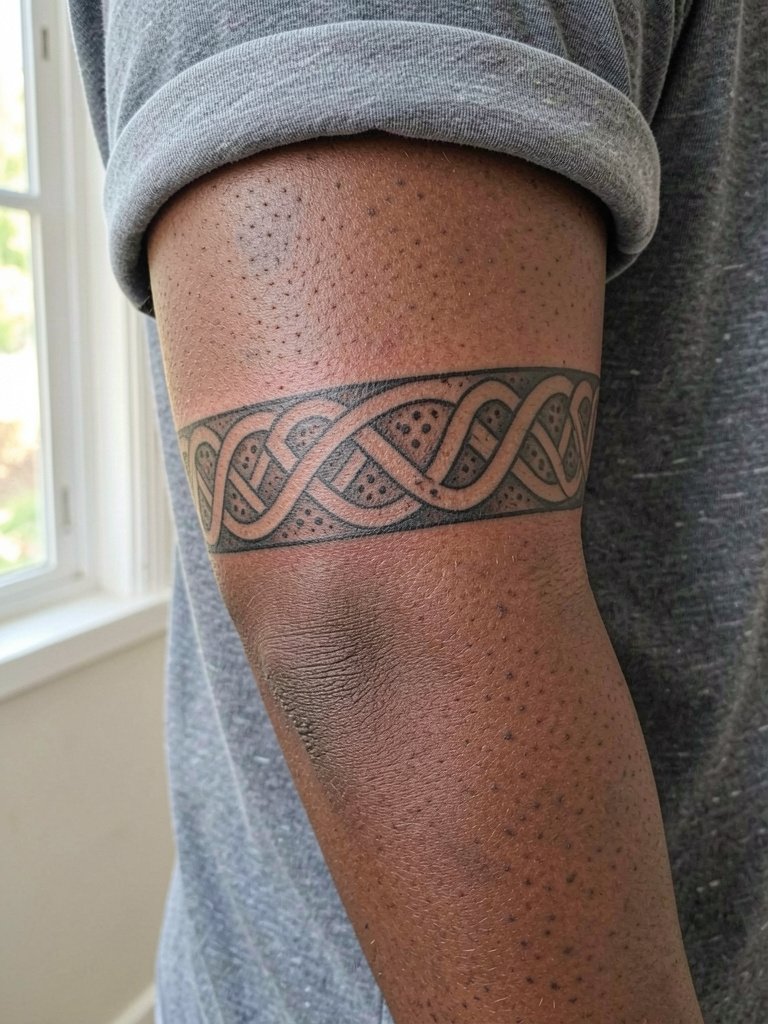
Dotwork inside knot panels lightens the visual weight while keeping texture. This is ideal when you want detail that reads differently from solid fill. Ask the artist for a dot density sample to preview how stipple will hold at your skin tone. The error is too fine a stipple density that disappears with healing. At six months contrast is attractive, at two years stipple softens, and a targeted touch-up brings back texture. For nights out, roll sleeves and pair with a linen button-down that lets the dotted texture peek.
19. Braided Rope Band with Tiny Shadowing
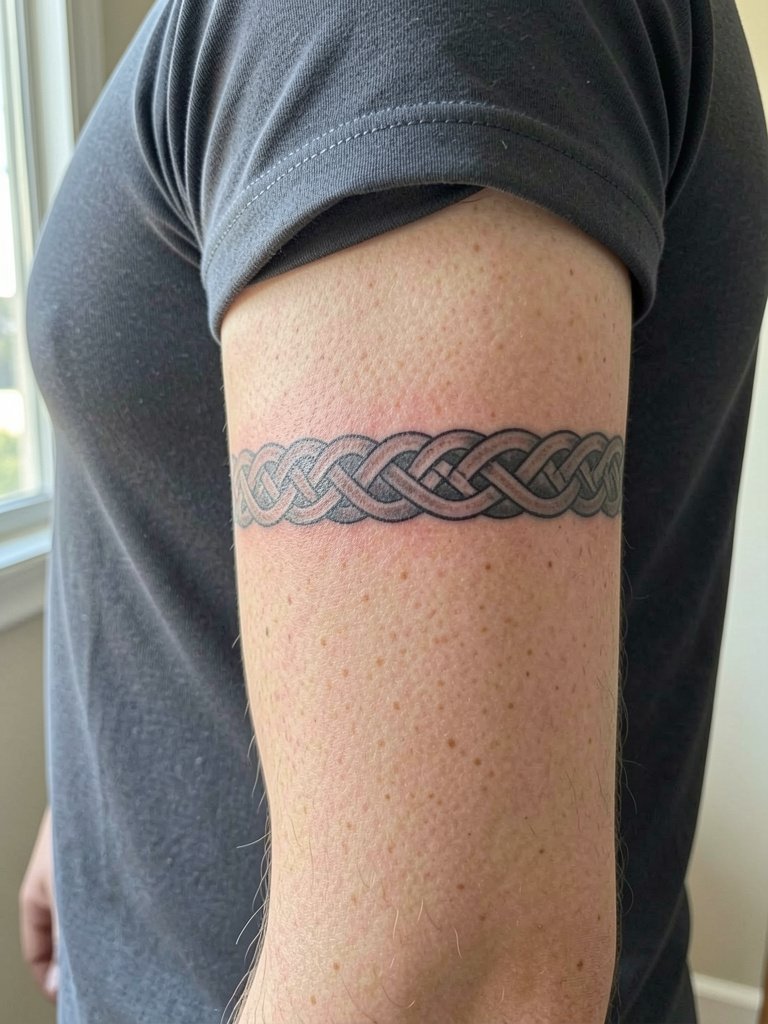
A braided rope band gives three-dimensionality without heavy color. I recommend this variant for people who want a classic jewelry feel. Request subtle shadowing samples so the depth is implied rather than heavily shaded. Mistakes include over-shading which dates the piece and reduces longevity. At six months the braid reads dimensional, at two years shadow edges soften, and a delicate touch-up restores crisp contrast. Style it with a thin leather bracelet that complements the rope aesthetic.
20. Celtic Mandala Mini-Band That Repeats
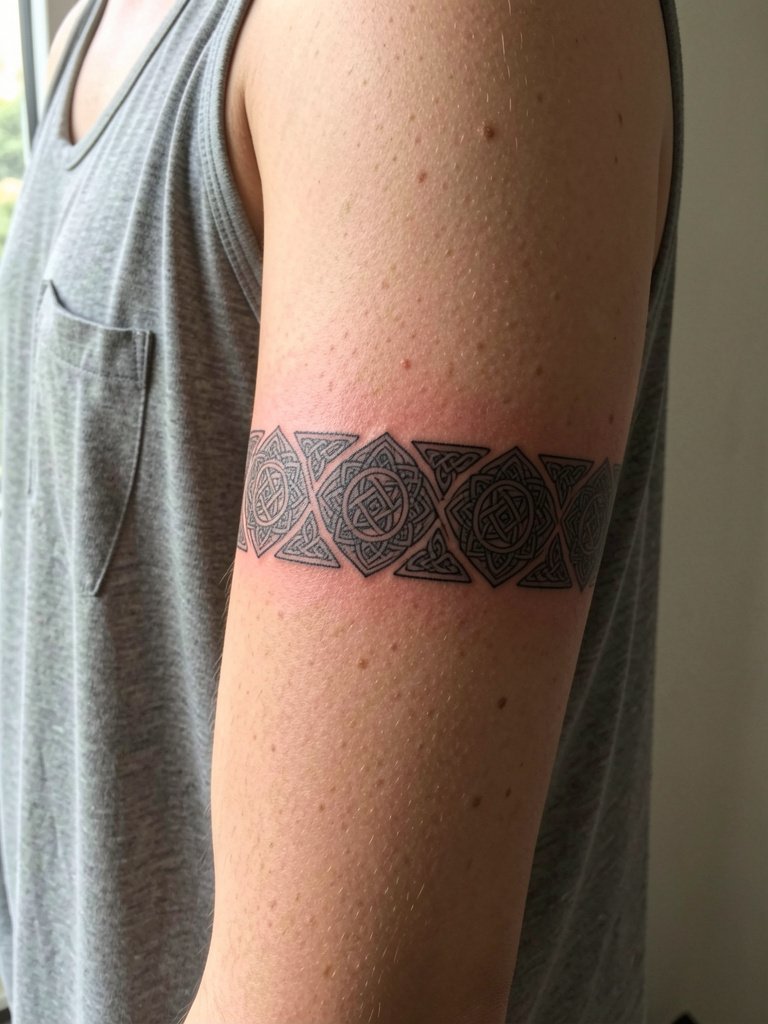
Repeating mini-mandalas bring ornamental complexity while staying readable if spacing is respected. Choose this style when you prefer ornament over blunt linear knotwork. Ask the artist to mock up a repeat at full scale to check rhythm across your arm. A mistake is compressing the motifs too tight so the pattern looks muddy after healing. At six months the tiled mandalas are distinct, at two years fine details may soften, and a touch-up keeps the pattern crisp. Pair with a flowy sleeve top that shows the band without friction.
21. Collarbone-Adjacent Armband That Peeks Around the Shoulder
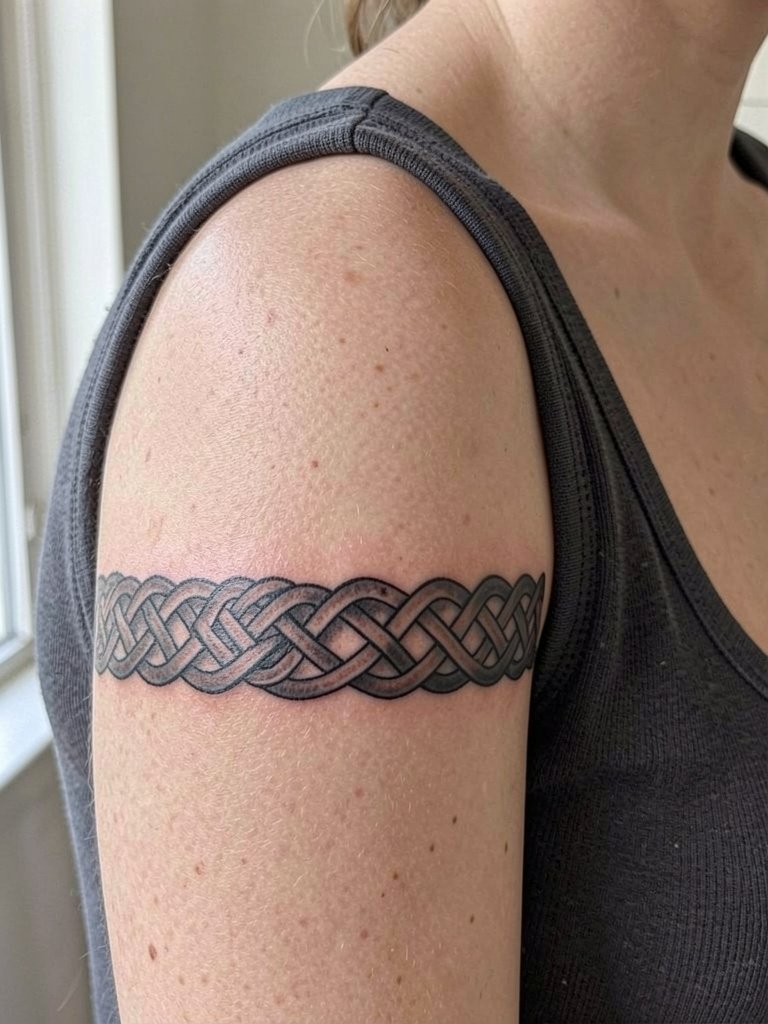
Placing a band high on the arm that peeks toward the collarbone creates a layered, shoulder-framing look. I suggest you review how the band sits with different shoulder postures before committing. The common error is not previewing the piece with natural arm movement which can hide or distort the peek. At six months the placement reads intentional, at two years shifting may appear with shoulder changes, and small adjustments can realign the peek. For evenings, wear an open-shoulder top that keeps the upper arm and collarbone visible while healing.
22. Corkscrew Knot Band That Spirals Slightly
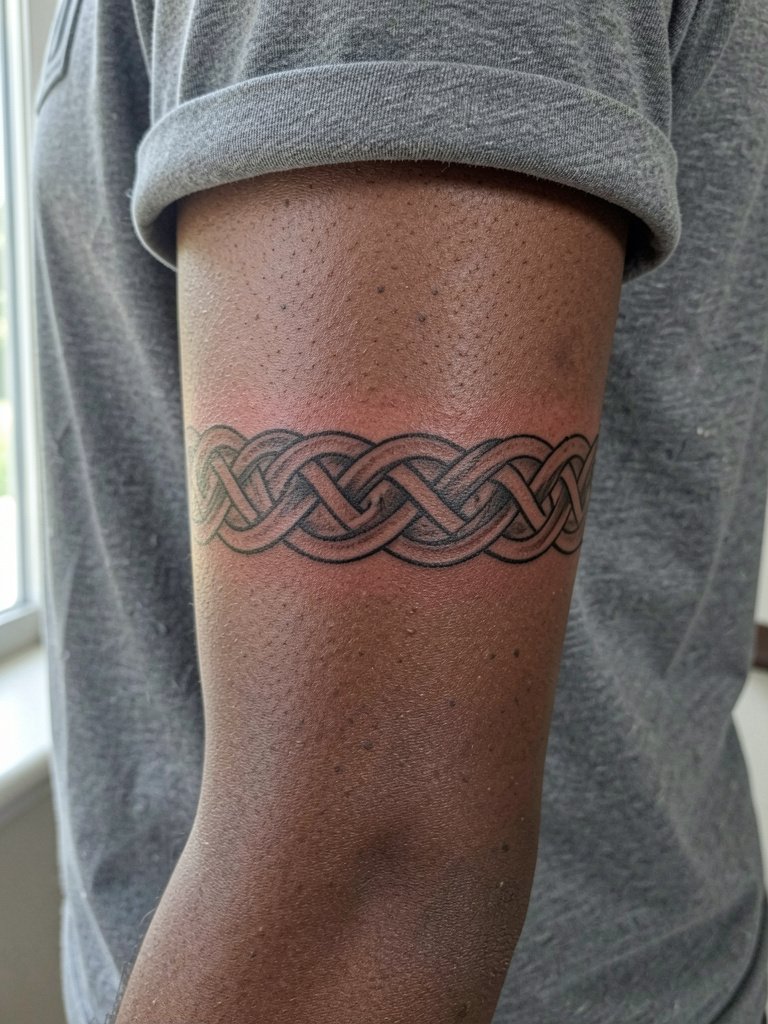
A corkscrew knot band adds movement and suits arms with a gentle natural twist. Ask the artist to mark how the helix aligns when your hand is at rest so the spiral feels intentional. Errors include forcing the helix too tightly which creates visual clutter as the arm moves. At six months the spiral is lively, at two years slight edge softening can occur, and a small touch-up keeps the motion crisp. Pair it with a rolled-cuff denim shirt that complements the helix without rubbing the area during healing.
23. Low-Waist Armlet That Mirrors Jewelry Placement
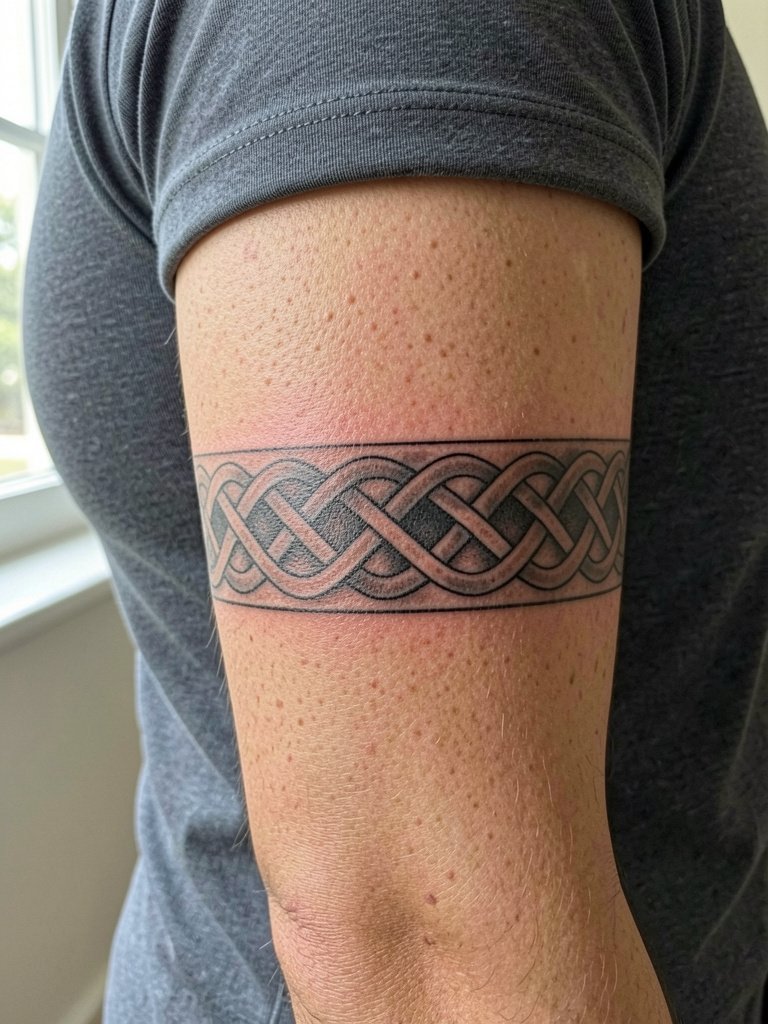
A low-waist armlet is designed to sit where a metal armlet would naturally rest, creating a jewelry effect that does not shift. Have the artist place the band while you sit so the height matches how you wear bracelets. A common mistake is placing it too high where sleeve friction shortens the piece's life. At six months it feels like a permanent arm cuff, at two years edges soften and a focused touch-up preserves the armlet profile. For accessorizing, stack thin metal armlets above or below the tattoo instead of rubbing across it.
Frequently Asked Questions
Q: How should I decide between fine-line knotwork and bold blackwork for an armband?
A: Fine-line knotwork reads delicate but has higher blowout risk on textured or high-motion skin. Bold blackwork keeps silhouettes readable longer. If you prefer fine lines, ask for slightly increased lineweight and wider spacing so the knots do not compress after healing.
Q: Can non-Irish people get Celtic knot tattoos without it being disrespectful?
A: People are divided. One camp says knotwork is tightly linked to cultural heritage and should be used with care or avoided by those without direct connections. The other camp believes respectful adaptation, clear credit to the motifs, and education about origins lets the designs be shared. If you choose a Celtic design, learn the basic meanings and avoid appropriating insignia tied to specific communities.
Q: What should I wear to the studio for a forearm or wrist armband session?
A: Wear loose sleeves that can be rolled comfortably without tugging on the healed area. For forearm and wrist work a tank or short-sleeve tee works well. Bring a zip-up hoodie rather than a pullover so you can remove outer layers without pulling fabric over the fresh tattoo.
Q: How often do armband tattoos need touch-ups?
A: It depends on size, lineweight, placement, and your daily wear. Most armbands benefit from a light touch-up once between two and five years if they were done with conservative spacing. Heavy saturation and thick cuffs often hold longer before needing refresh.
Q: Where can I find good healed examples and portfolios without naming artists directly?
A: Search social platforms with focused tags and location filters to find healed shots. Try hashtags that combine the style and placement, use short keywords in TikTok and Instagram search, and read subreddit threads that collect healed examples. Look for terms like "Celtic armband healed" and "knotwork healed forearm" while filtering for recent posts to see how work ages on different skin tones.