Someone I know spent months saving reference images for an elephant tattoo before realizing the real problem was deciding which style would still look good five years from now. I spent time in five shops across Brooklyn and watched that choice make or break the final piece. These 15 elephant tattoos with flowers focus on linework, placement, and what to tell your artist so the design heals clean and lasts.
1. Fine-line Elephant with Cherry Blossoms on Inner Forearm
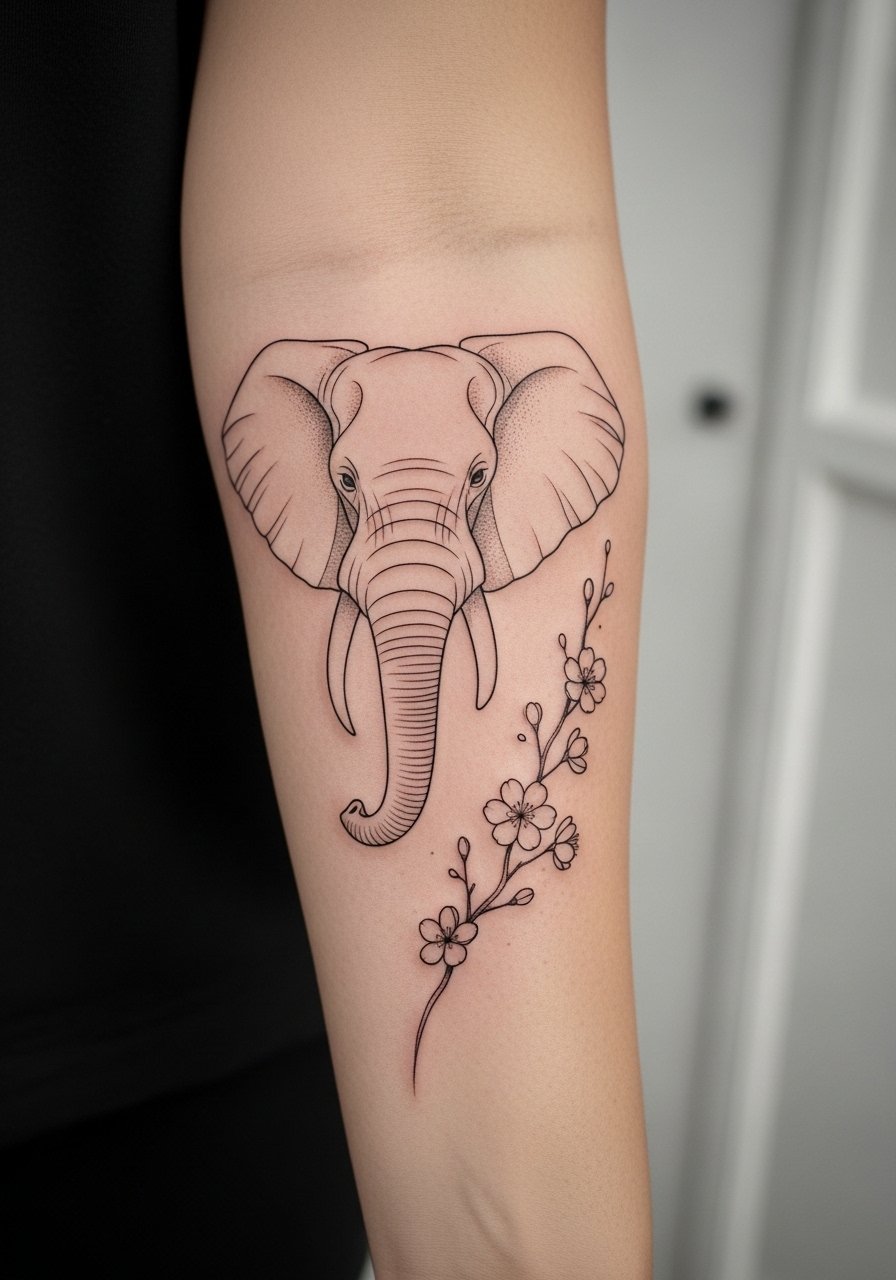
Someone I know first saw this on a friend and said the delicate linework read like jewelry. Fine-line elephants keep the trunk and facial contour simple while a cherry blossom branch wraps naturally along the forearm. Pain is low to moderate and a session runs around a single appointment if kept compact. The common mistake is making the blossoms too small, which blurs after a couple of years. Tell your artist you want slightly increased line spacing and light stipple shading inside the petals so the flowers hold saturation. At six months the outline should still be crisp, and by year two tiny touch-ups might be needed for the petals. Best for anyone who wants an elegant, readable arm piece.
2. Micro-realism Elephant Head with Wildflowers on Upper Arm
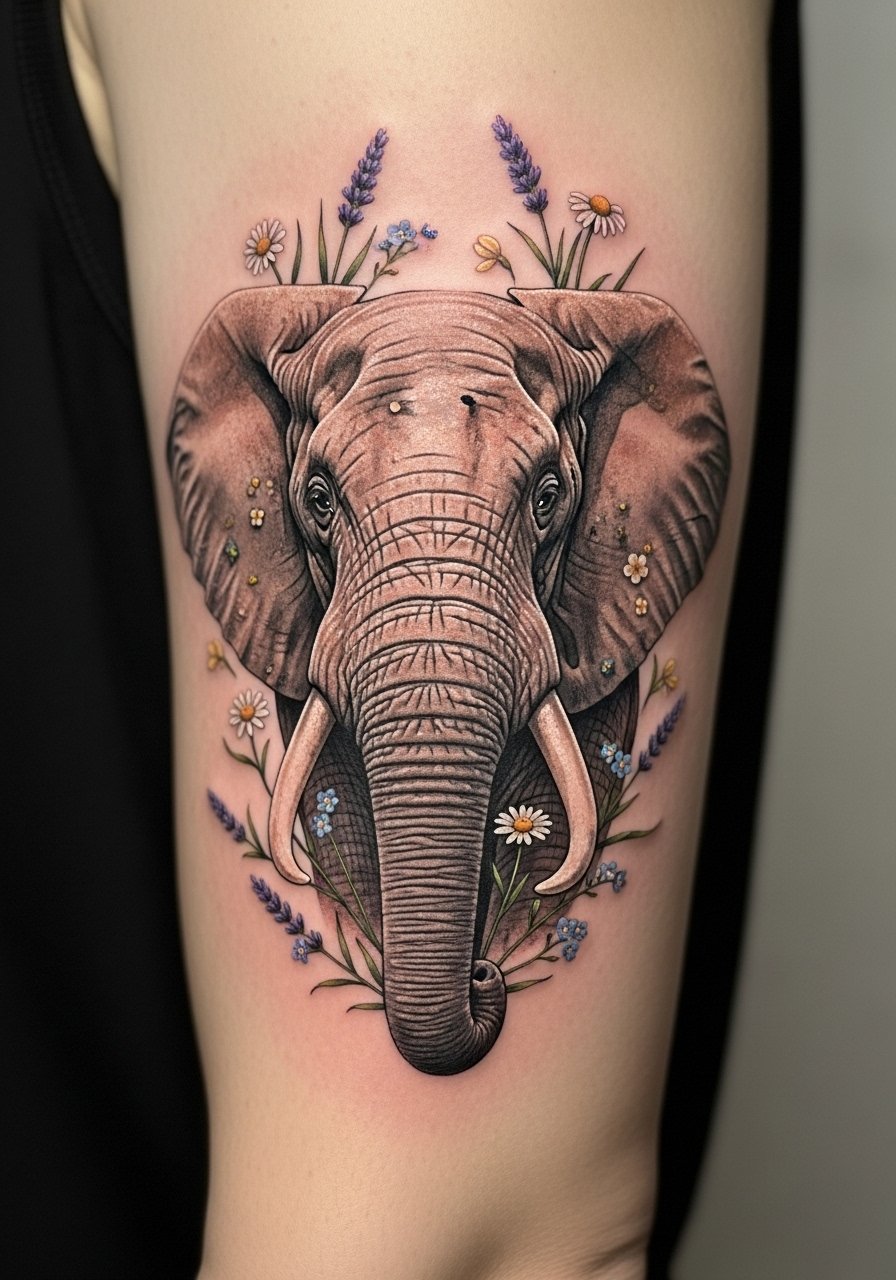
Visual impact drives this choice. Micro-realism captures skin folds and wet-look eyes while tiny wildflowers add personality. Expect a medium pain level on the upper arm and about two to three hours in the chair. A frequent error is insisting on micro detail at too small a scale, which leads to smudging over time. Ask for reference photos that match your desired contrast and say you want defined highlights around the eye. At six months, fine details soften; by two years, touch-ups on highlights may be helpful. This one reads well across light and medium skin tones and works for people who want portrait-like realism without a full sleeve commitment.
3. Blackwork Silhouette Elephant with Bold Rose on Thigh
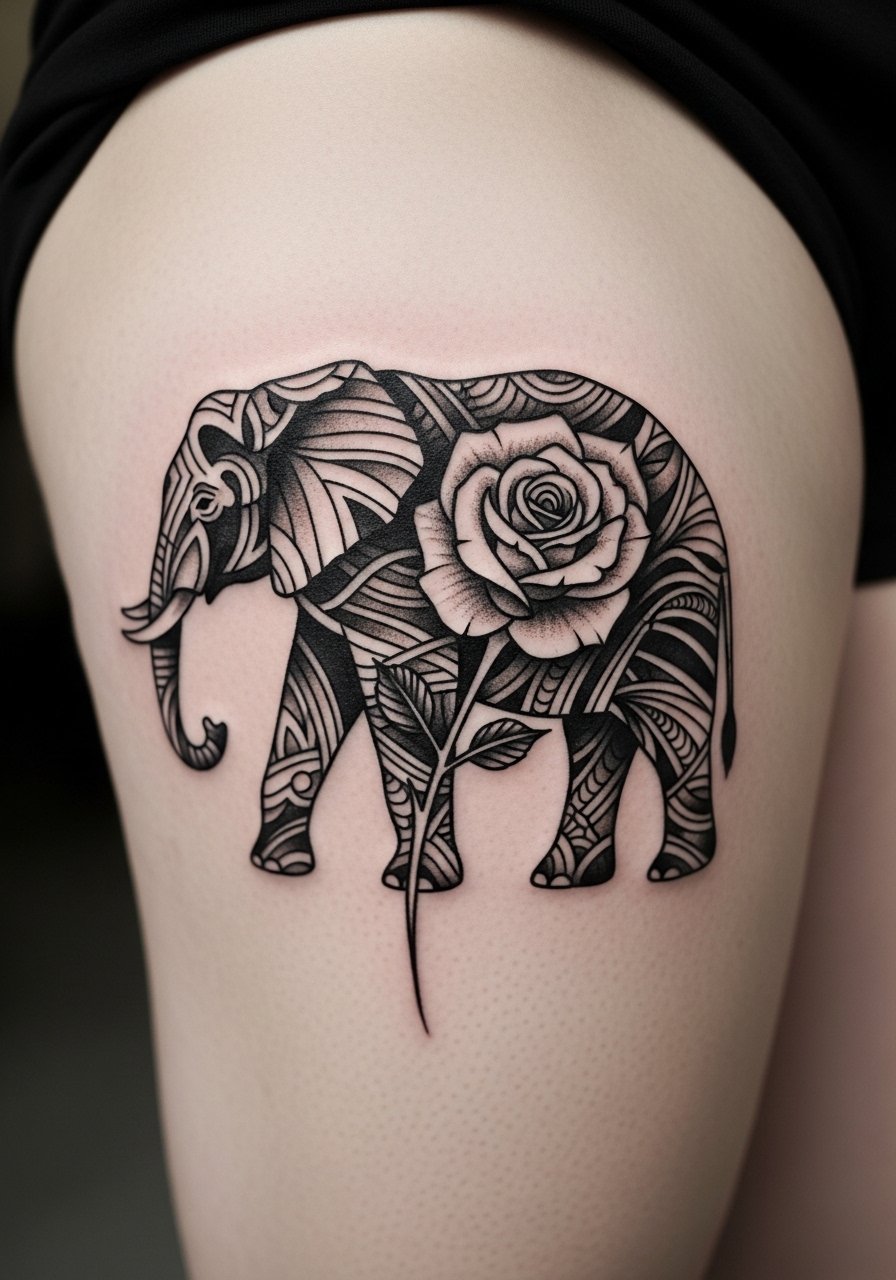
There is something about bold black silhouettes that read from across a room. This blackwork elephant pairs solid negative space with a saturated rose for contrast. Thigh placement is forgiving of larger sessions and has a moderate pain level. A common mistake is over-detailing the silhouette edge then expecting micro shading inside it. Tell your artist you want clean negative space and heavy saturation on the rose only. Healed at six months the black should be dense and flat, and at year three it may need a touch-up to restore top-layer saturation. This style suits those who prefer graphic, high-contrast statements.
4. Watercolor Elephant with Lotus Accents on Ribcage
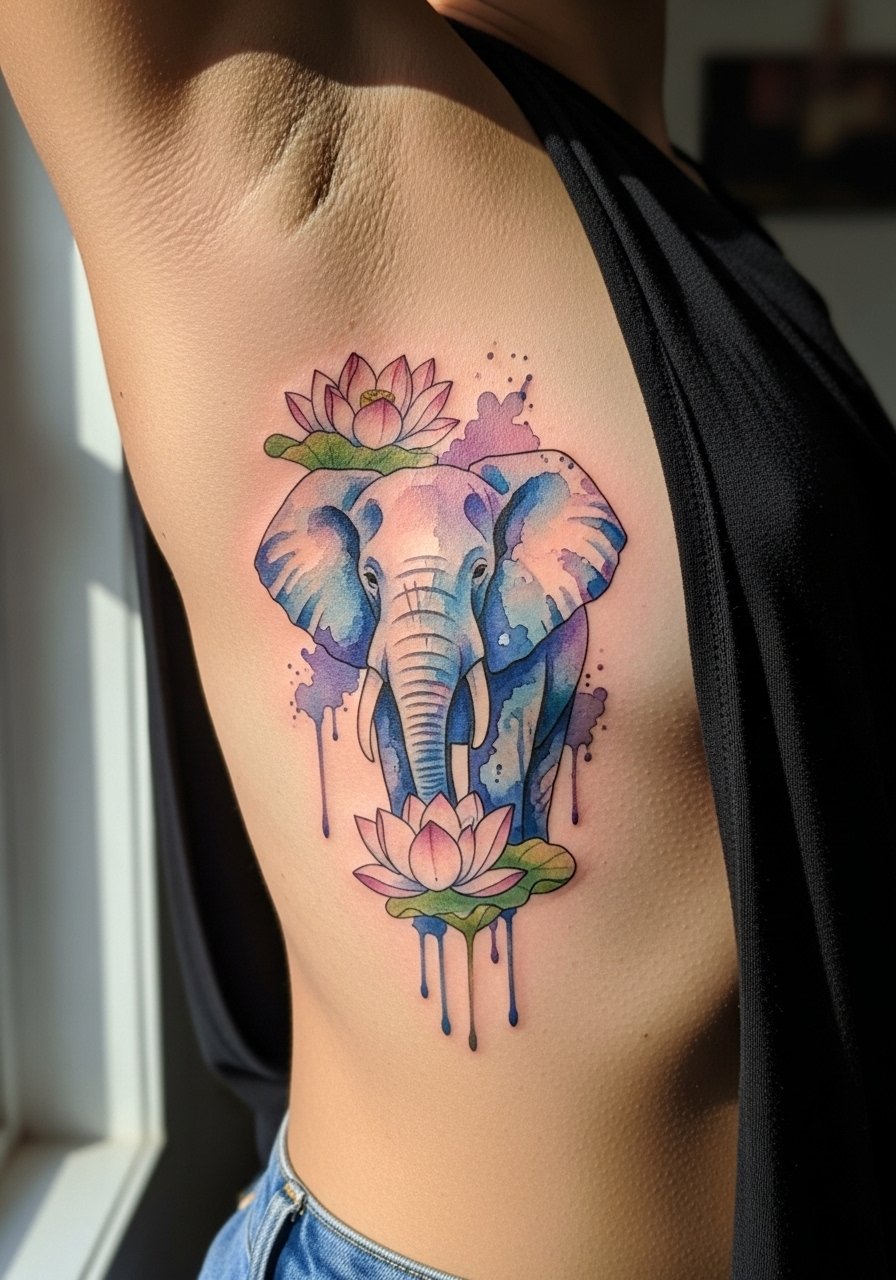
Fair warning: the ribcage is a seven out of ten for pain. Watercolor elephants here use loose washes and soft petal edges for a painterly look. Artists split into two camps about watercolor longevity. One group says the softer edge work fades quickly and turns patchy. The other group argues that if the artist layers subtle linework under the wash it can hold up. Ask where your artist stands and request underlying line stability for petals. At six months the washes should feel integrated with the skin and at two years you may expect gentle fading. This is for someone willing to accept touch-ups in exchange for a soft, painterly finish.
5. Geometric Elephant with Floral Mandala on Calf
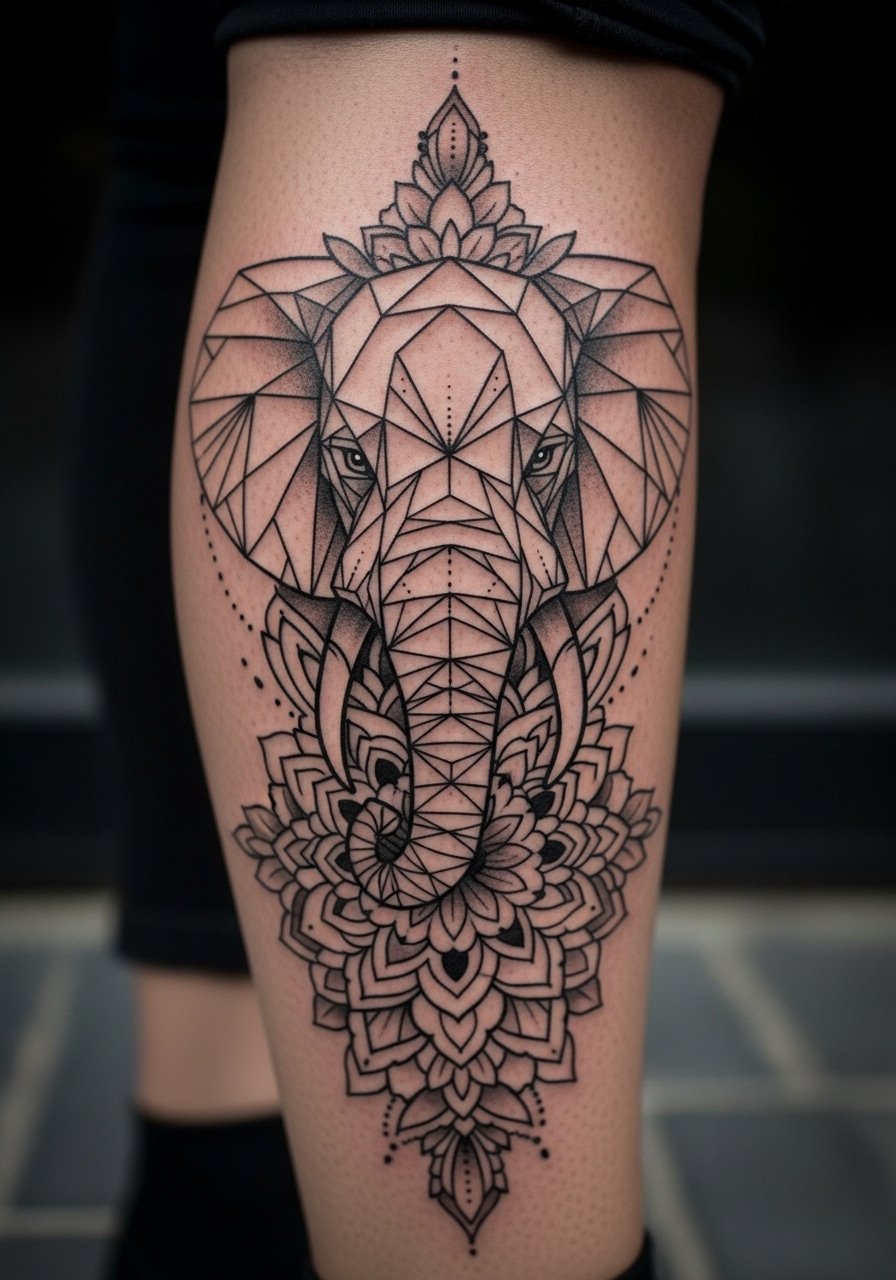
Geometric linework reads sharply on the calf because the skin there is tight. This version mixes angular shapes in the elephant face with a circular floral mandala behind it. Pain is moderate and sessions depend on how dense the mandala is. The biggest mistake is cramming too many tiny geometric elements in a small area. Ask your artist for thicker primary lines and stipple shading in larger negative spots so the pattern breathes. Healed at six months geometric lines stay crisp, and at year five the mandala will likely need a refresh in focal lines. This design suits people who like symmetry and a clear focal point on the leg.
6. Traditional-Influenced Elephant with Peony on Shoulder Blade
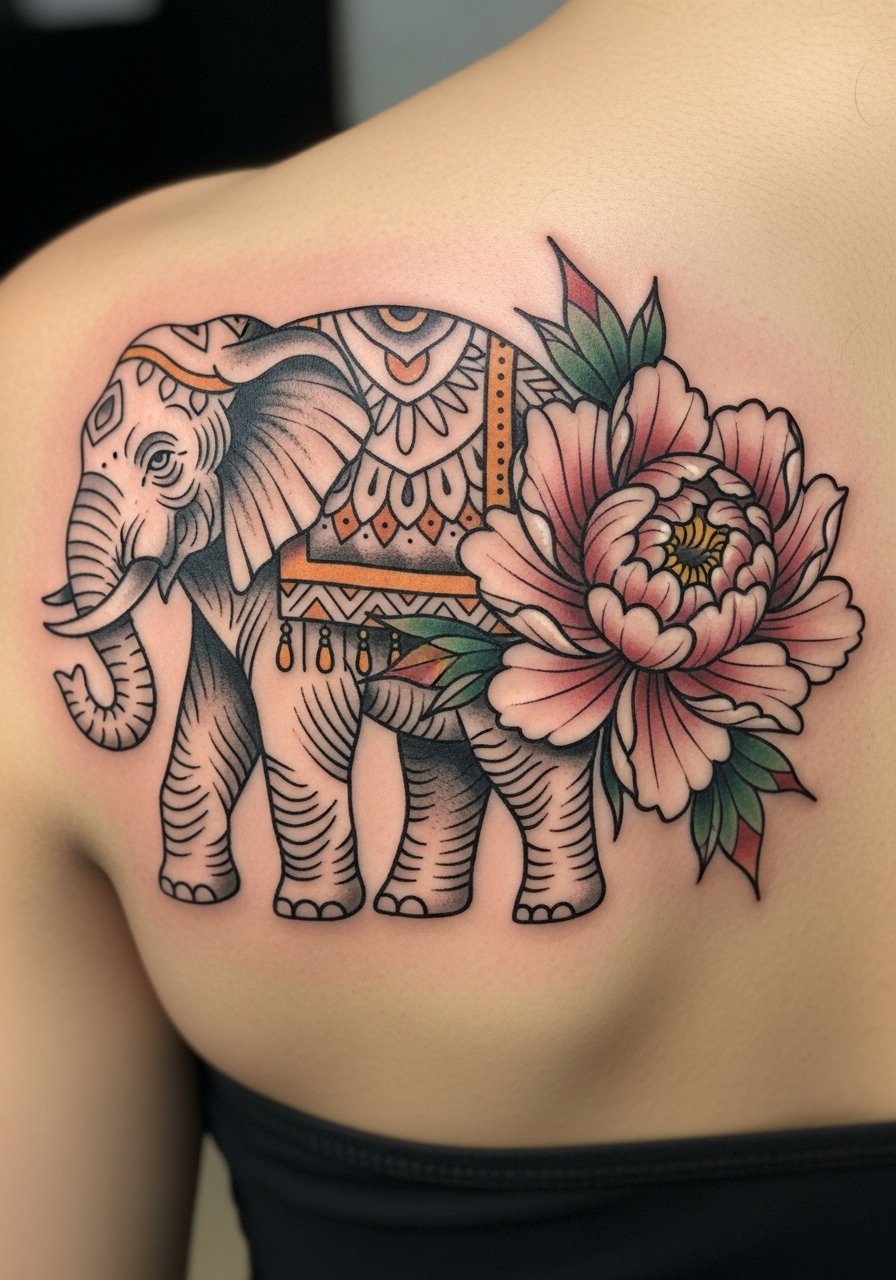
There is lasting value in bold traditional outlines for body movement areas like the shoulder blade. Traditional-influenced elephants use thick contour lines and saturated peonies so the image ages predictably. Expect a low to moderate pain level and a one to two hour session for a medium piece. A common error is asking for thin outlines in a high-stretch zone, which leads to early edge blur. Tell your artist you want strong outer linework and solid color fills for the peony. At six months the saturation should still be deep, and at year three only minor touch-ups should be necessary. This suits someone who wants a classic look that travels well with clothing.
7. Minimalist Line Elephant with Tiny Daisy Cluster Behind Ear
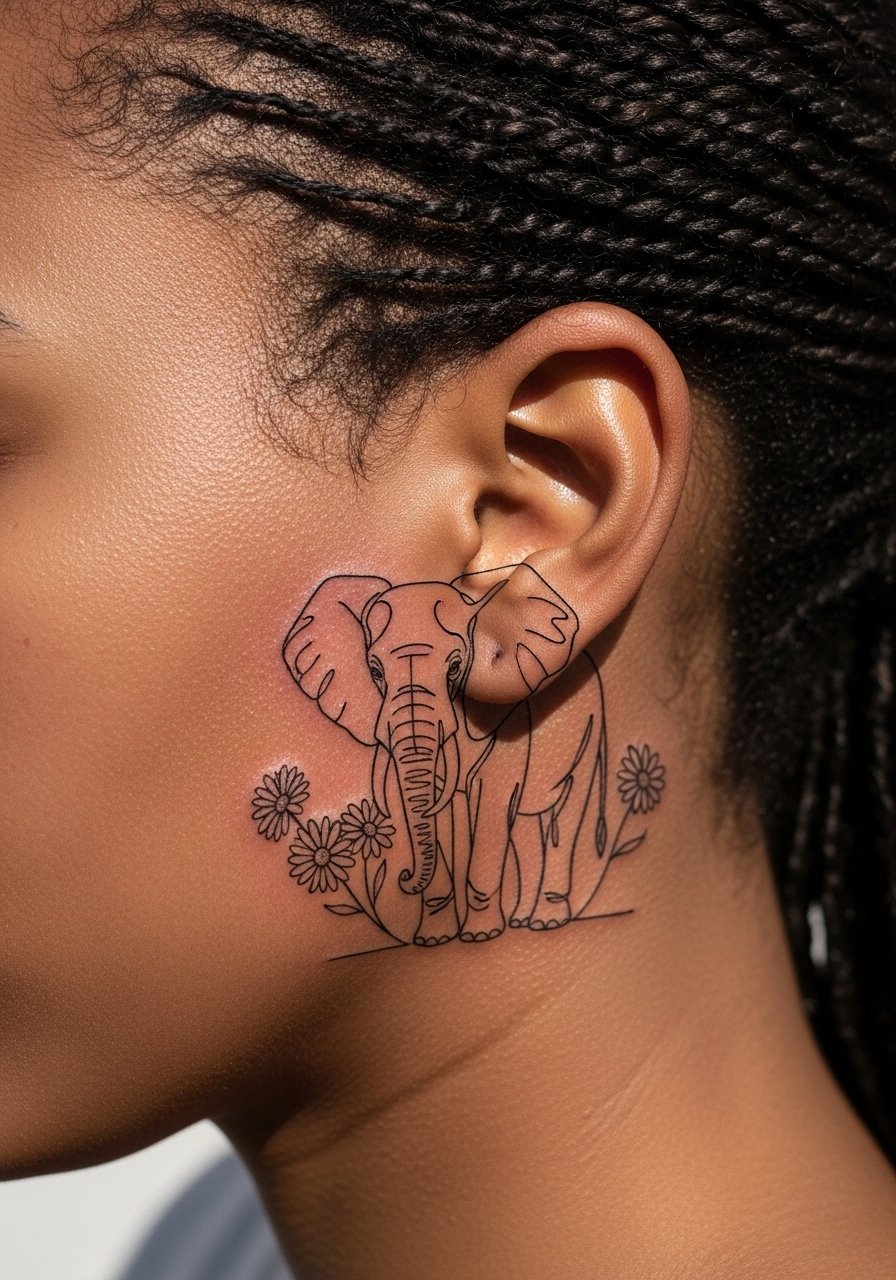
Behind-the-ear tattoos are intimate and sensitive. The minimalist continuous-line elephant here reads as a small, sentimental piece with a daisy cluster tucked behind the ear. Expect higher sensitivity and a quick session. The common mistake is making the lines too thin for that location. Ask for slightly heavier linework and spaced curves so blowout risk drops. At six months the lines should still read clean, and at two years very thin lines may require a touch-up. If you work or present in formal settings, remember this placement is discreet but often visible with short hair or up-dos.
8. Stipple-Shaded Elephant with Garden Vines on Ribcage Side
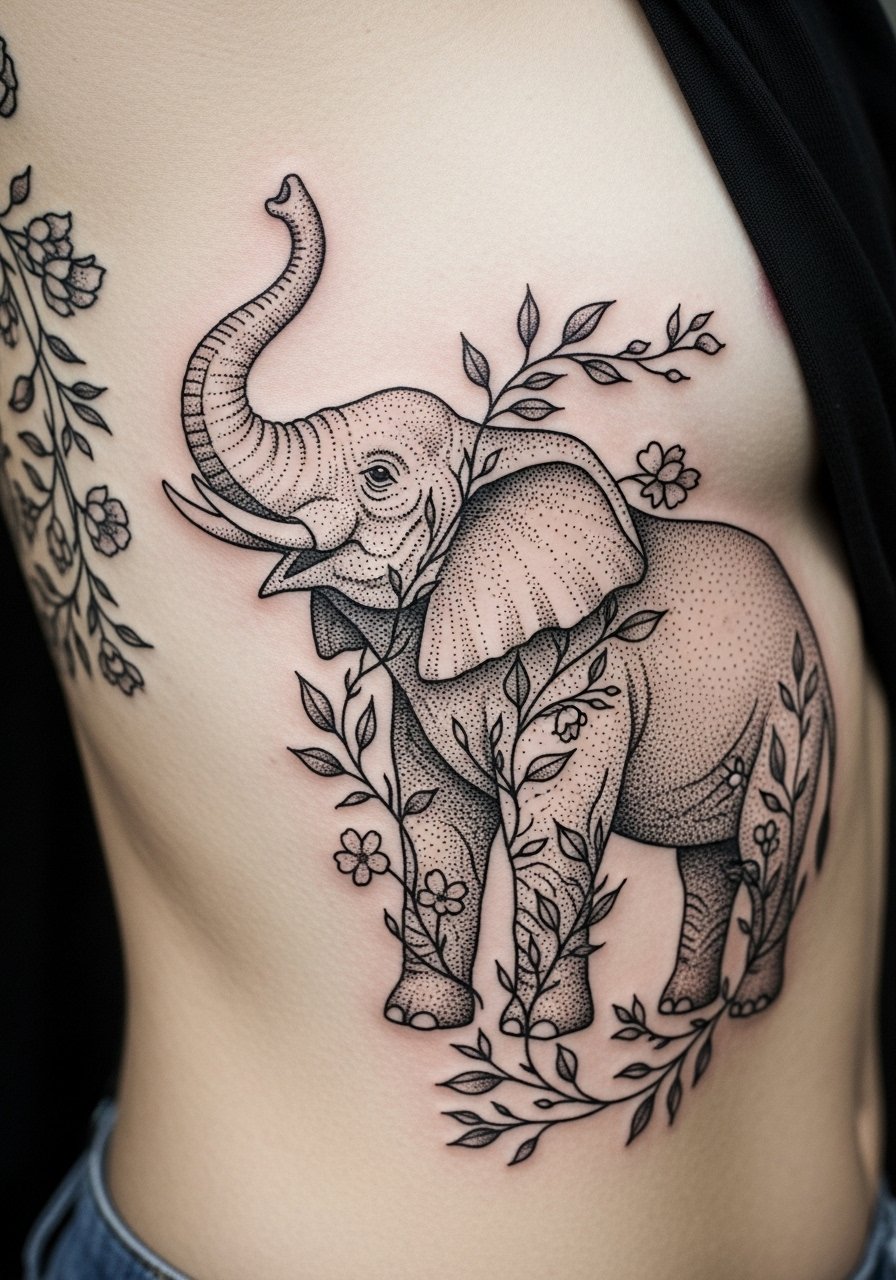
Stipple shading gives texture without heavy saturation, ideal for organic vine work. Expect the rib side to be a higher pain zone and count on a longer session for all the dot work. A usual mistake is asking for stipple at too large a scale, which reduces contrast and flattens the piece. During consultation say you want variation in dot density for depth and keep the vines spaced to age well. At six months stipple settles into a soft texture and at two years the density may need top-ups to keep contrast. This is for people who like tactile shading rather than solid fills.
9. Linework Mandala Elephant on Sternum with Floral Crown
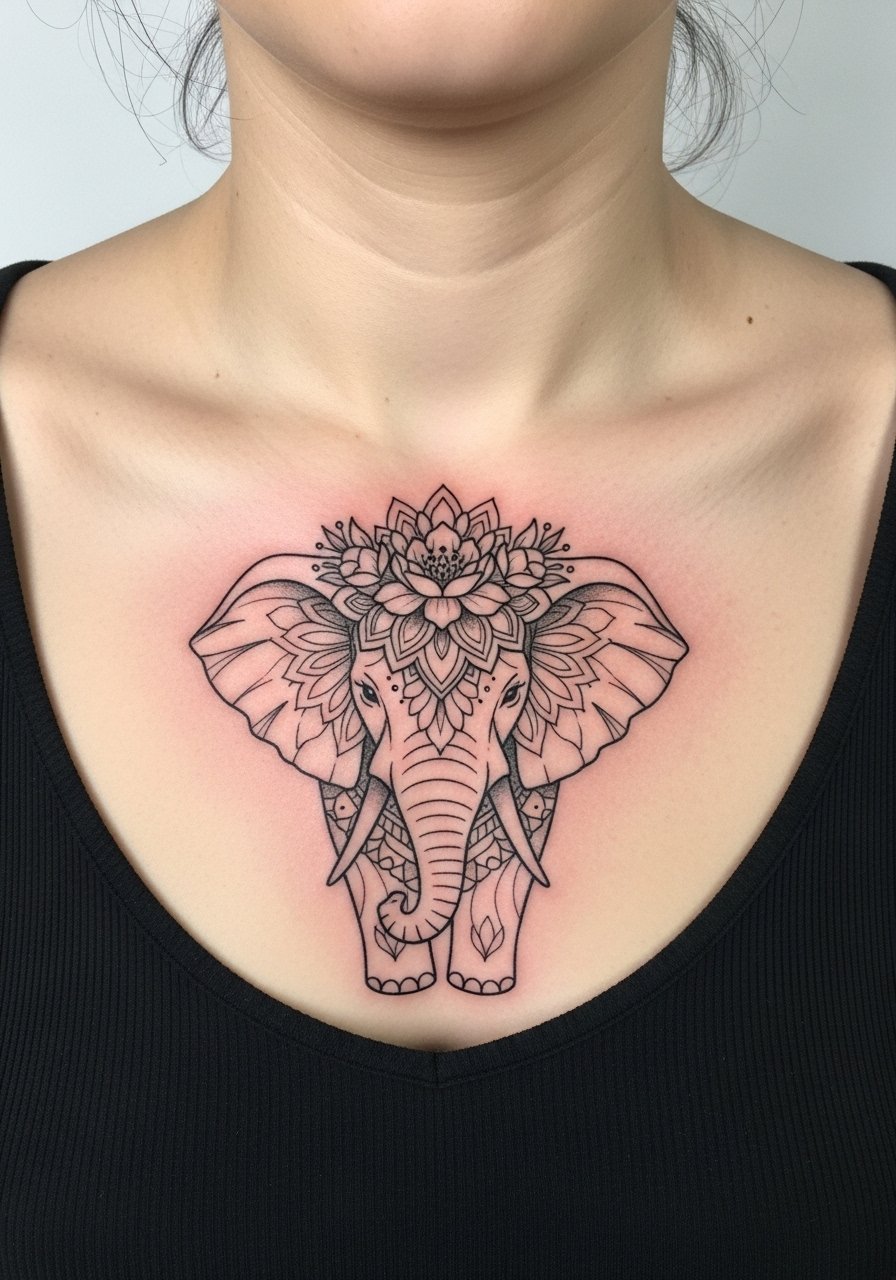
Sternum placements are intimate and can be more painful. A mandala elephant there uses radial linework for a centered, chest-hugging effect with a floral crown above the head. Artists debate sternum fine-line success. One camp argues thin mandala lines blur quickly due to skin tension. The other camp says careful spacing and deeper, even depth preserves radial geometry. Ask where your artist falls and request balanced spacing in the mandala arcs. At six months the symmetry should be apparent and at year three you may plan a touch-up on primary arcs. Choose this if you want a central, bold chest statement that follows rib expansion.
10. Neo-Traditional Elephant Bust with Sunflowers on Thigh Side
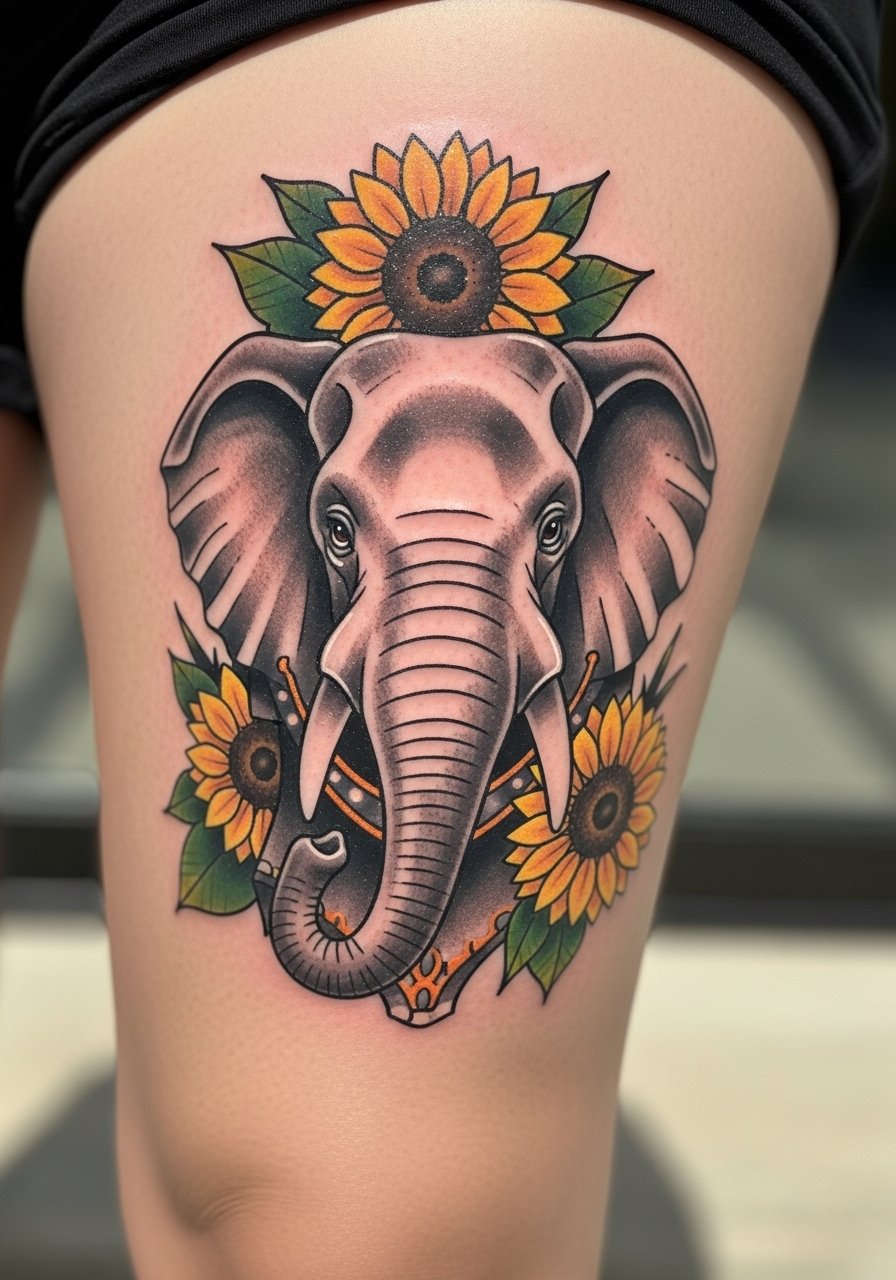
Neo-traditional blends classic outlines with painterly color for a lively thigh piece. Outer thigh is forgiving for longer sessions and has moderate pain. People often ask for too many tiny color blends which creates muddiness after healing. Tell your artist you want saturated color fields for the sunflowers and controlled gradients only in the elephant skin. At six months the colors should be rich and even, and at two years bright hues may need a refresh depending on sun exposure. This design is great for those who want big floral statements with a representational elephant bust.
11. Single-Line Continuous Elephant with Tiny Rose on Ankle
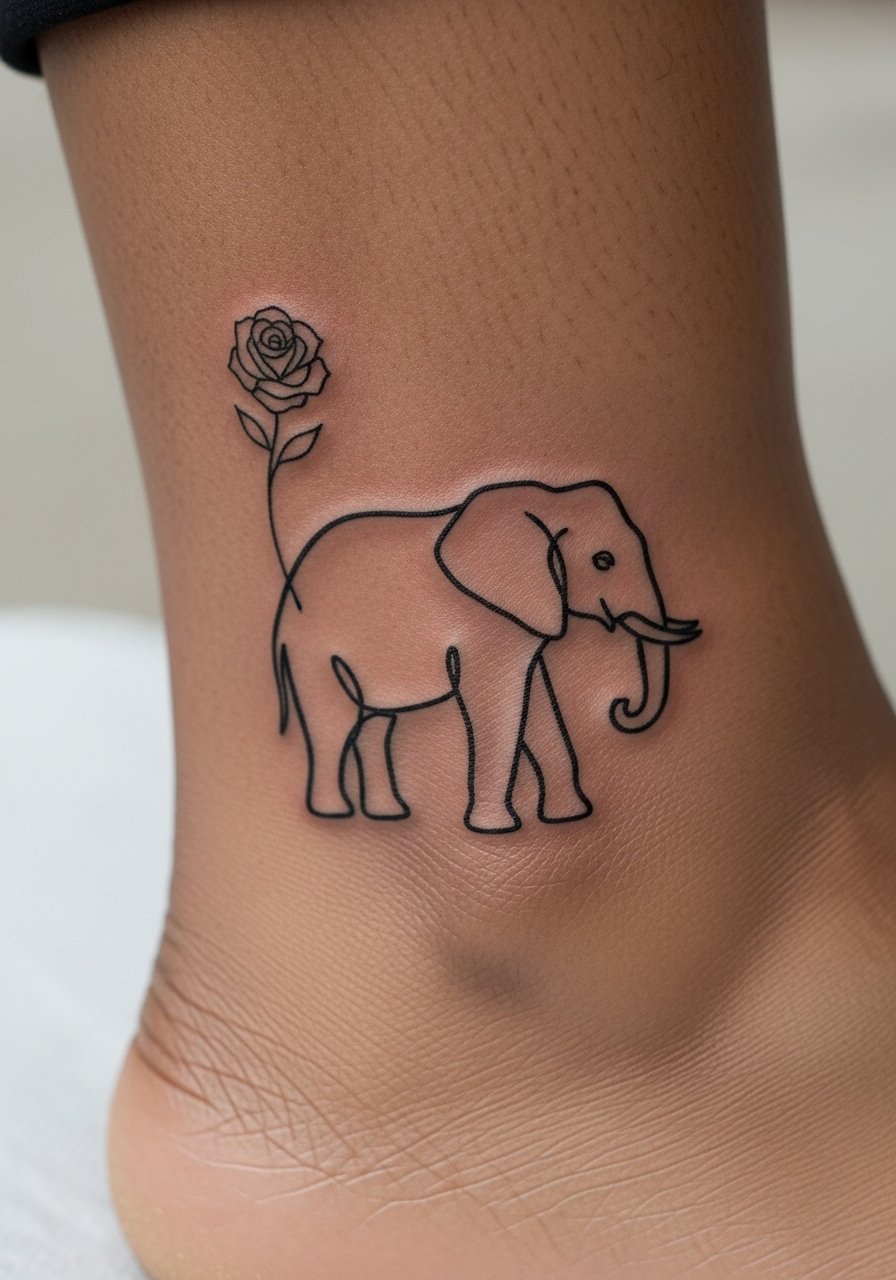
Ankle tattoos are notorious for fading fast because of friction and exposure. The continuous single-line elephant makes a graceful, low-detail piece with a small rose for balance. Pain is moderate and sessions are short. The regular mistake is asking for hairline single strokes that do not hold on the ankle. Ask for a modest increase in line weight and a small halo of stippling around the rose so it reads longer. At six months edges should still be clear and at one to two years you may need a refresh depending on footwear wear. This is a good pick for a subtle, travel-friendly ink.
12. Watercolor Splash Elephant with Peonies Across Collarbone
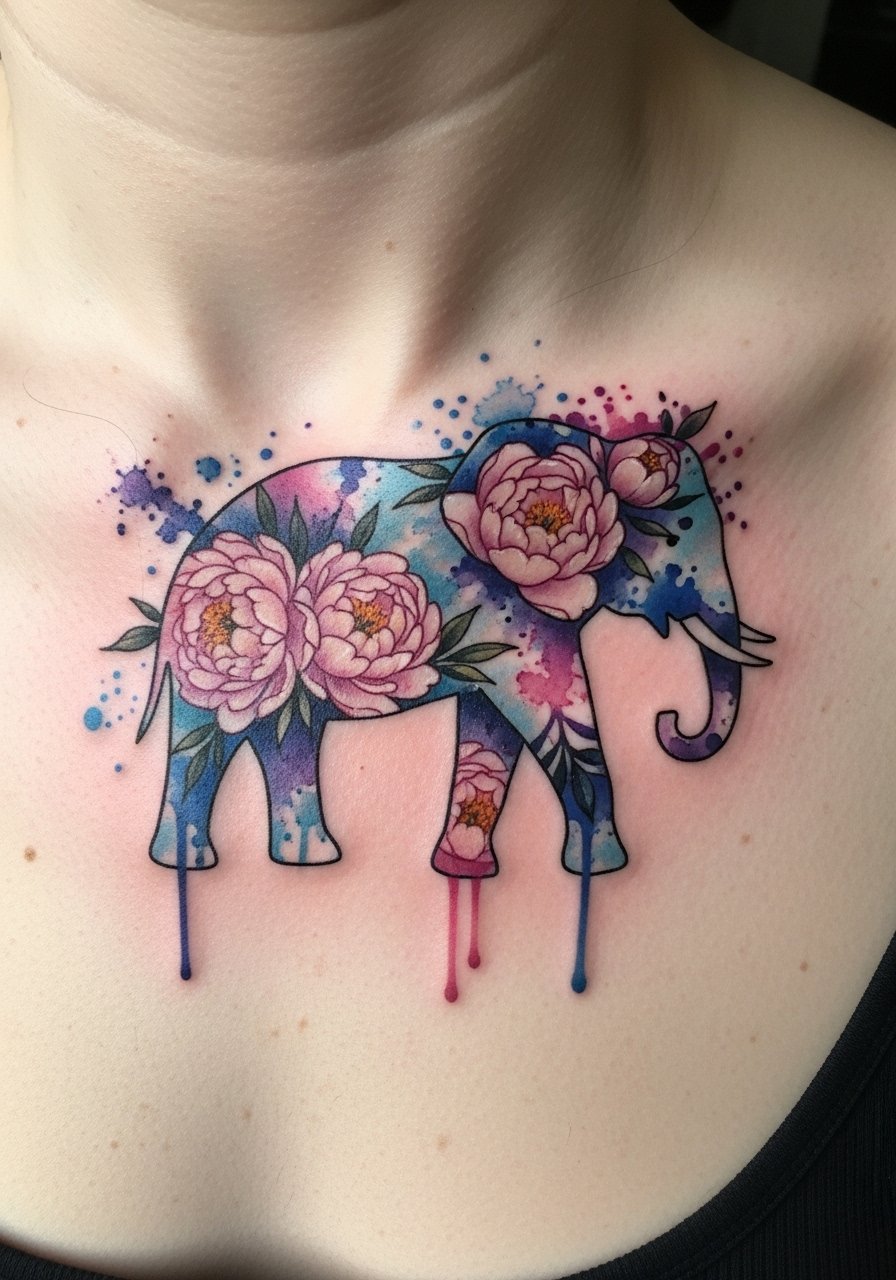
Most watercolor tattoos from five years ago look like faded bruises now. This collarbone take adds peonies with controlled wash work and a faint line skeleton under the color to keep form. Artists are split on watercolor technique. One camp says loose washes without line anchors fade into blotches. The other camp points to layered washes over fine line as a method that keeps shape. Ask for light line anchors under the washes and specify color saturation at the petal bases. At six months the washes should feel skin-like and at two years expect gentle fading. Collarbone placement can be delicate but shows beautifully under tops and shirts.
13. Dot-work Elephant with Poppy Field on Upper Back
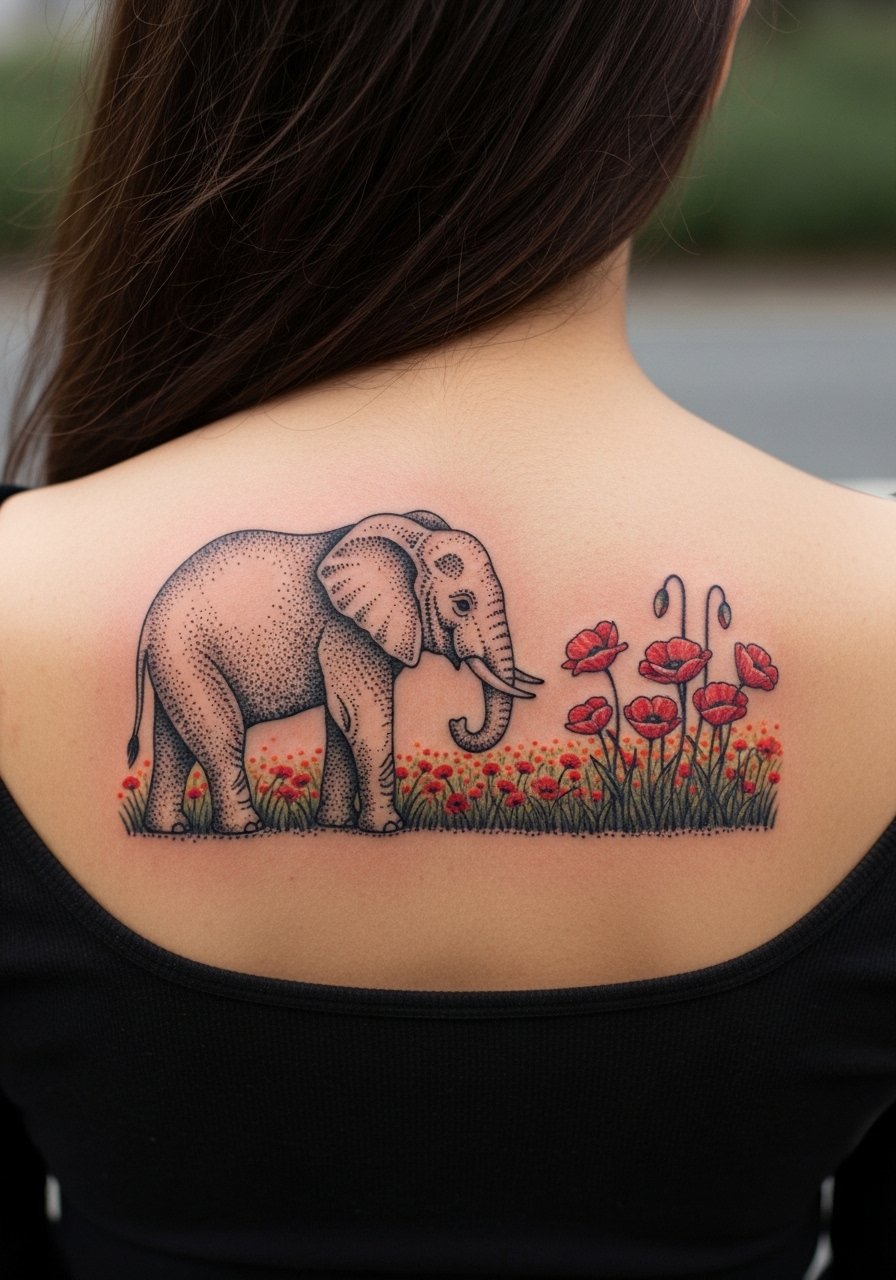
Upper back pieces give room to breathe, which suits dot-work and field motifs. The dot-work elephant here uses stipple to suggest volume while poppies add a horizontal floral band. Pain is low to moderate and session time varies with coverage. A common error is requesting ultra-fine dots at a large scale, which loses contrast from a distance. Ask for varied dot sizes and a stronger silhouette edge so the elephant does not vanish against the poppies. At six months the texture should read cohesive and at three years you may want to refresh key silhouette lines. This is for someone who wants a balanced, landscape-like composition.
14. Mini-Realism Elephant with Lavender Sprigs on Inner Wrist
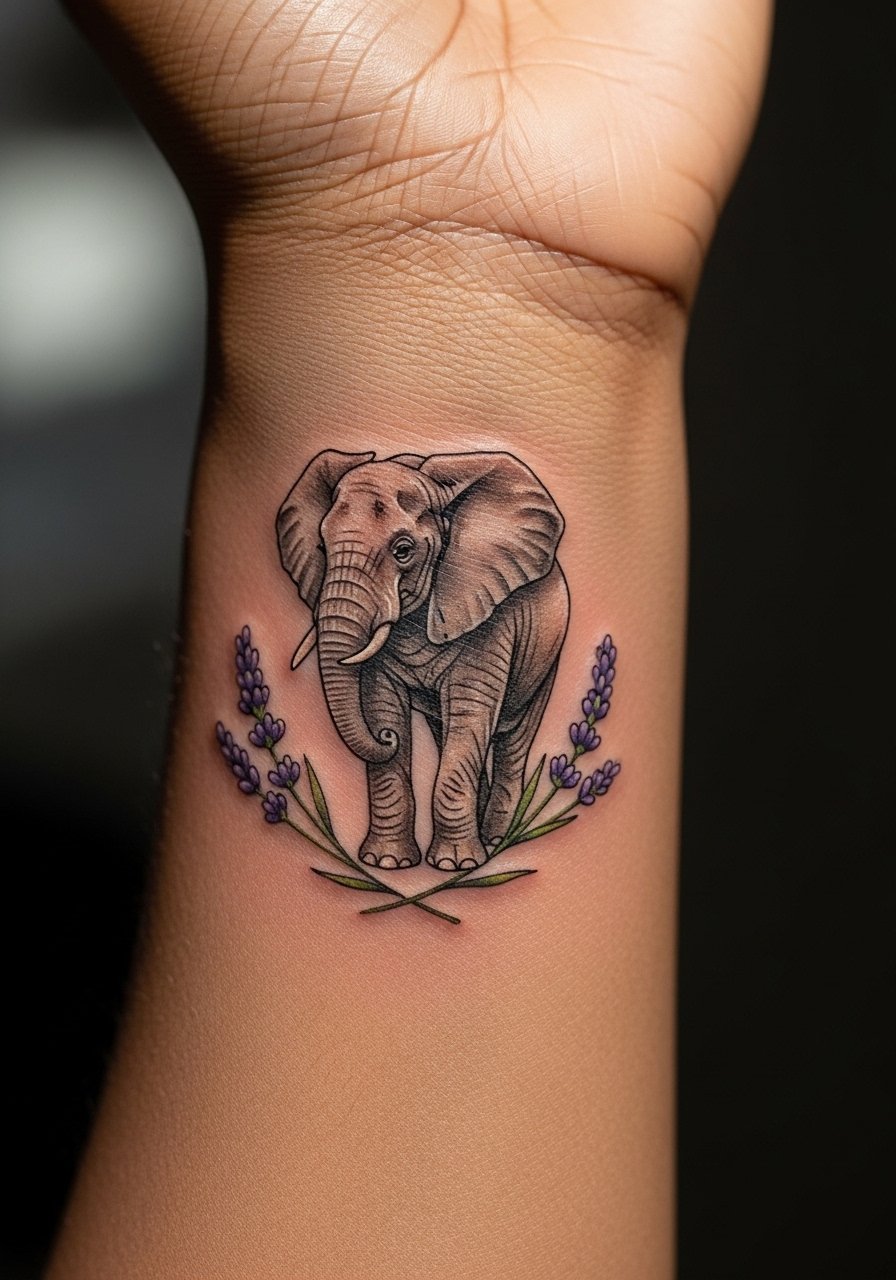
Inner wrist is a high-visibility spot and often sensitive. Mini-realism keeps the elephant compact with tiny lavender sprigs for vertical flow. The common mistake is overloading detail in a space that moves constantly. During your consult ask for slightly bolder key contours and simplified internal shading to resist blowout. At six months the mini-real elements should still be readable and at two years thin internal shading may need retouch. This one fits people who want a small, meaningful wrist piece that pairs well with bracelets and watches.
15. Floral Crown Elephant Head on Upper Arm with Mixed Flowers
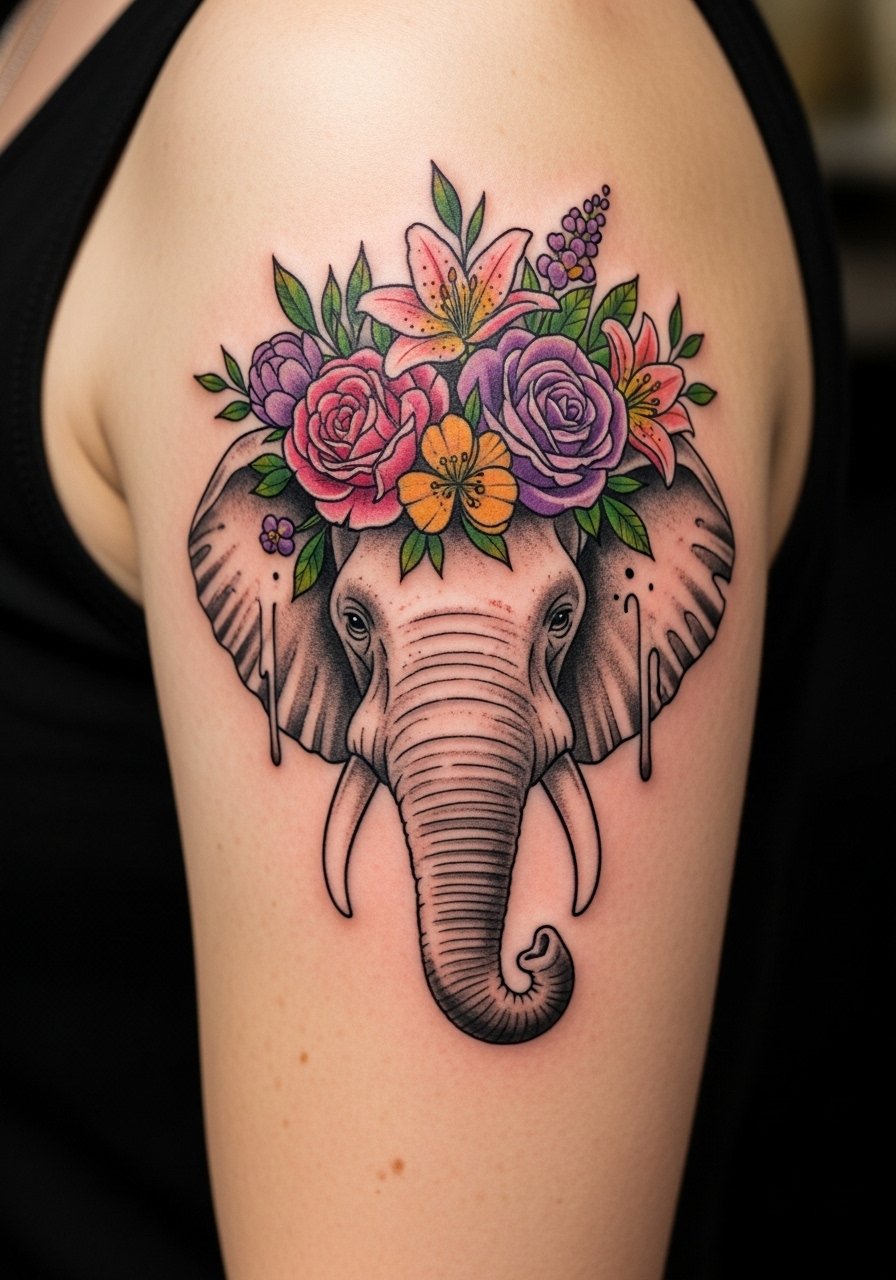
There is visual satisfaction in a balanced floral crown sitting above an elephant head on the outer arm. The outer arm takes medium pain and allows layered flower types like roses, peonies, and small filler blossoms. A mistake is packing too many tiny filler flowers without distinct shapes, which muddies after healing. Tell your artist you want three primary flowers with negative space between clusters and leave the fillers minimal. At six months the crown should frame the head clearly and at three to five years strong outline maintenance will keep the crown readable. This is a friendly option for someone who wants a colorful, wearable arm piece.
Tattoo Prep and Aftercare Essentials
Lightweight fragrance-free balm for daily moisturizing. Use during the peeling phase for comfort and to prevent excessive scabbing. Apply a thin layer a few times a day after cleaning.
Medical-grade second skin bandage sheets, assorted sizes. Useful for the first 24 to 72 hours on areas that rub against clothing, and helps reduce infection risk.
Gentle, fragrance-free foaming cleanser for tattooed skin. Clean twice a day to keep the tattoo free of bacteria without stripping moisture.
Unscented silicone-based moisturizing balm, smaller indie brand style. Works well when you need a breathable occlusive that does not trap moisture.
Non-adhesive sterile gauze pads for pressure or accidental bleeding. Keep on hand for the first day in case of spotting or to protect fresh ink while changing clothing.
Lightweight SPF mineral stick for healed tattoos. Use after full healing to protect color and saturation during sun exposure.
Aquaphor Healing Ointment, small tube. A single mainstream option that some artists still recommend for short-term use when monitored closely.
Every tattoo is different. Always follow your artist's specific aftercare instructions. Consult a dermatologist if you have skin concerns or unusual healing issues.
Frequently Asked Questions
Q: Will a fine-line elephant with flowers blur faster if I place it on my ribcage or sternum?
A: It depends on the artist and your skin. From what I have seen, ribs and sternum are higher-movement areas so very thin lines can soften faster. Ask your artist to space lines slightly wider and to anchor delicate floral edges with faint stipple or slightly heavier contour so the composition maintains shape.
Q: Do watercolor-style elephant tattoos need different aftercare than a traditional piece with bold outlines?
A: Not dramatically different, but watercolor areas benefit from strict sun avoidance during healing. Keep cleanses gentle, moisturize with a light balm, and use mineral SPF once healed. For wash-based color ask your artist whether they layer light lines under the wash to preserve form over time.
Q: How often should I expect to touch up a blackwork elephant versus a neo-traditional floral piece?
A: Touch-up needs vary by placement and sun exposure. In my experience bold blackwork can hold longer on thighs and upper arms and may need fewer touch-ups. Color-heavy neo-traditional florals on exposed spots like collarbone or forearm often need re-saturation sooner. Plan for a possible touch-up at two to five years depending on care.
Q: Are dot-work and stipple shading good choices on dark skin tones for elephant portraits with flowers?
A: Yes, dot-work can look beautiful on darker tones when contrast is planned. Request higher contrast in primary contours and avoid relying solely on tiny dots for the main silhouette. Artists experienced with darker skin tones can map shading so the piece reads clearly.
Q: If I want a compact ankle elephant with a rose, what should I ask my artist to avoid future blowout?
A: Ask for slightly heavier primary lines and reduced internal micro-detail. Mention blowout concerns and request minimal needle passes near the bone to lower the chance of ink spreading. A skilled artist will scale the design to the ankle's motion and friction profile.
Q: Where should I look to find artists who specialize in elephants with floral elements if I do not want to name-check specific people?
A: Use local directories and hashtags to discover portfolios. Search location-based tags, check convention lineups, and look through portfolio galleries on artist directories to find someone who shows consistent elephant anatomy and floral work across healed photos. A consultation will reveal technique and aftercare expectations.