
I spent months circling surreal tattoo feeds before I realized my real problem was separating dreamlike ideas that last from ones that blur into a muddy memory. These 27 surreal tattoos are the ones I kept saving. They feel dreamlike, but they also hold up healed in day-to-day life. Use them for reference when you sit down with your artist.
This list focuses on surreal tattoos that mix fine line, micro-realism, and blackwork. Most designs work well on forearms, ribs, thighs, and calves. From what I’ve seen, artists in 2026 are pushing layered surrealism with negative space and muted color palettes, the styles that tend to age cleaner.
1. Fine Line Floating Eye on Inner Forearm
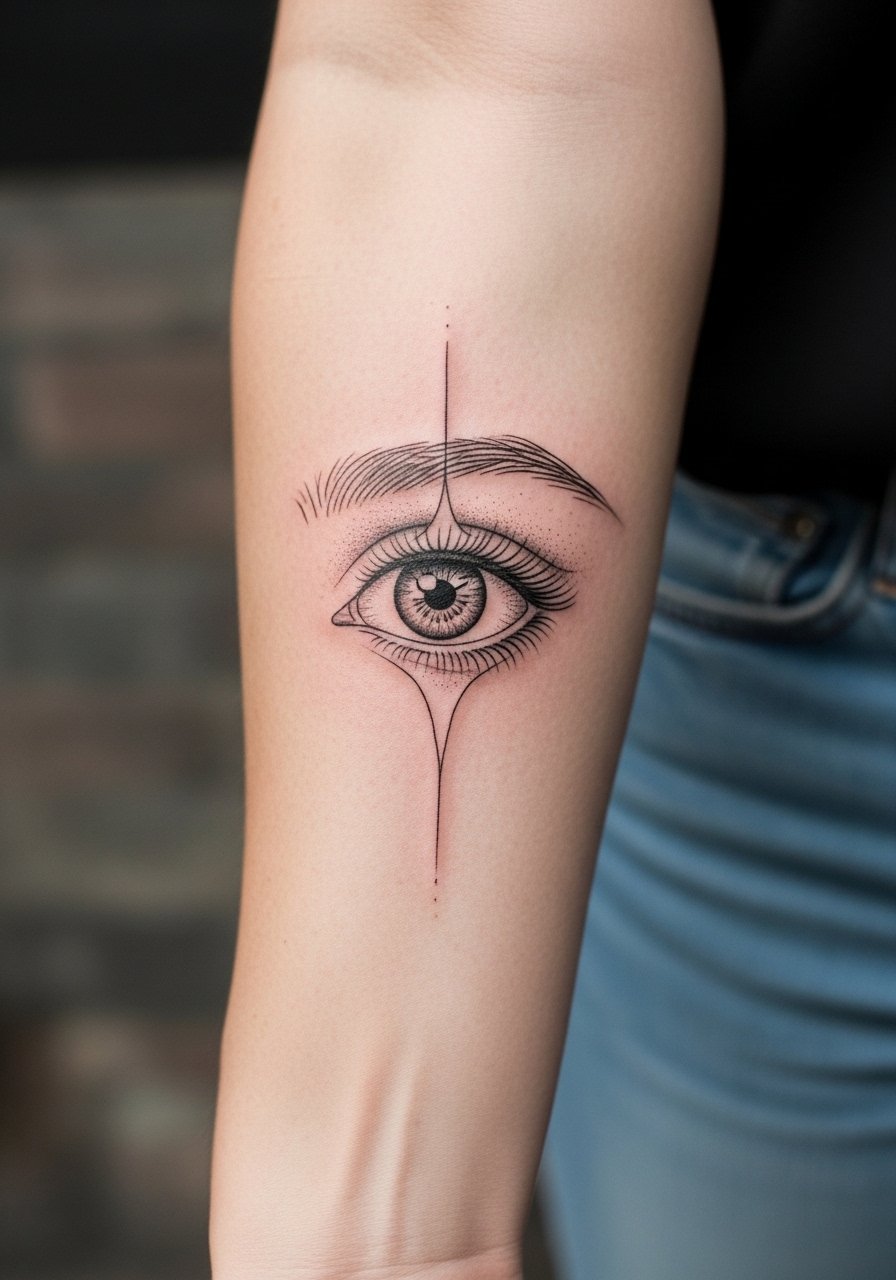
I first saw this on a friend, and the tiny floating eye reads like a secret. The fine line technique keeps it delicate. Pain on the inner forearm is mild to moderate. Expect a 30-60 minute session. Tell your artist you want varied line weight so the lashes don’t blur into a single line over time. A common mistake is making the pupil too small. That fades and muddies in two years. At six months the lines soften. At two years you’ll see minor spread if lines are single hair thin. Ask for slightly bolder primary lines and light dotwork shading. Artists who specialize in micro-line work do this best.
2. Micro-Realism Surreal Portrait on Upper Arm
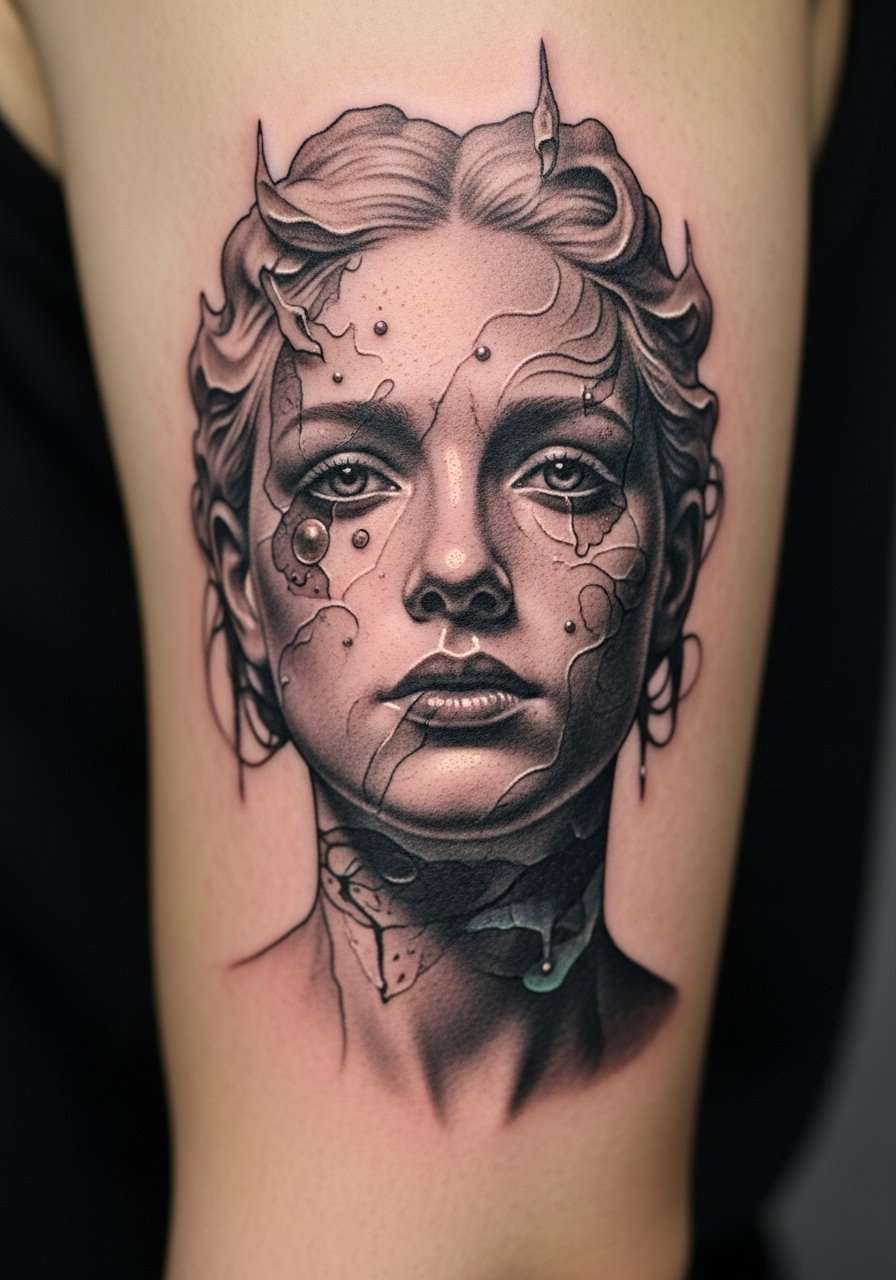
Fair warning, upper arm portraits can take multiple sessions. I chose this placement after seeing how well skin there holds tone. Micro-realism works when the artist uses tiny contrast points, not slavish photo copy. Pain is low. Sessions run 2-4 hours. Ask your artist for reference photos with clear light and shadow. A bad version has flat gray without contrast, which looks dull after a year. In my experience, portraits need touch-ups around year two. The right artist will plan staged sessions and discuss how pigment will rest in skin. Don’t ask for ultra-tiny faces if you want longevity.
3. Blackwork Surreal Landscape on Ribcage
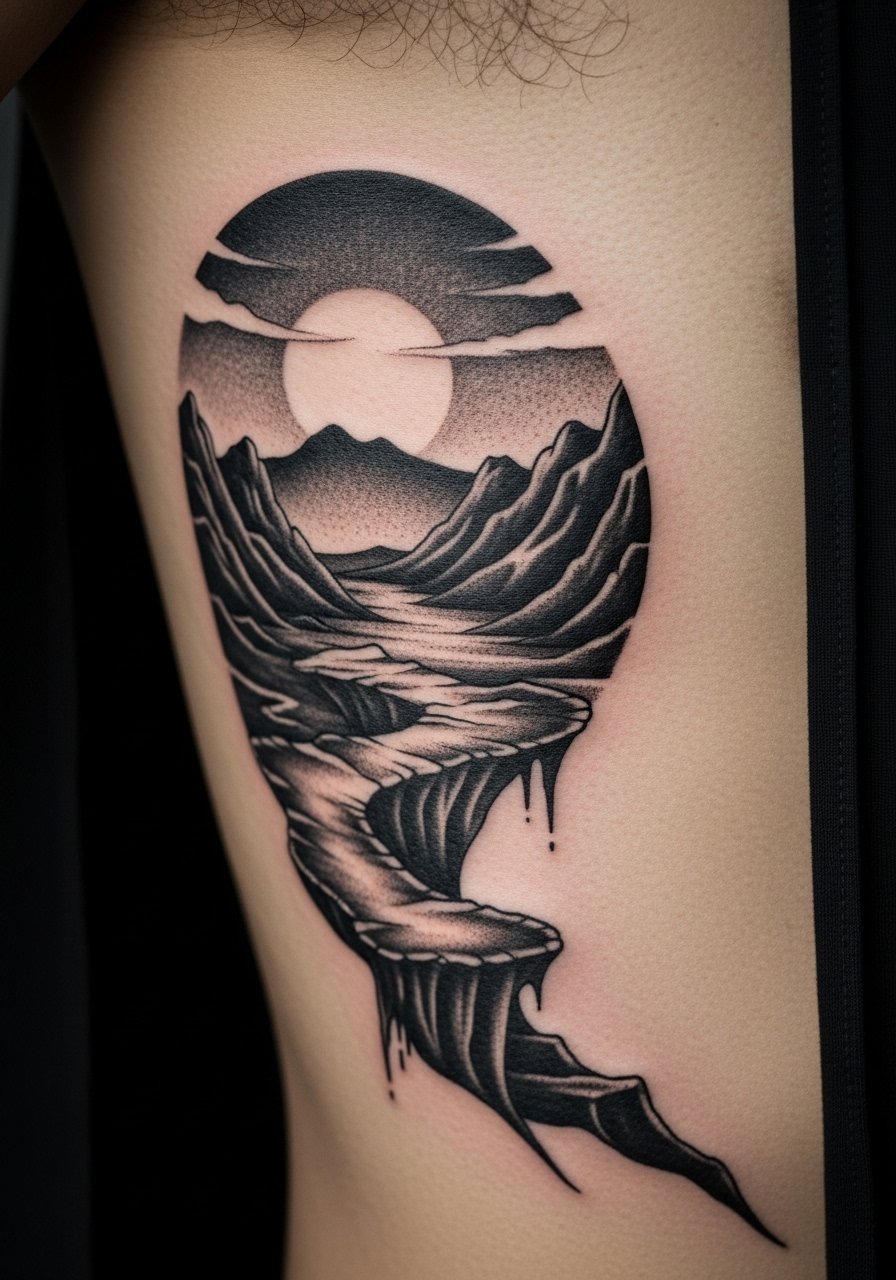
Fair warning, the ribcage is painful. Pain often rates 7 out of 10 from what I’ve heard. The result has a cinematic, dreamlike sweep when done in solid blackwork. Sessions vary, often 2-5 hours. Tell your artist you want bold negative space to preserve shape as it ages. A frequent error is thin line detail inside large blacks. Those thin lines fill in and disappear. At six months the black looks saturated. At two years small internal details will soften. This placement suits people who want a private piece that peeks under clothing. Look for artists known for consistent black saturation.
4. Watercolor Melting Clock on Outer Thigh
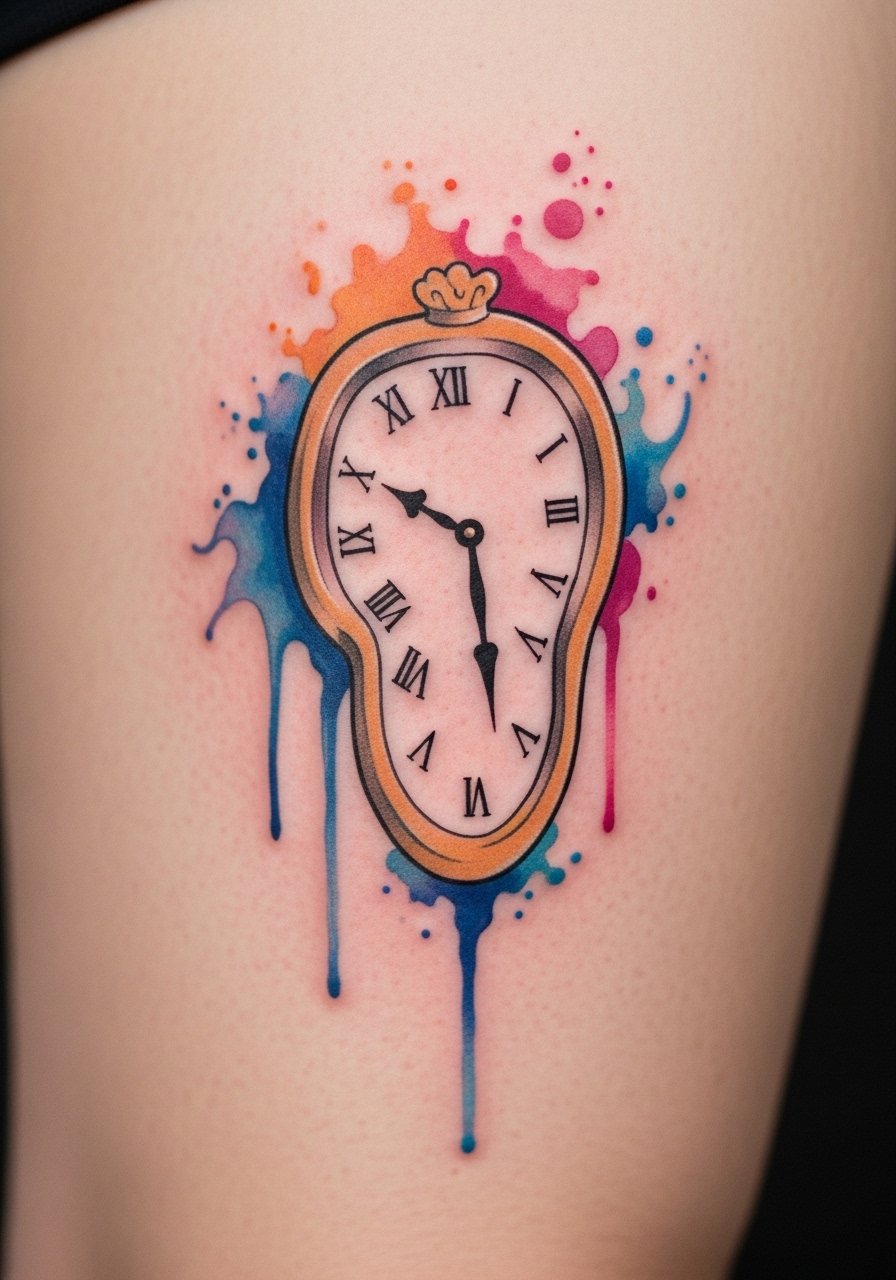
Most watercolor tattoos from older trends bleed into a bruise. I like this thigh version because the skin there holds color better. Pain is moderate. Sessions usually 1-2 hours. Ask for pigment layering and crisp anchor lines around the clock face. The mistake I see is no strong anchor, then colors drift and look like a stain. At six months colors will soften. At two years expect some settling, especially pink and yellow tones. Artists I trust will advise adding a subtle black outline to help the design read after healing. For longevity, avoid too many pastel washes.
5. Minimalist Line Art Dream City on Ankle
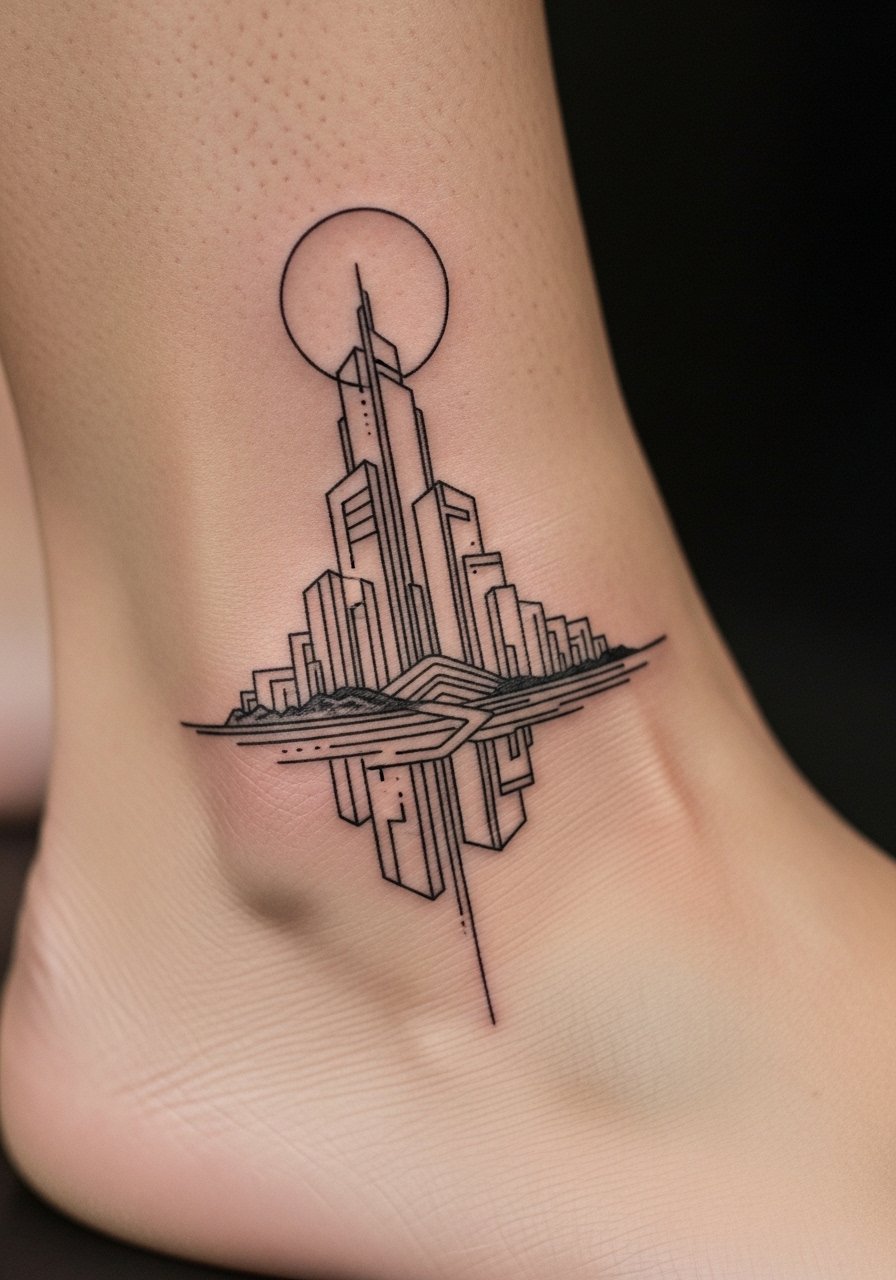
I first bookmarked this on a traveler's account. The ankle is a small canvas, so keep the city skyline simplified. Pain is sharp but short. Sessions are under an hour. Tell your artist you want intentional spacing between structures. A common mistake is jamming in too many windows. That looks messy after one year. At six months lines soften a bit. At two years tiny architectural lines can merge. This design ages better on the inner ankle than the outer because of friction from shoes. Choose an artist who excels at minimal architectural lines.
6. Micro-Illustrative Surreal Sleeve on Full Arm
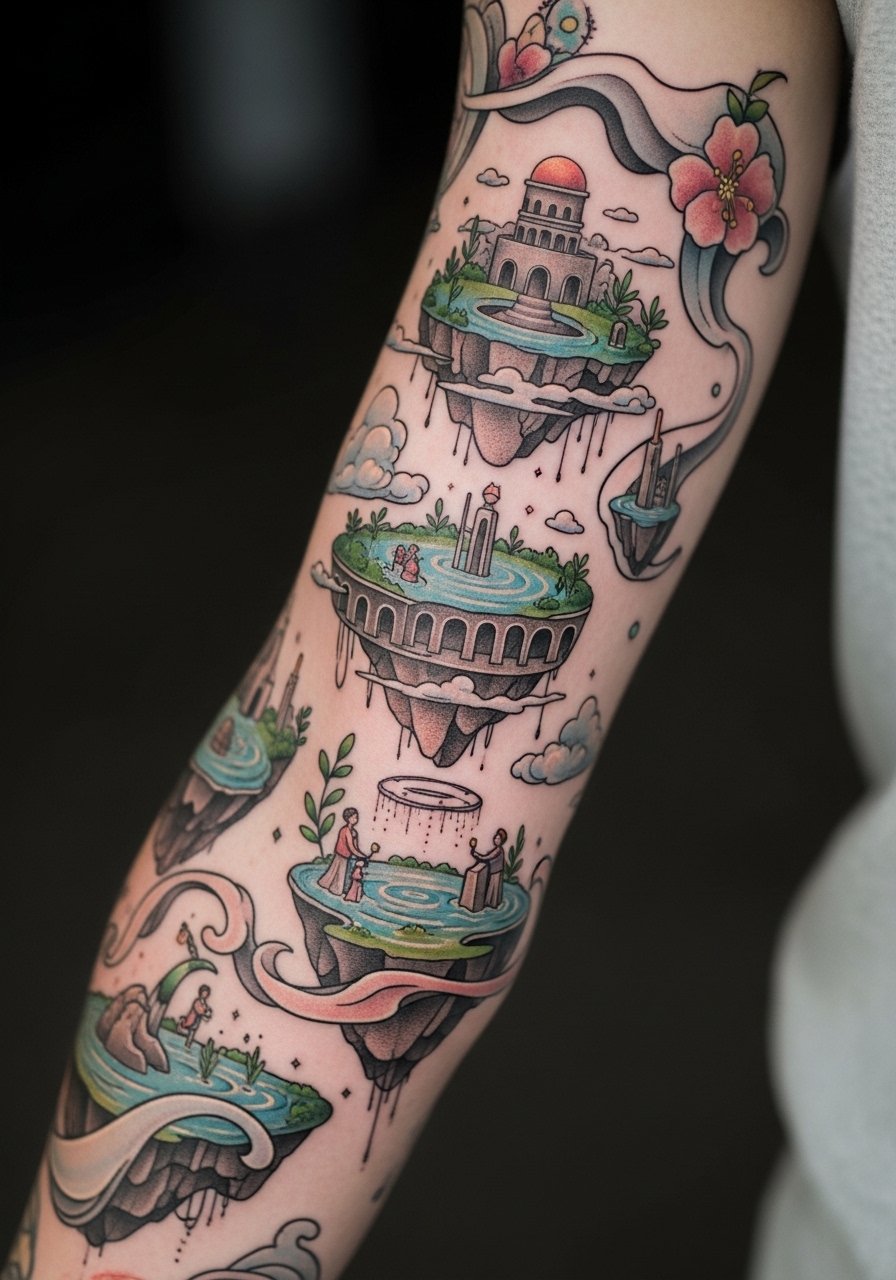
When I saw a sleeve like this in a shop window, I realized surreal elements read best when they flow. A sleeve requires several sessions across months. Expect variable pain depending on areas. Tell your artist about the narrative you want, and ask for composition sketches. People often try to cram too many small elements. That creates visual clutter and speeds fading. At six months the sleeve will start to look cohesive. At two years expect some lines to soften across the bicep. Plan for touch-up sessions. Artists who can map negative space and use varied contrast are key for this.
7. Neo-Traditional Surreal Creature on Calf
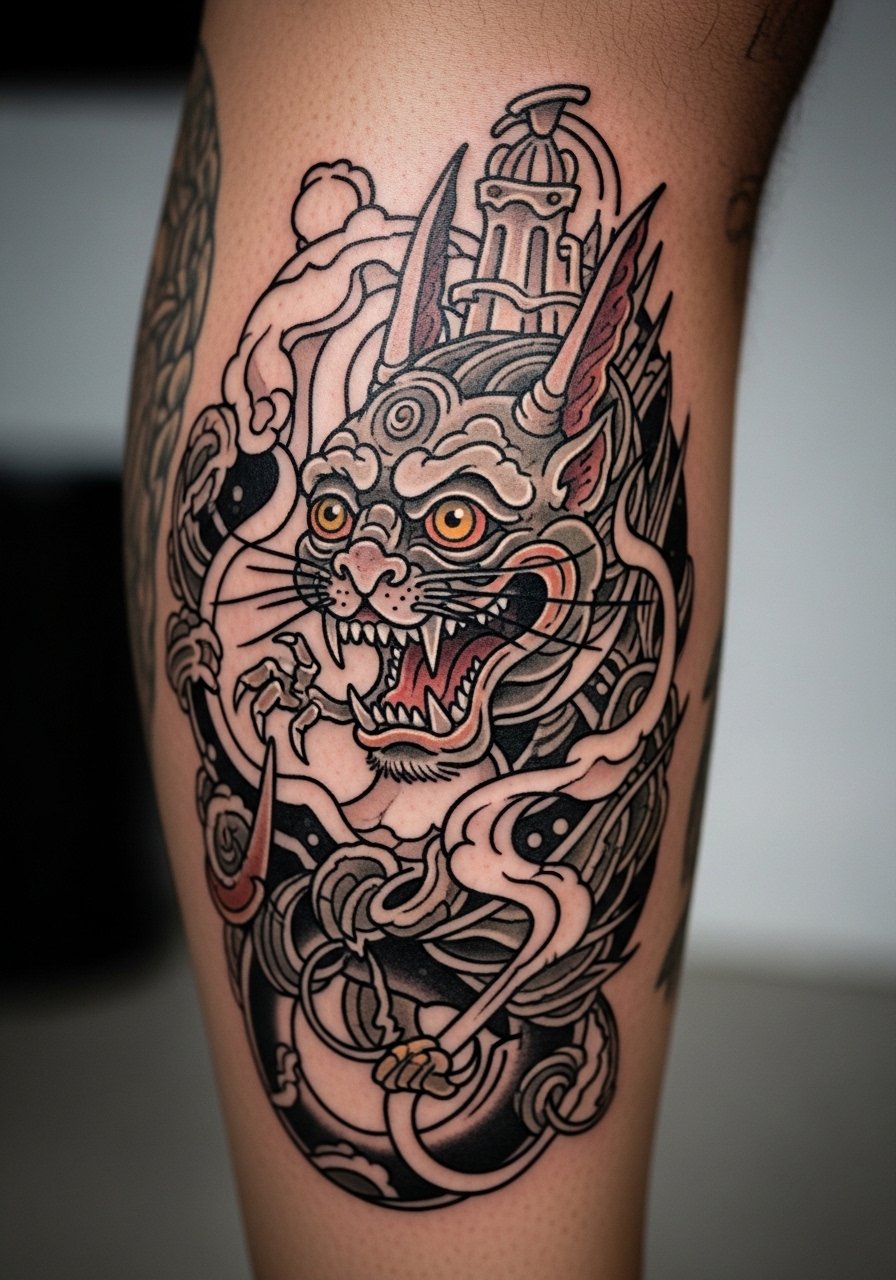
There is something about bold outlines combined with dreamy subject matter that reads from a distance. The calf tolerates solid fill well and heals reliably. Pain is moderate. Sessions are 1.5-3 hours. Ask for clean bold outlines and slightly muted color fills. A mistake is using overly bright fills that fade to uneven patches. From what I've seen, muted pigments age more gracefully. At six months colors look softer. At two years outlines keep the form while fills may need refresh. Request an artist experienced in neo-traditional color saturation.
8. Surreal Botanical Double Exposure on Sternum
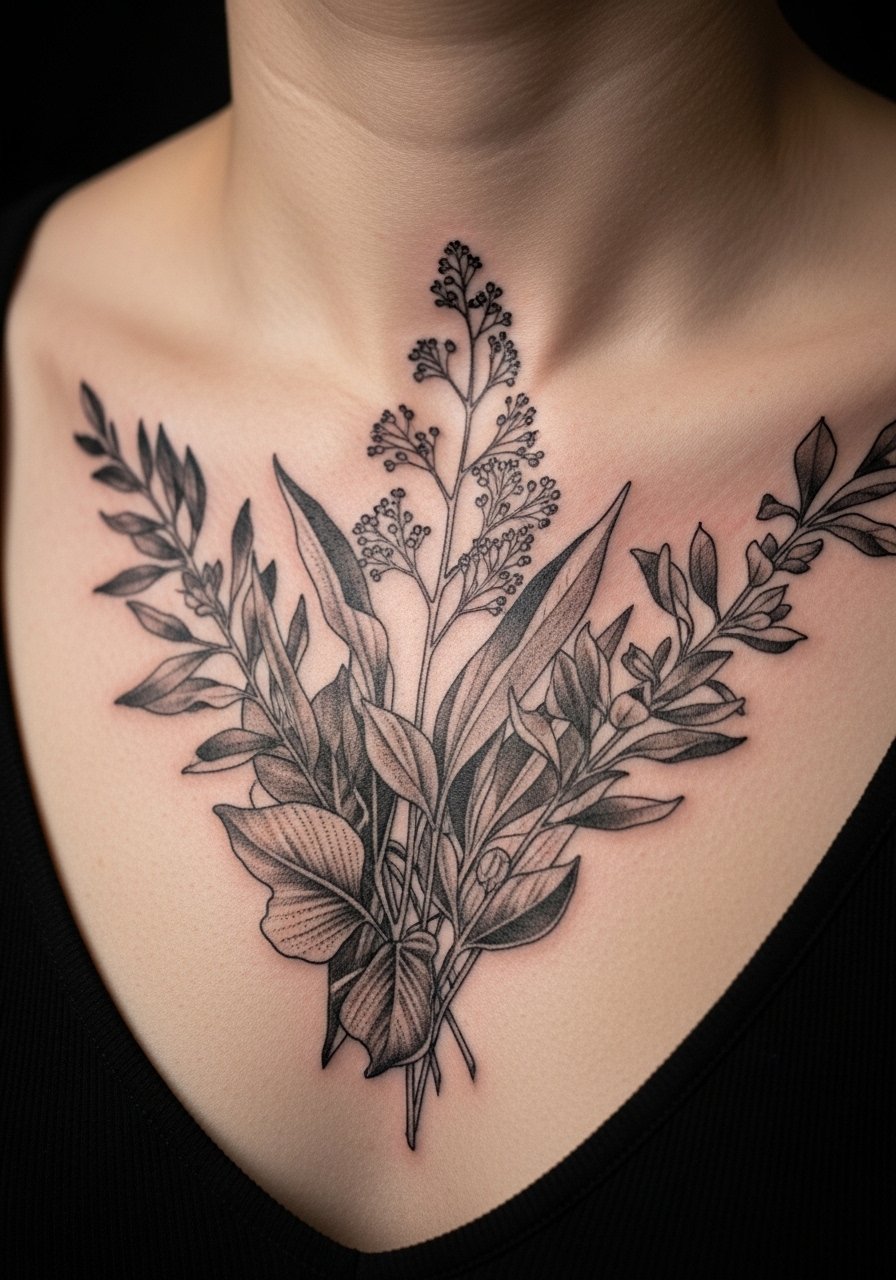
I discovered this style at a convention booth. The sternum gives a centered, intimate look. Pain is high on the sternum. Sessions usually 1-3 hours. During consultation say you want clear separations between layers so the double exposure effect survives healing. A common mistake is too much fine cross-hatching in overlapping areas. That blurs into noise. At six months the layered elements start to blend slightly. At two years contrast loss can hide details, so plan for bolder midtones. Artists who map value rather than tiny detail will produce a longer-lasting effect.
9. Blackwork Collage on Upper Back
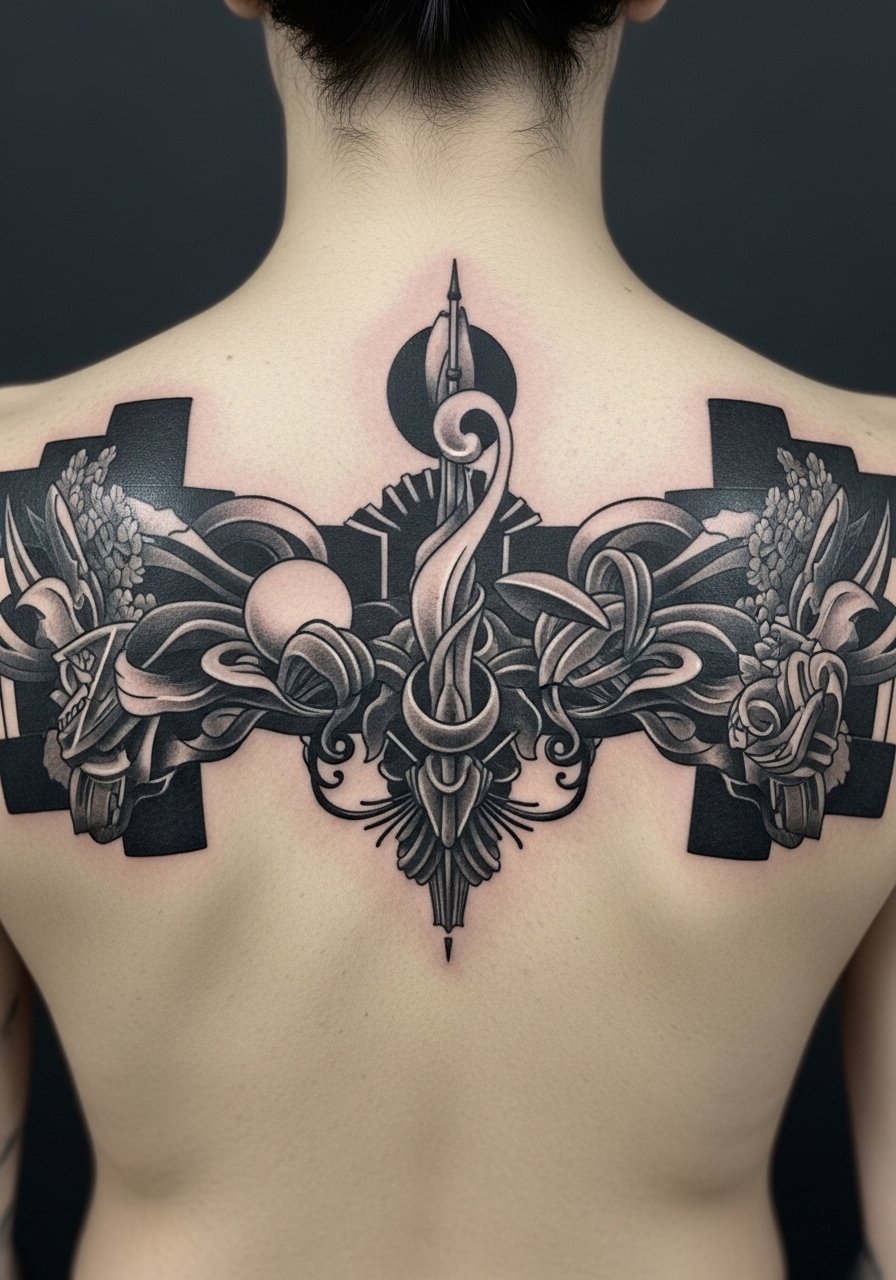
The upper back is a forgiving canvas. I recommend blackwork for surreal collages because the strong contrast keeps forms readable. Pain is low to moderate. Sessions can be long. Tell your artist you need clear breathing room between motifs. I see collages fail when elements are crammed. At six months the blacks look uniform. At two years smaller interior lines inside solid blacks may have softened. Ask for bold separations and consider adding subtle color highlights if you want variety. This placement works great if you plan future extensions.
10. Surreal Geometric Mandala on Sternum
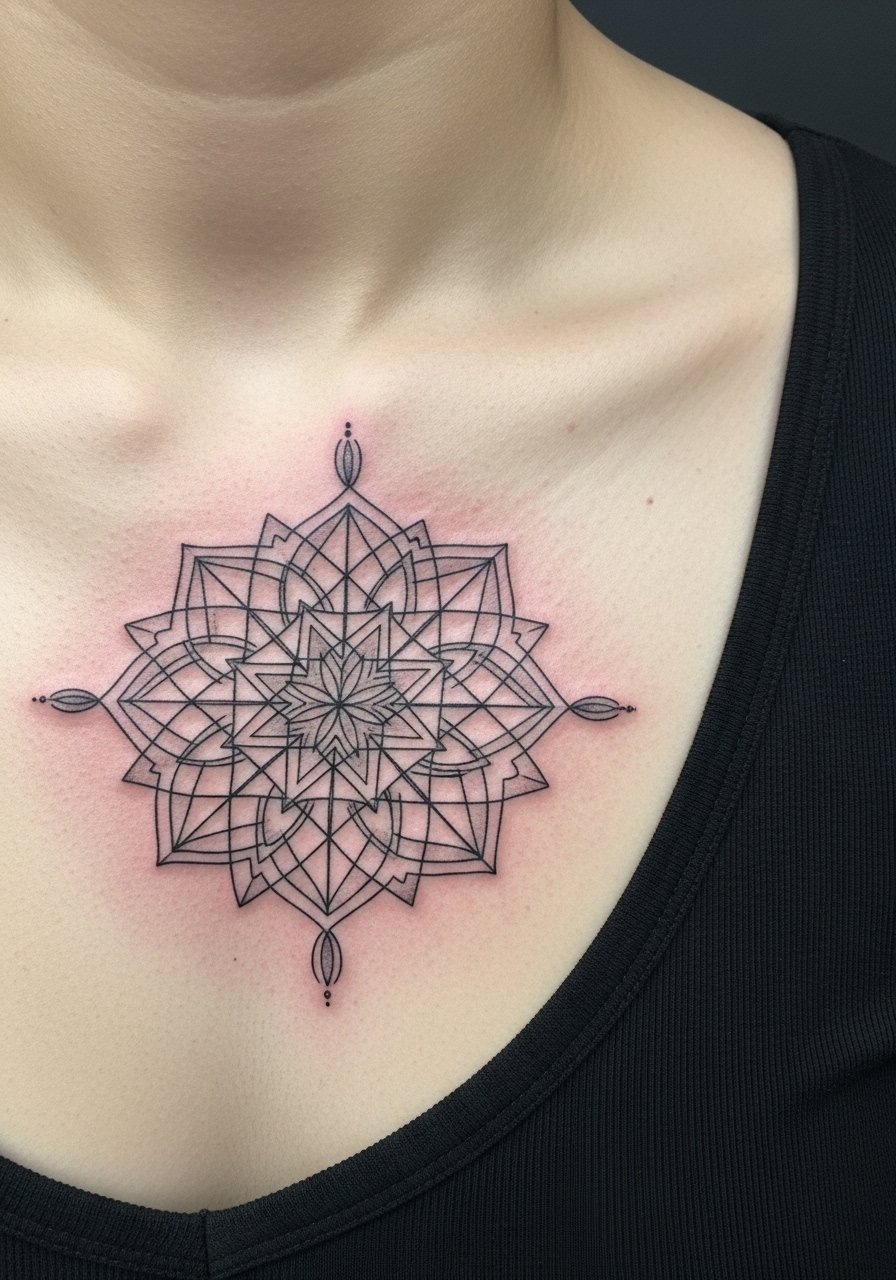
When an artist showed me one of these, I noticed symmetry matters more than tiny detail. The sternum is painful, and the center can take longer to heal. Sessions vary. Tell your artist you want slightly thicker primary lines to preserve geometry as it ages. A mistake is tiny radiating lines too close together. They merge in a year. At six months the symmetry holds. At two years the thin spokes may blur. Choose an artist who uses measured spacing and has experience with mandala symmetry.
11. Surreal Astral Scenes on Upper Thigh
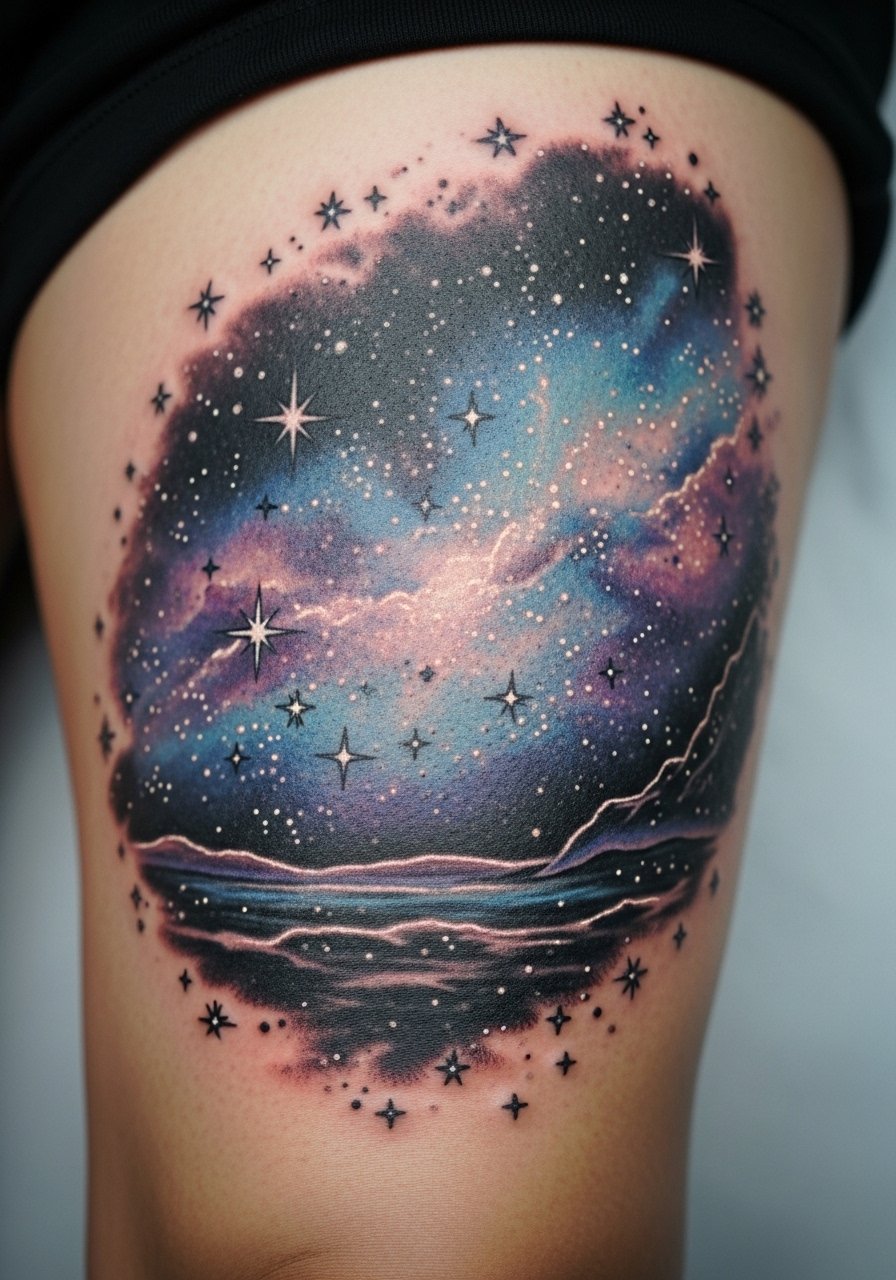
The thigh is one of my favorite spots for dreamy astral pieces. The canvas is large and low-friction. Pain is low. Sessions run 1-3 hours. Ask your artist to lock in bright white highlights and crisp black stars. A common mistake is relying on pale white highlights only. Those disappear. At six months gradients become softer. At two years small white dots may need touch-ups. Artists who layer pigments thoughtfully can keep stars popping for years. Thigh versions age better than hip or lower leg ones.
12. Minimal Surreal Symbol Behind Ear
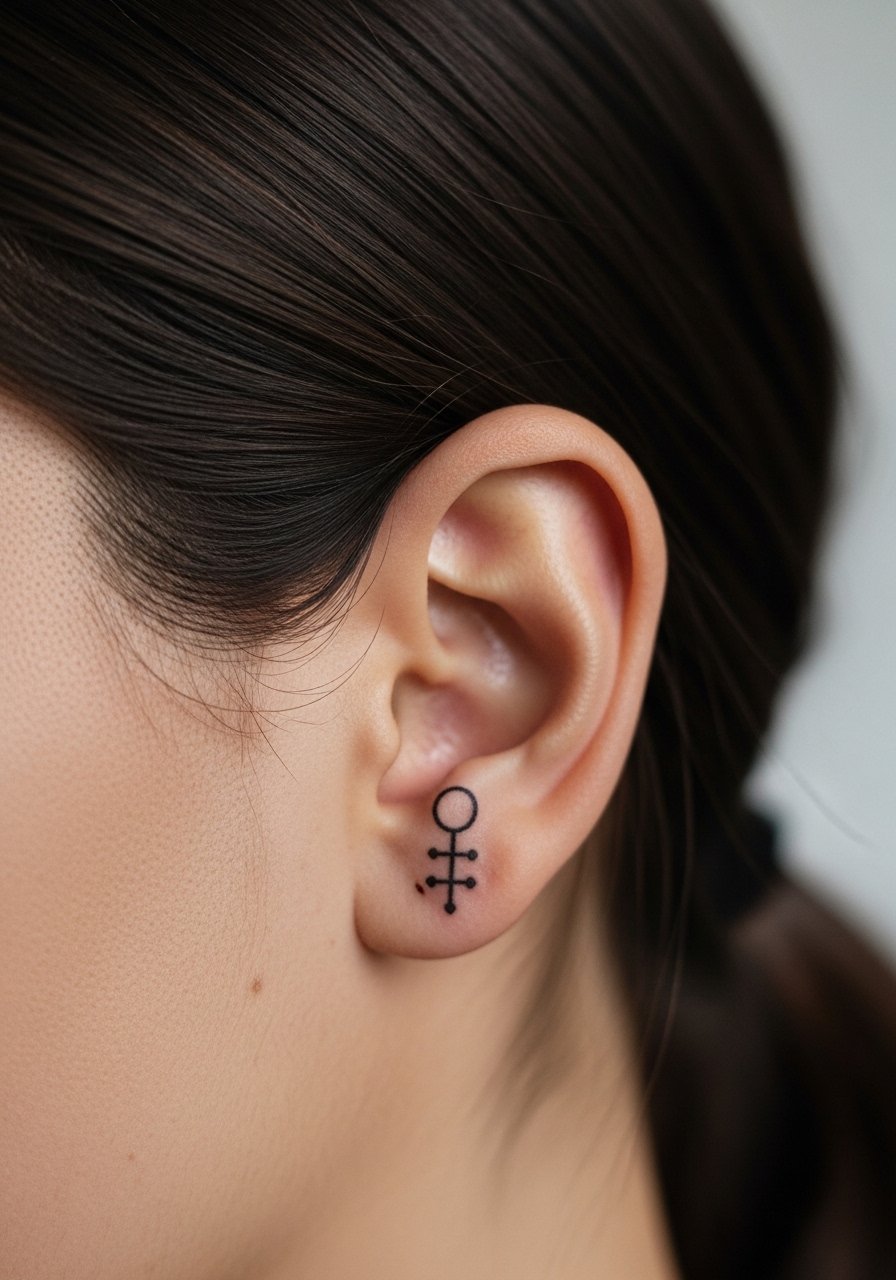
I heard about people getting tiny surreal symbols for private meanings. Behind the ear is sharp pain but short sessions. Expect 15-30 minutes. Tell your artist you want single-line continuity and not to pack too much detail. The mistake I often see is over-detailing a tiny area, then it blurs. At six months things look a bit softer. At two years tiny details may become blobs. This is best for someone who wants subtlety and is prepared for occasional touch-ups.
13. Surrealist Negative Space Spine Piece
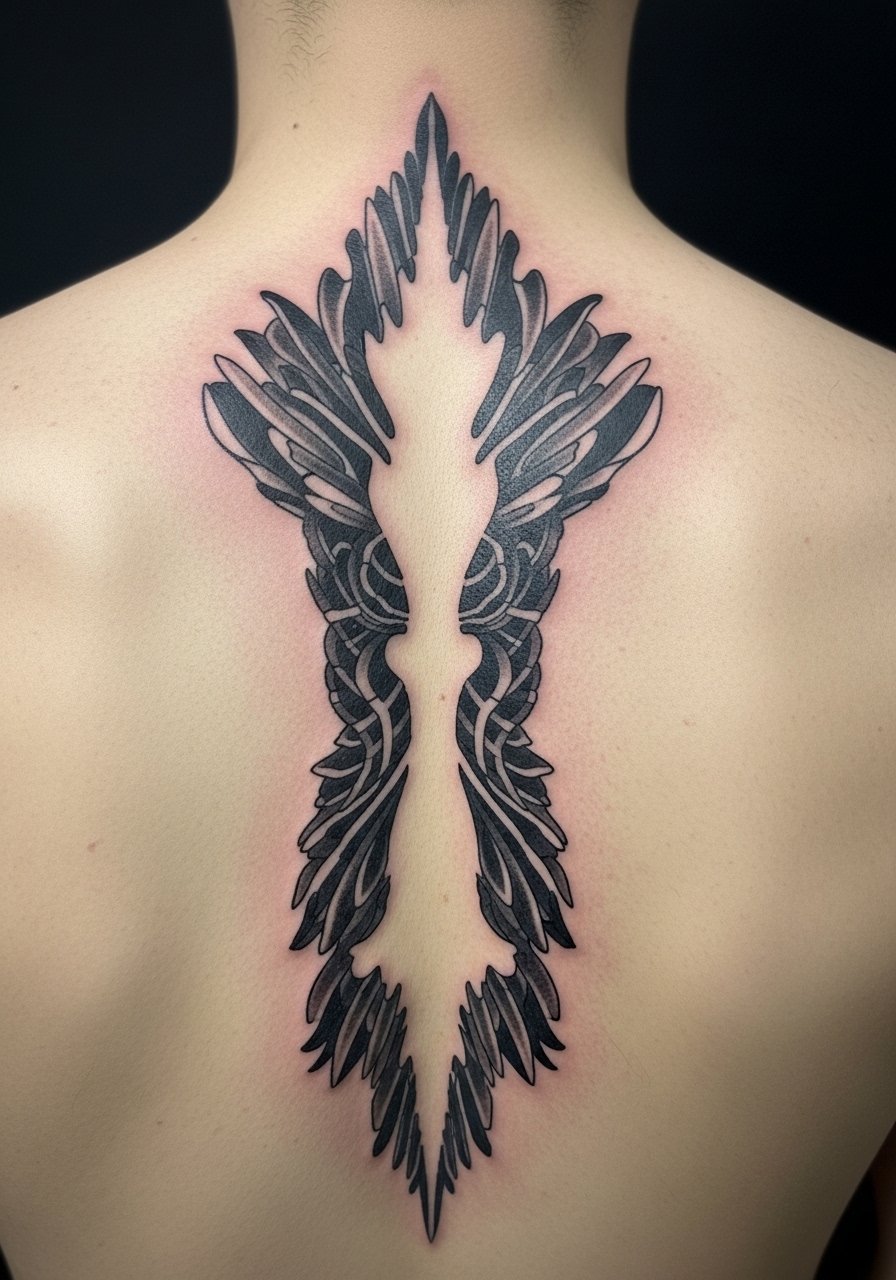
There is a dramatic feel to negative space designs down the spine. Pain can be high near the vertebrae. Sessions are split across visits. I advise asking the artist to plan the piece as modular panels. A common mistake is making panels too small. Small panels lose definition faster. At six months the negative space remains strong. At two years small thin elements may fade. In my experience, artists who can draft modular layouts preserve the overall composition over time. Placement is striking in open-back clothing.
14. Surreal Animal Hybrid on Shoulder Blade
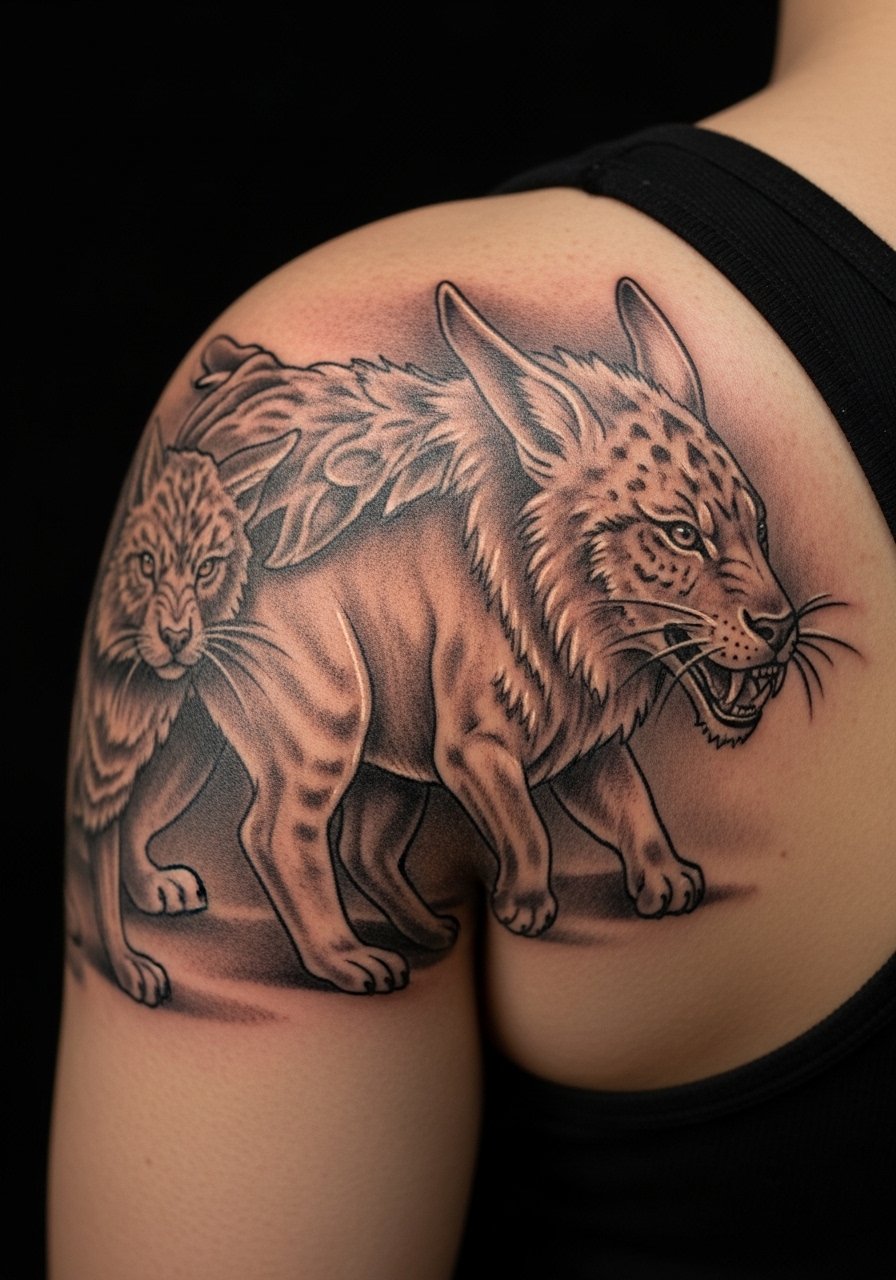
I first loved this because hybrids tell stories. Shoulder blade placement is stable and holds detail. Pain is moderate. Sessions 1-2 hours. During the consult ask the artist how each animal's texture will be rendered, so fur does not become gritty shading later. A mistake is too many tiny fur strokes. Those can blur into gray patches. At six months the textures settle. At two years expect some softening. Choose an artist who textures intentionally rather than overworking tiny strokes.
15. Micro-Realism Floating Objects on Forearm
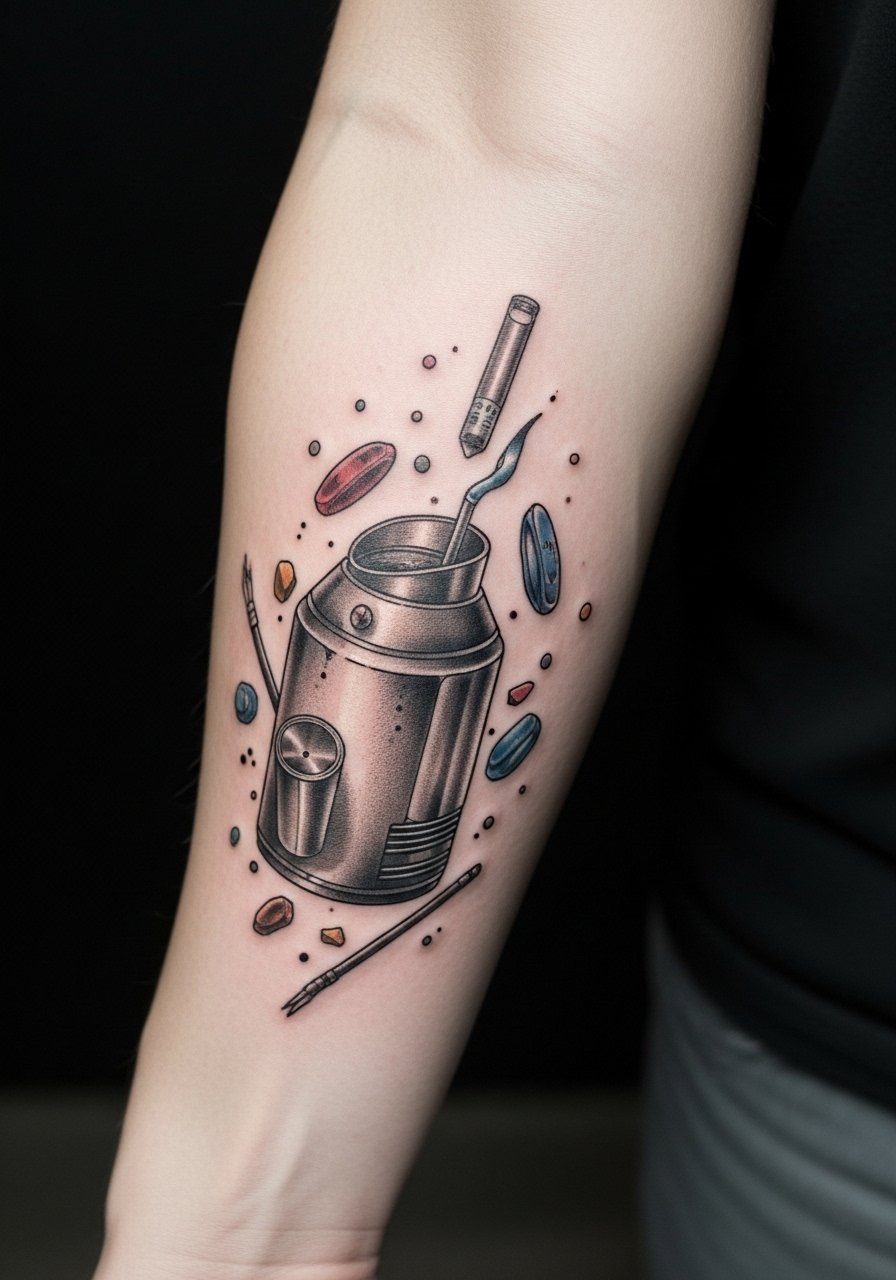
I loved how these floating objects look when photographed in natural light. The forearm is a display area that heals predictably. Pain is mild. Sessions vary 45-120 minutes. Tell your artist you want clear cast shadows to anchor objects in space. A typical error is flat objects missing shadows, which makes them look pasted on. At six months the shadows soften. At two years tiny shadow lines will need refresh. Artists experienced in micro-realism and light behavior will get a believable float.
16. Glitch Surreal Portrait on Chest
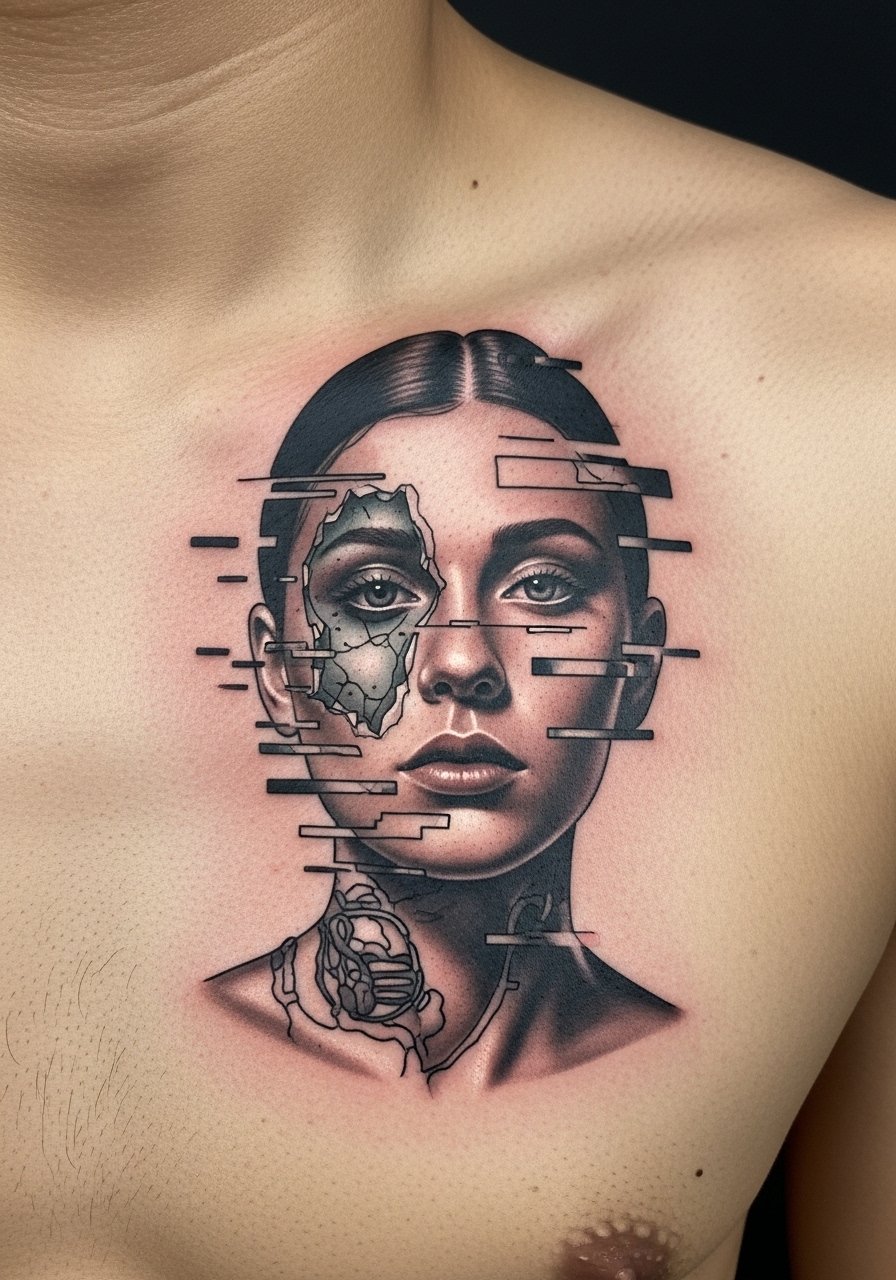
I saw a glitch portrait on a collector who wore it like a story. The chest gives a bold central placement. Pain is moderate to high near the sternum. Sessions are multi-hour. Ask for clear anchor lines in the portrait so the fragmented areas don’t dissolve. People often request too-fine glitches. Those lose separation and look like smudges. At six months the breaks still read. At two years the fine separation can fade. Discuss staged sessions and touch-up strategy with your artist.
17. Surreal Botanical Ankle Band
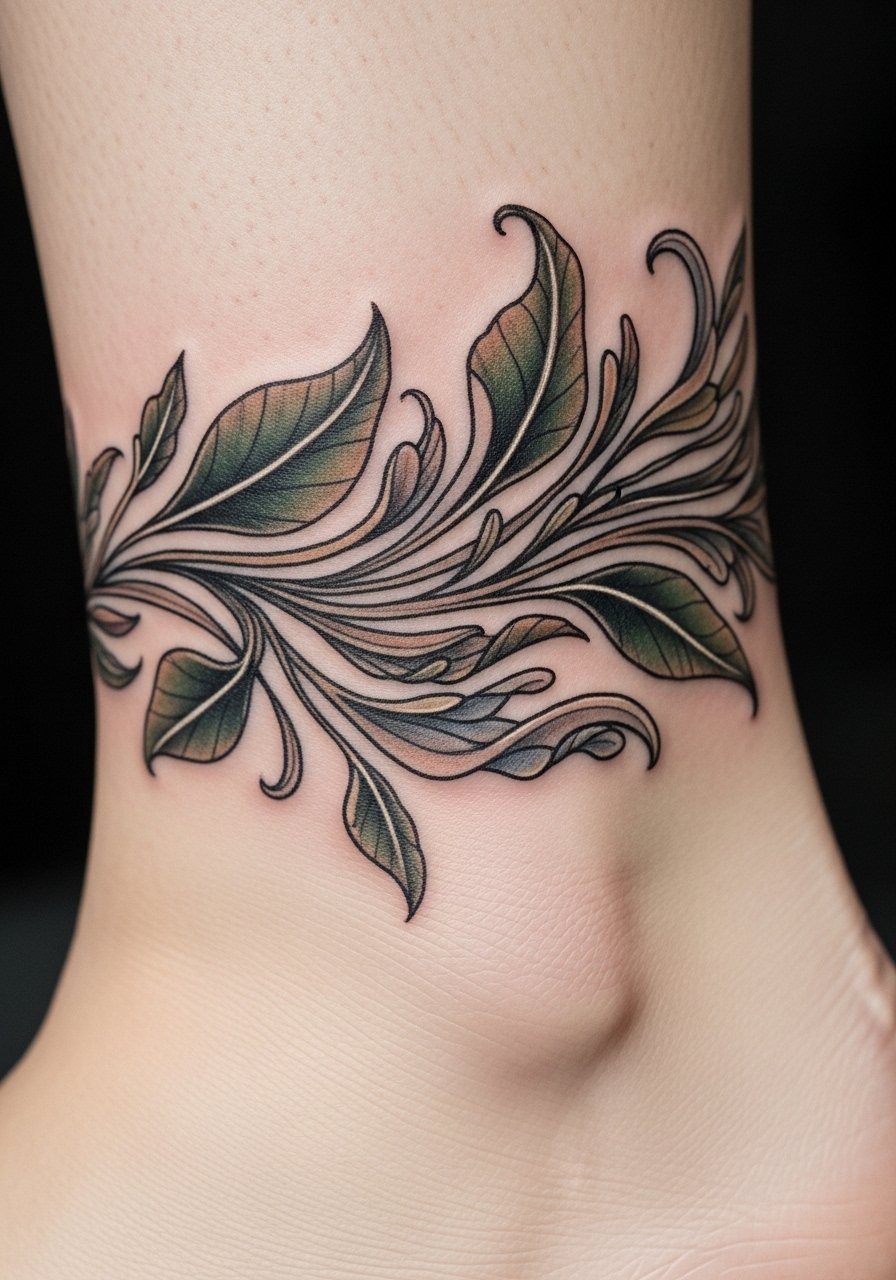
I recommend an ankle band if you want a subtle surreal motif that wraps quietly. The ankle gets friction from socks and shoes. Pain is sharp. Sessions are short. Tell your artist you want open spacing and thicker midlines. A common error is tight, fine patterning that blurs from shoe friction. At six months lines soften more on the ankle than other spots. At two years expect more wear. If you want longevity, plan placement higher on the lower leg or add protective footwear when fresh.
18. Surreal Collage on Thigh Inner Sweep
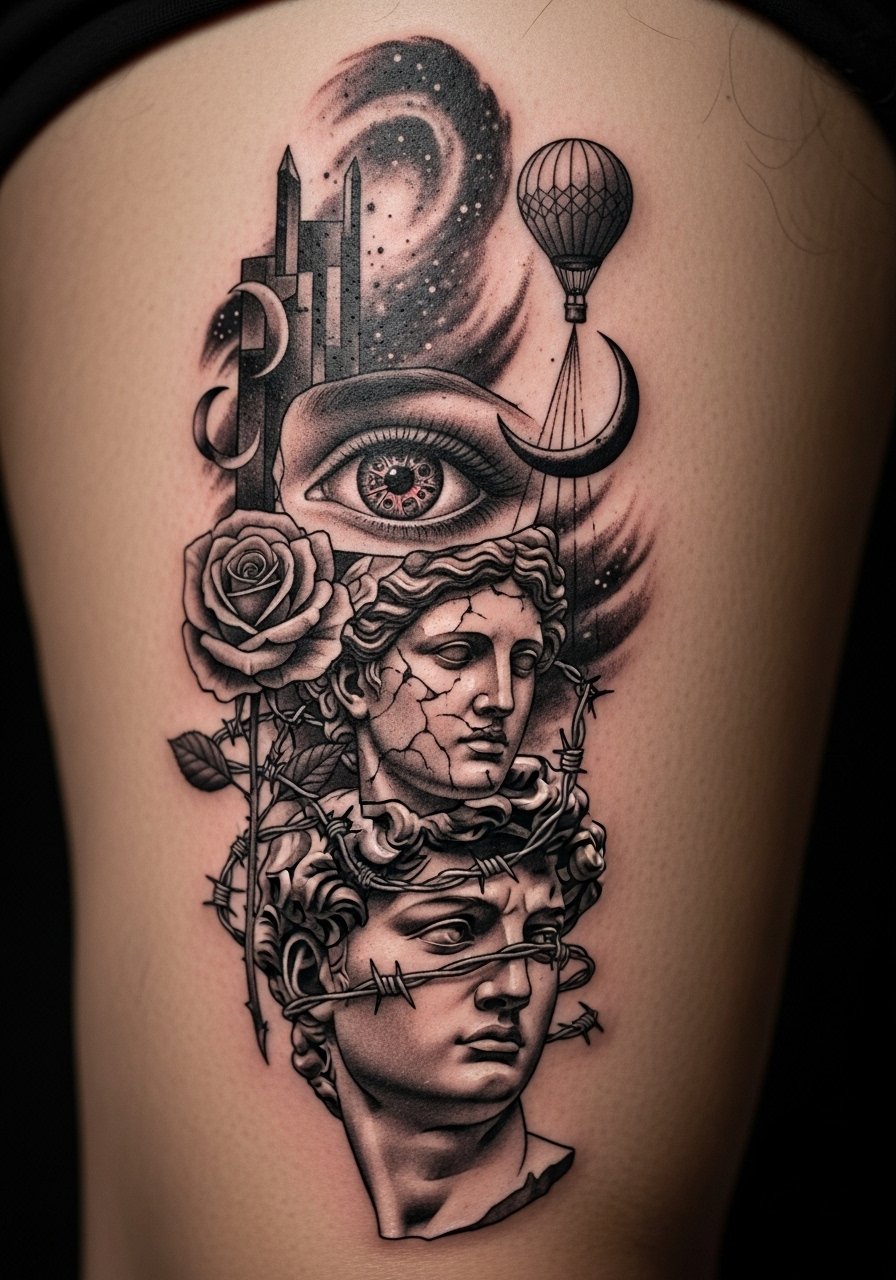
I saw this during a studio open day. Inner thigh gives privacy and rich color retention. Pain is moderate. Sessions can be long. Ask for varied contrast and to avoid micro detail in the deepest creases. The mistake I see is putting too many tiny motifs near folds. They turn into dark smears. At six months colors look vivid. At two years small details may flatten. If you want a dense collage, the thigh is one of the best places to preserve it.
19. Surreal Linework Constellation on Wrist
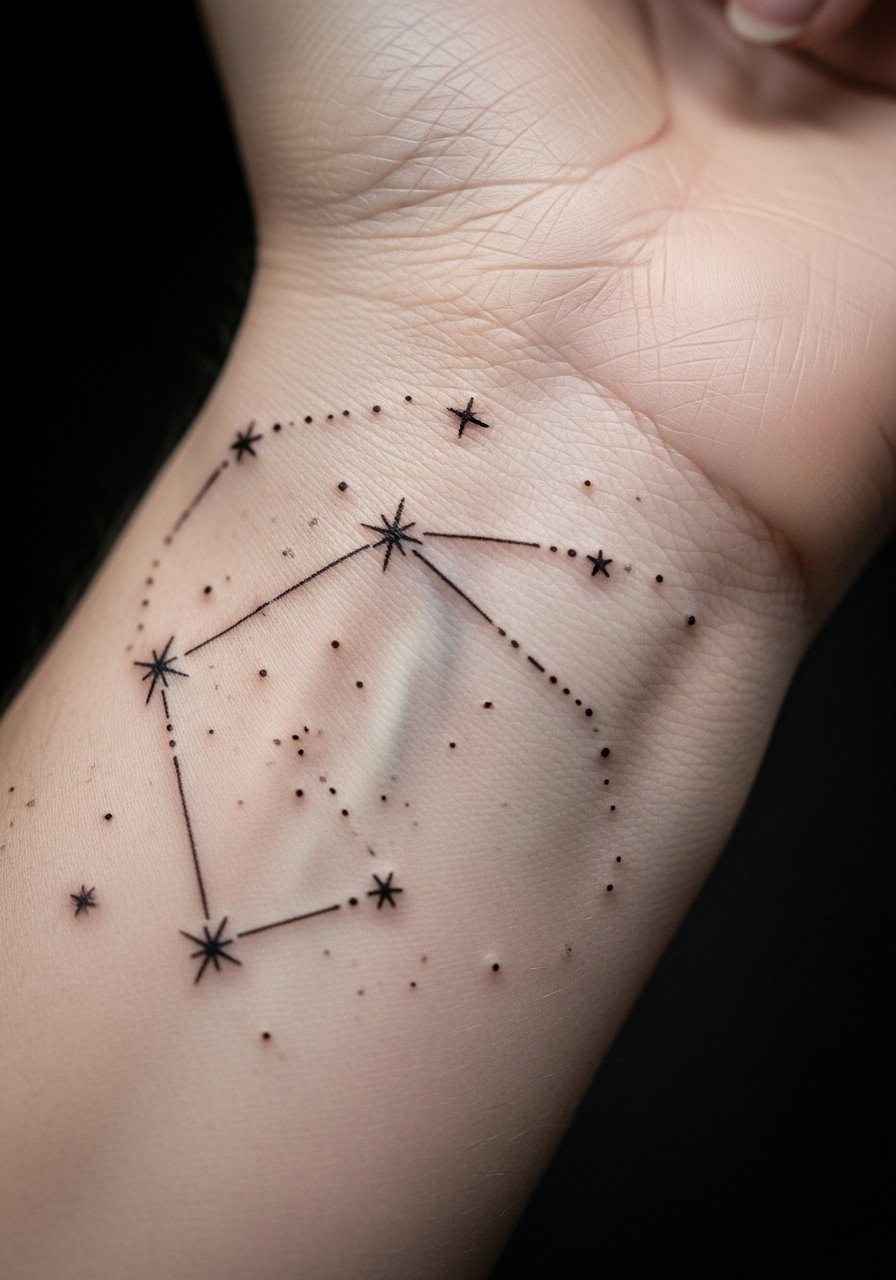
I once mapped a constellation design with an artist on a coffee shop napkin. The wrist is visible and delicate. Pain is moderate. Sessions are brief. Tell your artist to keep star dots slightly larger than you think. Tiny dots disappear around year two. A frequent mistake is connecting too many tiny lines across the wrist. Those lines merge with movement. At six months the constellation is readable. At two years small star dots often need boost. Wrist versions look best when simplified.
20. Surrealist Ouroboros Around Bicep
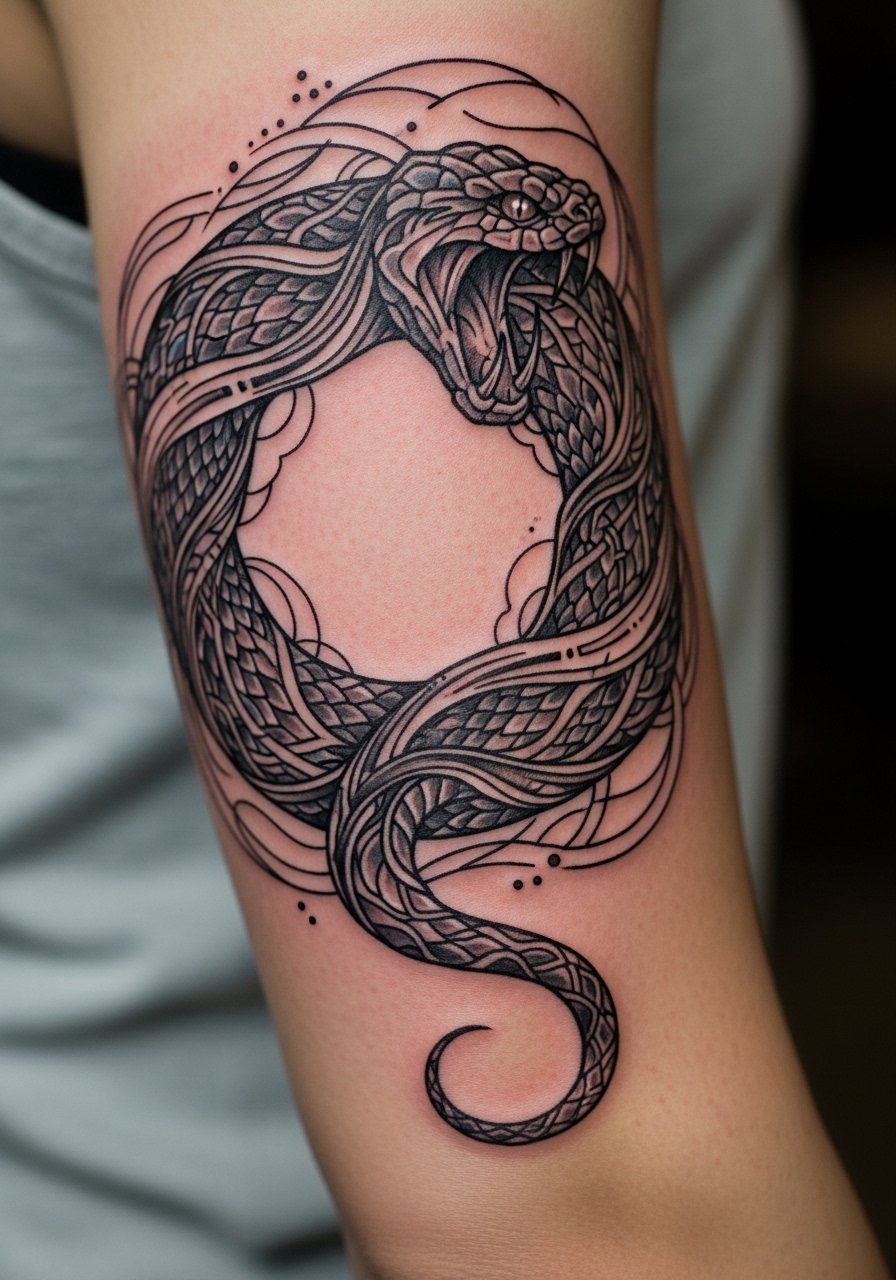
When I saw an ouroboros wrap, it read like motion. The outer bicep heals well and tolerates wrap patterns. Pain is low. Sessions 1-2 hours. During consultation, ask for even line thickness across the wrap. A common mistake is inconsistent line weight causing visual wobble when flexed. At six months the oval shape settles. At two years minor spreads can alter perfect symmetry. Request measured linework and preview on an arm mock-up. This design looks great with subtle ornamental details that age better than tiny scales.
21. Surrealist Fragmented Hand on Calf
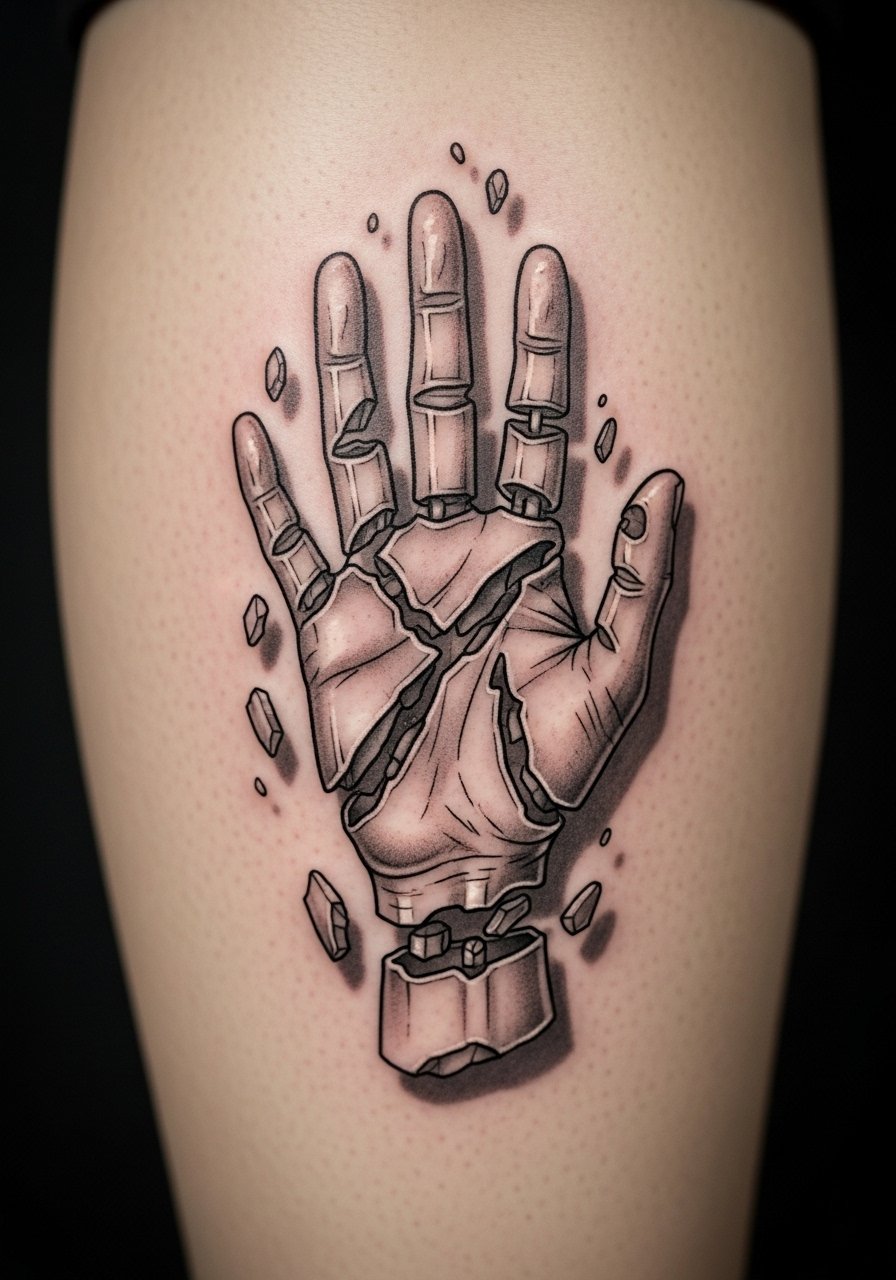
I love hands in surreal work because they read as gestures in motion. The calf offers a stable healing surface. Pain is moderate. Sessions 1-2 hours. Ask your artist to plan where gaps will be larger, to avoid tiny negative spaces that close up. A mistake is asking for too many little cuts between segments. At six months gaps may look narrower. At two years tiny separations can look merged. Artists who sketch with intentional negative space will preserve the fragmentation effect.
22. Surrealist Mirror Fragment on Upper Arm
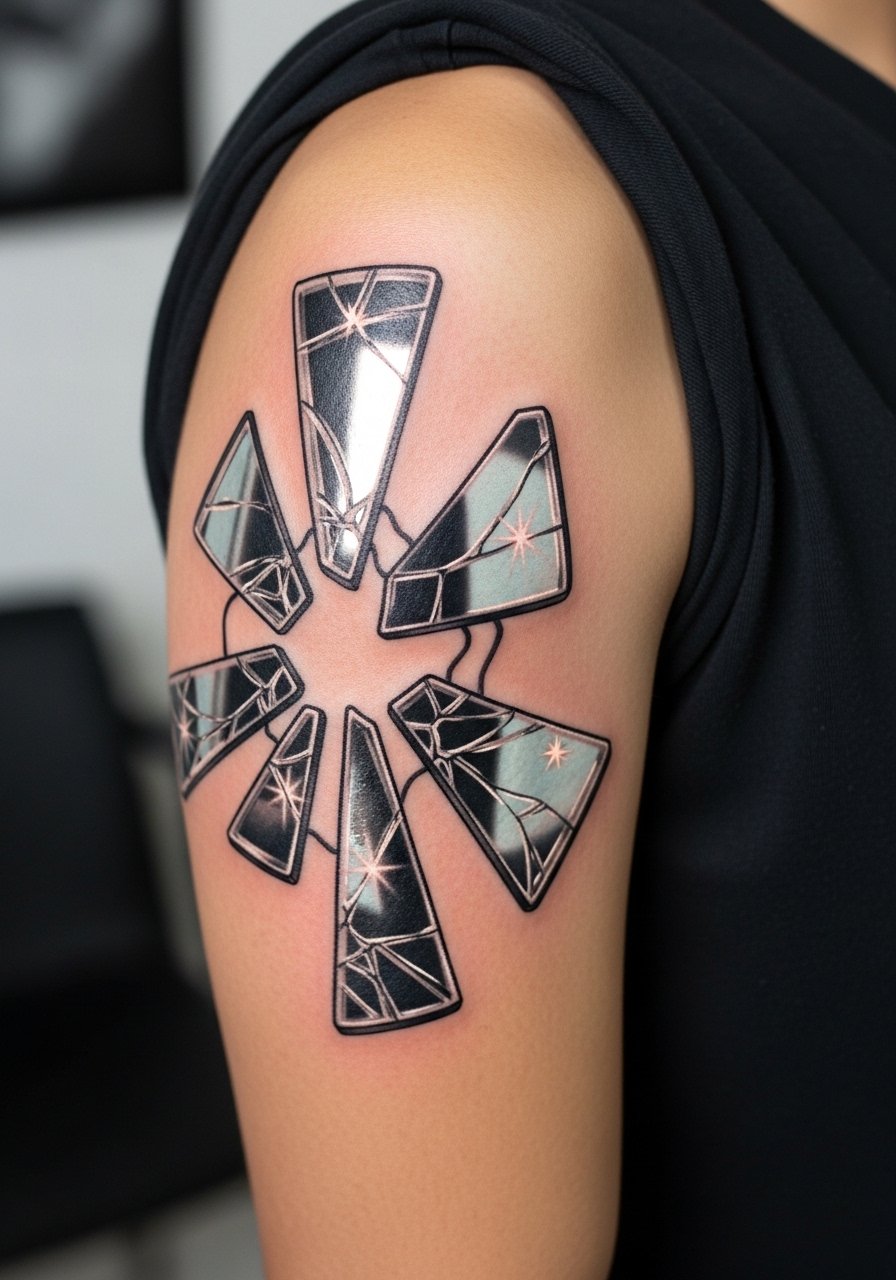
I saw a mirror shard piece that read like a past self. The upper arm is friendly for larger shard pieces. Pain is low. Sessions 1-2 hours. Tell the artist you want distinct highlights that will remain visible after healing. The common mistake is relying on tiny white lines. Those vanish. At six months most highlights mellow. At two years highlights may need restoration. Pick an artist who knows how to balance white with surrounding tone for long-term readability.
23. Surreal Botanical Cover-Up on Ribcage
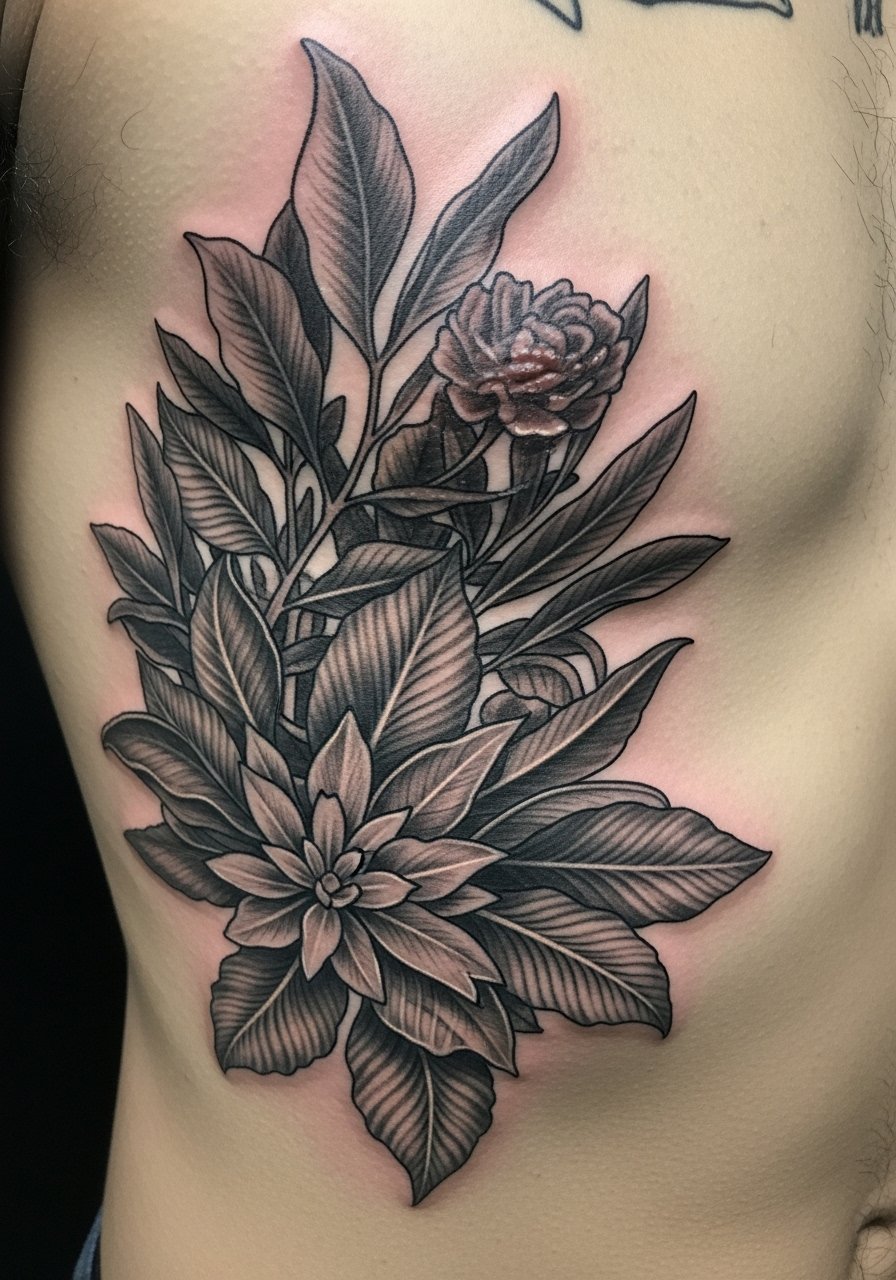
I helped a friend plan a cover-up that used surreal botanicals to mask old script. The ribcage can hide old lines if you use layered foliage and shadow. Pain is high. Sessions are many. During consult, bring photos of the old tattoo. A common error is underestimating pigment saturation in the original piece. Some inks require heavy blackwork. At six months the cover-up melds. At two years texture may soften but the cover remains. Look for artists who specialize in cover-ups and color-layer strategies.
24. Surreal Minimalist Staircase on Side Rib
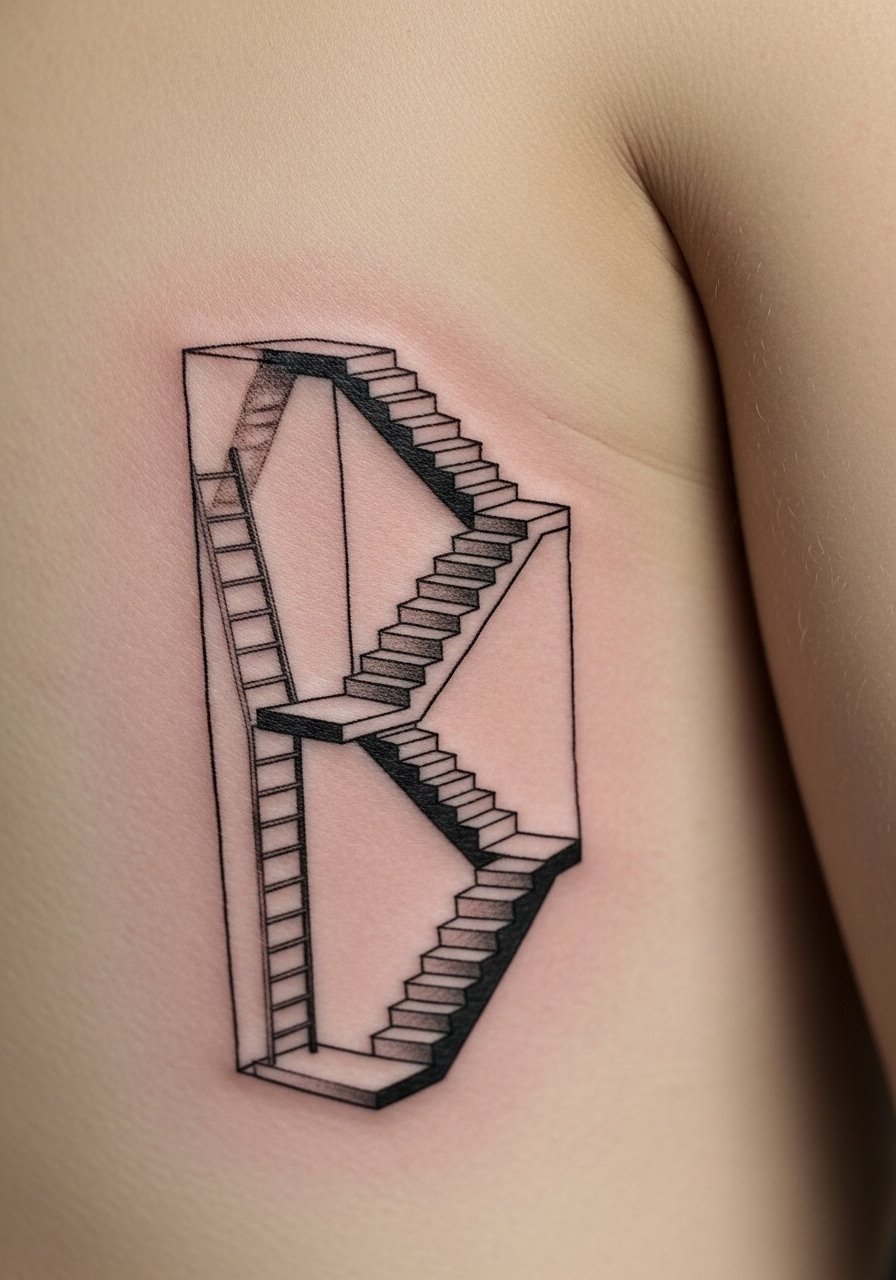
I was drawn to a tiny staircase that suggested an escape. The side rib is painful but poetic. Sessions are short to moderate. Ask your artist for firm shadow anchors under steps so perspective survives healing. A mistake is making stairs with only hairline steps. They blur into wash. At six months the perspective still reads. At two years, thin structural lines may need refresh. This version works if you want a small symbolic piece with a narrative feel.
25. Surrealist Mandrake Plant on Thigh
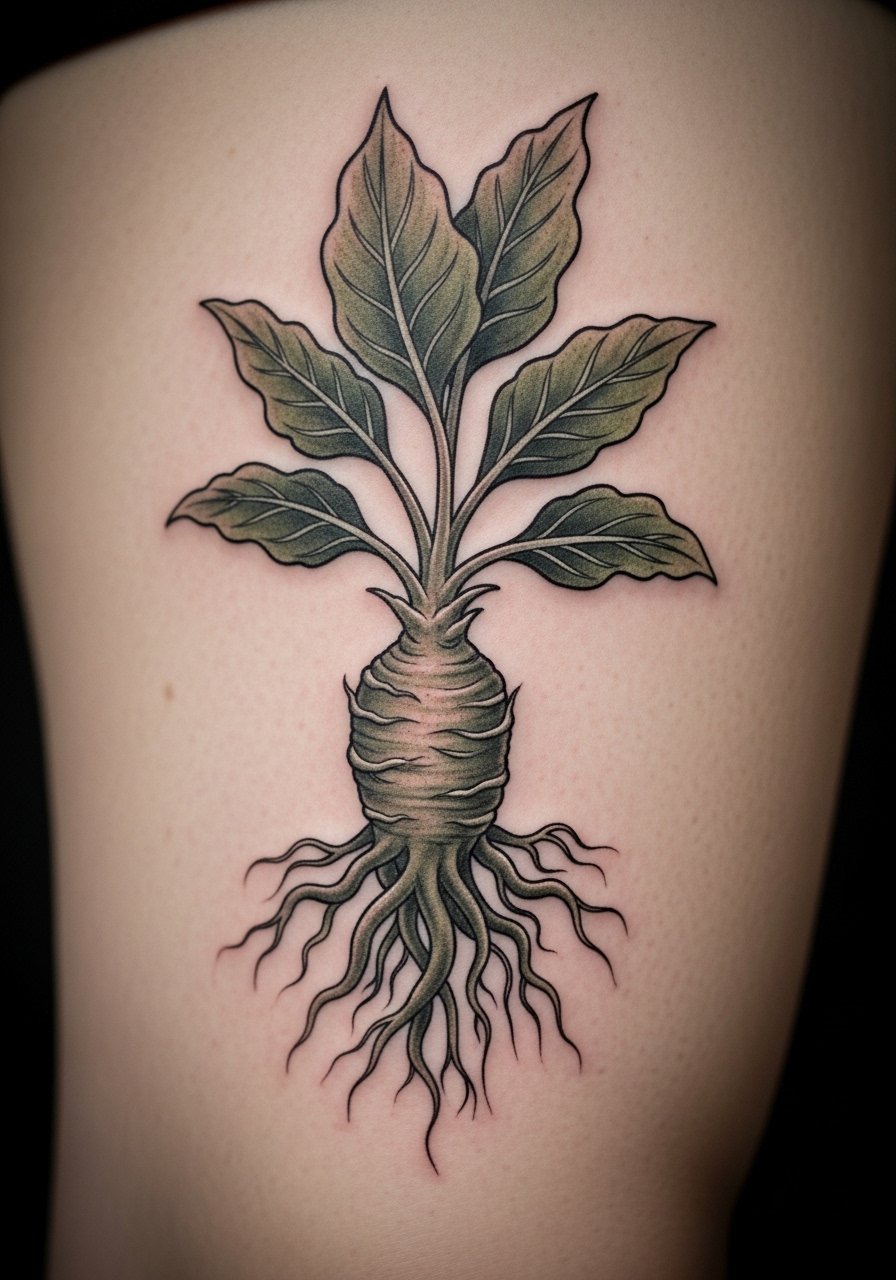
I found this in an artist's sketchbook. Plant motifs that twist into human forms read dreamlike. The thigh keeps detail and color well. Pain is moderate. Sessions 1-3 hours. Tell your artist to anchor with dark midtones so delicate roots do not fade into skin. A mistake is relying on light greens without contrast. Those wash out in a year. At six months the shapes remain organic. At two years small thin roots may blur. Choose an artist who layers plant textures intentionally.
26. Surreal Color Blocked Face on Forearm
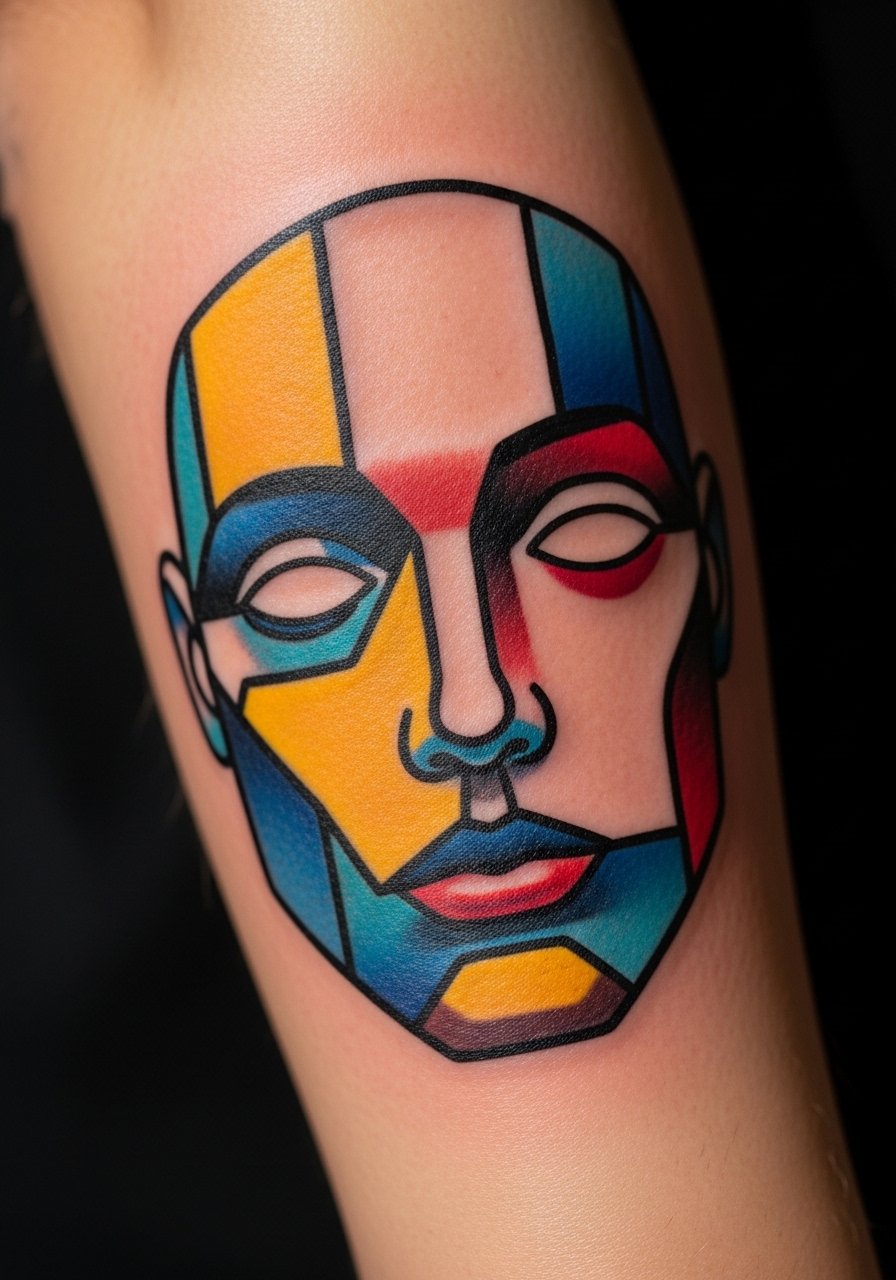
I saw a color-blocked face on someone who got compliments daily. The forearm displays bold color well if matched to skin tone. Pain is mild. Sessions 1-2 hours. During consult, ask your artist to use pigments suited for your skin undertone. The mistake I watch for is using colors that oxidize to odd hues. At six months colors may soften but remain distinguishable with proper pigments. At two years some shades drift. Artists who know pigment behavior across skin tones will pick hues that stay true.
27. Surrealist Floating Teeth on Lower Arm
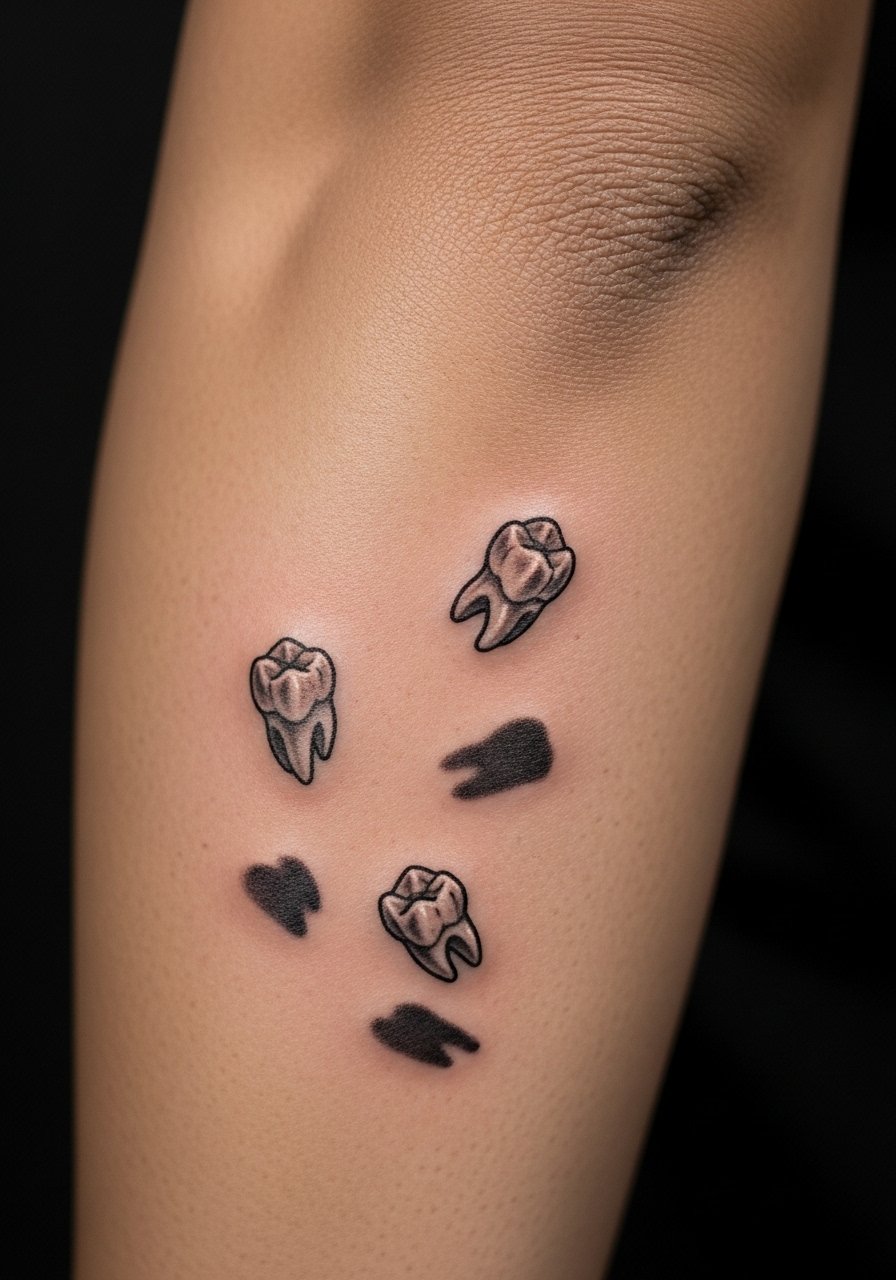
The floating teeth idea felt strange and oddly poetic when I first saw it. The lower arm gives good visibility and predictable healing. Pain is low. Sessions are under two hours. Ask your artist to keep tooth outlines slightly bolder than you think, especially around roots. I see tiny dental details blur into grayness after a year. At six months the teeth appear dimensional. At two years tiny cracks between teeth can close up. If you want the eerie floating effect to last, plan for modest line weight and strategic shadowing.
Tattoo Prep and Aftercare Essentials
Aftercare gear I actually use and recommend based on conversations with artists and my own experience.
Aftercare Essentials:
- Aquaphor Healing Ointment, 14oz tube — Great for the first 3-5 days, artists I trust often suggest this for very dry skin.
- Saniderm Transparent Adhesive Bandage, 6-inch roll — Second skin method for days 1-4, popular among many studios.
- CeraVe Fragrance-Free Moisturizing Lotion, 12oz pump — Use after the initial ointment phase, recommended for daily moisturizing.
- Dr. Bronner's Unscented Castile Soap, 32oz — Gentle cleanser for tattoo washing.
Before Your Appointment:
- Numbing Cream with 5% Lidocaine, 30g tube — Use only after asking your artist, apply 30-45 minutes before.
- Tattoo Stencil Transfer Paper, 8.5×11 pack — Handy if you want to test layout at home.
Long-Term Maintenance:
- SPF 50 Sunscreen Stick for Tattoos, 0.3oz — Critical for preventing fading, artists tell me consistent SPF keeps color vibrant.
- Mad Rabbit Tattoo Balm, 2oz jar — Good for long-term moisturize and vibrancy, many people report good results.
- Hustle Butter Deluxe, 3oz tub — Vegan aftercare favorite for healed skin maintenance.
Optional Comfort Items:
- Tattoo Numbing Spray, 1oz — Useful for touch-ups or sensitive spots, check with your artist first.
- Hydrocolloid Bandages, 5 pack large — Great for covering small scabs and preventing scarring.
Every artist I’ve talked to emphasizes SPF and gentle moisturizing more than expensive hype products. I included items artists actually recommend, and a couple of popular alternatives that still work.
Frequently Asked Questions
Q: Will fine line surreal sleeves blur faster than bold blackwork ones?
A: From what I’ve seen, fine line sleeves do blur sooner, especially on high-movement areas like the wrist and inner elbow. Ask your artist to thicken primary anchor lines and pick placements that avoid constant friction. For longevity, request strategic negative space and occasional planned touch-ups.
Q: Do watercolor or pastel surreal tattoos need different aftercare than darker blackwork?
A: Yes. Watercolor and pastels rely on layered, lighter pigments that can wash out if over-scrubbed. I use gentle soap like Dr. Bronner's Unscented Castile Soap, 32oz for washing and switch to CeraVe Fragrance-Free Moisturizing Lotion, 12oz pump after the initial healing to keep colors stable. Artists often recommend letting lighter colors settle before any heavy sun exposure.
Q: For surreal pieces on the ribcage and sternum, how should I prepare for pain and healing?
A: I’ve noticed ribcage and sternum placements are consistently painful. Eat well, stay hydrated, and schedule shorter sessions if possible. Ask your artist about numbing options like Numbing Cream with 5% Lidocaine, 30g tube and confirm they're okay with it. Expect tender movement for about two weeks and sleep positions to be affected.
Q: How do I tell my artist I want a dreamlike, surreal look but also longevity?
A: Bring reference images that show healed work, not only fresh ink. Tell your artist you want bolder anchor lines, planned negative space, and pigment choices suited to your skin tone. Ask for a staged plan for touch-ups at year one. Artists who work in micro-realism and blackwork often balance dreamlike detail with durable structure.
Q: Which aftercare product is most important if I only buy one?
A: From what I’ve gathered, a good fragrance-free moisturizer is the most versatile. I recommend CeraVe Fragrance-Free Moisturizing Lotion, 12oz pump for daily use after the initial ointment phase. Pair that with consistent SPF application for long-term color preservation.
Q: Do surreal blackwork pieces need touch-ups more or less than colorful ones?
A: In my experience, blackwork holds shape better over time because contrast remains visible. However, any dense black can shift slightly. Colorful surreal pieces might lose certain hues faster, but blacks and deep midtones usually last longer. Plan touch-ups based on how much fine detail you include. If the design relies on tiny lines, expect to refresh them sooner.
