I spent months hunting for gaming tattoo ideas that still look good healed, not just smashed-on filters. I found that the trick is picking styles that age well on skin, and matching placement to how often you want to show off the art. These 27 ideas lean into fine line, traditional, blackwork, and micro-realism, plus a few under-covered takes I started seeing in 2026.
This list focuses on gaming tattoos that read clearly at different sizes. I picked placements that work for fresh sessions and long-term heal. From what I’ve seen, artists are leaning toward bold outlines for small pixel work, and soft shading for character micro-realism.
1. Fine Line Pixel Mario On Inner Forearm
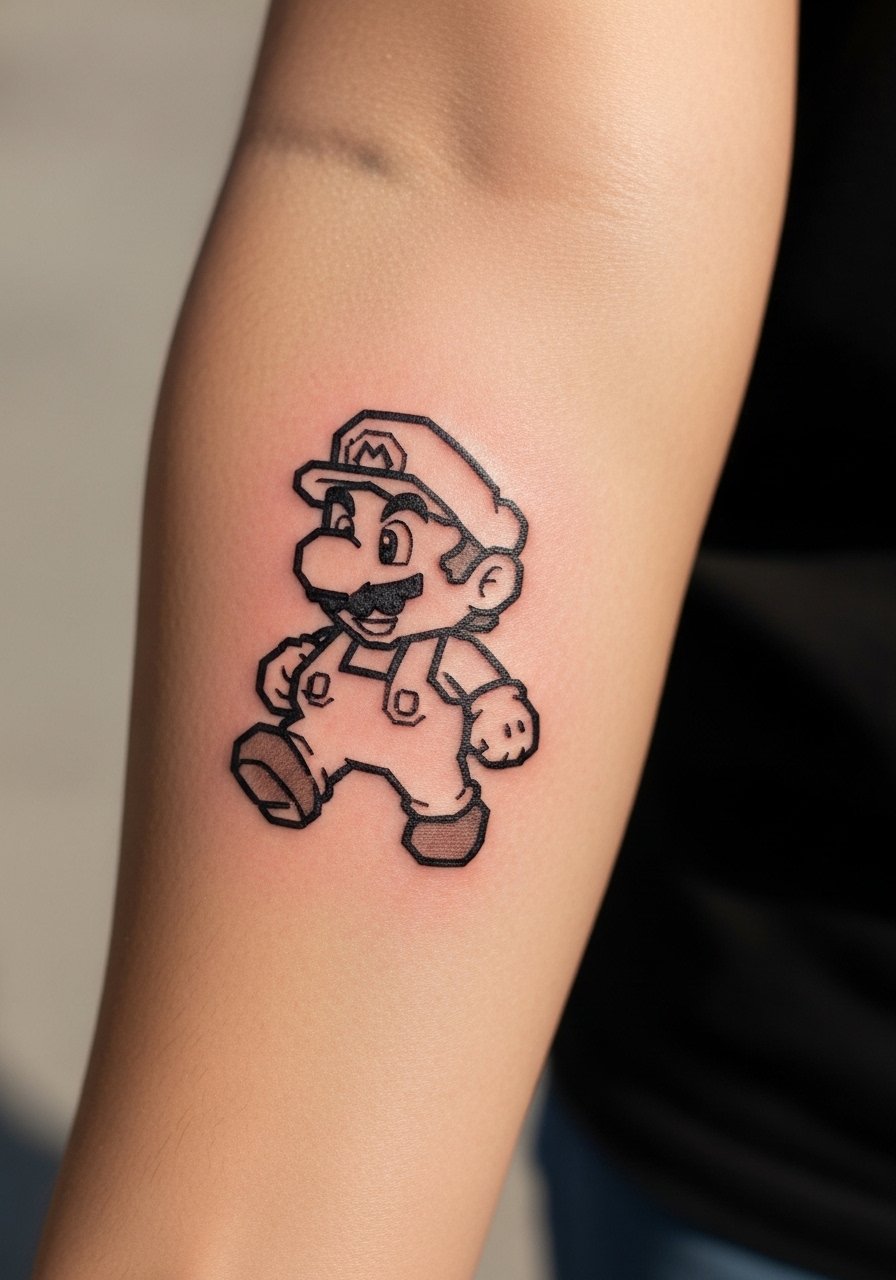
I first saw this on a friend who wanted subtle retro vibes. Fine line pixel Mario reads like nostalgia, without dominating your arm. Inner forearm means low-to-moderate pain, and most artists will do this in one short session. Ask your artist for slightly thicker pixel borders so the squares do not blur together after a year. The common mistake I see is making pixels too small. Tiny squares look crisp fresh and then mush after six months. Expect light touch-ups at the 1 to 2 year mark. For a sleeve version, scale up the pixels and keep bolder outlines. If you want it to last, mention line weight and contrast during the consult.
2. Micro-Realism Master Chief Helmet On Upper Arm
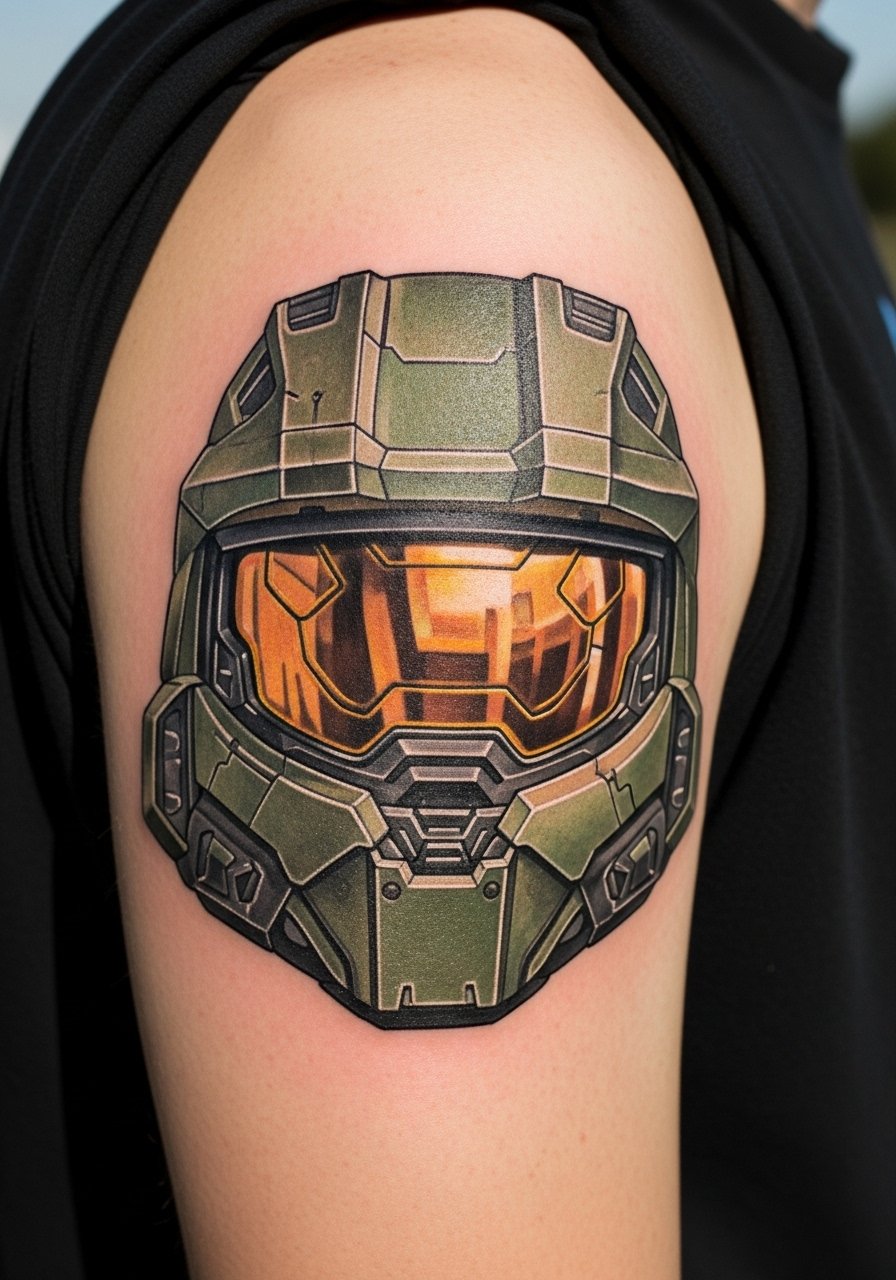
When I scrolled collector pages, this helmet stood out for how photoreal it can get without being huge. Upper arm is forgiving for long sessions. Pain is moderate. This style takes one to two sessions depending on size. Tell your artist you want soft edges and deep midtones, not harsh black outlines. A common error is over-detailing in small pieces, which blurs into a gray patch over time. At six months you see crisp highlights. By two years expect some feathering in tiny details. If you plan a sleeve, place this as an anchor and leave breathing room for color bleed. I’d ask for reference photos showing the exact helmet finish you want.
3. Traditional Triforce With Shield On Chest
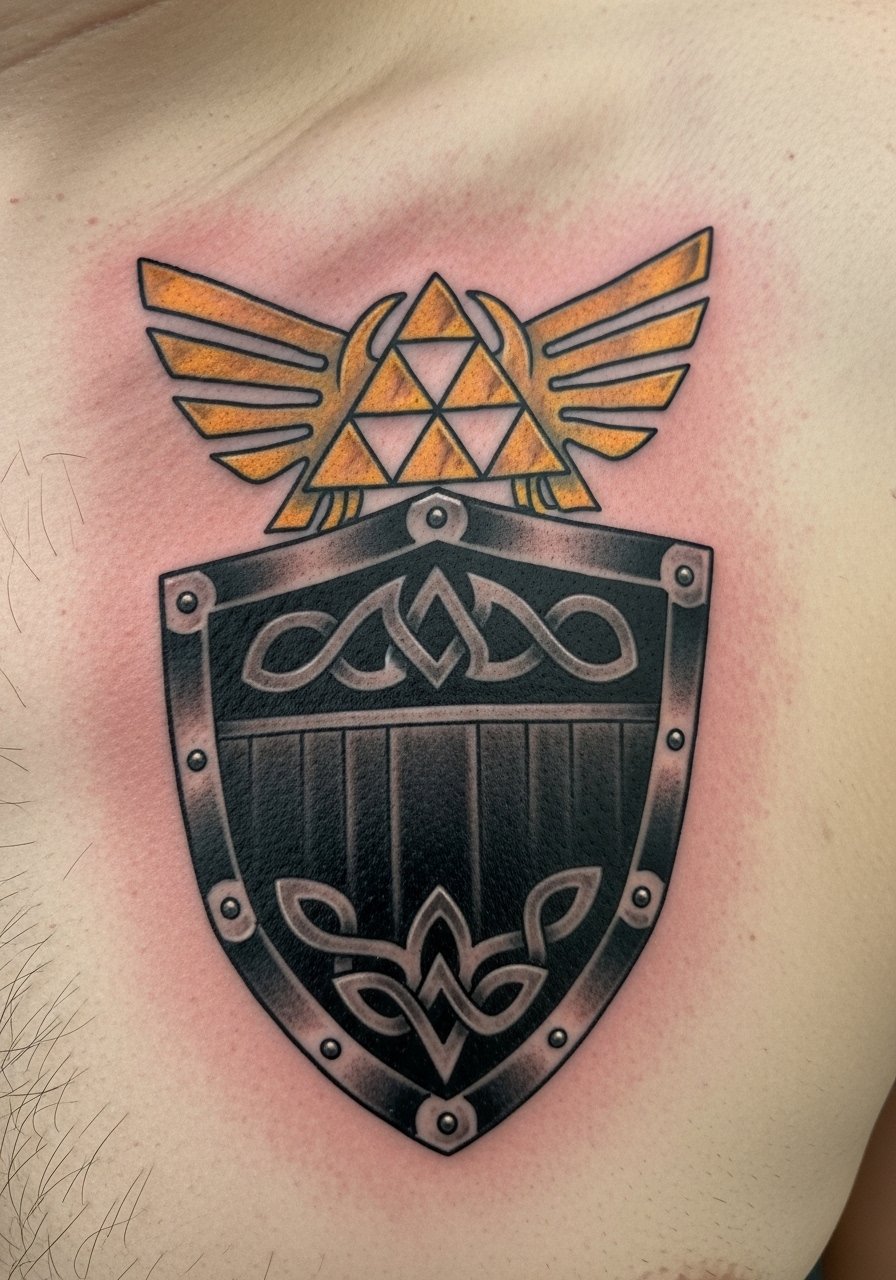
Fair warning, the chest can be an intense session for many people. The Triforce with a traditional shield uses bold lines and saturated color, so it reads well at a distance. I recommend having it mid-sized so the triangles keep their shape as it ages. Artists often suggest 2 to 3 hours for this. A mistake I see is adding tiny ornamentation inside the triangles. Keep internal detail minimal. From what I’ve seen, traditional inks on the chest hold color well if you protect them from sun. Ask your artist about color retention on your skin tone and whether a darker base will preserve contrast years down the line.
4. Blackwork Hylian Crest On Back Shoulder Blade
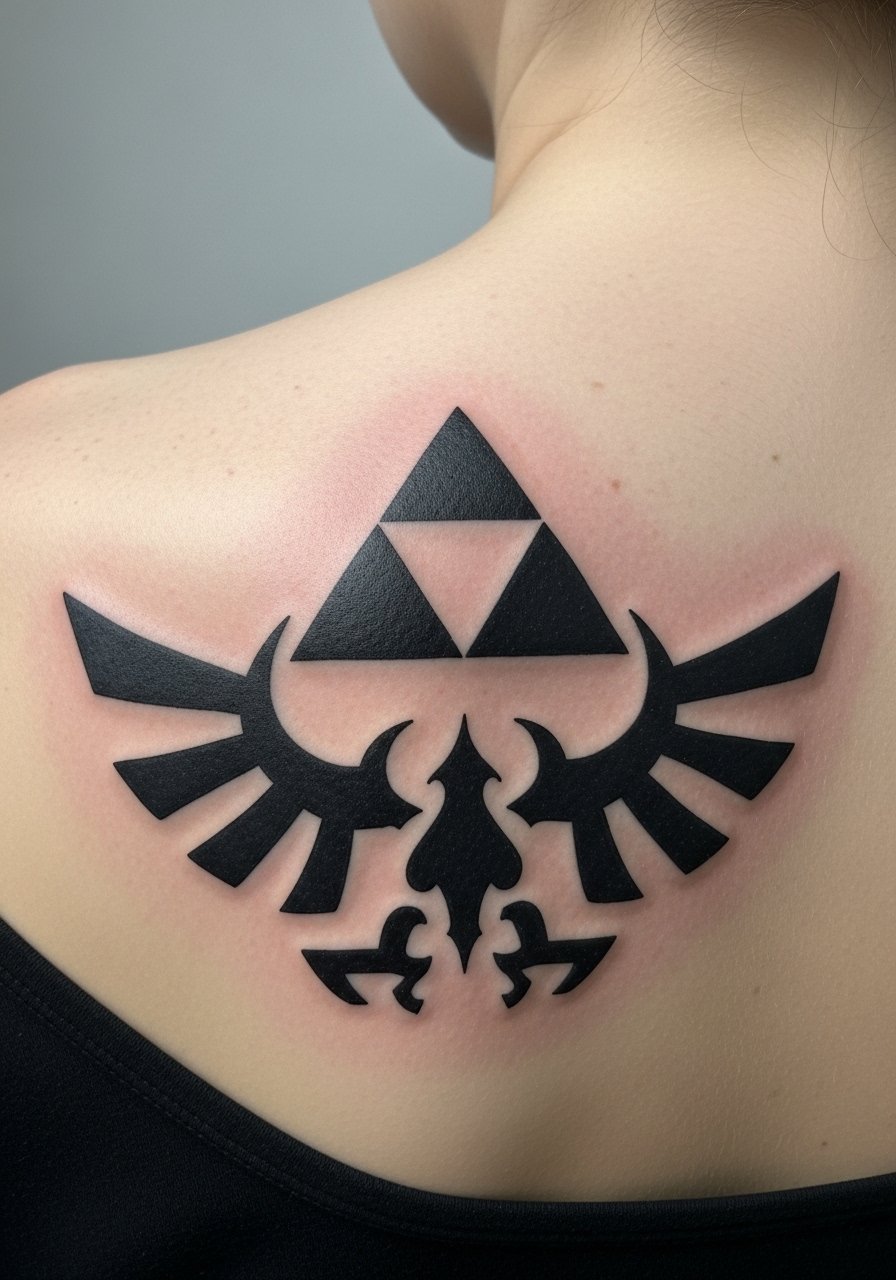
There is something about solid blackwork that ages predictably. I noticed players choosing shoulder blade placements because they show on T-shirts and hide under dress shirts. Pain on the back shoulder is mild to moderate. Expect a one or two session block. Request bold fills and crisp edges during consultation. The error I see is leaving tiny negative-space details inside large black. Those thin gaps fill in faster than expected. Healed at six months, the black stays deep. At two to five years, minor softening happens. If you plan to add color later, budget space around the crest.
5. Minimalist Controller Outline Behind Ear
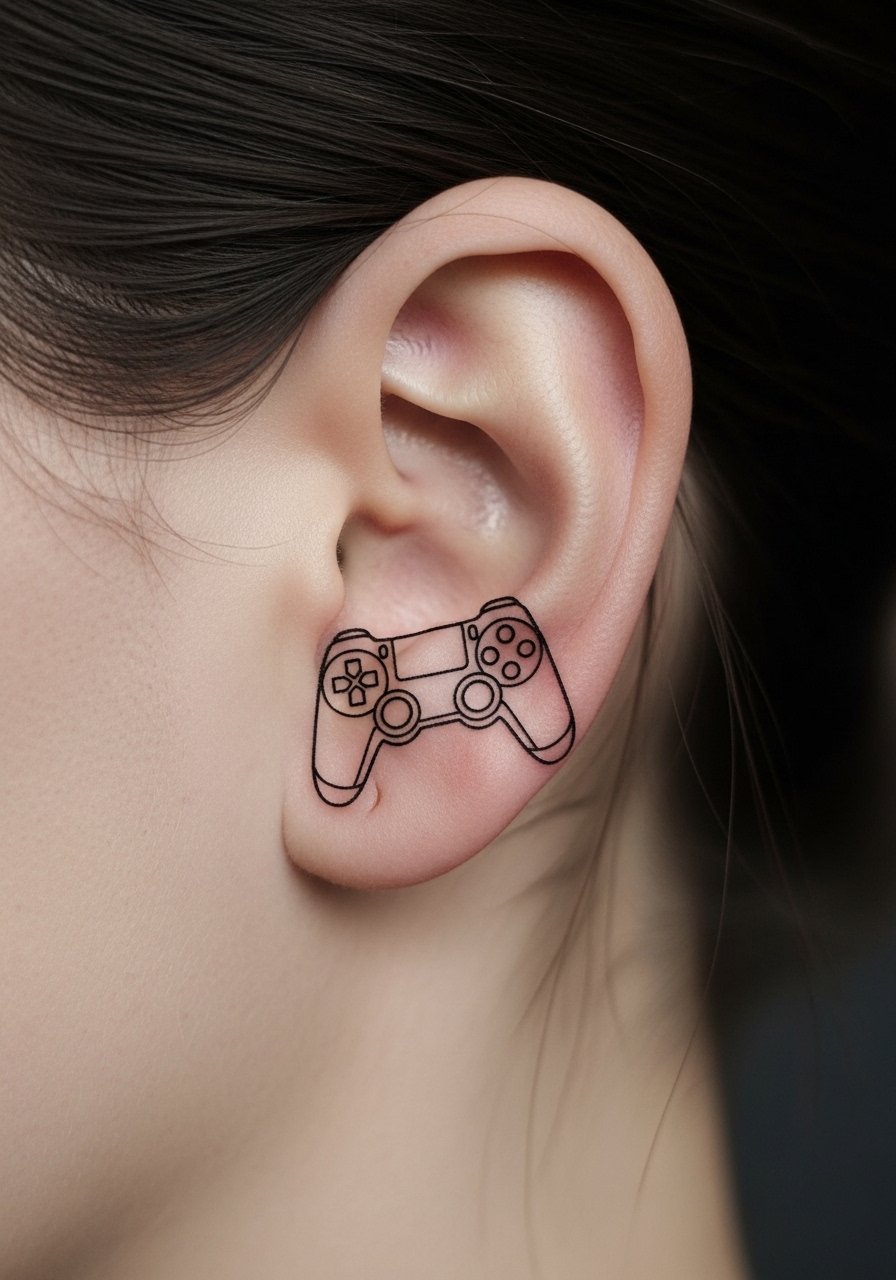
I first noticed this trend in streamer selfies. Behind the ear is a discreet placement and the pain is sharp but short. Minimalist controller outlines need clean single-line work. Ask for slightly bolder single strokes so it lasts through healing. The most common mistake is making the line too thin. Thin lines disappear faster on moving skin. Healed at six months it looks crisp. At two years you might need a touch-up. If you want this near hairline, think about how regrowth and daily washing affect pigment.
6. Micro Tattoo Pixel Heart On Finger
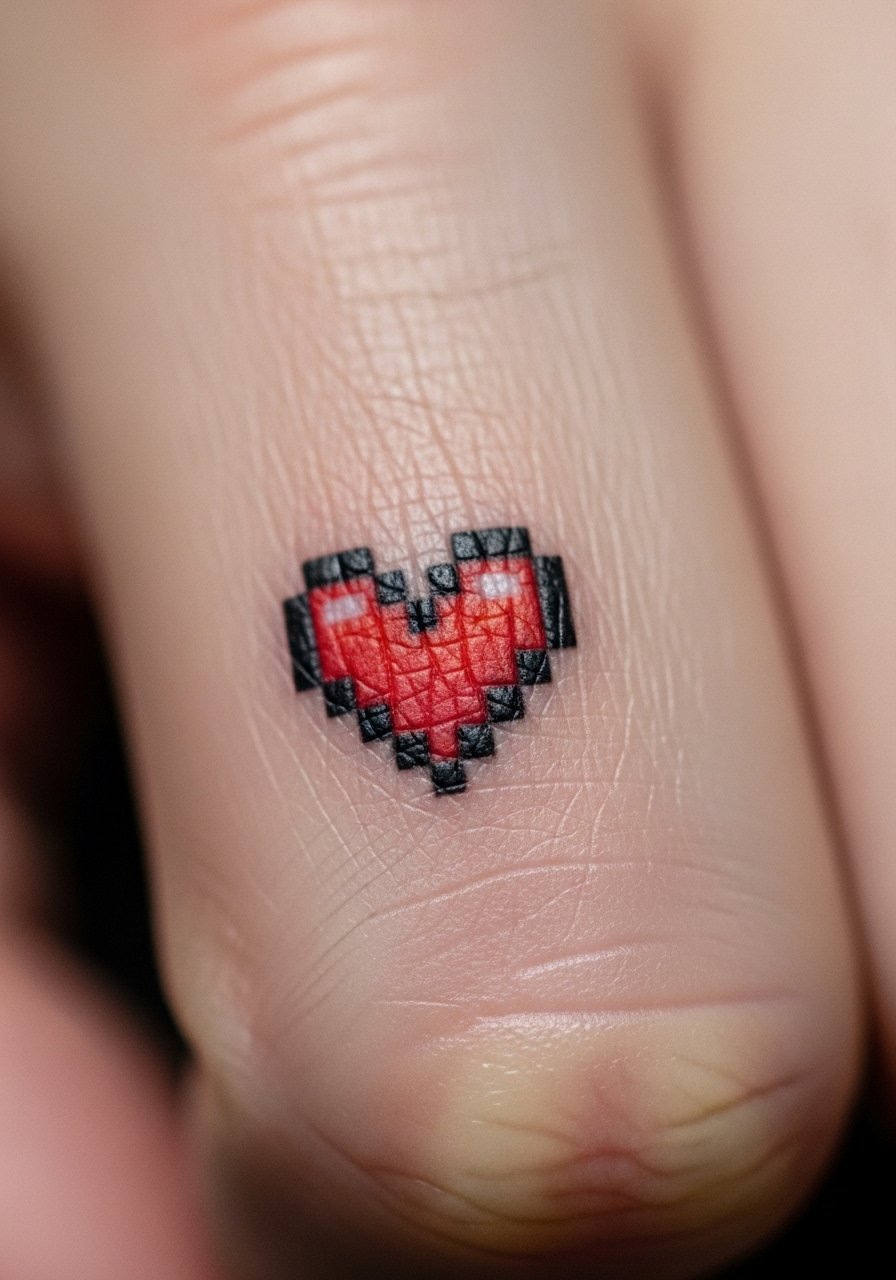
Small finger pieces are a commitment. They look charming fresh but fingers are high-movement and fade fast. I often warn friends that finger tattoos usually need touch-ups annually. Session time is short. The common mistake is expecting permanence. If you want it to last, go slightly larger than you think, and ask for a compact outline with solid color fills. At six months expect edges to soften. At two years many designs lighten. If you want a more durable version, place the heart on the hand side rather than the finger side, or choose palm-adjacent placements.
7. Watercolor Pokeball On Ribcage
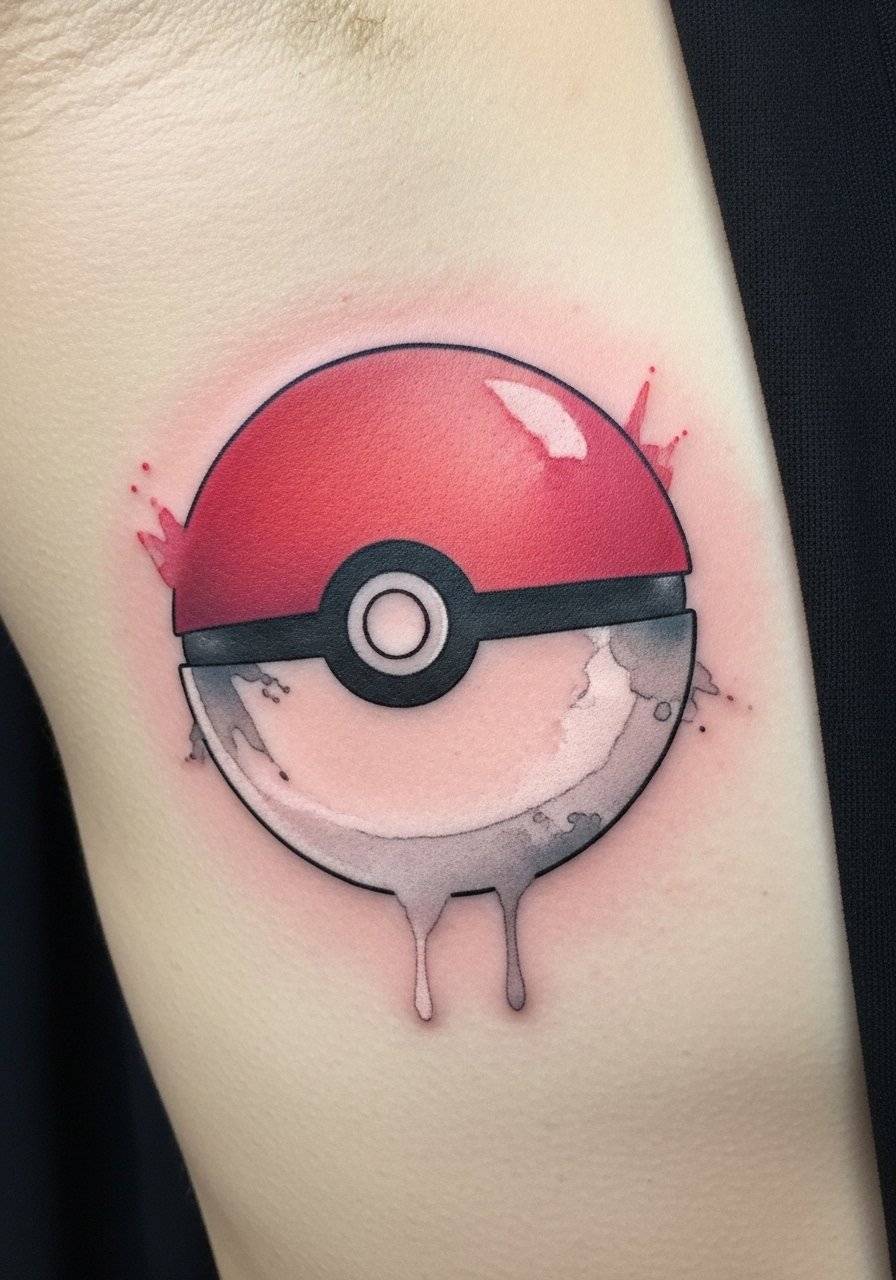
Fair warning, the ribcage is painful. I keep recommending watercolor Pokeballs to clients who want color and movement. It creates a fluid, painterly feeling. Sessions are usually longer for blending. Ask your artist to anchor the watercolor with a thin outline. I’ve seen many watercolor-only Pokeballs fade into mottled patches after a couple years. Anchoring lines make touch-ups easier. During healing, expect scabbing and color loss if you pick. For placement, ribs allow a larger canvas and the piece breathes with body movement.
8. Blackwork Soulsborne Bonfire On Upper Back
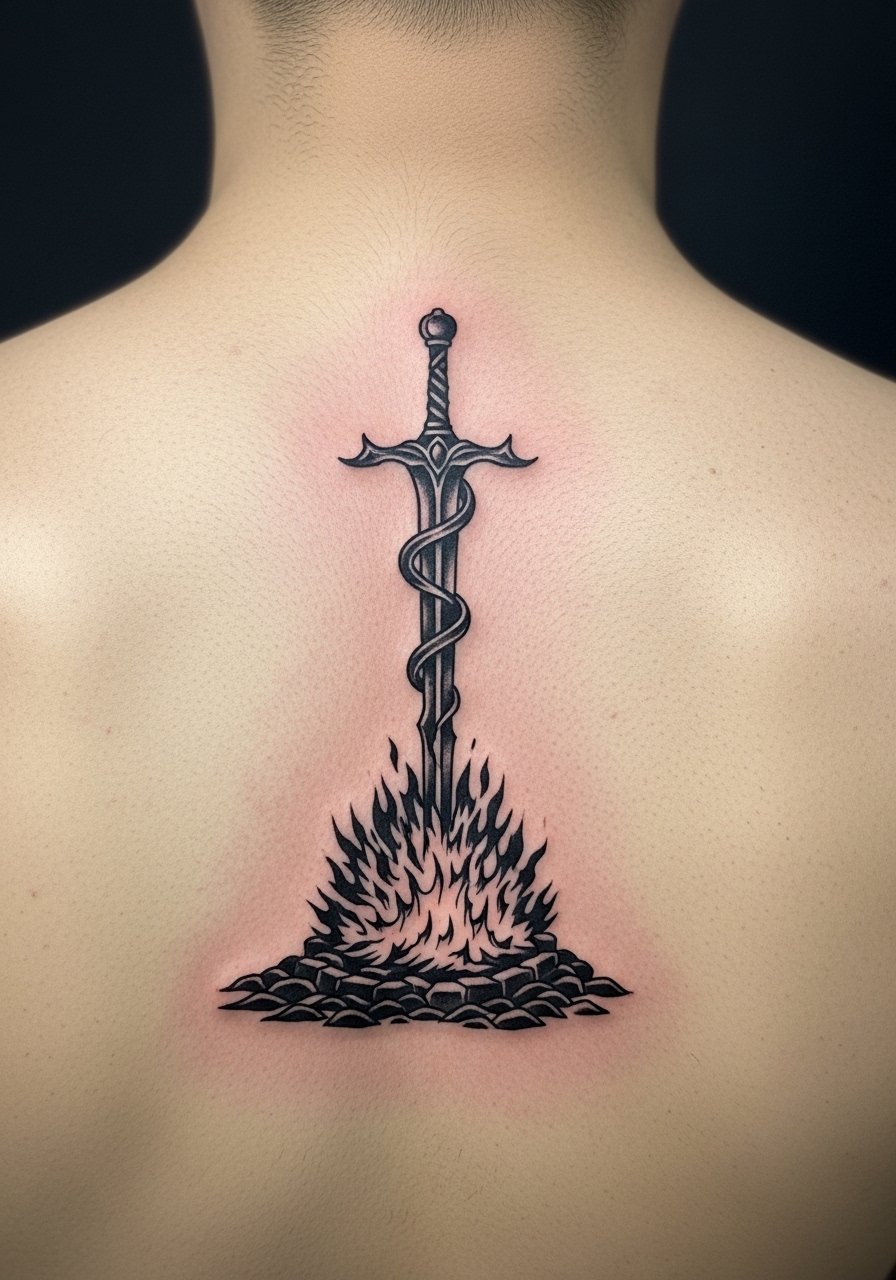
I loved this one the first time I saw a collector’s backpiece. Upper back gives artists room for dramatic scale. Pain is moderate and sessions can run several hours. Tell your artist you want heavy negative space around the flames to preserve silhouette. The frequent mistake is over-texturing the flames. Too much fine work turns into gray fuzz. After a year the silhouette still reads strong. If you plan to expand into a full back piece, map out future components with your artist.
9. Micro-Realism Companion Cube On Forearm
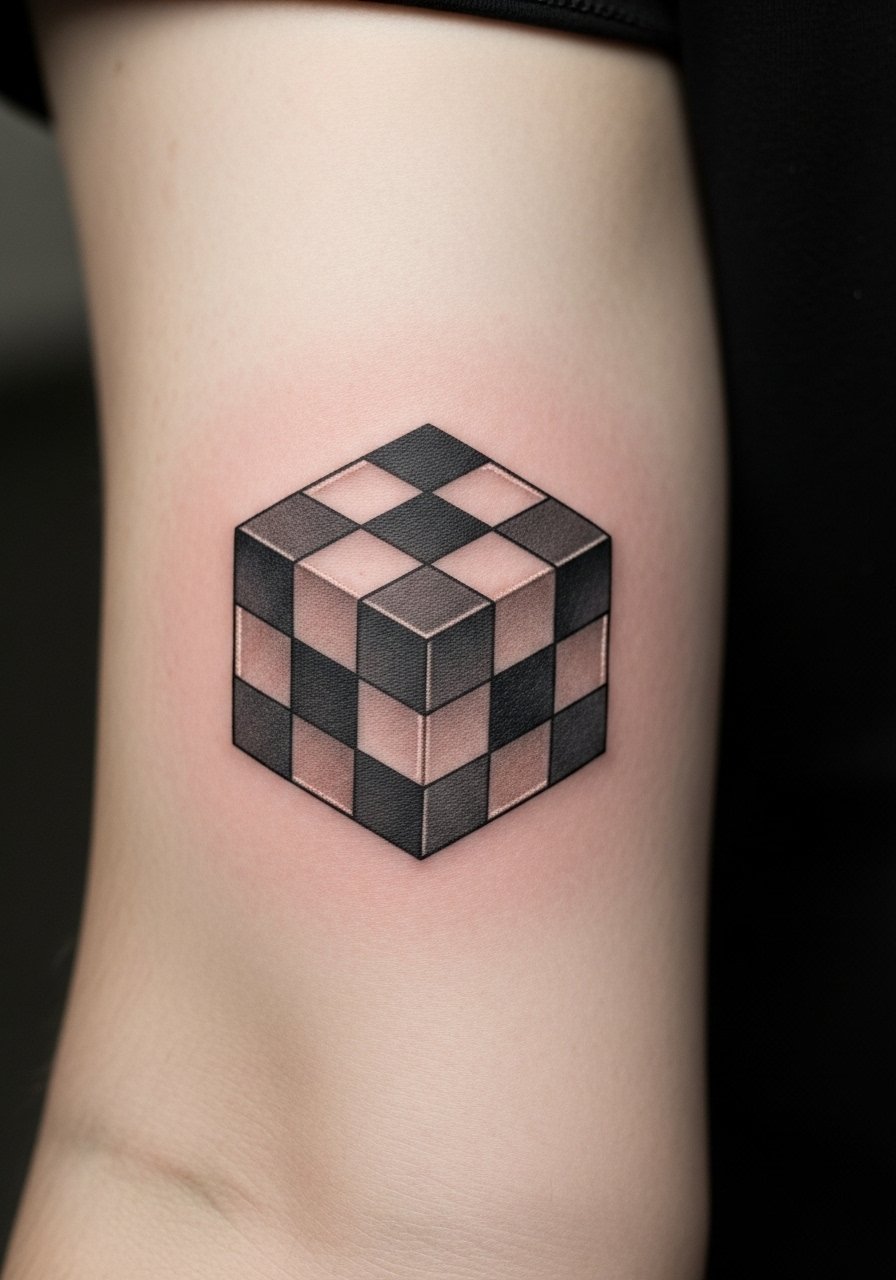
I sat with an artist who said cubes work well on forearms because they catch light when you move. Pain is low to moderate. Micro-realism needs tight shading. Tell your artist you want a clean light source and soft cast shadows. A common error is adding tiny reflected details that blur after a year. At six months the edges are clean. At two years, very fine specular highlights may need re-inking. If you want it hidden, move to inner forearm. For visibility, outer forearm is perfect.
10. Minimalist VR Headset Line Art On Nape
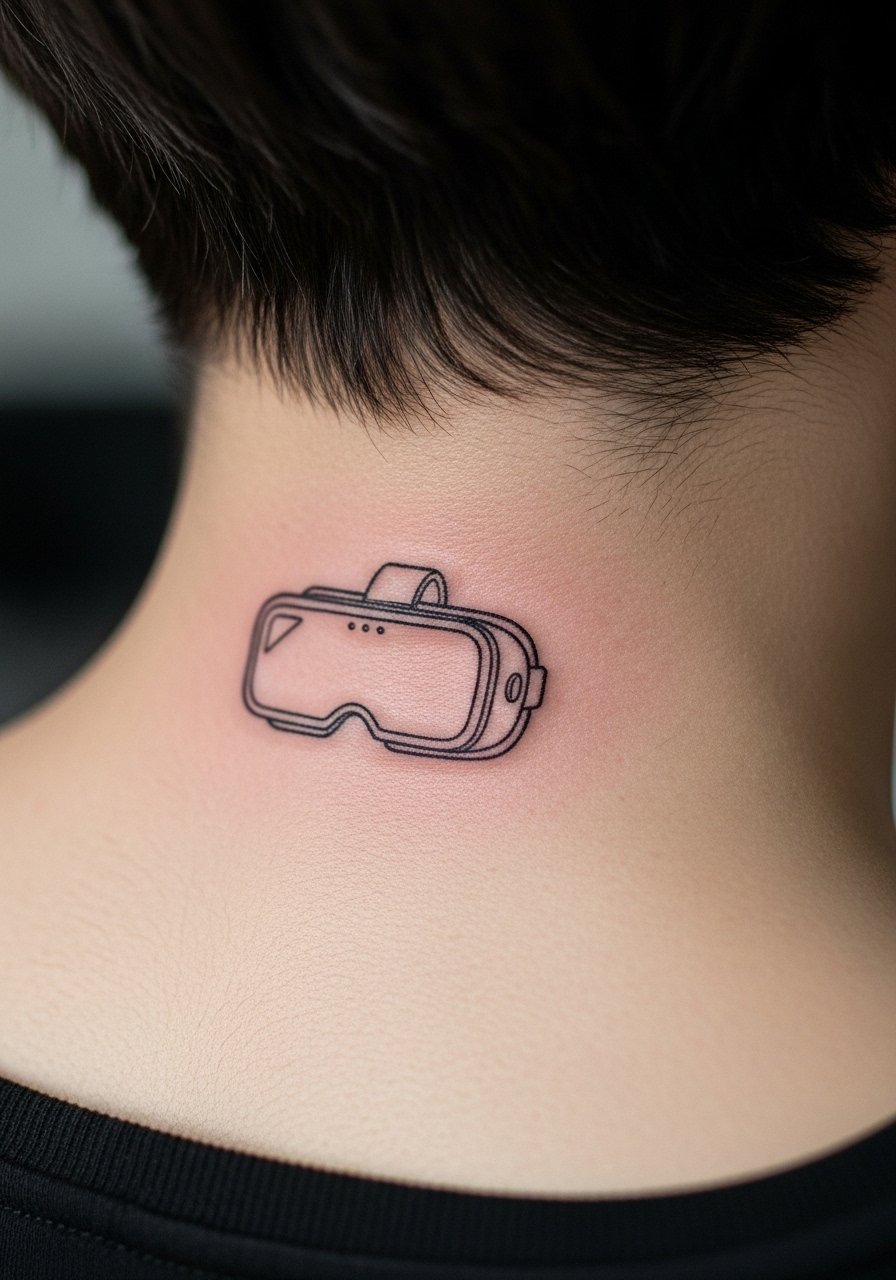
I found a niche group who get tech-themed nape tattoos. The nape is tender but sessions are brief. Minimalist line art reads well if artists use a steady hand. Avoid ultra-thin single strokes. They fade faster on this moving area. At six months I’ve seen crispness. At two years you may need softening touch-ups. If you want to hide it under hair, consider how often you wash and style your neck, that affects retention. Ask for line weight recommendations at consult.
11. Bold Traditional Mario Kart Shell On Thigh
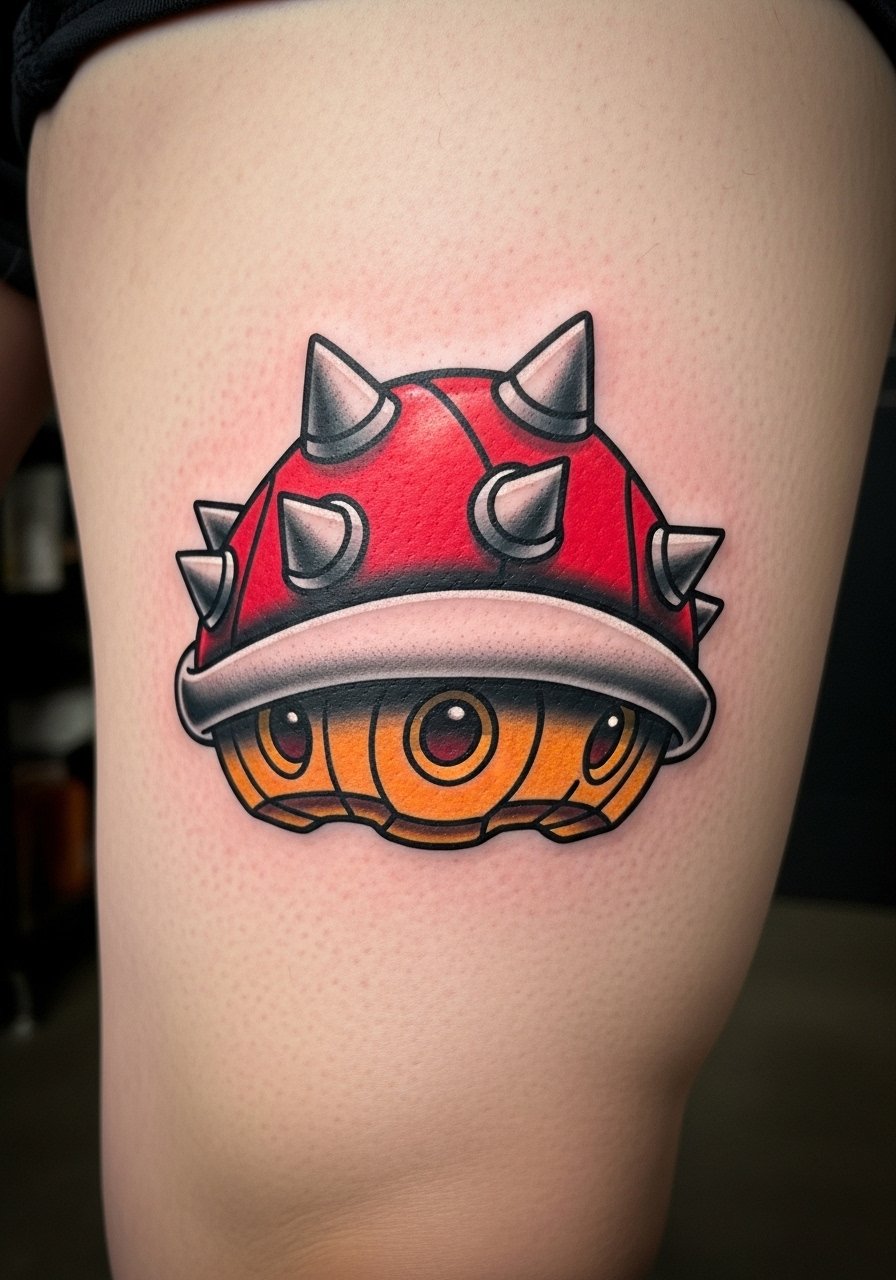
I saw this as a playful thigh piece on racers in my community. The thigh is low pain and holds color well. Traditional bold outlines and saturated fills make shells pop. Session time varies. The mistake I see is trying to cram small text or logos into the shell. Keep it graphic. At six months color stays vibrant. At years three to five, color softens unless you protect with sunscreen. I recommend asking your artist about opacity in the red so it keeps its depth long term.
12. Blackwork Retro Arcade Cabinet On Calf
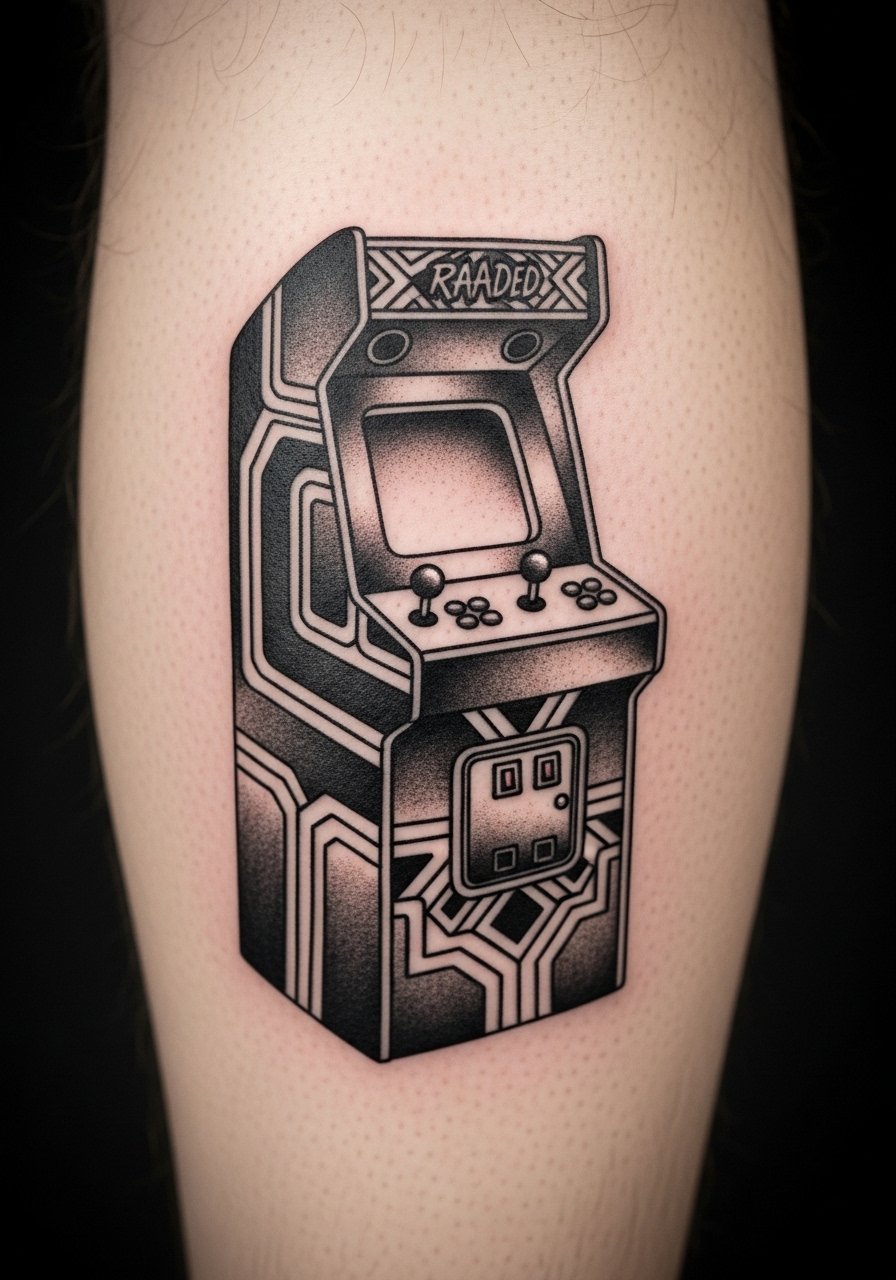
Calf pieces are great for height and detail. I recommend blackwork arcade cabinets for people who want big retro statements. Pain is mild. Expect a one session block for mid-size work. A common error is including tiny button labels. Keep controls bold and legible. After healing, the cabinet reads like a silhouette from afar. Over years small interior lines will soften. If you plan to add colored LEDs or glow effects later, leave space for light tones.
13. Minimalist Legend Of Zelda Map On Ribcage
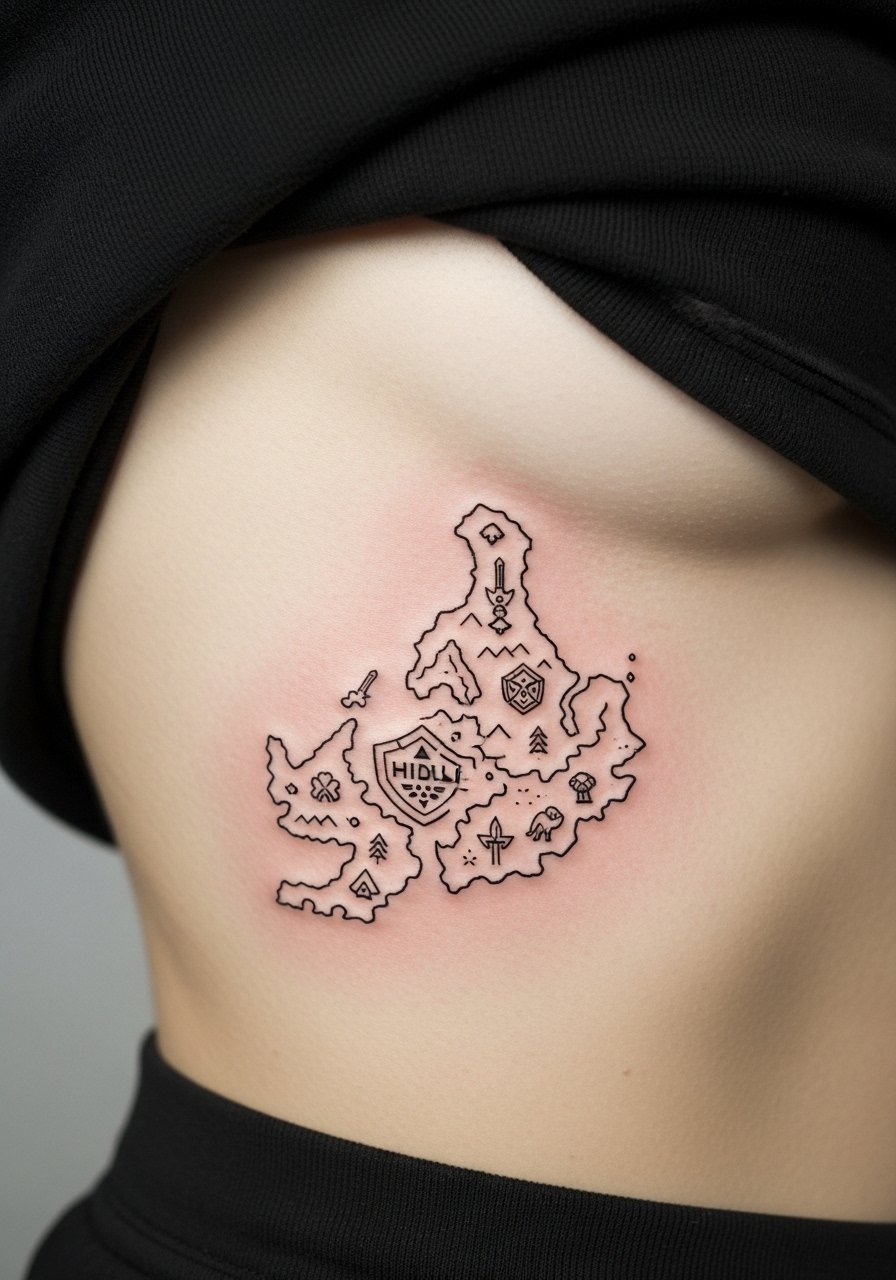
I discovered this at a convention portfolio. Map tattoos look meaningful and suit the ribcage for scale. Pain is high on ribs. The trick is using slightly heavier lines for coastlines and pared down icon markers. Artists warn against tiny type or tiny islands. Those fade into indistinct marks. At six months lines settle. At two years expect small islands to blur if too detailed. During consult, show a simplified reference and mark the icons you want preserved.
14. Micro Pixel Samus Helmet On Behind Tricep
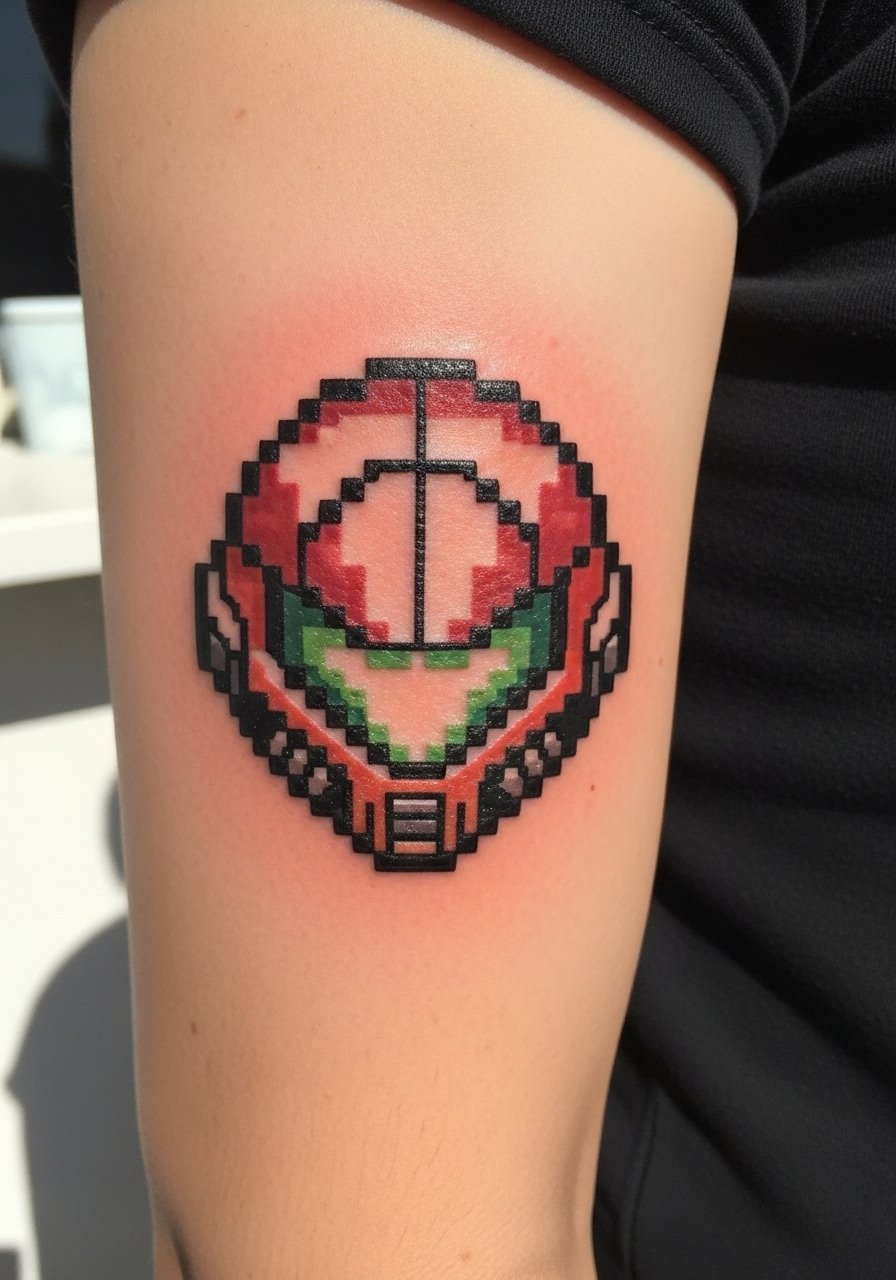
Behind-tricep placement hides well and can be sensitive. I’ve seen pixel helmets here pop in photos when the arm flexes. Sessions are short. The mistake is squeezing pixels into a tiny area. Give each square room. From what I’ve seen, pixels at this placement hold shape for a year if slightly larger than phone-screen pixels. Ask your artist to test scale on the skin before inking. If you plan a sleeve, align the pixel grid to other elements.
15. Neo-Traditional Pokemon Evo Chain On Outer Forearm
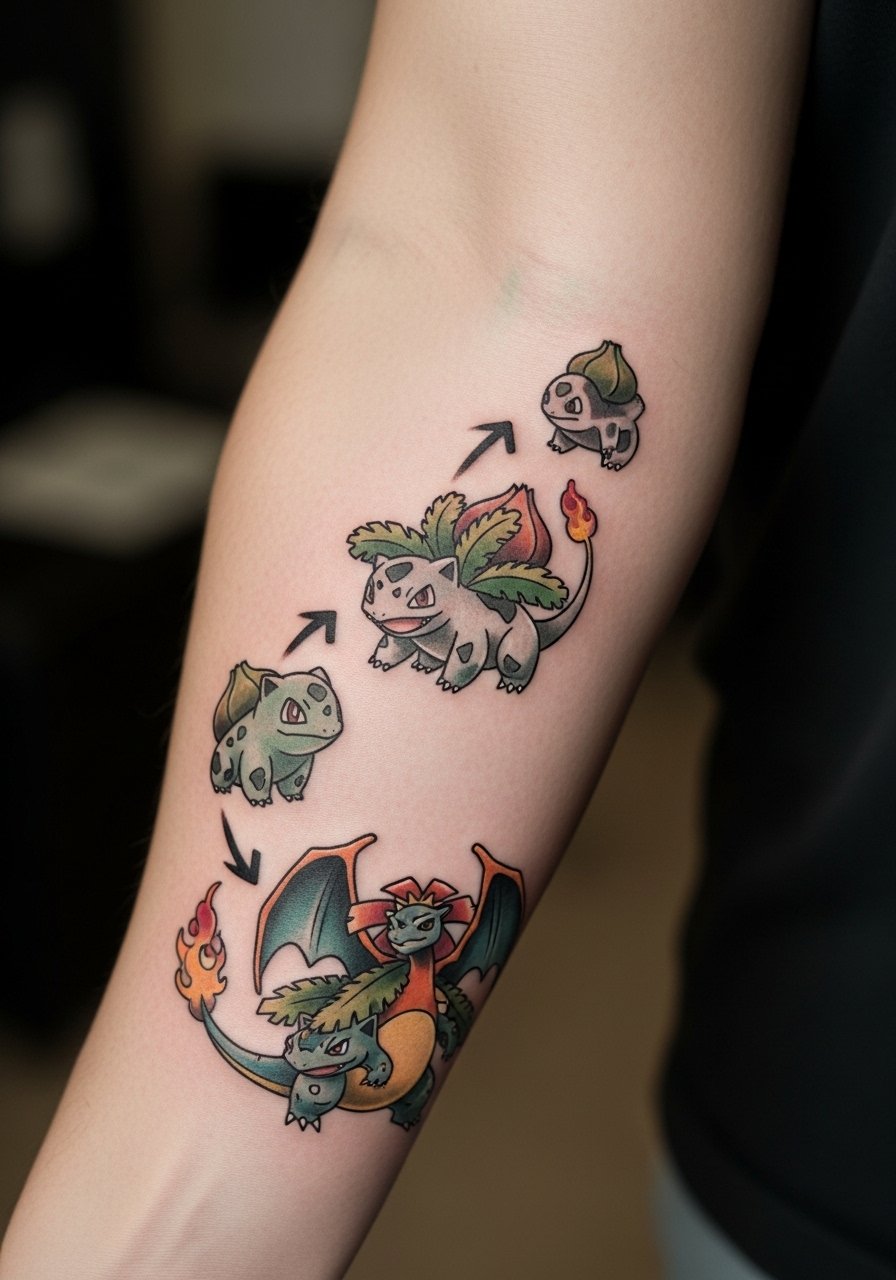
I saw a tattooist combine neo-traditional flowers with an evolution chain and it felt fresh. Outer forearm is great for storytelling pieces. Pain is moderate. For longevity, choose thicker outlines and slightly muted fills. The common mistake is trying for photorealism with neo-trad shading. That mix can look muddy after healing. After a year, outlines keep the timeline readable. During consult, bring exact poses and a palette sample so the artist matches your vision.
16. Minimalist Steam Logo On Ankle
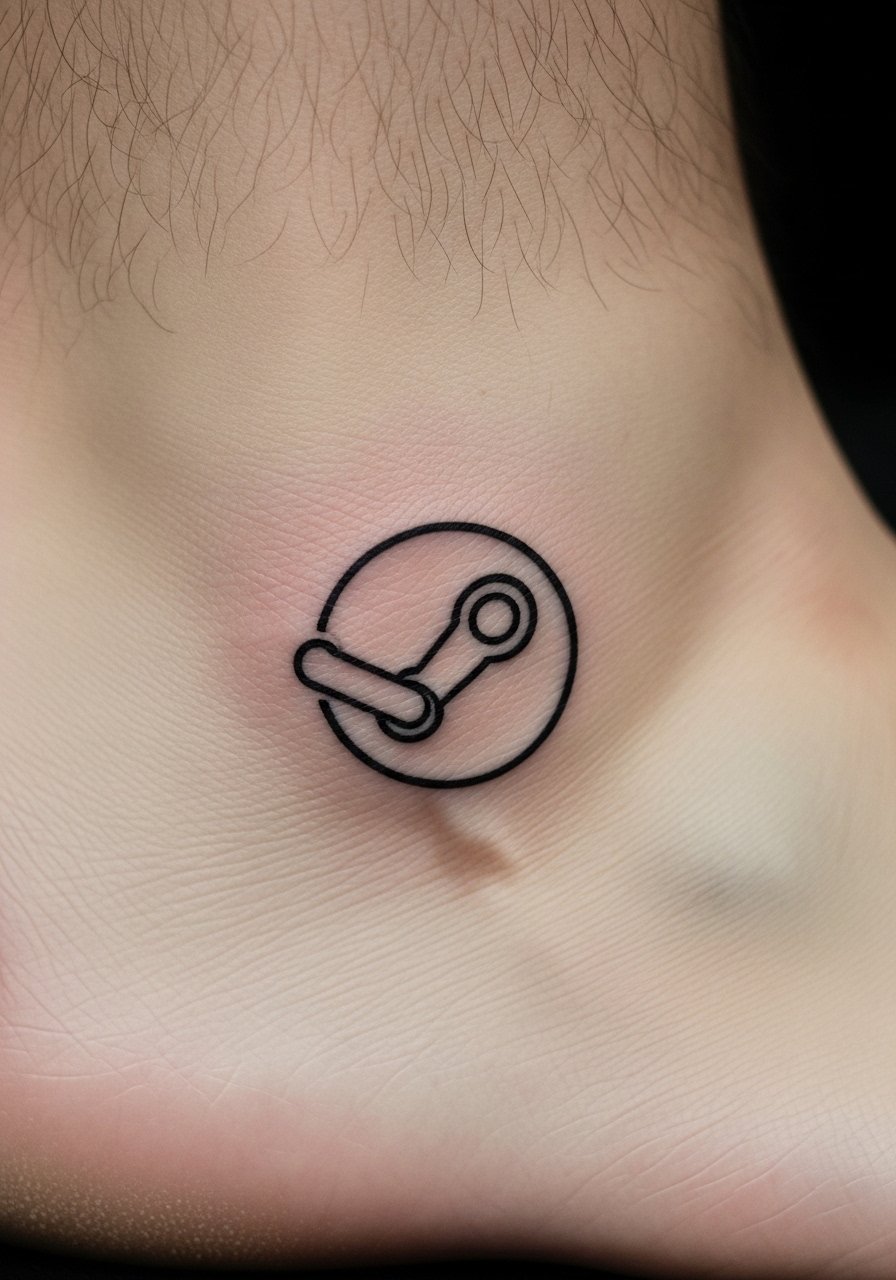
Ankle tattoos are picky about scale. I recommend slightly enlarging the logo versus what you imagine. The pain is sharp for short bursts. Artists often say small logos on the ankle fade unevenly due to friction from socks. A mistake is placing it where shoes rub. Healed at six months it looks clear if sized properly. At two years, edges may soften. If you travel a lot or wear boots, plan placement accordingly.
17. Scripted Gamer Tag In Fine Line On Collarbone
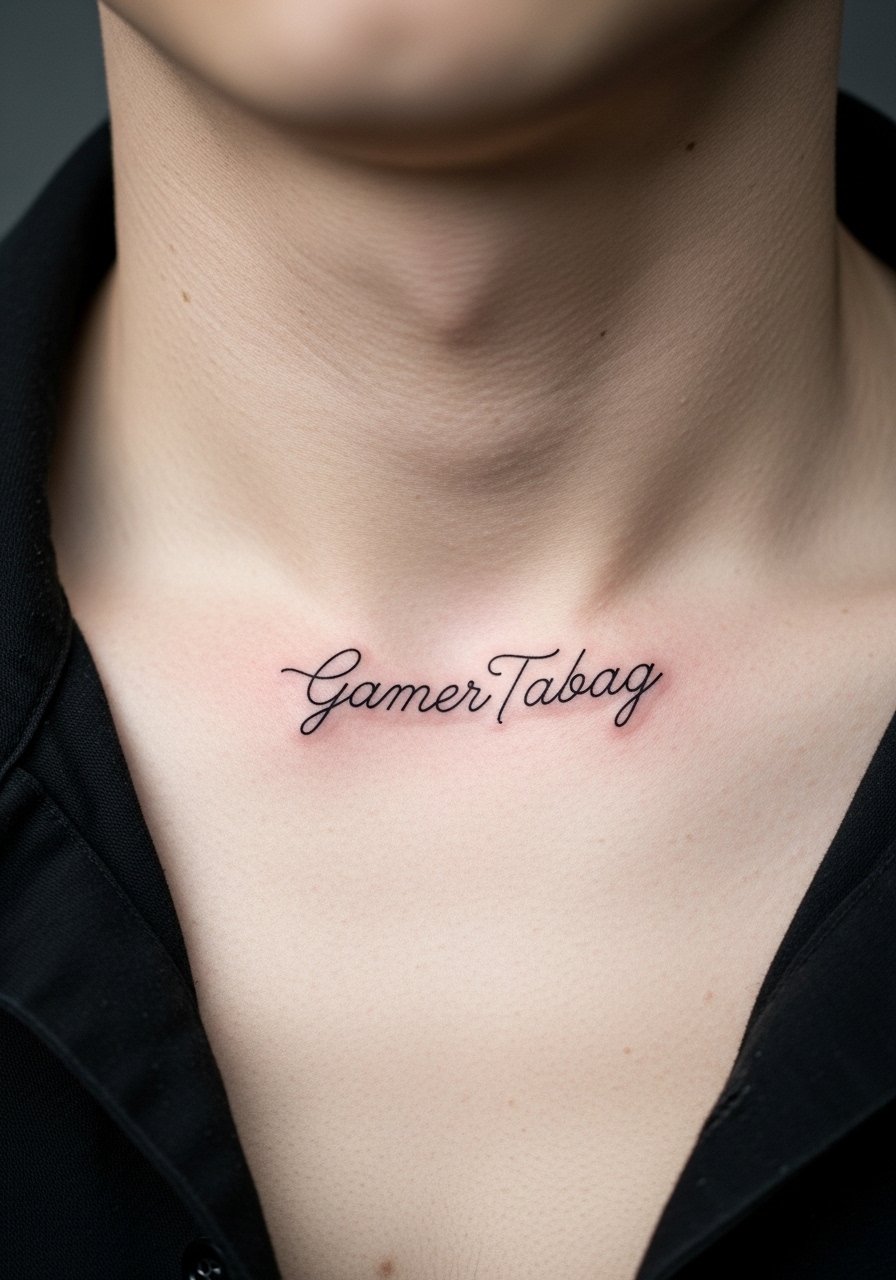
I first saw this at a LAN meetup. Collarbone gives a classy display but is touchy to tattoo. Pain can be high. Fine line script works if you request modest letter size and slight boldening of downstrokes. People often pick overly intricate fonts. Those thin swirls turn to blurred loops. At six months it looks elegant. At two years, thin curls may need touching. Tell your artist the exact font or bring a stencil so spacing is right.
18. Micro-Realism Portal Portal Gun On Forearm
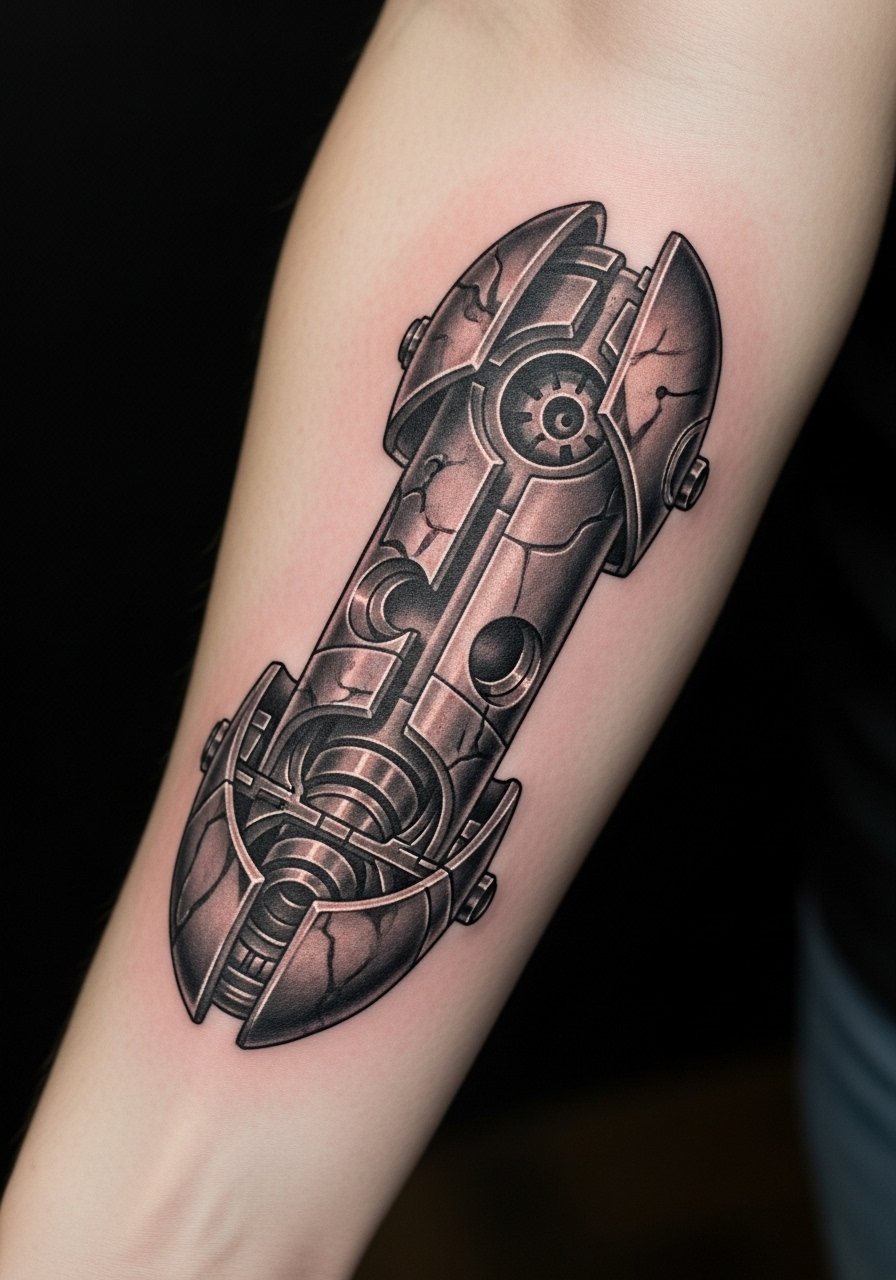
I love the metallic finishes artists can do on forearms. Forearm placement shows the piece when you reach for things. Pain is mild. Micro-realism needs careful shading to sell metal. A common mistake is over-contrasting highlights. They can bleach out with sun exposure. At six months the gun looks dimensional. At two years, highlights may need re-inking. Ask your artist to plan touch-up-friendly highlight placement during the consult.
19. Traditional Pokemon Badge Set On Upper Arm
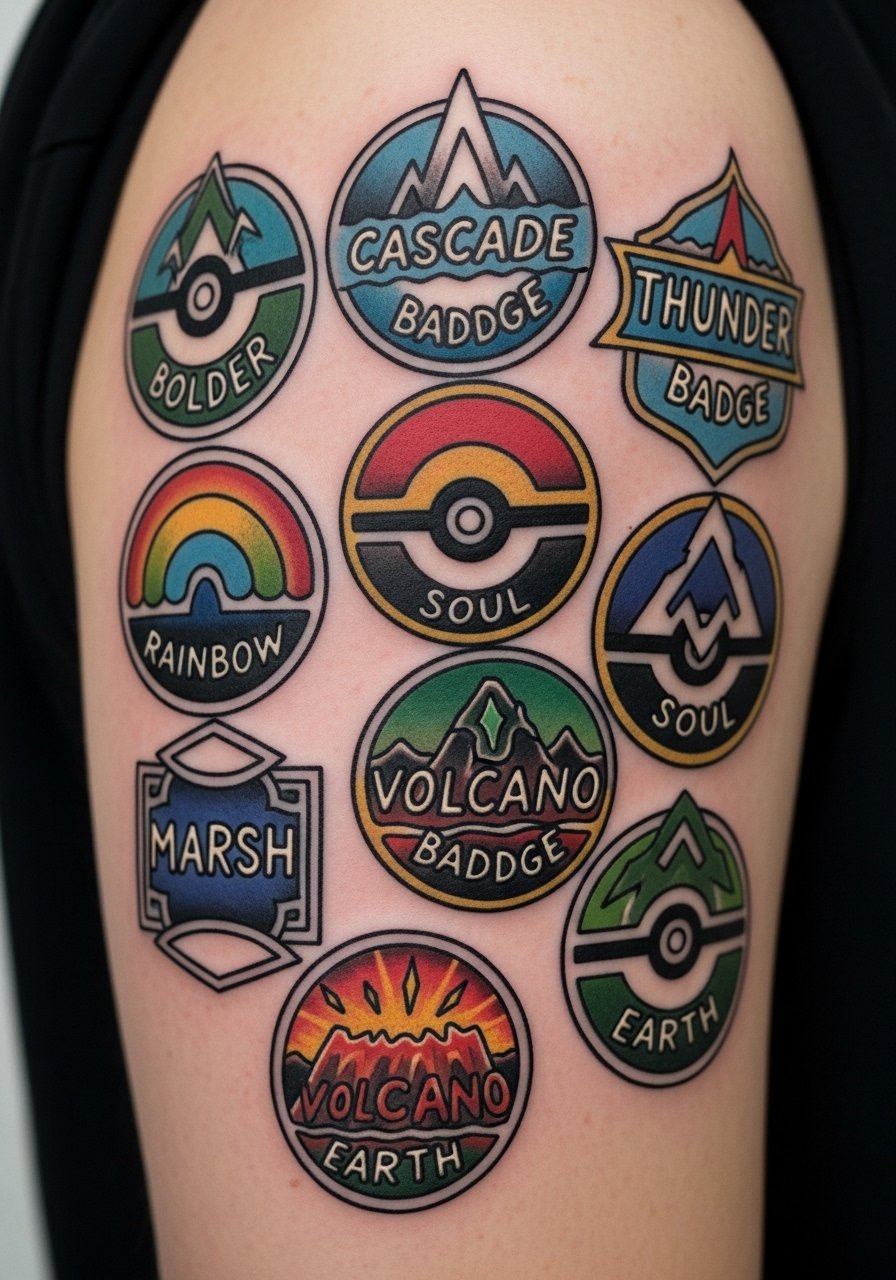
I noticed collectors arranging gym badges into compact clusters. Upper arm heals well and tolerates bold color. Pain is moderate. Keep badges slightly larger to avoid losing internal icons. A mistake is packing too many badges into one small patch. After a year the set still reads if outlines are prominent. If you want a sleeve idea later, situate badges where they can expand outward.
20. UV Ink Gaming Circuitry On Inner Wrist
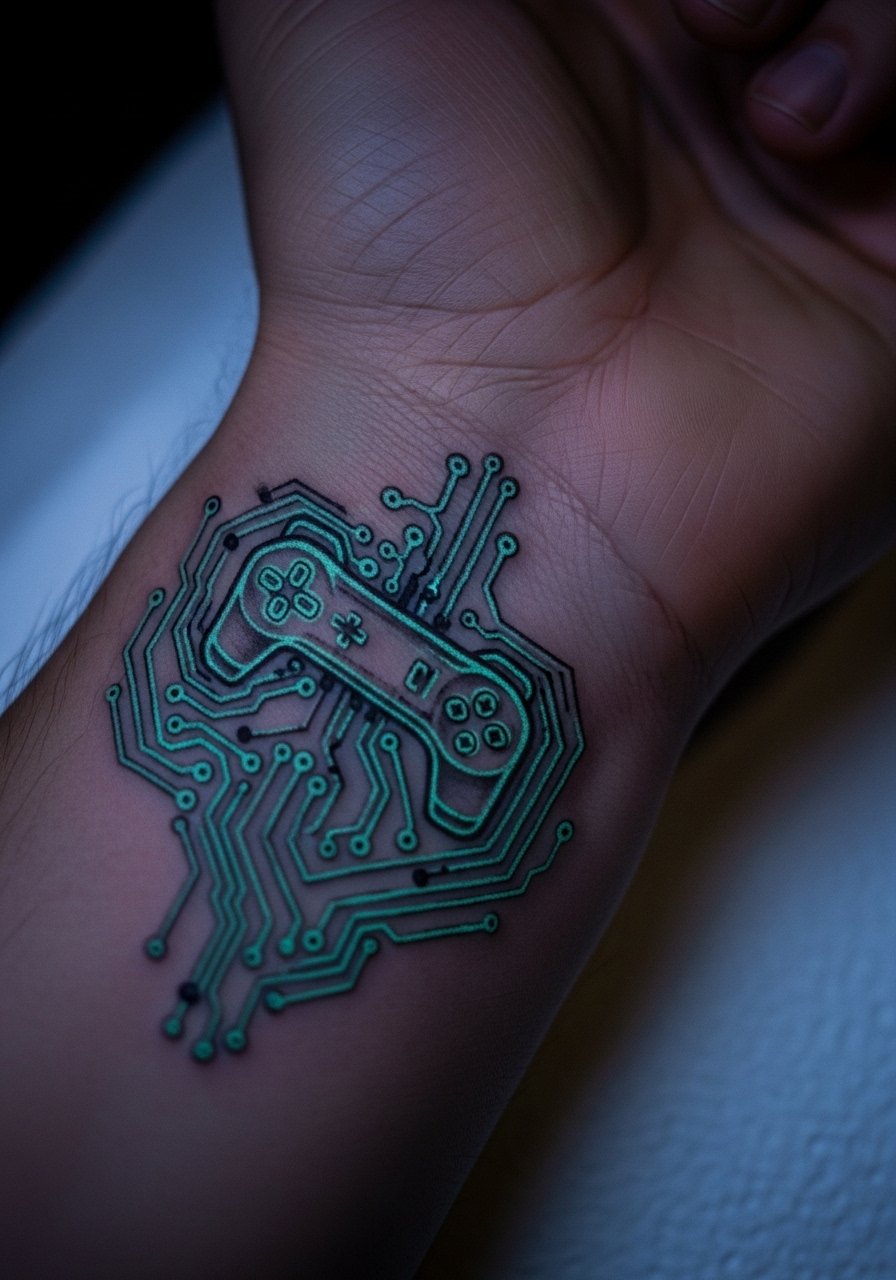
This one is one of my under-covered picks. UV circuitry is subtle in daylight and electric under blacklight. Inner wrist pain is moderate. I recommend combining UV accents with regular black outlines. People often use UV only, then find the daylight result too faint. From what I’ve seen, UV areas may fade quicker and require careful sun protection. Ask your artist about UV ink brands and patch testing. If you work outdoors, this might not be the best choice.
21. Blackwork Diablo Rune On Calf
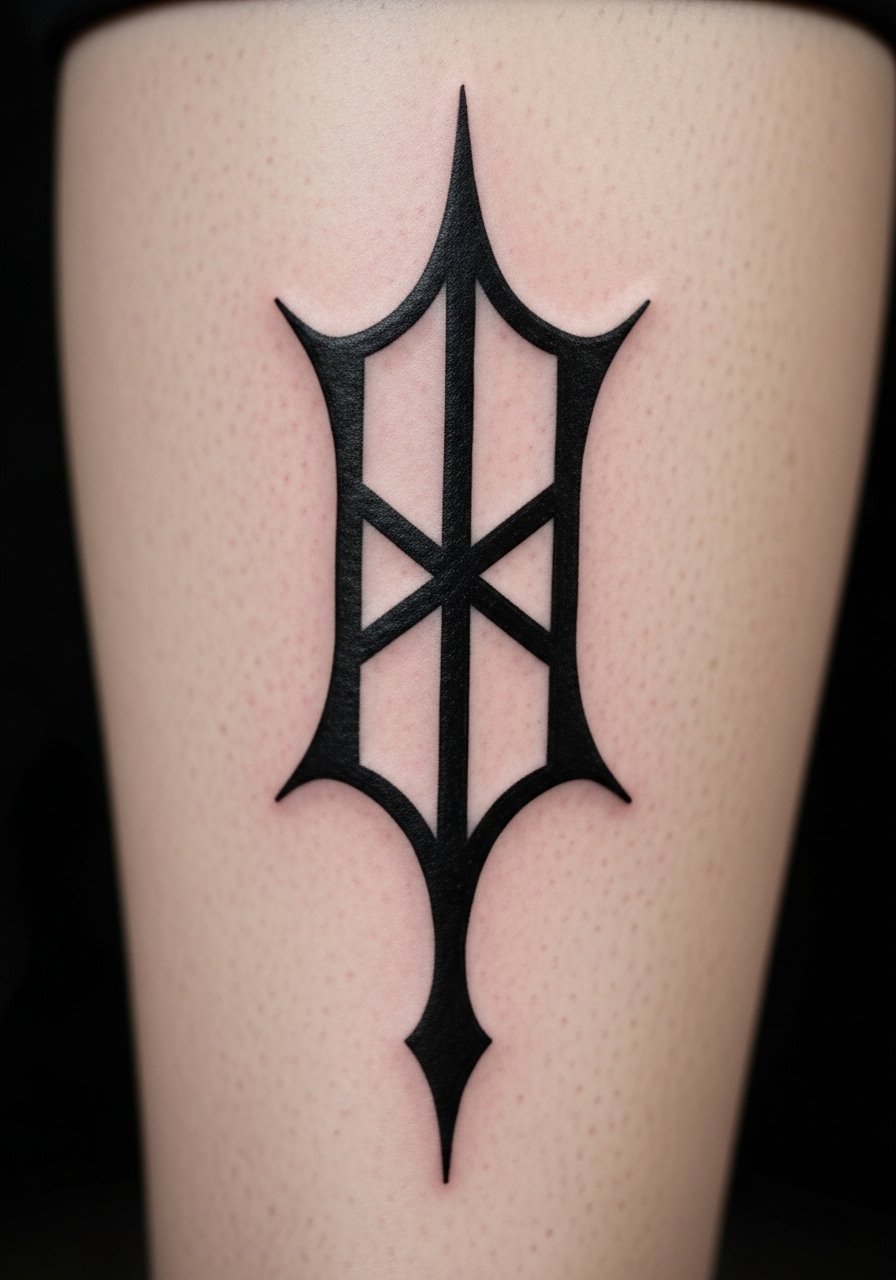
I collected images of rune tattoos and liked how they read from distance. Calf placement keeps the symbol visible and low friction. Pain is low. Solid blackwork ensures longevity. The common flaw I see is relying on ultra-fine inner marks. They fill in. Tell your artist to prioritize bold negative space and consider future color overlays. At one year it holds shape well. If you plan to run or bike often, mention friction during consult.
22. Minimalist Zelda Compass On Foot Arch
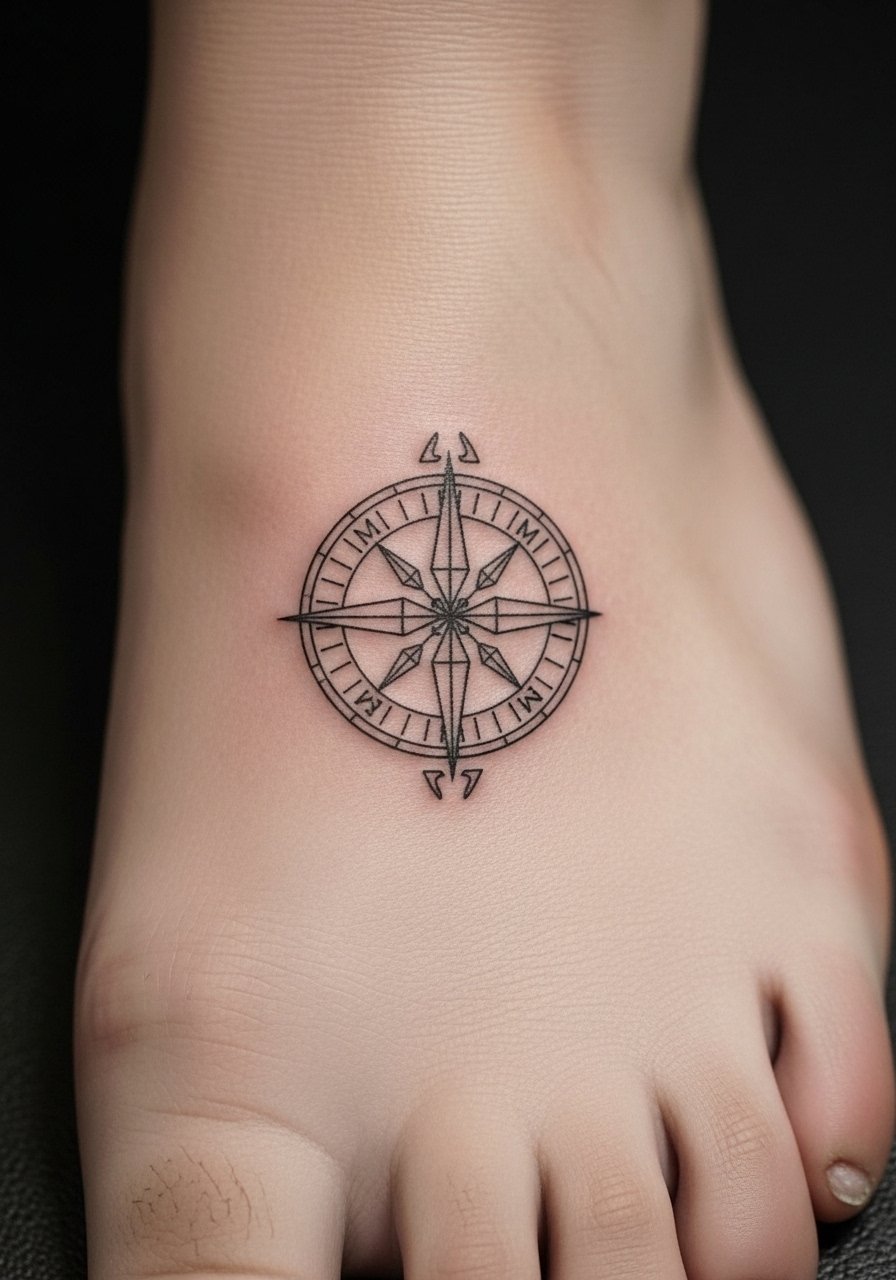
Foot tattoos are finicky. I only suggest the arch if you accept possible touch-ups. Pain is high and healing is slow due to shoe rubbing. Compass designs need slightly bolder points to survive. The mistake is tiny ticks that blur. After six months you might see lightening. If you want longevity, consider the ankle instead. During consult, ask about aftercare steps for feet and when to resume shoes.
23. Sleeve Collage Of Controllers And Flora On Full Sleeve
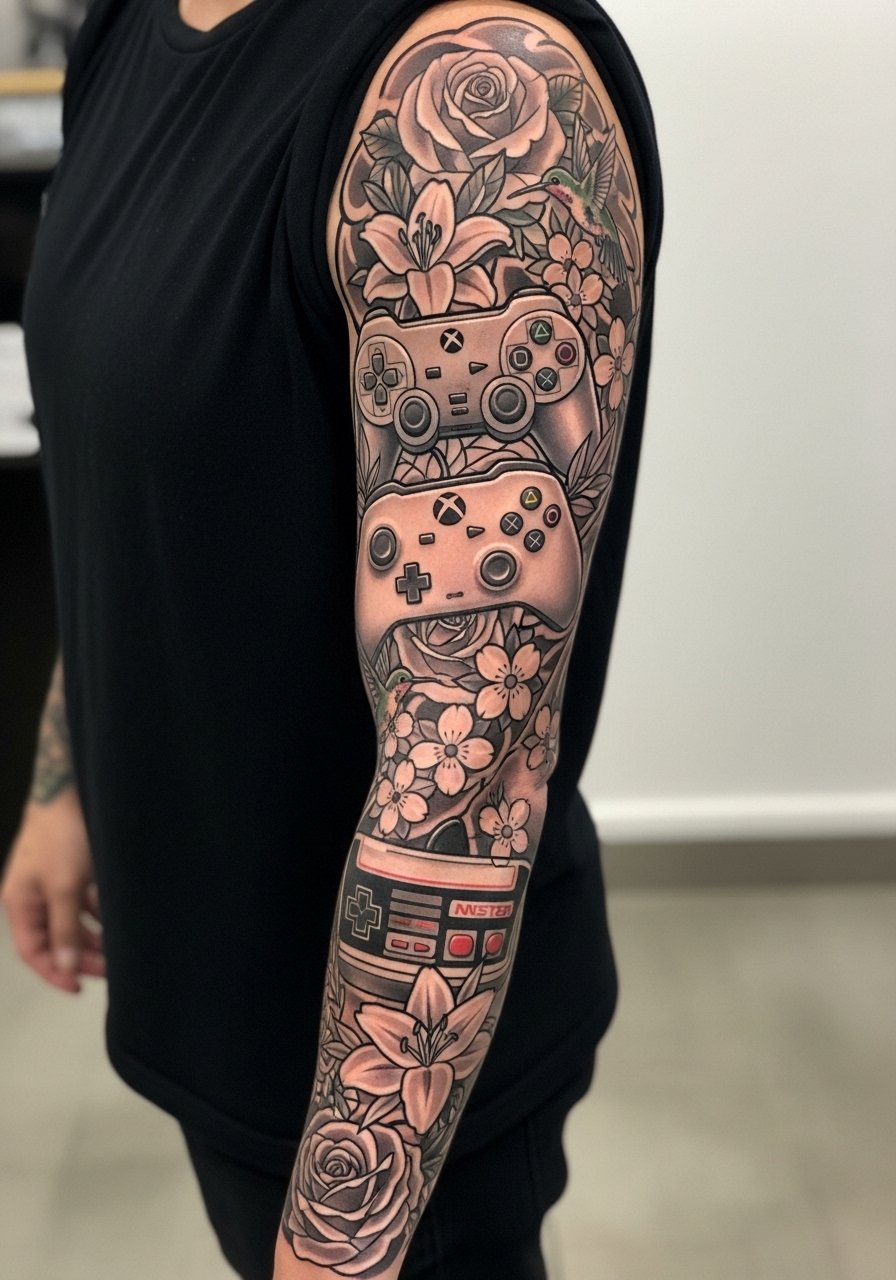
I curated this concept after watching several artists blend tech and organic motifs. A full sleeve allows narrative flow. Pain varies across areas. Sessions span multiple appointments. Tell your artist which controllers are focal points and which should sit as background. I see sleeves fail when there is no clear primary element. Healed at one year, well-planned sleeves still read. If you want cohesion, choose a unifying color palette during the consult.
24. Micro Pixel Coin Trail Up Wrist To Forearm
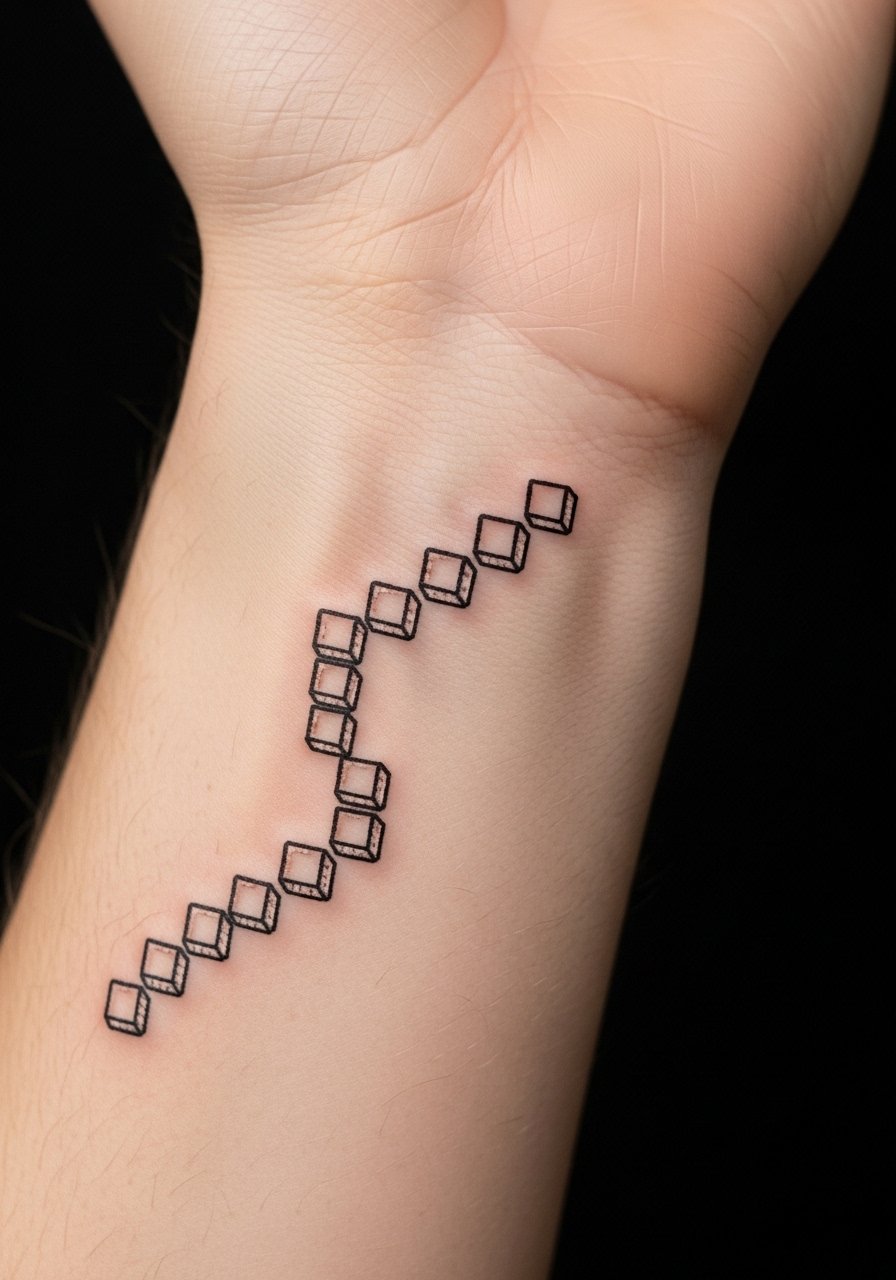
I love the motion this design creates when you flip your wrist. The wrist to forearm flow shows movement. Pain is mild near the wrist and light on the forearm. Keep pixels slightly larger than you want. Small pixel trails blur into indistinct gold after two years. The mistake is using weak outlines. Tell your artist you want high contrast between coin and background. If you plan to add a character at the end of the trail, leave cushion space.
25. Neo-Traditional Final Fantasy Crystal On Sternum
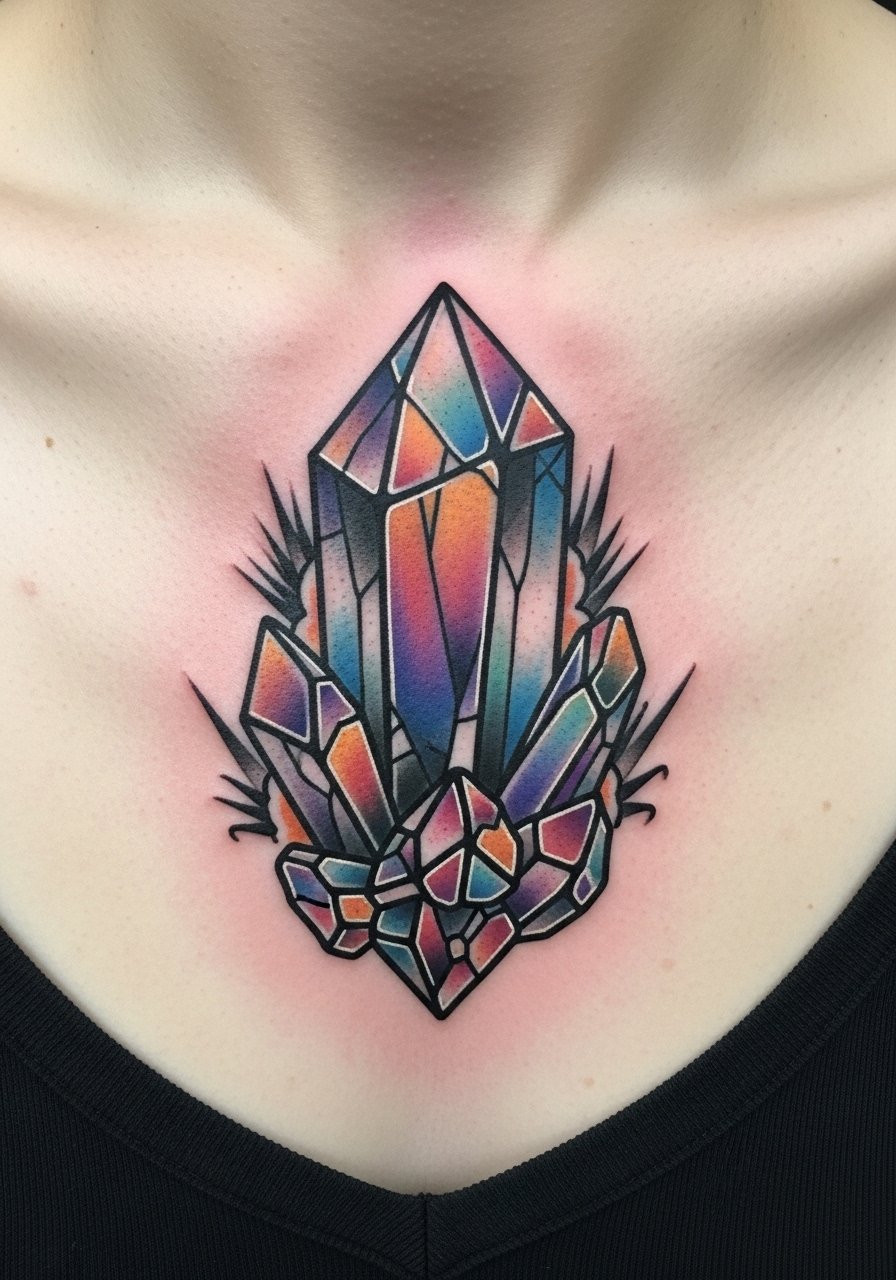
Sternum placement yields dramatic showings. I recommended neo-traditional crystals to a collector who wanted a centerpiece. Pain is high and session time depends on size. Ask for a central anchor and avoid tiny facets. Over-faceting looks messy after healing. At six months the crystal maintains color. At years three to five, lighter facets may need refreshing. Plan wardrobe around the initial healing to avoid rubbing and sweat.
26. Micro-Realism Esports Team Logo On Inner Bicep
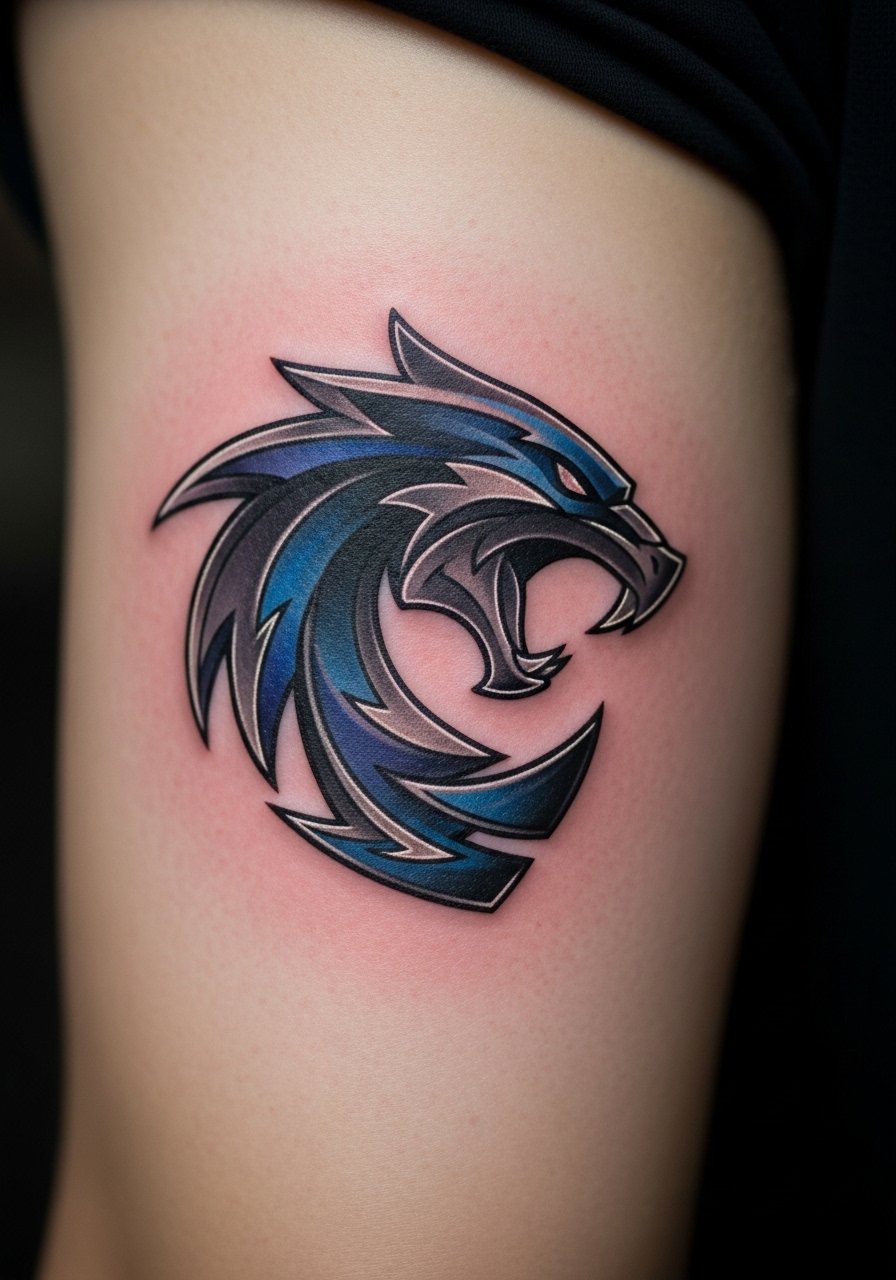
I saw fans wearing their team logos proudly and wanted to replicate that in ink. Inner bicep placement hides well and heals nicely. Pain is moderate. Logos need slightly simplified shapes to survive long term. The mistake is copying tiny screen assets directly. They pixelate in ink. During consult, bring vector or high-res references and ask the artist to simplify small elements. At one year the logo reads bold. If you plan team updates, design with modular sections that can be adjusted later.
27. Unique QR Code Linking To Gamer Tag On Forearm
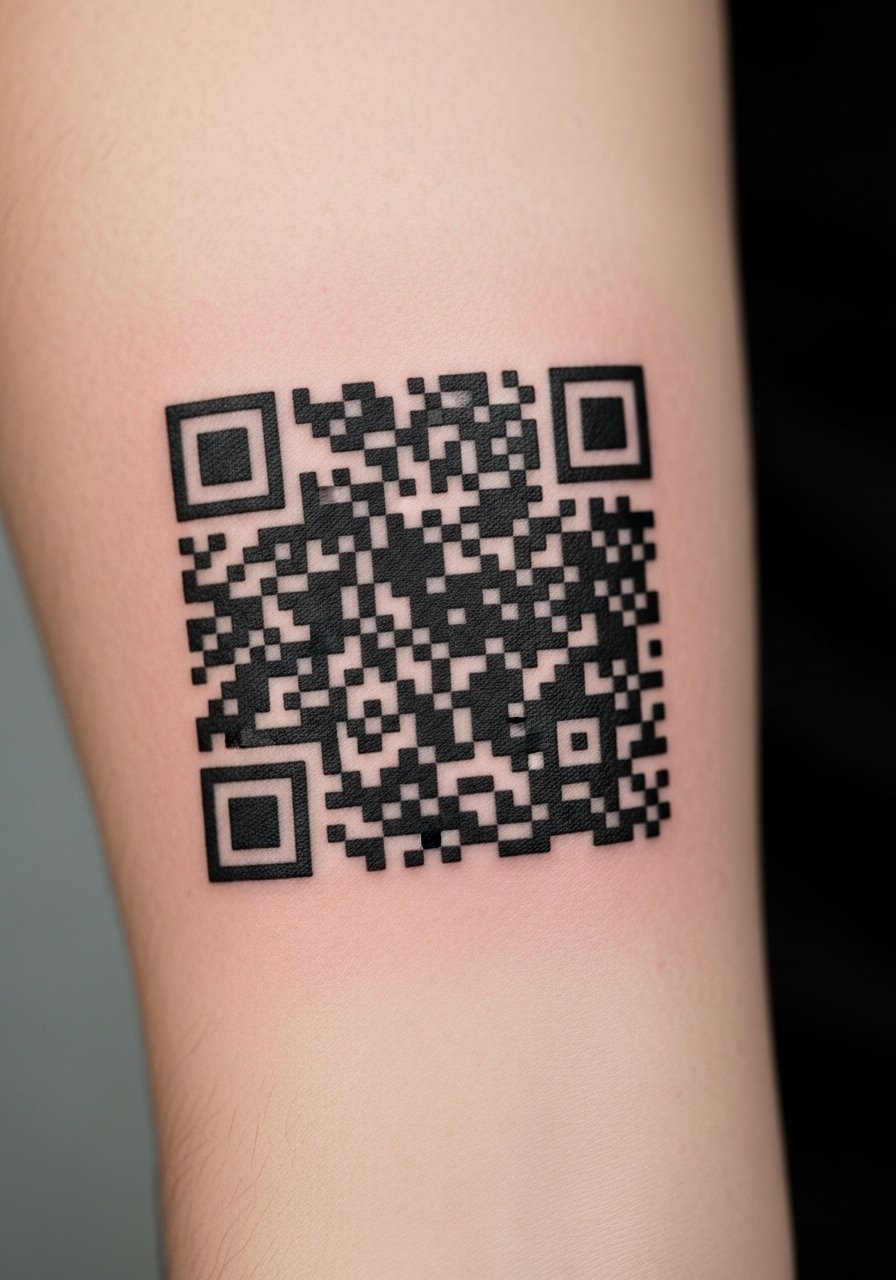
This is one of the fresh angles I ran into recently. QR code tattoos can be playful, linking to a gamer tag or highlight reel. I only recommend them if your artist prints and scans the tattoo stencil to verify scannability before inking. Forearm is ideal for scanning. Pain is low. The most common mistake is making the code too small. Slight size increases and bold contrast keep scans reliable. Expect to test it immediately after healing and plan touch-ups for any squares that blur. Discuss placement carefully so daily movement does not warp the read.
Tattoo Prep and Aftercare Essentials
Aftercare is what keeps gaming tattoos looking crisp. From what I've gathered, a mix of barrier ointment, gentle soap, and long-term sunscreen is key. Below are items I actually recommend based on what artists I know suggest and what I've used.
Aftercare Essentials
- Aquaphor Healing Ointment, 14 oz tube — Use for first 3 to 5 days on fresh work
- Saniderm Transparent Adhesive Bandage, 6-inch roll — Second skin option many artists recommend for the first 24 to 48 hours
- CeraVe Fragrance-Free Moisturizing Lotion, 12 oz — For days 4 to 14 during healing
Cleaning and Prep
- Dr. Bronner's Unscented Castile Soap, 32 oz — Gentle cleanser for daily washes
- Tattoo Numbing Cream 5% Lidocaine, 1 oz — Use only if your artist approves, apply 30 to 45 minutes before
Long-Term Maintenance
- SPF 50 Sunscreen Stick, 0.47 oz — Easy on-the-go sun protection to prevent fading
- Mad Rabbit Tattoo Balm, 1.7 oz — Great for keeping healed ink vibrant
- Hustle Butter Deluxe, 1 lb container — Vegan option artists often suggest for long-term care
Optional Comfort Items
- Tattoo Numbing Spray, travel size — For touch-ups or sensitive areas, use with artist approval
- Hydrocolloid Bandages, pack of 10 large — Use for small blistering or hotspots after heavier sessions
- Stencil Transfer Paper, A4 pack — Handy if you do mock-ups at home before a consult
Every artist I talked to stresses sunscreen and gentle cleansing as essentials. If a product sounds too gimmicky, ask your artist if they use it in their chair.
Frequently Asked Questions
Q: Will fine line pixel tattoos blur if I get a full sleeve of pixels?
A: From what I’ve seen, tiny pixels packed into a sleeve blur faster than larger blocks. If you want a pixel sleeve, request larger pixel blocks and bold separators during consult. Consider mixing blackwork borders with pixel fills. I also recommend planning touch-up windows at one and three years. For healing, use Saniderm for the first day if your artist approves.
Q: Do watercolor-style gaming tattoos need different aftercare than traditional ones?
A: Yes, in my experience watercolor pieces often use softer saturation and lighter shading. That means scabbing and color loss can show more. I advise gentle washing with Dr. Bronner's Unscented Castile Soap and switching to a fragrance-free lotion like CeraVe after scabbing. Don’t over-apply heavy ointments past day five unless your artist recommends it.
Q: Can UV ink be combined with regular blackwork for gaming circuitry tattoos?
A: Yes. I’ve seen UV highlights paired with bold black outlines work well. The trick is to keep the UV as accents and not the only defining element. UV fades faster and needs careful sun protection. Ask your artist about patch testing and plan a follow-up touch-up session. For sun defense, use an SPF stick like the one in the aftercare list.
Q: How often do chest and sternum pieces need touch-ups compared to forearm work?
A: In my experience chest and sternum tattoos can need fewer early touch-ups if you protect them from sun and friction. Forearms are exposed daily and may show faster fading. That said, both areas benefit from similar aftercare routines. Use sunscreen once healed and consider a yearly check in with your artist for color refresh.
Q: Is a QR code tattoo practical for linking to my gamer profiles long term?
A: It can be practical, but there are caveats. Size and contrast determine scanability. I always tell people to have the artist print a stencil and scan it before inking. Plan for future touch-ups. If you travel or work outdoors a lot, protect the area and test scans after healing. If you want a backup, pair the QR with a small readable tag or icon.
Q: What should I ask about during a consult for a micro-realism character on my forearm?
A: Bring multiple reference angles and state the scale you want. Tell the artist which elements must stay crisp, like eyes or metallic highlights. Ask about session length and how long to wait between sessions for best color saturation. If you plan to use metallic or bright highlights, discuss long-term fading and possible future touch-ups.
Q: Are there aftercare products artists actually recommend versus marketing hype?
A: From the artists I’ve talked to, barrier ointments like Aquaphor for initial days are real recommendations. Many also like Saniderm as a professional option. Products with heavy fragrances or unknown formulations tend to be marketing hype. Ask your specific artist what they use in their chair, and follow their aftercare timeline.