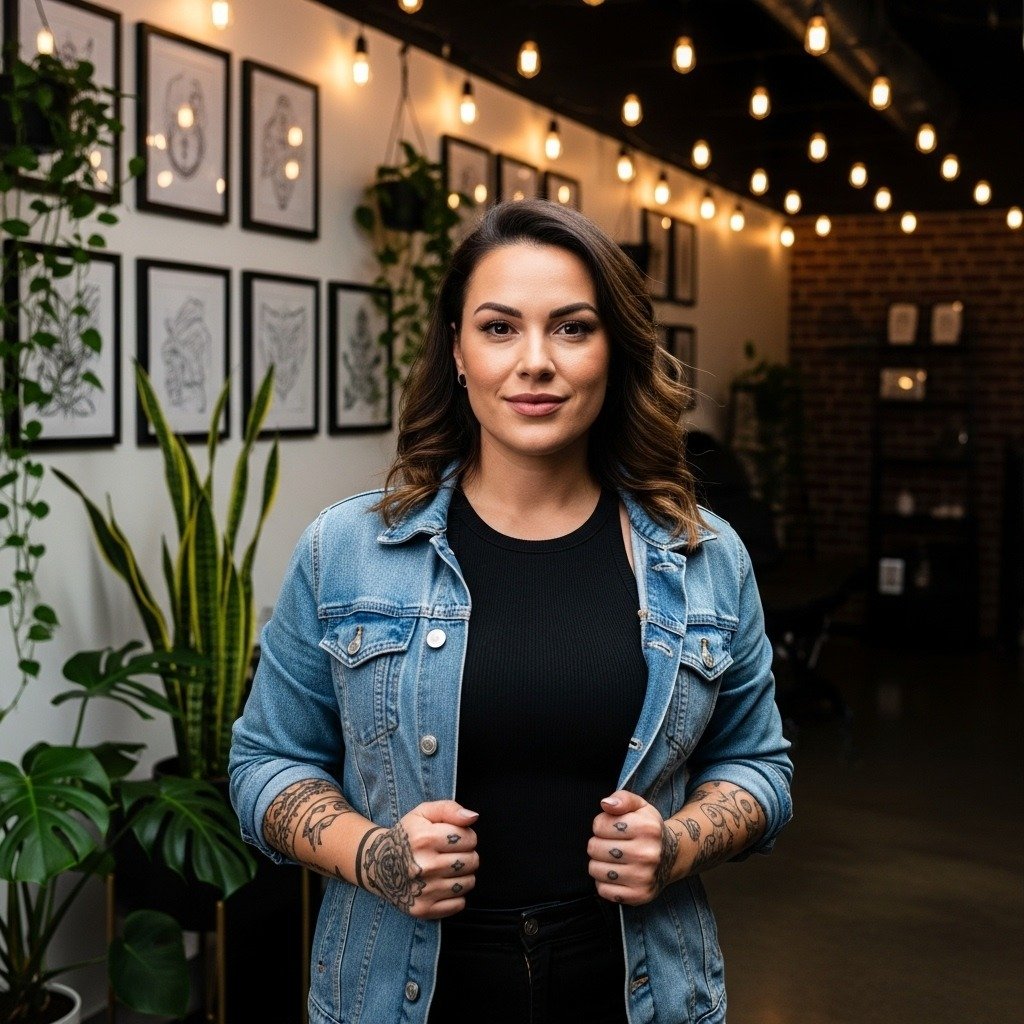
I spent months narrowing down a design before I realized the stronger draw was a single place — not a symbol. Coordinates tattoos let you lock a memory into your skin without shouting it to the world. I chose mine after a long conversation with an artist who showed healed examples; that helped me pick line weight and placement that would stay readable for years.
This list focuses on coordinate tattoos in minimalist, fine line, and micro-realism styles. These ideas work well on wrist, ribcage, forearm, ankle, and behind the ear. From what I've seen in 2026 trends, subtle placements and integrated motifs (constellations, map pins, soundwaves) are trending—plus they heal predictably when done with proper aftercare.
1. Fine Line Coordinates on Inner Wrist
Style/Technique: Fine Line / Minimalist
Pain Level: Low (2-3/10)
Session Time: 30-60 minutes
Best For: First tattoo, sentimental daily reminder
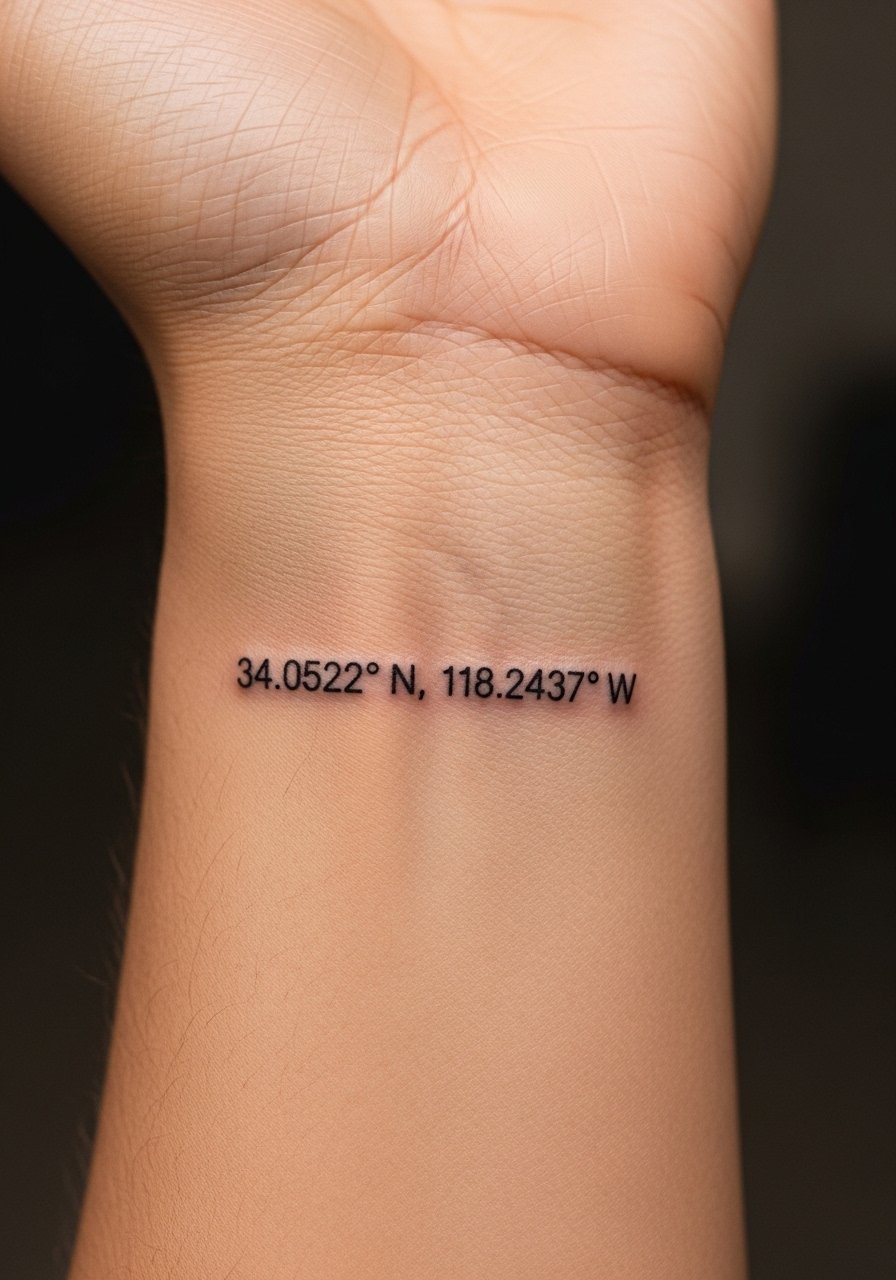
I picked an inner wrist coordinate because it's discreet and easy to show. Fine line keeps the numbers delicate, which reads like a secret code to those who know. Expect mild discomfort — the wrist is bony but quick. Heals in about 2–3 weeks on the surface; full settling can take a couple months. I've noticed very thin numbers can blur if the artist uses too fine a needle or the client sunburns the area during healing. Ask for slightly bolder fine lines and healed examples on similar skin tones. Use SPF and daily moisturizer long-term; tiny wrist tattoos can lose crispness if exposed or over-scrubbed. Common mistake: choosing font so tiny it becomes a smudge after a year.
2. Minimalist Coordinates Behind Ear
Style/Technique: Minimalist / Micro Line
Pain Level: Low-Medium (3-4/10)
Session Time: 20-40 minutes
Best For: Hidden sentiment, playful placement
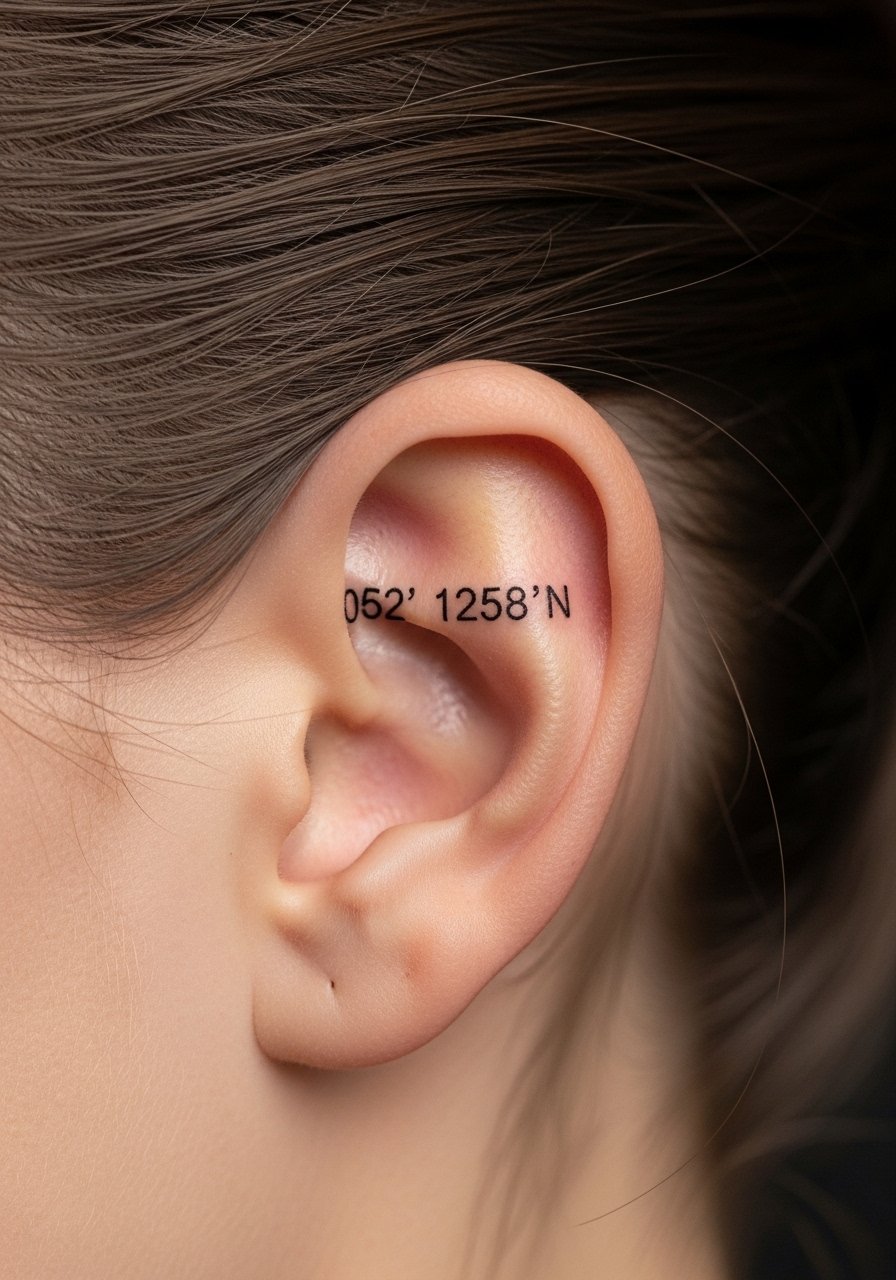
Behind the ear is a discreet spot that reads intimate. The skin is thin, so lines can look crisp immediately but may blur slightly over years if ink spreads. Pain is short-lived and sharper than the wrist due to proximity to bone. Healing is fast if you avoid sleeping on it and keep hair products off the area. I've had artists caution clients to avoid overly tiny fonts here; the shape of the ear moves and can distort minuscule marks. This placement is great if you want something meaningful but easily hidden by hair. Ask for an artist experienced with small script near cartilage and to show healed behind-ear work.
3. Micro-Realism Coordinates With Map Pin on Forearm
Style/Technique: Micro-Realism / Illustrative
Pain Level: Low (2-3/10)
Session Time: 1-2 hours
Best For: Visible reminder, easy to show
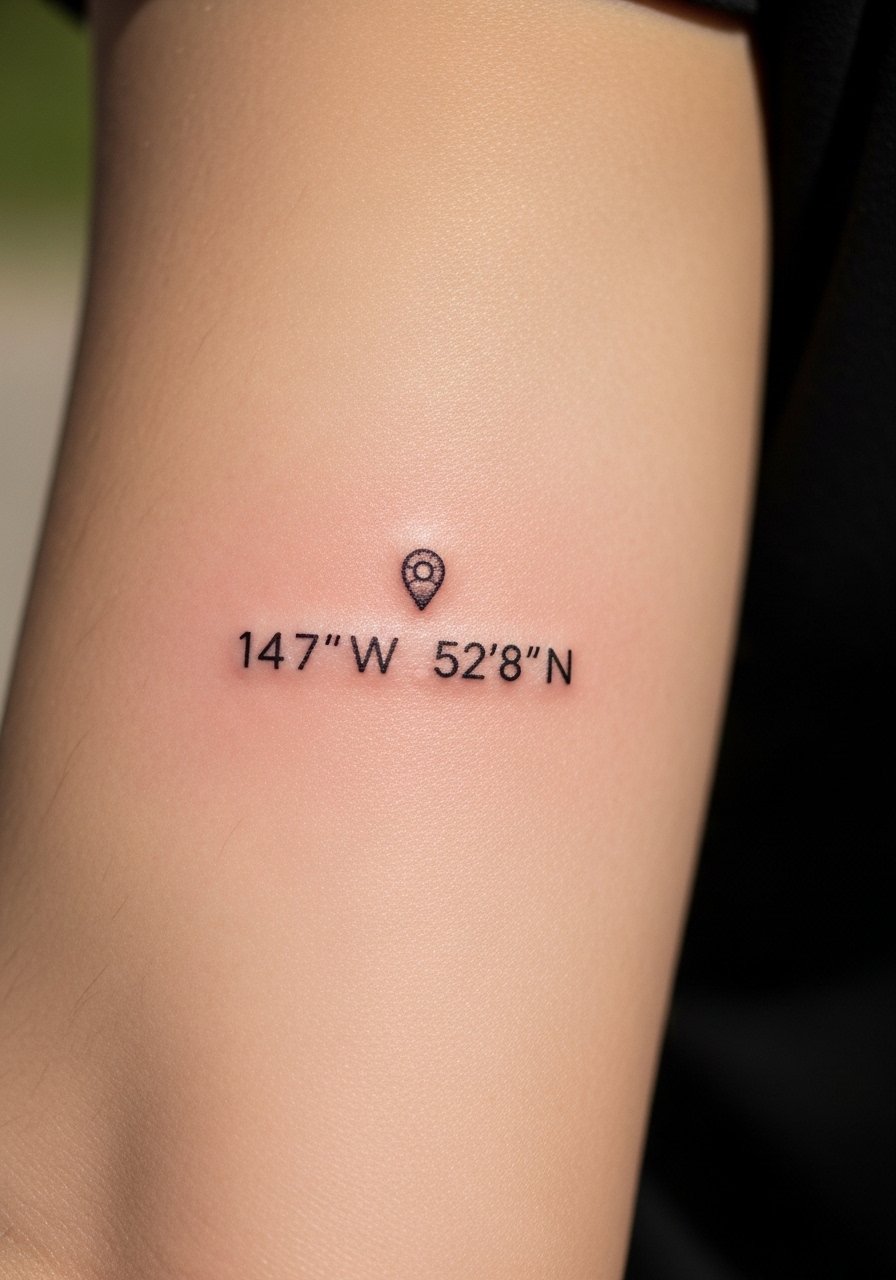
Adding a tiny map pin gives context without spelling everything out. Micro-realism lets the pin have a bit of shadow so the piece reads clearly even when small. The forearm is forgiving for healing; expect light scabbing around days 3–7. I've seen this combo age well when the numbers are spaced and the pin has a small fill for contrast. Pain is minimal; sessions are short. Common mistakes: trusting an artist without fine small-type examples or using color that fades quickly. When I got mine, I asked for a healed mockup and to slightly thicken the numerals so they’d remain legible after a year.
4. Bold Traditional Coordinates on Upper Arm
Style/Technique: Traditional / American Traditional
Pain Level: Low (2/10)
Session Time: 1-2 hours
Best For: Statement piece that holds up long-term
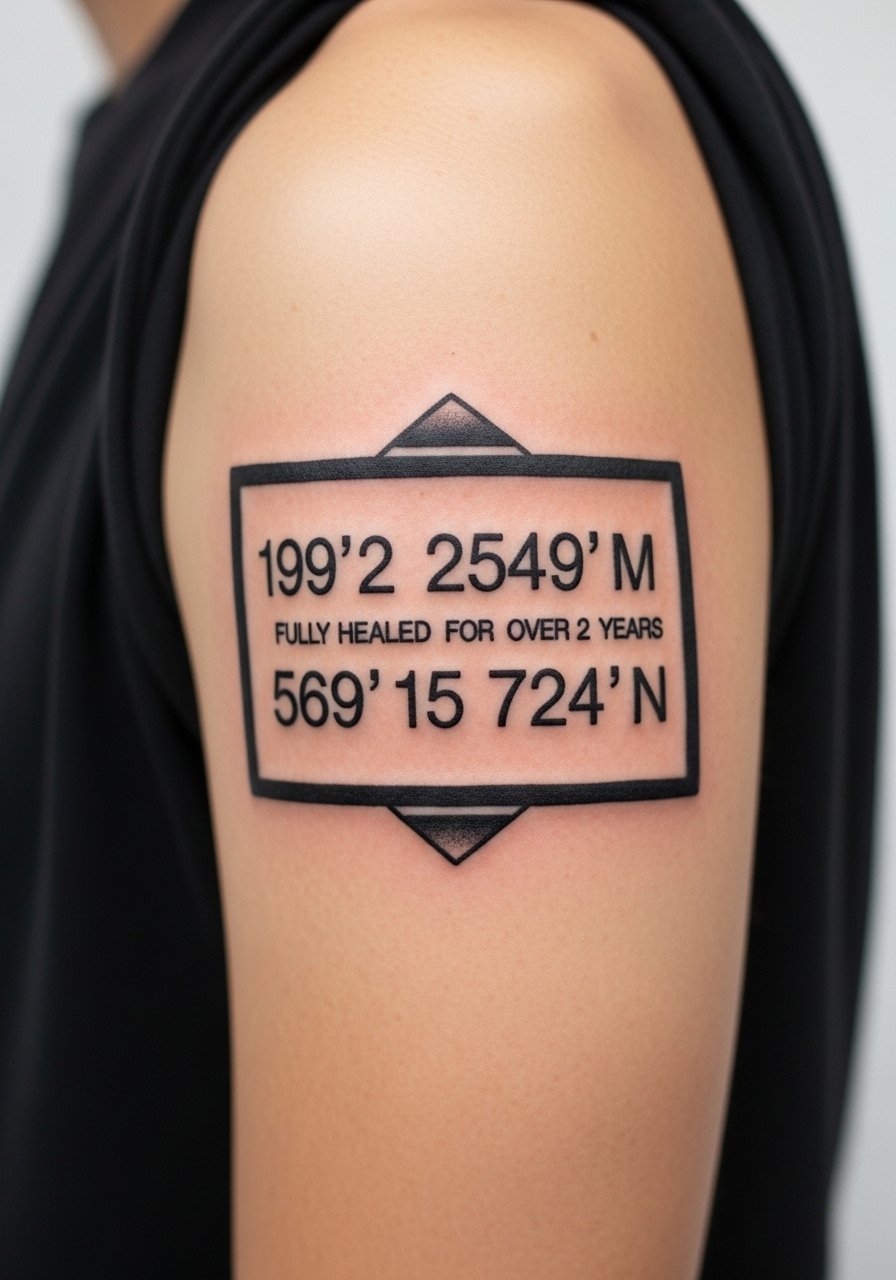
A traditional approach pairs coordinates with bold outlines and simple shading to resist blurring. Upper arm skin tolerates bigger needles well, and solid black lines hold up beautifully. Pain is low and healing is predictable. I like this if you want a coordinate to feel timeless rather than delicate. Artists who do American Traditional know how to space numerals with strong negative space so the numbers stay readable decades later. Avoid tiny script in this style; go for thicker numerals or box the coordinates in a banner if you want longevity.
5. Watercolor Coordinates With Heart Accent on Ribcage
Style/Technique: Watercolor / Delicate Color
Pain Level: High (7-8/10)
Session Time: 2-4 hours
Best For: Hidden romantic tribute, expressive piece
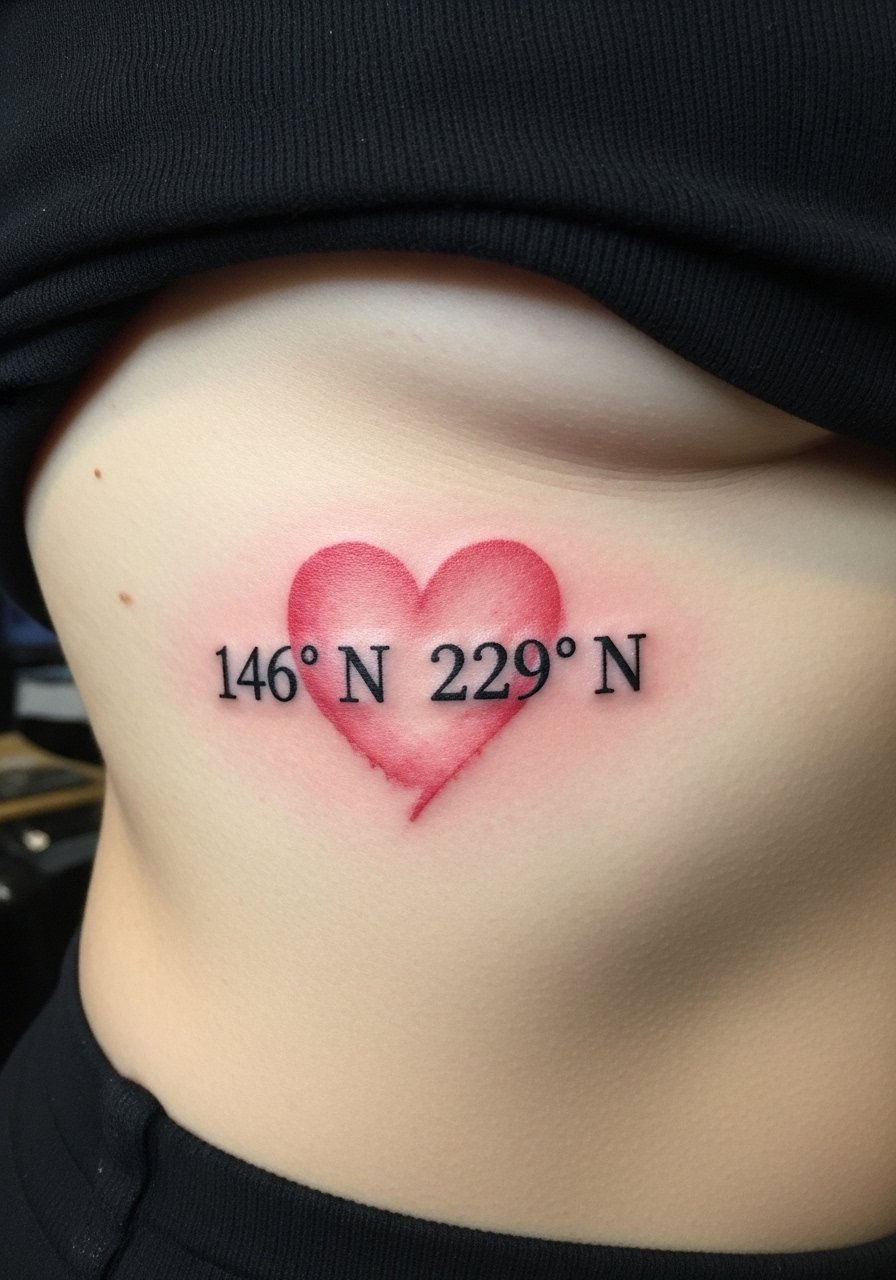
Ribcage placements are painful but intimate. A watercolor wash behind the numbers creates emotion while keeping the coordinates as the focal point. Expect a longer recovery because movement and breathing stretch the area; surface healing is 2–3 weeks, with full settling longer. I've seen watercolor patches fade faster than black numerals, so artists often recommend doing the number in black and the wash in a saturated but not neon tone. Common mistake: overextending the color wash so it distracts from the coordinates. Ask your artist about color retention on your skin tone and to show healed watercolor pieces.
6. Tiny Dot Coordinates On Finger
Style/Technique: Minimalist / Single-Line
Pain Level: High (6-7/10)
Session Time: 15-30 minutes
Best For: Super subtle, easily hidden or shown
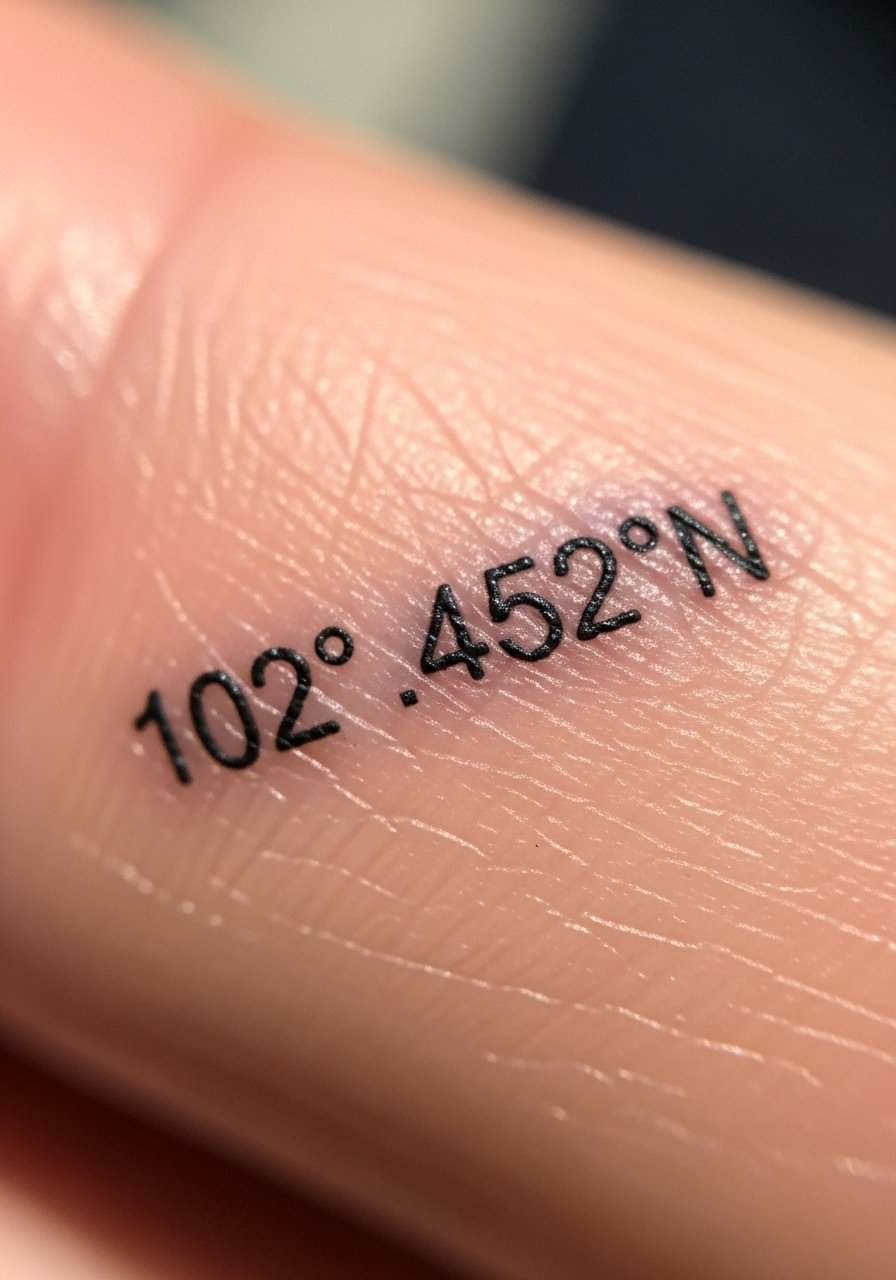
Finger tattoos are intimate but notorious for fading. I chose a side-finger placement because the skin there moves less than the pad. Expect sharp pain and more touch-ups down the line. Healed clarity depends on depth — too shallow and it peels out, too deep and it blurs. I’ve seen fingers need refreshers every couple years. If you want permanence, consider a tiny band-style coordinate around the finger in bold black rather than thin script. Keep font slightly larger than you think; detail disappears faster on hands.
7. Vertical Coordinates Down Spine
Style/Technique: Fine Line / Vertical Script
Pain Level: High (7-8/10)
Session Time: 1-3 hours
Best For: Statement, dramatic placement, sentimental chain
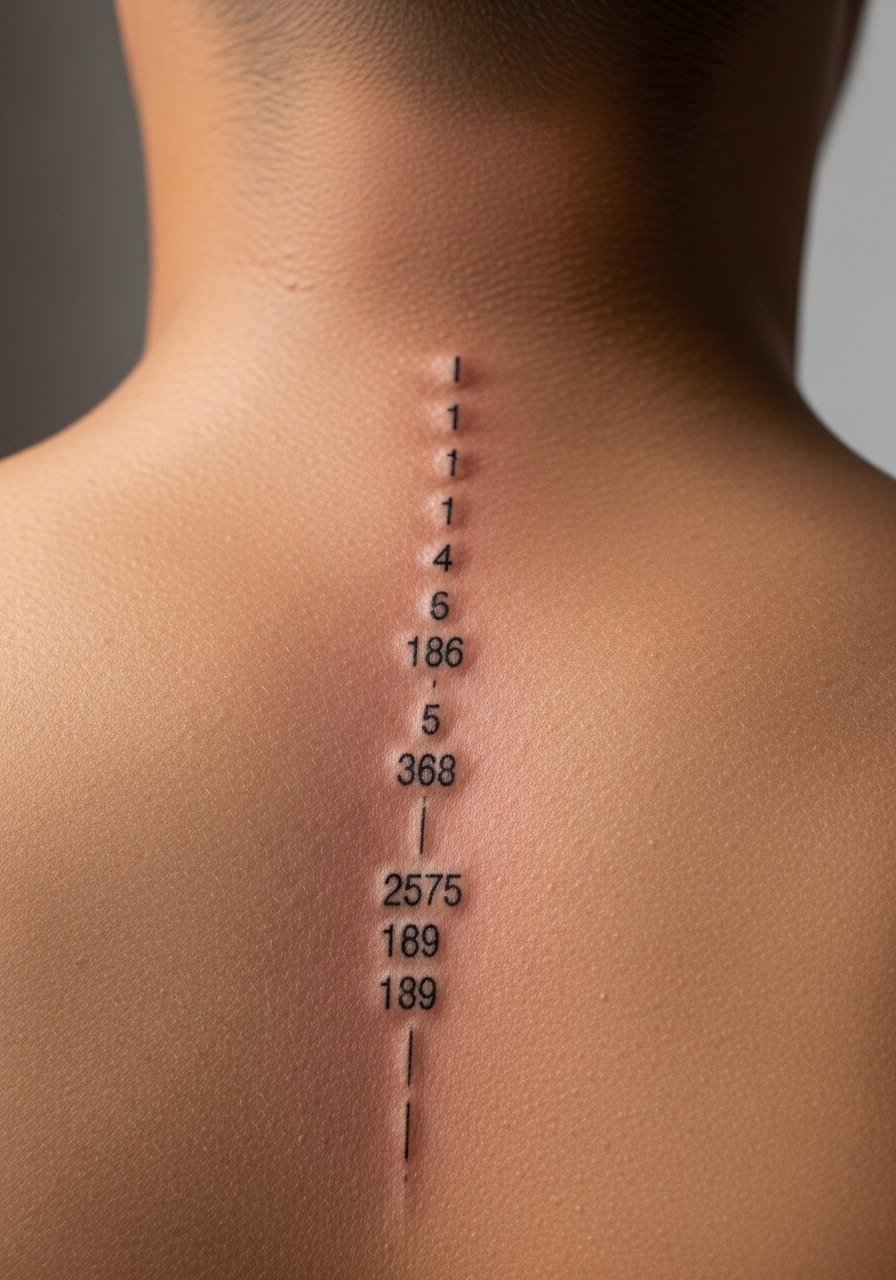
A vertical spine placement reads like a personal backbone—literally. Pain is higher near bone and the central nervous area, but the result is striking. Fine lines should be spaced to account for any slight ink spread. Expect surface healing in 2–3 weeks, but take care avoiding tight clothing that rubs the area. I've noticed vertical scripts on the spine remain legible when artists use a modest line weight. Common mistake: asking for font so thin that natural skin movement makes it look broken after healing. Bring photos of healed vertical scripts to your consult.
8. Coordinates Integrated Into Constellation on Upper Arm
Style/Technique: Dotwork / Illustrative
Pain Level: Low-Medium (3-4/10)
Session Time: 1-2 hours
Best For: Meaningful, symbolic pairings
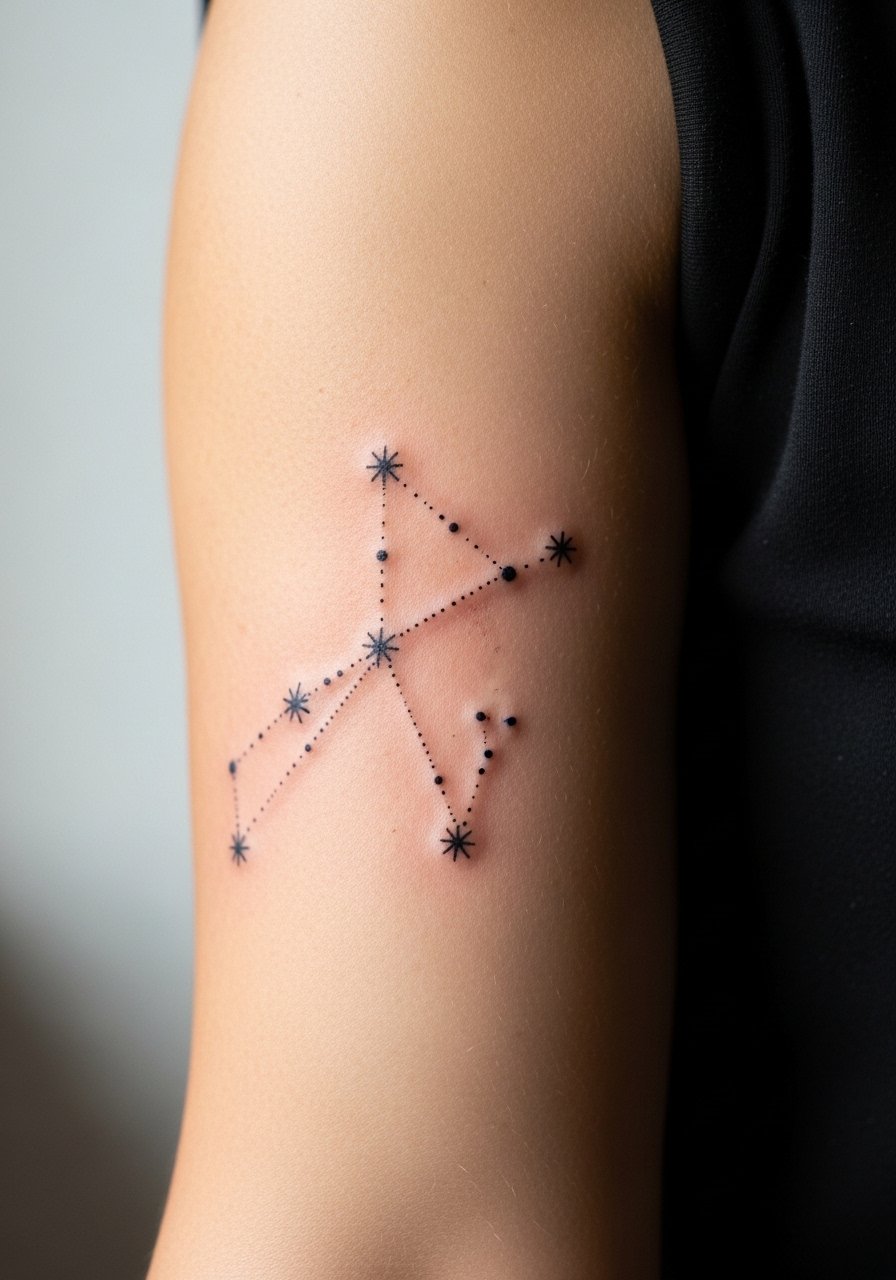
I love pairing coordinates with a constellation—both point to a place or moment. Dotwork stars frame the numbers nicely and add visual context. Upper arm gives breathing room so dots don't cluster. Pain is low; healing is straightforward. Dotwork ages well when dots have slight weight rather than being pinpricks. Ask for modest dot size and to see healed dotwork pieces; tiny star dots can migrate into a blur if they’re too small. This pairing feels timeless and reads as both place and story.
9. Coordinates With Tiny Mountain On Calf
Style/Technique: Minimalist / Linework + Icon
Pain Level: Low (2-3/10)
Session Time: 45-90 minutes
Best For: Outdoor memory, travel tribute
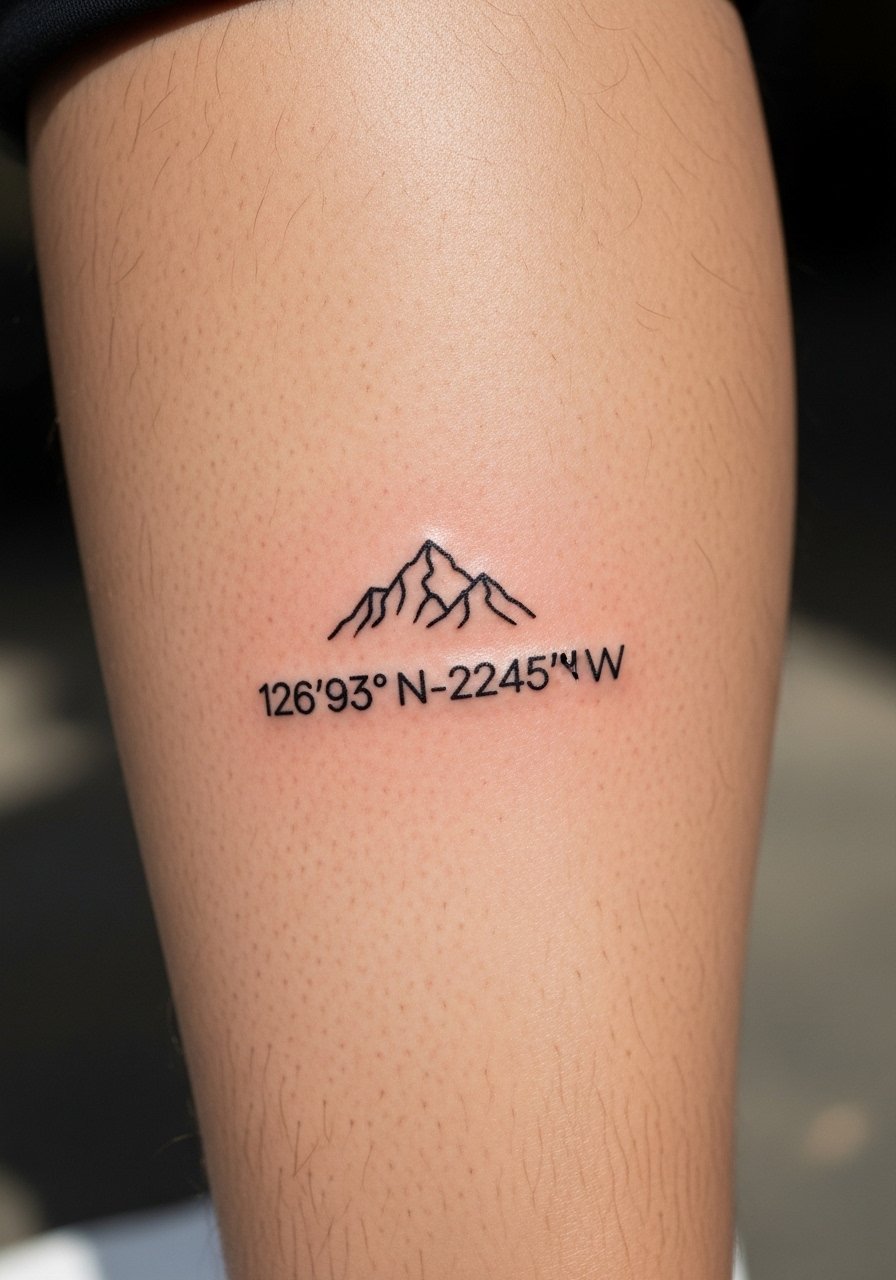
Calf placement is low on the pain scale and offers a large canvas for adding a tiny mountain icon next to coordinates. This works well if your memory is outdoors-focused. The calf’s thicker skin helps ink hold saturation, so numbers stay crisper longer. Healing is relaxed unless you wear tight pants. I've found artists who specialize in small iconography add subtle shading to the mountain so it reads at a glance without overshadowing the numbers. Mistake to avoid: making the icon too detailed when the scale is small; bold, simple shapes read best.
10. Coordinates Encircled By Floral Wreath On Thigh
Style/Technique: Neo-Traditional / Illustrative
Pain Level: Medium (4-5/10)
Session Time: 1-3 hours
Best For: Decorative, feminine, easy to hide
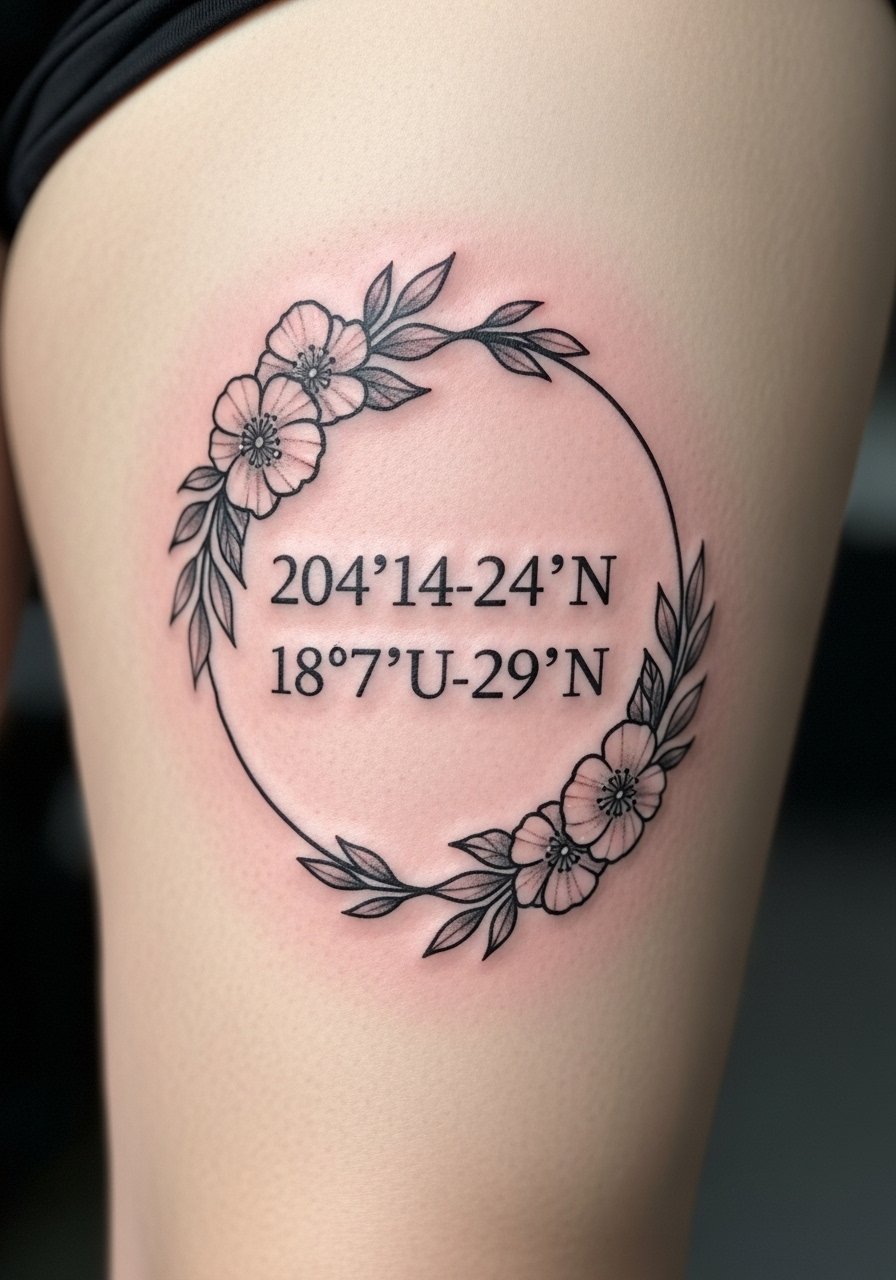
A floral wreath frames coordinates and turns them into jewelry for your skin. Thigh placement hides well and tolerates longer sessions. Pain is moderate when on the inner thigh but fades on the outer area. Flowers let you personalize the memory—pick blooms tied to a person or season. I've seen these age nicely because larger shapes surround the numbers, protecting them visually as the skin ages. Avoid over-detailing the florals near the numerals; keep negative space around the coordinates for legibility. Ask your artist for healed thigh pieces with similar detail.
11. Blackwork Coordinates Band Around Wrist
Style/Technique: Blackwork / Banded Design
Pain Level: Medium (4/5/10)
Session Time: 1-2 hours
Best For: Bold, bracelet-like sentiment
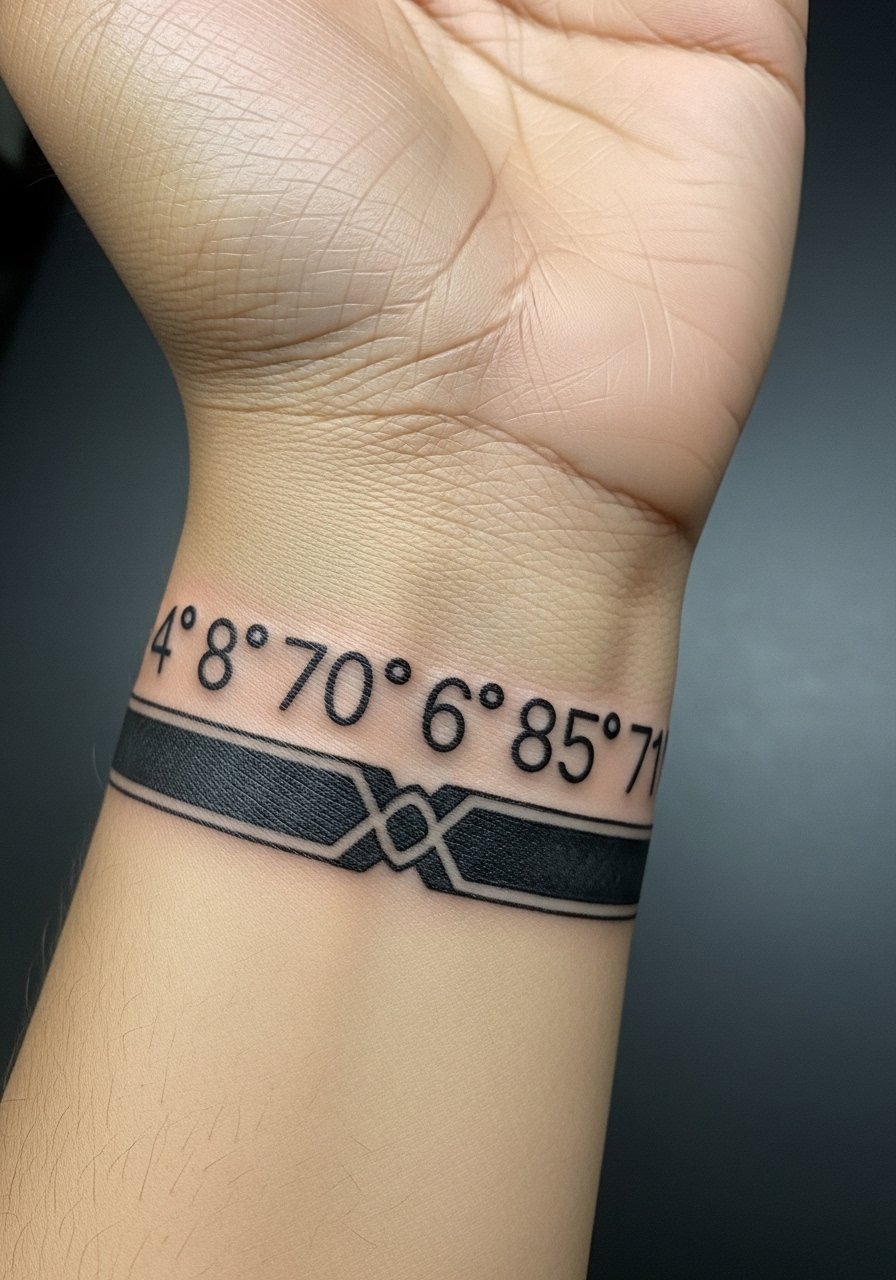
Turning coordinates into a band-like bracelet gives them permanence and visibility. Blackwork holds up extremely well; thick fills and solid lines resist fading and blur. The wrist band will sting but is manageable. I like this for people who want their coordinates seen and felt as a piece of jewelry. Healing requires avoiding bracelets during the first weeks. I've noticed black bands need less refresh than thin script. Common mistake: making the band too narrow so it breaks into pieces as skin moves. Ask for consistent line weight and healed band examples.
12. Coordinates With Tiny Paper Plane On Shoulder Blade
Style/Technique: Illustrative / Tiny Icon
Pain Level: Low (2-3/10)
Session Time: 30-60 minutes
Best For: Travel memories, playful placement
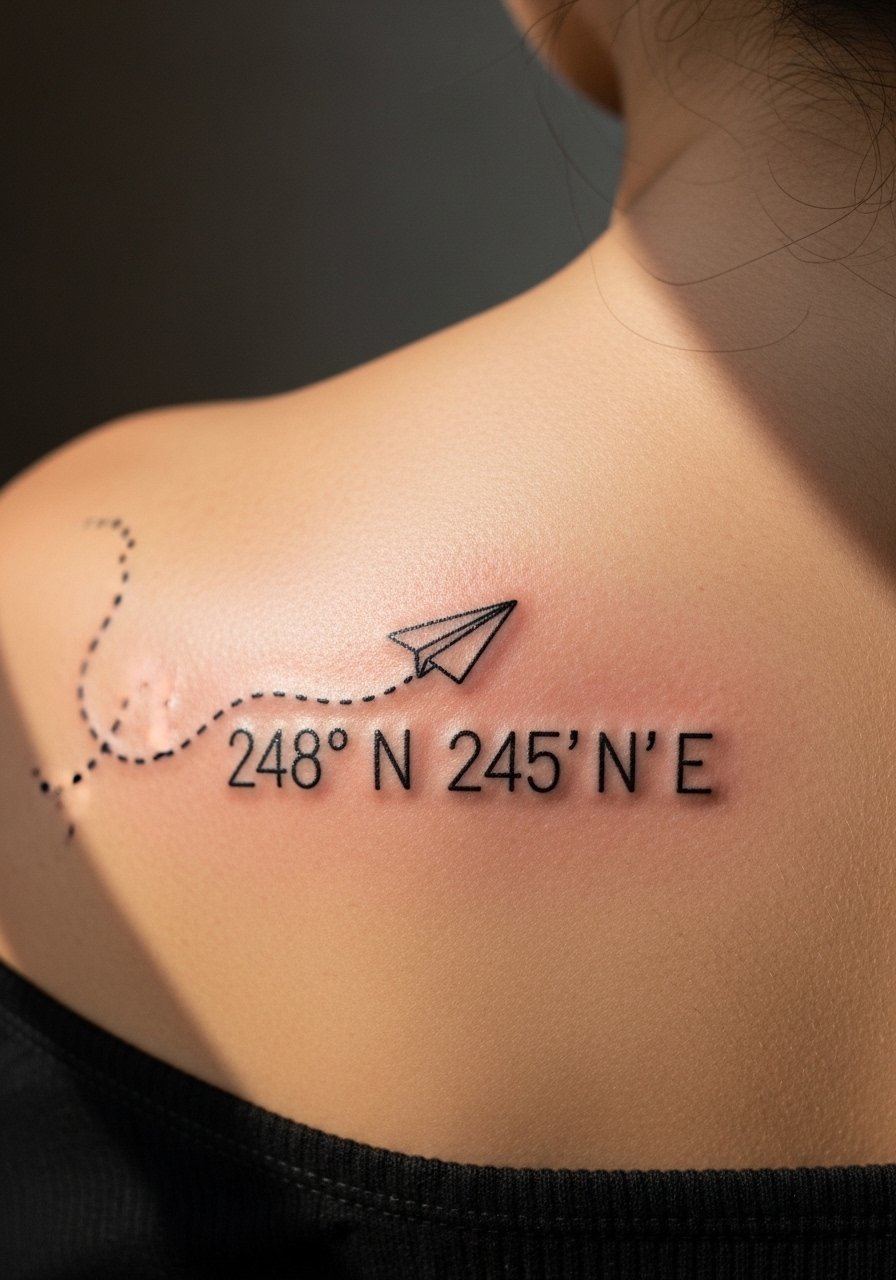
Shoulder blade placements heal easily and are ideal for adding a playful paper plane near your coordinates. The area is low-pain and hides under clothing naturally. I picked this for a travel memory — the plane adds narrative without being literal. Healing is straightforward if you avoid backpacks that rub the area. I've seen artists use a small motion line from the plane toward the numbers to tie them visually. Common mistake: using color that fades; black numerals with a tiny gray plane line tends to age better.
13. Coordinates As Tiny Anklet
Style/Technique: Minimalist / Script Wrap
Pain Level: Low-Medium (3-4/10)
Session Time: 30-60 minutes
Best For: Decorative, subtle, summer-friendly
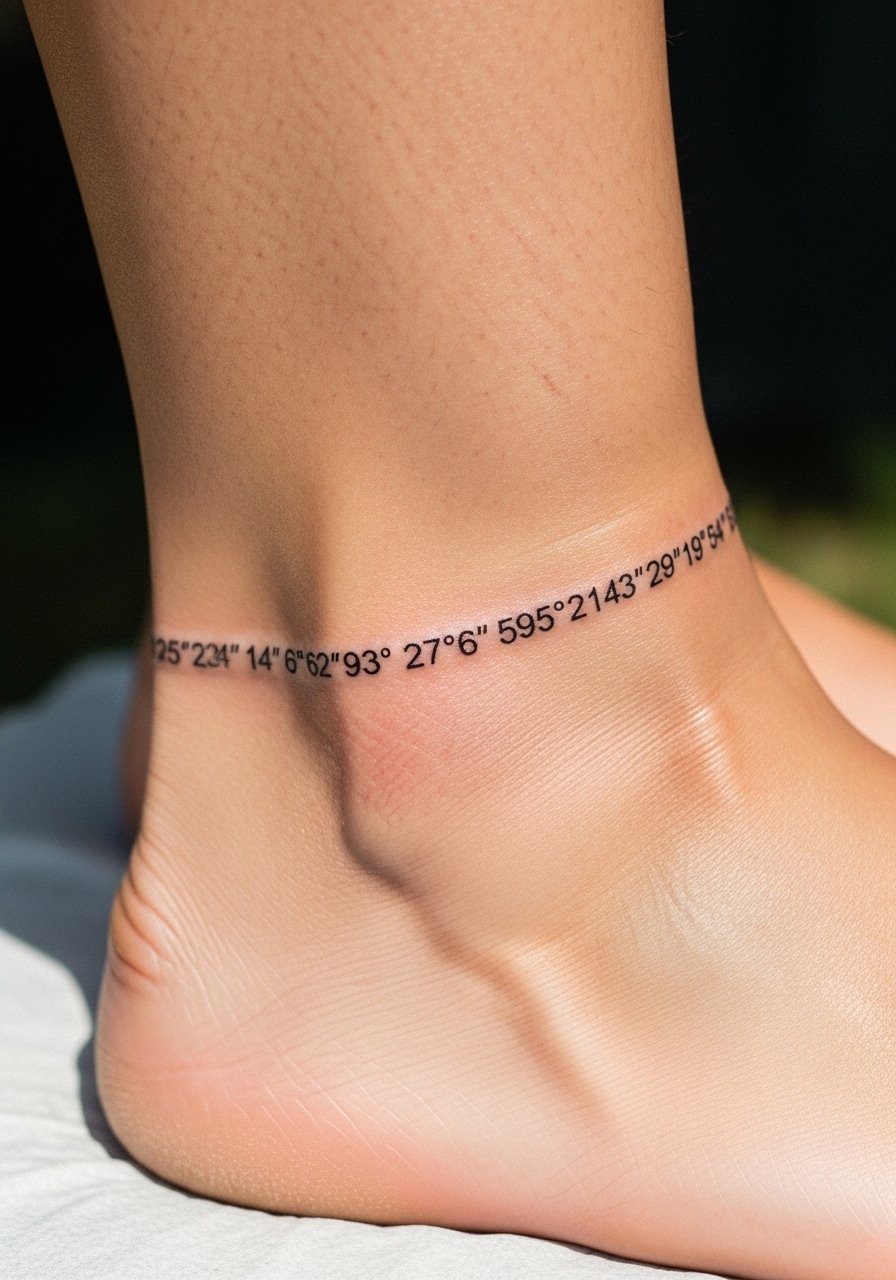
Anklet coordinates feel like jewelry and peek out with cropped pants. The skin here moves and is exposed to sun, so I recommend slightly bolder numerals than you think. Healing is quick but be careful with socks and shoes rubbing. I've noticed anklet lines blur faster if the font is too thin or if you wear tight footwear often. Ask your artist for a wrap mockup and to show healed ankle wraps. Long-term, sunscreen and occasional touch-ups keep anklet coordinates readable.
14. Coordinates Hidden In A Barcode On Side Rib
Style/Technique: Blackwork / Graphic
Pain Level: High (7-8/10)
Session Time: 1-2 hours
Best For: Modern, graphic statement, hidden meaning
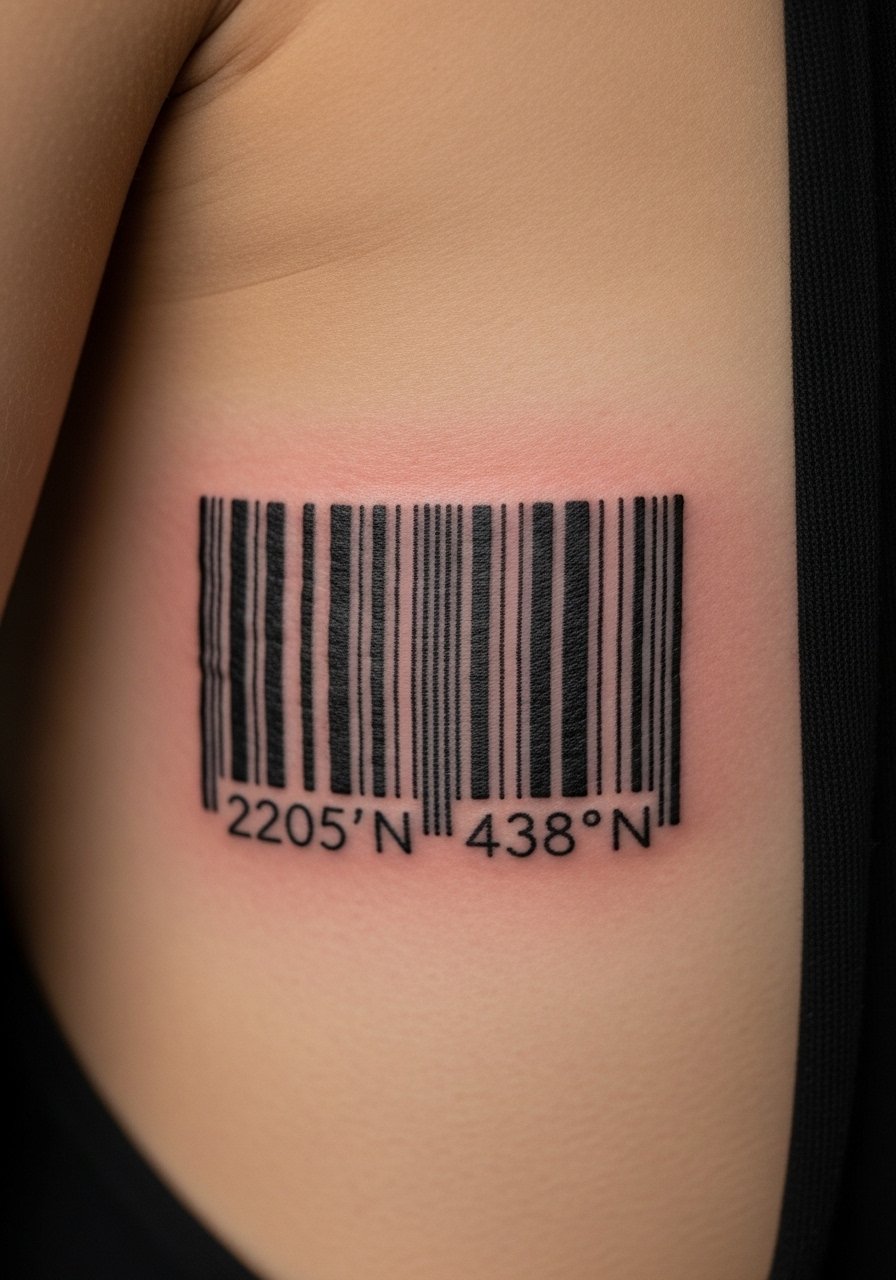
Encoding coordinates into a barcode is a graphic way to hide meaning in plain sight. Rib placement means pain and slower healing, but the result is striking. Blackwork lines should be spaced so the barcode reads as a cohesive graphic from a distance and numerals are clear up close. I’ve seen barcode tattoos soften over time, so avoid extremely thin bars. Discuss with your artist how dense to make the lines for longevity. Common mistake: relying on machine scannability—this rarely works after healing. Make it a visual element, not a functional barcode.
15. Coordinates In Morse Code On Outer Arm
Style/Technique: Dot-and-Dash / Minimalist
Pain Level: Low (2-3/10)
Session Time: 30-60 minutes
Best For: Discreet, coded messages, geeky charm
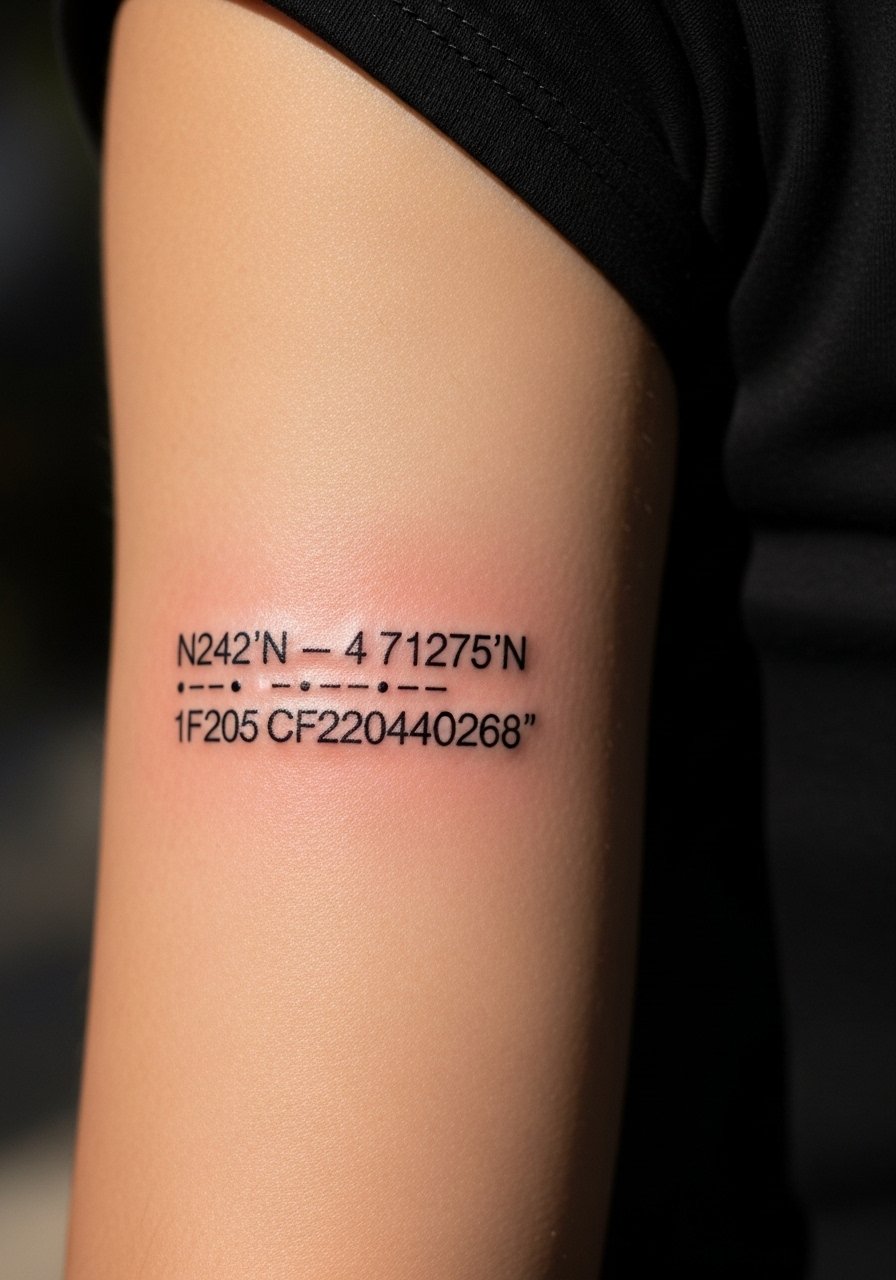
Morse code uses dots and dashes to spell coordinates; it’s subtle and visually interesting. Outer arm placement is low-pain and photographs well. The tactile pattern reads like jewelry and keeps the meaning private unless you explain it. I like this for people nervous about visible numerals. Healed appearance stays crisp when dots and dashes are given modest size—too tiny and they blend. Ask your artist for healed morse-code pieces and to space symbols clearly.
16. Coordinates Embedded In Soundwave On Forearm
Style/Technique: Illustrative / Soundwave + Numeric
Pain Level: Low (2-3/10)
Session Time: 1-2 hours
Best For: Memory tied to a voice, song, or event
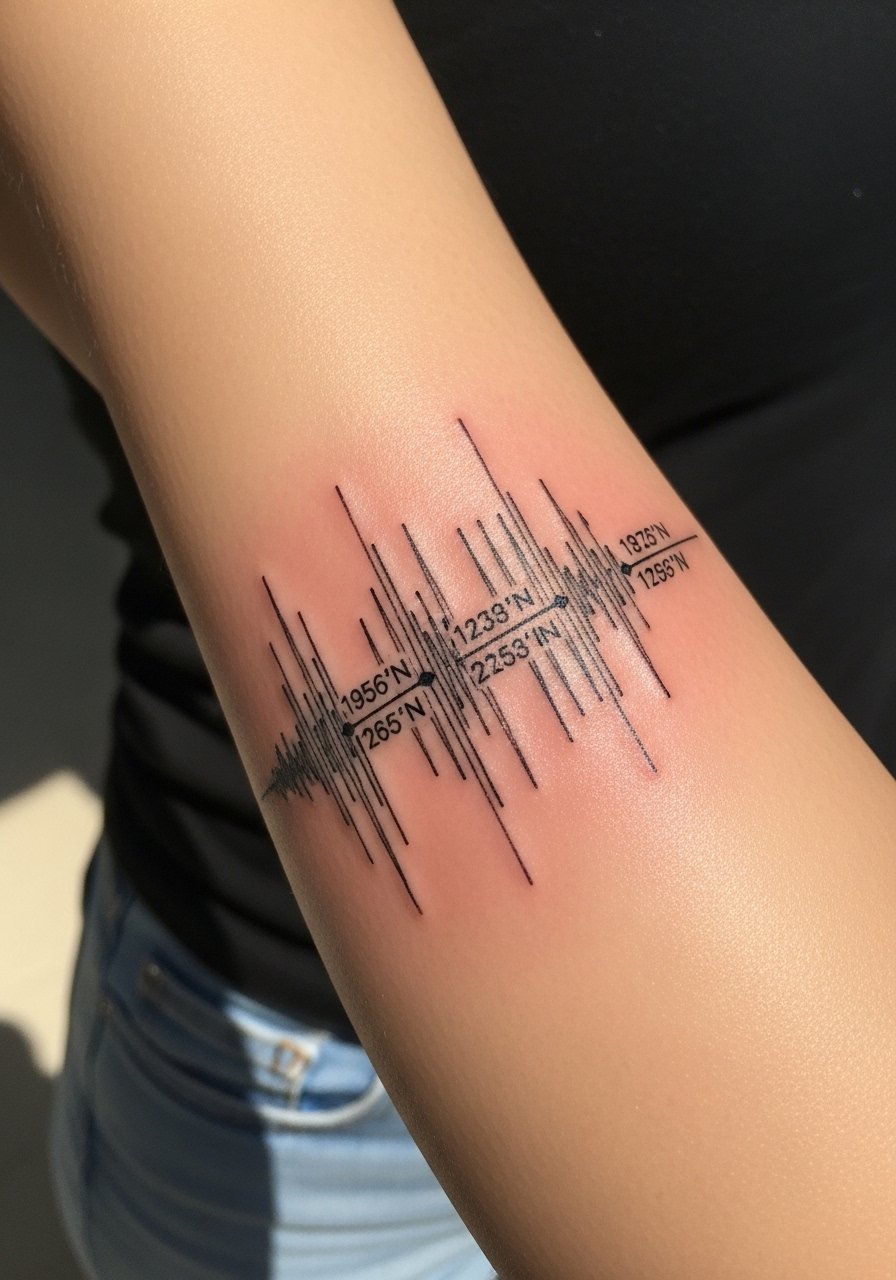
If your memory ties to a voice or song, embedding coordinates into a soundwave is poetic. The forearm provides a long canvas so both wave and numbers read clearly. Pain is low; healing is straightforward. I've seen artists subtly replace peaks in the wave with number clusters so the design flows naturally. Avoid cramming too many details; the clean contrast between wave and numerals helps longevity. Ask for a mockup with the exact sound sample to ensure the wave shape feels meaningful.
17. Coordinates With Tiny Compass Rose On Chest
Style/Technique: Micro-Realism / Small Icon
Pain Level: Medium (4-5/10)
Session Time: 45-90 minutes
Best For: Heartfelt, directional meaning
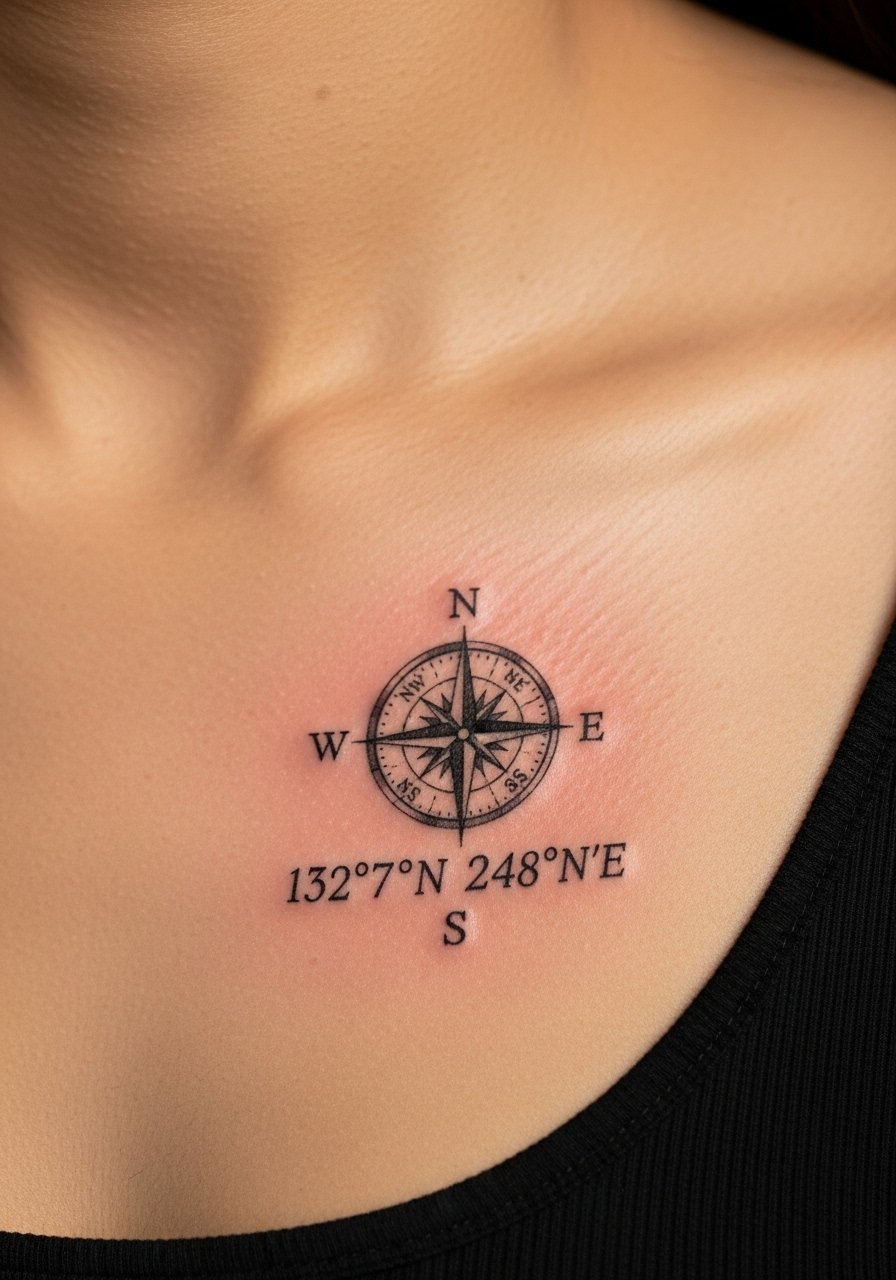
A compass rose adds symbolism—direction, home, return. Chest placement is meaningful and can be covered easily. Pain varies near sternum but is manageable for a small piece. I appreciate how the compass frames the coordinates, making them feel purposeful rather than random. Healed shading should be soft to avoid a harsh patch that distracts from numerals. Avoid tiny, ornate compass details at small scales; bold, simple points last longer. Ask to see healed chest work with similar sizing.
18. Coordinates As Negative Space In Geometric Hexagon On Back
Style/Technique: Geometric / Negative Space
Pain Level: Medium (4-5/10)
Session Time: 1-2 hours
Best For: Modern placement, graphic balance
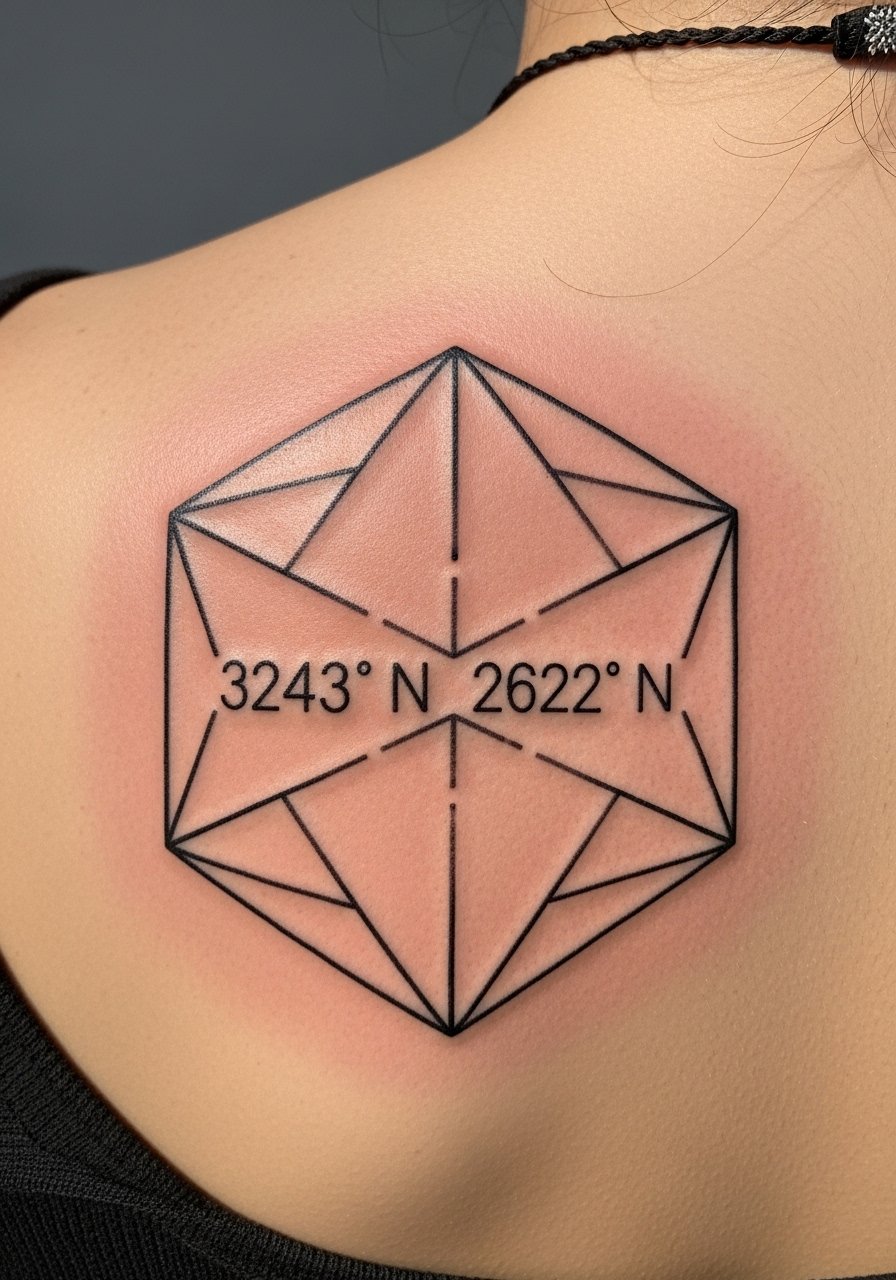
Using negative space inside a geometric shape cleverly highlights coordinates without heavy ink on the numbers themselves. Upper back gives a flat area for crisp edges. Pain is medium, mostly during outline work. Healing looks elegant when the artist plans spacing so the skin "shows through" the numbers rather than tiny ink lines forming them. I’ve seen this age well because the black background protects the visual contrast. Common mistake: making the hexagon too small so the numerals lose clarity.
19. Coordinates With Fingerprint Background On Inner Arm
Style/Technique: Micro-Realism / Portrait-Adjacent
Pain Level: Medium (4-5/10)
Session Time: 1-2 hours
Best For: Very personal, identity-linked memory
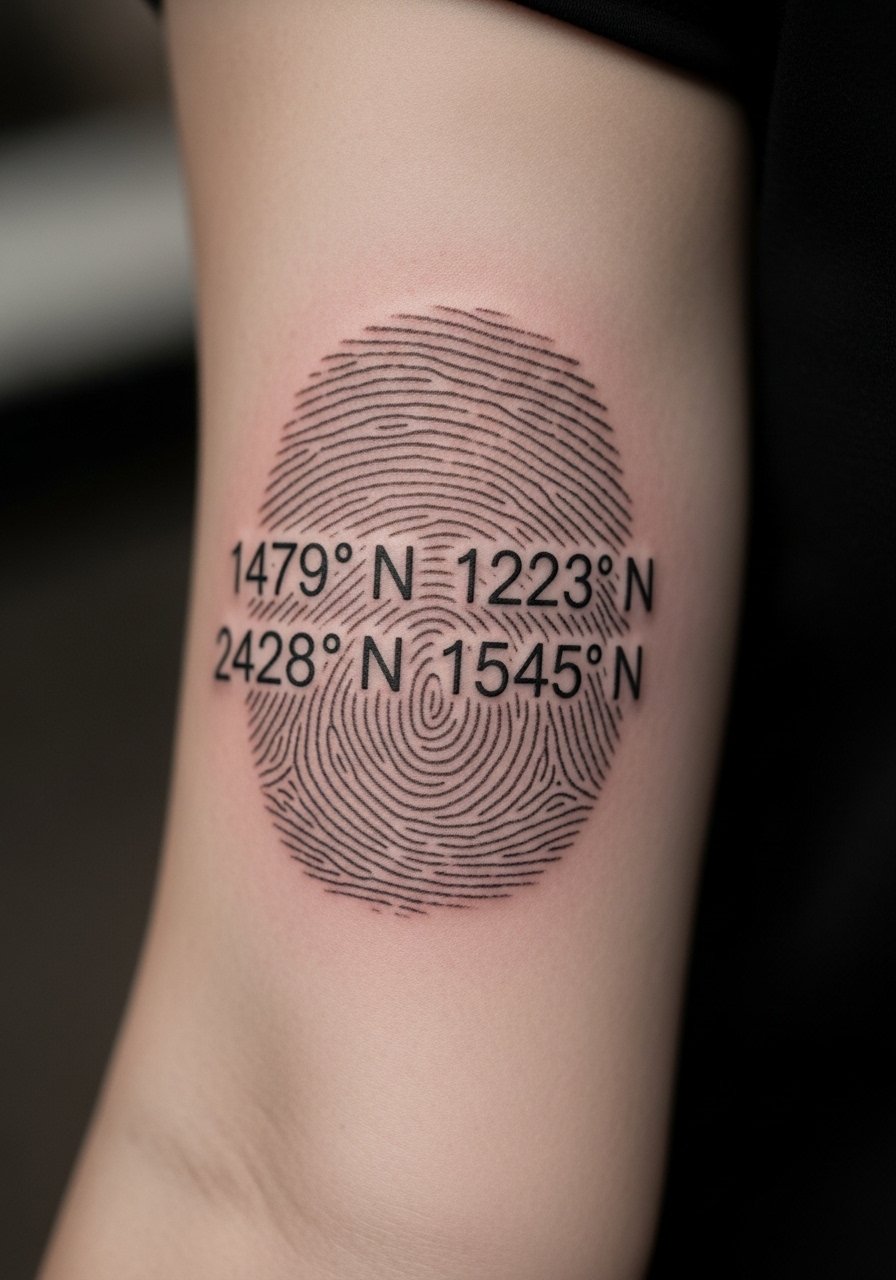
Overlaying coordinates on a faint fingerprint ties a location to a person — a literal personal marker. Inner arm placement is comfortable and shows nicely. The fingerprint should be subtle; heavy detail can compete with the numerals. I’ve seen this look clean when the artist uses light grey shading for the print and solid black for numbers. Expect moderate pain and standard healing. Ask for healed examples of fingerprint shading, because too-precise ridges can blur into grey patches.
20. Coordinates Inside Tiny Map Outline On Hip
Style/Technique: Illustrative / Micro Map
Pain Level: Low-Medium (3-4/10)
Session Time: 45-90 minutes
Best For: Travel, hometown pride, hidden placement
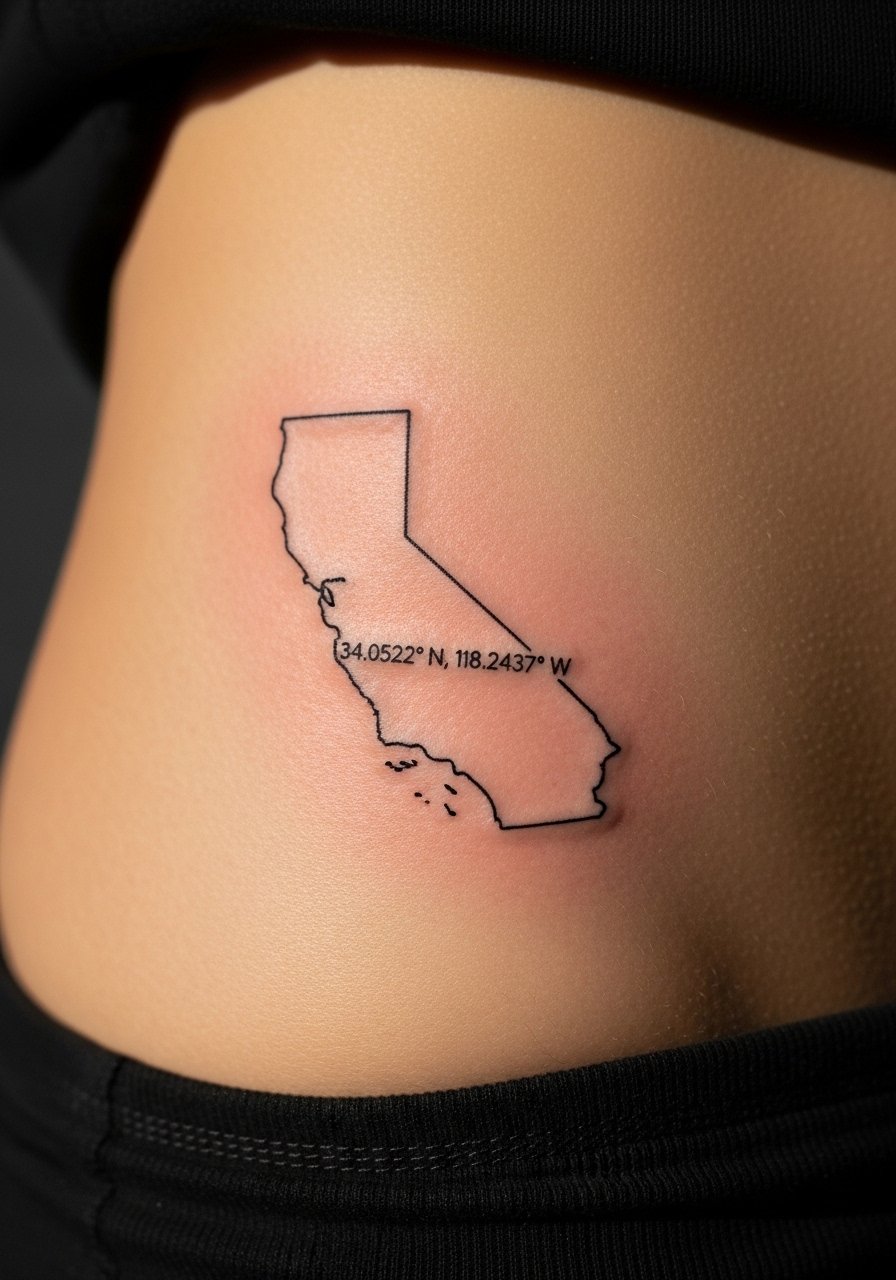
A map outline (country, state, island) with coordinates inside gives instant context. Hip placement hides well and is sensual. Pain is manageable, though inner-hip spots sting more. I've noticed map outlines age nicely as long as the country outline isn’t too intricate. Keep the interior simple so the numbers are legible. Artists who do tiny maps usually suggest slightly thicker borders to avoid feathering. Ask to see healed micro-map examples on similar skin types.
21. Coordinates As Bracelet Around Ankle
Style/Technique: Fine Line / Circular Script
Pain Level: Low (3-4/10)
Session Time: 30-60 minutes
Best For: Subtle accessory, seasonal display
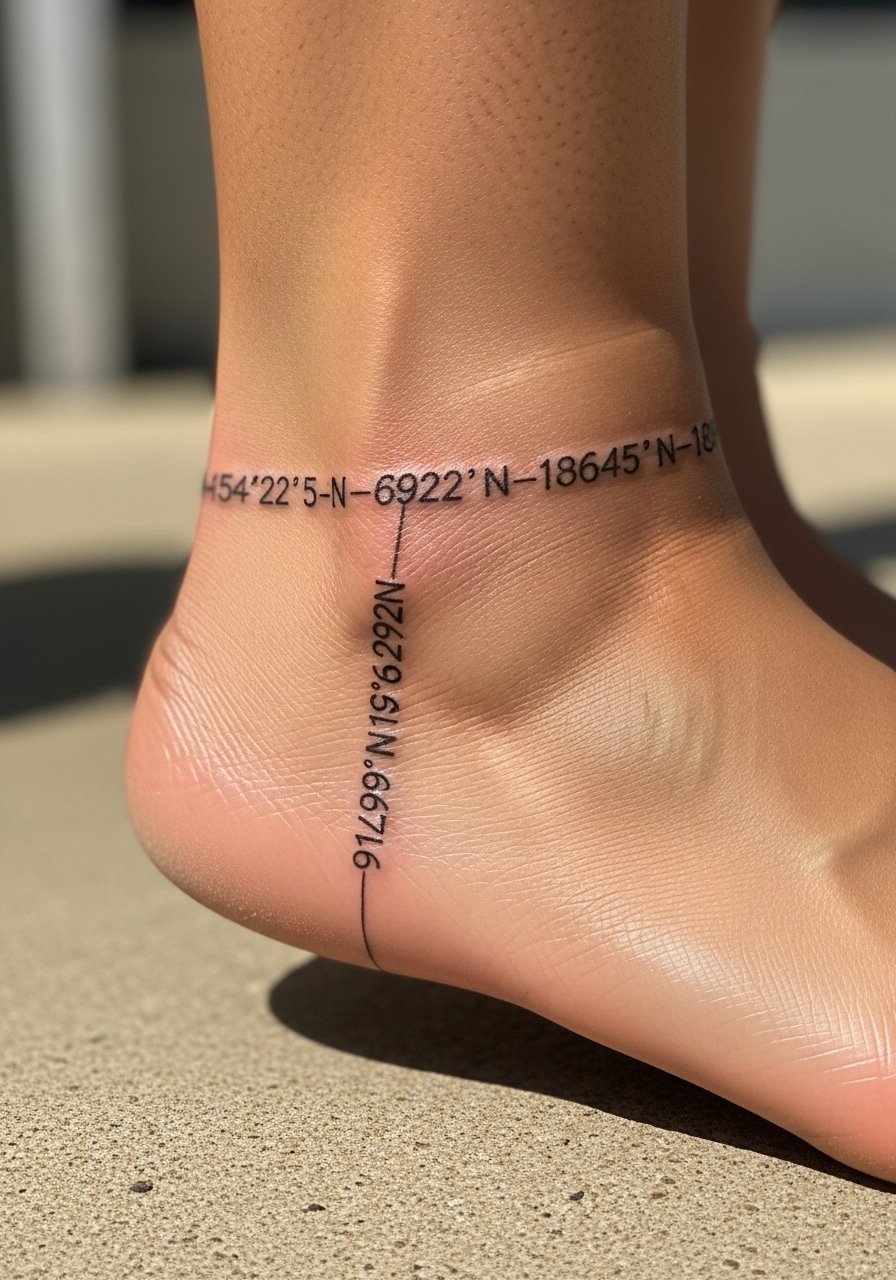
An ankle bracelet of numbers wraps the sentiment around you. The ankle is exposed to sun and friction, so slightly heavier lines help longevity. Healing is quick but be mindful of shoe collars. I chose a wrap because it reads like jewelry and feels personal. From my observations, circular script should maintain spacing for readability—avoid cramming too many numerals in a tiny circumference. Ask your artist to draw the wrap on you to test spacing before inking.
22. Coordinates Hidden In Script On Ribcage With Flowing Lines
Style/Technique: Script-Integrated / Fine Line
Pain Level: High (7-8/10)
Session Time: 1-3 hours
Best For: Poetic, elongated placement, concealed sentiment
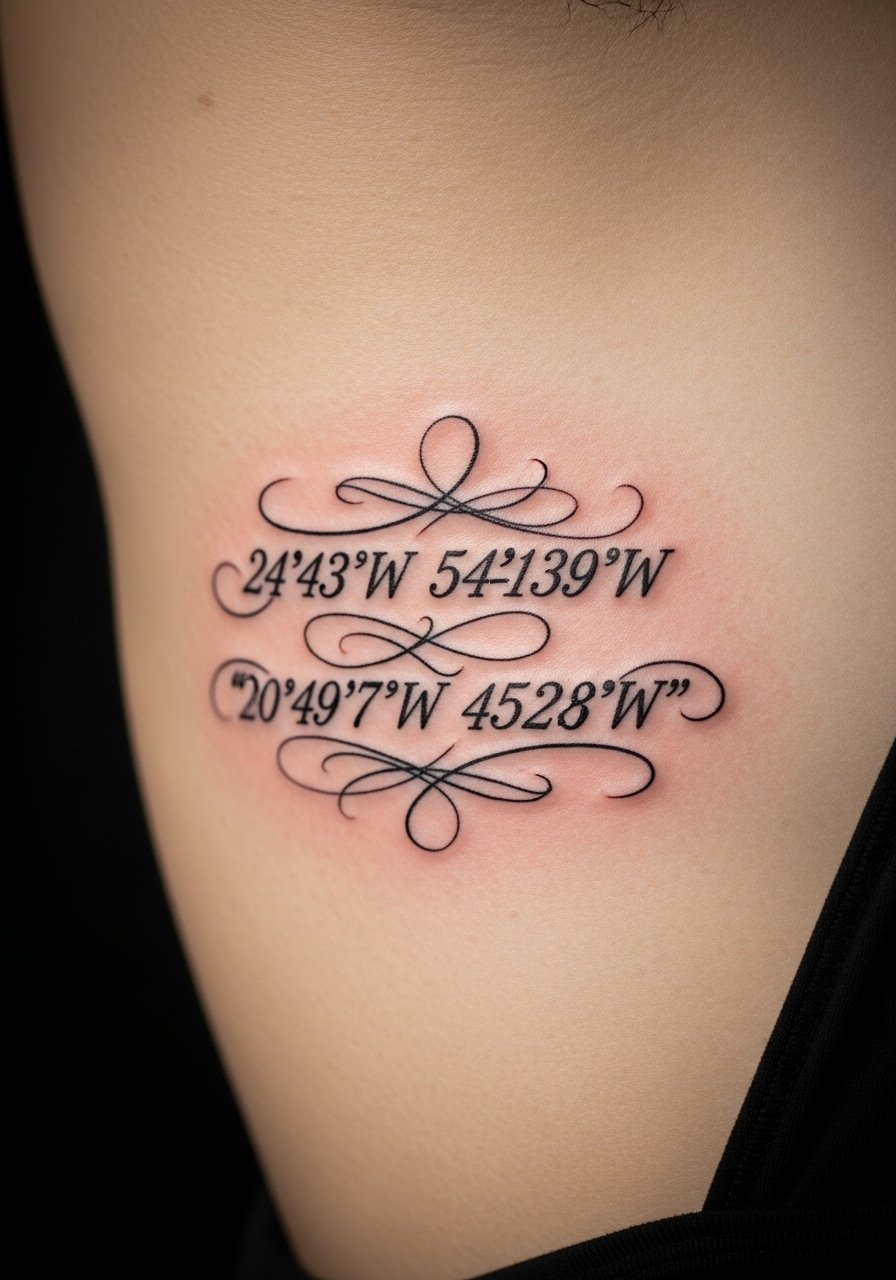
Weaving coordinates into a single flowing line of script turns them into a sentence that only you can parse. Ribcage makes it personal and sometimes painful, but when healed the line looks elegant. I’ve seen this work best when the script frames the numerals rather than compressing them. Expect careful aftercare; avoid tight waistbands. Common mistake: choosing a highly ornate script that becomes illegible after healing. Ask for a written mockup and a healed example of similar scale.
23. Coordinates With Tiny Airplane On Foot (Top of Foot)
Style/Technique: Minimalist / Icon + Numbers
Pain Level: High (6-7/10)
Session Time: 30-60 minutes
Best For: Travel memory, visible in summer shoes
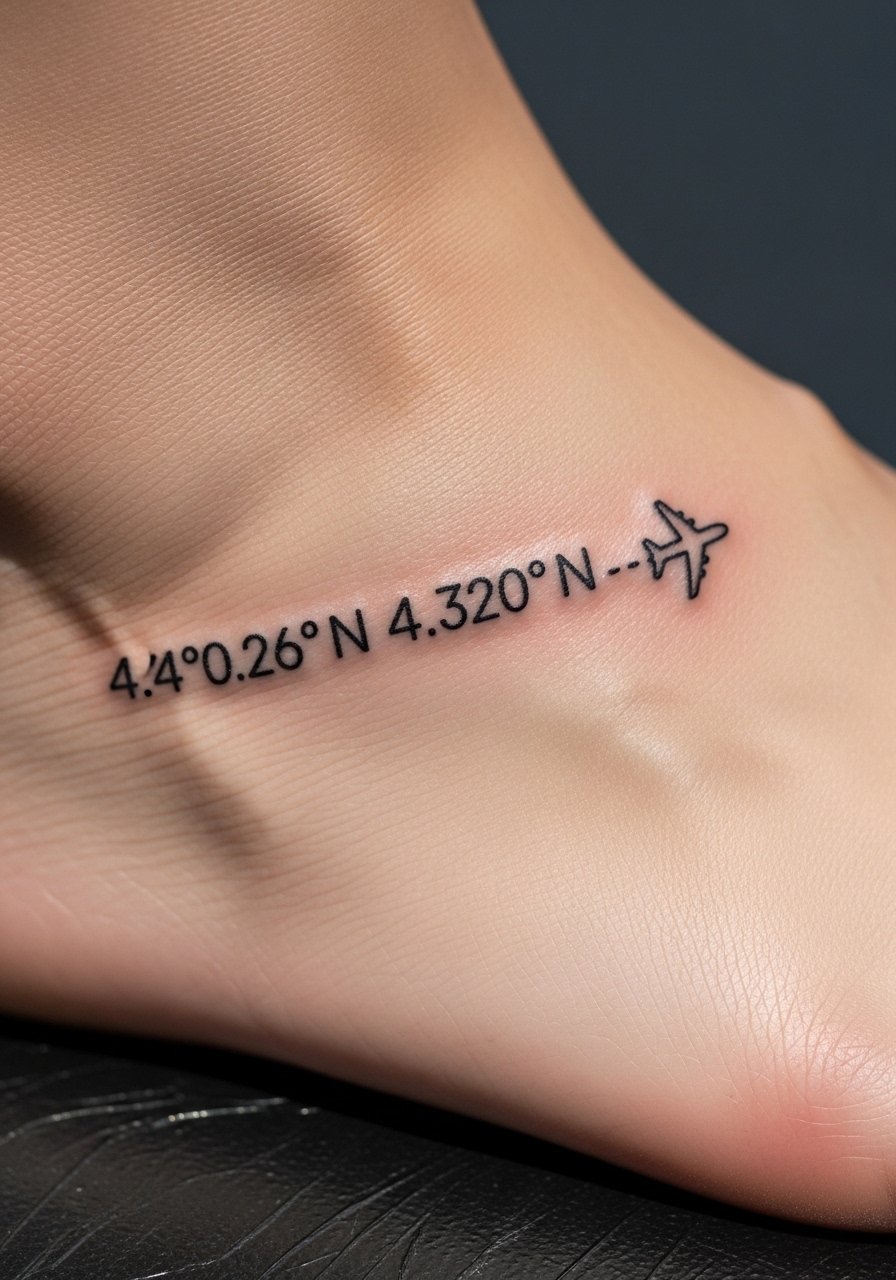
Top-of-foot tattoos are painful due to thin skin and bone proximity, but they look great in summer. A little airplane icon balances the coordinates and makes a clear travel story. Expect slower healing if you wear closed shoes; sandals speed recovery. From what I've seen, top-of-foot ink fades faster due to friction—so slightly bolder lines help. Ask your artist about placement relative to shoe straps to avoid chronic rubbing.
24. Coordinates As Barcode Bracelet Around Arm
Style/Technique: Graphic / Blackwork Band
Pain Level: Medium (4-5/10)
Session Time: 1-2 hours
Best For: Edgy, modern aesthetic
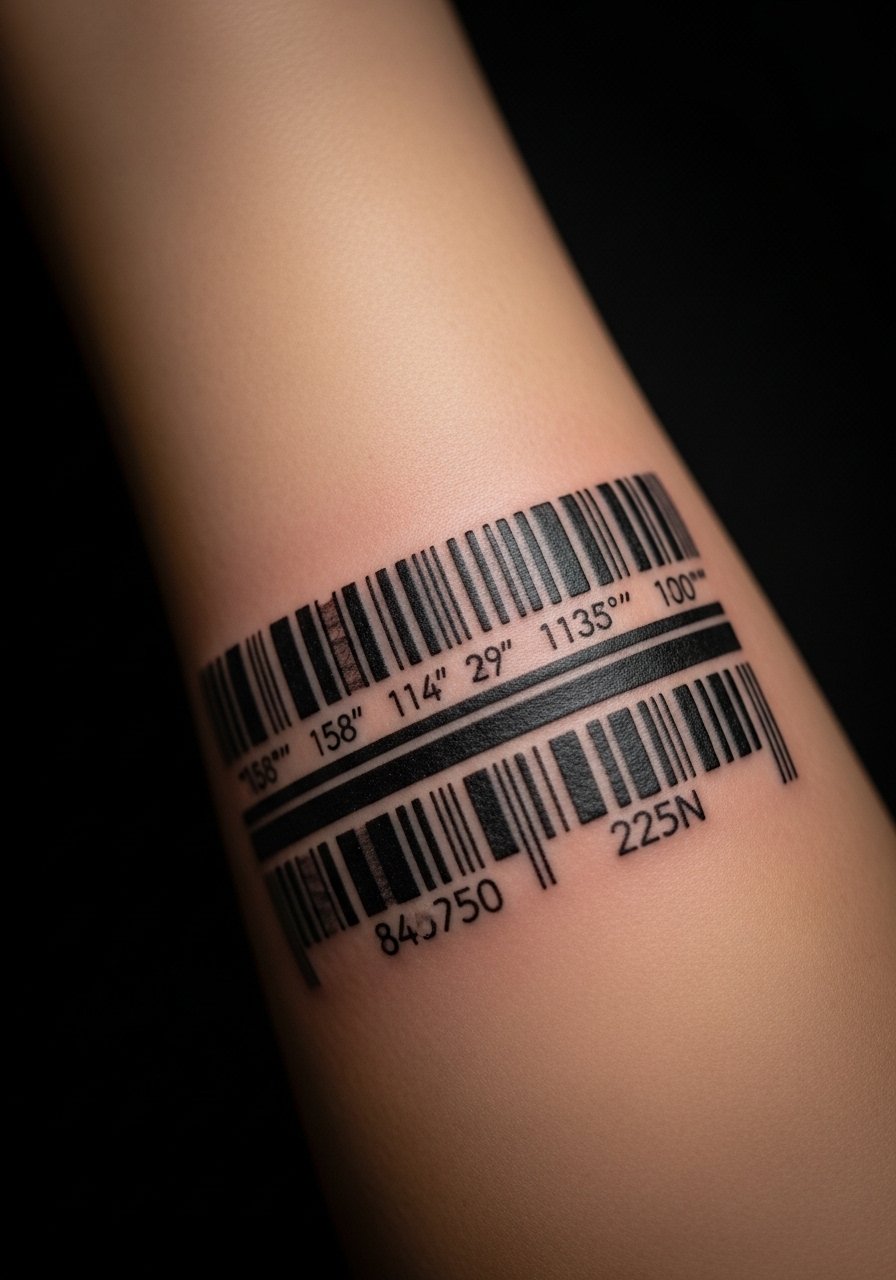
A barcode band is a bolder take on the coordinate bracelet. Forearm placement lets the graphic breathe. Black fills resist fading better than delicate lines, so this style tends to maintain presence. I recommend discussing how dense the bars should be; too fine and the band loses clarity over time. Healing is predictable, but avoid heavy lifting for a few days. Common mistake: expecting scan capability—treat it as aesthetic only.
25. Coordinates Paired With Roman Numeral Date On Collarbone
Style/Technique: Script + Roman Numeral / Fine Line
Pain Level: Medium (4/5/10)
Session Time: 45-90 minutes
Best For: Dual-date/location memorials, elegant placement
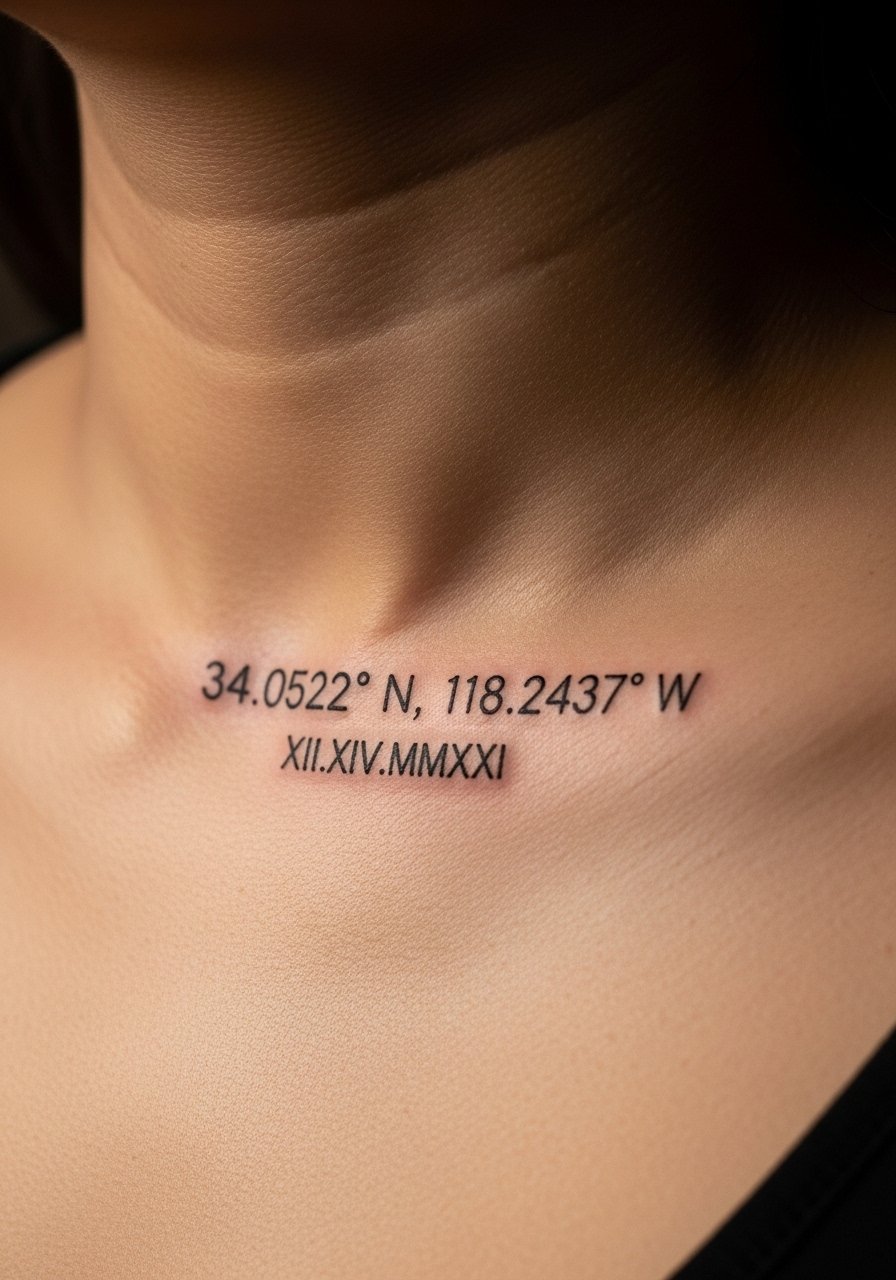
Pairing coordinates with a roman numeral date on the collarbone creates a two-part memory. Collarbone placement shows well and is easy to conceal with clothing. Pain is moderate near the bone, but sessions are short. I like this layout because the numerals and date balance visually; avoid making either element too tiny. From what I've gathered, artists suggest slightly heavier line weight near clavicle areas to prevent early feathering. Ask for a healed collarbone example to ensure the layout flatters your anatomy.
26. Coordinates As Morse Code Bracelet On Wrist
Style/Technique: Dot-and-Dash / Minimal Wrist Band
Pain Level: Low (2-3/10)
Session Time: 20-40 minutes
Best For: Private messages, minimalist jewelry feel
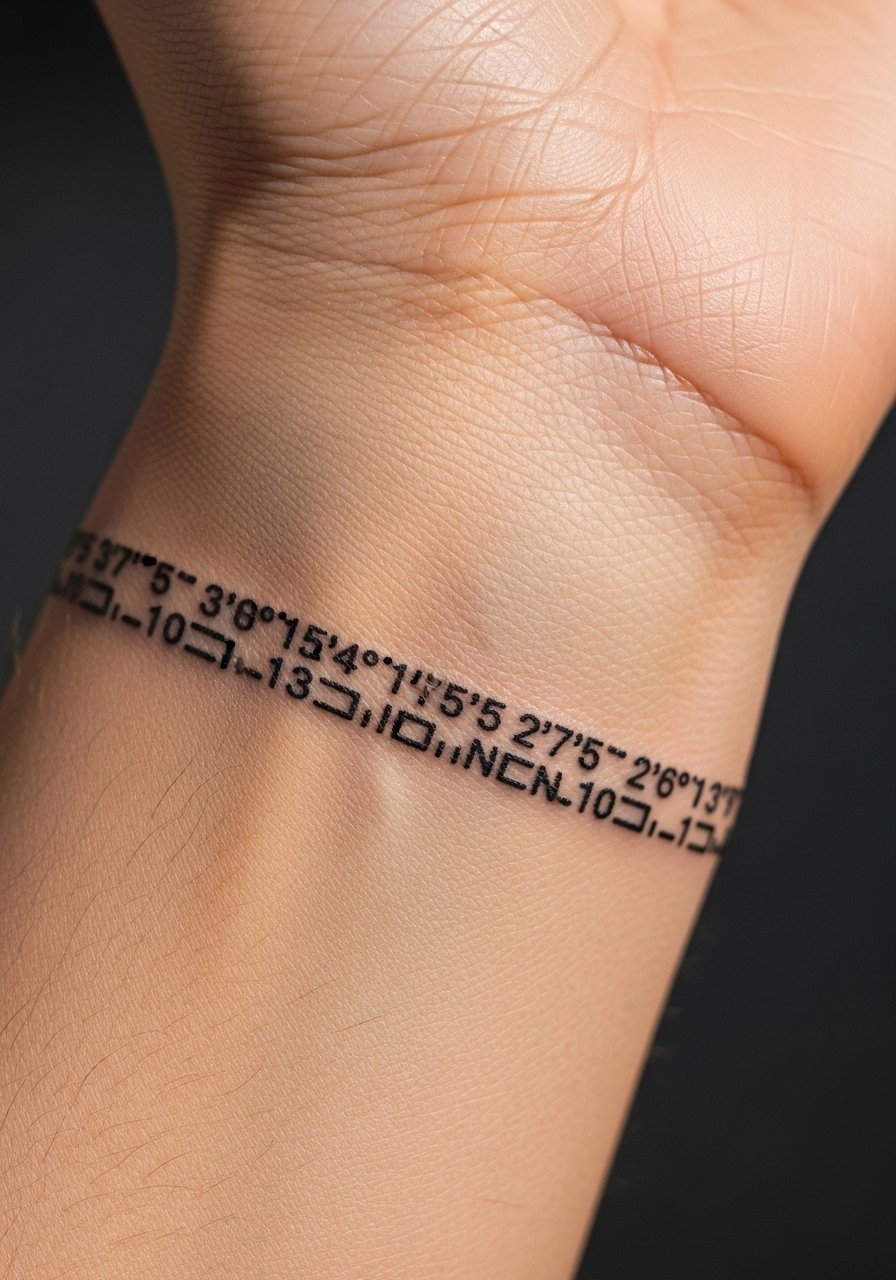
A Morse code bracelet reads like jewelry and keeps the meaning private. The wrist is visible, so this design feels like an everyday talisman. Pain is low and healing is quick if you avoid wristbands during the first week. I’ve seen it done as a full wrap or a short segment; full wraps are more striking but require precise spacing. Common mistake: too-small dots and dashes—give them room. Ask your artist for healed morse-code wraps for spacing reference.
Tattoo Prep and Aftercare Essentials
Aftercare Essentials:
- Aquaphor Healing Ointment, 14oz Tube — Industry standard for first 3-5 days
- Saniderm Transparent Adhesive Bandage, 6-Inch Roll — Second-skin healing method
- CeraVe Fragrance-Free Moisturizing Lotion, 16oz — For days 4-14 healing
- Dr. Bronner's Unscented Castile Soap, 32oz — Gentle tattoo cleaning
Before Your Appointment:
- Tattoo Numbing Cream With 5% Lidocaine, 30g — Apply 30-45 min before (ask your artist)
- Stencil Transfer Paper Kit — For testing custom layouts at home
Long-Term Maintenance:
- SPF 50+ Sunscreen Stick For Tattoos — Daily protection to prevent fading
- Mad Rabbit Tattoo Balm, 2oz — Keeps healed tattoos vibrant
- Hustle Butter Deluxe, 8oz — Vegan aftercare alternative
Optional Comfort Items:
- Tattoo Numbing Spray — For touch-ups or sensitive spots
- Hydrocolloid Bandages, Large Pack — Patches for spot protection
- Portable Fan For Appointment Cooling — Keeps you comfortable during long sessions
From my conversations with artists, Aquaphor or Saniderm are most commonly recommended for the initial phase; then switch to a fragrance-free lotion like CeraVe. For color work or sensitive skin, Mad Rabbit and Hustle Butter are products artists mention regularly.
Frequently Asked Questions
Q: How bad does a coordinates tattoo actually hurt?
A: Pain depends on placement. Outer arm/forearm = about 2–3/10. Ribcage/ankle/top of foot = 7–8/10. It’s more of a sharp-then-dull sensation than a continuous burning. For very sensitive spots, try a numbing cream with lidocaine but check with your artist first—some prefer untreated skin.
Q: Will thin coordinate numbers blur over time?
A: Tiny, hairline numerals can blur as skin ages or if printed too shallow. From what I’ve seen, modest line weight preserves legibility. If you want subtlety without future smudging, ask for slightly bolder fine lines and healed examples from the artist.
Q: How do I keep my coordinate tattoo from fading?
A: Sunscreen is essential. I've noticed UV exposure accelerates fading more than anything else. Use an SPF 50+ sunscreen stick on exposed tattoos, and keep the area moisturized with fragrance-free lotion like CeraVe.
Q: Can I work out after getting a coordinate tattoo?
A: Wait at least 48–72 hours before heavy exercise, longer if the tattoo is in a flex area (elbow, knee, shoulder). Sweat and friction can risk infection and ink loss. If you need to exercise, plan low-sweat activities and keep the tattoo clean.
Q: Should I get a tiny coordinate on my finger to test pain tolerance?
A: Only if you truly want a finger tattoo. Pain varies by placement, not size. Fingers often hurt more and fade faster, so choose the finger placement for meaning rather than as a pain test.
Q: How long until a coordinates tattoo looks fully healed?
A: Surface healing is typically 2–3 weeks. Full skin regeneration and settling can take 2–3 months. Expect peeling days 3–10—don’t pick. Use Aquaphor or gentle aftercare recommended by your artist during the initial phase.
Q: Do coordinates look different on darker skin tones?
A: Yes. Black and deep charcoal work best across tones. Bright colors may appear more muted on deeper skin. From my experience, artists who frequently work with the skin tone you have can show healed examples and advise on saturation and contrast.
Q: What if I regret the coordinates later?
A: Sit on meaningful designs for months before committing. If you’re unsure about visibility, consider hidden placements like the hip, ribcage, or upper thigh. Laser removal exists but is a long process; better to pick intentionally up front.