
I spent months saving reference photos before getting my first compass piece. The real problem wasn’t finding a pretty design — it was knowing which style would still look intentional years from now. These 23 compass tattoo ideas focus on direction, meaning, and placements that actually heal well and fit how people live in 2026.
This list leans into minimalist, nautical, vintage, and neo-traditional compass tattoo ideas. Placements I recommend: wrist, forearm, ribcage, calf, and behind the ear. From what I’ve seen, minimalist geometric compasses and personalized adventure motifs are trending and tend to hold up better healed than tiny, overly detailed pieces.
1. Minimalist Compass Outline on Inner Wrist
Style/Technique: Fine Line / Minimalist
Pain Level: Low (2-3/10)
Session Time: 30–90 minutes
Best For: First tattoo, small compass tattoo ideas
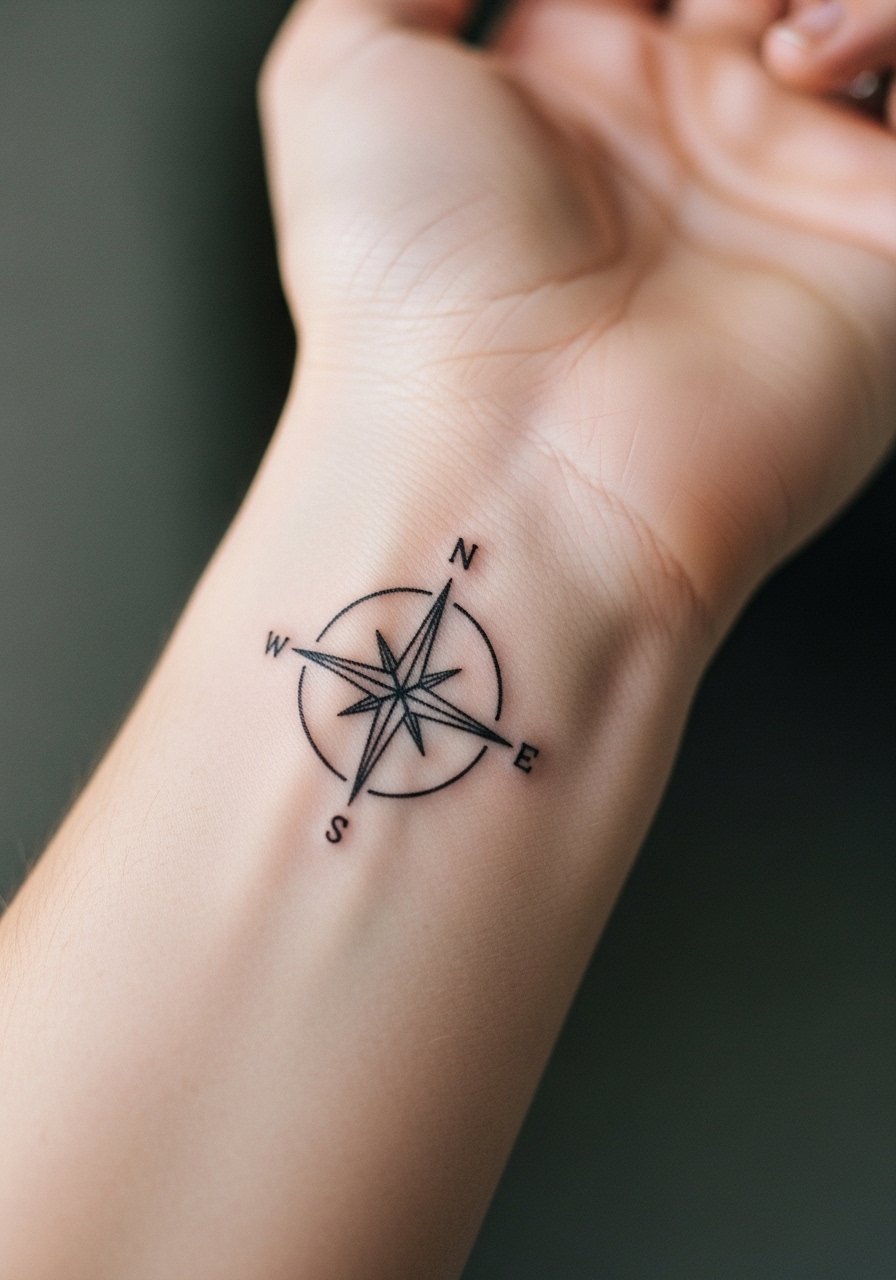
A tiny minimalist compass outline reads quietly but clearly: direction without flash. I chose this for my first tattoo because it’s easy to hide and quick to heal. The wrist moves, so expect slight blur over years; ask your artist for bolder primary points if you want longevity. Common mistake: making lines too thin for daily wear. Ask for a single-needle artist who also knows when to thicken critical anchors.
2. Compass Rose With Cardinal Points on Forearm
Style/Technique: Traditional / Nautical
Pain Level: Low-Medium (3-4/10)
Session Time: 1–2 hours
Best For: Display piece, forearm visibility
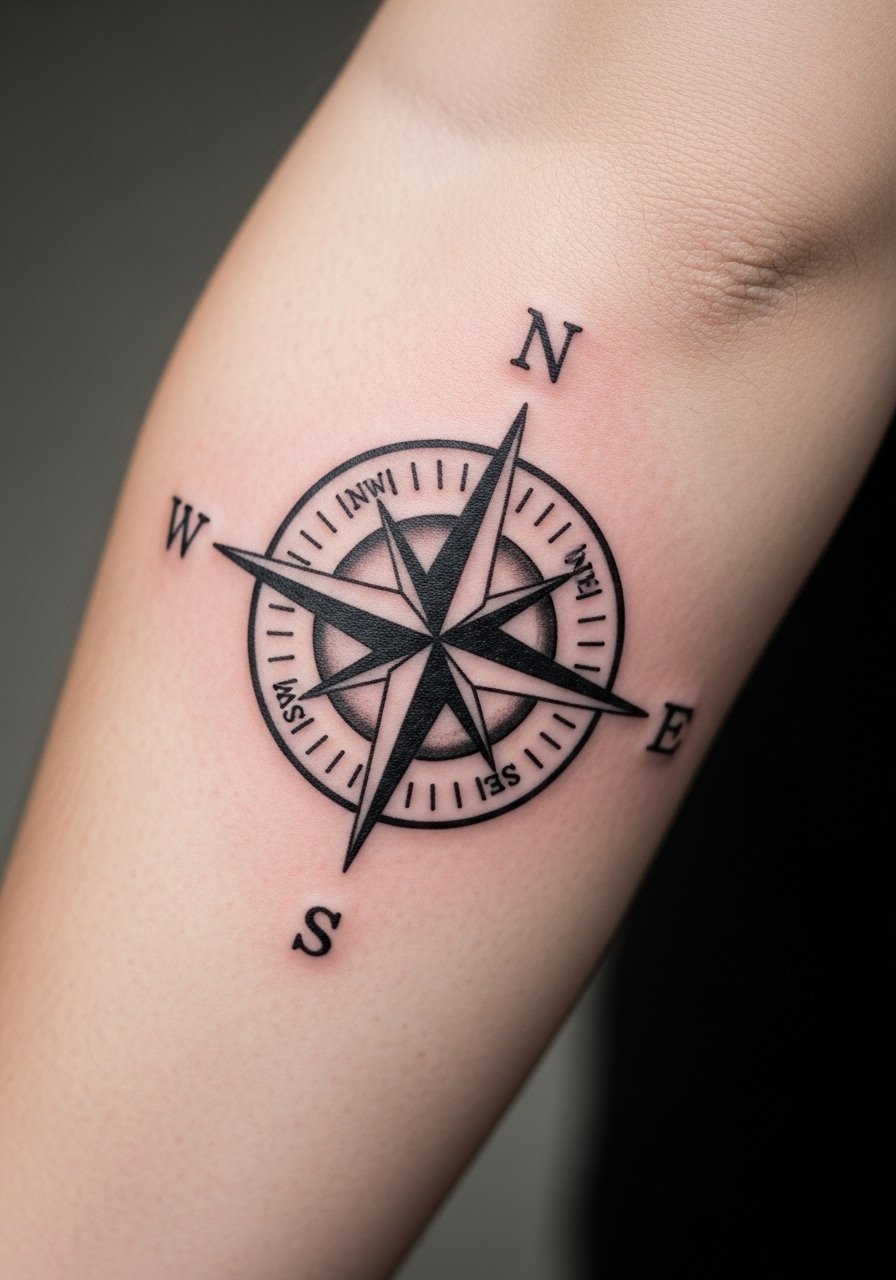
The compass rose is classic for direction and balance. I’ve seen artists add small element icons (fire, water) at the cardinals for deeper meaning. Forearm placement shows the design well and is lower pain, but it’s exposed to sun—use SPF. Mistake to avoid: cramming too much tiny detail into the center; it blurs over time. Look for an artist experienced in nautical motifs.
3. Vintage Compass With Patina on Shoulder
Style/Technique: Realistic / Vintage
Pain Level: Low-Medium (3/4/10)
Session Time: 1–2 sessions
Best For: Nostalgic, statement piece
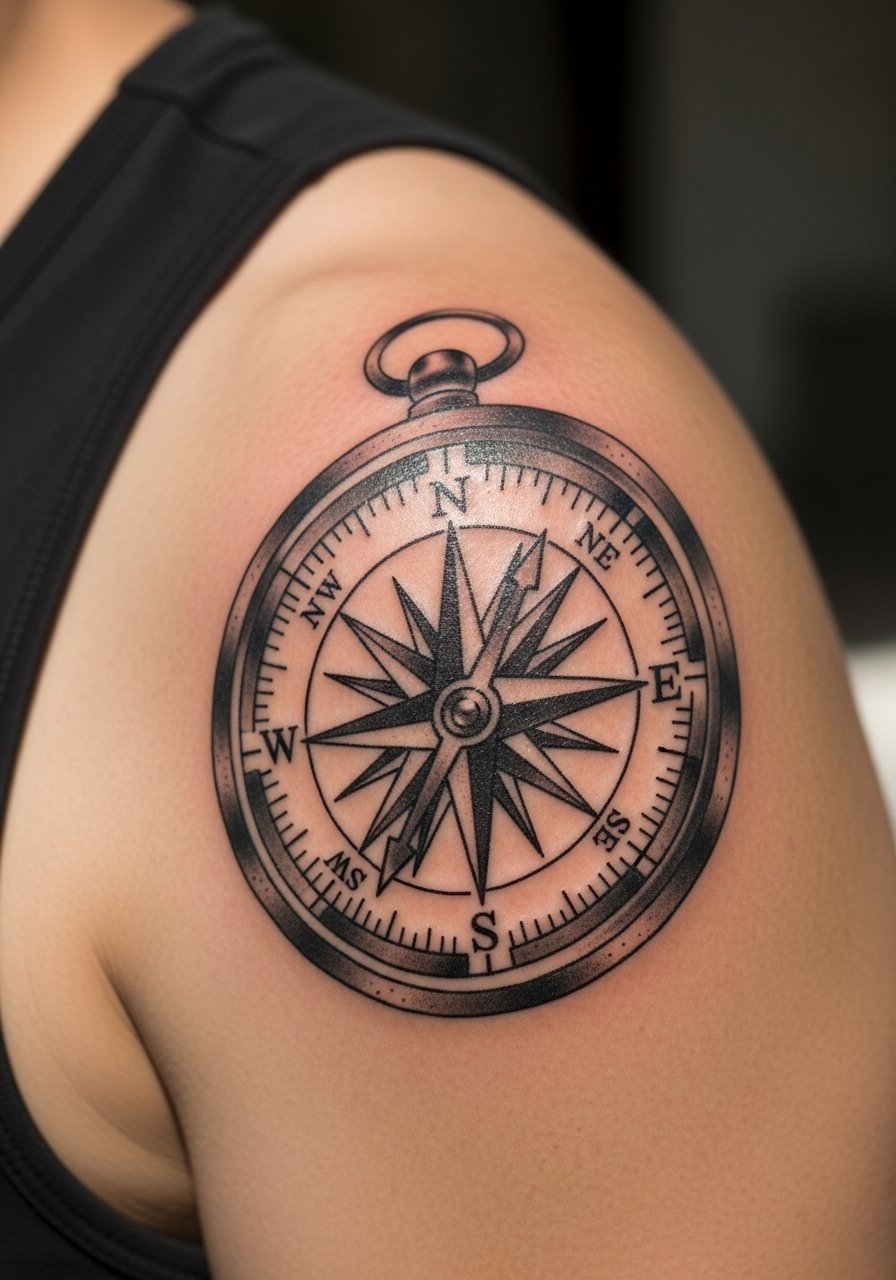
A vintage compass with etched textures gives a worn-traveler vibe. I love how this reads like a keepsake. Shoulder placement lets the piece age gracefully; the skin there stretches less. Expect moderate healing and some softening of fine texture—artists can plan stronger contrast to keep the look over time. Common regret: overdoing tiny rust details that become muddy later.
4. Nautical Compass With Anchor on Upper Arm
Style/Technique: Traditional / Old-School
Pain Level: Low (2-3/10)
Session Time: 1–2 hours
Best For: Nautical theme, symbolic protection
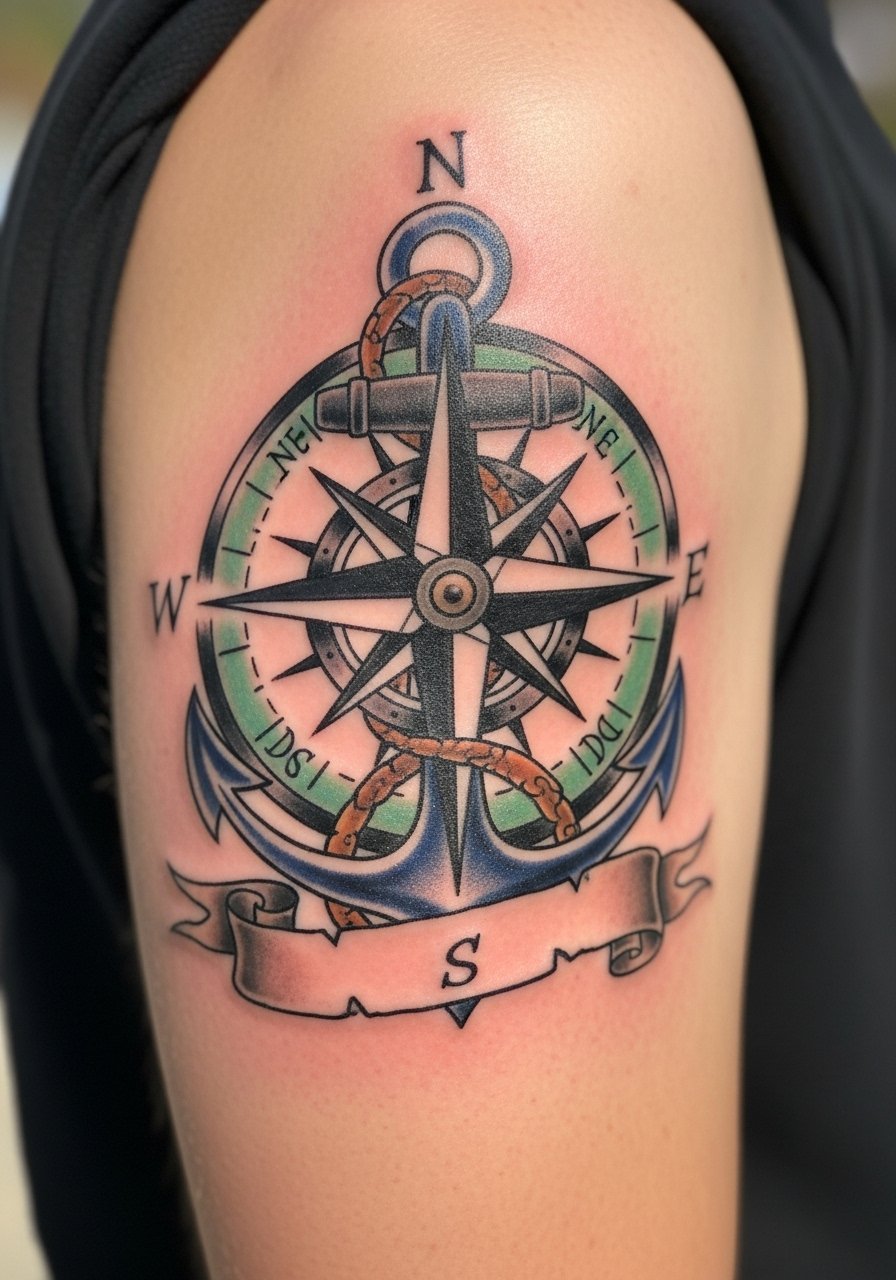
Pairing a compass with an anchor emphasizes safe returns and steadiness. I’ve seen this on chest and upper arm; upper arm is low pain and shows well. Traditional styles age predictably—thicker lines help with longevity. Don’t skimp on solid outlines or your artist’s nautical portfolio; someone comfortable with old-school linework will make it hold up.
5. Geometric Single-Needle Compass on Inner Forearm
Style/Technique: Geometric / Fine Line
Pain Level: Low-Medium (3-4/10)
Session Time: 1 session
Best For: Modern, clean compass tattoo idea
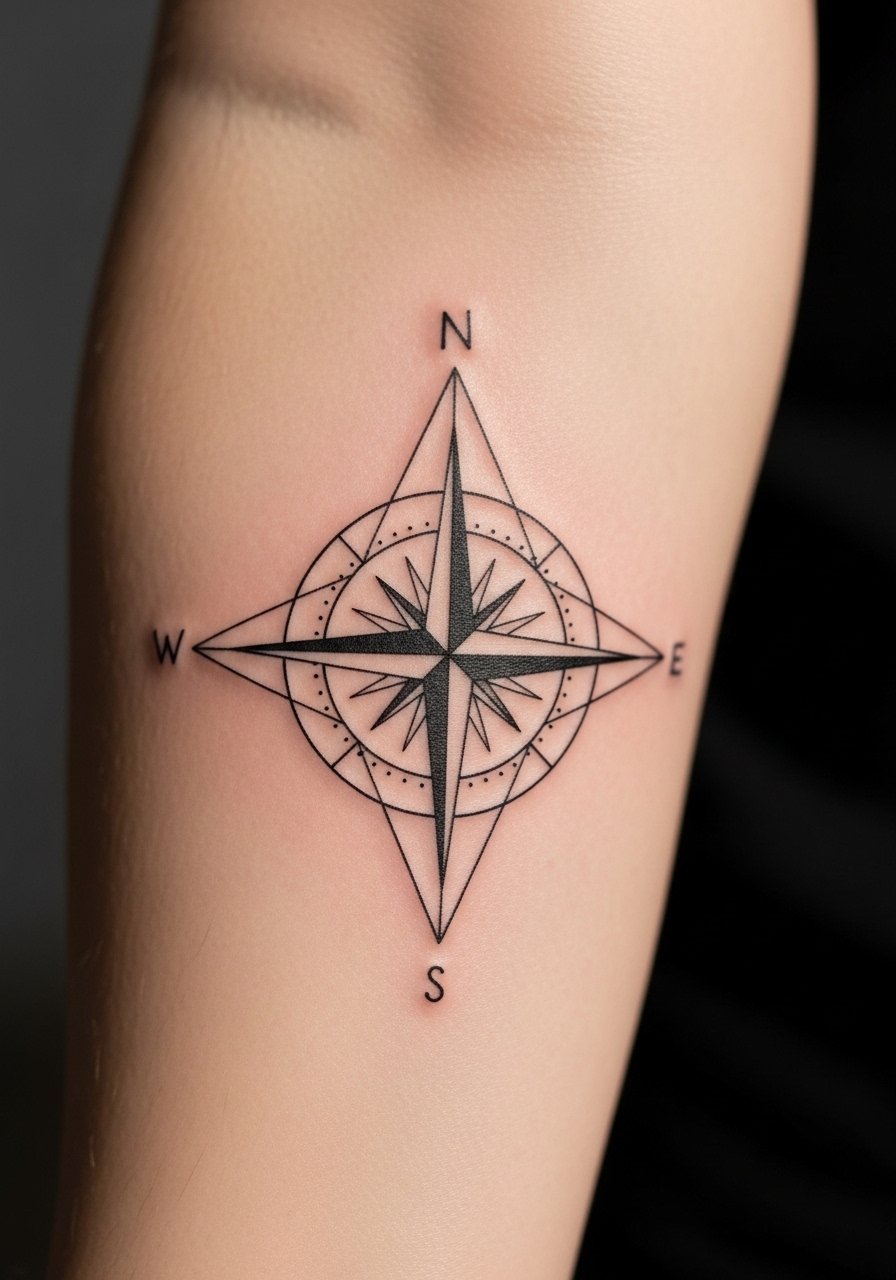
Geometric compasses feel modern and intentional. I’ve seen them age well if the artist balances thin lines with slightly bolder anchors. Inner forearm is ideal for visibility and lower pain than ribs. Mistake: choosing ultrafine symmetry without checking healed examples—ask to see healed single-needle work to judge an artist’s control.
6. Compass With Mountains And Map On Thigh
Style/Technique: Illustrative / Neo-Traditional
Pain Level: Low (2-3/10)
Session Time: 1–2 sessions
Best For: Adventure symbolism, larger canvas
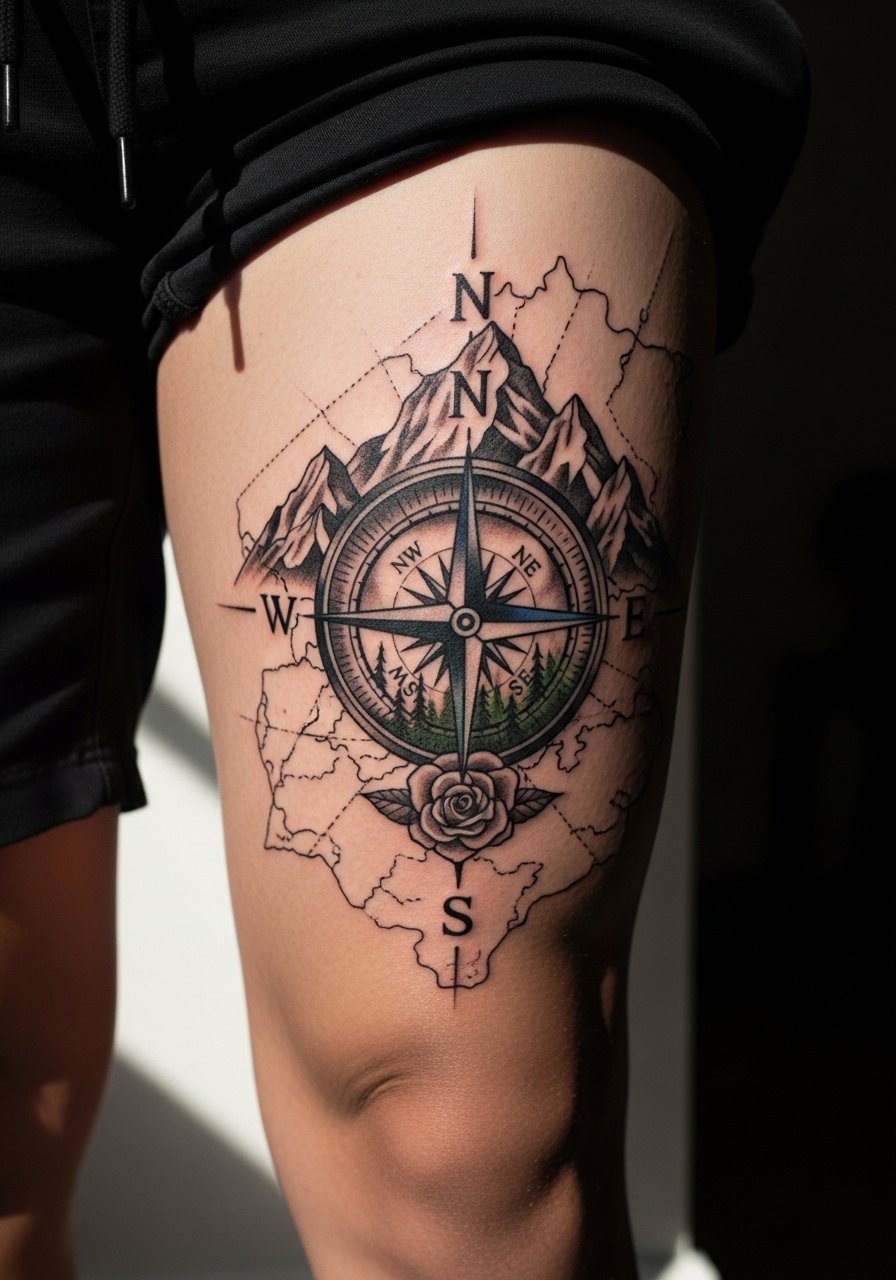
Combining a compass with mountains and map lines tells a travel story. Thigh placement gives room for detail and is low pain; it’s great if you want a bigger narrative piece. I recommend asking for slightly bolder hills and map lines so they don’t lose definition when healed. Adding coordinates is a nice personalization to anchor a memory.
7. Simple Crossed Arrows Compass On Ankle
Style/Technique: Minimalist / Symbolic
Pain Level: Medium (4/10)
Session Time: 30–60 minutes
Best For: Friendship tattoos, tiny directional ideas
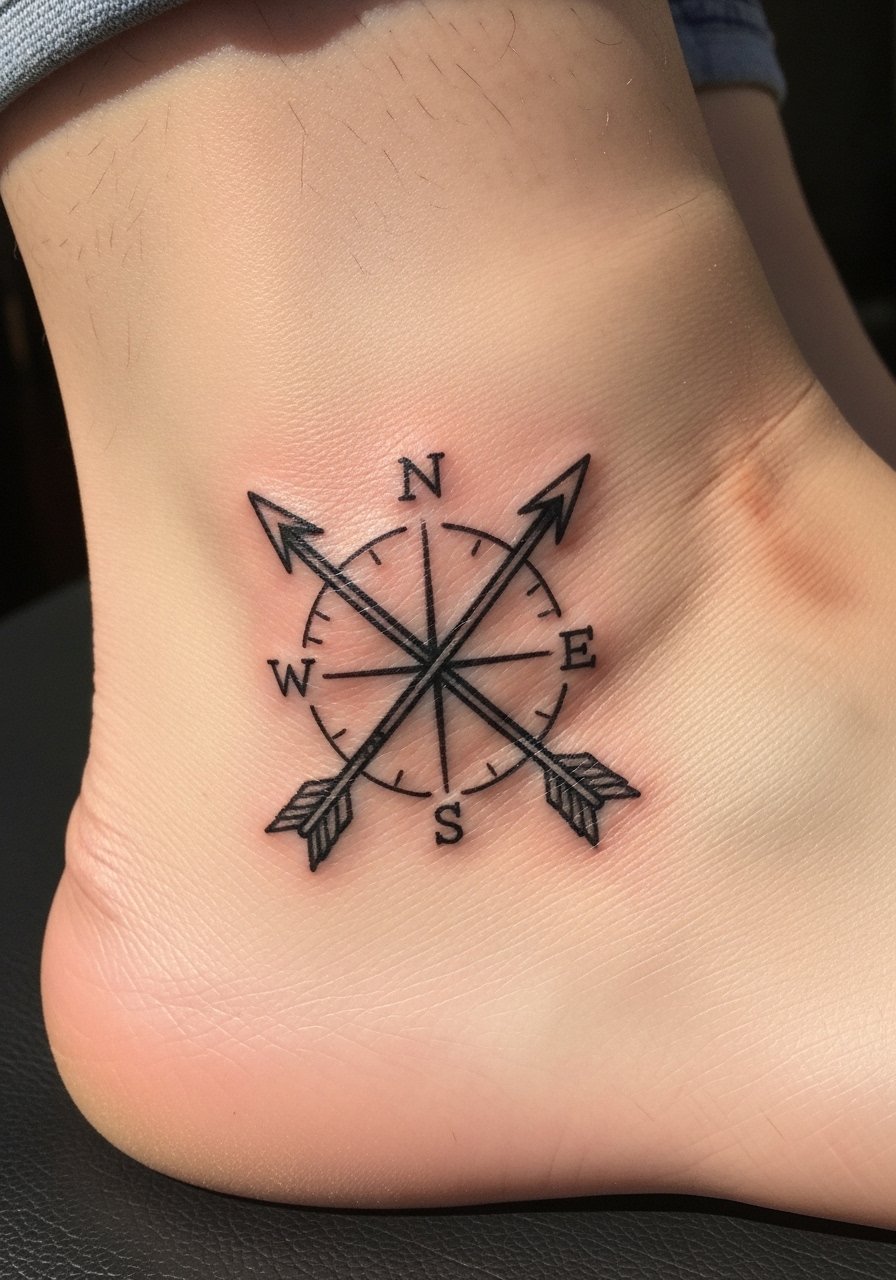
Crossed arrows are a subtle friendship or path motif. On the ankle it’s visible but easy to hide. Expect more soreness here than the forearm — bones and thin skin make it sting more. I advise keeping lines a touch thicker than you think; tiny detail around the ankle tends to blur. This is one of those small compass tattoo ideas that feels personal without shouting.
8. Wind Rose Compass With Stars On Ribcage
Style/Technique: Ornamental / Dotwork
Pain Level: High (7/10)
Session Time: 1–2 sessions
Best For: Spiritual guidance, hidden meaning
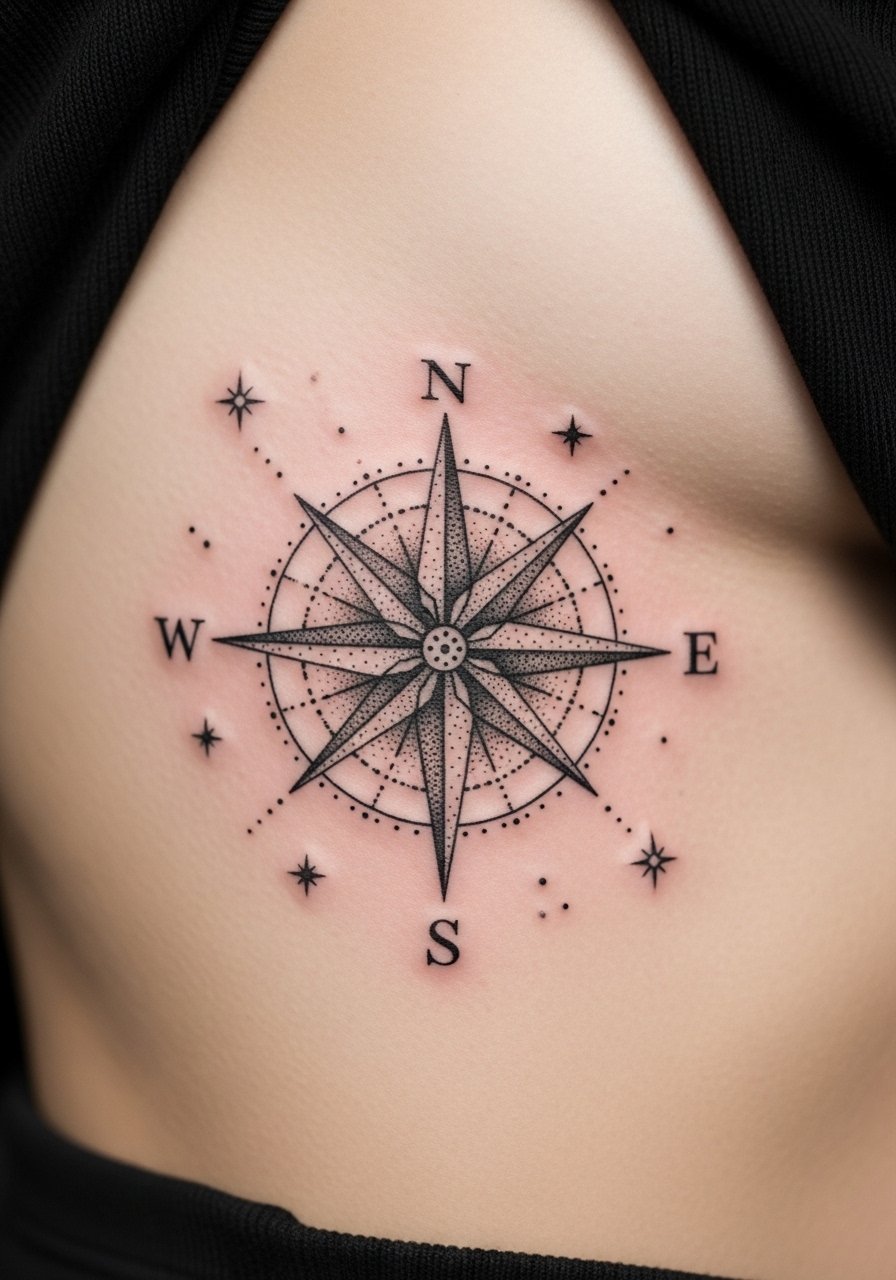
A wind rose with stars reads as cosmic guidance but ribs are painful. I got a rib tattoo once and can vouch: plan for breaks. This placement is private and meaningful; the-dotwork looks beautiful healed but needs an experienced hand. Avoid overfilling with tiny dots—ask for contrast to keep the stars visible long-term.
9. Blackwork Compass Sleeve Start On Outer Forearm
Style/Technique: Blackwork / Bold
Pain Level: Medium-High (5/10)
Session Time: Multiple sessions
Best For: Commitment pieces, sleeves
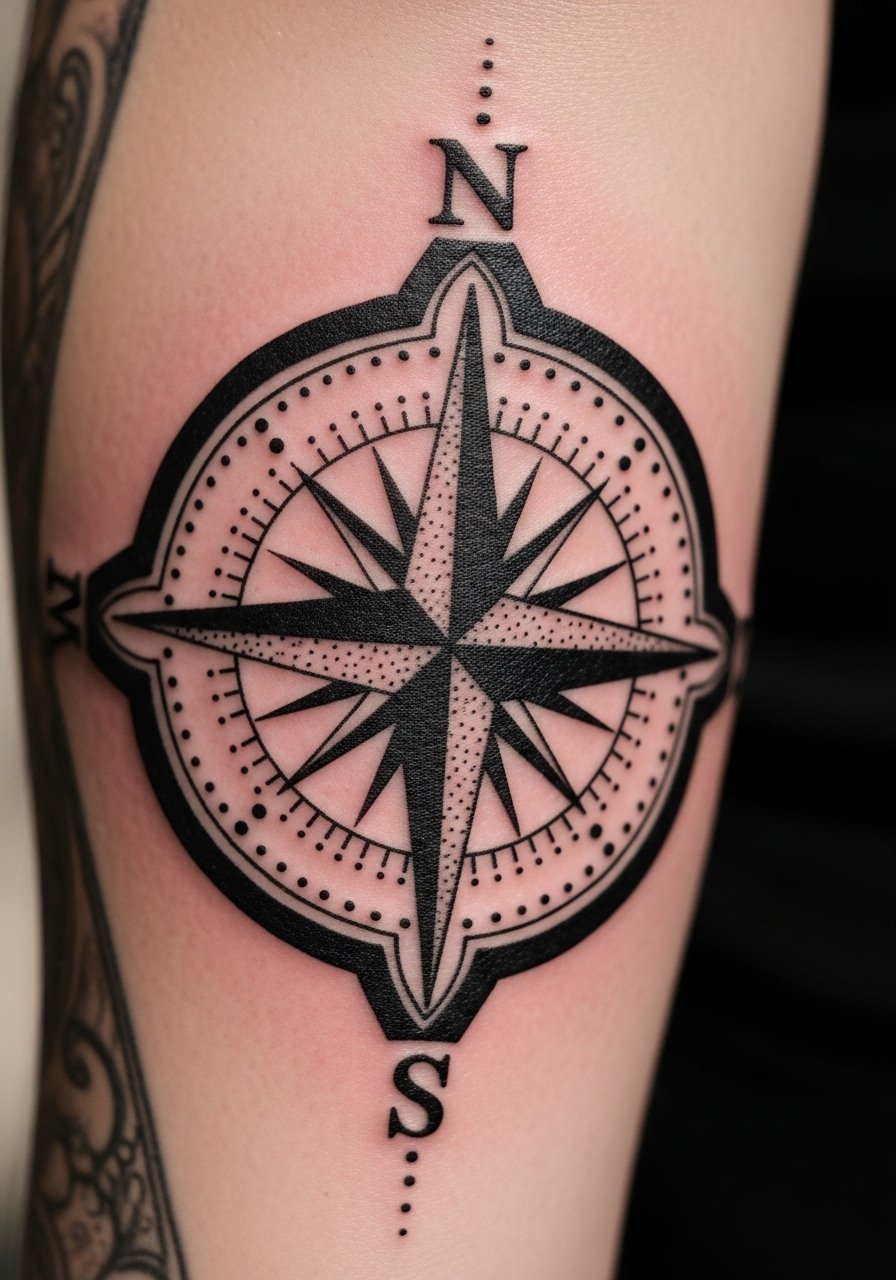
Blackwork compass pieces make a clear statement and scale into sleeves. I recommend this if you’re sure you want large-scale work—healing is straightforward but sessions are longer. Blackwork ages well; solid fills protect edges of finer details. Common mistake: starting with tiny accents expecting them to read in a sleeve—plan for bold compositions.
10. Compass With Wolf On Calf
Style/Technique: Neo-Traditional / Animal Symbolism
Pain Level: Low-Medium (3-4/10)
Session Time: 1–2 sessions
Best For: Freedom and intuition themes
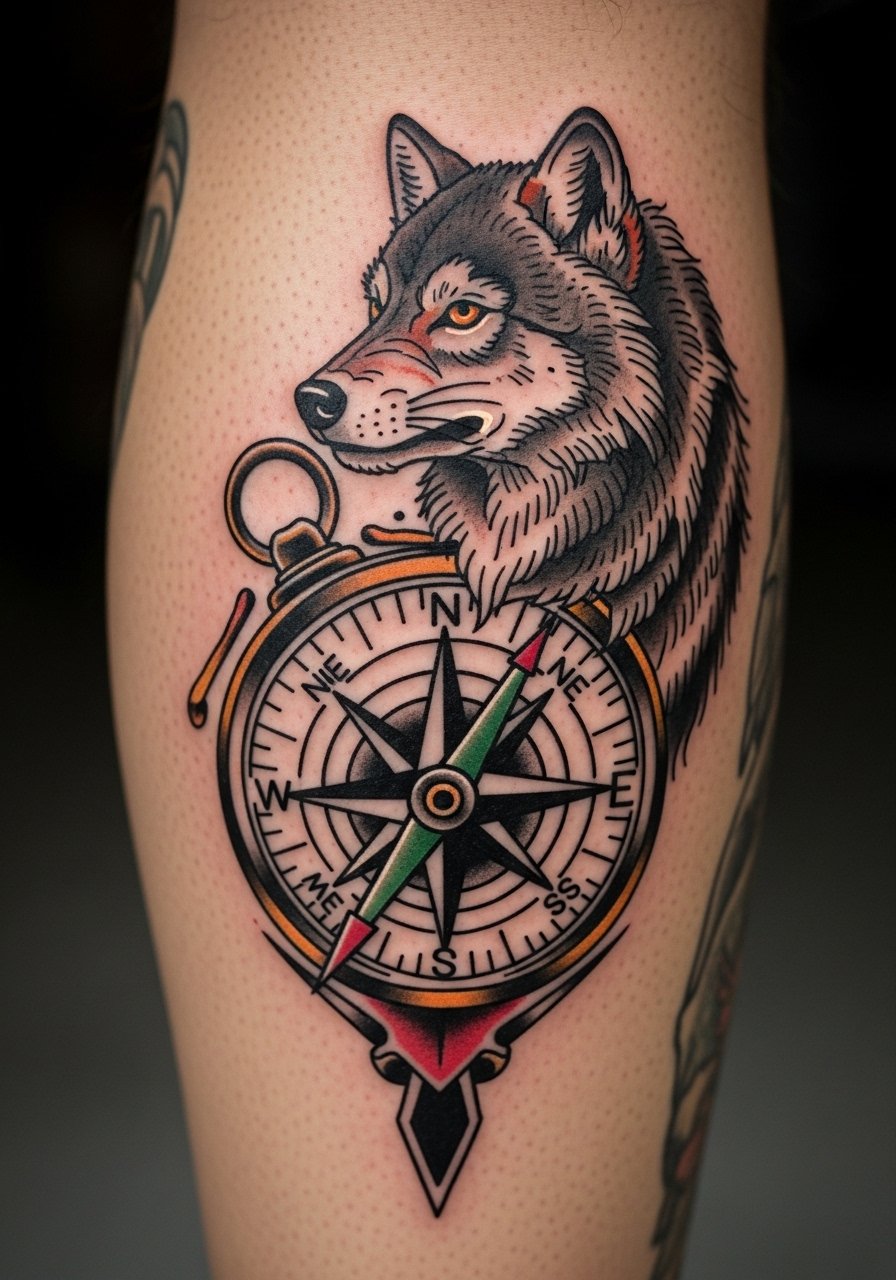
Pairing an animal—wolf, bird—adds personality. I picked a bird once to represent freedom; others choose wolves for guidance. Calf placement gives shape room and lower pain. Ask your artist how the animal’s lines will interact with the compass points so neither element muddies as it heals. These personalized compass tattoo ideas read like a story.
11. Antique Compass With Coordinates On Wrist
Style/Technique: Realistic / Fine Line
Pain Level: Low (2-3/10)
Session Time: 1 session
Best For: Milestone tattoos, travel markers
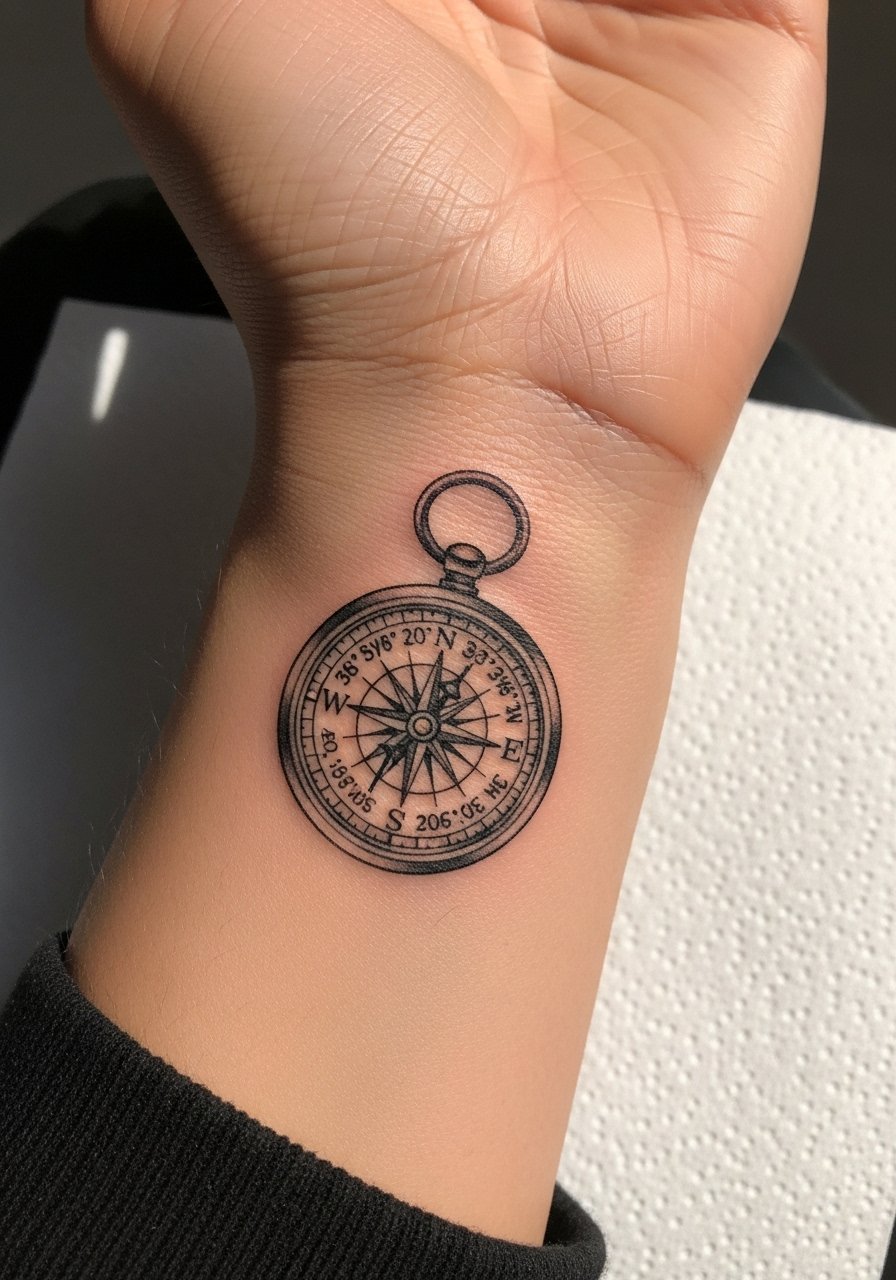
An antique compass with coordinates is one of my favorite subtle ways to mark a place that matters. Wrist placement keeps it visible and personal. I recommend choosing coordinates with meaning—birthplace, first big trip. Watch for thin script; numbers can blur, so request slightly heavier numerals. This solves regret concerns: it’s personal, not trendy.
12. Floral-Accented Compass Rose On Inner Bicep
Style/Technique: Watercolor / Illustrative
Pain Level: Low-Medium (3/10)
Session Time: 1–2 sessions
Best For: Soft nautical aesthetic
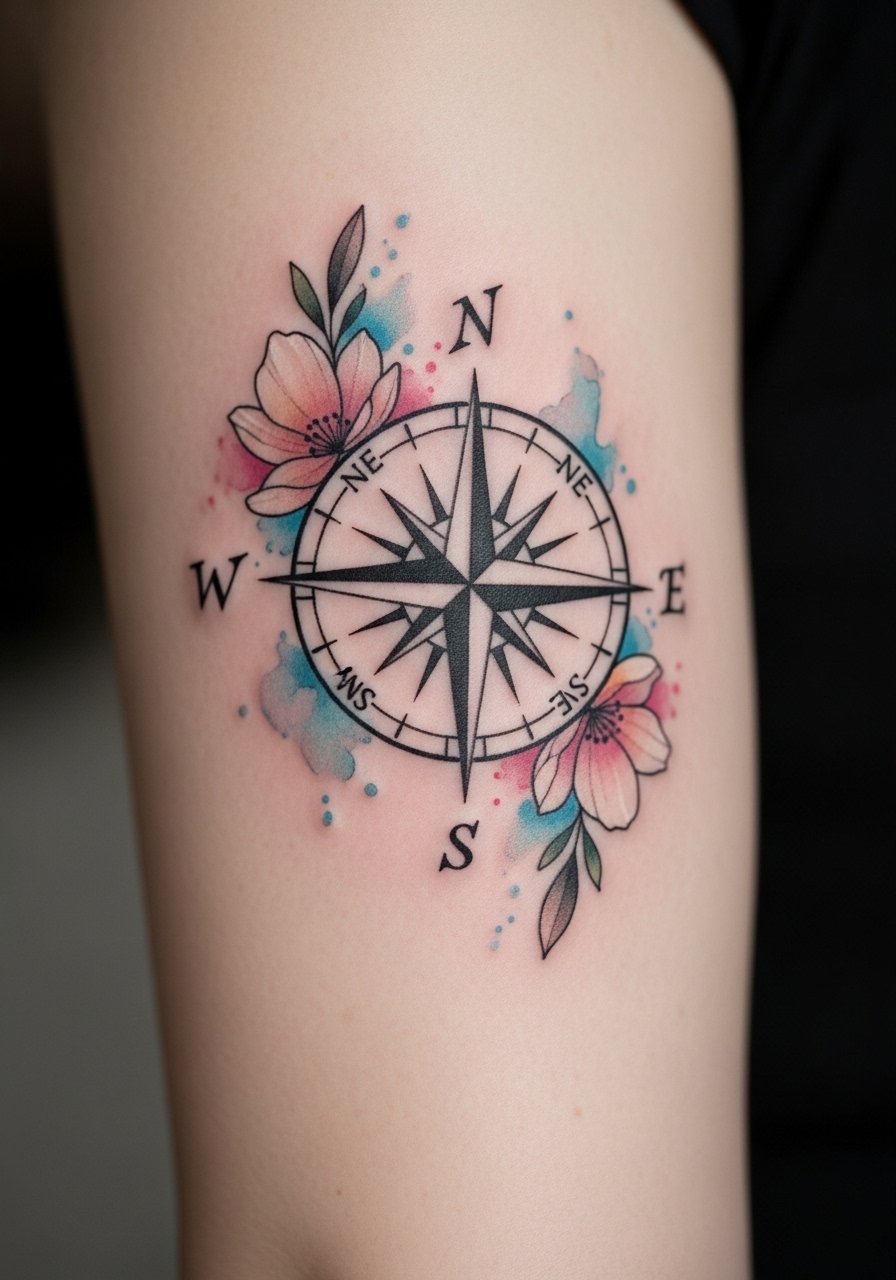
Adding flowers softens the compass and symbolizes guided growth. Inner bicep is a cozy spot—less sun, lower pain, easy to hide. Watercolor fades faster than blackwork, so I suggest pairing bright washes with solid black outlines. A common mistake is relying only on pastel colors; discuss saturation and healed examples with your artist.
13. Micro Compass Behind Ear
Style/Technique: Fine Line / Micro
Pain Level: Low-Medium (3-4/10)
Session Time: 20–40 minutes
Best For: Discreet daily-wear, small compass tattoo ideas
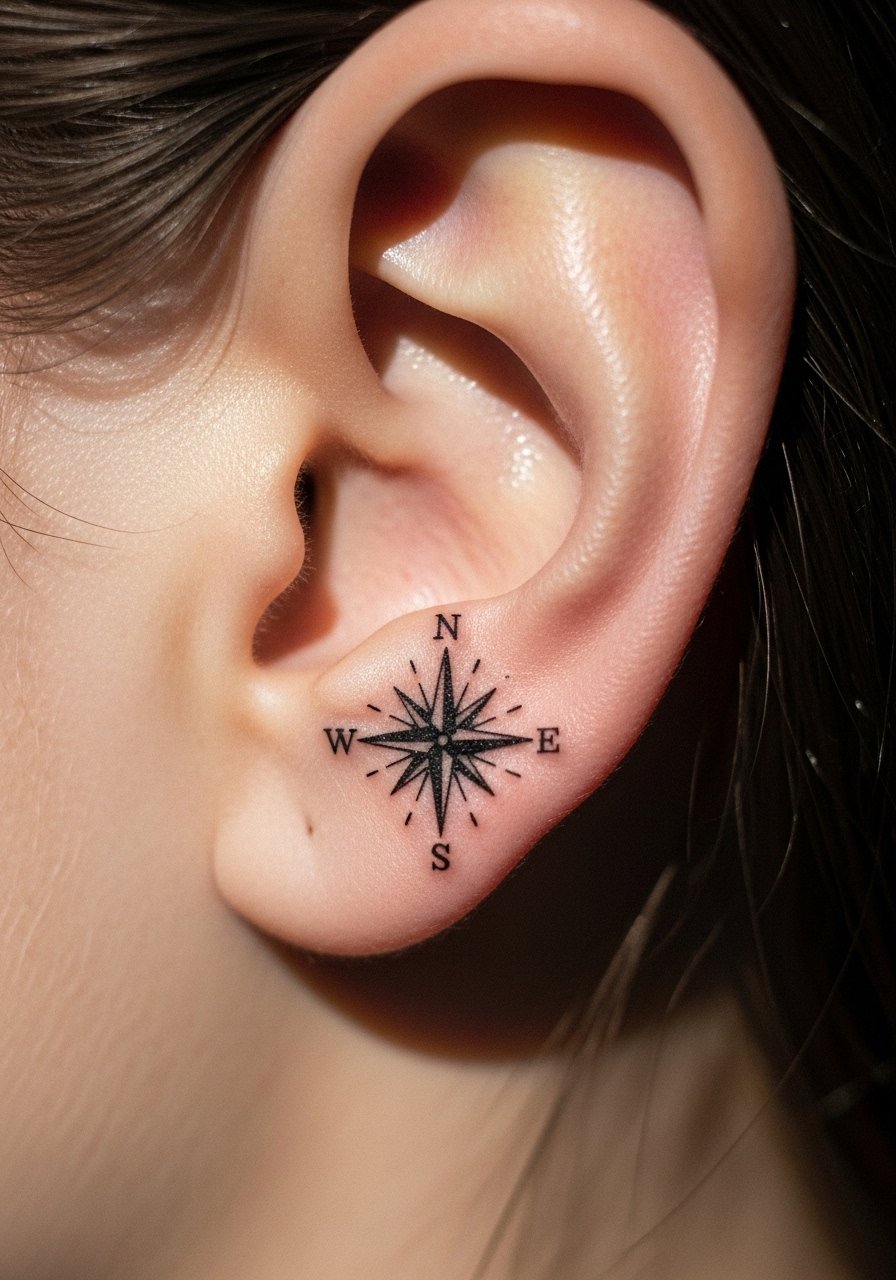
Behind-the-ear compasses are discreet and whisper their meaning. I like this spot for a low-visibility reminder. Healing is quick but be careful with sleeping positions. Artists sometimes warn the area’s thinner skin can make micro lines blur; choose someone who shares healed micro photos. This addresses first-tattoo anxiety—small and fast.
14. Compass With Moon And Stars On Shoulder Blade
Style/Technique: Illustrative / Cosmic
Pain Level: Low (3/10)
Session Time: 1 session
Best For: Spiritual direction, medium designs
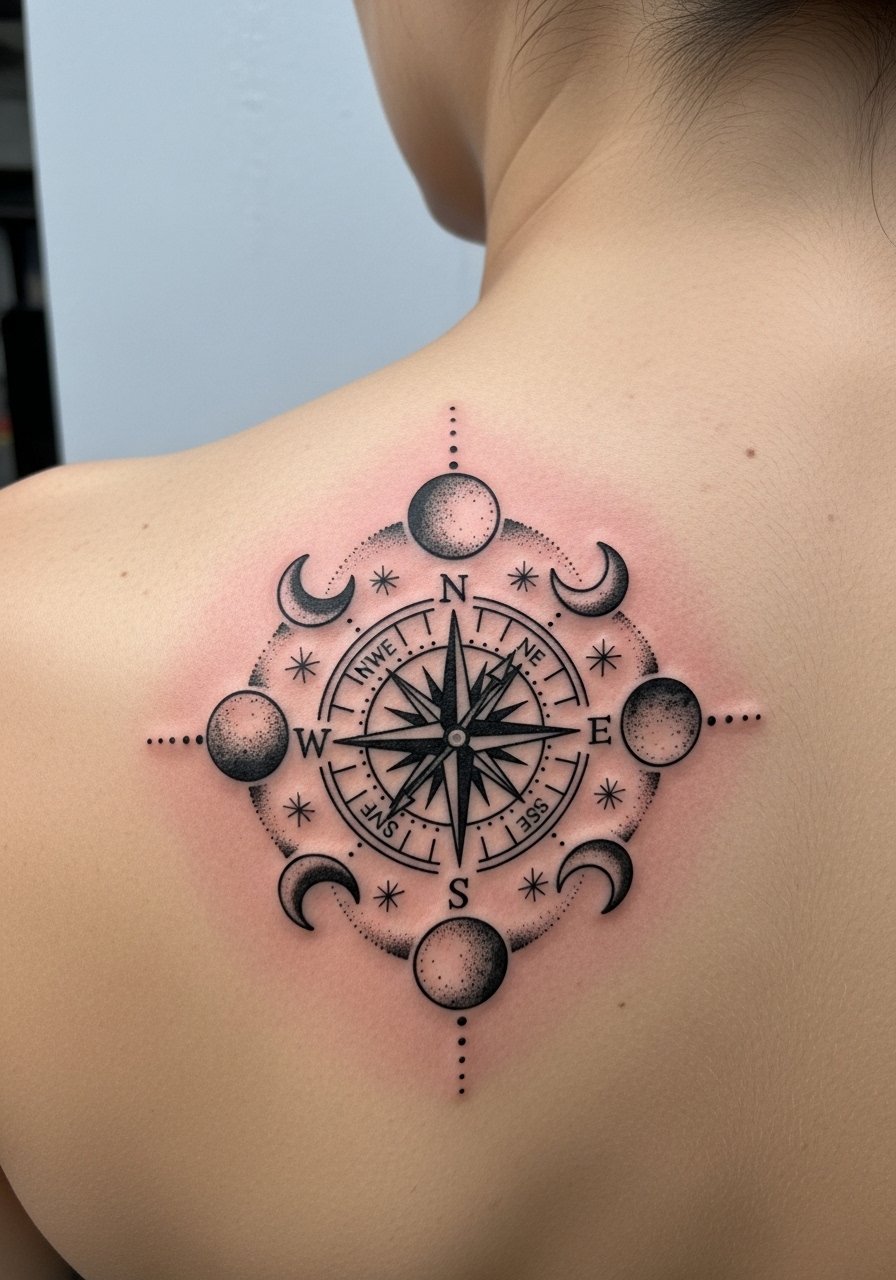
Adding moon and stars brings a spiritual navigation angle. Shoulder blade placement is great for medium pieces and has moderate pain. I’ve seen this age nicely if the artist uses strong anchors. Avoid very fine star points; bolder dots hold. I find cosmic additions make the compass feel internal rather than purely directional.
15. Tiny Compass Finger Tattoo On Side Of Finger
Style/Technique: Minimalist / Micro
Pain Level: High (6-7/10)
Session Time: 15–30 minutes
Best For: Subtle reminders, micro placements
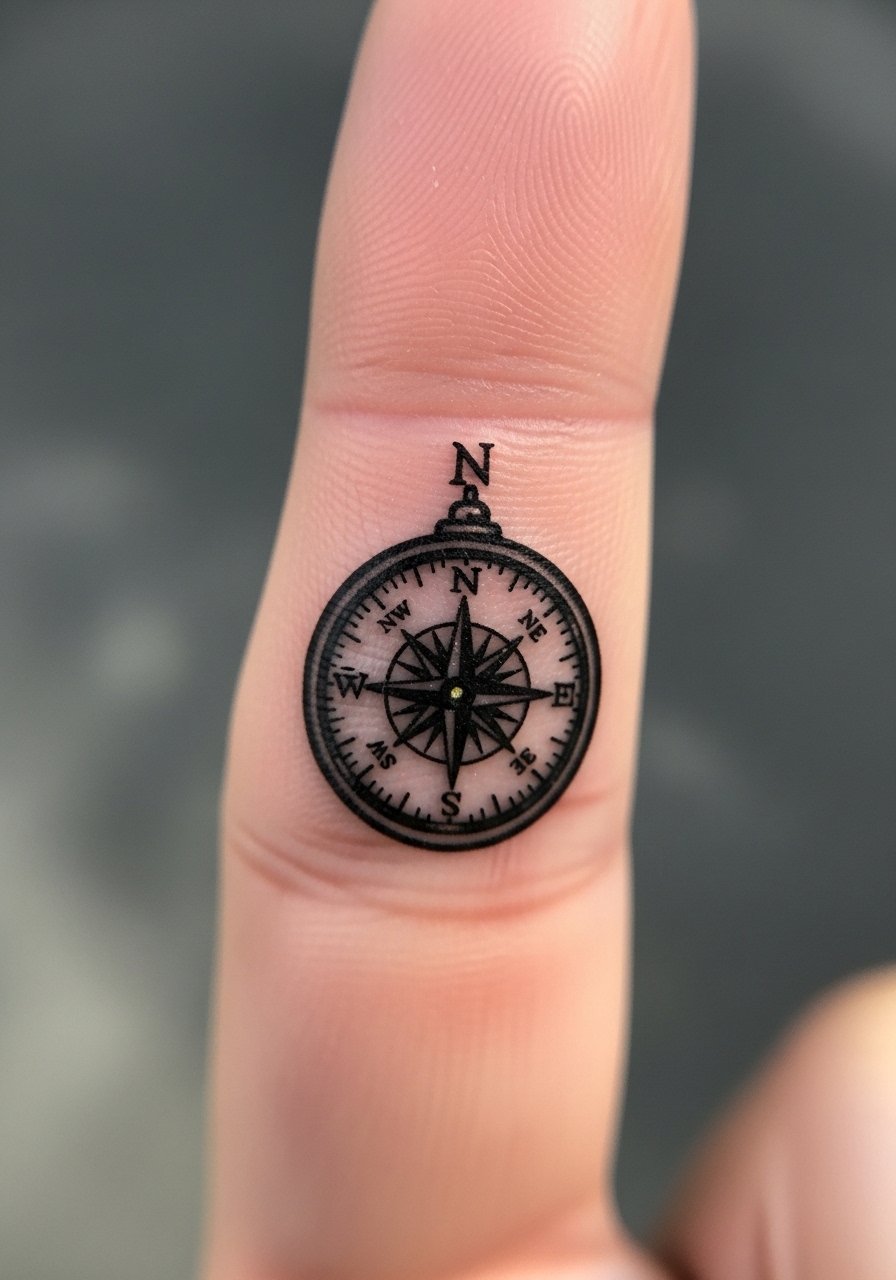
Finger tattoos are intimate but notorious for fading and touch-ups. I got a tiny symbol on my finger and learned touch-ups are common. If you want a finger compass, expect maintenance and ask your artist about thicker outlines. This idea answers the aging concern—if you want low maintenance, avoid finger work.
16. Compass Mandala On Sternum
Style/Technique: Mandala / Ornamental
Pain Level: High (7/10)
Session Time: Multiple sessions
Best For: Centerpiece, spiritual symmetry
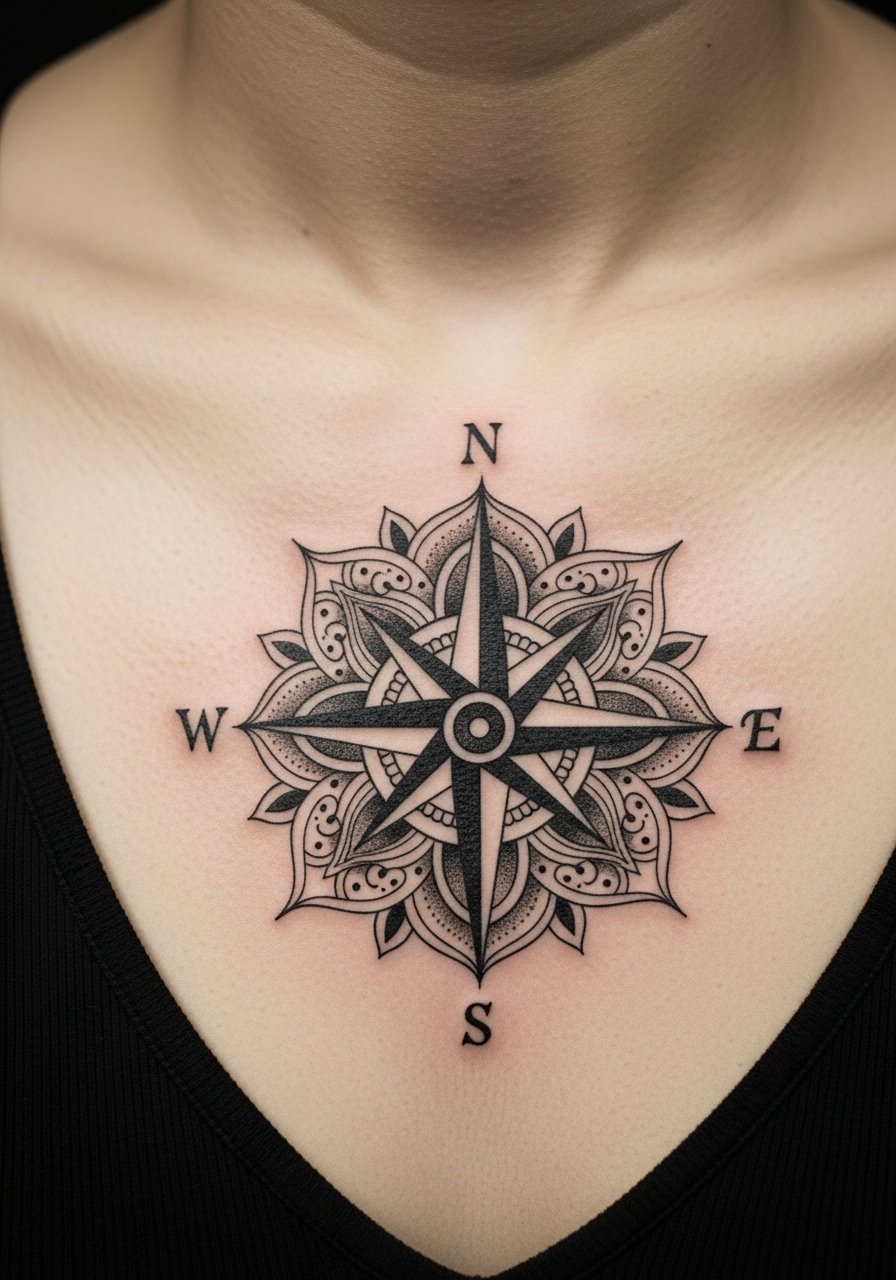
A mandala-compass on the sternum is striking and symbolic of inner direction. Sternum work is intense pain and requires strong artist-client communication. The healed effect is beautiful if the mandala has bold primary lines to hold detail. Avoid overly fine filigree in the center; it can get lost as skin shifts.
17. Compass Pocket Watch Hybrid On Chest
Style/Technique: Realistic / Neo-Vintage
Pain Level: Medium (4-5/10)
Session Time: 1–2 sessions
Best For: Heirloom vibes, torso placement
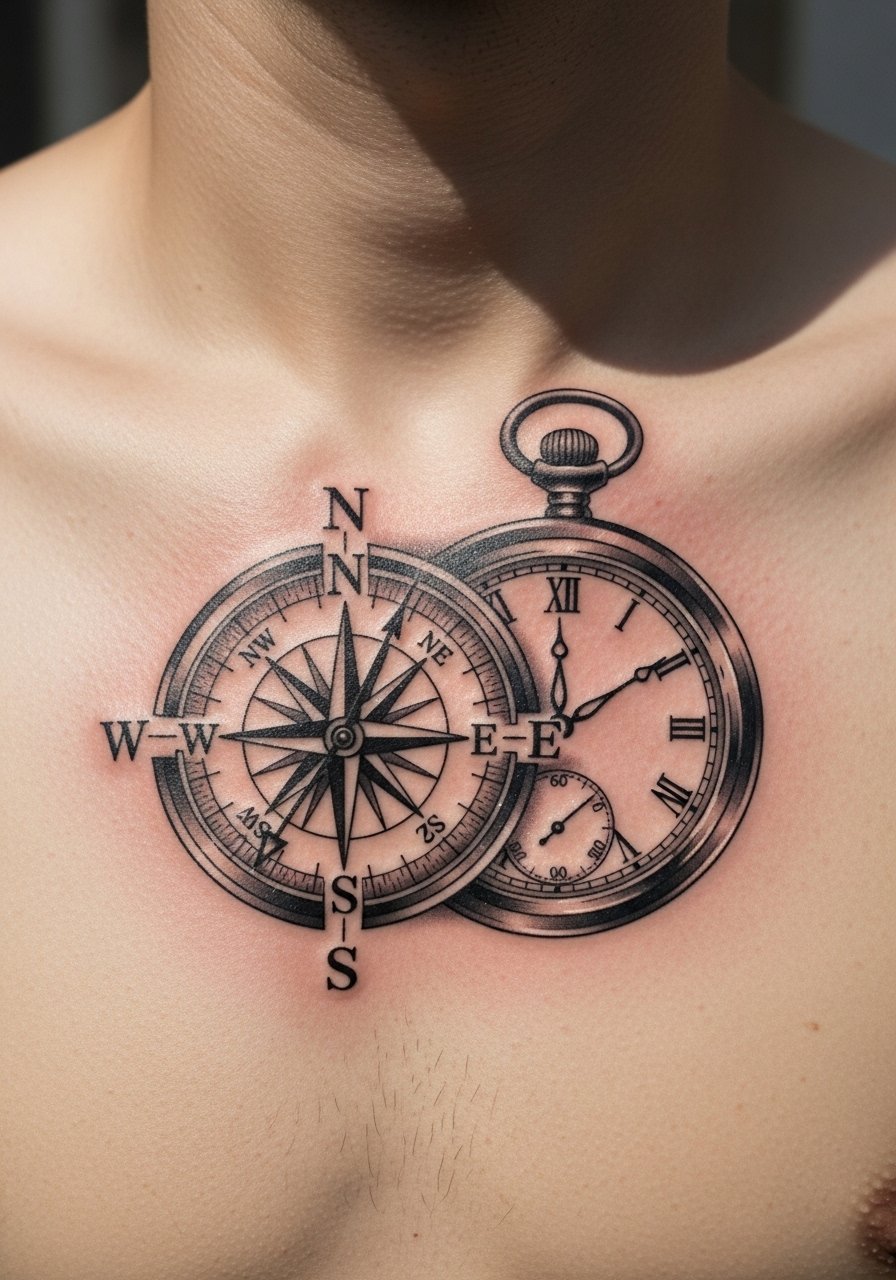
Merging a compass with a watch suggests time and direction—great for commemorating a life event. Chest placement gives space and visibility. I like how this reads healed: soft shading with strong edges. Ask an artist who does realistic shading; avoid tiny gears that will blur.
18. Elemental Compass Rose On Ribcage
Style/Technique: Symbolic / Elemental
Pain Level: High (7/10)
Session Time: 1–2 sessions
Best For: Hidden spiritual reminders
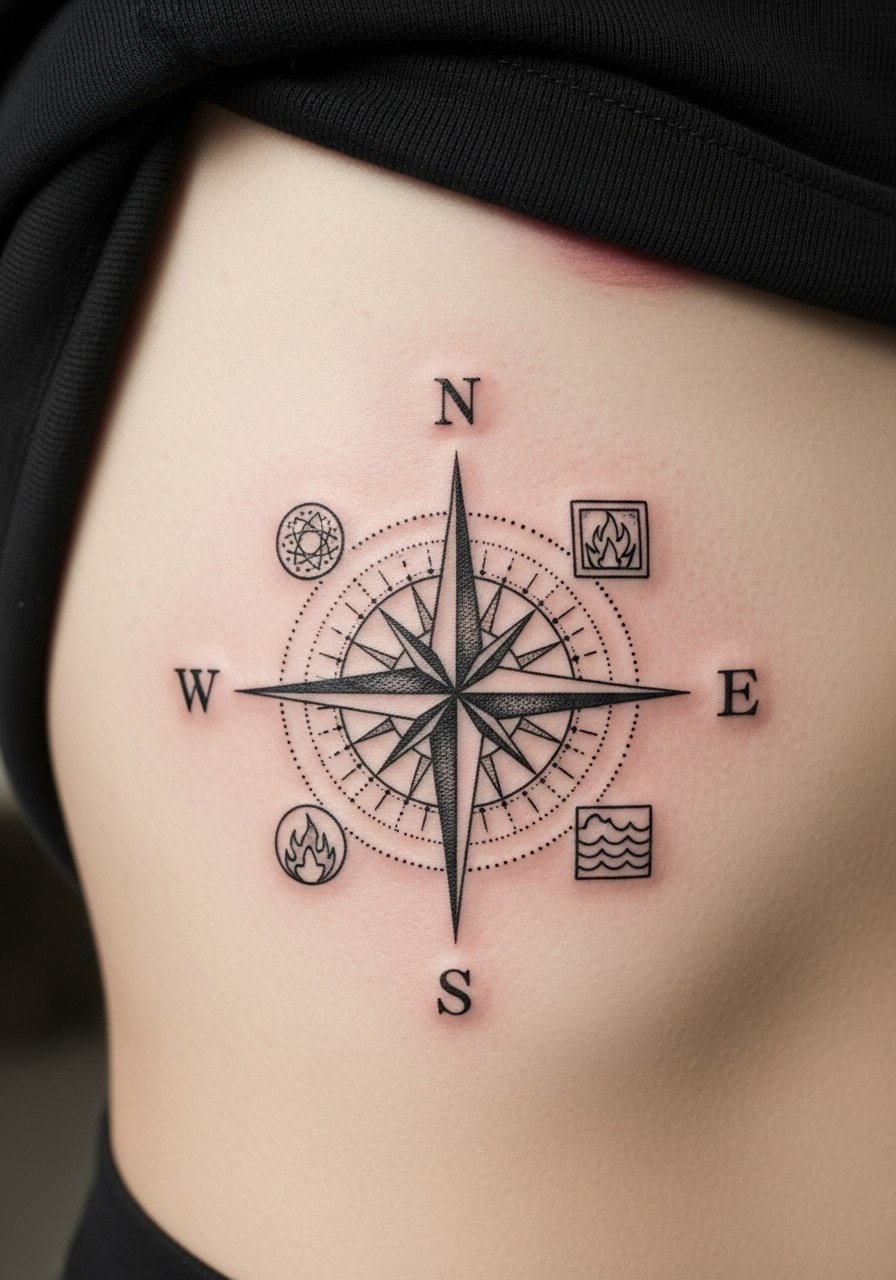
Including the four elements around a compass deepens the symbolism of balance. Ribcage placement keeps it private but is painful. I’ve seen this used as a hidden mantra. Discuss the icon size—tiny element marks can vanish, so ask for bold icons that still feel delicate.
19. Compass Watercolor Splash On Upper Thigh
Style/Technique: Watercolor / Illustrative
Pain Level: Low (2-3/10)
Session Time: 1 session
Best For: Color lovers, large canvas
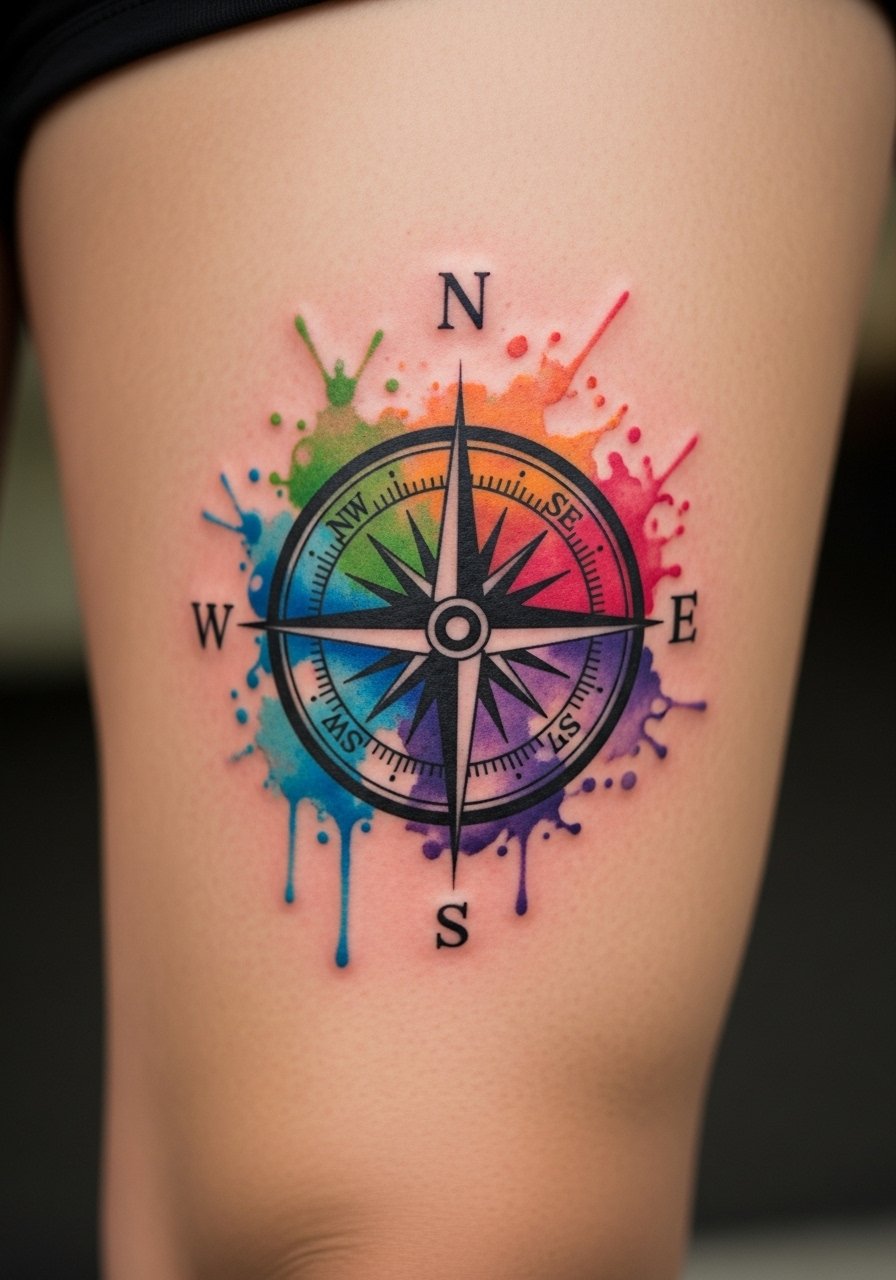
Watercolor compasses feel lively and artistic on the thigh. Thighs heal well and are easy to hide. I recommend pairing colorful washes with solid black lines to keep the compass readable as colors fade. Mistake: relying solely on pale pastels—ask for pigment depth and healed examples.
20. Black And Gray Compass On Spine
Style/Technique: Black & Gray / Linear
Pain Level: High (7/10)
Session Time: 1–2 sessions
Best For: Vertical compositions, statement pieces
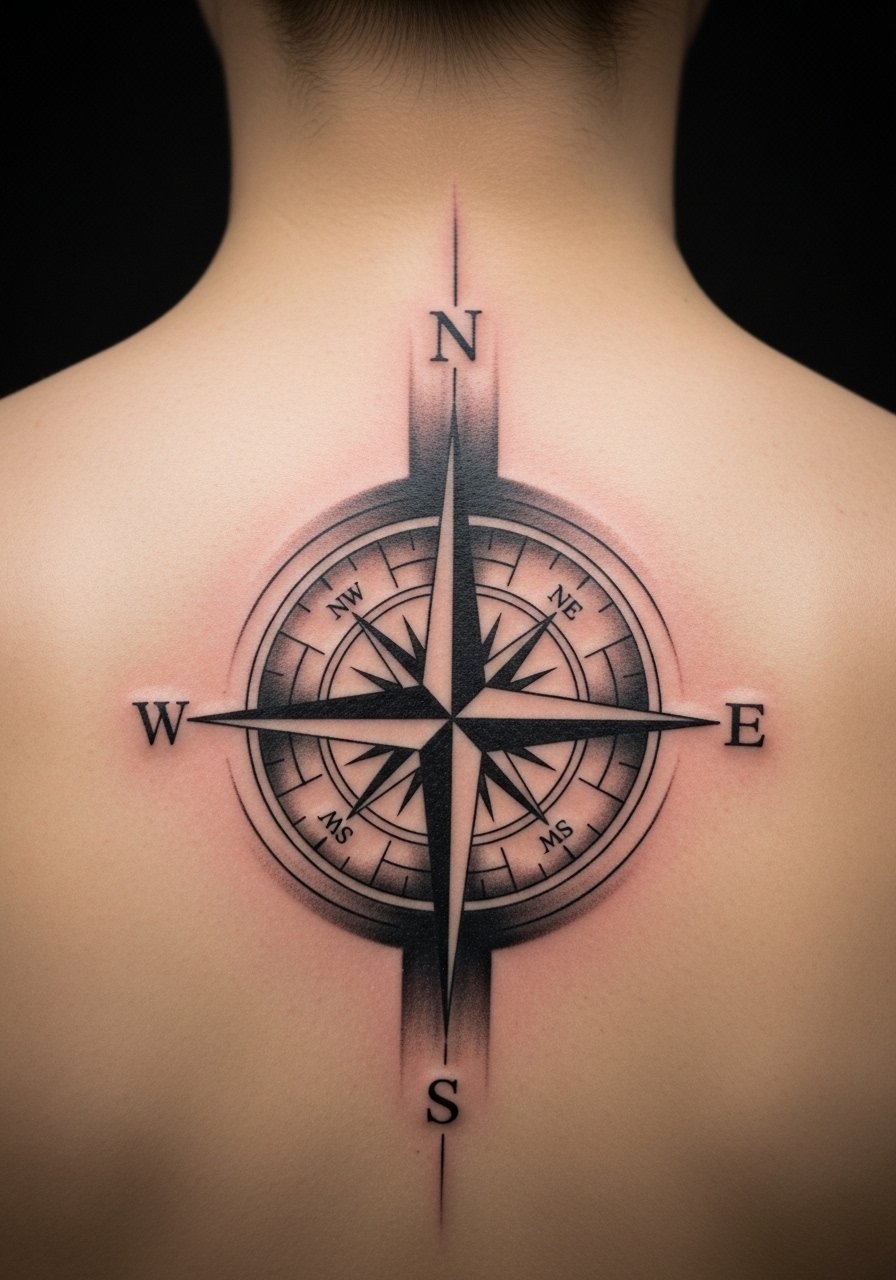
A spine compass is dramatic and directional literally down your center. Pain is significant but placement is elegant. I’ve seen these look excellent healed when lines are given breathing room. Avoid squeezing the design into narrow widths; a balanced layout keeps the rose readable as skin moves.
21. Engraved Quote Compass On Inner Forearm
Style/Technique: Script + Fine Line / Personalized
Pain Level: Low (3/10)
Session Time: 1 session
Best For: Mantra + direction combos
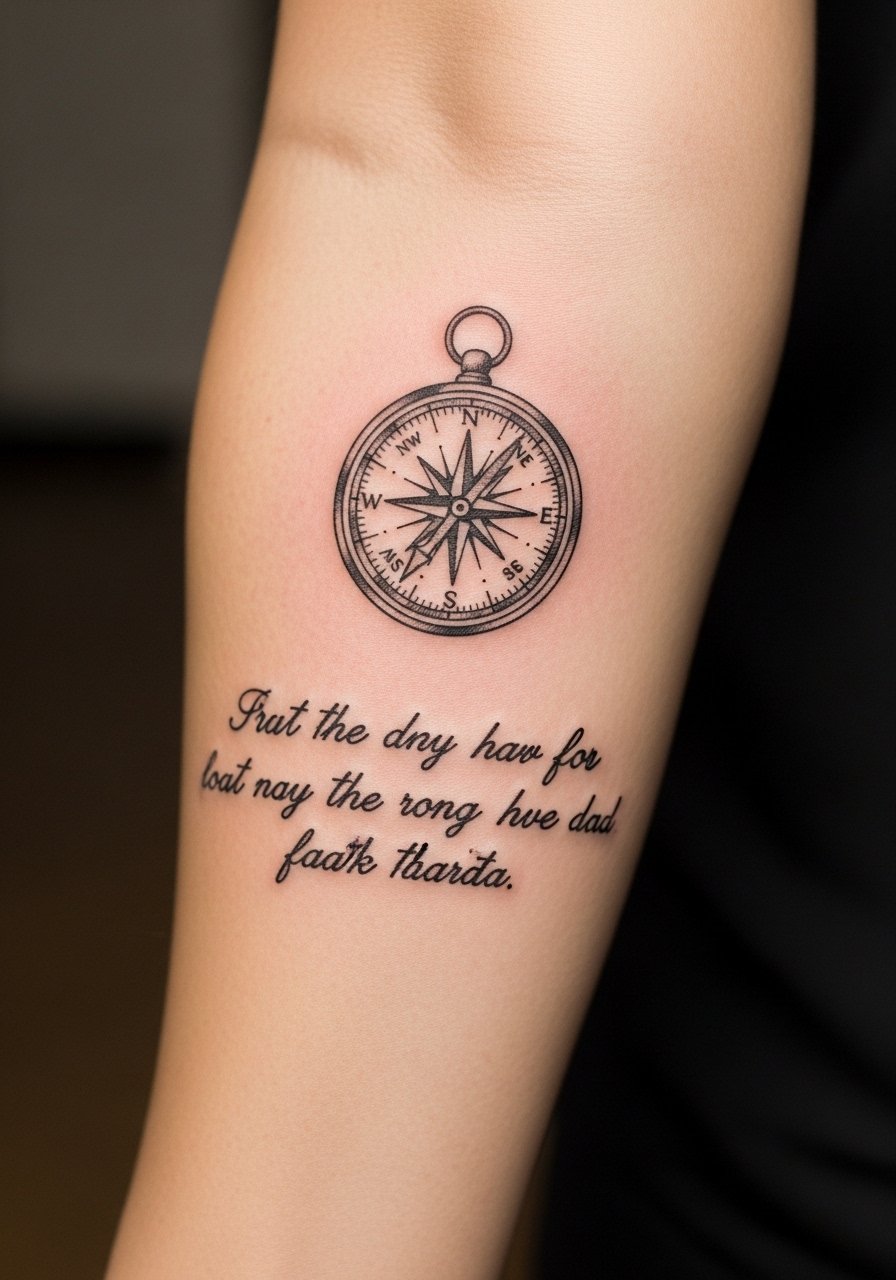
I love compass designs with a small engraved quote—short mantras like “stay true” add intention. Inner forearm is an ideal spot to read your own reminder. Script can blur, so choose clean, simple lettering and ask to see healed script work. This helps with regret: the piece is personal and meaningful rather than trendy.
22. Coordinates Micro Compass Behind Ear
Style/Technique: Micro / Fine Line
Pain Level: Low-Medium (3-4/10)
Session Time: 20–40 minutes
Best For: Milestones, discreet markers
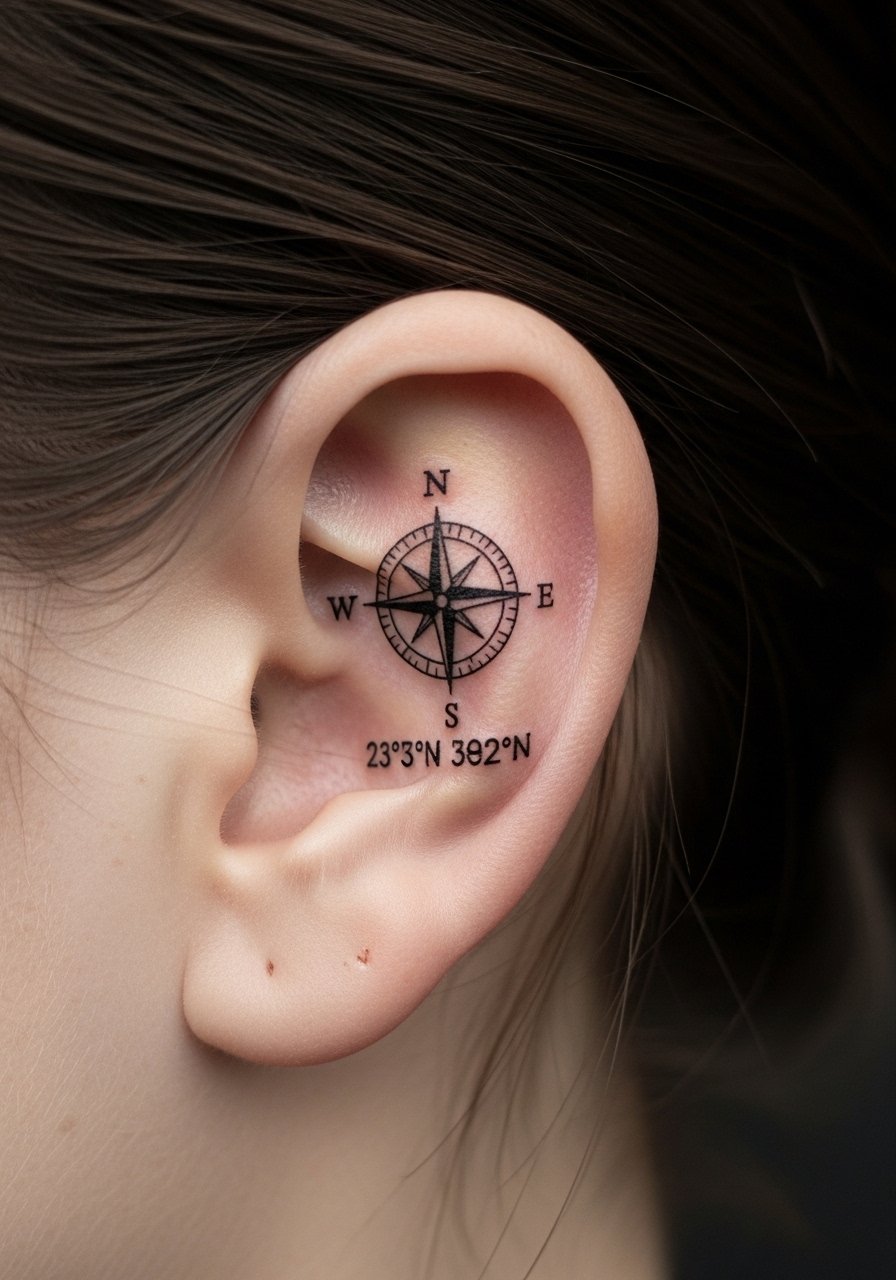
Placing coordinates with a micro compass behind the ear is a fresh take on marking a life moment. It’s discreet and personal. I used coordinates for the city that changed my life; it reads like a secret. Make sure numerals are bold enough to survive touch-ups if needed.
23. Crossed Compass Arrows Friendship Anklet
Style/Technique: Minimalist / Symbolic
Pain Level: Low-Medium (4/10)
Session Time: 30–60 minutes
Best For: Buddy tattoos, ankle placements
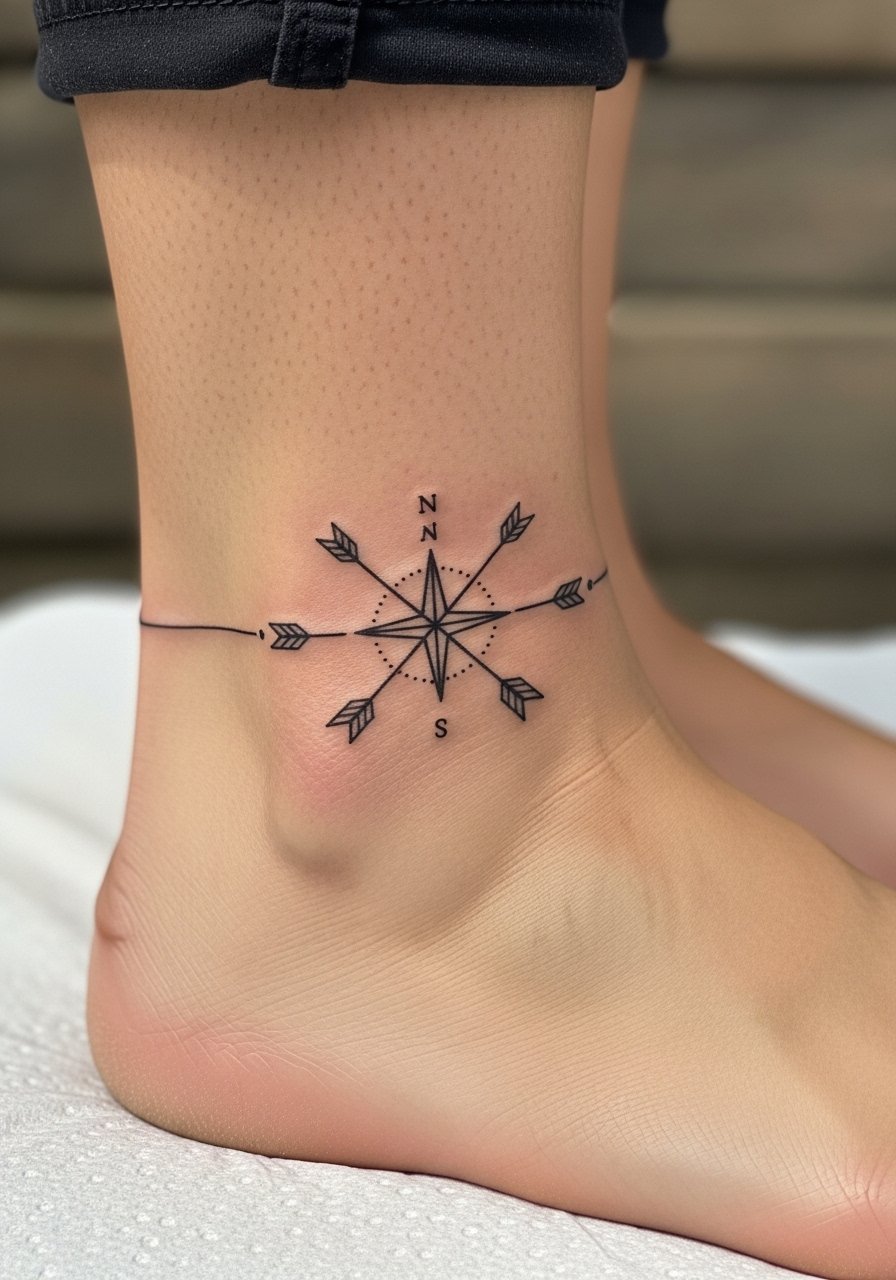
Crossed compass arrows around the ankle are a subtle friendship motif—great as matching pieces. Ankles tolerate small designs but can sting more than the arm. I recommend slightly bolder lines for longevity and discuss healed examples with your artist. This is one of those overlooked but meaningful compass tattoo ideas I’ve seen friends love.
Tattoo Prep and Aftercare Essentials
Aftercare Essentials:
- Aquaphor Healing Ointment, 14 oz tube — Recommended for the first 3–5 days to protect fresh ink
- Saniderm Transparent Adhesive Bandage, 6-inch roll — For second-skin protection during initial healing
- CeraVe Fragrance-Free Moisturizing Lotion, 12 oz — Use after ointment phase to keep skin hydrated
- Dr. Bronner's Unscented Castile Soap, 32 oz — Gentle daily wash for healed-cleaning routine
Before Your Appointment:
- Tattoo Numbing Cream 5% Lidocaine — Ask your artist before using; apply 30–45 min prior if approved
- Tattoo Stencil Transfer Paper, A4 Pack — Handy if you want to test placement with a stencil at home
Long-Term Maintenance:
- SPF 50+ Sunscreen Stick for Tattoos — Daily sun protection to prevent fading
- Mad Rabbit Tattoo Balm, 2 oz — Ongoing balm for healed tattoos to keep saturation
- Hustle Butter Deluxe, 8 oz — Vegan aftercare alternative for long-term moisture
Optional Comfort & Maintenance:
- Tattoo Numbing Spray — Useful for touch-ups or sensitive spots (artist approval advised)
- Hydrocolloid Bandages, Large Pack — For small spot protection after scab-peel phase
From my experience, artists commonly recommend Aquaphor and Saniderm during early healing and a fragrance-free lotion thereafter. Sunscreen and a good balm are the real long-term protectors.
Frequently Asked Questions
Q: How bad does a tattoo actually hurt?
A: Pain varies by placement and your tolerance. Outer forearm/upper arm is often a 2–4/10; ribs, sternum, spine are closer to 7–8/10. It’s more an annoying burning or scratching than sharp agony. For sensitive spots, ask about tattoo numbing cream with lidocaine but always check with your artist first.
Q: What if I regret my compass design later?
A: I suggest personalizing designs—coordinates, animals, or an engraved quote—to reduce regret. Give ideas time: sit on a concept for several months. If removal becomes necessary, know the process is a long journey; thoughtful placement and meaningful choices usually prevent regret.
Q: How do I keep my compass tattoo from fading?
A: From what I’ve seen, consistent sunscreen use is essential. Use an SPF 50+ sunscreen stick on exposed pieces and moisturize regularly with a fragrance-free lotion like CeraVe. Black and gray holds longest; plan colors with that in mind.
Q: Can I work out after getting a compass tattoo?
A: Wait at least 48–72 hours and avoid heavy sweating on the fresh tattoo. If your piece is on a flex area (ribcage, elbow), give it more time. Keep the area clean and follow aftercare—Saniderm or Aquaphor help during the first critical days.
Q: Should I get a small tattoo first to test pain?
A: Only if you genuinely want a small design. Size doesn’t always predict pain; location does. An ankle or rib micro piece can hurt more than a larger forearm piece. If you’re anxious, choose a lower-pain placement like the outer arm or thigh.
Q: How long does a compass tattoo take to heal fully?
A: Surface healing is usually 2–3 weeks; full settling can take 2–3 months. Expect scabbing and peeling early—don’t pick. Use Aquaphor initially, then switch to a fragrance-free lotion. Healed photos often look brighter than fresh ink.
Q: Do tattoos look different on different skin tones?
A: Yes. Black and gray work consistently across tones; bright pastels can appear muted on deeper skin. White ink often disappears on dark skin. I always look for healed examples from artists who regularly tattoo the skin tone you have.
Q: Are micro compasses worth it?
A: Micro compasses are meaningful and discreet, but they often need touch-ups. From what I’ve seen, single-needle micro work can blur on high-motion areas. If you want longevity with minimal upkeep, consider slightly bolder lines or a low-friction placement.