
Bold blackwork compasses often outlast the wispy single-needle pieces that trend on inspiration boards. Small, ultra-fine compasses can look elegant fresh but lose interior detail by year two if spacing is too tight. Pick a style that fits how you live and what you wear, and plan line weight with longevity in mind so the piece still reads after a few touch-ups.
1. Minimal Compass Outline on Inner Forearm

A tiny outline compass suits someone who wants subtle directionality without a big surface. Tell the artist you want slightly heavier contour lines than the reference photo so the interior points do not collapse as the skin ages. Fine-line supporters say the look is modern and unobtrusive. Bold-line supporters counter that thicker outlines keep the compass readable after two to five years. Expect a quick 30 to 45 minute session and low pain on the forearm. Common mistakes are packing micro detail into a sub-two-inch circle and expecting it to stay crisp. For showing the piece, roll a sleeve and pair it with a fitted henley that frames the forearm.
2. Sailor Compass with Rope on Upper Arm

This is the classic if you want a heritage look that reads at a distance. Ask for bold outlines and flat color fills rather than tiny shading inside the compass petals so the piece ages into a strong silhouette. The upper arm tolerates larger scale, so plan a 1.5 to 3 hour session depending on color. A common error is squeezing too many nautical extras into a small circle, which muddies the design over time. The shoulder cap handles heavier saturation well and touch-ups are typically needed once after the first year. Wear a fitted polo to show this off.
3. Compass with Coordinates on Outer Forearm

Use coordinates to pin a place that matters without a banner or quote. Bring the exact latitude and longitude in the font and size you want so the artist can stencil text that reads at three and five years. If you want more longevity, ask for slightly bolder numerals and a clean negative space buffer around the text. The outer forearm shows detail well and feels like a three to four hour session for medium complexity. A common mistake is rendering coordinates in a script font that blurs; monospace or thin serif keeps numbers legible. Pair this with denim jackets or a short-sleeve tee to frame the layout.
4. Geometric Compass with Dot Work on Calf

Geometric blackwork suits collectors building a leg piece or anyone who prefers symmetry over ornament. Tell the artist which lines must stay crisp and which can be stippled so the negative space holds up. The calf is forgiving, so plan a two to three hour session for a medium-size geometric compass. Watch for the mistake of making triangles too close together, because dot work can fuse visually if spacing is tight. Expect moderate pain because the calf sits over denser tissue. For streetwear pairings, crop your pants and show it with cuffed shorts.
5. Compass and Mountain Landscape on Outer Forearm
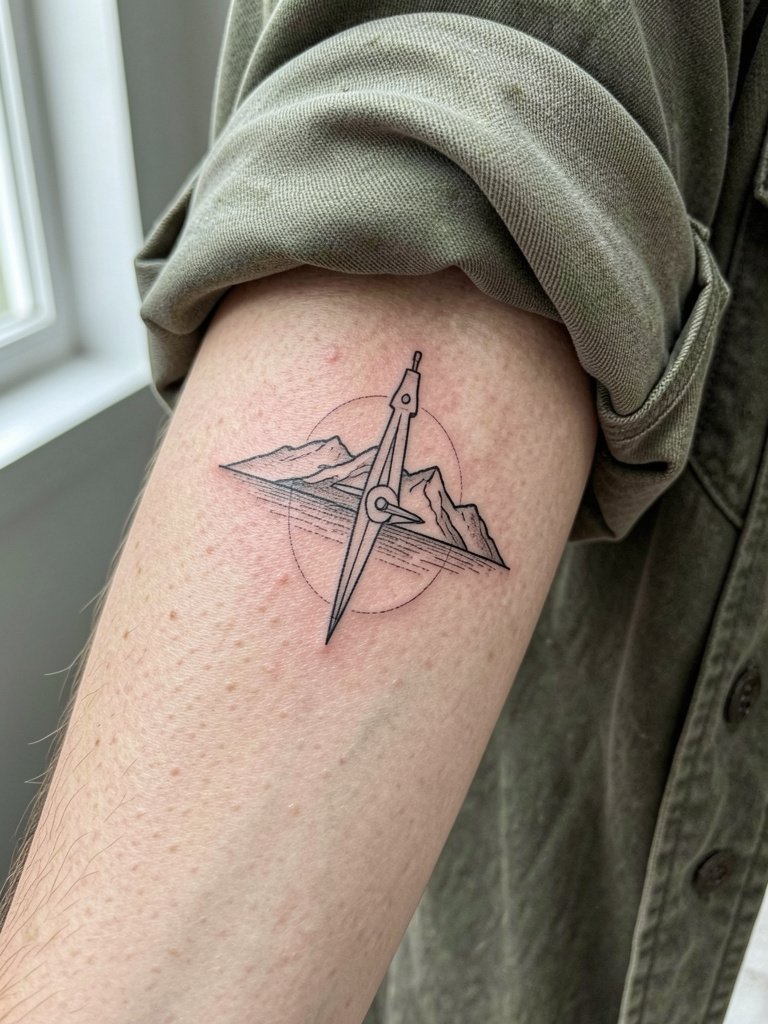
This links direction to the outdoors without nautical clichés. Be explicit about scale and whether the compass should sit on top of the landscape or be integrated with negative space. Small landscape texture ages faster than bold shapes, so reserve micro detail for areas larger than three inches. A two-hour session typically covers a medium forearm layout. Mistakes to avoid include over-texturing the mountains inside a small compass, which blurs into gray. For weekend looks, wear a rugged overshirt and cuff the sleeves to reveal the composition.
6. Compass with Banner Script on Upper Chest

A chest placement gives enough room for readable lettering and ornament. Choose a short, bold word and request spacing that keeps letters separate after healing. One group of artists favors banners and script to personalize the piece. Another group argues banners clutter the compass and suggest letting the compass stand alone. Expect a one to three hour session depending on lettering and shading. A frequent error is choosing overly ornate script that turns into a smear as the skin settles. For showing the chest piece, open a button-down or wear a wide-neck tee.
Session Essentials
The small wrist and forearm pieces above heal differently than heavier shoulder and chest work, so a few targeted supplies shorten the first week and protect crisp linework.
-
Aftercare balm stick. Lightweight balm texture keeps fine linework moisturized without suffocating single-needle detail, which helps the minimalist and coordinate pieces above.
-
Second-skin protective film strips. Useful for wrist and finger placements where friction from cuffs and watches is constant during the first 48 hours.
-
Lightweight healing salve. A thinner salve reduces the chance of clogged pores around densely inked traditional work on arms and shoulders.
-
Fragrance-free daily lotion. After scabbing clears, an unscented lotion preserves saturation without irritating sensitive skin near scripted banners.
-
Aquaphor healing ointment. A widely used option for the first 48 hours that many artists recommend for keeping linework supple before switching to lighter products.
7. Tiny Compass Behind the Ear

Tiny mastoid placements are discreet but demand simplification. Specify exact needle thickness and show the artist the exact millimeter size you want so the stencil matches reality. Those who favor very small single-needle accents praise their subtlety. Critics point out tiny work near hairlines can blur faster because the skin there shifts with hair movement. Expect a short 20 to 30 minute session and higher sensitivity than the forearm. A frequent mistake is packing in text or flourishes that are impossible at that scale. Keep hair tied or slicked up during the session.
8. Weathered Compass Rose in Black and Gray on Shoulder

Black and gray compasses are a go-to for longevity and masculine contrast. If you want weathering, request textured shading that reads as grain rather than micro lines that fuse. One camp prefers color accents for visual richness. Another camp recommends staying monochrome for durability. This placement tolerates stronger saturation and typically needs a two to three hour session depending on shading. A common error is using too many tiny gray washes that flatten over time. Show the piece with a sleeveless tank or open short-sleeve shirt.
9. Minimal Compass Needle on Wrist

Wrist compasses are discreet and intimate, but the wrist skin moves and sees a lot of friction. Ask for a compact design with bold central dot and slightly heavier needle so the core reads after washing and watch wear. Some artists push single-needle wrists for the aesthetic. Others warn the wrist eats fine detail and favor thicker anchor points. Expect a 30 to 45 minute sit that can be tender. The usual mistake is stuffing text or tiny flourishes into a one-inch area. During the session remove watches and bracelets, and afterwards style with a slim watch on the other wrist.
10. Compass with Mountain Silhouette on Calf
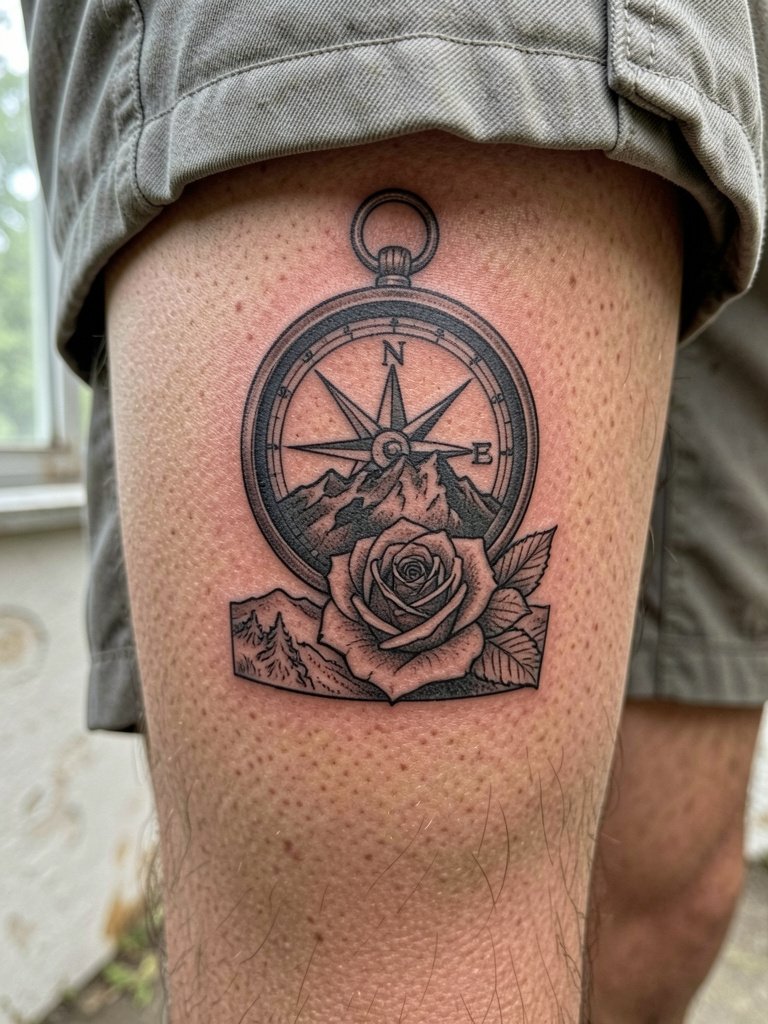
Leg placements allow narrative combinations without cluttering a small circle. Specify whether the compass should dominate or the landscape should be integrated as negative space. Small detailed landscapes that sit inside a compact compass are likely to blur faster than open silhouettes. Plan for a one to two hour session and moderate pain because muscle sits under the calf skin. A common error is asking for micro shading in a small area. For trail-ready outfits, show the piece with cropped pants or trail socks as the research wardrobe suggests.
11. Ornamental Compass with Floral Frame on Chest
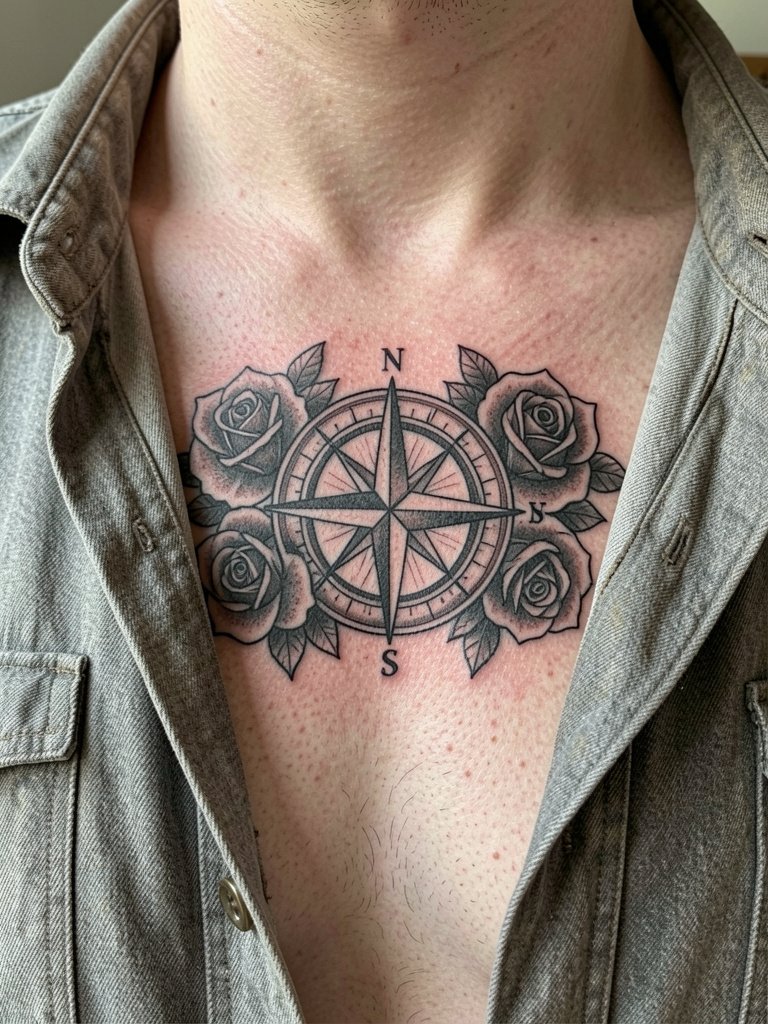
Floral framing softens the geometry and fills chest space elegantly. Decide whether flowers are decorative or symbolic and provide reference for scale and petal density. If the flowers are highly detailed and the compass small, petal detail will lose clarity. This placement usually takes two to three hours for medium composition. A common mistake is asking for ultra-fine petal veins inside a two-inch compass. For date nights, pair with an open-collar shirt or layered necklaces that keep the collarbone visible.
12. Blackwork Compass Rose with Weathering on Back of Shoulder

Bold blackwork reads from a distance and holds up well where skin stretches less. Tell the artist you want saturated fills with clean negative breaks so the weathering reads like texture rather than blotches. One camp champions black fills for durability. Another camp still favors gray shading for softer transitions. Expect two to three hours for a medium shoulder piece. Mistakes include uneven saturation that reveals patchy healed spots. This placement pairs well with muscle tanks or open short sleeves.
13. Compass Integrated into Sleeve Patchwork

If you plan a sleeve, make the compass a connective element rather than a final standalone. Bring reference sleeve photos and the dimensions of adjacent pieces so the artist can plan spacing and flow. A common mistake is treating a compass like a finished piece inside a patch sleeve without leaving breathing room for future fills. Session length varies depending on surrounding work. For showing the concept, wear a denim overshirt with the cuff rolled once.
14. Micro-Realism Compass with Map Lines on Inner Forearm

Micro-realism gives an elegant, personalized feel, but only on a slightly larger canvas. Ask for simplified map lines instead of dense cartography so the compass remains the focal point. The inner forearm displays detail well but be cautious about packing tiny hatch marks. Plan for a two to three hour session and expect touch-up possibilities after the first year. People often try to shove full map detail into a small piece and end up with muddy shading. For a clean look, pair with a lightweight overshirt and rolled sleeves.
15. Compass Needle Emblem on Upper Arm

A simple needle emblem reads as masculine and easy to integrate into future arm work. Specify the pivot size and distance between the directional ticks so the artist knows how much negative space you want preserved. Upper-arm skin holds saturation well and sessions run about one to two hours for medium size. The common misstep is choosing needle ticks that are too fine. For everyday style, vintage workwear tees and cuffed short sleeves put the emblem on display.
16. Compass with Ship Wheel Combo on Outer Upper Arm

This maritime combo strengthens the sailor narrative and fills upper-arm real estate nicely. Request a balance between the compass silhouette and the wheel spokes so both elements remain legible at distance. Some prefer color here to emphasize the nautical theme. Others prefer black and gray for longevity. Expect two to four hours for a larger multimedia composition. Avoid tiny rope textures that blur. This design looks right with a vintage tee and cuffed sleeve.
17. Geometric Compass Band Around Wrist

A compass band reads like a piece of wrist jewelry and can act as a subtle anchor. Give the artist the exact wrap length you want so the pattern does not bunch when you flex your wrist. The wrist moves a lot, so this needs slightly bolder line weight than a static forearm piece. Sessions are 45 to 75 minutes. Common mistakes include making the band too thin, which leads to early loss of definition. Wear a thin chain or minimalist watch on the opposite wrist for balance.
18. Compass with Wave Accents on Calf
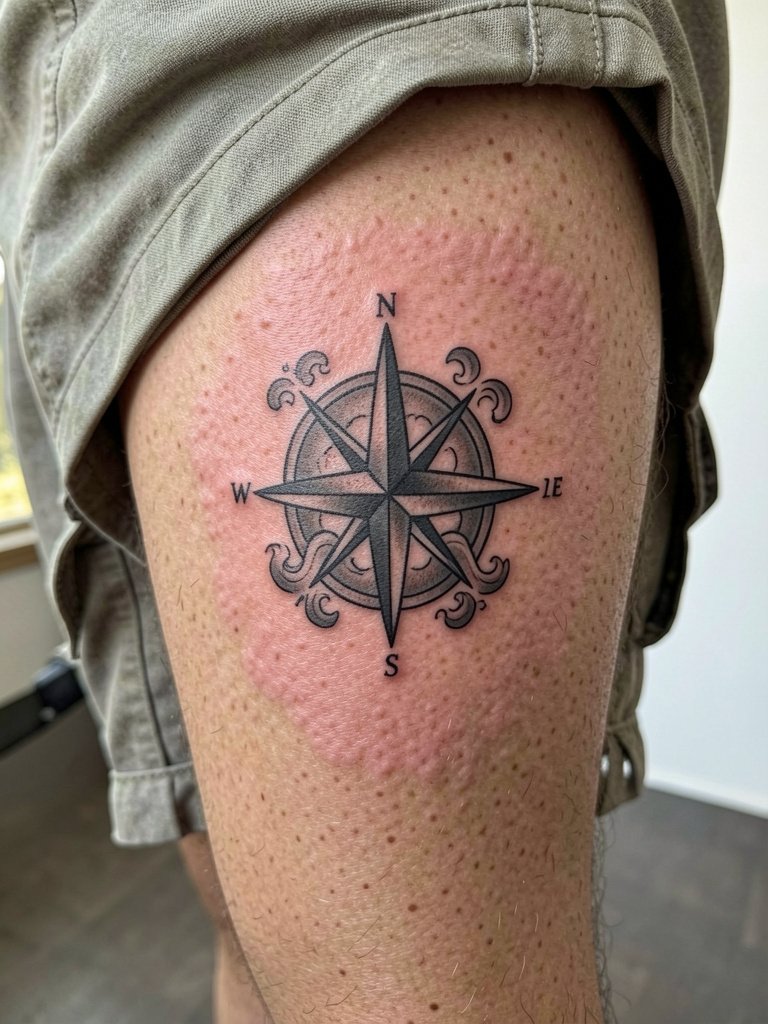
Wave accents modernize nautical compasses without full sailor clichés. Specify how much negative space you want between waves and the compass so both elements remain readable as the piece ages. Calf placement lets you use medium detail without crowding. A one to two hour session is typical. People sometimes over-ornament the ring around the compass, which compromises silhouette. For off-duty looks, pair with cropped pants or clean sneakers.
19. Minimal Compass in Geometric Frame on Shoulder

Geometric frames give a modern structure to a small compass and make it feel intentional rather than decorative. Tell the artist if you want the frame to dominate or act as a subtle border so they can proportion the negative space. Shoulder skin is forgiving for saturation and usually handles one to two hour sessions well. A common error is making the frame too thin, which fades unevenly. Pair this with muscle tanks or open short-sleeve shirts.
20. Compass with Route Line and Pin on Outer Forearm

Route lines turn the compass into a map for a trip or memory. Bring the exact route reference and specify how many turns you want shown because small kinked lines can blur over time. The outer forearm supports this narrative detail in a one to two hour session. A frequent mistake is adding too many tiny labels that become illegible. Style with denim jackets and rolled cuffs for a travel-ready look.
21. Small Compass with Rose Petal Accents on Upper Chest
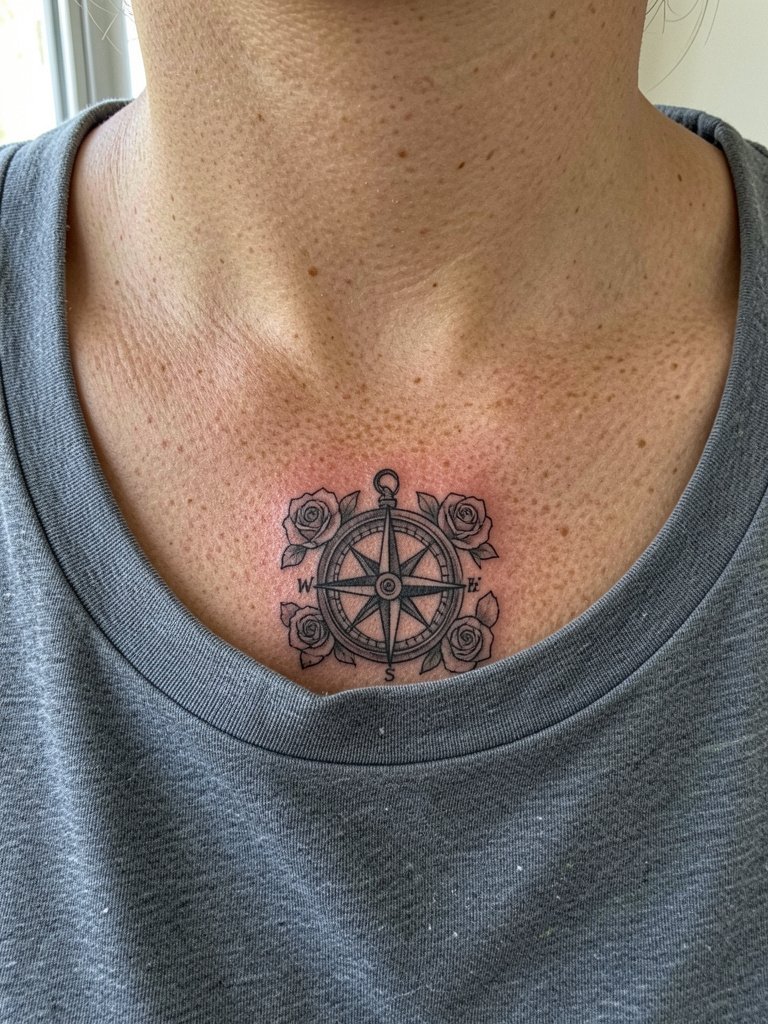
Small decorative accents give the chest piece a jewelry-like feel. Be precise about petal density so the floral elements do not overcrowd the compass. Chest skin varies, so request a slightly bolder outline for the compass to maintain readability. Sessions are typically 45 to 90 minutes. A common error is asking for too many color transitions in a tiny area. Wear open-collar shirts or wide neck tees to let the piece breathe.
22. Negative-Space Compass on Ribcage

Rib placements are visually striking but sensitive and variable during healing. Artists are split on fine-line ribs. One camp says the stretching and movement smear fine lines within two years. The other camp argues that with proper needle depth and slightly wider spacing, fine line settles fine and shows strong healed results. If you choose ribs, plan for longer sessions and consider numbing options because pain there rates high. Avoid overcomplicating the negative-space shapes in a small area. This placement needs an experienced hand and careful pacing across sessions.
23. Pocket Compass on Hip

Hip compasses are intimate and show when you choose to reveal them. Request the exact placement relative to the waistband during consultation so the piece does not sit where clothing rubs it constantly. The hip heals well but experiences friction from low-rise jeans. Expect a one to two hour session and moderate discomfort. A common mistake is placing it too close to the waistband where constant rubbing delays healing. For sessions wear low-rise pants or shorts that do not press on the area.
Frequently Asked Questions
Q: How do I choose between fine line and bold line for a compass?
A: Think about longevity and scale. Fine line looks modern on paper but needs room and slightly heavier contouring to avoid early blur. Bold line sacrifices subtlety for clarity and tends to read better at five years, especially on wrists and forearms.
Q: Where can I find good healed photos and local portfolios without naming artists directly?
A: Search Instagram and TikTok tags for healed work and use city filters, for example try hashtags like #compasstattooideas and #forearmtattoo plus your city name. Reddit communities dedicated to tattoos often include healed photos and user feedback. Look for portfolios that explicitly show healed shots not just fresh photos.
Q: Will a small compass on the wrist or finger need touch-ups sooner than a shoulder piece?
A: Yes, small extremity pieces generally require touch-ups earlier because of friction and sun exposure. Expect a single touch-up within one to three years for many fine-line wrist pieces, depending on sun use and skin type.
Q: What should I wear to my appointment for a forearm or shoulder compass?
A: For forearm work wear a short-sleeve tee or a rolled sleeve shirt so the artist has clear access. For shoulder or chest pieces choose a tank or open-collar shirt that you can remove or shift without tugging.
Q: Do color compasses last as long as black and gray?
A: Color can look great initially but often requires more maintenance because pigments fade differently. Many people choose black and gray for compact compass work for durability, and add selective color accents only where the skin and scale can support it.