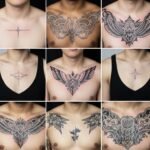
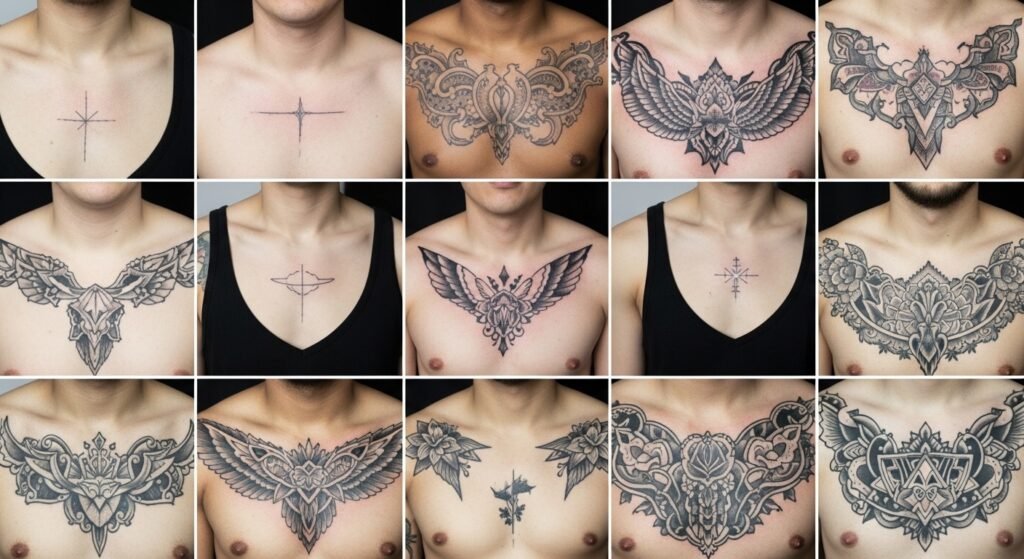
I spent months staring at chest tattoo galleries before I realized the real problem: knowing which styles actually age well on my chest shape. These 26 ideas pull from what I’ve seen on artists’ portfolios and recent 2026 trends—styles that read powerful on the pecs, work with muscle movement, and still look good healed.
Eagle Chest Tattoo — American Traditional Full Chest
Style/Technique: American Traditional / Bold Lines
Pain Level: Medium (pecs)
Session Time: Multiple sessions
Best For: Statement chest piece, accentuates muscle
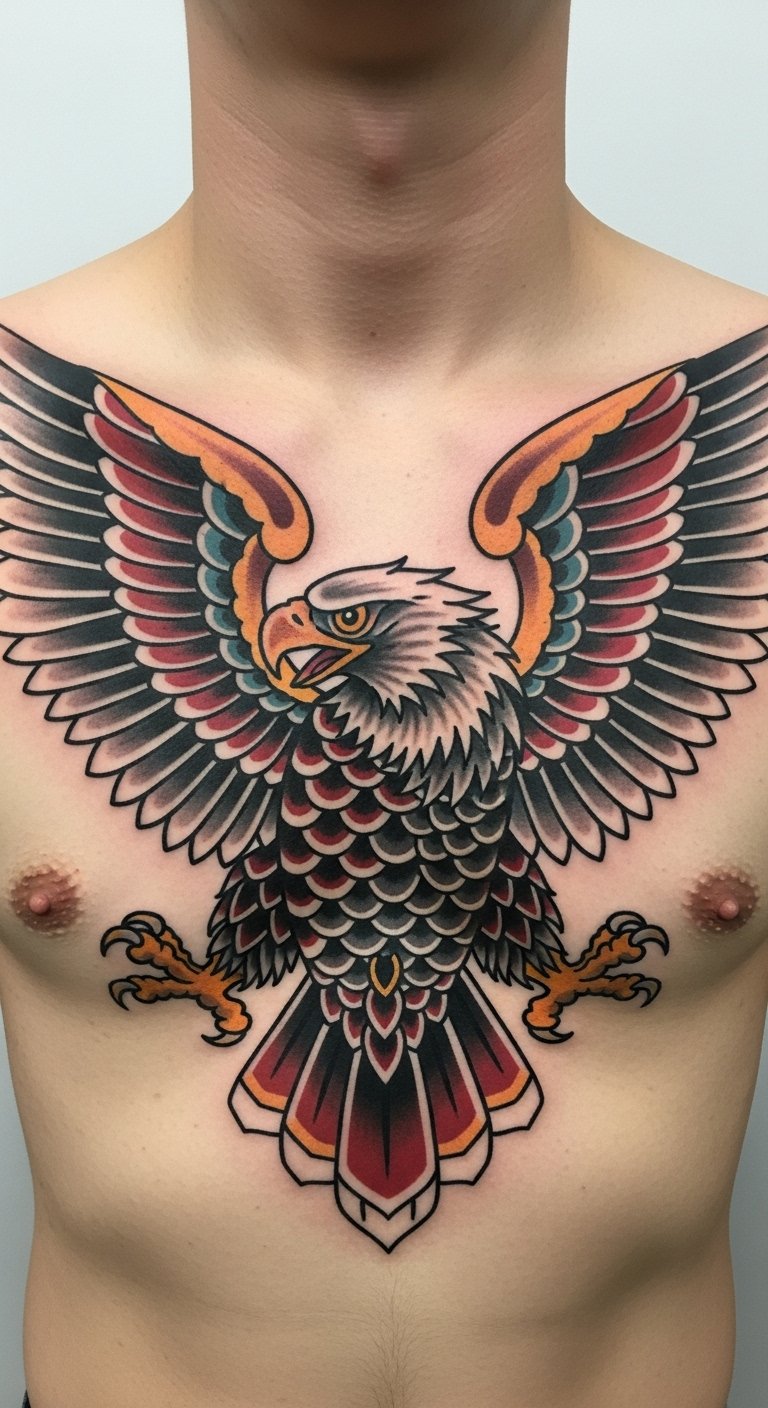
I picked this first because eagles read as strength and freedom and they sit naturally across the sternum and pecs. Traditional linework plays with chest curves so the wings accent collarbones. Expect moderate pain on the pec and longer work time for symmetry. Heals predictably—bold outlines age best. Common mistake: shrinking the design too small for the canvas. Ask for portfolio examples of healed chest pieces and an artist experienced in symmetry.
Wings Along Collarbone — Blackwork or Traditional Upper Chest
Style/Technique: Blackwork / Traditional
Pain Level: Low-Medium (near collarbone can sting)
Session Time: 1–3 sessions
Best For: Protective aesthetic, collarbone accent

Wings that follow the collarbones give a dynamic, protective look. Blackwork keeps the contrast strong on darker skin tones; color wings pop on lighter tones. Collarbone areas vary in pain—crease near bone is sharper. For longevity, request strong, slightly heavier lines so the feathers don’t blur with time. Avoid overly thin feather lines.
Lion Chest Tattoo — Realism Neo‑Traditional Pectoral
Style/Technique: Realism / Neo‑Traditional
Pain Level: Medium
Session Time: Multiple sessions for detail
Best For: Masculine symbolism, center-left/right pec
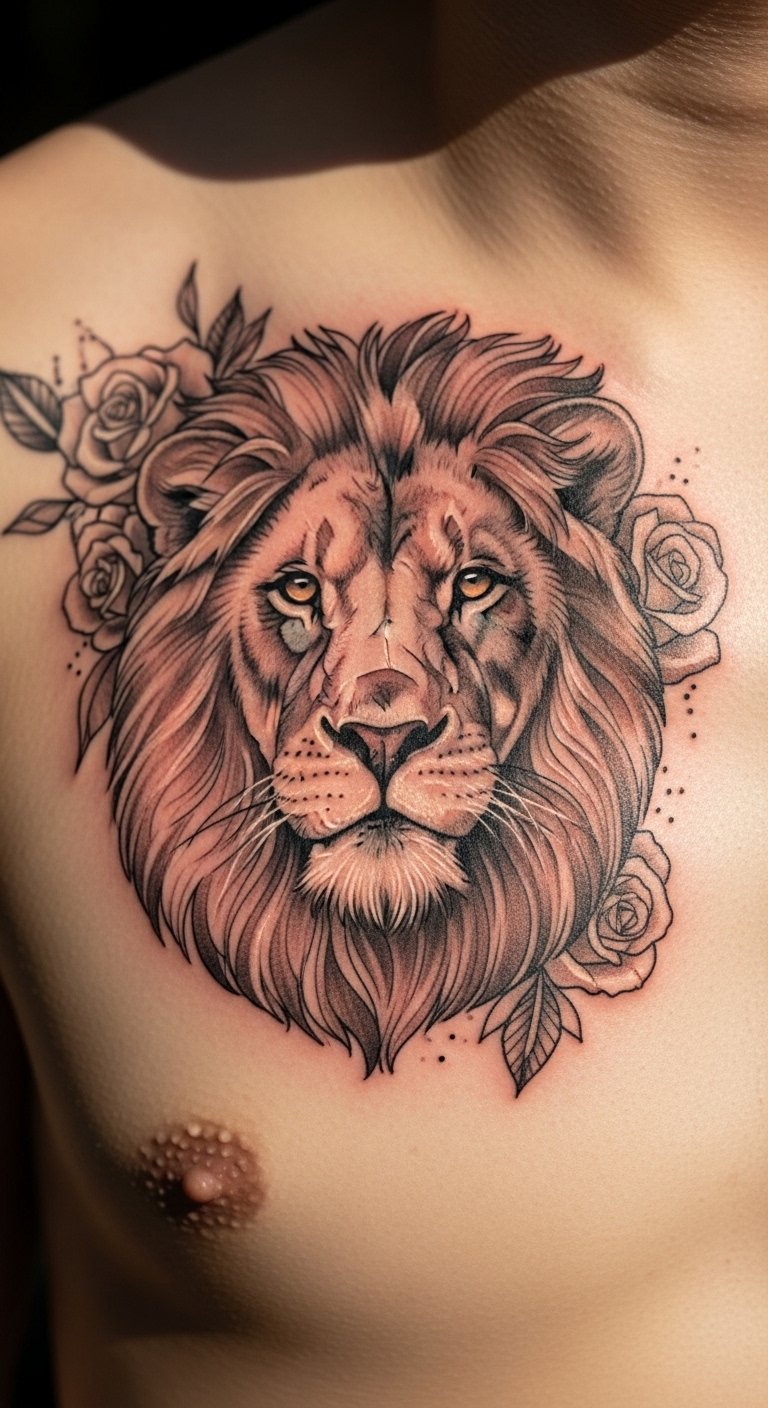
A lion chest tattoo says bravery and command. Placing it on a single pec or centered across the sternum gives different vibes—single pec feels fierce; centered feels regal. Realism needs an artist skilled in skin tone shading and healed examples. Expect longer sessions; healing shows gradual brightening after a few months. Don’t rush color saturation—too bright upfront looks patchy once healed.
Tiger Chest Tattoo — Vibrant Realism Across Upper Chest
Style/Technique: Realism / Traditional Mash‑Up
Pain Level: Medium
Session Time: Multiple sessions
Best For: Bold, muscular chest accent
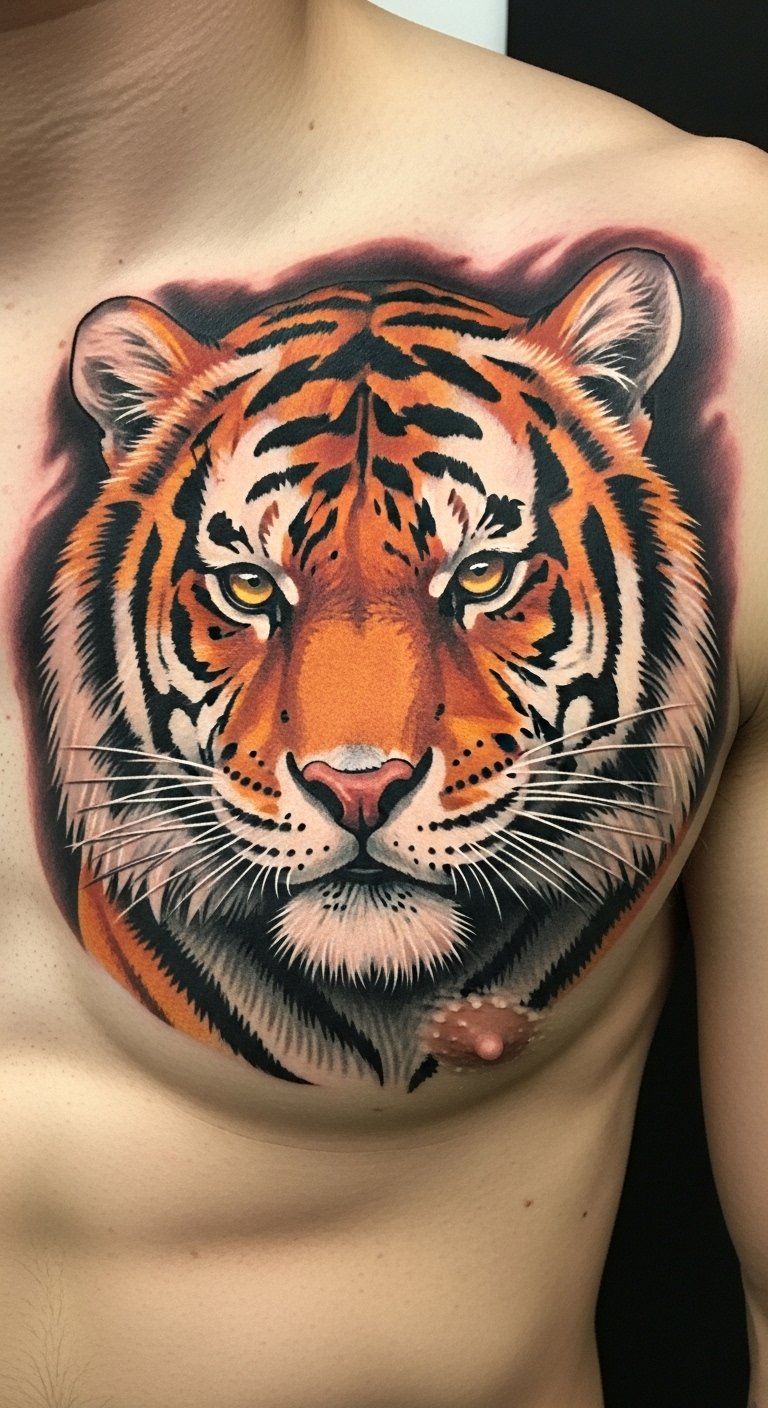
Tiger designs hug chest contours and emphasize strength. Color variants age differently—black/gray stripes hold longer than bright oranges without strong saturation. The trick is letting the tiger’s lines follow muscle movement so it looks alive when you flex. Ask to see healed color work on similar skin tones.
Skull Chest Tattoo — Black & Gray Center Chest
Style/Technique: Blackwork / Neo‑Traditional
Pain Level: Medium
Session Time: 1–3 sessions
Best For: Meaningful, bold center piece

Skulls portray mortality and defiance. Center-chest skulls pair well with roses or clocks for meaning. Black-and-gray shading holds up well on the chest when artists use contrast rather than tiny dots. Pain is bearable on muscle but sharp near the sternum. Avoid excessive tiny stippling that can blur; request bold values for longevity.
Skull with Rose — Neo‑Traditional Full Chest Contrast
Style/Technique: Neo‑Traditional / Color or B&W
Pain Level: Medium
Session Time: Multiple sessions
Best For: Meaningful chest statement

Combining skulls and roses gives contrast—mortality and beauty. It fills the chest well and can be balanced across shoulders. Rose petals can be used to frame and soften heavy skull shading. Colors may subdue over years; ask about healed examples. Common mistake: over-detailing petals with thin lines that fade.
Lion/Wolf Combo — Symmetric Realism Center Chest
Style/Technique: Realism / Symmetry
Pain Level: Medium
Session Time: Multiple long sessions
Best For: Bold center or mirrored pectoral work
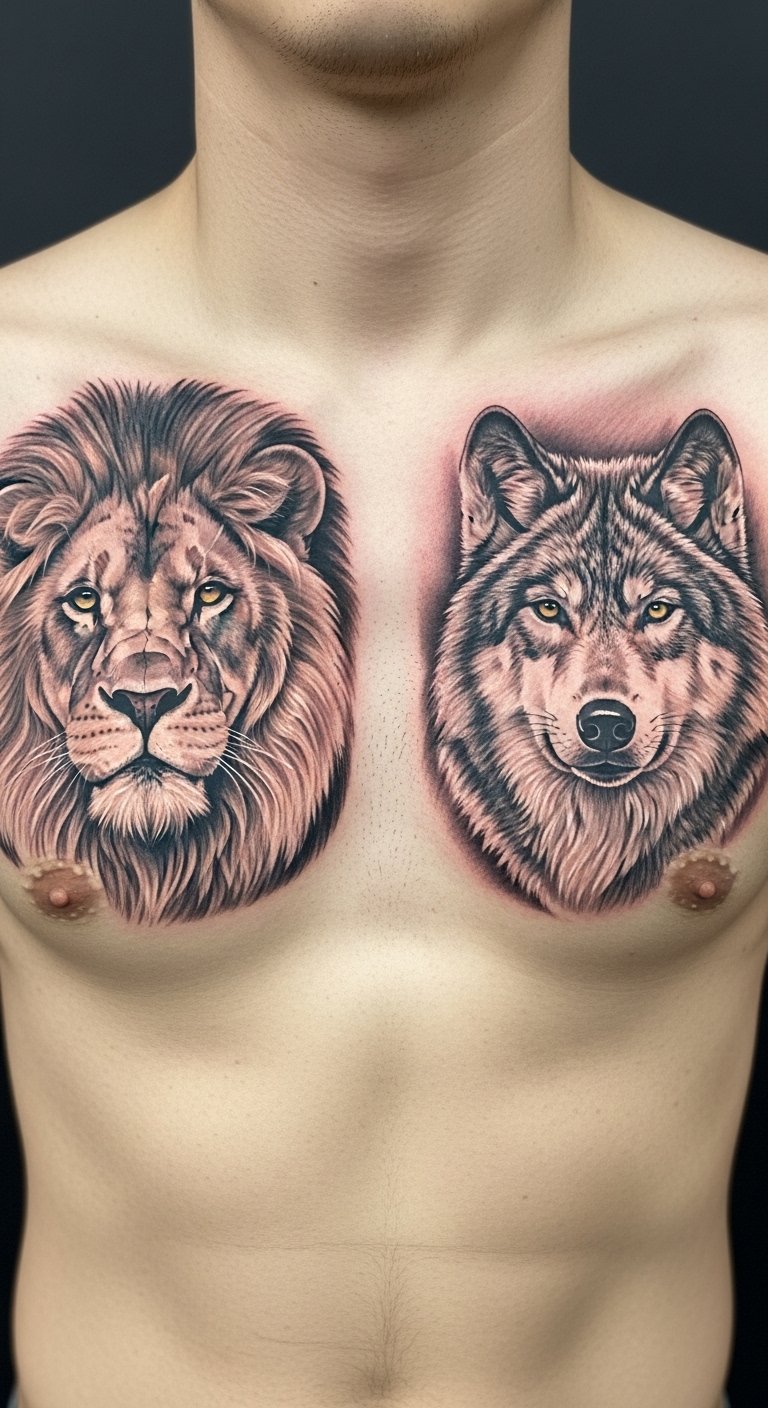
Pairing lion and wolf gives layered symbolism—leadership and pack loyalty. Mirrored placement naturally emphasizes chest symmetry. Realism requires an artist who photographs and shows healed images. Pain and healing are similar to large pectoral pieces—expect peeling and dullness before full maturation.
Bear Chest Tattoo — Realism Center Chest Protector
Style/Technique: Realism / Black & Gray
Pain Level: Medium
Session Time: 1–3 sessions
Best For: Protective, rugged chest piece

I like bear tattoos for a protective vibe. Center-chest placement reads strong on the torso and works with short hair or bare chest styling. Heavy contrast helps maintain form as skin ages. Avoid overly fine fur detail that blurs—ask the artist for bold texture techniques.
Geometric Chest Mandala — Blackwork Full Chest
Style/Technique: Geometric / Blackwork
Pain Level: Low-Medium
Session Time: 2–4 sessions
Best For: Timeless symmetry, larger chest canvas
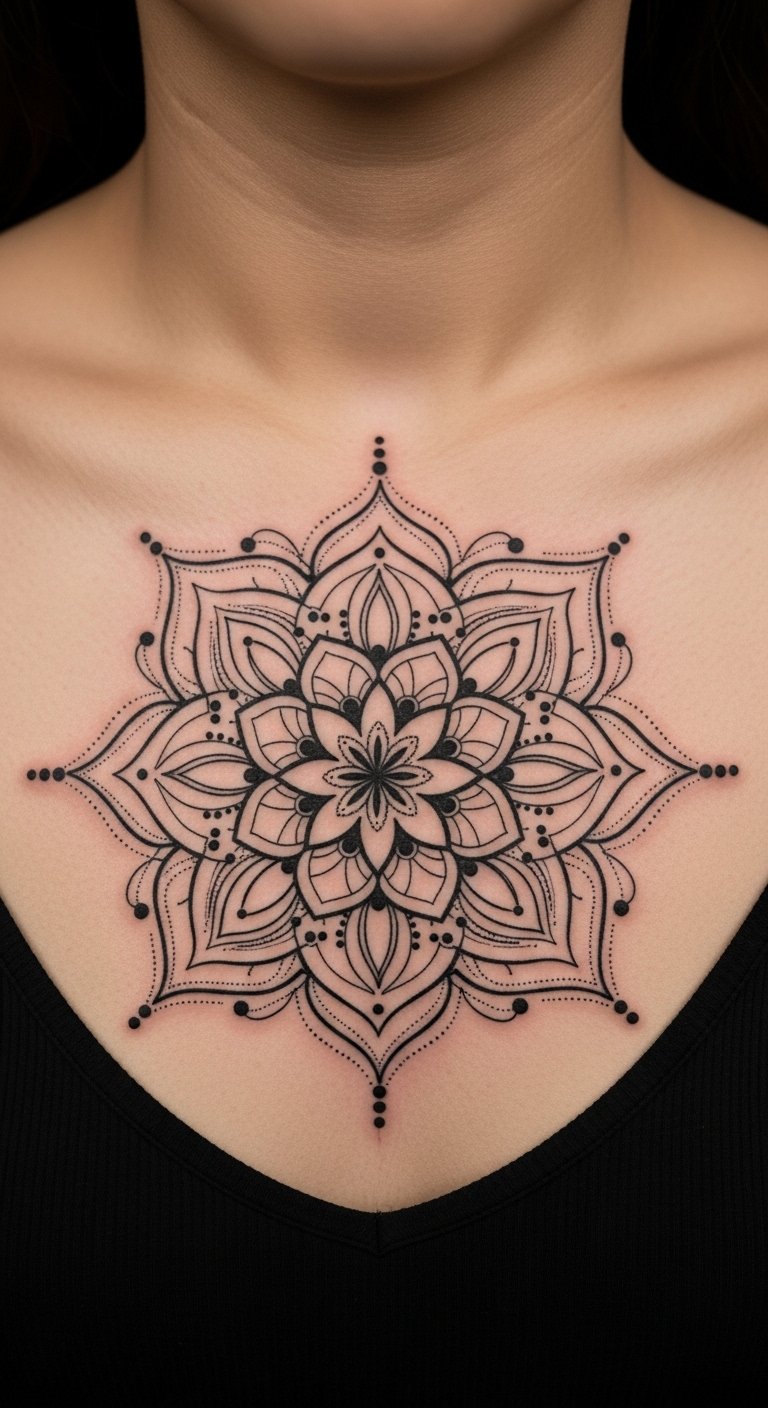
Geometric patterns bring abstract balance to the chest. Symmetry looks deliberate on the sternum area. Precision matters—pick an artist with geometric blackwork healed photos. Pain is moderate; dotwork shading near ribs increases discomfort. The biggest mistake is poor centering—insist on careful stenciling.
Fluid Abstract Tattoo — 2026 Style Upper Chest
Style/Technique: Fluid / Abstract / Watercolor Mash‑Up
Pain Level: Low-Medium
Session Time: 2–3 sessions
Best For: Modern, movement-focused chest art
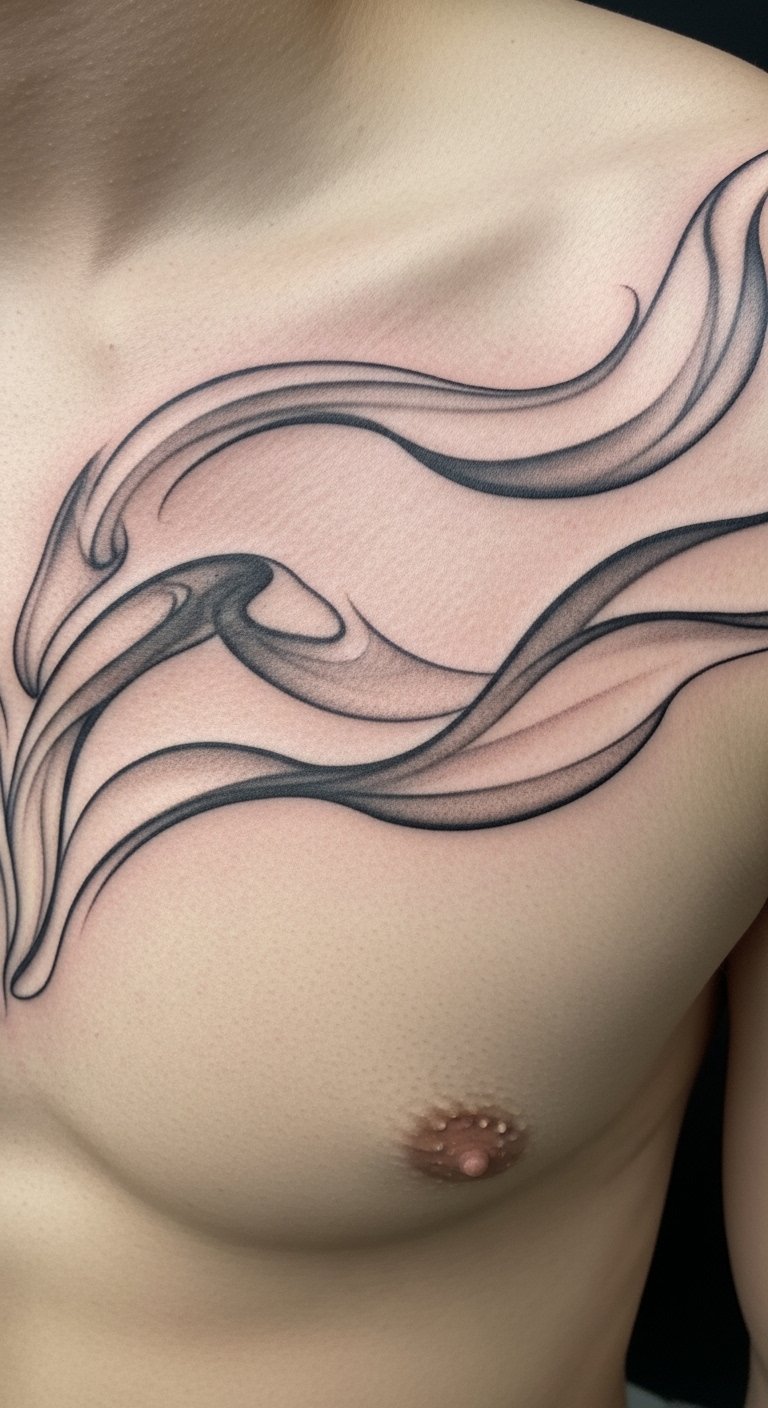
Fluid tattoos are trending for chest pieces because they move with muscle. They read emotional and modern—great if you want something unique without literal symbolism. Healing can make subtle color blends look muted temporarily; they brighten as skin settles. For longevity, ask the artist about contrast points so the piece doesn’t wash out.
Minimalist Fine Line Center Chest — Small Statement
Style/Technique: Fine Line / Minimalist
Pain Level: Low (pec)
Session Time: 1 session
Best For: First chest tattoo, subtle upper chest
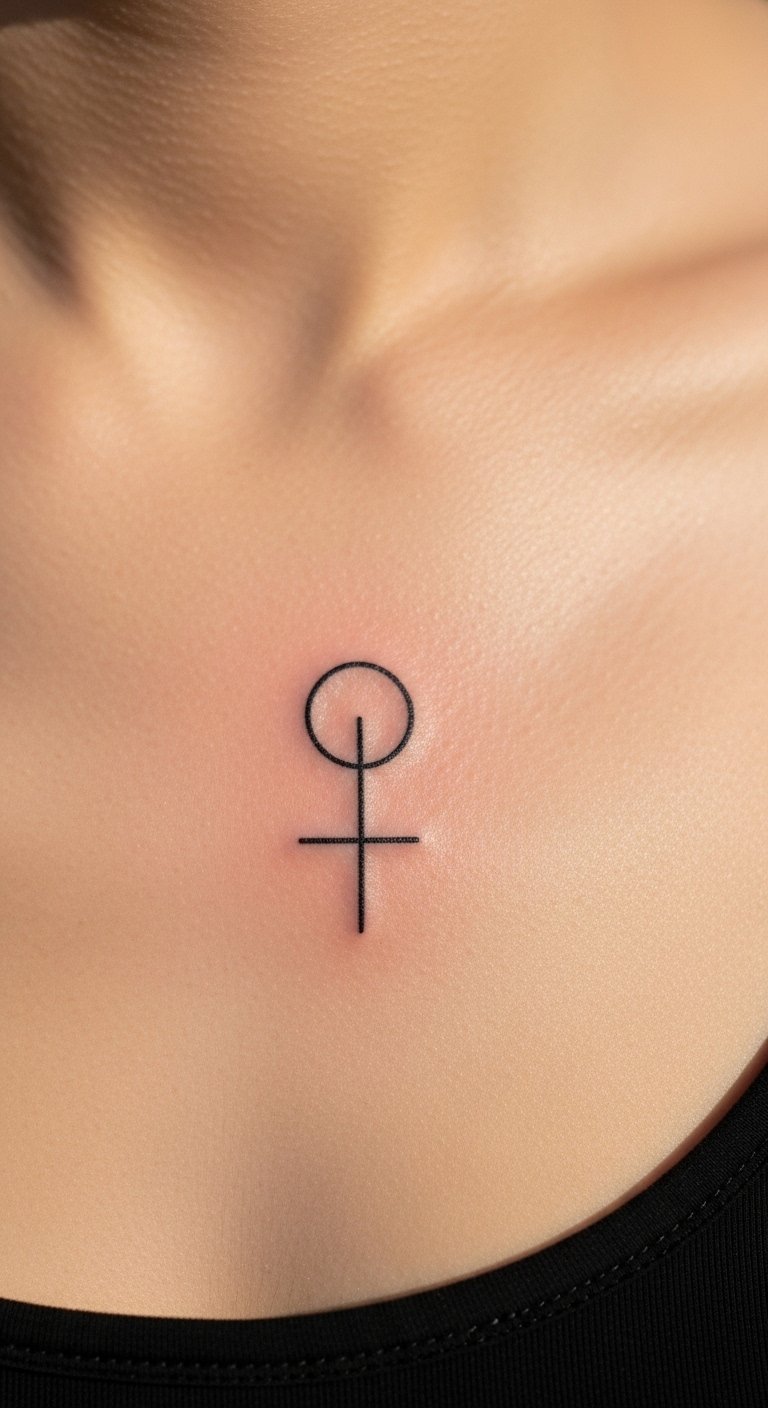
Fine-line chest tattoos are elegant and age well when done by experts. On the chest, a small, centered piece reads intentional. Fine needles require slow hand and healed examples—thin lines can blur if done too small. Best for first-timers who want a low-commitment chest presence.
Botanical Realism on Pec — Floral Pectoral Detail
Style/Technique: Realism / Botanical
Pain Level: Medium
Session Time: Multiple sessions
Best For: Meaningful, detailed pectoral work
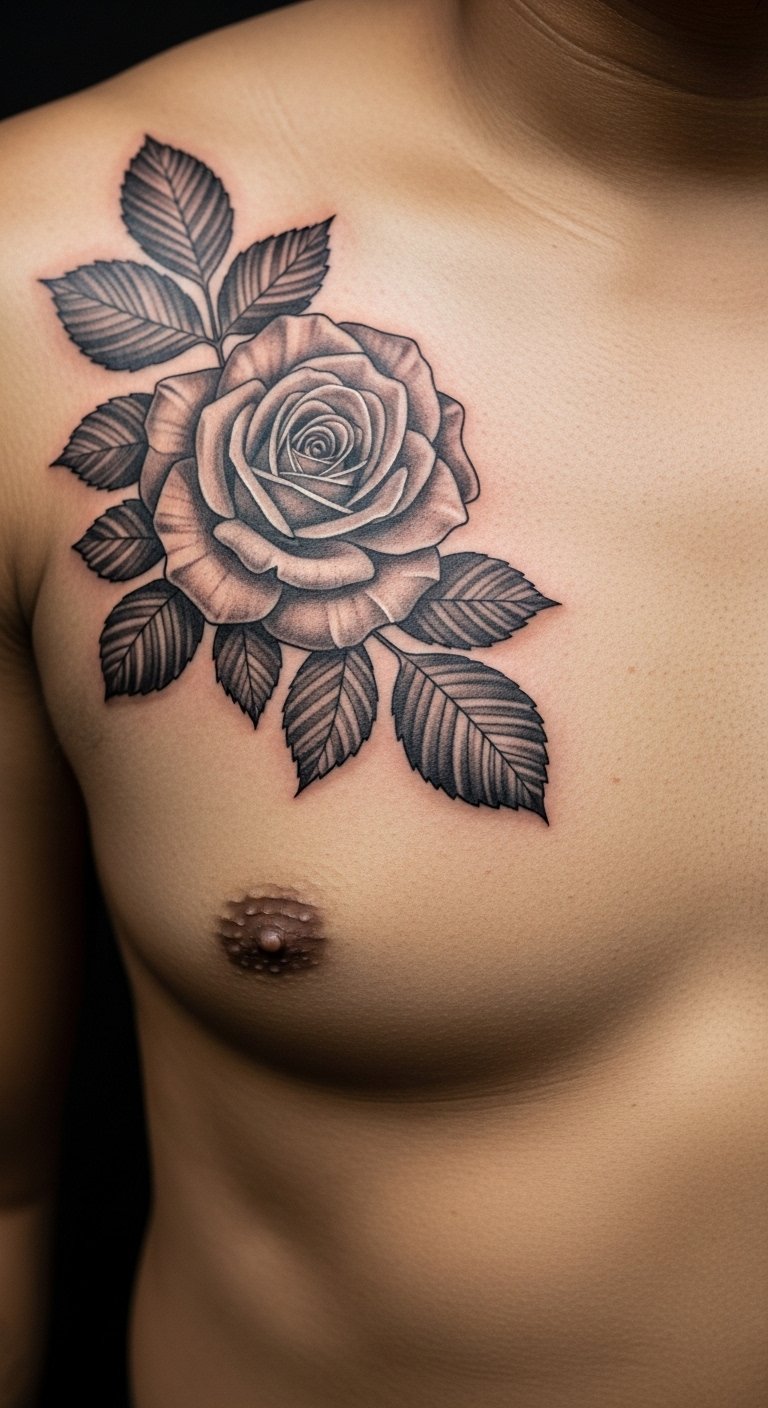
Hyper-detailed flowers on the pec create a lifelike softness against muscular form. Botanical realism pairs well with other chest pieces or as a stand-alone statement. Expect several sessions for shading. Colors may appear muted while healing; they deepen after full recovery. Avoid tiny, hairline veins that can blur—ask for bold petal edges.
Chest Piece Full Torso — Bold Chest-to-Torso Integration
Style/Technique: Any / Large‑Scale
Pain Level: Variable (includes ribs)
Session Time: Multiple long sessions
Best For: Cohesive, long-term collectors
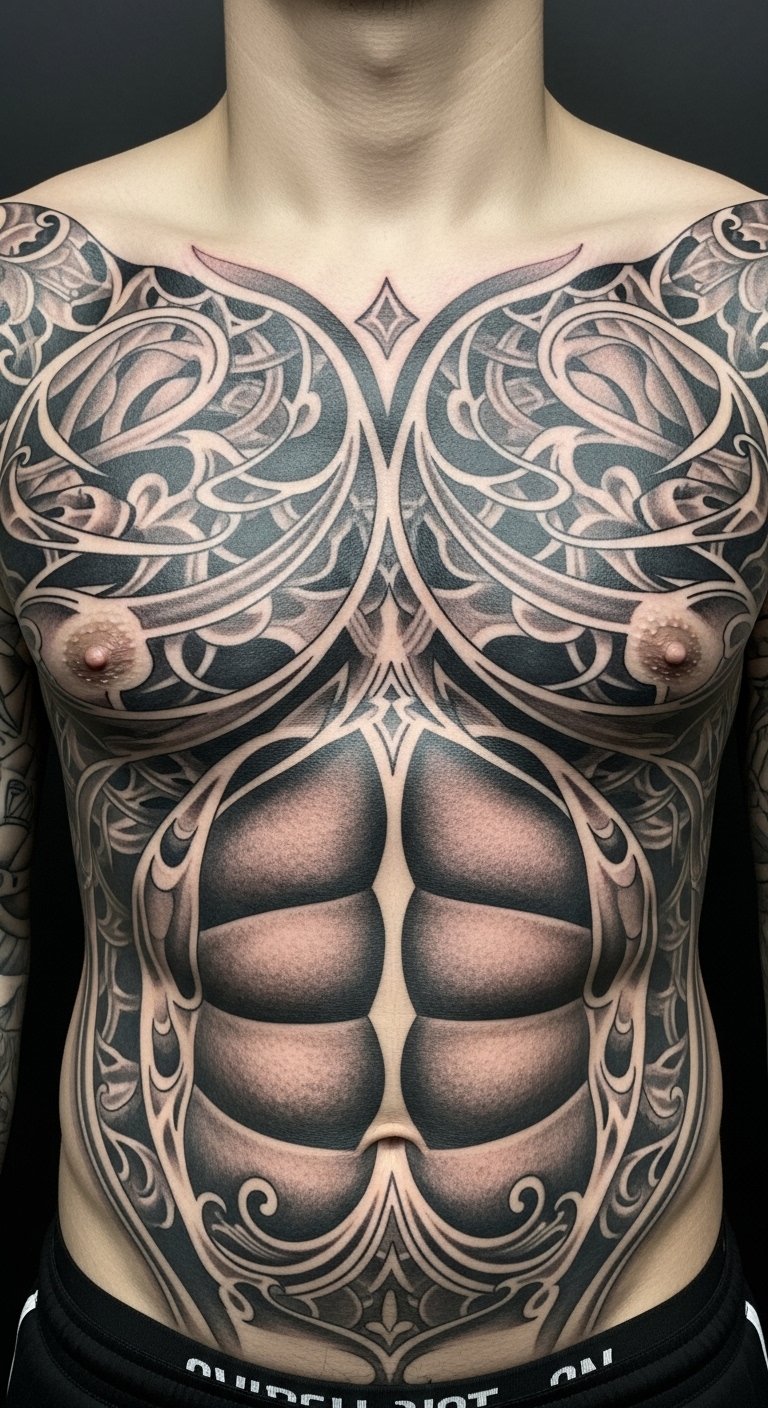
A full chest piece is for commitment—these read like armor. I recommend staging it and testing pain tolerance with smaller pec work first. Cohesion matters: plan how it will extend to shoulders or ribs. Ribs are high pain; integrate them gradually. Healed photos are essential to set expectations.
Pec Tattoo Integration — Shoulder/Half-Sleeve Extension
Style/Technique: Traditional / Blackwork
Pain Level: Low-Medium (pec/shoulder)
Session Time: 1–3 sessions
Best For: Completing sleeves, cohesive patchwork
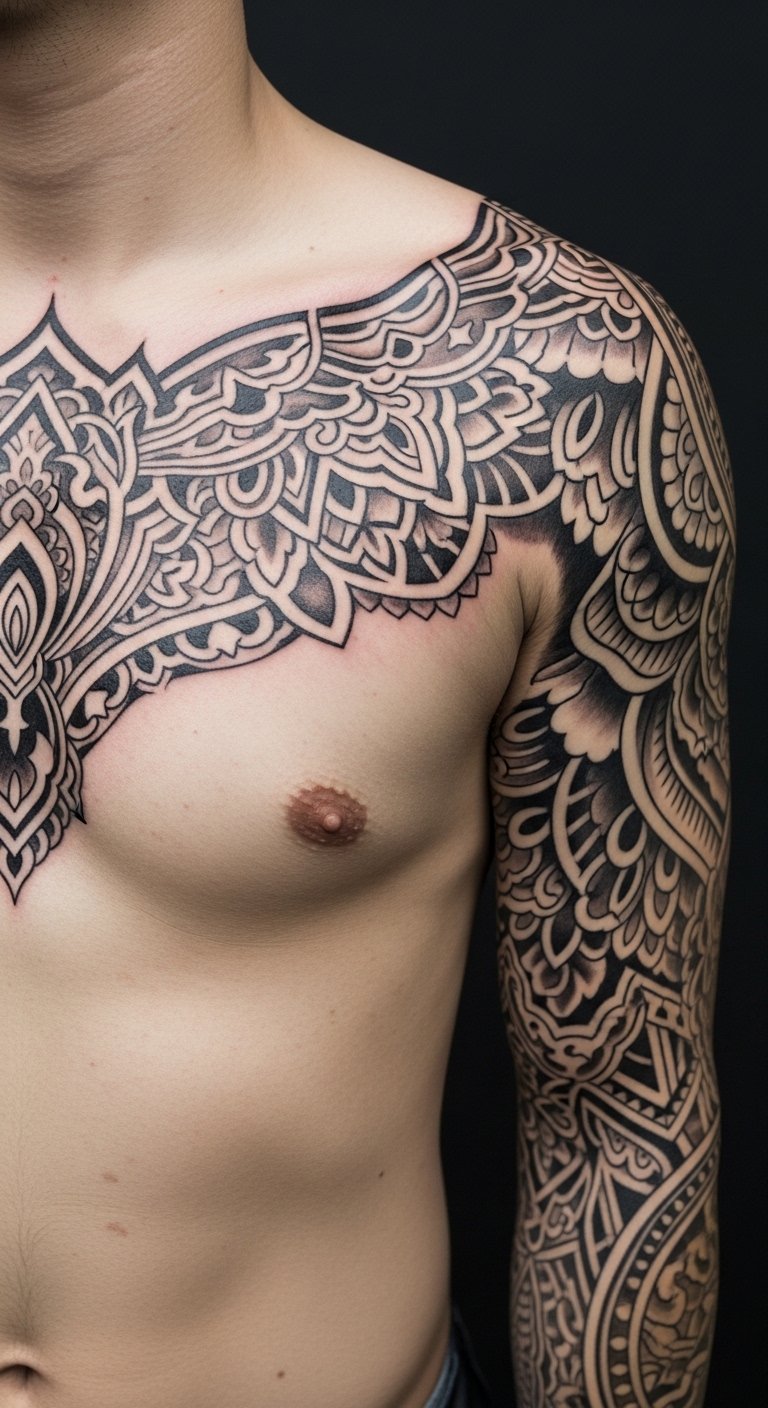
Pec integration completes an arm or shoulder collection. The chest is a great bridge for sleeves, and traditional flash works well here. Make sure lines flow with muscle and that stencil placement is tested with movement. This reduces placement regret later.
Sternum Geometric Symmetry — Blackwork Over Sternum
Style/Technique: Geometric / Fine Line Blackwork
Pain Level: Medium-High (sternum sensitivity)
Session Time: 1–2 sessions
Best For: Centered, symbolic chest marks
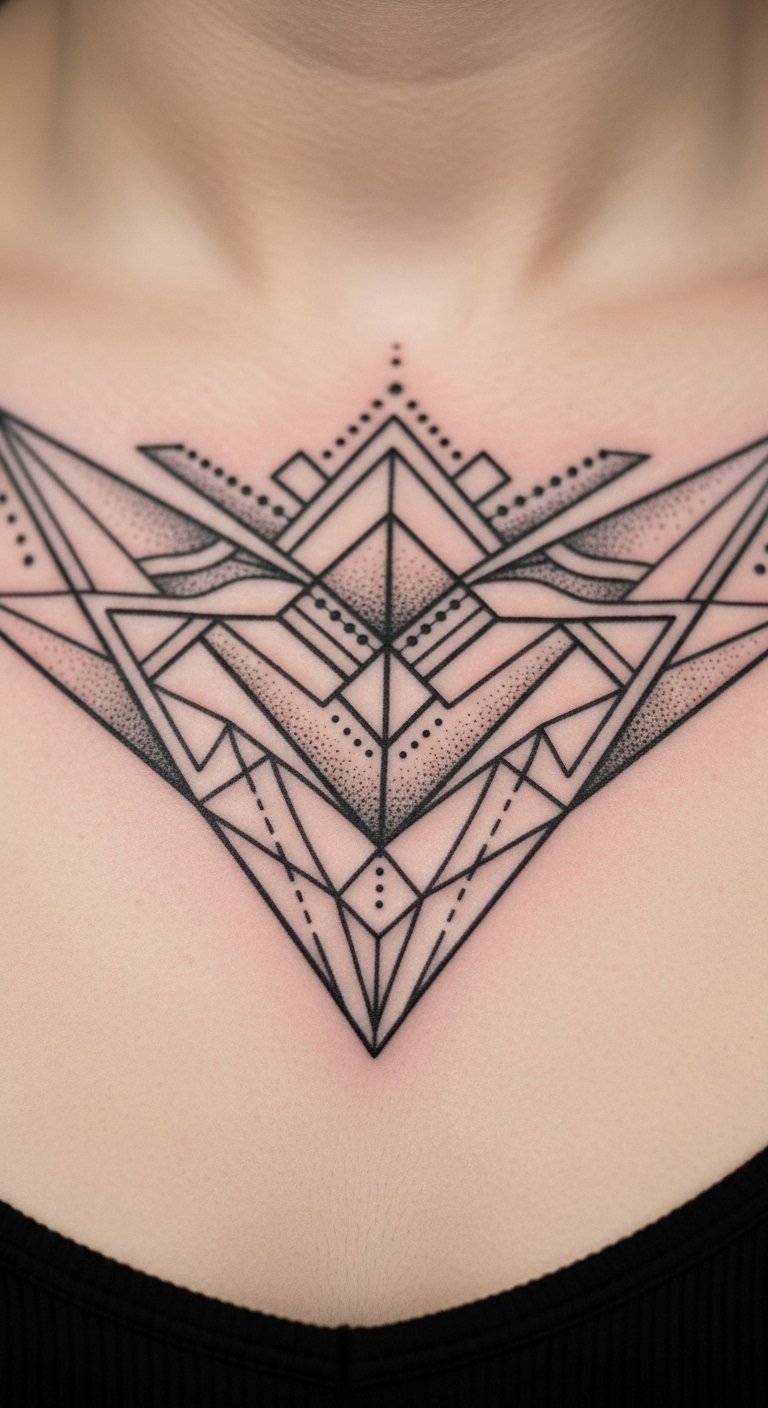
Sternum pieces demand precision and can be more painful near bone. When done right, they offer a striking, timeless look. Ask for healed work to understand how fine lines settle in this spot. Avoid over-fine subdivisions that blur.
Ribcage Integration Flowing to Chest — High‑Impact Curve Work
Style/Technique: Mixed Styles / Flowing Composition
Pain Level: High (ribs)
Session Time: Multiple sessions
Best For: Dramatic, cohesive torso pieces
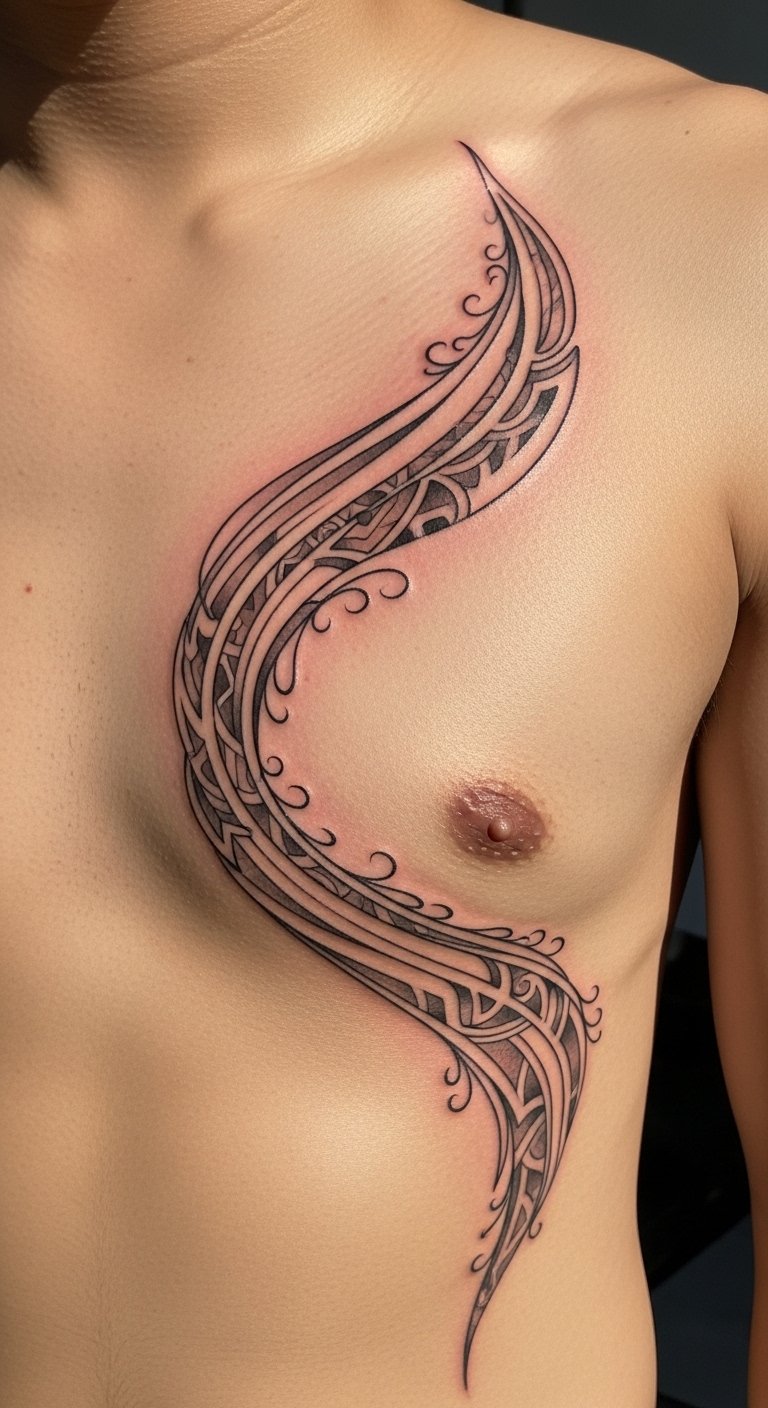
Blending ribs into chest art creates seamless flow, but ribs hurt. I recommend spacing sessions and using Saniderm for large heals. The payoff is continuity—designs look intentional and bold when healed. Plan placement carefully with movement mockups.
Women’s Face Portrait — Dark Shading on Men’s Chest
Style/Technique: Portrait / Dark Shading
Pain Level: Medium
Session Time: Multiple detailed sessions
Best For: Personal portrait, dramatic chest art

Portraits on the chest can be powerful—especially when artists use dark shading for contrast on masculine forms. Find an artist with portrait healed shots on similar tones. Common mistake: low-contrast portraits that flatten—insist on strong values.
Blackout Chest Panel — Bold Coverage Over Pec
Style/Technique: Blackout / Bold Blackwork
Pain Level: Medium-High
Session Time: Several sessions
Best For: Dramatic, muscle-accentuating statement
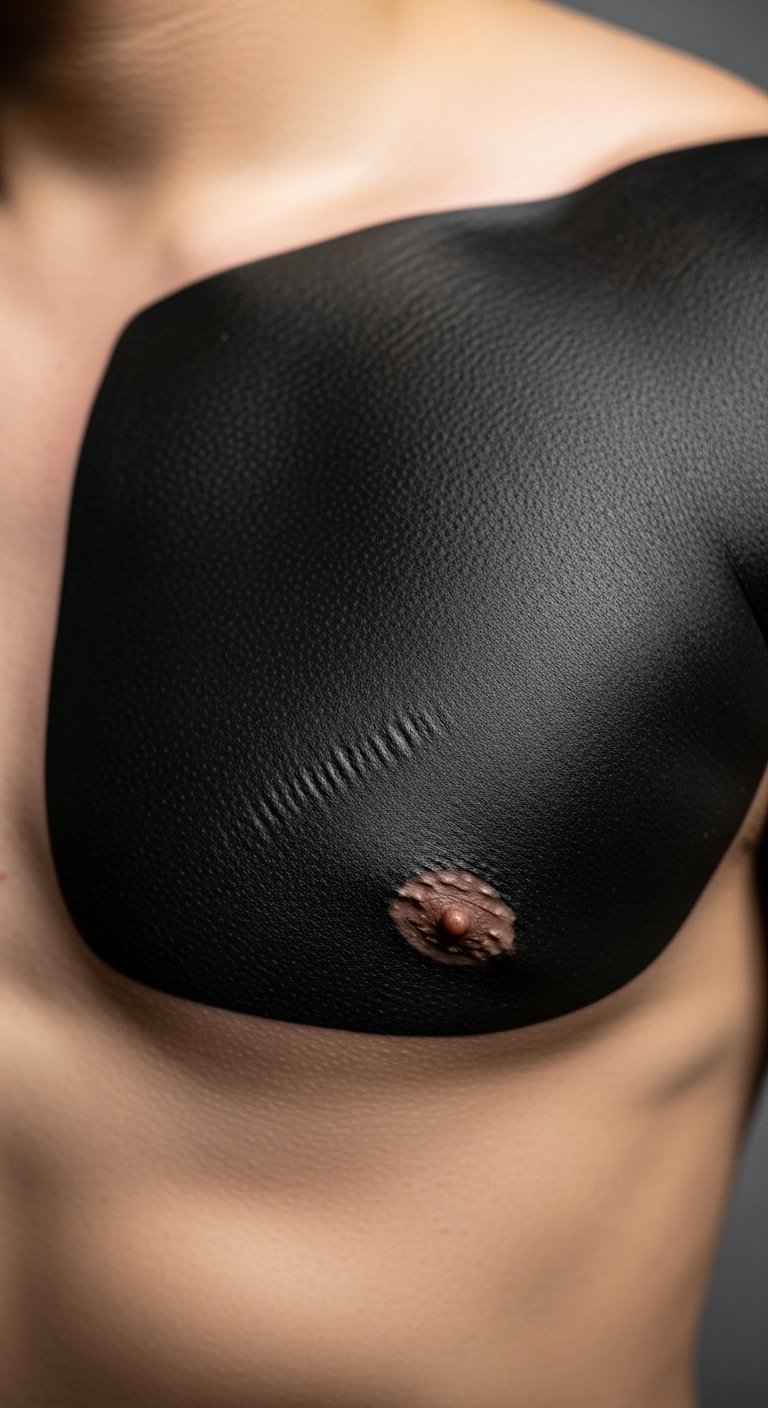
Blackout pieces read dramatic and can accent muscle shape. They require aftercare discipline to prevent patchy heals. Discuss scarring risk and layering with your artist. Blackout ages differently—touch-ups are common but bold black remains legible.
Minimalist Lettering Upper Chest — Clean Script
Style/Technique: Fine Line / Lettering
Pain Level: Low (upper chest)
Session Time: Single short session
Best For: Short quotes, personal affirmations

Clean, minimalist text across the upper chest reads intimate. Keep lettering short and choose type that holds as skin moves. Fine-line script requires an experienced hand—ask for healed script examples to confirm long-term legibility.
Neo‑Traditional Compass or Map — Center Chest Navigation
Style/Technique: Neo‑Traditional / Symbolic
Pain Level: Medium
Session Time: 1–3 sessions
Best For: Meaningful travel or direction symbolism

A compass or map motif conveys direction and purpose. Neo‑traditional styling makes it masculine and legible. Center placement works well for symmetry. For healing, bold outlines and solid fills keep the symbol clear over time.
Anchor / Maritime Traditional — Left Pec Feature
Style/Technique: Traditional / Nautical
Pain Level: Low-Medium
Session Time: 1 session
Best For: Timeless chest accent, classic men’s tattoo
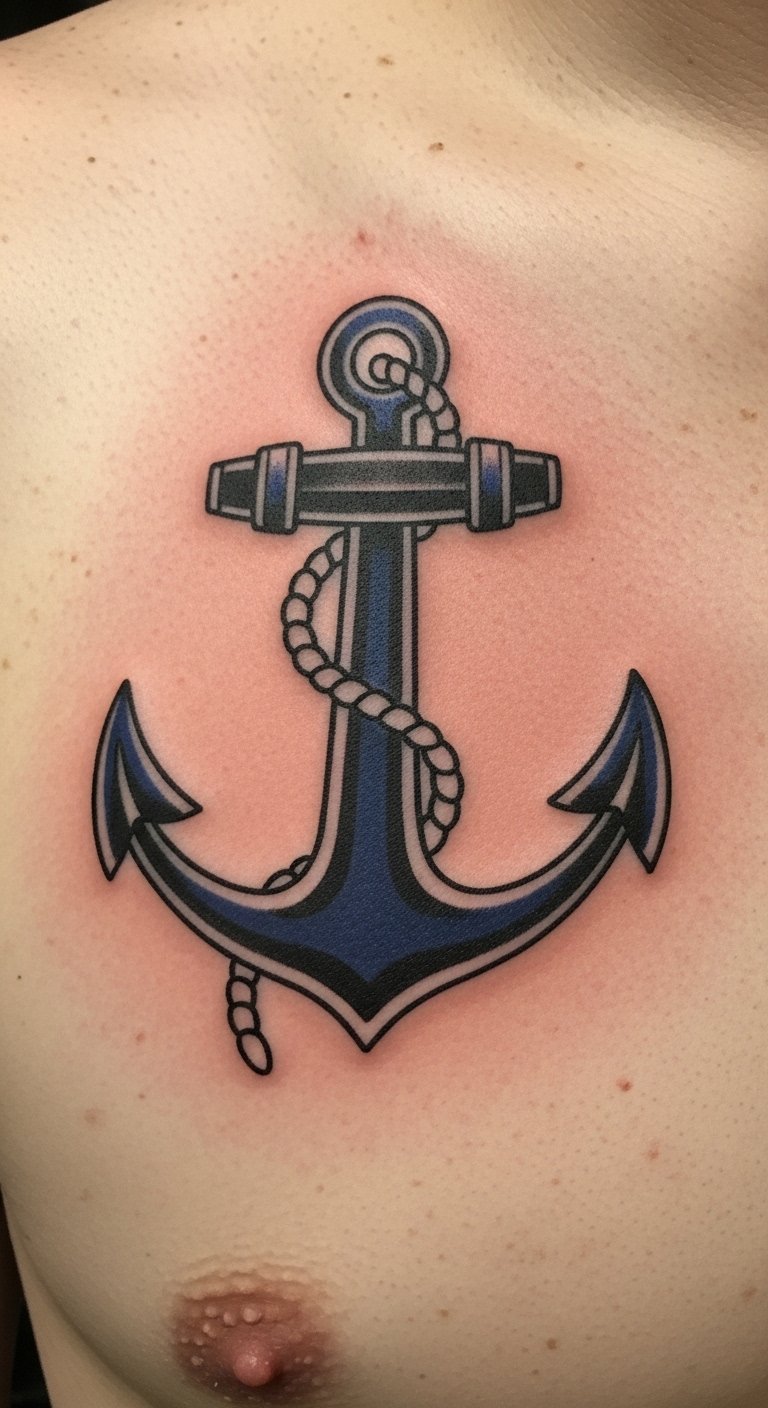
Classic maritime anchors are simple, meaningful, and age predictably. They’re great as first chest additions and integrate well into larger chest-to-arm patchwork later. Keep lines bold to avoid future blurring.
Celtic Knot Chest Band — Interlaced Blackwork
Style/Technique: Blackwork / Celtic
Pain Level: Low-Medium
Session Time: 1–2 sessions
Best For: Wrap-around chest band, heritage motifs

Celtic bands hug the chest and can wrap toward shoulders. Interlaced lines need a steady hand—ask for healed bands to confirm spacing. Symmetry and flow with muscle movement are critical.
Japanese Traditional Koi/Hannya — Chest Panel Drama
Style/Technique: Japanese Traditional / Irezumi‑Inspired
Pain Level: Medium-High
Session Time: Multiple sessions
Best For: Bold storytelling chest pieces
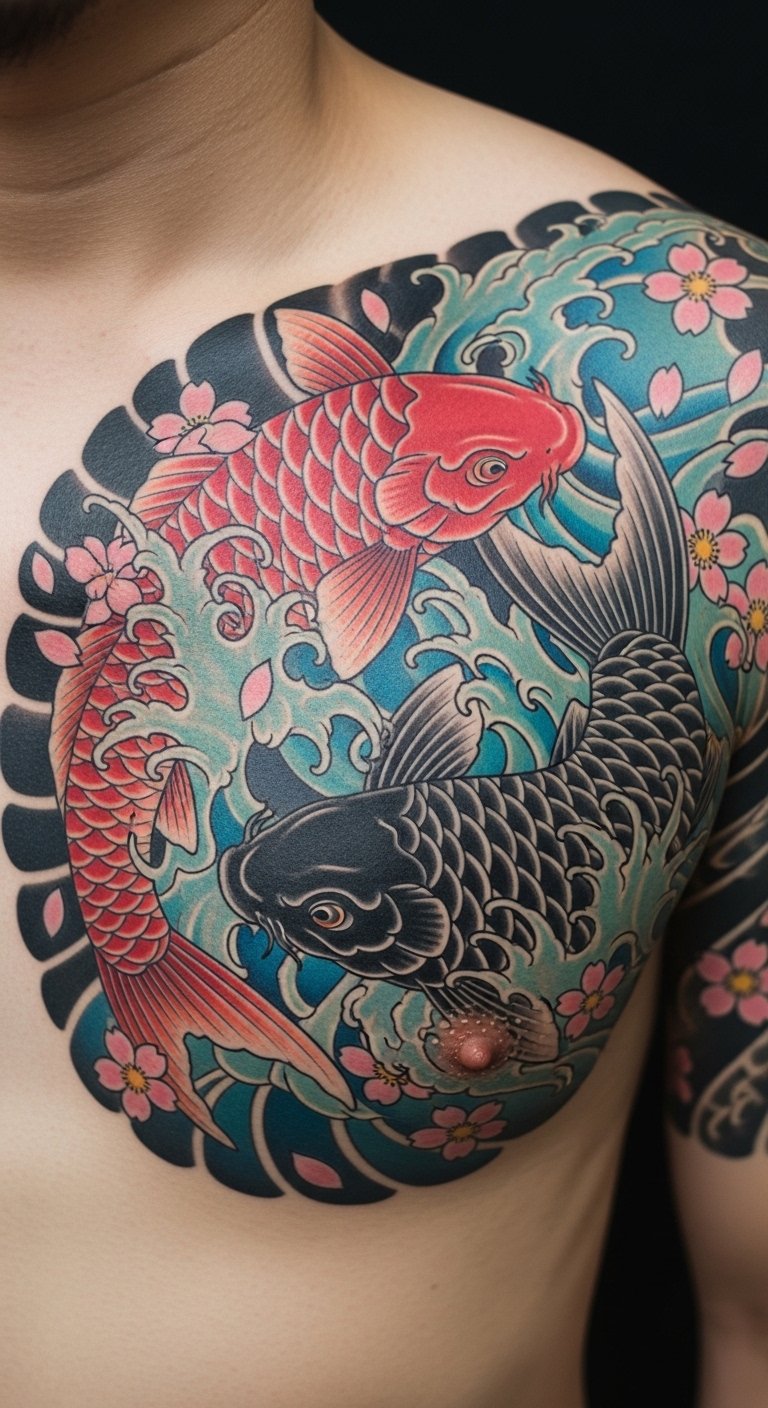
Japanese motifs read cinematic on the chest. Large scale and bold motifs help the design age well. Expect multiple sessions and staged healing. Discuss how the piece will integrate with future torso work.
Micro‑Realism Object on Pec — Tiny High‑Detail
Style/Technique: Micro‑Realism / Small‑Scale
Pain Level: Low-Medium
Session Time: 1 session
Best For: Personal objects or small portraits

Micro‑realism on the chest gives an intimate, powerful look when placed on the pec. Because detail fades if too small, make sure the scale is large enough. Look for artists with healed micro-realism chest examples.
Patchwork Cohesive Chest — Curated Flash Integration
Style/Technique: Mixed Styles / Patchwork
Pain Level: Variable
Session Time: Multiple sessions over time
Best For: Collectors building a cohesive chest

Patchwork done intentionally looks intentional rather than random. I recommend planning a palette and edge work so new pieces match existing tone. This avoids the common patchwork trap.
Chrome/Watercolor Mash‑Up — Modern Reflective Chest
Style/Technique: Mash‑Up / Watercolor + Chrome Effects
Pain Level: Medium
Session Time: 2–3 sessions
Best For: Trendy, reflective chest pieces

Style mash-ups like chrome watercolor are modern and visually striking. They can be more sensitive to sun exposure—pick placement that you’ll protect. Ask for healed photos to see how color and reflective elements settle.
Tribal‑Fine Line Hybrid — Modern Tribal Across Chest
Style/Technique: Tribal / Fine Line Hybrid
Pain Level: Medium
Session Time: 1–3 sessions
Best For: Cultural motifs with a fine-line twist
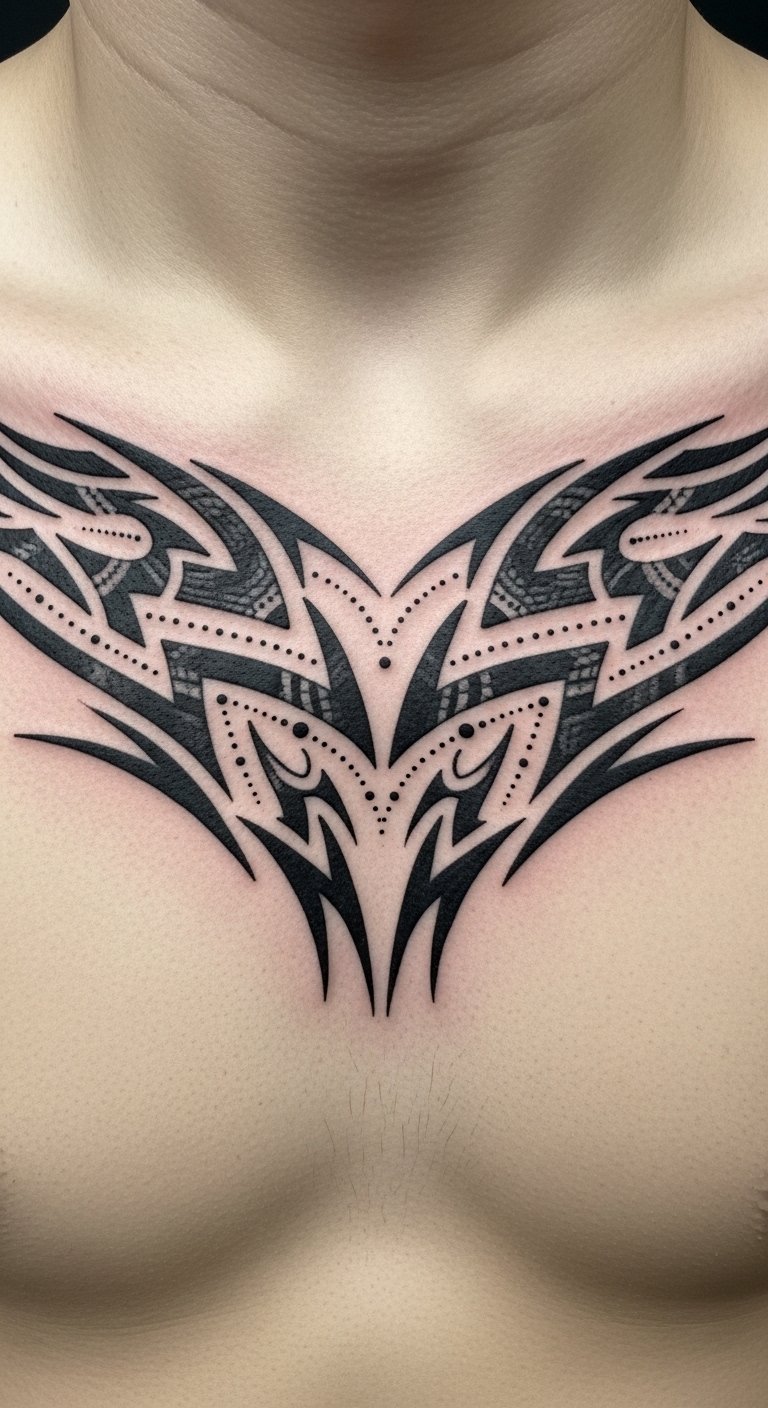
If you want a nod to tribal aesthetics without heavy black panels, a fine-line hybrid gives modern balance. Cultural sensitivity matters—research symbols and consult an artist who respects origin and meaning.
Handpoke Fluid Chest — Organic Texture Pectoral
Style/Technique: Handpoke / Fluid
Pain Level: Low-Medium (depends on artist)
Session Time: Multiple short sessions
Best For: Organic texture lovers, subtle statement

Handpoke fluid styles are emerging for organic texture and softer healing since there’s no machine vibration. They require an artist qualified in handpoke techniques and healed examples to trust the aesthetic.
Geometric Sternum + Rib Integration — Symmetry With Edge
Style/Technique: Geometric / Blackwork
Pain Level: High (ribs)
Session Time: Multiple sessions
Best For: Bold symmetry with dramatic edge

This one merges sternum geometry with rib detail for striking contrast. It’s high pain near ribs but offers dramatic visual reward. Ask about staged healing and aftercare for larger integrated pieces.
Tattoo Prep and Aftercare Essentials
Healing & Ongoing Care: Surface healing typically 2–3 weeks; full healing 2–3 months (common clinical guidance). For long-term vibrancy, daily sun protection and proper moisturization are key (trend summaries: BurnedHearts 2026).
Aftercare Essentials:
- Aquaphor Healing Ointment, 14oz tube — Recommended first 3–5 days
- Saniderm Transparent Adhesive Bandage, 6-inch roll — Second‑skin option for large chest pieces
- CeraVe Fragrance-Free Moisturizing Lotion — For days 4–14
Before Your Appointment:
- Tattoo Numbing Cream with 5% Lidocaine — Ask your artist first
- Tattoo Stencil Transfer Paper — For layout tests
Long-Term Maintenance:
- SPF 50+ Sunscreen Stick for Tattoos — Use daily to prevent fading
- Mad Rabbit Tattoo Balm — Healed-skin maintenance
- Hustle Butter Deluxe — Vegan aftercare option
Optional Comfort & Supplies:
- Dr. Bronner's Unscented Castile Soap — Gentle cleaning
- Hydrocolloid Bandages (large) — For spot protection
Artists I Follow / Inspiration:
- Black Ink AI for idea generation, Instagram portfolios for healed examples, and Mr. Inkwells for trend commentary.
Frequently Asked Questions
Q: How bad does a chest tattoo actually hurt?
A: Pain depends on placement—pecs are typically moderate; sternum and ribs are sharper. Hydrate, sleep well, and consider a numbing cream if your artist approves.
Q: What if I regret the design?
A: Sit on designs 3–6 months. Start with small pec work if visibility worries you. Laser removal exists but is a long process—pick meaningful motifs when possible.
Q: How do I keep my chest tattoo from fading?
A: Daily sun protection with an SPF 50+ stick and regular moisturizing with fragrance‑free lotion preserve vibrancy. Black and gray age best across tones.
Q: Can I work out after getting a chest tattoo?
A: Wait at least 48–72 hours, longer if the area flexes or sweats heavily. Avoid heavy chest workouts the first week to reduce scabbing and infection risk.
Q: First chest tattoo ideas for nervous people?
A: Start small on the outer pec or near the shoulder—less painful, easier to hide, and lets you test healing on your skin.
Q: Do tattoos look different on different skin tones?
A: Yes. High-contrast blackwork reads well across tones; bright colors may appear muted on deeper skin. Ask to see healed examples on similar skin tones.
Q: How long does a chest tattoo take to heal?
A: Surface healing: about 2–3 weeks. Full settling: 2–3 months. Use recommended aftercare like Aquaphor early, then fragrance-free lotion and sunscreen long term.
Conclusion
I found these styles work best when you match the design to your chest shape and ask to see healed photos. Protect your ink with regular sunscreen—Aquaphor in the early days and an SPF stick after healing go a long way. What style are you leaning toward?