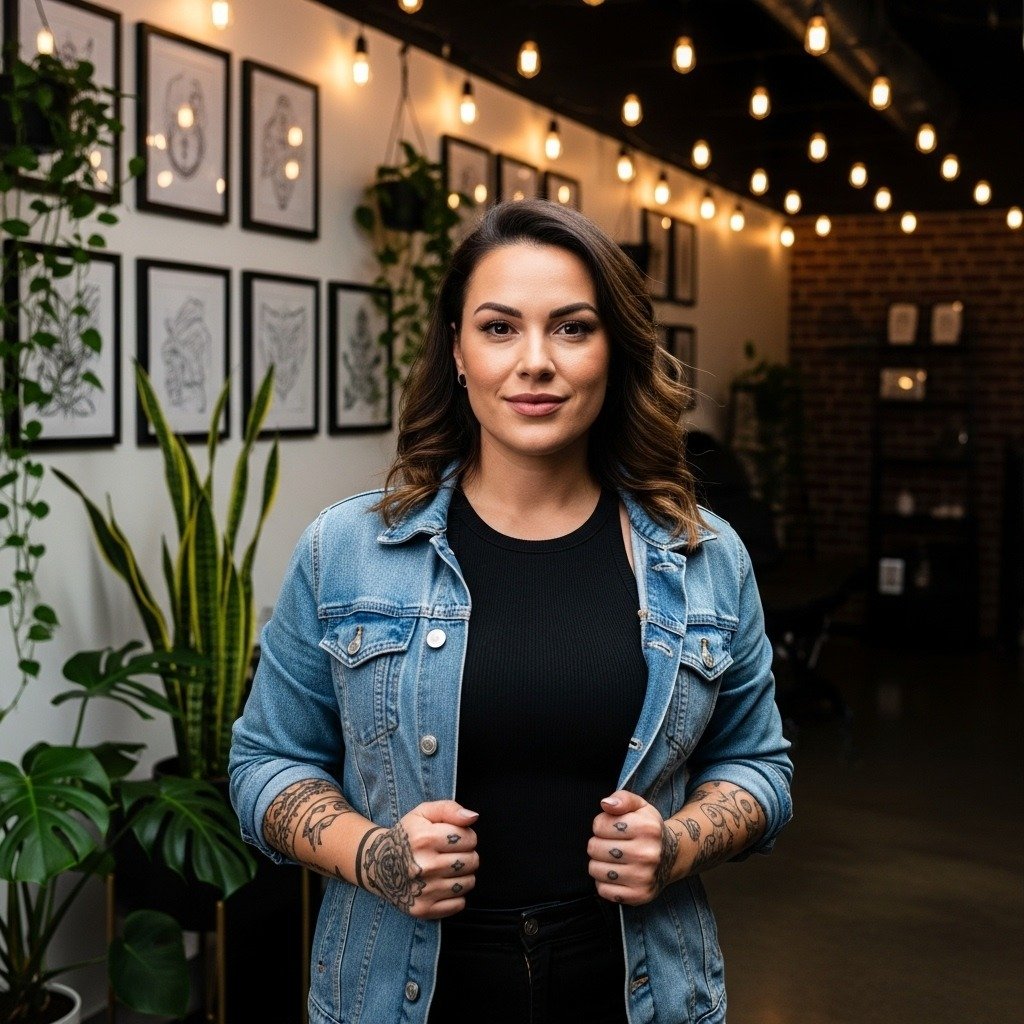
Someone I know spent months saving reference images of abstract flower tattoos before booking anything. The real problem was not the visuals. It was knowing which styles hold up on your skin, what to ask during consults, and how a piece will look healed. I checked portfolios at five shops across Brooklyn and followed forum threads to pull practical notes into these ideas so you book with clearer expectations.
1. Abstract Peony Watercolor on Forearm

Someone I know first saw this style on a friend's forearm and asked for the same airy wash. For watercolor peonies, tell your artist you want layered color washes rather than heavy outlines so saturation can sit without thick borders. Fair warning, watercolor fades faster on high-sun areas, so expect a touch-up at year two or three. The forearm tends to be forgiving for saturation, but avoid tiny petals too close together because they can merge as the ink settles. Session time is usually one to two hours. Pain level on the forearm is moderate. A common mistake is asking for pastel tones that are too faint to begin with.
2. Distorted Tulip Fine Line at the Wrist
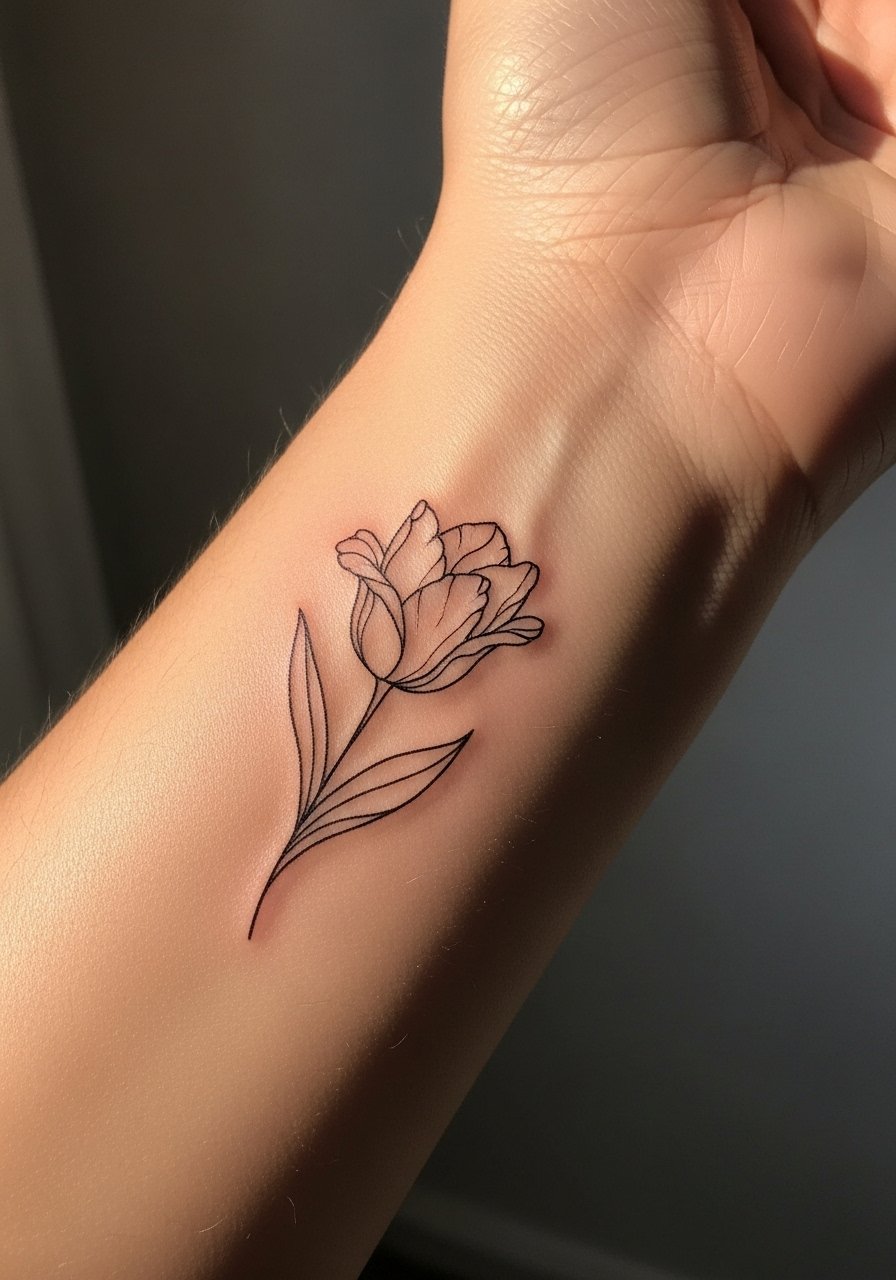
Fair warning: the wrist sees a lot of movement and friction. Fine line tulip distortions can look gorgeous at first, but if lines are drawn too shallow they can blur within two years. Ask your artist for slightly bolder linework than a pure micro line for this placement. A single session of under an hour usually covers it. Pain on the wrist is higher than the forearm for most people. A common mistake is insisting on ultra-fine lines and then wondering why the design fades into a gray blur. For durability, keep the tulip small and spaced, and plan for a touch-up at year two.
3. Geometric Lily Outline with Negative Space on Thigh

The thigh gives room for geometry to breathe. Most geometric lilies need clean spacing so negative space reads as shape rather than accidental gaps. When you sit down with your artist, show photos that highlight spacing and ask for mockups on the thigh area. Expect two shorter sessions if you want detailed contour and shading. Pain is low to moderate because of soft tissue. One camp says tiny geometric work ages fine anywhere, while another camp warns that close parallel lines blur on moving skin. Ask where your artist stands. Common mistakes include shrinking the design to fit into a tiny space.
4. Surreal Orchid Fusion on Upper Arm

There is something about bold outlines combined with painterly fills that reads from across a room. Surreal orchid fusions that mix neo-traditional linework and abstract color blocks benefit from full-color saturation early on. Tell the artist you want solid saturation and layered shading so colors do not wash out. Expect two sessions for color depth. Upper arm pain is relatively low. A real mistake is asking for too many tiny color transitions on a small patch because they can muddy as the tattoo heals. If you want longevity, prioritize strong outlines and contrast.
5. Abstract Floral Mandala on Calf

Most mandalas with stipple shading age well when the dots are given spacing. I have seen ornamental mandalas remain readable at year five when artists left breathing room between stipples. For a calf piece, ask for a layered dot pattern and a mix of stipple and thin linework to prevent visual flattening. Expect a larger session or multiple sessions for full detail. Calf pain is moderate. A common mistake is cramming too much tiny detail into a small diameter. If you plan for a large mandala, the calf is one of the safer spots for clarity over time.
6. Watery Lily Pad Abstraction on Ribcage

Fair warning: the ribcage is often a seven or eight out of ten on pain scales. But the result can be very ethereal for people who tolerate it. Artists split on whether watercolor should be attempted here because stretching skin can change how washes settle. One group avoids large water washes on ribs for this reason. The other group uses deeper saturation and controlled bleeding to keep the effect intact. Session time is usually one longer sitting. A common mistake is requesting extremely faint washes that disappear as the area heals. If you take this route, plan for healing time and a likely touch-up.
7. Cubist Rose Petals for Forearm Sleeve Start

There is an architectural feel to cubist petals that suits long forearm compositions. When planning a sleeve start, tell your artist where you want future pieces to connect so negative space and flow are considered from session one. Forearm sleeves often need two to four sessions to build layering and contrast. Pain is moderate. A common oversight is requesting too-small cubist fragments near the wrist where lines can blur. Expect heavy black fills to hold well but require precise hairline edges for long-term clarity. Touch-ups are usually localized.
8. Fluid Sunflower Distortion on Inner Bicep
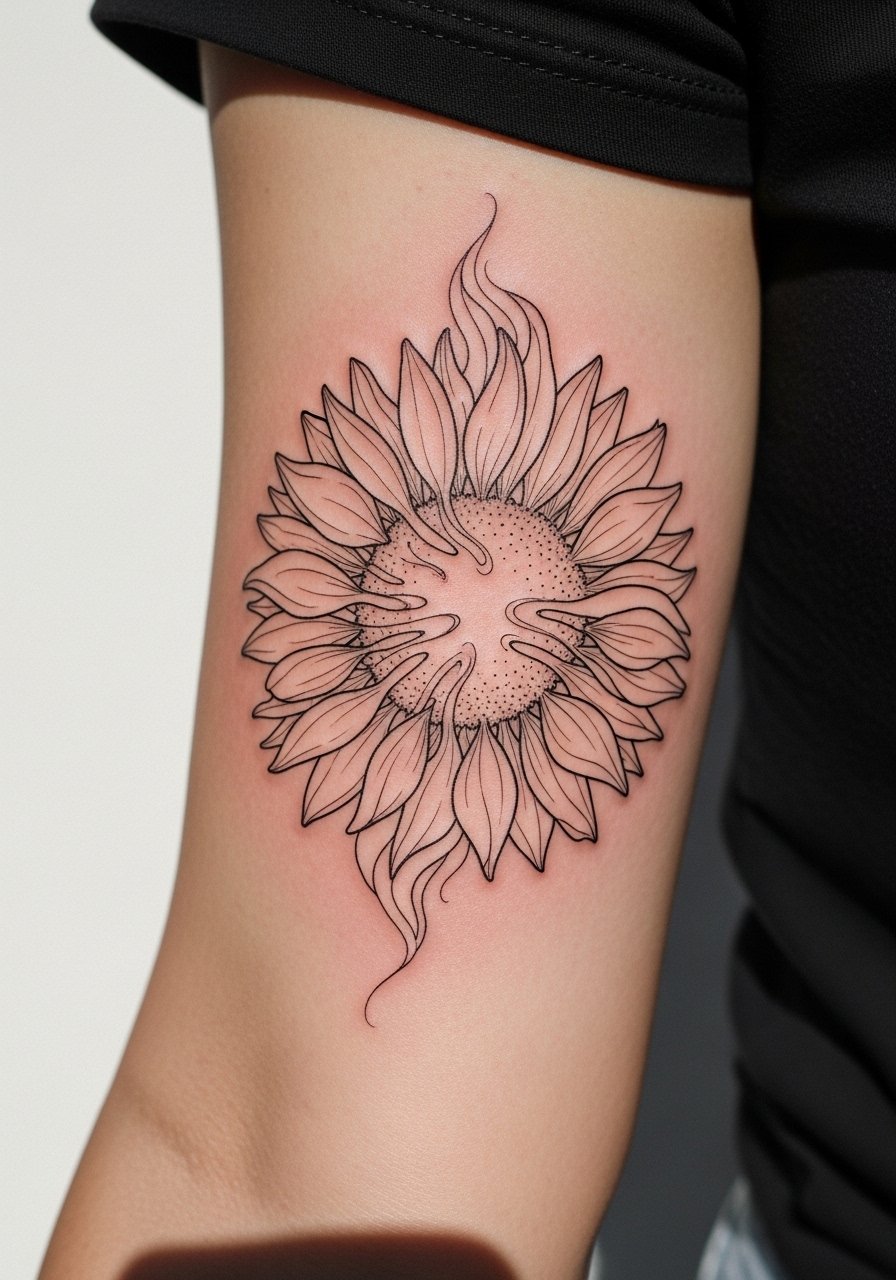
The inner bicep shows shape nicely but stretches when you move. Tell your artist you want the petal waves oriented so the sunflower reads when your arm is relaxed. Session time is usually under two hours. Pain on the inner bicep is moderate to high. A common mistake is asking for an ultra-delicate version that does not account for muscle movement, which can make lines warp. For durability, ask for slightly reinforced linework in key contours. Expect touch-ups if you want the distortion to remain crisp.
9. Ornamental Daisy Vortex on Ankle

Ankle placements face a lot of rubbing from socks and shoes. For a daisy vortex, ask for a compact design with stipple shading instead of soft color washes to resist abrasion. Session time is usually under an hour. Pain at the ankle is fairly high. A common mistake is placing delicate petals exactly at the bone where blowout risk increases. Keep the core slightly higher and expect a touch-up as the ankle is a high-friction area. Consider longer-term maintenance if you wear closed shoes daily.
10. Pastel Abstract Poppy Cluster on Thigh
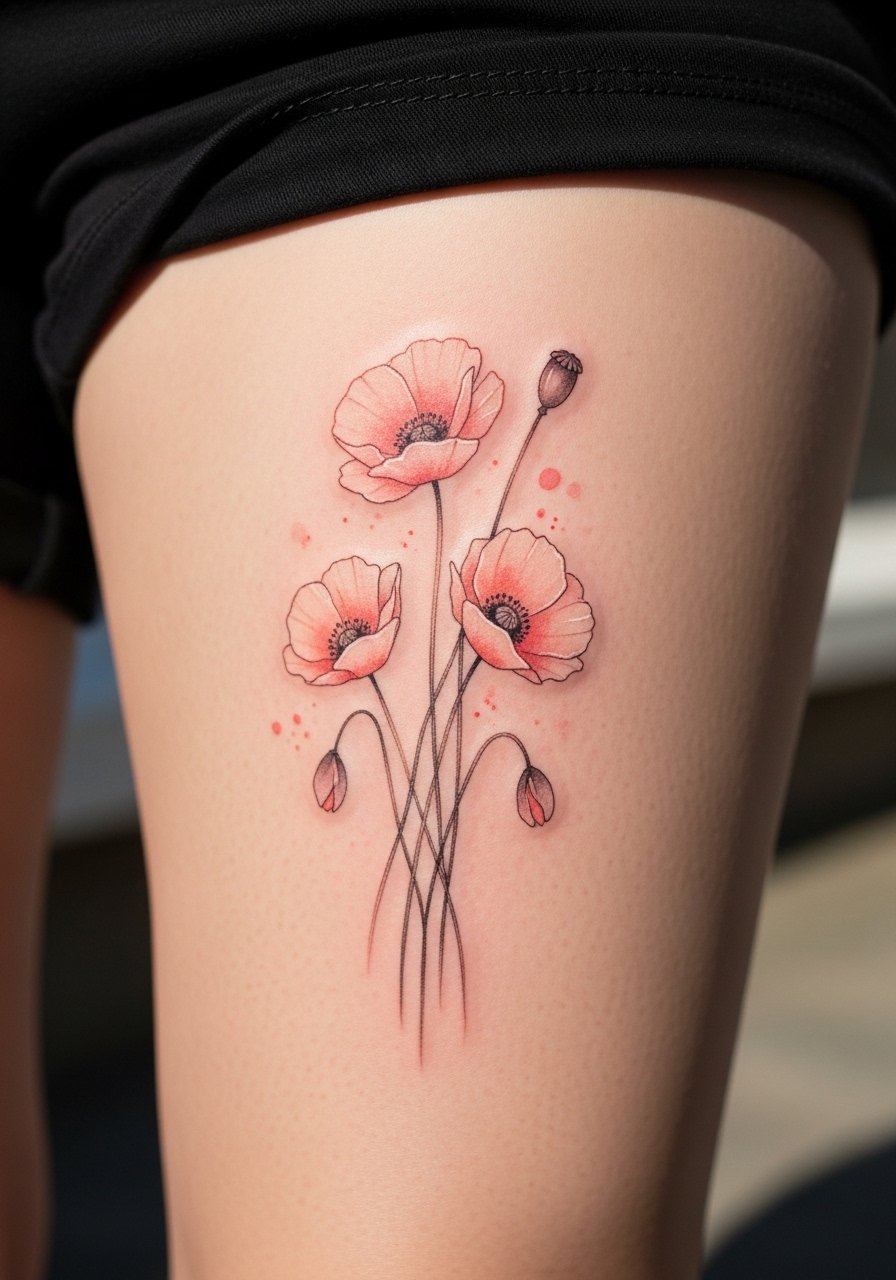
The thigh is a generous canvas for pastel clusters that need space. When you consult, bring reference photos of how pastel pigments look on skin tones similar to yours. Pastel will always show differently across tones, so discuss contrast levels. Expect a single session for a small cluster. Pain on the thigh is typically low. A frequent mistake is choosing colors that are too pale to register once healed. If you want longevity, ask for slightly deeper initial saturation and plan a touch-up at year two.
11. Shattered Lotus Micro-Realism on Finger
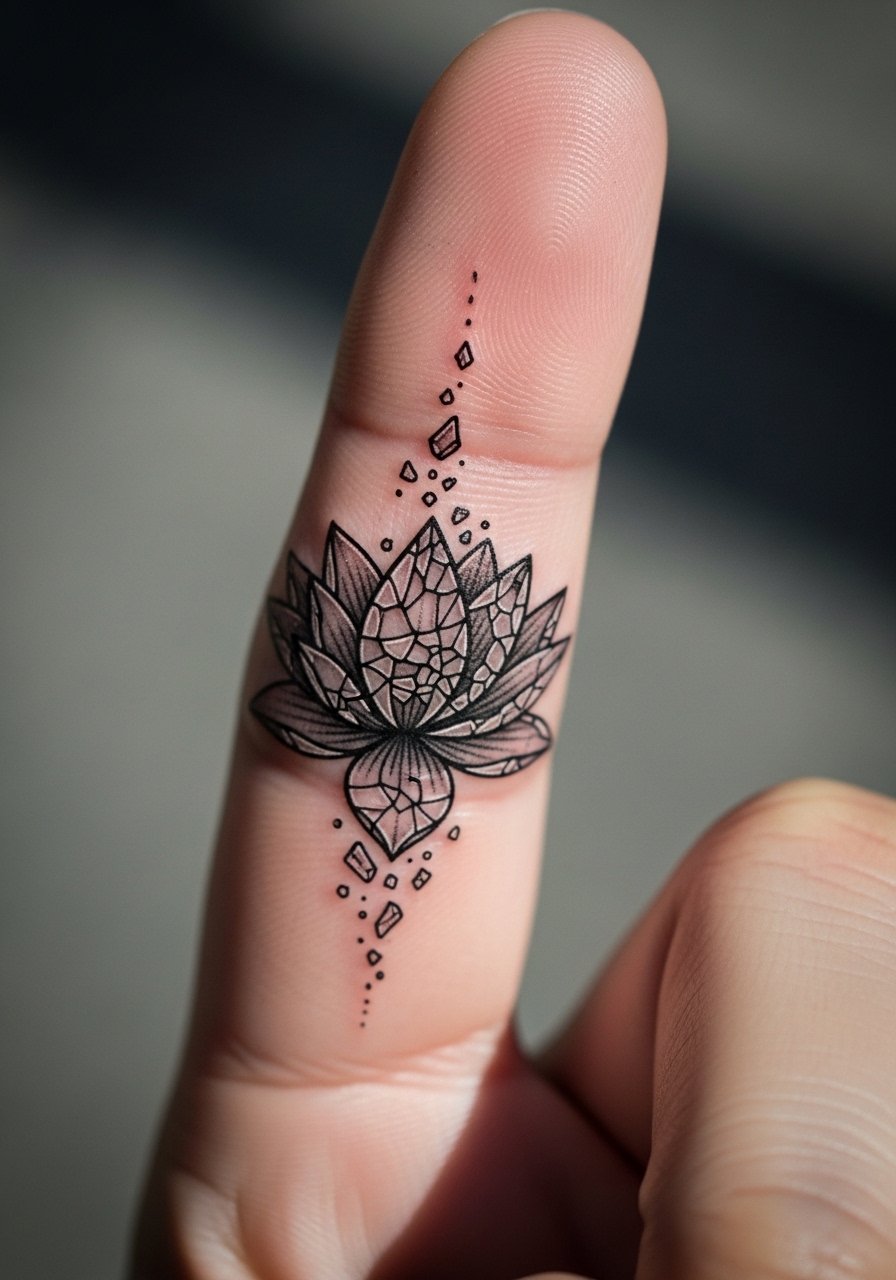
Sensitive placement note: finger tattoos often fade and require more frequent touch-ups. The broken lotus in micro-realism reads as tiny shards and needs ultra-precise linework. Expect two short sessions because hands heal differently and artists may prefer layering. Pain on fingers is high. A common mistake is requesting extreme micro detail on a tiny finger face and then being surprised by blurring. If you choose this, accept that touch-ups might be needed annually.
12. Abstract Vine Flowers in Ignorant Style Sleeve
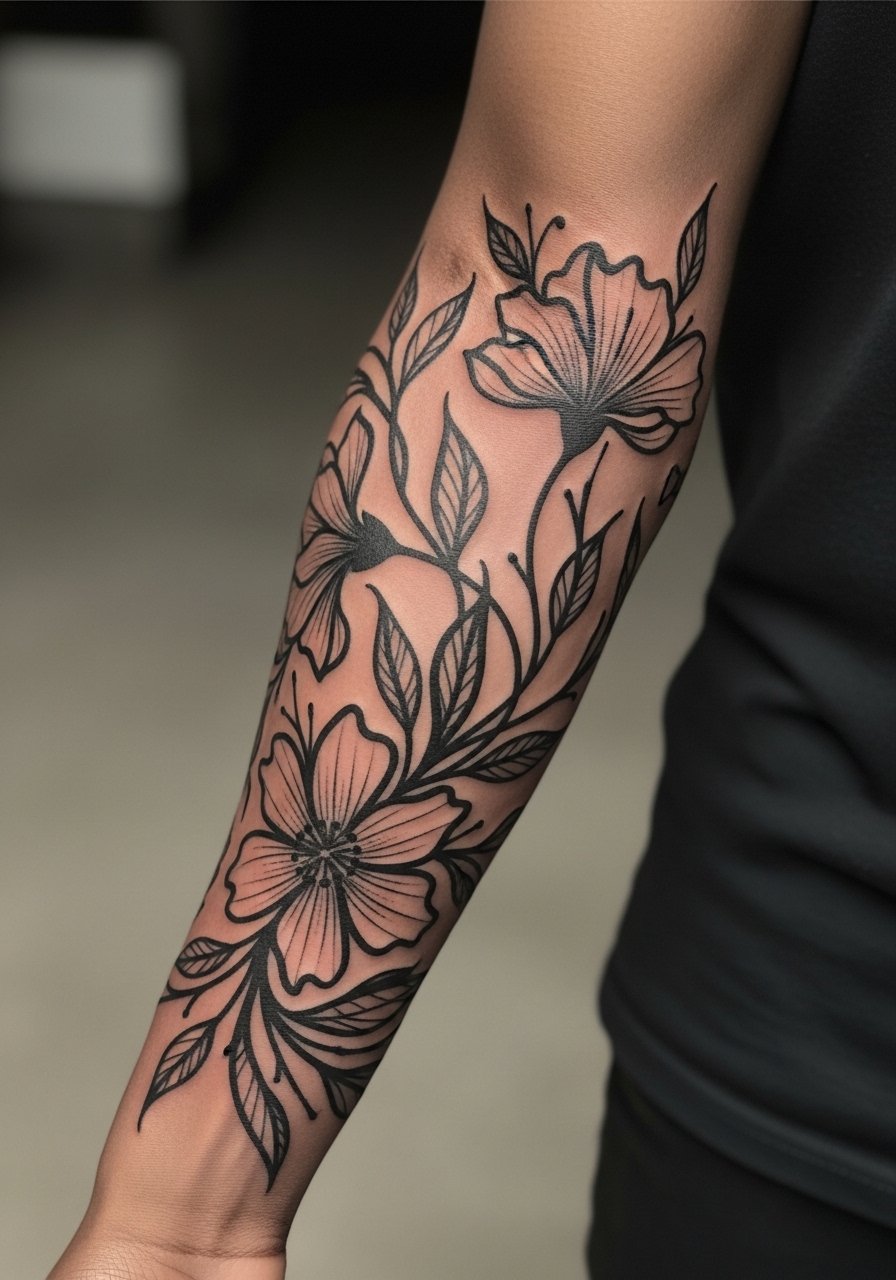
Ignorant style thrives on confident, unapologetic marks. For a sleeve, talk about rhythm so petals and vines repeat with variation rather than mirror each other. Sessions will likely be multiple and spaced across months. Pain varies by spot. The biggest mistake is trying to micro-manage every stroke. This style benefits from controlled spontaneity. Expect heavy black lines to hold up well, but plan for occasional touch-ups if you add color or fine shading later.
13. Minimalist Bud Behind the Ear
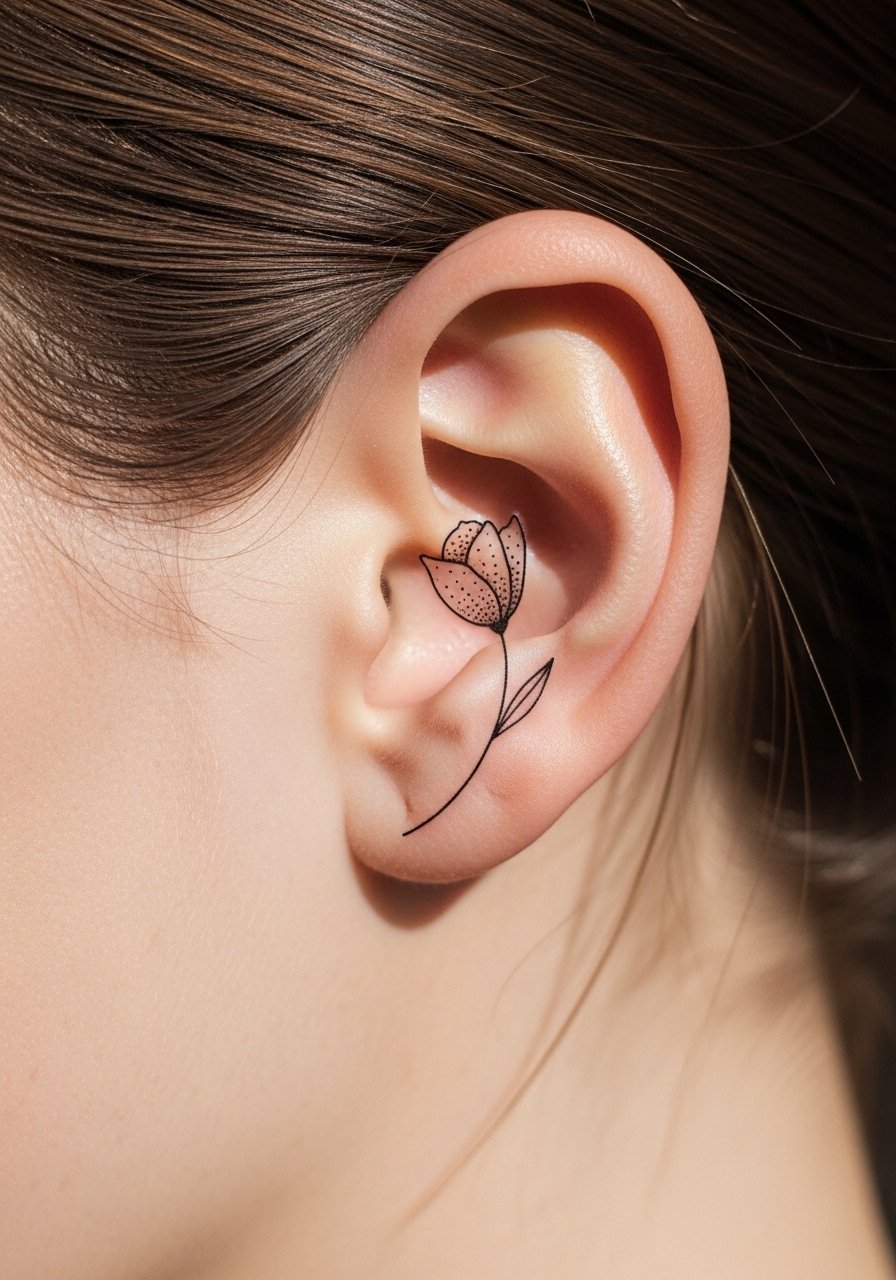
Someone I saw got a tiny bud behind the ear and loved how discreet it felt. Behind the ear is a low-visibility spot that still encounters rubbing from hair. Session time is short and pain is low to moderate. Ask for slightly bolder single-line work if you want longer-lasting clarity because hair movement and washing can soften ultrafine lines. A common mistake is expecting the same crispness as a forearm piece. This is a subtle commitment that works well for first abstract flower experiments.
14. Negative Space Bouquet on Sternum
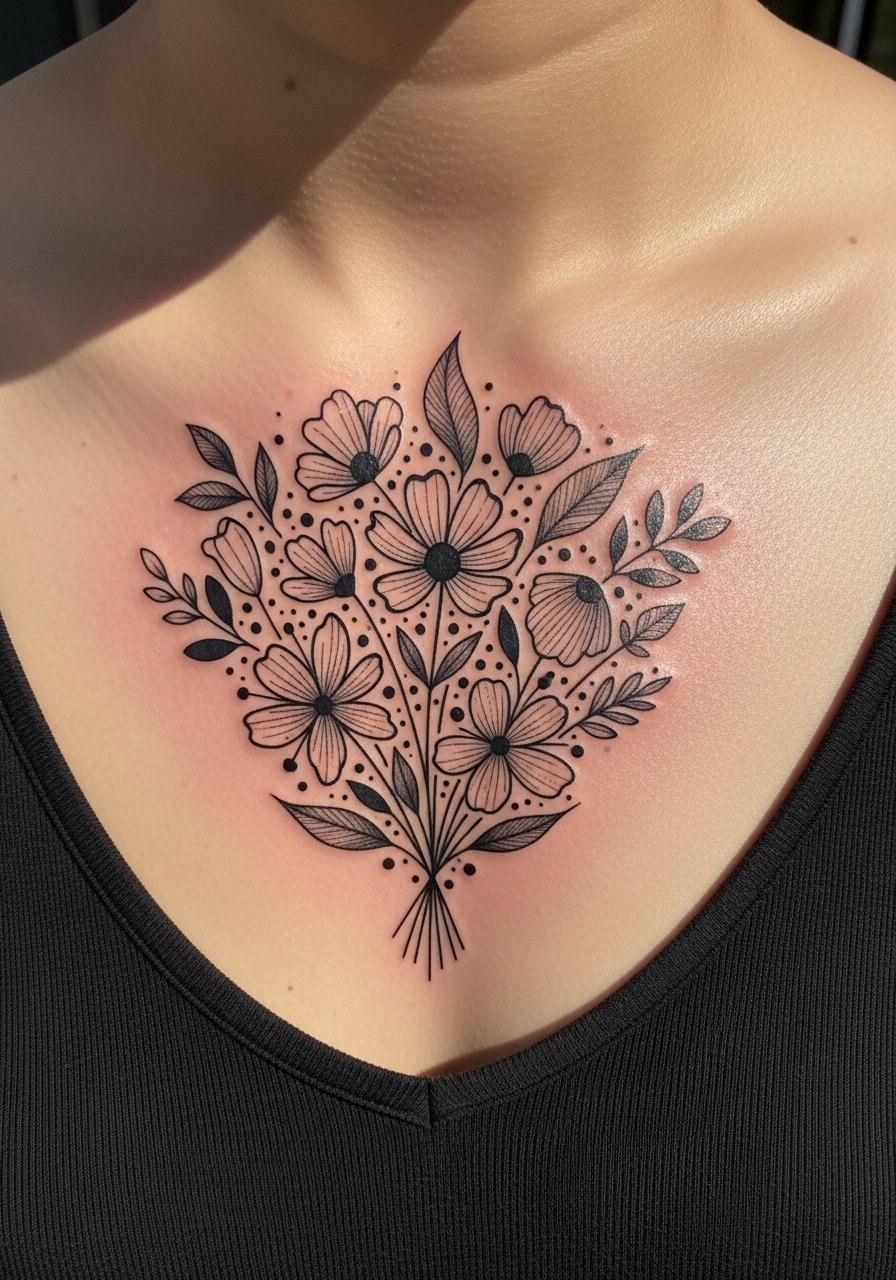
Sensitive placement note: sternum work requires an artist comfortable with chest anatomy. Controversy arises over negative space on chest areas because one camp says movement makes shapes distort while the other camp says proper spacing prevents that. Ask your artist where they draw the boundary. Sessions may be two or more because of symmetry needs. Pain can reach high levels. A mistake is insisting on extremely thin negative shapes too close together. For lasting impact, prioritize bold framing and controlled negative shapes.
15. Abstract Sunburst Daisy at the Nape

The nape reads well when hair is up. Expect a short session and moderate pain. Ask your artist how the piece will look as hair grows and changes. A common oversight is neglecting symmetry when the design is meant to be centered under the skull. If your workplace limits visible tattoos, this placement can be easy to hide. Touch-ups are seldom needed if the design uses clear contrast and moderate sizing.
16. Geometric Negative-Space Bloom on Collarbone
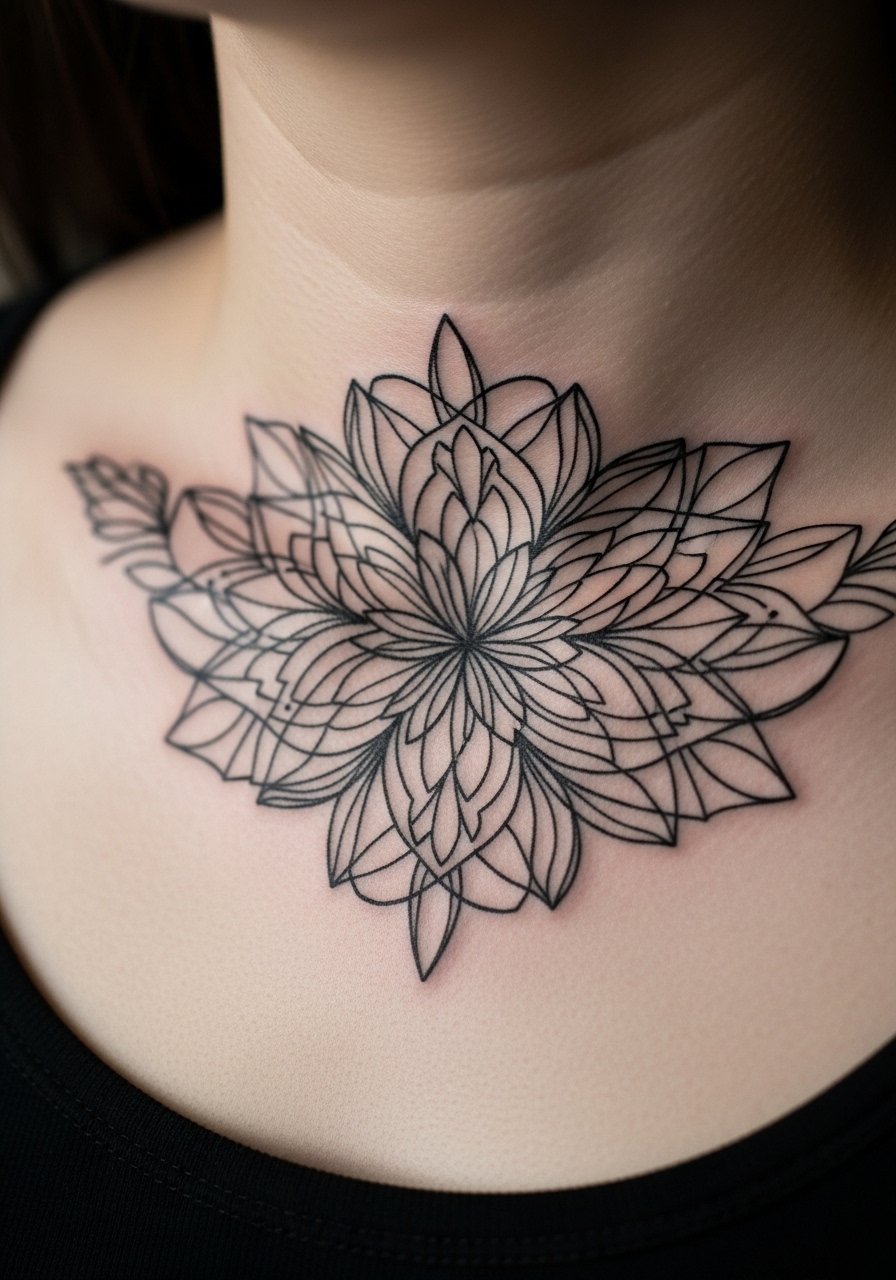
The collarbone moves a lot with breathing and posture. When you sit down with an artist, request a mockup that follows the collarbone contour so negative space reads properly with movement. Expect two sessions for precise contouring and shading. Pain is moderate to high because of thin skin. A common mistake is shrinking geometric elements so much that the negative space collapses into indistinct shapes. Ask for small but deliberate spacing and consider touch-ups in year two.
17. Ink-Wash Anemone for the Back of the Arm
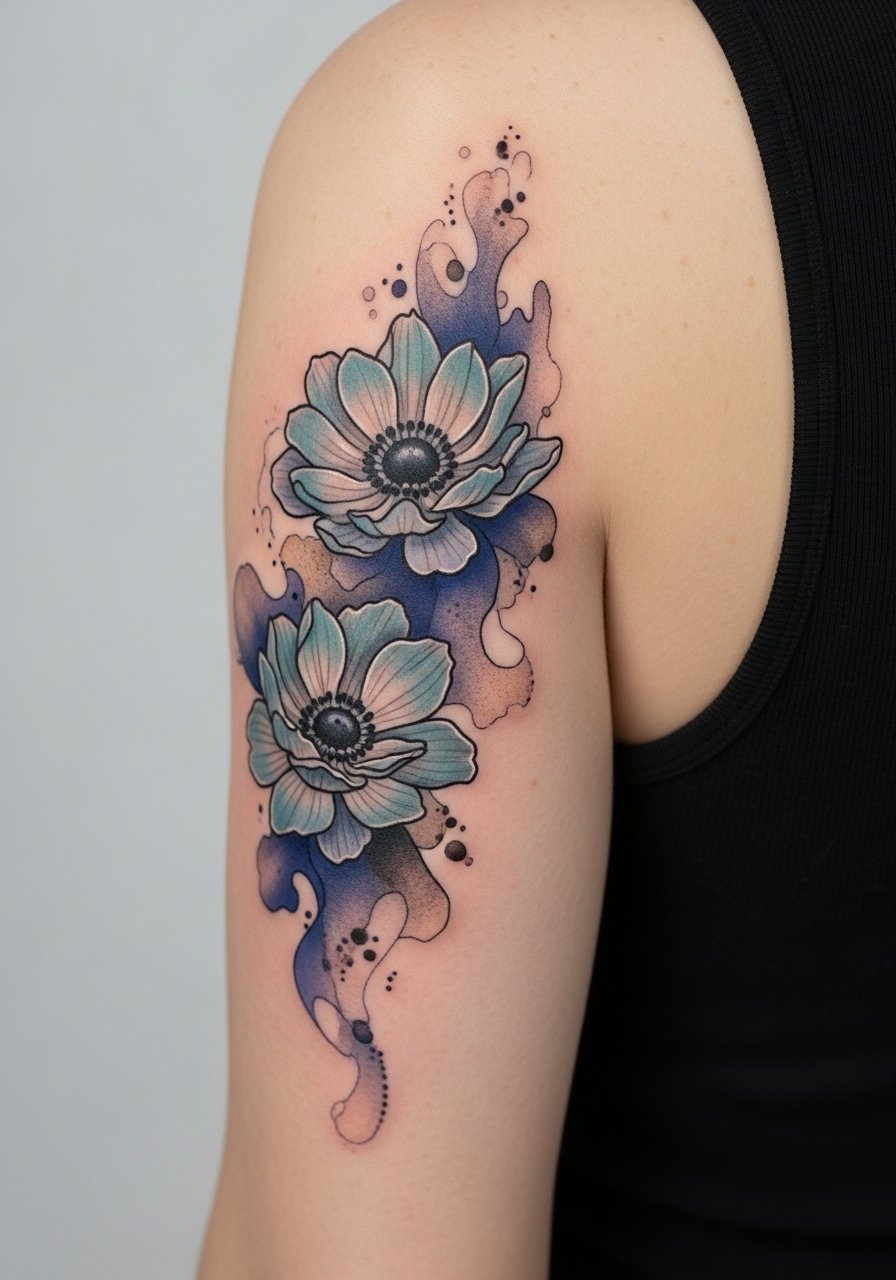
When you show references, point out the exact balance of ink wash and contour you like. The back of the arm handles soft washes well because it is less exposed to friction. Session time is one to two hours depending on size. Pain is moderate. A frequent mistake is overworking the wash so it becomes muddy. Ask for staged layering so your artist can evaluate saturation before finishing. Expect touch-ups if the piece sits near areas that get frequent sun exposure.
18. Layered Linework Camellia on Lower Rib
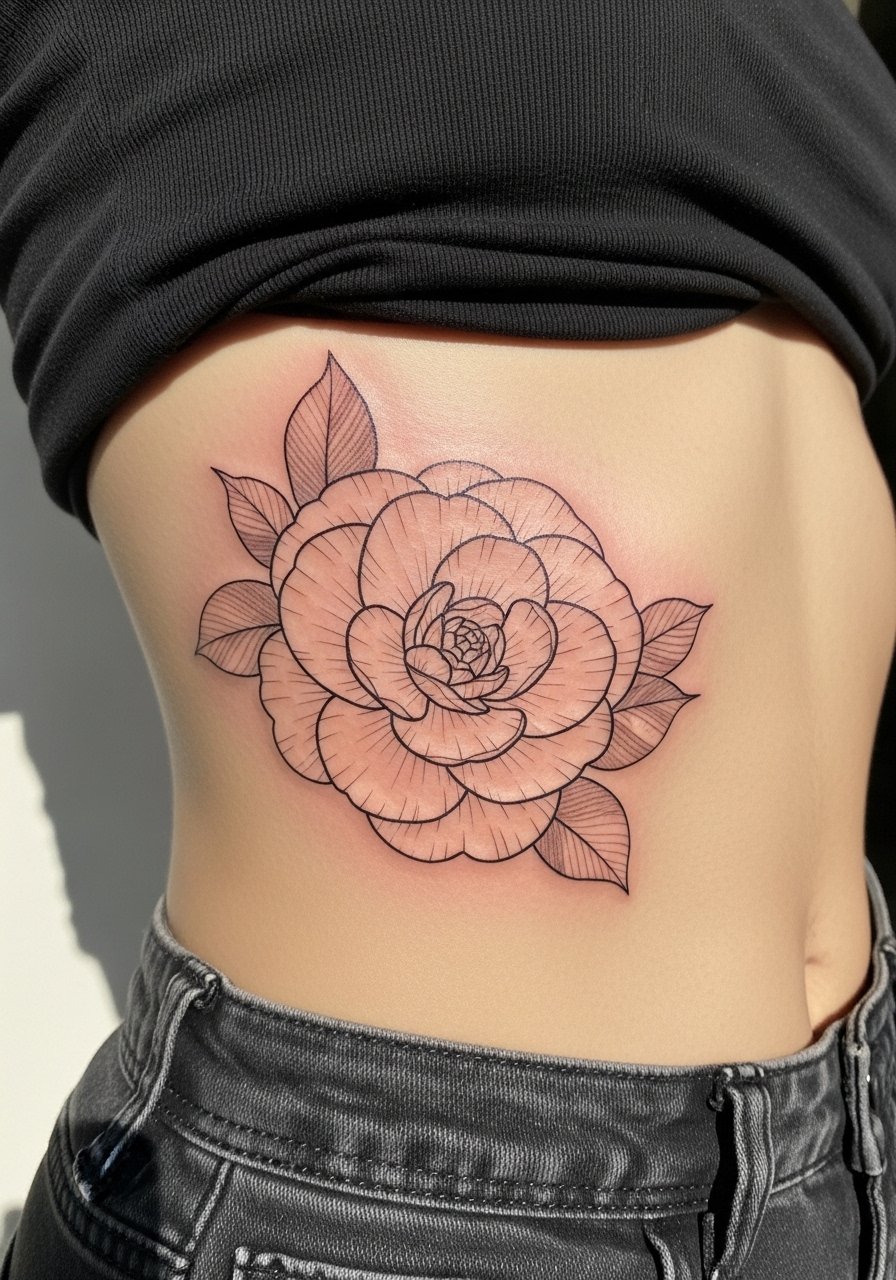
Controversy exists about fine line on ribs because one camp warns lines blur quickly and the other says proper depth keeps them crisp. Name both camps when you ask your artist how they handle ribs. Sessions tend to be longer because of breathing and position changes. Pain is high on the ribs. A common mistake is asking for hairline lines without accounting for movement. If you want longevity, request slightly increased line weight on outer contours and plan for a touch-up timeline.
19. Stippled Peony Fragment on Inner Thigh

Inner thigh is private and often forgiving for stipple gradients. Tell your artist you want denser stippling near focal points and lighter spacing for fades toward the edges. Sessions can be comfortable because of soft tissue. Pain varies. A common mistake is putting too much detail near the groin area where healing can be affected by moisture. For a peony fragment, plan the piece so air and clothing will not rub it continuously during the first three weeks.
20. Optical Illusion Bouquet with Geometric Negative Space on Upper Back

When planning an illusion piece, bring reference photos that show the desired optical effect from different angles. The upper back lets artists play with symmetry and perspective. Sessions will be multiple for alignment and layering. Pain is low to moderate. A typical oversight is not considering how clothing and backpacks will rub the area during healing. Ask your artist for aftercare strategies for upper back work. Expect the optical effect to read best at six months after settling and potential touch-ups when you change seasons.
Tattoo Prep and Aftercare Essentials
Fragrance-free gentle foaming cleanser suitable for fresh tattoos. Use this for the first week to remove ointment residue without stripping ink. Clean gently twice daily in the shower and pat dry with a clean towel.
Lightweight fragrance-free balm for daily moisturizing. Apply a thin layer after cleansing to lock in moisture while allowing the skin to breathe. This helps soothe itching during the peeling phase.
Medical-grade second skin bandage, small sheets. Useful for protecting fresh ink during the first 24 to 48 hours or while traveling. Cut to size and replace as your artist recommends.
Breathable non-stick gauze pads for initial wrapping. Handy if your artist uses a traditional wrap and you need to re-dress a spot at home. Keep sterile handling practices.
Silicone scar management sheet for long-term texture smoothing. Use months after healed work if you notice raised texture. It can help even out surface irregularities over time.
Aquaphor Healing Ointment, small tub. One pot is useful for very dry phases but use sparingly because heavy ointments can trap bacteria if overapplied. This is my one mainstream mention in the list.
SPF 50 mineral sunscreen stick for tattoos. Protect healed tattoos from UV fading. Apply to exposed pieces whenever you expect sun exposure.
Clean, snug clothing with soft seams for initial healing. Choosing loose and soft fabrics reduces friction and speeds comfort during the first two weeks.
Fine cotton gauze sheets for gentle drying and padding. Use to pat dry after cleansing and as a sanitary surface for aftercare supplies.
Every tattoo is different. Always follow your artist's specific aftercare instructions. Consult a dermatologist if you have skin concerns or unusual healing issues.
Frequently Asked Questions
Q: Will fine line abstract tattoos blur if I plan a full sleeve with lots of thin elements?
A: Fine line elements across a sleeve can blur if placed too close together. From what I have seen, give each thin motif breathing room and mix in some bolder anchors so the overall composition keeps contrast. Ask your artist for mockups that show how the sleeve will look at six months and two years.
Q: Do watercolor-style abstract flowers need different aftercare than blackwork pieces?
A: Yes. Watercolor pieces often rely on soft saturation so avoid heavy ointments that can suffocate early pigment. Use a light fragrance-free balm from the list above and keep sun exposure low during the first six months. For blackwork, gentle cleansing and a medical-grade second skin wrap can help crisp lines remain sharp.
Q: Why do geometric mandalas fade faster on ribcages than forearms?
A: Movement and skin stretch on the ribs cause parallel lines to drift closer over time. Forearms have flatter, less mobile skin so geometry reads longer. If you want a ribcage mandala, request larger spacing and slightly heavier line weight to compensate.
Q: How often should I budget for touch-ups on abstract watercolor peonies?
A: It depends on placement and lifestyle. From what I have gathered, watercolor peonies in exposed areas commonly need a touch-up around year two or three. Protected spots and deeper saturation can push that timeline farther out.
Q: Are there special considerations for abstract flowers on darker skin tones?
A: Absolutely. Pastel washes often show differently on darker tones, so discuss contrast and pigment choices with your artist. Bring examples of healed work on similar skin tones and ask about how they layer color for visibility and longevity.
Q: If I want a micro-realism shattered lotus on my finger, what should I expect for maintenance?
A: Fingers heal and fade faster, so expect annual touch-ups. Keep the area as dry and protected as possible during healing and plan for touch-up windows when the piece naturally lightens.
Q: Where should I look to find artists who specialize in these abstract flower treatments?
A: Use style hashtags like #AbstractFlowerTattoo and #FineLineAbstract on portfolio platforms and check tattoo directories for filters by style. Visiting studios in person and asking to see healed photos helps more than curated galleries. Trust your artist once you verify healed work and ask specific questions during the consult.