The dainty nature pieces that get the most likes are not always the ones that hold up. Fine single-needle florals can blur faster on darker skin if spacing and depth are off. Placement uncertainty and rising studio minimums also leave many first-timers frozen at booking. Read these 15 nature-forward ideas, with what ages well, what to request at consults, and practical styling tips so your next ink fits your life.
1. Fine Line Botanical Sleeve (Inner Forearm)

This is the go-to if you want a collected, grow-over-time sleeve that reads like a garden rather than one big bloom. Recommend this when you want low saturation and clear negative space. Request healed photos on similar skin tones and ask the artist to increase line spacing slightly from typical Pinterest references. A common mistake is asking for ultra-thin single-needle lines at small scale. Those often soften into a grey wash by year two on high-motion spots. Expect multiple sessions spread across months. For the session wear, choose a linen button-down shirt so sleeves roll without rubbing the fresh ink.
Fine-skin aftercare debates come up here. One camp warns that sealed films trap moisture and can cause rashes on sensitive skin. The other camp says second-skin products limit scabbing and protect the first 24 to 48 hours if applied and removed properly. Both positions exist in the field and the right choice often depends on placement and your skin's reactions.
2. Lotus Flower on Wrist or Lateral Neck
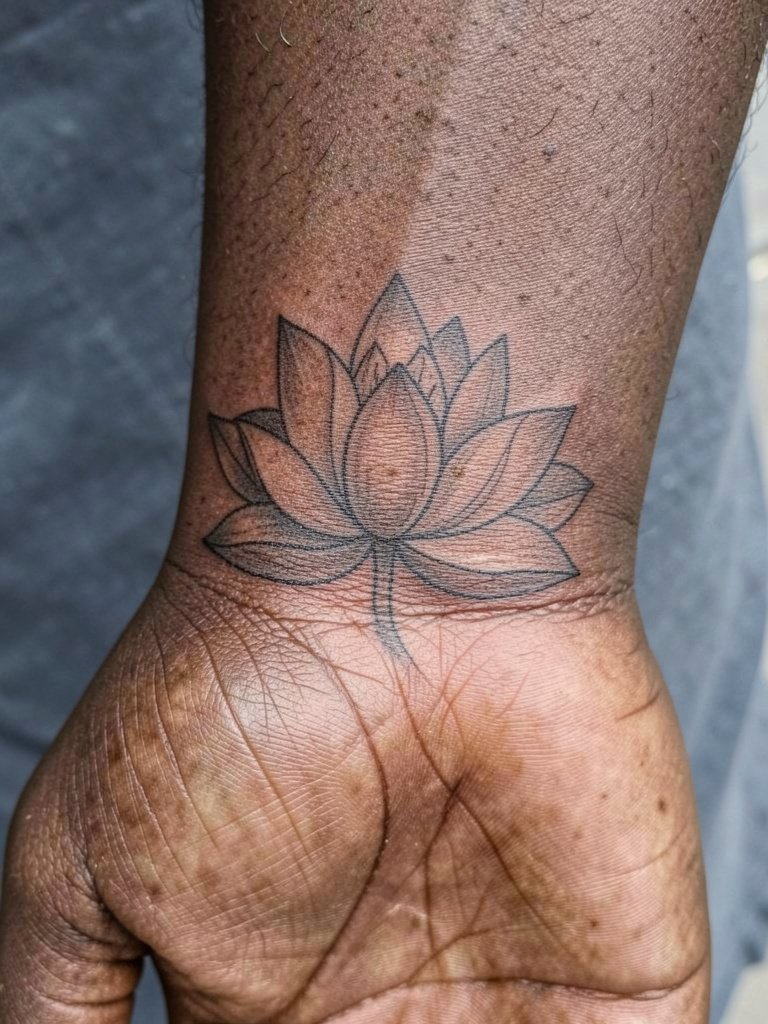
Choose the lotus when you want a compact symbol that reads clearly at small sizes. For wrist placements keep the petal spacing slightly wider than a larger forearm piece so it retains definition as the wrist flexes. Bring two reference photos showing scale at one to three inches so the artist can map how petals read wrapped around the wrist. A mistake is packing too much inner detail into a tiny lotus; that detail fills in during healing. Expect a one-session piece that may need a touch-up at six to twelve months if you wear tight bracelets. The lateral neck option requires a steady hand and a pro comfortable with neck skin movement, so plan for a careful consult.
3. Sunflower with Color Accents (Outer Upper Arm)

Sunflowers photograph well and suit shoulder placements that let color breathe. If you want color, place this on the outer upper arm or shoulder blade where sun exposure is controllable and touch-ups are easier. One camp argues color fades unpredictably, especially reds and pastels, and recommends black-and-grey for long-term retention. Another camp counters that high-quality color work on protected placements holds beautifully for five years or more and that color choice should match your aesthetic. Both views are common, so weigh how visible you want color shifts to be over time.
Do not go tiny with petals. The bold petal architecture is what preserves the image across years. For showing it off try a short-sleeve fitted tee that keeps the shoulder visible while staying comfortable during healing.
4. Lavender Sprig (Wrist or Ankle)

Lavender works as a quiet, repeatable motif for first-timers. It ages well when the stems are given breathing room and when the color wash is kept faint. Ask the artist to plan slightly thicker stem anchors so the sprig keeps visual weight in photos and everyday life. Tiny clusters packed too close will soften into a smudge at the six- to twelve-month mark. For session comfort wear a short sleeve and leave jewelry off the tattoo wrist. To frame it afterward, pair with a thin chain bracelet set on the opposite wrist so the delicate ink has room to read.
5. Koi Fish Flowing Up the Calf

Koi are about movement and composition. Choose this when you want a piece that curves with muscle and motion. Ask the artist to map the flow lines on you standing so the fins land where the leg naturally moves. A frequent mistake is compressing the koi into a tiny space instead of letting its body breathe. Color holds better on the calf than on hands or feet, but expect two to three sessions for good saturation. For showing it off, the tattoo pairs well with lightweight linen shorts in warm months. Plan a touch-up check at the one-year mark.
6. Jellyfish with Flowing Tentacles (Ribcage Option)

Jellyfish read beautifully across ribcage curves but the ribs are a high-movement, high-flex area. Artists split into two camps on fine-line ribs. One group says single-needle work blurs within two years because the skin stretches with breathing and friction. The other group argues that with controlled needle depth and slightly wider spacing fine line holds up, and they point to multi-year healed examples as proof. If you want a jellyfish here, plan for slightly bolder anchor lines and expect a touch-up at 12 to 24 months. Because ribs sweat and rub against clothing, avoid tight underwire or restrictive bras during the initial healing window.
7. Dolphin in Micro-Realism (Calf or Outer Thigh)

Micro-realism dolphins need an artist experienced with tiny gradations of tone. Favor the calf or outer thigh for enough canvas to keep the contrast and highlights readable. During consultation, request healed close-ups of the same technique on similar skin tones. A real mistake is compressing too many tonal shifts into a one-inch piece. For session-day comfort wear minimalist sneakers and shorts to allow the artist access to the calf without pressure on fresh ink. Small micro pieces often need a single light touch-up within the first year.
8. Origami Birds in Geometric Blackwork (Wrist or Inner Forearm)

Origami birds bridge minimalism and structure. Ask the artist to vector the folds at a scale of three to five inches for the forearm so the negative space remains intentional. The biggest mistake is shrinking the geometric planes so they lose crisp edges when healed. Blackwork reads strongly on wrists and forearms, which helps photographers and everyday visibility. For showing off pair with a minimalist watch on the opposite wrist so the design stays the focal point. Expect a one- to two-session job and a possible touch-up at six months for solid fills.
9. Tree of Life Circle (Shoulder Blade or Hip)

The Tree of Life pairs sacred geometry with organic branching. For shoulder blade placement ask for a slightly larger circle so the root details read after healing. A common error is crowding too many tiny root twigs inside a small circle, which lose definition with time. This design scales well, but if you put it on the lateral hip keep in mind waistbands can rub during the first week. For intimate placements plan loose waistbands and avoid tight belts during healing. Expect two to four sessions for a detailed iteration and a one-year check for any touch-ups.
10. Nautilus Spiral Fossil (Inner Forearm or Wrist)

Nautilus spirals give a striking geometric solution to small-to-medium placements. The trick is scale. If you shrink the spiral too far the chambers fuse together after a few months. Tell the artist you want the chambers to remain distinct at a viewing distance of arm's length. This design holds especially well in blackwork or a single crisp grey wash. For session wear bring a loose short-sleeve so the artist can pivot your wrist without pressure. Touch-ups are uncommon for this one if the initial spacing is generous.
11. Mountain Range Linework (Ankle, Calf, or Forearm)

Mountains are flexible across scale and placement. For ankle work keep peaks simple and avoid tiny tree clusters at the base. The ankle takes friction from shoes and socks so solid silhouettes outperform fine stippling here. For a calf or forearm piece you can add more detail like snow caps and tree lines. Plan for possible touch-ups at two to three years on ankles because of constant abrasion. To show the piece off, cropped denim does the job; try cropped straight-leg jeans so the ankle stays visible without garish styling.
12. Moon Phases Band (Collarbone, Wrist, or Nape)
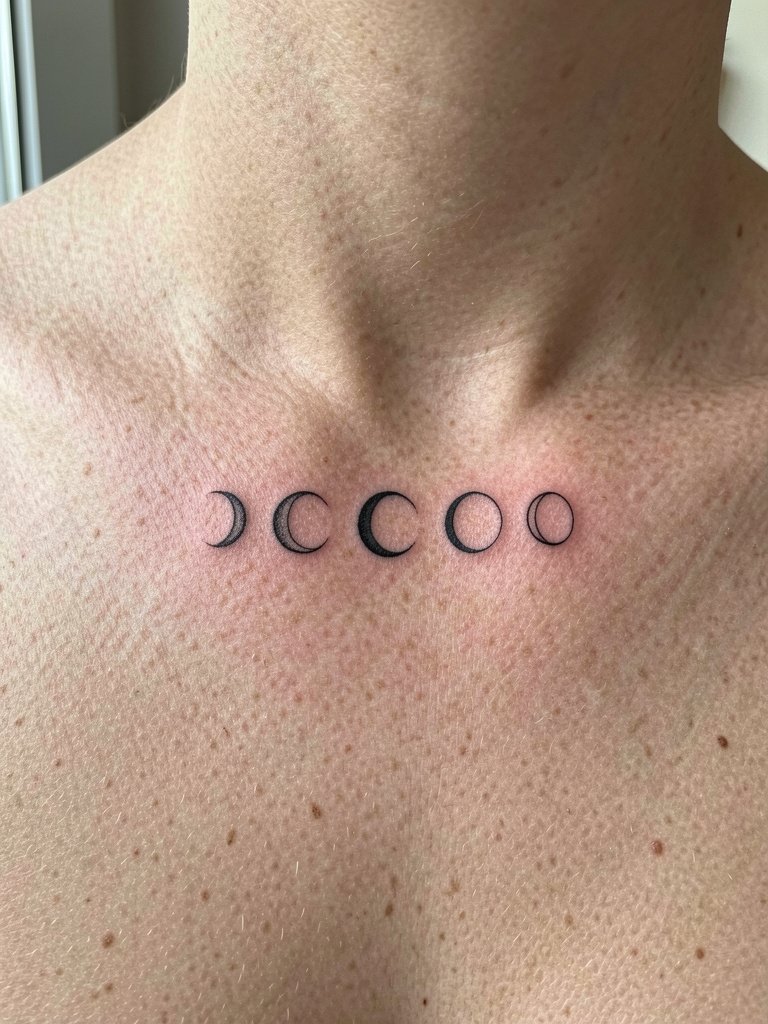
Moon phases are an excellent choice if you want a modular motif that can be placed horizontally along collarbones or vertically on forearms. Keep each moon circle slightly larger than a dime for clarity at distance. A frequent misstep is compressing eight tiny moons into an inch; the sequence needs breathing room or it reads as a blur after a year. The collarbone placement calls for an open-neck top during the session. For evening outfits pair it with a scoop-neck tee that frames the clavicle without competing with necklaces. Expect a one-session job with a likely six- to twelve-month touch-up for line crispness.
13. Wildflower Bouquet Patchwork (Full Inner Arm, Calf, or Thigh)
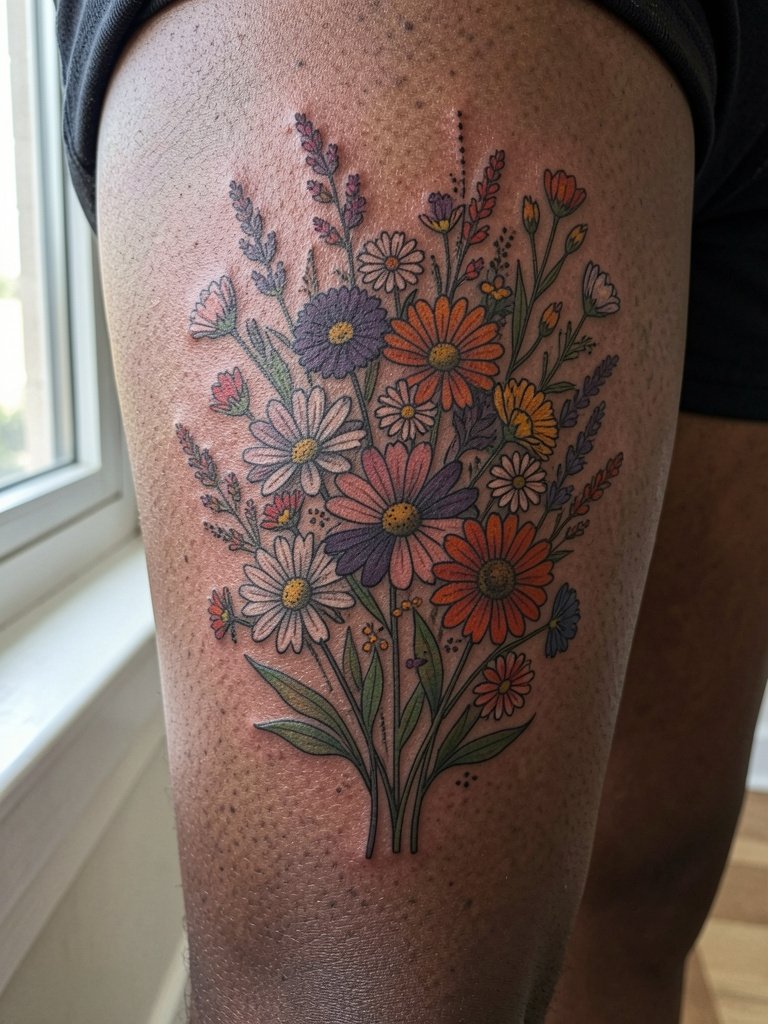
A patchwork bouquet is perfect for collectors who want a sleeve built over time. Use species with different textures to give each insert its own breathing room. Ask the artist to plan future anchor points so later additions slot in without fighting the original composition. One mistake is insisting every flower match in scale and line weight; variety is what keeps the patchwork intentional. For thigh or calf session wear choose shorts that are easy to remove. Treat this as a multi-year project and expect multiple touch-ups and color-refresh sessions.
14. Wolf Portrait or Silhouette (Outer Upper Arm or Back)

Wolf designs vary from stark silhouettes to detailed portraits. Portrait-level detail demands a larger canvas such as the outer arm or back. If you prefer a silhouette, choose crisp edges and avoid tiny interior details that will blur. Ask for healed close-ups of the artist's portrait work and request the expected session count up front. A common mistake is underestimating the contrast needed for a portrait to read across years. For upper-arm reveal, sleeveless tops or cap sleeves frame the piece nicely and keep friction low while healing.
15. Half-Sleeve Nature Landscape (Outer Upper Arm to Forearm)

Half-sleeves are a long game. When building a scene across shoulder to forearm, prioritize a clear focal element so future additions do not erode the narrative. Bring reference images that show negative-space buffers and ask the artist how they plan to transition from arm curve to wrist. Mistakes to avoid include over-detailing every inch from the first session. This is a multi-session project, often four to eight sittings. For day-of comfort and future show-off looks, a womens sleeveless tank top gives access without rubbing a new sleeve. Budget for touch-ups at year one and color refreshes every few years if color is used.
Session Day Picks
The inner forearm florals, wrist moons, and ankle mountains above all share a need for clothing that gives access without rubbing fresh ink. A few small items smooth the session and the first week.
-
Hustle Butter Deluxe Tattoo Aftercare Balm. A popular tattoo-specific balm many clients use after the initial film comes off, helpful for softer skin areas but follow the artist's timing on use.
-
Mad Rabbit Tattoo Balm. Gentle moisturizer many people prefer over petroleum products for long-term maintenance on larger pieces.
-
After Inked Tattoo Moisturizer and Aftercare Lotion. Lightweight lotion some clients find less clogging on sensitive skin while still supporting hydration.
-
Fragrance Free CeraVe Moisturizing Cream. A dermatologist-familiar option used by people who react to petroleum balms.
-
Saniderm Waterproof Film Roll. The classic second-skin choice that proponents say protects the first 24 to 48 hours. Follow the artist's instructions if you plan to try this method.
Frequently Asked Questions
Q: Will a fine line botanical show up on darker skin tones?
A: Fine line can hold on darker tones when the artist adjusts needle depth and increases line spacing slightly. Request healed examples on a similar skin tone during your consult. If you want more guaranteed contrast ask for a slightly heavier anchor line or a light grey wash behind the main lines.
Q: Why do small tattoos feel so expensive now?
A: Studio minimums and higher hourly artist rates mean a 30-minute design can still hit a 250 to 400 minimum in many markets. Consider booking during slower seasons, combining multiple small pieces into one session, or looking for guest spots and convention bookings where minimums sometimes differ.
Q: Saniderm or dry healing. Which should I pick for forearm work?
A: The two camps disagree. One says Saniderm reduces scabbing and protects early healing for forearms and calves. The other argues films trap moisture and can cause reactions in sensitive skin. For forearm pieces Saniderm often works well because friction is lower than in the groin or under-bust. Mention previous reactions to adhesives and follow a patch test if you are unsure.
Q: Where should I look to find artists who specialize in fine line botanical or geometric nature work?
A: Start with Instagram hashtag and location searches like #naturetattoo, #finelinetattoo, and #botanicaltattoo combined with your city. Use Tattoodo to filter by style and look specifically for healed portfolio photos. Style-specific Reddit threads often surface peer recommendations and healed shots. Booking platforms like Booksy and Inked App let you filter by specialty and view artist portfolios before you commit.
Q: What should I wear to a shoulder-to-forearm half-sleeve session?
A: Wear something that gives full arm access without rubbing the fresh ink. A sleeveless tank or a loose short-sleeve top that can be rolled comfortably is ideal. If you want a simple option to bring, a womens sleeveless tank top hits the right balance of access and modesty.
Q: How soon do nature pieces usually need touch-ups?
A: Plan for a six- to twelve-month check for fine-line work and one to two year checks for color pieces. High-friction spots like ankles, hands, and ribs often need more frequent touch-ups than forearms and calves. Touch-up frequency depends on placement, sun exposure, and how your skin heals.