I spent months collecting elephant tattoo inspiration and talking to artists before I got my own piece. The trick wasn’t just picking a pretty sketch—it was choosing a style that actually ages well on my skin. These 24 elephant tattoo ideas cover minimalist first-timers to full-sleeve collectors, with placement, pain reality, healing notes, and the artist details I’d ask for.
This list focuses on styles from fine line to mandala and blackwork. These ideas work well on forearm, shoulder, thigh, and back. From what I’ve seen in 2026, mandala elephant tattoos and minimalist elephant outlines keep showing up on artists’ feeds—and they age differently, so I note that below.
1. Fine Line Elephant Head on Wrist
Style/Technique: Fine Line / Minimalist
Pain Level: Low (2-3/10)
Session Time: 1 hour, single session
Best For: First elephant tattoo, subtle symbolism, small elephant tattoos
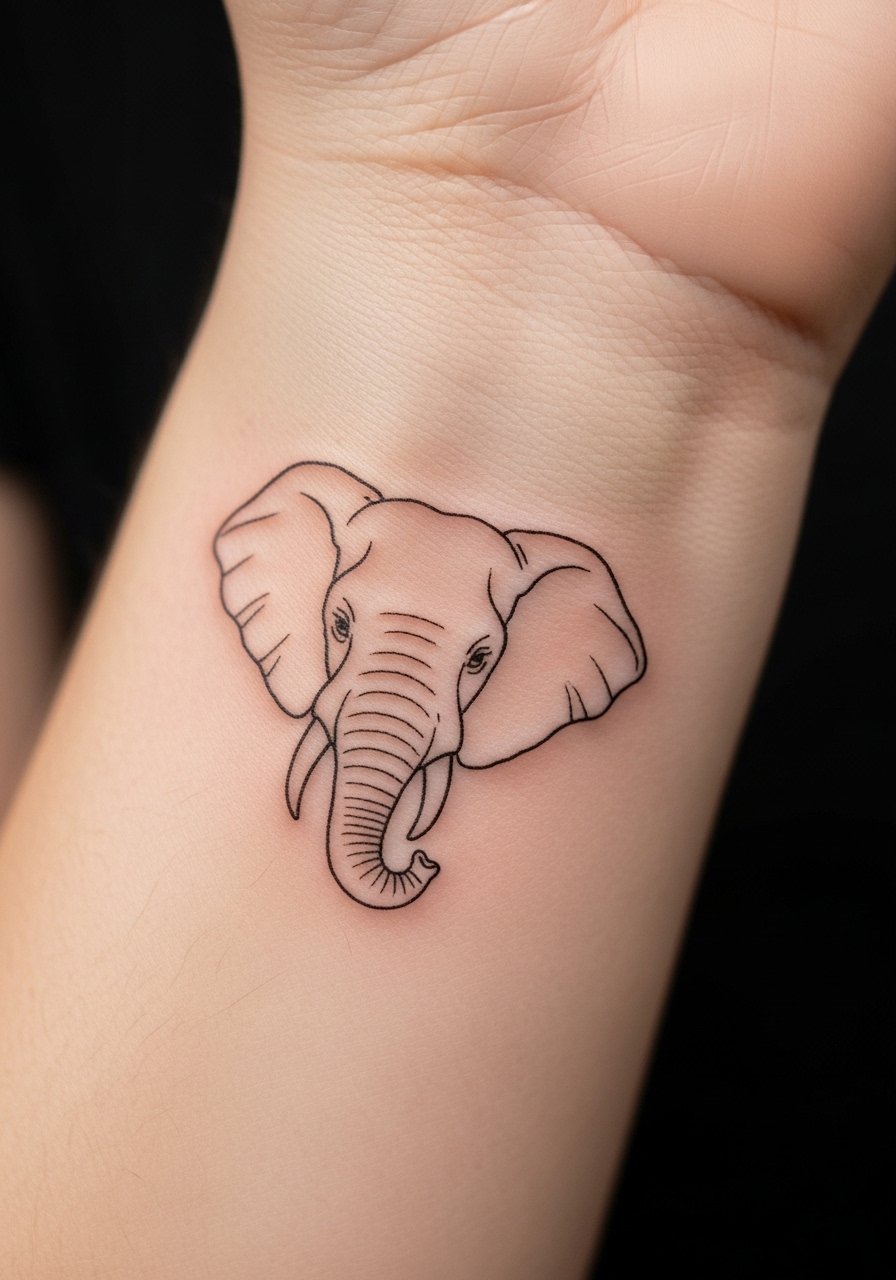
I love this as a first elephant tattoo—an elephant head outline says patience and wisdom without shouting. Visually it reads clean: one or two fine lines for the trunk and ear, maybe a tiny eye. The wrist lets the trunk follow natural wrist curves, which helps flow. Pain is low here, but remember the wrist can sting if your veins are shallow. Healing is quick—surface heals in 2-3 weeks—but fine lines blur faster if the artist doesn’t space lines correctly. From what I’ve seen, you should ask for a slightly bolder fine-line approach if you want longevity. Avoid tiny, crammed details; the common mistake is making it too small for the linework. Look for artists known for small elephant tattoo designs and fine-line portraits on Instagram or Pinterest.
2. Mandala Elephant on Forearm
Style/Technique: Mandala / Ornamental
Pain Level: Medium (3-4/10)
Session Time: 2–4 hours, maybe two sessions
Best For: Forearm statement, spiritual symbolism, mandala elephant tattoo
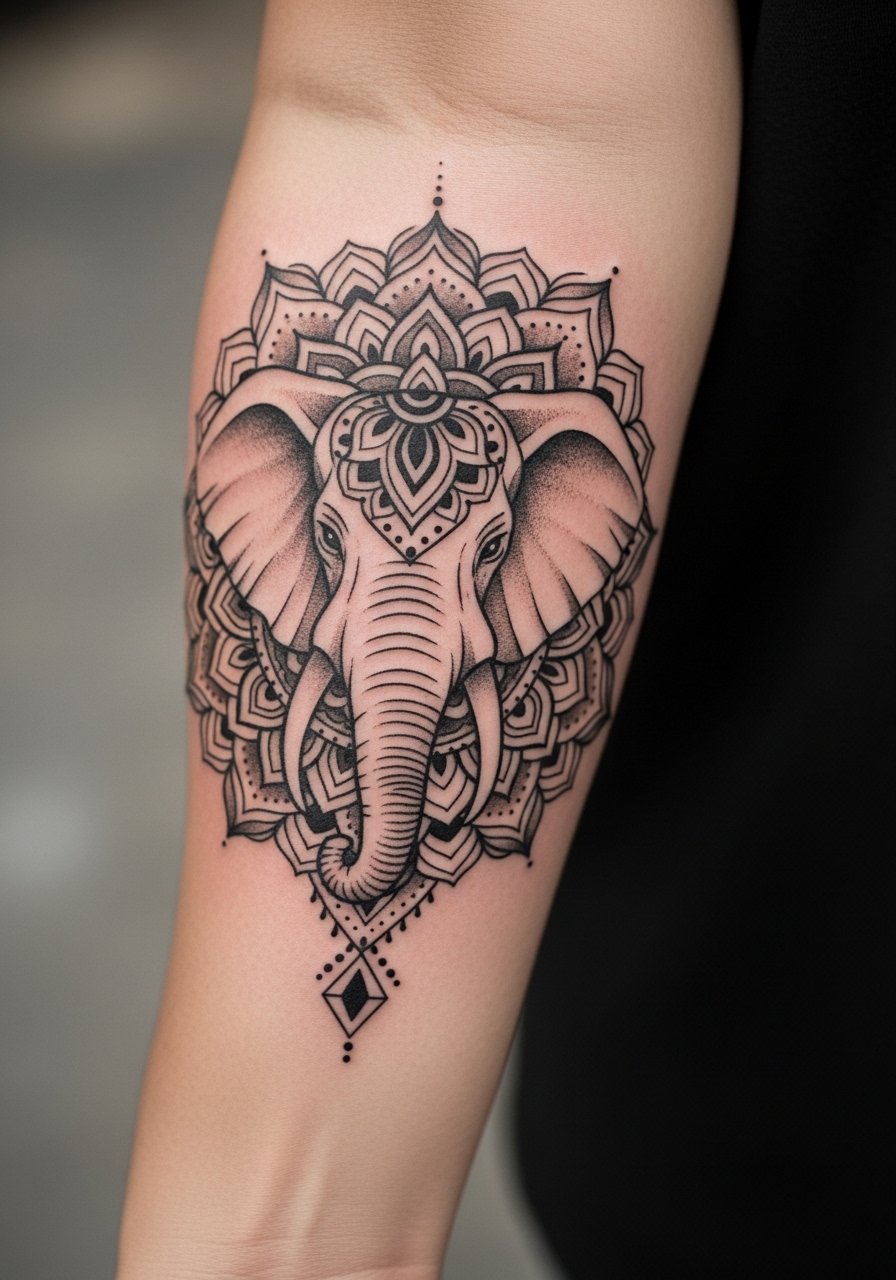
Mandala elephant tattoos mix geometry with the elephant’s calm presence—great if you want balance and spiritual meaning. Placing it lengthwise on the forearm lets the trunk point toward the wrist, keeping body flow. Pain is moderate: the outer forearm is forgiving, but long sessions can feel like friction. Healing takes a couple of weeks for the surface; the detailed dots and thin mandala strokes need an experienced hand to avoid long-term blowout. I recommend seeking artists who specialize in mandala work and mandala elephant tattoo variations on Instagram. A mistake I see often is over-detailing for a small forearm; give the pattern room or it’ll blur. Use blackwork or black & gray for long-term clarity, and ask to see healed forearm mandala examples.
3. Family Elephants Row on Thigh
Style/Technique: Realistic / Illustrative
Pain Level: Low-Medium (3/10)
Session Time: 2–4 hours, single to multiple sessions
Best For: Tribute tattoos, easy to hide, family elephants
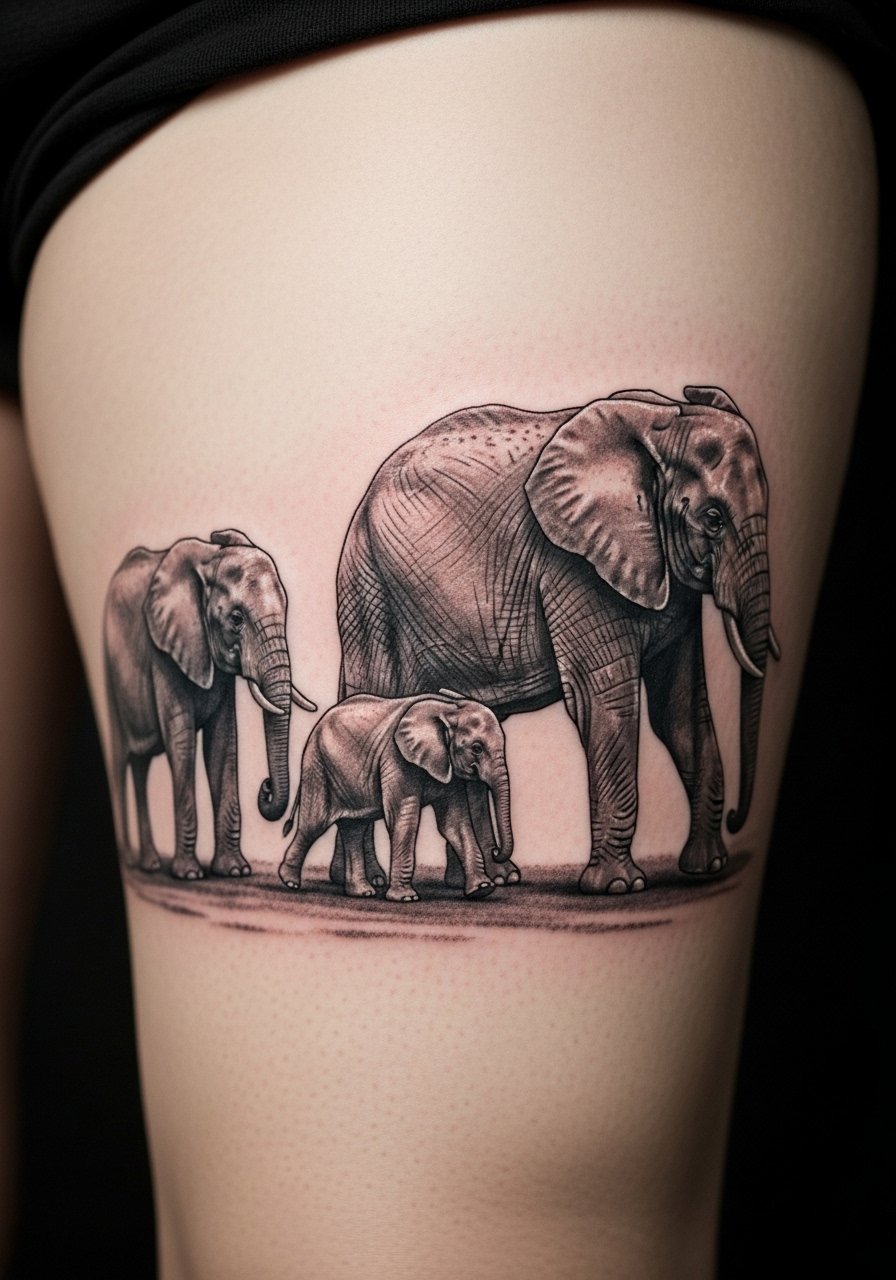
A family group—adult with calves—reads like loyalty and protection. The thigh gives the space for multiple figures and shading, so you can get realistic detail without crowding. Pain on the outer thigh is mild; inner thigh is more sensitive. I like black & gray realism for this because it’s timeless and ages well. Healing is straightforward but expect deeper shading to take a month to settle. One pain point people have is matching styles for couples or parent-child pieces; talk to your artist about consistency if you want matching placements or scaled versions. Don’t compress too many tiny elephants into a narrow area—common mistake. Look for artists who post healed realistic elephant groups on Instagram and Pinterest to vet how shading retains detail.
4. Neo-Traditional Elephant With Calf on Ribcage
Style/Technique: Neo-Traditional / Illustrative
Pain Level: High (7-8/10)
Session Time: 2–4 hours, likely two sessions
Best For: Emotional tribute, intimate placement, elephant with calf
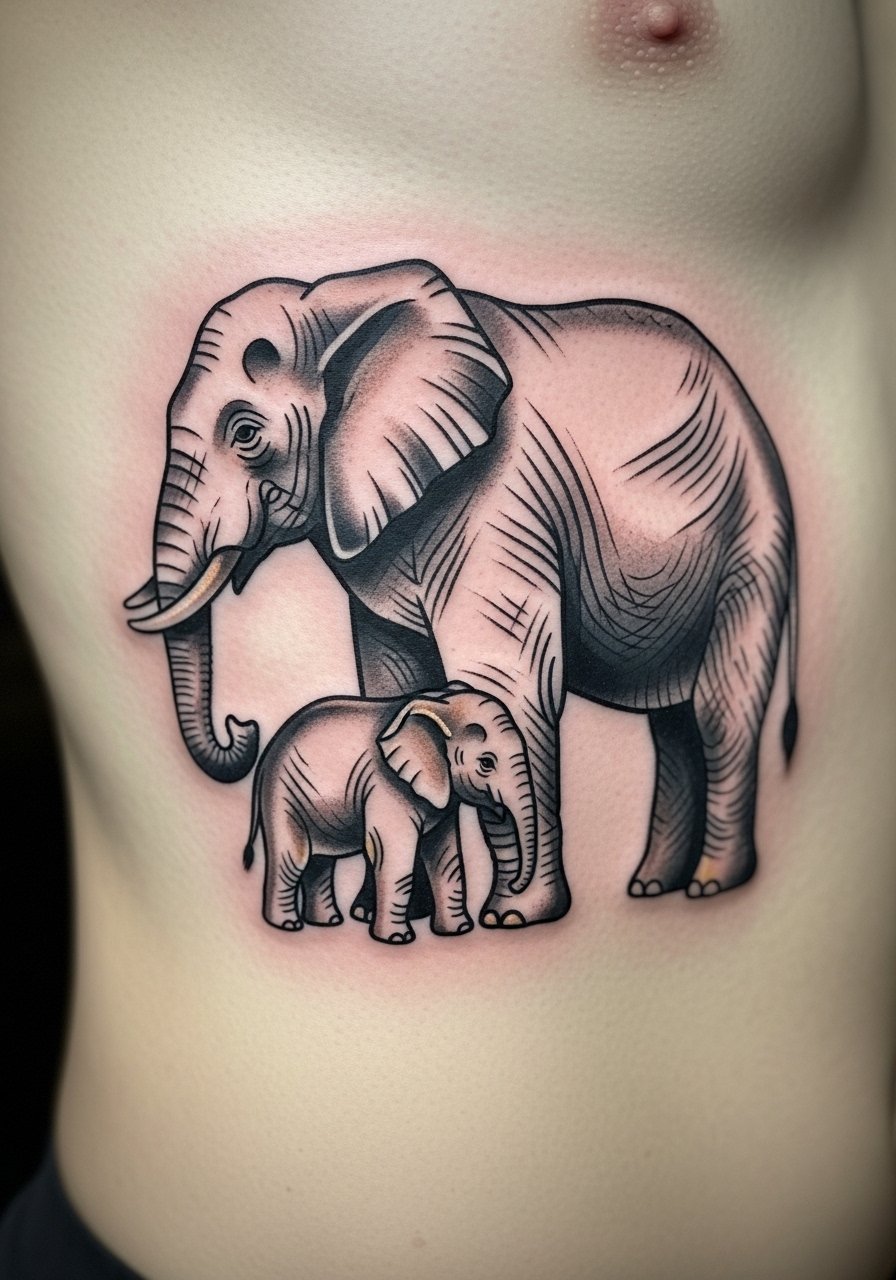
An elephant with a calf on the ribcage is intimate and symbolic of parental love. The ribcage is one of the higher-pain areas—expect sharp, long-lasting discomfort—so plan breaks. Neo-traditional gives you bold lines and color accents for clear imagery that holds up better than delicate lines in this spot. Healing needs care: stretching with breathing affects scabbing early on. I’ve seen people underestimate rib movement; a common mistake is choosing too much fine detail where the skin flexes. Ask your artist about session pacing and pain management. This design is personal, so bring photos or sketches to customize the calf’s pose; many artists who do neo-traditional work also show healed ribcage examples on Instagram.
5. Floral Watercolor Elephant on Collarbone
Style/Technique: Watercolor / Floral
Pain Level: Medium (4-5/10)
Session Time: 1–3 sessions, 2–4 hours total
Best For: Feminine blend of strength and softness, collarbone placement
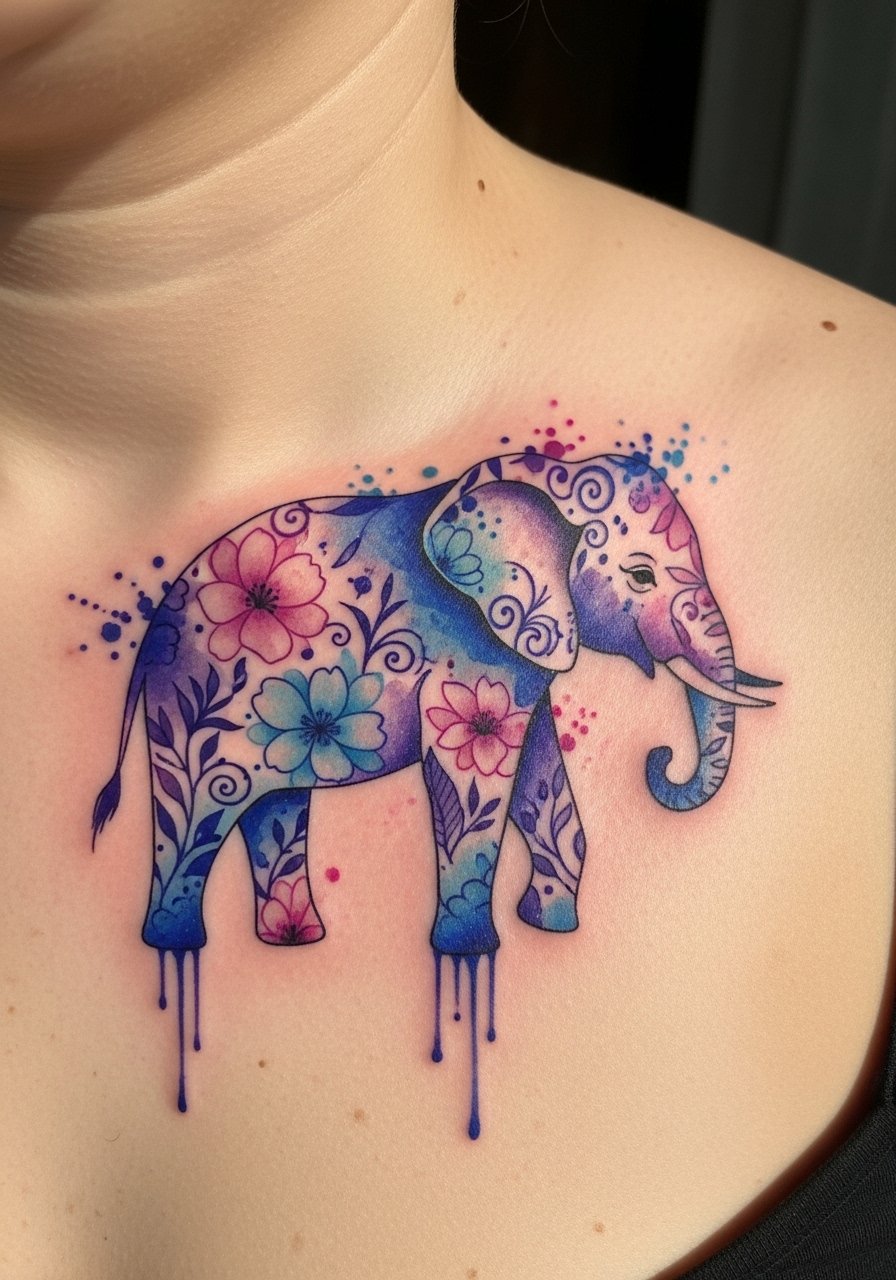
Floral watercolor elephants pair the animal’s strength with delicate flowers and color washes—great for someone wanting a softer elephant tattoo meaning. Collarbone placement gives a pretty horizontal canvas but can be more painful near bone. Watercolor looks gorgeous fresh but can fade faster, so I tell people to pick deeper pigments for longevity and expect touch-ups. Healing requires strict sun protection; watercolors lose vibrancy without care. The main mistake is relying only on light washes—ask for some saturated anchors in the design. Look for artists who show healed watercolor elephant tattoos on different skin tones to know how colors age. I used Pinterest to gather floral pairings that matched my tone before booking.
6. Butterfly Wing Elephant on Shoulder Blade
Style/Technique: Illustrative / Fantasy
Pain Level: Low-Medium (3/10)
Session Time: 2–3 hours, single session
Best For: Symbolic of growth, shoulder blade display
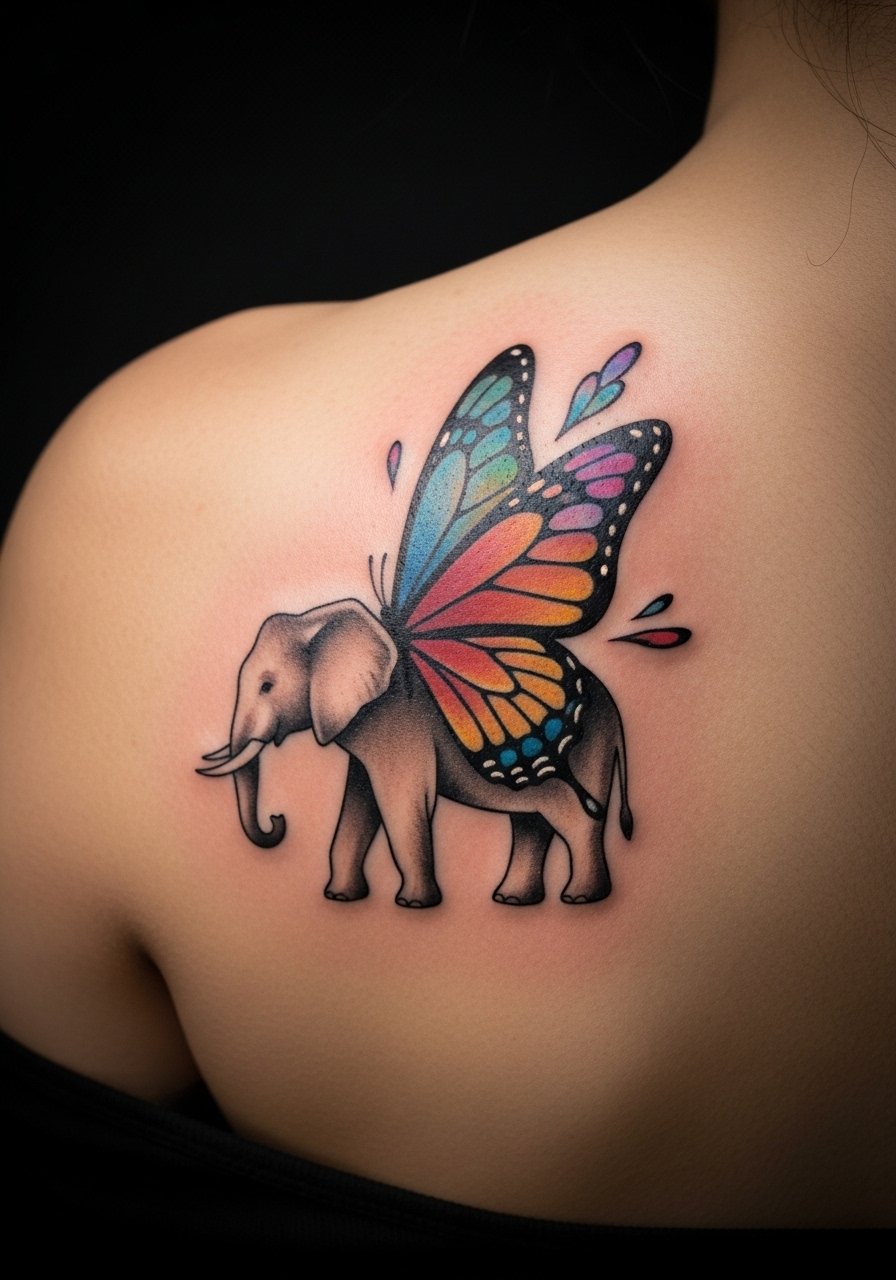
This motif combines transformation (butterfly) with the elephant’s grounding energy—it’s about growth without losing your roots. Shoulder blade placement is forgiving for pain and great for medium-sized color work. I’ve seen artists use bright, layered color in the wings while keeping the elephant in muted tones for contrast. Healing goes smoothly if you avoid backpack straps rubbing the area for the first week. A common mistake is overcomplicating the wings; clear shape and color blocks age better. When I booked mine, I asked for healed examples of color saturation on similar skin tones via Instagram. This is also a great piece if you want to expand into an elephant sleeve idea later.
7. Abstract Blackwork Elephant Silhouette on Forearm
Style/Technique: Blackwork / Abstract
Pain Level: Low-Medium (3-4/10)
Session Time: 1–2 sessions, 1–3 hours
Best For: Bold, modern look, forearm statement
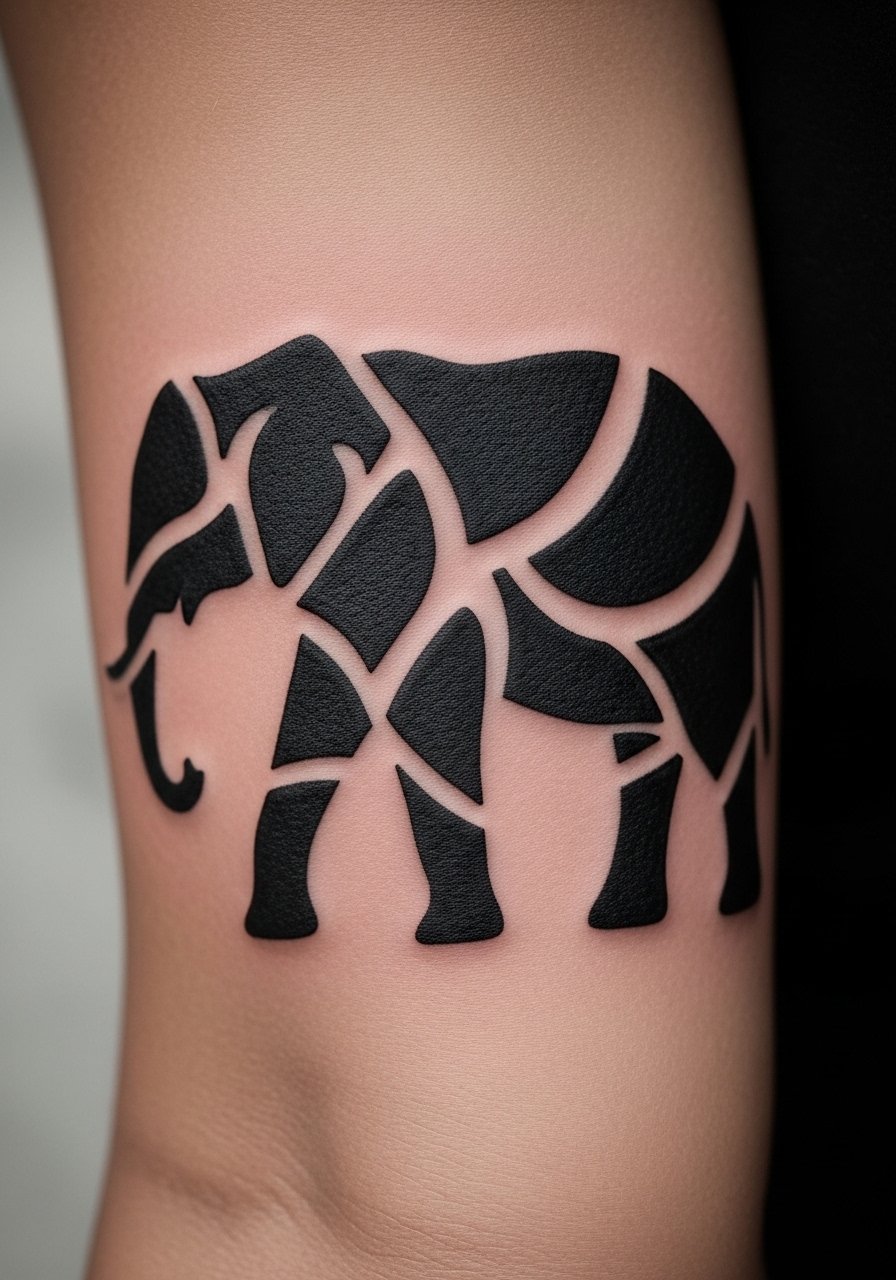
Abstract silhouettes use heavy black fills and negative space to create an elephant form without detailed features. I like this when I want a bold, age-resistant tattoo—blackwork holds up especially well on deeper skin tones. Forearm placement shows off the shape and lets the trunk follow arm flow. Pain is manageable, but solid black fills can feel like sustained friction. Heal time is standard; keep moisturized so solids don’t scab thickly. Avoid tiny negative-space details inside large fills; they can fill in over time. Ask artists who specialize in blackwork and blackwork mandala elephant pieces to see healed photos. This style addresses the regret worry—bold shapes remain readable for years.
8. Traditional Elephant on Upper Arm
Style/Technique: Traditional / American Traditional
Pain Level: Low (2-3/10)
Session Time: 2–4 hours, often one session
Best For: Timeless piece, bicep or chest placement
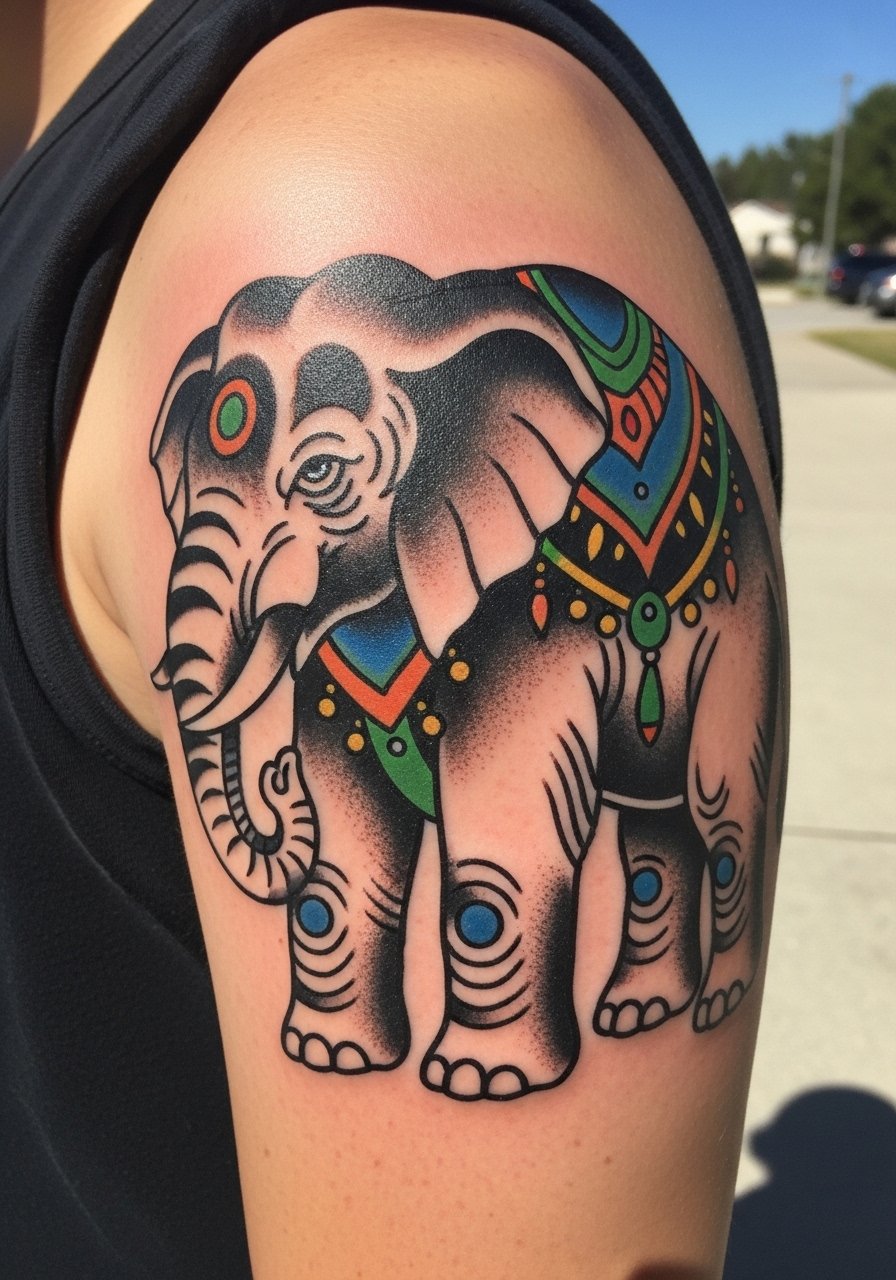
Traditional elephant tattoos bring bold outlines and saturated blocks of color—classic and aging-friendly. On the upper arm you get a forgiving canvas where color and line keep their integrity. Pain is low, and the style looks equally good fresh and healed; you’ll notice mild softening of edges over years but the silhouette reads strong. A frequent misstep is too many small color gradients; stick to flat fills for longevity. I usually look up traditional artists on Instagram to confirm they have healed examples on similar placements. This style is also a solid pick if you worry about future touch-ups—traditional holds up and is easy to refresh.
9. Tribal Elephant Family on Back
Style/Technique: Tribal / Geometric
Pain Level: Medium (4-5/10)
Session Time: 3–6 hours, multiple sessions for large work
Best For: Cultural motifs, large back displays, tribal elephant tattoo
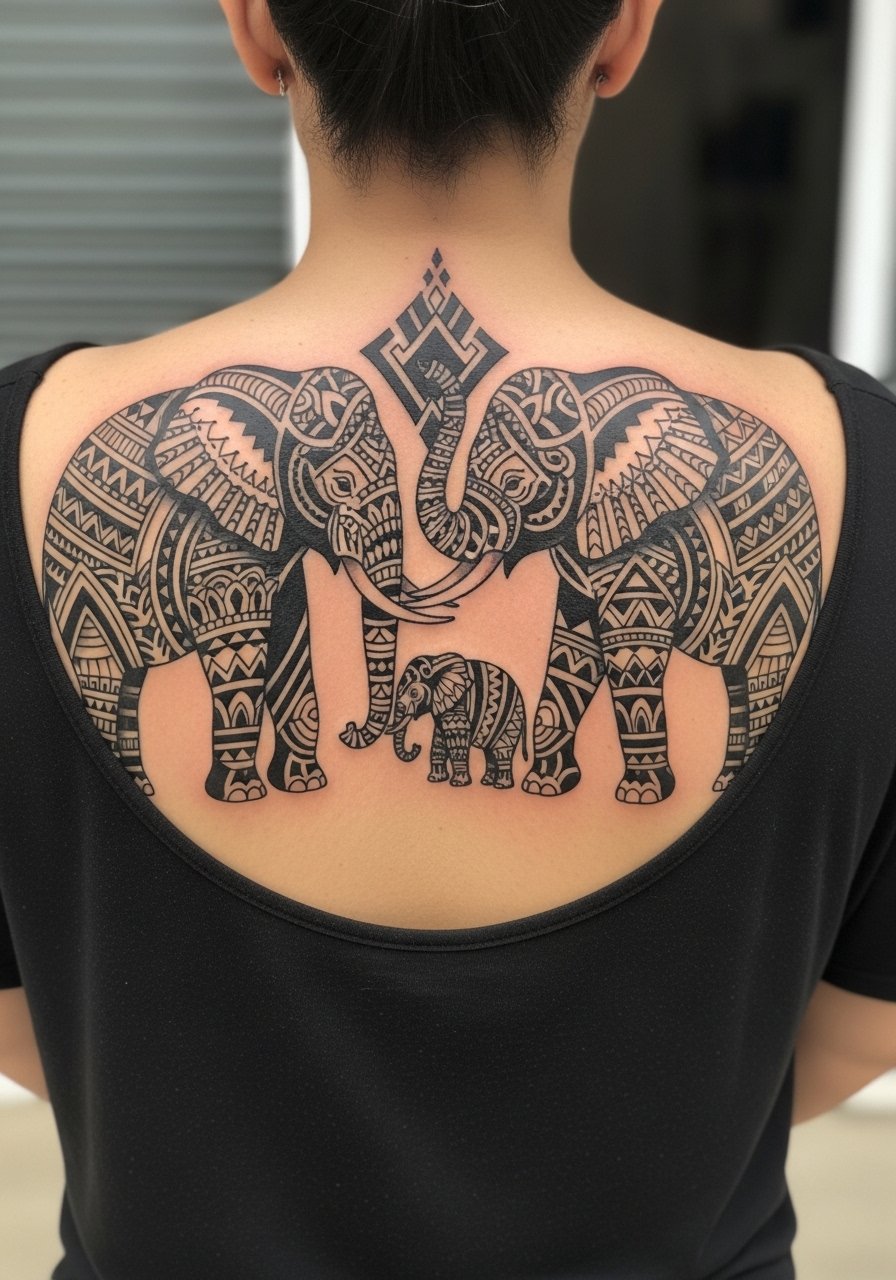
Tribal elephant family layouts use bold geometry and repeating motifs to represent lineage and heritage. The upper back offers a large horizontal space for a row or a sweeping scene. Pain on the back varies—spine areas are tender, but the lateral back is moderate. Tribal blackwork holds well over time; it’s high-contrast and ages slowly. Make sure your design respects cultural roots—talk to artists who specialize in tribal elephant tattoo work. The common mistake I’ve seen is copying generic tribal patterns without adapting them to body flow; ask your artist for horizontal/vertical layout options to suit your back’s curve. This is one of the under-covered ideas that works especially well for family meanings.
10. Minimalist Elephant Outline on Ankle
Style/Technique: Minimalist / Fine Line
Pain Level: Medium-High (5-6/10)
Session Time: 30–60 minutes, single session
Best For: Micro placement, discreet elephant tattoo
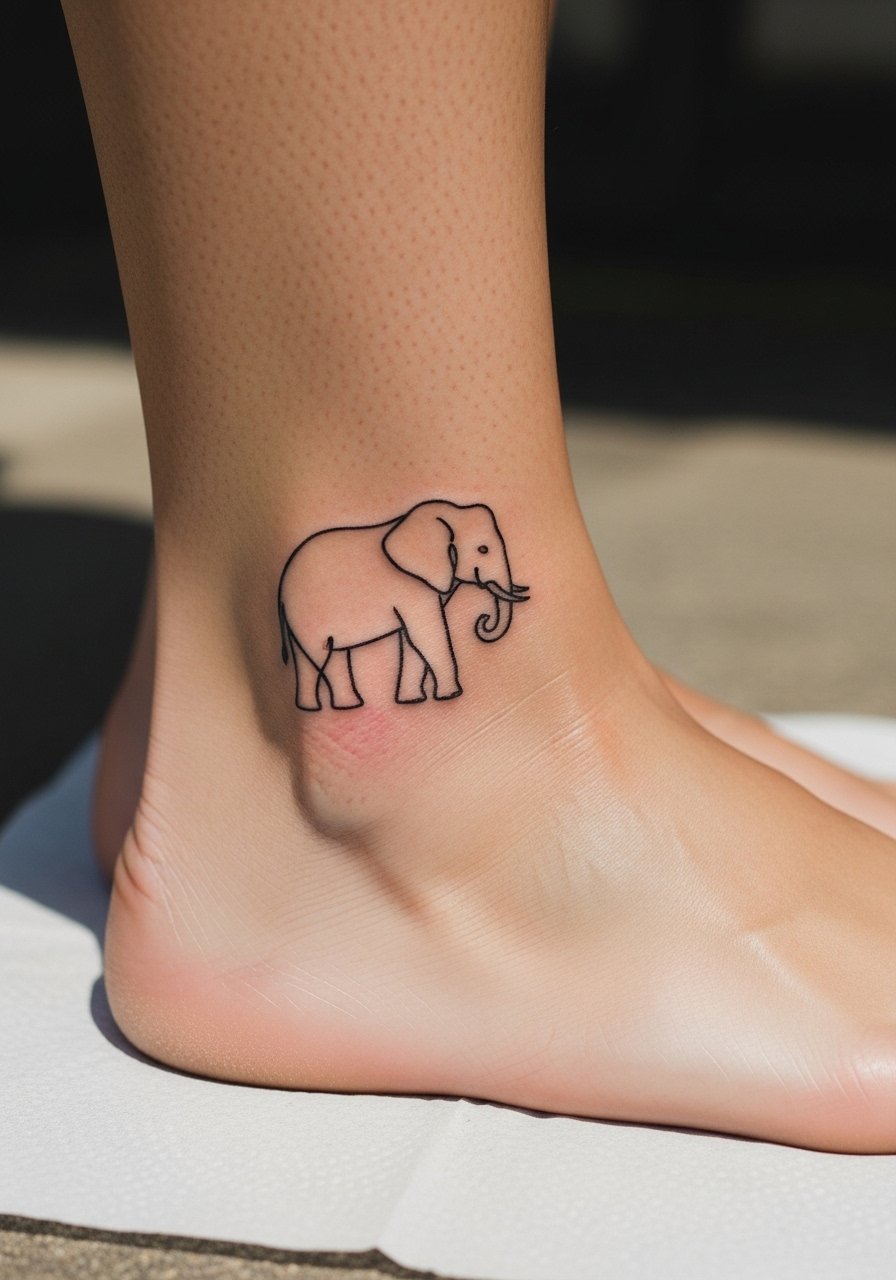
Minimalist ankle outlines are tiny and meaningful—great if you want small elephant tattoos that hint at luck and wisdom. The ankle can hurt more than the wrist due to thin skin and bone proximity, so expect higher pain for a tiny design. Healing is quick but you must avoid rubbing with shoes and socks. I’ve seen many people get one too small; make sure the line width is sufficient or it’ll blur. Ask for a micro-line specialist and ask to see healed ankle examples. This is a classic first-elephant-tattoo option if you want a subtle symbol that you can hide or show easily.
11. Watercolor Elephant on Upper Arm
Style/Technique: Watercolor / Illustrative
Pain Level: Low-Medium (3/10)
Session Time: 2–3 hours, 1–2 sessions
Best For: Color lovers, upper arm placement, watercolor elephant
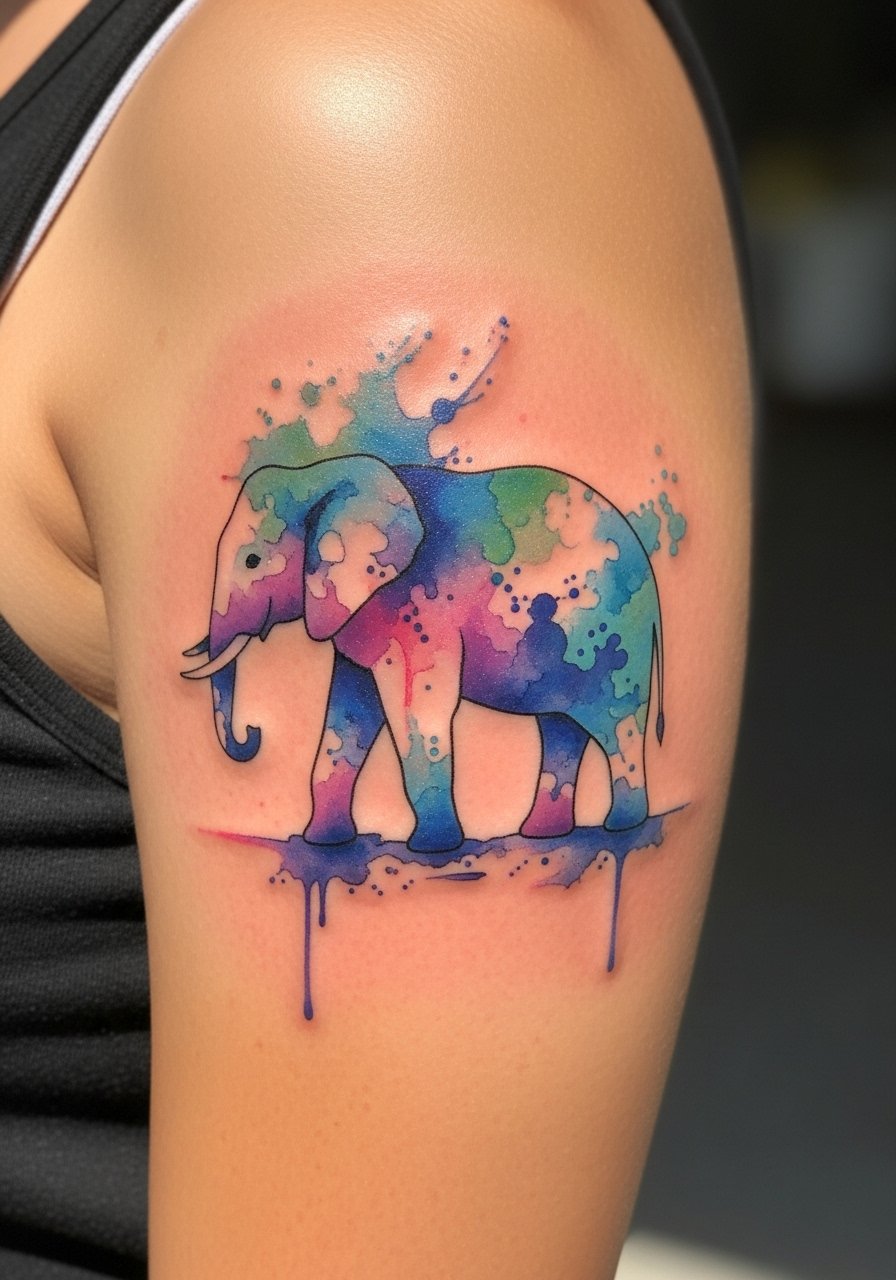
Watercolor elephants bring painterly washes and soft edges—great for expressing prosperity and luck with artistic flair. The upper arm is forgiving for color saturation. From what I’ve noticed, watercolor requires strong initial saturation because colors mellow as the skin heals. Expect to return for touch-ups if you want true vibrancy long-term. Avoid relying on tiny, pale colors that disappear; ask your artist about layering pigment. I found most artists who do watercolor also show healed photos—check Instagram portfolios and Pinterest mood boards. This style pairs well with floral elephant designs for a balanced composition.
12. Neo-Traditional Elephant Head on Forearm
Style/Technique: Neo-Traditional / Bold Illustrative
Pain Level: Low-Medium (3-4/10)
Session Time: 2–4 hours, possibly two sessions
Best For: Forearm detail, couple tattoos, neo-traditional elephant head
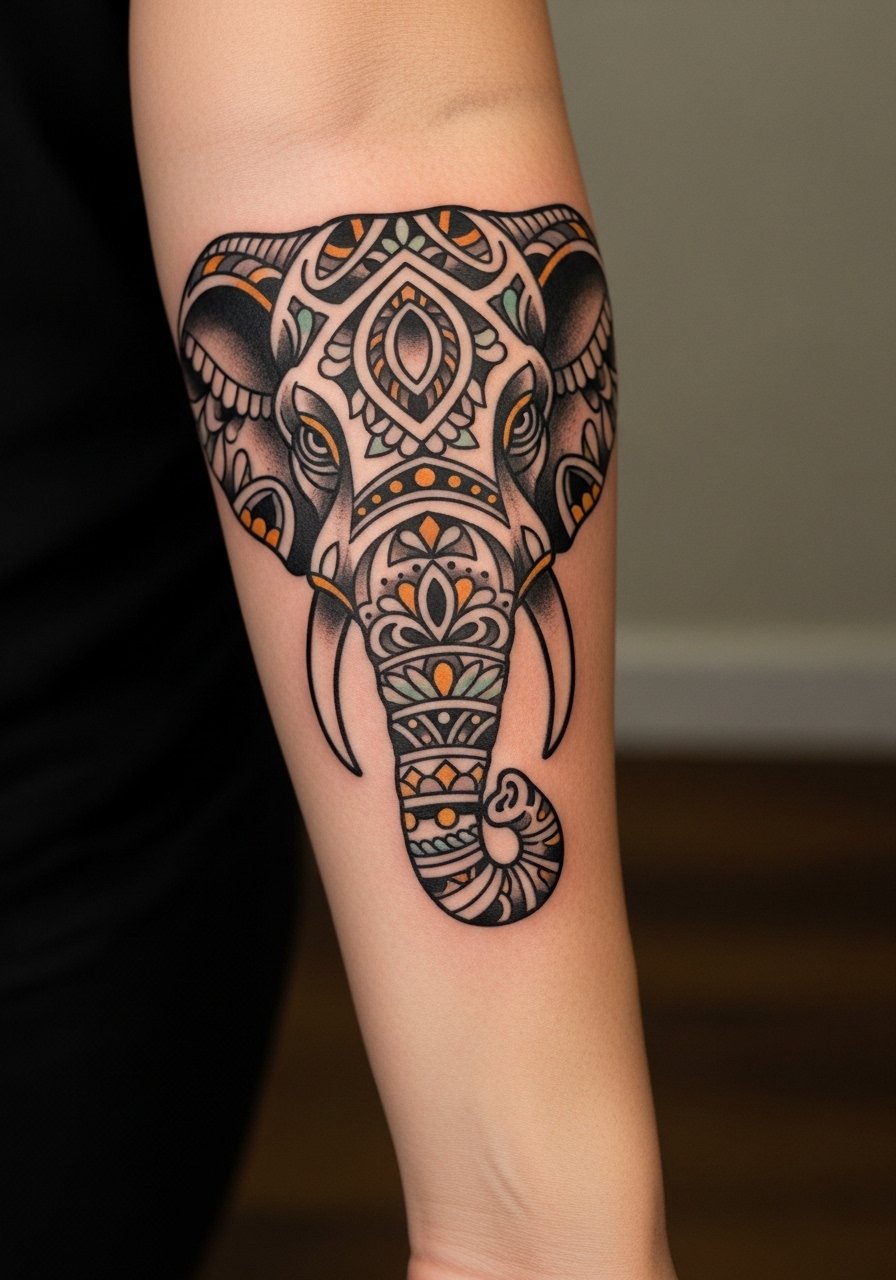
Neo-traditional elephant heads combine the classic silhouette with updated shading and ornamentation—great for couples or fidelity symbolism. The forearm shows off facial detail and ornamental elements like jewelry or floral borders. Pain is bearable; the forearm is a common first-tattoo spot. These age well if the artist uses bold outlines and moderate color saturation. I’ve seen people over-detail the ears; keep enough negative space so features read later. Ask to see healed forearm neo-traditional elephant pieces on artists’ pages. This style also helps with placement regret—forearm work is easy to show or hide with sleeves.
13. Blackwork Mandala Elephant on Back
Style/Technique: Blackwork / Mandala
Pain Level: Medium (4-6/10)
Session Time: Multiple sessions over several appointments
Best For: Large statement, protective symbolism, blackwork mandala elephant
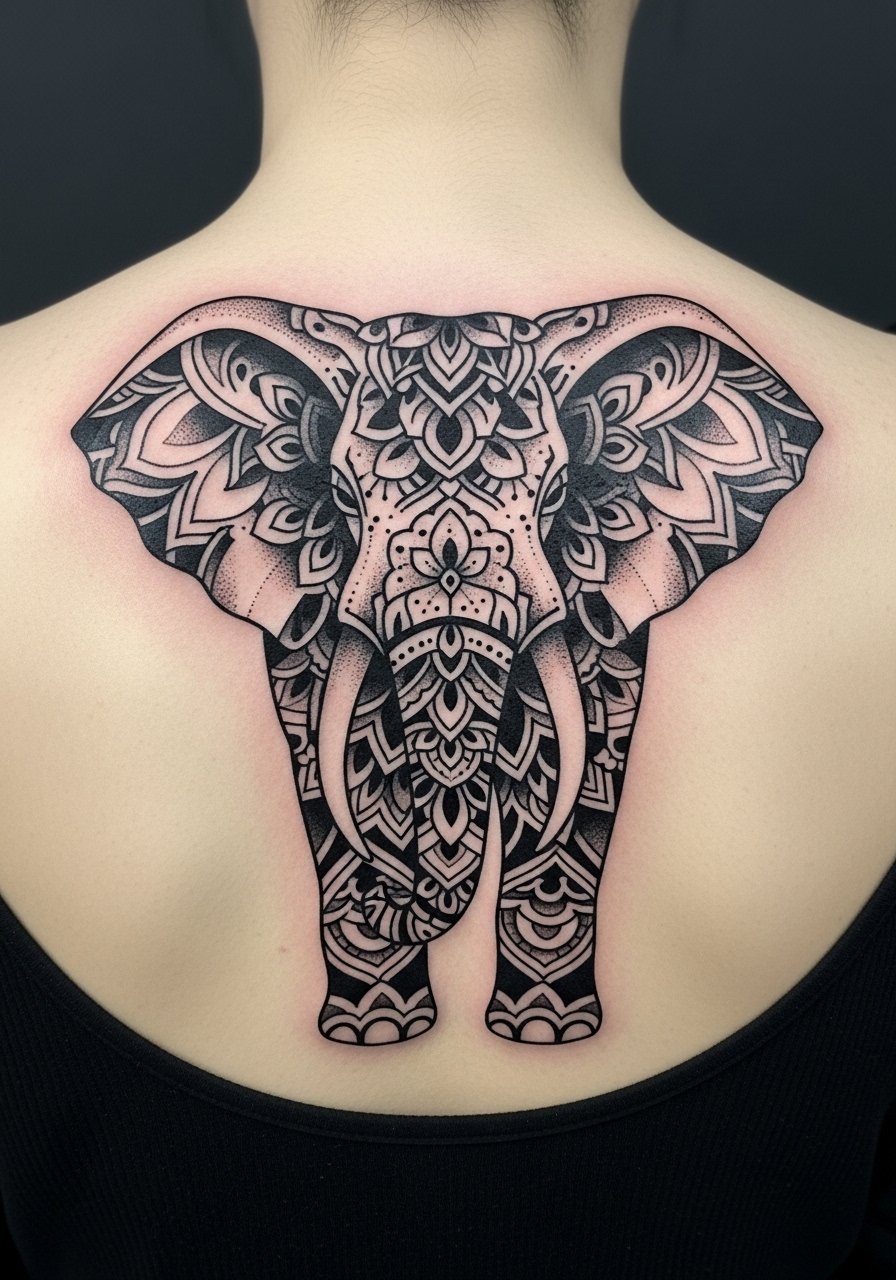
If you want a protective, authoritative vibe, a blackwork mandala elephant on the back is commanding. Large pieces need multiple sessions and a steady artist hand for dense blacks and dotwork. Pain can spike around the spine and shoulder blades, but the lateral back is moderate. Blackwork resists fading and looks great across skin tones; I often recommend it for longevity. The main mistake is overcrowding patterns; mandala needs breathing room to stay crisp. I looked through portfolios to find artists who show healed blackwork mandala elephant examples, since dense blacks can heal differently than linework. This style is one of my go-to picks for coverable but bold elephant tattoo designs.
14. Ganesha-Inspired Elephant on Shoulder
Style/Technique: Sacred / New School
Pain Level: Medium (4/5)
Session Time: Multiple sessions for detail
Best For: Spiritual meaning, shoulder placement, Ganesha-inspired elephant
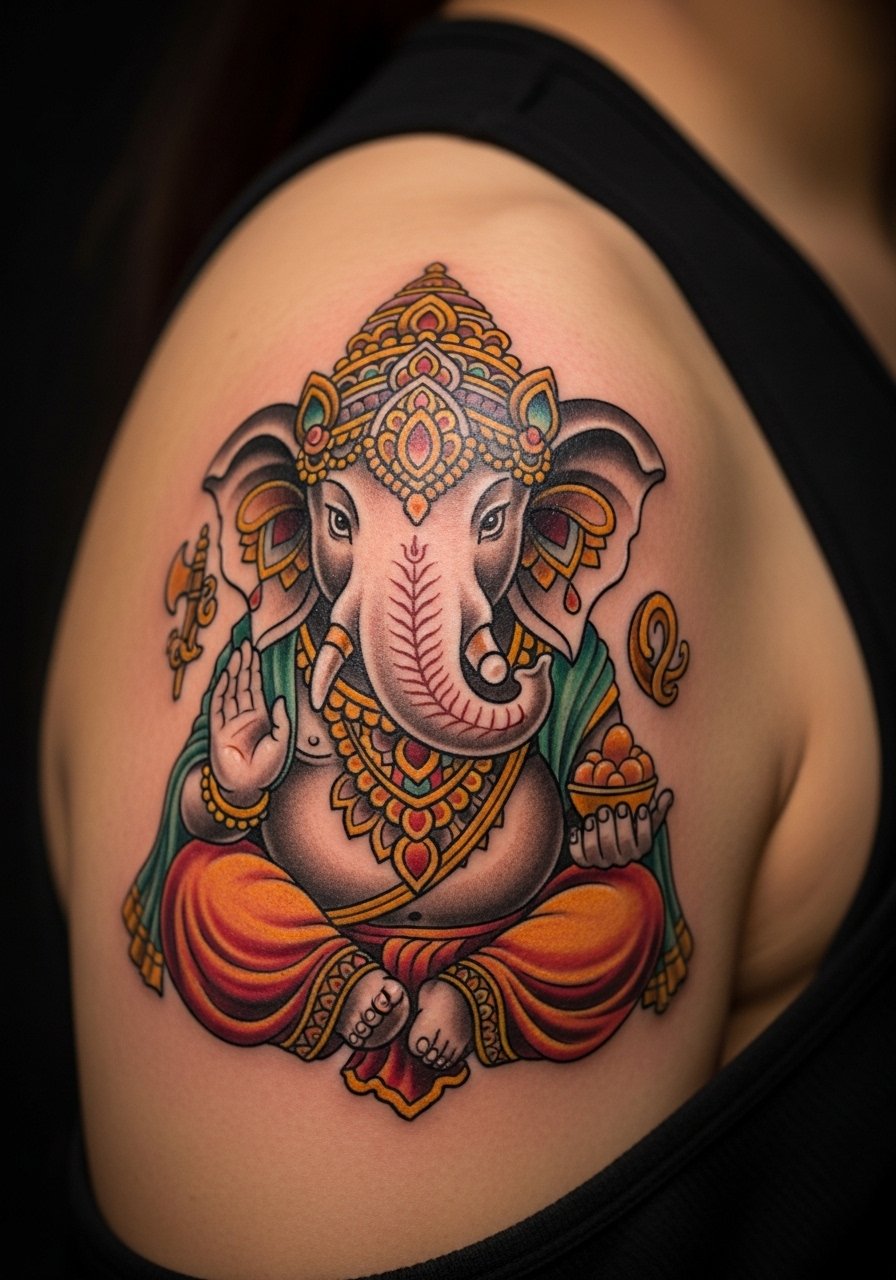
For those drawn to spiritual meanings, a Ganesha-inspired elephant symbolizes obstacle removal and wisdom. Because of cultural significance, I urge respectful conversations with your artist about iconography and meaning. The shoulder is ideal for showing detail while keeping it somewhat private. Expect medium pain and multiple sessions if you want intricate elements. From my conversations with artists, ask for references of sacred elephant tattoos they’ve done and how they approach cultural designs. A typical mistake is using sacred symbols purely as aesthetics without understanding their meaning—if this matters to you, spend time on symbolism in the layout. This is one of the under-covered angles I recommend when depth and tradition matter.
15. Elephant Sleeve Starter on Upper Arm
Style/Technique: Mixed Styles / Sleeve Work
Pain Level: Medium-High (5-7/10 across sessions)
Session Time: Many sessions across months
Best For: Elephant sleeve ideas, expandable projects, collectors
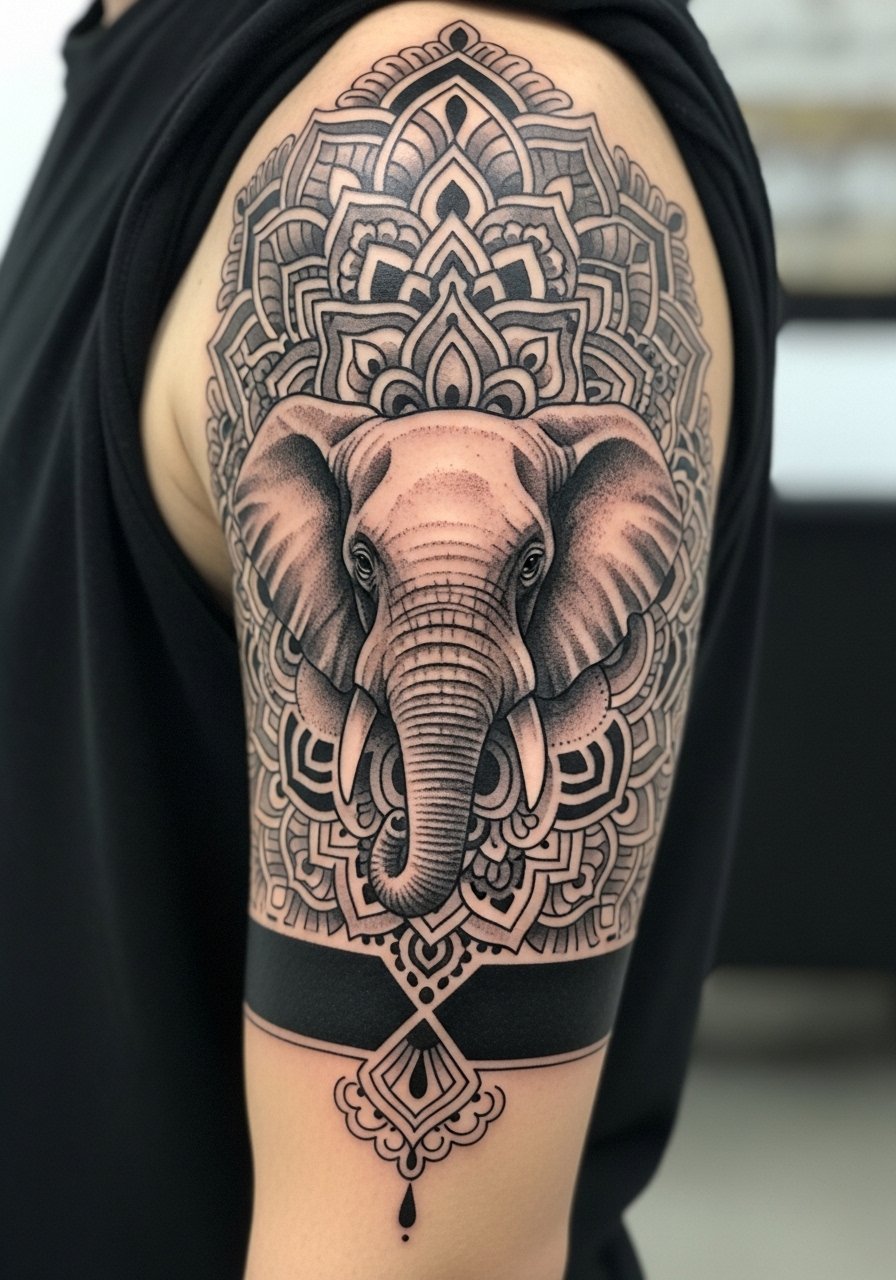
Starting an elephant sleeve is about planning—mix mandala elements, a central elephant head, and landscape or floral fillers. I recommend beginning with a strong focal elephant on the upper arm and building around it. Pain is cumulative across sessions; take breaks. Sleeves age differently depending on style choices—blackwork anchors hold up best, fine-line fillers need careful refreshes. The biggest mistake is jumping into a sleeve without a style plan; work with an artist who does elephant sleeve ideas and can show healed progress. I used Pinterest and Instagram boards to curate references and then asked my artist for a phased plan. Sleeves are emotional investments—you’ll want someone who understands elephant tattoo meaning and body flow.
16. Tiny Elephant Behind Ear
Style/Technique: Minimalist / Micro
Pain Level: High (6-7/10)
Session Time: 20–45 minutes, single session
Best For: Hidden charm, subtle symbolism, small elephant tattoos
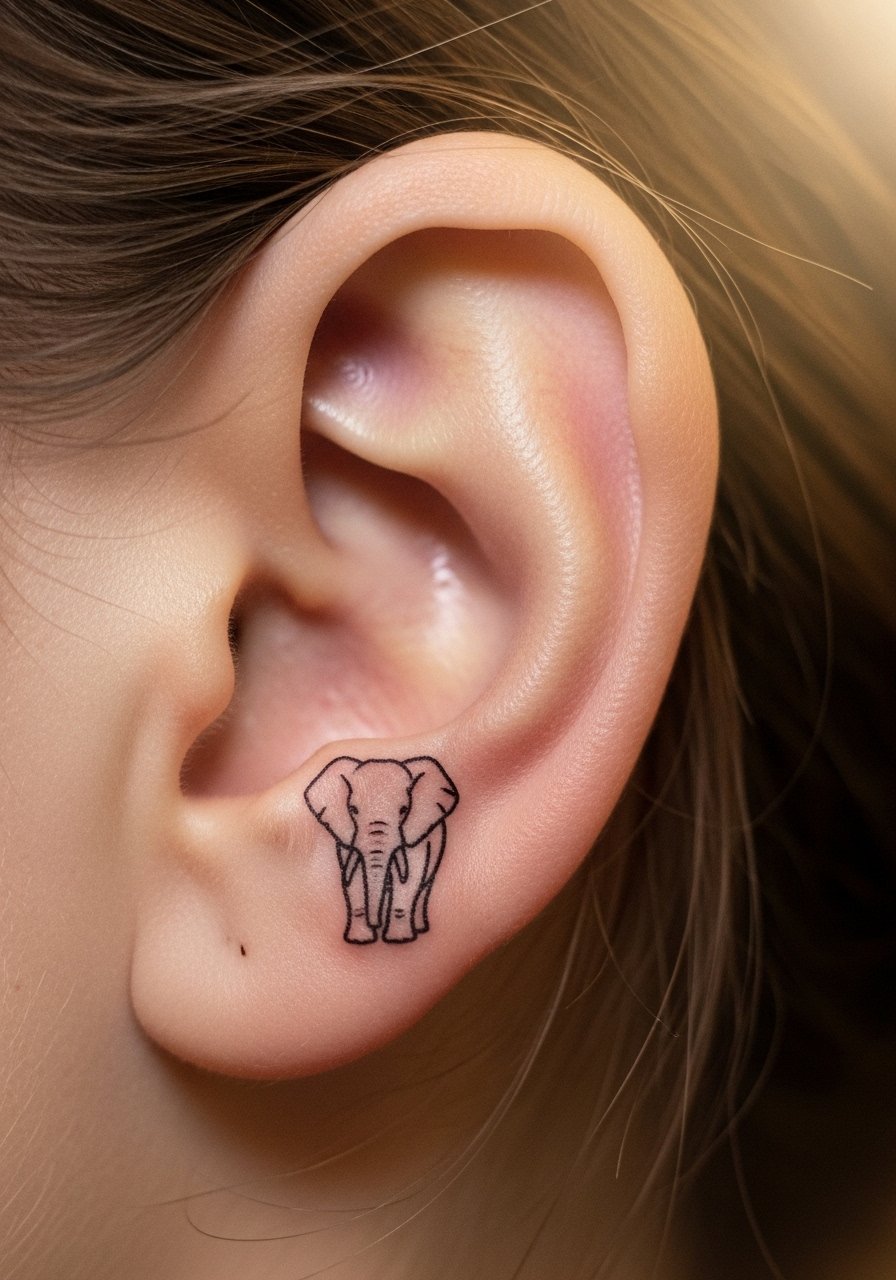
Behind-the-ear tattoos are intimate and easy to hide with hair. They hurt more than expected because of thin skin and proximity to bone. For tiny elephant tattoos here, keep lines bold enough to prevent blurring. Healing requires avoiding hair products and friction. I've seen clients pick ultra-tiny details that vanish—so ask for slightly thicker line weight. This placement addresses first tattoo anxiety because it’s small, but don’t choose it just to “test pain.” If you truly want a little talisman of protection or luck, this is a charming option; just check healed photos on artists’ feeds first.
17. Trunk Infinity Wrist Band
Style/Technique: Minimalist / Symbolic Band
Pain Level: Low-Medium (3-4/10)
Session Time: 30–60 minutes
Best For: Symbolic wrist band, small elephant tattoos, first elephant tattoo
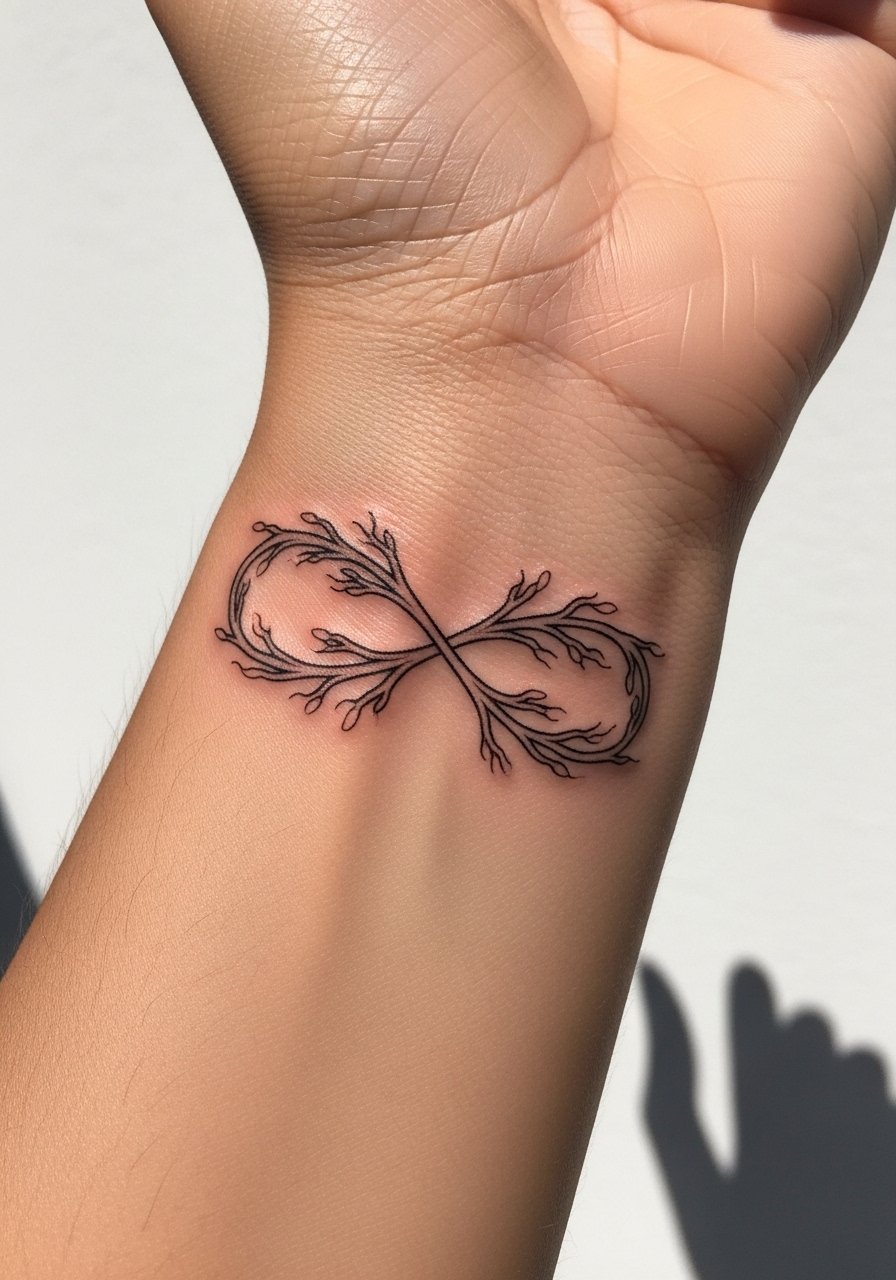
A trunk shaped into an infinity loop creates a subtle band that symbolizes continued strength and love. It sits nicely on the wrist and carries meaning without a large canvas. Pain is mild; the wrist stings more near bone. This design is a good compromise between minimalism and symbolic depth. Healing is quick if you avoid wrist-straining activity. Avoid making the loop too delicate—small gaps can blur. I’d ask an artist who does minimalist elephant outlines to draw variations so you can see how it sits on your wrist and how the trunk follows body flow.
18. Geometric Linework Elephant Down Spine
Style/Technique: Geometric / Linework
Pain Level: High (7/10 when near spine)
Session Time: Multiple sessions depending on length
Best For: Vertical compositions, spine statement, tribal elephant tattoo variant
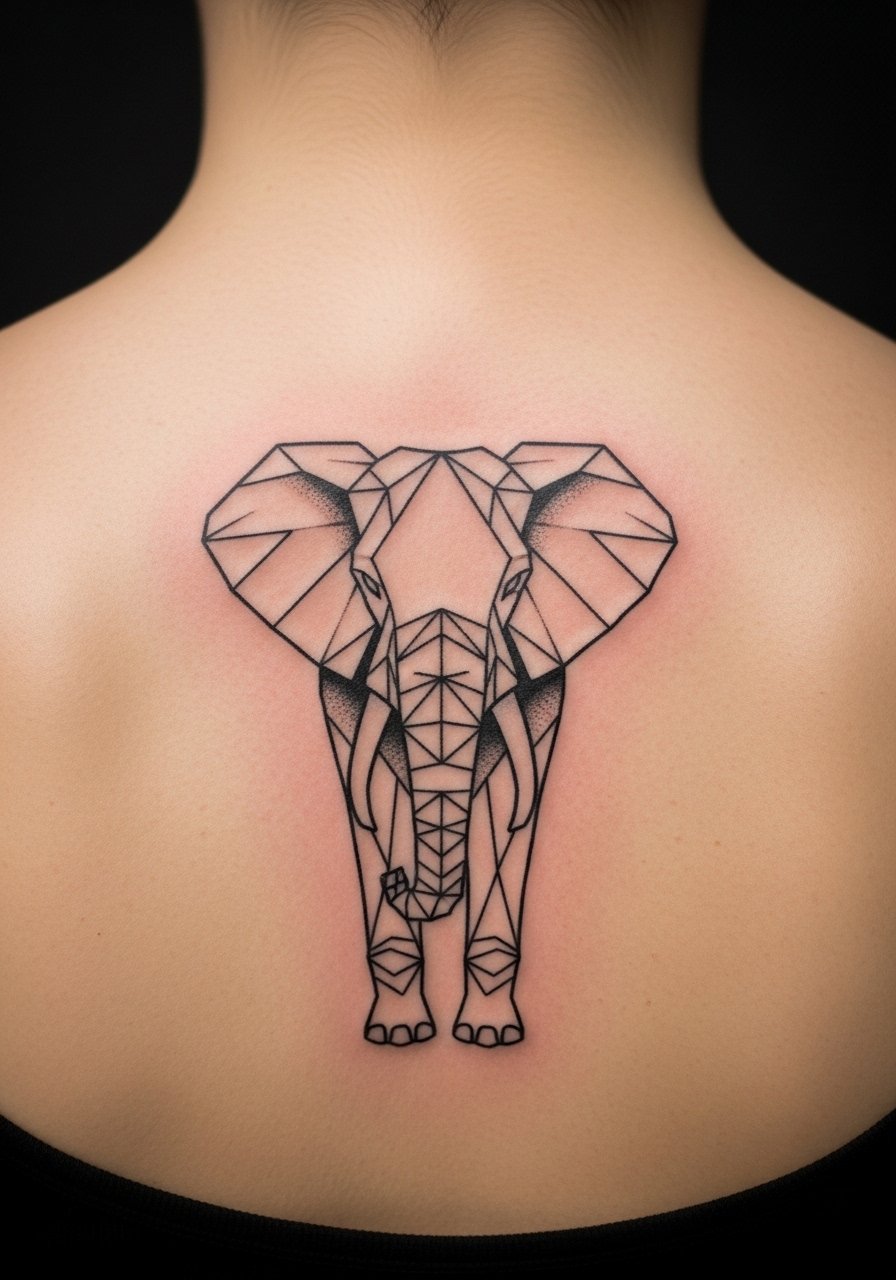
Vertical geometric elephants look great along the spine or sternum. They can mix triangles, lines, and negative space to represent strength and structure. Pain near the spine can be intense; plan breaks. Longevity is good with bold geometry, but fine connecting lines need careful spacing. A common mistake is over-detailing too close to the spine—lines blur more there. I recommend working with an artist who specializes in geometric and tribal elephant tattoo designs and asking to see healed spine pieces for reference.
19. Realistic Elephant Portrait on Thigh
Style/Technique: Realistic / Portrait
Pain Level: Low (3/10)
Session Time: Multiple sessions for shading detail
Best For: Large lifelike piece, elephant tattoo designs for collectors
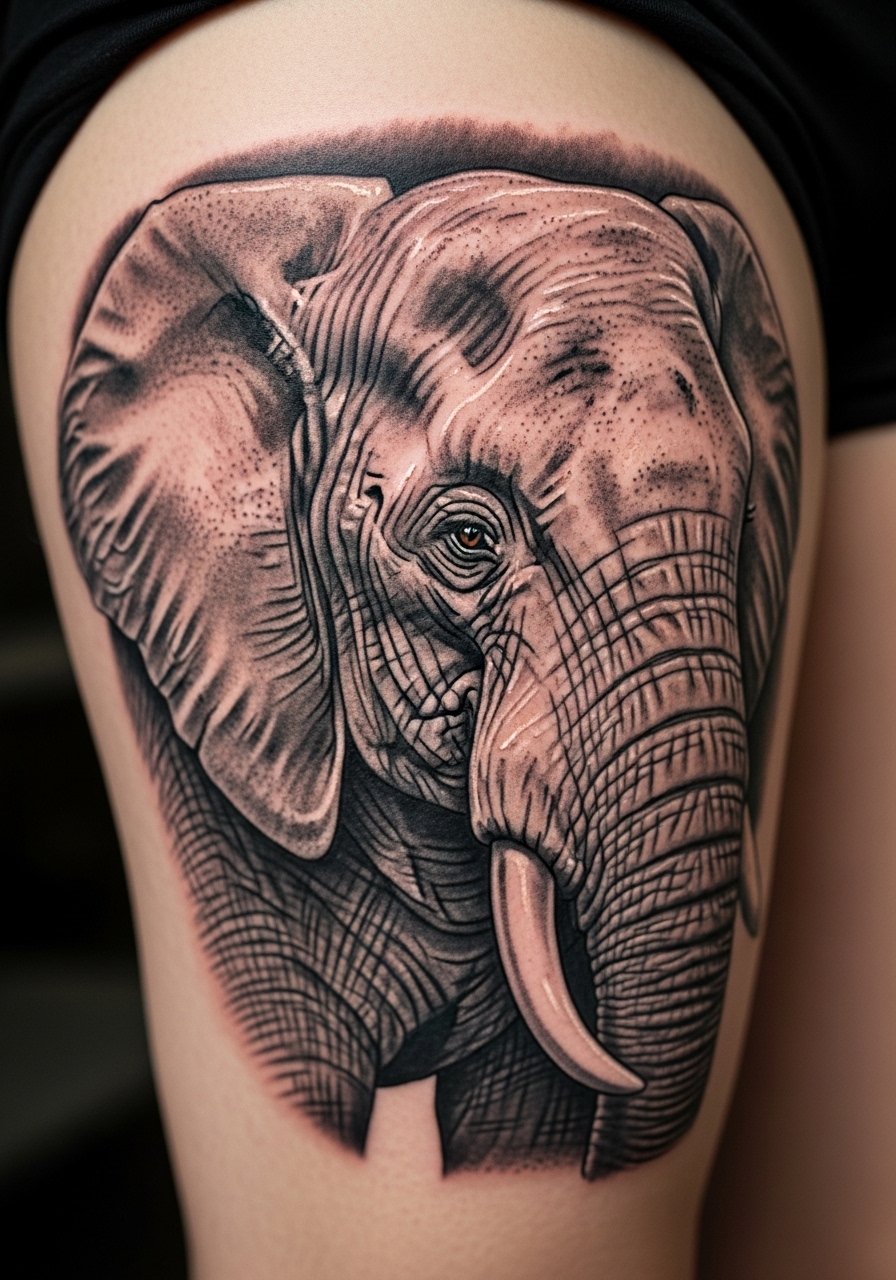
A realistic portrait captures the elephant’s soul—especially the eye. The thigh gives space for deep shading and texture, and pain is generally low. Healed realism can be stunning, but it depends on the artist’s ability to render texture and keep soft shading intact. I’ve seen portraits lose detail if the artist over-blends; request contrast anchors to retain depth. This style is perfect if you want a memorial or deeply personal piece—bring clear reference photos and ask to see healed realism thumbnails in the artist’s portfolio.
20. Matching Couple Elephant Heads on Inner Arms
Style/Technique: Neo-Traditional / Paired Work
Pain Level: Low-Medium (3-4/10)
Session Time: 1–3 hours each, matching sessions recommended
Best For: Couples, fidelity symbols, neo-traditional elephant head
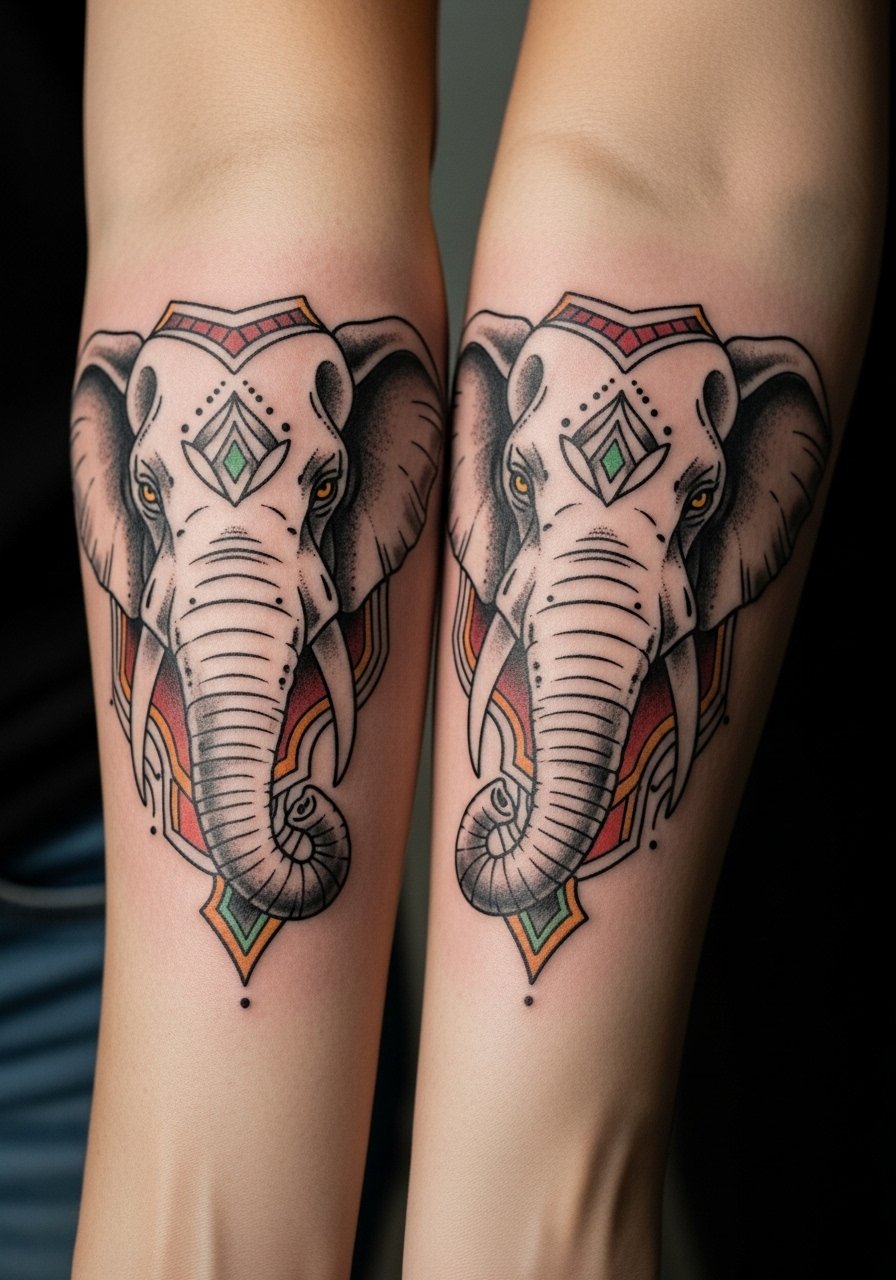
Matching elephants for couples are a meaningful way to show fidelity and loyalty. Inner arms are private and let you reveal the art selectively. I suggest booking matching sessions close together so the lines and color age similarly. A common regret is mismatched scale or style—coordinate with your artist to get mirrored compositions. From what I’ve seen, neo-traditional heads with small color accents work well for couples because they’re forgiving and still expressive. Talk to your artist about healed pair examples before committing.
21. Landscape Background Elephant on Upper Back
Style/Technique: Illustrative / Scenic
Pain Level: Medium (4/5/10 depending on proximity to spine)
Session Time: Multiple sessions for landscape detail
Best For: Story-driven pieces, upper back panoramas
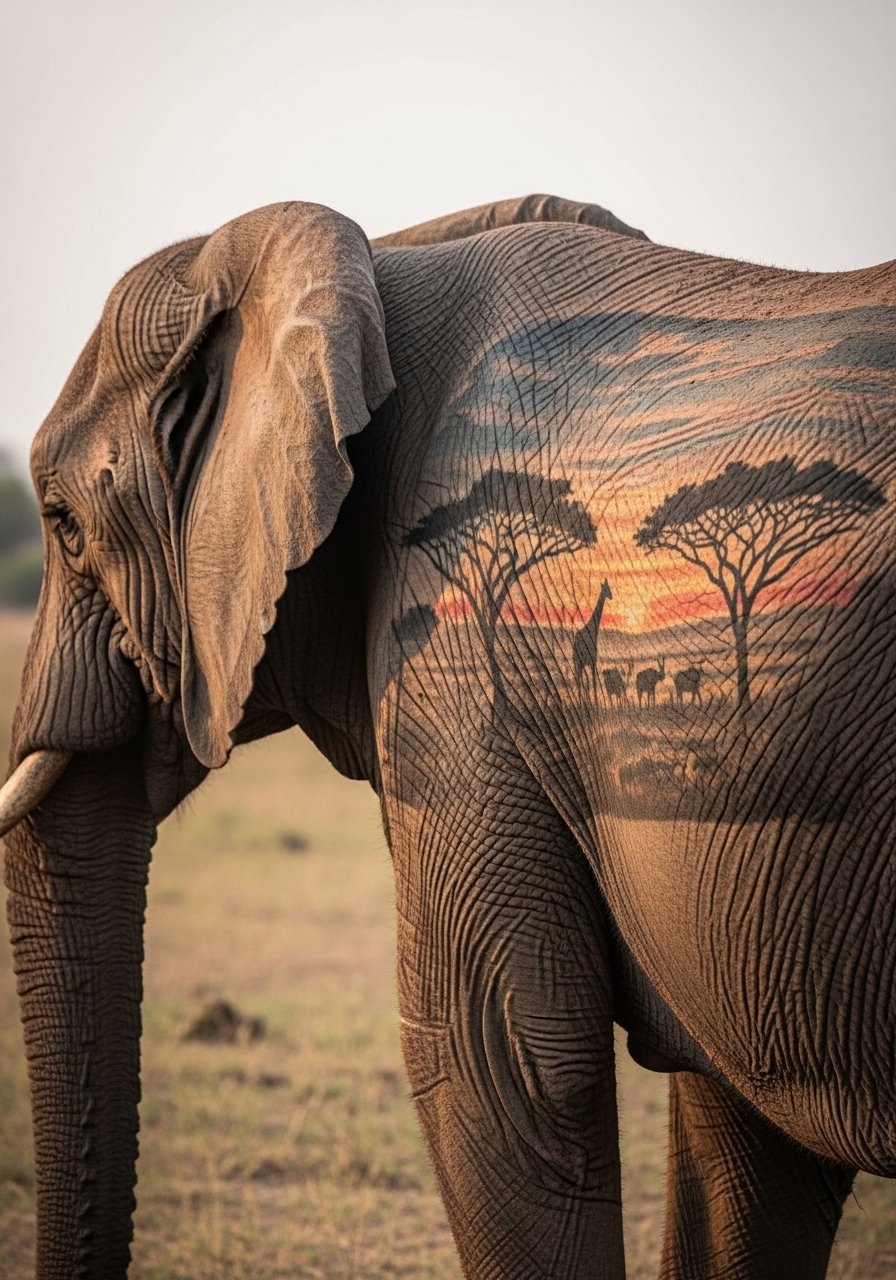
Adding a landscape behind an elephant turns the tattoo into a scene—great if you want storytelling in your elephant tattoo designs. The upper back provides a wide canvas for horizon lines and distant trees; place the elephant so the trunk follows shoulder flow. Pain is moderate and varies near the spine. Big-picture pieces age well if the linework is bold and backgrounds aren’t overly detailed at small scales. A mistake I often see is cramming too much tiny scenery; keep distant elements simplified. I used landscape references from Pinterest to decide on the mood for mine before briefing my artist.
22. Dark "Black Swan" Elephant on Calf
Style/Technique: Dark Realism / Conceptual
Pain Level: Low-Medium (3-4/10)
Session Time: 2–4 hours, single or two sessions
Best For: Statement piece, change-maker symbolism, calf placement
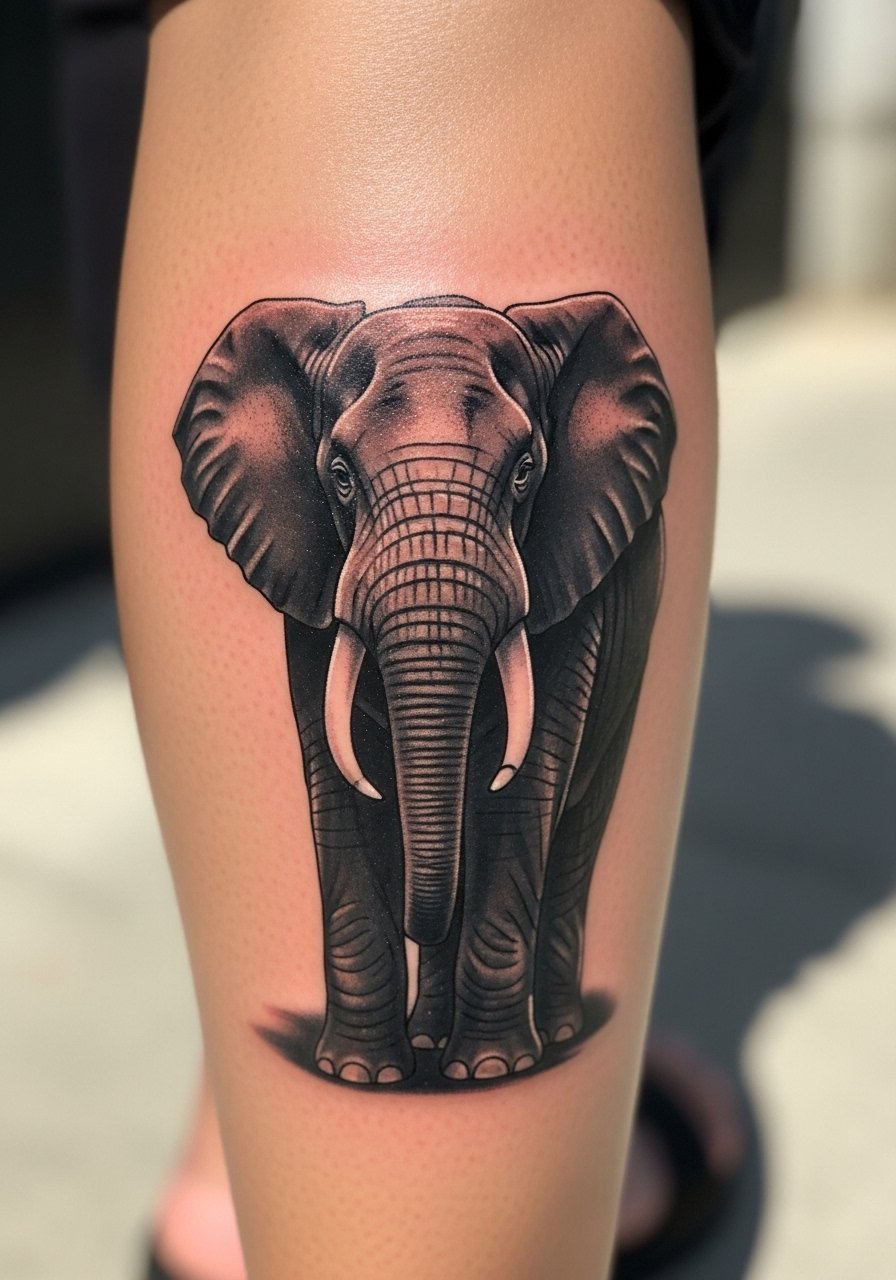
A darker, almost black-swan conceptual elephant can symbolize radical change or uniqueness. The calf is a great vertical canvas for dramatic silhouettes and shading. Pain is moderate and generally tolerable. Because this is conceptual, ask your artist how highlights will age—too many tiny highlights can disappear. This is one of the less-covered angles but powerful for people who identify with change or rarity. I suggest reviewing other dark-concept tattoos from the artist to see their healed highlight work.
23. Horizontal Tribal Elephant Row on Rib Side
Style/Technique: Tribal / Linear
Pain Level: High (7/10 when near ribs)
Session Time: 2–4 hours, might need breaks
Best For: Matching family layouts, side body art, horizontal tribal elephant designs
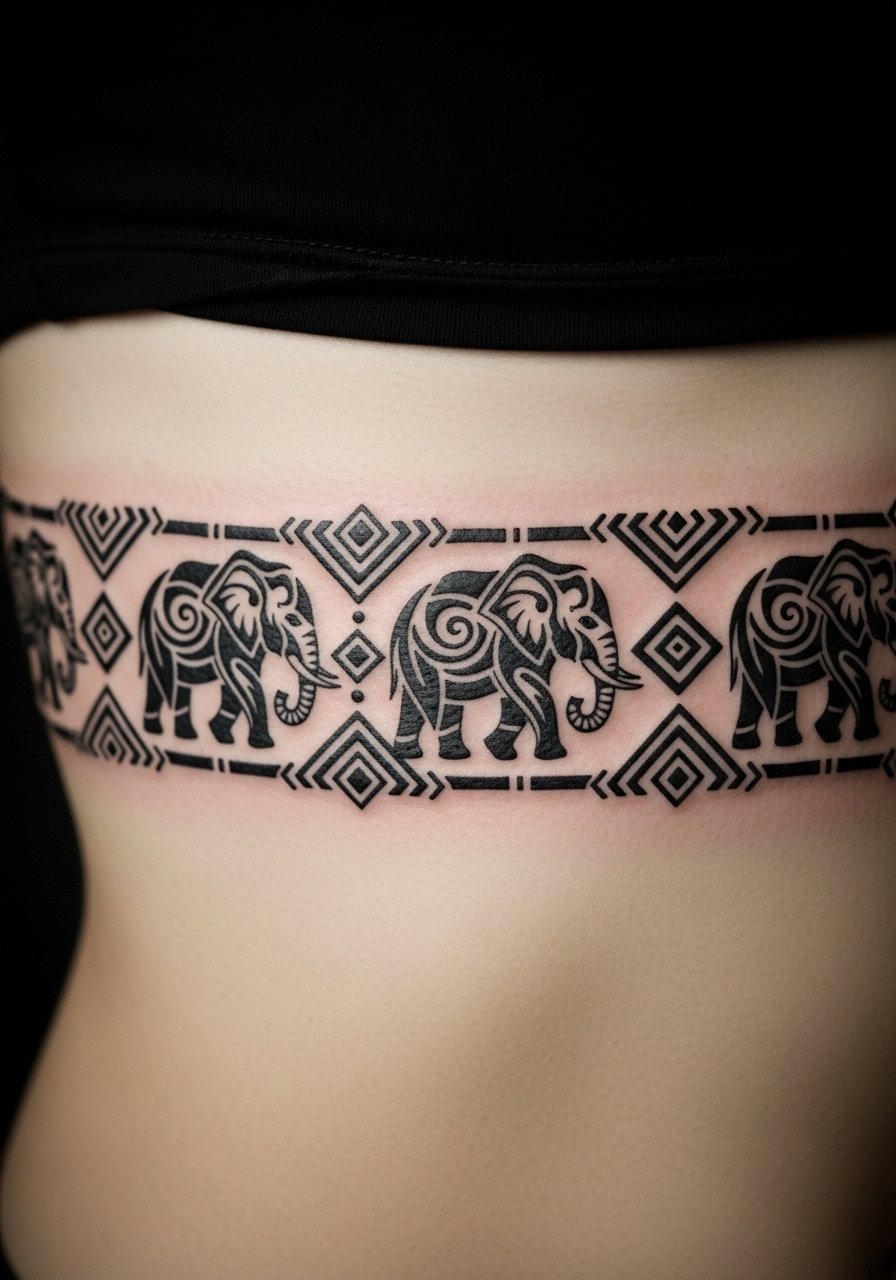
A horizontal tribal row across the ribs or flank suits multiple elephants in sequence and reads as family lineage. Expect high pain across ribs—plan for breathing and breaks. The linear layout needs spacing so each elephant keeps character as the skin moves. I see people make them too tight, and later the forms merge; leave negative space. If you want matching family tattoos across partners, align the row to body flow in a consult. This idea addresses the gap in many galleries that neglect horizontal/vertical layout options for multi-elephant designs.
24. Elephant and Lotus Mandala on Chest
Style/Technique: Mandala / Ornamental
Pain Level: Medium-High (5-7/10 near sternum)
Session Time: Multiple sessions for symmetry and detail
Best For: Sacred symbolism, chest centerpieces, mandala elephant tattoo
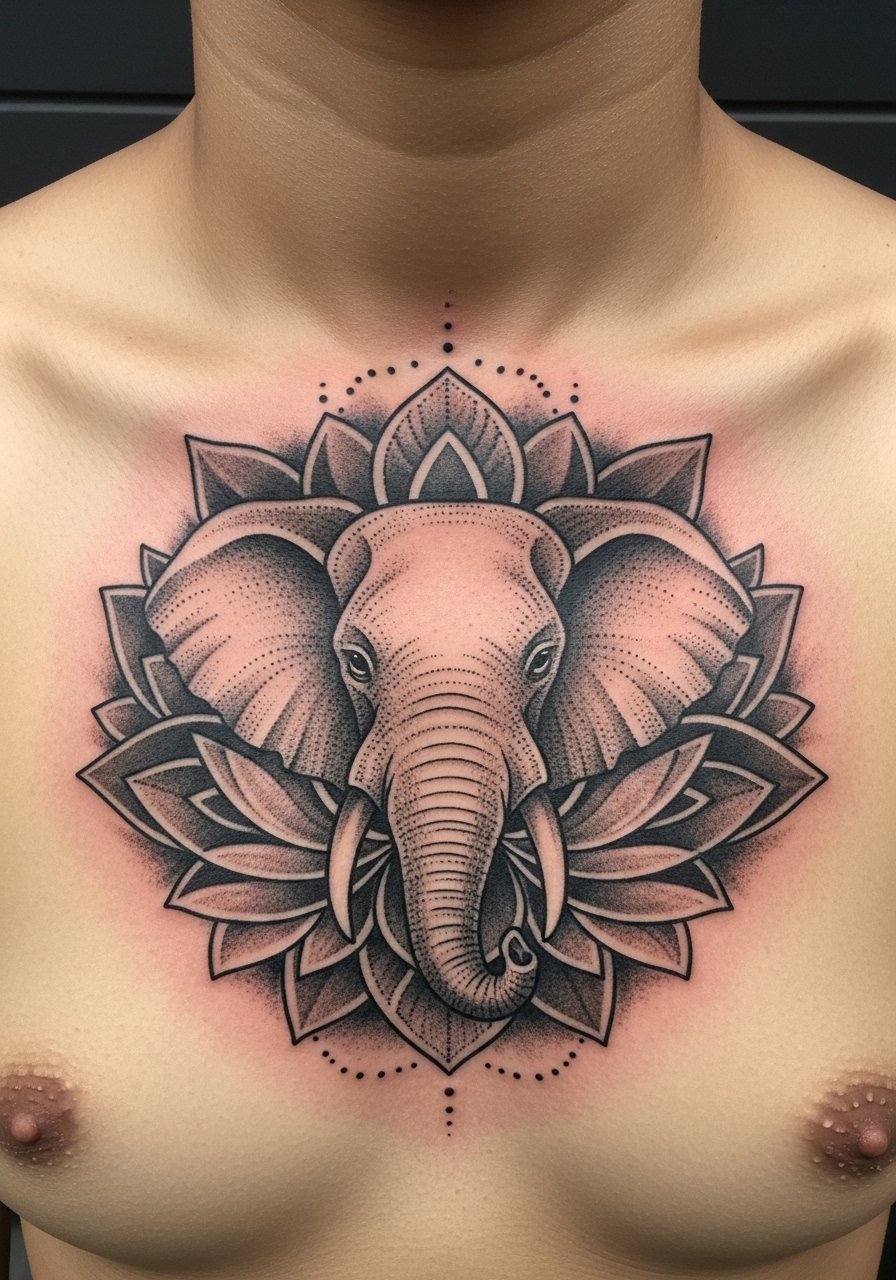
An elephant paired with a lotus mandala combines wisdom and spiritual rebirth—perfect for chest centerpieces. Chest work near the sternum can be more painful, and sessions must account for breathing and movement. Symmetry is critical here; I always recommend an artist who uses precise stencil work and has mandala elephant tattoo examples. Healing requires avoiding tight clothing and chest straps. A common mistake is overloading the mandala with tiny dots; broader patterns retain clarity longer. This design is one of my favorite sacred options and works well if you want a central, meaningful piece.
Tattoo Prep and Aftercare Essentials
Aftercare Essentials:
- Aquaphor Healing Ointment, 14oz tube — Recommended for first 3–5 days to prevent dryness and protect fresh ink
- Saniderm Transparent Adhesive Bandage, 6-inch roll — Second-skin option for overnight protection and early healing
- CeraVe Fragrance-Free Moisturizing Lotion, 12oz — For days 4–14 to keep skin hydrated without irritation
Before Your Appointment:
- Numbing Cream with 5% Lidocaine, 30g — Use only after checking with your artist; helps for sensitive areas
- Tattoo Stencil Transfer Paper, 100 Sheets — Handy if you’re testing custom layouts at home
Long-Term Maintenance:
- SPF 50 Sunscreen Stick for Tattoos — Daily sun protection prevents fading
- Mad Rabbit Tattoo Balm, 2oz — Keeps healed tattoos vibrant with regular use
- Hustle Butter Deluxe, 4oz — Vegan aftercare alternative many artists recommend
Optional Comfort & First Aid:
- Tattoo Numbing Spray, Travel Size — For touch-ups or very sensitive sessions
- Hydrocolloid Bandages Large — Small areas that need extra protection during healing
- Dr. Bronner's Unscented Castile Soap, 16oz — Gentle cleaning in the first week
Most artists I’ve talked to still recommend Aquaphor or Saniderm in the first few days, then a fragrance-free lotion after. I find a sunscreen stick indispensable once the skin is healed.
Frequently Asked Questions
Q: How bad does a tattoo actually hurt?
A: Pain varies by placement and your tolerance. Outer arm or thigh = mild (around 3/10). Ribs, spine, ankle = higher (6–8/10). It’s often more uncomfortable than unbearable—long sessions feel like constant friction. For very sensitive spots, consider a numbing cream with 5% lidocaine after checking with your artist.
Q: What if I regret my design later?
A: Sit with ideas for at least a few months and mock them up on your body with temporary tattoos. Choose timeless elephant tattoo designs (family elephants, mandalas) if you want lower regret risk. Remember removal exists but is lengthy—pick meaning over trend when possible.
Q: How do I keep my elephant tattoo from fading?
A: Sunscreen is non-negotiable. From what I’ve seen, daily UV protection is the #1 long-term saver. Use an SPF 50 sunscreen stick for tattoos and moisturize with a fragrance-free lotion like CeraVe to keep skin healthy.
Q: Can I work out after getting a tattoo?
A: Wait at least 48–72 hours for most placements, longer if it’s in a flex area (shoulder, elbow, knee). Sweat and friction can irritate the wound and risk infection. If you need to train, choose low-sweat activities and protect the tattoo.
Q: Should I get a small elephant tattoo first to test pain?
A: Only if it’s something you actually want. Pain is about placement more than size; a tiny ankle or behind-ear piece can hurt more than a larger forearm piece. If nervous, pick an outer arm or thigh placement for a gentler experience.
Q: How long does a tattoo take to heal fully?
A: Surface healing: 2–3 weeks. Full healing: up to 2–3 months. The first week is critical—clean gently with mild soap like Dr. Bronner’s Unscented Castile Soap and use Aquaphor or Saniderm as your artist recommends. Expect peeling around day 3–7—don’t pick.
Q: Do tattoos look different on different skin tones?
A: Yes. Black and gray and bold blackwork show well across tones. Bright pastels can appear muted on deeper skin—ask your artist for healed examples on similar skin tones. White ink is often subtle on darker skin. Artists who regularly tattoo your skin tone are the best resource.