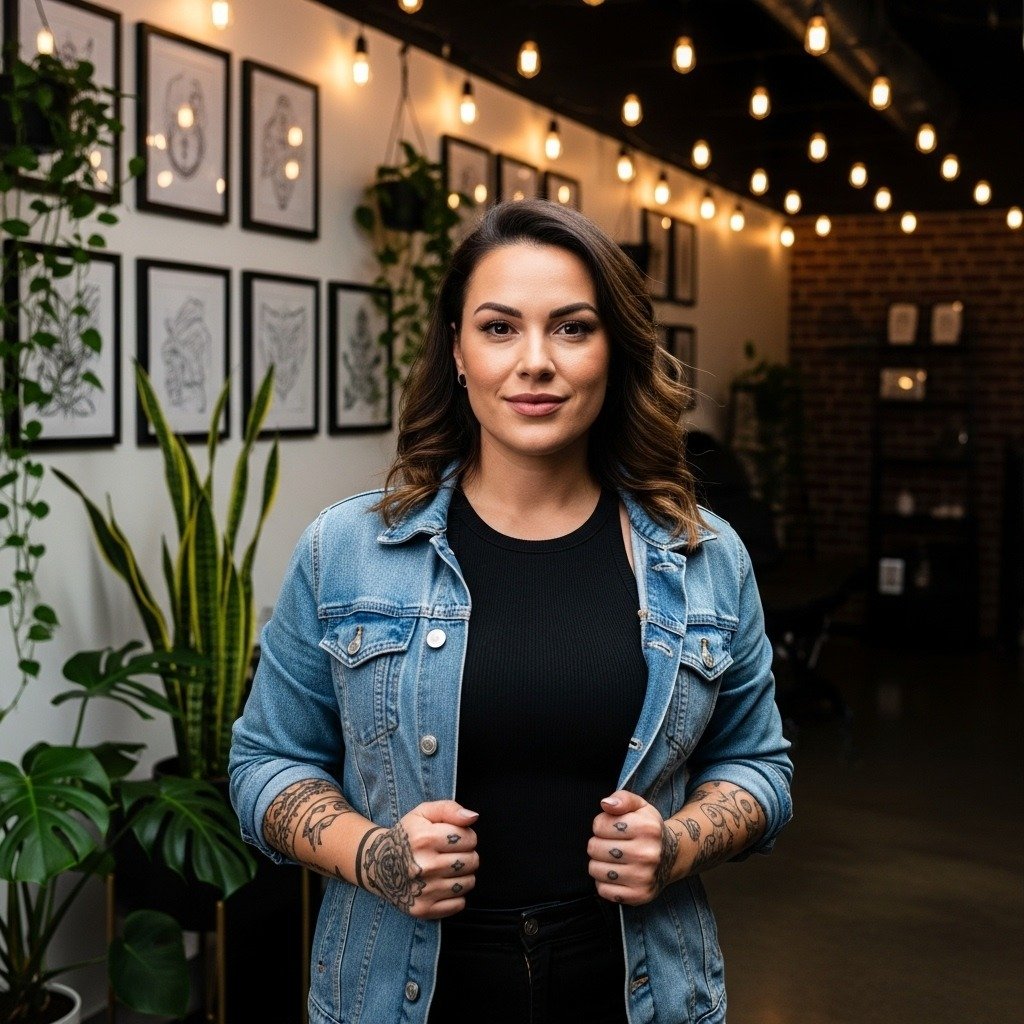
Someone I know spent eight months scrolling before realizing the problem was not finding pretty floral designs but knowing which styles actually age well on real skin. After chatting with artists at five shops across Brooklyn and inspecting healed pieces in natural light, I started tracking which birth month flowers hold linework, which need touch-ups, and which read best on different tones. Start with January below, and you will see why certain flowers make smarter long-term choices.
1. Fine Line Carnation on Wrist or Collarbone
Someone I know first saw this style on a friend's collarbone and booked instantly. Fine line carnation works well for January because the single stem reads like a small emblem of love and resilience. Tell your artist you want slightly heavier linework at the stem base so the knot points do not blur over time. Common mistakes include asking for ultra-micro petals that vanish after a year. Pain is low on the wrist and medium on the collarbone. Expect one session around an hour for a 2 to 4 inch piece and a likely touch-up at year two. This is best for people who wear jewelry often and want the design visible without dominating an outfit.

2. Minimalist Violet Outline on Inner Forearm or Ankle
Fair warning: the ankle can sting more than the forearm but both spots suit a minimalist violet. Keep the outline slightly off-micro so the petals keep their shape as the ink settles. Ask your artist for soft gray shading behind the outline to keep contrast on medium and darker skin. A typical session is under an hour. People often request the outline too thin thinking it will look dainty. In practice that invites early fading and feathering. Forearm placement shows the linework daily and hides touch-ups better than ankle work. Expect a touch-up around year one to eighteen months depending on sun exposure.

3. Watercolor Daffodil on Ribcage or Thigh
Most watercolor pieces from years ago faded into muddy patches because artists packed color too shallowly. This daffodil version uses layered saturation and soft edges so the yellow keeps warmth at six months and reads as a coherent bloom at two years. There is a debate among artists about watercolor durability. One camp says loose color always fades faster and needs frequent touch-ups. The other camp argues that modern saturation and careful toothy shading make watercolor hold on fleshy spots. For the ribcage expect higher pain and a two-session plan for clean saturation. If you want less maintenance choose the thigh placement for lower sun exposure and easier touch-ups.

4. Dainty Daisy Chain Wrap for Forearm or Ankle
There is a visual payoff when a string of small daisies wraps a forearm, but scale matters for aging. At six months the petals keep crispness if each bloom has room. At two years a crowded chain loses petal separation and becomes a band of gray if the linework was too tight. For a wrap, tell your artist you want alternating line weight between stems and petals so the chain still reads when it fades. Forearm wraps show motion with wrist flexing. The ankle version looks delicate but needs slightly bolder stems to avoid early blowout. Sessions run one to two hours depending on length and whether you want black only or tiny color hits.

5. Lily of the Valley Sprig Behind Ear or Along Spine
The biggest mistake with this placement is undersizing the sprig behind the ear and losing detail. Behind the ear is discreet but demands precise linework to stay readable. Spine placement lets elongated stems breathe and it suits memorial or celebratory meanings. Tell your artist you want slight spacing between the tiny bells so stipple shading can add depth without clogging. Pain on the spine is higher and sessions vary from thirty minutes for a tiny sprig to an hour for a longer piece. Expect touch-ups at year two if you sleep on that side frequently. For spine work choose an artist experienced with line consistency on curved surfaces.

6. Traditional Rose Bud on Shoulder or Bicep
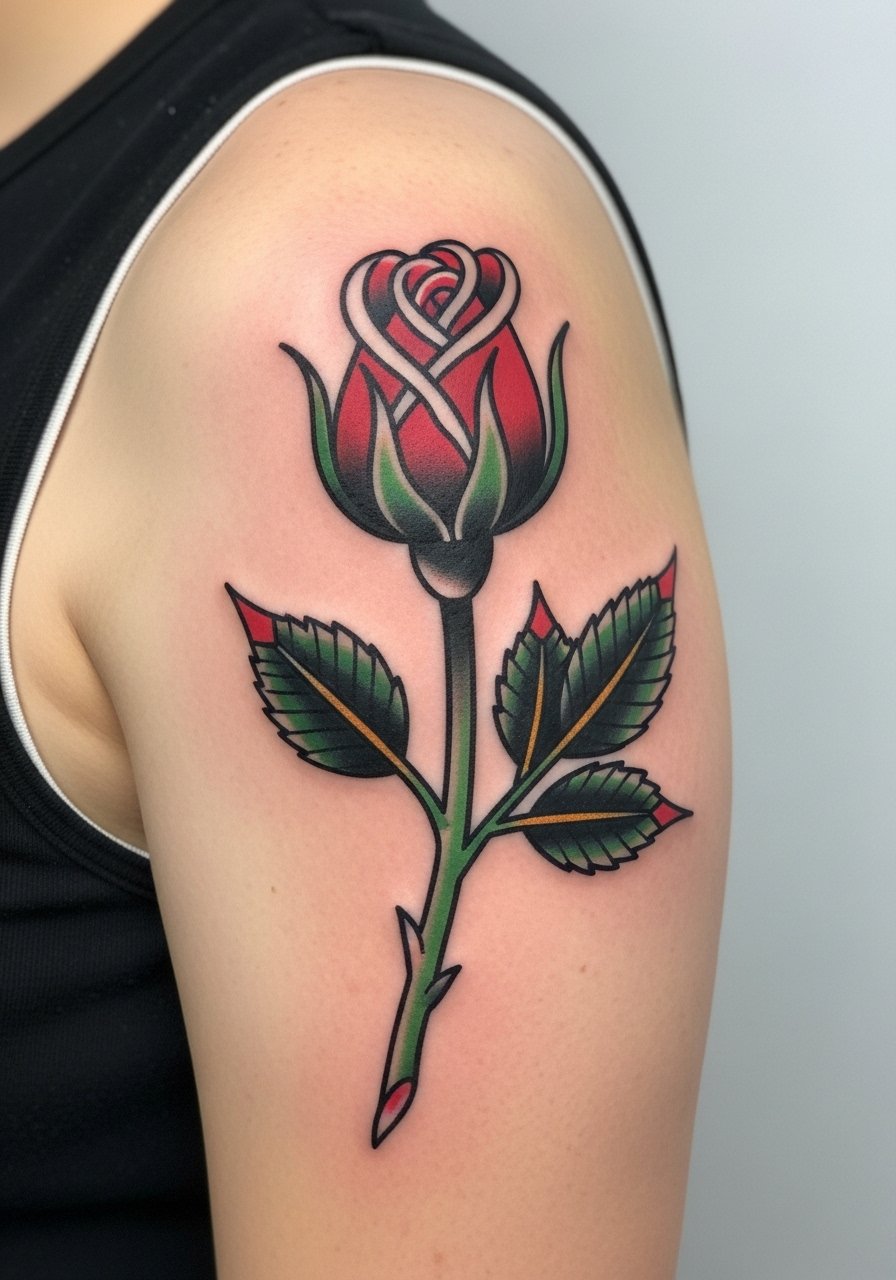
When you pick a traditional rose for June, bold outlines and saturated fills keep the piece readable as years pass. During consultation say you want thick contour linework with layered saturation so the bud does not flatten. A common error is requesting super-fine outlines for a floral that needs strong edges to age well. Shoulder pieces are medium in pain and take two sessions for complex color work. Bicep placement reads well from across a room and holds saturation better because of lower friction. Expect the first touch-up between year one and three depending on sun exposure and how much you sweat during workouts.
7. Larkspur Stem in Blue Hues for Calf or Inner Bicep
Artists are split on color contrast for larkspur on darker tones. One group recommends higher saturation and cooler blues so the spikes read. The other group prefers contrast with fine white highlights and deeper outlines to avoid muddiness. If your skin is medium to dark ask for test patches in the consultation or bring photos of healed work the artist has done on similar tones. The calf is lower pain and great for vertical spikes. Inner bicep feels different because skin movement can blur ultra-fine stems. Expect one to two sessions depending on color layering and plan a touch-up at year two if you want the blues to stay vivid.

8. Gladiolus Spike in Blackwork for Outer Thigh or Arm
There is something about tall blackwork gladiolus that reads strong whether it sits on a sleeve or a thigh panel. For August pick bold negative space between florets so the spike keeps structure as it ages. Outer thigh is forgiving for large vertical pieces and often needs longer sessions. On the arm the design must account for muscle movement and clothing friction. People sometimes ask for ultra-dense black fills that tend to heal patchy. Ask for steady stipple and some line breathing to reduce blowout risk. Expect three shorter sessions rather than one marathon day when you do a 6 inch or larger blackwork spike.

9. Aster Cluster on Collarbone or Wrist
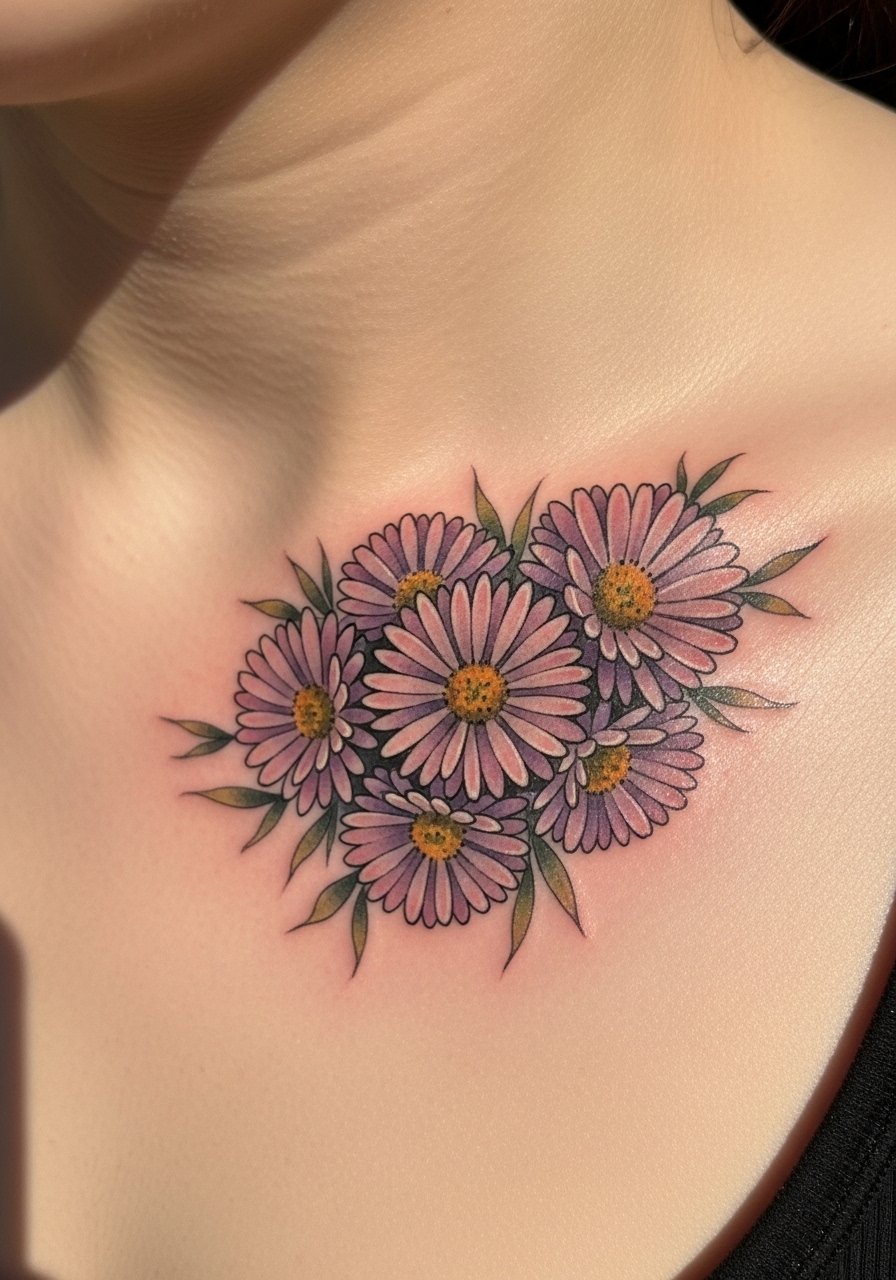
Fair warning: the collarbone placement can be more painful than the wrist, but it makes for a dramatic aster cluster that sits well with tops. For september asters choose slightly saturated cores so the star-shaped bursts hold against skin tone. Wrist pieces show motion and need slightly bolder centers to avoid looking washed at two years. A common error is asking for too many tiny blooms in a small area. During your consult bring reference photos that show spacing and ask about whip shading for soft edges. Typical plan is two sessions for medium clusters and a probable touch-up at year two.
10. Marigold Petal Layers on Ankle or Forearm
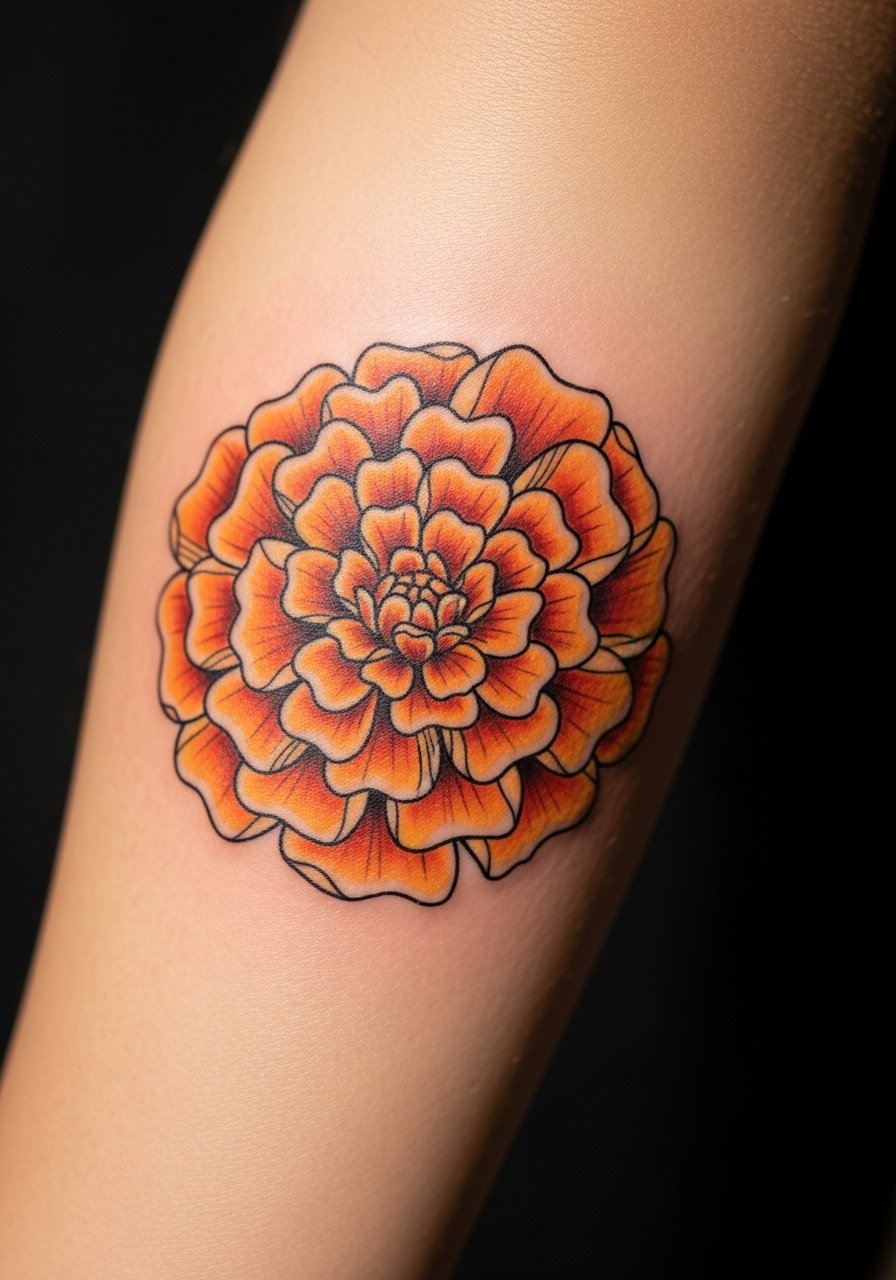
There is visual depth when marigold petals are layered with subtle tonal shifts, but the ankle demands slightly bolder petals to survive shoes and socks. Layered ornamental marigolds look especially good on darker tones where fiery colors pop. During booking ask your artist for multi-directional petal layering and a plan for saturation. Forearm placement handles texture better and is easier to tweak during a touch-up if petals soften. Expect two sessions for full petal depth and a likely touch-up between years one and three. If you want the design to age predictably, avoid overly tiny inner petal detail.
11. Chrysanthemum Bloom on Sternum or Back
There is a professional nuance to sternum placement because it is a sensitive and visible area when healed. Sternum work often needs a specialist who handles centerline symmetry and breathing with the client. Chrysanthemum blooms read beautifully in micro-realism when each petal has slight separation, but the biggest mistake is compressing too many petals into a small sternum piece. Back placement allows larger composition and lower risk of distortion from weight fluctuations. Sessions vary from one to two hours and a touch-up at year two is common for micro-realism. If the sternum is your choice discuss aftercare that avoids pressure from clothing during early healing.

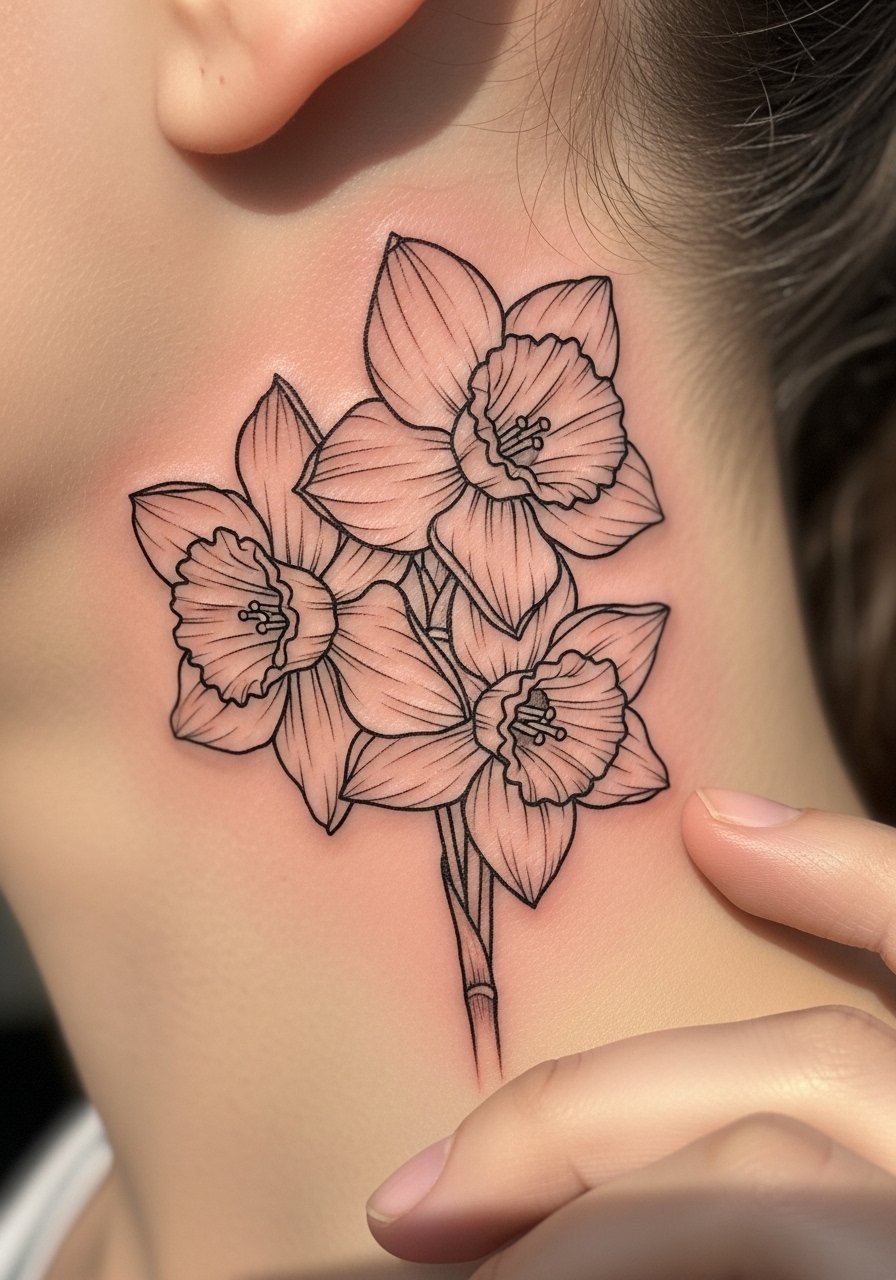
12. Narcissus Paperwhite on Finger or Neck
Mistake warning: fingers are high-maintenance real estate for small blooms. Narcissus at the base of a finger can fade fast and need frequent touch-ups. Neck placements are visible daily and may affect job considerations, so think through visibility before committing. For finger work ask the artist to make the petals slightly bolder and to avoid micro stipple that will blur with finger use. Sessions are short for tiny pieces but expect more frequent touch-ups. Neck work benefits from a slightly higher contrast between linework and petal shading so the white paperwhite reads on medium and darker tones.
13. Bouquet of Family Birth Flowers on Upper Arm or Thigh
When you combine multiple birth month flowers into a bouquet the consultation matters more than the design itself. Bring reference photos of each flower and say which bloom should read largest so the composition is balanced. A common mistake is trying to fit too many flowers at the same scale, which makes the bouquet muddled as it heals. Upper arm allows a compact, wearable bouquet and thigh gives space for a larger, more detailed arrangement. Expect three to four sessions for a medium-large piece and plan to match saturation across skin tones so no single bloom disappears. Use hashtags and studio location tags to find portfolios that show healed multi-flower work.

14. Hawthorn Shrub Accented with Lily of the Valley
There is a small trend of pairing hawthorn shrub with lily of the valley for added texture. Some people love the contrast and consider it a meaningful hybrid. Others prefer strict month-only bouquets and argue mixing breaks the birth-month logic. If you lean toward mixed meaning, decide which bloom carries the focal detail and ask your artist to use hawthorn branches as the texture anchor. Hawthorn works well on rib or shoulder blades where the branches can curve. Sessions vary by size and stipple shading keeps the shrub readable without heavy black fills. Expect a touch-up at year two if you include delicate berries in the design.

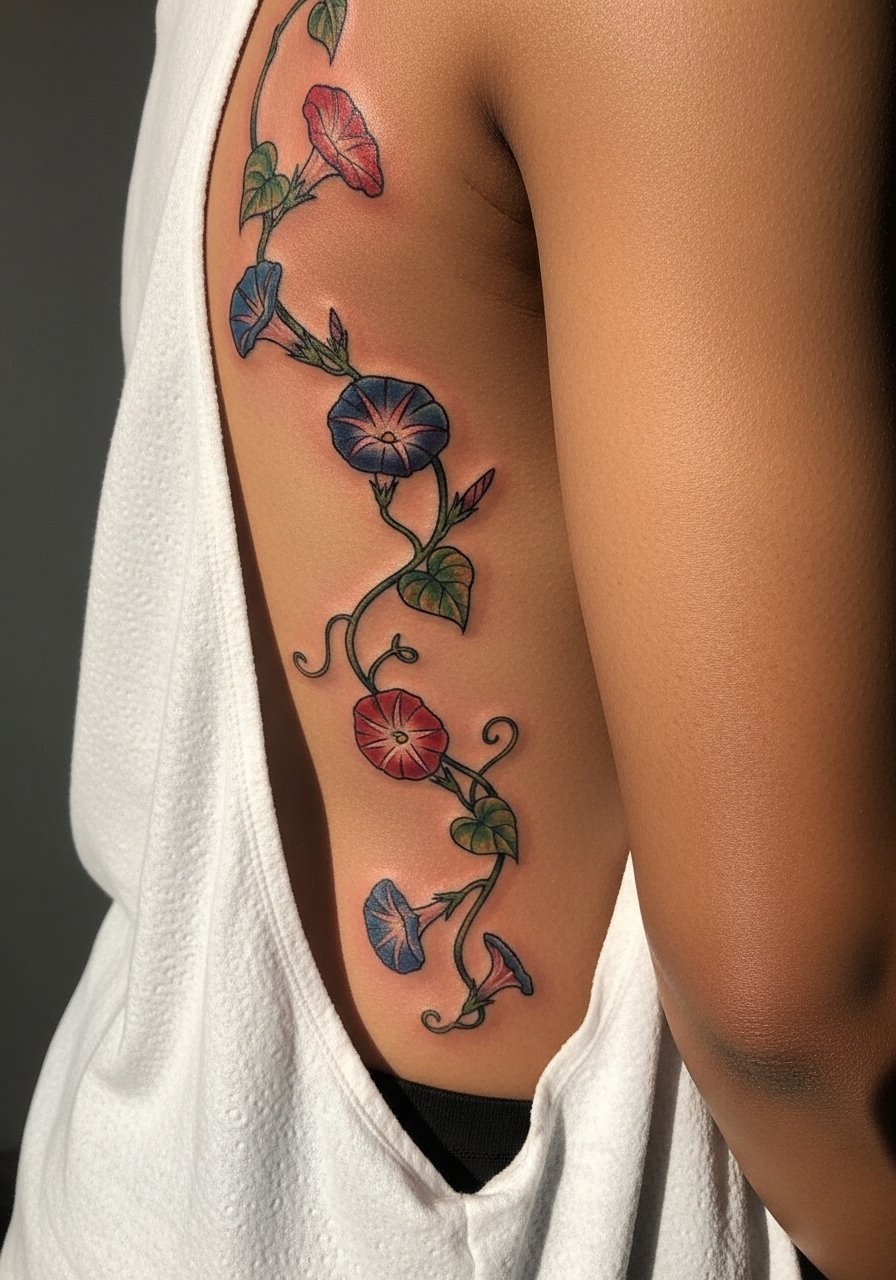
15. Morning Glory Vines for Elongated Placements like Side Rib or Inner Arm
There is a reason morning glory vines are chosen for trailing placements. The elongated, looping stems let the piece move with your body and avoid compressing detail. A common error is starting the vine too high and not allowing the blooms to flow down the length of the placement. For ribs expect higher pain but a beautiful canvas for trailing composition. Inner arm placement sees more friction so ask for slightly heavier outlines and planned gaps so dot work and stipple shading breathe. Sessions often split into two to respect pain and swelling. Touch-ups at year two keep the vine crisp, especially near joints where movement is constant.
Tattoo Prep and Aftercare Essentials
Fragrance-free foaming cleanser for gentle washing. Use during the first week for twice-daily cleanings to remove care ointment and dried plasma without stripping moisture.
Lightweight fragrance-free balm for daytime moisture. Apply thin layers after washing to prevent scabbing that pulls ink out.
Medical-grade second skin bandage, small sheets. Useful for flat areas that rub against clothing during the first 48 hours.
Non-stick biodegradable sterile pads. Keep one set for initial dressing changes when you need a clean barrier.
Silicone-based long-term moisturizer for healed ink maintenance. Use after the tattoo heals to help color longevity and skin texture.
Hydrating saline spray for sensitive placements. Handy for gentle rehydration during the flaky phase.
Healing ointment like Aquaphor for very early sealed wounds. Use sparingly and only for the first 24 to 48 hours if your artist recommends it.
Every tattoo is different. Always follow your artist's specific aftercare instructions. Consult a dermatologist if you have skin concerns or unusual healing issues.
Frequently Asked Questions
Q: How much does a birth flower tattoo usually cost?
A: Costs vary by size, style, and region. Small fine line single-stem pieces commonly fall in the 100-400 range. Mid-size watercolor or traditional pieces often land in the 200-800 range. Large bouquets and detailed micro-realism can reach into the higher hundreds and sometimes exceed 1,000 depending on sessions. These ranges reflect session counts and complexity more than a single hourly rate.
Q: Will fine line monthly flowers blur into each other if I get a forearm sleeve of several months?
A: It depends on spacing and scale. Fine line holds best when each bloom has breathing room and stems have slightly varied line weight. If you compress many micro blooms at the same scale you invite early blur and merging. Ask your artist for a portfolio of healed sleeves to judge their spacing approach. Plan touch-ups every two to three years for fine line sleeves.
Q: Do watercolor daffodils need different aftercare than traditional roses?
A: The basic steps are the same, but watercolor pieces rely on layered saturation so avoiding heavy scrubbing and sun exposure matters more in the first six months. Keep color pieces out of direct sun and use a long-term silicone moisturizer once healed to help preserve saturation. If you want a recommended dressing for the early phase, check the medical-grade second skin link in the aftercare list.
Q: Why choose a bouquet of family birth flowers over single-month pieces?
A: A bouquet lets you balance scale so each person's bloom reads at the chosen placement. The trade-off is more sessions and a higher touch-up window if you use subtle watercolor. During consultation prioritize which bloom carries the focal detail and ask the artist to plan scale hierarchies so no single flower disappears as the piece ages.
Q: How often will I need touch-ups for birthday flowers on hands, fingers, or ribs?
A: Fingers and hands are high-friction areas, so expect touch-ups every 6 to 18 months. Ribs and sternum may need touch-ups around year two because of skin stretch and movement. Clothing contact, sun exposure, and individual skin type are the main variables. Plan shorter maintenance sessions rather than one big redo.
Q: What should I bring to a consultation for a custom birth month bouquet?
A: Bring healed reference photos of each bloom on similar skin tones, a note about which birth months are priorities, and placement photos that show scale expectations. Use discovery pathways like location tags, tattoo directories, and specific hashtags to find portfolios that show healed multi-flower work. Asking for healed examples is the clearest way to see how the artist handles composition and saturation.